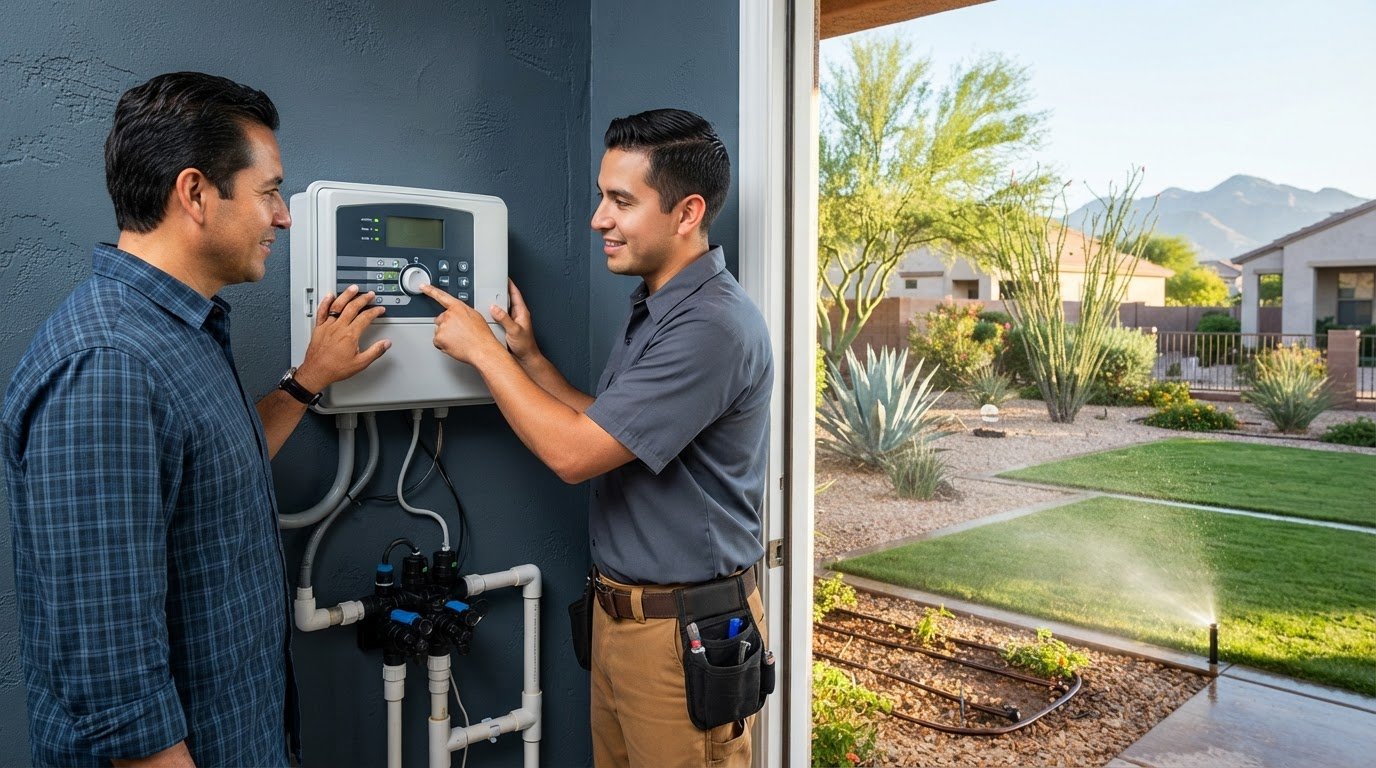
What if the same drip line is watering a cactus too often while a nearby tree’s roots aren’t getting enough? Desert plants don’t all use water in the same way, and even an efficient system can miss the mark when its emitters aren’t placed to reach the plants’ root zones. To manage water carefully and reduce runoff, start with where and how each plant takes up moisture. A well-planned drip irrigation system for desert plants is designed around those differences.
This guide explains how watering needs can vary among cacti, shrubs, groundcovers, and trees, and what to check when water pools, runs off, or misses the roots. You’ll learn how emitter placement, coverage, and system adjustments affect delivery as plants grow and Arizona’s conditions change. Whether you’re planning a new layout or reviewing an existing one at a home in Surprise or Peoria, these practical checks can help you identify next steps. Sonora Sprinkler Inc. provides residential drip irrigation installation, upgrades, and repairs.
Key Takeaways
- Match water delivery to each plant’s root zone instead of assuming every desert plant needs the same emitter placement.
- A well-designed drip irrigation system for desert plants depends on how tubing, emitters, filters, pressure regulators, and controllers work together.
- Group plants with similar water needs to make irrigation zones easier to manage.
- Use plant condition and system performance to guide adjustments, and consult current Arizona watering recommendations instead of relying on a fixed calendar.
- When an existing system no longer suits the plants, drip installation, upgrades, or repairs can improve water delivery as they mature.
Why a Drip Irrigation System Fits Arizona Desert Plants
Arizona’s heat can dry exposed soil quickly, while water applied too fast may run across the surface before it soaks in. Overhead watering can wet paths, rocks, and foliage instead of delivering moisture near a plant’s roots. A drip system offers more control: tubing carries water to selected locations, and emitters release it into the soil near plants. This targeted approach can help limit unnecessary wetting, but it doesn’t prevent evaporation or runoff in every setting. Soil texture, slope, mulch, emitter placement, and watering duration all affect how water moves.
Plant-specific root-zone watering means placing water where each plant’s active roots can take it up, rather than using one delivery pattern for the entire yard. A drip irrigation system for desert plants should account for those differences. Drip irrigation supports careful water management, but it doesn’t mean every plant needs the same schedule or amount. For a general overview of how drip irrigation systems deliver water, see this reference. The right residential layout still depends on the plants and the site.
How drip irrigation delivers water to desert plant roots
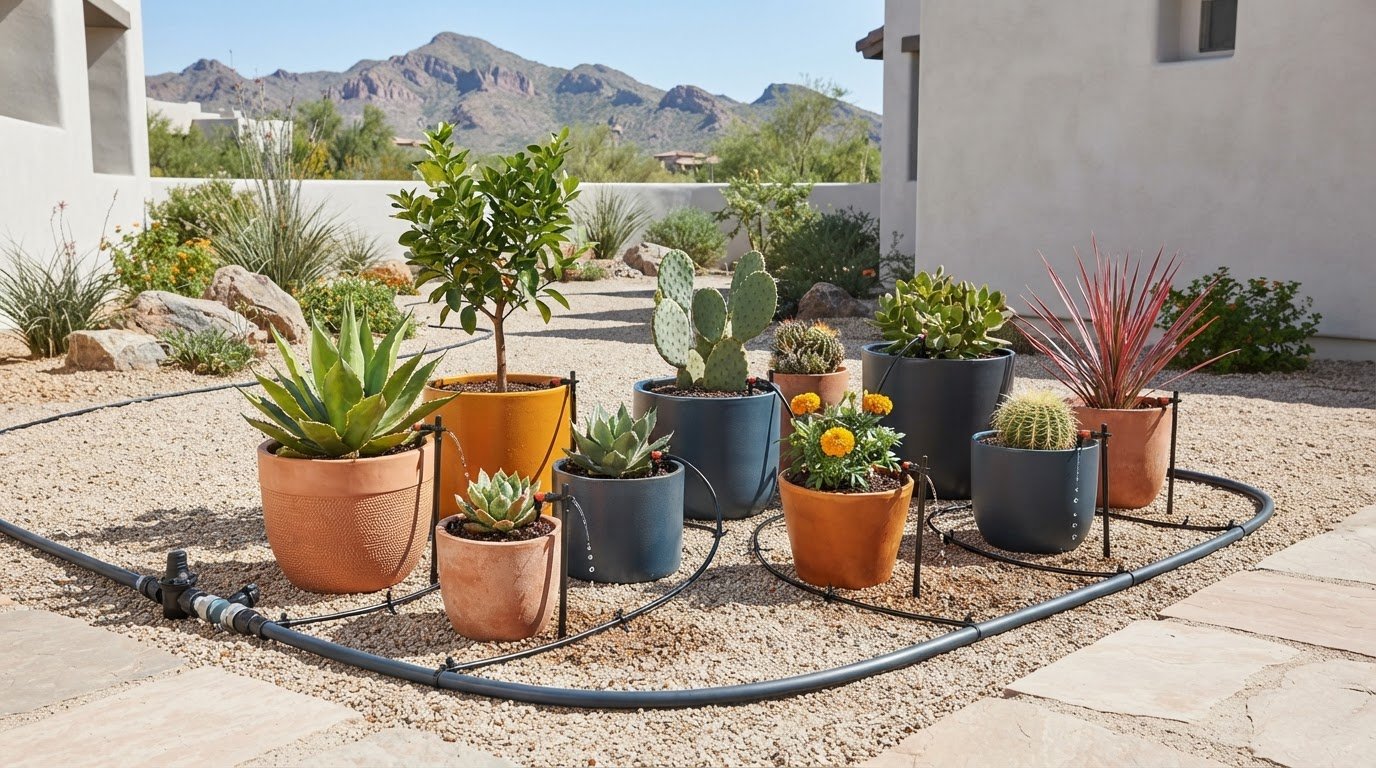
Drip tubing runs through planting areas, with emitters positioned near selected plants. Instead of spraying broadly, each emitter releases water at a particular point. Slow application gives dry soil more time to absorb moisture and may reduce surface flow, especially where faster watering would collect or run downhill. Check the wetted area: an emitter too far from the active roots can leave a plant dry even while the system is running.
Targeted delivery can avoid wetting large areas of bare ground or plant foliage. It doesn’t eliminate water loss. Exposed soil can still lose moisture, and poorly placed or mismatched emitters can create dry spots or runoff. The goal is controlled delivery, followed by checking whether water reaches the intended root zone.
Which Arizona plants may benefit from targeted watering?
Groundcovers generally have shallower, spreading roots. Shrubs often develop a broader root area, while trees can extend roots farther from the trunk. These are useful planning distinctions, not fixed rules for every species. Cacti and succulents also have different watering needs from leafy shrubs or trees, so grouping them together simply because they’re desert-adapted may not suit their moisture requirements.
Plant maturity and site conditions matter, too. A recently planted shrub or tree may need water near its current root area, while an established plant may draw moisture from a wider zone. Soil, slope, sun exposure, and nearby paving can change how quickly water disperses or evaporates. Sonora Sprinkler Inc.’s residential drip system installation can be designed around plant groupings and the property’s irrigation layout. As plants grow, emitter placement may need to change with them.
Match Drip Placement to Each Desert Plant’s Root Zone
A drip line can run through an entire planting bed, but that doesn’t mean every plant along it should receive water in the same way. Root depth, root spread, plant size, and watering needs all affect where delivery points belong. A small groundcover beside a mature tree, for example, may share the same soil surface while drawing moisture from a different area. Treating them as one watering group can leave one plant under-watered or deliver water where another can’t use it effectively.
Place each emitter where its water can reach the plant’s active roots, not simply where the tubing is easiest to run. That principle helps turn a general layout into a system suited to the plants at an Arizona home.
Group plants by type, size, and watering needs
Start by identifying plants with similar requirements, then consider their size and maturity. Shallow-rooted groundcovers usually need delivery near their spreading root areas. Shrubs develop a broader root zone as they grow, while trees may draw water from farther around the trunk. These are useful patterns, not universal rules: plant species and local conditions can change the picture.
For example, a bed in Surprise might include low groundcover, a young shrub, and an established tree. Separating plants with different needs into irrigation groups makes it easier to manage watering than forcing one schedule to suit the whole bed. Cacti and succulents also shouldn’t automatically be grouped with leafy shrubs just because all are drought-adapted. Their watering needs can differ substantially. Group plants by their needs, not by appearance alone.
Place emitters where water can reach active roots
For each plant, consider where its roots are likely to take up moisture and how water from an emitter will spread through the soil. Placing delivery points too close to a trunk or too far beyond the root area may reduce the benefit of watering. The visible plant can offer clues, but its canopy doesn’t always show the full extent of its roots. Soil and site conditions also influence how water disperses.
As plants mature, their active root areas can expand. A shrub that was once small may need delivery points distributed across a wider area; a tree’s watering zone may extend beyond its base. Review placement as growth changes rather than assuming the original layout will always suit the plant. Don’t use a single spacing rule for every species or site.
A practical planning check is to map plant types and sizes, note which ones have similar watering needs, then inspect where each group’s delivery points sit in relation to its roots. Custom irrigation design and installation can account for plant groupings and the property’s existing system. If your setup no longer fits as plants grow, discussing your irrigation layout with Sonora Sprinkler can help you plan an appropriate next step.
Compare Drip System Components for Desert Plant Watering
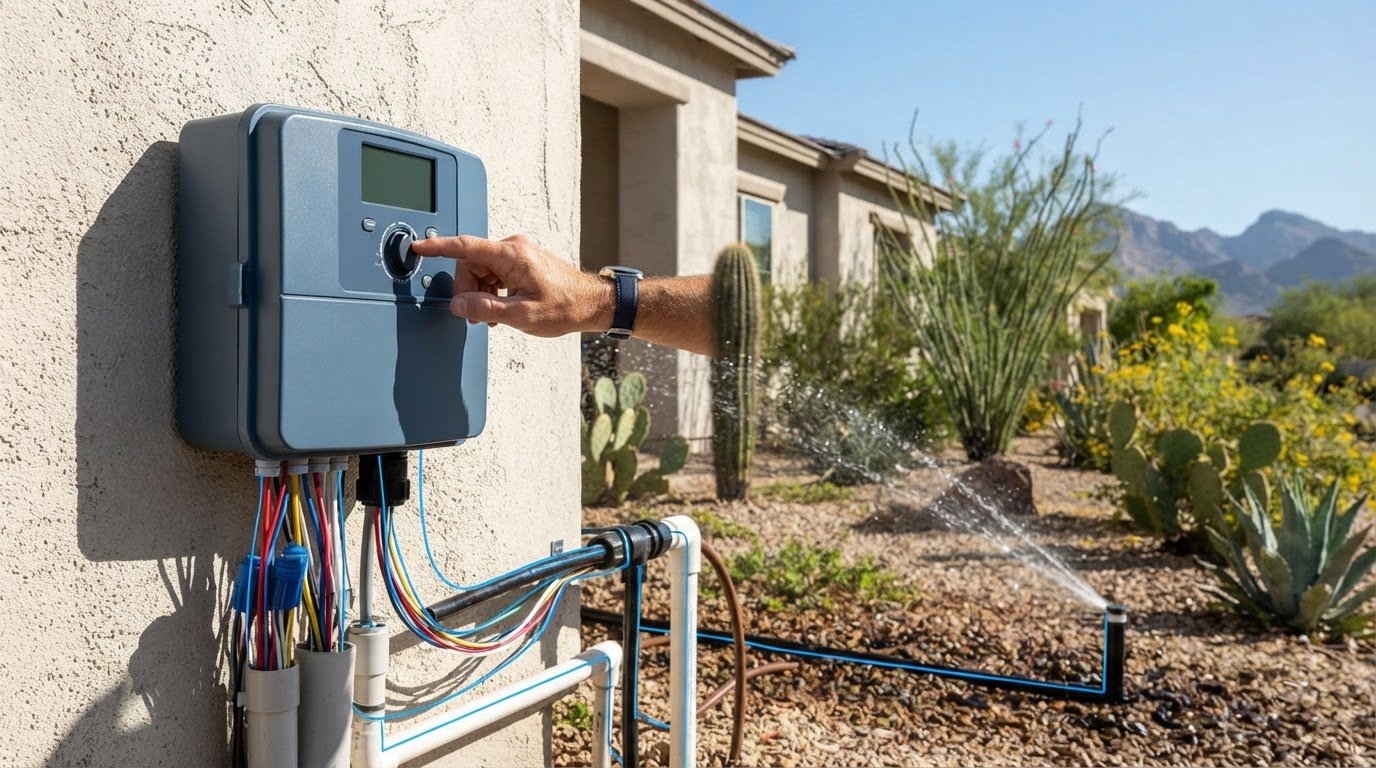
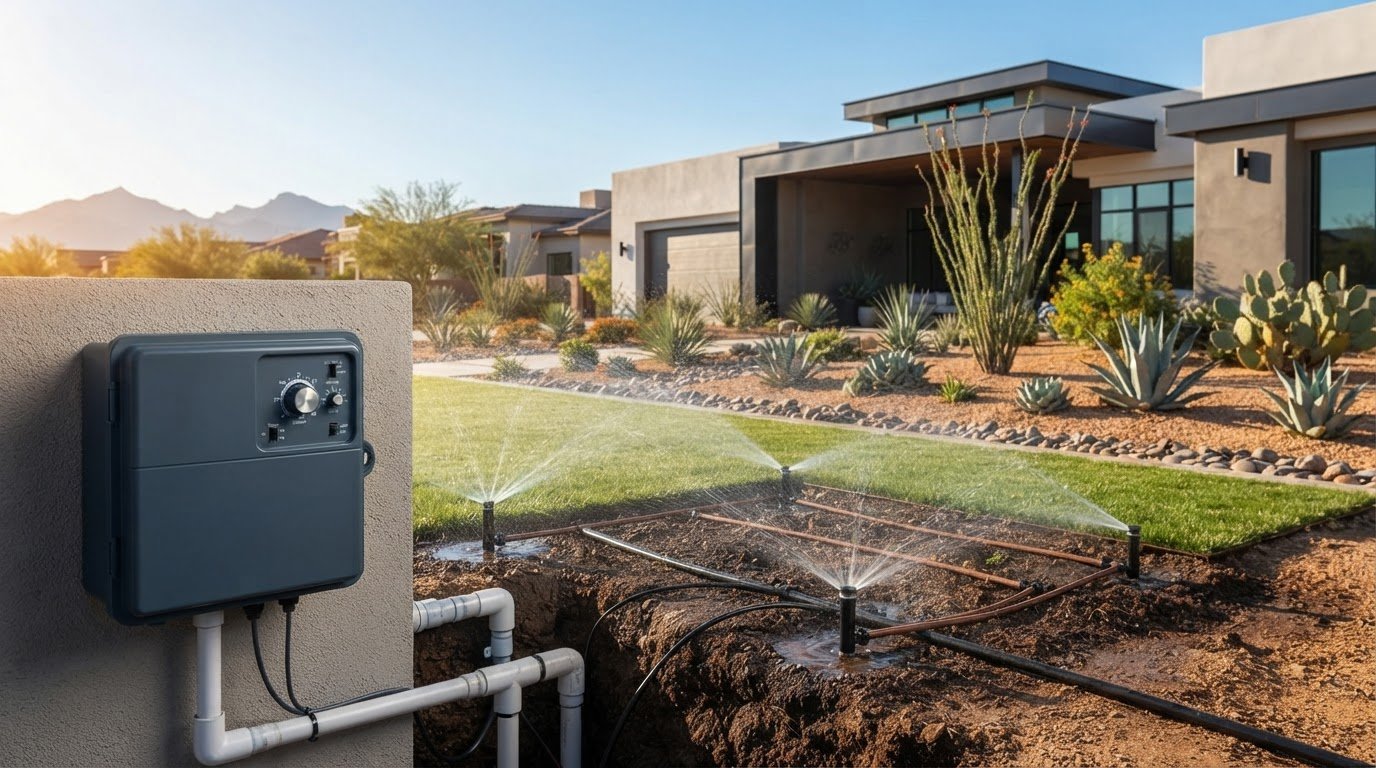
A drip setup works as a connected system, not just a length of tubing with emitters attached. Each component has a separate job, and the overall arrangement affects whether water reaches the intended planting areas consistently. For a drip irrigation system for desert plants, understanding those roles helps homeowners identify what to inspect without assuming every property needs the same parts or settings.
| Component | What it does | Why it matters for desert plants |
|---|---|---|
| Tubing | Carries water through the planting area. | Its route determines which plants can receive water and where delivery points can be placed. |
| Emitters | Release water from the tubing near selected plants. | Placement helps direct moisture toward the intended root area rather than an unplanted space. |
| Filter | Traps particles in the water before they reach the emitters. | Reducing particles can help prevent emitter blockage and uneven delivery. |
| Pressure regulator | Adjusts incoming pressure for the drip system. | Appropriate pressure supports consistent operation across the system. |
| Controller | Manages when the irrigation system runs. | It provides a way to manage watering, but the schedule still needs to suit the plants and current conditions. |
What each drip irrigation component does
Tubing forms the delivery path, while emitters determine where water exits near plants. Filters help limit particles that could obstruct small outlets. A pressure regulator helps manage pressure supplied to the drip line, and a controller manages irrigation timing. No component sets the right watering plan by itself. Selection and arrangement need to work with the property’s layout and plant groups.
If one part of a bed appears dry while another receives water, the cause could involve emitter placement, a blocked outlet, or how water is supplied. Checking the components together is more useful than changing the schedule without first checking delivery.
When an existing sprinkler layout may need a different approach
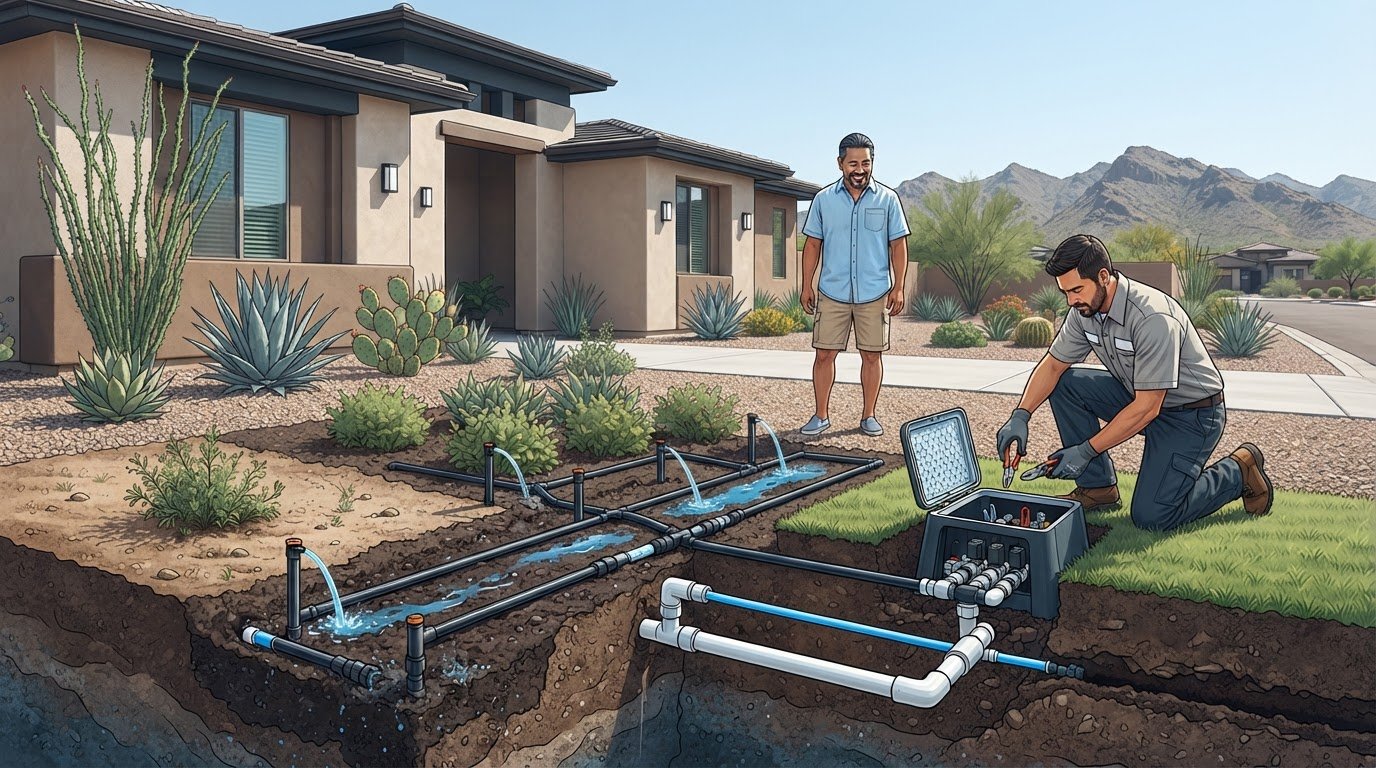
Adapting an existing sprinkler area for drip irrigation isn’t simply a matter of replacing spray heads. The layout, existing irrigation components, and plants being watered all affect the right approach. A pattern designed for a broad lawn area, for instance, may not place water near individual shrubs or trees. The system may need changes to its delivery points or other components to serve a different planting arrangement.
Separate the planning question from the installation steps. First consider which plants need water and where delivery should reach them. Then assess how the existing system can support that layout. Sonora Sprinkler provides residential drip system installation and upgrades that account for the property’s irrigation arrangement. Reviewing the components as a whole helps identify whether adjustment, repair, or a redesigned layout is the practical next step.
Adjust Desert Plant Watering as Arizona Conditions Change
A drip system that suited a planting bed when it was installed may need review as plants mature, temperatures shift, or parts wear. Rather than changing watering by habit, look at both the plants and the system’s delivery. A drip irrigation system for desert plants needs to respond to the plants it serves, not follow one fixed calendar for every property.
A practical check for changing plant and weather needs
Use a simple observation process. First, note which plants look stressed and whether the pattern affects one plant, a group, or an entire zone. Then check the soil near the root area to see whether water appears to be reaching it. Finally, observe the irrigation while it runs, looking for uneven output or water escaping where it shouldn’t.
Consider recent weather and current temperatures, but don’t rely on the season alone to dictate frequency. The University of Arizona Cooperative Extension provides Arizona-specific watering guidance; consult current recommendations before changing a schedule. Soil, exposure, plant type, and maturity all influence how quickly a planting area dries. A young plant and an established tree in the same yard may need different adjustments.
Signs that a drip system needs attention
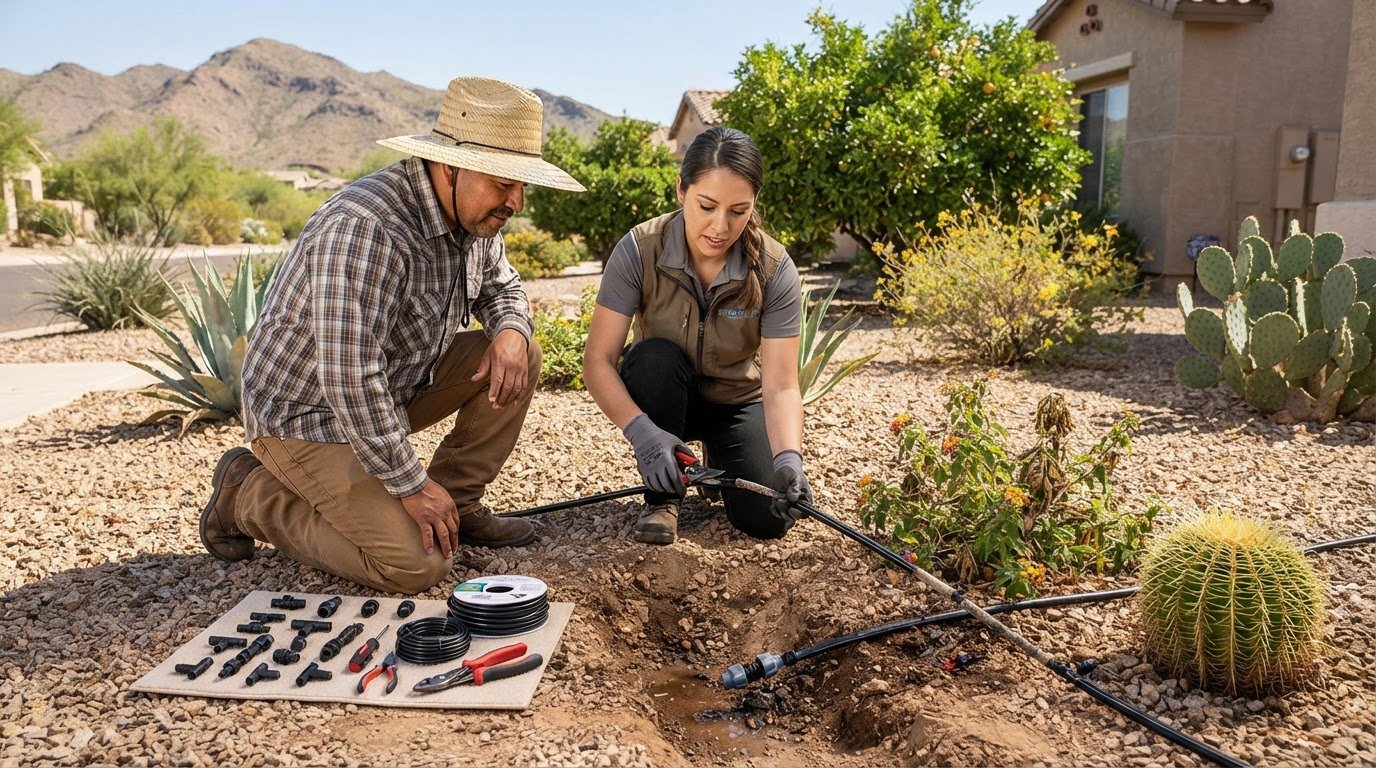
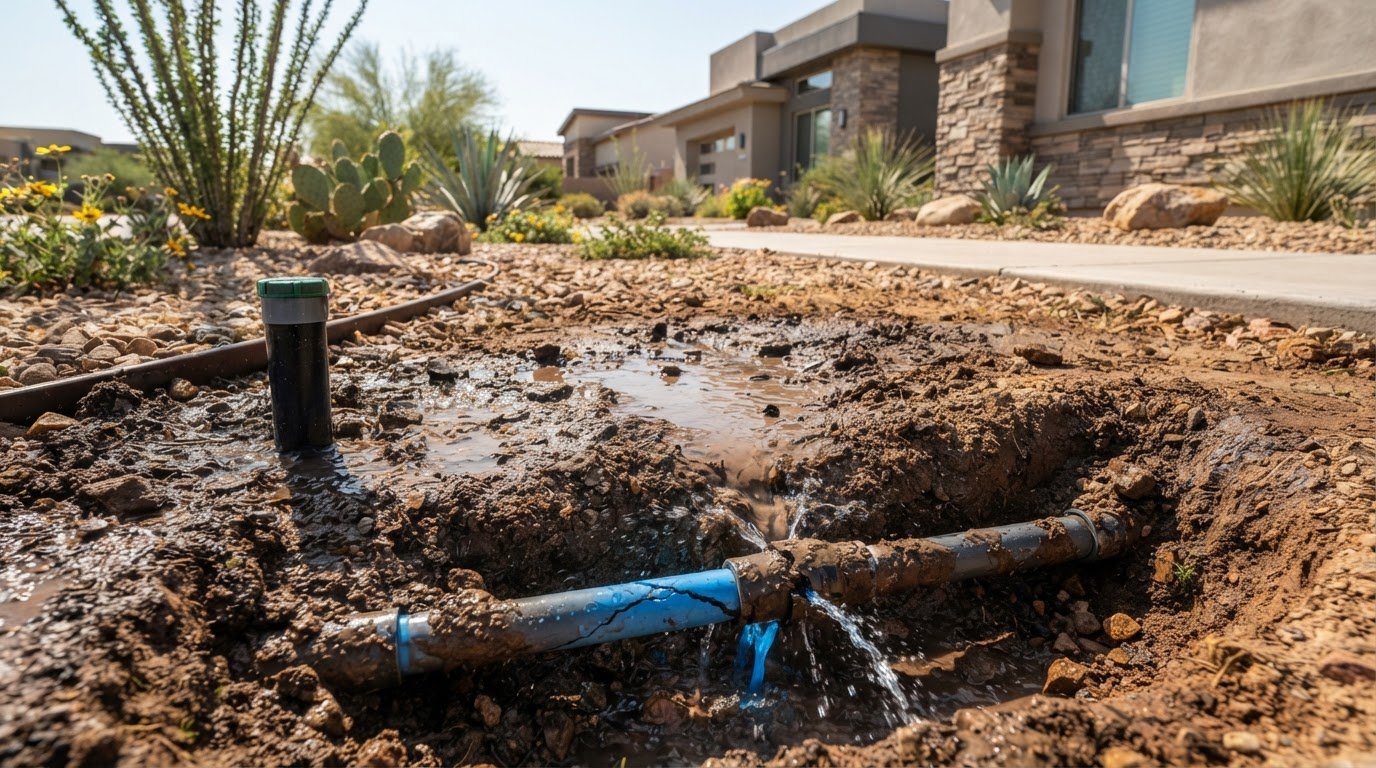
Uneven plant condition can be a clue, especially when plants in one zone show different levels of stress. Check whether emitters deliver water consistently, and look for visible leaks, damaged tubing, or outlets that may be obstructed. Inspect the filter, too, since trapped particles can affect emitter flow. These checks can help identify where delivery differs from the intended pattern without taking apart the system.
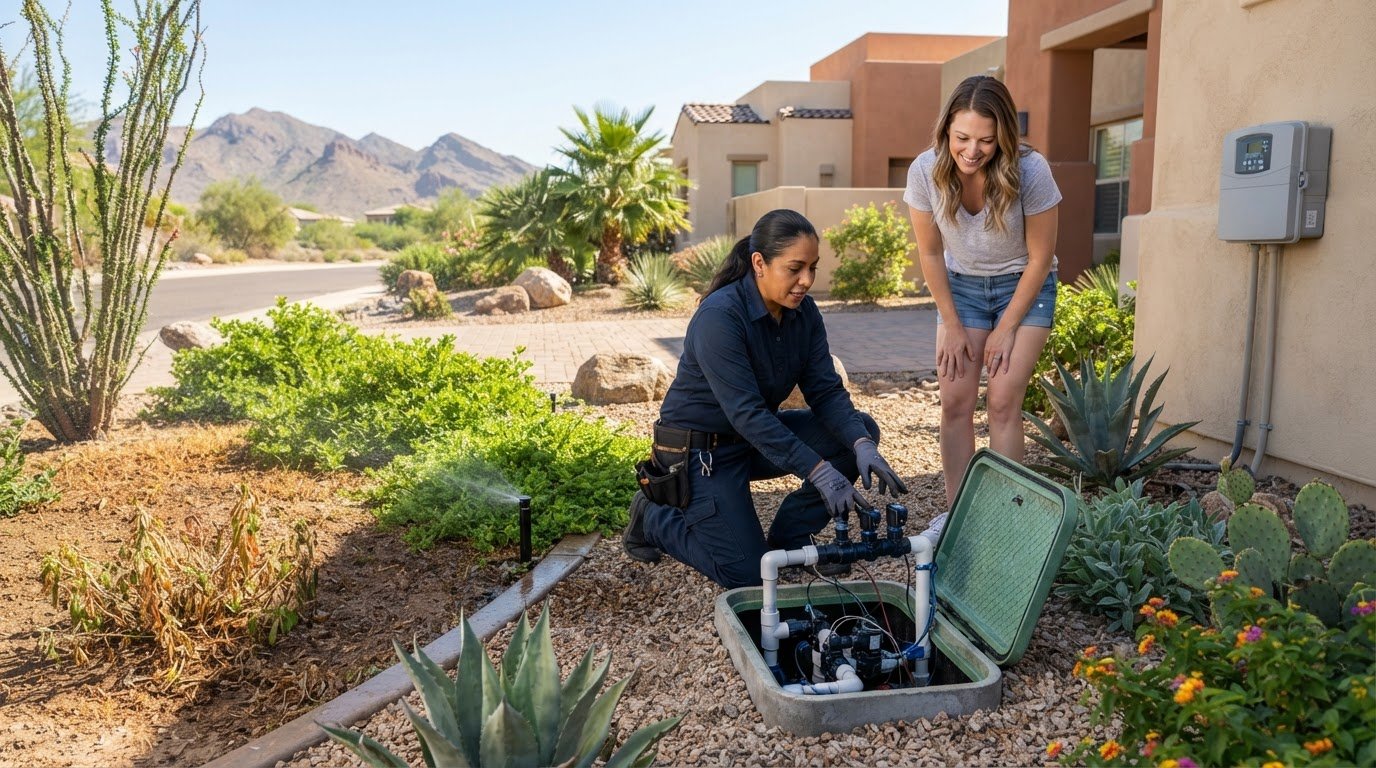
Use observations to distinguish a scheduling question from a possible system issue. If soil near a plant stays dry while nearby areas receive water, or water pools around a line, changing run time alone may not address the cause. Persistent uneven delivery, leaks, or damaged parts may call for irrigation repair or system adjustments. Sonora Sprinkler’s residential irrigation repair and maintenance services address system issues such as leaks and component problems.
For a useful review, note the affected plants, the zone involved, visible leaks or damage, and whether the issue occurs while the system is running. This gives a clearer picture of what has changed and helps distinguish a localized concern from a broader delivery problem. Avoid applying one correction across the whole yard if only one plant group or section is affected.
If your system isn’t delivering water as intended, discuss your residential drip irrigation needs with Sonora Sprinkler Inc.
Plan a Residential Drip Irrigation System with Sonora Sprinkler
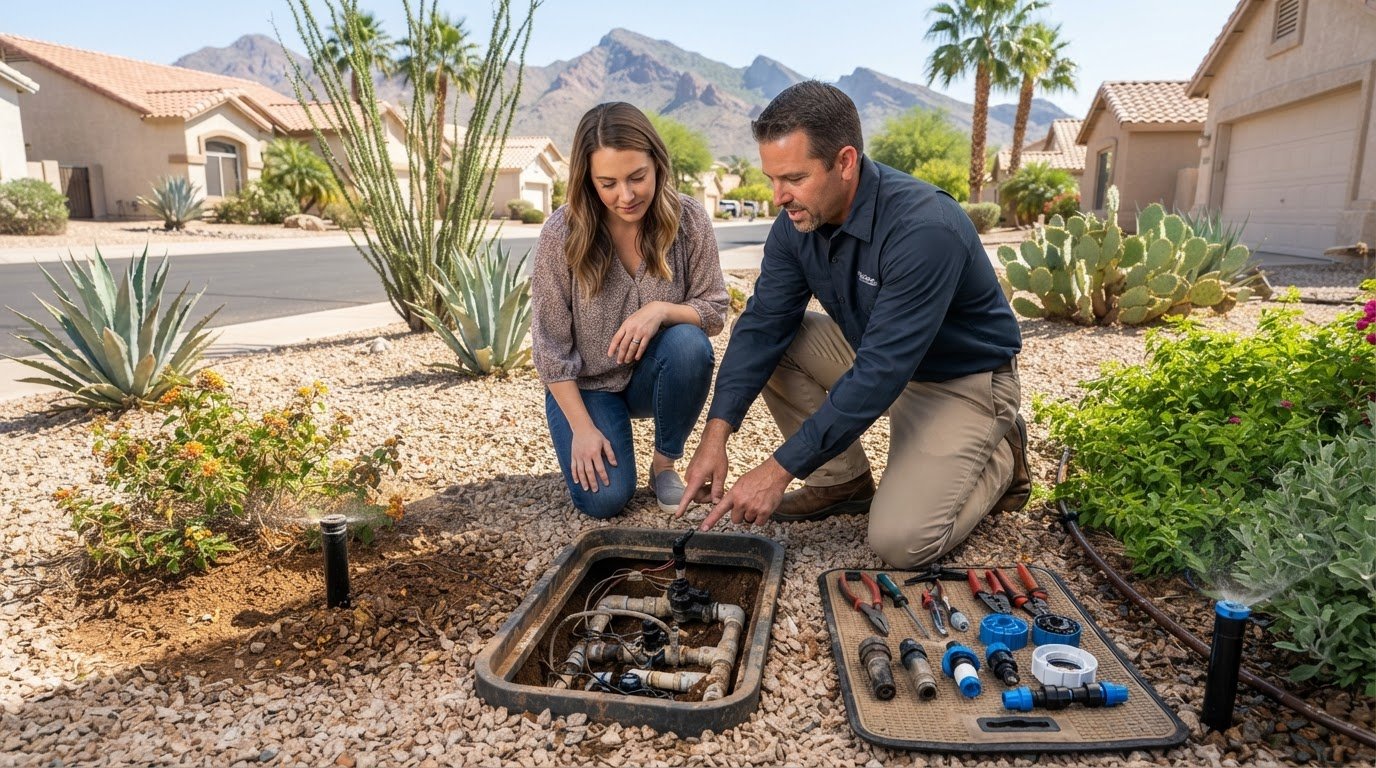
A residential drip layout should reflect the property as it stands, including its plant groups, planting areas, and existing irrigation. A design review can help determine whether delivery points suit the plants, whether different groups need separate watering zones, and whether existing components can support the intended arrangement. This is especially useful when a bed includes a mix of new and established plants or when some areas receive water unevenly.
Sonora Sprinkler provides residential drip irrigation installation, upgrades, and repair. The work can be tailored to a property’s irrigation needs, whether you’re planning a new system or addressing one that no longer delivers water appropriately. For homeowners in Peoria considering a new system or upgrade, the company’s drip irrigation services are a practical place to start.
When professional drip-system design can help
A system review may help if plants with different watering needs share one zone, emitters don’t appear to reach the intended root areas, or plant growth has changed the original layout. A professional design can consider those conditions alongside the existing irrigation instead of treating every planting bed as a blank slate. Installation and upgrades can then be planned for the home’s layout and delivery needs.
Before discussing an installation or large project, note which plants or zones concern you and what you’ve observed, such as uneven delivery or a change in plant condition. These details give the project a clear starting point. The goal is a system plan that accounts for the residential property and its irrigation, not a one-size-fits-all layout.
Local residential irrigation service in Arizona
Sonora Sprinkler is a family-owned, licensed, and insured residential irrigation company serving Surprise and Peoria. The company has been family-owned and operated since 1995 and has completed 98,000 jobs total, according to its current business information. Free estimates are available on installations and large projects.
For a new layout, an upgrade, or a system that needs attention, discuss your property’s drip irrigation needs with Sonora Sprinkler. Contact Sonora Sprinkler about your drip system.
Take the Next Step Toward Better Root-Zone Coverage
Start by looking at your irrigation through the plants’ needs: note which areas seem unevenly watered, where plants have grown since the system was installed, and which groups may need different delivery. These observations can help focus a residential system review and shape a practical plan for your property.
A well-planned drip irrigation system for desert plants should suit the property as it is now, while allowing for adjustments as plants mature and conditions shift. Sonora Sprinkler provides residential drip irrigation installation, upgrades, and repairs for homeowners in Surprise and Peoria. Contact Sonora Sprinkler to discuss your residential drip irrigation system.
With a clear plan and careful attention to water delivery, you can take a confident next step toward supporting your desert plants.
Frequently Asked Questions
Is drip irrigation good for desert plants?
Yes, a drip irrigation system for desert plants can deliver water near selected plants without spraying the entire area. It can be useful for individual trees, shrubs, or smaller planting beds that need targeted delivery. Suitability still depends on the plants and the site. A cactus beside a thirsty shrub, for instance, may need a different watering approach even if both grow in the same bed.
How often should I water desert plants with a drip system?
There isn’t one watering frequency that fits every desert plant. Newly planted plants generally need more frequent attention while they establish, while established desert-adapted plants usually need infrequent, deeper watering. Arizona conditions also change through the year, so check current guidance from the University of Arizona Cooperative Extension before adjusting a schedule. Watch plant condition and soil moisture near the roots, then make changes for the specific plant group rather than the whole yard.
What type of drip emitter do desert plants need?
The right emitter depends on the plant, its root area, and how water moves through the site. A point-source emitter can serve an individual plant, while tubing with built-in outlets may suit a continuous planting row. Neither format sets the right amount or schedule on its own. Consider whether water reaches the plant’s roots and whether nearby plants have different needs before choosing or repositioning emitters.
Can I convert my sprinkler system to drip irrigation for desert plants?
An existing residential sprinkler system may be adapted, depending on its layout, components, and the plants it needs to water. A spray zone designed for a broad lawn area may not deliver water appropriately to separate desert shrubs or trees. The conversion may involve changes to components and delivery points. Sonora Sprinkler provides residential drip installation, upgrades, and irrigation repair in Surprise and Peoria.
Does drip irrigation save water in Arizona?
It can help manage water use by directing delivery toward plants instead of wetting broad areas, but savings aren’t automatic. Leaks, misplaced emitters, unsuitable schedules, or water running off before it soaks in can undermine performance. For example, a line that waters bare ground alongside shrubs may still waste water. Review where water goes during operation and adjust the setup to suit the plants and site.
How can I tell if my drip irrigation system is leaking?
Look for soggy or unusually lush spots when nearby soil and plants appear normal. A leak may also be suspected if water pressure drops or a water bill rises without an obvious change in use. During an operating cycle, inspect visible tubing and connections for escaping water, and note whether one area receives less water than expected. These signs can point to an irrigation issue that needs professional diagnosis.