What if the wettest spot in your yard isn’t directly above the break? A buried sprinkler line can carry water through the soil, making the source hard to pinpoint. Signs of a broken sprinkler pipe may include persistent pooling, unusually soft or sunken ground, or a zone that loses pressure. Similar symptoms can also come from a damaged sprinkler head, valve, or controller.
The pattern helps narrow down the cause. A mainline break may leak even when irrigation is off, while a lateral-line break typically shows up when its zone runs. These clues are useful, but they don’t confirm a pipe break on their own.
This guide covers ground, pressure, and zone clues to watch for, how they compare with common component faults, and what to do next. You’ll also learn how professional diagnosis can identify the source and guide residential irrigation repair, including PVC pipe replacement when needed.
Key Takeaways
- Persistent soggy ground, pooling, erosion, or sunken areas can signal a broken sprinkler pipe, but each clue needs context.
- Note whether moisture appears continuously or only while a particular irrigation zone runs.
- Compare the affected area and watering pattern with visible head leaks or broader system issues before assuming a buried pipe is damaged.
- Review the controller schedule and observe the suspected zone from the surface. Avoid digging before the source is clearer.
- Professional diagnosis can distinguish PVC pipe damage from head, valve, backflow, or wiring faults and guide the appropriate repair.
What are the signs of a broken sprinkler pipe in your yard?
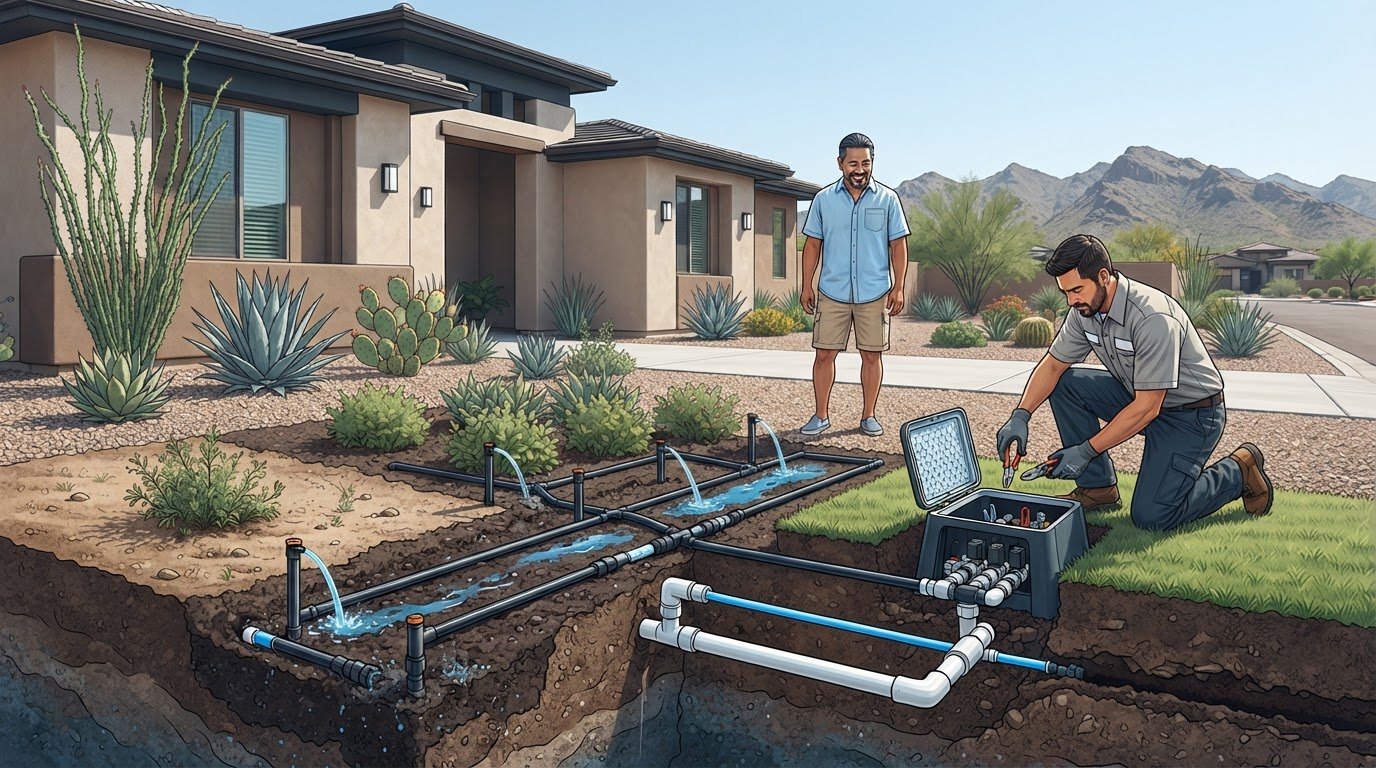
A broken irrigation pipe has a crack, split, or separation that lets water escape before it reaches the sprinkler heads. Signs of a broken sprinkler pipe may show up in the soil or in how a zone waters, but no single symptom confirms the cause. A pipe leak is one possibility to investigate alongside faults with heads, valves, or other system components.
Because an irrigation system carries water through connected lines to different parts of a yard, the location and timing of a symptom can help narrow the search. In Surprise and Peoria, dry conditions can make surface clues harder to read. Look for recurring changes rather than relying on one glance at the ground.
Ground and landscape clues that may point to a pipe leak
Check for a patch that stays soft or damp well after a scheduled watering cycle ends. Soil that is briefly moist right after irrigation may be normal. Ground that remains muddy, develops unexplained pooling, or repeatedly feels wetter than nearby areas deserves closer attention. Escaping water may also wash soil away, leaving a small eroded channel or shallow depression near a buried line.
Compare the same spot before watering and after the cycle. Note whether the wet area returns, grows, or shifts after each scheduled cycle, and whether it appears when no recent rain or other water source could explain it. These observations help distinguish a recurring irrigation pattern from a temporary change in the yard. Pooling, erosion, or localized sinking are clues to investigate, not proof of a broken pipe.
Watering and pressure clues across a sprinkler zone
Watch the zone while it runs. A sudden change in pressure or coverage may show up as heads that spray weakly, unevenly, or fail to reach their usual areas. If the change is limited to one zone and persistent wet ground appears nearby, the pattern can help narrow down the section to investigate. It still doesn’t confirm a leak: a damaged head or valve fault can also affect a zone.
Low pressure alone isn’t enough to identify a broken line. A clogged or damaged sprinkler head, a valve problem, or a wiring fault can disrupt zone performance too. Note which heads look different from their usual pattern and whether the ground changes at the same time. If one zone’s performance changes suddenly, irrigation wiring and diagnostics can help distinguish system faults from suspected pipe damage.
Several matching clues are more informative than one isolated symptom. For example, recurring pooling near a buried route alongside a sudden drop in coverage on one zone gives more reason to investigate than either sign alone. Record when symptoms appear and which areas are affected. That pattern can help guide a more accurate diagnosis.
Why a broken sprinkler pipe changes watering patterns and ground conditions
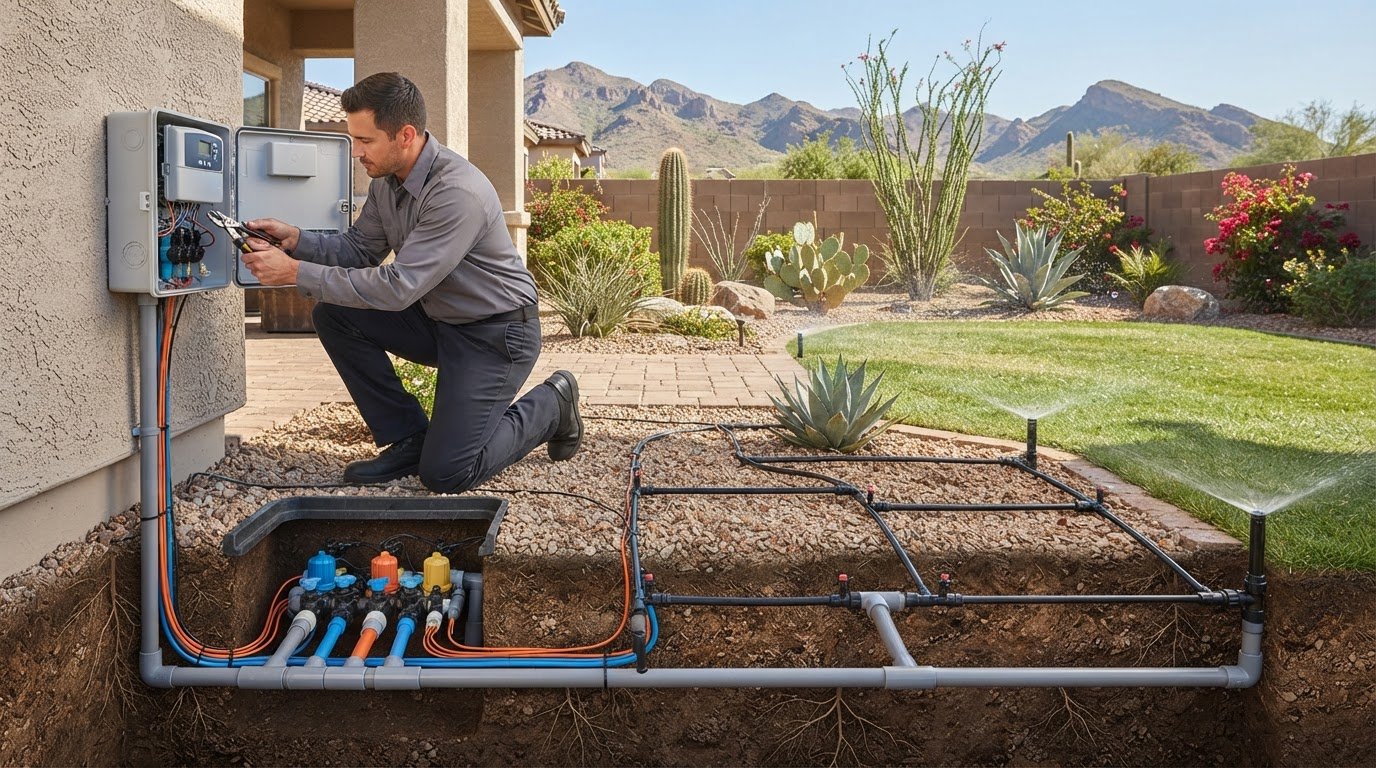
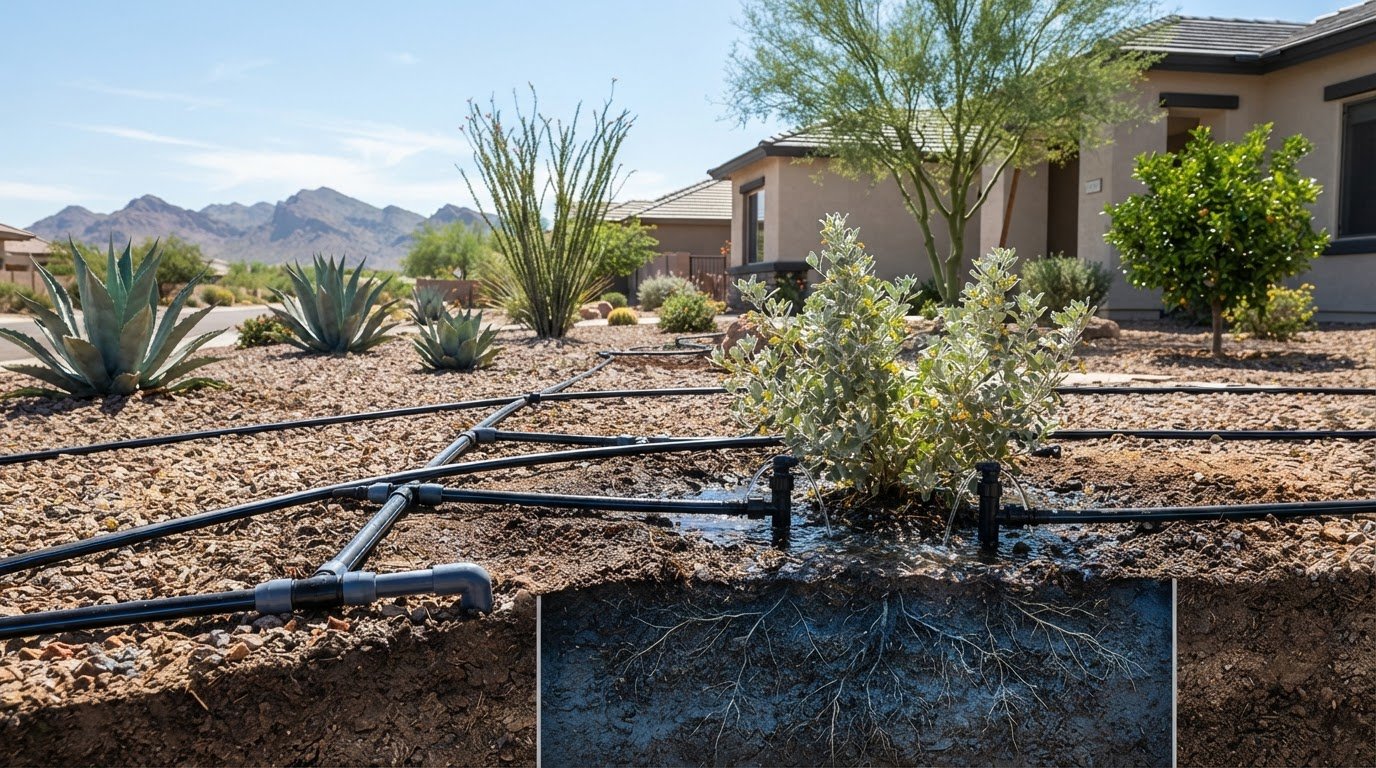
A pipe breach changes where irrigation water goes. Instead of traveling through the line to the sprinkler heads, some water escapes into the surrounding soil. The effect depends on where the break is, how much water is moving through the pipe, and whether the system is running. Symptoms may appear only during a watering cycle or persist after it ends.
In a Surprise or Peoria yard, surface conditions can be misleading. Hot, dry weather may make water less visible at ground level, while soil can carry escaping water away from the break. A damp patch may appear some distance from the damaged section, so its position is useful evidence, not a precise spot to start digging.
How a pipe leak can affect soil and nearby plants
Water escaping from a buried line may repeatedly saturate a localized area. The soil could feel softer or stay damp longer than nearby ground, especially after an irrigation cycle. A recurring wet patch differs from surface moisture that appears briefly after watering and then fades. Pooling or soil washout may occur if enough water escapes in one place, but neither outcome is inevitable.
Watch how the spot changes across watering days. If the same patch becomes wet after a cycle, dries only partly, then becomes wet again, that repeated pattern is more meaningful than one damp area. The WaterSense program’s watering tips offer general guidance on efficient watering. Observing how your yard responds can also help you notice when water isn’t reaching plants as intended.
Why pressure and coverage may change in one zone
When water escapes before reaching the heads, less may be available for normal spray coverage. Heads in the affected zone might appear weaker or uneven compared with their usual operation. If other zones still run as expected, the limited pattern helps narrow down where to investigate. If coverage changes across the whole property, consider broader causes, such as a supply issue, rather than assuming one buried lateral line is responsible.
Pressure alone doesn’t diagnose a pipe break. A faulty head can disrupt nearby spray, while a valve problem may affect the zone it controls. Wiring faults can also interfere with zone operation. Compare ground conditions with the timing of the change, and note whether one or several zones are affected. A zone-level pattern is most useful when you check the related heads, valve, and supply conditions alongside the suspected pipe.
These combined observations can guide a focused inspection without treating symptoms as certainty. If recurring ground changes and altered zone performance leave the source unclear, arrange an irrigation diagnosis to distinguish pipe damage from other system faults.
Broken sprinkler pipe or another problem? Compare the signs
Several irrigation faults can cause weak coverage or wet soil. Compare where the water appears and how the system behaves to narrow down the possibilities. The table below can help, but it can’t confirm a buried pipe failure. Observe the system from the surface, note which zones are affected, and look for visible damage before drawing a conclusion.
| Clue | Possible source | What to observe next |
|---|---|---|
| Recurring wet ground along a likely pipe route | Underground pipe leak | Check whether the same area becomes wet during or after one zone runs, and whether nearby heads also show reduced coverage. |
| Water spraying or bubbling at one head | Cracked head, loose connection, or damaged seal | Watch the head while its zone runs. See whether water escapes directly from the visible component or the ground around it. |
| One zone won’t start or shuts off incorrectly | Valve, wiring, or controller issue | Check whether the controller is set to run that zone and note whether other zones operate normally. |
| Several zones show weak flow or unusual operation | Supply or backflow issue, among other possibilities | Compare the behavior across the property and note whether the problem is limited to one area or system-wide. |
Pipe leak versus broken sprinkler head
A head fault is often easier to spot because the component is above ground. If water visibly sprays sideways, bubbles around the head, or continues to spill from it during operation, inspect that location first. Water concentrated around one head may point to a head or connection problem. Moisture that recurs along a buried route can raise suspicion of a pipe leak.
The patterns can overlap. A broken head may create pooling, and a buried leak may reduce spray coverage. More than one fault can occur at once, so repairing a visible issue may not explain every symptom.
Pipe leak versus valve, backflow, or wiring trouble
A localized wet patch paired with a change in one zone can point toward a leak, but a zone that won’t start or shut off as expected suggests an operational fault may also be involved. A valve can affect the zone it controls. A controller or wiring problem may prevent a zone from operating even without visible pipe evidence. Backflow or supply issues are worth considering when several zones are affected.
Note which zones respond and whether water appears in the yard, then compare those observations rather than diagnosing from pressure alone. For electrical symptoms, irrigation wiring diagnostics can help distinguish a control fault from suspected pipe damage. A professional assessment can also separate pipe, head, valve, and backflow problems before repair work begins.
What to check when you suspect a broken sprinkler pipe
A careful surface-level check can make the problem easier to diagnose without disturbing buried irrigation lines. Signs of a broken sprinkler pipe are more useful when you can describe where they appear, when they show up, and how the affected zone behaves. Follow these steps only if you can observe the system safely.
A simple surface-level inspection checklist
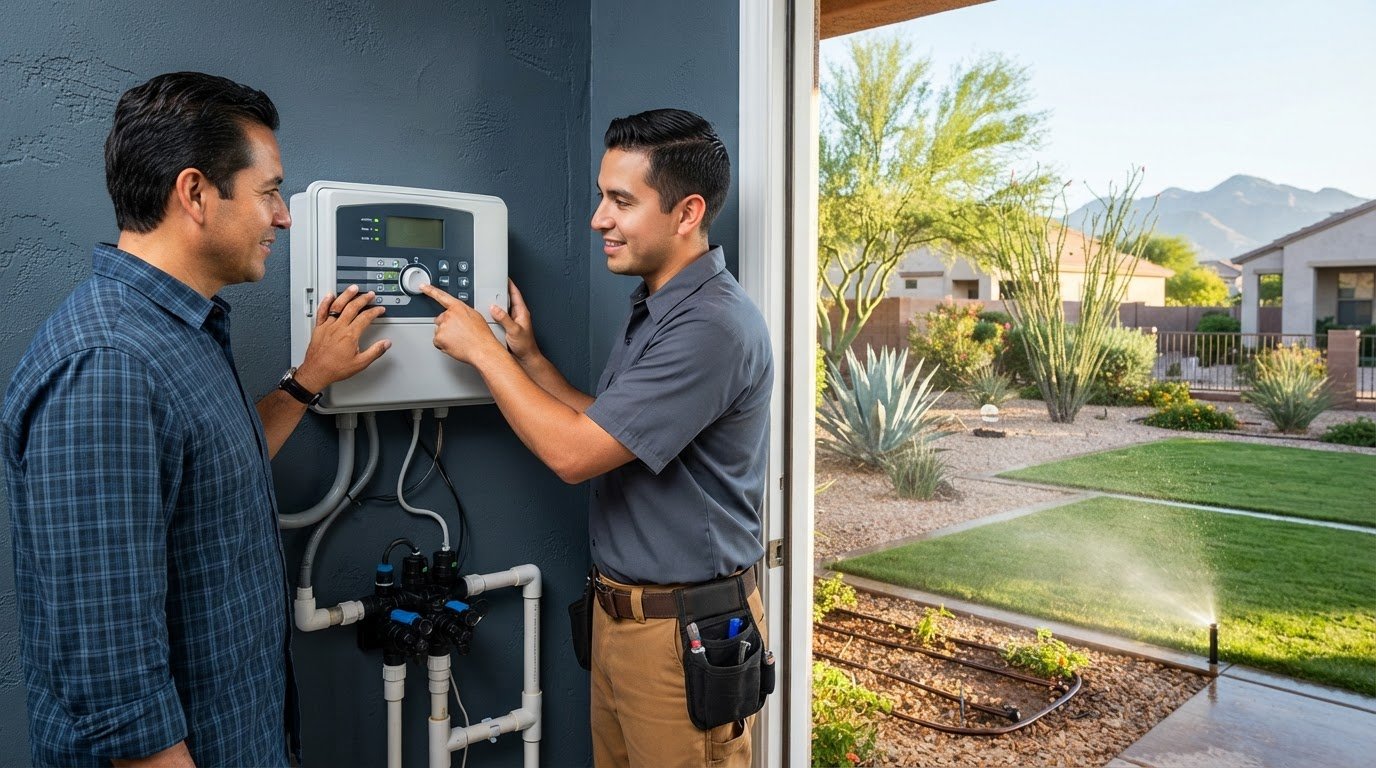
Start with the controller and move outward to the yard. Don’t open valve or backflow equipment, dig for a suspected line, or dismantle sprinkler heads. Record what you see instead. These details give an irrigation technician a clearer picture of whether symptoms may come from a pipe, a head, a valve, or another system fault.
- Review the controller schedule. Note which zone is scheduled to run and when. If the controller has a manual zone-run function, use it only if you understand its operation and can observe the yard safely.
- Compare the ground before watering. Look at the suspected area and nearby soil. Note existing dampness, pooling, soft ground, or a shallow depression, and record its location in relation to visible heads or the likely irrigation route.
- Observe the scheduled zone from the surface. Watch for a change in spray strength or coverage, visible water escaping from a head, or water appearing in the suspected area. Don’t step into a flooded or unstable patch.
- Check the area again after shutoff. Record whether the moisture settles, persists, or spreads after the cycle ends. Compare the same location after later scheduled cycles to see whether the pattern repeats.
- Note the system-wide pattern. Write down which zone ran and whether other zones appeared to operate normally. A change isolated to one zone is useful information, but it doesn’t prove a pipe is damaged.
Keep notes concise: location, time, affected zone, what happened during watering, and whether moisture remained afterward. A brief description or a photo taken from a safe position can show how conditions change between cycles.
When to stop troubleshooting and arrange a diagnosis
Stop observing and arrange an assessment if pooling grows, water continues unexpectedly after the cycle, or the system’s behavior becomes unpredictable. Avoid digging blindly or handling valves, backflow devices, and buried lines without appropriate expertise. These components need different checks, and changing settings or disturbing equipment may make the original symptoms harder to assess.
Repeatable observations help a technician compare the reported location with zone behavior and visible components. For residential irrigation repair, consider how the symptoms align with the system’s operation. Diagnosis can distinguish pipe damage from other faults before repair begins.
If the symptoms persist, schedule an irrigation diagnosis to identify the source and determine the appropriate next step.
How professional sprinkler pipe diagnosis leads to the right repair
Wet ground or a change in one zone can suggest a buried leak, but the same symptoms may come from a sprinkler head, valve, backflow component, or wiring fault. Professional diagnosis brings those clues together before repair work begins. For homeowners in Surprise and Peoria, that means assessing the reported location alongside how the residential system operates, rather than treating one symptom as proof of a broken pipe.
What a residential irrigation diagnosis considers
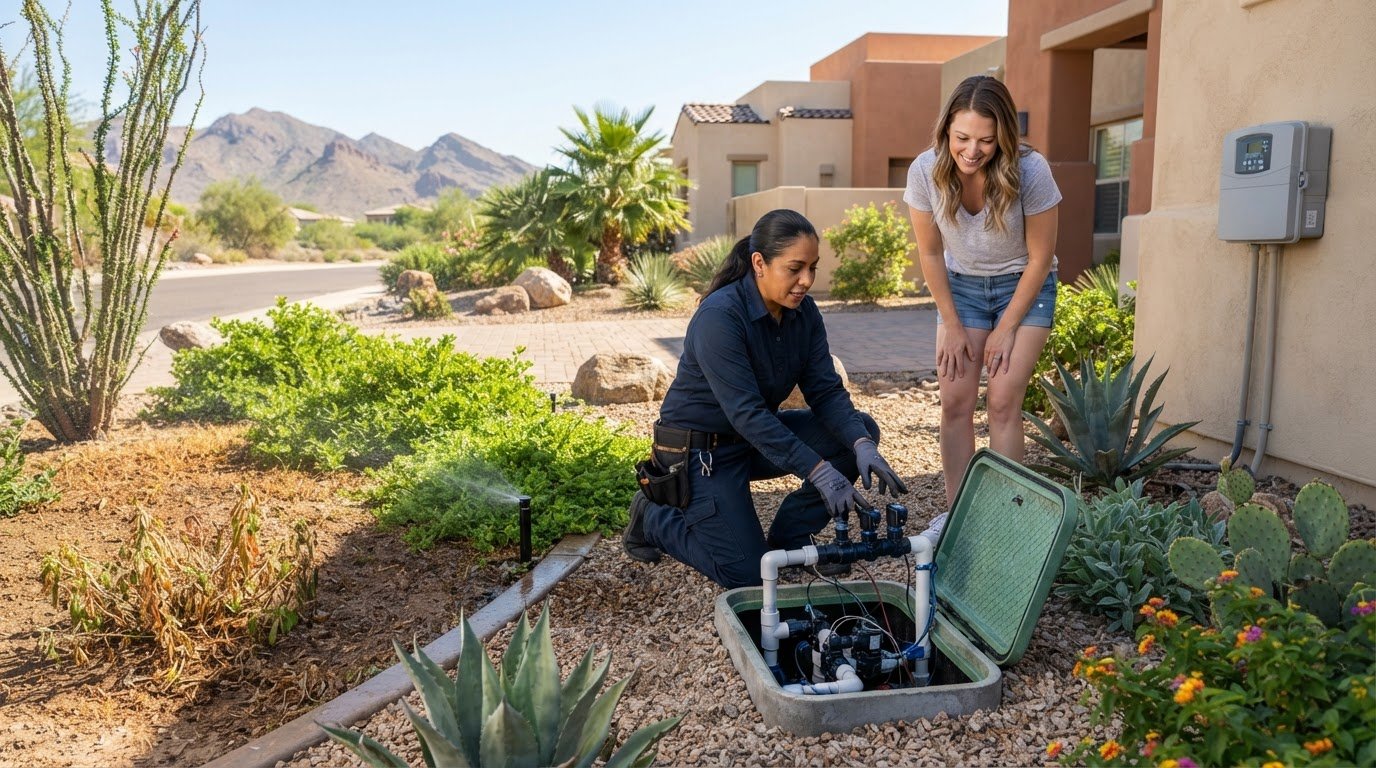
Your notes about where and when symptoms appear can help narrow down the affected zone and likely components. A technician can compare that report with ground conditions, zone behavior, and visible heads and system components. If one zone changes while others run normally, that’s useful context, but it still needs to be considered alongside other possible causes.
The assessment should distinguish a suspected PVC line leak from faults at accessible components. A visibly damaged head, a valve that isn’t operating as expected, a backflow issue, or an electrical problem can all affect watering. Checking these possibilities helps avoid assuming that a damp spot or weak spray automatically means buried pipe damage. The goal is to identify the source before selecting a repair.
From suspected pipe damage to a suitable repair
If diagnosis identifies damaged PVC pipe, pipe replacement is one residential irrigation repair option. The suitable approach depends on where the damage is and how extensive the affected section is. If the assessment instead points to a head, valve, backflow component, or wiring fault, the repair can target that issue rather than replacing pipe unnecessarily.
Clear symptom notes are useful, but professional inspection connects those observations to the system itself. Share which zone ran, where moisture appeared, and whether it remained after shutoff to help focus the assessment. For homeowners considering residential irrigation repair, diagnosis provides a practical basis for deciding whether the next step involves PVC pipe replacement or another repair.
Sonora Sprinkler Inc. provides residential irrigation repair and diagnostics in Surprise, Peoria, and surrounding communities. If you’ve noticed recurring symptoms and want help identifying the source, request residential sprinkler pipe repair.
Take the Next Step Toward a Healthy Irrigation System
Uncertainty about the signs of a broken sprinkler pipe doesn’t have to leave you guessing. Keep your observations handy and let a proper diagnosis guide the next step. Identifying the source, whether it’s a pipe or another system component, helps you make a practical repair decision and address your yard’s watering issue.
Sonora Sprinkler Inc. is a family-owned residential irrigation business serving Surprise and Peoria. Its repair and diagnostic work includes PVC pipe replacement when damaged pipe is identified. Your notes about the symptoms can help focus the assessment.
Request residential sprinkler pipe repair to identify the source and take the next step toward resolving the issue.
Frequently Asked Questions
Can a sprinkler pipe leak when the irrigation system is turned off?
Yes, water may continue escaping if the damaged section remains connected to a pressurized supply, even when no scheduled zone is running. The exact behavior depends on the system layout and where the damage is. Note whether a damp area grows between cycles, including overnight, and check the controller’s run history if available. These details support diagnosis, but persistent moisture alone doesn’t identify the source.
Is a wet spot in my yard always a sign of a broken sprinkler pipe?
No. Signs of a broken sprinkler pipe can overlap with normal irrigation, a leaking head, or water from another source. Consider whether rain, hose use, or another recent activity could explain the patch. Then compare it with the same area on another watering day. A recurring change linked to a particular zone is more useful to report than a single wet spot.
Can a broken sprinkler pipe affect only one zone?
Yes. If the damaged line serves one zone, symptoms may be limited to that section of the yard. Note whether the zone’s usual heads respond differently while other zones still operate as expected. If the issue appears only during one scheduled cycle, record that too. A valve or electrical control can also affect a single zone, so the pattern doesn’t confirm pipe damage on its own.
How can I tell a broken pipe from a leaking sprinkler head?
A leaking head may visibly spray or spill water at the sprinkler itself, making the source easier to locate from the surface. A buried leak may show up away from a head or affect a wider portion of the zone. If water appears at both the head and nearby ground, more than one fault is possible. Avoid pulling apart the head or digging nearby before the system is assessed.
What happens if I keep running a sprinkler system with a suspected pipe leak?
Continued watering may add more water to an already wet area and obscure how the original symptoms behaved. It may also leave plants elsewhere in the affected zone receiving less water than intended. If pooling grows or water continues after a cycle, stop running additional tests. Record the zone and timing, then arrange a residential irrigation diagnosis to identify the cause before deciding on a repair.
Should I dig up my yard to find a broken sprinkler pipe?
No. The wettest spot may not sit directly above the damaged section, and digging without a clear location can disturb other buried irrigation components. From the surface, note the affected area, the zone that ran, and whether the moisture changed after shutoff. A technician can use those observations to assess the system and determine whether PVC pipe replacement or another repair is appropriate for your Surprise or Peoria home.