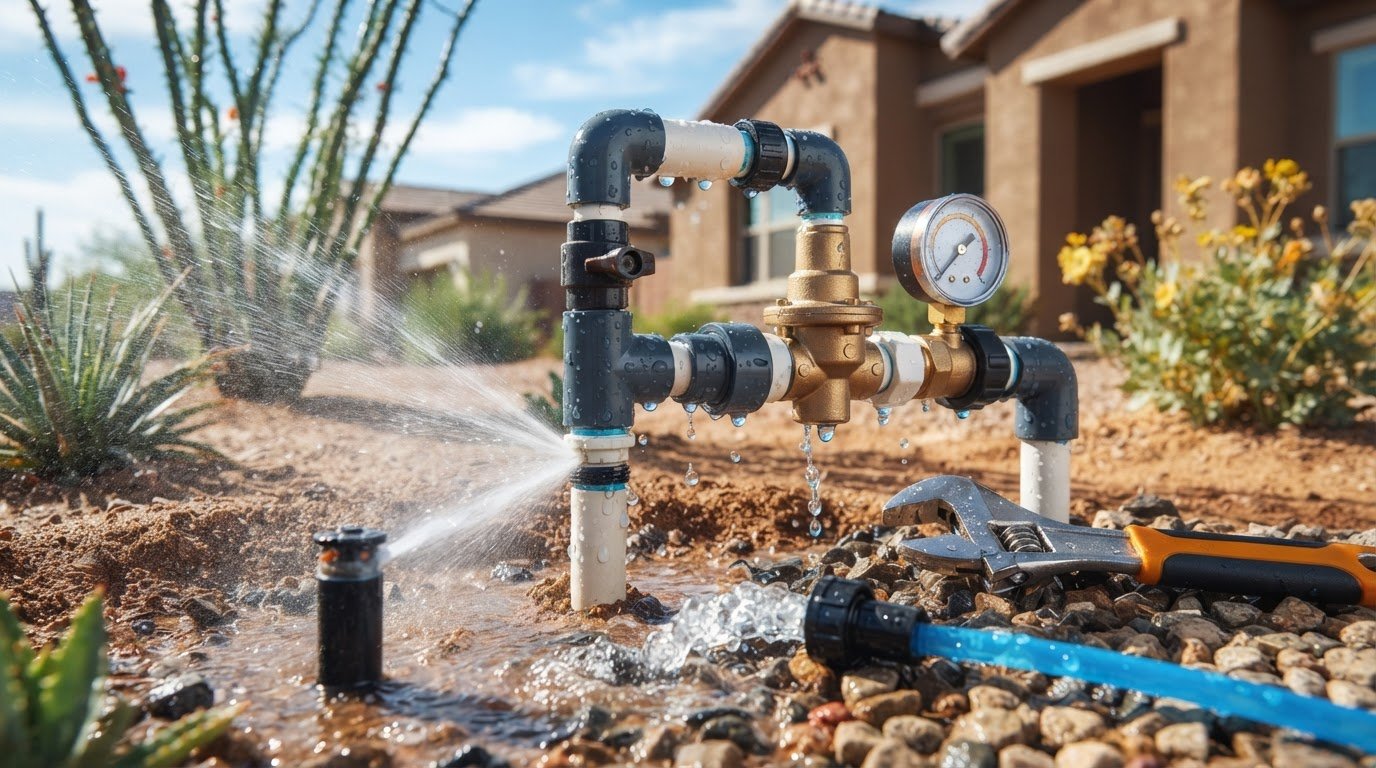
Arizona irrigation is a mechanical trade, not an add-on to general landscaping. In Surprise and Peoria, a PVC leak, miswired valve, or drip layout poorly suited to desert conditions can lead to dry areas, wasted water, or repeat repairs. When choosing a lawn sprinkler system contractor, look for experience with the components that work together underground and at the controller.
If you’ve dealt with a hidden leak, a pipe repair that didn’t hold, or drip lines that struggle in the Arizona heat, you know a system needs more than a quick adjustment. Start by understanding how its zones, valves, wiring, pipes, and emitters work together. Sonora Sprinkler Inc. focuses on residential irrigation in Surprise and Peoria, with services including custom system design, PVC replacement, drip installation, and wiring diagnostics. This article explains what to look for in an irrigation specialist and how careful design, diagnosis, and material choices can help a system work reliably in local conditions.
Key Takeaways
- Understand why irrigation requires hydraulic and electrical know-how beyond general landscaping, especially in Arizona’s demanding climate.
- See how a contractor focused on residential irrigation can tailor system design and repairs to a homeowner’s needs.
- Learn which details in a proposed repair or installation help you assess the pipe, valves, and system layout.
- Explore practical questions about wiring diagnostics, drip system design, and other work that can help prevent recurring problems.
- Recognize how precise irrigation design and leak diagnosis can support water efficiency and help protect your property.
Understanding the Difference: Irrigation Specialists vs. General Landscapers
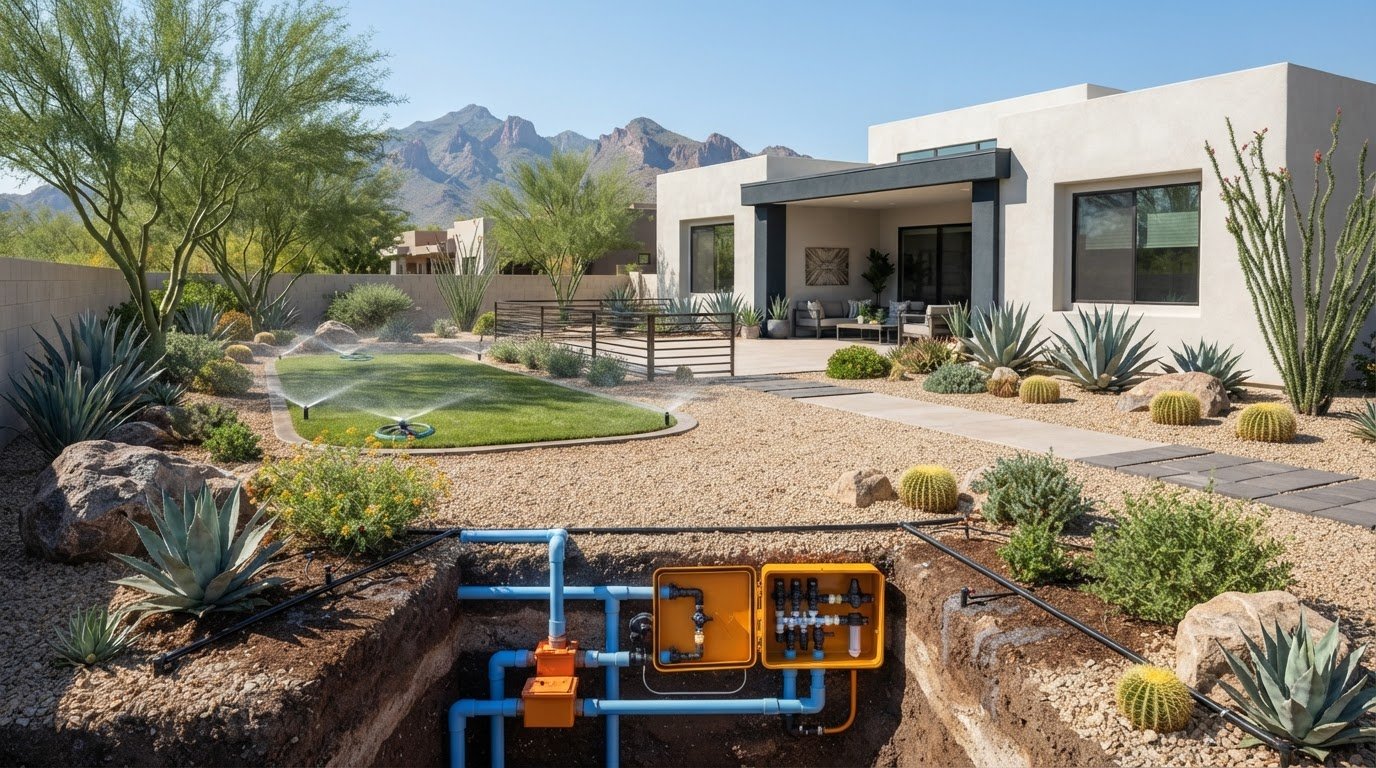
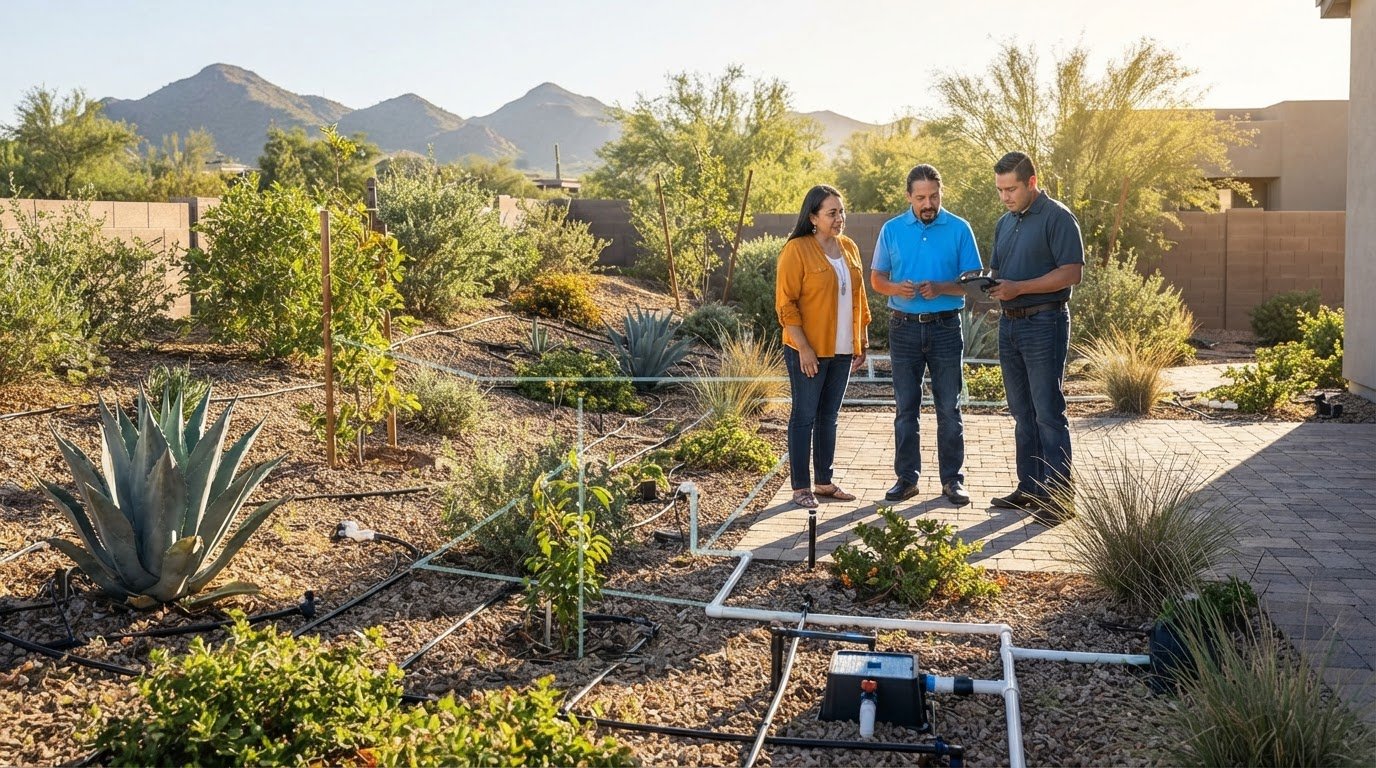
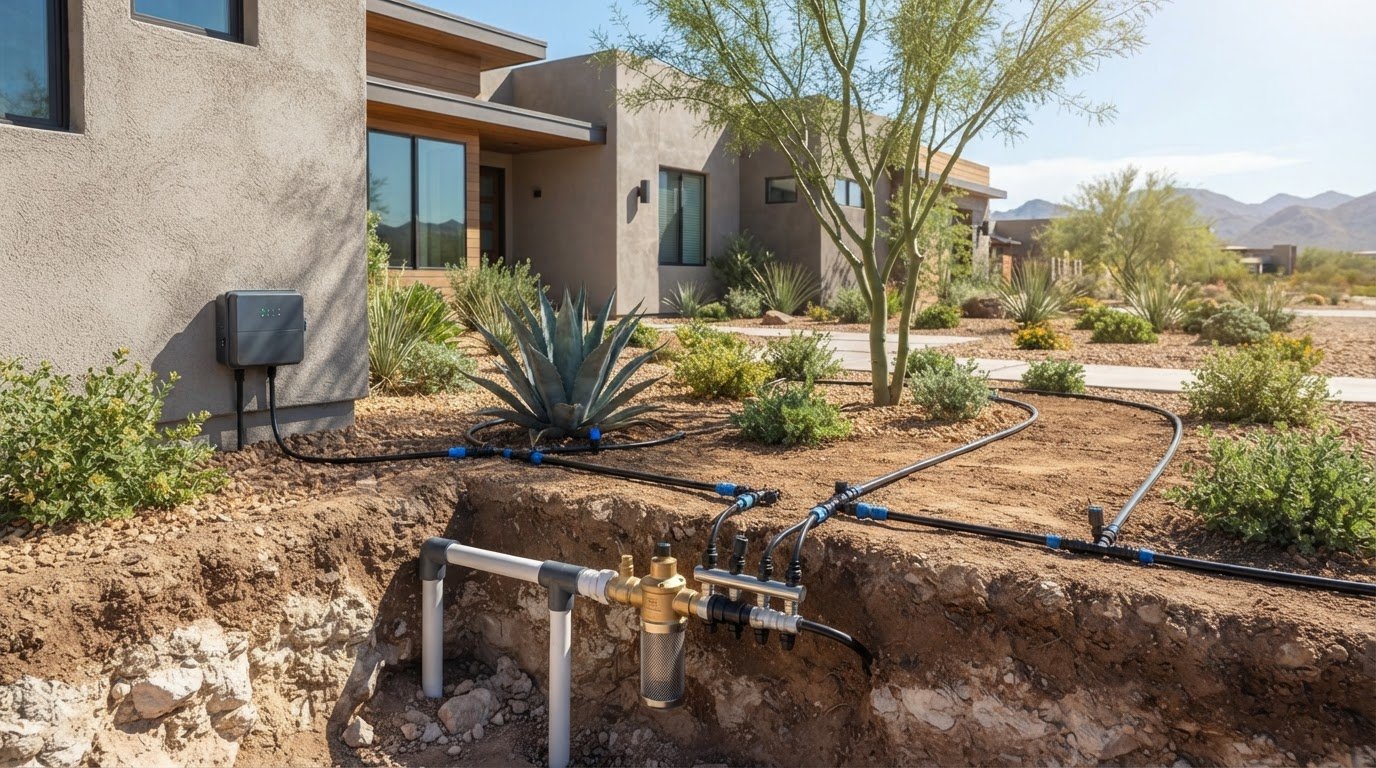
A landscape can look healthy above ground while water is being wasted below it. Irrigation involves more than placing sprinklers near plants: a dependable system relies on compatible zones, sound pipe connections, functioning valves, and controller wiring that activates each area correctly. The broader Irrigation System overview explains how these systems deliver water. For a West Valley property, diagnosis and design also need to account for the site and its conditions.
The Limits of General Landscaping Knowledge
Landscaping generally centers on visible features such as planting areas and lawn layout. Irrigation work also involves underground infrastructure and the electrical controls that operate it. A controller fault, damaged wire, or valve problem can look like a dry-zone issue, but replacing a sprinkler head won’t resolve a wiring failure. A useful diagnosis identifies the likely cause before parts are replaced or digging begins.
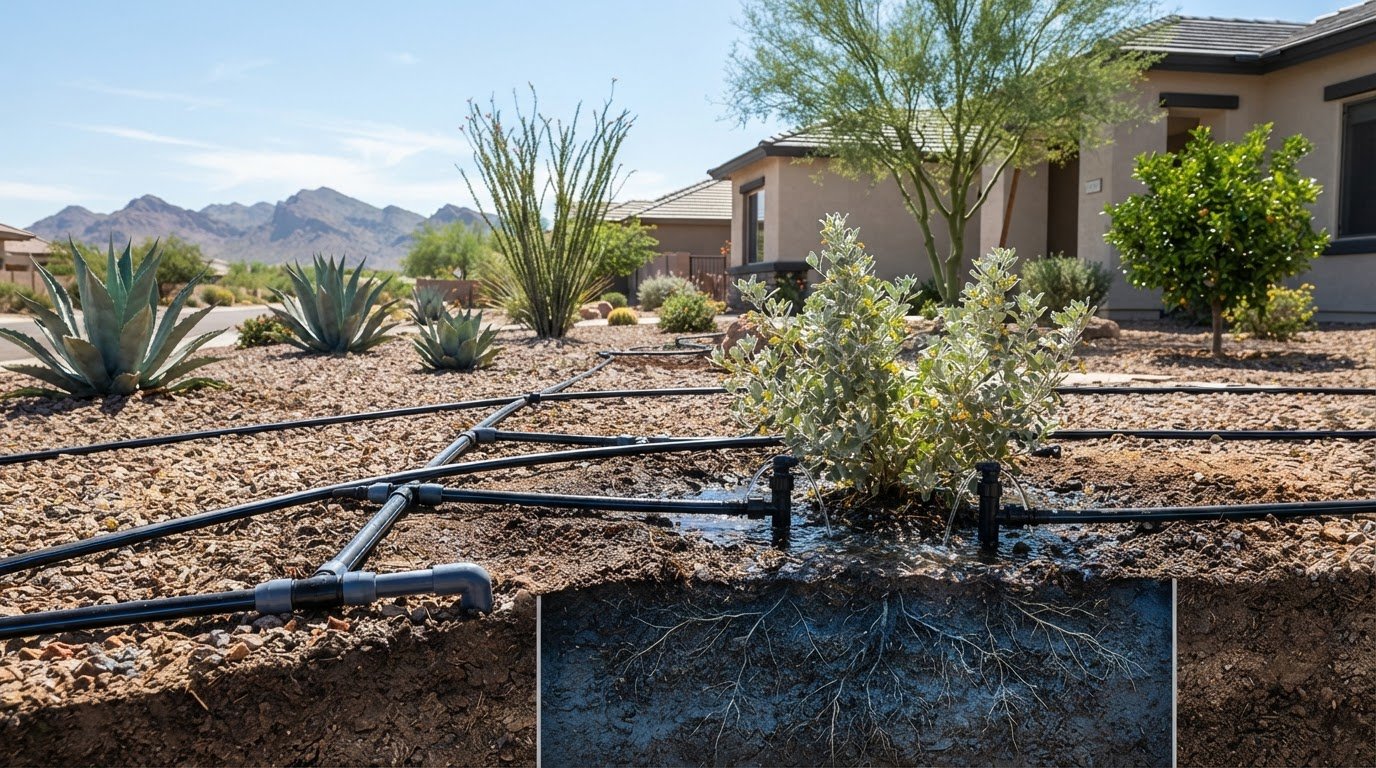
Water distribution matters, too. Drip systems need suitable pressure and a layout that delivers water to the intended areas. If distribution is uneven, some plants may receive too much while others remain dry. A design based only on plant placement can miss how zones and the water supply function together. In Surprise and Peoria, local soil conditions can also affect installation and repair, so the system should be assessed at the property rather than treated as a standard layout.
Why Specialization Matters for Arizona Homeowners
In a drought-prone region, efficient irrigation helps limit unnecessary water use while supporting the plants a property needs. A residential irrigation specialist considers how the system operates as a whole, from controller and wiring to valves, pipe, and emitters. Sonora Sprinkler Inc. provides residential irrigation design, repairs, and upgrades for homeowners in Surprise and Peoria.
Material choices should fit the installation. PVC pipe replacement is one of Sonora Sprinkler’s services, while the suitability of any pipe or tubing depends on where and how it is used. There isn’t a single material choice that fits every system. A qualified contractor should be able to explain the proposed repair and how it addresses the problem at your home.
That focused approach is useful when a problem returns after a surface-level fix or when one zone behaves differently from the rest. Residential irrigation repair and maintenance addresses the system’s performance, including the components behind visible symptoms.
Before approving work, consider whether the diagnosis accounts for both the symptom and the system behind it. Ask how the contractor assessed the wiring, valves, pipe, or water distribution involved, and how the proposed work addresses the cause. Clear reasoning helps you understand what needs attention and why.
5 Essential Qualities of a Reliable Arizona Sprinkler Contractor
A star rating can hint at customer experience, but it won’t show whether a contractor understands irrigation wiring, system design, or residential licensing requirements. Look for practical evidence of relevant experience. These five qualities can help you assess a lawn sprinkler system contractor for work at your home.
- Local experience: Familiarity with residential irrigation in Surprise and Peoria helps a contractor assess local properties and their system conditions.
- Residential focus: A company dedicated to residential irrigation keeps its work centered on homeowners’ system needs.
- Technical diagnostic skills: Wiring and valve issues call for systematic testing, not guesswork or unnecessary excavation.
- Licensing knowledge: The contractor understands Arizona Registrar of Contractors requirements and the relevant residential classification.
- Durable system choices: Installation and repair decisions account for suitable materials, emitters, and the property’s irrigation layout.
Deep Local Roots in Surprise and Peoria
Local experience is most useful when it informs an assessment of the actual property. Irrigation systems, pressure, soil, and existing layouts can vary from one home to another, so a contractor should not assume every yard needs the same design or repair. Sonora Sprinkler Inc. is a family-owned business focused on residential irrigation in Surprise and Peoria.
Residential focus matters, too. A homeowner dealing with one failing zone needs attention to that system’s wiring, valves, and pipe. Sonora Sprinkler focuses exclusively on residential irrigation, keeping homeowners’ systems at the center of its work.
Technical Mastery of Modern Systems
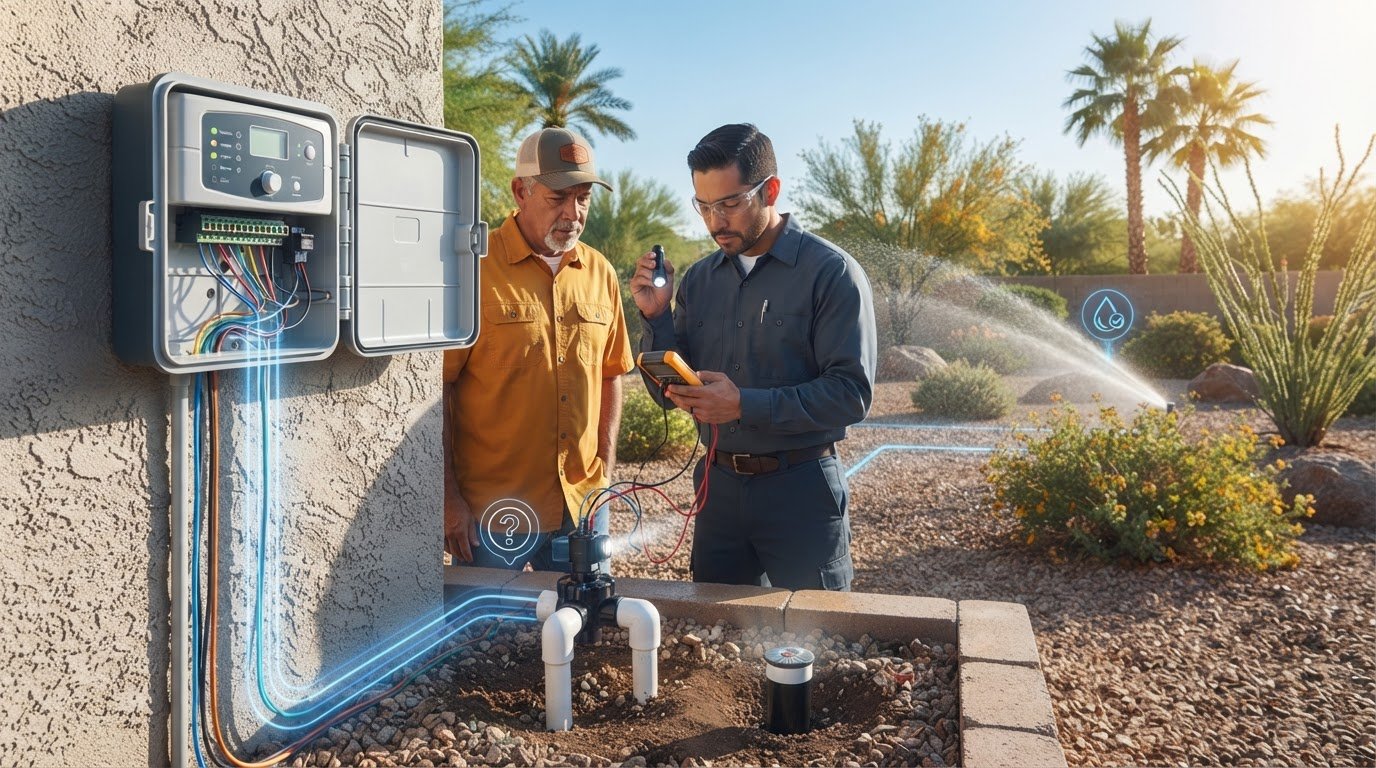
A specialist should trace electrical faults methodically, checking the controller, connections, and valves before deciding where digging is necessary. Learn more about irrigation wiring and diagnostics to understand how circuit testing can help locate a fault and avoid disturbing more of the yard than the repair requires.
Valve and backflow work also calls for relevant professional qualifications. Arizona’s Registrar of Contractors identifies R-21 as the residential classification for irrigation systems; homeowners can use the ROC’s records to review a contractor’s license and classification. State licensing requirements apply to qualifying work, including projects valued at $1,000 or more or work requiring a building permit. For backflow-related services, confirm that the professional’s current authorization matches the specific work involved.
Material selection should be explained in terms of the installation, not simply described as “the best.” PVC replacement, drip emitters, and system layout need to suit the property and intended watering zones. The Irrigation Association (IA) offers industry resources on efficient irrigation practices, a useful reference when considering system performance and water management.
For homeowners in Surprise and Peoria, relevant experience, residential specialization, sound diagnostics, appropriate qualifications, and clear material choices provide a more meaningful basis for confidence than a rating alone. Sonora Sprinkler provides residential irrigation repair, installation, and system design for local homeowners.
Common Red Flags to Avoid When Hiring in the West Valley
A low quote or quick diagnosis can be appealing, but the details matter more than confident promises. Irrigation problems can have several possible causes, and a repair that treats only the visible symptom may leave a leak, wiring fault, or distribution issue unresolved. When reviewing proposed work, look for a clear explanation of the problem, the materials involved, and how the repair will address it.
Inferior Materials and “Quick Fixes”
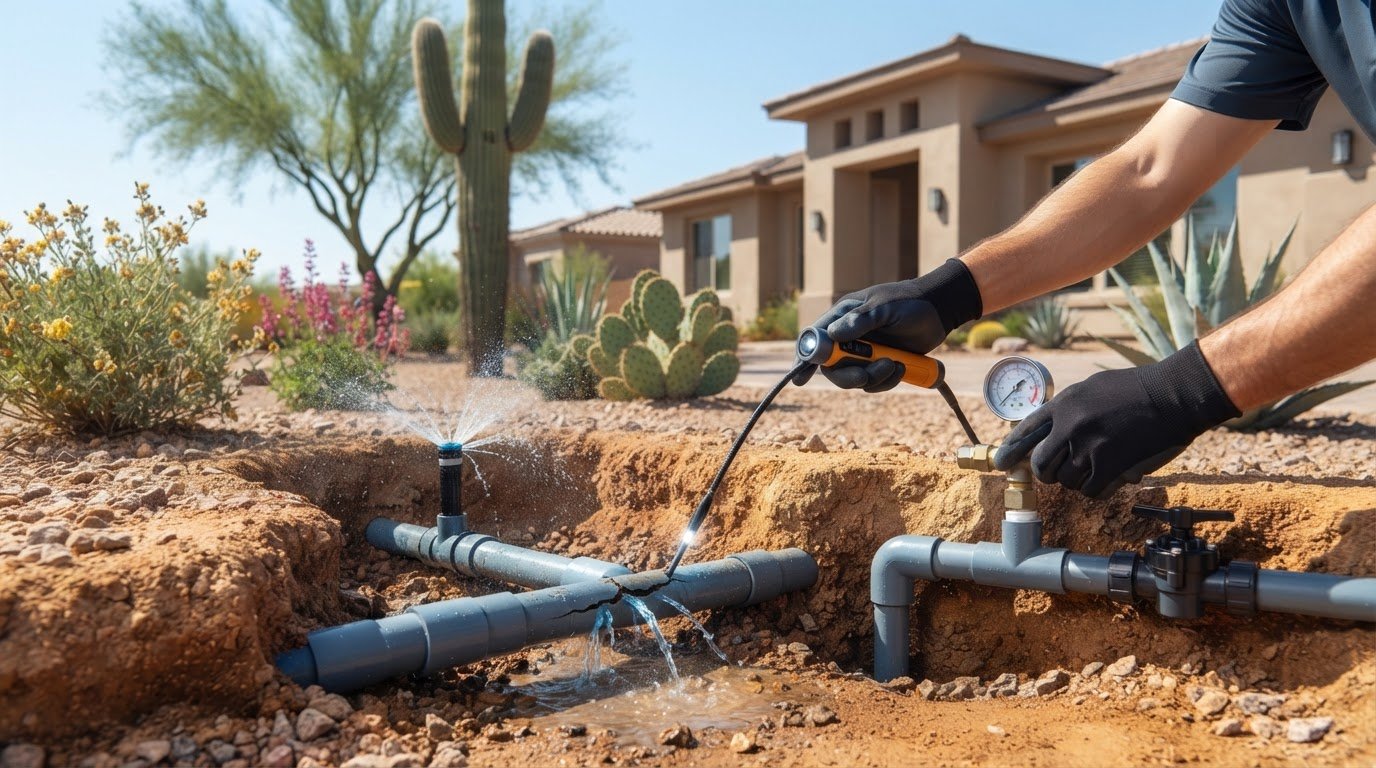
No pipe or tubing choice is right for every application. Suitability depends on where and how the material is installed and on the existing system. A patch may also be temporary if the surrounding pipe is deteriorated or the leak’s source hasn’t been identified. Ask for an explanation of the repair approach, including whether the damaged section needs replacement rather than another patch.
Material descriptions should be specific enough to show what the work includes. PVC pipe and fittings need to suit the system, while drip emitters should deliver water to the intended planting areas. A clogged or unsuitable emitter can leave one plant dry while water continues flowing elsewhere. Irrigation design and installation should consider the layout and operating needs together, rather than treating each component as an isolated part.
Unprofessional Business Practices
A vague estimate makes it difficult to understand the proposed work. Watch for descriptions that say only “fix leak” or “replace parts” without identifying the affected zone, general repair scope, or relevant materials. You don’t need to specify a valve brand or pipe schedule yourself, but the explanation should make the planned work understandable. Review any written terms about workmanship or warranty before work begins.
Electrical guesswork is another warning sign. If a zone won’t run, the cause could involve the controller, wiring, valve, or another part of the circuit. Replacing parts without testing can add disruption without resolving the fault. A focused diagnostic process should explain what has been checked and why the repair is recommended.
- Look for irrigation-specific experience: A broad menu of unrelated services doesn’t prove a company lacks skill, but it isn’t evidence of irrigation expertise either. Consider its residential irrigation work in the West Valley.
- Pay attention to local relevance: Experience with homes in Peoria or Surprise can help a contractor understand the range of local properties and system conditions.
- Treat backflow work carefully: Requirements can depend on the specific service. Backflow repair and testing are not interchangeable, so the proposed work and relevant qualifications should be clear.
A dependable lawn sprinkler system contractor should be able to explain the diagnosis and the reasoning behind the materials and repair scope. Clear details help you identify a temporary fix and make a more informed decision about your irrigation system.
7 Questions Every Homeowner Should Ask During a Service Call
A clear conversation can reveal whether a service visit is based on a careful diagnosis or a quick assumption. These questions help you understand the proposed work, the reasoning behind it, and how it relates to your home’s irrigation system. A reliable lawn sprinkler system contractor should be able to explain the answers in plain language.
Questions That Reveal Technical Expertise
- Do you specialize in residential irrigation systems? A residential specialist understands the needs of home systems, from individual lawn zones to drip lines serving trees and planting beds. Sonora Sprinkler Inc. focuses exclusively on residential irrigation in Surprise and Peoria.
- How will you diagnose an irrigation wiring failure without unnecessary digging? Listen for a step-by-step explanation of how the technician will check the controller, wiring path, connections, and valve response before deciding where excavation is needed. Irrigation wiring diagnostics can help pinpoint electrical faults rather than treating every inactive zone as a broken pipe.
- What pipe materials will you use for the mainline and lateral repairs? The answer should describe the proposed material and where it will be used. Ask how the repair addresses the damaged section and whether it fits the existing system, rather than accepting a vague promise to “replace the pipe.”
- How do you design drip irrigation for desert plants? A useful answer should address how the layout and emitters serve the plants and deliver water to the intended areas. Desert heat and plant needs make a tailored design more useful than simply extending tubing from an existing line.
Questions That Clarify the Work and Follow-Through
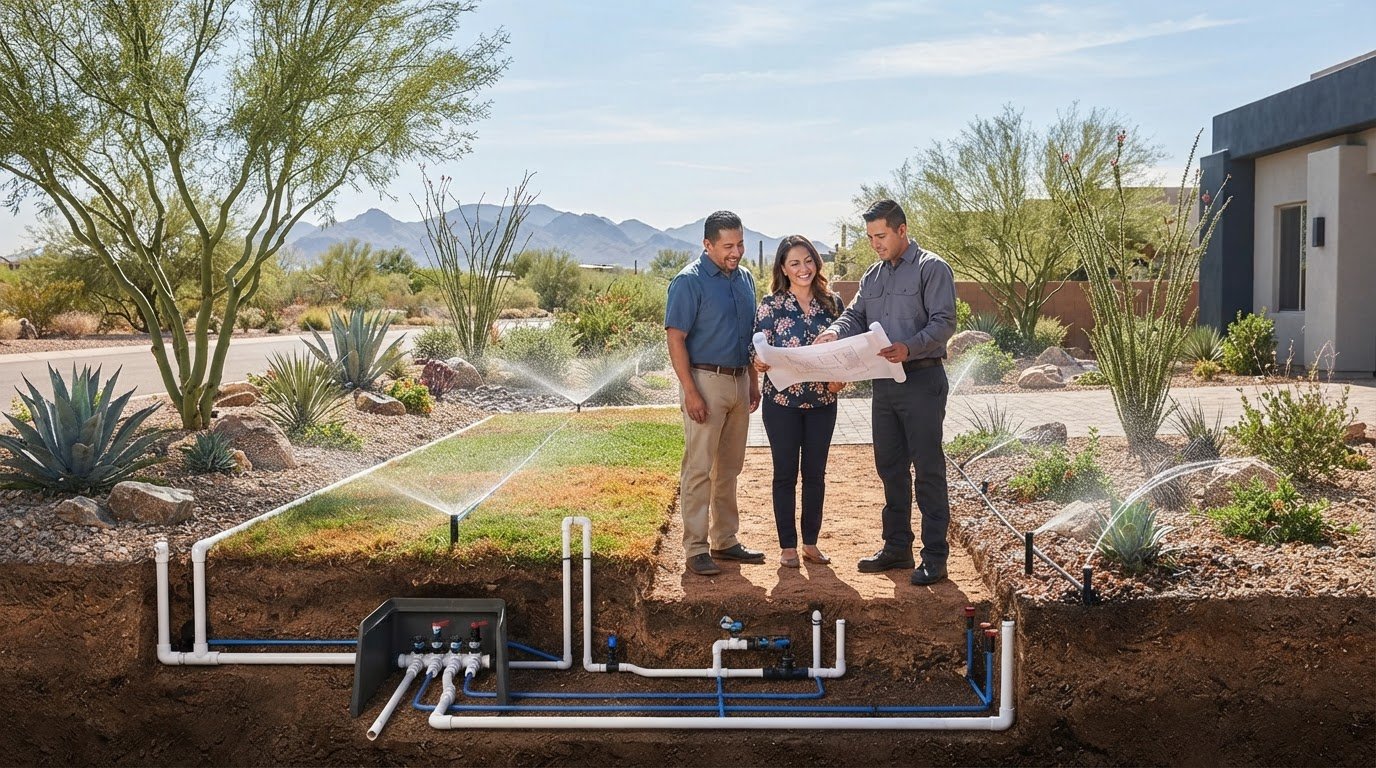
- How will you approach sprinkler design for my property? The contractor should explain how zones, coverage, and intended watering areas inform the plan. Custom design is about making the system work as a coordinated whole, not merely adding heads where they appear convenient.
- What is your process for valve and backflow work? Ask the technician to distinguish the issue being addressed, such as a valve diaphragm problem, a leak, or a backflow concern, and explain the relevant steps. Testing and repair are different tasks, so the scope should be clear.
- Who will perform the work, and have they worked with my controller? Knowing who will be on-site and whether they’re familiar with your timer’s controls helps set expectations. Ask how they’ll verify the programming and operation after the repair or upgrade.
Specific, straightforward answers make it easier to understand the proposed work. Sonora Sprinkler’s residential services in Surprise and Peoria include irrigation repair, wiring diagnostics, valve and backflow services, drip installation, and sprinkler upgrades.
Why Professional Irrigation Design and Repair Protects Your Property
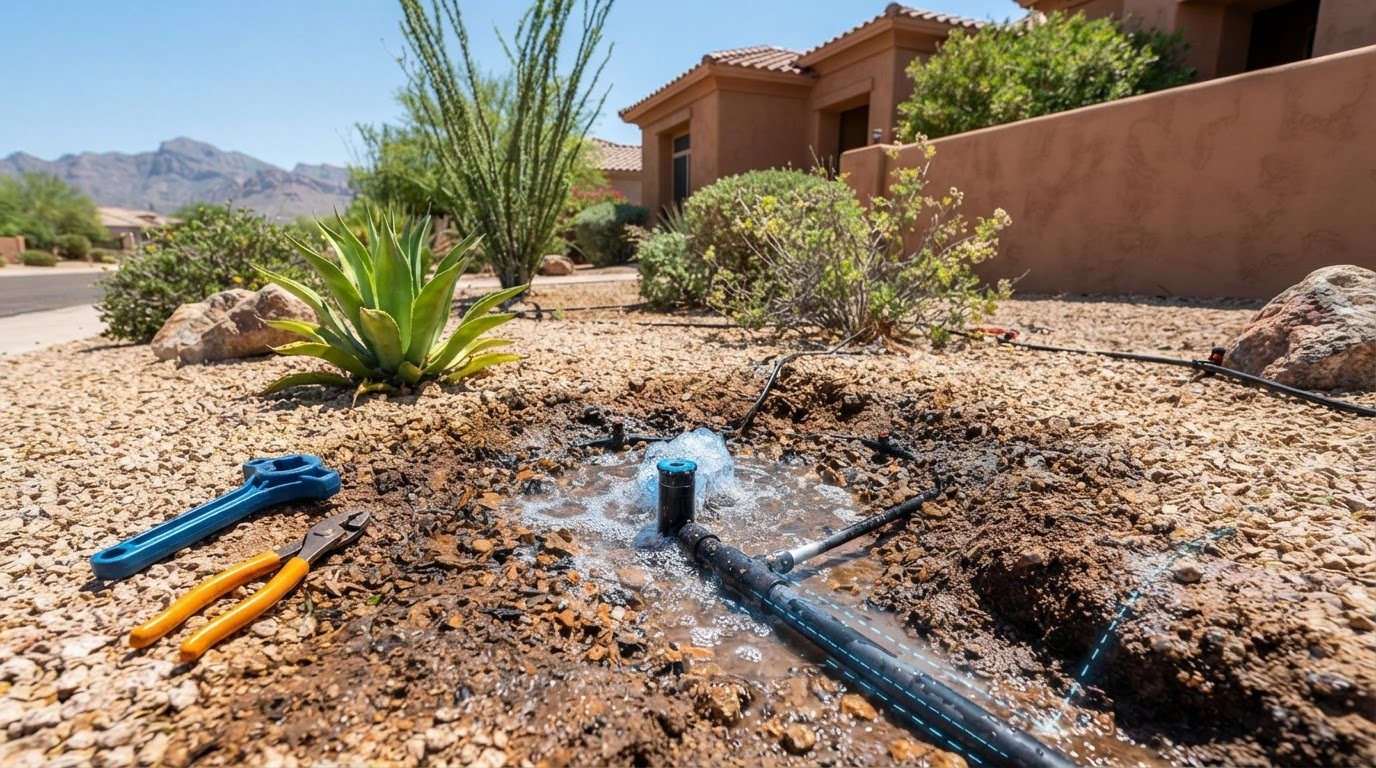
An irrigation system affects more than plant health. A leak that goes unnoticed can waste water, saturate soil near a home, or contribute to erosion. Poorly distributed water can leave parts of a yard stressed while other areas stay wet. Timely diagnosis and a suitable repair can address these problems at their source, helping protect the property and support more efficient water use.
The value of a well-planned system isn’t limited to the water bill. Suitable components, appropriate zone layouts, and repairs based on an accurate diagnosis can help reduce recurring problems and support the plants and soil the system serves. A qualified lawn sprinkler system contractor considers how the parts work together and recommends work suited to the home rather than relying on repeated temporary fixes.
Engineering for Efficiency and Longevity
Planting areas change as trees mature and roots spread, so drip irrigation should account for current needs and possible future growth. A layout that can be adjusted helps maintain useful coverage as the yard develops. Sonora Sprinkler designs and installs residential drip irrigation systems tailored to Arizona properties and local conditions.
Valves control water delivery to zones, and a malfunction can affect more than one planting area or part of the lawn. Proper diagnosis and repair help restore controlled operation instead of masking the symptom. Smart irrigation systems can adjust watering schedules to seasonal evapotranspiration rates, which reflect water lost through evaporation and plant use.
Some signs of a leak or system fault are subtle. A persistent damp patch, unexpected runoff, or a zone that behaves differently can be a reason to investigate. Finding the cause helps limit unnecessary water use and reduces the chance that prolonged soil saturation will contribute to erosion or affect areas near the foundation. It can also help avoid replacing healthy plants when the underlying issue is inconsistent irrigation.
Your Next Steps for a Healthy Lawn
If water use has risen or parts of the yard aren’t receiving consistent coverage, a professional diagnostic can help identify whether the issue involves a leak, valve, wiring, or system layout. That makes it easier to plan a repair around the cause. For homeowners in Peoria, a drip irrigation system designed for the planting areas and local conditions can help direct water where it is needed.
Sonora Sprinkler Inc. is a family-owned residential irrigation specialist serving Surprise and Peoria. The company provides irrigation repair, installation, custom design, and system upgrades for local homes. Contact Sonora Sprinkler Inc. about residential irrigation service to discuss a system concern or project.
Take the Next Step Toward a More Dependable System
Once you’ve chosen a lawn sprinkler system contractor, use the first visit to establish a useful baseline for future care. Keep a simple record of which zones run, any recurring wet or dry areas, and changes you notice in water use. That information can make later troubleshooting more focused and help you track how the system performs through the seasons.
A residential irrigation diagnostic can identify where attention is needed before a small concern becomes persistent. Sonora Sprinkler Inc. serves homeowners in Surprise and Peoria with residential irrigation repair, installation, and design. Contact Sonora Sprinkler Inc. to discuss your residential irrigation system.
With a clearer understanding of your system and a practical plan for its care, you can move forward with greater confidence and help keep your property’s irrigation working as intended.
Frequently Asked Questions
How do I know if I need a specialized irrigation contractor or just a handyman?
Call an irrigation specialist when the problem involves wiring, valves, backflow equipment, recurring leaks, uneven coverage, or changes to the system layout. For example, if one zone won’t run but the others work, the issue may involve its electrical circuit or valve rather than a simple sprinkler-head adjustment. A lawn sprinkler system contractor can assess connected system components and address the underlying cause.
What are the licensing requirements for irrigation contractors in Arizona?
Arizona requires a contractor’s license for work valued at $1,000 or more, or work that requires a building permit, according to the Arizona Registrar of Contractors requirements summarized in this article’s research. Irrigation work falls under the Hardscaping and Irrigation Systems classifications: R-21 is residential, C-21 is commercial, and CR-21 covers both. Homeowners in Surprise and Peoria can use the ROC’s records to check a contractor’s license status and classification.
How much does a typical residential irrigation diagnostic call cost in Surprise, AZ?
There isn’t one diagnostic-call price that applies to every Surprise home. The cost depends on the scope of investigation and the system issue. A controller problem may require different testing than a suspected underground leak or a valve that won’t open. Before work proceeds, ask what the diagnostic includes, whether repair work is separate, and how the findings will be explained.
Why do drip irrigation systems in Peoria fail more often than in other climates?
There’s no verified basis for saying Peoria drip systems fail more often than systems in other climates. Arizona conditions can put extra demands on system design and maintenance: heat can stress exposed tubing, while clogged emitters or uneven pressure can interrupt water delivery. Check for blocked outlets, damaged lines, and dry areas in the planting bed. A system designed for the site and plants can help address these local challenges.
Can an irrigation contractor help reduce my high water bill?
Yes. An irrigation specialist can inspect for hidden leaks, stuck valves, overspray, or schedules that run longer than needed, then recommend repairs or adjustments. For example, a zone that continues flowing after its programmed cycle may signal a valve problem and waste water between visual checks. A diagnostic can help identify whether irrigation is contributing to higher use in your Surprise or Peoria home, though it can’t determine every cause of a bill increase.
What is the difference between a landscaper and an irrigation specialist?
A landscaper generally works with the visible layout and planting, while an irrigation specialist focuses on the equipment that delivers water: pipes, valves, wiring, emitters, and controllers. The distinction matters if a yard looks dry despite regular watering or if a leak appears away from sprinkler heads. In Surprise and Peoria, an irrigation specialist can assess whether the issue involves water delivery rather than assuming the same fix applies to every problem.
How often should I have my sprinkler system valves and backflow preventer checked?
There isn’t a single inspection interval that fits every home and every backflow assembly. Follow the manufacturer’s maintenance guidance and any testing schedule that applies to your equipment or local requirements. Have the system assessed if a valve leaks, a zone won’t shut off, water pressure changes unexpectedly, or the backflow device shows visible damage. A qualified residential irrigation professional can distinguish routine valve service from backflow testing and explain the appropriate next step.