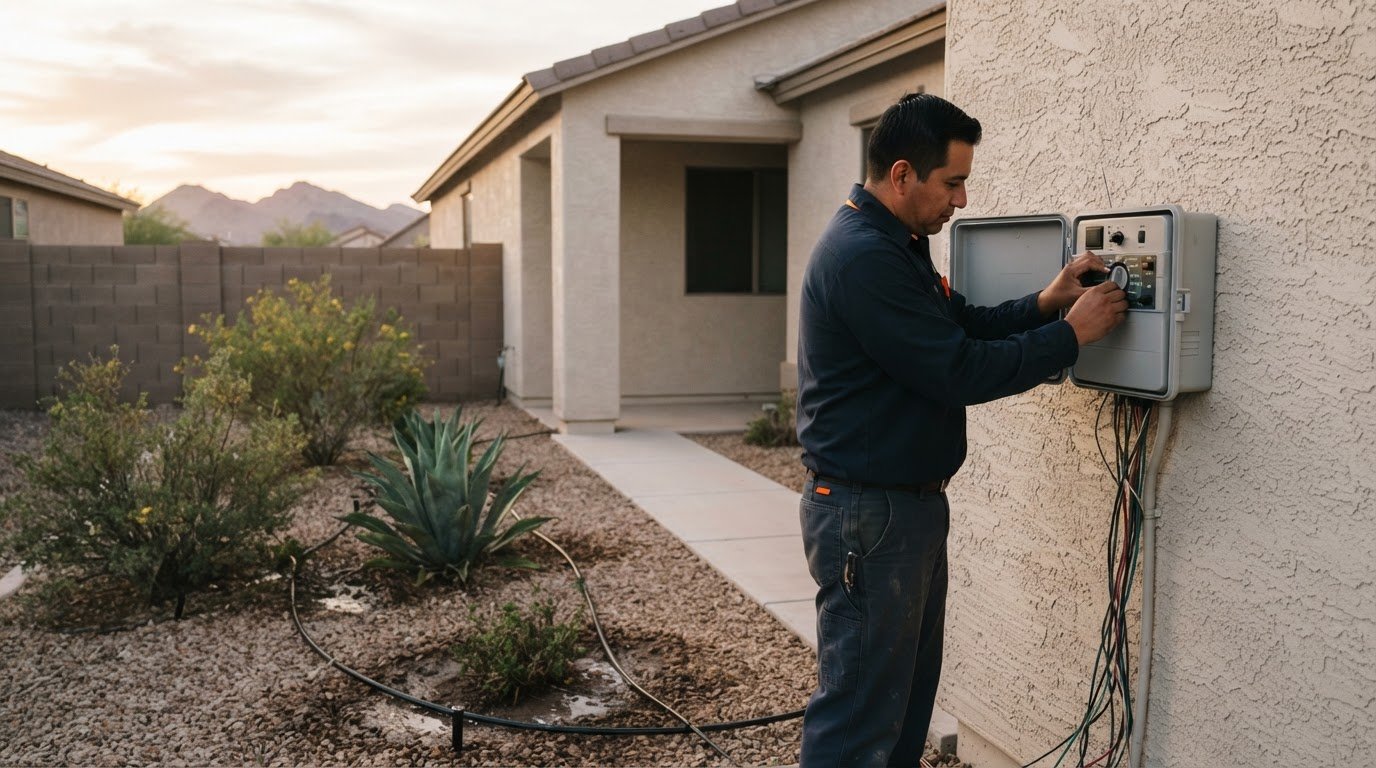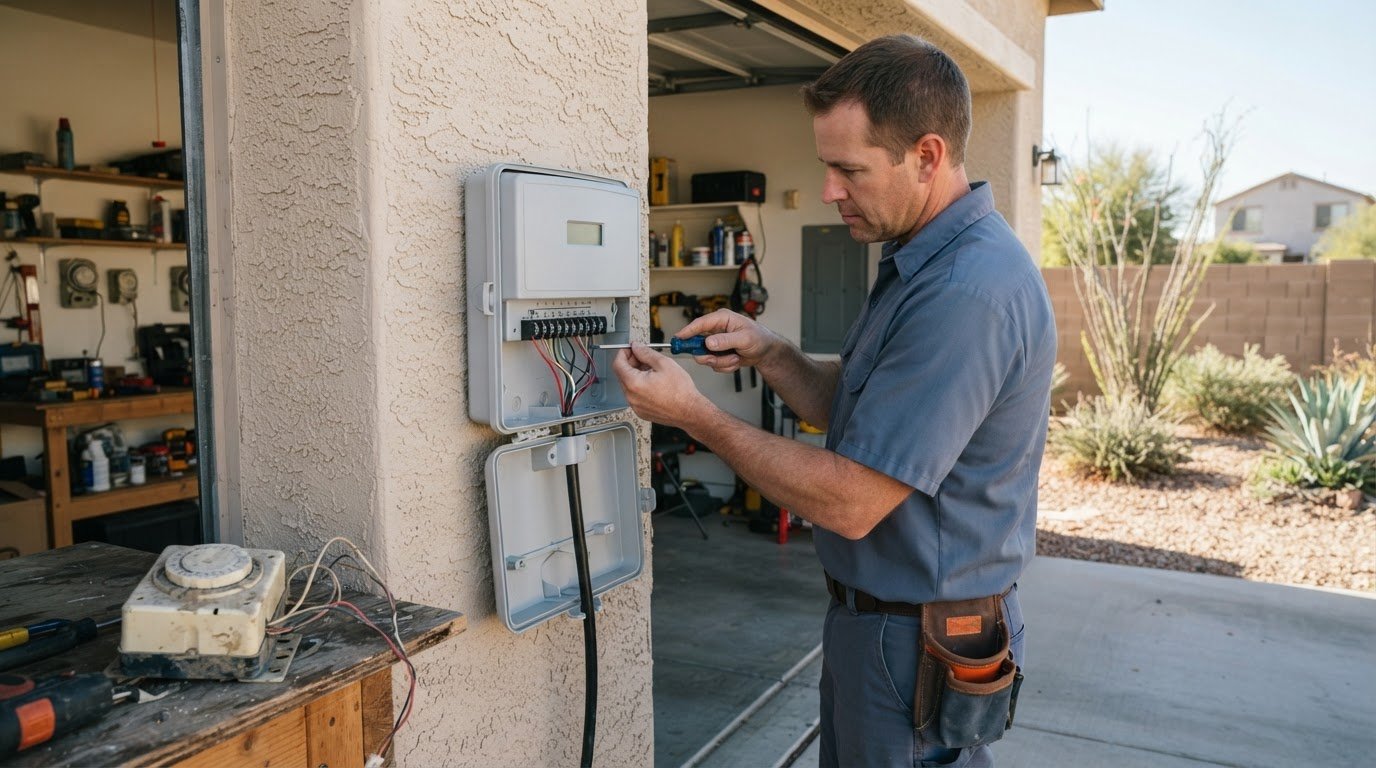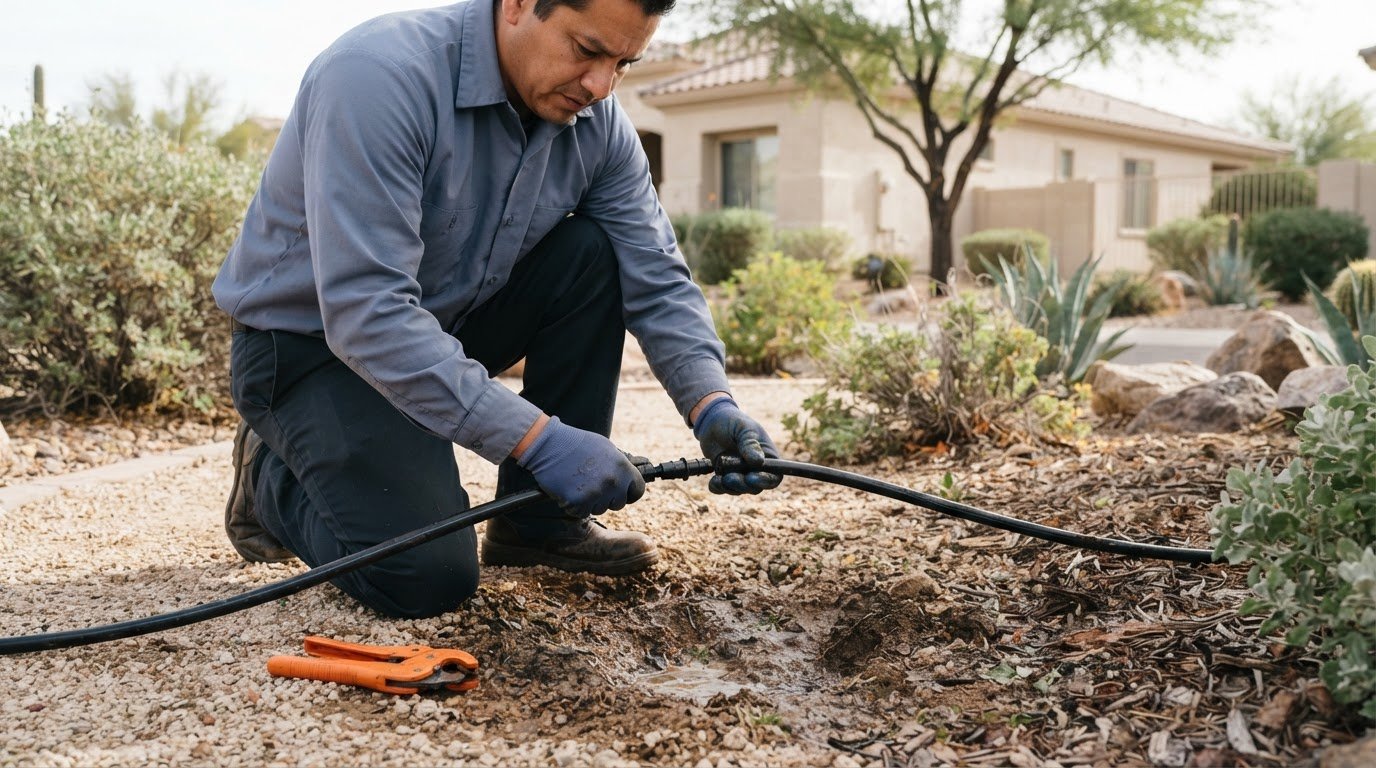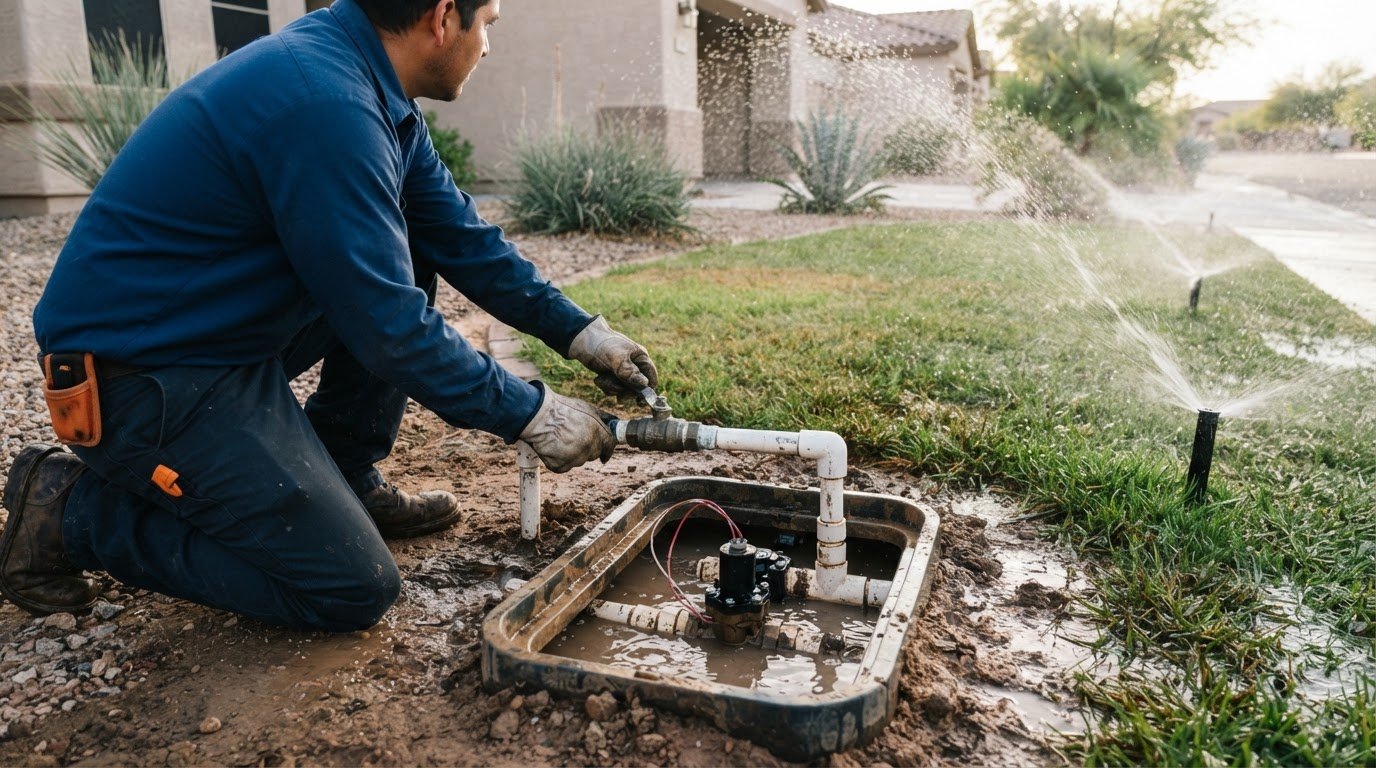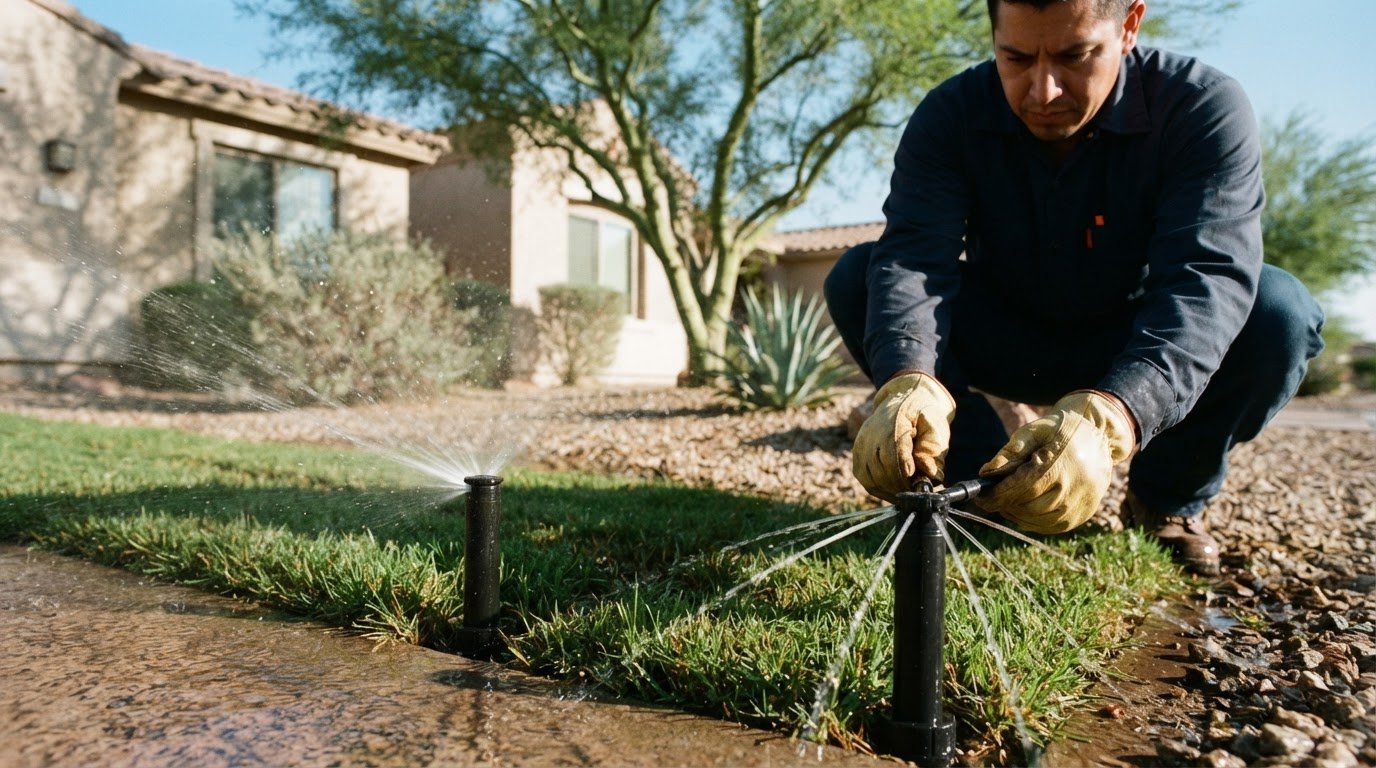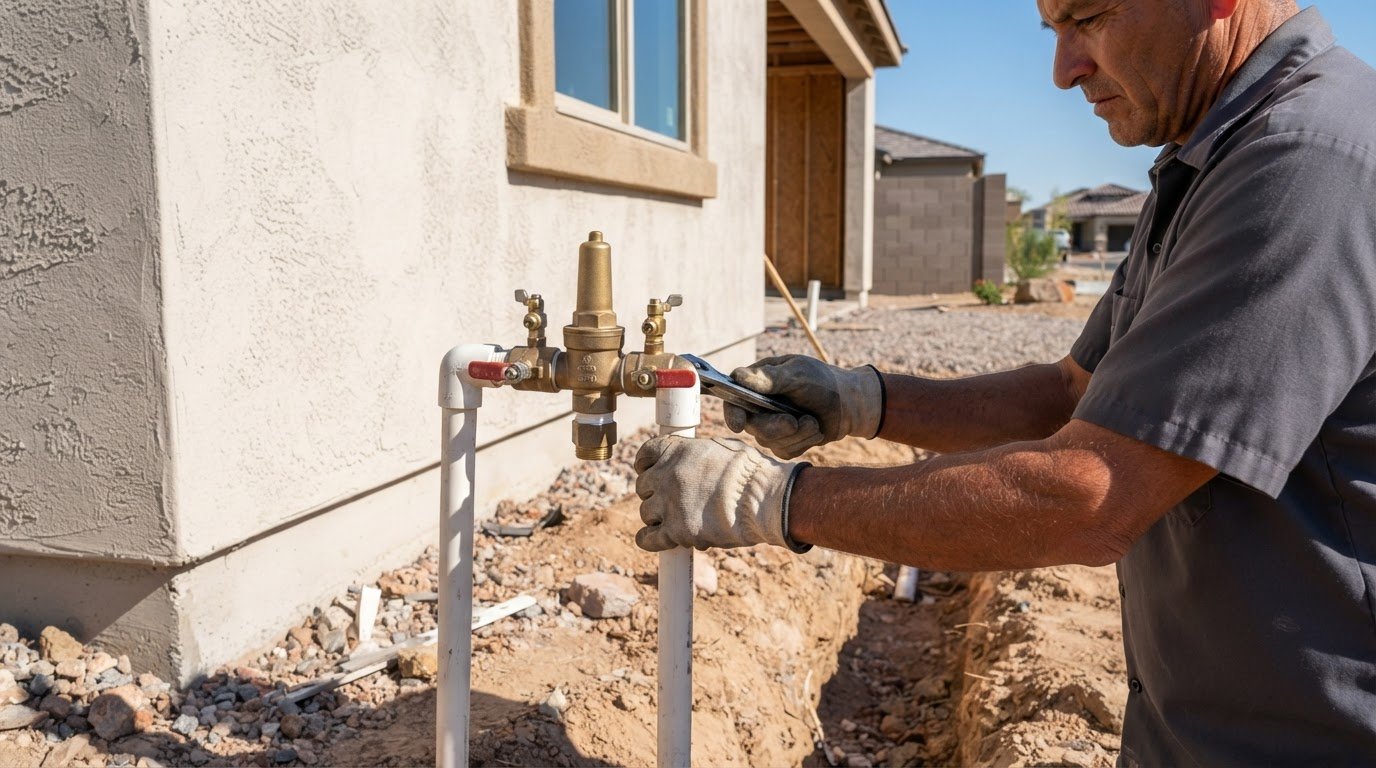
A puddle at a sprinkler head doesn’t always mean a part is broken. To fix water pooling around sprinkler heads in Surprise, first note whether it forms while the system is running or after the cycle ends. Bubbling or streaming during operation can point to a pressurized leak, while a small amount draining from the lowest head on a slope after shutoff may be normal low-head drainage.
It’s reasonable to identify the cause before water keeps soaking the soil or affecting nearby heads. The timing, how long the area stays wet, and whether water continues to collect with the controller off can help distinguish routine drainage from a leak or a valve that isn’t closing properly.
This guide explains what these signs can mean, how pooling during a watering cycle differs from pooling afterward, and what a professional checks when the cause isn’t clear. You’ll also learn when irrigation repair can address a damaged head, pipe, or valve, and why persistent pooling deserves attention rather than being treated as ordinary drainage.
Key Takeaways
- When pooling begins matters: water appearing during irrigation can point to a different issue than water draining after shutoff.
- A small amount of runoff from the lowest head on a slope may be normal, but persistent wet soil can signal a problem that needs attention.
- Notice whether water bubbles or streams while the zone runs, and whether the puddle continues to grow after the controller is off.
- Cracked pipes, damaged heads, and valves that fail to close can all leave water around a sprinkler, but they require different repairs.
- A professional diagnosis can trace the source before repairs are made, helping protect the surrounding soil and irrigation system.
What is low-head drainage - and is it a problem?
Low-head drainage happens when water left in an irrigation line flows downhill after its valve closes. Whether it needs attention depends on where water collects, how much remains, and how long the soil stays wet.
Drainage After an Irrigation Cycle
After a cycle, gravity can carry water in the line toward the lowest sprinkler head. A small amount draining from that head on a slope is normal. The key distinction is timing: water that appears after shutoff differs from bubbling or streaming while the zone runs. Note which head sits lowest and whether pooling stops after the remaining line water drains.
Head placement can affect where runoff gathers. If the lowest head sits in a shallow depression, even ordinary drainage may leave a visible puddle. Water can also move across the surface before soaking in, making the wet spot appear farther downhill. A single wet area after irrigation differs from soil that remains saturated between watering days.
On a sloped lawn, heads on the same zone may sit at different elevations. Once the valve closes, water can flow toward the lowest point and escape through its head. This may happen after each cycle even when the other heads appear dry. The pattern matters: pooling at the same low head after shutoff is consistent with low-head drainage, while water forming during operation suggests another cause.
Soil Compaction and Slope
Compacted soil has less open space for water to enter, so runoff may collect near the head instead of soaking away. A slope moves water downhill, while a low or poorly drained patch can hold it longer. Look at the whole pattern: a puddle limited to the lowest head after shutoff differs from broad wet ground after irrigation. These conditions can combine, making ordinary drainage more noticeable.
Are there watering restrictions or irrigation rules in Surprise, Arizona? Pooling does not show whether a watering schedule follows local rules. Use current City of Surprise guidance for applicable restrictions; this section does not establish a specific schedule or rule.
How often should lawns in Surprise, Arizona be watered by season? No single interval fits every lawn. Seasonal frequency depends on changing conditions, including soil, slope, and how quickly the ground absorbs water. A puddle is not a reliable sign that the whole lawn has received the right amount.
When the same spot stays wet long after a cycle, drainage alone may not explain it. The timing, location, and persistence of water help distinguish downhill runoff from a continuing leak or drainage problem.
Why does my sprinkler leak when it's turned off?
Water around a sprinkler after shutoff can come from leftover line drainage, a valve that continues passing water, or another active leak. Where water appears and whether it keeps accumulating help a professional narrow down the cause.
Pressurized Leaks and Damaged Components
Water bubbling or streaming around a head while its zone runs can indicate a pressurized leak. A damaged head, cracked riser, or split fitting can release water under pressure. Lawn equipment can physically damage a head, and manufacturing issues can also cause failure. A damaged pipe may reduce pressure, erode soil, and create flooding near the leak.
The timing and pattern of a leak help identify where a professional should inspect. Water escaping only during operation points toward a component exposed to zone pressure. A head that keeps leaking long after shutoff, or soil that stays wet between watering days, may indicate an active leak or a valve that isn’t closing properly.
Underground Leaks and Faulty Valves
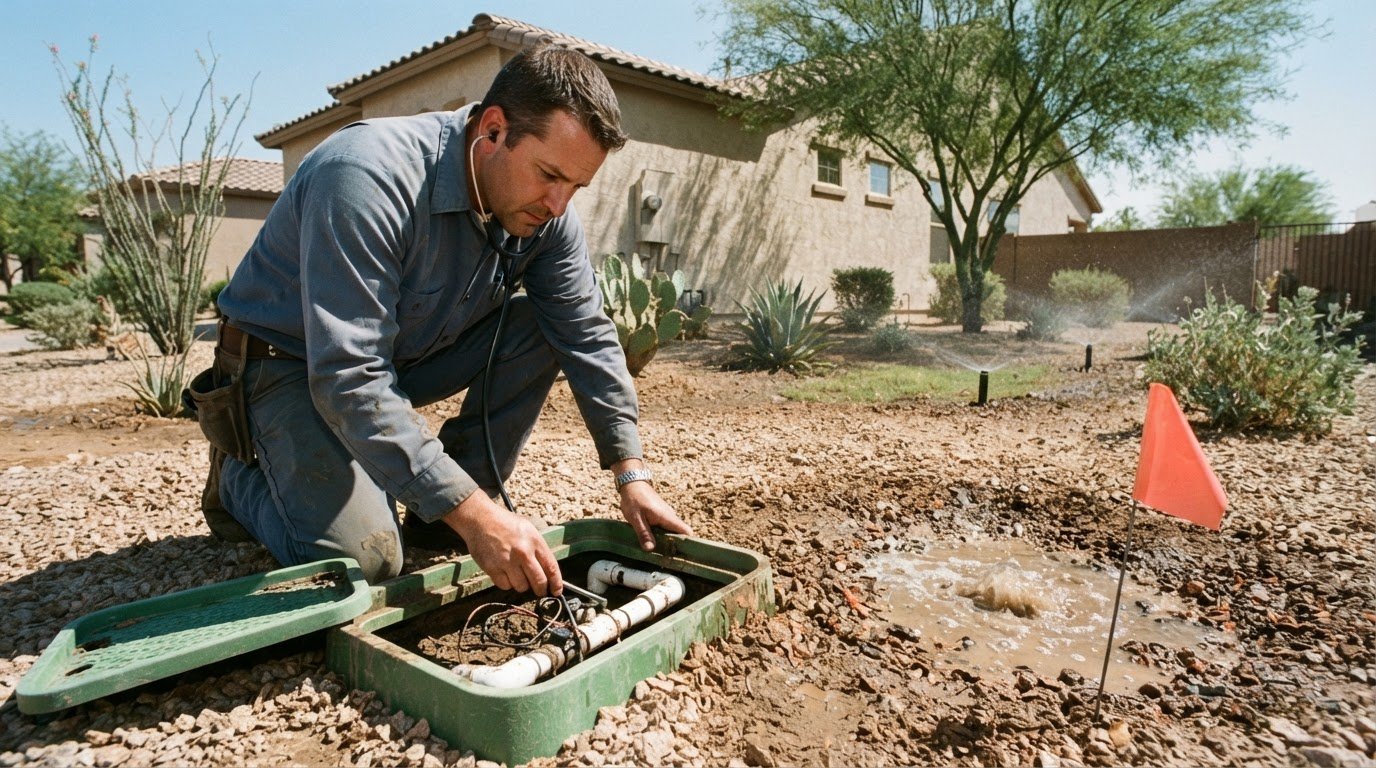
An underground pipe leak may surface some distance from the damaged section. Water can move through soil before appearing beside a sprinkler, while softened ground or unusually bright green grass can help reveal the affected area. A professional relates these signs to the irrigation zone and locates the suspected pipe section before making a repair.
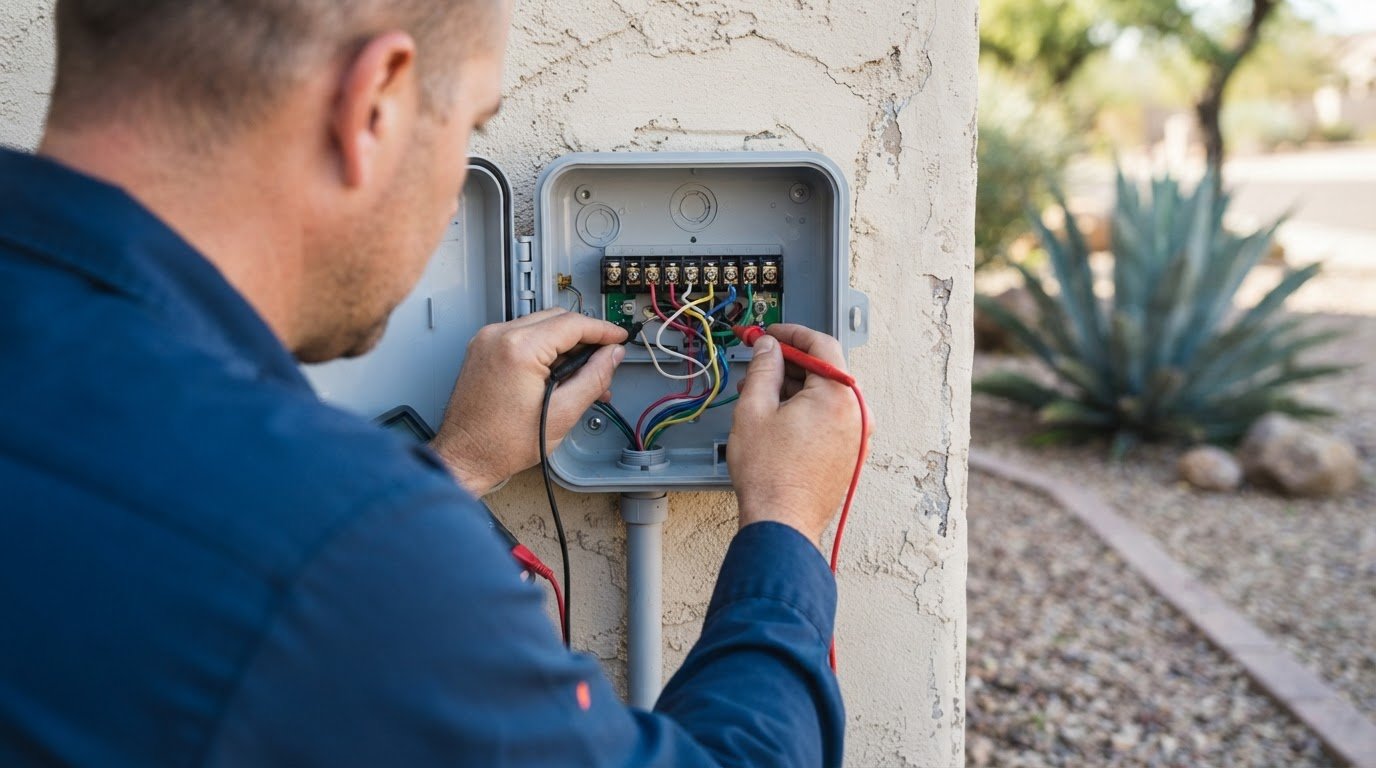
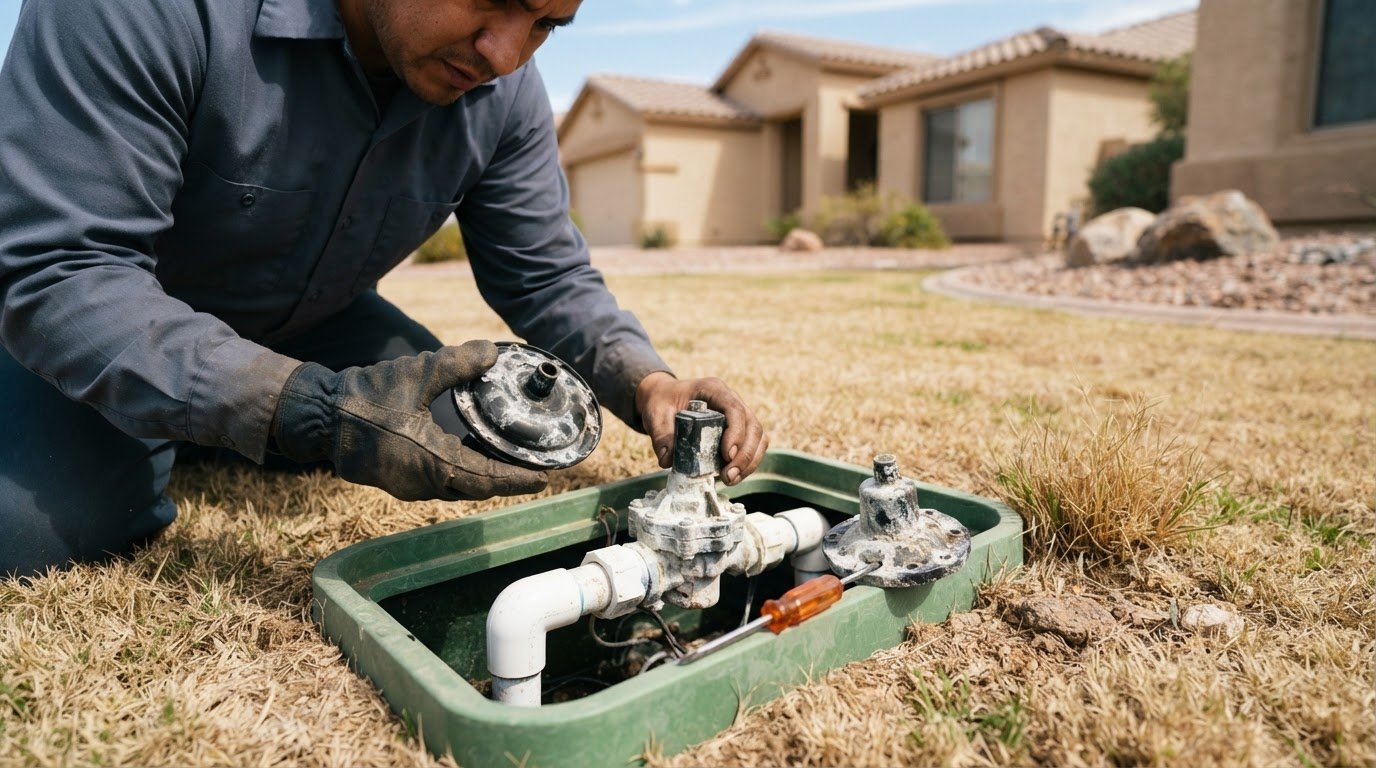
A valve that doesn’t close properly can continue feeding its zone after shutoff. Damage or clogging can cause similar symptoms. Grit lodged beneath a valve diaphragm can sometimes be cleared by flushing, but flushing won’t restore a worn diaphragm or failing solenoid. A professional assesses the valve to determine whether cleaning or component repair is appropriate.
Water leaking from an above-ground backflow assembly also needs attention. The source and behavior of the leak help distinguish an assembly issue from a sprinkler-head or buried-pipe problem. A professional can inspect the affected irrigation components and determine the needed repair without treating every leak as a head failure.
Sprinkler Head Repairs and Adjustments
To diagnose a leaking or clogged head, a professional checks its nozzle, body, riser, and nearby fitting. Debris or algae buildup in pipes can clog a nozzle, and a small wire may sometimes clear the blockage. A damaged head or leaking connection calls for repair of the affected part, not repeated nozzle cleaning.
A professional also assesses head height and spray direction, then adjusts them for the area being watered. EPA WaterSense notes that damaged sprinkler heads and leaking pipes can waste water and recommends professional repairs when needed.
Avoid digging around active irrigation lines or taking apart pressurized components. For persistent pooling or a suspected valve or pipe leak, request professional help with the irrigation issue.
How professionals diagnose pooling during or after a cycle
A professional begins by locating the wet area and identifying the sprinkler zone that serves it. The timing of the pooling guides the inspection: it may appear while the zone runs, after shutoff, or while the system remains idle. To fix water pooling around sprinkler heads in Surprise, the technician follows these patterns instead of assuming the nearest head caused the problem.
During a zone test, the professional observes how water moves around the affected head and nearby ground. Bubbling or streaming at the base while the system runs can indicate a pressurized leak. If water spreads during a long cycle, the technician also considers whether the soil absorbs water more slowly than the system applies it. That distinction helps separate component failure from surface runoff.
The surrounding area provides additional clues. Soft ground or unusually bright green grass can help indicate a buried pipe leak, even when the break lies away from the visible puddle. A professional compares those signs with the irrigation layout and zone behavior, then narrows down the likely source before examining buried components. This helps identify where water escapes instead of relying only on where it appears.
- Pooling during operation: examine the head, riser, and fitting for damage or a poor seal.
- Pooling after shutoff: determine whether water is draining from a low point or continuing to enter the zone.
- Wet ground between cycles: assess the valve and nearby pipe for ongoing leakage.
- A broad puddle during a long cycle: consider whether water is being applied faster than the soil can absorb it.
If a valve may be passing water, the professional can observe the pooling spot with the controller off for an hour. Continued accumulation during that period can indicate that an upstream valve is still supplying the zone. Because valves direct water to irrigation zones, confirming whether flow stops is an important part of tracing the source.
Once the likely cause is located, the professional determines whether the problem involves a head, connection, valve, or pipe. A broken pipe requires locating the damaged section and replacing it carefully to avoid other lines. A head-related leak calls for closer inspection of its body and connection. The technician then checks system operation again to see whether water escapes in the same place.
For homeowners seeking to fix water pooling around sprinkler heads in Surprise, a diagnosis based on timing, location, and zone behavior helps direct the repair. It also prevents a visible puddle from being mistaken for the source when water has traveled through the soil from another component.
How professionals distinguish a valve leak from a sprinkler-head leak
A wet sprinkler base doesn’t automatically identify the failed part. A professional compares when water appears, whether it continues after shutoff, and which components serve that irrigation zone. The valve controls water entering the zone; the head releases it at the surface. Tracing those points helps locate the source before repair begins.
First, the professional examines the puddle with the controller off and watches the spot for an hour. Continued accumulation suggests water is still entering from upstream, which points toward a valve that passes water. A head leak caused by damage usually shows a more localized pattern around its body or base. The timing and spread of water help distinguish these possibilities.
Next, the professional runs the affected zone and observes the head. Bubbling or streaming while the system is pressurized indicates a leak at the head, riser, fitting, or nearby pipe. A cracked head or damaged connection can release water directly beside the sprinkler. Physical impact, including lawn-mower damage, can cause head failure; manufacturing issues can also contribute.
Valve symptoms require a different inspection. A valve that fails to close can keep feeding a zone after the controller stops. Grit lodged beneath its diaphragm sometimes clears when the valve is flushed. Flushing won’t restore a worn diaphragm or failing solenoid, so the professional evaluates the component before choosing a repair. Clogging can also produce symptoms resembling valve damage.
- Water keeps collecting with the controller off: investigate whether a valve continues supplying the zone.
- Water escapes from one head during operation: inspect the head, riser, and fitting for damage.
- Several heads or nearby soil stay wet: trace the affected zone and check for continued flow.
These signs guide diagnosis, but water can travel through soil before reaching the surface. A professional relates the wet area to the valve, pipe route, and zone behavior instead of assuming the closest component is responsible. That distinction matters when a buried leak surfaces beside an intact sprinkler head.
Once the source is identified, the repair should address that component: the head, connection, pipe, or valve. If a valve or backflow issue is involved, valve and backflow services address those system components. A follow-up observation confirms whether water still accumulates after the repair and shutoff.
Professional sprinkler system repair
Professional repair begins by identifying the failed component, not simply replacing the wettest sprinkler head. The technician evaluates the affected zone, the timing of the pooling, and nearby signs such as soft soil. This directs attention toward a nozzle, head, fitting, valve, or buried pipe. Repairing the actual source helps avoid leaving a separate leak unresolved.
For a head that sprays unevenly or leaks at its base, the inspection includes its nozzle, body, riser, and connection. Debris or algae buildup in irrigation pipes can clog a nozzle. A small wire sometimes clears a clogged nozzle, while a damaged body or connection requires repair of that component. The technician also considers whether the head’s position contributes to water landing in the wrong place.
Buried pipe repairs require careful locating before the damaged section is exposed. A professional identifies the affected area and replaces the broken pipe while avoiding nearby lines. Guessing at the leak location or digging broadly can disturb other irrigation components. After the repair, the zone is run to observe the repaired section and confirm water flows through the system without escaping at the original spot.
Valve problems need a different approach from head or pipe damage. A valve that passes water can keep feeding a zone after shutoff, while flushing won’t restore a worn diaphragm or failing solenoid. The technician evaluates whether the valve closes properly and whether its condition calls for repair or replacement. EPA WaterSense notes that damaged sprinkler heads and leaking pipes can waste water and recommends professional repairs when needed.
- Head or nozzle: inspect for blockage, physical damage, and leaking connections.
- Buried pipe: locate the damaged section and replace it carefully around other lines.
- Valve: assess whether it closes and stops feeding the zone after shutoff.
- System check: run the affected zone and observe the repaired area for escaping water.
That final operating check matters: a repair should address the leak without overlooking how the zone functions. Arrange professional irrigation repair when pooling persists or a damaged component needs attention.
Sonora Sprinkler Inc.
Sonora Sprinkler Inc. helps homeowners address pooling by identifying whether it stems from a sprinkler head, valve, pipe, or system layout. When water keeps collecting after a cycle, professional irrigation repair can target the source. If the issue reflects broader coverage or layout concerns, custom sprinkler system design can help align the system with the property’s needs.
Describe where and when water appears to help focus the next step. Contact Sonora Sprinkler Inc. to discuss the pooling and irrigation system.
Keep Your Irrigation System Working as Intended
A recurring wet patch is worth addressing before it becomes a regular feature of the yard. The pattern you’ve noticed can help guide the next step: mention whether pooling returns during watering, after shutoff, or between scheduled cycles. That context helps focus attention on the system’s condition and the repair the property needs.
If you need to fix water pooling around sprinkler heads in Surprise, Sonora Sprinkler Inc. can assess the irrigation issue and determine a practical path forward. The company provides irrigation repair, irrigation installation, and drip irrigation installation for residential systems. The right service depends on whether the concern is a specific fault or a broader change to the irrigation setup.
Share the location of the pooling and when it appears, then contact Sonora Sprinkler Inc. to discuss your irrigation repair. A clear starting point can make it easier to move toward a properly functioning system and a healthier yard.
Frequently Asked Questions
What does water around a sprinkler head mean?
Water around a head can indicate leftover line drainage, a component leak, or surface water that hasn’t soaked into the soil. In Surprise, the timing and shape of the wet area help distinguish these causes. For example, a small spot confined to one head differs from a spreading wet patch. If the same area remains damp between watering days, mention that pattern during a professional assessment.
Is it the head or the valve?
The head is more likely to be the source when water escapes directly from one sprinkler during its zone’s operation. A valve becomes more likely when water keeps entering the zone after the controller stops it. A professional also checks whether more than one head on that zone shows symptoms. Shared, ongoing wetness can point toward a common upstream source rather than a single damaged outlet.
Is water pooling an emergency?
A puddle alone doesn’t establish an emergency, but continuous flow or expanding wet ground warrants prompt attention. Ongoing leakage can erode soil and affect nearby irrigation components. If water continues accumulating while the system is off, report that detail when arranging professional service. Avoid digging near irrigation lines or opening pressurized parts; those actions can disturb buried components or release water unexpectedly.
What does it cost?
The repair estimate depends on the cause and scope of the work. A damaged head may involve a different repair than a buried pipe leak or a valve that won’t close. The affected location, components involved, and work needed to access and replace the damaged part all influence the estimate. A professional diagnosis helps determine which repair the system requires.
Why does water pool around sprinkler heads?
Pooling can result from water draining downhill through a low head, a damaged sprinkler component, a valve that continues feeding a zone, or soil that absorbs water slowly. The location provides useful context: a recurring wet area at one outlet differs from damp soil spread along a pipe route. Note whether the puddle appears during watering, afterward, or between scheduled cycles.
How does a professional repair a broken sprinkler head seal or riser?
A professional identifies whether the leak comes from the head’s seal, body, riser, or connection, then repairs the affected component. For example, a cracked riser beneath an otherwise intact head calls for attention to the connection below it, while a damaged head may need replacement. The technician then checks the zone’s operation to see whether water still escapes from that location.
How does a professional check for a leaking sprinkler valve causing pooling?
A professional evaluates whether water continues entering the affected zone after the controller has stopped it. They consider the zone’s symptoms and inspect the valve for a closing problem, clog, or damaged component. If several heads supplied by the same valve remain wet, that shared pattern can help narrow down the diagnosis. A worn diaphragm or failing solenoid requires more than flushing.
How does a professional find underground sprinkler pipe leaks near a sprinkler head?
A professional uses surface clues, such as soft ground or unusually lush growth, and relates them to the irrigation layout and affected zone. Water can travel through soil, so the wettest spot may not sit directly above the pipe break. After narrowing down the likely area, the technician locates the damaged section and replaces it carefully to avoid disturbing nearby irrigation lines.