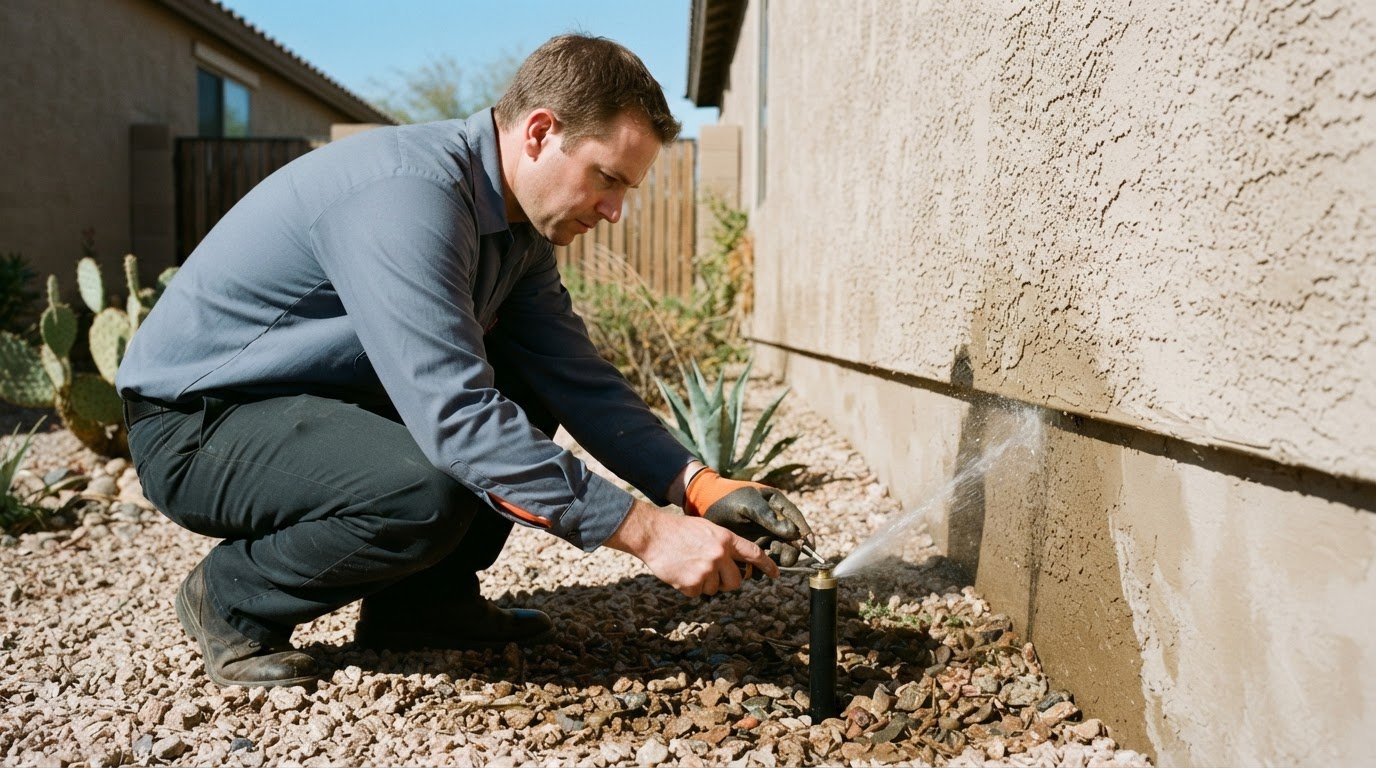
A nozzle that applies water more slowly can distribute it more evenly. For water-efficient sprinkler nozzles in Arizona, multi-stream rotary nozzles are often a useful alternative to fixed-spray nozzles: their rotating streams reduce misting and give soil more time to absorb water, which can help limit runoff and erosion.
Fixed-spray nozzles remain useful in many systems, so the best option depends on the area being watered, the existing sprinkler heads, and the system’s pressure and layout. The key is to match the nozzle’s application rate to the soil and coverage needs rather than simply choosing the nozzle that sprays the most water at once.
This comparison explains how fixed-spray, multi-stream rotary, and high-efficiency rotary nozzles distribute water, where each type can work well, and what to consider before replacing existing heads. Rotary nozzles may need longer run times, even when they use the same or less water overall.
Key Takeaways
- Choose nozzle type and pressure to improve how evenly water reaches the landscape, not simply how quickly it sprays.
- Rotating streams apply water more slowly, giving Arizona soil more time to absorb it and helping reduce misting, runoff, and erosion.
- When replacing fixed-spray nozzles, match the new heads to the system’s layout and coverage needs.
- Rotary nozzles may need longer run times than fixed-spray heads, while using the same or less water.
- Compare precipitation rate, distribution uniformity, and wind performance to identify which nozzle type best fits each area.
1. Lower precipitation rates and improved distribution uniformity
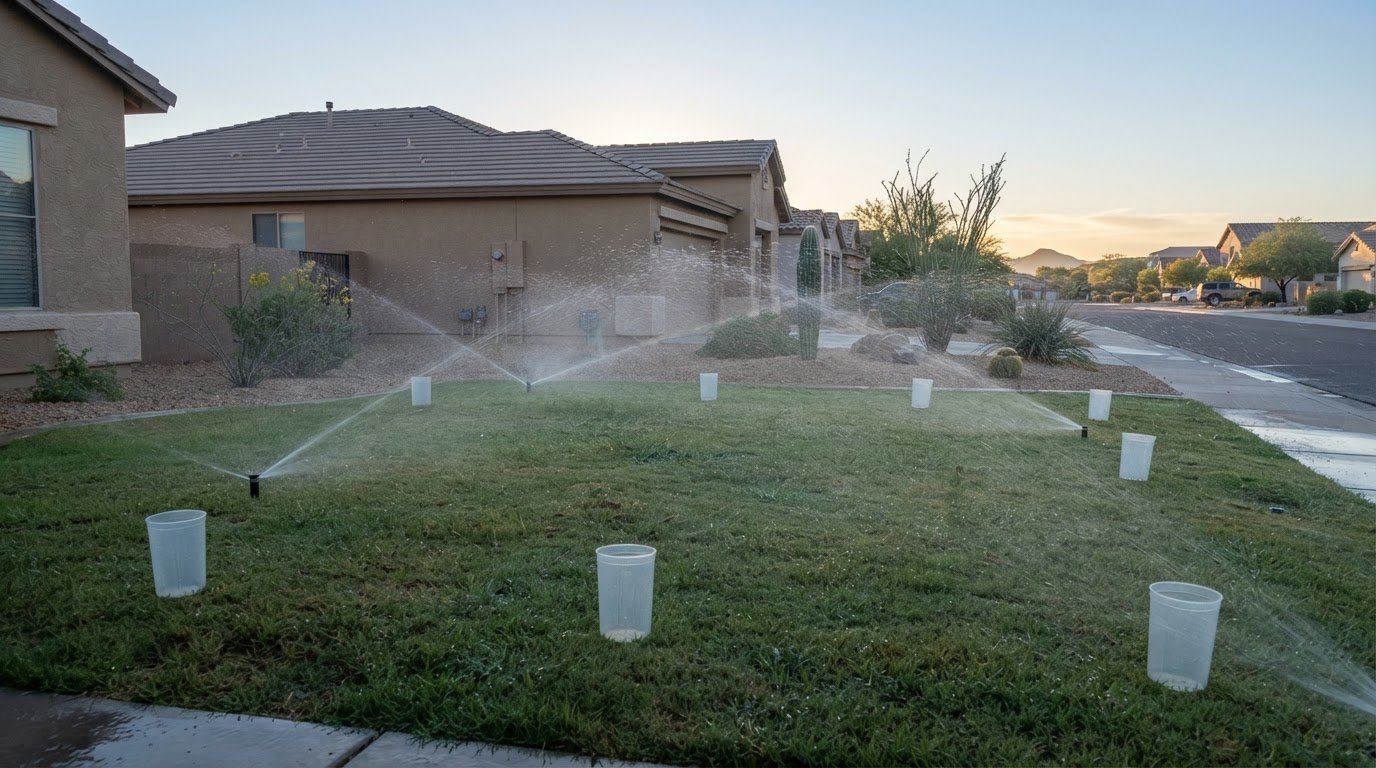
Precipitation rate describes how quickly a nozzle applies water across its coverage area. Distribution uniformity describes how evenly that water reaches the ground. In Arizona, improving both means choosing a nozzle that applies water at a rate the soil can absorb and arranging coverage to avoid dry gaps and oversaturated patches. A high-flow nozzle may wet one area quickly while leaving nearby plants short of water.
There isn’t one best flow rate or precipitation rate for every Arizona soil type. Rotary nozzles apply about 1 inch of water per hour, compared with more than 2 inches per hour for traditional nozzles in a long-term field study. The right choice depends on the soil’s absorption, the landscape’s slope, and the nozzle’s coverage pattern.
Soil affects how a lower application rate performs. Clay-heavy ground absorbs water slowly, so a fast spray can pool or run downhill before soaking in. Sandy soil drains more readily, while compacted areas may absorb water unevenly. A slower nozzle can help reduce surface flow, but coverage and run times still need to suit the planting area.
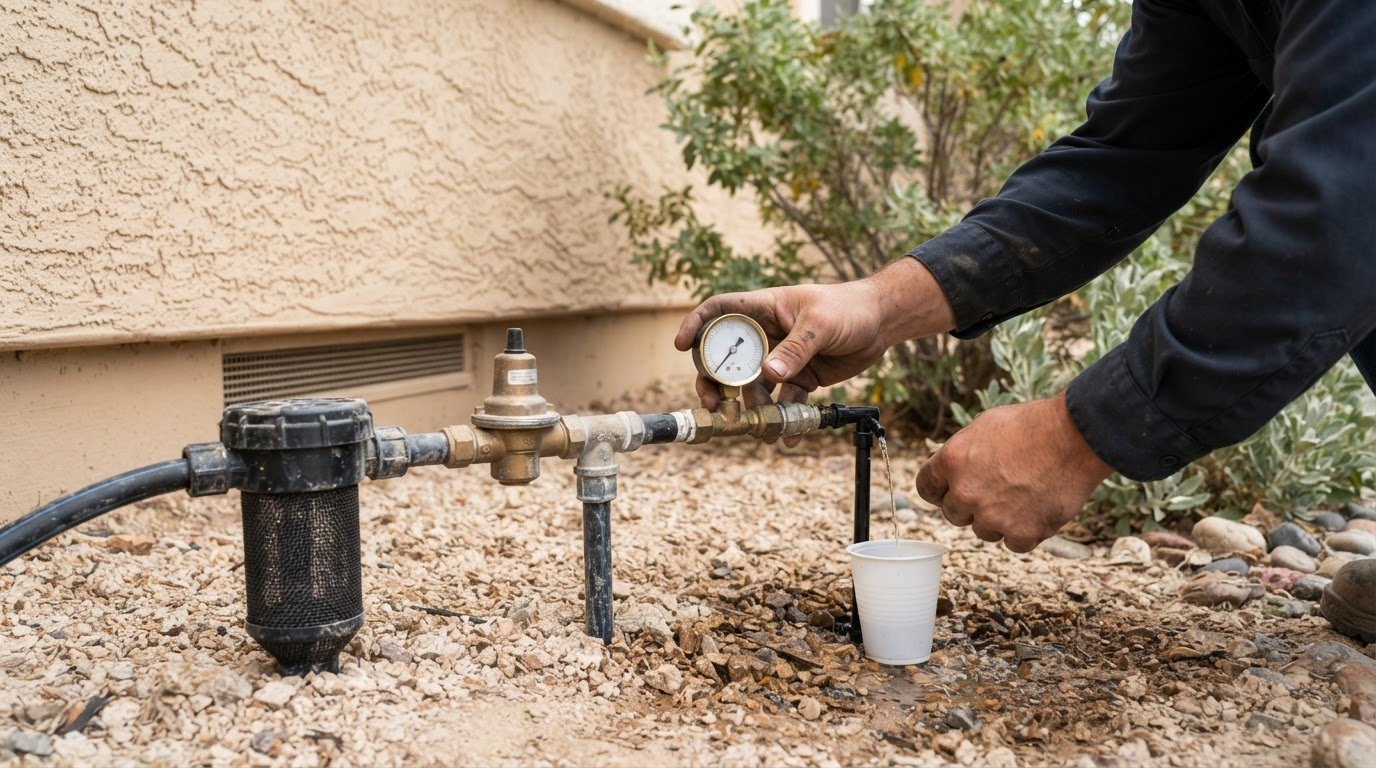
Pressure also affects output. For most fixed-arc spray nozzles, 30 psi is the recommended operating pressure. Excess pressure can break water into fine droplets, worsening misting and uneven coverage. Every 5-psi pressure reduction reduces water use by 6-8%, and reducing pressure from 70 psi to 30 psi can save more than 50% in water. These figures show why nozzle selection and pressure should be considered together.
Uniform coverage depends on thoughtful spacing. Sprinkler patterns should overlap so neighboring heads water the same ground, rather than leaving dry strips between spray areas. A foot of overlap is one reference point, but may not be enough for some layouts. Wind, head spacing, spray arc, and pressure all affect the overlap a zone needs.
- Check the pressure: Compare measured operating pressure with the nozzle’s intended range, including the 30-psi reference for fixed-arc sprays.
- Match output to soil: Use slower application where water tends to pool or run off, then assess whether coverage remains even.
- Review the pattern: Check whether adjacent heads overlap across turf edges, slopes, and irregular planting beds.
A well-planned custom sprinkler system design accounts for those conditions across each zone. Nozzle flow, pressure, spacing, and soil absorption work as a connected system; changing one without considering the others can create uneven watering even when the nozzle itself is efficient.
Mismatched components can undermine both efficiency and coverage. Multi-stream rotational sprinkler heads apply water in rotating trajectories, which lowers evaporative losses by reducing misting and helps avoid runoff by giving soil time to absorb water. This connects application speed with the soil’s ability to take in moisture: the rotating trajectories reduce misting, while the time allowed for absorption can help limit runoff. Considering this head type alongside pressure, spacing, and soil conditions supports the goal of more even application, with less water lost to evaporation or runoff.
2. Reduced misting, evaporation, runoff, and erosion
Nozzle changes can reduce water losses, but there isn’t one fixed savings percentage for every landscape. A pressure reduction from 70 psi to the recommended 30 psi can save more than 50% in water, while actual results depend on system conditions and operation.
Fine droplets are especially vulnerable to wind. High pressure can break spray into mist, carrying water away from the intended area before it reaches plants or soil. Rotary nozzles produce larger droplets and rotating streams, helping water travel more directly toward the ground. Water-efficient sprinkler nozzles in Arizona can help limit misting and runoff when their pattern suits the zone. Regular days over 100°F and unpredictable rainfall make careful application important.
Evaporation starts when water is exposed to air and heat. A nozzle cannot eliminate that exposure, but a directed stream can reduce the amount of water that hangs in the air as mist. Watering in calmer conditions also helps keep droplets within the target area. Spray that drifts onto pavement or a wall contributes little moisture to plant roots.
Runoff happens when water is applied faster than soil can absorb it. On a sloped bed, a fast spray may flow downhill before soaking in, carrying soil with it. Rotating streams apply water more slowly, giving the surface more time to absorb moisture. This can help limit runoff and erosion, especially where water visibly channels or soil collects at the low edge. Choosing water-efficient sprinkler nozzles in Arizona means considering slope, soil absorption, and spray pattern together.
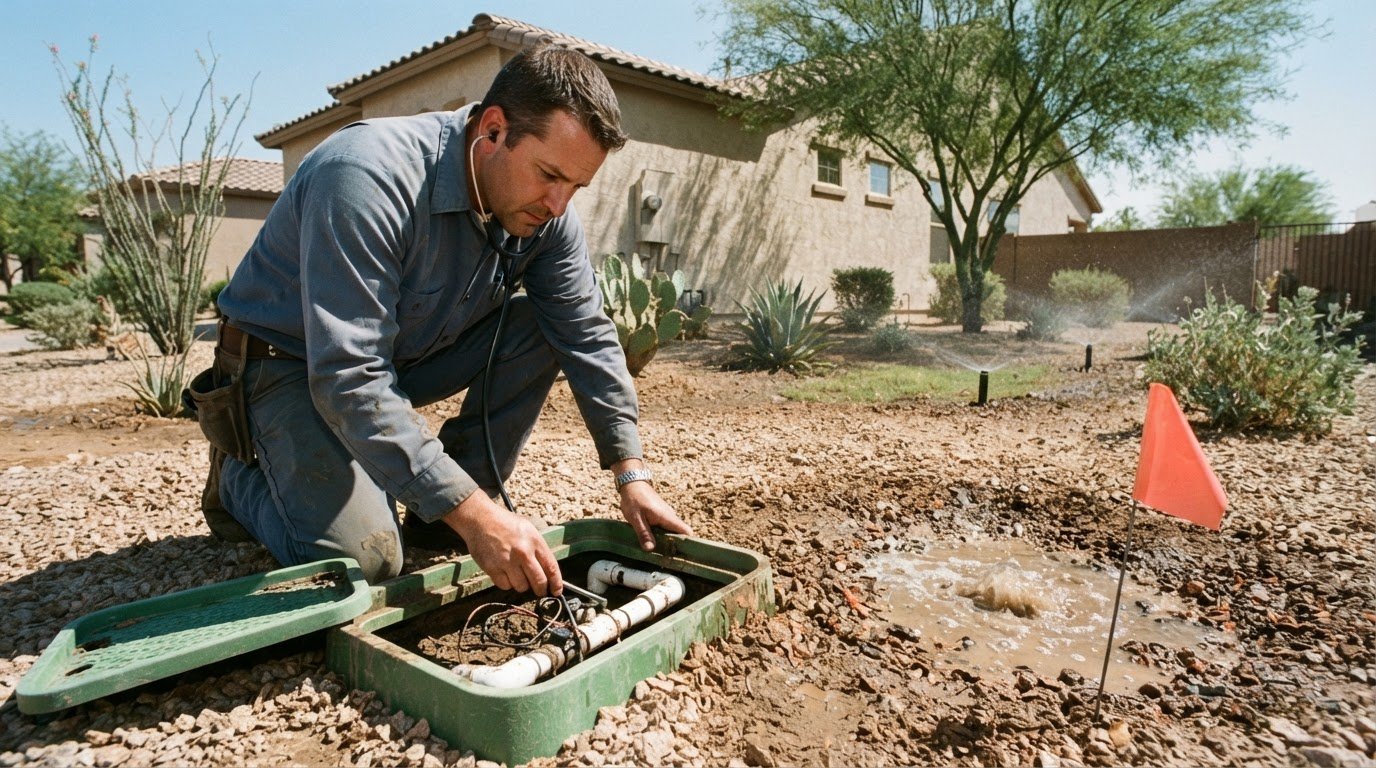
Look for practical signs of waste when inspecting a system. Visible mist, water landing beyond the intended bed, puddles, and channels in exposed soil can each point to a different issue. Wind drift may call for a nozzle-pattern change, while pooling can indicate that the soil cannot absorb water at the application rate. A blocked nozzle or uneven pressure can also distort coverage.
- Observe the spray: Check whether droplets drift away or remain directed toward the planting area.
- Inspect the ground: Note puddles, runoff paths, and soil movement after a watering cycle.
- Match the remedy: Consider nozzle type, pressure, slope, and soil absorption together.
On a hillside planting bed, multi-stream rotary nozzles distribute water in separate trajectories rather than one continuous spray. This gives water more time to soak in before flowing downhill. The streams can also reduce misting compared with a fine fixed spray, but the system still needs suitable coverage and operation.
If misting, runoff, or erosion persists across a zone, discuss sprinkler options for improving water delivery to that landscape.
3. Replacing fixed-spray nozzles with multi-stream rotational sprinkler heads
Multi-stream rotational heads offer a retrofit option when fixed sprays apply water faster than the soil absorbs it. They fit many pop-up spray bodies, directing several rotating streams across the coverage area. A long-term field study found that multi-stream rotational sprinklers reduced precipitation rates from more than 2 inches per hour to 1 inch per hour. The study also found a 45% relative improvement in distribution uniformity compared with traditional technologies.
A lower application rate can suit small planting areas and sloped ground, where fast sprays may run downhill. Rotating streams apply water gradually, giving soil more time to absorb it and helping limit runoff and erosion. They also reduce misting, which can carry fine droplets away from the intended area. These benefits depend on matching the head’s spray pattern and spacing to the existing zone.
Replacing a nozzle involves more than choosing a rotary head with a similar radius. The system must provide enough pressure for the new head, and its coverage must reach neighboring spray patterns. Rotary heads typically need longer run times than fixed-spray heads, even though they use the same or less water. Keeping the old schedule can leave soil too dry, while extending it without assessing the zone can waste water.
Watering schedules and restrictions in Arizona depend on the local municipality or water provider, rather than following one statewide schedule. Rebates for efficient nozzles also depend on local utility programs, so availability and eligibility vary by location and program terms.
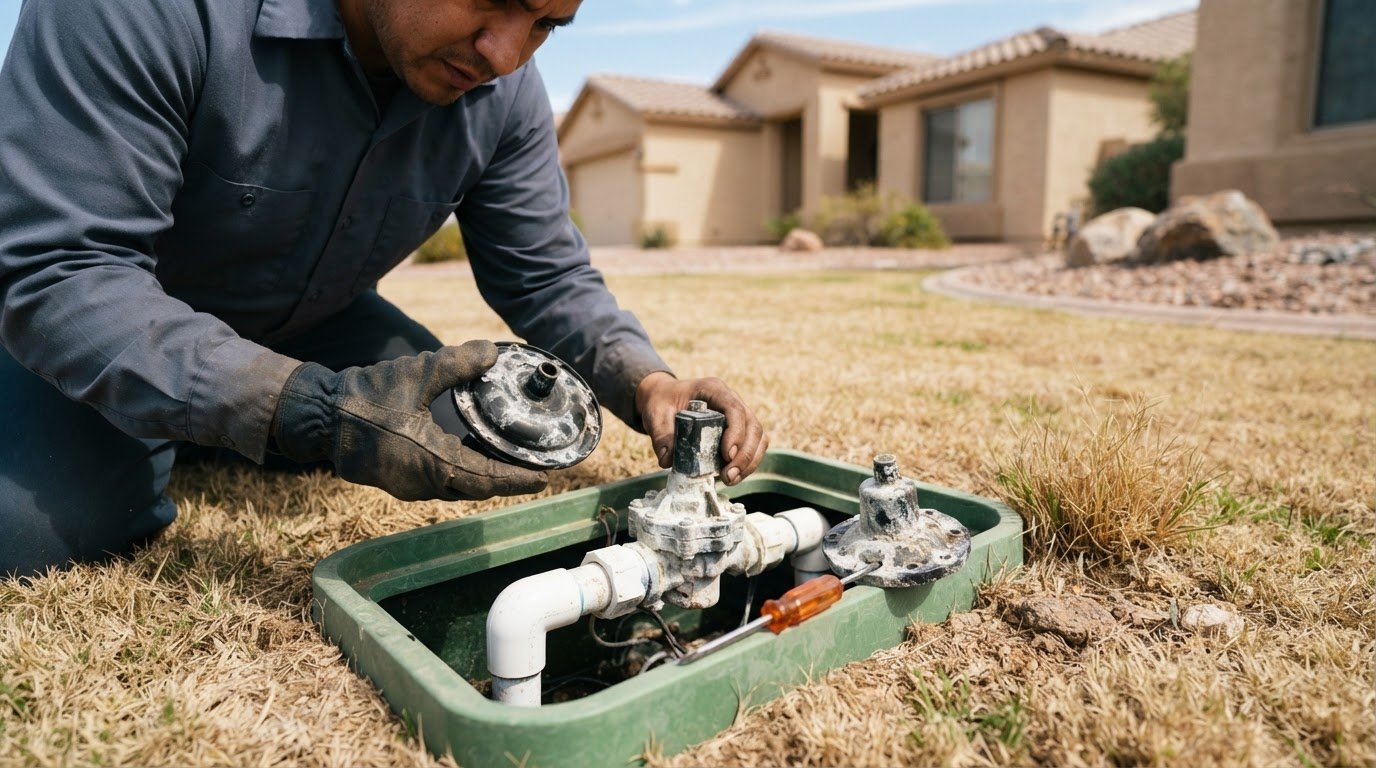
Low-flow nozzles can clog if debris or mineral deposits block their small water passages. A partial blockage may distort a stream or leave part of the pattern dry, causing uneven coverage. Low flow alone does not cause clogging, but clean water, functioning filters, and compatible components help maintain nozzle performance. After a retrofit, inspect the system to confirm that each head rotates freely and covers its intended area.
A careful retrofit follows a practical sequence:
- Review the zone: Identify fixed sprays, slopes, small beds, and areas with visible runoff.
- Match the head: Select a rotational pattern and radius suited to the existing spacing.
- Assess operation: Confirm pressure, rotation, and overlap, then adjust run time for the slower application rate.
Follow local watering rules when setting a revised schedule. On a sloped Arizona planting bed, for example, a rotary head can apply water gradually while maintaining coverage between adjacent heads. If clogging or dry patches persist, the cause may be pressure, spacing, or a blocked nozzle, rather than the nozzle type alone.
4. High-efficiency rotary nozzles
High-efficiency rotary nozzles use rotating streams and produce larger droplets than fine sprays. Larger droplets are less likely to blow away in windy conditions, helping water reach the intended area. For Arizona heat and desert planting, choose a nozzle based on its droplet pattern, coverage radius, and compatibility with the zone’s operating pressure. No single nozzle suits every combination of shrubs, turf, slope, and spacing.
Pressure is an important selection factor. The general optimal pressure for rotary nozzles is 45 psi. If pressure is too low or too high for the selected nozzle, its streams may not reach the planned coverage area consistently. A system assessment should consider operating pressure alongside head spacing and the manufacturer’s specifications for that nozzle.
Spacing affects which radius to choose. For a system with 12-foot spacing, the recommended approach is to use 15-foot nozzles and adjust their distance down. This allows the nozzle’s reach to be tailored to the layout rather than assuming its full radius is always needed. For an irregular desert bed, the arc and distance should also direct water away from paths and hardscape.
Arizona homes can have different irrigation needs across one property. A broad turf area, a narrow planting strip, and a sloped bed may need different spray arcs or nozzle ranges. Wind exposure matters too: larger droplets can resist drift better, but correct aim and spacing remain essential. Check the spray pattern across the zone, including edges, corners, and areas sheltered by walls.
No single sprinkler brand or model is right for every Arizona home. Choose a high-efficiency rotary model whose pressure requirements, radius, and arc match the existing system and the area being watered. These specifications provide a practical basis for comparing models without relying on brand name alone.
- Confirm spacing: Use the 12-foot spacing example to assess whether a 15-foot nozzle needs its distance adjusted.
- Match pressure: Compare system operating pressure with the 45-psi general target for rotary nozzles.
- Assess wind and layout: Consider exposed areas, slopes, bed edges, and nearby hardscape when choosing arc and radius.
- Review coverage: Confirm that streams reach the intended planting area without overspraying adjacent surfaces.
After selecting a nozzle, account for its precipitation rate when setting the zone schedule. High-efficiency rotary nozzles apply water more slowly than fixed sprays, so the run time may need adjustment. A correctly matched nozzle can improve water delivery, but pressure, spacing, and spray direction still determine whether water reaches the whole target area.
5. How do rotary nozzles compare with standard spray nozzles for water efficiency?
Rotary nozzles generally apply water more slowly and distribute it more evenly than traditional pop-up spray nozzles. They may use the same or less water, but typically need longer run times to deliver moisture across the target area. Efficiency depends on pressure, coverage, nozzle selection, and schedule working together.
Standard spray nozzles release water in a fan-shaped pattern. They can suit compact areas that need quick, broad coverage, but their faster application may exceed the soil’s absorption rate. Rotary nozzles send water in rotating streams instead. This slower delivery gives soil more time to absorb moisture, particularly where runoff is a concern.
Distribution uniformity is another useful point of comparison. Multi-stream rotary heads have a lower precipitation rate and better distribution uniformity than traditional pop-up nozzles. Better uniformity means less contrast between areas receiving too much water and spots left dry. The nozzle’s arc and radius still need to match the zone.
Run time is a key trade-off. A rotary zone may need to operate longer than a fixed-spray zone, even when total water use stays the same or decreases. Keeping the old schedule after a nozzle change may leave plants under-watered. Simply extending every zone’s schedule can also waste water, so adjustments should reflect each zone’s nozzle type and coverage.
Mixing rotary and fixed-spray heads in one zone can complicate scheduling. The two types apply water at different rates, so one run time may not suit both. For example, a rotary head along a sloped bed and a fixed spray covering nearby turf may need separate zone control for suitable irrigation. Using consistent nozzle types within a zone makes application easier to assess.
Compare the options by reviewing the area and irrigation system together:
- Area shape: Standard sprays can fit small, compact spaces; rotary patterns can help cover beds or slopes needing slower application.
- Soil response: Pooling or runoff indicates the application rate may exceed local absorption.
- Coverage: Check that head-to-head patterns reach planting areas without leaving dry gaps.
- Schedule: Account for the longer run time rotary nozzles often require.
Compare actual coverage, not nozzle type alone. Pressure, spacing, and spray direction can affect performance in either system. If a zone has dry patches beside runoff, review the nozzle pattern and schedule before assuming one technology will solve every issue.
Discuss your sprinkler nozzle options to determine whether rotary heads suit your system’s layout and watering needs.
Cost is another consideration when comparing the options. A higher per-nozzle price is separate from water efficiency and does not, by itself, show which option suits a particular zone.
When choosing, consider nozzle cost alongside the coverage and scheduling needs you have identified. A lower purchase price may not settle the comparison if the spray pattern or application rate is unsuitable for the area. Likewise, a higher-priced rotary nozzle is not automatically the right fit. Match the nozzle to the zone’s conditions and assess whether its water delivery provides the intended coverage.
Sonora Sprinkler
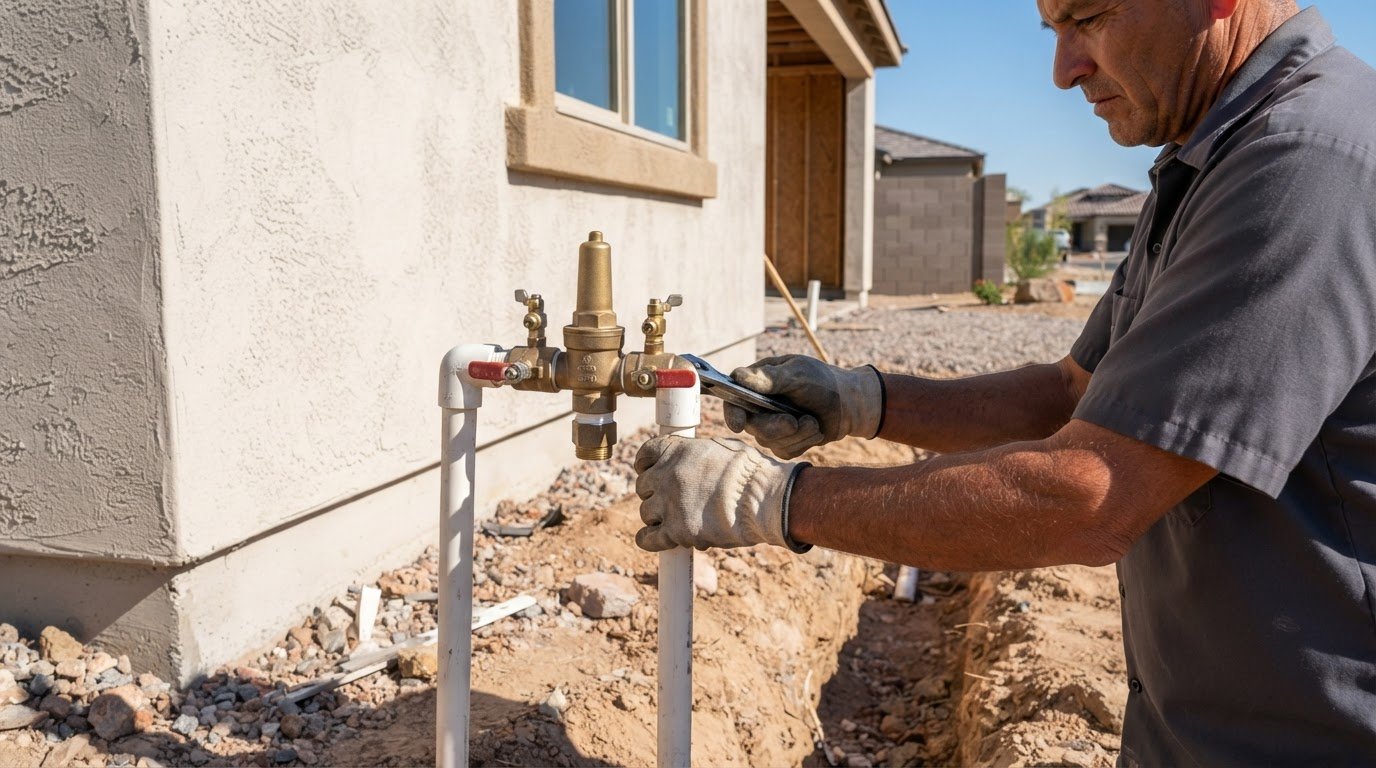
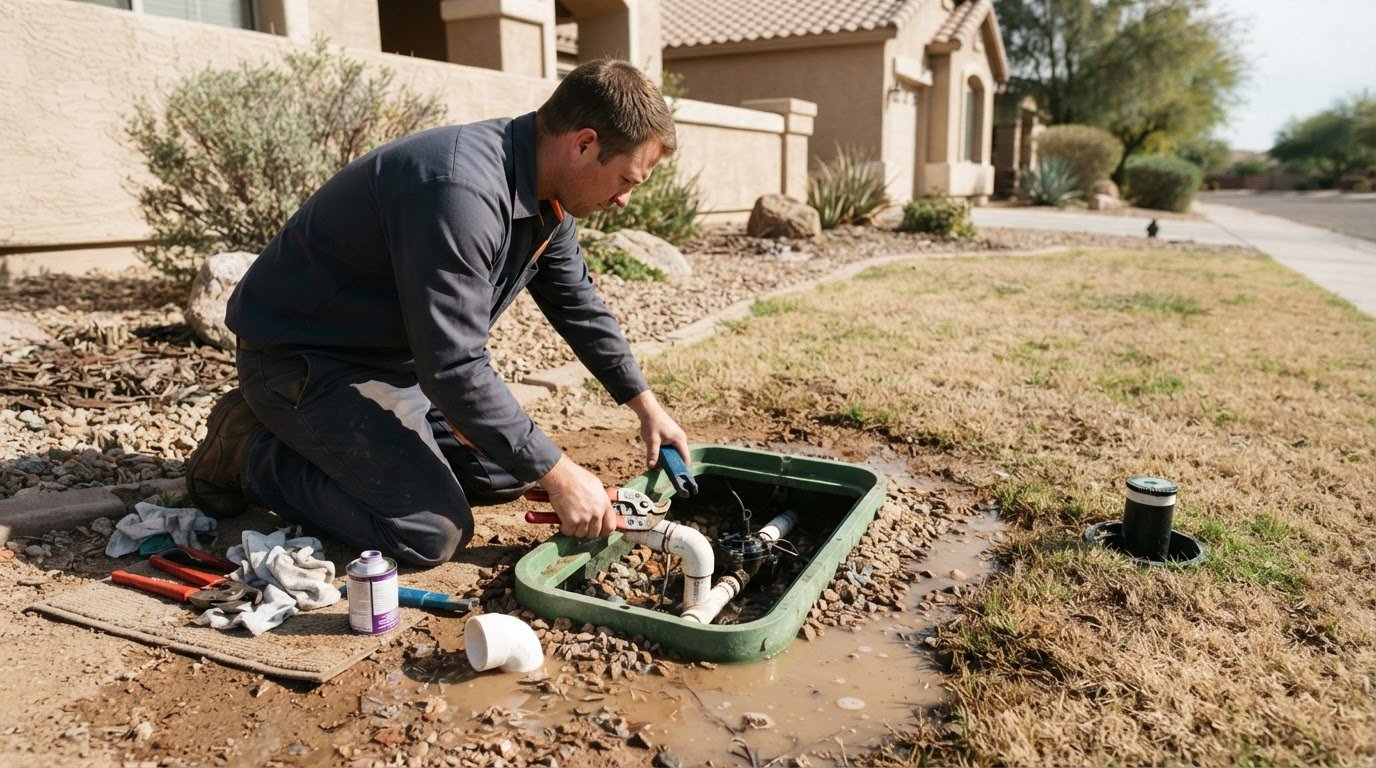
Sonora Sprinkler Inc. can help assess whether your irrigation system’s nozzles, pressure, and coverage suit your Arizona landscape. If some areas stay dry while others develop runoff, a system review can identify whether a nozzle change, sprinkler upgrade, or adjustment to the layout may improve water distribution. For new or reworked zones, custom sprinkler system design can align head spacing and spray patterns with the planting areas being watered. Existing systems with damaged or unevenly operating components may need irrigation repair before a nozzle change can perform as intended. This practical assessment connects nozzle selection with the rest of the system, including its operating pressure and watering schedule.
For help evaluating your sprinkler setup, contact Sonora Sprinkler Inc..
Make your next irrigation adjustment count
Treat nozzle selection as part of the whole irrigation system. A change in spray pattern can affect coverage and scheduling, so consider how each zone serves its plants and features. Choosing water-efficient sprinkler nozzles in Arizona is most useful when the nozzle works with the system layout, rather than being treated as an isolated replacement.
Sonora Sprinkler provides residential irrigation repair, installation, and drip irrigation installation in Surprise and Peoria. If your system has uneven coverage or you’re planning a change, Sonora Sprinkler can assess the irrigation setup and help identify practical options.
Contact Sonora Sprinkler to discuss your irrigation needs. With a well-matched system, your next adjustment can support more consistent watering and the long-term health of your Arizona landscape.
Frequently Asked Questions
Which sprinkler nozzles use the least water in Arizona landscapes?
Multi-stream rotary nozzles are a water-efficient choice for many pop-up sprinkler zones in Arizona, including residential yards in Surprise and Peoria. Their slower application can reduce runoff, while rotating streams help distribute water across the target area. Actual water use also depends on run time and coverage. A nozzle change may require a schedule adjustment so plants receive adequate irrigation without unnecessary watering.