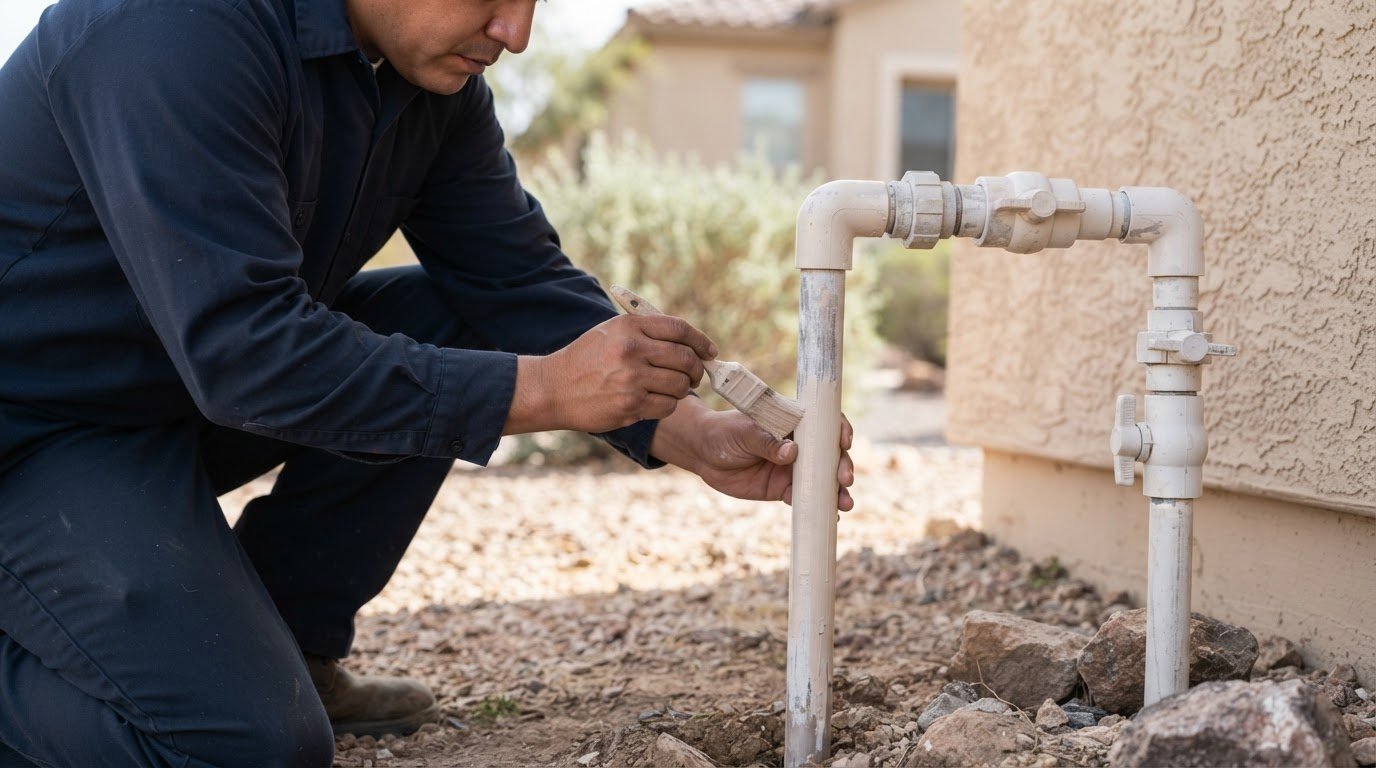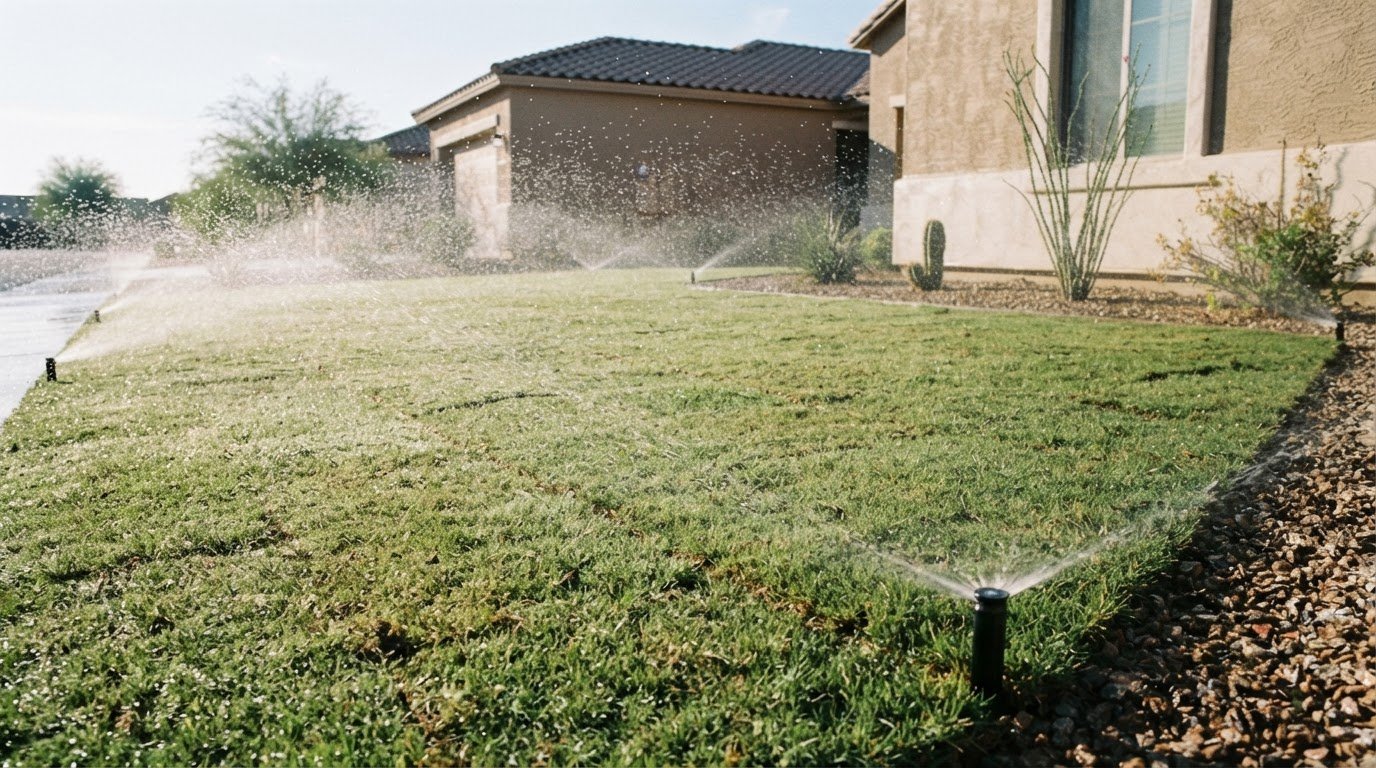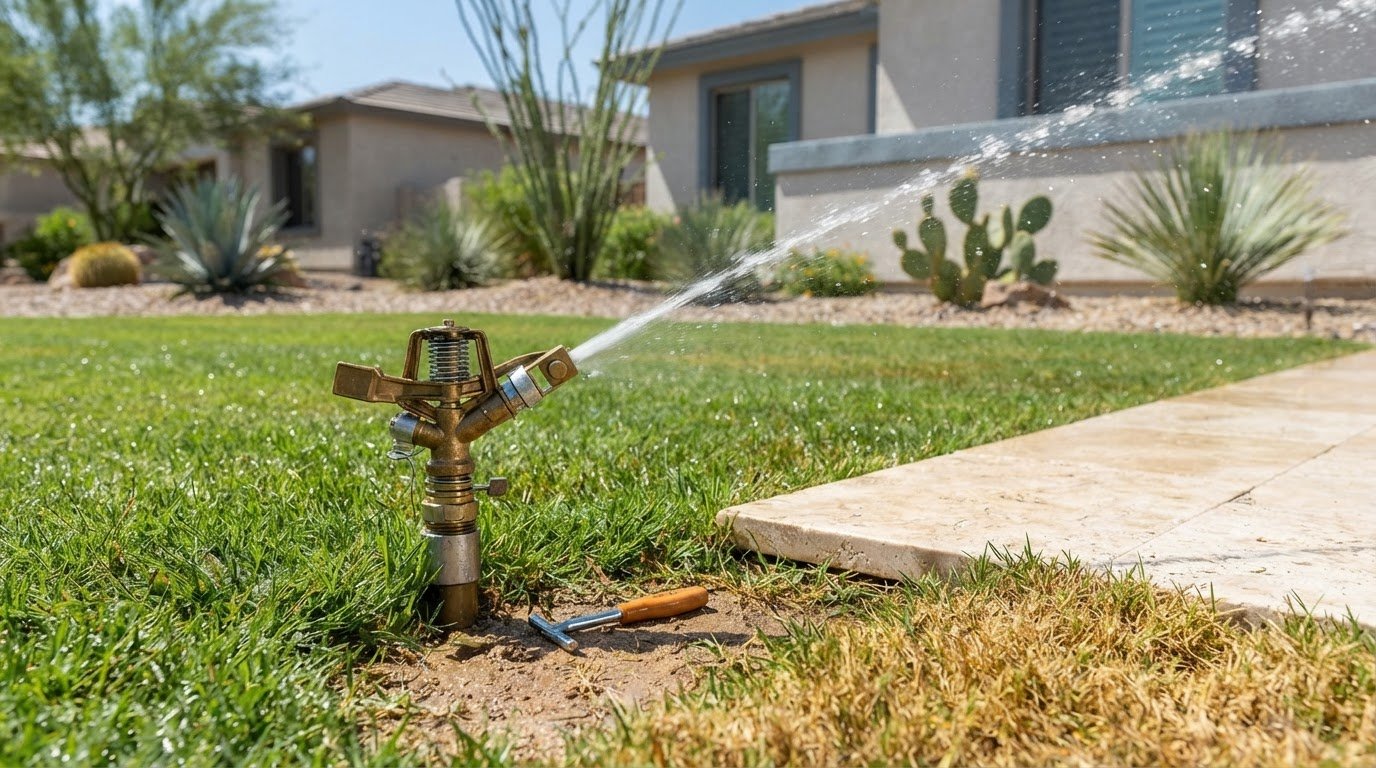
A sprinkler can sit near the house without sending water toward it. To fix sprinkler spraying on a house foundation, keep the spray at least 2 feet away and aim heads away from the wall. Sprinkler piping and heads can be positioned about 6 to 8 inches from the side of the house when directed outward.
It’s reasonable to worry when water keeps collecting by your foundation, but overspray isn’t the only possible cause. A misdirected or damaged sprinkler head may be responsible; soft ground, weak spray, dirty water, or water that continues after the controller is off can point to a leak or valve problem.
This guide explains how to distinguish overspray from signs of an underground leak, what to look for around sprinkler heads and valve boxes, and how watering choices can limit excess moisture near your home. You’ll also learn when to stop the affected zone and why the wettest spot may not mark the pipe break. A clearer diagnosis helps you address the source instead of simply redirecting the spray.
Key Takeaways
- Keep sprinkler spray at least 2 feet from the house and aim heads away from the foundation to reduce overspray.
- Soft ground, weak or sputtering spray, and water that continues after the controller is off can help distinguish a leak from a misdirected head.
- Check for tilted or cracked heads, damaged risers, and missing nozzles that may send water toward the wall or reduce zone pressure.
- Run zones one at a time to locate where water appears, and stop a zone that causes pooling near the foundation until the problem is diagnosed.
- Water in a valve box may point to a pressurized leak or zone issue; don’t force a stuck valve while inspecting it.
Distinguishing overspray from an underground leak
To fix a sprinkler spraying on the house foundation, first determine whether the water comes from a misdirected head or a hidden leak. Overspray usually appears while its irrigation zone is running and follows a visible spray pattern. A leak can leave the ground wet even when no sprinkler is visibly spraying the wall. Run zones one at a time to connect the water to a specific part of the system.
Watch the affected area as the controller starts and stops each zone. If a head throws water against siding or the foundation only while operating, inspect its direction, nozzle, and position before suspecting a buried break. A head may need adjustment, a nozzle correction, pressure correction, or repositioning. Use 1/4- and 1/2-circle spray patterns where appropriate, aimed away from the house, to cover nearby ground without watering the wall.
Other signs can point to an underground leak: soft spots in the yard, reduced spray distance, or dirty water from a sprinkler line. A lateral line is usually pressurized only while its zone is active, so a leak may become apparent during that cycle. However, the wettest patch near the house isn’t always directly above the break. Water can travel through soil before reaching the surface.
- Water stops when the zone ends: Check for a misdirected or damaged head in that zone.
- Water continues after the controller is off: A main-line leak, stuck valve, backflow issue, or other pressurized component may be involved.
- Spray weakens or sputters: Compare heads in the same zone and note whether the change affects several heads.
Pressure is another clue, not a diagnosis by itself. System pressure above 60 psi can shorten the life of irrigation parts. If pressure correction is needed, a regulator set to approximately 40-50 psi may help protect the system. A pressure problem can affect spray reach, while a cracked pipe or fitting can also reduce pressure in its zone. Observing whether one head or several heads are affected helps narrow the possibilities.
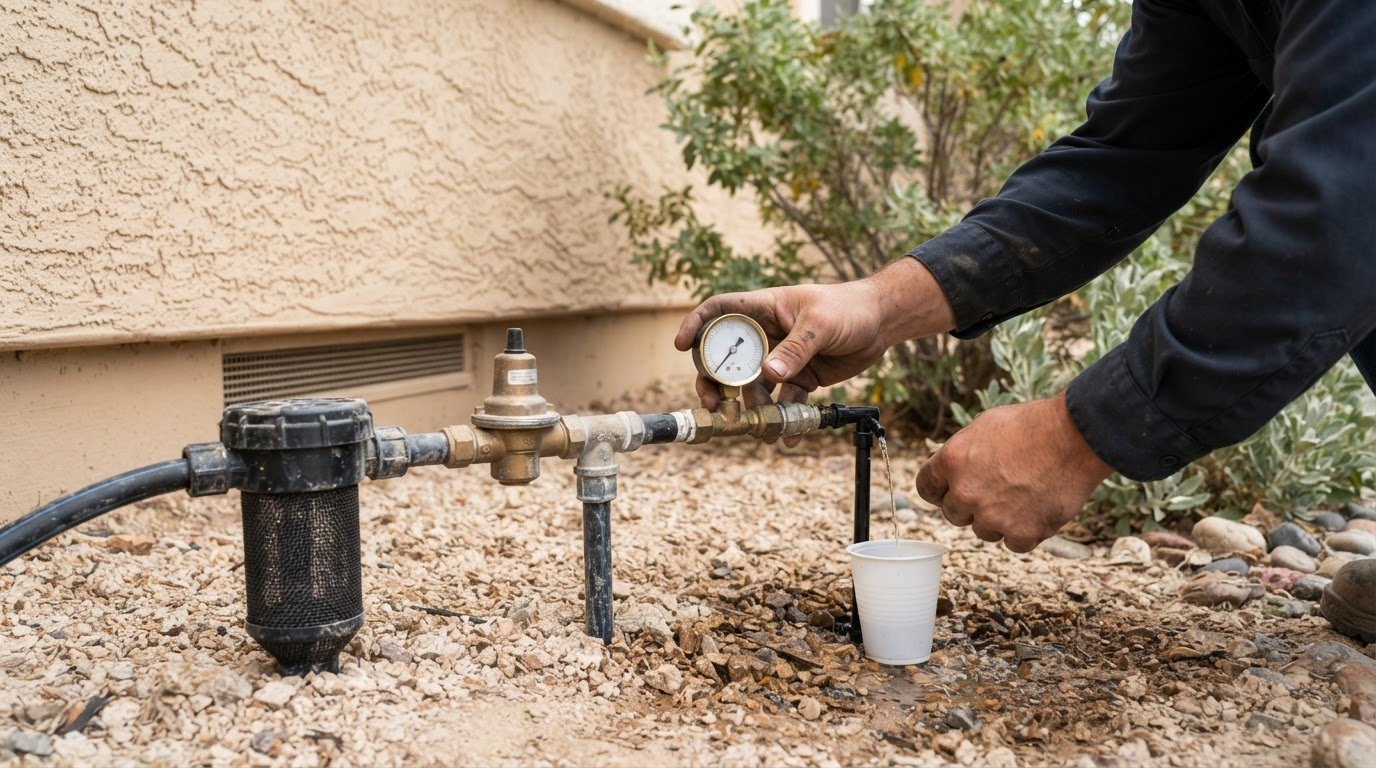
Call an irrigation professional if overspray continues after adjusting a head, pressure or nozzle problems need diagnosis, or water persists after the controller is off. Shut off the irrigation water if it sprays uncontrollably or collects near the foundation. Avoid digging aggressively near sprinkler wires, pipes, utilities, or the foundation. The visible wet spot may not reveal where the line is damaged.
A head spraying the house may need adjustment, a nozzle or pressure correction, or repositioning. Dirty water or soft spots may indicate an underground leak.
How excess irrigation can affect slab foundations
Soil around a slab can respond to changes in moisture. In clay-heavy soil, the ground expands as it absorbs water and shrinks as it dries. Repeatedly wetting one side of a home can create a different moisture pattern from the rest of the yard. The concern is persistent excess water, not one ordinary watering cycle.
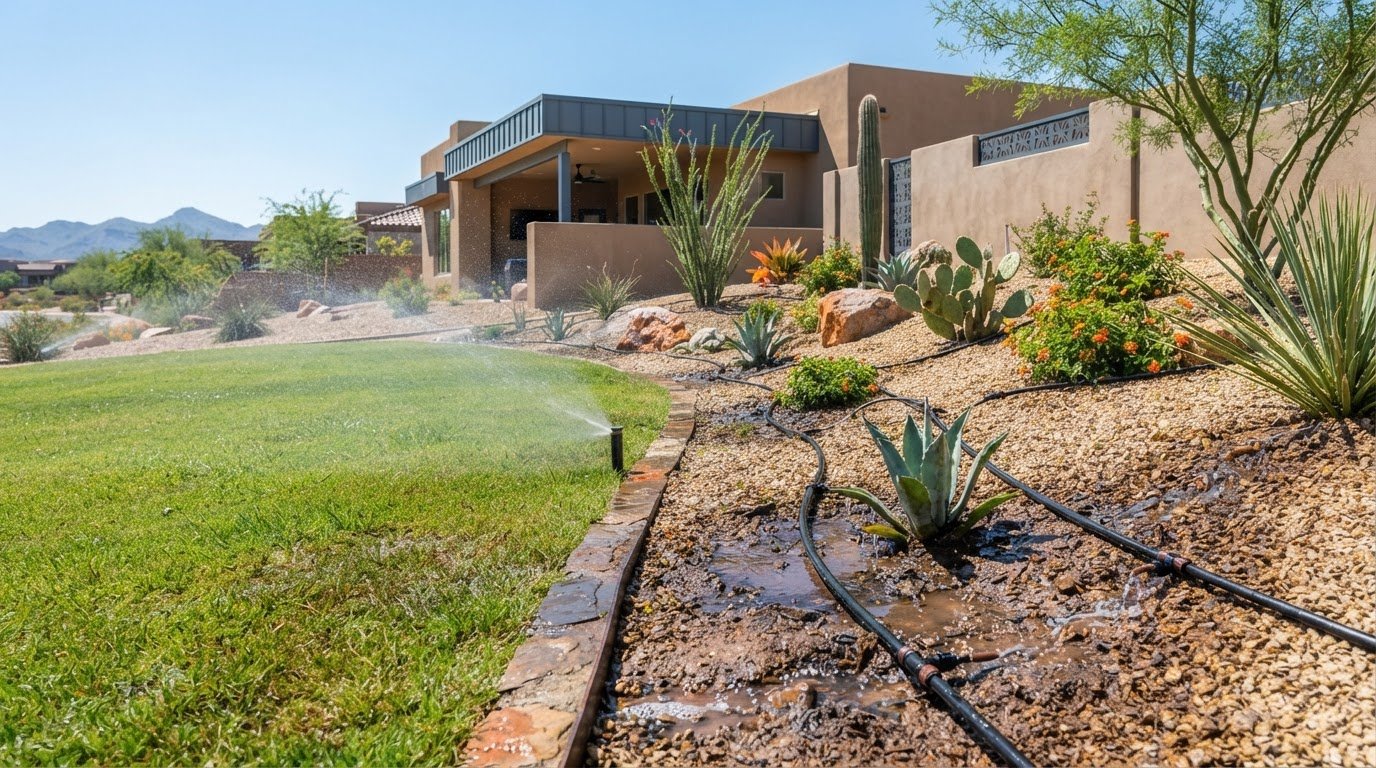
Check where irrigation water settles after a zone runs. Water that flows downhill toward the house or collects beneath decorative rock can leave a small area wetter than intended. A dry strip beside a wet patch may also point to uneven coverage. These patterns can help distinguish a schedule problem from a zone that sprays or leaks in the wrong place.
Use the controller to manage watering rather than letting a zone run every day. A suggested schedule is three watering sessions per week, with a system set to run for 30 minutes per session. These figures are a starting schedule, not a substitute for observing the soil and runoff. If water pools beside the slab before a session ends, more watering can add to the problem.
- Water runs toward the house: Change the spray direction or coverage so water lands in the intended planting area.
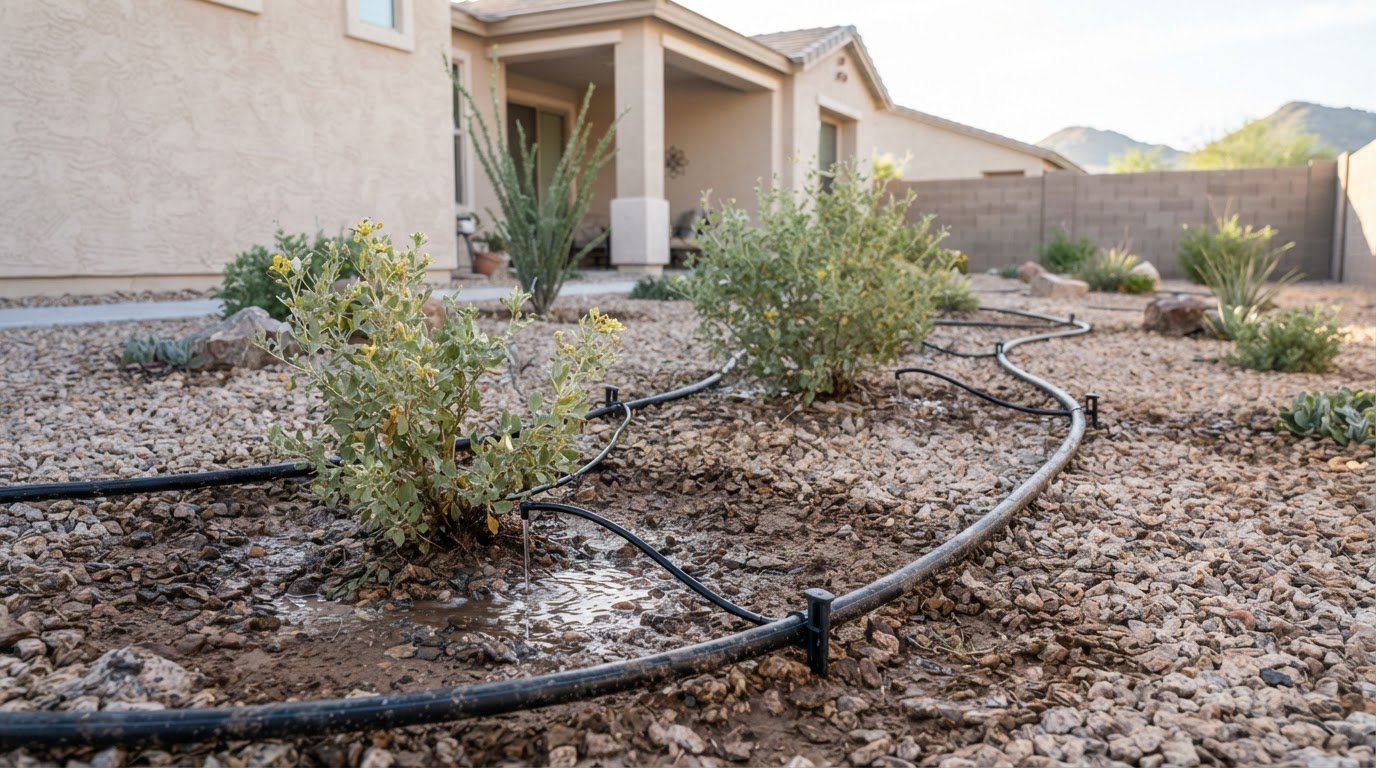
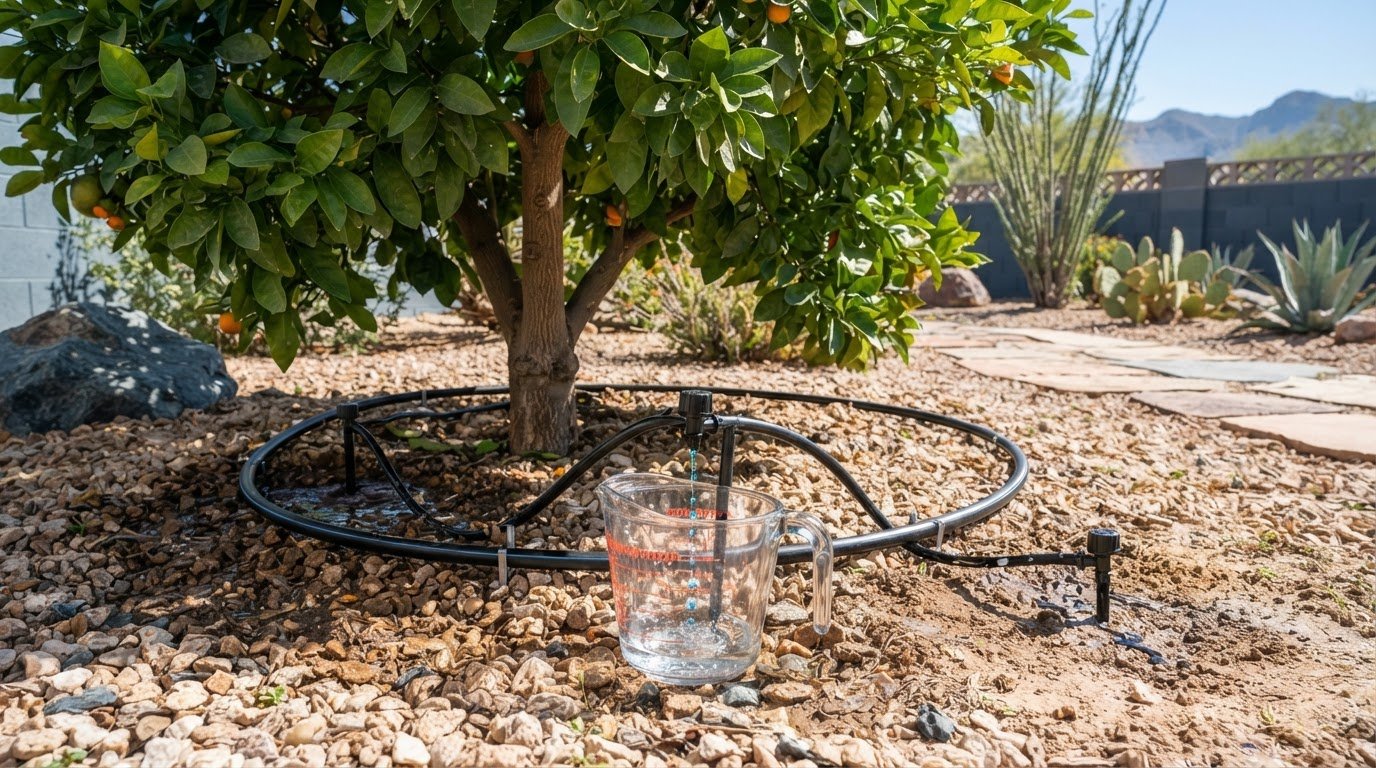
- A small bed receives more water than it needs: Drip irrigation can reduce wind drift and splashing compared with spray heads.
- The ground stays wet between sessions: Pause the affected zone and identify whether runoff or a system fault is supplying the water.
Timing also affects how efficiently water reaches the ground. Avoid running sprinklers during the hottest part of the day, when more moisture is lost to evaporation. Set the controller schedule to account for the yard’s actual conditions, including shade, drainage, and how quickly the soil dries. A shaded bed and an exposed strip beside a driveway, for example, may not need identical watering.
Run zones separately when water appears near the foundation. Watching one zone at a time can reveal whether its spray pattern sends water toward the slab or moisture appears independently of visible spray. Stop a zone that leaves water pooling against the house until you identify the cause. Continuing to run it can keep the area unnecessarily wet.
Residential watering restrictions and irrigation rules depend on location, so there isn’t one schedule for the entire United States. Follow the requirements in your city and state, then set the controller to avoid unnecessary watering. Even a compliant schedule should prevent runoff and repeated saturation beside the foundation.
Inspecting sprinkler heads and risers
A tilted head, cracked riser, or missing nozzle can direct water toward the foundation. Inspect the heads while the system is running, then compare their spray and pressure with other heads in the same zone.
Adjusting Head Direction and Spray Distance
Adjusting a head changes the direction or reach of its spray. A head can water its intended area while still soaking a wall, window, or window well, so check where the water lands.
With the zone running, observe where the stream lands and whether it reaches the house. Turn the head away from the wall, then reduce its throw distance until water stays within the intended area. Popup heads can be adjusted to change how far water travels. Test the zone after each adjustment, since even a small change can affect nearby coverage.
If spray still hits the house, inspect the nozzle and head position. A cracked head, damaged riser, loose fitting, or missing nozzle can create an irregular stream that adjustment alone won’t correct. A tilted head may also send water across the intended boundary. Sprinklers shouldn’t spray house windows or window wells, so redirect or correct the source rather than accepting repeated splashing.
Check how the rest of the zone performs. A leak or damaged component can lower pressure, causing heads to pop up poorly, sputter, spray weakly, or leave dry areas. If several heads change at once, the problem may affect the zone rather than one head. Inspect sprinkler systems monthly during the active watering season to spot visible damage and changes in spray patterns.
To replace a nozzle with a lower-flow or adjustable model, identify the current nozzle and match a suitable replacement to the head. Turn off the zone before handling the head, remove the existing nozzle, and secure the replacement. Run the zone to check its direction and coverage. If the spray remains uneven, the riser or fitting may be damaged and need attention.
Sprinkler Head Repair and Replacement Costs
Repair or replacement cost is the amount charged to restore a head’s function. In the United States, the price depends on the specific repair and is provided after a quote request, with factors such as head type, damage, access, and whether a nozzle or head needs replacement affecting the work.
A nozzle change differs from replacing a cracked head or riser. The visible part may be damaged, or a fitting below ground may be leaking and reducing pressure. Those conditions require different work, so identifying the failed component helps define the repair. If water continues toward the foundation after adjustment, share the sprinkler repair concern for help addressing the source.
Watering practices and foundation movement in clay soil
Clay soil responds to changes in moisture, so irrigation patterns matter around a slab. In regions like Surprise and Peoria, Arizona, heavy clay and expansive soils react significantly as they absorb water and shrink as they dry. Repeatedly wetting one side of a home can create a different moisture pattern from the rest of the yard. The concern is persistent excess water, not one ordinary watering cycle.
Check where irrigation water settles after a zone runs. Water that flows toward the house or collects beneath decorative rock can leave a small area wetter than intended. A dry strip beside a wet patch may also point to uneven coverage. These patterns can help distinguish a schedule problem from a zone that sprays or leaks in the wrong place.
Use the controller to manage watering rather than letting a zone run every day. A suggested schedule is three watering sessions per week, with a system set to run for 30 minutes per session. These figures are a starting schedule, not a substitute for observing the soil and runoff. If water pools beside the slab before a session ends, more watering can add to the problem.
- Water runs toward the house: Change the spray direction or coverage so water lands in the intended planting area.
- A small bed receives more water than it needs: Drip irrigation can reduce wind drift and splashing compared with spray heads.
- The ground stays wet between sessions: Pause the affected zone and identify whether runoff or a system fault is supplying the water.
Timing also affects how efficiently water reaches the ground. Avoid running sprinklers during the hottest part of the day, when more moisture is lost to evaporation. Set the controller schedule to account for the yard’s actual conditions, including shade, drainage, and how quickly the soil dries. A shaded bed and an exposed strip beside a driveway, for example, may not need identical watering.
Run zones separately when water appears near the foundation. Watching one zone at a time can reveal whether its spray pattern sends water toward the slab or moisture appears independently of visible spray. Stop a zone that leaves water pooling against the house until you identify the cause. Continuing to run it can keep the area unnecessarily wet.
Residential watering restrictions and irrigation rules depend on location, so there isn’t one schedule for the entire country. Follow the local requirements in Arizona, then set the controller to avoid unnecessary watering. Homeowners who need expert assistance can rely on Sonora Sprinkler Inc. to help optimize their systems. Even a compliant schedule should prevent runoff and repeated saturation beside the foundation.
Checking valve boxes
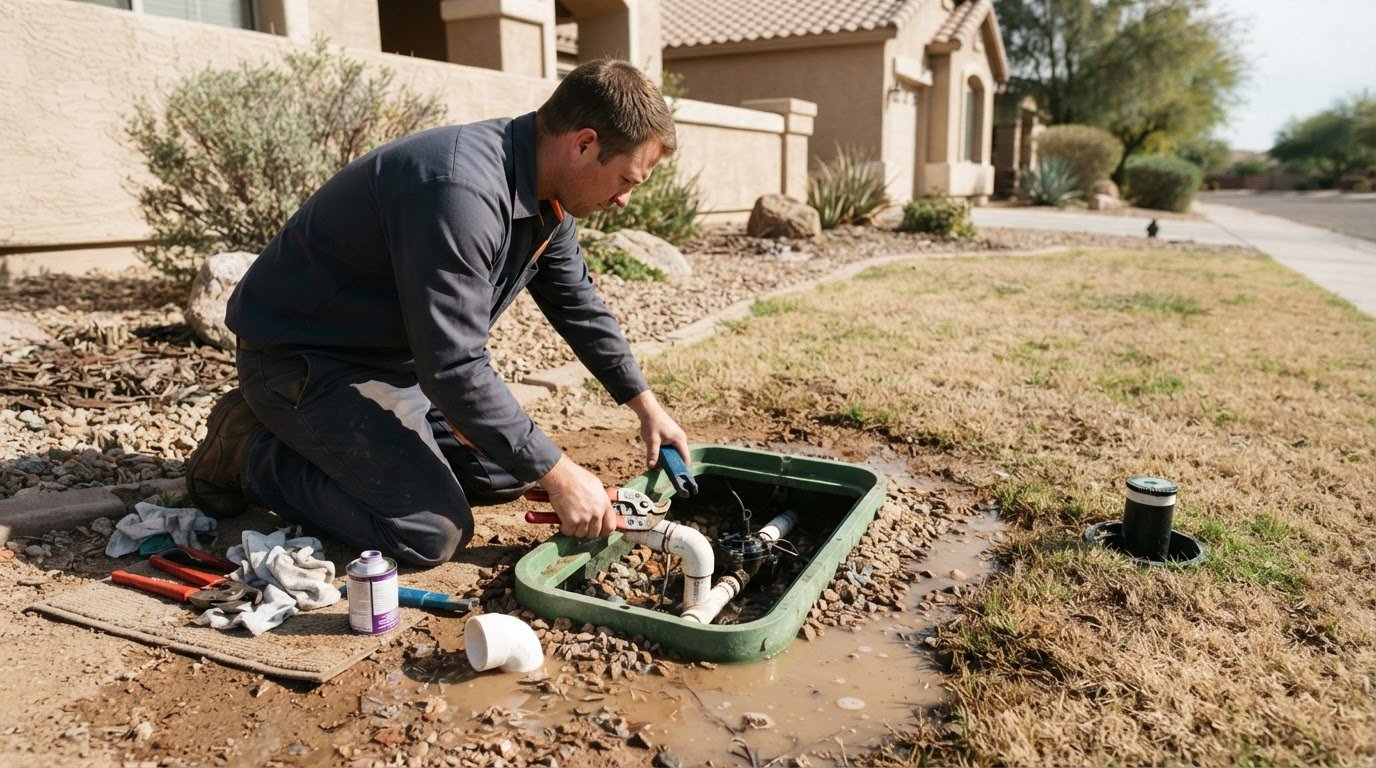
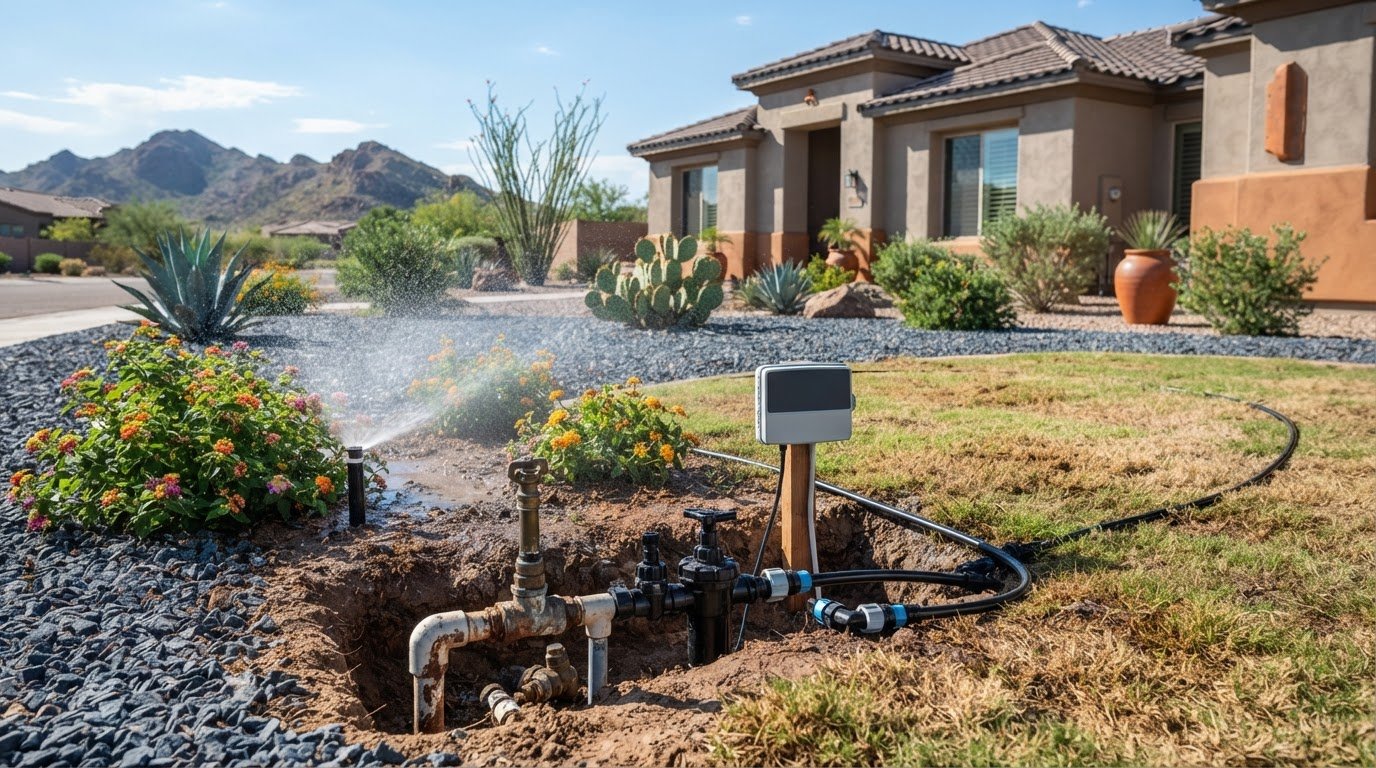
A valve box provides access to irrigation valves that control water flow through system zones. Water inside a box near the house can signal a pressurized leak or a zone-specific sprinkler problem. Its location can connect a wet area with the irrigation system, but it doesn’t identify the failed part on its own. Observe the box and nearby ground before changing a valve or running more water.
Note whether the box is wet while the system is off, during a particular zone, or after watering ends. If water appears as a zone runs, record which zone and watch the nearby heads. A zone-specific fault may affect spray performance or leave water around the box. If water continues after the controller is off, a pressurized component that remains supplied may be involved.
Look for visible signs without forcing the valve or shutoff. Forcing a stuck valve can damage it, and a backflow or shutoff assembly may require careful handling. Limit your inspection to what’s readily visible: standing water, wet soil around the box, or water appearing while the system operates. Don’t dig aggressively around the box, since sprinkler pipes and wires may run nearby.
- Water in the box while a zone runs: Note the active zone and whether nearby heads spray weakly or unevenly.
- Water continues after the controller stops: Shut off irrigation water if the leak persists near the home.
- A valve feels stuck: Don’t force it; leave it undisturbed and arrange diagnosis.
Use the controller to isolate the affected zone without repeatedly cycling a suspected faulty valve. Compare the box before and after that zone runs. If water appears in the box during one zone while the others are inactive, for example, the issue may be in that zone or its valve area. If water is already present with the controller off, a pressurized leak or another valve-related problem may be involved.
Water in a valve box near a foundation deserves attention because the source may not be visible at the surface. Avoid treating the wettest spot as the exact leak location, and don’t excavate beside the house to find it. Valve and backflow services can address valve-area concerns, while irrigation repair can diagnose related system faults. Request help diagnosing a valve-box leak when water persists or the valve won’t operate normally.
Keep the inspection observational and note changes in the box without disturbing its contents. Recording whether water was present before irrigation or appeared during a zone can help explain the pattern during diagnosis. Avoid repeatedly operating a component that doesn’t move normally, and leave nearby soil undisturbed so its condition remains clear.
Don’t force a stuck backflow or shutoff valve while checking for a sprinkler leak. If it doesn’t move freely, leave it in place and note what you observed, including whether water was present before operation or appeared while a zone ran. This information can help an irrigation professional assess the problem without further cycling or disturbance.
Sonora Sprinkler
Sonora Sprinkler Inc. repairs sprinklers that keep spraying the house and diagnoses water that may indicate a system leak. Irrigation repairs can address damaged heads, faulty valves, or leaking irrigation lines. The right fix depends on whether the cause is spray direction, a failed component, or the system’s layout.
If a narrow bed beside your home is difficult to water without splashing the wall, drip irrigation may be a better fit. Sonora Sprinkler installs drip systems and designs custom sprinkler systems for broader coverage needs, with layouts tailored to the property.
Contact Sonora Sprinkler Inc. to discuss sprinkler water collecting near your foundation and the repair or irrigation changes that may help.
Keep the Next Step Focused on the Cause
Let the water pattern guide your next step. If spray direction is the issue, correcting coverage can keep water where it belongs. If moisture continues when the system is off, treat it as a system problem rather than simply changing the schedule. A clear account of when and where water appears can help narrow down the repair.
If you need to fix a sprinkler spraying on the house foundation, the goal is more than stopping visible overspray. Address the cause and make sure the irrigation system suits the property. Sonora Sprinkler Inc. can help with irrigation installation when system changes are part of the solution.
Share what you’ve observed, including which zone was running and whether water continued afterward. Contact Sonora Sprinkler Inc. to discuss your irrigation concern and take a practical next step toward protecting your home.
Frequently Asked Questions
How Far Should Sprinklers Be From the House?
Keep sprinkler spray at least 2 feet from the house. This refers to where water lands, not necessarily how far underground piping sits from the wall. For a head beside a narrow bed, check its spray during operation and adjust the direction or throw so water reaches plants without striking siding, windows, or the foundation. If the head can’t cover the bed without wetting the house, consider a different irrigation layout.
How far should sprinklers be from a house foundation?
Aim the spray so it lands at least 2 feet from the house foundation. That guidance helps limit direct wetting; the distance between a head and the wall depends on the system layout and the area being watered. A head closer to the house may still work if its pattern is directed outward and doesn’t splash the wall. Watch for runoff returning toward the foundation after watering.
Can repeated sprinkler watering damage a home's foundation or cause basement leaks?
Repeated excess watering can affect soil around a home, especially where clay-heavy ground expands as it absorbs moisture and shrinks as it dries. Persistent pooling may contribute to soil movement and potentially affect a foundation. That doesn’t mean every wet basement or foundation crack is caused by sprinklers. If water enters a basement, note when it appears and whether irrigation was running, then investigate drainage and irrigation conditions separately.
How to fix a leaking or stuck sprinkler valve causing overspray
If water continues after the controller is off, shut off the irrigation water. A stuck valve or another pressurized component may be involved. Don’t force a stuck valve; have an irrigation professional diagnose the problem.