There is no single set price for a sprinkler system for new sod installation in Surprise. The project scope depends on the lawn’s size, irrigation zones, layout, and existing system. New sod needs even coverage and watering that follows the sod provider’s instructions while it takes root.
It makes sense to want a clear budget before the sod goes down. A useful estimate accounts for the property’s actual watering needs rather than treating every yard as the same installation.
This article explains the main factors that shape installation costs, how separate zones and sprinkler placement affect coverage, and how irrigation planning can support homes and commercial properties. You’ll also learn why coordinating sprinklers with new sod can help avoid unnecessary disruption and what to consider when planning a system for your Surprise property.
Key Takeaways
- Installation cost depends on the yard’s size, layout, watering zones, and existing irrigation components, so the property plan matters more than a one-size-fits-all estimate.
- Separate zones can help match watering to new sod, trees, shrubs, and planting beds with different needs.
- Plan for even coverage across the sod while keeping sprinkler spray off walkways, driveways, and patios.
- Coordinating irrigation with sod installation can reduce the need to disturb established grass or plants later.
- Repeated dry spots may point to coverage problems or an irrigation layout that no longer suits the property.
How much is it to install a sprinkler system?
Installation costs depend on the property’s layout, watering zones, existing equipment, and coverage requirements. For a new sod project, the estimate reflects the system design and work needed across the lawn.
The price depends on the individual project and is provided after a quote request; lawn area, zone count, pipe routing, and existing components all affect the scope. Planning before sod is laid can also shape the work, since access to the ground differs from access beneath established turf.
Separate Watering Zones
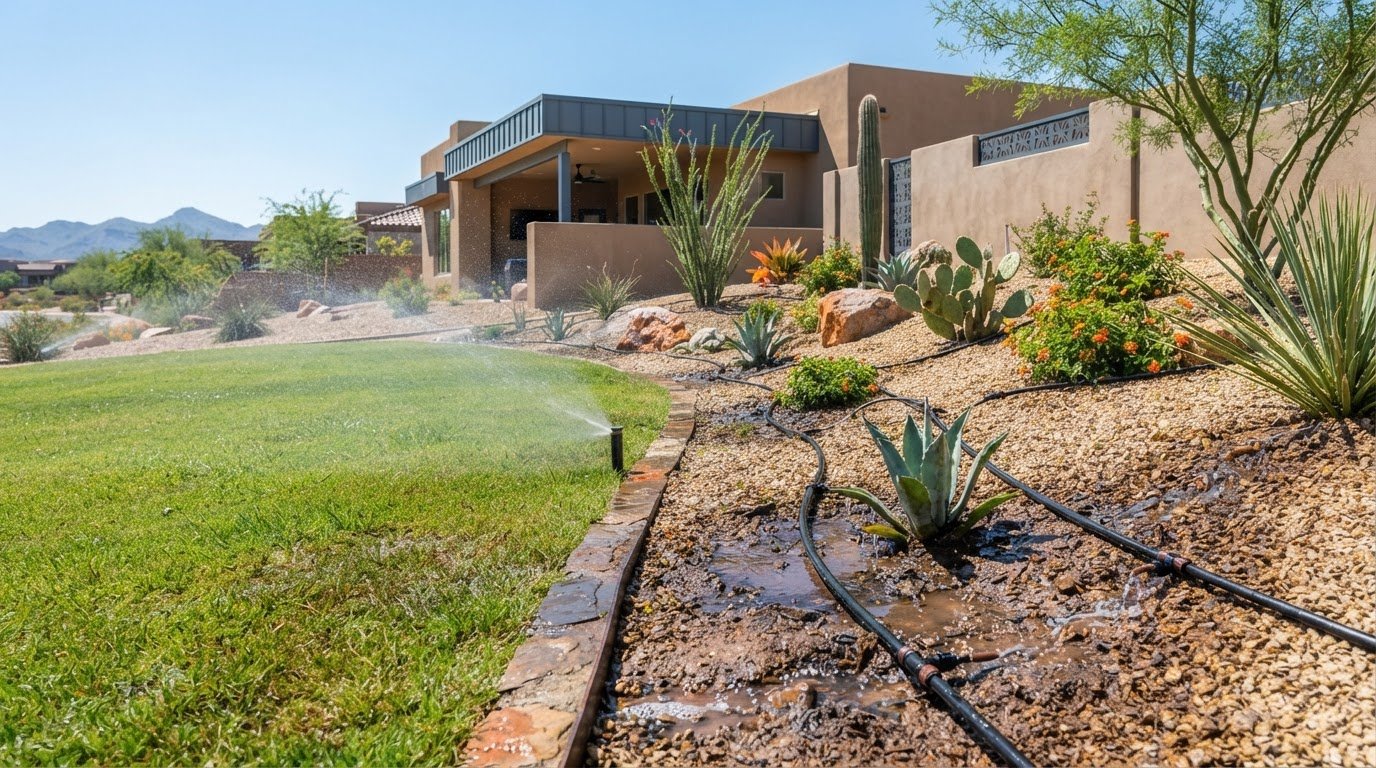
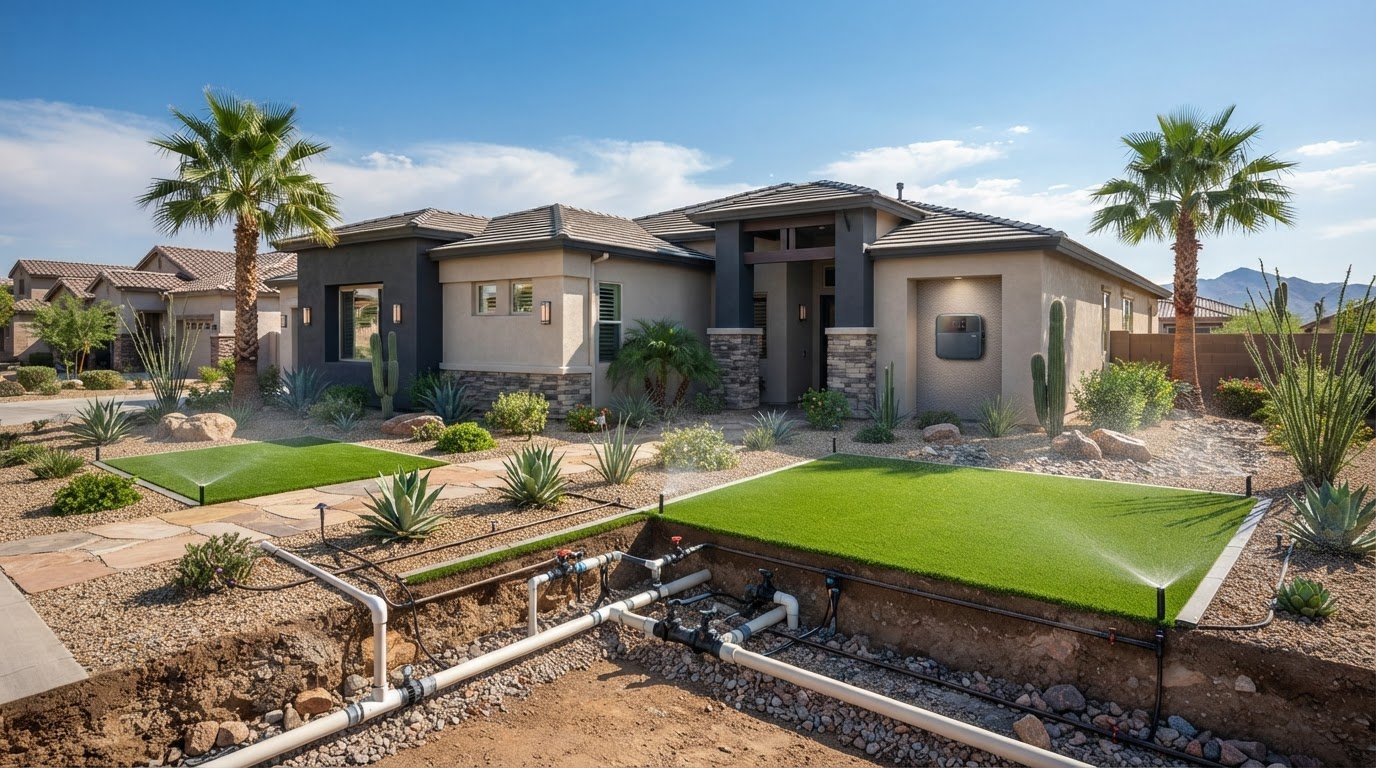
Separate zones let the system water areas with different needs independently. New turf, established trees, shrubs, and planting beds may need different schedules or delivery methods, so group them by watering requirements. For example, a turf zone can use sprinklers while a bed receives targeted irrigation. Review the planting plan before assigning areas to zones.
New Sod Watering Needs
Some lawns need about 1 to 1½ inches of water per week, and many people water lawns two to three times per week. Those general figures don't replace the sod provider’s instructions for freshly laid turf. New sod needs consistent moisture as it takes root, so check its instructions and adjust the schedule as the sod establishes. Avoid assuming established-lawn habits suit new sod.
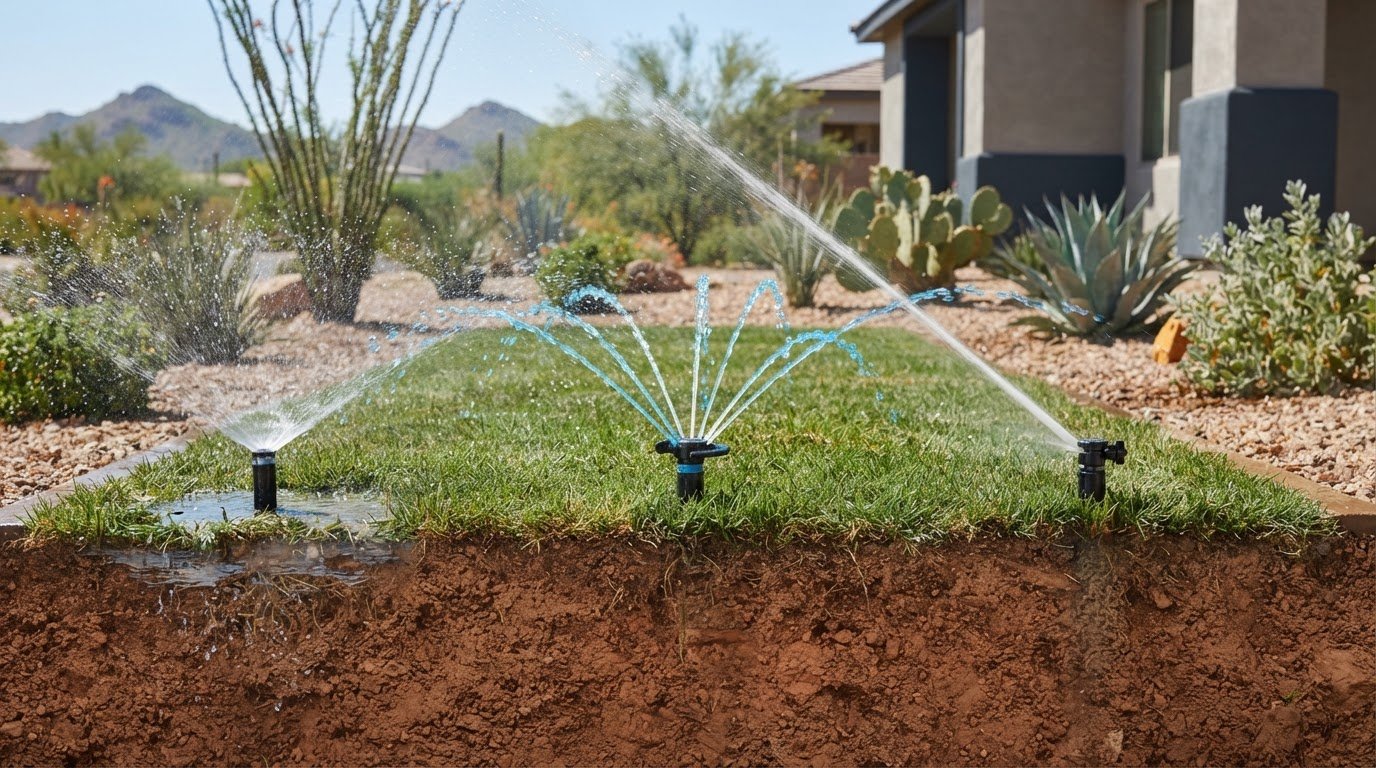
Set the controller to follow the sod provider’s watering recommendations, then check the lawn for uneven moisture. Dry edges or puddles can indicate that coverage or timing needs adjustment.
Sprinkler Selection and Coverage
For new sod in Surprise, choose a system that provides even coverage across the turf and divides it into suitable zones. Head type and spacing depend on the lawn’s shape, system layout, and how water reaches each section, so there is no single spacing rule for every yard. Arrange coverage so neighboring spray patterns reach lawn edges without watering pavement.
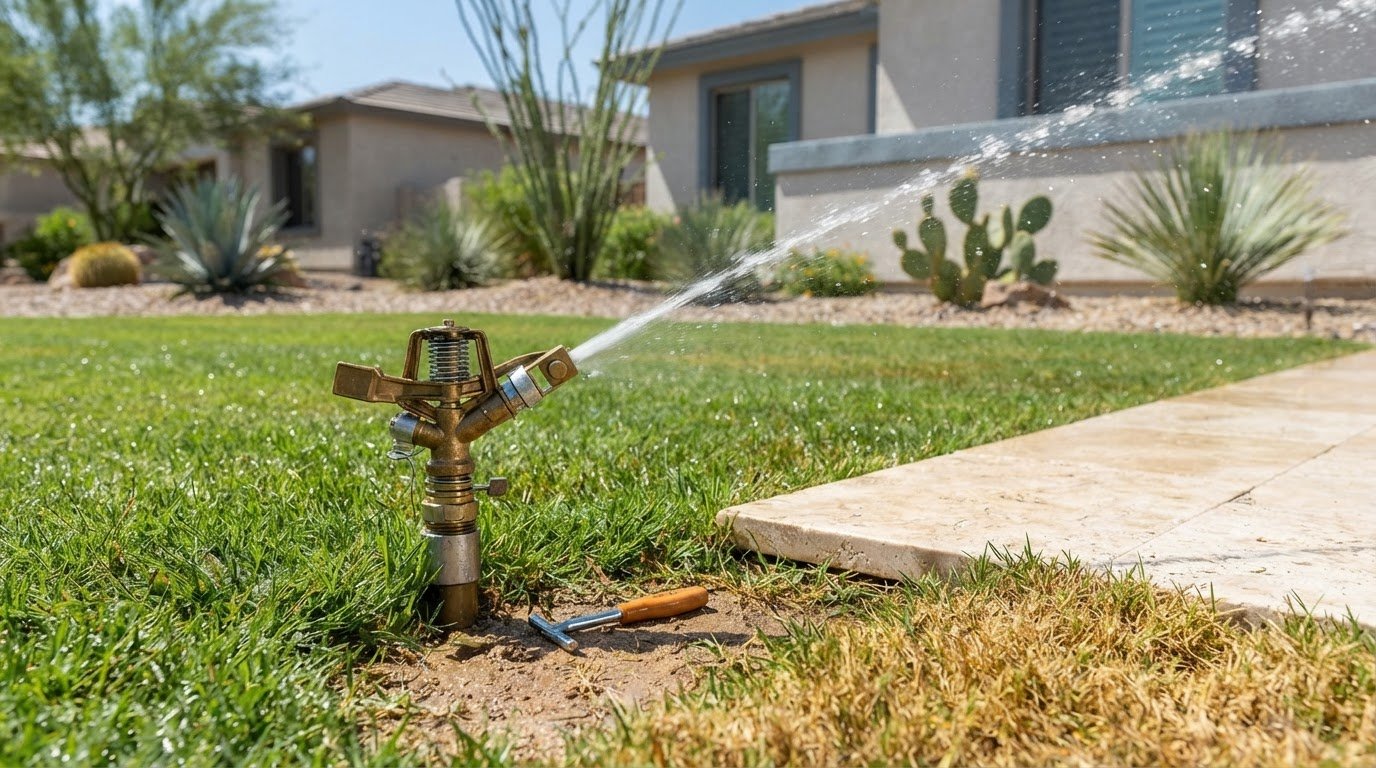
The U.S. Environmental Protection Agency recommends aiming sprinklers so they do not water pavement. Clogged or misaligned heads can leave dry patches, while leaks, overlapping spray, or excessive run times can contribute to waterlogged areas.
Preparing Sprinklers for Sod
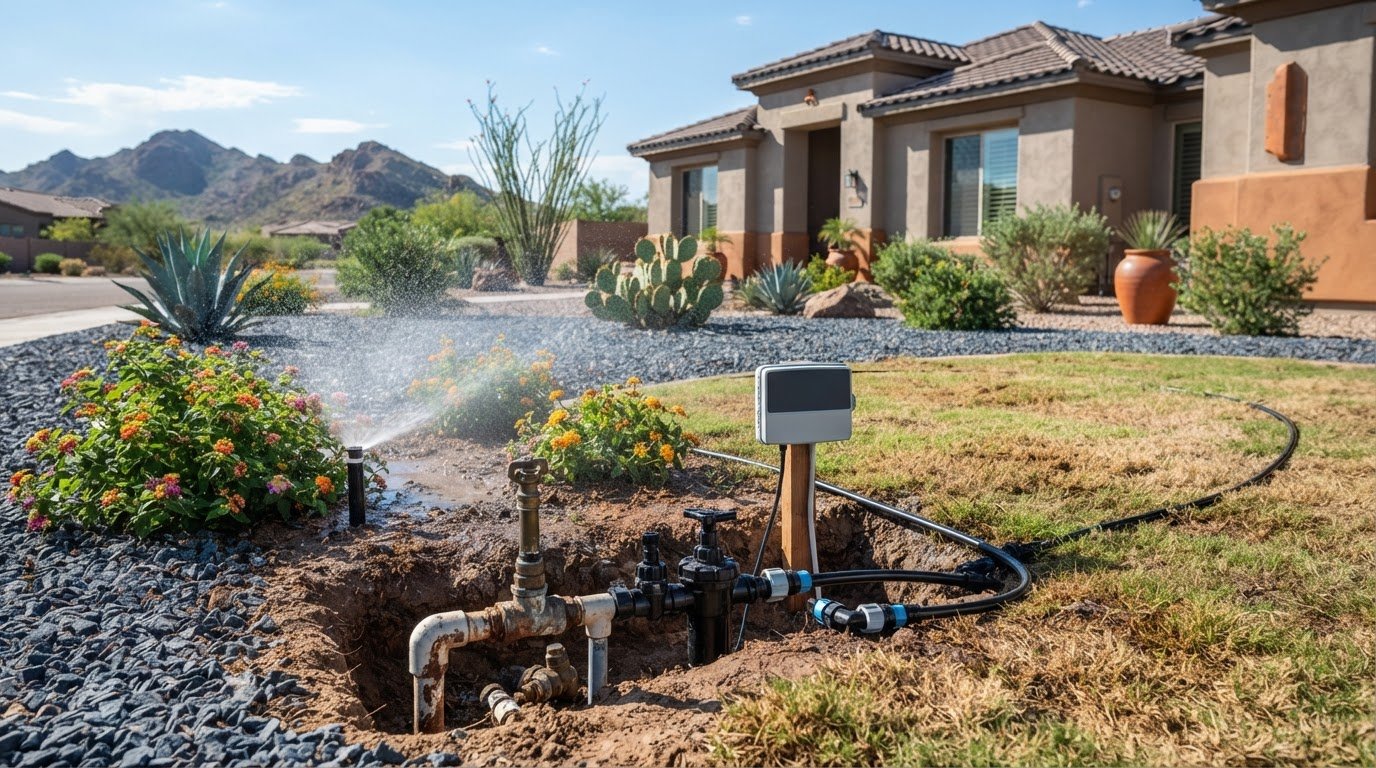
Before the sod arrives, map the turf, planting beds, walkways, and driveway, then identify which areas need separate zones. Run each existing zone and watch for blocked heads, leaks, weak coverage, or spray reaching hard surfaces. Adjust head direction and confirm that the planned lawn receives water throughout. Make layout changes before the new turf covers the soil.
For Surprise properties, sprinkler system design and installation can be planned around the sod area and the rest of the yard, rather than treating every planted section alike.
Installation costs and pricing factors
Installation costs vary because Surprise properties differ in size, layout, and the condition of their existing irrigation. A useful estimate starts with the work the yard actually needs, not a standard package applied to every sod project.
What shapes the project scope?
The lawn’s area and shape influence the amount of pipe and number of sprinkler heads needed, as well as the coverage planning. A broad, open lawn has different layout demands from a narrow side yard divided by a walkway. Curved edges, planting beds, and paved areas also affect component placement.
Zone requirements matter, too. A lawn may need its own watering schedule, while trees or planting beds benefit from separate delivery. More distinct areas can mean additional design work and system components. A targeted layout for beds may differ from sprinkler coverage across turf.
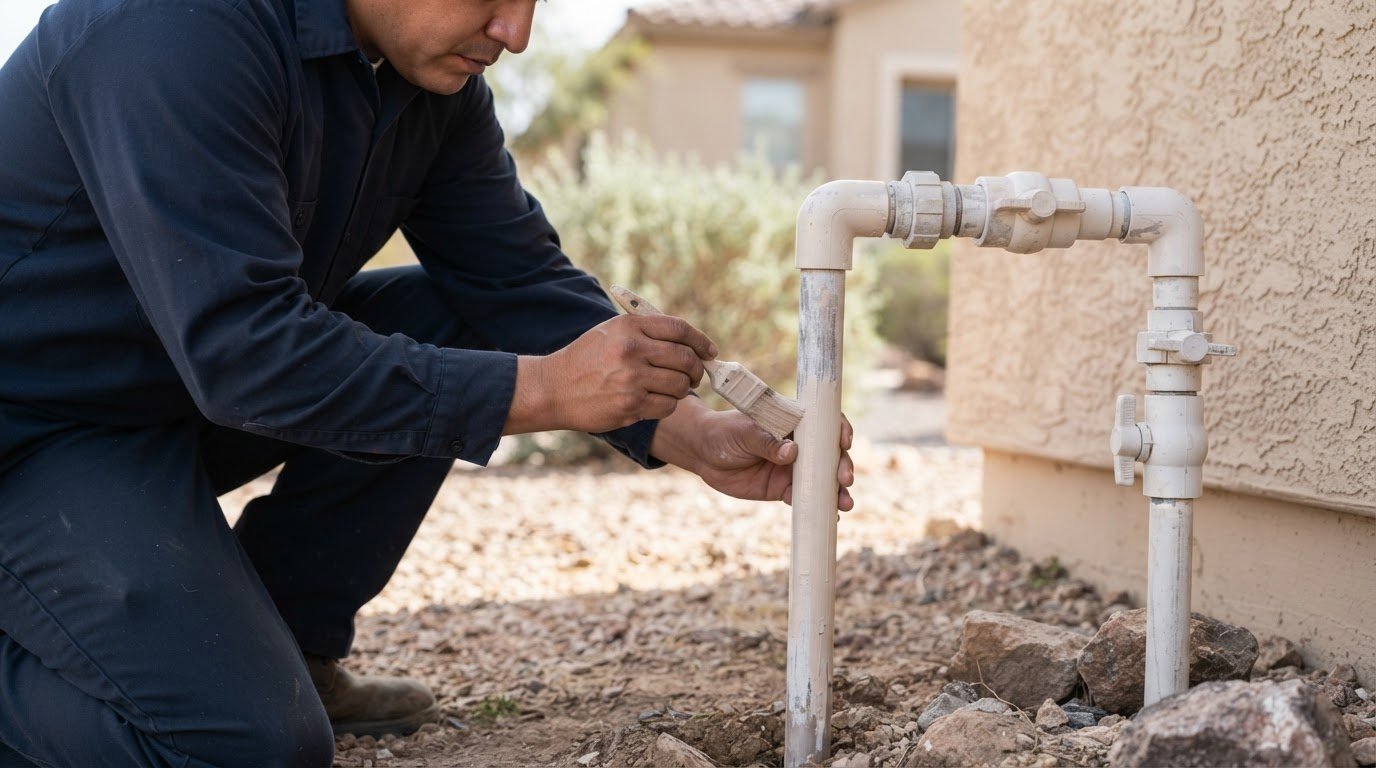
Existing equipment affects the work involved. A project with usable pipes, valves, or wiring differs from one that needs new components throughout. Leaks, damaged lines, or poorly positioned heads can also change the scope. An inspection helps identify these conditions before the installation plan is finalized.
- Yard layout: Measure the turf area and note slopes, corners, paths, and paved surfaces.
- Watering zones: Identify which sections need distinct schedules or delivery methods.
- Existing irrigation: Note visible leaks, damaged heads, and areas with weak coverage.
- Installation access: Consider whether work happens before sod is laid or around established lawn.
Why timing and access matter
Planning before sod installation can make the ground easier to access for pipe placement and component positioning. Once turf is established, reaching buried lines may disturb the lawn. The scope also depends on whether the property needs a new layout or adjustments to an existing system.
For example, a simple rectangular turf area calls for a different design approach from a yard with sod, gravel, shrubs, and separate planting beds. The estimate should account for the intended coverage, pipe routes, and components needed for each area. If the design would water pavement unnecessarily, sprinkler heads may need repositioning or adjustment.
To discuss the layout and irrigation requirements for a Surprise property, use the project contact page. Share the sod area, existing system details, and any separate planting zones so the project scope reflects the yard’s actual needs.
Published estimates can offer a broad point of comparison, but they do not replace a property-specific assessment. Since figures can describe different scopes, an estimate for a particular yard should clarify the work and equipment included.
A total for a different project may not reflect work focused on a sod area or modifications to existing irrigation. Comparisons are more useful when each estimate specifies the planned coverage, existing components to be retained, and any repairs or new equipment required. A clear scope explains why costs vary between properties and helps you assess whether the proposed system fits the yard.
Irrigation for residential and commercial properties in Surprise
Surprise properties need irrigation layouts suited to their planted areas, hard surfaces, and existing equipment. A home with new sod has different coverage priorities from a commercial site with turf, trees, and planting beds. In either setting, the layout should direct water to planted areas and avoid unnecessary spray on pavement.
For a residence, start by mapping the sod, beds, trees, gravel, and paved areas. A front lawn beside a driveway, for example, needs coverage across the grass without soaking the concrete. The U.S. Environmental Protection Agency recommends aiming sprinklers so they do not water pavement. This practical adjustment helps keep water where plants need it.
A commercial property may combine broad turf areas with trees, shrubs, and planting beds. Treating every section as one watering area can leave some plants under-watered while other areas receive excess irrigation. Separate zones or targeted placement can serve each planted section. Gravel or decomposed granite does not need blanket watering when irrigation can reach planted areas directly.
New sod, turf, pavers, or planting beds can change how an existing system distributes water. A layout designed before a property update may no longer cover the new lawn evenly. Check each zone while it runs, observe the spray pattern, and look for dry patches, overspray, or pooling. Repeated dry spots can indicate poor coverage or a layout that no longer fits the property.
- For new sod: Check whether water reaches the full turf area, including edges and corners.
- For plant beds: Consider targeted delivery rather than spraying surrounding gravel or hardscape.
- For paved areas: Adjust sprinkler direction to reduce spray onto walkways, driveways, and patios.
- For existing systems: Review coverage after changes to sod, pavers, or planting locations.
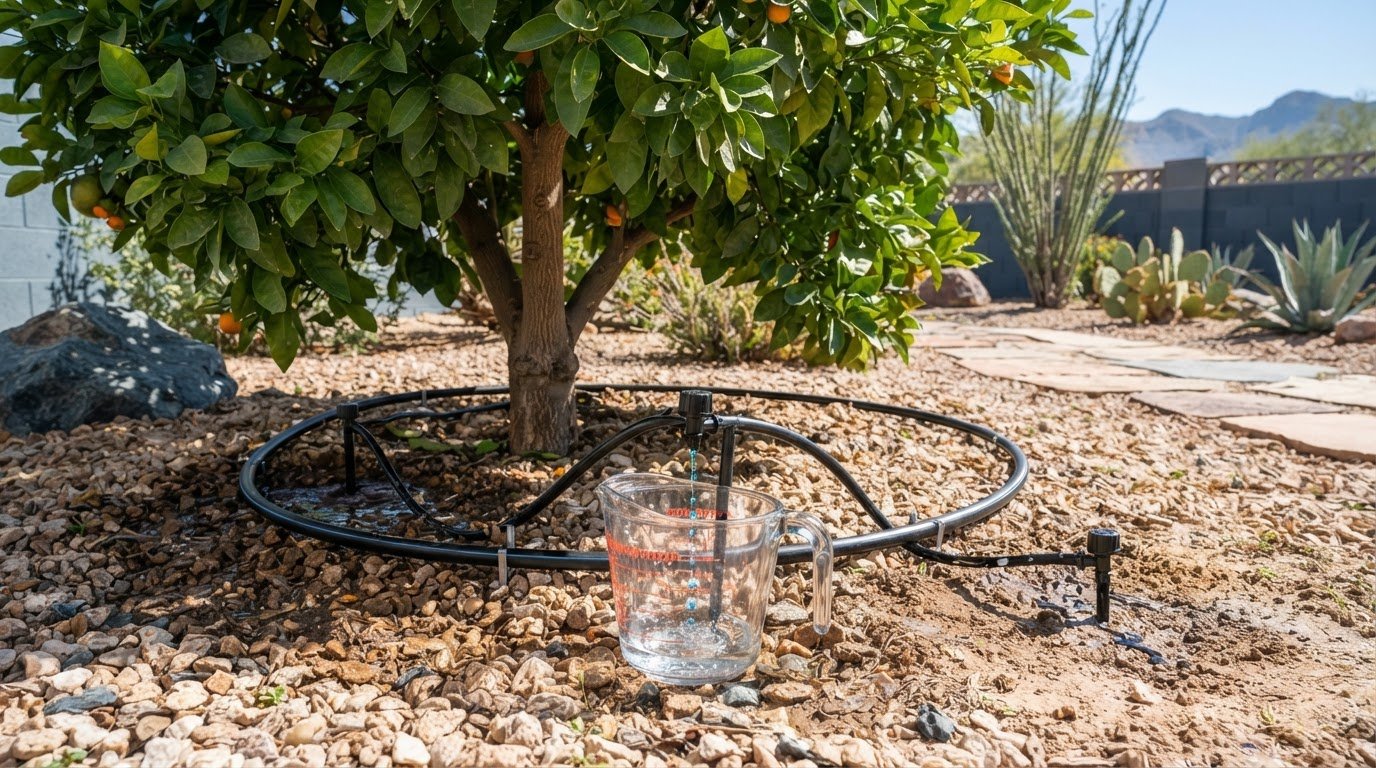
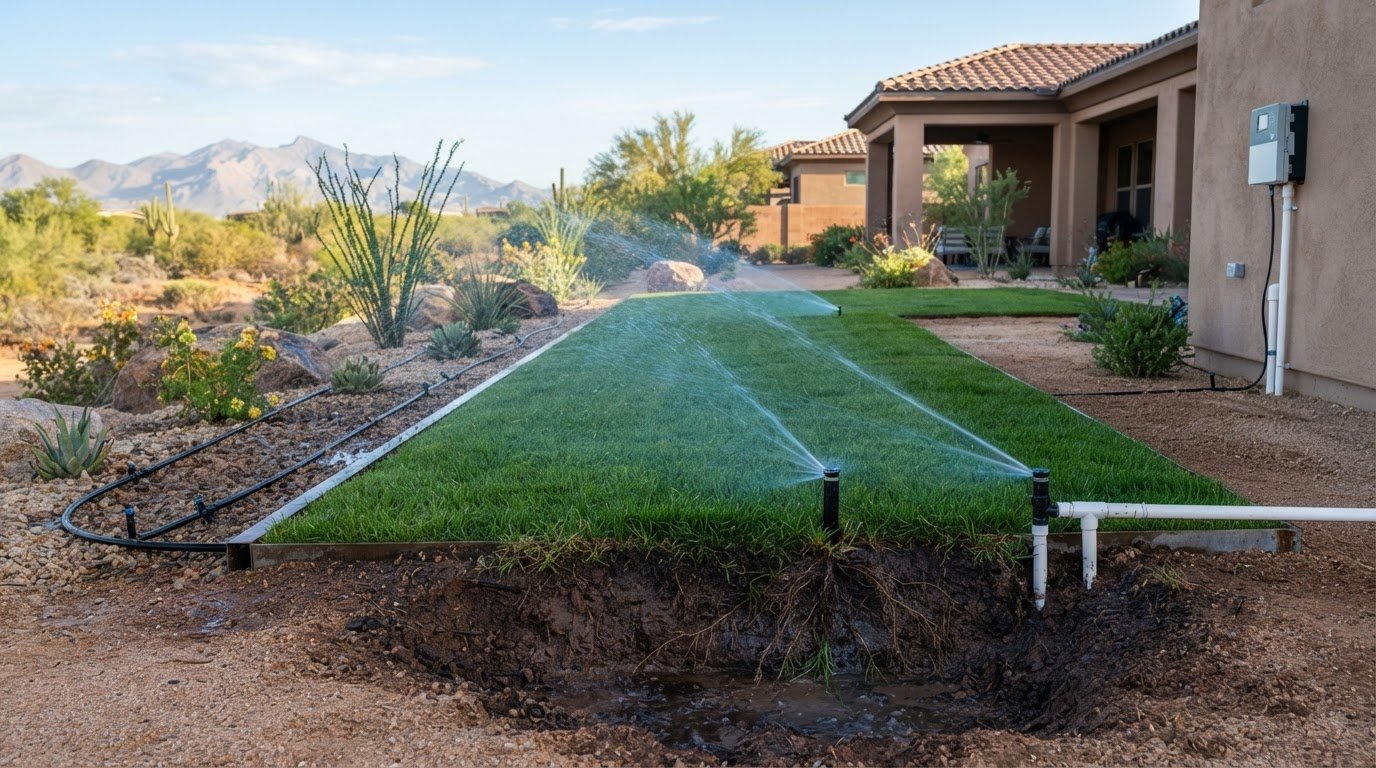
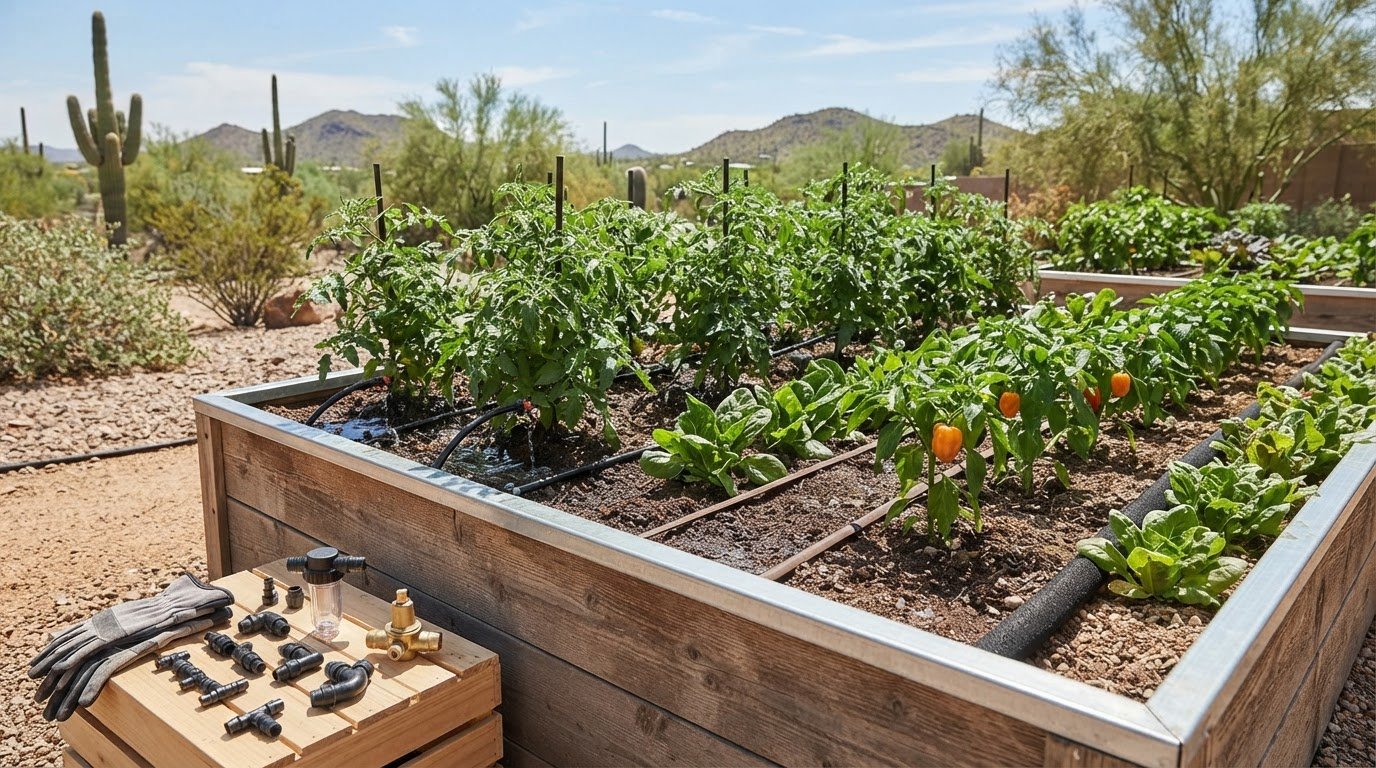
Drip irrigation can suit planting beds where targeted watering is more appropriate than broad sprinkler spray. A property may use sprinklers for turf and drip irrigation for beds, with the layout designed for each area. The right approach depends on what is planted and where, not simply on whether the site is residential or commercial.
When a property’s use or planting plan changes, reassess coverage before adjusting watering times alone. A timer cannot correct a sprinkler head aimed away from sod, a zone that misses a new bed, or a layout that waters pavement. Checking the system zone by zone helps show whether the issue involves placement, coverage, or the delivery method.
Benefits of sprinkler systems
For a sod project in Surprise, an in-ground sprinkler system can provide consistent coverage across the planned lawn. Instead of moving a hose between sections, the system distributes water through positioned heads and designated zones. This matters when a property includes a broad front lawn, a narrow side yard, and planted areas with different needs.
Scheduling installation before the sod goes down can reduce disruption. Pipes and sprinkler components can be positioned while the soil is accessible, rather than digging through established grass or plants later. For example, a homeowner adding turf beside existing shrubs can plan lawn coverage and planting areas together, instead of treating the entire yard as one uniform space.
Consistent coverage is another practical benefit. A system designed for the lawn can reach its edges and interior without relying on repeated manual watering. If a new patio or planting bed changes the yard, review coverage and adjust components to fit the updated layout. The system should be planned around the property’s actual planted areas.
Water placement also matters in Surprise’s dry climate. WaterSense-labeled sprinkler components help apply irrigation water uniformly at a rate the soil can absorb, reducing runoff and water waste, according to the U.S. Environmental Protection Agency. This supports more controlled application, although a label alone cannot correct poor head placement, damaged parts, or an unsuitable watering schedule.
- More consistent delivery: Positioned heads can distribute water across planned turf areas.
- Less disturbance: Installing before sod can avoid digging through established lawn or plants.
- Adaptable layout: Zones and component placement can respond to changes such as new beds or pavers.
- Controlled application: WaterSense-labeled components support uniform watering at a soil-absorbable rate.
A well-maintained, high-quality sprinkler system can last a few decades. Its service life depends on keeping it suited to the property as components wear and the landscape changes. A blocked or misaligned head, for example, may leave one section dry while continuing to water another. Checking coverage and addressing system problems helps maintain the usefulness of the installation.
These benefits depend on a layout that fits the site, not simply on buried pipes. A lawn beside planting beds may need different delivery for each area, while new pavers can make old sprinkler positions unsuitable. Matching the system design to the property helps it serve both the new sod and the surrounding planted areas.
Sprinkler installation companies serving Surprise, Arizona
Choosing an installer means looking beyond a company name or star rating. For a Surprise sod project, focus on whether the proposed layout addresses the actual turf area and existing property conditions.
Choosing a Surprise Installation Company
Thumbtack lists 13 five-star lawn sprinkler system installation companies in Surprise. That count offers a snapshot, but ratings alone don't explain how a design will serve your sod. Compare each proposed plan by its coverage map, zone layout, component placement, and treatment of existing irrigation. A clear scope helps you understand what work the installation includes.
Ask how the design accounts for the property’s different areas. A front lawn bordered by a walkway and planting bed, for example, needs a layout that distinguishes turf from other surfaces. Look for a plan that identifies sprinkler locations and explains how each zone serves its assigned area. If sod will replace existing grass or beds, make sure the layout reflects the updated property.
Timing affects coordination, too. The right time to install sod depends on the sod provider’s guidance, prepared ground, and irrigation readiness. Plan irrigation work before laying the sod, when pipe placement can avoid disturbing newly installed turf. Follow the sod provider’s recommendations for the selected sod and local conditions rather than relying on a universal calendar date.
Permit and Inspection Requirements
Do not assume every sprinkler installation in Surprise automatically requires or avoids a permit or inspection. Requirements depend on the project scope and applicable city rules. A basic layout and work that changes other site components may involve different review steps, so consider the specific project details.
Before scheduling work, describe the planned installation to the City of Surprise and ask which requirements apply. Keep the response with the project paperwork, including any permit or inspection steps the city identifies. This gives you a clear sequence before excavation, pipe installation, or sod delivery begins.
A practical comparison starts with the same details for each proposed plan: sod area, planting areas, existing system, and intended coverage. Then check whether the layout includes the relevant zones and components, rather than comparing broad descriptions alone. One plan, for instance, may cover only turf, while another also maps nearby planting areas.
Use these steps to organize the decision:
- Mark the sod footprint and nearby beds, paths, and paved areas.
- Record visible issues in the existing system, such as leaks or missed coverage.
- Compare proposed layouts by zones, component placement, and project scope.
- Coordinate installation timing with the sod provider’s preparation guidance.
For help discussing a Surprise irrigation project, share your installation plans and the property details that shape the layout.
Sonora Sprinkler Inc.: Irrigation Repair
Sonora Sprinkler Inc. helps homeowners address irrigation problems that can affect new sod, from leaks and uneven coverage to a layout that no longer suits the yard. For a new lawn, irrigation installation and custom sprinkler system design can plan coverage around the turf and surrounding plants. Drip irrigation installation can suit planting beds that need targeted watering instead of sprinkler spray.
Turn to irrigation repair when sprinkler heads miss areas, water pools, or a leak disrupts delivery. For a planned sod project, installation or system design can align the irrigation layout with the new turf before it is laid.
Contact Sonora Sprinkler Inc. to discuss your property’s irrigation needs.
Plan the next step for your new lawn
A new sod project is an opportunity to plan irrigation around how you’ll use the property, not just the shape of the lawn. Before work begins, note the areas that will remain turf, any planting beds, and changes you expect to make later. This site plan gives the installation discussion a practical starting point and helps keep the system aligned with the finished yard.
For a sprinkler system for new sod installation in Surprise, connect the property layout with the irrigation work required. Sonora Sprinkler helps homeowners plan irrigation for a new installation or address an existing system that needs attention. A clear discussion about the sod area and surrounding planted areas can define what the project needs to cover.
Take the next step when you’re ready to discuss your property: contact Sonora Sprinkler. With the layout and planting plans in hand, you can move toward a well-planned start for your new lawn.
Frequently Asked Questions
How often and how long should new sod be watered in Surprise, AZ?
Follow the sod provider’s watering schedule, since new turf needs care suited to its stage of establishment. Some lawns are watered two to three times per week, but that general pattern does not replace instructions for freshly laid sod. For a sprinkler system for new sod installation in Surprise, there is no universal run time: it depends on sprinkler output and how quickly the soil absorbs water. After a cycle, check beneath the sod in several spots for moisture without pooling.
How much does sprinkler installation or repair cost in Surprise, Arizona?
Installation and repair costs in Surprise depend on the work required, and the price is given after a quote request. For installation, the lawn’s size, layout, zone plan, pipe routing, and existing components affect the scope. For repair, the issue’s location and the parts or system adjustments needed shape the work. A clear description of the project or problem helps define what the estimate needs to cover.
How should sprinkler zones be set up for different sod areas and soil types?
Group areas with similar watering needs, and separate sections that absorb or drain water differently. For example, a level lawn section can have its own zone, while a sloped patch or nearby planting bed may need a distinct schedule or delivery method. Observe each zone during operation: runoff, pooling, or persistent dry spots can indicate that the grouping or coverage needs adjustment.
Which local Surprise companies install or repair sprinkler systems for new sod?
Sonora Sprinkler Inc. serves residential properties in Surprise with irrigation installation and repair. For a sprinkler system for new sod installation in Surprise, installation can address the irrigation layout, while repair can resolve existing system problems that interfere with watering. The company also provides custom sprinkler system design and drip irrigation installation. Contact Sonora Sprinkler to discuss the sod area and any current sprinkler issues so the project can focus on your property’s needs.