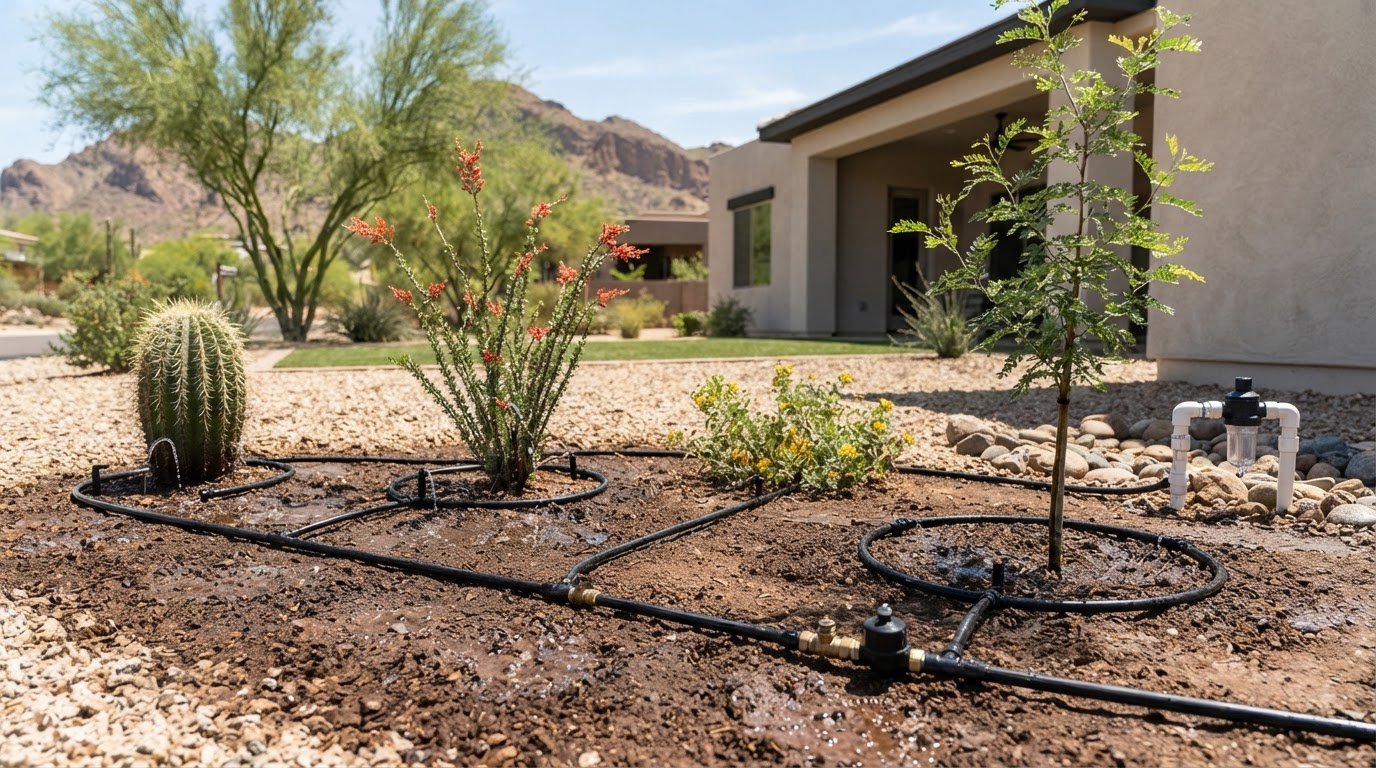
A slower sprinkler can be the better choice for an Arizona lawn, especially where clay soil sheds water before it can soak in. The best sprinkler heads for Arizona clay soil are often low-precipitation rotary nozzles, which apply about 0.4 to 0.6 inches of water per hour, or rotors, which apply about 0.4 to 1.0 inch per hour; standard spray heads apply about 1.5 to 3.0 inches per hour.
Water delivery rate matters as much as the amount a sprinkler head applies. Clay absorbs water slowly, so fast application can cause runoff and puddling. In Arizona’s dry climate, matching irrigation to the soil helps keep planted areas supplied with moisture without wasting water.
This guide compares spray heads, rotary nozzles, and rotors by application rate, and explains why those differences matter in clay. You’ll also learn how cycle-and-soak watering gives water more time to penetrate and which local soil and system factors affect sprinkler selection.
Key Takeaways
- Compare sprinkler heads by their application rate and match heads with similar rates within each irrigation zone.
- For clay-soil lawns, consider lower-precipitation rotary options and cycle-and-soak programming to help limit runoff.
- Pressure regulation may be needed; system pressure and head settings affect how evenly water is applied.
- For planted areas, slow watering near the root zone may be useful, and larger sprinkler droplets may help reduce soil impact.
- Separate zones for areas with different watering needs, such as lawns, hedges, borders, and shaded beds.
Clay soil's slow water infiltration and tendency to pool
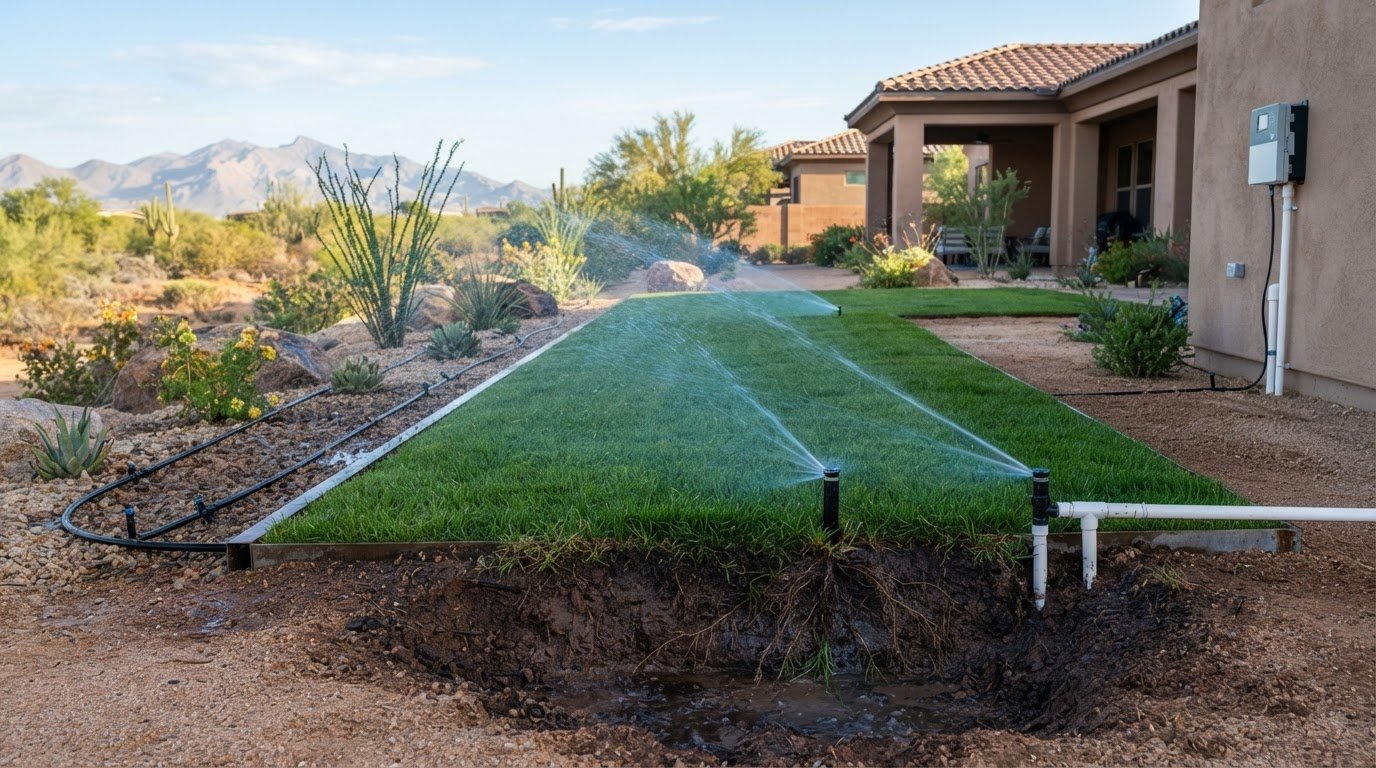
Clay soil changes how irrigation reaches lawn roots. Its fine particles slow water movement, so sprinklers can apply water faster than the surface absorbs it. Excess water then pools or runs downhill instead of reaching the root zone. In dry Arizona weather, clay can become hard and cracked, then absorb water unevenly when irrigation resumes. Moisture may reach shallow roots while deeper soil remains dry.
Clay soil absorbs water at less than 0.2 inches per hour, so a sprinkler can outpace infiltration. Water may collect on the surface before it reaches deeper roots, especially where the ground slopes or has become compacted. Clay can retain moisture after it penetrates, but retention doesn’t mean the whole root zone is evenly wet. Check how far moisture reaches rather than judging only by a damp surface.
Sandy soil behaves differently: water moves through it quickly, and little moisture is retained, so it can pass beyond the roots. Clay absorbs water slowly but holds it once it penetrates. That can support roots, but watering too quickly makes pooling more likely. Both soil types need irrigation suited to their drainage: apply water gradually on clay, and wet the root zone in sandy soil. Nutrients and moisture also move differently through each soil texture.
Arizona homeowners should follow the watering restrictions and schedules set by their local jurisdiction and water provider. Requirements vary by location, so don’t assume one schedule applies to every lawn in Surprise, Peoria, or elsewhere in Arizona.
For lawns during the growing season, one general recommendation is about 1 to 1.5 inches of water per week, including rainfall. Another guideline suggests watering every 7-10 days, depending on weather and grass type. These are broad lawn-care examples, not a fixed schedule for every Arizona property. Clay’s slow infiltration makes the delivery pattern important: one long run may pool, while divided cycles allow time for water to soak in.
The 1-2-3-2-1 seasonal watering technique is one schedule example: water one day per week in April, two times per week in May, three times per week in summer heat, two times per week in September, and one time per week in fall. Treat the pattern as a framework, not a fixed Arizona rule. On clay, repeated short runs can still create surface pooling if the soil remains saturated between cycles.
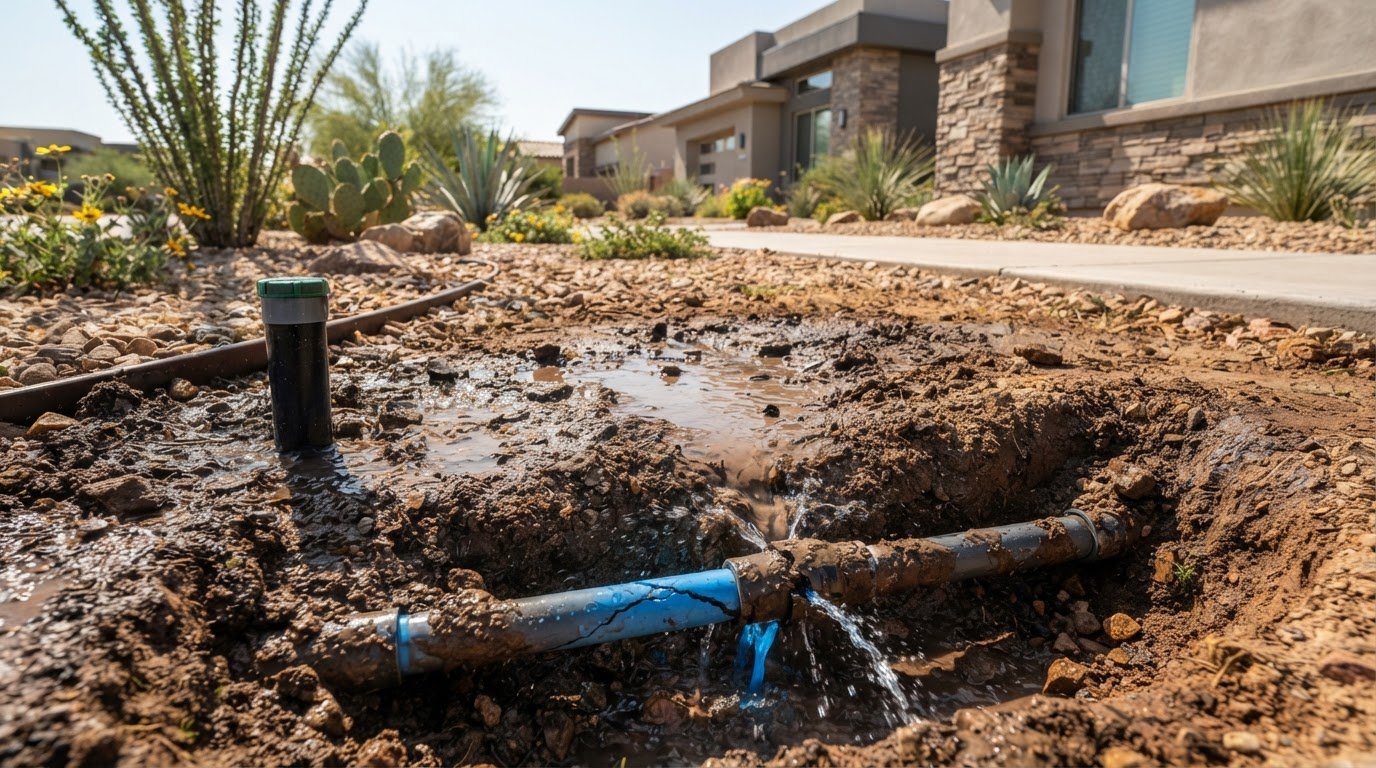
Watch the lawn while the system runs. If puddles form or water runs off before the cycle ends, shorten the continuous run and allow time for absorption before the next cycle. If the surface stays dry while grass shows stress, check how deeply moisture has reached rather than simply extending run time. These observations help distinguish slow infiltration from inadequate root-zone watering, especially where compacted clay or a slope affects distribution.
Precipitation rates of spray heads, rotary nozzles, and rotors
Precipitation rate measures how quickly a sprinkler applies water across its coverage area. Standard spray heads apply 1.5 to 3.0 inches per hour, while rotary nozzles apply 0.4 to 0.6 inches per hour. Rotors apply 0.4 to 1.0 inch per hour, depending on model and settings. These differences matter on clay: a fast application may exceed the soil’s intake rate before water reaches the root zone.
Low-precipitation rotary heads are often a practical choice for clay-soil lawns because they apply water more slowly. This gives moisture more time to enter the soil and can help limit runoff and puddling. Rotors often apply water at a lower rate than standard spray heads, though output varies by model and adjustment. Weather, slope, drainage, and lawn condition also affect watering needs.
Matching heads within each zone matters as much as choosing a head type. Keep heads with similar precipitation rates together instead of mixing fast spray heads with slower rotors or rotary nozzles. Otherwise, one area may receive too much water while another stays dry during the same run. Compare the heads already installed and observe whether coverage and soil moisture are consistent across the zone.
MP Rotator and Rain Bird R-VAN rotary nozzles are examples of named models with a listed application rate of 0.4 to 0.6 inches per hour. That rate describes water application, not a customer rating. Their low rate may suit clay better than standard spray heads, but compatibility with the existing irrigation system and the area’s required coverage also matter.
For uniform coverage in clay, arrange heads so their spray patterns overlap the areas they serve. Adjust each arc and radius to cover the lawn without spraying hard surfaces. Check the full zone while it runs: dry gaps suggest uneven coverage, while recurring puddles may point to excessive application or poor drainage.
In the United States, retail prices for sprinkler heads vary by type and model, and by whether you’re buying a nozzle or a complete head assembly. Installation requirements and compatibility with the existing system also affect the project total.
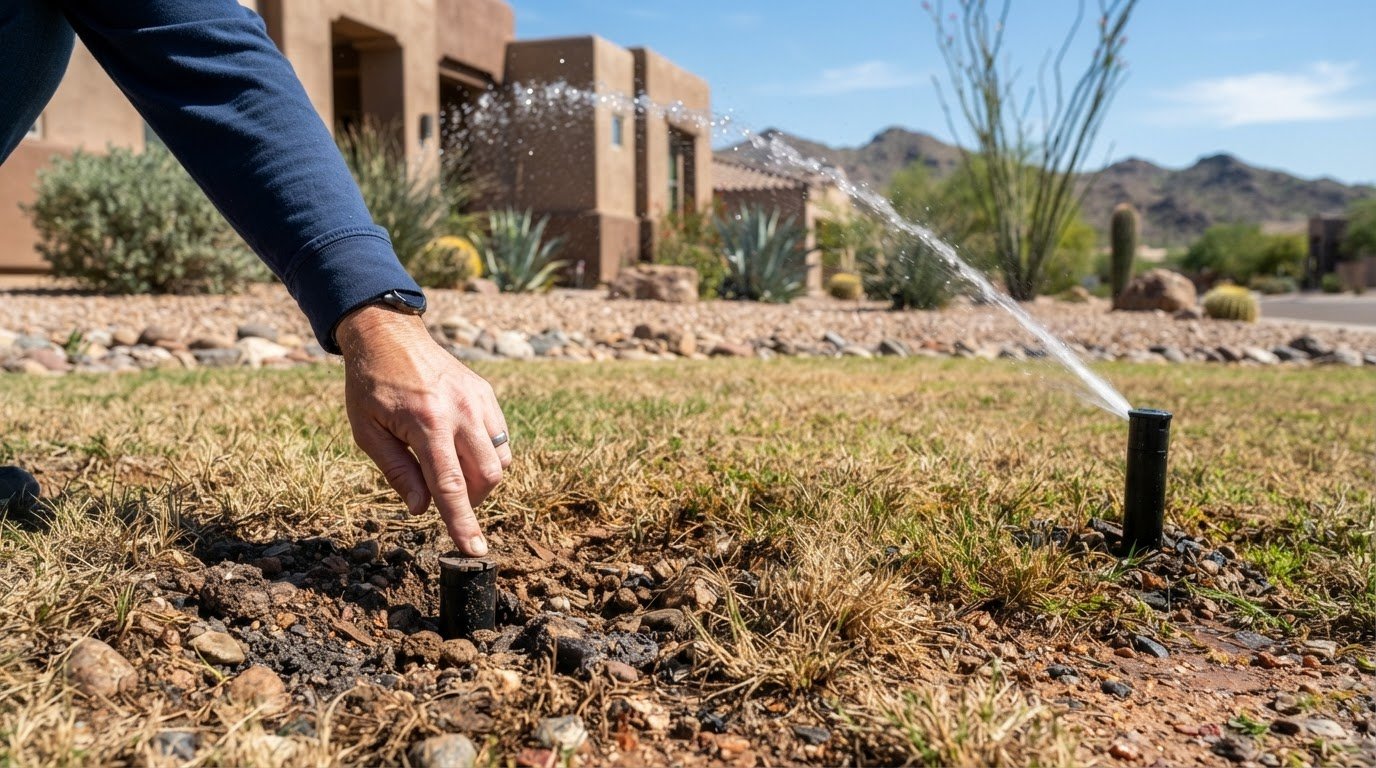
What maintenance and clogging risks should homeowners consider in Arizona? Debris can obstruct a nozzle and distort its pattern, so inspect heads for uneven spray, blockage, or visible damage. Clear affected heads and observe the zone again; persistent coverage problems may call for help evaluating sprinkler layout. Organic matter can improve soil structure, but head selection and adjustment remain essential to controlled watering.
Clay soil infiltration and runoff
Cycle-and-soak irrigation reduces puddling by dividing a watering period into shorter runs, with pauses that let clay absorb moisture before the next application. One example uses 3 or 4 cycles, starting each 45-60 minutes apart. In Arizona, adjust the run and pause pattern when water begins flowing across the lawn instead of soaking in.
Start with the lawn’s visible response, not a fixed timer setting. If runoff appears during a cycle, shorten the next run to 5-8 minutes, then allow the surface time to take in water. If water still pools, extend the rest period to 90 minutes before another cycle. A separate example recommends 10-12 minutes of watering followed by a 60-minute soak; actual performance depends on soil type, slope, compaction, and sprinkler output.
Sloped or compacted ground needs particular attention. Water runs downhill, while compacted clay offers fewer pathways for moisture to enter. Watch the lawn’s lower edge during irrigation: water gathering there may mean the upper area is shedding water. Shorten continuous application and pause so each area can absorb moisture before the next run. On level ground, check for low spots where puddles remain after watering.
Rain changes how much irrigation a lawn needs. Adjust the system to avoid watering after heavy rain, when clay may already be saturated. During Arizona’s summer heat, don’t assume the calendar alone means the soil needs water. Check the root zone and lawn condition, and consider recent rainfall and how water moves across the yard. Moist soil that stays wet between cycles calls for a different response than dry, cracked ground that sheds the first water applied.
Cycle-and-soak addresses delivery, but soil condition also affects infiltration. Core aeration can relieve compaction by removing plugs; the suggested approach is 1-2 times per year in spring and/or fall, with 2-3-inch plugs. After aeration, spreading 1/4 to 1/2 inch of compost is one suggested practice. Organic matter can also be mixed into the top 15 to 30 centimetres of clay soil. These changes complement gradual irrigation rather than replacing sensible run times.
Use the lawn’s response to fine-tune the system: note where runoff starts, shorten that area’s cycle, and allow a longer soak before watering again. If one section pools while another stays dry, uneven grading, compaction, or inconsistent head coverage may be contributing. Separate zones can help manage areas with different needs. Before adding cycles automatically, check whether the soil has absorbed the previous application and whether recent rain has changed conditions.
Arizona and Southwest desert soil considerations
Arizona yards can contain different soil textures, even within one property. Although some Southwest desert soils retain little moisture and need frequent irrigation, clay holds moisture once water penetrates. Identify the soil before adjusting a schedule: a clay lawn behaves differently from a sandy garden bed. Treating the entire yard as uniform can leave one area dry while another stays saturated.
A simple squeeze test takes 5 minutes and helps identify soil texture. Take a small sample from the area you’re assessing, moisten it, and squeeze it in your hand. Sandy soil feels gritty and falls apart more readily, while clay can hold together and form a more cohesive shape. Use the result as a practical clue, then observe how that part of the yard absorbs water during irrigation.
For clay, slower delivery helps limit surface impact and gives moisture more time to enter the ground. Sprinkler heads that produce larger droplets can reduce impact compaction. For a clay-soil lawn, low-precipitation sprinkler options and cycle-and-soak programming can help manage water application. Adjust run patterns when water begins moving across the surface rather than soaking in; a slope or compacted patch may respond differently from level, open ground.
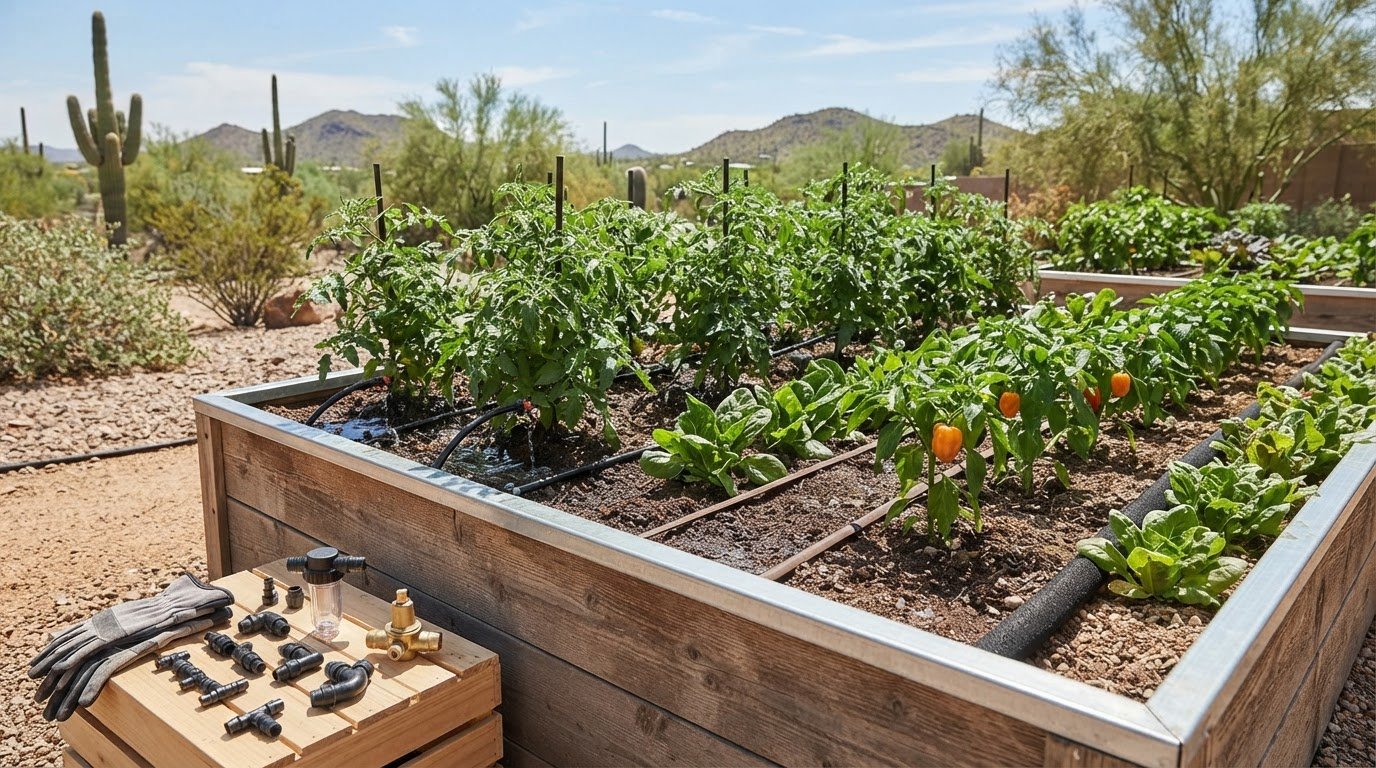
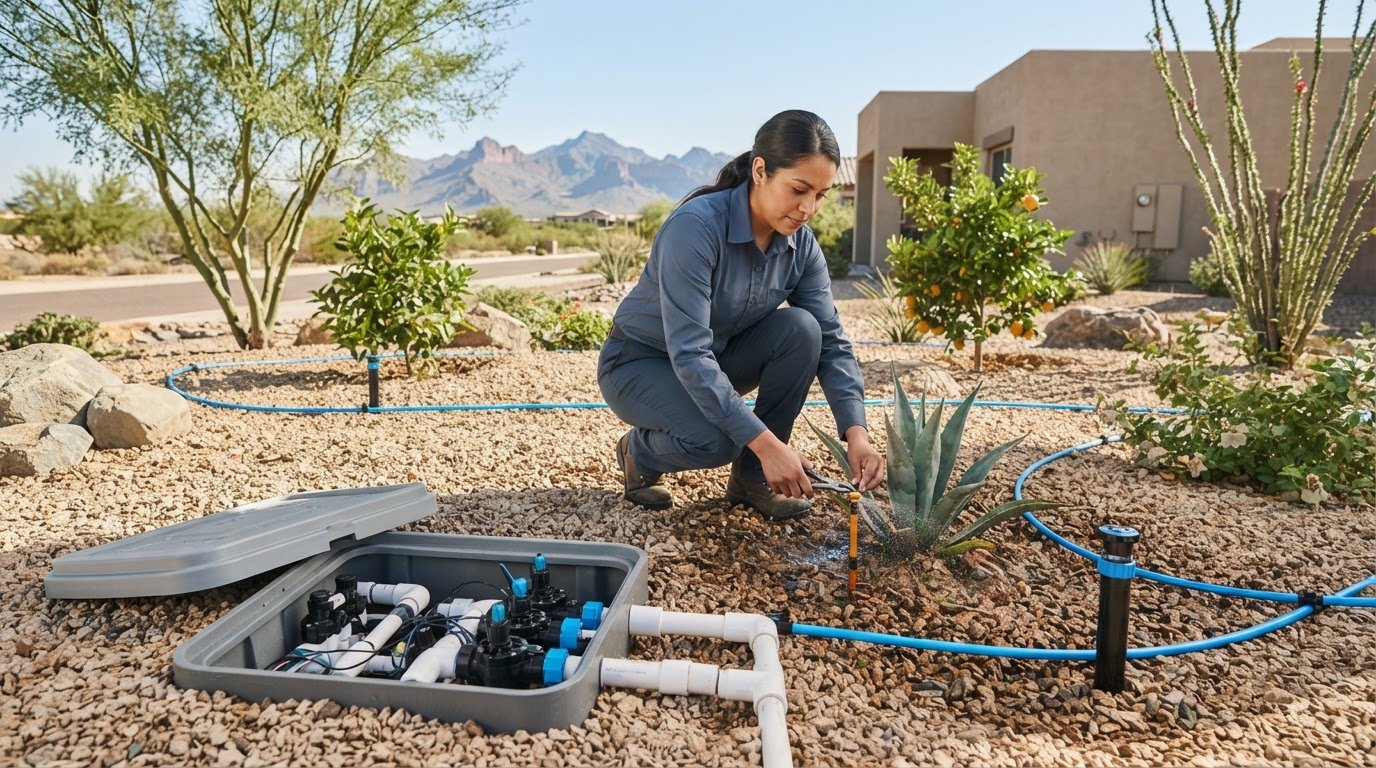
Planting beds often need a different irrigation method than turf. Drip irrigation or dripline delivers water slowly near plant roots, making it useful for shrubs, borders, and other planted areas. In clay, use lower flow and longer intervals, and run the system only when the soil needs water. This focuses moisture near the root zone instead of wetting a broad surface around each plant.
Arizona weather affects how soil and plants respond between irrigation runs. A dry surface alone doesn’t show whether deeper clay still holds moisture, so check the root zone before adding water. After heavy rain, adjust irrigation to avoid watering saturated ground. In hot, dry conditions, consider plant stress, recent rainfall, shade, and soil texture together when deciding whether to adjust irrigation.
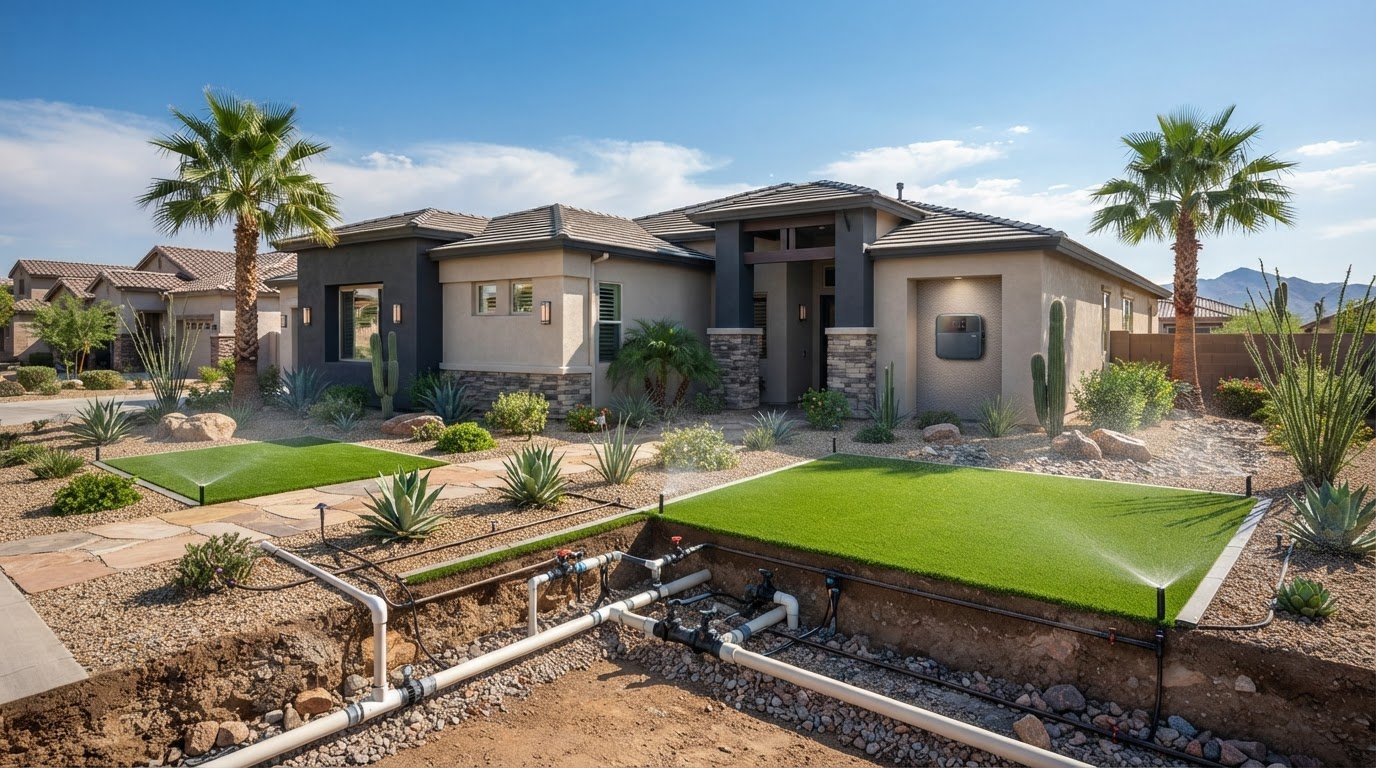
Organic matter and drainage improvements can support irrigation management, but they don’t replace matching water delivery to the soil. Compacted clay may shed water even when sprinklers run slowly, while a garden bed with different soil may absorb it more readily. Keep lawns, hedges, borders, and shaded beds in separate zones when their needs differ. Then each area’s irrigation method and schedule can reflect its plants, soil, and exposure.
Add at least fifteen centimetres of organic matter to clay to improve water penetration.
Which sprinkler heads are compatible with common irrigation systems and pressure ranges in Arizona?
Compatibility depends on more than a sprinkler head’s thread or fitting. The system must supply the flow and operating pressure the selected head requires, and the head must suit the zone’s coverage and soil. A low-precipitation rotary nozzle, for example, may help manage runoff on clay, but it still needs to work properly with the existing zone. Lawn systems on clay may also need pressure regulation.
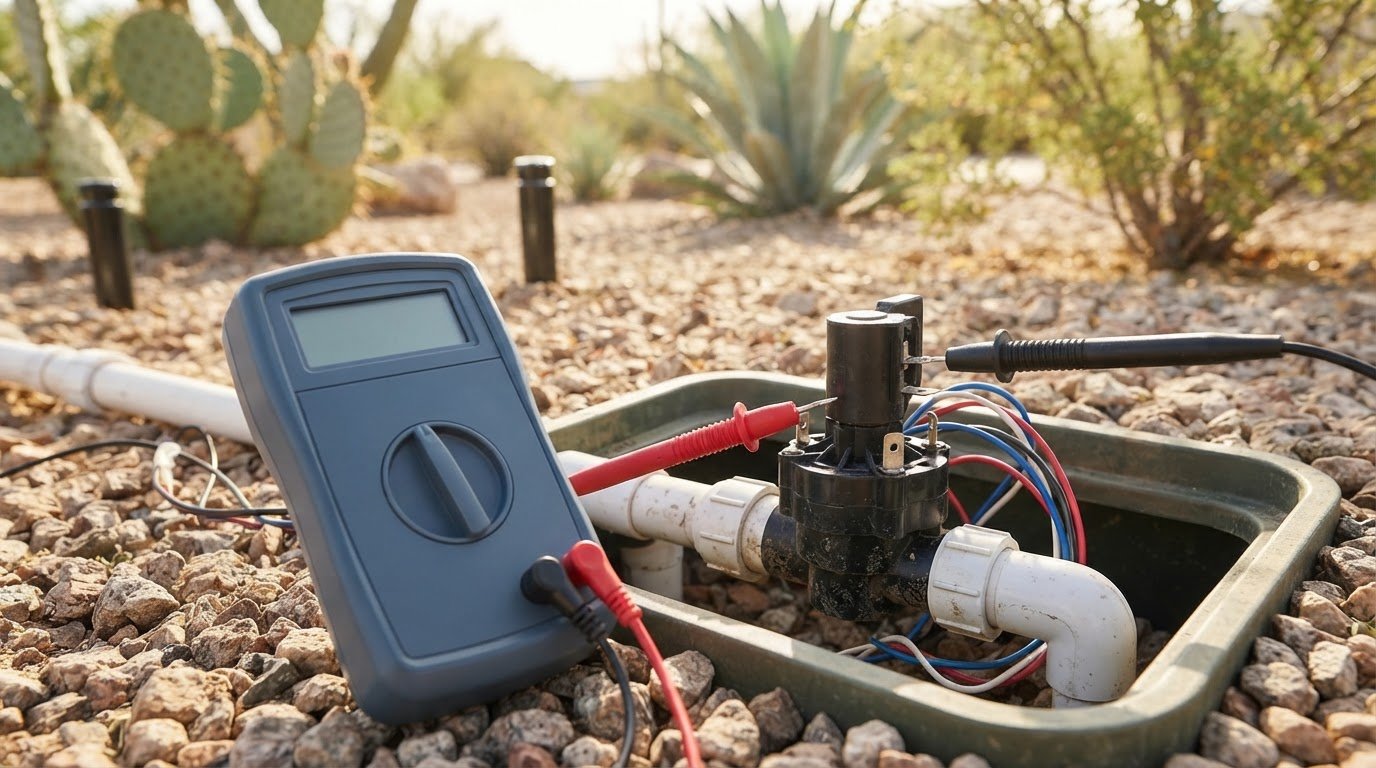
Start by identifying the head type installed in each zone. Spray heads, rotary nozzles, and rotors apply water differently, so switching types can change coverage and precipitation rate. Observe the system as it runs: check whether heads rise and operate consistently, whether spray patterns reach the intended areas, and whether water drifts or pools. These signs can reveal a mismatch between the head, zone, and available pressure.
Pressure affects how water leaves a head and reaches the lawn. If it isn’t properly matched, a head may distribute water unevenly or fail to cover its intended area. A regulator can help manage pressure where needed, but it must suit the zone and selected sprinkler components. There’s no single pressure setting for every Arizona yard: head type, system layout, and zone performance all matter.
Keep similar heads together within each zone. For example, avoid combining standard spray heads with slower rotary nozzles if their different application rates would leave some areas wetter than others. Soil absorption matters too: clay lawns benefit from controlled application, while mixed yards may need separate zones for turf and planted beds. Consistent head types and coverage make irrigation easier to assess.
For a practical compatibility check, observe a complete irrigation cycle and compare the heads across the zone. Look for weak or inconsistent operation, coverage gaps, and concentrated spray. Then consider whether the head type and pressure control suit the lawn’s shape and soil. Changing head types may also require adjusting how the zone operates, not just swapping components.
In Arizona, pressure regulation may be part of addressing runoff, but it does not replace correct head selection or system layout. If a zone repeatedly distributes water unevenly, or a planned upgrade involves changing sprinkler types, request help evaluating sprinkler compatibility. A system assessment can consider the installed components, pressure behavior, coverage pattern, and clay soil together, then guide a suitable design or upgrade.
Clay soil compacts easily and drains slowly, making standing water more likely. For deep watering in clay, use dripline or another slow-watering system. Clay generally does better with less frequent, deeper watering than with short daily runs, and cycle-and-soak programming is recommended for sprinkler irrigation on clay lawns. Other ways to address clay-soil problems include organic matter, mulching, lawn aeration, and improved drainage in low areas. These steps can complement compatible head selection and zone setup where standing water or runoff persists.
Sonora Sprinkler: Irrigation Repair
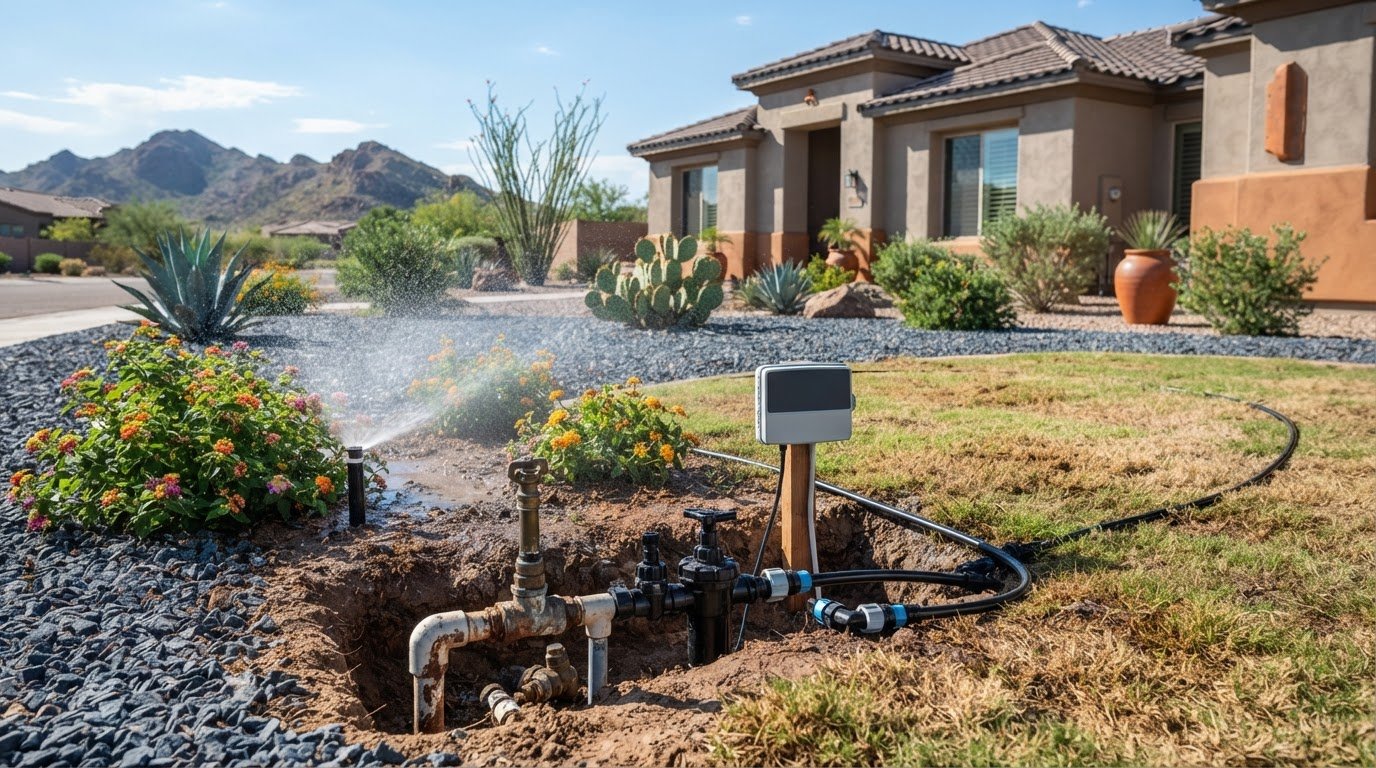
Sonora Sprinkler Inc. helps homeowners in Surprise, Peoria, and nearby communities address uneven coverage, persistent puddles, and malfunctioning heads on clay-soil lawns. Irrigation Repair can resolve system problems, while Irrigation Installation and Custom Sprinkler System Design can address broader layout or head-selection needs. For planted beds, Drip Irrigation Installation delivers water near plant roots.
If a zone applies water unevenly or the setup doesn’t suit the yard, an assessment can clarify whether repair, installation, or redesign is the right next step. The solution depends on the existing system, coverage needs, and soil conditions.
Contact Sonora Sprinkler Inc. to discuss your irrigation system.
Make Your Next Irrigation Decision With Confidence
Choosing the best sprinkler heads for Arizona clay soil is a useful starting point, but the entire system needs to work together. Before changing equipment, note which areas respond unevenly during regular watering and whether the problem is limited to a particular zone. This helps focus attention on the layout, head selection, or system condition instead of treating every part of the yard alike.
With a clearer picture of your lawn’s needs, you can plan a practical next step, whether that means addressing a system issue or considering a broader adjustment. Sonora Sprinkler Inc. can help homeowners evaluate residential irrigation needs. Contact Sonora Sprinkler Inc. to discuss your irrigation system, and take the next step toward a setup suited to your property.
Frequently Asked Questions
Which sprinkler head types work best in heavy Arizona clay soil?
Low-precipitation rotary nozzles are often a good starting point for heavy clay lawns because they apply water gradually. Rotors may also suit lawn areas when their coverage and operation match the zone. Choose based on the yard’s slope, existing system, and observed wet and dry spots, not soil texture alone. For garden beds rather than turf, drip irrigation delivers water near plant roots.
Are rotary nozzles or spray heads better for clay soil and low infiltration rates?
Rotary nozzles generally suit slow-infiltrating clay better because they apply water at a lower rate than standard spray heads. Rotary nozzle precipitation rates are about 0.4 to 0.6 inches per hour, compared with 1.5 to 3.0 inches per hour for standard sprays. Spray heads may still fit a zone, but their faster output needs careful scheduling to avoid excess surface water.
What sprinkler head precipitation rates are suitable for Arizona clay lawns?
Lower rates are generally more manageable for clay lawns: rotary nozzles apply about 0.4 to 0.6 inches per hour, while rotors apply about 0.4 to 1.0 inch per hour, depending on model and settings. Standard spray heads apply about 1.5 to 3.0 inches per hour. Compare the installed heads within each zone, since mixing different application rates can create uneven watering.