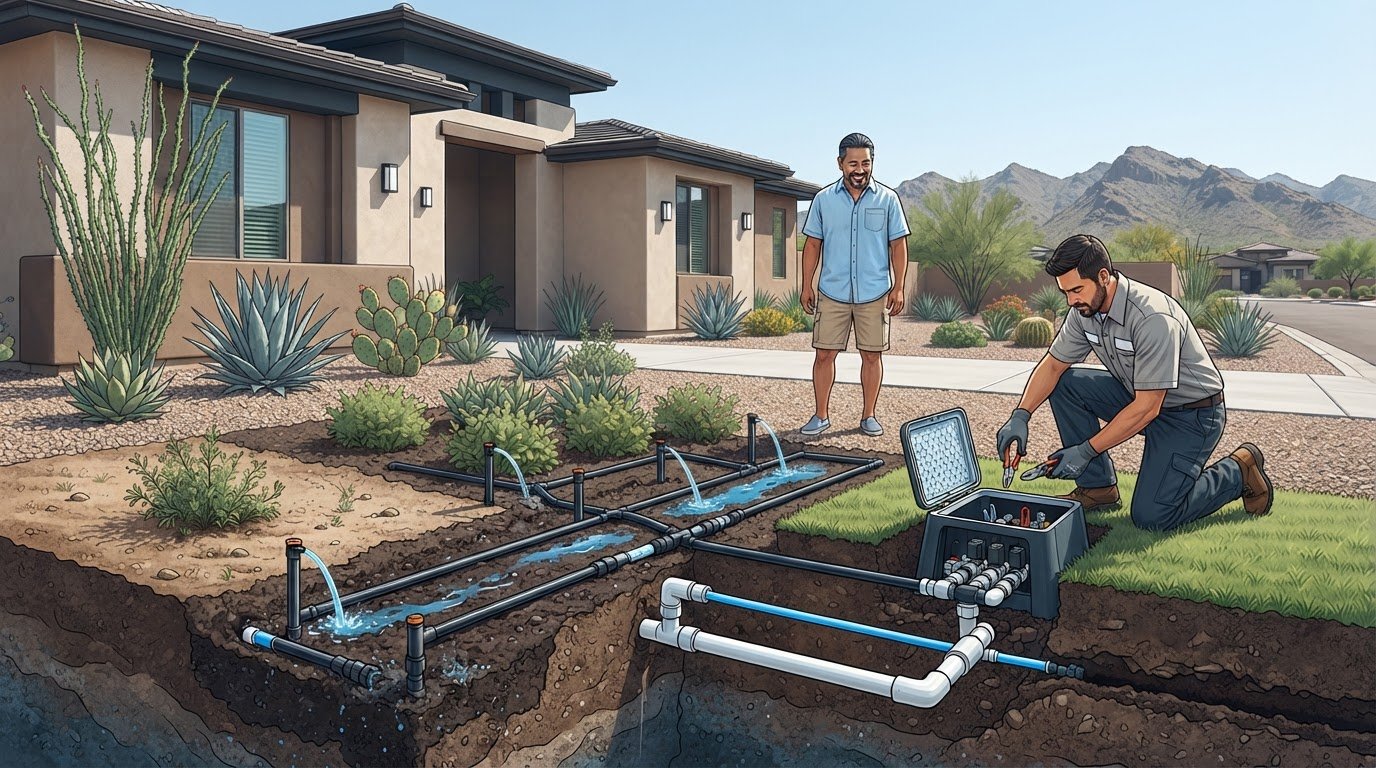
More watering isn’t always better. For homeowners in Surprise and Peoria, lawns generally need water every 3 days, best applied between 5 a.m. and 8 a.m.; aim to wet the grass’s root zone 6 to 10 inches deep rather than leaving the soil soggy. Learning how to save water on my lawn in Arizona starts with adjusting that schedule to your grass and local conditions.
It can be hard to tell whether a dry-looking lawn needs more water or a better-timed cycle. This guide explains when to irrigate, how to check watering depth, and how to adjust your routine as temperatures and seasons change. You’ll also learn how proper sprinkler coverage and expert tips from Sonora Sprinkler Inc. can help reduce outdoor water use while supporting a healthy yard.
Key Takeaways
- Adjust irrigation as temperatures and seasons change, and pause automatic cycles after rain to avoid watering already-moist soil.
- Match Bermudagrass watering frequency to its growth cycle; dormant winter grass generally doesn’t need supplemental irrigation.
- Measure sprinkler output and check soil moisture to apply enough water for roots without creating runoff or soggy ground.
- Improve efficiency by correcting uneven sprinkler coverage and directing spray onto the lawn rather than paved surfaces.
- Consider replacing some turf with desert-adapted, low-water-use plants, and use mulch to help soil retain moisture.
1. Adjusting irrigation for soil, weather, and season
In Surprise and Peoria, soil, wind, and seasonal temperatures affect how irrigation reaches lawn roots. Daily watering may moisten only the top few inches, encouraging shallow roots. Watering until soil is soggy wastes water and can raise bills. Adjust the controller as conditions change instead of repeating one schedule all year. Seasonal irrigation adjustments can reduce landscape watering by 30 to 50 percent each season.
Watering restrictions and schedules are local, so use the rules that apply to your address in Surprise or Peoria. Don’t assume another Arizona city’s schedule applies to your lawn. For day-to-day decisions, adjust the controller as temperatures cool and rainfall changes. After at least 1/2 inch of rain, skip the lawn’s next irrigation cycle.
Soil moisture matters more than a fixed timer. A lawn should receive about 0.75 inches each time it’s irrigated to wet the root zone, but the time needed depends on sprinkler output and how quickly soil absorbs water. If water runs off before soaking in, split the cycle and allow moisture to penetrate between applications. In spring, aerating dense lawn soil helps water and oxygen enter compacted areas.
Uneven sprinkler coverage can leave dry patches beside oversaturated turf. Test the system with shallow, flat-bottomed cans placed across the lawn, then compare the collected water. A difference greater than 0.2 inches between measurements may indicate that coverage needs adjustment. Reposition heads or correct their spray direction, then repeat the test to see whether distribution improves.
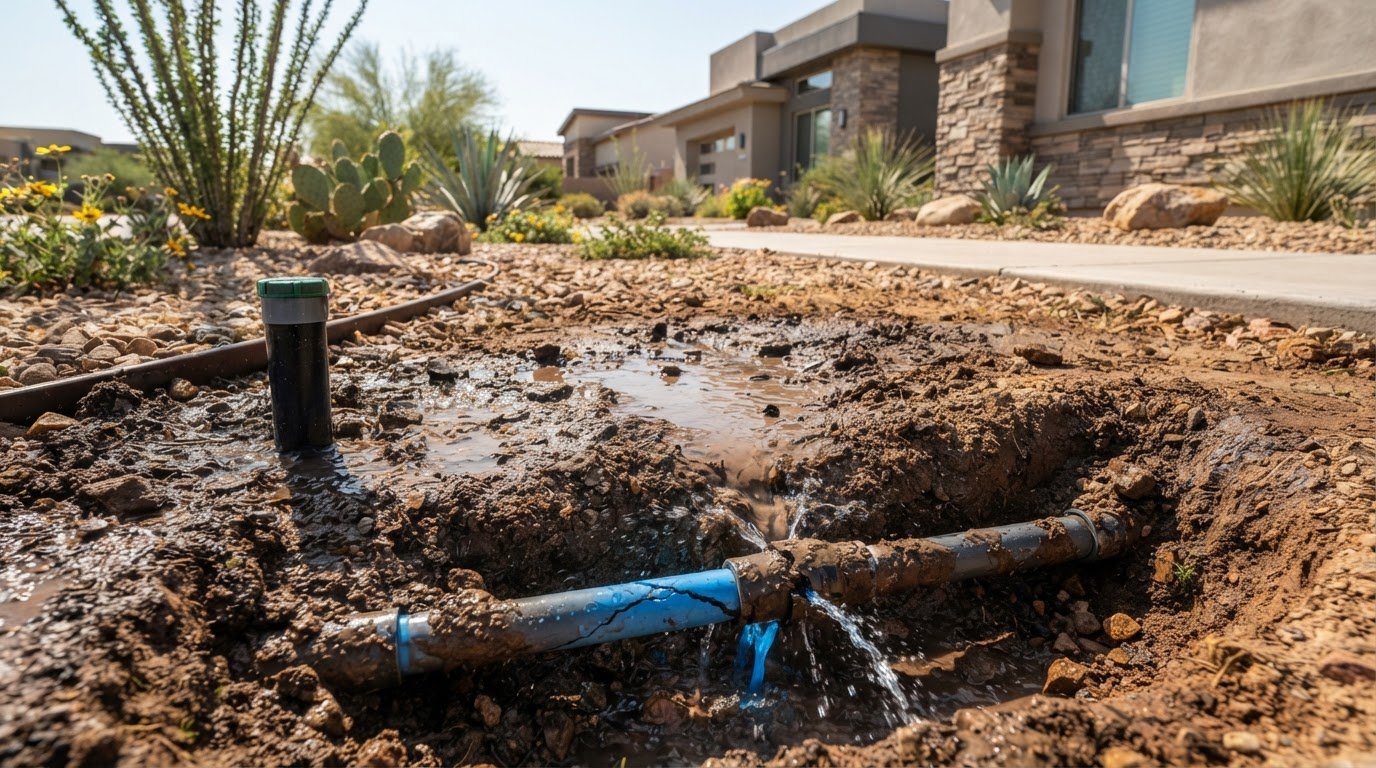
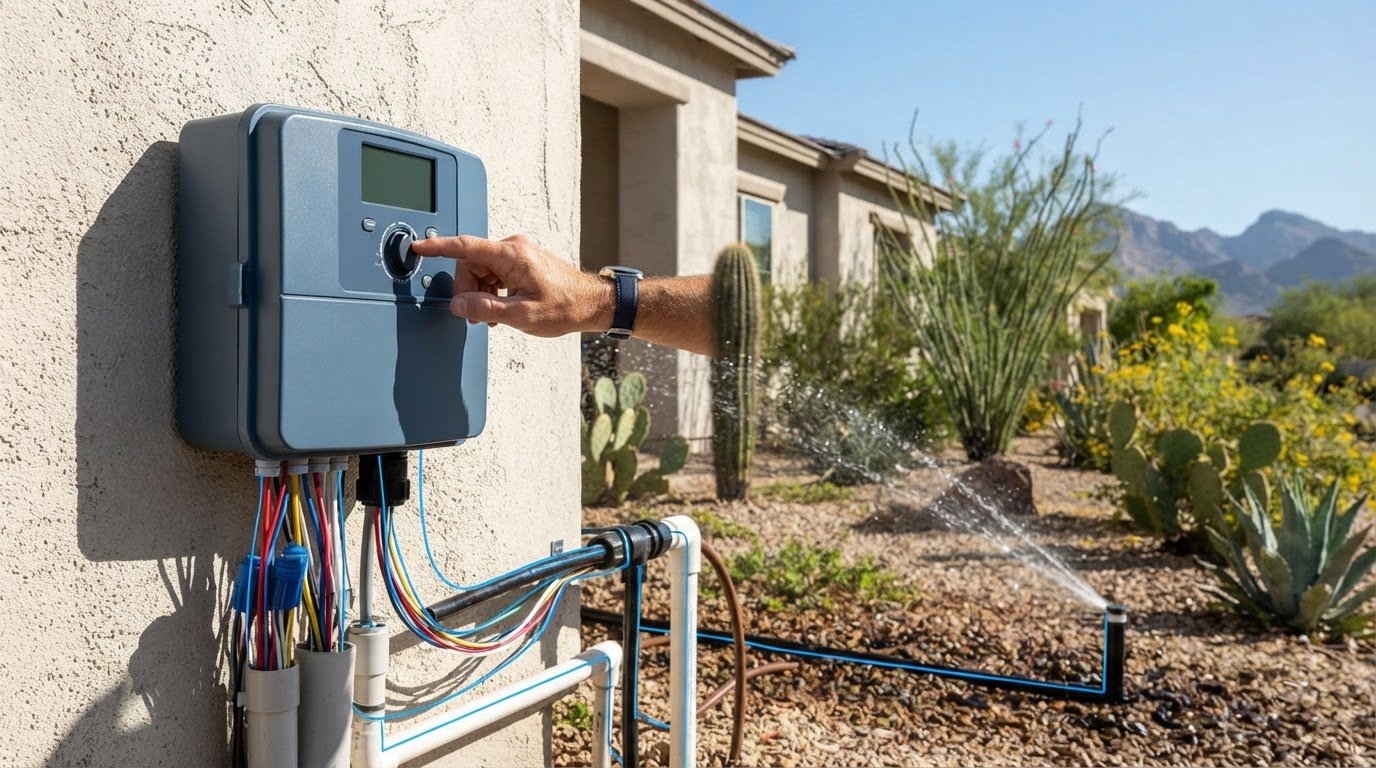
Inspect the system while each zone runs. Look for broken heads, pooling, spray landing on pavement, and areas that stay wet after irrigation stops. A missing sprinkler head can lose more than 12 gallons per minute, so replace damaged components promptly. Check the controller and timing devices regularly, especially after seasonal schedule changes. These observations help distinguish a watering schedule problem from a mechanical fault.
Rainfall, soil absorption, and sprinkler coverage all affect how much irrigation a lawn needs. Keep a simple record of rainfall, controller adjustments, and visible runoff in your Surprise or Peoria yard. Use it to fine-tune each zone’s schedule as conditions change. Measured adjustments can reduce waste while keeping water available to the lawn’s roots.
2. Bermudagrass summer and winter watering frequency
For Surprise and Peoria lawns, bermudagrass watering needs shift with the season and the grass’s growth. A useful summer starting point is watering about once every three days. Adjust that timing to rainfall, soil moisture, and how quickly your sprinklers deliver water. Chandler’s general summer guidance is twice weekly, so local conditions and lawn response matter when setting the controller.
Weekly water needs offer another way to assess the schedule. Most warm-season grasses in the low desert need 1-1.25 inches per week. Bermudagrass may need as little as .5 inches weekly, while 1-1.25 inches is recommended for the best results. Count rainfall toward that amount rather than treating it as extra water the lawn still needs.
Don’t assume a fixed sprinkler runtime delivers the right amount of water. Systems apply water at different rates, and soil absorbs it at different speeds. Measure your sprinklers’ output, then adjust the runtime to meet the grass’s needs without causing runoff. If water starts running off, shorten each application and allow it to soak in before continuing.
Winter brings a different choice. Bermudagrass may need less supplemental watering in winter as its growth slows. Keeping it dormant can avoid the additional irrigation needed to maintain green overseeded ryegrass. For comparison, a 15-foot-by-15-foot lawn overseeded with ryegrass uses 1,238 more gallons per season than dormant bermudagrass.
If you overseed with ryegrass, its winter needs differ from dormant bermudagrass. Once established, ryegrass overseeded onto bermudagrass should be watered every 3 to 7 days in winter. As temperatures rise and bermudagrass resumes growth, review the schedule instead of carrying winter settings into summer. Seasonal changes in growth should guide controller adjustments.
A 15-foot-by-15-foot bermudagrass lawn uses over 5,000 gallons of water per year as an average benchmark. Your lawn’s actual use depends on its watering schedule and sprinkler output. Keep a simple record of rainfall, watering cycles, and lawn response in Surprise or Peoria. If dry areas persist despite appropriate watering, or a sprinkler repeatedly misses part of the turf, discuss sprinkler system adjustments to address the coverage issue.
3. How deeply and how much to water grass
Give grass enough water to reach its roots, not just dampen the surface. Arizona guidance recommends watering to a soil depth of 6 to 10 inches. Chandler recommends moistening soil at least 6 inches deep. A lawn should receive about 0.75 inches each time it's irrigated to wet the root zone. The right runtime depends on sprinkler output, so measure how much water your system applies before setting a cycle.
Check moisture directly before adding another cycle. Push a soil probe down to 10 inches and inspect whether soil is wet through the root zone. A 6-inch screwdriver shaft can also help test Phoenix lawn soil. If it enters easily, moisture is present; if dry soil resists, watering may be needed. Bermuda grass can show a bluish-gray color when underwatered. Grass that still shows footprints a few minutes after someone walks across it is ready for watering.
For Phoenix lawns, early morning is a practical watering window. Wind and evaporation are lower at night or early morning, and early morning watering supports root growth. Avoid the typically hottest, sunniest hours, from 12pm to 4pm. Watering at night can oversaturate soil and contribute to weeds and fungal diseases, so choose a morning cycle rather than leaving irrigation to run late.
Mowing practices also affect how much water grass needs. The City of Prescott recommends mowing at the highest blade setting because cutting too low makes roots work harder and require more water. Chandler advises removing no more than one-third of the grass length at a time. Phoenix bermudagrass is recommended to stay between 1.5 and 2.5 inches tall; St. Augustine grass should be kept at a suitable height for its type and growing conditions.
When practical, leave grass clippings on the lawn after mowing. They can provide at least one-quarter of the lawn's fertilizer needs, returning nutrients instead of removing them with each cut. Use fertilizer sparingly and follow its directions, since excess fertilizer can contribute to water pollution. These steps conserve water and fertilizer while supporting healthy turf.
If lawn care still requires substantial irrigation, consider replacing some water-loving turf with desert-adapted, low-water-use plants. These plantings can reduce outdoor water use, and established desert-adapted plants may survive on rainfall and occasional supplemental watering. Choose plants suited to the site and group them by water needs. Keeping turf only where it serves a clear purpose can make the remaining lawn easier to water efficiently.
4. Reducing water use with xeriscaping
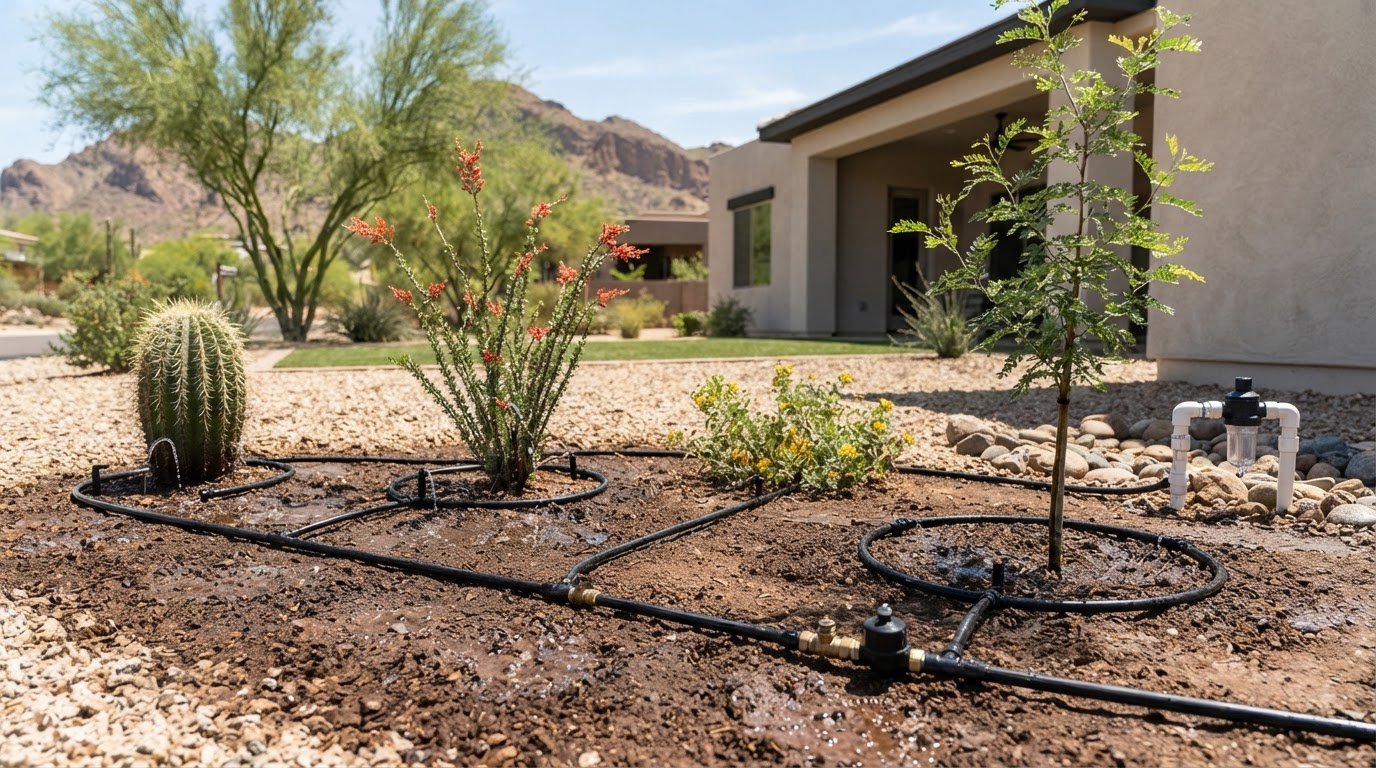
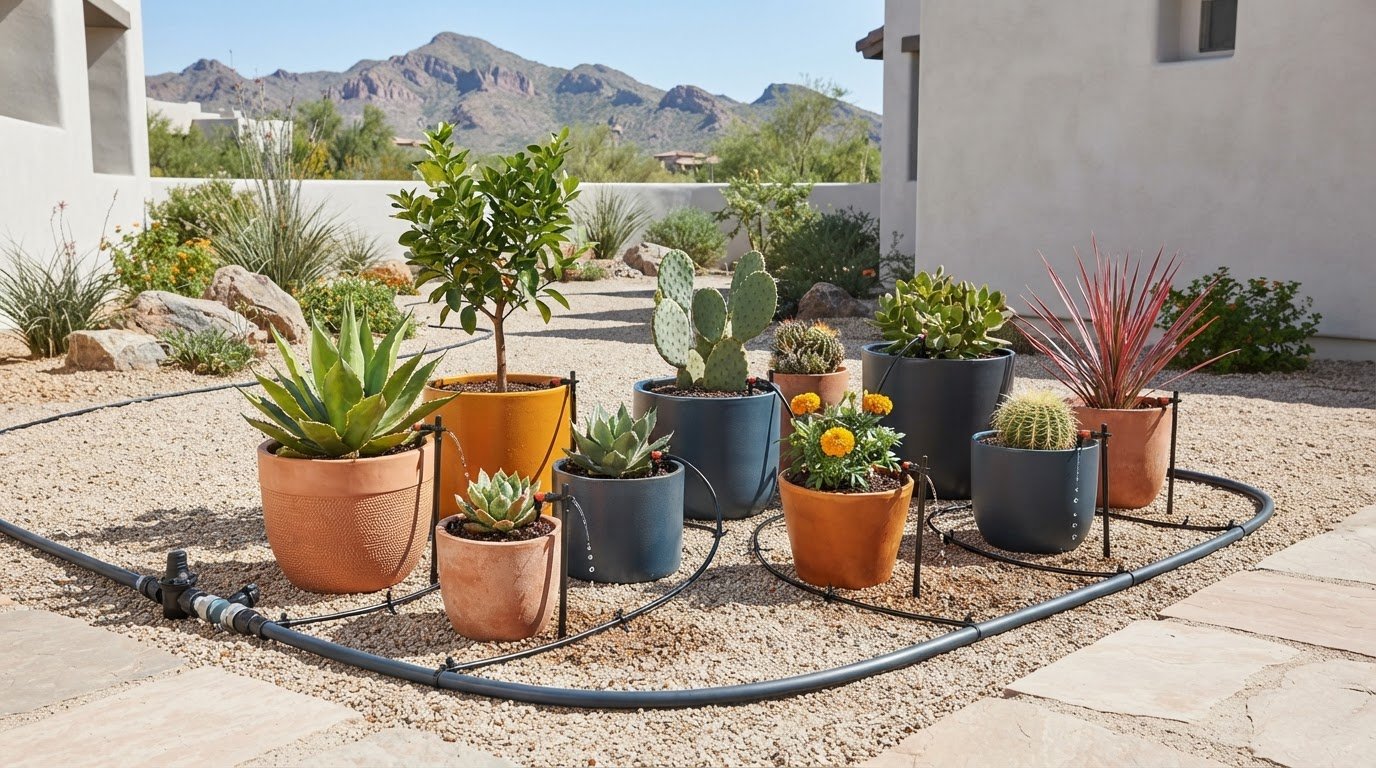
Replacing part of a grass lawn with desert-adapted plants can reduce outdoor water use. A properly xeriscaped Phoenix yard using native plants can be maintained with little or no supplemental water. By contrast, drip irrigation delivers water to planted areas efficiently, but it still requires irrigation. For a larger reduction in lawn watering, replacing turf with low-water-use plants is the more direct step.
Plan the landscape around how each area is used. Keep turf where it supports a clear purpose, then use desert-adapted plants in areas that don’t need grass. Group plants with similar water needs so one irrigation schedule can serve each zone. Newly planted desert-adapted plants need more frequent watering while roots establish; once established, many can survive on rainfall and occasional supplemental water. The guide defines established as 1 to 3 years.
Mulch helps limit evaporation from soil around plants. Apply a 2-3 inch layer, as recommended by the City of Prescott, and keep it 2 to 4 inches away from plant stems. That spacing leaves the stems clear while mulch covers nearby soil. Replenish thin or displaced mulch so exposed soil doesn’t lose the benefit.
Winter is also an opportunity to reduce lawn water use. Phoenix bermudagrass goes dormant in winter and needs no supplemental watering. If you keep dormant bermudagrass instead of overseeding it with ryegrass, a 15-foot-by-15-foot lawn uses 1,238 fewer gallons per season. For other Phoenix lawns, the guidance recommends 1-1.25 inches every 2-3 weeks from November through March. Grass type matters, so don’t apply that schedule to dormant bermudagrass.
Water-bill savings depend on how much lawn you remove, your current watering schedule, and local water rates. Reducing unnecessary irrigation cuts water use, but savings vary by household. Rebate programs and eligibility are determined locally, and any available incentive depends on the municipality and project. Don’t assume a grass-removal rebate applies throughout Arizona.
To help remaining turf cope with less water, mow at the highest suitable blade setting and remove no more than one-third of the grass length. Leave clippings on the lawn when practical; they can provide at least one-quarter of its fertilizer needs. Aerate dense soil in spring to help water and oxygen penetrate. These steps support healthy grass while reducing irrigation across the property.
5. Lawn watering guidance
In Surprise and Peoria, build your watering routine around grass type, soil moisture, and changing weather. Arizona’s climate varies across the state, so a schedule that works in one location may not suit another. To learn how to save water on my lawn in Arizona, track rainfall and lawn conditions, then adjust irrigation instead of relying on an unchanged timer.
Measure sprinkler output with shallow, flat-bottomed cans placed across the lawn. Run a zone and compare the water collected in each can; uneven results can reveal gaps or excessive spray. A Phoenix lawn guide recommends using 6 to 8 cans, spaced 4 to 5 feet apart, for a coverage test. Treat that as a practical test method, then reposition heads where coverage misses turf.
Water early in the morning to limit water loss as the day warms. Avoid irrigating during the hottest, sunniest part of the day, when evaporation is greater. If a cycle causes runoff, split it into two shorter applications with a pause so the water can soak in before irrigation resumes.
Rainfall should change the controller schedule. If the lawn receives at least 1/2 inch of rain, skip its next irrigation cycle. Check the soil before restarting, especially after uneven storms around Surprise and Peoria. Seasonal temperature changes also affect how quickly grass uses moisture, so review the schedule as weather cools.
Inspect sprinkler heads while a zone is running. Correct spray aimed at sidewalks, walls, or driveways, and look for damaged heads, pooling, or persistently wet ground. These signs can indicate wasted water or a leak. Regular system checks can reveal faults before they affect every watering cycle.
To maintain a healthy lawn while saving water, keep a simple record of rainfall, controller adjustments, and visible runoff. Use these observations to fine-tune the schedule for your yard. To find practical ways to learn how to save water on my lawn in Arizona, base each adjustment on what the soil and sprinklers show, not just the calendar.
About half of Phoenix home water is used outside, mostly to water lawns. Four cans are probably sufficient to measure sprinkler application on a 15-foot-by-15-foot Phoenix lawn. Pop-up sprinklers apply an average of 0.4 inches of water in 15 minutes. The page recommends running Phoenix sprinklers for 20-30 minutes at a time. Phoenix lawns should not be watered after it has rained.
Sonora Sprinkler: Irrigation Repair
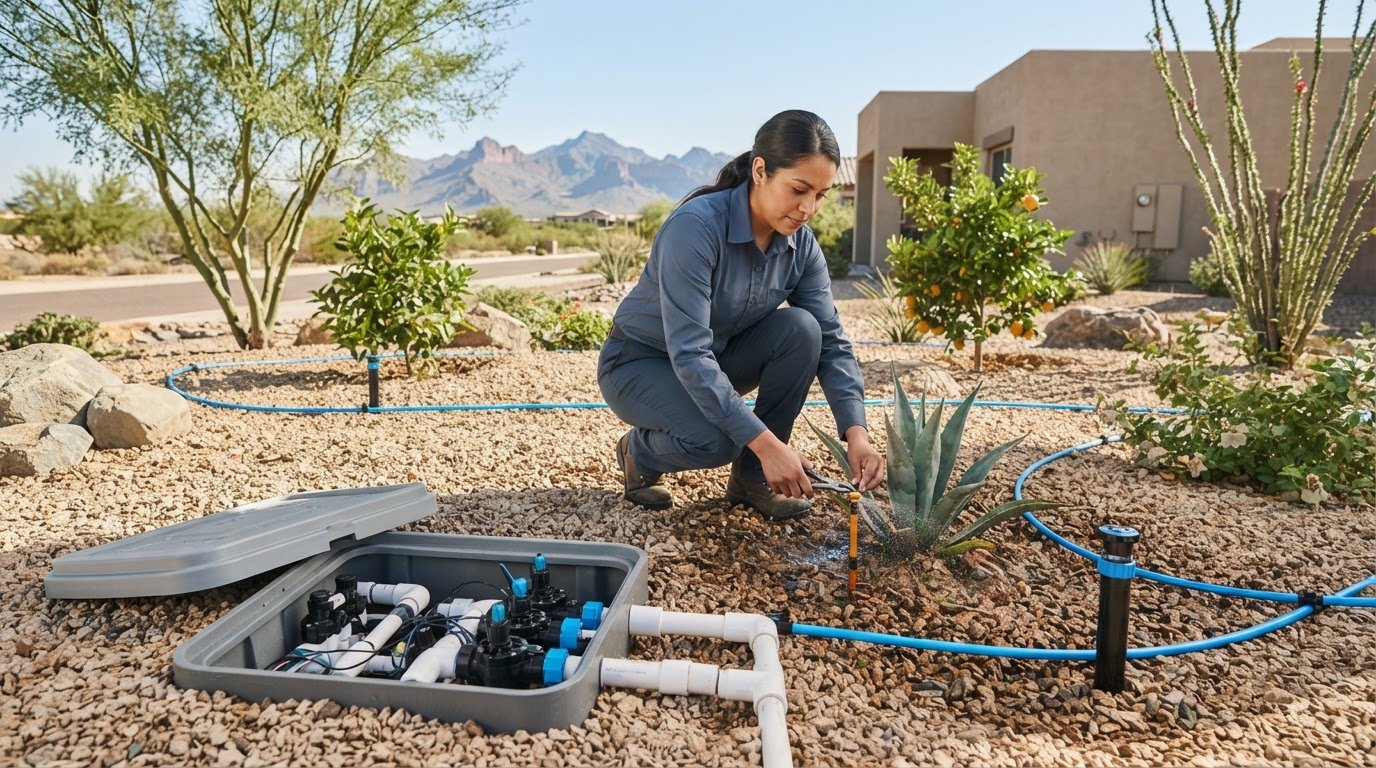
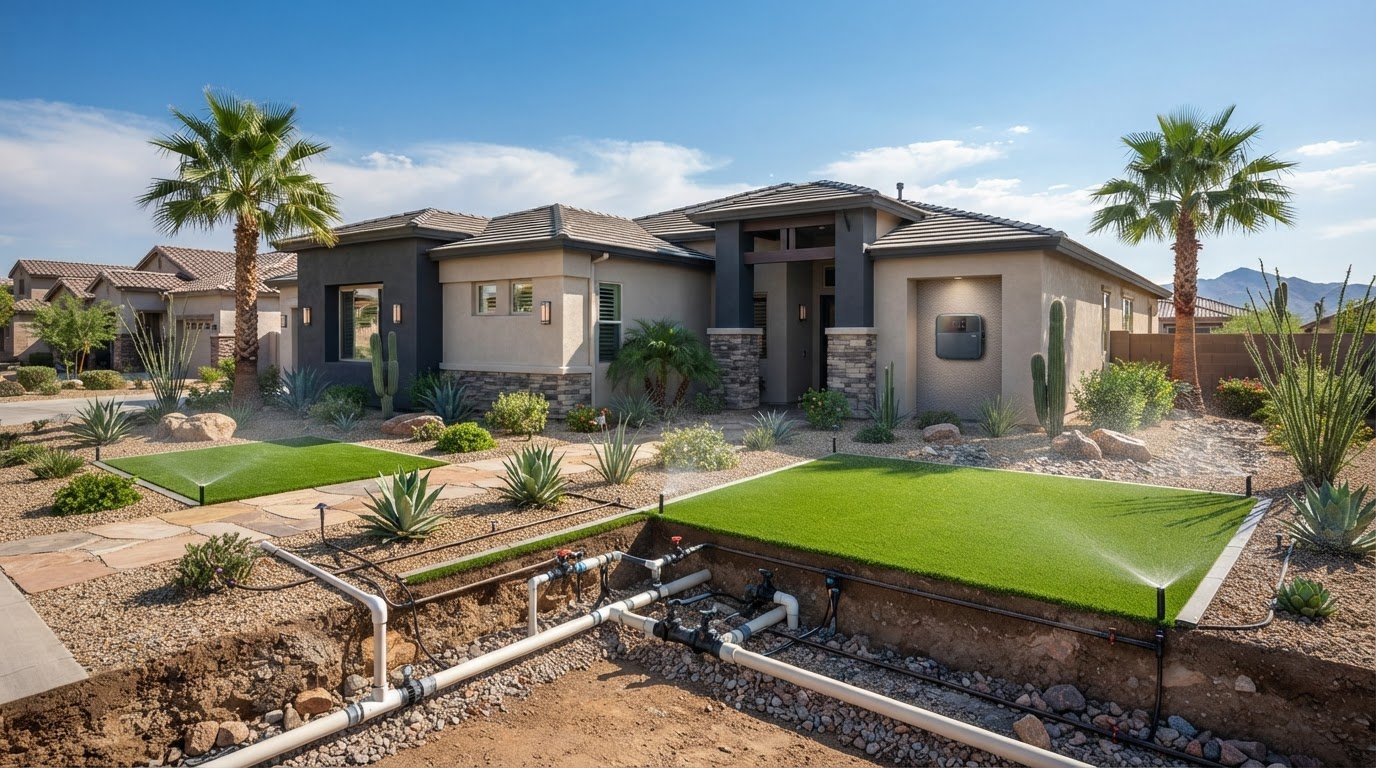
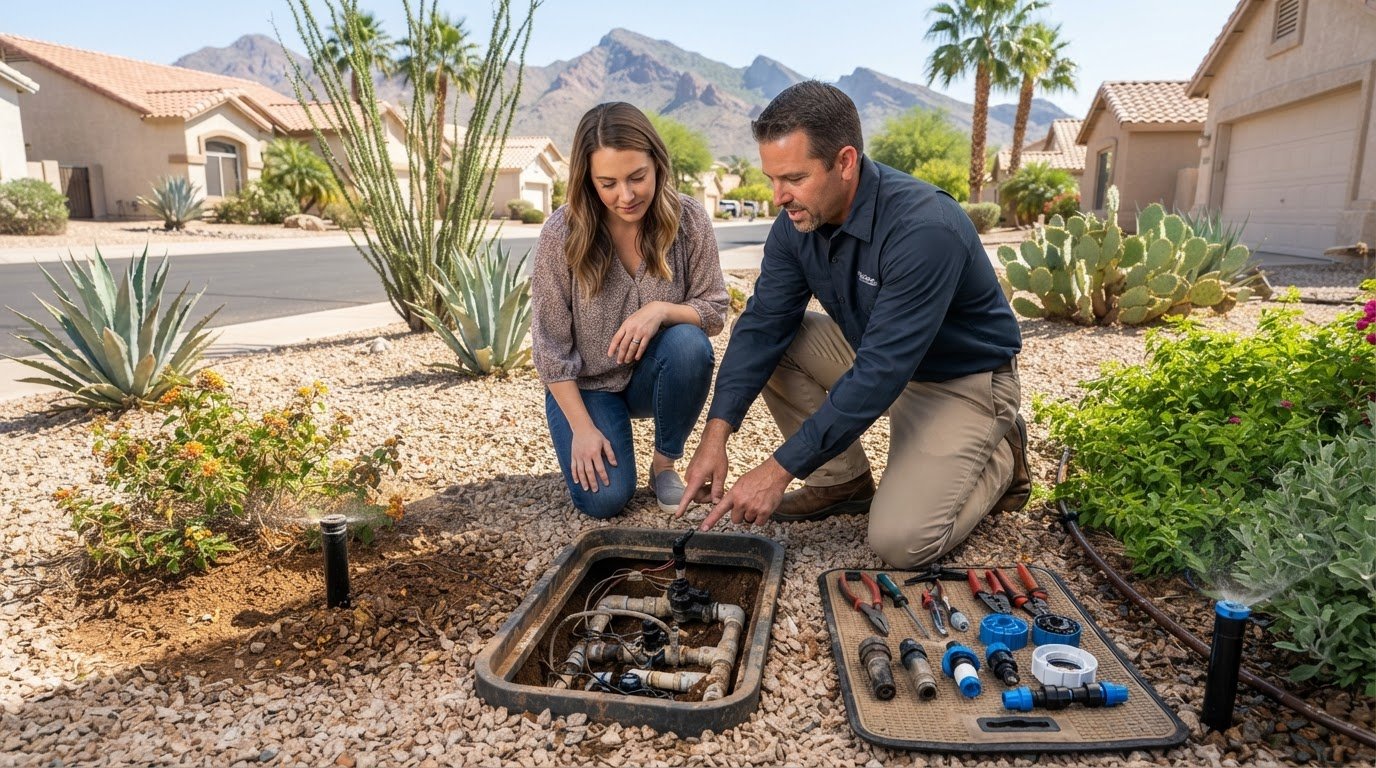
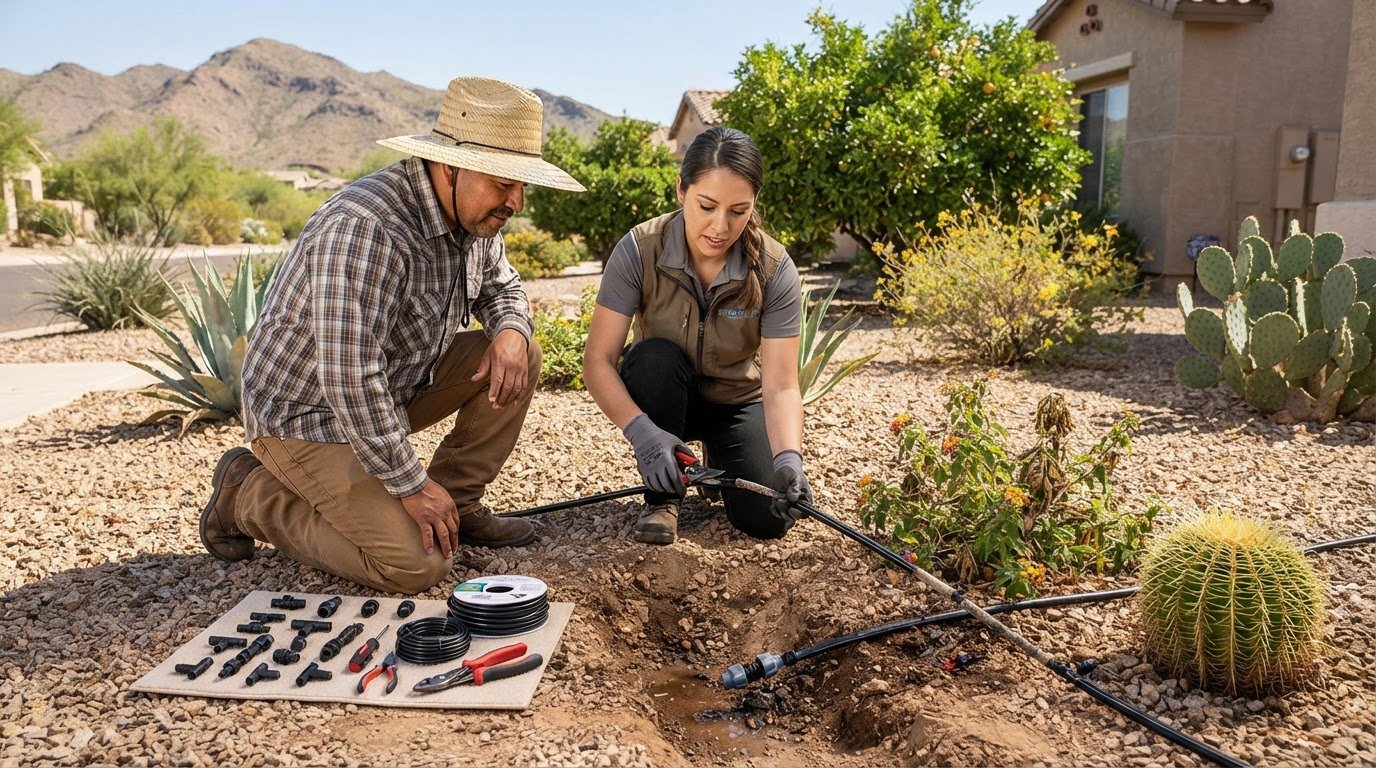
Sonora Sprinkler Inc. repairs irrigation leaks, damaged components, and uneven sprinkler coverage that can make watering inefficient. Fixing these problems can help the system deliver water where the lawn needs it. For a new or reworked setup, custom sprinkler system design and irrigation installation can address the layout. Drip irrigation installation is suited to planted areas that need targeted watering.
If schedule changes haven’t corrected dry patches or overspray, the irrigation system may need attention. Repairs can address faulty components, while a redesigned or upgraded system may better match the property’s watering needs. Choose the service that addresses the problem instead of compensating for poor coverage with extra watering.
Contact Sonora Sprinkler Inc. to discuss your irrigation needs.
Make your next watering decision count
Saving water is an ongoing practice, not a one-time controller adjustment. Watch how your lawn and planted areas respond as the weather changes. Treat persistent dry spots or overspray as clues to investigate, not reasons to add more water. This practical approach turns “how to save water on my lawn in Arizona” into a routine tailored to your property.
Sonora Sprinkler provides irrigation repair, irrigation installation, and drip irrigation installation. These services can address system problems or create a setup better suited to the areas you water. The right next step depends on whether you’re dealing with a fault, planning a new system, or directing water to planted areas.
Contact Sonora Sprinkler to discuss your lawn irrigation needs, and take the next step toward more deliberate water use.
Frequently Asked Questions
When should I water?
Water early in the morning, when lower wind and evaporation help more water reach the soil. In Phoenix, the recommended window is 5am to 8am; schedules can differ elsewhere in Arizona, including Surprise and Peoria. Check the lawn before running a cycle: persistent footprints or dry soil can signal a need, while recent rain may mean irrigation can wait. Avoid watering simply because the controller is set to run.
I have dry, brown patches, what can I do?
First, check whether the patch is receiving water. Run the sprinkler zone and look for a blocked, tilted, or damaged head, then see whether the spray reaches the affected grass. Probe the soil to check whether moisture reaches below the surface. If other areas are wet, don’t increase the whole system’s runtime. A localized coverage problem may need an adjustment or irrigation repair, not more water everywhere.
I have wet, marshy areas, what can I do?
Pause the affected irrigation zone and check whether the ground stays wet while the system is off. Persistent sogginess or unusually lush growth can signal a hidden leak; low pressure elsewhere may be another clue. Inspect nearby sprinkler heads and visible pipes for escaping water. Don’t add another cycle until you’ve identified the cause. If the wet spot persists, irrigation repair can address leaks or faulty components.
How often and how long should I water Bermuda grass in Arizona?
For Phoenix bermudagrass, water about once every three days during summer, adjusting for rainfall and observed soil moisture. Dormant bermudagrass needs no supplemental watering in winter. Runtime depends on how quickly your sprinkler applies water, so a fixed number of minutes won’t suit every system. Measure the output and use the amount collected to set the cycle. Established ryegrass overseeded onto bermudagrass has different winter needs.
How can I adjust lawn irrigation for Arizona monsoon rain and seasonal temperatures?
After monsoon rain, prevent the controller from adding water the lawn doesn’t need. If the lawn receives at least 1/2 inch of rain, skip its next irrigation cycle. Check the soil before restarting, since rainfall can vary across Surprise, Peoria, and other Arizona communities. As temperatures cool, reduce watering rather than carrying summer settings forward. Review the controller after weather changes and adjust each lawn zone as needed.
What are the best ways to find and fix lawn irrigation leaks or broken sprinkler heads?
Run each zone and look for water bubbling around a head, a spray pattern that suddenly weakens, or a wet patch that appears while the system is off. Soggy or unusually lush areas, unexplained increases in water use, and reduced pressure can indicate a hidden leak. Clear debris from a head if accessible, and replace damaged components as needed. For underground leaks, wiring faults, or persistent pressure problems, arrange irrigation repair.
How can I improve sprinkler coverage and reduce water lost to evaporation and runoff?
Observe a complete sprinkler cycle and note dry spots, overspray, and water flowing onto pavement. Adjust heads so they reach lawn areas rather than walls or walkways. If water runs off before soaking in, divide the cycle into shorter applications with a pause between them. Water early in the morning to limit evaporation. Recheck coverage after adjustments, since changing one head can affect nearby spray overlap.
What risks come from overwatering lawns in Arizona, including fungus, pests, and shallow roots?
Frequent, shallow watering can encourage shallow roots, leaving grass less able to draw moisture from deeper soil. Soggy soil wastes water and can contribute to weeds and fungal diseases, particularly when watering at night. Wet patches may also indicate leaks rather than a lawn-wide need for more water. Pests can have several causes, so inspect the grass and irrigation conditions before treating a pest problem or adding water.