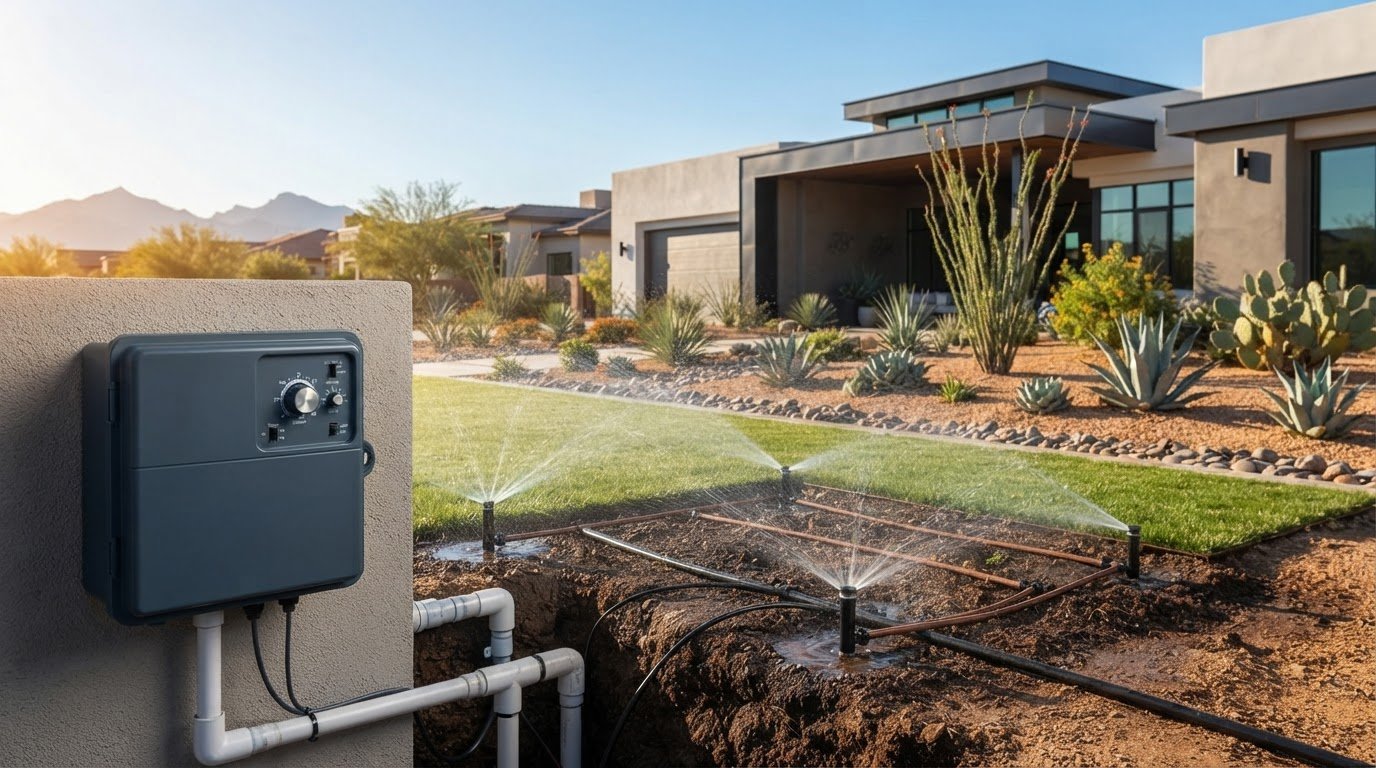
Rebates for irrigation improvements depend on each local program’s eligibility rules and supported upgrades, so a system change does not automatically qualify. Water wise irrigation solutions in Arizona can help properties use water more thoughtfully by matching delivery to plant needs. Efficient watering starts with the system, not just the controller settings.
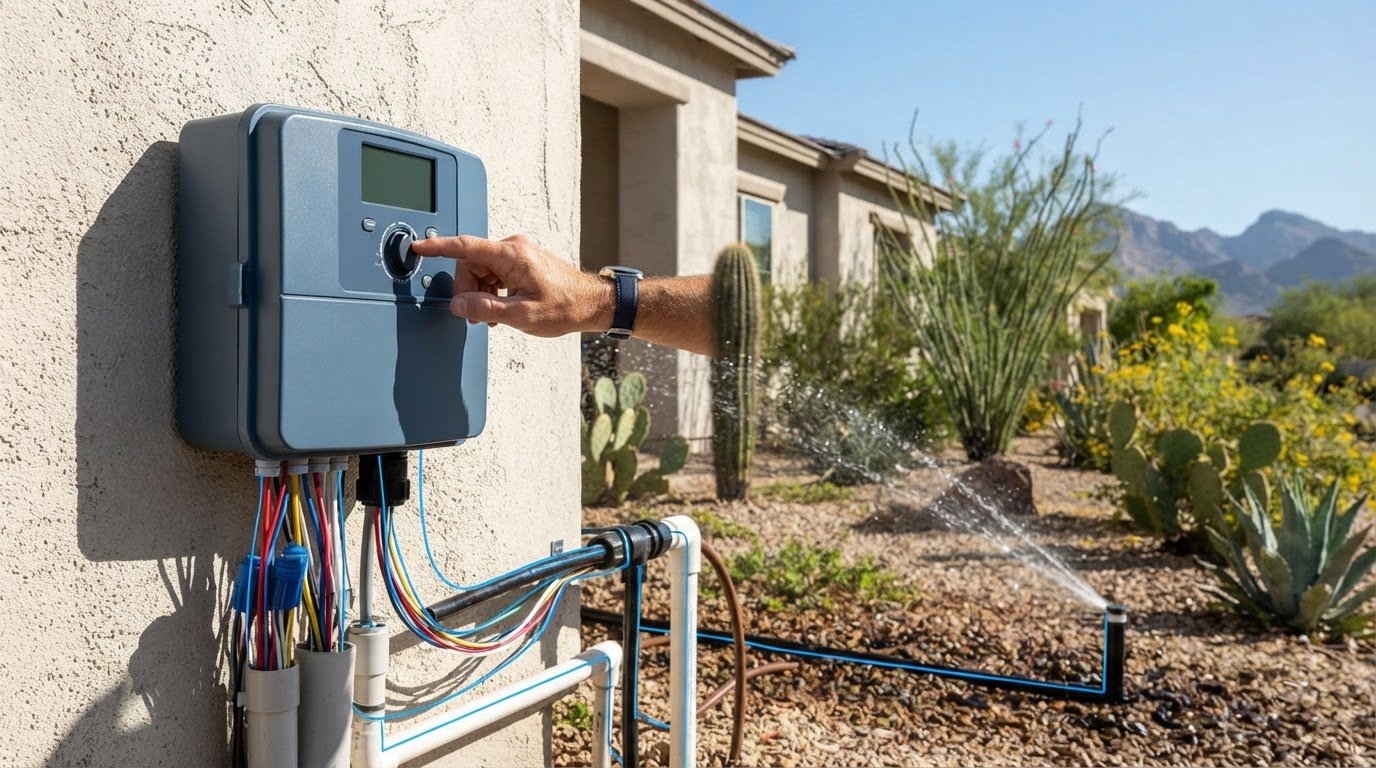
Looking for financial support before planning an upgrade makes sense, especially when you also want to protect plants in Arizona’s dry conditions. Controller upgrades, system improvements, leak repairs, and mapping irrigation zones can all help reduce avoidable water use. Before counting on a rebate, check the program’s eligibility rules and qualifying improvements.
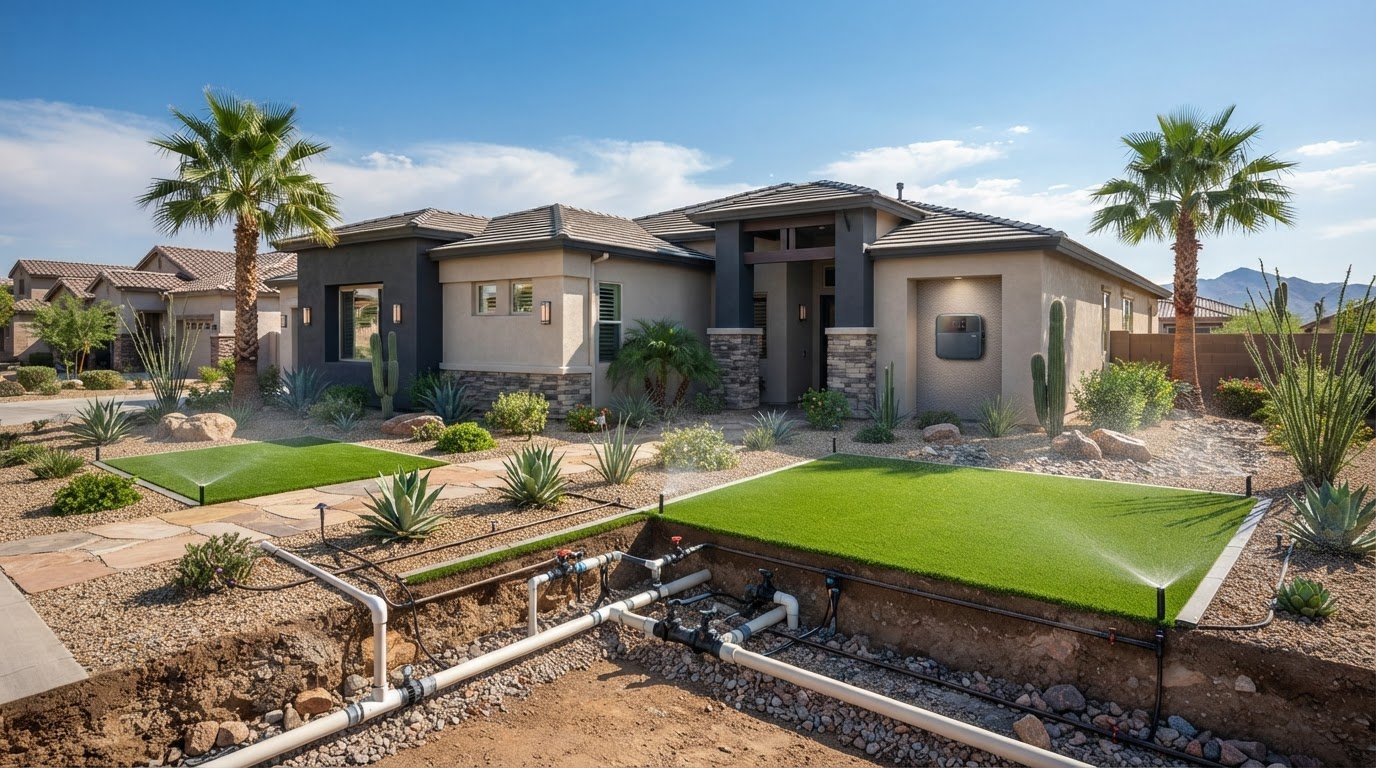
Separate watering zones, well-placed emitters, and regular system checks all affect performance. Understanding these practical options can help you decide which changes suit your property and whether repair, installation, or an upgrade is the right next step.
Key Takeaways
- Match irrigation zones and controller settings to the water needs of each planting area to avoid applying water where it isn’t needed.
- Surprise and Peoria properties can benefit from local water-efficient practices and municipal conservation guidelines in the West Valley.
- Learn how to spot signs of leaks and understand which system problems can call for a repair.
- Mapping turf and desert-planted areas can clarify where watering schedules and delivery methods may need to differ.
- Compare drip irrigation and sprinklers by considering plant needs, emitter placement, and how water reaches the root zone.
System improvements, zone modifications, and efficiency upgrades
Start by matching each irrigation zone’s output to the plants it serves. In Arizona, set watering schedules according to local guidance, plant needs, and how much water the system applies.
For a practical look at low-flow tubing in desert landscapes, watch this video:
Commercial System Evaluation and Planning
For a commercial property, begin with a map of planting areas, irrigation valves, and water sources. Separate plants with different water needs onto different valves or stations, so one schedule doesn’t overwater one area to reach another. Gilbert named 145 sites Water Wise Gilbert in 2025, according to the Town of Gilbert. That recognition offers a local example of organized landscape water management.
There is no single watering schedule for every Arizona city or property. Follow applicable local guidance and set each zone’s schedule according to plant needs and the amount of water its irrigation system applies.
Irrigation Water Application
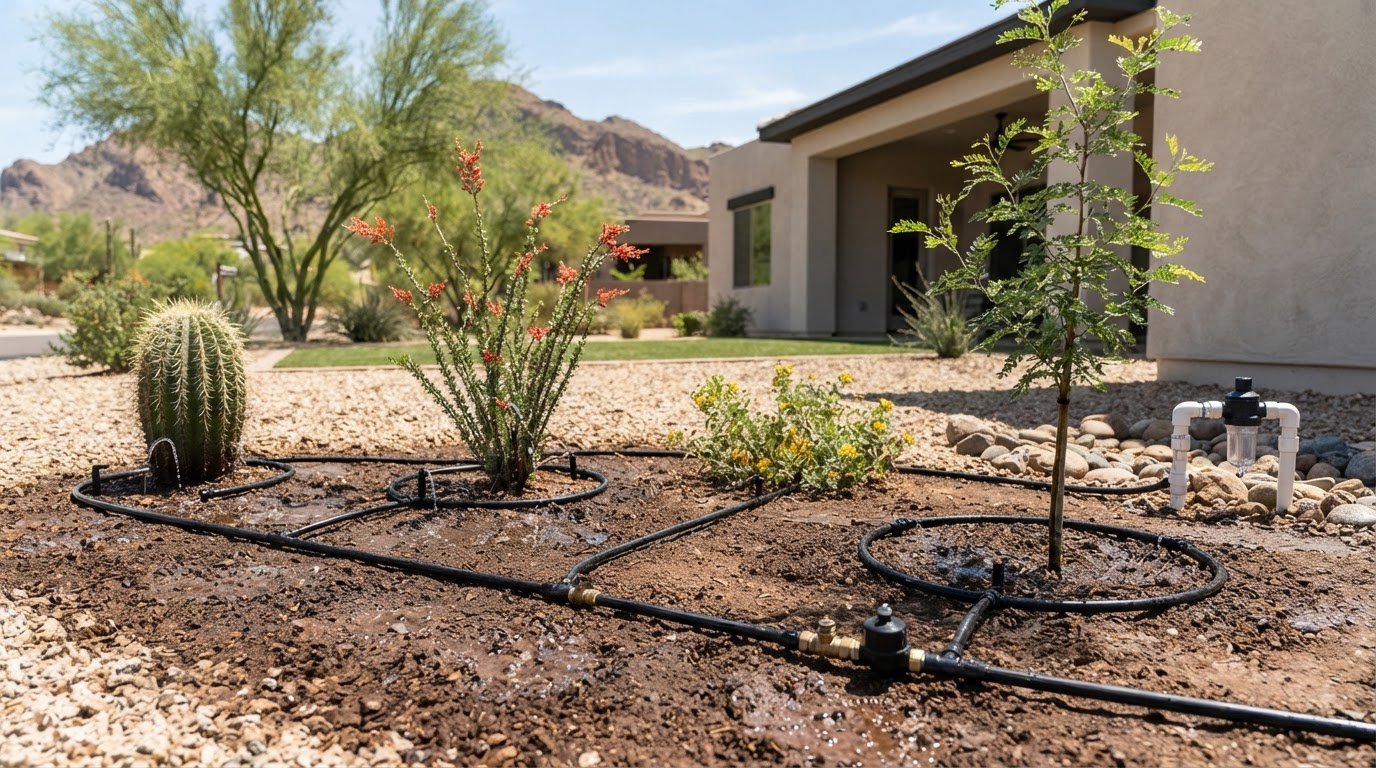
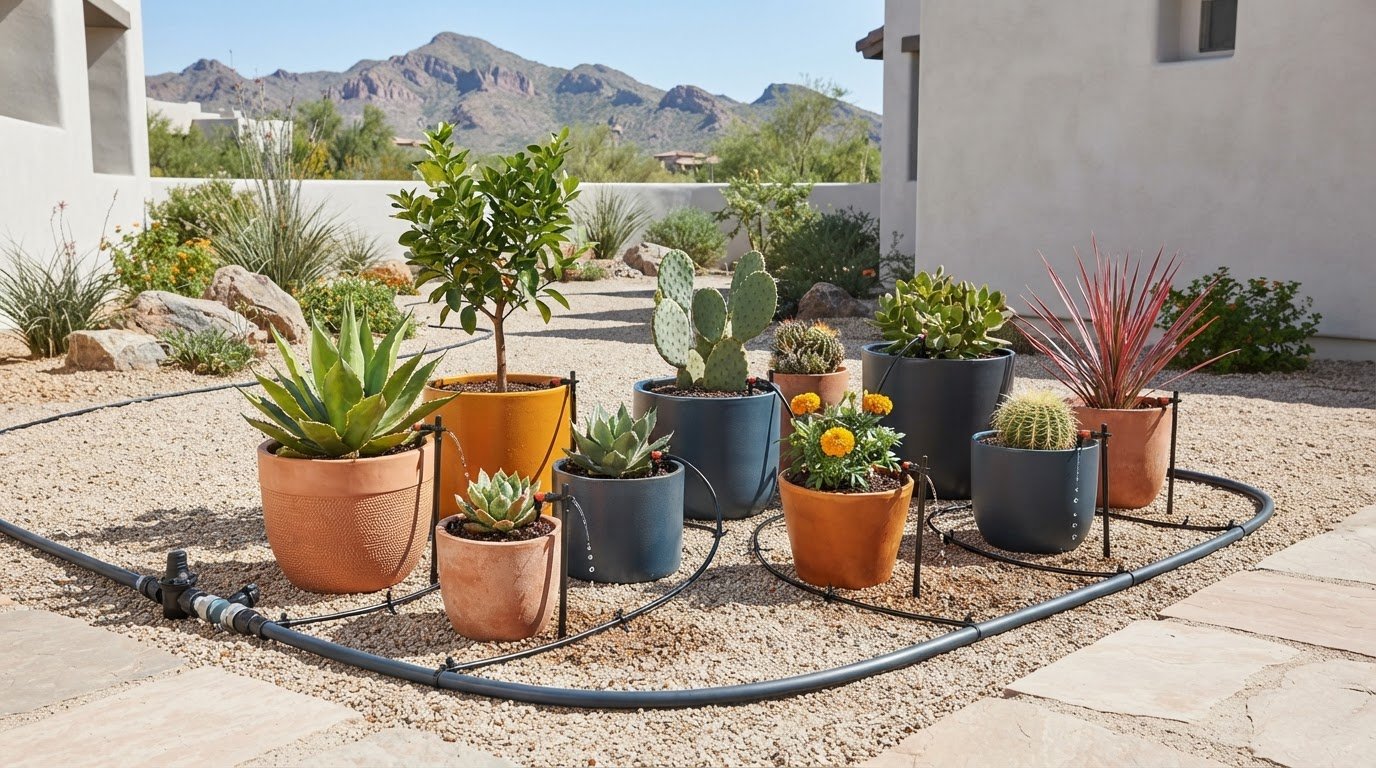
Water application depends on the delivery method, emitter placement, and how quickly the soil absorbs water. Place drip emitters at a plant’s drip line, beneath the outer branch tips, so water reaches active roots. Micro-basins use berms to hold water delivered faster than drip irrigation. Position bubblers away from plant bases to avoid keeping the soil persistently wet against stems.
Rainwater harvesting and graywater can supplement irrigation when systems direct that water to suitable planting areas. Keep distribution layouts separate and purposeful, and match delivery to plant needs instead of applying the same schedule everywhere.
System Optimization and Calibration
Calibrate each station by observing its operation, then adjust run time and coverage where water misses plants or flows onto paths. Check sprinkler heads for uneven spray, and compare coverage across the zone. Arizona guidance favors deep, infrequent watering; a soil probe can help assess moisture about an hour after watering. If it won’t penetrate beyond 4 inches, the soil is ready for another deep watering.
Inspect emitter placement, output, and overall system condition at least once a year. Clear blocked emitters, replace damaged tubing, and confirm that each valve serves the intended planting area. These checks link water conservation to how the system actually performs.
Drip Irrigation Problems and Prevention
Common drip-system problems include clogged emitters, leaks, displaced tubing, and uneven flow. Run the system and inspect the line for wet patches and dry plants, then clean or replace blocked emitters. Secure tubing near the intended root zone, with emitters at the plant’s drip line rather than beside the trunk. Regular checks can catch small faults before they affect an entire zone.
Water-use reduction and irrigation efficiency
For water wise irrigation solutions in Arizona, match outdoor watering to plant needs, soil conditions, and system performance. Arizona guidance recommends deep, infrequent watering. A simple review plan helps you track whether adjustments are working.
Customized Water-Efficiency Action Plans
Start by separating indoor water use from outdoor use, then identify where irrigation may be applying water unnecessarily. Map turf, desert-adapted plants, and other planting areas, and note which stations serve each. In Gilbert, landscapes within 20% of their water budgets demonstrate good water management; those within 10% demonstrate exceptional management.
Where applicable, use Gilbert’s monthly water-budget comparisons to track results. Record each adjustment, the affected zone, and when you will review it. This helps property managers connect schedule changes or system repairs with observed water use and prioritize the next improvement.
Irrigation Efficiency Recommendations
Arizona’s interactive watering guides and Landscape Watering by the Numbers can inform schedule decisions for Arizona properties. Then check where water lands: adjust sprinkler spray that reaches pavement, clear obstructions, and address gaps in coverage. These steps help limit runoff without applying one schedule to every planting zone.
Look for the cause before extending run times. Dry plants may signal poor coverage or a blocked emitter; runoff may mean water is being applied faster than the soil can absorb it. Observe the zone while it runs, make one targeted adjustment, and note the result. This measured approach supports water wise irrigation solutions in Arizona without guesswork.
Drip Irrigation and Sprinkler Water Use
There is no single savings figure for every property comparing drip irrigation with sprinklers. Results depend on the plants, system condition, delivery placement, and schedule. Drip irrigation delivers water slowly to root systems, helping it soak in rather than run off or evaporate in wind or sun.
Sprinklers can suit turf and areas needing broad coverage, while drip can serve selected planting areas. Compare actual coverage and runoff by zone. Place drip emitters at each plant’s drip line, beneath the outer branch tips. A site-specific irrigation review can help identify which delivery method fits each area.
Indoor Water-Efficiency Audits
An indoor audit complements outdoor improvements by checking fixtures and appliances. Inspect faucets, toilets, laundry connections, and visible plumbing for drips, continuous flow, or damp surfaces. Record problems and repairs, then compare later water statements to see whether indoor demand has changed.
Keep indoor and outdoor observations separate. A change in total household water use may reflect a plumbing issue, an irrigation adjustment, or both. Reviewing those records alongside landscape water-budget comparisons, where applicable, can help property managers identify patterns and choose a practical next step.
Leak identification and repairs
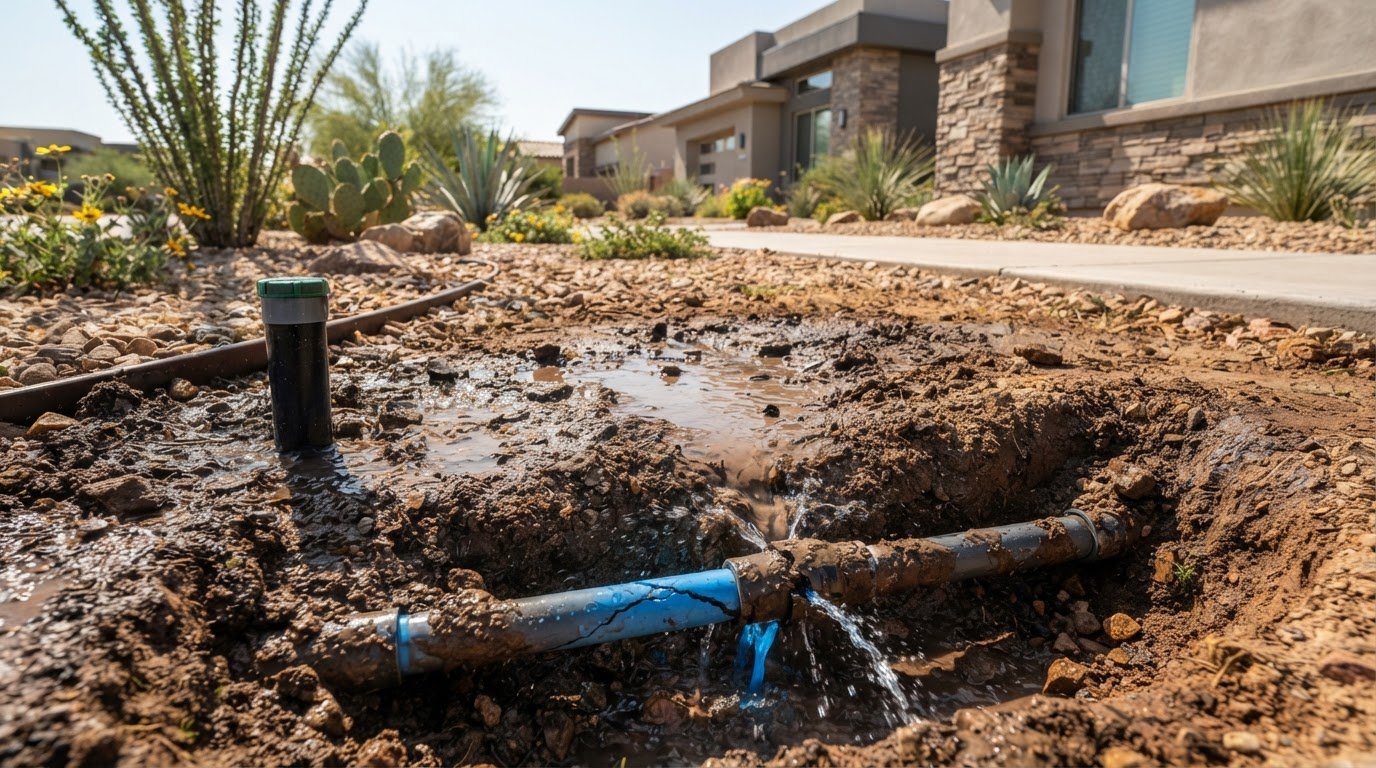
A leak can waste water even when most of the landscape looks healthy. Walk each irrigation zone while it runs and compare the visible flow with its usual pattern. Look for pooling water, unusually soft soil, persistent wet patches, or a stream crossing a path. These clues can help narrow down the problem before you adjust schedules or replace parts.
Inspect the system while it operates
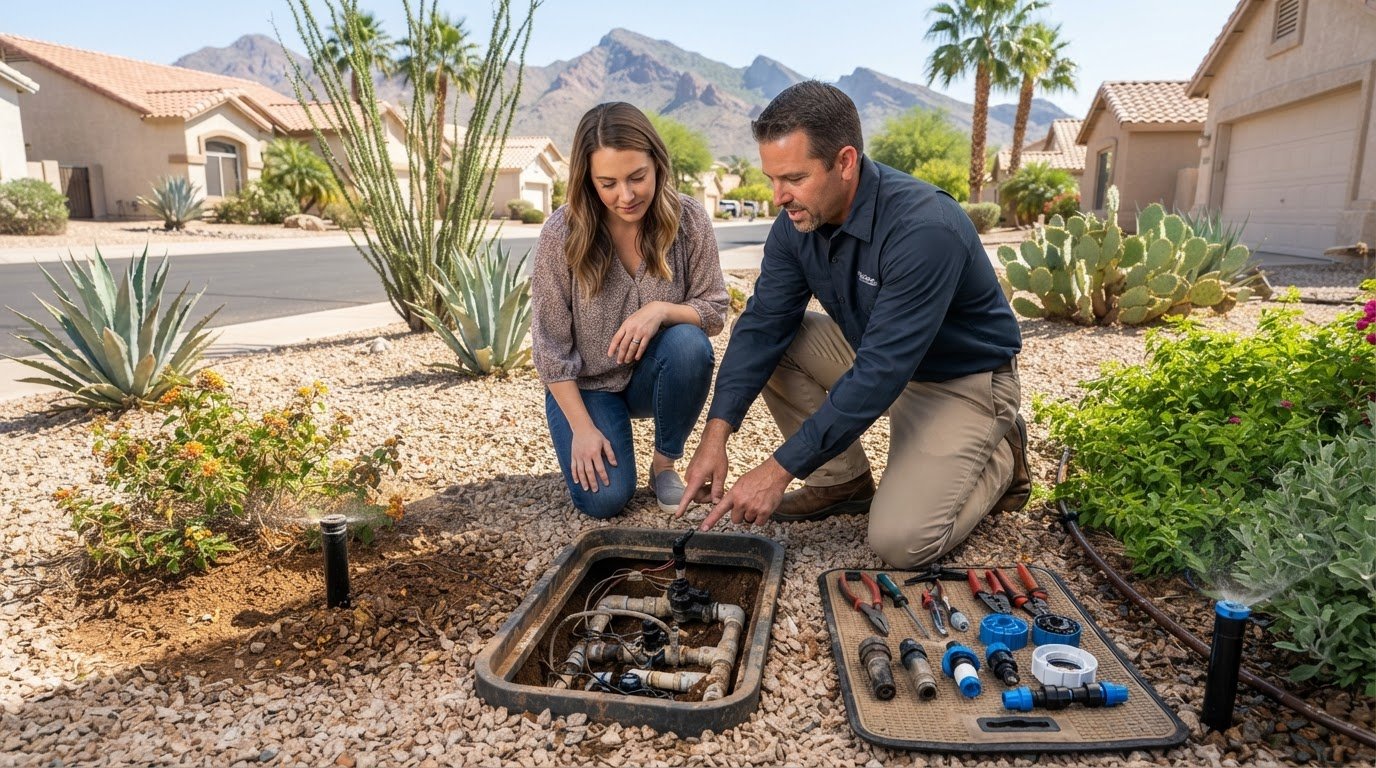
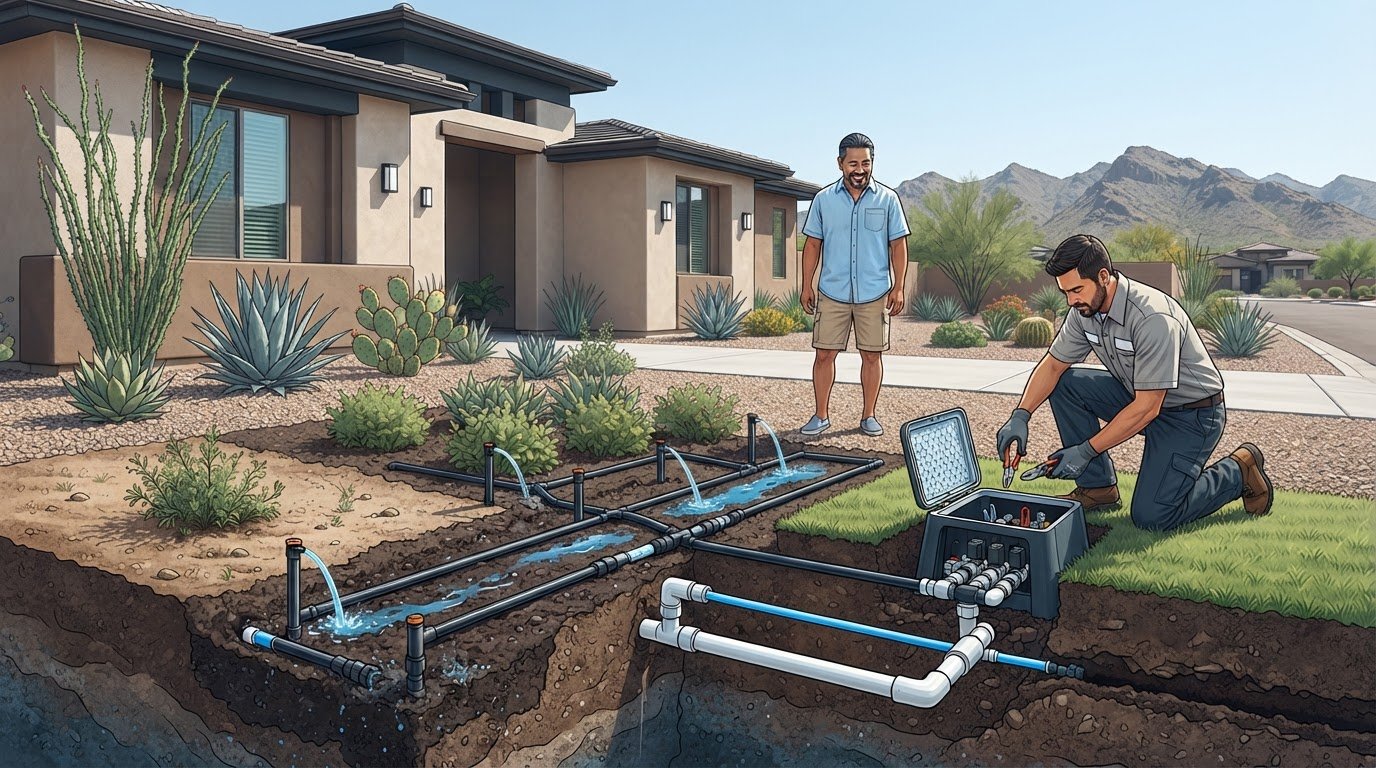
Run one zone at a time and follow its route from the valve to the sprinkler heads or drip tubing. Watch for spray escaping around a head, water bubbling from the soil, or a section that stays dry while nearby plants receive water. Check the valve box for standing water after the zone stops. Note the affected location and zone before moving on.
Next, turn off the irrigation and inspect the area again. A leak that continues after shutdown may involve a valve that is not closing fully, while flow that occurs only during operation can point to a damaged line or fitting. Compare symptoms across zones: one isolated wet patch suggests a local fault, while several affected areas may indicate a shared valve or supply issue.
Distinguish leaks from coverage problems
Not every dry plant signals a leak. A clogged emitter, shifted sprinkler head, or blocked spray pattern can leave one area short of water while another receives too much. Check whether water reaches the intended planting area, then look for runoff or overspray. A soil probe can help assess moisture about an hour after watering. If it won’t penetrate beyond 4 inches, the soil is ready for another deep watering.
Compare the ground around the suspected fault with nearby soil. A wet patch beside a dry plant may mean water is escaping before it reaches the roots. Mark both the wet area and the affected plant. This contrast can help distinguish a leak from a scheduling or placement problem.
Repair, test, and prevent repeat faults
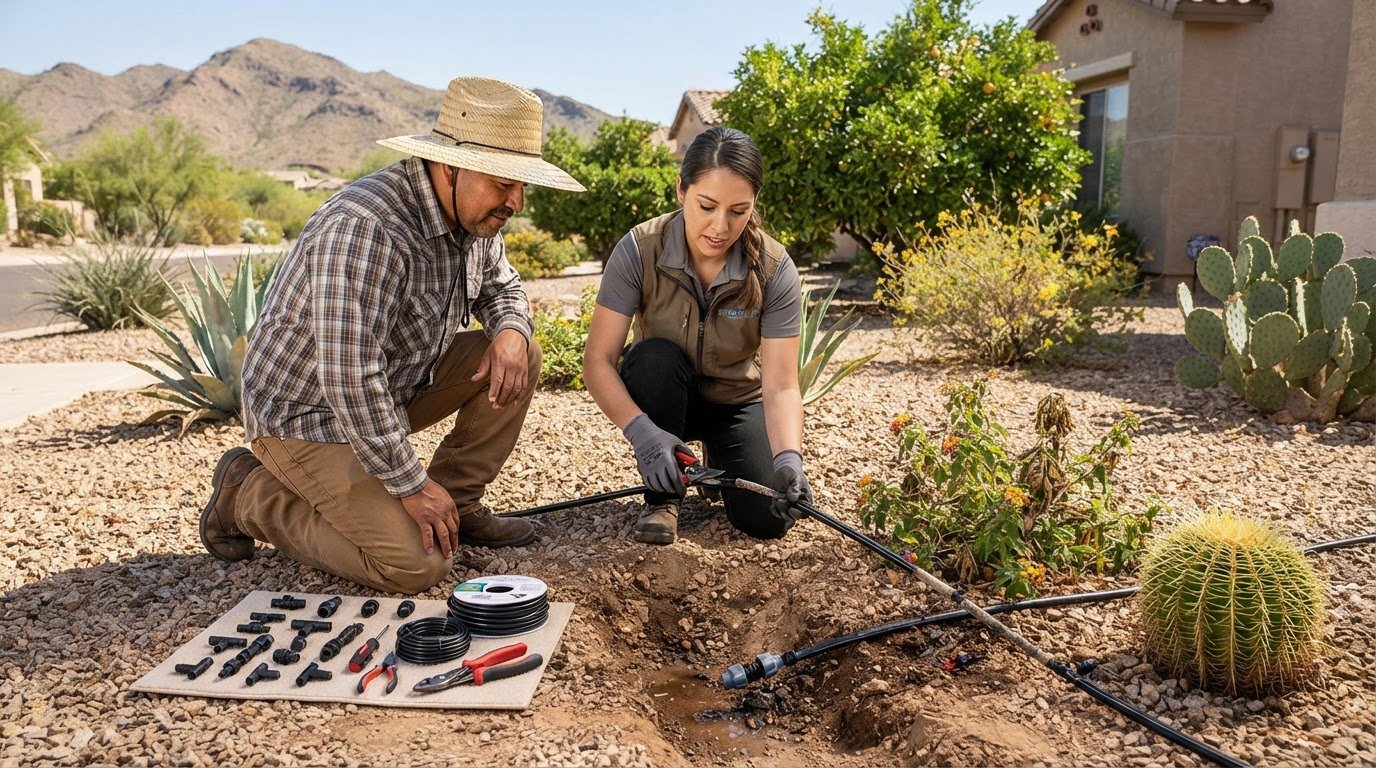
Once you locate the source, isolate the affected zone before opening or repairing its line. A cracked PVC section, loose connection, damaged drip tube, or faulty valve needs a repair suited to that component. Then run the zone again and inspect the repair point, nearby heads, and downstream emitters. Confirm that the water stops when the zone shuts off.
For ongoing water conservation, inspect emitter placement, output, and overall irrigation-system condition at least once a year. Clear debris, secure exposed tubing, and adjust heads that spray pavement. Keep a simple record of repairs and recurring wet spots. If the same location fails again, the underlying cause may extend beyond the visible break, so diagnosis should include the connected line and valve.
Mapping turf and desert-planted areas
Design drip irrigation by mapping soil conditions and native plants, then grouping plants with similar water needs on separate valves or stations. Place emitters at each plant’s drip line and adjust delivery to soil absorption and root-zone location.
Begin with a simple site map. Mark turf edges, desert planting beds, trees, shrubs, irrigation valves, and paved areas. Add slopes, compacted soil, and places where water collects. These details can show where one watering method may not suit the whole property. For example, turf beside a desert-adapted shrub bed should not automatically share a schedule.
Label each area by plant type and water demand. A lawn, flowering bed, and group of native shrubs have different irrigation needs, so one valve may overwater some plants while leaving others short. Separate zones by planting type and similar needs. On the map, note each valve’s coverage and the plants it serves. This makes later schedule changes more precise.
Root depth adds another useful design clue. Tree roots are found in the top 3 feet of soil, shrub roots are about 2 feet deep, and bedding plant and turf roots are about 1 foot deep. These depths help explain why the same run time may not serve every planting area. Direct water toward the active root zone instead of wetting only the surface.
Soil affects how water moves across a zone. Water may spread slowly through compacted or fine-textured ground, while coarser soil can let it drain away from shallow roots. Observe the area during irrigation and note pooling, runoff, or dry pockets. If one section behaves differently, mark it as a separate watering area instead of extending the entire zone’s run time.
For desert plants, map the outer branch tips as well as the trunk. Place drip emitters around the plant’s drip line, beneath those tips, so water reaches the root area as the plant grows. Keep bubblers away from the base to avoid persistently wet soil that can encourage root rot. Record emitter locations so future adjustments preserve effective coverage.
A practical map also supports system planning. Show turf boundaries, plant groupings, valves, tubing routes, and areas that need different delivery methods. After changes, compare actual coverage with the intended layout. If turf has been replaced with desert planting, revise the map and zone assignments instead of keeping an outdated schedule. Clear labels help property managers maintain water conservation as planting areas change.
Keep the map useful beyond the initial layout by noting temporary watering methods and seasonal conditions. Soaker hoses can temporarily water desert-zone plants during particularly dry seasons or in flower beds. Mark where they are used so temporary support does not become an assumed permanent zone.
Outside Arizona, adapt watering frequency to the local climate, rainfall, soil, and plant types. When placing bubblers, leave enough distance from the plant base to avoid promoting root rot through persistently wet soil contact.
How much water can drip irrigation save compared with sprinklers in Arizona?
There is no single savings figure for every Arizona property. Results depend on plant types, zone layout, system condition, watering schedule, and how much water reaches roots instead of pavement or open soil. Compare performance on the property rather than relying on a percentage.
Compare water reaching plants
Drip irrigation delivers water slowly to plant root systems, helping it soak in instead of running off or evaporating in wind or sun. Sprinklers distribute water over a broader area, which can suit turf but may wet paths or bare soil if poorly aimed. The useful comparison is how much of the applied water reaches the intended plants.
Choose a representative zone and observe it while it runs. Note overspray, pooling, runoff, dry patches, and whether water reaches the planting area evenly. Then check soil moisture after watering. A dry root zone beside a wet patch may indicate misplaced delivery, a clog, or an unsuitable schedule, not simply a need for longer run times.
Match method to landscape
Use sprinklers where plants need broad, even coverage, such as turf. Drip lines can serve shrubs and desert plantings where water should reach selected root zones. A mixed property may need both methods, with separate zones for plantings that have different water needs. This avoids defaulting to one delivery method everywhere.
For drip irrigation, place emitters at a plant’s drip line, beneath the outer branch tips. Keep bubblers far enough from plant bases to avoid persistently wet soil against them. Check emitter output and placement as plants grow. In a sprinkler zone, watch for heads spraying sidewalks, blocked spray patterns, or runoff before changing the schedule.
Measure changes in system performance
Make one adjustment at a time, such as correcting a sprinkler’s direction or moving a drip emitter. Record the zone, change, and observed result. Consistent observations help show whether water is reaching plants more effectively and runoff has declined. Account for weather, plant condition, and schedule changes when comparing results.
A soil probe can help you check soil moisture after irrigation. Check moisture about an hour after watering; when the probe won’t penetrate beyond 4 inches, the soil is ready for another deep watering. Use this observation alongside coverage checks, not as a substitute for repairing damaged components or blocked emitters.
For a property where delivery methods or zone performance need adjustment, discuss irrigation system improvements that fit its planting areas and existing layout.
Sonora Sprinkler: Irrigation Repair
Sonora Sprinkler Inc. helps address irrigation problems that undermine efficient watering, from leaking lines to uneven sprinkler coverage. Its Irrigation Repair service is a practical next step when an inspection reveals damaged components, recurring wet spots, or zones that fail to deliver water properly.
For broader changes, Sonora Sprinkler Inc.’s Irrigation Installation, Drip Irrigation Installation, and Custom Sprinkler System Design can align delivery methods with a property’s planting areas. A well-planned system directs water where it is needed and supports manageable irrigation schedules.
If you’re ready to discuss an irrigation concern or system improvement, contact Sonora Sprinkler Inc..
Make Your Next Irrigation Step Count
Use your map as a working plan, not a one-time record. As plants mature or areas change, update it and note which zones need attention. This keeps decisions about water wise irrigation solutions in Arizona tied to the property as it is now, not an outdated layout. Prioritize problems affecting plant health or wasting water, then plan improvements around those needs.
Sonora Sprinkler provides Irrigation Repair for system faults, Irrigation Installation for new layouts, and Drip Irrigation Installation for targeted watering. The right next step depends on whether your system needs a focused repair or a broader change to how water reaches planting areas.
Share what you’ve observed, such as a persistently wet area, inconsistent coverage, or a planting bed that needs a different delivery approach. Contact Sonora Sprinkler to discuss your irrigation needs and take a practical step toward a system that better suits your landscape.
Frequently Asked Questions
Are there any rebates available to my organization to help us use less water?
Rebate options depend on the local program and the improvement being considered. Start by checking your city or water provider’s current conservation offerings, then note eligible applicants, qualifying upgrades, and application deadlines. In Gilbert, large landscape water customers can participate in Water Wise Gilbert. Participation and a cash rebate are separate matters, so review the program’s purpose and terms before including financial support in your project plan.
Are there Arizona rebates or incentives for water-efficient irrigation systems?
Arizona incentive options should be checked locally because eligibility and supported improvements vary by program. Before including a controller change, irrigation repair, or drip conversion in a project budget, confirm whether it qualifies. In Gilbert, large landscape water customers can participate in Water Wise Gilbert, which compares landscape water use with site budgets. Consider that program separately from any rebate offer, and keep records of completed work.
Which smart irrigation controllers and soil moisture sensors are effective in Arizona?
Choose controls that let you set different schedules for separate irrigation stations, since turf and desert plants can have different water needs. Pair the schedule with direct soil checks rather than relying on a timer alone. Arizona’s soil-probe method suggests checking moisture about an hour after watering; if the probe won’t penetrate beyond 4 inches, it’s time to irrigate deeply again. These observations help guide adjustments without relying on a specific brand.
How often and how long should Arizona landscapes be irrigated by season?
Arizona guidance recommends deep, infrequent watering, but the interval and run time depend on local climate, rainfall, soil, plant type, and system output. Adjust schedules as seasons change rather than applying one duration to every zone. Check soil moisture about an hour after watering; when a probe won’t penetrate beyond 4 inches, the soil is ready for another deep watering. Separate stations help tailor schedules to different plant needs.