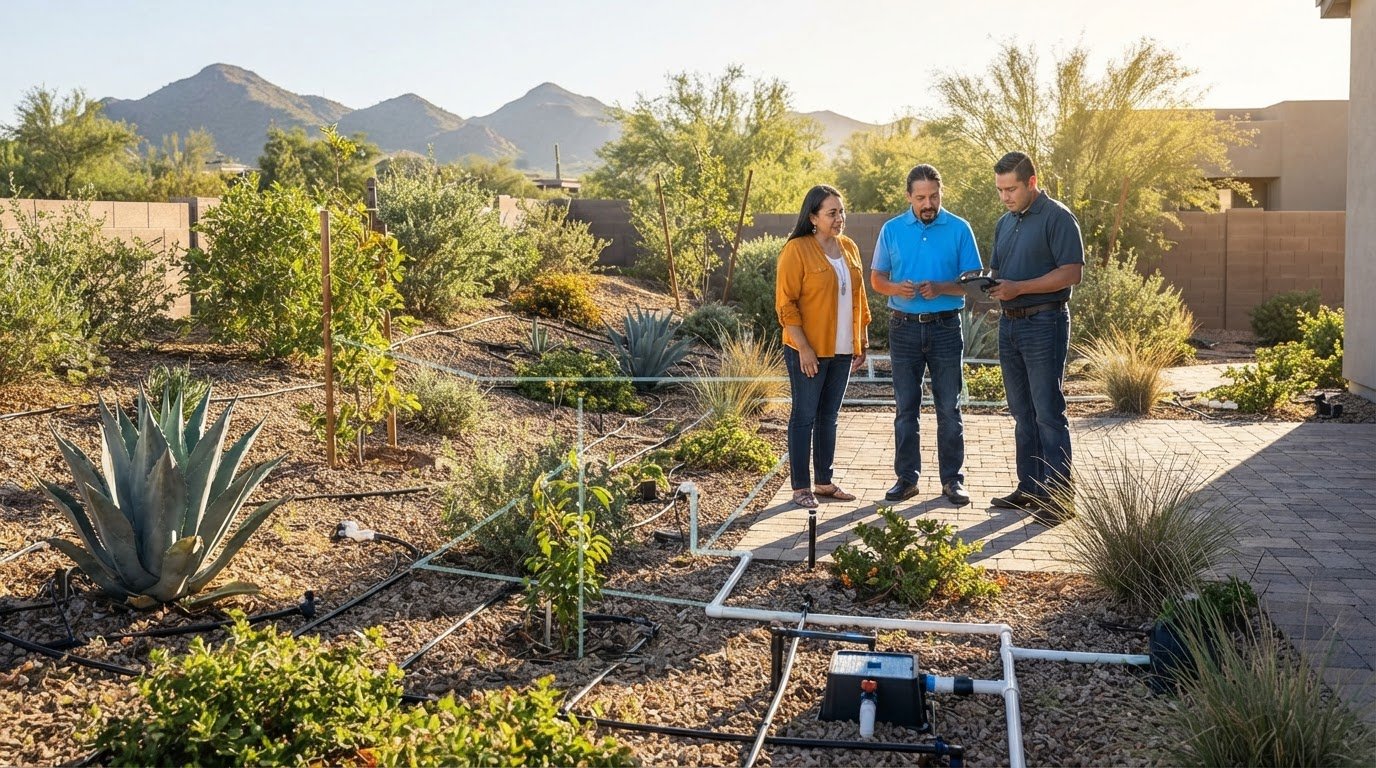
What if your sprinkler schedule followed the weather and each zone’s needs instead of a fixed calendar? In Surprise, summer heat, cooler winter conditions, and occasional rain can all change how quickly soil dries. Effective sprinkler system seasonal adjustments Surprise homeowners can make start with those conditions, not a blanket change to watering time across the whole yard.
It’s understandable to feel unsure about when to adjust watering. Too little can stress plants, while too much wastes water and may leave some areas consistently soggy. The right setting depends on what each zone serves: turf, established plants, and drip-irrigated beds may need different watering days and run times.
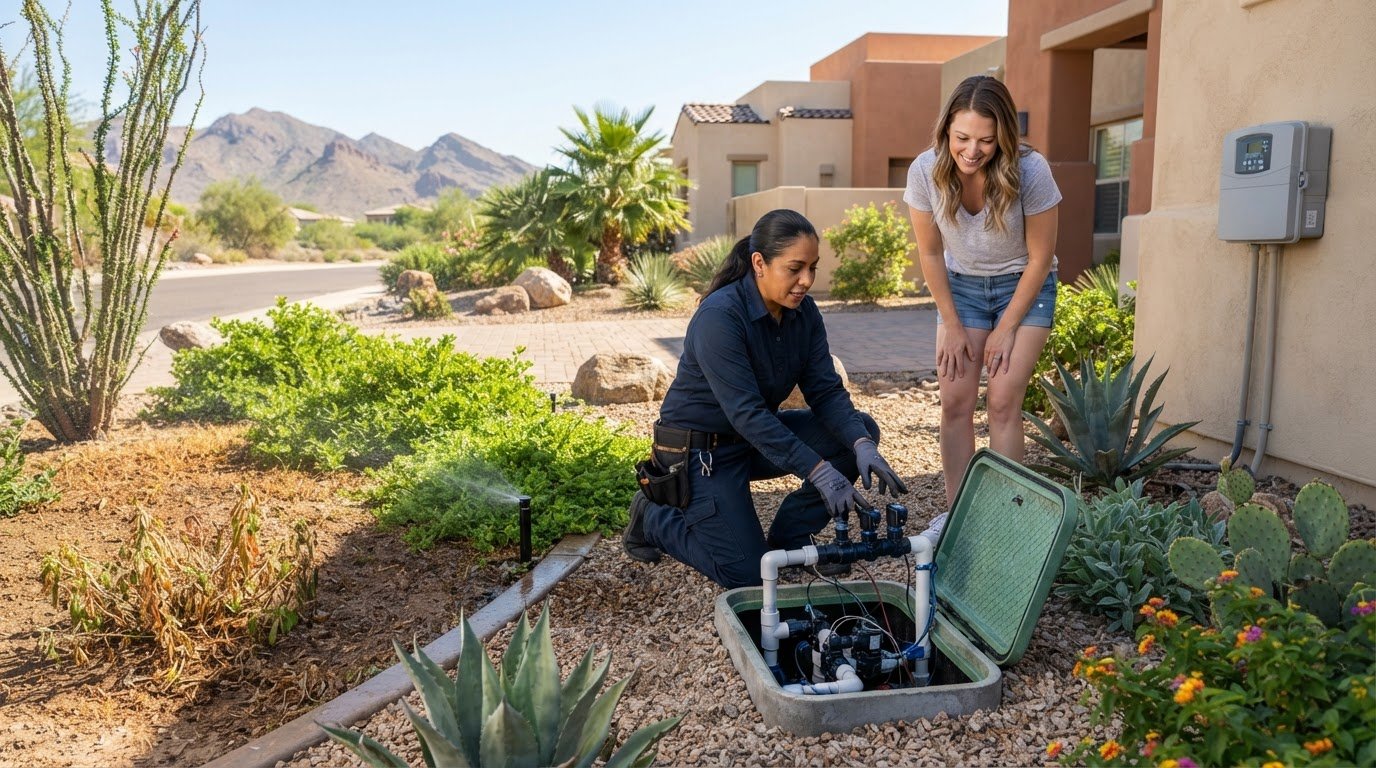
This guide explains how to respond to seasonal weather, assess individual zones, and make practical changes at your controller without overwatering. You’ll also learn to distinguish a schedule that needs tuning from a persistent problem that may point to a system fault. When controller changes don’t resolve recurring issues, residential irrigation diagnostics can help identify what’s affecting performance.
Key Takeaways
- Make sprinkler system seasonal adjustments for Surprise conditions by responding to weather and plant needs, not by relying on a fixed year-round schedule.
- Review each irrigation zone separately. Turf, established plants, and drip-irrigated beds may need different settings.
- Choose between manual schedule edits and your controller’s seasonal-adjustment features based on the controls it provides.
- After changing settings, watch a watering cycle for overspray, runoff, dry patches, or pooling, then refine the schedule gradually.
- If leaks, wiring faults, valve problems, or uneven coverage persist, controller changes alone may not resolve the issue. Residential irrigation diagnostics can help identify the cause.
Why Surprise sprinkler schedules need seasonal adjustments
A seasonal irrigation adjustment is a change to watering frequency or zone run time in response to changing weather, soil moisture, and plant needs. For Surprise homeowners, the goal is to keep water delivery aligned with current conditions rather than leave one schedule in place all year.
A fixed schedule can miss the mark in Surprise. Hot, dry weather can increase landscape demand, while rainfall may temporarily reduce the need for supplemental watering. The same settings that suit one period may waste water or leave plants stressed in another.
For a general overview of how irrigation sprinkler systems deliver water to landscapes, watch this brief video on seasonal adjustment:
How Surprise weather changes irrigation demand
Heat can dry soil more quickly and increase water demand, while cooler conditions may slow moisture loss. Wind can increase evaporation and affect whether spray reaches the intended area. Rainfall also matters: after useful rain, continuing the usual cycle may leave soil wetter than plants need. These influences vary, so a calendar date alone can’t tell you whether a yard is ready for its next cycle.
Consider both current conditions and plant response. Check soil moisture near the root zone and look for signs such as wilting or persistently wet areas. Also consider what each zone is growing. Before changing your schedule, review current City of Surprise guidance for any local watering restrictions that may apply.
Which parts of a sprinkler schedule can change?
A controller schedule has several distinct settings. Watering days determine how often a zone runs. Start times set when a program begins, while zone run times determine how long each valve supplies water. Changing one setting doesn’t automatically change the others.
For example, reducing the number of watering days changes frequency; shortening a zone’s run time changes duration. The right adjustment depends on weather, soil, plant type, and irrigation method. A lawn zone and a drip-irrigated planting bed may need different schedules. If your controller allows separate programs, use them to account for those differences.
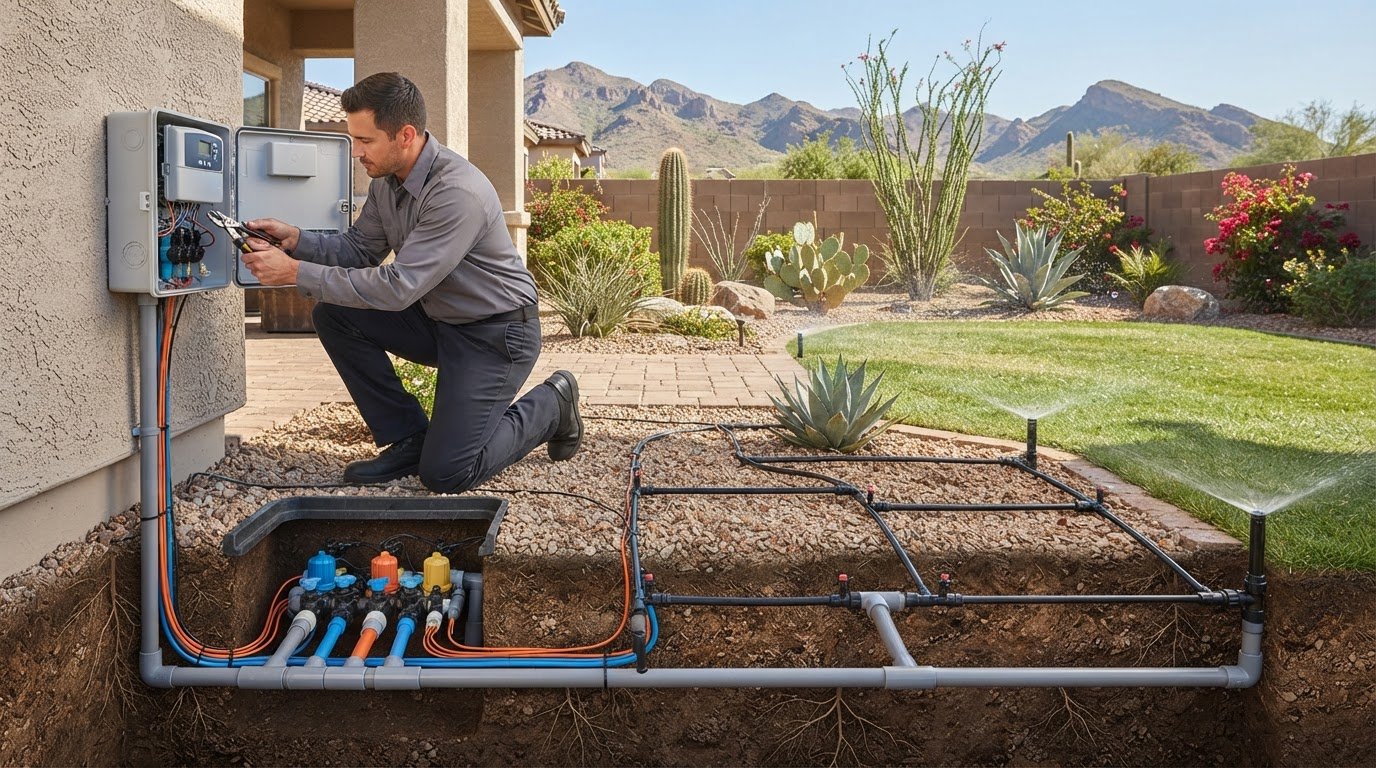
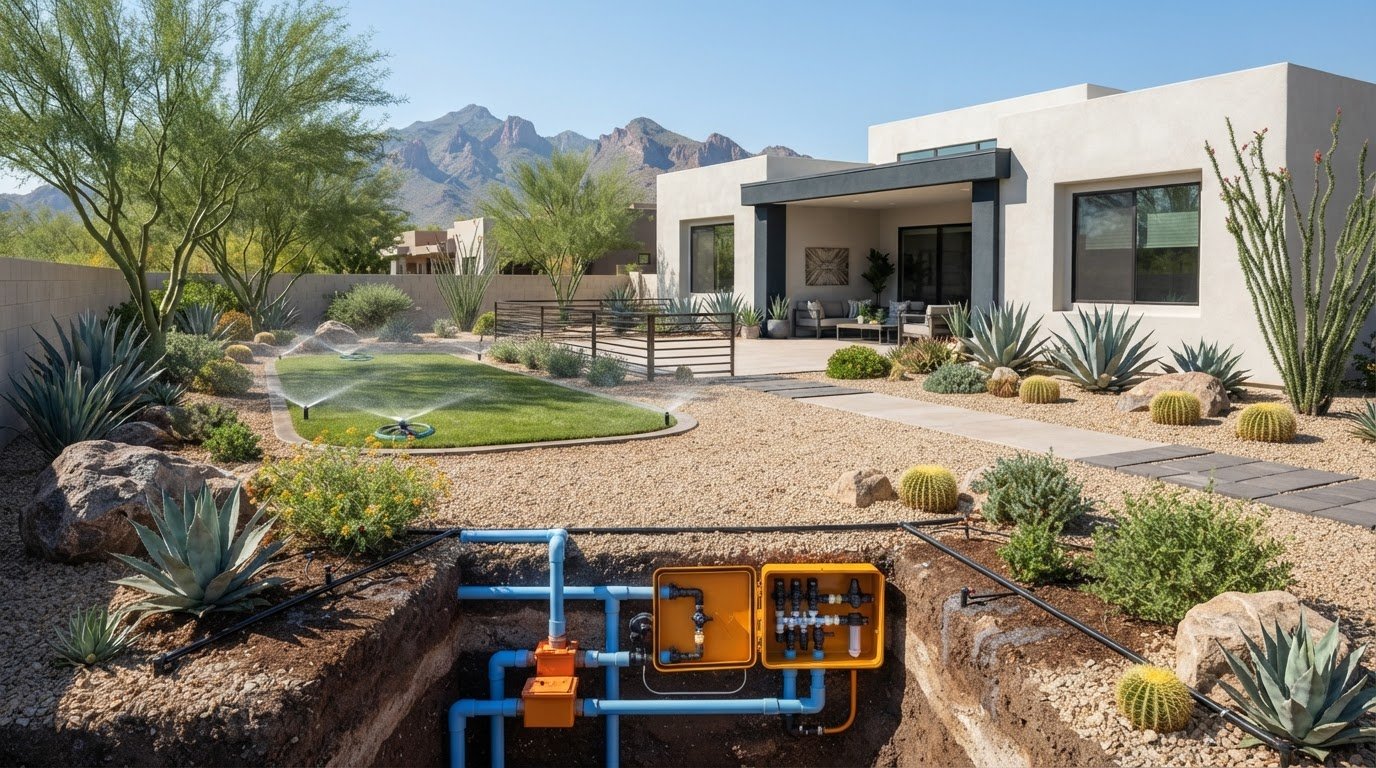
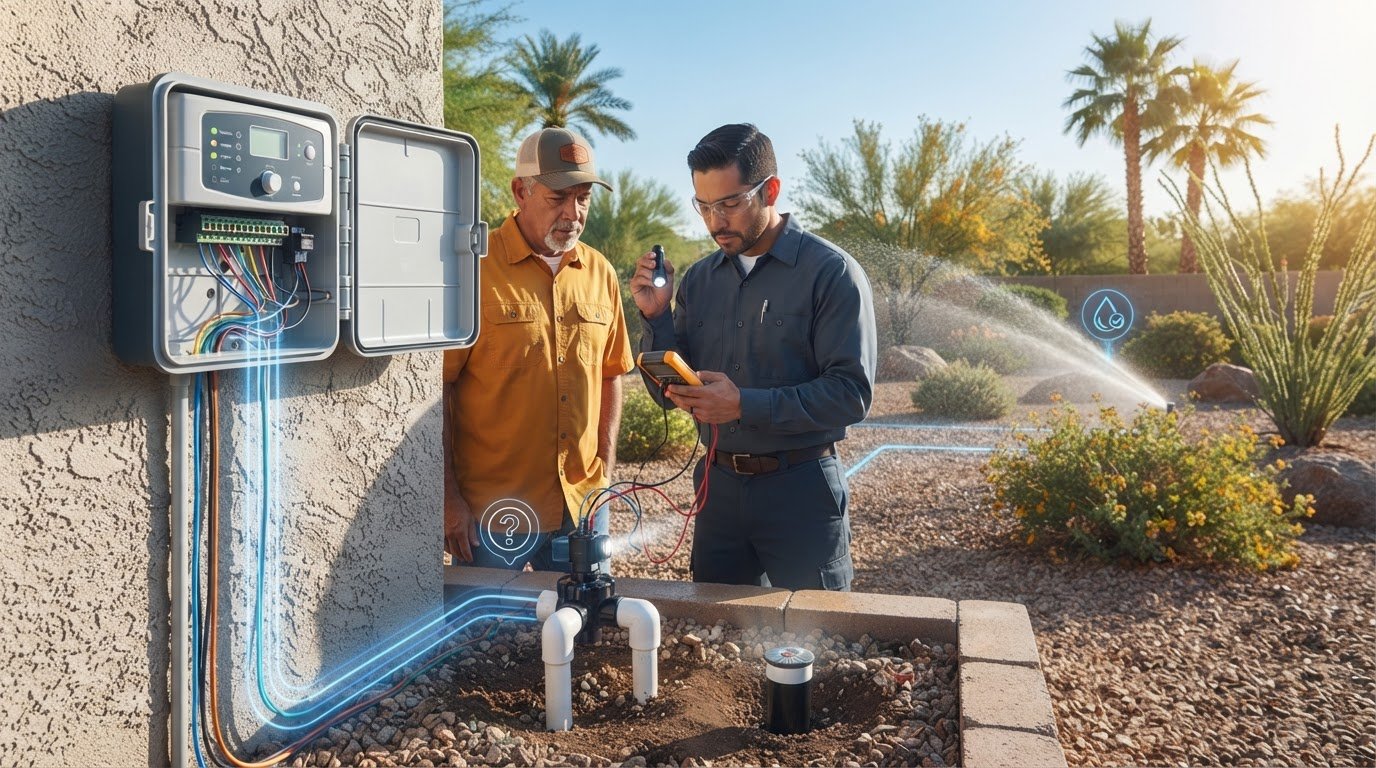
Seasonal schedule changes work through the existing system and its controls. They’re different from repairing a leaking line, faulty valve, or wiring problem. Changing run times won’t correct a mechanical fault. A controller upgrade replaces or improves the control equipment, while a system redesign changes how irrigation is laid out or divided into zones. If schedule adjustments don’t resolve a persistent problem, irrigation wiring and diagnostics can help identify system faults that settings alone can’t fix.
How seasonal changes affect sprinkler settings in Surprise
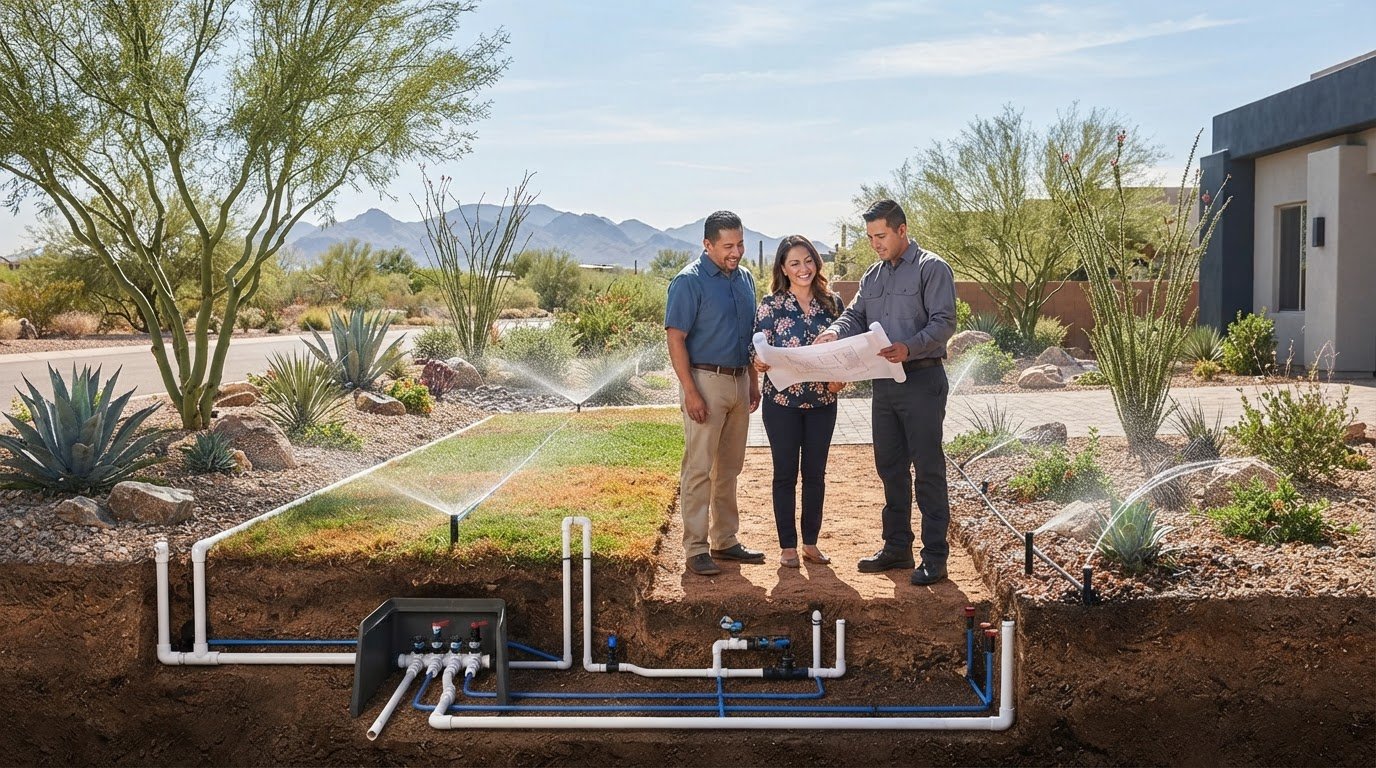
Seasonal scheduling works best when you consider conditions at the property, not just the season name. Heat, wind, rainfall, soil, and plant type all influence how quickly water is lost and how much reaches roots. A sunny area with fast-draining soil may dry sooner than a shaded bed, even within the same yard. That’s why a zone-by-zone review is more useful than applying one adjustment across the entire controller.
Adjusting schedules through hotter and cooler periods
During hot, dry stretches, soil can lose moisture faster and plants may need more frequent irrigation. Cooler conditions can slow evaporation and reduce demand, so a schedule carried over unchanged may supply more water than the landscape uses. Wind and exposure also affect drying, while compacted or sloped areas may absorb water differently from level, loose soil.
Review settings after a meaningful change in conditions, such as sustained heat or a period of cooler weather. Use what you observe in the landscape to guide gradual changes instead of treating a calendar month as an automatic signal to alter every zone. There’s no universal run time for every yard: sprinkler type, soil, plant maturity, sun exposure, and system condition all affect how long a zone should operate.
Responding to rain and different plant zones
Recent rainfall is useful information, but it doesn’t mean every planting area received the same amount of moisture. A roof overhang may shelter a bed, while wind can carry rain away from exposed ground. Check soil where plants are rooted and consider whether the surface is drying at a different rate from deeper soil before changing the schedule. A rain sensor, if your system has one, can provide another input by signaling rainfall. It doesn’t replace observing how the landscape responds.
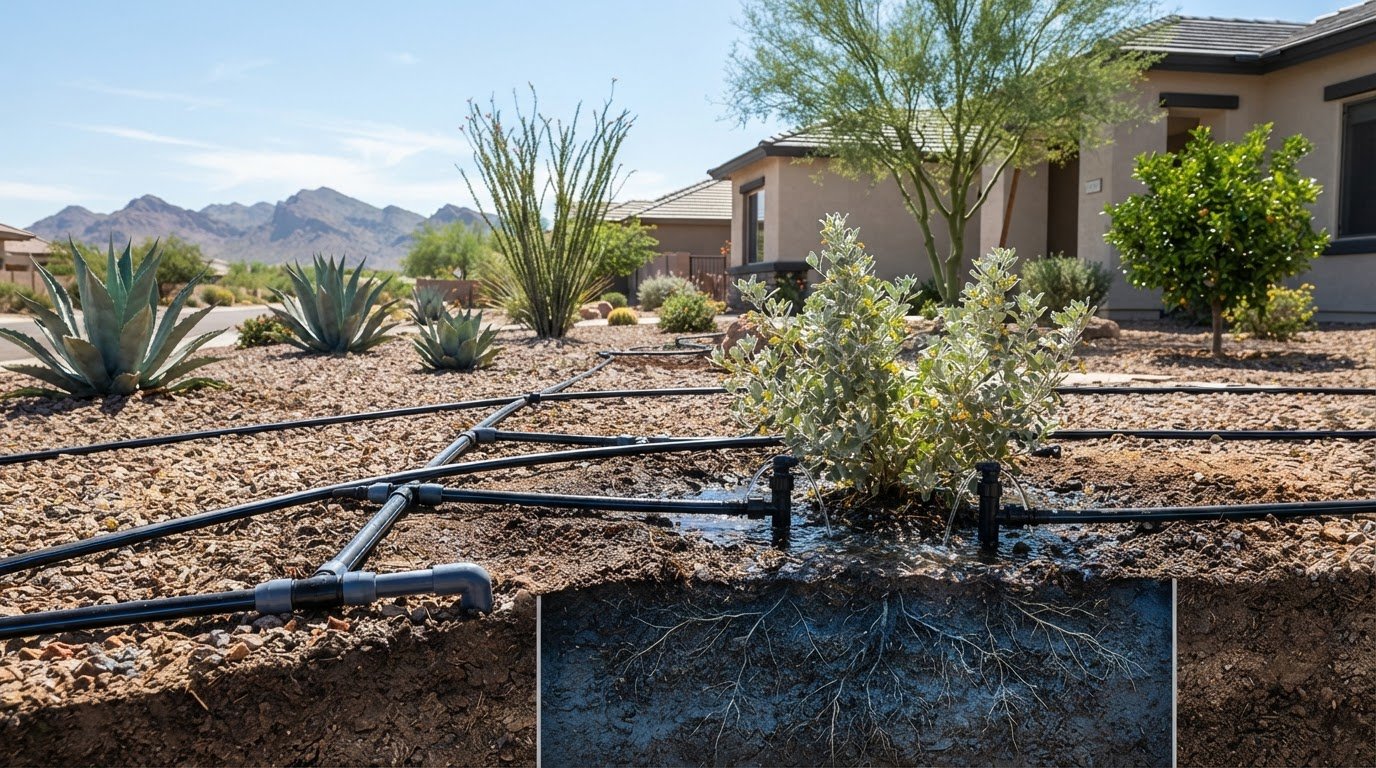
Different zones also have different demands. Turf is generally watered across a broader, more uniform area, while established desert-adapted plants may need less frequent attention once rooted. Drip-irrigated beds deliver water near plants rather than spraying across the soil surface, so review their schedule separately from spray zones. Zone-specific scheduling means setting watering frequency and duration according to the plants, irrigation method, and site conditions in each zone, rather than using one setting for the whole yard.
For practical sprinkler system seasonal adjustments Surprise homeowners can make, keep notes on weather changes and which areas show signs of drying or excess moisture. If you’re unsure how the system’s zones match the landscape, you can discuss your irrigation needs with Sonora Sprinkler.
Manual changes or controller features: choosing a seasonal adjustment method
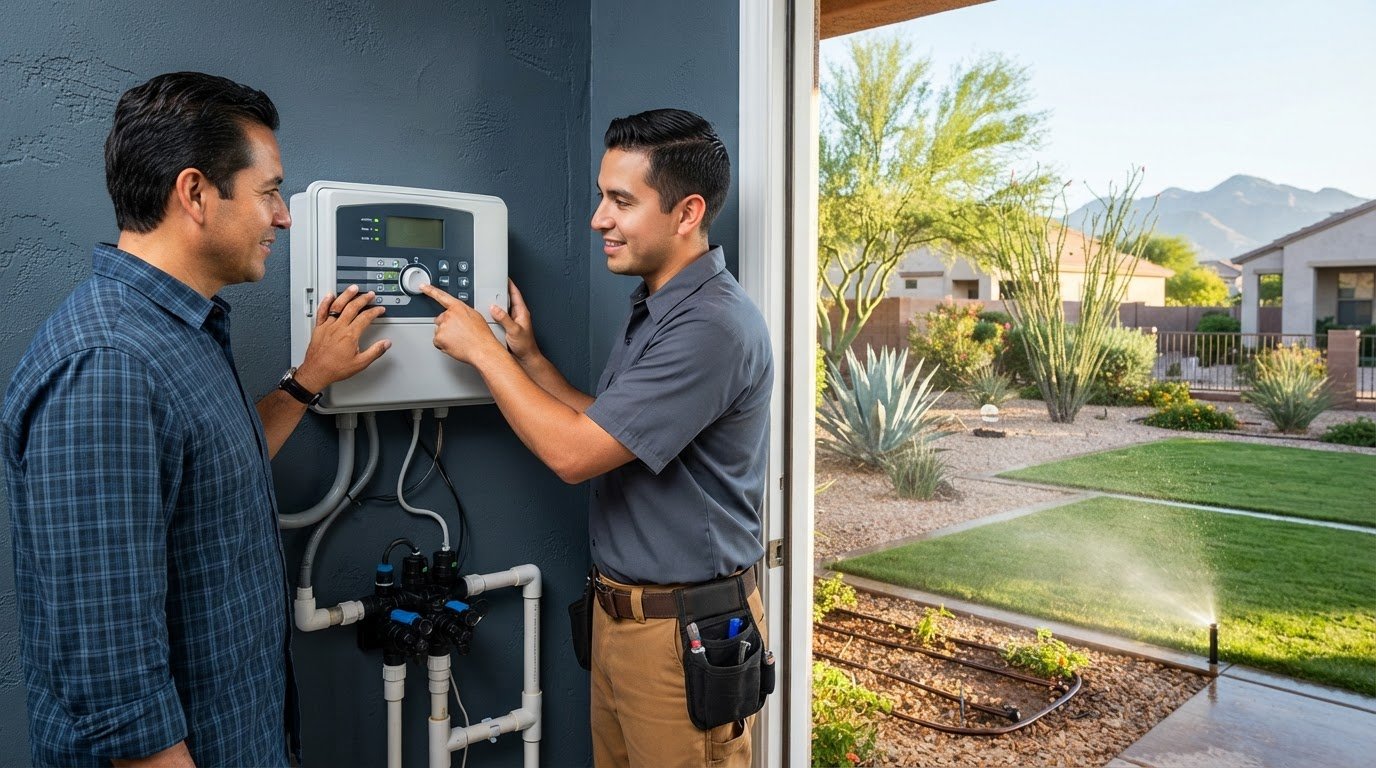
You can review seasonal settings directly at the controller or, on some systems, use built-in seasonal or weather-responsive features. The right approach depends on the controller and how much oversight you want. Either way, the schedule still needs to reflect conditions in your yard. For sprinkler system seasonal adjustments, Surprise homeowners should use the controller as a tool, not as a substitute for observing the landscape.
| Method | How it works | Useful consideration |
|---|---|---|
| Manual schedule review | You review watering days and zone run times, then make changes at the controller. | Offers direct control and makes it easier to assess the effect of a deliberate change. |
| Seasonal adjustment feature | Some controllers provide a setting that changes programmed watering by a percentage or similar control. | Can simplify schedule updates, but the name and operation vary by controller. |
| Weather-responsive feature | Some systems use weather information or a connected sensor as an input to irrigation decisions. | Capabilities depend on the equipment and setup; the feature still can’t identify every problem in the yard. |
When a manual schedule review is sufficient
If your controller’s programs are clear and the system waters evenly, a hands-on review may be enough. Compare the existing schedule with recent conditions and what you see in each zone. Before changing anything, write down the current settings, including watering days and run times. Then make one modest, deliberate adjustment and observe the landscape before changing the schedule again. This gives you a reference and helps show which change affected the result.
Manual control also makes it easier to account for differences a broad setting might overlook. You may decide one zone needs a schedule change while leaving another unchanged. Avoid adjusting several settings at once, since it becomes harder to identify what helped or caused a new issue.
When controller automation may help, and when it cannot
Seasonal-adjustment or weather-responsive features can reduce the effort of updating a program, but their controls aren’t universal. Check the controller’s instructions to understand what a setting changes and whether it applies to all zones or selected programs. The article Smart Irrigation Controller Installation in Surprise discusses controller capabilities in more detail.
Convenience isn’t diagnosis. A schedule feature can’t clear a blocked sprinkler head, seal a leak, correct poor coverage, or repair an electrical fault. If a zone stays dry or behaves inconsistently after reasonable schedule changes, the cause may be a system problem rather than the controller setting. Sonora Sprinkler provides residential irrigation repair and diagnostics in Surprise and nearby communities. For help with a persistent issue, you can get in touch with the team.
A practical seasonal sprinkler adjustment checklist for Surprise homeowners
Use this sequence to move from observation to a measured controller change: inspect the landscape, identify what each zone waters, note its current settings, adjust only what conditions warrant, then watch the system operate and reassess. This keeps seasonal changes tied to what your yard is showing instead of an assumed watering calendar.
Review each zone before changing the controller
- Walk the landscape. Look for areas that appear dry, overly wet, or stressed, and note recent weather that may affect soil moisture. Check whether plants are sheltered from rain or exposed to sun and wind.
- Identify what each zone serves. Match the controller’s zone numbers to the areas they water. Note whether a zone uses spray heads or drip irrigation, and whether it serves turf, established plants, or a planting bed. If you’re identifying drip components or planning a system for a home, this residential drip system installation guide offers related information.
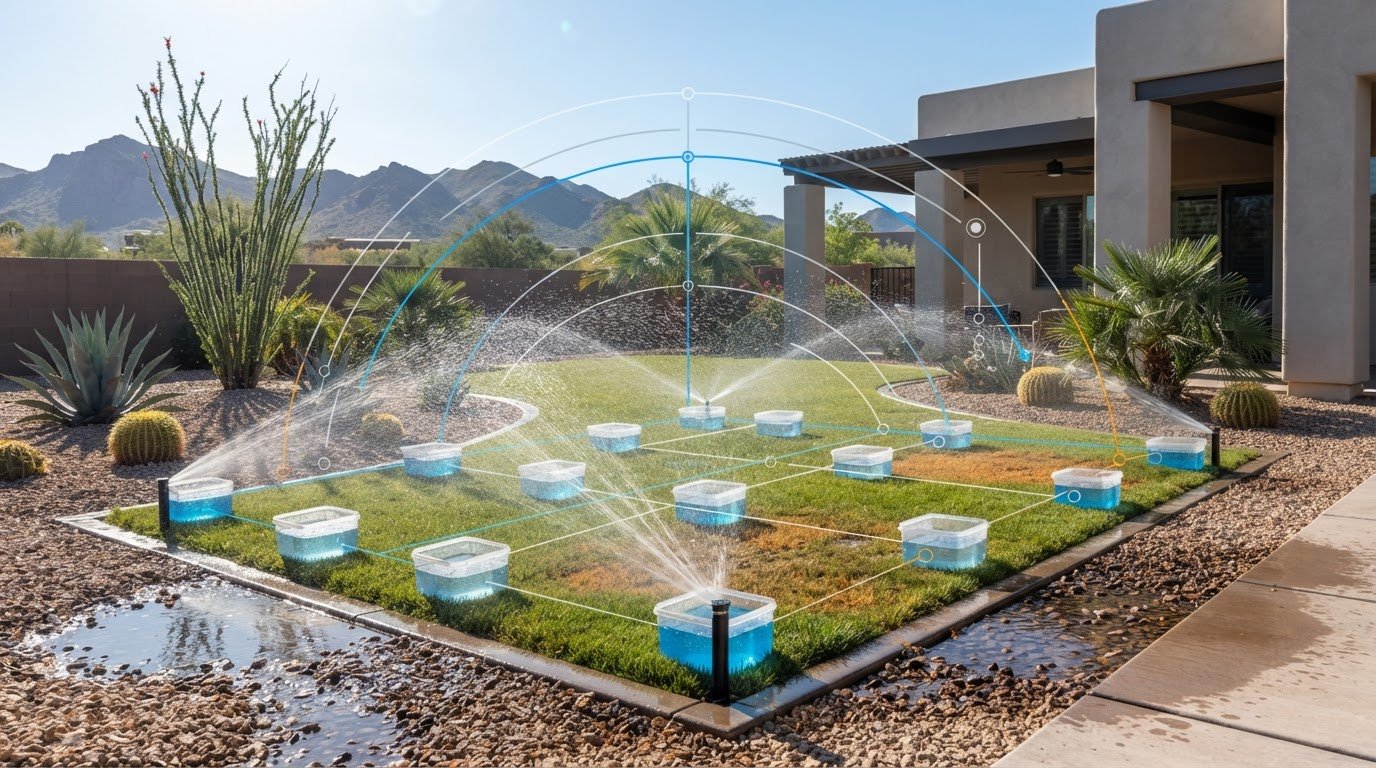
- Run the zones and observe coverage. Watch each area during operation. Look for spray reaching pavement or walls, runoff moving across the ground, dry patches that aren’t receiving water, or unusual pooling near heads and plants. Note the zone and location of each issue.
Make measured changes and watch for warning signs
- Record the original schedule. Before editing, write down watering days, start times, and run times for the zones you plan to change. This gives you a reference if you need to restore a setting or compare results.
- Change one relevant setting at a time. Make a modest adjustment to the zone or schedule setting connected to what you observed. Avoid changing several zones and settings together. Let the landscape response guide your next review instead of relying on a universal run time or making repeated edits without observing the effect.
- Recheck operation and plant response. During the next cycle, look again for overspray, runoff, dry areas, and pooling. If conditions remain uneven, consider whether the issue is scheduling or a fault affecting water delivery.
Schedule changes can’t repair a leak, resolve a wiring problem, or correct a malfunctioning valve. Water continuing to flow when a zone is off, a zone failing to start, or persistent uneven coverage are signs that controller adjustments may not address the cause. For an ongoing system fault, see residential irrigation repair in Surprise, where diagnostics can help identify issues beyond the schedule.
If a persistent irrigation problem is interfering with your seasonal adjustments, contact Sonora Sprinkler about your system.
When to get professional sprinkler system help in Surprise
A schedule change can address watering that no longer matches current conditions, but it can’t repair a system fault. If the same area remains dry, a zone won’t run, or water appears where it shouldn’t, repeated controller edits may waste water without resolving the cause. Knowing when to stop adjusting the schedule is part of effective seasonal irrigation for Surprise homeowners.
Signs the issue goes beyond seasonal settings
Watch for symptoms that persist across watering cycles or return after a schedule change. They may point to a problem with water delivery, a component, or system control rather than a seasonal setting:
- Recurring dry areas despite the zone running
- Unexplained pooling or waterlogged spots
- A zone that fails to start or stops unexpectedly
- Leaks or water flow that continues after irrigation should be off
- Uneven coverage that doesn’t improve when run times change
Changing the schedule may temporarily disguise a symptom. For example, extending a zone’s run time might make one dry patch less noticeable, but it won’t correct a blocked head or a distribution problem. Likewise, changing start times won’t fix a wiring fault or a valve that isn’t operating as it should. Note the affected zone, when the issue occurs, and what you’ve already adjusted.
What professional irrigation diagnostics can address
Residential irrigation diagnostics help distinguish a schedule mismatch from an equipment or coverage issue. Troubleshooting can assess irrigation wiring, valves, backflow devices, and PVC pipe concerns, along with how water reaches the affected area. If a fault keeps returning, irrigation repair can address recurring system problems instead of relying on further controller changes.
For homeowners in Surprise and Peoria, Sonora Sprinkler provides residential irrigation repair and diagnostic support suited to local desert conditions. A clear description of the symptom helps focus attention: note whether the issue affects one zone or several, whether it appears during operation or between cycles, and whether a controller adjustment changed anything. These observations help distinguish timing concerns from faults in wiring, valves, piping, or water distribution.
Before seeking help, record the controller settings and make a brief list of what you’ve observed. Avoid continuing to extend run times if water is pooling or a leak is visible. If the problem persists, request residential irrigation help in Surprise to address the system issue and get your schedule back on a sound footing.
Make your next schedule review count
Use your next seasonal check to learn how your yard responds. Keep a simple record of the conditions you noticed, the settings you changed, and what happened afterward. Over time, those observations can help you make more confident sprinkler system seasonal adjustments Surprise landscapes need, without relying on guesswork or changing several settings at once.
If a recurring system issue makes it difficult to fine-tune your schedule, Sonora Sprinkler provides residential irrigation repair, installation, and diagnostics for homeowners in Surprise and Peoria. A persistent fault deserves attention at the system level, not just another controller change. Request residential irrigation help in Surprise to discuss the next step for your system.
With careful observation and the right support when needed, you can keep your irrigation approach responsive as conditions change.
Frequently Asked Questions
How often should I adjust my sprinkler system in Surprise?
Review your schedule as conditions shift rather than changing it on a fixed monthly date. For practical sprinkler system seasonal adjustments Surprise homeowners can keep a simple log of weather changes, controller edits, and plant response. If a familiar dry patch returns even after conditions change, note whether it appears in the same spot or across the whole zone. A repeatable pattern can help distinguish a timing issue from a system problem.
Should I change my sprinkler schedule after monsoon rain in Surprise?
Use monsoon rainfall as a reason to assess your yard, not as an automatic signal to switch off every zone. Roof overhangs, slopes, shade, and wind can leave different parts of a property with different moisture levels. Check the soil near plants in more than one area, and review any rain-sensor information alongside what you observe. Consult current City of Surprise watering guidance if you’re unsure about local recommendations.
Can I use the same watering schedule for every sprinkler zone?
A single schedule may not suit every zone, especially if your property combines lawn, shrubs, and drip-irrigated beds. Start by matching controller zone labels to the areas they serve, then note differences in sun exposure and soil moisture. For example, a shaded planting bed may remain moist while nearby turf dries sooner. Keeping a short zone map can make future controller reviews clearer and help prevent a change in one area from affecting another unnecessarily.
Is a seasonal adjustment feature the same as a rain sensor?
No. A seasonal adjustment control changes programmed watering according to the controller’s design, while a rain sensor detects rainfall and may provide that information to the irrigation system. Their functions and settings differ across equipment. Check the controller manual to see what each available feature changes and whether it applies to every program. If the displayed schedule seems right but a zone still performs inconsistently, the issue may not be a controller feature.
What should I do if my sprinkler system still has dry spots after schedule changes?
Watch the affected area during a cycle and see whether a head is obstructed, water misses the spot, or runoff carries it away. Note whether the dry patch appears in one location or across the zone, and avoid continually lengthening the schedule without a clear reason. If the pattern persists, residential irrigation diagnostics can help identify the cause. Sonora Sprinkler provides irrigation repair and diagnostics for homes in Surprise and Peoria.
Do drip and spray irrigation need the same seasonal adjustments?
Not necessarily. Compare how each area responds instead of copying settings between irrigation methods. For a drip bed, check whether plants near the line show similar moisture conditions to those farther along it. For a spray zone, observe whether water reaches the intended planting area without being blocked or diverted. These checks can reveal whether the schedule needs attention or whether water distribution deserves a closer look.