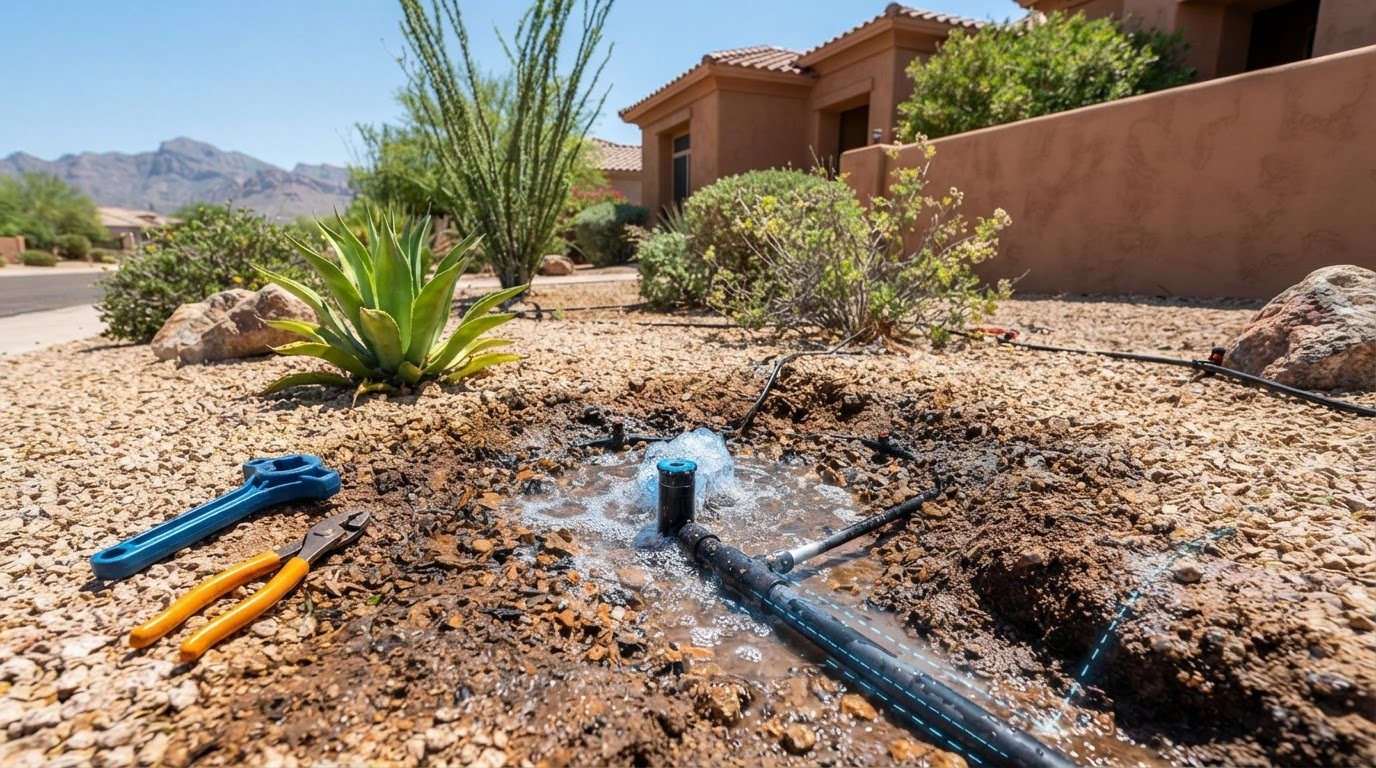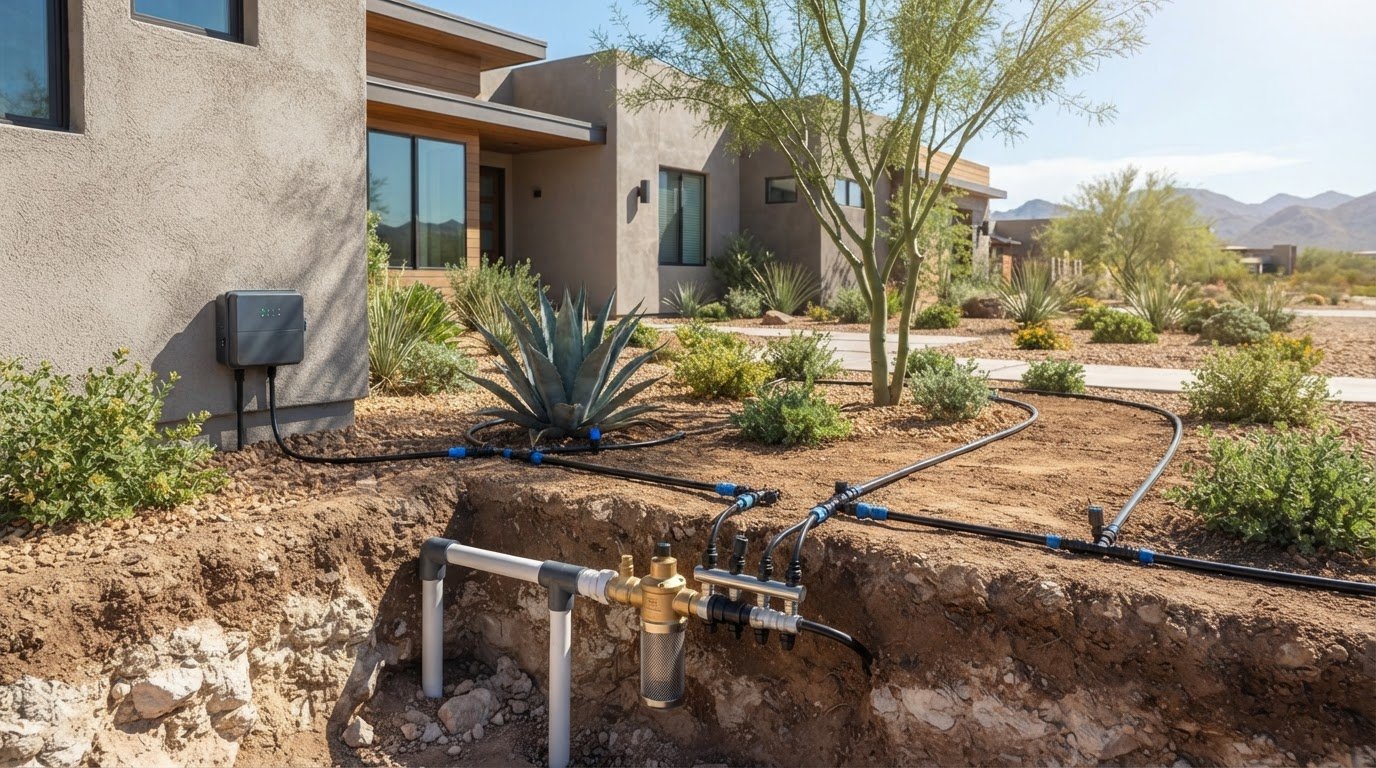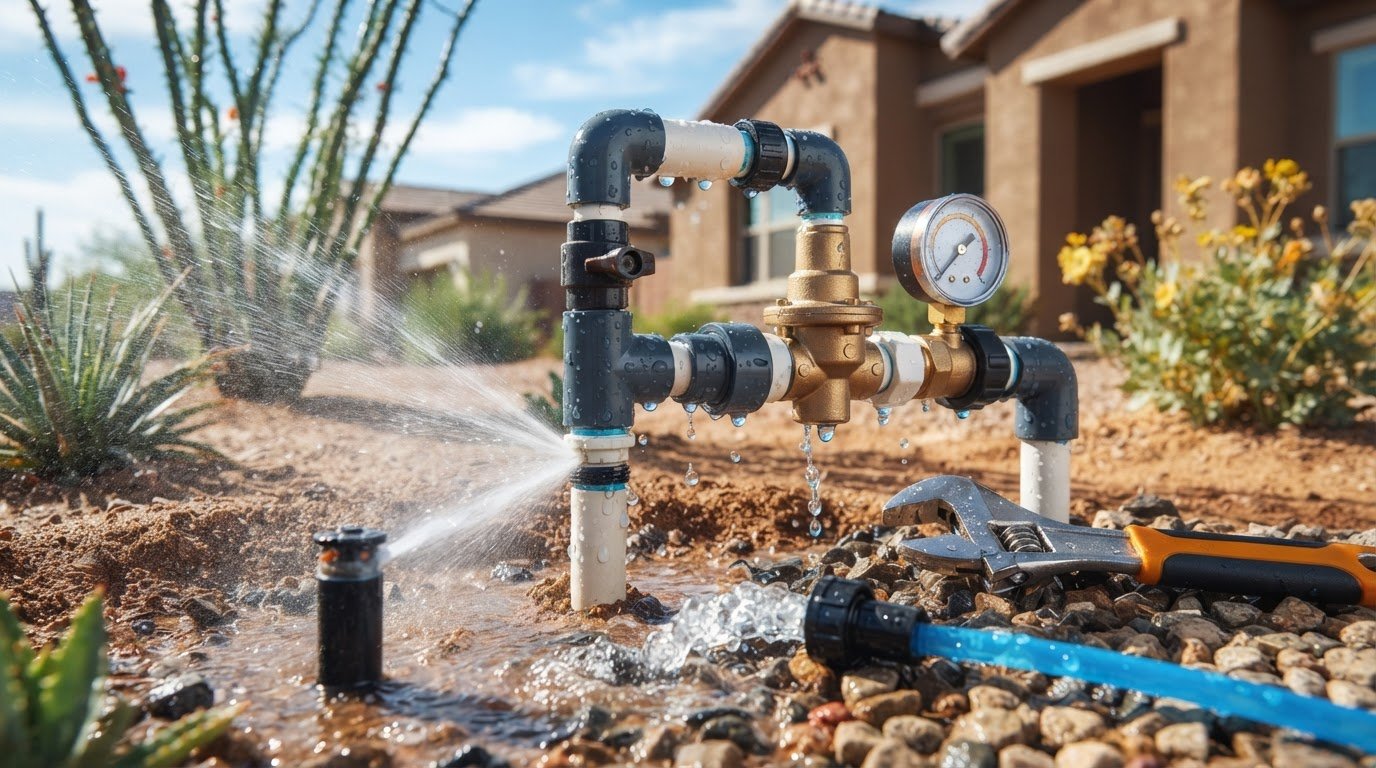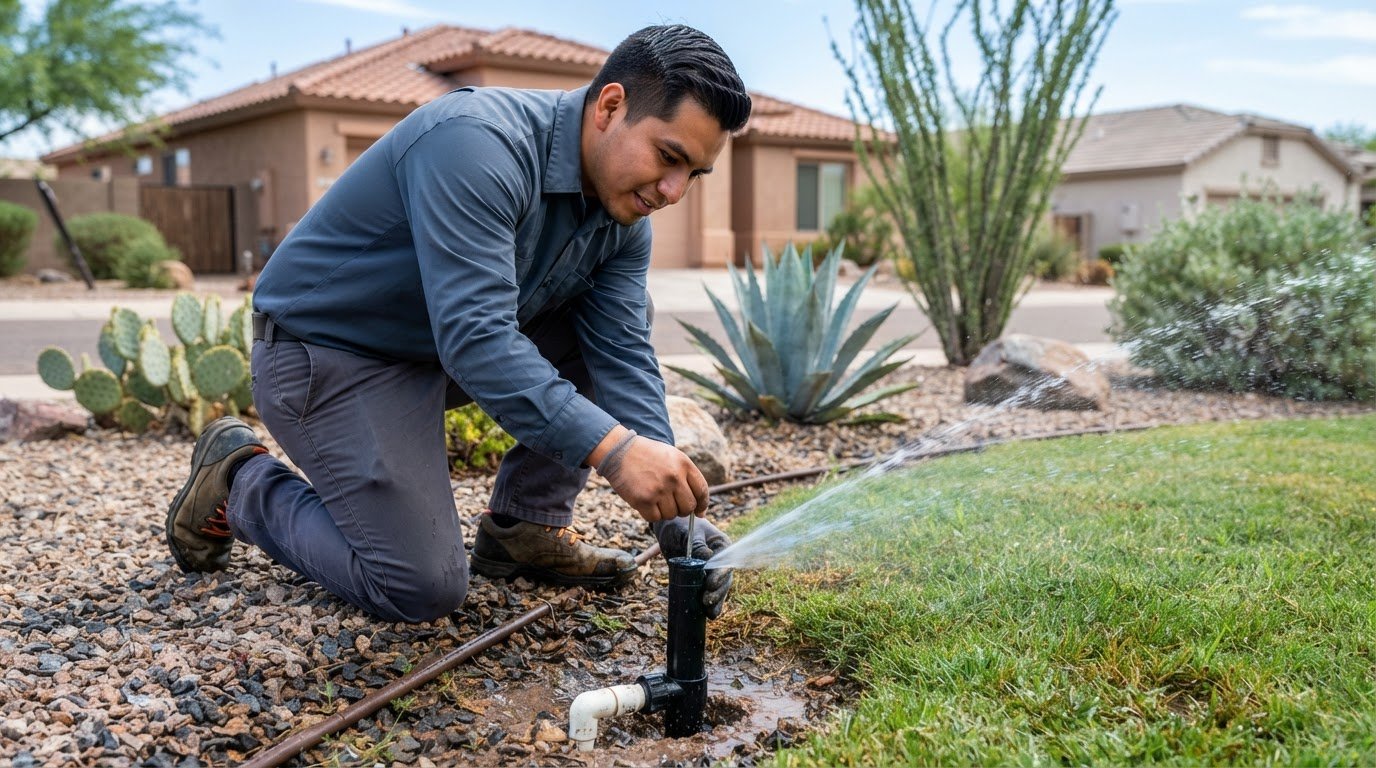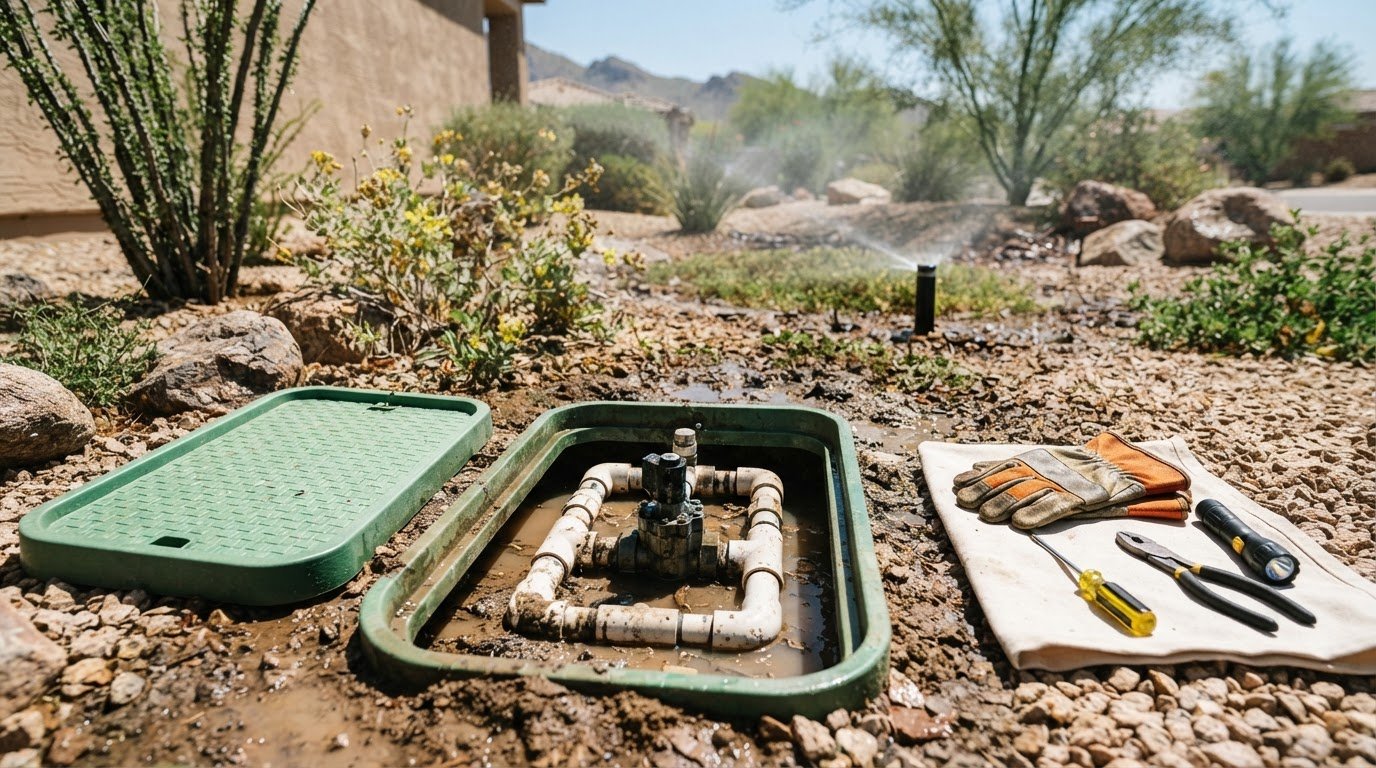
What if the best desert irrigation system isn’t one system at all? In Arizona, trees, shrubs, and groundcover often need a different watering approach than lawn areas. Desert irrigation system installation starts by matching the layout and watering method to the plants and the property.
Intense heat, changing sun exposure, and local soil conditions can leave plants stressed or send water where it isn’t needed. A well-planned system accounts for these differences by grouping plants with similar needs into manageable zones and choosing drip irrigation, sprinklers, or a combination of both. The aim is to deliver water where it is needed and avoid treating every part of the yard alike.
This guide explains how Arizona’s desert climate shapes system planning, what to expect during residential installation, and how piping, valves, and zones work together. You’ll also learn how to choose an irrigation method for different parts of your yard. Sonora Sprinkler Inc. designs and installs residential sprinkler and drip systems for desert properties, with layouts tailored to the landscape and site conditions.
Key Takeaways
- Arizona heat, limited rainfall, and seasonal monsoons make site-specific planning important for healthy plants and responsible watering.
- Group planting areas by watering needs, then account for the water source, existing piping, and access when planning zones.
- Compare drip irrigation and sprinklers by where and how they deliver water. Different methods can suit different areas of the same property.
- Desert irrigation system installation involves planning the layout, placing piping and components, setting up the system, and checking its operation.
- For homes in Surprise and Peoria, Sonora Sprinkler designs and installs residential sprinkler and drip systems, with PVC pipe replacement when relevant to the project.
Why Desert Irrigation System Installation Needs Arizona-Specific Planning
A desert irrigation system is a planned network that delivers water to landscape areas according to their needs. In Arizona, that plan should account for intense heat, limited rainfall, and seasonal monsoon storms. Hot, exposed areas can dry faster than shaded ones, while a storm can temporarily change how much supplemental watering a yard needs. A thoughtful schedule responds to conditions instead of treating the timer as a set-it-and-forget-it control.
Desert irrigation design matches site conditions and plant needs with controlled water delivery. That means considering where water should go, how the ground accepts it, and when each area needs watering. Adding emitters or sprinkler heads won’t fix a layout that sends water to the wrong place.
How Arizona Heat, Soil, and Exposure Affect Irrigation
Sun exposure can create meaningful differences across one property. A planting bed beside a hot wall may dry sooner than a shaded area, so putting both on one zone can make it harder to meet each area’s needs. Soil matters, too: infiltration and drainage affect how quickly moisture spreads or runs off. Since soil conditions vary from yard to yard, the layout and run times should reflect the site. Slopes and plant maturity matter as well, because water placement should suit the ground and the plants’ developing root areas.
Which Landscape Areas Need Separate Irrigation Zones?
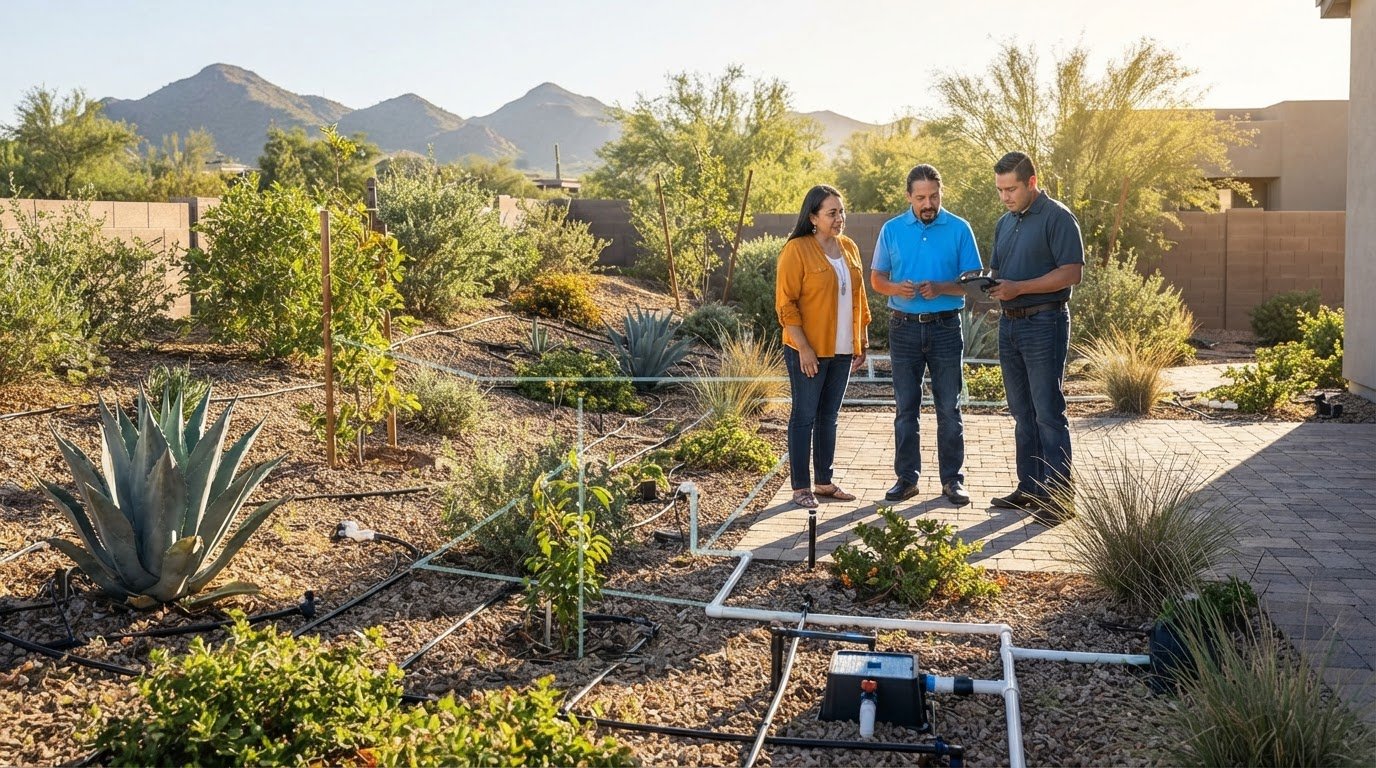
Group plants with similar water needs instead of watering the whole yard as one area. Lawns commonly use sprinklers to cover a continuous surface, while drip irrigation can deliver water near trees, shrubs, and planting beds. The right arrangement depends on the landscape and site conditions, not on a single rule for every property.
Separate zones let you set schedules for different groups. That makes it easier to adjust watering for a sunny lawn, a shaded bed, or trees with different needs without changing every area at once. The principles behind Desert Farming and Irrigation also illustrate why controlled delivery is useful in arid environments.
For a home, this planning becomes a practical sequence: map the landscape, group areas by need, then match the delivery method and schedule to each zone. Sonora Sprinkler provides residential irrigation design and installation for Arizona desert properties, with layouts shaped around the site rather than a one-size-fits-all setup.
How Desert Irrigation System Design Turns a Yard into Manageable Zones
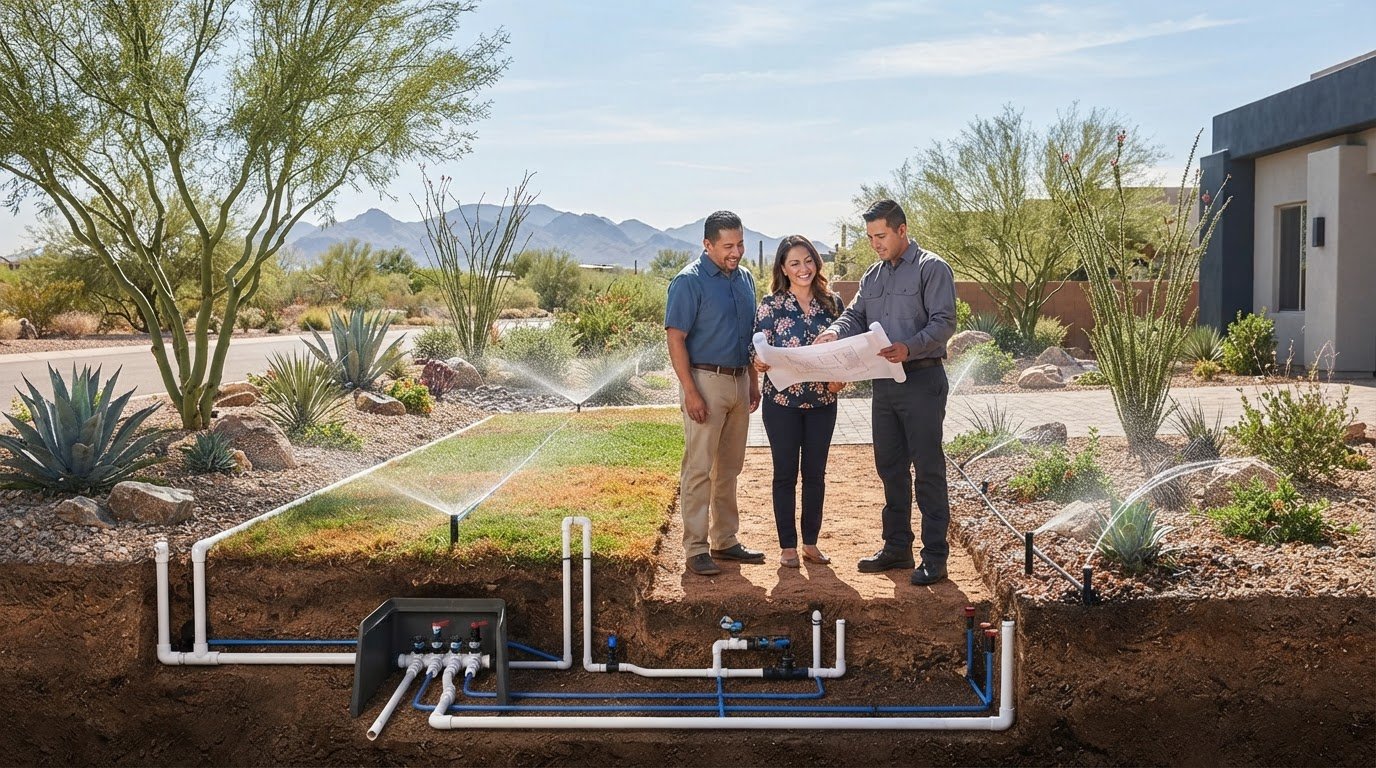
A reliable layout starts with the property, not a preset diagram. During desert irrigation system installation, the water source, existing piping, access routes, paved areas, and visible site conditions help determine where components can go and how each landscape area can be served. A narrow side yard, for example, may need a different pipe route than an open planting bed.
A practical planning sequence is:
- Review the property, water source, existing irrigation components, and access.
- Map lawns, trees, shrubs, planting beds, paved surfaces, and other landscape areas.
- Group areas with compatible watering needs into separate zones.
- Select a delivery method and layout for each zone.
- Set up the system and check that its components operate as intended.
This sequence connects design decisions to the actual yard. Mapping paved areas and property constraints helps identify workable pipe routes, while reviewing existing components shows what the planned system must accommodate. Drip delivery can place water near plants. The U.S. Geological Survey explains how microirrigation can limit water loss from evaporation in its guide to drip irrigation and microirrigation.
What Happens During a Residential Irrigation Site Assessment?
A site assessment reviews planting areas, visible irrigation components, access, and conditions that may affect installation. The water source and existing piping inform the layout, while pathways, walls, and paved surfaces can shape practical routes for new lines and control components. This groundwork turns a general plan into one suited to the property instead of forcing the yard to fit a template.
How Zone Planning Supports Consistent Water Delivery
A zone is an area controlled separately from other parts of the system. Grouping areas with compatible watering needs makes it easier to set schedules that reflect the plants and their conditions. For instance, a lawn, trees, and a sunny planting bed may need different layouts or schedules. Putting them under one setting can make adjustments less precise. Zone planning supports controlled delivery, while actual performance depends on the finished design and operation.
Sonora Sprinkler plans custom residential layouts around the property and installs sprinkler and drip systems for Arizona homes. Explore residential irrigation system design and installation to see how the process can be tailored to your yard, or discuss your irrigation project.
Drip, Sprinkler, or a Combination: Choosing Desert Irrigation Methods
Choose an irrigation method by considering the area to be watered, how the plants are arranged, and how the system can be maintained. Drip irrigation delivers water near individual plants, while sprinklers distribute water across a broader surface. Neither method suits every part of every yard. A well-planned desert irrigation system installation may use separate methods for distinct landscape areas.
| Method | Suitable area | Planning consideration |
|---|---|---|
| Drip irrigation | Trees, shrubs, and planting beds | Place emitters to match plant locations and the intended planting pattern; check lines and emitters for blockages or leaks. |
| Sprinklers | Lawns and other continuous areas needing broad coverage | Plan head placement and coverage to suit the area; inspect sprinkler heads for obstruction or misalignment. |
| Combined methods | Properties with both lawn and distinct planted areas | Keep unlike areas on separately controlled zones so schedules can reflect their different needs. |
Where Drip Irrigation Fits in a Desert Landscape
Drip lines can serve planting beds, shrubs, and trees by directing water near the plants instead of across the entire surface. Layout matters: emitters should correspond to the planting pattern, and changes to plant locations may call for adjustments. Homeowners can review a residential drip irrigation installation guide for additional planning context. Sonora Sprinkler installs drip irrigation systems for desert landscapes, with layouts shaped around the property.
When Sprinklers or Mixed Zones May Make Sense
Sprinklers may suit a lawn or another open area where plants need broader, more even coverage. Their performance depends on practical placement and keeping heads clear and properly directed. A yard with both lawn and separate planting beds may use sprinklers in one zone and drip lines in another. The site layout and plant requirements determine the arrangement.
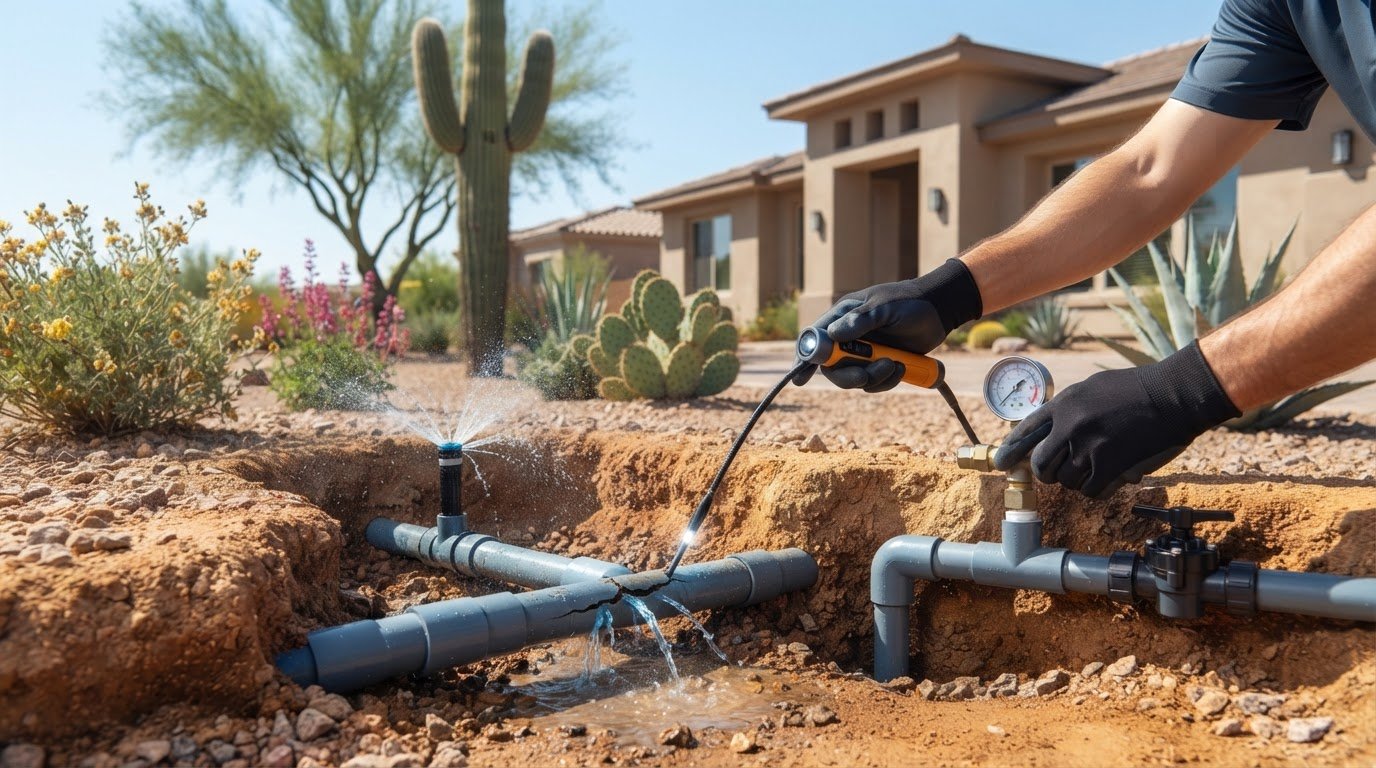
Mixed systems involve more than choosing two types of equipment. Each method needs a layout and schedule suited to its zone. Routine checks can help identify blocked emitters, leaks, or sprinkler heads that no longer cover their intended area. Sonora Sprinkler’s residential drip installation and custom sprinkler design can be tailored to the planting areas and conditions of an Arizona property.
What to Expect During Desert Irrigation System Installation
A well-planned desert irrigation system installation moves from an agreed layout to careful placement, setup, and operational checks. The work depends on the property, including its existing irrigation components, access, and system design. Each yard has its own scope, so there isn’t one standard project duration.
After the layout is reviewed, installation planning identifies pipe routes and component placement. PVC pipe replacement may be included when the system design calls for it, such as when existing piping needs to be replaced as part of the planned work. Once the system is in place, the zones and components are checked so adjustments can be made in response to site conditions.
Preparing the Property for Installation
A little preparation can help the work proceed smoothly. Before installation, note any known irrigation routes, identify existing controls, and clear access to the areas where work is planned. Pointing out planting areas, paved surfaces, and other property constraints also helps keep the plan grounded in the yard’s layout. Leave technical work, such as opening or altering system components, to the irrigation professional.
System Setup, Checks, and Local Requirements
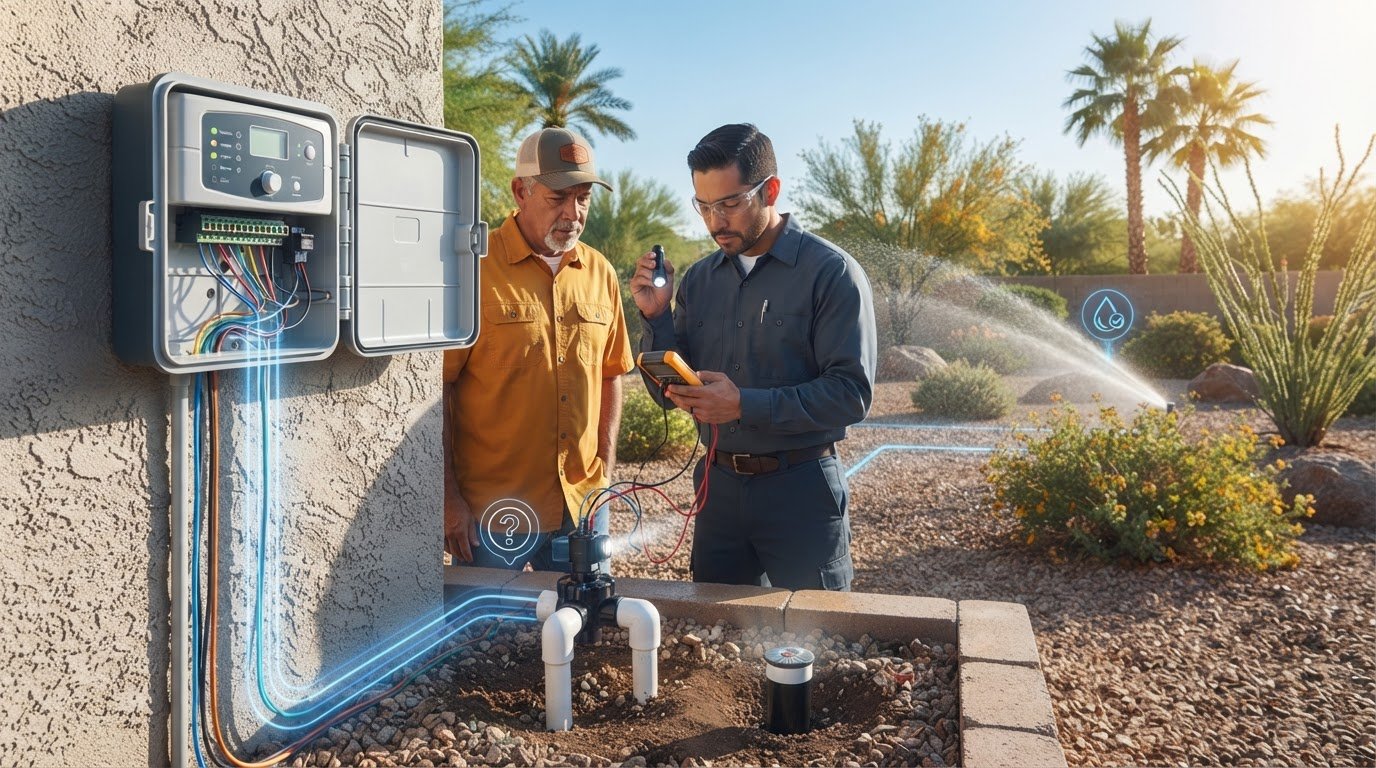
During setup, the installed zones and components are operated and checked to confirm they function as intended. If a controller or its wiring needs attention, irrigation wiring diagnostics and repair can help identify issues affecting system operation. The schedule may also need adjustment after setup to reflect the installed layout and conditions observed on site.
Local requirements can vary by project and location. Account for any applicable city or utility requirements before work begins rather than assuming one set of rules applies throughout Arizona.
For a residential project, Sonora Sprinkler plans and installs sprinkler and drip systems around the property, including PVC pipe replacement when the design calls for it. Discuss your irrigation installation project and the conditions that may shape its layout.
A Residential Desert Irrigation System Designed for Your Surprise or Peoria Home
A dependable irrigation layout should fit the property, the plants, and the way each area needs to be watered. Sonora Sprinkler Inc. designs and installs residential sprinkler and drip systems for Arizona desert homes, tailoring the layout to the site rather than relying on a single template. For homeowners in Surprise, Peoria, and surrounding communities, that means planning around the yard’s planting areas and practical constraints.
Custom sprinkler design and drip irrigation can serve different parts of the same property. PVC pipe replacement may also be part of an installation when it suits the project design. The goal is a system with clearly planned zones and components set up for the landscape, not a promise of a particular water bill or plant outcome.
How a Custom Installation Supports Long-Term System Performance
Thoughtful planning connects plant needs with property conditions. A layout can separate areas that need different watering schedules, account for where water should be delivered, and organize the system into manageable zones. Appropriate setup and operational checks support consistent system operation, while routine attention can help homeowners notice issues such as a blocked emitter or a sprinkler head that needs adjustment. Results depend on the site, the design, and ongoing system care.
Irrigation installation focuses on water delivery and system components. It doesn’t include redesigning or building the landscape itself. Keeping that distinction clear helps homeowners plan irrigation work around the planting areas already in place or planned for the property.
Next Steps for Homeowners in Surprise and Peoria
Before discussing an installation, list the areas you want watered and what they contain, such as lawn, trees, shrubs, or planting beds. Note your goals, too: you might be replacing an existing system, adding drip irrigation, or planning sprinkler coverage for a residential lawn. Sharing known pipe routes, controls, and access constraints can help define the project.
Learn more about Sonora Sprinkler’s residential irrigation design and installation. The team provides custom layouts and residential system installation for desert properties in Surprise, Peoria, and surrounding communities, with PVC pipe replacement when relevant to the project.
A clear outline of your landscape areas and installation goals is a practical place to start. If you’re planning a residential irrigation project, discuss a residential irrigation installation with Sonora Sprinkler.
Plan an Irrigation System That Fits Your Arizona Home
Good desert irrigation system installation starts with the property itself. Arizona heat, soil, sun exposure, and plant needs all influence how water should be delivered and how zones should be arranged. Drip irrigation, sprinklers, or a combination can each make sense when matched to the landscape areas they serve.
A carefully planned layout also makes the installation process easier to understand, from reviewing existing piping and access to setting up components and checking system operation. The right design supports practical watering without relying on one schedule for every part of the yard.
Sonora Sprinkler is a family-owned residential irrigation specialist serving Surprise, Peoria, and surrounding communities. Its sprinkler and drip system designs are tailored to desert properties, with installation details shaped around each home. If you’re considering a new system, discuss your residential irrigation installation and take the next step toward a layout suited to your property.
Frequently Asked Questions
How does a desert irrigation system work in Arizona?
A desert irrigation system distributes water through pipes and controlled zones to the landscape areas that need it. A controller operates valves to run those zones on a schedule, while sprinklers or drip lines deliver water to the intended areas. For Arizona homes, the layout and schedule should account for heat, plant needs, soil, and sun exposure. Adjustments may be needed as weather and landscape conditions change.
Is drip irrigation better than sprinklers for a desert landscape?
Neither method is best for every part of a desert landscape. Drip irrigation places water near trees, shrubs, and plants in beds, while sprinklers can suit lawns or open areas needing broader coverage. The choice depends on what’s growing, how the area is arranged, and how the system can be maintained. Some Arizona yards benefit from both methods, assigned to separate zones with suitable schedules.
How do you plan irrigation zones for an Arizona yard?
Group areas with similar watering needs and conditions rather than placing the entire yard on one schedule. Consider plant type, sun exposure, soil, slope, and whether an area is lawn, trees, shrubs, or a planting bed. Then plan zones and delivery methods around those groupings. During desert irrigation system installation, the water source, existing piping, and practical routes across the property also inform the layout.
Can one irrigation system use both drip lines and sprinklers?
Yes. A residential system can use drip lines for planted areas and sprinklers for a lawn or other open space. Keeping these methods in separate zones allows each area to have a schedule suited to its plants and delivery method. The layout should account for the property and existing irrigation components. Sonora Sprinkler designs and installs residential sprinkler and drip systems for homes in Surprise, Peoria, and surrounding communities.
What happens during residential irrigation system installation?
Installation generally starts with reviewing the property and agreeing on a layout. Planning then accounts for access, existing components, and pipe routes before system components are placed and set up. The installed zones are operated and checked, with adjustments based on site conditions. Sonora Sprinkler provides residential irrigation design and installation, and PVC pipe replacement may be included when the system design calls for it.
How much water does a desert irrigation system use?
Water use depends on the size and planting of each zone, the irrigation method, system output, and how long and often it runs. A yard with a lawn and planted beds may use different schedules across its zones. To understand actual use, homeowners can compare their water meter reading before and after an irrigation cycle, taking care to account for other water use during the measurement.
Do Surprise or Peoria homeowners need approval for irrigation installation?
Approval requirements can depend on the project and applicable local rules, so there isn’t one answer for every installation. Requirements may differ between properties in Surprise and Peoria. Account for the relevant city or utility requirements before work begins so you know whether the planned project needs approval.