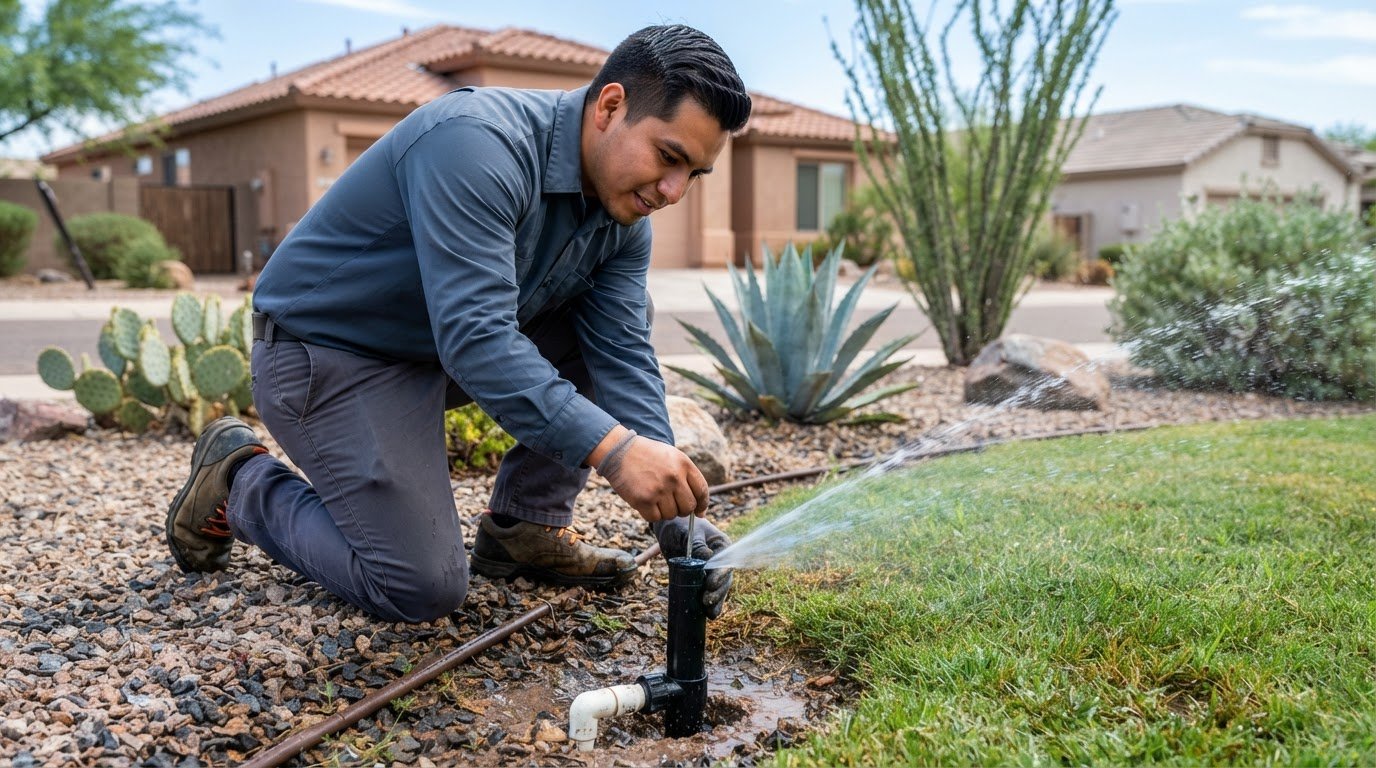
What if the best drip irrigation schedule isn’t one you set once and leave alone? If you’re wondering how often to run drip irrigation Arizona landscapes need, the answer depends on more than the calendar. Seasonal heat, plant roots, soil type, sun exposure, and whether plants are newly established all affect how quickly the root zone dries out.
It’s understandable to worry that less frequent watering could leave plants struggling through extreme heat, or that extra run time might waste water. A reliable approach is to adjust watering frequency as conditions change and check that water reaches the roots. That helps support healthy growth without relying on a one-size-fits-all schedule.
This guide explains how to adapt drip irrigation through Arizona’s seasons, account for different plant types and soils, and spot signs that your schedule needs attention. You’ll also learn why newly planted and established plants need different care, and how well-designed zones can make watering more precise. For homeowners in Surprise, Peoria, and nearby desert communities, these steps offer a practical starting point for making confident adjustments.
Key Takeaways
- Set watering frequency by how deeply roots need moisture, rather than following a fixed calendar.
- Account for plant type, soil drainage, and seasonal conditions when adjusting your schedule.
- Arizona heat alone doesn’t mean daily watering is necessary; distinguish how often you water from how long each run lasts.
- To decide how often to run drip irrigation Arizona plants need, check system delivery and soil moisture before changing your schedule.
- If dry spots or excess moisture persist despite adjustments, a system design review or irrigation repair may address the underlying delivery issue.
How Often Should You Run Drip Irrigation in Arizona? Start with the Root Zone
There isn’t one schedule that works for every Arizona yard. How often to run drip irrigation Arizona plants need depends on active roots, soil texture, current weather, and how much water the system delivers at each emitter. A watering event should wet the active root zone, not just run because it’s a particular day of the week.
Start by considering where roots grow and how quickly water reaches them. A mature tree, a compact shrub, and a shallow-rooted groundcover won’t use water at the same rate or draw it from the same area. Even similar plants can need different schedules if one grows in afternoon shade and another sits in full sun. The right interval replenishes root-zone moisture before plants become stressed without keeping the soil continually saturated.
Watering frequency determines how often you irrigate; run duration determines how long each event lasts. Adjusting one doesn’t automatically mean changing the other. A longer run may be needed to wet a deeper root zone, while the interval between runs should reflect how quickly that moisture is used or lost.
Why Arizona heat does not create one universal schedule
Heat increases moisture loss, but it’s only one part of the picture. Sun exposure, shade, wind, recent rain, plant maturity, and soil conditions all influence how quickly the root zone dries. A bed protected from afternoon sun may hold useful moisture longer than an exposed planting, even within the same property. A timer can also run as programmed while a clogged or poorly positioned emitter leaves a plant dry.
That’s why a fixed statewide calendar can mislead homeowners: it can’t account for differences between yards or changing weather. Use current Arizona recommendations as a starting reference, then observe your own soil and plants rather than treating an old chart as a permanent prescription. The Arizona Municipal Water Users Association publishes seasonal watering guidance, including summer recommendations for established plants.
What “deep watering” means for drip-irrigated plants
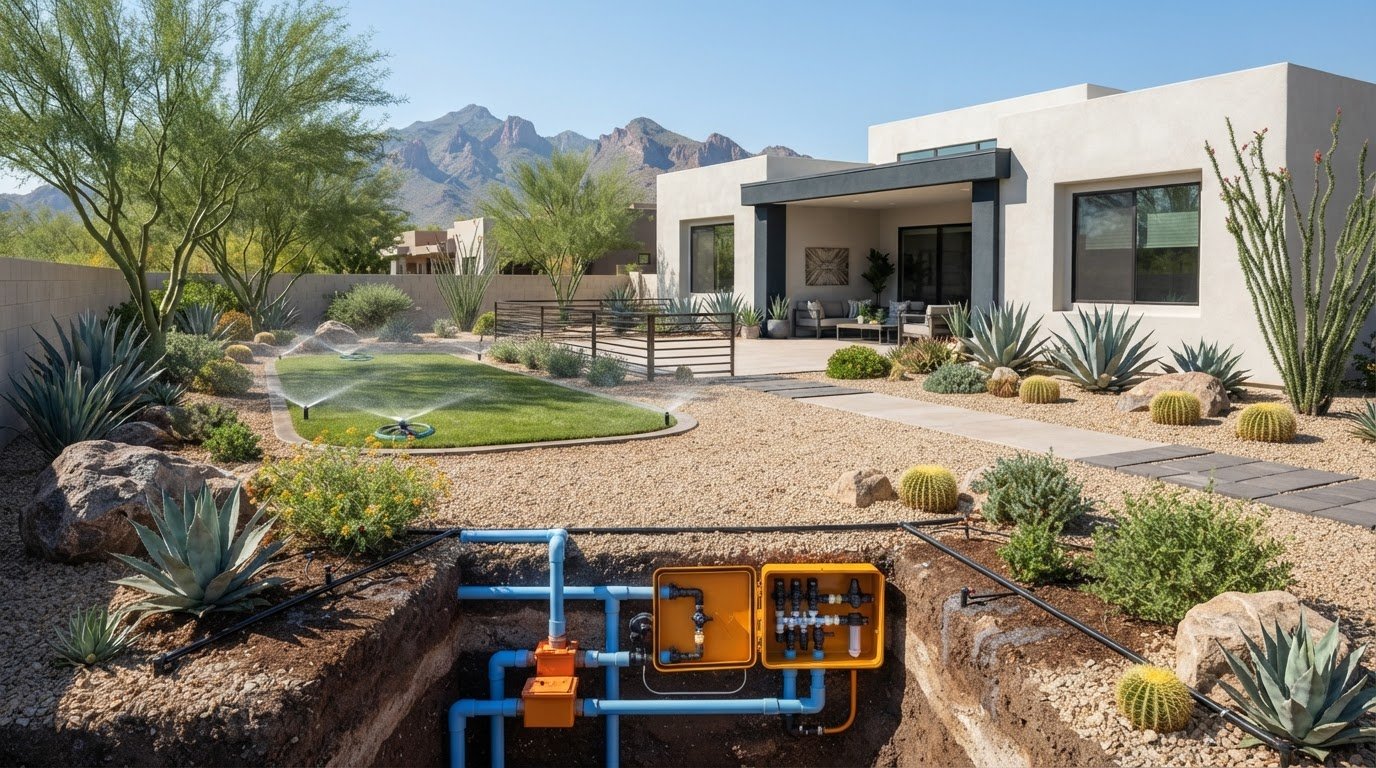
Drip emitters apply water close to plants instead of wetting an entire yard. As it soaks in, moisture spreads through the soil around each emitter. The aim is to reach the plant’s active roots, so the wetted area should correspond to where those roots grow. One small damp spot beside a large shrub may not provide adequate coverage; extending a run without checking the soil could create excess moisture near the emitter.
Check the soil near the plant after an irrigation event to see how far moisture has moved, then compare that with the root area you’re trying to reach. Emitter placement, soil, and plant size affect the result. For a closer look at system layout, see the residential drip system installation guide. The general Drip irrigation overview also explains how this method delivers water through a network of emitters and tubing.
What Changes Drip Irrigation Frequency in Arizona? Plants, Soil, and Season
Two planting areas on the same property can need different drip schedules. A useful rule is: plant type and maturity, soil texture, site exposure, seasonal weather, and emitter output all shape watering frequency. Considering these factors together is more reliable than assigning one interval to every plant or adjusting the whole system based only on temperature.
Think of frequency as a response to how quickly each plant’s root area uses available moisture. A shallow-rooted planting may dry out near the surface sooner, while a shrub or tree may draw water from deeper soil. This comparison is a starting point, not a prescription: plant species, size, condition, and the way water spreads from emitters all matter.
How plant type and maturity affect watering needs
Groundcovers and some succulents have roots concentrated closer to the surface, but their water needs still vary by species, sun exposure, and establishment. Shrubs and trees generally need moisture distributed through a larger or deeper root area. A single shallow wet patch may miss part of a larger plant’s roots, while keeping soil persistently wet around a drought-adapted plant can be excessive.
Newly planted material needs closer attention than established plants because its roots haven’t spread into surrounding soil. During establishment, it may require more frequent irrigation, so don’t assume the schedule for established plants will suit it. As plants mature, reassess their root area and soil moisture rather than leaving the initial schedule unchanged.
How soil and exposure change the schedule
Soil texture affects how quickly water enters the ground and how it moves away from an emitter. In faster-draining soil, moisture may move downward or disperse differently than it does in finer-textured soil, where infiltration and drainage can be slower. Check the soil near the emitter and farther into the root area after a run. This helps reveal whether water is reaching the plant or accumulating in one spot.
Exposure adds another layer. A plant in afternoon shade may retain moisture longer than a similar plant beside a sun-heated wall or paved surface. Wind can also increase drying. Nearby plants with different root depths or exposure may therefore need separate irrigation zones, so one group’s schedule doesn’t leave another too dry or too wet.
- Compare: Check moisture near and beyond an emitter, not just at the soil surface.
- Separate: Group plants with similar water needs and exposure where the system allows.
- Reassess: Review schedules as new plants establish and seasonal conditions shift.
Arizona’s changing weather can alter water demand. Hot, dry periods can draw moisture from soil faster; cooler conditions and meaningful rainfall may reduce the need for irrigation. Use current local guidance as a reference, then account for conditions in your own yard. The University of Arizona Cooperative Extension’s drip irrigation guidance offers Arizona-specific information on system design and maintenance to help put these observations in context.
If schedules keep leaving some plants dry while others stay too wet, differences in delivery or system layout may be the cause. A review of residential drip irrigation design or repair can help address persistent issues. For a recurring concern at your Surprise or Peoria home, you can discuss your irrigation system.
Does Arizona Drip Irrigation Need Daily Watering? Separate Frequency from Run Time
No. Arizona heat alone doesn’t show that a drip system needs to run every day. Daily irrigation may suit specific situations, such as plants still establishing or soil that dries quickly, but it isn’t a reliable default for every yard. For homeowners asking how often to run drip irrigation Arizona landscapes need, the answer depends on the plants, soil, emitter output, and observed moisture around the roots.
Keep two timer settings distinct. Frequency is how many days pass between watering events. Run time is how long the system operates during one event. A schedule can run frequently for a short time or less often for a longer time; neither pattern is automatically right. The aim is to deliver moisture where roots can use it, then allow the soil to respond between runs.
| Schedule pattern | What it may do | What to check |
|---|---|---|
| Daily, short runs | May repeatedly wet only the surface or a small area near an emitter if water doesn’t reach the active roots. | Check whether moisture extends into the root area, and watch for persistently wet soil near the emitter. |
| Less frequent, deeper root-zone watering | Can allow water to spread through more of the root area, depending on soil, plant needs, and system delivery. | Confirm the soil is moist where roots grow, without runoff or lingering saturation. |
This comparison isn’t a universal prescription. A newly planted shrub, an established tree, and a succulent bed can respond differently to the same schedule. Soil texture changes how water enters and moves through the ground, while emitters vary in output. Use the University of Arizona Cooperative Extension’s landscape irrigation guidelines as a regional reference, then assess conditions around your own plants.
When frequent watering may point to a system issue
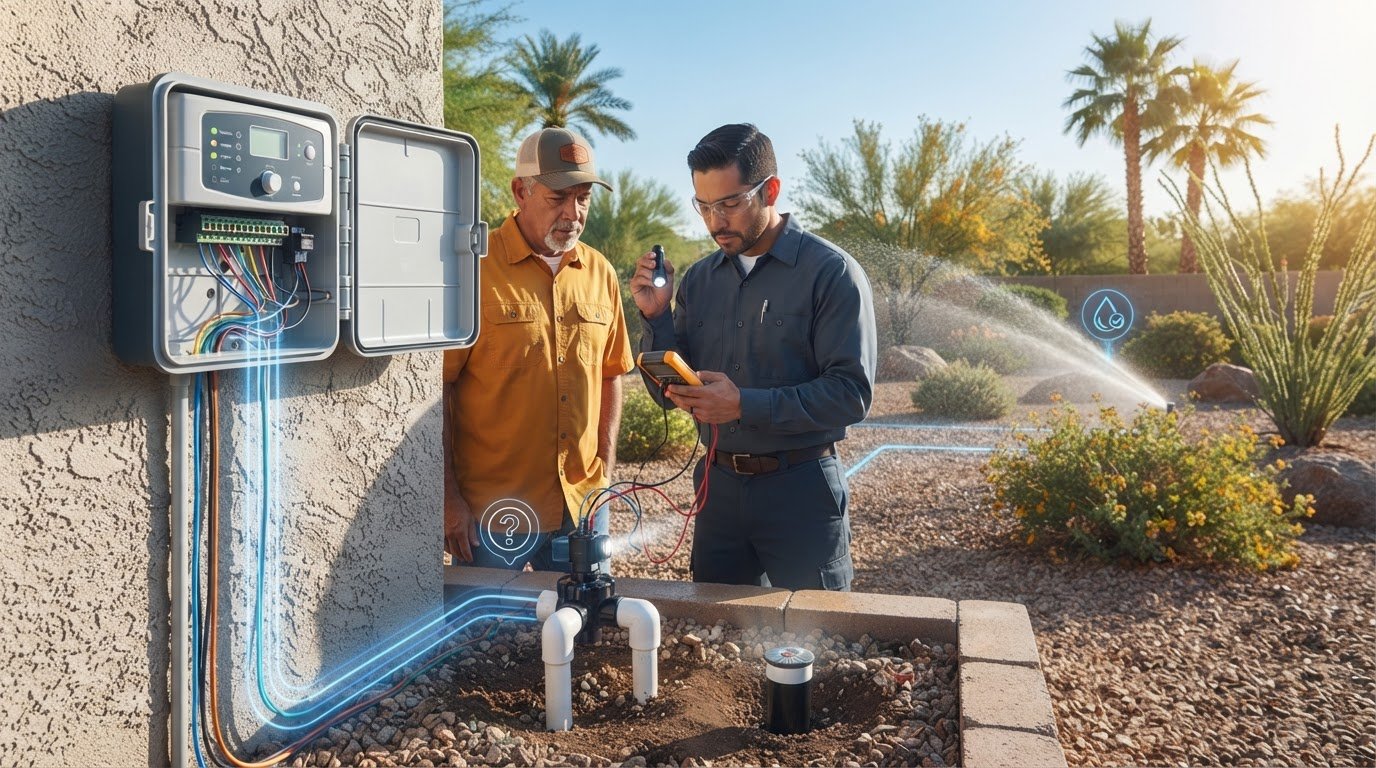
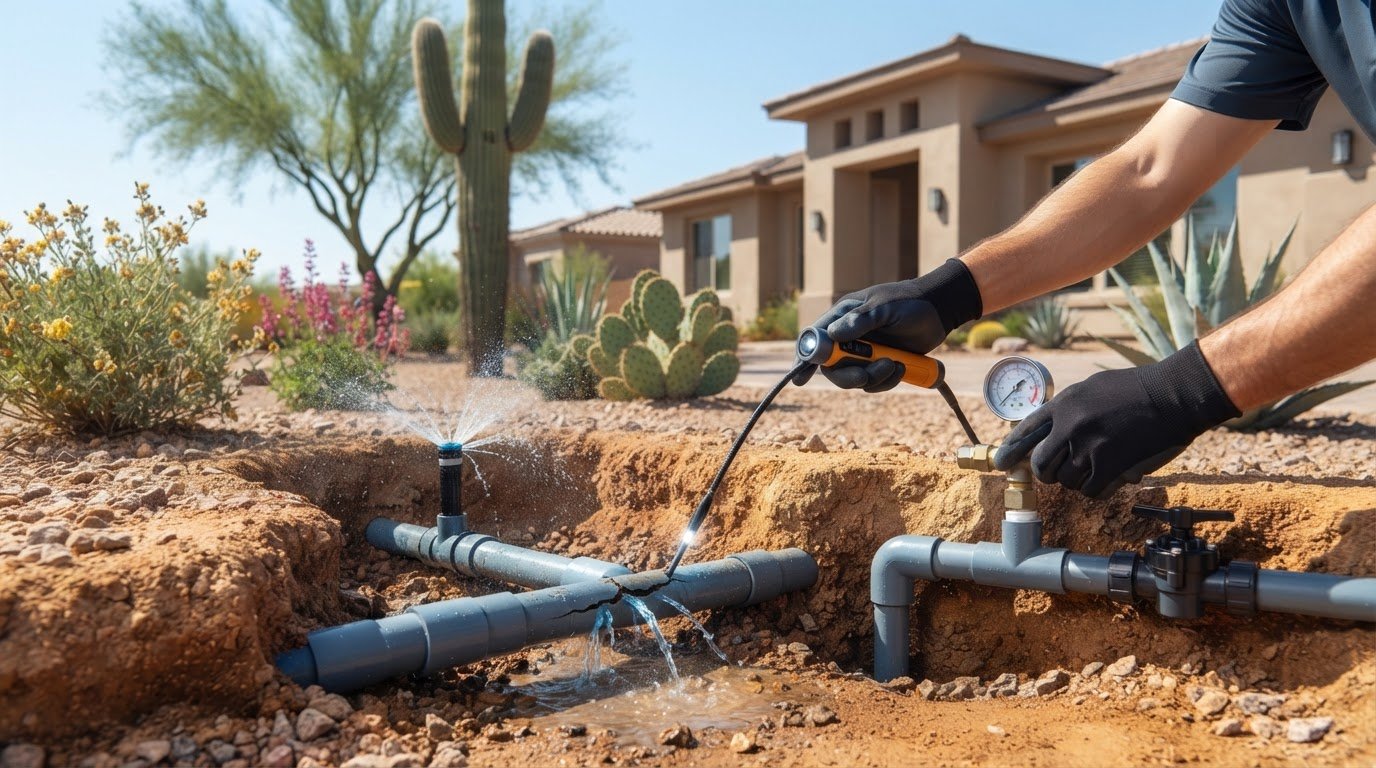
If root areas stay dry despite frequent runs, simply adding more watering days may not solve the problem. A clogged emitter, inadequate flow, or uneven delivery could contribute. Check whether representative emitters are operating and compare moisture around several plants. If the pattern persists, drip system repair and maintenance can address delivery problems that a timer adjustment won’t correct.
Check moisture below the surface
After a run, examine soil near a representative plant and a little farther from the emitter. Surface dampness can look reassuring while deeper roots remain dry; conversely, the surface may dry before deeper soil does. Check the soil at more than one point in the root area and note whether moisture is spreading, staying localized, or lingering. Adjust one setting at a time, then check again so you can tell whether the change helped.
How to Set and Adjust a Drip Irrigation Schedule in Arizona
A dependable schedule comes from checking how your system performs in your yard, then making careful adjustments. Rather than changing the timer in response to one hot afternoon, follow a consistent sequence: group plants by need, inspect water delivery, check soil moisture, and adjust one setting at a time. This makes it easier to identify what helped and avoid compensating for an equipment problem with extra watering.
A practical check-and-adjust routine for homeowners
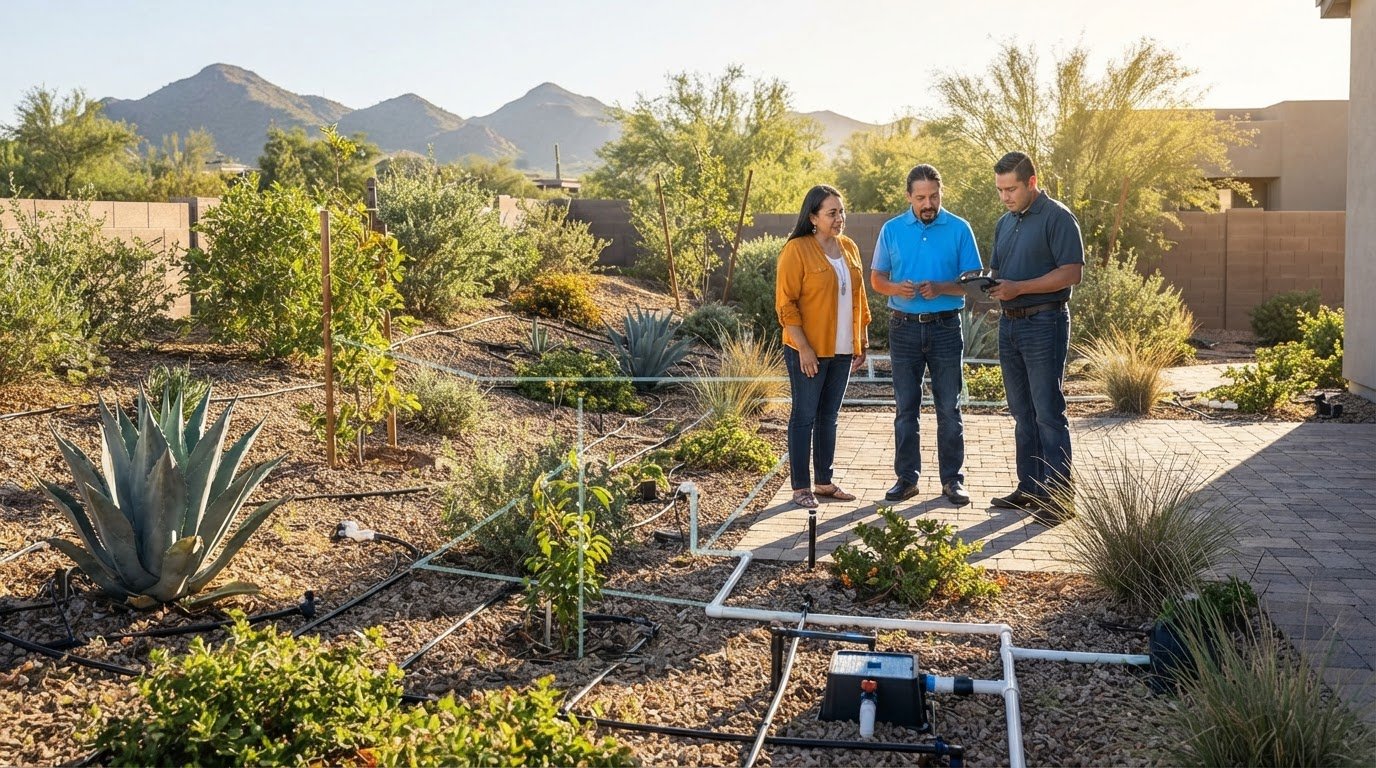
Begin with plants that share similar water needs, maturity, and growing conditions. If a timer zone serves both established desert-adapted plants and newly planted shrubs, one schedule may not suit both groups. Where possible, keep plants with different needs on separate zones. Then check representative emitters while the system runs and look for consistent delivery rather than assuming every plant receives the same amount.
After an irrigation event, check soil near the emitter and within the active root area. Note whether moisture reaches the intended area or remains concentrated at the surface. Before changing the timer, record the current frequency and run duration, the plants you checked, and what you observed. Then adjust only one variable, either the days between runs or the length of a run. Recheck the same plants and soil before making another change.
- Group: Identify plants with similar needs and conditions.
- Inspect: Observe emitter delivery at representative plants.
- Check: Look for moisture in the root area, not just on the surface.
- Adjust: Change one timer setting, record it, and observe the result.
Revisit the schedule as weather shifts from cooler periods to hotter, drier conditions, and after meaningful rainfall. Changes to the planting, such as adding new plants or replacing an established one, can also alter what a zone needs. Use current Arizona watering recommendations as a seasonal reference, then compare them with the moisture and plant response you observe at home.
Signs the current schedule may need attention
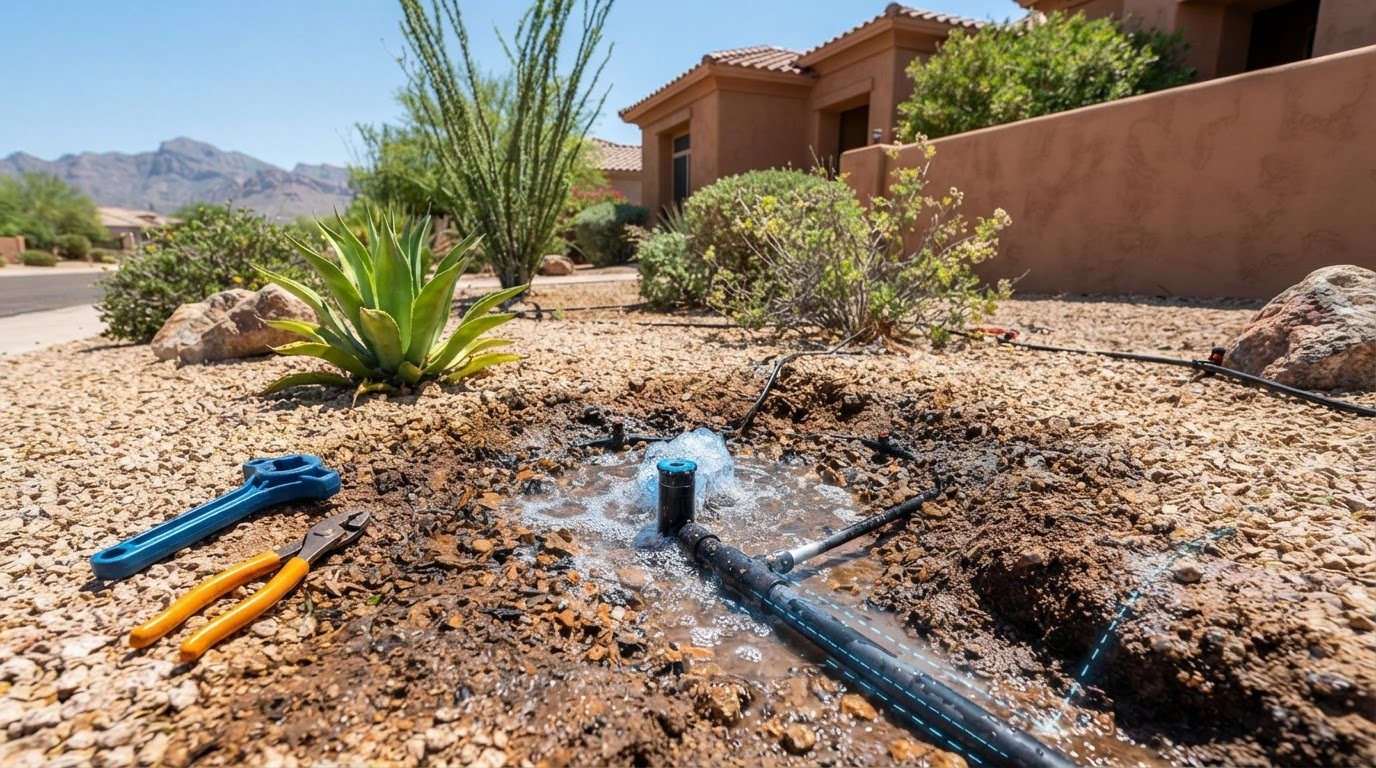
Persistent wilting, unusually wet soil, runoff, or dry patches are signals to investigate, not automatic proof that the timer is set incorrectly. Wilting can have causes beyond irrigation, while soggy areas may point to drainage or delivery concerns. Dry patches can reflect uneven emitter output or placement as well as insufficient watering. Check whether the pattern affects one plant or an entire zone, and note whether it appears after each run.
If recurring dry areas or excess moisture continue despite measured schedule adjustments, the system may need attention beyond timer settings. Sonora Sprinkler provides residential drip irrigation repair in Arizona to address delivery problems that make a schedule difficult to manage. If you’d like help resolving a persistent irrigation issue, schedule a conversation about your drip system.
When to Get Help with a Drip Irrigation Schedule in Surprise or Peoria
If schedule adjustments keep leaving some plants dry while other areas stay unusually wet, the timer may not be the only issue. A recurring pattern can suggest that water isn’t reaching every part of a zone consistently. Before making further changes, note which plants are affected, where moisture collects, and whether the problem occurs after each run. Those details help distinguish a schedule concern from a delivery issue.
The question “how often to run drip irrigation Arizona” homes need can’t be answered confidently if the system is delivering water unevenly. More frequent or longer runs may increase water in areas that already receive enough, without correcting dry spots elsewhere. Persistent symptoms call for a closer look at the residential system as a whole.
When a schedule problem may actually be a system problem
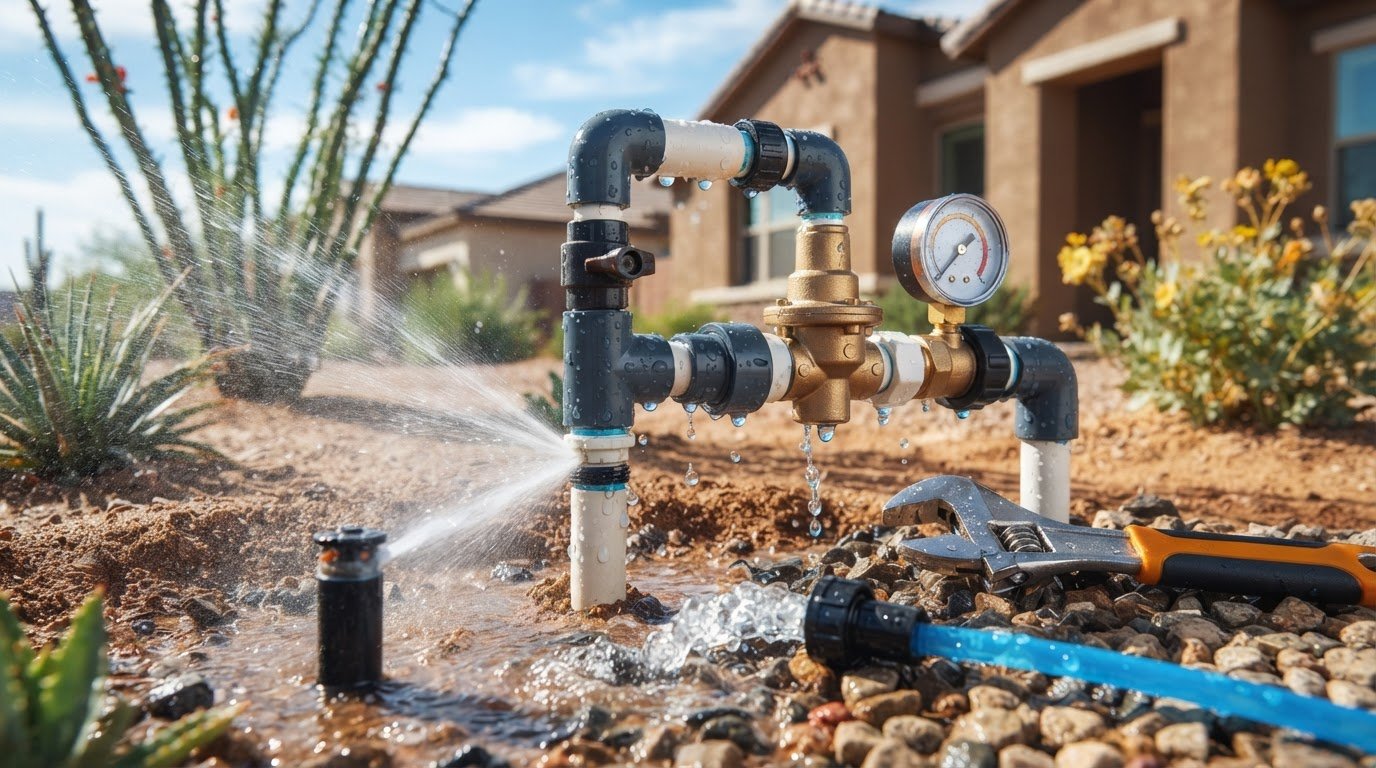
Recurring uneven watering is a reason to inspect delivery, not proof of a specific fault. A clogged emitter, a valve concern, uneven flow, or emitter placement could contribute, but wilting or dry soil alone can’t diagnose the cause. Check whether the pattern follows one plant, one part of a zone, or several areas. If repeated checks and measured timer changes don’t improve the pattern, a system inspection can help identify what’s interfering with consistent watering.
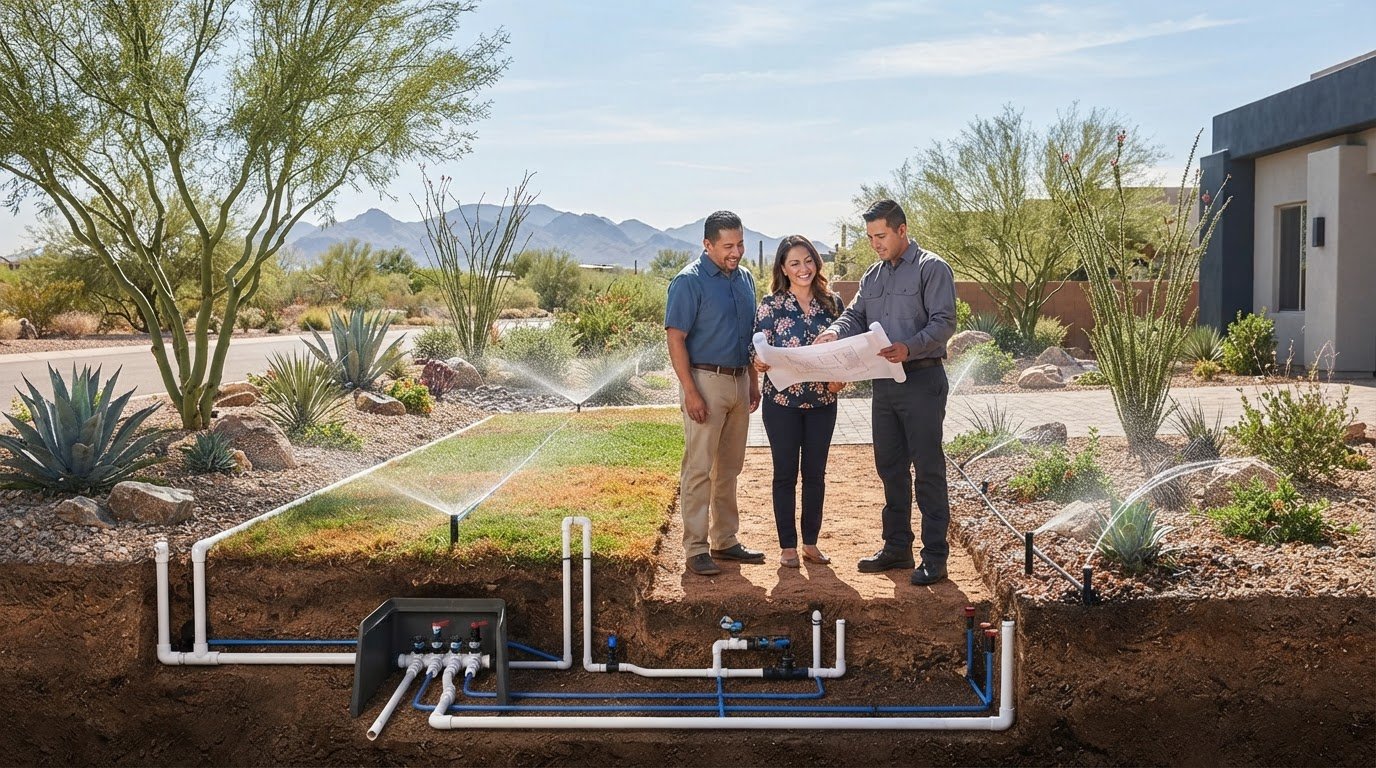
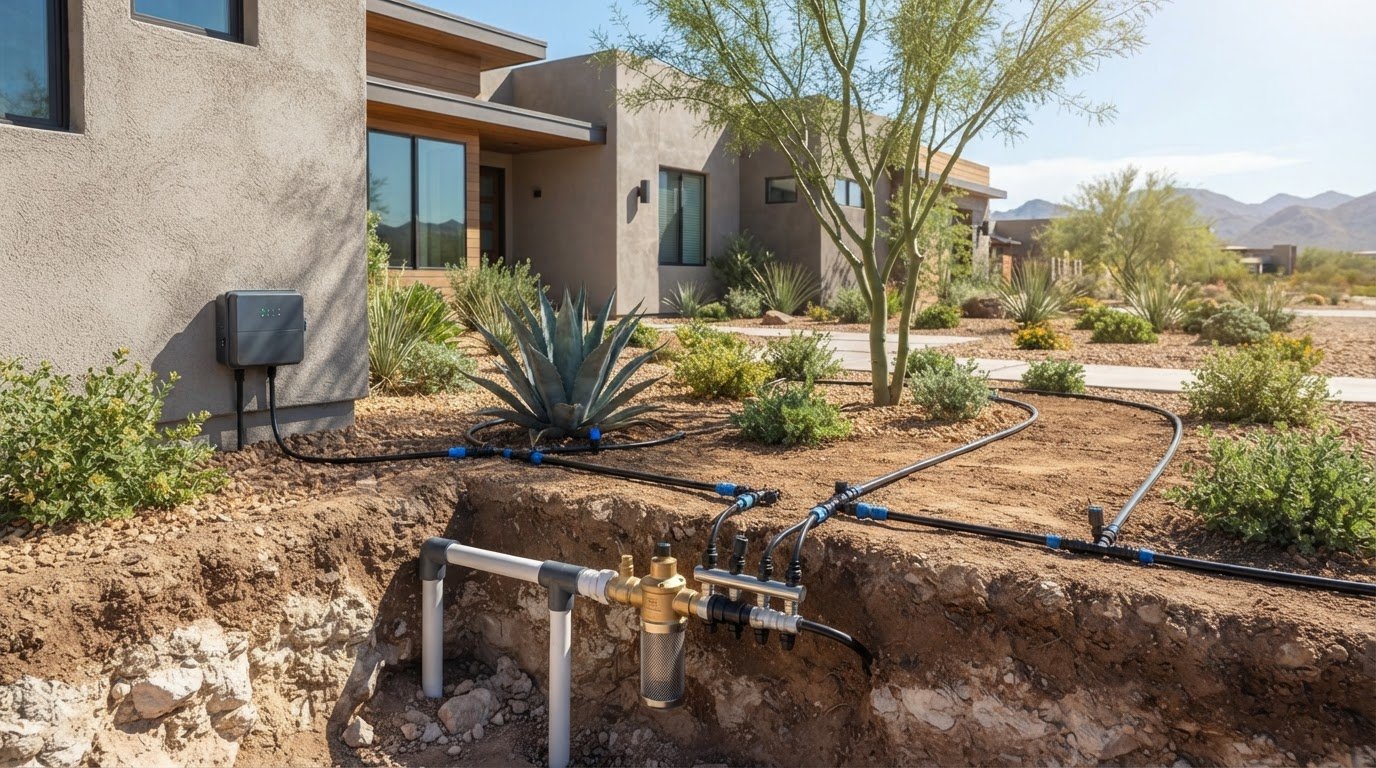
For a new layout or a system that needs to better match the plants and conditions on a residential property, Sonora Sprinkler provides custom residential drip system design. A thoughtful layout accounts for how planting areas are served. The goal is functional delivery to the intended root zones, rather than continually changing the timer to compensate for an underlying design or performance problem.
What local irrigation support can help resolve
Sonora Sprinkler provides residential drip irrigation installation, irrigation repair, and system diagnostics for desert properties in Surprise, Peoria, and nearby communities. When a schedule problem persists through changing weather or repeated adjustments, a closer assessment can focus on system operation and delivery. This helps determine whether repair, installation, or a design change is the appropriate path.
Before arranging help, record the affected areas, timer settings, and what you observe during and after a watering event. Note whether emitters appear to deliver consistently, whether soil stays wet or dries quickly, and which plants show stress. This practical record gives the discussion a clear starting point and keeps attention on the system’s performance and the long-term health of the property.
If uneven watering continues despite careful observation and schedule changes, address the underlying issue rather than continuing to guess at timer settings. Contact Sonora Sprinkler about your residential drip system.
Make Your Next Irrigation Adjustment with Confidence
Your schedule doesn’t have to be perfect on the first try. Treat it as something you refine as your plants grow and conditions change. Keep a simple record of what you adjust and what you observe, so your next decision is based on how your yard responds, not guesswork. That’s a practical way to answer how often to run drip irrigation Arizona plants need while supporting root health and water efficiency.
If uneven watering continues or you’re planning a system that better fits your residential landscape, local irrigation support can help. Sonora Sprinkler is a family-owned and operated company serving homeowners in Surprise, Peoria, and nearby communities with residential drip irrigation installation, custom design, and repair. Contact Sonora Sprinkler about your residential drip irrigation to discuss the next step for your system. Careful adjustments and a well-designed, properly functioning system can help keep irrigation working toward a healthier, more resilient property.
Frequently Asked Questions
How often should I run drip irrigation in Arizona during summer?
For established plants, summer frequency varies by plant type and system performance, so use local recommendations as a starting point rather than a universal drip schedule. The Arizona Municipal Water Users Association’s summer guidance suggests watering established desert-adapted trees every 17 days and cacti and succulents every 21 days. Those figures aren’t automatically right for every drip system. Check moisture around your plants, and account for emitter output, soil, and exposure.
Is it okay to run drip irrigation every day in Arizona?
Daily watering can be appropriate in some situations, such as for newly planted plants during establishment, but it isn’t necessary for every established landscape just because the weather is hot. Check whether the root area is drying between runs and whether soil stays saturated. If only one plant wilts while others in its zone look healthy, inspect its water delivery before increasing the entire zone’s frequency.
How long should a drip irrigation system run in Arizona?
There isn’t one run time that suits every Arizona drip system. The needed duration depends on emitter output, soil, plant roots, and how far water spreads during a run. To calibrate, note the current timer setting, run the zone, then check soil near a representative plant and farther into its root area. If water remains localized or drains away, investigate delivery and soil conditions before simply extending the run.
Should drip irrigation run in the morning or evening in Arizona?
Early morning is generally the preferred time because cooler conditions can reduce water loss to evaporation. It also gives you a chance to observe a cycle in daylight, making it easier to spot an emitter that isn’t delivering as expected or water collecting where it shouldn’t. Choose a time that fits your controller, and avoid letting a convenient schedule replace periodic checks of actual soil moisture.
How do I know if my drip irrigation is watering deeply enough?
Check the soil after a run, not just the surface. Use a small trowel to examine the ground near an emitter and at another point within the plant’s root area. Compare how far moisture has spread with where the plant’s roots are likely to be. If the soil is damp only in a tight spot, the emitter’s placement or delivery may need attention, rather than a longer run alone.
Does drip irrigation need to be adjusted when Arizona seasons change?
Yes. As temperatures, sunlight, and rainfall shift, plants may use soil moisture at a different rate. Reassess your timer when weather changes noticeably, after meaningful rain, and when new plants are added or become established. For example, a setting that suits a sunny bed during a hot, dry stretch may leave the soil too wet after cooler weather arrives. Make gradual changes and observe the result.
Why are my plants wilting even though the drip system runs?
A running timer doesn’t guarantee water is reaching a plant’s roots. Check whether the nearby emitter is flowing and whether the soil around the roots is moist. A clogged emitter, uneven delivery, heat stress, or a plant health issue could contribute, so don’t assume the schedule is the only cause. If wilting or dry patches persist at your Surprise or Peoria home, Sonora Sprinkler can inspect the irrigation system and help identify the issue.