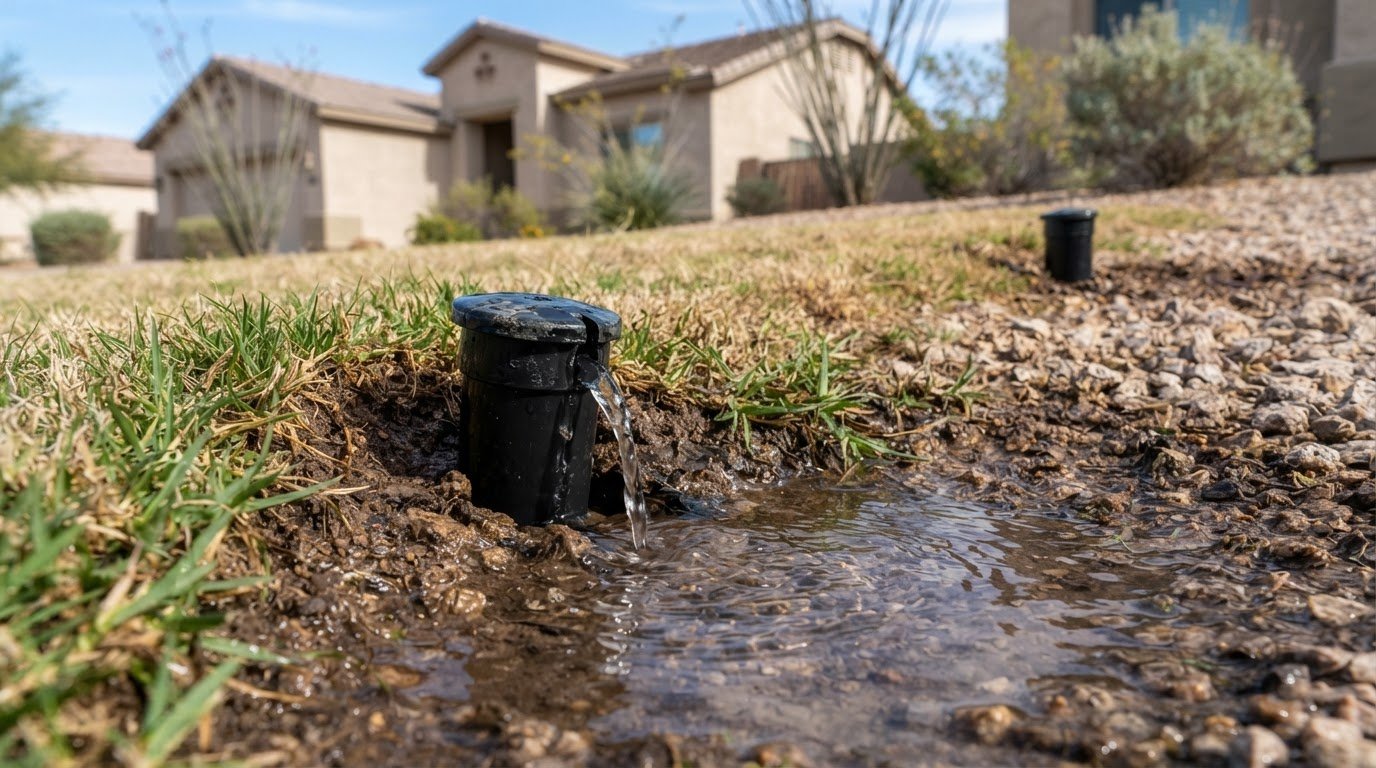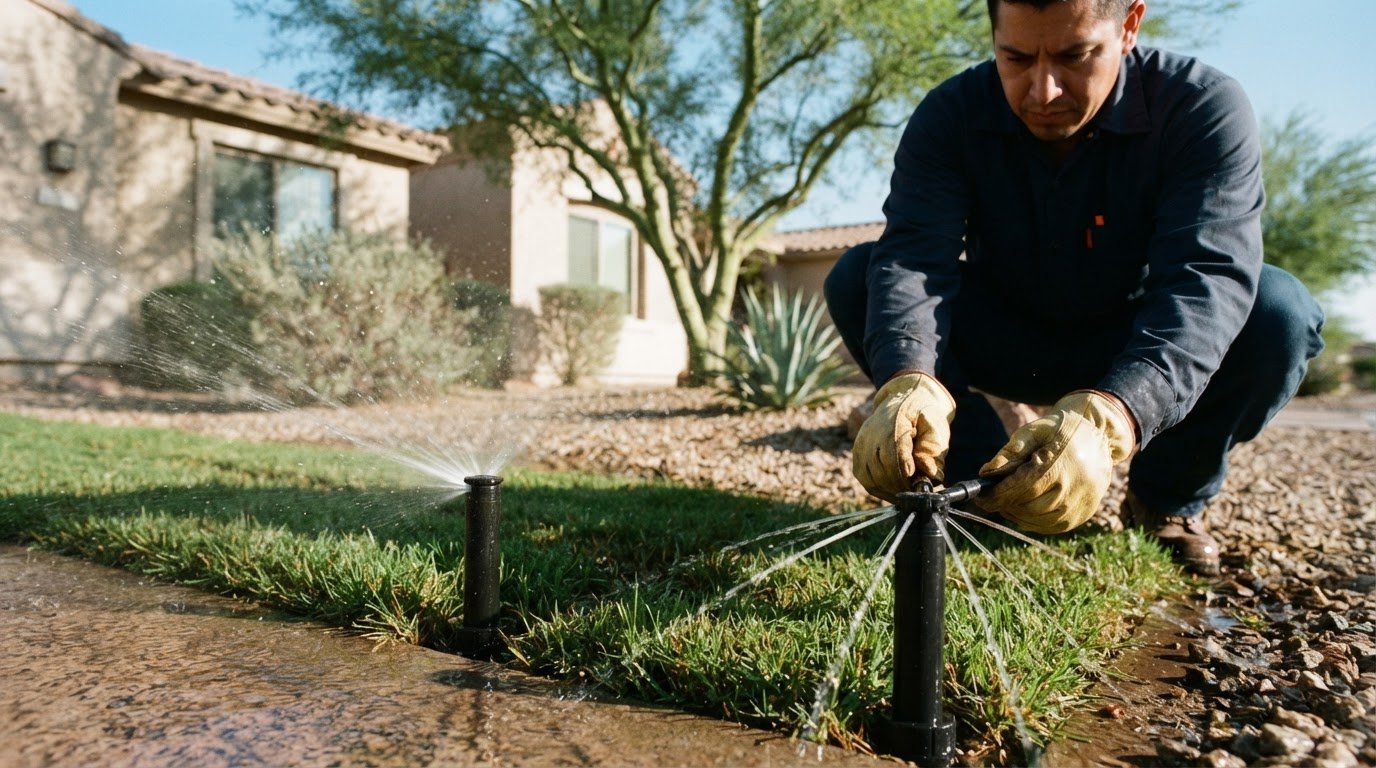
A sprinkler fault may be a symptom of a system that no longer suits the yard. A professional diagnosis looks beyond the visible problem, assessing coverage, valves, wiring, pipes, and how each zone serves the property. That is the starting point for irrigation system renovation in Surprise, AZ, and for deciding whether a targeted repair, layout change, or water-saving upgrade is appropriate.
Uneven watering, pooling, weak spray, and dry patches can have different causes, so identifying the fault matters before choosing a fix. This article explains what a professional evaluates, how drip irrigation and rotating nozzles affect water delivery, and why sprinkler placement may need to change when a yard’s layout changes. You will also learn how repairs and upgrades can keep an irrigation system aligned with your property.
Key Takeaways
- Learn how uneven coverage, pooling, or weak spray can help a professional trace a fault to its source.
- See how rotating nozzles and drip irrigation can better match water delivery to lawns, trees, shrubs, and plant beds.
- Understand why updated lawn edges, walkways, and planting areas can call for changes to sprinkler placement.
- Find out how controller, wiring, timer, and valve issues can affect whether irrigation zones run as intended.
- Explore how renovation scope, local requirements, and system condition shape project planning and timing.
Water-saving rotating nozzles and drip-system upgrades
Rotating nozzles may suit lawn zones with uneven coverage or runoff. Their moving streams distribute water over an area over time, rather than releasing a broad spray all at once. A professional assesses pressure, head spacing, and turf shape before selecting a nozzle. If pressure or layout is unsuitable, changing nozzles alone may not resolve dry patches or overspray.
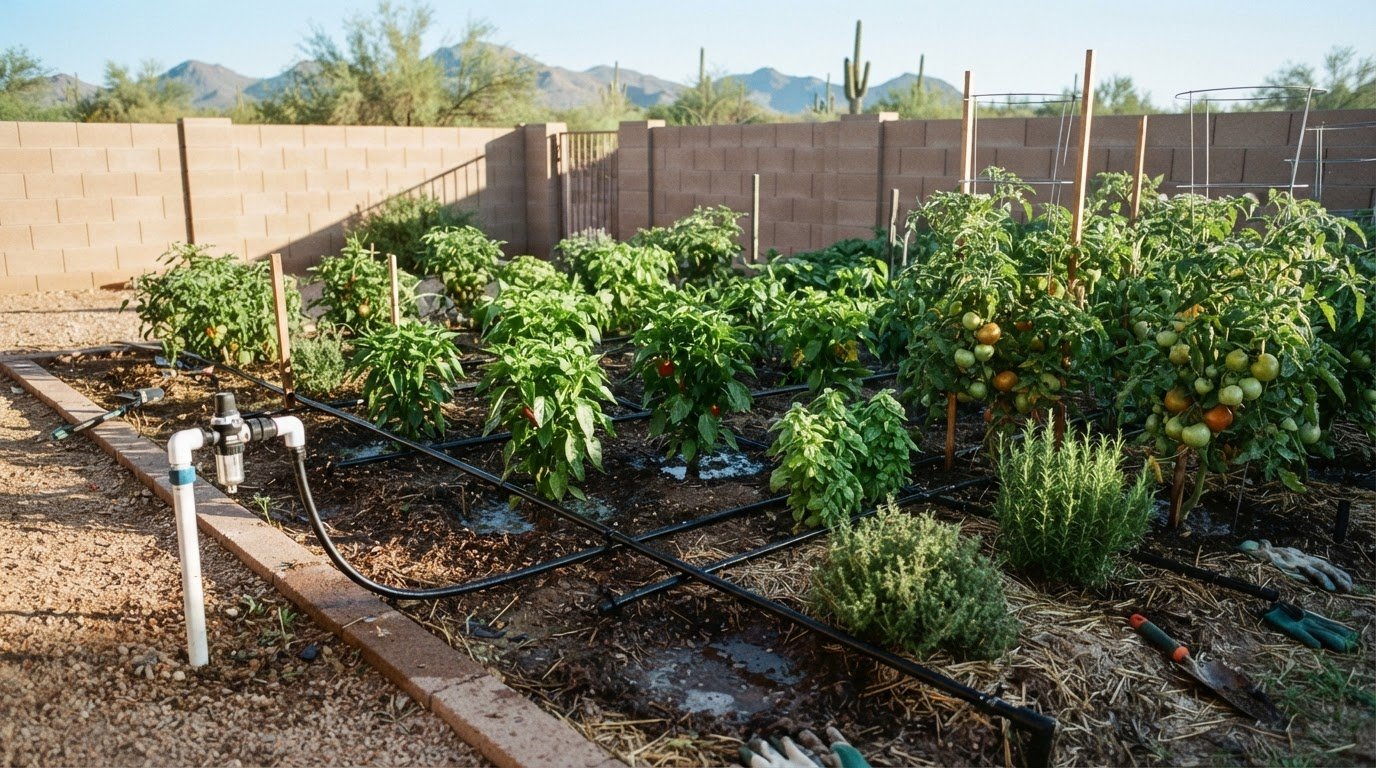
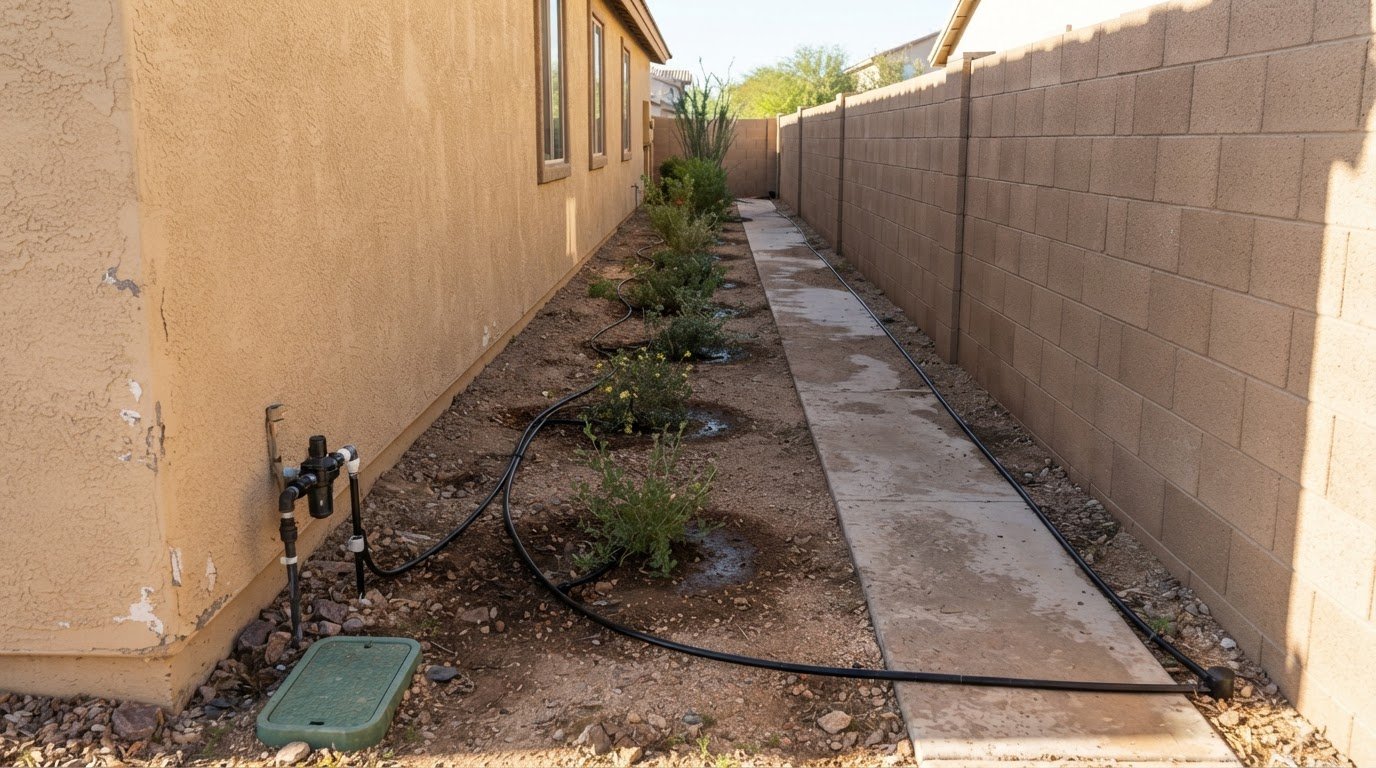
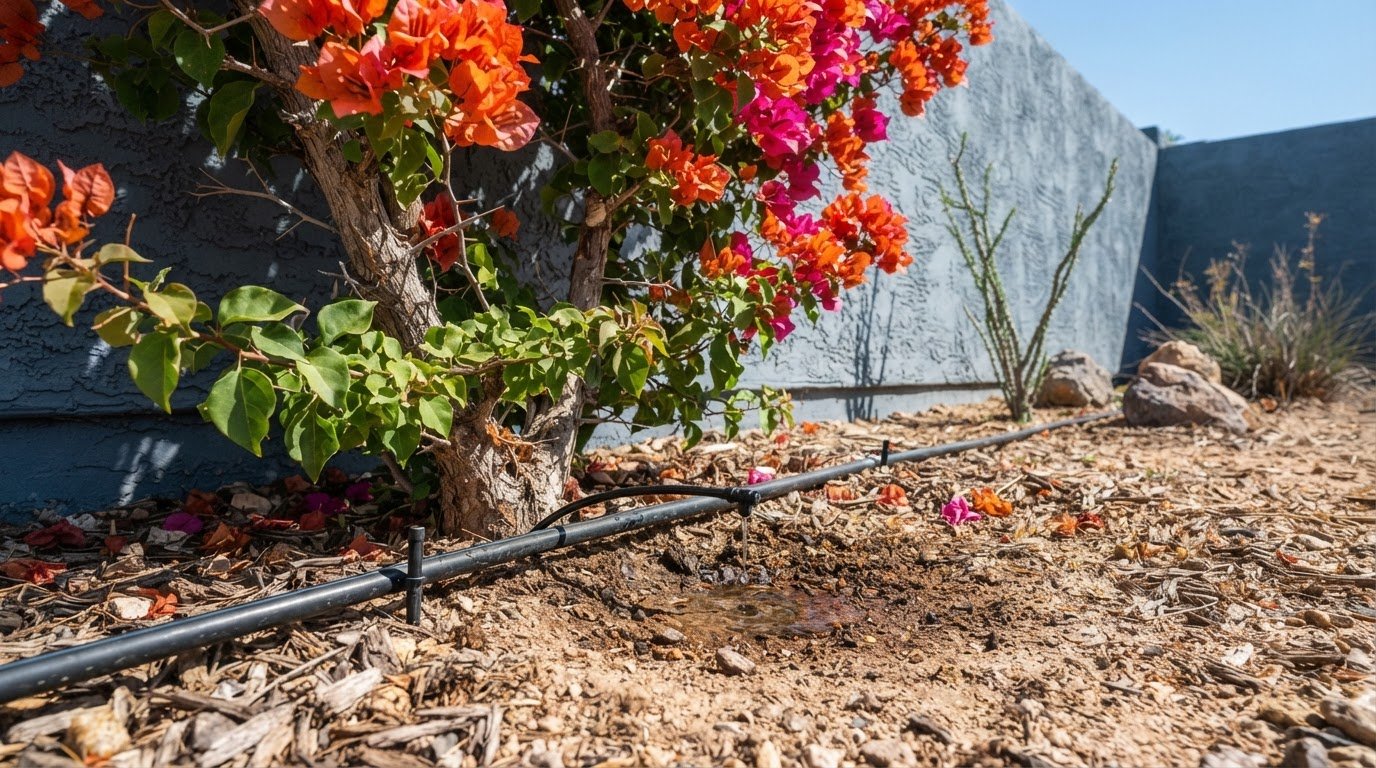
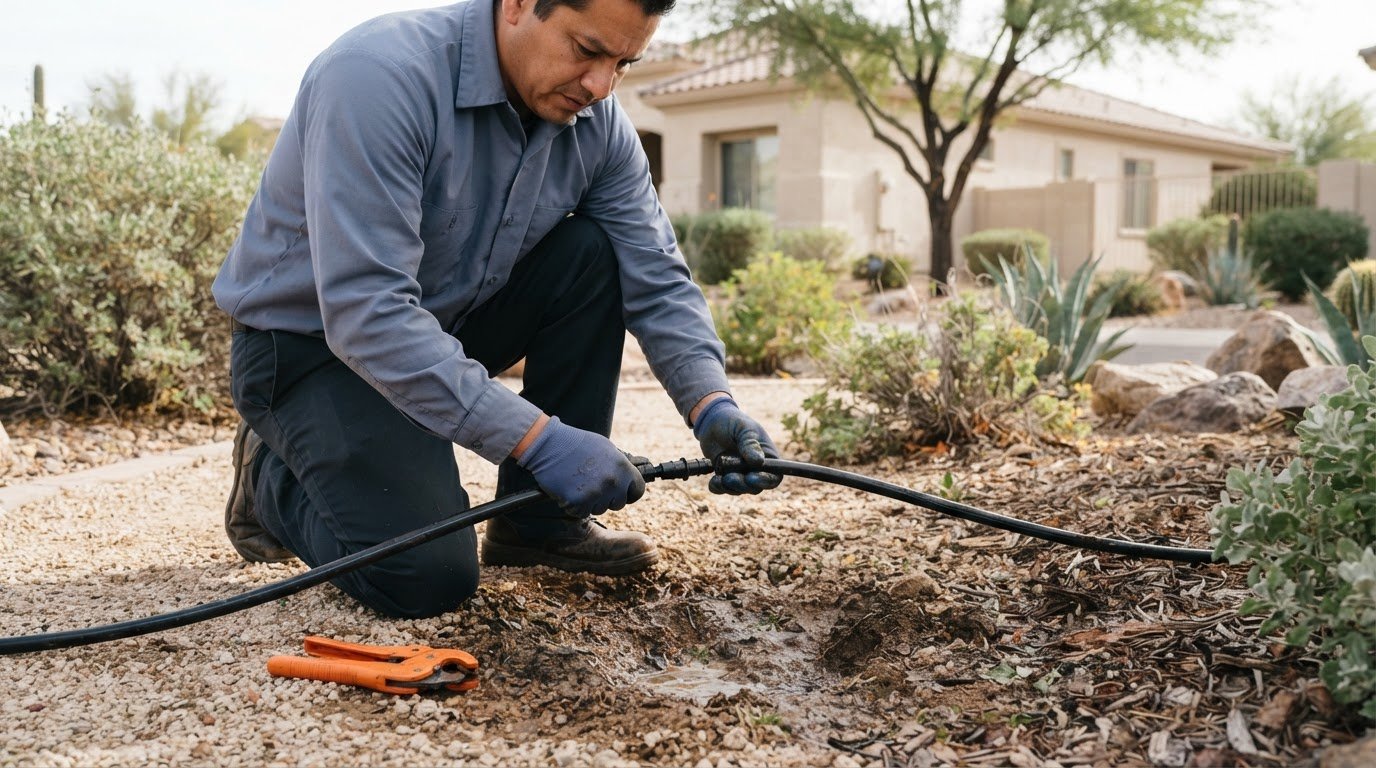
Drip irrigation serves a different purpose: it delivers water near specific plants instead of spraying an entire area. That makes it a practical option for desert properties with separate beds, shrubs, and trees. A lawn, a row of shrubs, and a small planting bed have different coverage needs, so they may work better as separate watering zones. Keeping unlike areas on separate zones also makes adjustments more precise.
Water quality and system condition affect drip performance. During an inspection, a professional can assess flow, pressure, filter condition, and possible clogging, then flush lines where needed. For subsurface drip, a pressure difference exceeding 1 PSI between the ends and the header warrants investigation. Measured flow should stay within ±5% of its expected rate. These readings can help distinguish a blockage from a design or flow issue.
Water chemistry can also influence mineral buildup. Maintaining irrigation water between 6 and 6.5 pH during irrigation is recommended to help prevent buildup. Depending on water quality, treatment and flushing of a subsurface drip system may be performed two to three times per season. The appropriate approach depends on the observed water quality and system condition, rather than a fixed schedule for every property.
Residential outdoor water use in the United States accounts for nearly 8 billion gallons each day, mainly for landscape irrigation. That scale makes matching delivery to each property area valuable: a rotating nozzle may suit lawn coverage, while drip lines can target trees and plant beds. A professional can assess existing heads, zone coverage, and water flow, then plan drip irrigation system design around the plants being watered. The result should reflect the actual landscape, not treat every zone as though it needs the same delivery method.
A well-designed system can make maintenance easier by clarifying how each area receives water. After a yard renovation, an outdated system may no longer cover the right places: sprinklers may miss areas they once served, while other zones receive too much water. Lawns, open spaces, and larger planting areas may need different sprinkler placement from smaller beds. Reviewing coverage after changes helps identify where the layout no longer fits.
For subsurface drip, chemical treatment and flushing may be performed 2-3 times per season, depending on water quality. For mineral buildup, the recommendation is to inject acid until the water pH reaches around 2-3 for 20-60 minutes, then flush the system. Some subsurface drip irrigation systems in Arizona have remained in service for more than 20 years. Their longevity does not remove the need to monitor performance, but it illustrates the value of suitable design and upkeep over time.
How a professional adjusts sprinkler placement for new landscape layouts
Changes to a yard can leave sprinkler heads aimed in the wrong direction. A professional compares the current system with the finished plan before moving heads or changing zones. New lawn boundaries, planting locations, and walkways all affect coverage. For example, a widened path can divide a lawn that previously received water from one sprinkler zone.
The review starts with the property’s shape and intended use. A broad lawn, narrow side yard, and outdoor living area each have different coverage needs. The professional considers where turf begins and ends, which plants need irrigation, and how people use patios and paths. This helps avoid designing watering patterns around features that have moved or disappeared.
Updated walkways and hardscape can block spray or direct water onto paving instead of plants. A professional assesses how head locations and spray directions relate to those surfaces. If a walkway divides a lawn, the revised layout may need heads along the new edge. Changes to planting beds matter too: a head that once watered turf may now overspray shrubs or a path.
Plans should account for future changes as well as current features. A new tree, expanded bed, or relocated seating area can affect irrigation-line routes and sprinkler-head placement. The professional also reviews the system’s condition, including whether existing components can serve the revised layout. Coordinating irrigation planning with outdoor lighting helps avoid conflicts between the systems.
Designing around the final yard plan helps the system serve distinct areas more effectively. Lawn size and shape, plant types, paths, and outdoor features guide decisions about head placement and zone boundaries. Planning irrigation alongside planting and hardscape can help the parts of a renovated yard work together. A layout based on the completed property is easier to manage than one based on an earlier design.
For a renovation, the most useful information is the intended location of lawn, beds, walkways, and outdoor features. A professional uses that plan to assess which heads can remain, which need repositioning, and where the layout may need revision. If a new yard plan is taking shape, discussing sprinkler placement for the updated layout can help connect irrigation planning with the finished design.
Professional troubleshooting for controllers, timers, wiring, and valves
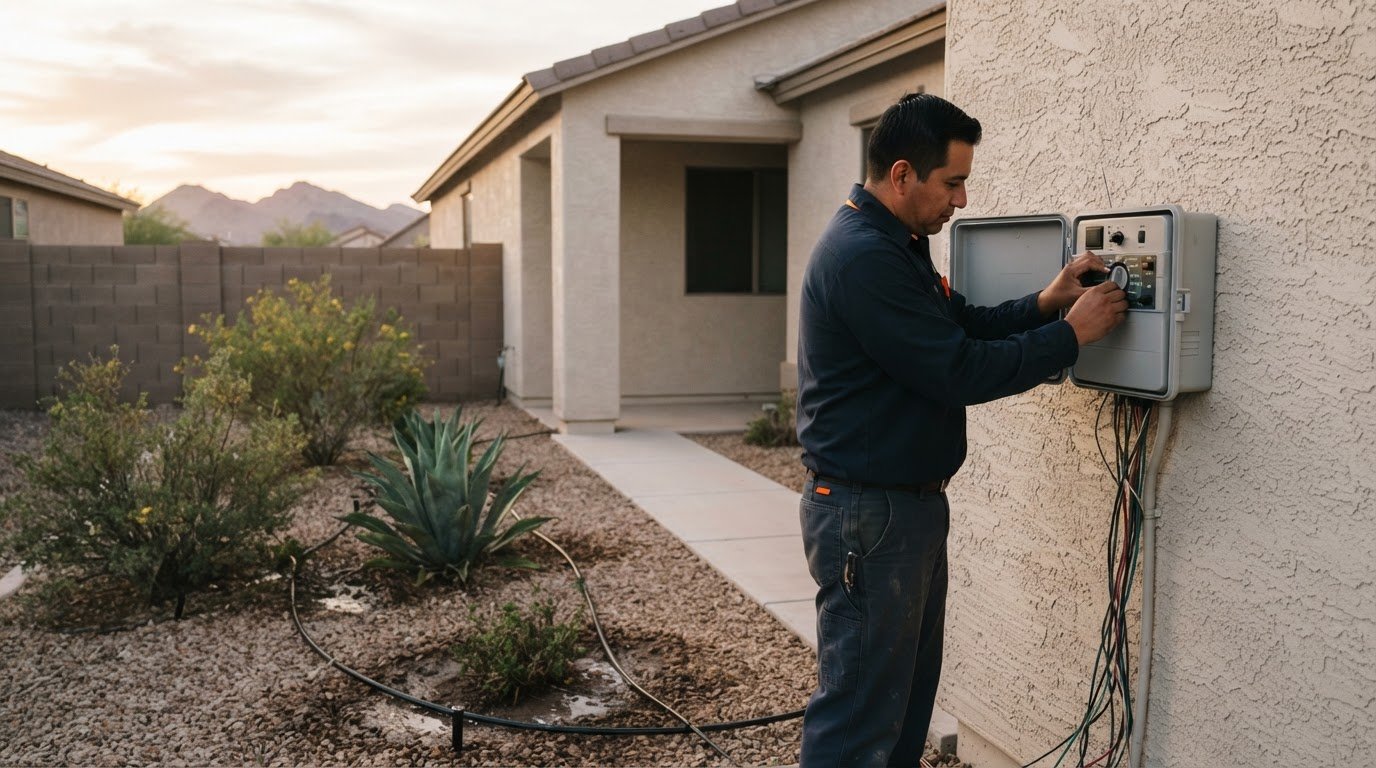
A controller can appear active while one irrigation zone stays dry. A professional compares the programmed schedule with the zones that actually run. If several zones fail together, the fault may involve the controller or shared wiring. If one zone fails, attention may turn to its wiring, valve, or connected components. These patterns help narrow the diagnosis before repairs begin.
Choose an irrigation professional who assesses the controller, wiring, and valves as connected parts of one system. A clear diagnosis should explain which component is causing the symptom and why the proposed repair addresses it.
During troubleshooting, the professional checks whether the controller has power and responds to its settings. They compare programmed start times and zone order with the reported watering pattern. For example, if the controller runs other zones but skips one, the diagnosis focuses on that zone’s control path. If no zone starts, the investigation broadens to the controller’s power and operation.
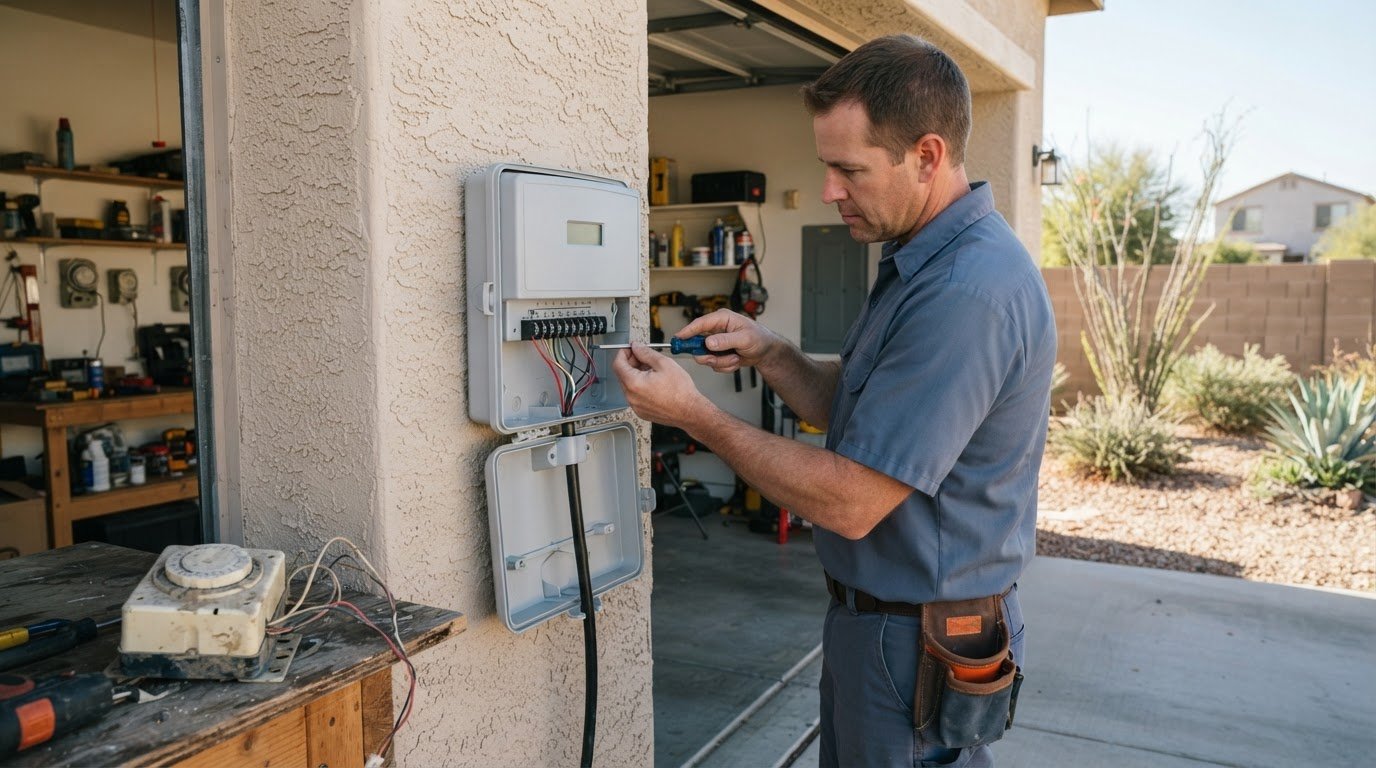
Wiring faults can interrupt the signal between a controller and a valve. A damaged connection may affect one zone, while a shared wiring problem can disrupt several. The professional traces the affected circuit, inspects accessible connections, and uses diagnostic testing to locate the break in continuity. This helps distinguish an electrical fault from a valve that receives a signal but does not operate properly.
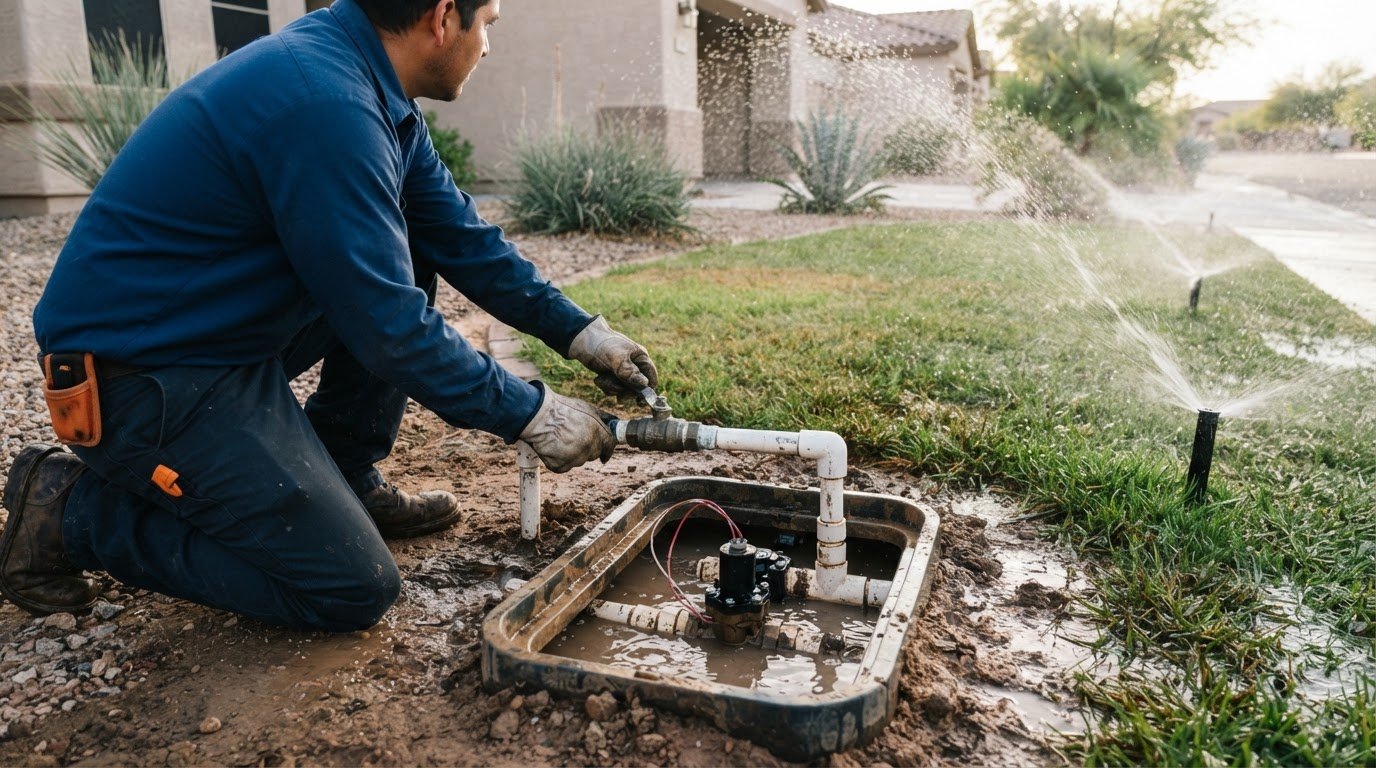
Valves regulate water flow to individual zones, so a valve problem can resemble a scheduling issue. A professional checks whether the affected valve opens and closes as commanded. A zone that continues flowing after its scheduled run points to a different concern from one that never receives water. Valve and backflow components also warrant attention when water movement does not match controller commands.
Controller settings, wiring, and valves must work together. Replacing a controller without tracing a faulty wire may leave the symptom unchanged. Likewise, adjusting a schedule cannot correct a valve that fails to open. A professional uses the observed pattern, system layout, and component condition to determine whether the issue calls for repair, wiring diagnostics, or replacement.
After identifying the fault, the professional explains how the affected zone should operate and tests the system’s response. The assessment clarifies whether the repair addresses an isolated issue or connected components also need attention. For example, a zone that starts reliably after a wiring repair calls for a different solution from one that still fails because its valve does not respond.
Irrigation renovation permits or codes in Surprise AZ
Permit requirements depend on what an irrigation renovation changes, not simply on the word “renovation.” Replacing a sprinkler head differs from altering piping, electrical controls, or backflow equipment. For a Surprise property, first define the work: which components remain, which are replaced, and whether the project connects with other construction. That scope helps identify relevant local requirements.
A targeted repair and a broader installation can raise different review questions. For example, changing a damaged valve may affect a limited part of an existing system. Reworking irrigation alongside a new walkway or outdoor feature may involve a larger property plan. Neither example alone establishes whether a permit is required. The relevant distinction is the actual work and the rules governing it in Surprise.
Electrical components deserve separate attention during planning. A controller or wiring repair involves different equipment from a change to underground irrigation piping. A professional can describe which elements the renovation affects and whether separate requirements apply to that scope. Clearly distinguishing irrigation, electrical work, and other yard construction helps avoid treating every project as the same type of alteration.
Backflow equipment is another component to identify before work begins. Its presence does not, by itself, establish what permits or approvals a particular project needs. Instead, the project assessment should note whether backflow equipment remains untouched, is repaired, or is replaced. That distinction gives the applicable review a concrete basis, rather than relying on a broad label such as sprinkler upgrade.
For a Surprise renovation, useful project details include the property layout, affected zones, planned pipe changes, controller work, and related construction. A professional can use these details to define the work and identify relevant local requirements. For instance, replacing heads within the existing layout is a narrower scope than redesigning irrigation during a yard renovation. The scope, not an assumption, should guide the review.
Before work proceeds, the project plan should describe the irrigation changes and distinguish them from unrelated yard work. That record can show which components are repaired, relocated, or newly installed. It also helps explain why the design suits the property. In Surprise, do not assume every irrigation repair follows the same permit process, or that a small change automatically falls outside local requirements. Applicability depends on the work and governing rules.
How long does sprinkler system renovation take in Surprise AZ?
The work period depends on the renovation’s scope, system condition, and sequence. Replacing a damaged sprinkler head differs from redesigning zones and rerouting irrigation lines. A professional assesses the existing system, identifies the required work, and plans the sequence before setting expectations. In Surprise, the final yard plan also matters when head placement or zone boundaries need to change.
Diagnosis helps define the schedule before repairs begin. A controller that fails to start one zone may require a different investigation from several zones operating inconsistently. The professional traces the symptom through the relevant controls, wiring, valves, or pipes. Finding the cause defines the work, while additional faults can expand the scope beyond the first visible problem.
A contained repair generally involves fewer tasks than a full system renovation. Correcting one faulty valve, for example, differs from replacing pipe runs and adjusting several zones. Even a focused repair requires assessing the affected components and confirming the system responds afterward. The condition of nearby parts influences whether the work stays limited or requires related repairs.
Layout changes add planning and installation tasks. A new walkway may require moving sprinkler heads, while a larger planting bed may change zone coverage. If a renovation includes both lawn and drip-irrigated areas, the design must account for each system’s layout. The professional also considers the final positions of paths, plants, and outdoor features before completing placement.
Site access and existing infrastructure also affect the work sequence. Buried irrigation lines may cross areas being changed by other yard projects, and accessible pipe routes can influence repairs. A professional considers the property layout, system condition, and planned work together. For example, coordinating irrigation changes with outdoor lighting installation can help prevent conflicting routes or placements.
Project coordination can affect the overall timeline. A renovation tied to walkway or planting changes depends on the order of those activities. Irrigation work needs to align with the completed yard plan, rather than placing heads according to features that will move. Clear information about planned lawn edges, beds, and outdoor features helps establish a workable sequence.
System testing is part of completing the work, not an optional afterthought. The professional checks whether affected zones operate as intended and whether repairs resolve the reported issue. A revised layout also needs to be assessed across the changed areas. Completion depends on both the physical work and confirmation that the system functions with the updated design.
To plan around your property’s scope and layout, request a sprinkler renovation assessment.
Sonora Sprinkler Inc.: Custom Sprinkler System Design
Sonora Sprinkler Inc. provides custom sprinkler system design for properties where existing zones no longer match the yard. When targeted corrections are needed rather than a new layout, irrigation repair can address faults affecting system operation. For a new watering approach, irrigation installation or drip irrigation installation may suit the project. The right service depends on whether the main need is a system repair, a changed layout, or targeted watering for beds and trees.
Share the property’s current layout and the irrigation concerns you’ve noticed to help frame the work. Contact Sonora Sprinkler Inc. to discuss your irrigation project.
Plan the next stage of your irrigation system
A renovation is an opportunity to make the irrigation plan fit how you use your property, rather than simply restore an outdated arrangement. For irrigation system renovation in Surprise, AZ, start with a clear picture of what should change and what should stay. Your priorities might include keeping water off new paving, serving different planting areas, or resolving a recurring system fault.
That direction helps shape a practical scope around your property’s needs. It also gives design and repair decisions a clear purpose, whether the project focuses on one problem area or a broader system update. The goal is an irrigation plan suited to the property as it stands and the way you intend to use it.
Discuss your irrigation project with Sonora Sprinkler Inc. and take the next step toward a system that fits your plans.
Frequently Asked Questions
How can a professional determine whether your sprinkler system needs repairs?
A professional looks for signs such as soggy or unusually lush spots, unexplained water use, and reduced pressure. They compare these symptoms with how the system operates across its zones. For example, one weak zone may point to a localized issue, while several affected zones can indicate a broader system problem. The inspection helps identify whether the cause involves a component, a connection, or system operation.
How much does sprinkler repair cost in Surprise, AZ?
Sprinkler repair pricing depends on the fault, the components involved, and the work needed to restore operation. A repair to one accessible part of the system differs from work involving buried piping or multiple components. The cost depends on the specific case and is provided after a quote request. Diagnosis helps define the repair scope and the factors affecting cost.
Which irrigation system renovation contractors serve Surprise, AZ?
Sonora Sprinkler Inc. provides residential irrigation services in Surprise and Peoria, including system repair, installation, and custom design. Services also include drip irrigation, wiring diagnostics, and valve and backflow work. For homeowners planning a renovation, the relevant contractor is one whose work addresses the irrigation system itself. Sharing your property’s needs and planned changes helps clarify the appropriate scope.
How much does irrigation system renovation cost in Surprise, AZ?
Renovation pricing depends on the project scope, existing system condition, and components affected. A project focused on repairing a fault differs from one requiring new irrigation lines, revised zones, or a redesigned system. The cost depends on the specific case and is provided after a quote request. The planned layout and required work help determine the cost factors.
What does a sprinkler system renovation include?
A renovation can include repairs to existing components, changes to the system layout, or irrigation installation suited to updated property needs. Depending on the project, work may involve sprinkler design, drip irrigation, wiring diagnostics, valve services, or pipe replacement. The scope follows the system’s condition and requested changes. For instance, a revised planting area may call for targeted drip irrigation rather than changes to every sprinkler zone.
How does a professional assess an aging irrigation system before renovation?
A professional reviews the system’s condition and how its components work together before recommending renovation work. The assessment can include the controller, wiring, valves, backflow equipment, pipes, and watering patterns across the property. For an older system with recurring faults, this review helps distinguish a repairable component issue from a layout that no longer serves the property. The findings inform a suitable renovation scope.