Surprise receives less than ten inches of rain annually, so irrigation needs to deliver water where plants can use it. A garden drip irrigation installation in Surprise, AZ can direct moisture to root zones and help limit water lost to evaporation. The system’s layout, emitters, and zones can be matched to the needs of different plants.
It’s reasonable to want a healthy garden without watering every area the same way. Garden drip irrigation installation in Surprise, AZ can help direct water to planting areas, but efficiency depends on how the system is designed, set, and maintained.
This article explains how installation works, how irrigation zones can serve trees, shrubs, and planting beds, and which site conditions shape the design. You’ll also learn when drip irrigation suits a residential property and how Sonora Sprinkler Inc. can plan and install a system for your home.
Key Takeaways
- Learn how targeted watering can reduce waste by delivering moisture near plant roots rather than treating every area alike.
- See why trees, shrubs, turf, and planting beds may need different irrigation zones and equipment.
- Understand which site conditions shape a professional system’s layout, installation approach, and performance.
- Use customer reviews and project examples to identify what to look for in an irrigation installation provider.
- Find out when drip irrigation installation or a custom system design may be a practical fit for your property.
Water conservation and utility bill savings
Surprise receives less than ten inches of rainfall annually, making irrigation a key part of garden and lawn care. Efficient watering starts with matching delivery to plant needs and correcting system problems.
Conserving Water in Gardens and Lawns
Lawns and garden beds use water differently, so a single watering schedule can leave some areas dry and others oversaturated. Some lawns need about 1 to 1½ inches of water per week. A professional assessment can distinguish turf needs from the targeted watering suitable for established desert plants and trees.
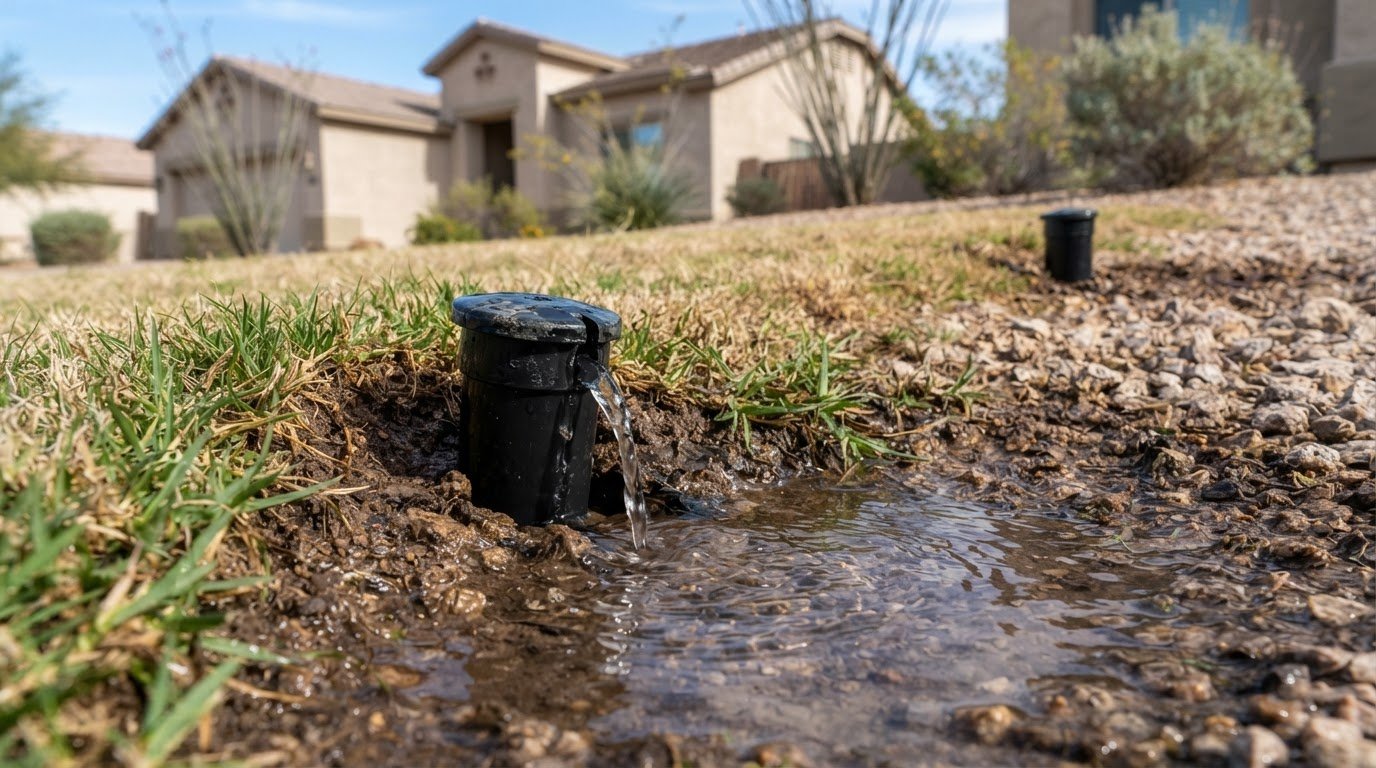
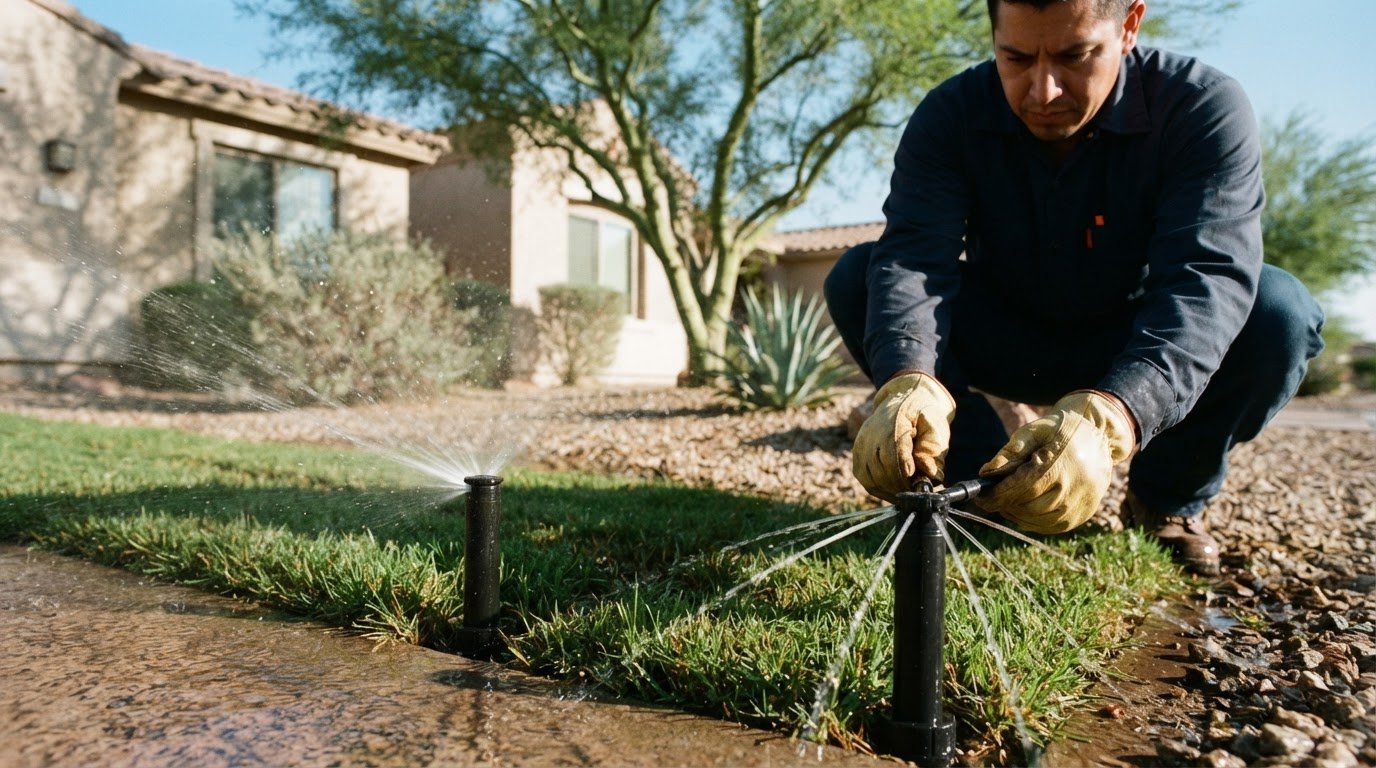
Look for signs of waste, such as runoff, pooling, or persistently wet soil near a sprinkler. Those clues can point to misplaced coverage, a damaged component, or a schedule that runs longer than the landscape needs. A professional can assess the system and adjust its delivery to reduce water reaching paths or other unused areas.
Water use also depends on how often the system runs. Many people water lawns two to three times per week, usually in the morning around 10 a.m. A schedule should account for the lawn’s condition and the needs of nearby planting areas, rather than treating every zone as identical. In Surprise, the long dry periods make efficient scheduling especially relevant.
Choosing Drip Systems for Arizona Heat
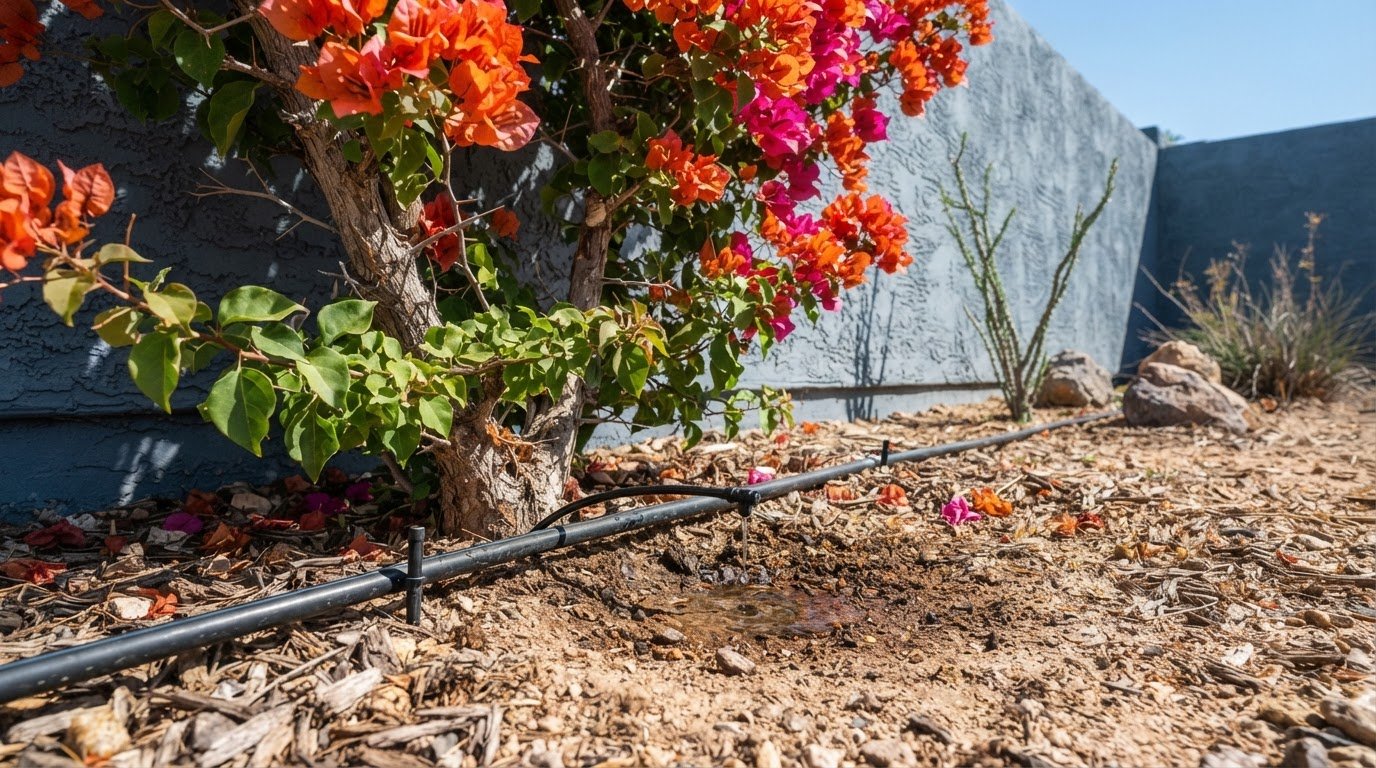
Summer temperatures in Surprise can rise above 100°F, so a drip system should deliver water close to plant roots. That targeted placement can help limit evaporation compared with water applied across exposed ground. During professional planning, plant locations, soil conditions, and existing irrigation coverage help determine where drip lines and emitters should serve the landscape.
A professional diagnosis is useful when low water pressure causes weak or uneven delivery. The assessment can trace the issue through the irrigation system, including its water supply, valves, and lines, before identifying an appropriate repair or adjustment. Pressure problems can affect how consistently water reaches plants, so changing the schedule alone may not address the cause.
Rebate eligibility depends on the terms of any active local or utility incentive program; installing drip irrigation alone doesn’t establish eligibility. The design and installation process for a property irrigation system can account for Surprise’s heat, plant placement, and existing system conditions. Those details help shape a practical approach to conserving water without applying the same watering pattern everywhere.
Drip irrigation is recommended for established desert plants and trees because it delivers water directly to root zones with minimal evaporation loss. Automated irrigation can also adapt more closely to plant needs through weather sensors, soil moisture monitoring, and programmable controllers. These tools provide ways to target watering rather than relying only on a fixed schedule.
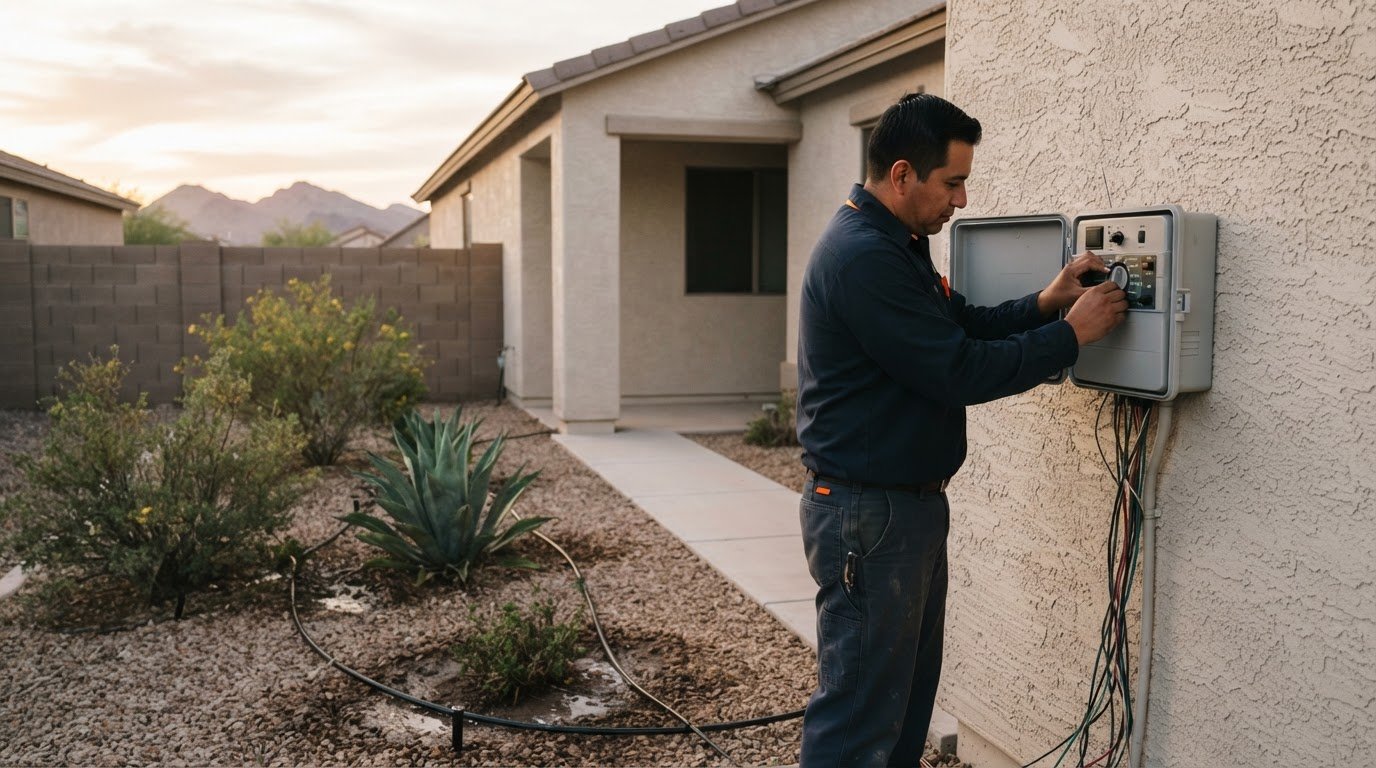
Smart irrigation systems in Surprise reduce water bills by 20 to 40 percent while maintaining landscapes. Smart controllers adjust irrigation schedules when temperatures soar above 110 degrees. Pairing controller features with weather sensors and soil moisture monitoring supports automated irrigation that adapts to plant needs, while drip delivery directs water to established desert plants and trees with minimal evaporation loss.
Customer reviews and project examples
Reviews are most useful when they describe the property, the irrigation problem, and the work completed. A brief rating alone says little about whether a system suited a specific landscape. Look for details about communication, installation planning, cleanup, and how the finished system served the outdoor space.
Specific comments can show how a professional handles complications. For example, a review might describe a technician tracing uneven watering to a blocked line and explaining the repair. That provides more context than a general statement that service was good, and helps distinguish work that addresses a cause from work that treats only a symptom.
Project examples should connect the starting condition to the completed work. Imagine a Surprise home with established trees, shrubs, and a small lawn. A useful project summary would explain how the property was assessed, which areas received separate irrigation, and how the system was tested. The details show the reasoning behind the design without suggesting every yard needs the same layout.
For example, a planting bed might have some plants receiving too much water while others stay dry. A project account could explain how emitter placement and zone layout were reviewed, then describe the changes. The practical method is to identify uneven coverage, adjust delivery to the planting pattern, and assess the result.
When reading customer feedback, focus on details tied to the work rather than broad promises. Useful details include:
- The type of property or landscape involved.
- The irrigation issue or installation goal described.
- How the work scope and system layout were explained.
- Whether the review mentions testing or follow-up adjustments.
These points distinguish a detailed account from praise without context and show what clear project communication can look like, from assessment through testing. A review describing how a team preserved the existing landscape speaks to a practical installation concern. One explaining how separate zones served different planting beds offers more useful detail than a general claim of satisfaction.
Project descriptions should be specific without promising the same outcome for every property. Soil, existing lines, plant placement, and water delivery vary. A useful example explains those conditions and the decisions made, so readers can judge how relevant it is to their own yard.
For a discussion centered on your property’s layout and irrigation goals, share your project details.
Irrigation installation for residential and commercial properties
A dependable irrigation system starts with an assessment of the property, not a standard layout. Planting areas, site conditions, and water connections help determine the system type and zone arrangement.
Assessing the Property Before Installation
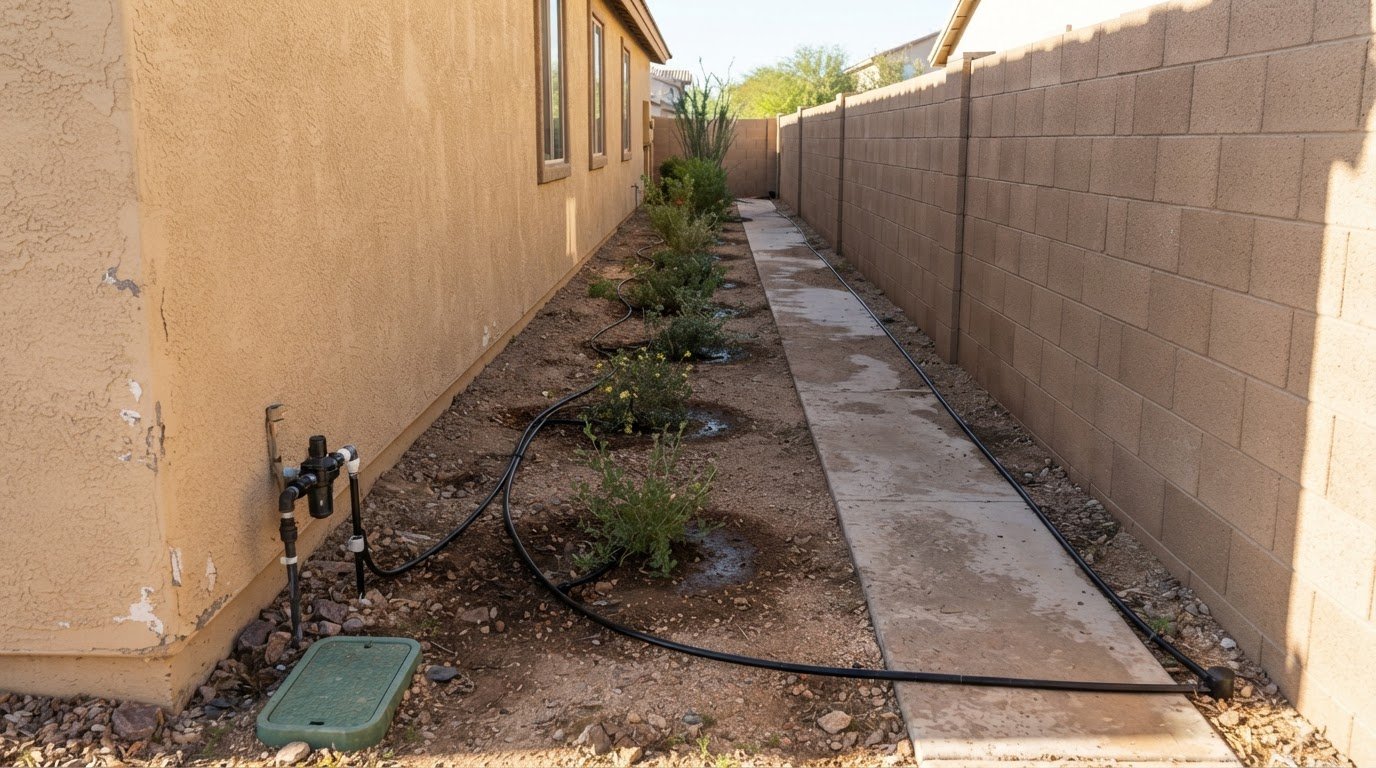
For a residence, the assessment may map lawn, trees, shrubs, and planting beds separately. A narrow side yard, for example, may need different coverage from an open lawn. For a commercial property, the same planning principle applies across its outdoor areas, such as entrance beds, open grounds, and planted borders.
The installer considers how each area will be watered and where lines can run. Existing irrigation components and the water connection matter, too. This assessment helps determine whether the proposed system fits the property instead of forcing one layout across unlike spaces.
What Installation Can Involve
Installation work may include trenching, laying tubing, placing sprinkler heads, and connecting the system to the existing water supply. Depending on the design, equipment such as pumps and backflow preventers may also be involved. The exact work follows the property’s layout and chosen irrigation system.
A home with both lawn and planting beds, for example, may need separate coverage for each. A more complex property may require zones planned around distinct sections. Considering these differences before installation helps the finished system serve its intended areas.
Timing and Project Scope
Installation time depends on the project’s scope and site conditions. Many sprinkler systems can be installed within a single day, while other installations may take several weeks. The difference can reflect the layout, system type, property size, and amount of work involved.
A compact residential layout and a more complex property are different projects. Trenching, tubing placement, connections, and equipment needs shape the work sequence. A clear scope helps property owners understand which areas the installation covers and how the work will proceed.
Planning for a Useful Result
Before work starts, the system plan should match the property’s planting areas and water connections. Effective irrigation depends on a layout that serves different sections, not simply on adding more sprinkler heads. Clear planning also helps avoid mismatched coverage between turf and planting beds.
After installation, the system’s operation can be reviewed across its intended areas. That final check helps identify whether water reaches the planned sections and whether the arrangement matches the design. Residential and commercial properties differ in scale, but both benefit from an installation plan grounded in a site assessment.
Professional irrigation zone planning around plant needs
A well-planned irrigation zone groups plants with similar watering needs. In a Surprise yard, grass, shrubs, trees, and flower beds may need different delivery methods or schedules. Treating them as one area can leave some plants dry while others receive excess water. A professional maps the landscape first, then plans coverage around each planting area.
Plant type and location guide that layout. Turf areas commonly use spray or rotor irrigation, while micro-spray emitters can serve ground covers and flower beds needing consistent moisture. Established desert trees and shrubs may benefit from targeted watering near their root zones. For example, a tree beside a lawn shouldn’t automatically share the lawn’s watering pattern.
Planning should account for how planting beds meet walkways, walls, and open turf. A narrow bed along a patio may need a different arrangement from a broad lawn. Place water delivery where plants grow and limit unnecessary coverage on paved areas. Zone boundaries should reflect planting needs, not just convenient divisions in the yard.
A practical planning sequence connects the plant map to the system layout:
- Identify each planting area, such as turf, shrubs, trees, or beds.
- Match the delivery approach to the plants and coverage needed.
- Group areas with comparable watering needs into suitable zones.
- Review the layout for missed plants, overlap, or water reaching pavement.
A yard with lawn, a row of shrubs, and a tree bed, for instance, could use separate zones. This lets the irrigation plan serve each area according to its planting. A mixed bed may also need targeted emitter placement, especially where ground cover grows near larger shrubs.
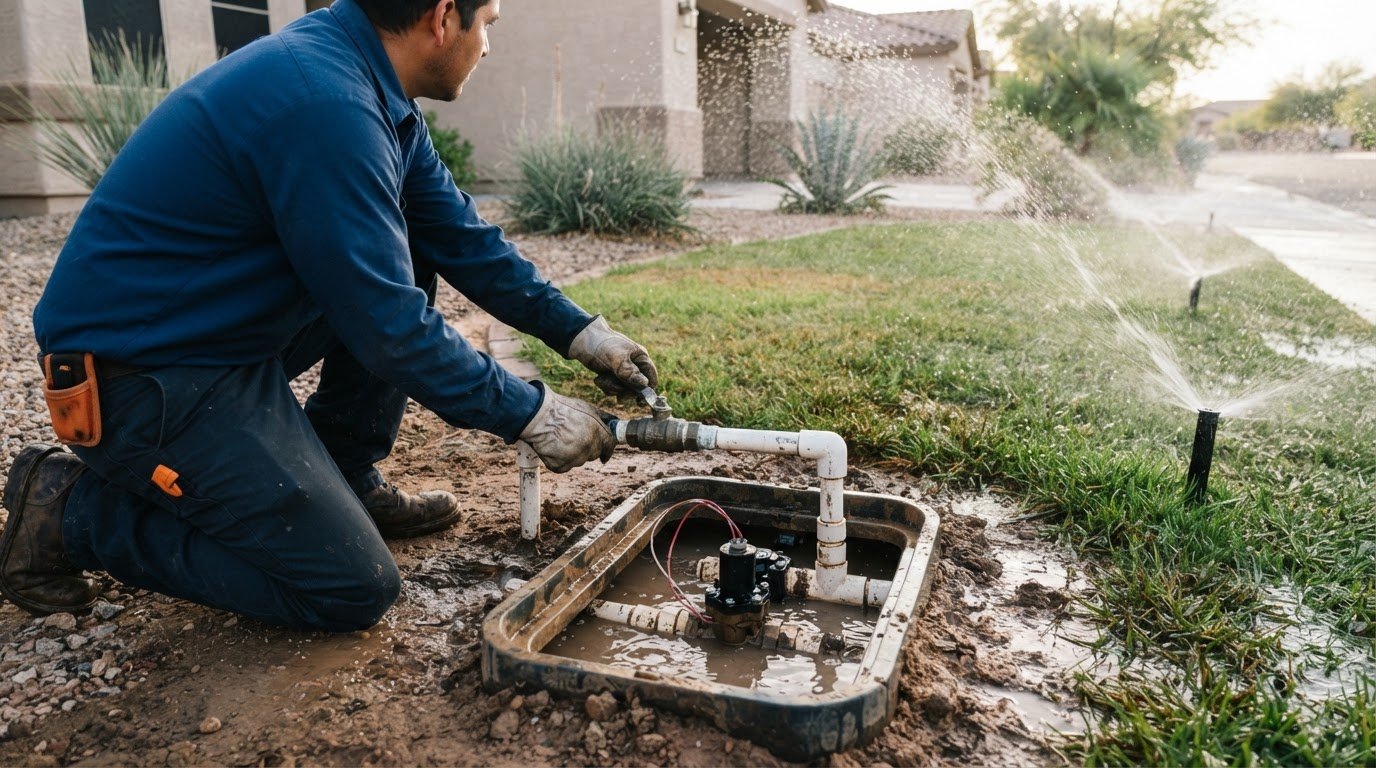
Existing system conditions matter, too. A broken line or inconsistent delivery can undermine a well-planned zone. During assessment, a professional can inspect how water reaches each area and determine whether the issue is in the layout or system operation. Changing the zone design without repairing a damaged component can leave the problem unresolved.
Good zone planning gives each part of the yard a clear purpose. Plant placement, coverage, and existing irrigation all inform the arrangement. A well-designed system can provide sprinkler coverage for turf and more targeted drip watering for beds, shrubs, and trees, matching delivery to the property’s varied plantings.
Irrigation installation in Surprise, Arizona
In Surprise, an irrigation project should start with the property’s existing conditions. Soil, planting locations, water connections, and current equipment shape the plan. A site assessment helps determine where lines should run and which areas need distinct coverage, an important step in a desert yard with varied plantings.
Permit requirements depend on the work’s scope and the local rules that apply to the property. A project that changes existing plumbing or other site infrastructure may raise different requirements from a straightforward system replacement. The installation plan should identify relevant local requirements before work begins, rather than assume every drip project follows the same process.
Careful line placement, secure connections, and operational testing help identify issues before a system goes into regular use. An installer can inspect tubing and fittings, check water delivery at emitters, and look for leaks. Filters and valves also deserve attention because debris or component problems can affect flow.
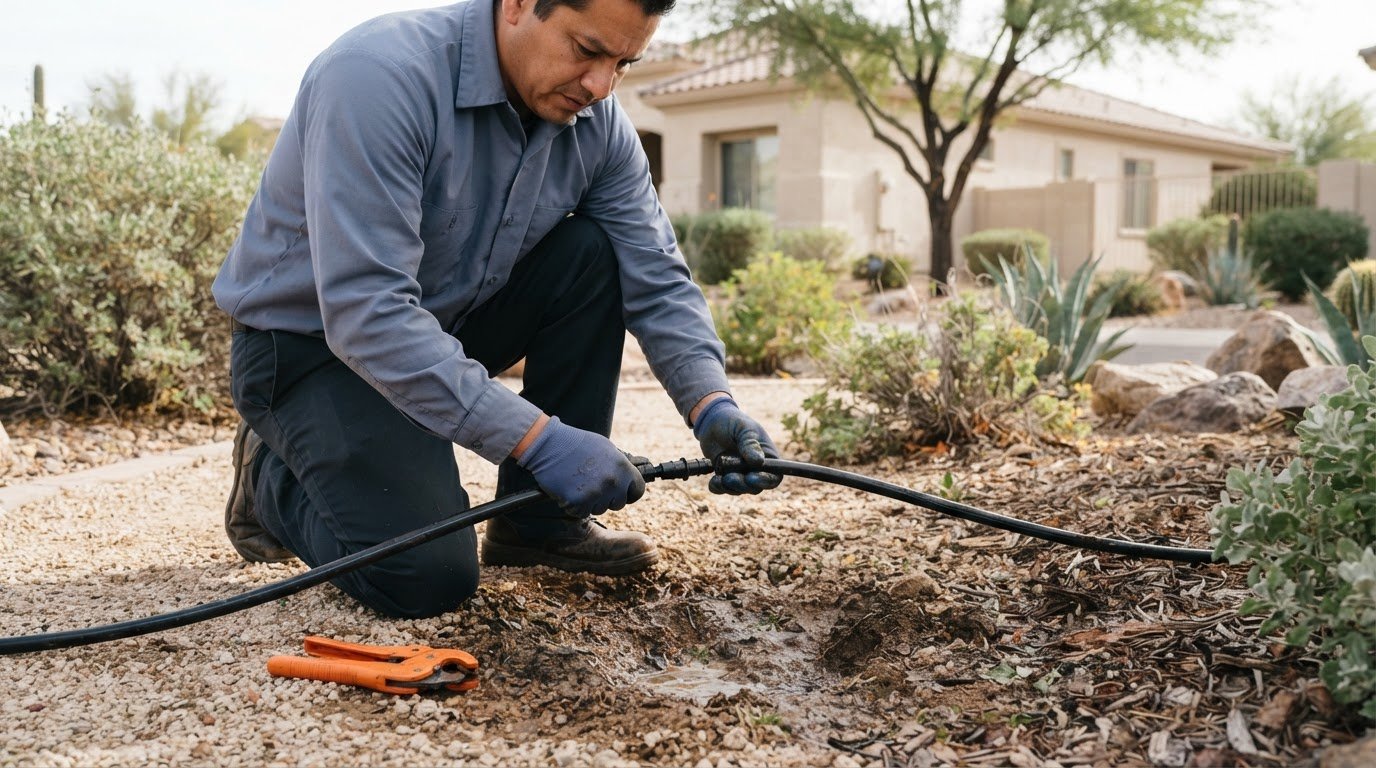
Testing should cover the whole layout, not just the connection point. A planting bed at the end of a line needs attention alongside emitters closer to the valve. If distribution varies, inspect for a blockage, damaged tubing, or a connection issue. Timely irrigation repair can address a problem before it affects more of the planting area.
Surprise’s desert climate also makes seasonal inspection useful. Professional maintenance can include checking lines, emitters, valves, and connections for damage or restricted flow. Winterization focuses on preparing system components for cooler conditions and reducing exposure to potential cold-weather damage. The appropriate steps depend on the equipment and site, so maintenance should follow the actual system layout.
A clear system map and labeled zones can make later inspections more practical. Use them to describe where a leak appears or which planting area gets uneven water. That information helps a technician narrow the inspection to a particular zone, line, or connection. It also gives future maintenance a starting point if the yard changes or a planting bed expands.
For a Surprise property, the main takeaway is to plan around site conditions, verify applicable requirements, and test each section after installation. Discuss your irrigation project to plan a system suited to your landscape.
One way to continue that planning is to compare installation options against the needs identified during the site assessment. Thumbtack lists 13 five-star lawn sprinkler system installation companies in Surprise, AZ. Treat that listing as a place to begin asking focused questions, rather than as a substitute for reviewing the property and proposed work. Ask how the installer will account for planting areas, inspect water delivery across the layout, and document zones and components after the work. A useful discussion should also clarify what testing is included and how concerns found before regular use will be handled. Keeping those details together can make the installation easier to evaluate and future service easier to explain.
Sonora Sprinkler Inc.: Drip Irrigation Installation
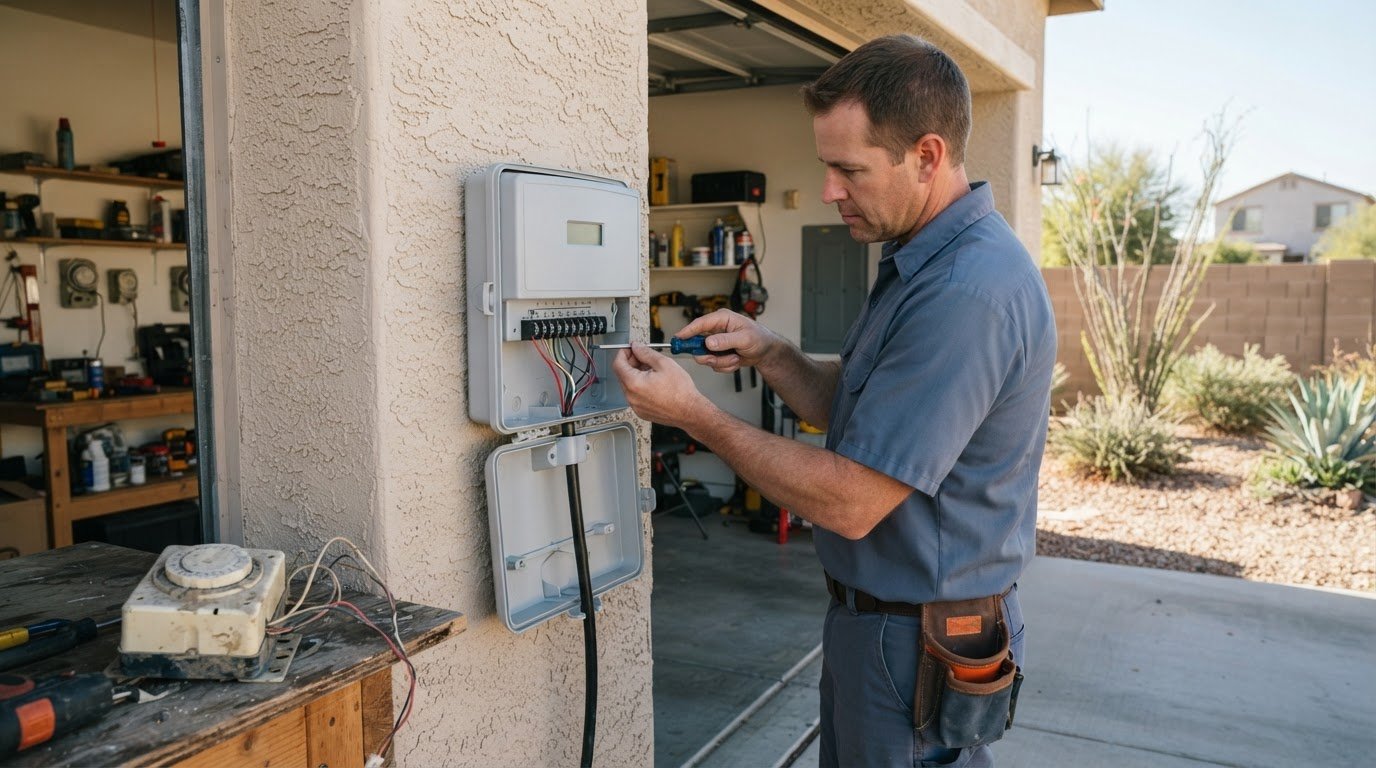
Sonora Sprinkler Inc. installs drip irrigation systems planned around a home’s planting areas and water connections. Its custom sprinkler system design and irrigation installation services can help when a property needs a broader layout. If an existing system has leaks, uneven delivery, or broken components, the company also provides irrigation repair, including troubleshooting for wiring, valves, and backflow components.
Professional planning is useful when a property has mixed planting areas, an aging system, or recurring coverage problems. The assessment can guide decisions about system layout and whether drip irrigation suits the garden’s needs. For help planning your irrigation project, contact Sonora Sprinkler Inc.
Plan the Next Step for Your Garden
A well-planned irrigation system should suit the yard as it is and remain practical if planting areas change. Before moving forward, consider which areas need targeted watering, whether the current system needs repair, and how a new layout could better serve your garden. These priorities give the design conversation a clear starting point.
For homeowners considering garden drip irrigation installation in Surprise, AZ, Sonora Sprinkler Inc. provides drip irrigation installation, residential irrigation installation, and irrigation repair. The right service depends on whether you’re adding a system, changing its layout, or addressing a problem with existing equipment.
Share your property’s irrigation goals and the areas you want the system to serve. Contact Sonora Sprinkler Inc. about installation to discuss a practical next step for your garden. A clear plan can help you move toward a system that fits your landscape with confidence.
Frequently Asked Questions
Who installs drip irrigation in Surprise, AZ?
Sonora Sprinkler Inc. installs residential drip irrigation systems in Surprise and Peoria. An installer can assess the planting areas, existing irrigation, and water connections, then plan a system suited to the site. When comparing installation options, look for a clear explanation of the proposed layout and how it will serve different planting areas. Sonora Sprinkler Inc. also handles residential irrigation installation and repair.
What water pressure and backflow requirements apply to drip irrigation in Surprise?
Water pressure and backflow needs depend on the existing supply and system design. During installation or troubleshooting, a professional can assess water delivery, inspect valves and backflow components, and identify issues affecting performance. Low pressure may point to a leak, valve problem, or another system fault, so diagnose the cause before changing the layout. Sonora Sprinkler Inc. provides valve and backflow services for residential irrigation systems.
DIY steps to install garden drip irrigation in Surprise AZ
Assess the property’s plants, soil, existing irrigation coverage, and water connection, then plan drip lines and emitters to serve plant root zones. Installation may involve trenching, laying tubing, and connecting the system to the existing water supply; review operation across the intended areas after installation.