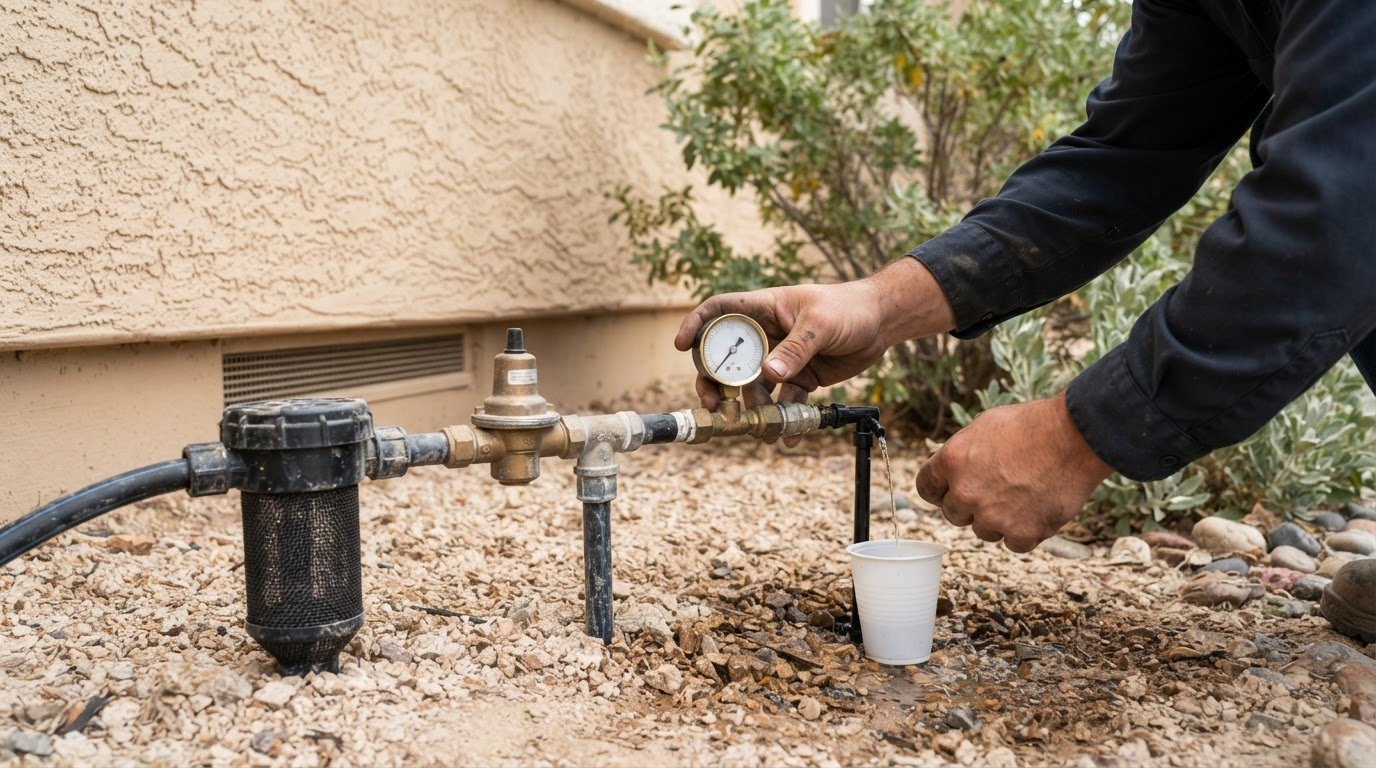
A drip irrigation leak can waste water out of sight and leave plants unevenly watered. Professional irrigation services in Sun City Grand can help locate the source, repair damaged lines or components, and restore more consistent coverage. An inspection can also distinguish a leak from issues such as a clogged emitter or faulty valve.
It’s reasonable to want a repair that addresses the cause, not just the visible symptom. In Arizona’s desert climate, system condition, plant needs, and watering schedules all matter. Drip irrigation can target watering, while efficient components and a properly adjusted controller can help the system operate as intended.
This article explains what an irrigation inspection can cover, how professionals approach leak repairs, and when an upgrade or drip installation may make sense. You’ll also learn how controllers affect system efficiency and what details can help a service professional understand your concern.
Key Takeaways
- A system inspection can reveal uneven coverage, worn components, and issues that may otherwise go unnoticed.
- Underground leaks can affect water delivery and soil conditions; identifying the damaged pipe or fitting helps guide a lasting repair.
- Watering schedules should reflect plant needs, sun exposure, and emitter type, with seasonal adjustments where appropriate.
- Controller settings and efficient components can help make irrigation more responsive to changing conditions and system needs.
- Professional drip irrigation repair or installation can address distribution problems and better match water delivery to planting areas.
Irrigation system inspections and maintenance
A planned inspection checks coverage, controls, valves, and visible signs of leaks. In Sun City Grand, seasonal tune-ups can also help align system operation with changing plant needs.
System Checks and Troubleshooting
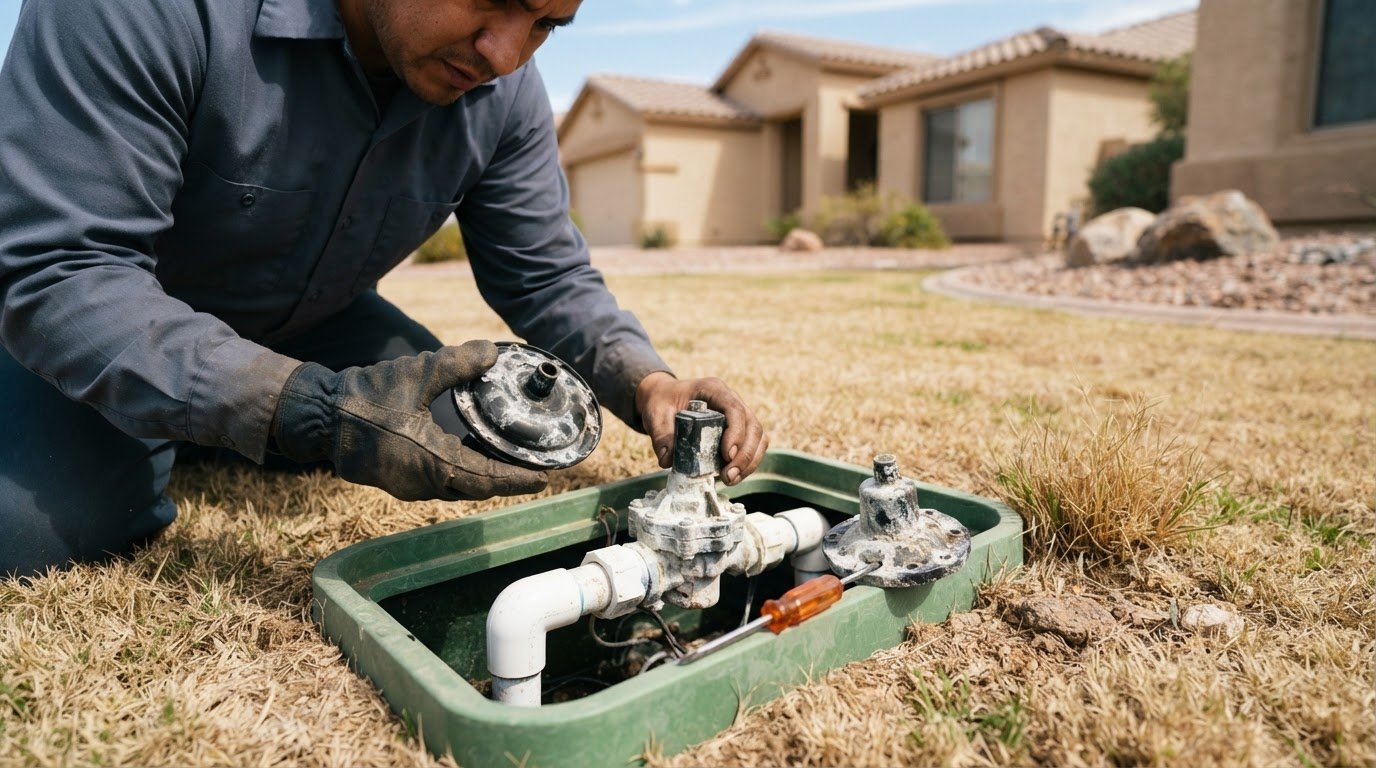
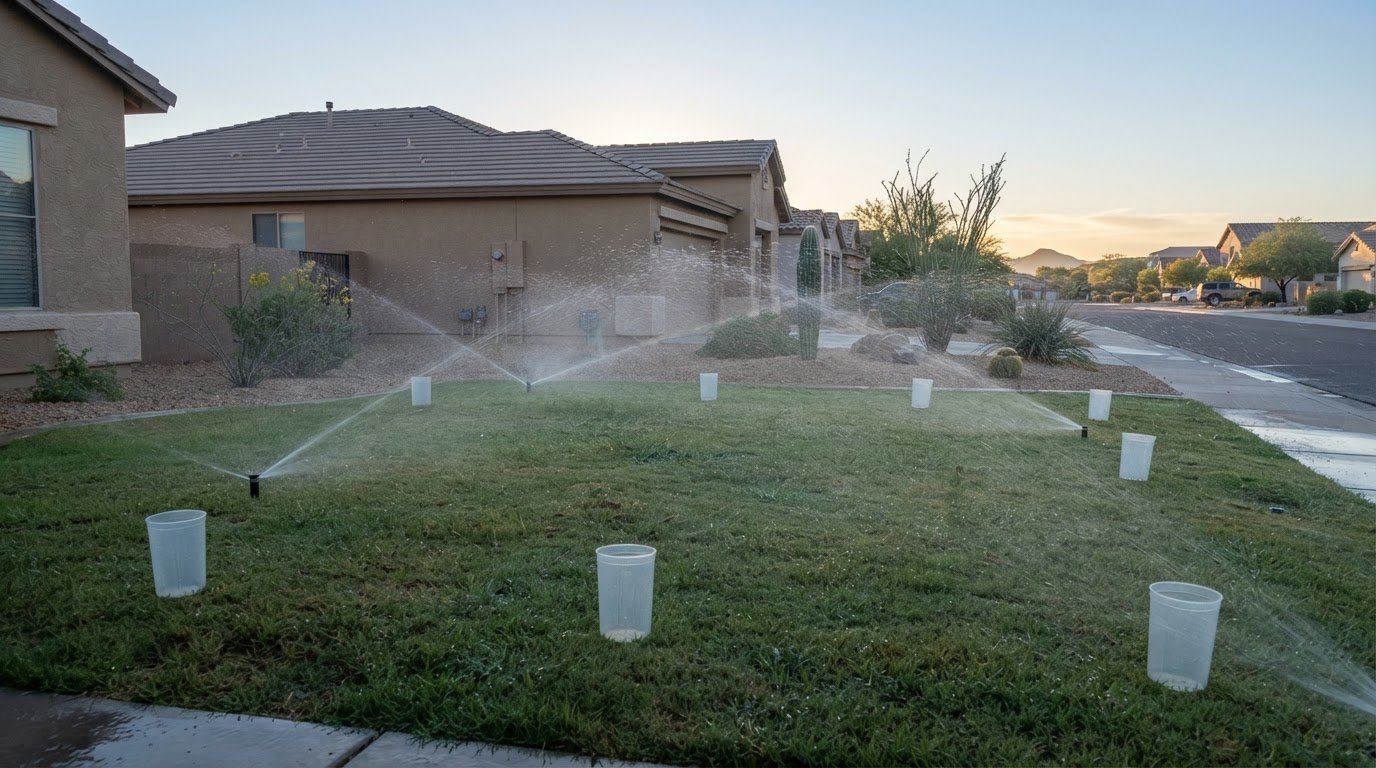
A technician runs each irrigation zone and observes how water reaches its intended area. The inspection can reveal a misaligned sprinkler head, clogged nozzle, stuck valve, or wet patch near a pipe. These symptoms can call for different repairs, so diagnosis comes before replacing parts. Wiring diagnostics can also help identify control problems.
For example, dry turf beside a saturated strip may indicate uneven coverage rather than a schedule problem. A professional can inspect the head pattern, valve operation, and controller response, then make the repair that fits the cause. An irrigation system repair and maintenance inspection can address worn or damaged components without treating every symptom as a pipe leak.
For homes governed by an HOA, the association’s governing documents determine whether irrigation work needs approval or an approved vendor. Requirements can differ between private lots and shared areas, so consult the documents that apply to the property.
For Arizona irrigation work, licensing requirements depend on the job’s scope and applicable contractor classification. A sound review distinguishes any required license from proof of insurance and additional certifications, as these credentials serve different purposes.
Customer reviews are most useful when they describe specific outcomes, such as accurate leak diagnosis, clear communication, or whether the repaired zone worked as intended. General praise alone reveals less about the quality of irrigation troubleshooting.
Responsibility generally follows property control: homeowners oversee systems serving their private lots, while common-area irrigation is managed under the community’s governing arrangements. Association documents explain how shared areas and their irrigation are assigned.
Seasonal Tune-Ups and Routine Care
A seasonal tune-up reviews controller settings, zone coverage, and components affected by normal wear. Arizona’s seasonal shifts can change plant water needs, so a technician can adjust schedules and inspect operation instead of leaving one setting unchanged year-round. Winter operation should also be reviewed for the system and existing landscape.
Routine maintenance can include checking valves, sprinkler heads, and visible connections, then correcting leaks or poor coverage found during operation. A technician can investigate recurring faults, such as a zone that repeatedly loses pressure, by checking the related valve, wiring, or pipe. Addressing the cause helps keep future tune-ups focused.
For a new or substantially changed layout, system design should account for planting areas, sun exposure, and the intended irrigation method. A professional can plan zones and head placement to provide suitable coverage. Installation puts that design into operation, followed by a system test to identify adjustments before the work is complete.
Underground pipe and fitting leak repair
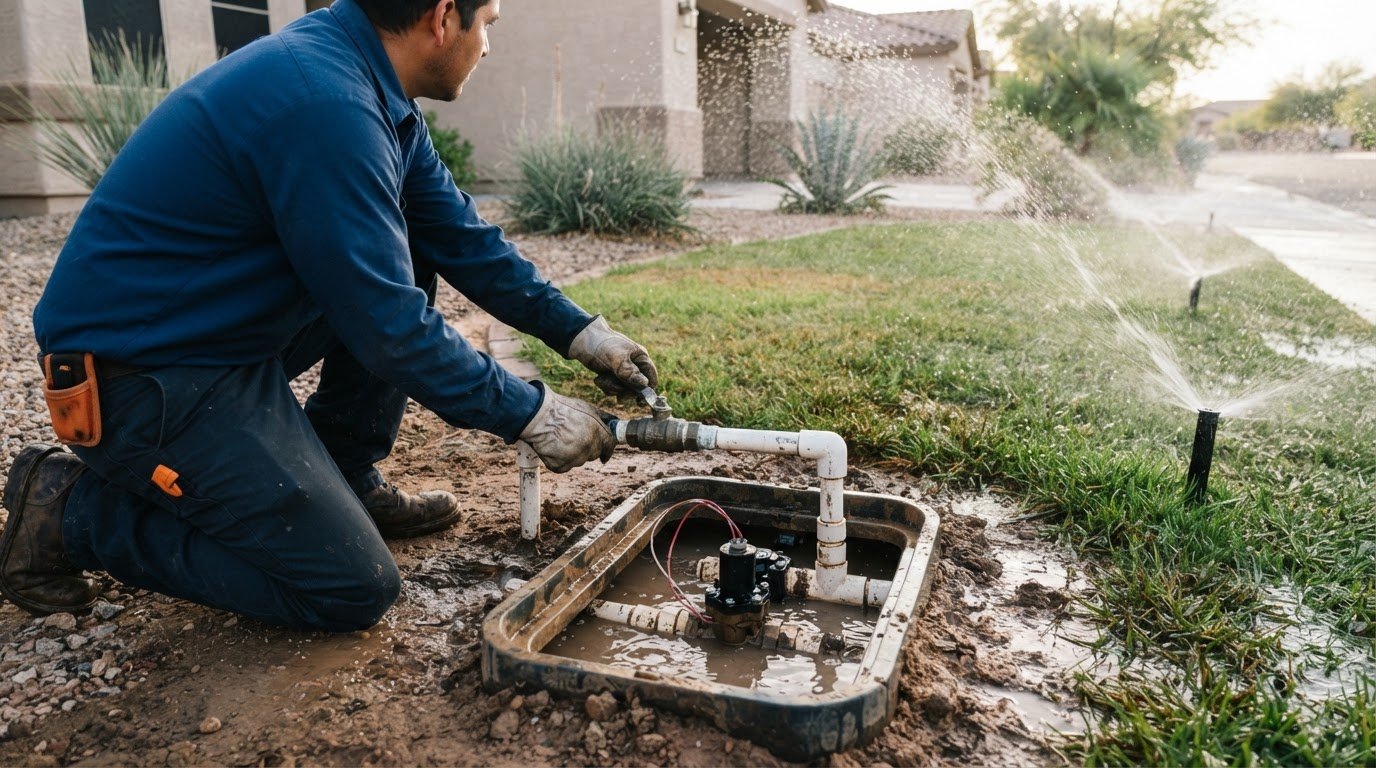
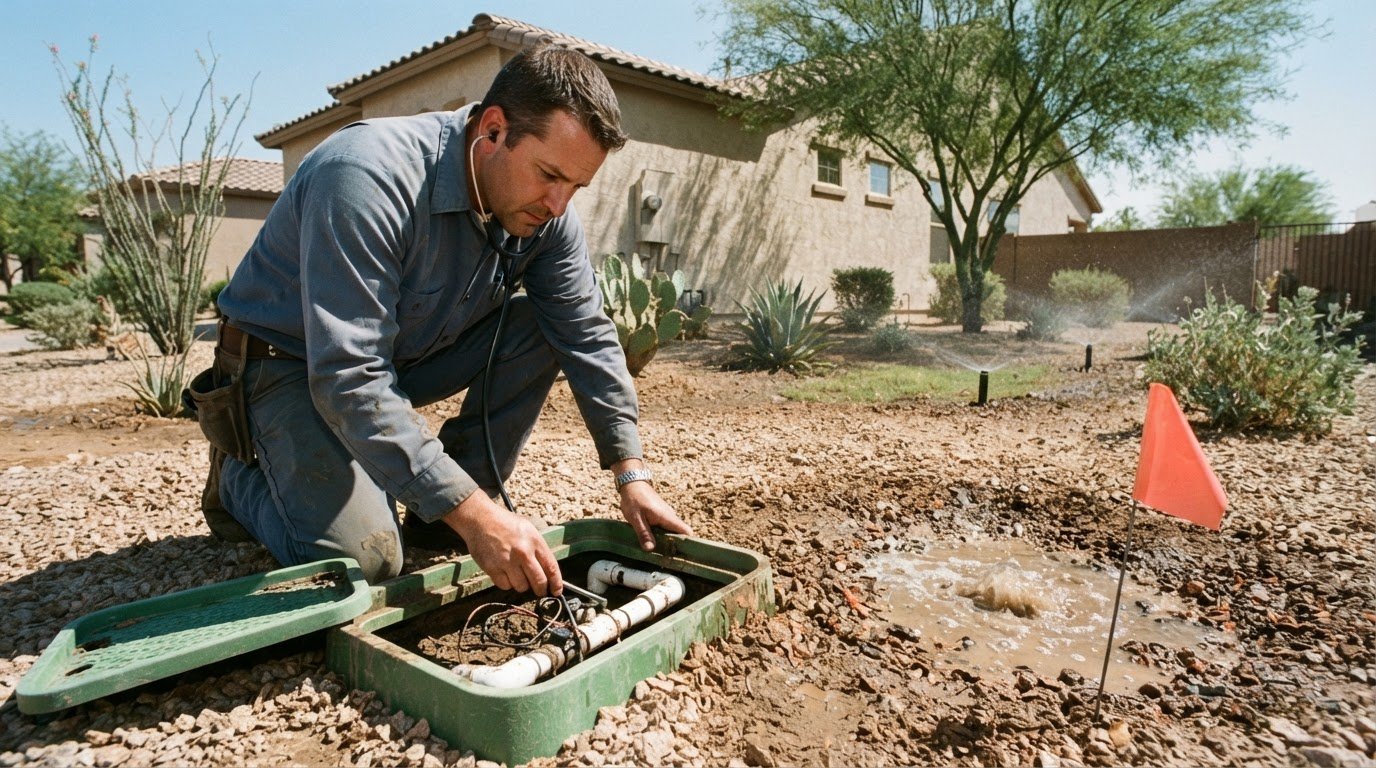
An underground leak can appear as a persistently wet patch, soil erosion, or weak sprinkler coverage. In Sun City Grand, water may surface away from the damaged pipe because it can travel through soil first. A repair assessment traces the affected zone, checks its pressure and flow, and narrows down the likely leak location before excavation.
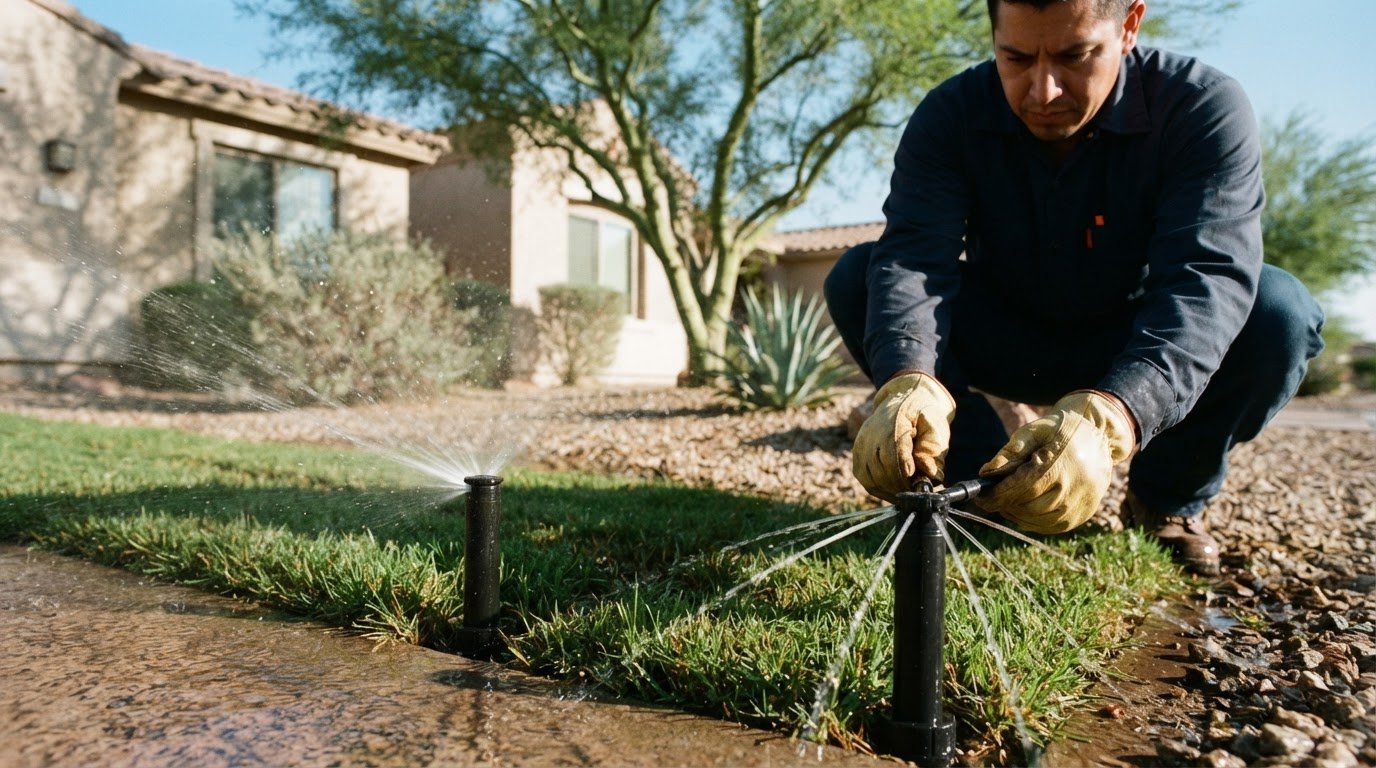
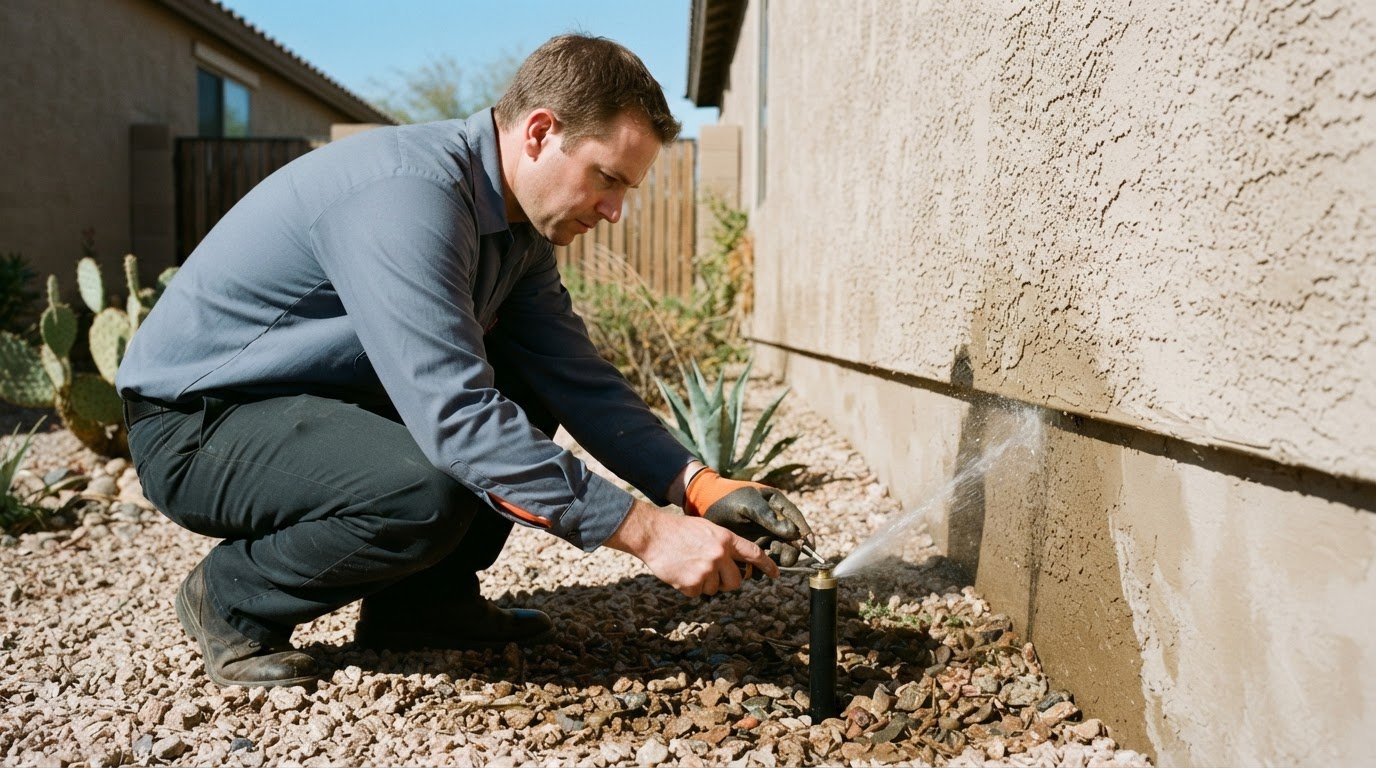
Broken heads create a different pattern. Water spraying sideways, bubbling around a head, or pooling beside it can indicate damage to the head or its connection. A technician compares the affected zone with nearby coverage, then determines whether adjustment, replacement, or pipe repair is appropriate. Replacing a head without checking its connection can leave the underlying leak unresolved.
Underground pipe and fitting repairs depend on locating the fault and identifying the damaged material. The technician exposes the affected section, examines the pipe and joint, then replaces or reconnects the damaged area. Irrigation PVC pipe replacement is appropriate when the pipe itself has failed; a damaged fitting may need a more localized repair. The system is then run to assess the repaired section and surrounding coverage.
For example, a soft patch beside a sprinkler line may indicate a leaking fitting, while several underperforming heads in one zone may point to a supply problem. These symptoms guide diagnosis but don’t prove the exact fault. A professional inspection considers the controller, valve, visible heads, and pipe route before selecting a repair. This helps prevent unnecessary digging and repeat work.
A repair estimate depends on access to the damaged area, the location and extent of the leak, and the parts needed. The price depends on the case and is given after a quote request. Repair timing also depends on locating the fault, reaching the pipe, and completing the repair and system test; concealed damage can require additional investigation.
A repair service listing does not itself mean the work includes a free estimate or emergency response; these are separate service terms. A successful repair addresses the source and restores proper operation to the affected zone, rather than simply covering the wet area.
For a recurring leak, low pressure, or damaged underground line, request irrigation repair assistance with details about the affected zone, visible water, and changes in sprinkler performance. Those observations help frame the inspection and determine whether pipe, fitting, or head repair is needed.
Because irrigation controllers often run at night, missing sprinkler heads or excessive cycle times may be hard to notice. Keep a record of wet areas, weak coverage, and changes in sprinkler performance when describing the concern. These observations can help frame an inspection, but they don’t establish the exact fault. Include the affected zone and visible signs when requesting help, so the assessment can focus on the reported symptoms without assuming a particular pipe or fitting is damaged.
The City of Grand Prairie recommends hand-watering stressed areas and plants with high water needs. Describe any stressed areas along with the affected zone and visible signs while an underground leak is being assessed. The repair assessment can consider those observations alongside the condition of the system, rather than treating a single symptom as proof of a damaged pipe or fitting.
Water conservation and irrigation efficiency
Efficient watering depends on coverage, plant needs, soil response, and schedule. In Surprise, Arizona, a system assessment can identify runoff, pressure problems, or watering patterns that waste water.
Water Conservation and Runoff Prevention
Runoff occurs when water is applied faster than the soil can absorb it. A technician can review each zone’s run time, observe where water collects, and adjust the schedule to reduce excess flow. Infrequent, deeper watering supports root development, while short, repeated cycles can send water over hard or sloped ground.
Station schedules should reflect plant type, sun exposure, and emitter type. A sunny planting bed and a shaded area may need different run times, even on the same property. If one plant looks stressed, targeted hand-watering can address that spot without extending watering across the entire zone.
Season matters, too. Reduce irrigation during spring and fall as conditions change, and use almost no additional irrigation in winter when most plants are dormant. A professional can tune each zone as plant needs shift, rather than applying one schedule uniformly across the existing landscape.
Water-Saving Upgrades and Pressure Diagnosis
Water-saving upgrades work best when they solve a specific coverage or delivery problem. Drip irrigation can direct water to planting areas, while suitable emitters help match delivery to the plants. A drip system may suit beds where spray heads wet paths or nearby surfaces.
Low pressure can cause weak spray, incomplete head coverage, or uneven delivery across a zone. Diagnosis starts by comparing affected zones and checking likely causes, such as a partially closed valve, leak, or clogged component. Several weak heads in one zone suggest a different issue from one poorly performing head.
Consider pressure and coverage together before changing run times. Extending a schedule may not fix weak delivery and can increase runoff in areas already receiving enough water. A technician can inspect the zone, identify whether the issue lies in its supply or components, and recommend a suitable repair or upgrade.
Controller adjustments can also support conservation. Start with shorter station times, then increase them incrementally if plant conditions show a need. A rain sensor can prevent scheduled irrigation during rainfall, while seasonal adjustments help avoid using the same settings as weather and plant needs change.
During an efficiency review, the professional connects each observation to a decision: adjust coverage, revise the schedule, diagnose pressure, or change a component. For example, dry plants beside wet pavement call for a different correction than a whole zone receiving weak flow. Matching the remedy to the pattern helps reduce wasted water while maintaining useful coverage.
Water-efficient components and smart controllers
Efficient components work best when matched to each irrigation zone. Controller settings, sprinkler heads, valves, and sensors all affect water delivery.
Controller Repairs and Troubleshooting
A controller fault can leave a zone off, running at the wrong time, or watering repeatedly. A technician checks its display, wiring connections, programmed start times, and response to zone commands. If the controller runs but a zone stays dry, the fault may involve a valve or wiring rather than the timer itself.
Sprinkler heads and valves need attention when a zone sprays unevenly or fails to start. A technician can inspect the affected components, then repair or replace parts based on the cause. For example, a cracked head may need replacement, while a valve that doesn’t open can require diagnosis beyond changing the schedule.
Programming, Schedules, and Restrictions
Watering restrictions and schedules in Surprise, Arizona, should follow the requirements that apply to the property. A controller schedule doesn’t override those rules. Before programming, the professional considers the applicable schedule, plant needs, sun exposure, and emitter type.
Many irrigation controllers offer multiple start times, multiple programs, and seasonal adjustment capabilities. These settings let a technician separate zones with different watering needs, rather than assigning a sunny bed and a shaded area identical run times. Seasonal adjustment also helps adapt operation as plant and weather conditions change.
Controllers often run at night, which can hide a missing sprinkler head or excessive cycle time. A system test during operation can reveal spray reaching pavement, a zone running longer than intended, or a head failing to distribute water. If the system has a rain sensor, it can also prevent scheduled irrigation during rainfall.
Water-efficient components should suit the area they serve. Sprinkler heads need to distribute water across their intended coverage, while drip emitters suit targeted delivery to planting beds. Replacing a mismatched component can improve delivery to that zone, but the technician should also consider pressure, valve operation, and controller settings.
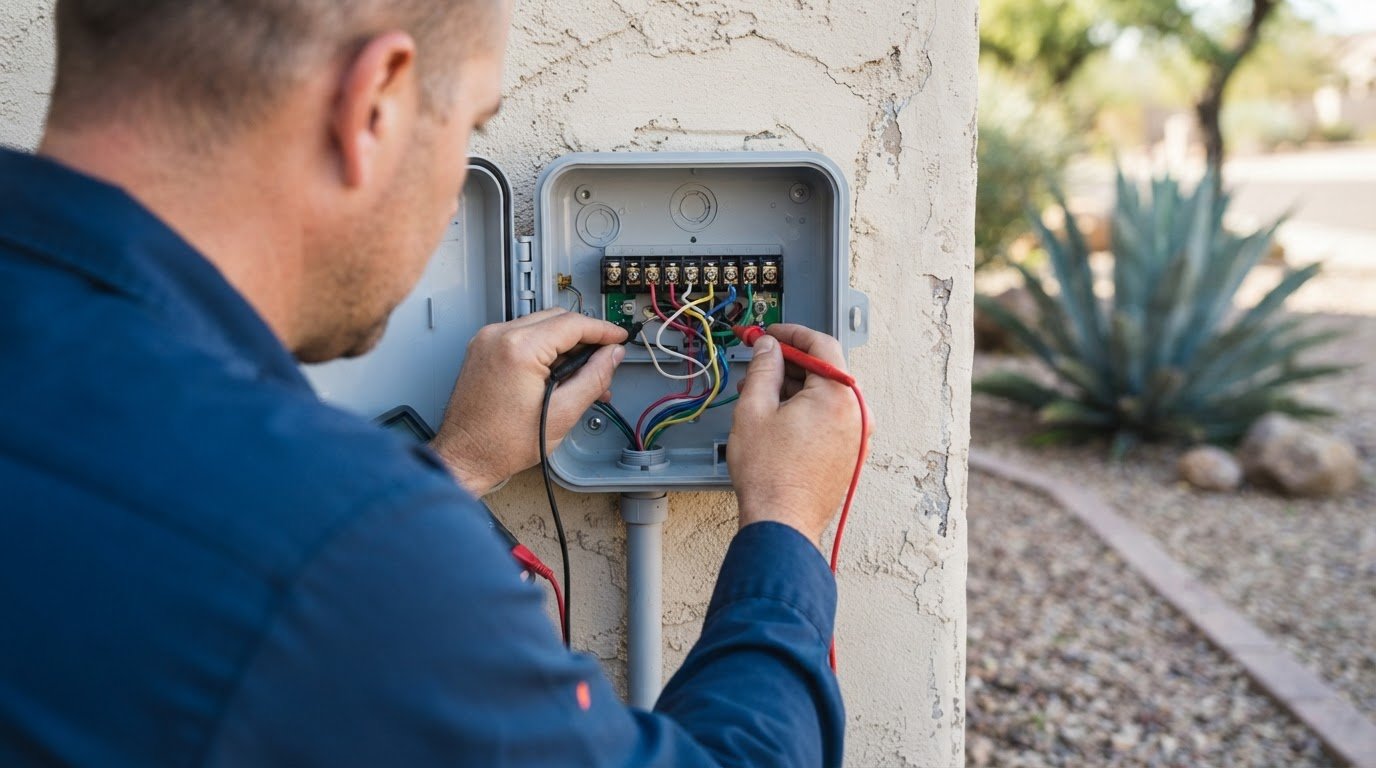
Controller troubleshooting may include inspecting irrigation wiring when a zone doesn’t respond to commands. A technician can trace the control issue and distinguish a wiring fault from a failed valve or incorrect program. Irrigation wiring diagnostics can identify the difference before parts are replaced.
A useful tune-up ends with each program and zone operating as intended. The technician checks start times, seasonal settings, sensor response, and visible coverage. For example, a schedule can be shortened where water runs onto a walkway, while a zone with poor delivery needs component diagnosis rather than longer run times.
Drip irrigation repair, installation, and maintenance
Drip systems deliver water through tubing and emitters near plant roots. In Sun City Grand, they can serve planting beds that need targeted coverage. Their performance depends on unobstructed emitters, intact tubing, and a suitable layout. A professional assesses these parts together before recommending a repair or installation.
Uneven plant growth can signal a distribution problem. A dry shrub beside a wet one may point to a blocked emitter, kinked tube, or disconnected fitting. A technician checks the affected line and compares delivery across nearby outlets. The distinction matters: replacing one emitter won’t correct a damaged mainline or poorly arranged zone.
Leaks also have recognizable patterns. Water bubbling at a connector suggests a loose or damaged joint, while a persistently saturated area may indicate a split tube. A professional traces the line, locates the failure, and repairs or replaces the affected section. Afterward, the system is run to confirm water reaches the intended planting area without pooling around the repair.
Installation begins with the planting layout, not simply the tubing route. The design considers which plants share a zone, where they are located, and how water should reach each root area. A technician then places distribution lines and emitters to suit those needs. For example, plants spaced apart may need individual outlets, while a continuous bed may call for a different line arrangement.
Drip irrigation installation is useful when spray coverage wets paths or nearby surfaces, or when beds need more targeted delivery. Converting from sprinklers requires attention to the existing zone, valve, and controller, as well as the new distribution layout. A professional evaluates those connections before installing drip components. This helps create a system that works as a whole, rather than adding tubing without regard to existing controls.
Routine maintenance focuses on changes that affect water delivery. During a service visit, a technician can inspect tubing for damage, check emitters for blockages, and look for loose fittings or water collecting in the wrong place. Seasonal plant growth can also conceal lines or shift coverage needs. These observations help determine whether the system needs a localized repair, adjusted layout, or broader upgrade.
For reliable performance, the final check follows water from the zone into the planting area. The technician confirms that repaired connections hold, emitters deliver water, and the controller operates the intended zone. If dry spots persist, the layout, outlet condition, and schedule need further review. Request professional drip irrigation repair or installation to address uneven delivery, damaged tubing, or a new planting-bed layout.
Sonora Sprinkler: Valve and Backflow Services
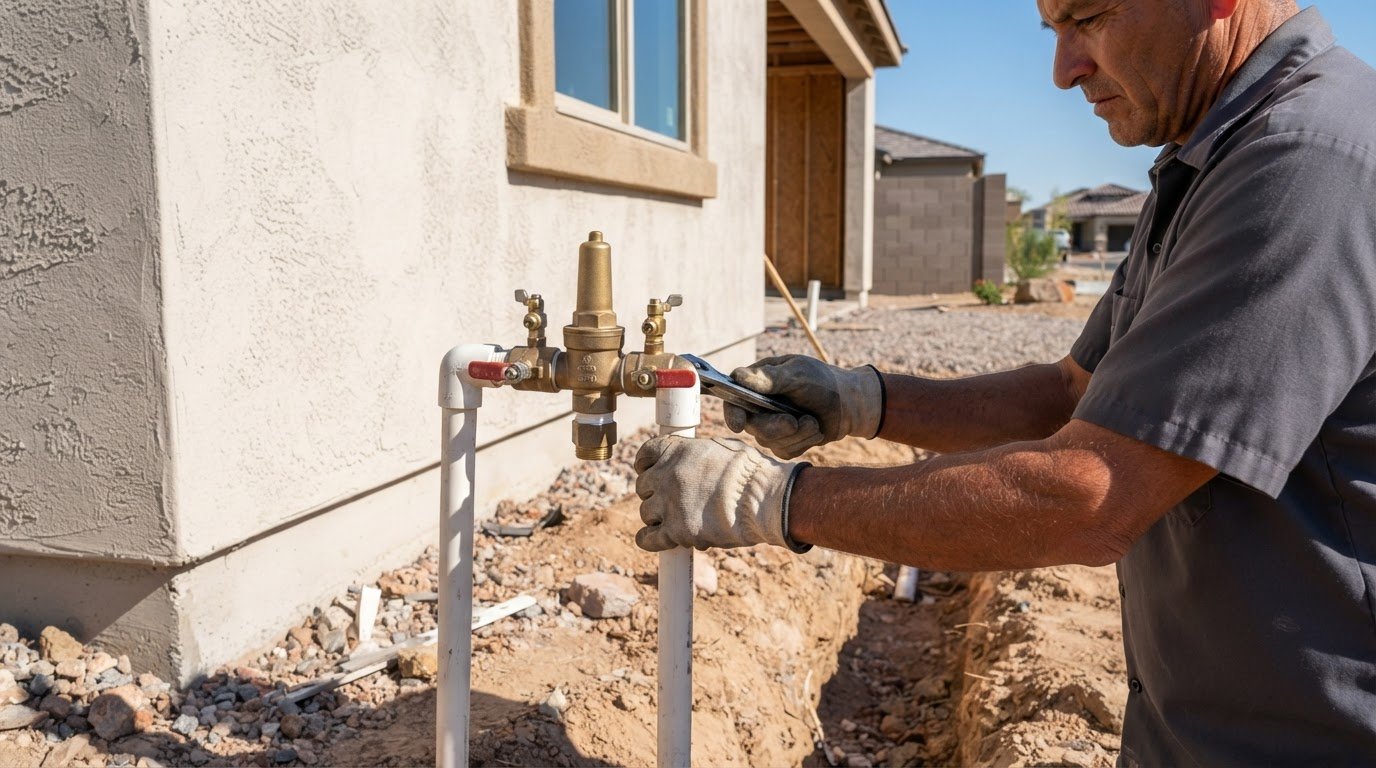
Sonora Sprinkler Inc. provides valve and backflow services for irrigation systems with control or backflow concerns. A valve problem can prevent a zone from starting or stopping correctly, while backflow components serve a different role in the water system. An inspection helps identify which part needs attention and whether irrigation repair is also appropriate.
For properties with uneven coverage or damaged lines, irrigation repair can address system faults. Irrigation installation or drip irrigation installation can support a new layout or targeted watering needs. The right next step depends on the existing system’s condition and the issue affecting its operation.
If a valve, backflow component, or irrigation zone needs attention, contact Sonora Sprinkler Inc. to discuss the work, as well as any other irrigation services in Sun City Grand you may require.
Keep Your Irrigation System Ready for What’s Next
A well-maintained irrigation system supports the health of your property over time. The next step is to address the system’s current need, whether a fault requires repair or the layout calls for a new installation. Clear details about affected zones, visible water, or controller behavior can help frame a professional assessment.
For homeowners seeking irrigation services in Sun City Grand, Sonora Sprinkler offers irrigation repair, irrigation installation, and drip irrigation installation. The right service depends on the existing system’s condition and the outcome you need. Repair can address a fault, while installation can support a new or changed layout.
Treat a service visit as a chance to establish a practical path forward for your system. Share what you’ve observed and which areas need attention, then discuss the work that fits those conditions. A clear starting point makes it easier to plan the next phase of irrigation care.
Contact Sonora Sprinkler to discuss your irrigation needs and take the next step with confidence.
Frequently Asked Questions
Which irrigation repair and installation companies serve Sun City Grand in Surprise, Arizona?
Sonora Sprinkler Inc. provides residential irrigation repair and installation in Surprise and nearby Arizona communities, including Peoria and Sun City Grand. Homeowners seeking irrigation services in Sun City Grand can get help with sprinkler and drip-system installation, repair, custom sprinkler design, wiring diagnostics, valve and backflow services, and PVC pipe replacement. The company focuses on residential irrigation system performance, not landscaping or commercial irrigation.
What irrigation services are available in Sun City Grand, including sprinkler and drip-system repair?
Irrigation services in Sun City Grand include sprinkler repair, drip irrigation installation, custom system design, wiring diagnostics, valve and backflow services, and sprinkler upgrades. For example, a homeowner planning a new planting bed may need a drip layout, while a system with an inoperative zone may need wiring or valve diagnosis. Irrigation installation can serve a new system, while repair targets faults in existing equipment.
How do professionals identify and repair common sprinkler or drip-irrigation problems?
Professionals connect visible symptoms with system checks. A sprinkler head that won’t rise or retract may be affected by dirt, debris, worn components, or a hidden leak reducing pressure. If a timer misses its schedule, the controller or wiring may be at fault. For drip systems, a technician examines the affected zone and components to locate the delivery problem, then selects a repair suited to its cause.
What do customer reviews say about local irrigation service providers?
Reviews are most useful when they describe specific outcomes, such as accurate leak diagnosis, clear communication, and whether the repaired zone worked as intended. General praise alone says less about troubleshooting quality.