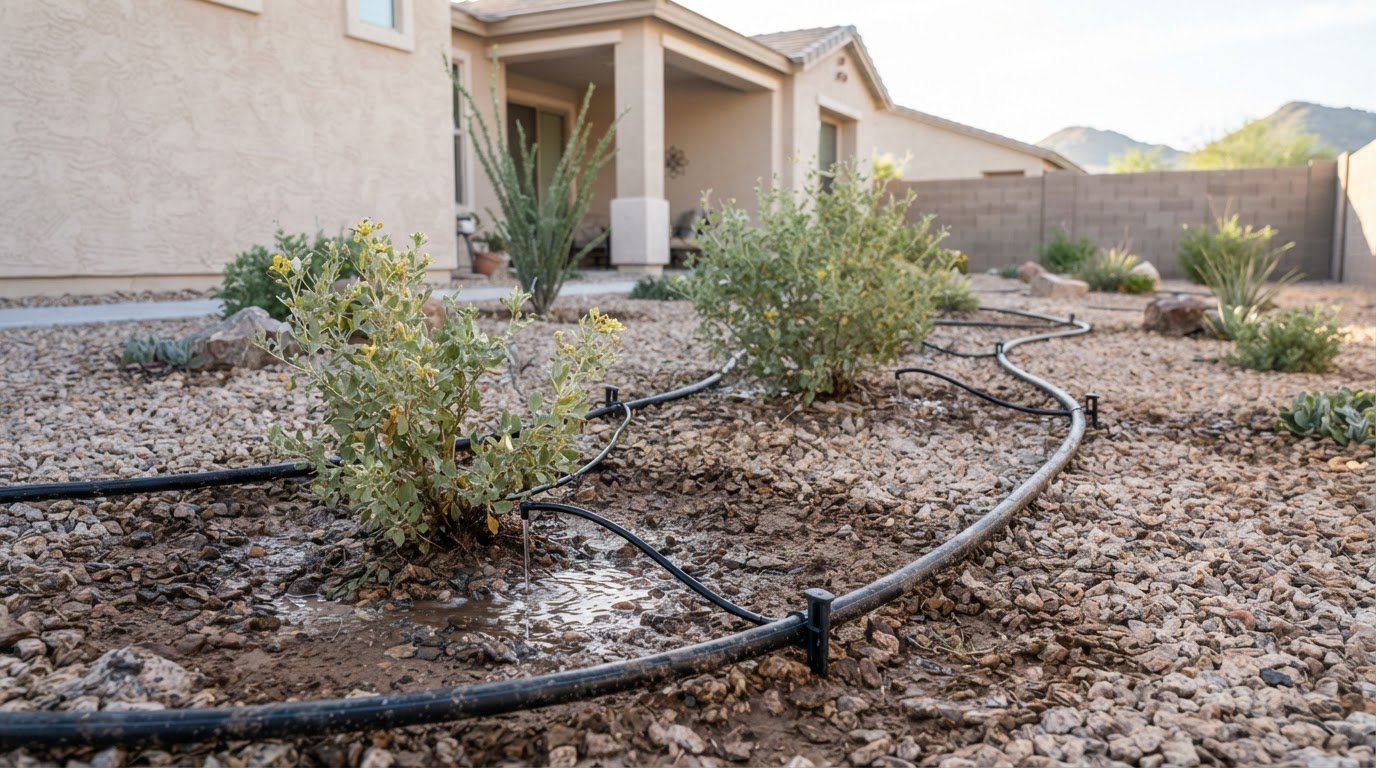
Yes, hard water can affect an irrigation system. Mineral deposits may clog sprinkler nozzles and make valves stick, while electrical faults, worn components, and underground leaks can also disrupt watering. These are common sprinkler system problems in Arizona, where a fault may show up as weak spray, a dry patch, or water pooling in the yard.
A sprinkler that isn’t working as expected may have a problem beyond the head. The cause could be the controller, wiring, valves, or buried pipes, so treat the visible symptom as a starting point for diagnosis.
This article explains how to recognize warning signs and what they may mean, including hard-water buildup, controller and electrical issues, valve failures, and underground leaks. You’ll learn how these problems affect water distribution, when a simple obstruction may be involved, and when a more complex system fault needs attention.
Key Takeaways
- Hard-water deposits and debris can obstruct sprinkler heads, leading to weak or uneven spray and dry patches.
- A system that skips zones or runs at the wrong time may have a controller, wiring, solenoid, or valve issue.
- Low pressure can point to a blockage, a leak, or a problem affecting the water supply to a zone.
- Pooling around a valve box or soggy, sunken ground may signal a valve or underground pipe leak.
- Matching the visible symptom to the likely system fault helps determine when irrigation repair or a system redesign may be needed.
1. What Are the Most Common Sprinkler Problems in Arizona?
Clogged or damaged sprinkler heads are among the common sprinkler system problems in Arizona. One blocked nozzle can leave a brown patch while nearby grass remains green. A head that sprays a sidewalk instead of plants can waste water and leave the intended area dry. These visible differences help narrow down where watering is failing.
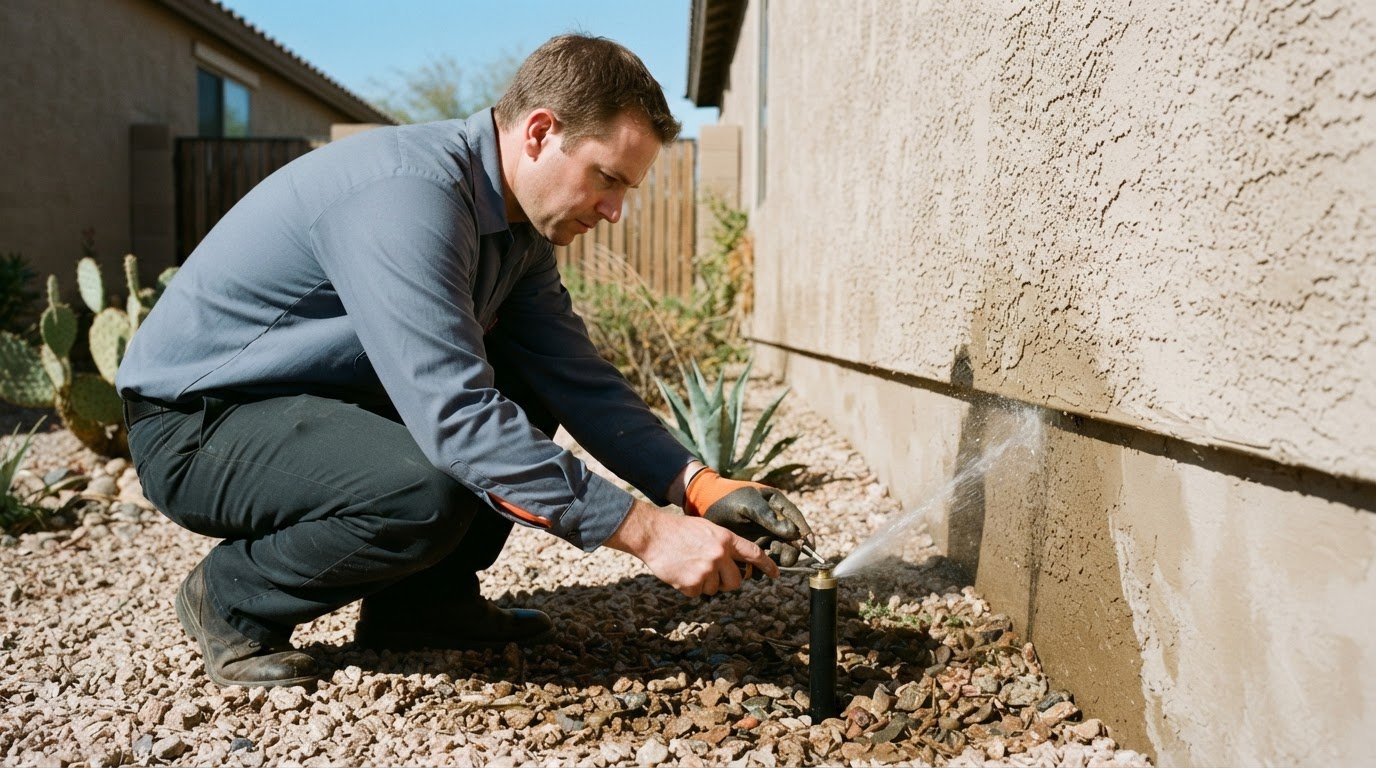
Arizona hard water can leave calcium and other mineral deposits inside nozzles. Dirt, sand, and debris can also obstruct the opening and disrupt the spray pattern. A clogged head may produce a weak or uneven stream, or fail to pop up fully. If one head behaves differently from others in its zone, check its nozzle for visible buildup or debris.
Not every dry patch points to a system-wide fault. A single sprinkler head may be broken, sunken, or unable to retract after watering. A head that stays down can miss the plants around it, while one that leaks or sprays poorly may leave a small area dry. Dogs, lawn mowers, foot traffic, and tree roots can damage or shift heads.
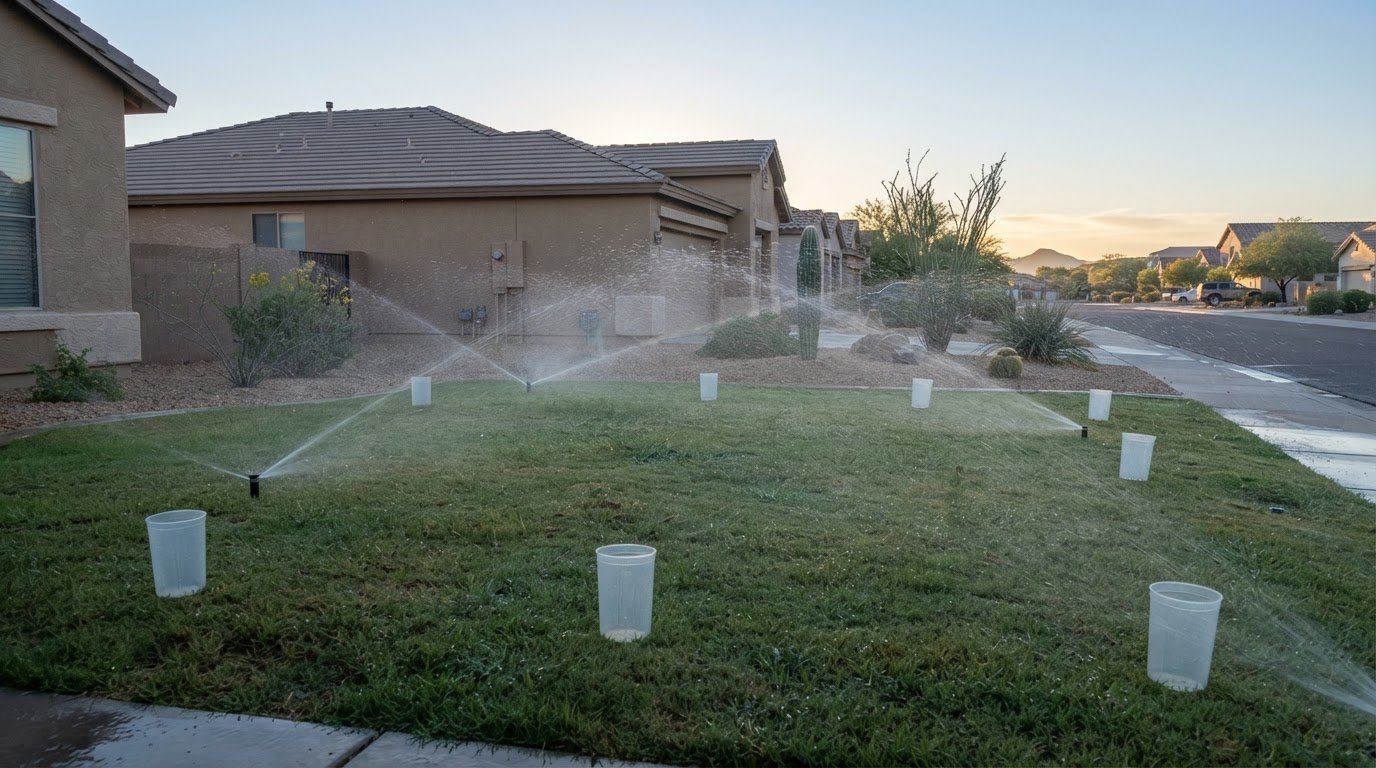
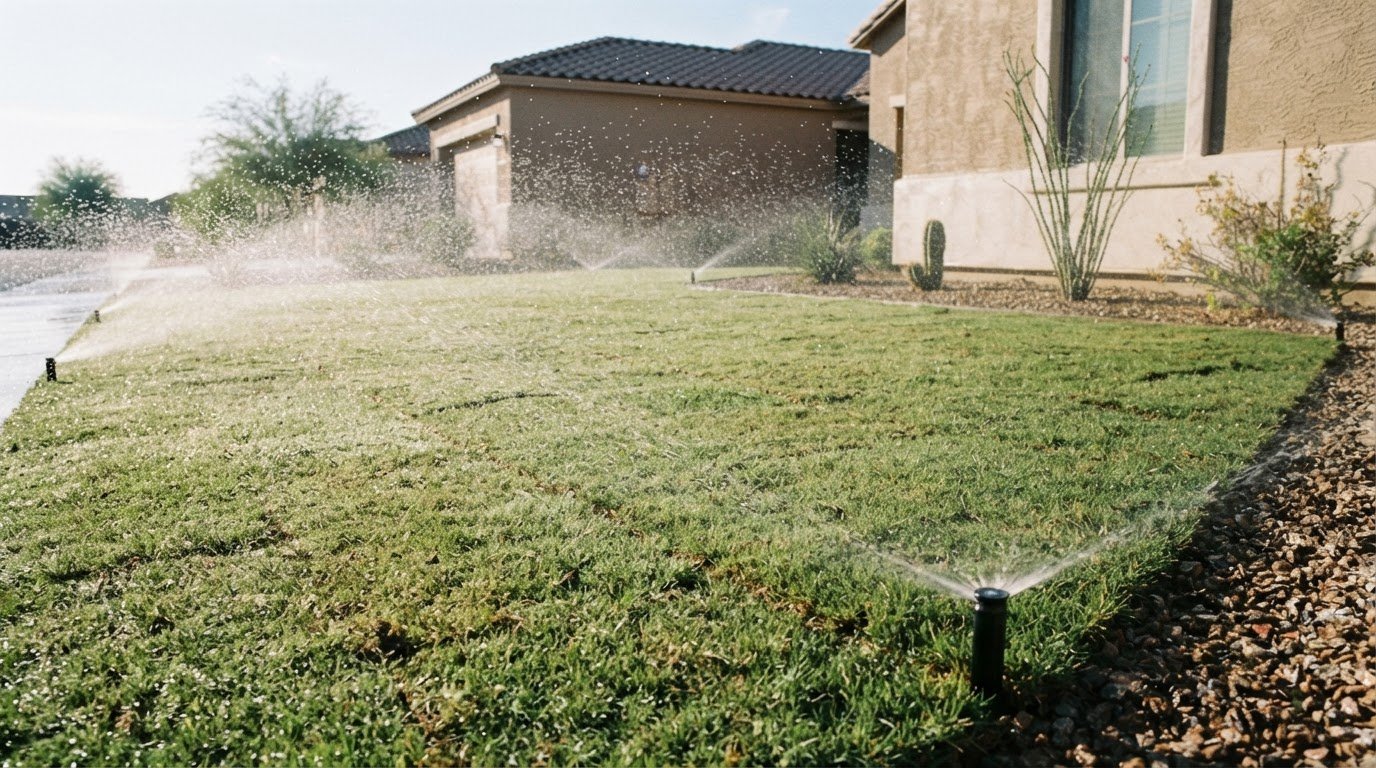
Alignment and height also affect coverage. A misaligned head can spray a driveway or sidewalk instead of plants, while a sunken head may have its spray blocked by soil or grass. A head set too high can be struck during lawn maintenance. As a practical check, observe each zone while it runs and note heads that spray erratically, remain down, or miss nearby plants.
Regularly inspecting and cleaning sprinkler heads can help prevent obstructions from affecting water flow. Check whether each head rises, rotates or sprays as expected, and retracts when the zone shuts off. Look for a blocked nozzle, mineral deposits, dirt, a shifted head, or water flowing around its base. Compare nearby heads in the same zone to spot an individual mismatch.
You can address a visible obstruction if the head is accessible and the system is safely shut off. A recurring clog, broken component, persistent leak, or several heads with weak spray may point to a deeper problem. Stop inspecting if water is uncontrolled, wiring is exposed, or the next step requires opening pressurized components. These conditions call for professional repair.
When cleaning a nozzle doesn’t restore a consistent spray, irrigation repair can address damaged heads and related system faults. A repair can help distinguish a clogged nozzle from a broken head, pressure issue, or line problem. That distinction matters: replacing or cleaning the wrong part may leave the same dry patch and water waste unresolved.
2. Electrical malfunctions and controller issues
An irrigation controller schedules watering times and durations, then signals valves to open each zone. If the display is blank, settings disappear, or watering starts at the wrong time, the system may not operate properly. A controller fault is one possibility, but power, programming, wiring, and valve components can produce similar symptoms.
Start with basic controller checks: confirm it has power, review the programmed schedule, and try manual zone activation. A reset schedule can make a functioning system seem broken, while manual activation can show whether the issue affects one zone or several. If the controller works manually but misses scheduled starts, programming or controller operation may be involved.
A single skipped zone points toward a localized fault. A shorted solenoid, loose wiring connection, faulty valve, or controller problem can prevent that zone from starting. If several zones fail together, the controller’s power or signal may be the common factor. Comparing the affected zones helps narrow down which irrigation components need diagnosis.
Wiring faults can interrupt the electrical signal between the controller and valves. Damaged connections may leave a zone inactive or cause inconsistent operation. A blown fuse or tripped circuit breaker can also stop a system from turning on. Check the display and visible controller settings, but don’t handle exposed wiring or open electrical components.
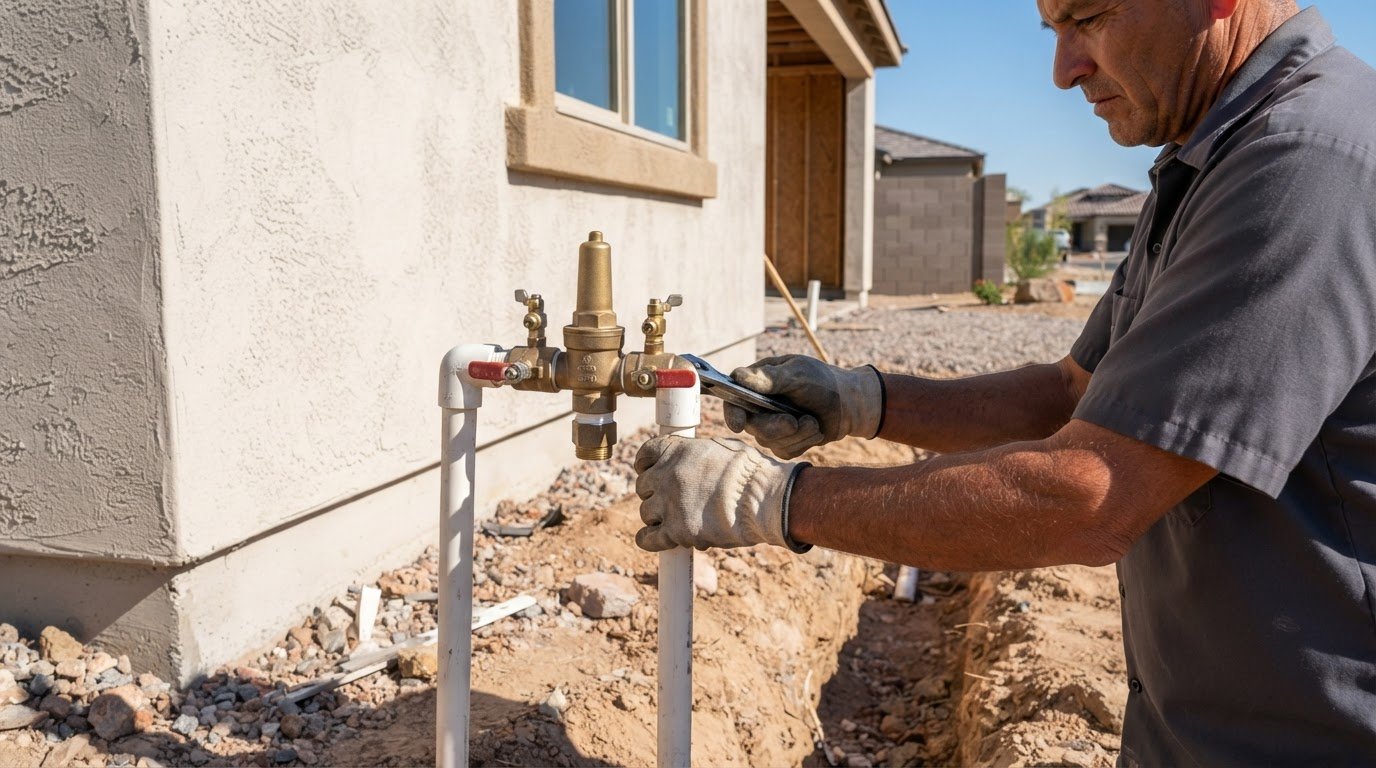
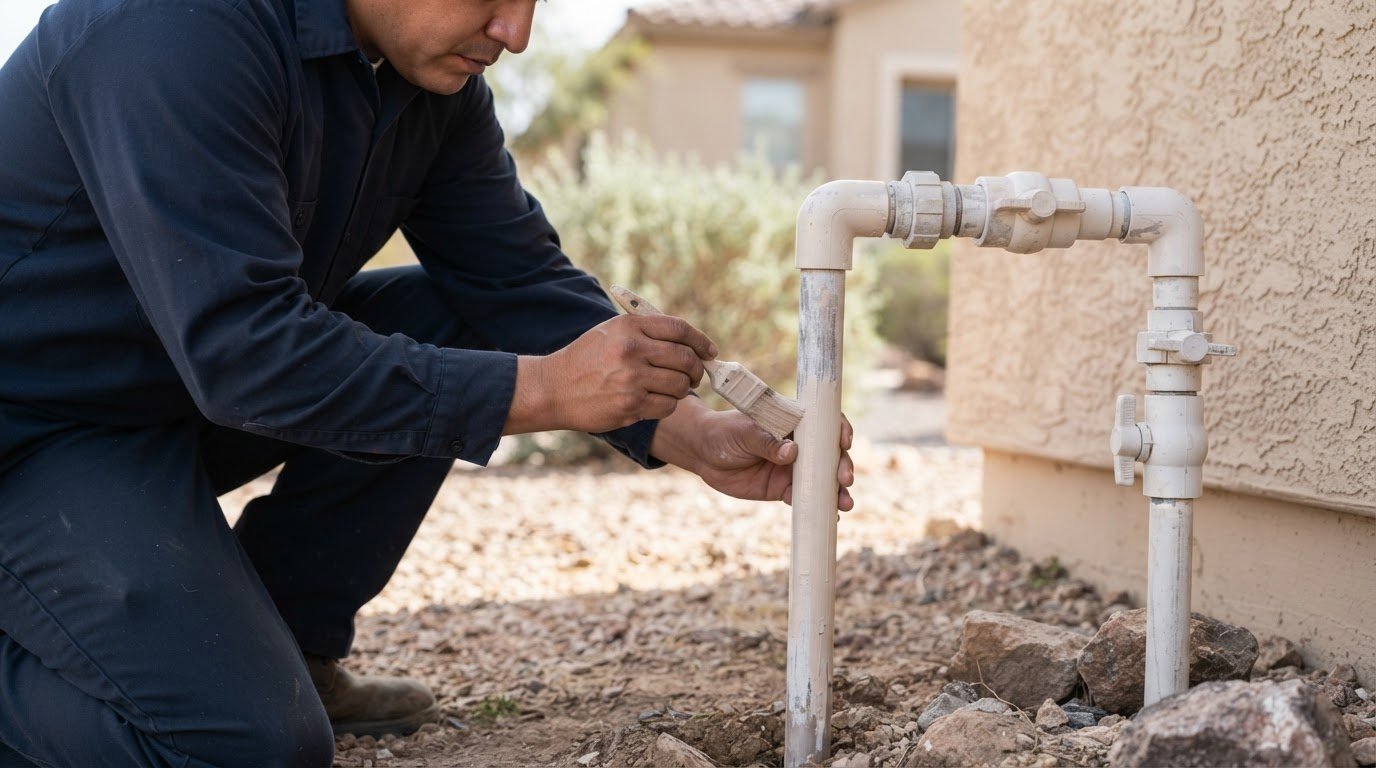
Backflow preventer problems can resemble electrical or controller trouble because they may restrict water reaching the irrigation lines. A cracked or partially closed preventer can result in little or no flow, even when the controller activates a zone. The backflow preventer also protects the home’s water supply, so faults involving it need professional attention rather than improvised adjustments.
Smart irrigation controllers can adjust watering schedules based on weather conditions. Some systems can also use soil moisture levels and weather forecasts when adapting irrigation. If a smart controller’s schedule changes unexpectedly, review its settings and available inputs before assuming a valve has failed. A schedule change and a failed electrical signal are different problems, even if both alter watering.
Professional diagnostics are appropriate when manual activation fails, wiring appears damaged, multiple zones stop responding, or a backflow preventer is involved. These symptoms can cross several components, and replacing a controller without tracing the signal may leave the original fault unresolved. Irrigation wiring and diagnostics can identify whether the fault lies in wiring, controller signals, or connected components.
If the system still skips zones or runs at the wrong times after basic controller checks, request help with the irrigation issue. Describe which zones respond, whether manual activation works, and what the controller displays. Those details provide a practical starting point for diagnosing the electrical fault.
3. Can hard water affect my irrigation system?
Yes. Arizona hard water can leave calcium and other mineral deposits inside sprinkler nozzles and valves. Deposits narrow water passages, restrict flow, and can make valves stick open or closed. The result may be weak spray, uneven coverage, or a zone that keeps running after its schedule ends.
Residential watering restrictions and schedules vary by local jurisdiction and water provider. Check the rules that apply to your address, then set irrigation times and durations around local requirements, plant needs, and seasonal conditions.
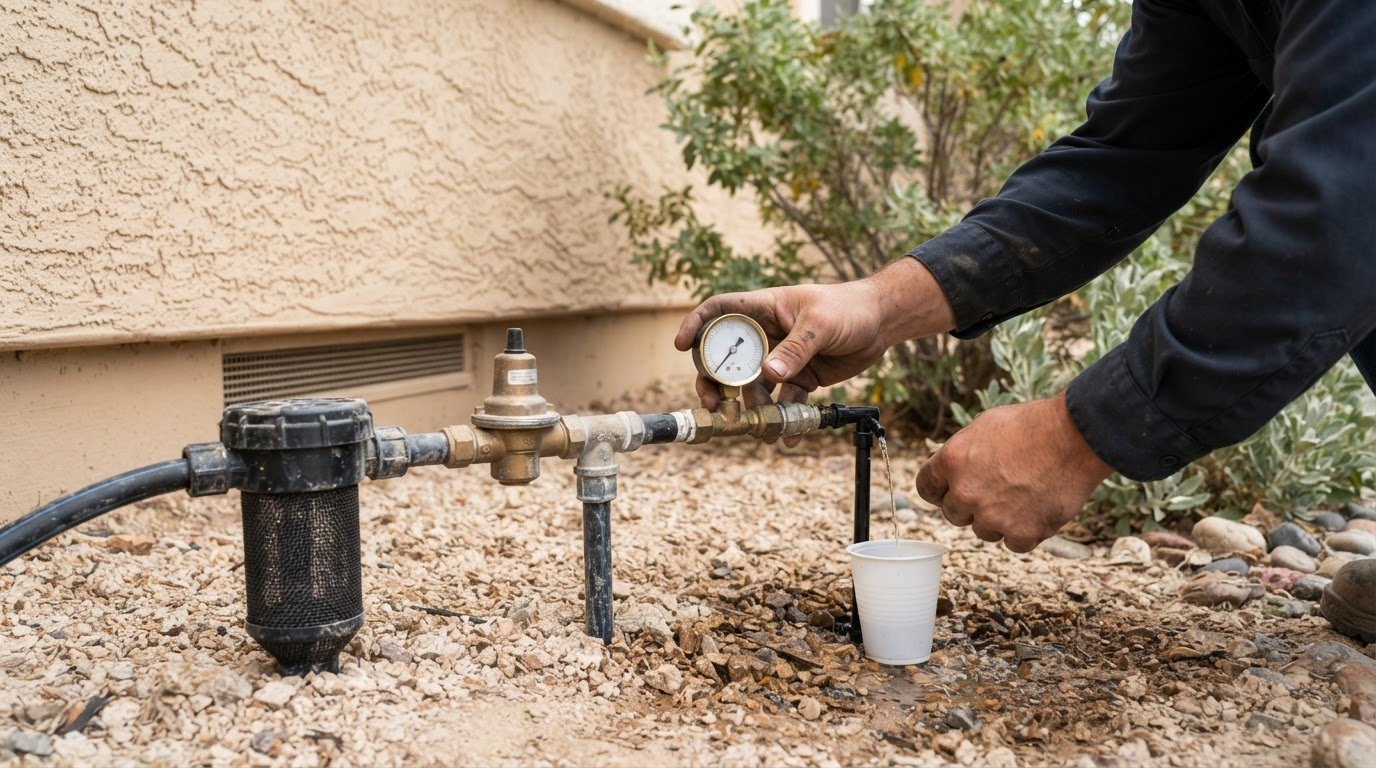
Pressure problems can affect one zone or the entire irrigation system. If every zone has weak spray, the cause may involve the main supply, a partially closed valve, or a leak. If only one zone struggles, a clogged filter, blocked line, faulty valve, or too many heads operating together may be responsible. Compare the affected zone with one that waters normally.
Low water pressure can prevent sprinkler heads from rising fully or producing an even spray, leaving dry areas despite a scheduled watering cycle. High pressure creates a different problem: water may break into a fine mist and evaporate before reaching plants. Both conditions can reduce effective coverage and contribute to water waste.
Hard-water buildup can impair sprinkler performance by clogging nozzles and interfering with valve movement. Dirt and sediment can combine with mineral deposits, further restricting flow. A head with a weak or distorted spray may have a blocked nozzle, while a zone that does not shut off properly may point to a sticking valve. Cleaning a visible obstruction can help, but recurring symptoms indicate a fault that needs diagnosis.
Common causes of leaks, low pressure, and uneven coverage include cracked pipes, leaking connections, blocked filters, faulty valves, and misaligned heads. A soggy area or persistent puddle can indicate a leak; weak spray across multiple zones may indicate a supply or main-line issue. Electrical faults can prevent a valve from opening, although they do not directly reduce water pressure.
To narrow down the cause, observe the system while each zone runs. Note whether weak pressure affects one zone or several, whether water pools near a valve, and whether spray reaches the intended plants. These details help distinguish a local obstruction from a broader pressure or leak problem. Stop if water is uncontrolled or inspection requires opening pressurized components.
Persistent pressure changes deserve attention because continued poor coverage can leave plants underwatered while other areas receive excess water. A system diagnosis considers supply flow, filters, valves, pipe condition, and head placement together. Treating only the visible symptom may leave the underlying restriction or leak in place.
4. Valve and manifold problems
A zone valve controls water entering its irrigation line. If it fails to open, one section may stay dry while other zones function. If it fails to close, water may continue flowing after the controller finishes. A zone that clicks without delivering water can also point to a valve obstruction or an electrical signal reaching the wrong component.
Inside many irrigation valves, a solenoid operates a diaphragm that regulates water flow. Dirt, small rocks, or mineral deposits can interfere with the diaphragm’s seal. Worn internal parts may also prevent the valve from opening or closing fully. For example, a valve that does not seal can let water seep through its zone even when watering is off.
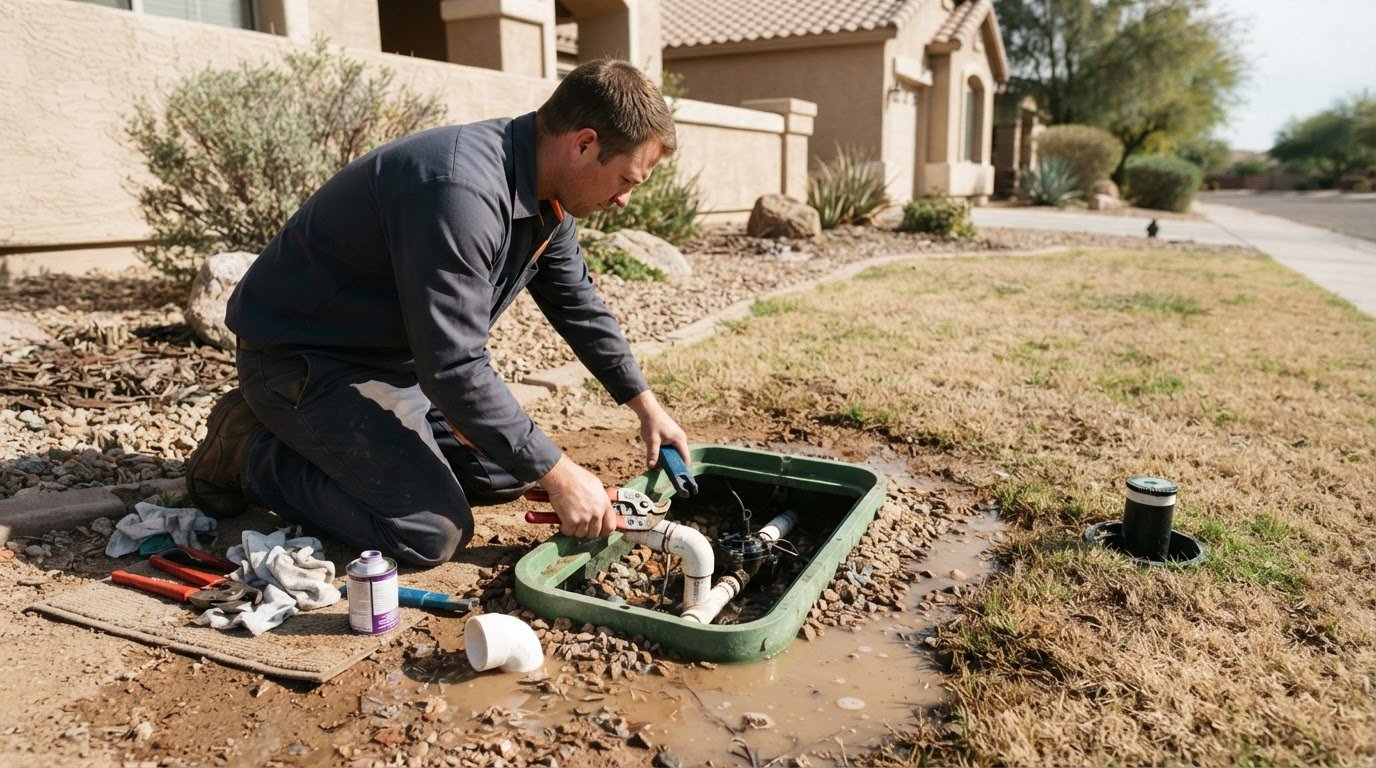
Check the pattern of the symptom. A single zone that stays off suggests a local valve, wiring, or blockage issue. Water running continuously in one zone points toward a valve that cannot close properly. If water pools around the valve box, the manifold may be cracked, or a valve may be leaking. These clues help distinguish a localized component fault from a broader supply problem.
Persistent puddles deserve attention. A leaking valve can waste water and leave soil around the box saturated. A partially closed main water valve can also restrict pressure to the irrigation system. Look for water around the box while the system is off, then note whether the wet area grows during a watering cycle. Don’t open pressurized components to investigate.
Seasonal inspection can help reveal developing wear before a valve stops functioning. Inspect irrigation valves yearly for visible leaks, damaged connections, or pooling near the manifold. A broken valve cover or debris around the box can make the assembly harder to assess. If the valve repeatedly sticks after cleaning, worn parts or a failing seal may need professional repair.
Backflow preventer problems require particular care because the device protects the home’s water supply and controls water entering irrigation lines. A cracked or partly closed backflow preventer can leave the system with little or no flow. Since it has a protective role, a suspected fault should be handled by a professional rather than adjusted through guesswork.
Sonora Sprinkler’s valve and backflow services help identify whether the problem lies in a diaphragm, solenoid, manifold, or water connection. The company addresses these components when a zone remains off, continues running, or leaks around its box. Accurate diagnosis matters because replacing nozzles cannot correct a valve that fails to control water flow.
5. Leaks in underground pipes and connections
A wet, sunken, or muddy patch can indicate a leak beneath the yard. If it appears after a sprinkler zone runs, a cracked pipe or loose connection may be releasing water underground. Persistent low pressure across the irrigation system can also point to a major underground leak or failing main line. These faults can waste large amounts of water before the damage becomes obvious.
Not every leak is easy to see. Water may travel through soil before surfacing away from the damaged pipe, so the wettest area may not mark the leak’s exact location. A patch that remains unusually green or soft can also help identify an affected line. Compare the area with nearby ground, then note whether moisture changes after a zone runs.
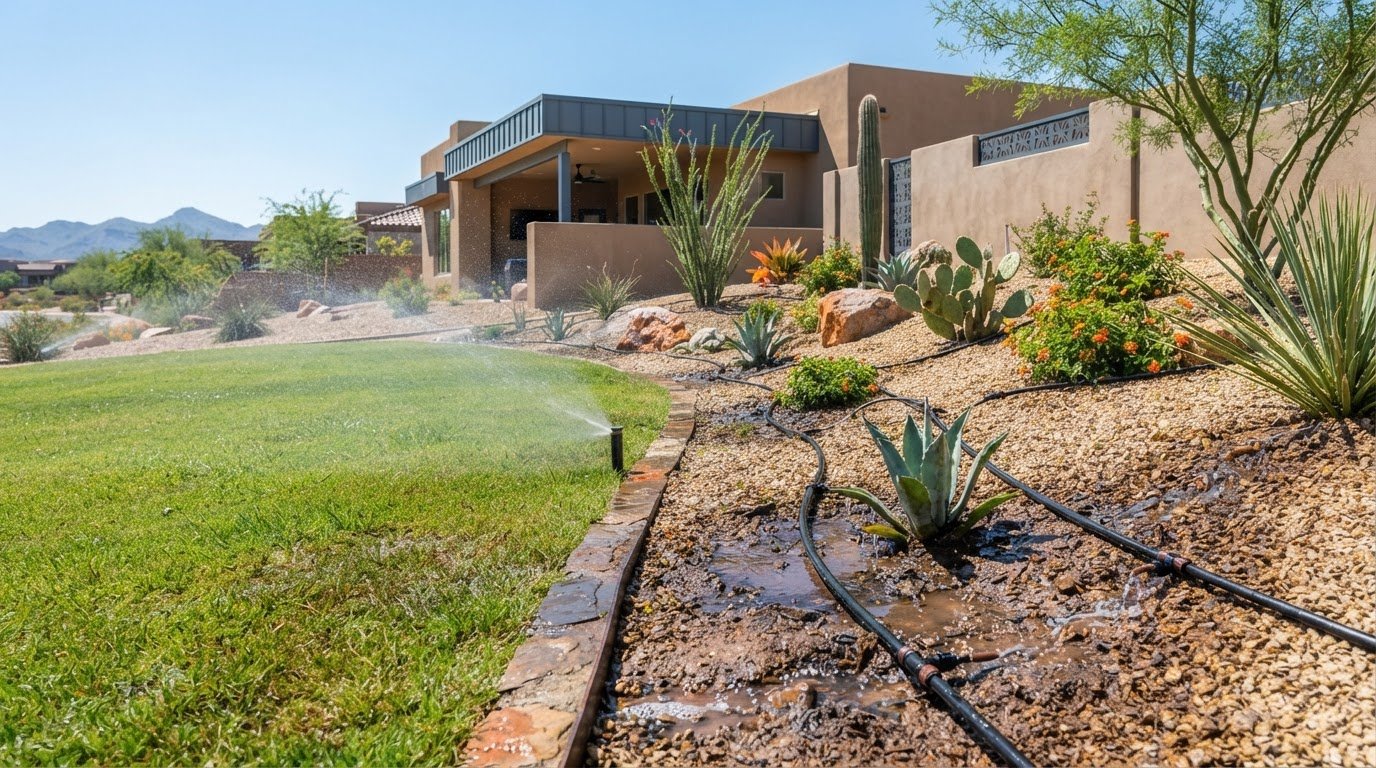
Drip lines can leak or become damaged below mulch, gravel, or soil. A clogged line may instead leave plants in one section dry while other emitters continue watering. Observe the affected area during operation: unexpected wet ground can indicate a break, while dry plants may point to a blockage or restricted flow. Tree roots can also grow into irrigation pipes and valves, creating blockages or leaks.
A leak that continues while the system is off may involve a valve that cannot seal. An obstruction or worn internal part can allow water to pass into a zone after its cycle ends. If only one zone leaks, the fault may involve that zone’s valve, pipe, or connection. Water around a valve box can indicate a failing valve or cracked manifold.
Unusually wet ground, pooling, or a sudden pressure change deserves prompt attention. A damaged underground line can undermine efficient watering, leave some plants short of water, and increase water waste. Watch how each zone behaves, and note whether a puddle appears only during spraying or persists after shutdown. That pattern helps distinguish an active line leak from water passing through a faulty valve.
Repair should address the damaged section, not just the visible wet spot. For leaking PVC, replacing the affected pipe rather than patching it can reduce the chance of the same problem recurring. If roots have pinched or entered a line, the damaged section may need replacement. Avoid digging without locating the pipe, since excavation can damage nearby irrigation lines or wiring.
Underground leaks and persistent pressure loss call for professional diagnosis and sprinkler repair. Locating the fault before opening the ground helps keep repairs focused and protects nearby components. If a wet area returns, a zone leaks while off, or pressure remains low across the system, request help diagnosing an irrigation leak.
Sonora Sprinkler: Custom Sprinkler System Design
Sonora Sprinkler designs custom sprinkler systems for residential properties where recurring coverage or pressure problems point to a system-wide mismatch. A design can account for how irrigation zones serve different parts of the property, rather than treating each dry patch as an isolated fault.
For a specific malfunction, Sonora Sprinkler’s irrigation repair service can address damaged components, valves, or wiring. If a system needs broader changes, irrigation installation or drip irrigation installation may better suit the property and its watering needs. The right next step depends on whether the issue is localized or built into the system’s layout.
If uneven coverage, repeated leaks, or recurring zone problems persist, contact Sonora Sprinkler to discuss the issue and suitable next steps.
Keep your irrigation system ready for the next season
Recurring symptoms are useful clues, not just inconveniences. Note which zones struggle, when the problem appears, and whether it continues after watering stops. This gives repair work a clearer starting point and helps distinguish a one-part failure from a system that needs broader changes. Addressing the underlying cause can help protect plant health and reduce avoidable water waste.
The common sprinkler system problems in Arizona can stem from several connected parts, so the right next step depends on the pattern across your property. Sonora Sprinkler offers irrigation repair for malfunctioning systems, irrigation installation for new setups, and drip irrigation installation where that approach suits the landscape. A focused assessment can help determine which option fits the issue, rather than treating every symptom as the same fault.
For help deciding how to move forward, contact Sonora Sprinkler about your irrigation system. A well-matched repair or installation can put your landscape on a steadier path through the next season.
Frequently Asked Questions
Can hard water affect my irrigation system?
Yes. In Arizona, hard water can leave mineral scale inside nozzles and valve passages. As deposits build, a nozzle may deliver a narrower or irregular stream, while a valve may fail to seal or move freely. If cleaning an accessible head restores its spray only briefly, deposits may be recurring or deeper in the system. Continued clogging can call for a broader irrigation diagnosis.
How often should I check my sprinkler system for leaks?
Visually inspect the irrigation system while it runs at least once a month. Watch each zone for water bubbling from the soil, pooling near a connection, or flowing where no head is spraying. After the cycle ends, note wet spots that persist. A change in ground moisture between checks can help reveal a developing leak before it becomes a larger repair concern.
What Are the Most Common Sprinkler Problems in Arizona?
Common problems include clogged or damaged heads, uneven spray, controller or wiring faults, valve failures, and underground leaks. The location of a symptom offers a useful clue: one dry bed may point to a local head or drip-line issue, while several affected zones suggest a broader supply or control problem. Track which areas change and whether they share a zone.
Why do my sprinkler heads keep breaking?
Repeated damage can come from lawn mowers, foot traffic, dogs, or tree roots shifting or striking heads. Arizona’s intense UV rays can also make plastic components more brittle and vulnerable to breakage. If a head breaks repeatedly in the same spot, its position or nearby root growth may be contributing. A replacement alone may not prevent another failure if the cause remains.
What sprinkler system problems are most common in Arizona?
Hard-water buildup, obstructed heads, faulty valves, controller or wiring trouble, and hidden pipe leaks are frequent sources of trouble. Look for patterns rather than treating every symptom separately. For example, a single area with weak coverage differs from several zones losing pressure together. That distinction helps narrow whether the likely issue is at a head, within a zone, or farther upstream.
How do Arizona heat and drought affect sprinkler systems?
Strong Arizona UV exposure can degrade plastic sprinkler components, making them brittle and easier to damage. Dry conditions also make appropriate irrigation timing important for plant needs, while seasonal shifts in temperature and rainfall can change watering requirements. A schedule that suited one season may not suit the next. Adjusting watering to current weather and the plants being watered supports more consistent care.
How can homeowners troubleshoot sprinkler zones that won't turn on or shut off?
For a zone that won’t start, confirm controller power, review the schedule, and try manual activation. If other zones work but one does not, a valve, solenoid, or wiring connection may be involved. If a zone keeps running after shutdown, an obstructed or worn valve may not be sealing. Stop if wiring is exposed or water is uncontrolled, and arrange professional diagnosis.
How often should Arizona sprinkler systems be inspected and maintained?
Sonora Sprinkler recommends bi-annual inspections before the start of each watering season. Between those service checks, homeowners can visually inspect the running system monthly for leaks, weak coverage, and heads that fail to operate. For residential irrigation in Surprise and Peoria, combining seasonal maintenance with regular observations can help identify developing problems before they affect larger areas.