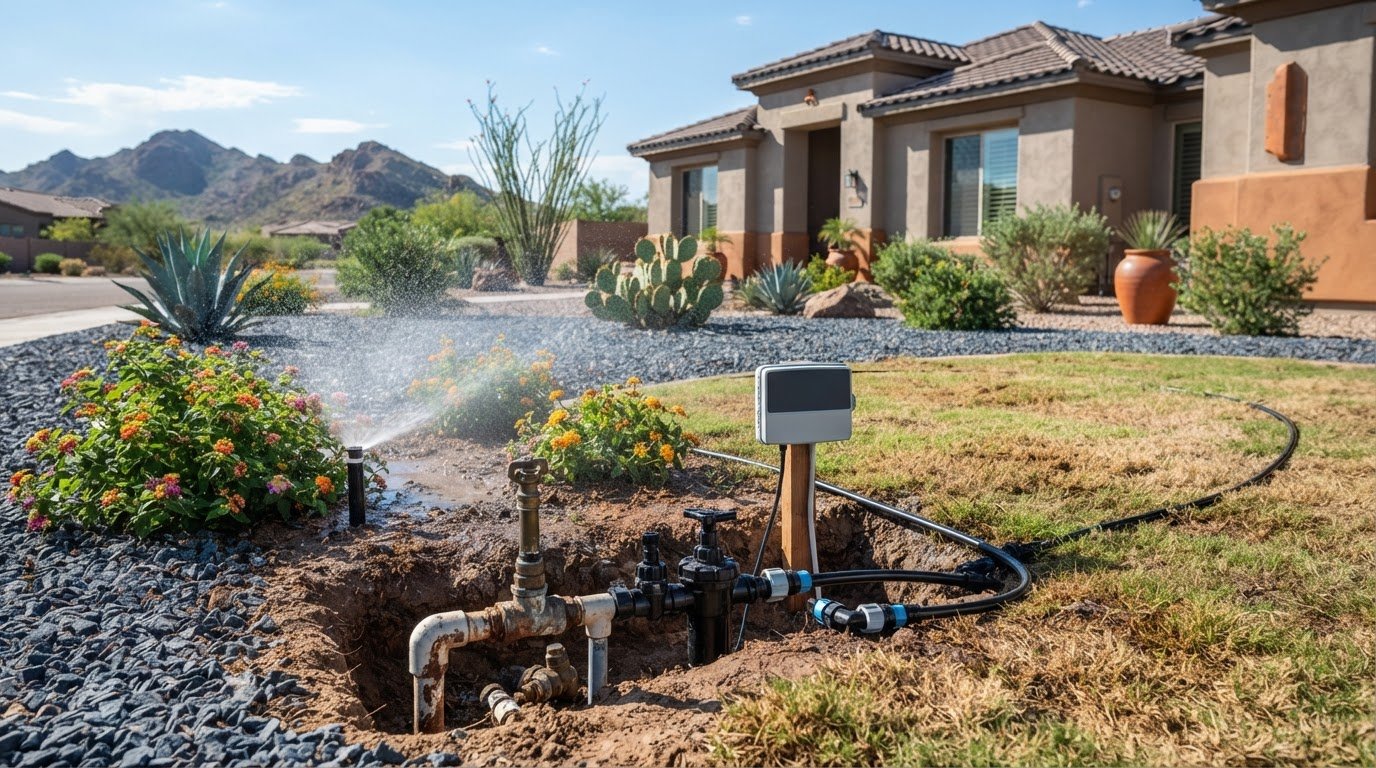
An active construction site in Surprise has backflow obligations to account for before irrigation becomes routine. The City of Surprise requires annual certified backflow testing for active construction job sites, so irrigation backflow preventer installation in Surprise needs to be considered alongside the site’s testing requirements.
Choosing an assembly isn’t just a matter of fitting a valve: the irrigation setup and the risk of contamination affect which type is appropriate. This guide explains what the construction-site testing rule means, how pressure vacuum breakers and reduced-pressure assemblies differ, and what to expect from installation, testing, and repairs. You’ll have a clearer picture of the decisions involved and when an irrigation system needs professional backflow service.
Key Takeaways
- Learn how pressure vacuum breakers and reduced-pressure assemblies differ, and which risks can make one a better fit for an irrigation system.
- See why the system’s setup and potential exposure to backpressure matter when selecting an assembly.
- Understand what installation, testing, and repair may involve, including the signs that a backflow device needs attention.
- Find out how permit and inspection questions relate to installing irrigation backflow prevention in Surprise.
- Explore how valve and backflow service can help address irrigation assembly installation, maintenance, or repair needs.
Pressure vacuum breakers and reduced-pressure assemblies
For irrigation backflow preventer installation in Surprise, the assembly must suit the irrigation system’s risk and operating conditions. Improper installation or missed testing can leave a path for contaminated irrigation water to enter potable plumbing. Leaks or pressure changes can also signal a device problem.
Residential Irrigation Preventer Types
A pressure vacuum breaker is commonly used for residential sprinkler systems. It helps prevent non-potable irrigation water from flowing back into a home’s drinking-water supply. A reduced-pressure zone assembly, or RPZ, is used for higher hazards, such as irrigation that injects fertilizer. The key question is whether the system faces back-siphonage alone or backpressure as well.
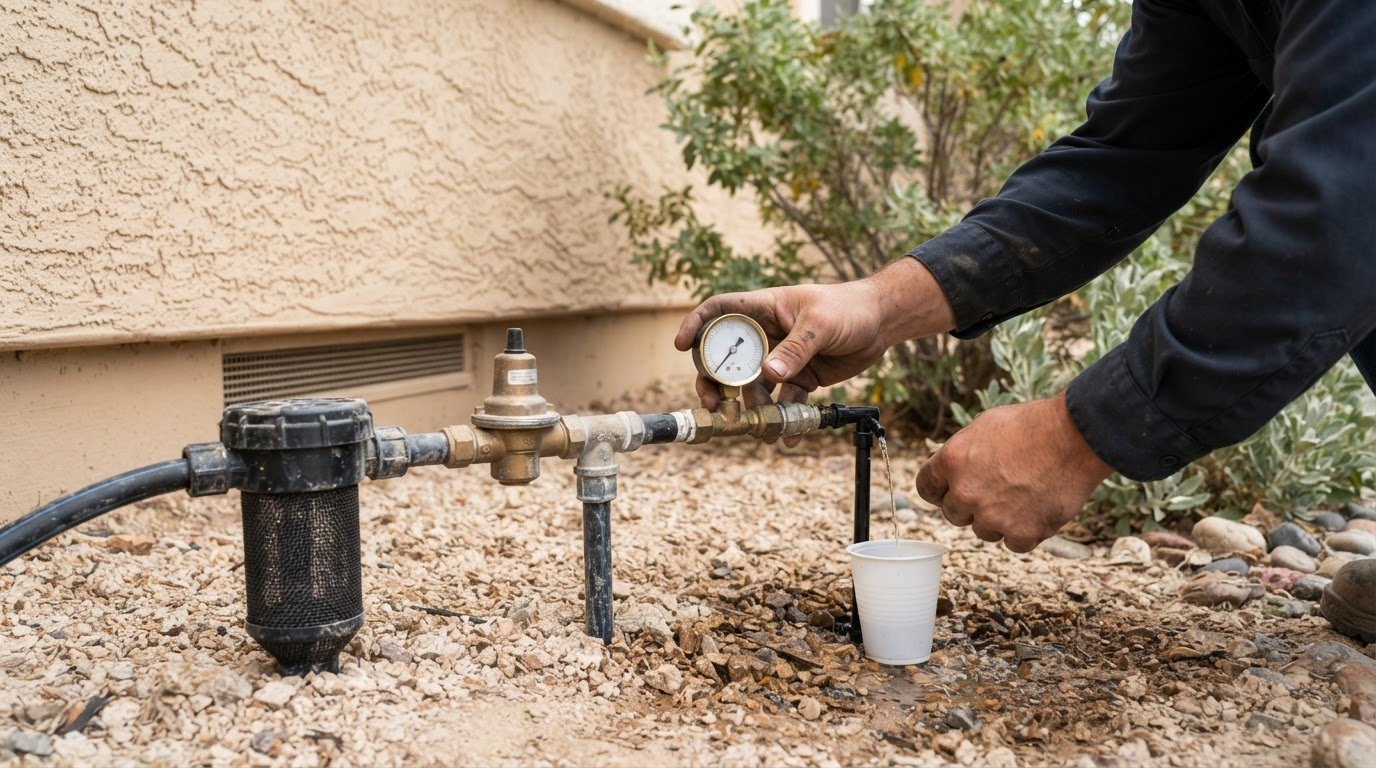
An RPZ protects against both back-siphonage and backpressure. Its two spring-loaded check valves work with a relief valve to manage reverse flow. ASSE International identifies ASSE 1013 as the standard for reduced pressure zone assemblies. The assembly also has four test cocks and two shut-off valves, which provide access for testing and isolation.
These differences matter when an irrigation system changes. Adding fertilizer injection, for example, can increase the hazard and affect the appropriate assembly. A pressure vacuum breaker may suit a sprinkler system, but the system configuration and water-provider requirements guide the final selection. Choose a device for the specific cross-connection risk, not simply because it fits the available space.
Improper Installation and Testing Risks
Installation position matters: an assembly that is submerged or exposed to unsuitable conditions may not protect as intended. A failed check valve or relief function can allow irrigation water to move backward toward potable plumbing, creating a contamination risk inside the property and potentially affecting the wider supply.
Testing can show whether an assembly’s internal valves still operate correctly. In Surprise, testable assemblies are typically checked annually, and required city tests must be performed by a certified tester using calibrated gauges. Skipping a required test can leave a failure undiscovered even when the assembly looks intact. Test results are submitted on the water provider’s requested form, and the homeowner receives a copy.
For system-specific valve and backflow information, the assembly’s condition and symptoms help guide the next step. A leaking relief valve may point to internal trouble, while pressure loss during irrigation can indicate a problem in the device or elsewhere in the system. Discolored water or unusual drainage also warrants attention. Testing helps distinguish a functioning assembly from one that needs repair; visible handles and fittings alone cannot confirm its performance.
Backflow preventer installation and repairs
A sound installation protects the connection between household plumbing and sprinkler piping. For a Surprise property, the work starts by identifying the water supply, irrigation connection, and assembly type. Those details guide placement, pipe connections, and the testing needed before the system returns to service.
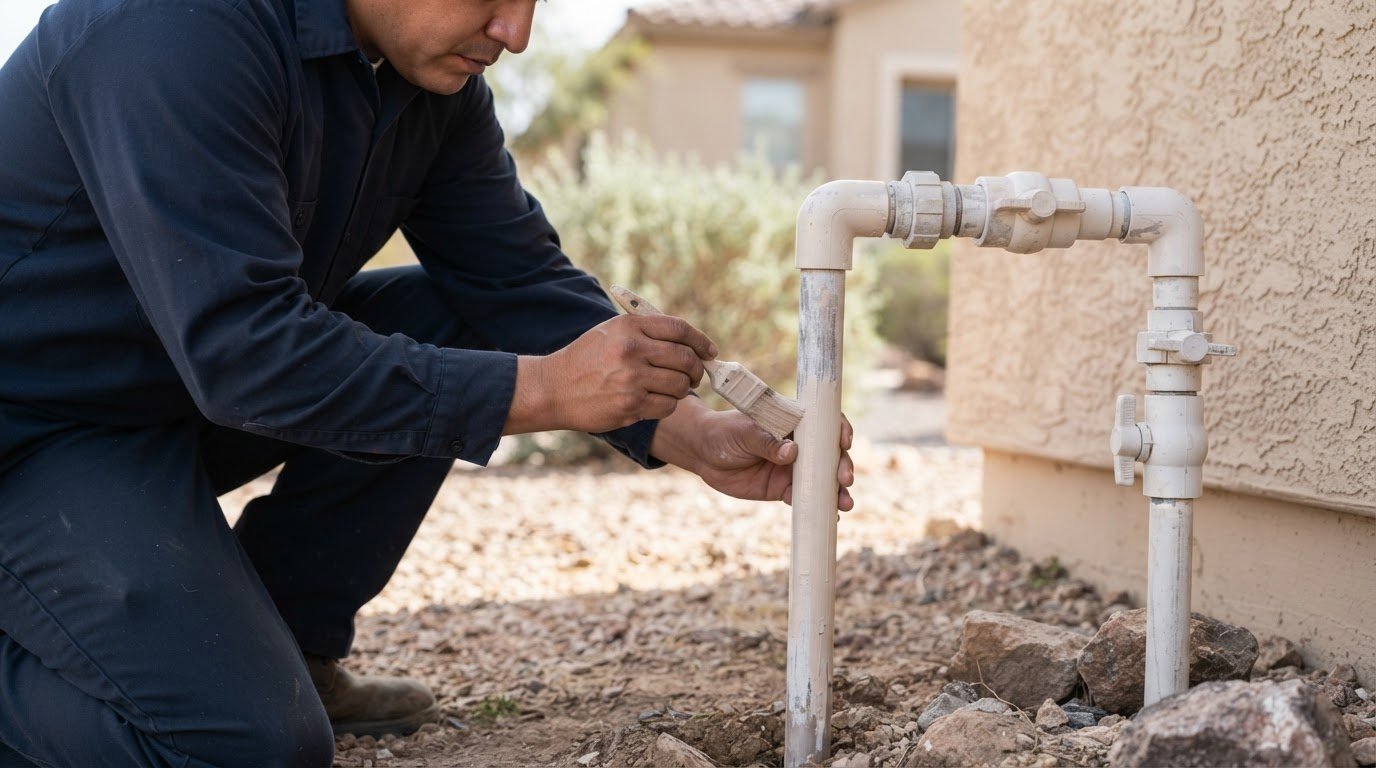
For an irrigation RPZ, placement is a practical safeguard. Install it at least 12 inches above ground and where it cannot be submerged. A low point that collects runoff or floodwater can expose the assembly to conditions that interfere with protection. The installation plan should account for access to shut-off valves and test cocks, without placing the device where routine yard activity can damage it.
A typical installation follows a deliberate sequence:
- Identify the irrigation connection and determine where the assembly can be positioned.
- Isolate the water line before making connections to the plumbing and sprinkler piping.
- Secure the device in its required position, keeping its test points accessible.
- Restore water flow and have the assembly tested before relying on it.
Testing involves more than a visual check. Required city tests must be performed by a certified tester using calibrated gauges. The tester submits the results on the form requested by the water provider, and the homeowner receives a copy. This record documents the test result instead of relying on the assembly’s appearance.
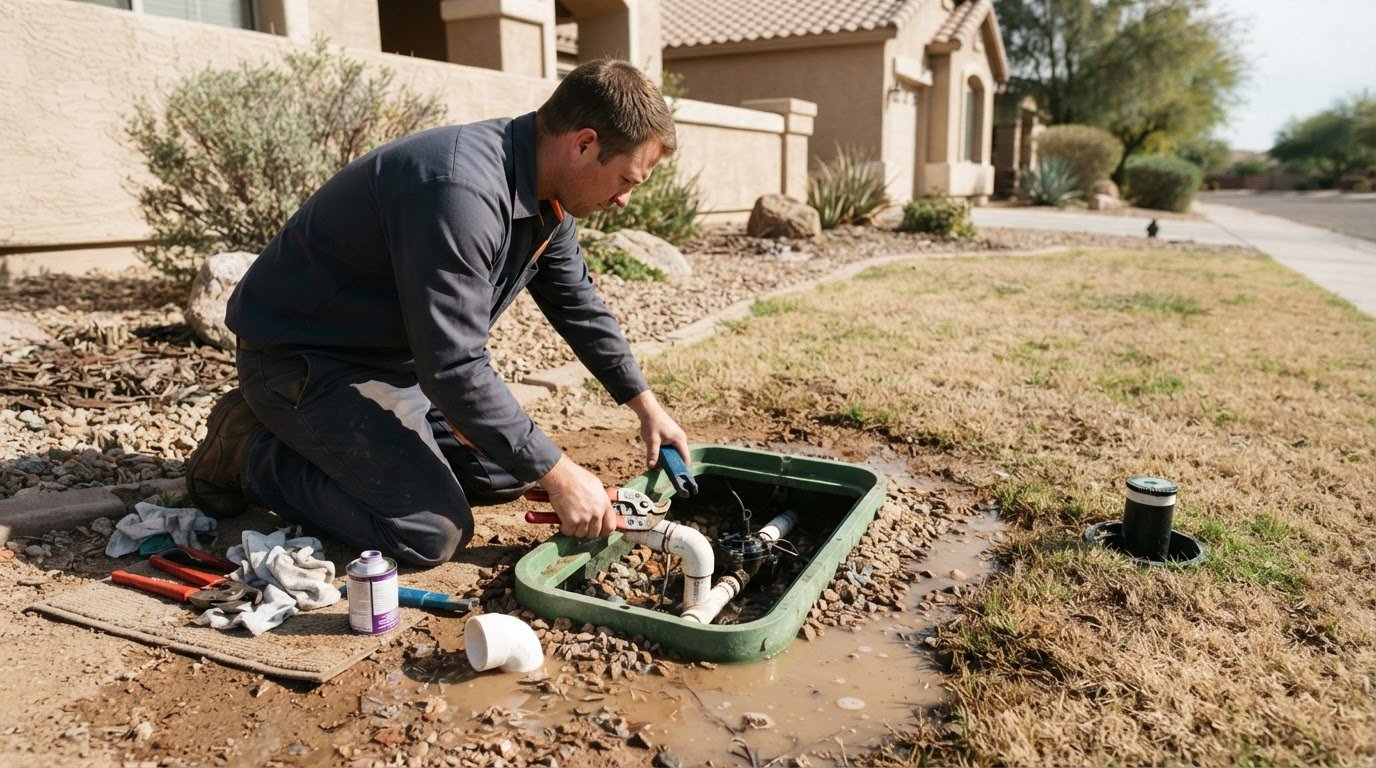
If an assembly fails, repair starts with locating the fault. A worn internal component may stop a valve from sealing or cause the relief function to discharge water. A failed backflow preventer may be repaired with a rebuild kit, then retested. Retesting confirms whether the assembly passes its functional test after repair; replacing parts alone does not.
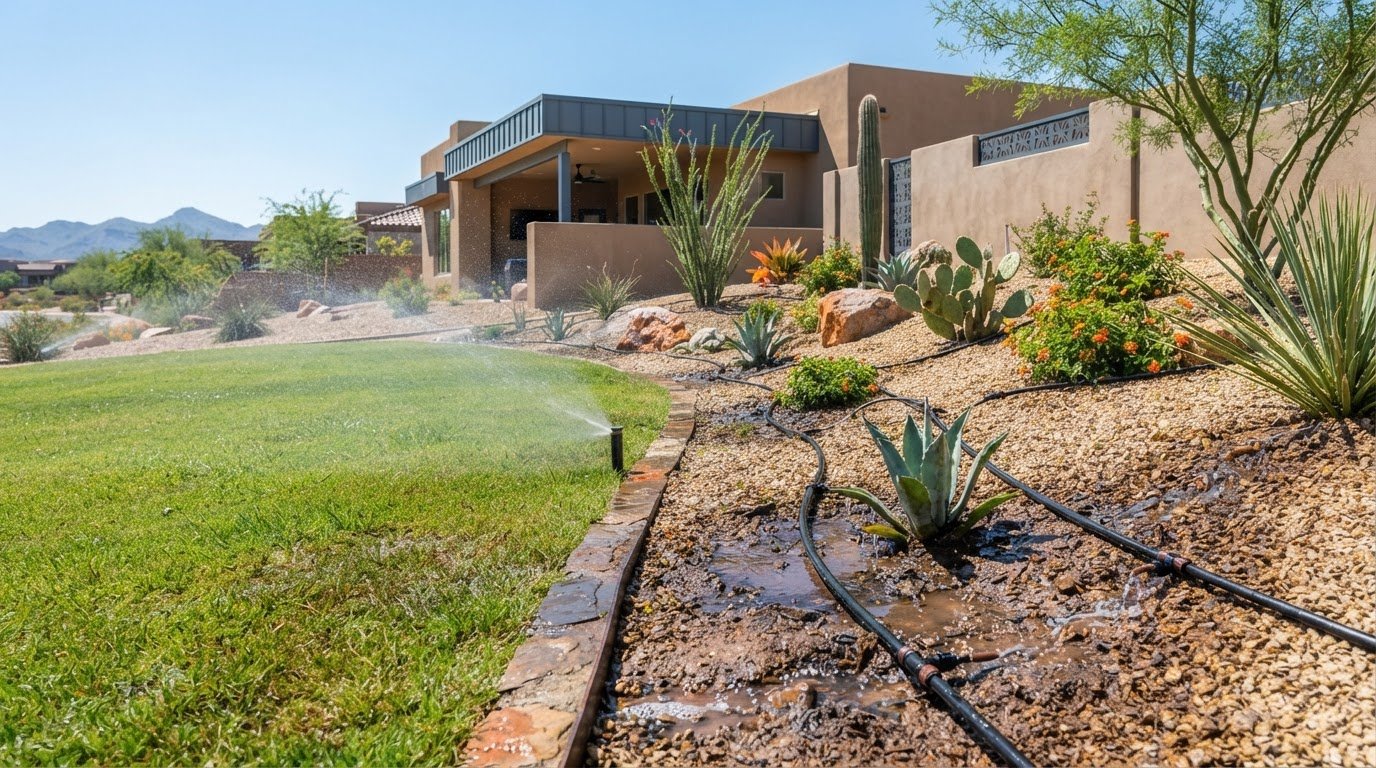
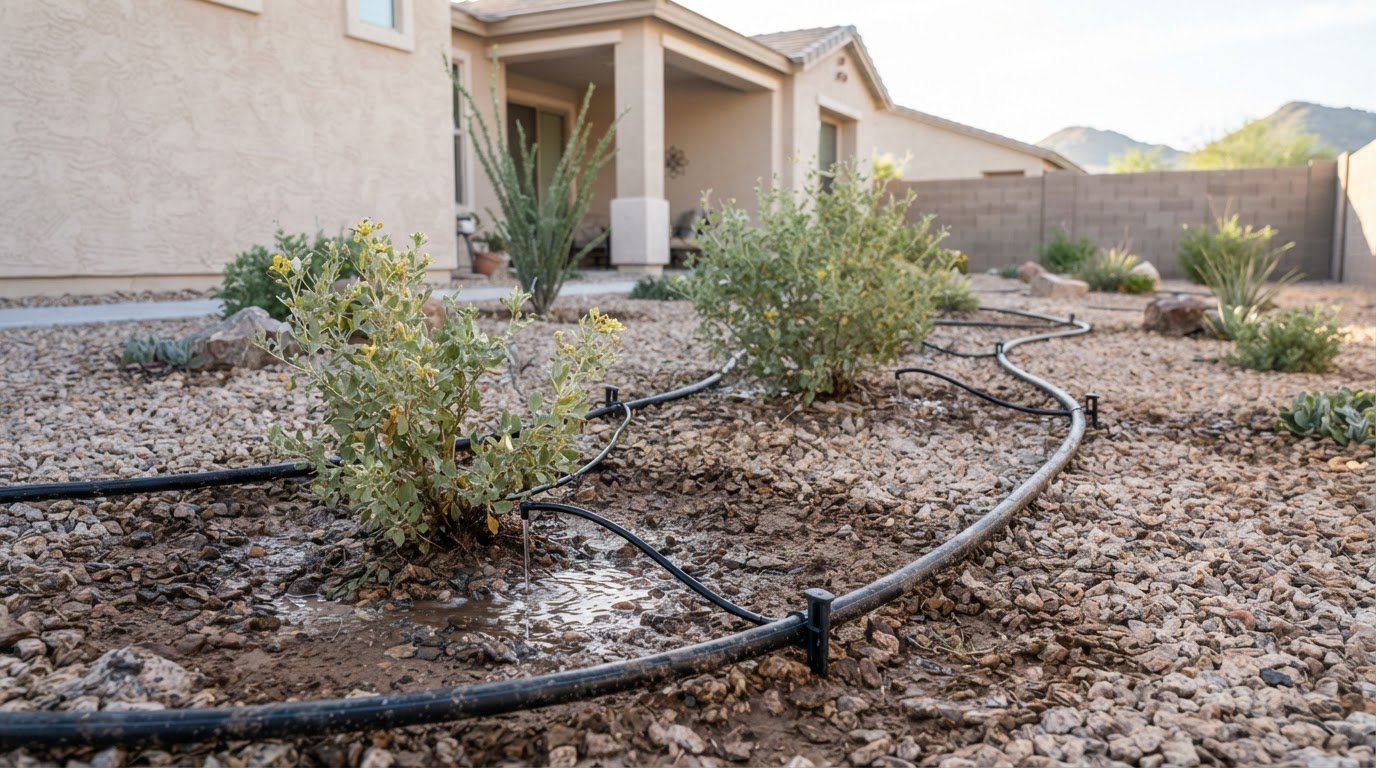
Pressure changes can also point to an irrigation problem. If household pressure drops sharply while a sprinkler zone runs, the cause may involve the assembly or another part of the system. A technician can assess the device alongside connected valves and plumbing. Leaking fittings, persistent relief-valve discharge, or a failed test call for diagnosis, not just tightening visible connections.
Landscape irrigation assemblies serve a different purpose from fire sprinkler protection. A fireline preventer controls flow from the water main into a building’s fire sprinkler pipes. Fireline devices may be double-check or reduced-pressure assemblies, so their purpose and configuration should not be confused with a yard irrigation connection.
If an assembly needs installation or repair, describe the irrigation setup and the issue so the next step can address the system’s actual condition.
Business and domestic RPZ valves
An RPZ, or reduced-pressure zone assembly, separates an irrigation connection from the potable water supply. Relevant considerations can differ between a single-family home and a property serving multiple units or businesses. In Surprise, both the City’s testing requirements and the system’s cross-connection risk matter.
At a home, an RPZ may be appropriate when the irrigation setup presents a higher contamination hazard. Fertilizer injection is one example. The assembly is designed to protect against back-siphonage and backpressure, so the potential flow path matters when selecting a device. The water provider sets the specific requirements for a home, making the property’s irrigation arrangement important as well.
Business and shared properties may have several water-use connections to consider. The City of Surprise requires annual certified backflow testing for commercial properties, multi-family buildings, HOA communities, irrigation systems, restaurants, and active construction job sites. These categories cover different plumbing layouts and uses. Select an RPZ based on the specific connection and hazard, rather than assuming every building needs the same assembly.
An assembly’s function also affects maintenance planning. An RPZ has internal components that must work together to prevent reverse flow. A pressure-zone failure can compromise the separation between irrigation water and the potable supply. Annual testing assesses operation; appearance alone cannot establish performance. A certified tester performs required city tests using calibrated gauges.
Surprise maintains a Cross-Connection / Backflow program with published owner responsibilities and an approved tester list. Property owners can start by identifying the property category and irrigation connections, then accounting for the applicable testing requirement. A shared property may have irrigation for common grounds, while a restaurant may have irrigation alongside other water uses. These examples show why property use and plumbing connections matter.
For a domestic system, the decision depends on the water provider’s requirements and the hazard created by the irrigation configuration. For a business, multi-family property, or HOA, the City’s listed categories make annual certified testing an important operating responsibility. In either case, the assembly should match the actual cross-connection risk. A qualified tester can assess whether the installed device passes and identify when repair is needed.
Does Surprise require a permit or inspection to install an irrigation backflow preventer?
A backflow preventer installation usually requires a permit, so include permitting in the project plan for a Surprise property. The available local requirements also distinguish installation approval from backflow testing. A permit addresses the installation process; a certified test evaluates whether the assembly operates as intended.
A passing test is not a substitute for a permit. They serve different purposes and may involve separate steps. Before work begins, identify the property type, irrigation connection, and assembly being installed. Those details help establish which permit and inspection steps apply.
Surprise maintains a Cross-Connection / Backflow program with published owner responsibilities and an approved tester list. The City requires annual certified backflow testing for active construction job sites, along with several other property categories. That testing obligation is separate from approval for new installation work. Construction-site owners should plan for both installation and the required recurring test.
For installation planning, organize the work around clear milestones:
- Define whether the project serves a residence, active construction site, or another property use.
- Identify the irrigation connection and the proposed backflow assembly.
- Address applicable permit and inspection steps before installation proceeds.
- Arrange the required certified test and retain its result after installation.
This sequence helps prevent a common mix-up: an assembly may be installed but still require testing and documentation. Required city tests must be performed by a certified tester using calibrated gauges. Results go on the water provider’s requested form, and the homeowner receives a copy. Keep the test record with the property’s irrigation and plumbing documents.
Installation details can affect review and testing. An RPZ used for irrigation should sit at least 12 inches above ground and where it cannot be submerged. Accessible test points also help a tester connect gauges and evaluate the assembly. These placement details support safe access and functional testing, but they don’t replace any permit or inspection requirement.
For a Surprise construction site, plan for the permit process before installation and annual certified testing afterward. Homeowners should also account for property-specific requirements, including the water provider’s backflow rules. The City’s program outlines owner responsibilities, while the permit process governs installation work. Keeping the project scope, installation details, and test documentation together makes each step easier to track.
Which backflow preventer types are approved for residential irrigation in Surprise, AZ?
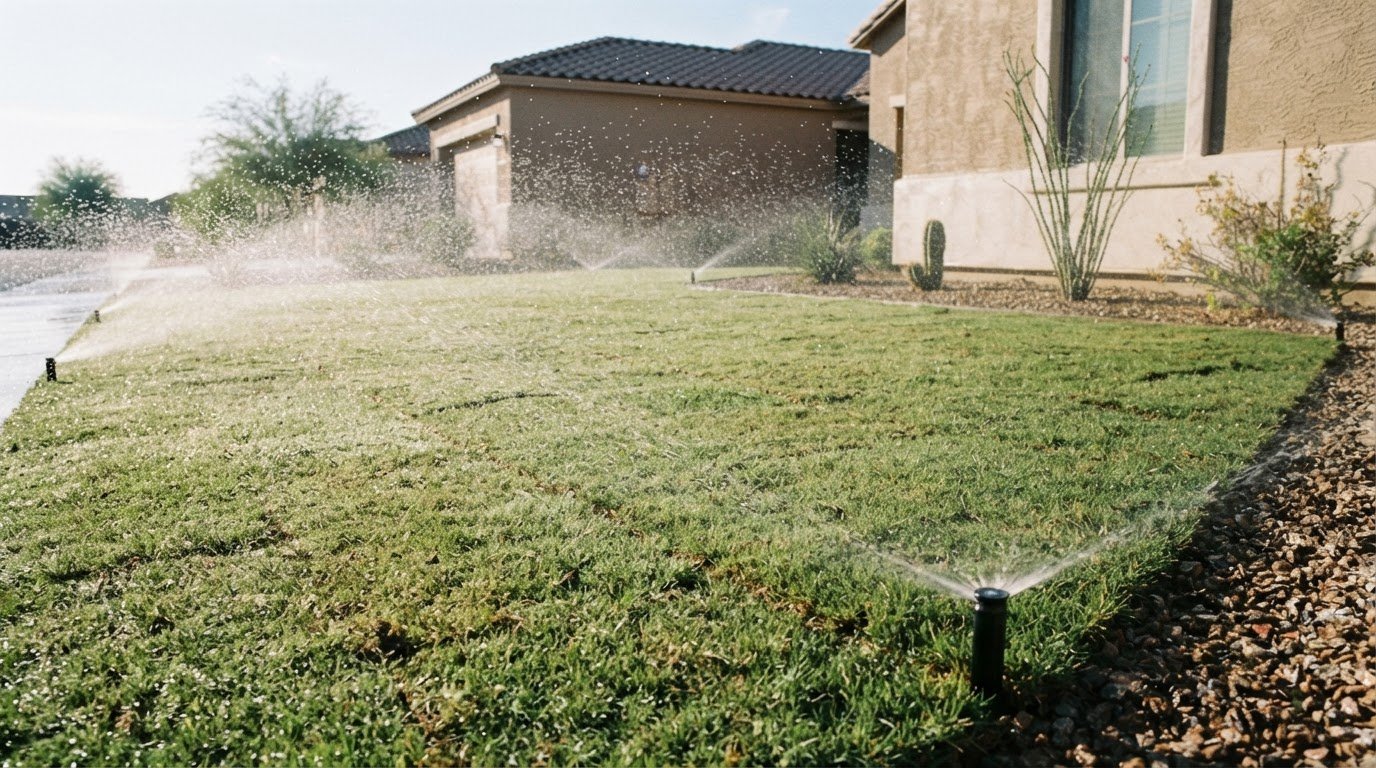
There isn’t one assembly that suits every residential system in Surprise. The water provider sets the specific backflow requirements for a home, and the irrigation setup helps determine the appropriate device. An atmospheric vacuum breaker may suit a small, simple system; a pressure vacuum breaker is a common choice for residential irrigation.
These devices protect the potable supply by limiting reverse flow from irrigation piping. A pressure vacuum breaker is designed for sprinkler systems and helps prevent non-potable water from returning through the connection. Its suitability depends on the system arrangement and hazard. The assembly must match the actual irrigation configuration, not just the homeowner’s preference.
An atmospheric vacuum breaker may suit a straightforward, small irrigation layout, but it is not a universal substitute for other assemblies. The connection type and risk of reverse flow matter. A basic sprinkler setup, for example, differs from one that adds fertilizer to irrigation water. That change can increase the hazard and affect the assembly choice.
An RPZ, or reduced-pressure zone assembly, is used where the hazard is higher. Fertilizer injection is one example. An RPZ protects against both back-siphonage and backpressure, while a pressure vacuum breaker suits sprinkler-system protection in the appropriate configuration. The choice depends on the connection’s risk and the water provider’s requirements.
Use this practical decision sequence for a residential property:
- Identify whether the irrigation system is a small, simple layout or includes added equipment.
- Note whether fertilizer is injected into the irrigation water.
- Match the system’s hazard and configuration to the appropriate assembly type.
- Apply the water provider’s specific requirements for the property.
This explains why a device used at one Surprise home may not suit another. A small sprinkler system may point to a vacuum-breaker option, while fertilizer injection signals a higher hazard that calls for a different level of protection. The system’s arrangement matters as much as the device category.
Selection also affects future service. A testable assembly needs to remain accessible for evaluation, and changes to the irrigation system can alter the risk it controls. Adding fertilizer equipment, for instance, changes the connection’s hazard profile. Reassess the assembly when the system changes instead of assuming an older device remains suitable.
For help assessing a residential irrigation layout and its backflow assembly, request an irrigation system assessment.
Sonora Sprinkler: Valve and Backflow Services
Sonora Sprinkler Inc. provides valve and backflow services for residential irrigation systems, including installation, maintenance, and repair. Turn to this service when adding irrigation, addressing a leaking assembly, or responding to pressure changes or a failed test. The right next step depends on the device, its condition, and its connection to household plumbing.
If a system update includes new sprinkler or drip irrigation, coordinated irrigation installation or drip irrigation installation can address the layout alongside its valves. For an existing system with a leak or pressure concern, irrigation repair can focus on diagnosing the problem and restoring function.
Contact Sonora Sprinkler Inc. to discuss your irrigation backflow needs.
Plan the next irrigation change with confidence
Consider backflow protection whenever an irrigation project changes how water moves through the property. Before installation or modification, note the system’s current condition, including recent pressure changes, visible leaks, or planned additions to the irrigation layout. These details help focus attention on how the assembly and connected plumbing fit the work.
For irrigation backflow preventer installation in Surprise, a useful next step is to describe the property’s irrigation setup and the issue you need addressed. That gives the service discussion a clear starting point, whether you’re planning a new system or dealing with a device that needs attention. Sonora Sprinkler can help with the irrigation work involved, while the appropriate assembly and testing needs remain central to protecting the water connection.
When you’re ready to discuss the project, contact Sonora Sprinkler about your irrigation needs. A clear plan helps you move forward with greater confidence.
Frequently Asked Questions
Do I need a backflow preventer for a Surprise construction job site?
Active construction job sites in Surprise are subject to annual certified backflow testing. If the site’s irrigation connects to the water supply, include its backflow assembly in the testing plan. A temporary or permanent irrigation connection, for example, should not be overlooked while managing other site utilities. Track the assembly and test documentation with the job site’s water-system records.
Should You DIY or Hire a Pro for RPZ Installation?
RPZ installation calls for careful attention to plumbing connections and placement. Incorrect positioning or connections can interfere with operation, and a visual inspection alone cannot establish that the device passes a test. Required city testing must be completed by a certified tester using calibrated gauges. Proper installation also keeps the assembly accessible for testing and future maintenance.
What’s the difference between a PVB and an RPZ?
A pressure vacuum breaker, or PVB, is commonly used with residential sprinkler systems to help prevent irrigation water from flowing back into potable plumbing. An RPZ, or reduced-pressure zone assembly, protects against both back-siphonage and backpressure. That distinction matters when a system adds fertilizer injection, which creates a higher hazard. The irrigation configuration and water provider’s requirements guide the appropriate assembly for a home.
Why is an RPZ Essential for Your Irrigation System?
An RPZ helps protect the potable supply from irrigation water when a system faces back-siphonage or backpressure. Fertilizer mixed into irrigation water, for example, makes the connection’s hazard more serious than a basic sprinkler layout. The assembly creates a protective barrier between that water and household plumbing. It is appropriate when the system calls for this higher level of protection.
What irrigation backflow preventer installation requirements apply in Surprise, Arizona?
For irrigation backflow preventer installation in Surprise, plan for the installation permit process and any applicable inspection, then account for required testing. Surprise requires annual certified backflow testing for active construction sites and several other property categories. A required test uses calibrated gauges, and results are submitted on the water provider’s requested form. The owner receives a copy to keep with the property’s water-system records.
How do I choose a licensed backflow installer or plumber in Surprise, AZ?
Choose an irrigation provider whose work includes valves and backflow and whose business is licensed and insured. Sonora Sprinkler Inc. is licensed and insured and provides residential irrigation services, including valve and backflow work. Keep installation and testing roles clear: required city tests must be performed by a certified tester using calibrated gauges. This distinction helps ensure the assembly receives appropriate installation attention and a valid functional test.
What is the step-by-step process for installing an irrigation backflow preventer?
The work follows a practical sequence, from system assessment through testing and documentation. The assembly type depends on the irrigation configuration and its hazard, while placement must support safe operation and access for testing.
- Assess the irrigation connection and potential hazard.
- Select the appropriate assembly for the system.
- Plan accessible placement and make plumbing connections.
- Restore water flow and arrange the required certified test.
- Submit results using the water provider’s requested form and retain the copy.
What factors affect the price of backflow preventer installation for a Surprise irrigation system?
Price depends on the assembly type, installation needs, and permit costs. Permits usually cost $50 to $200, though fees vary by area.