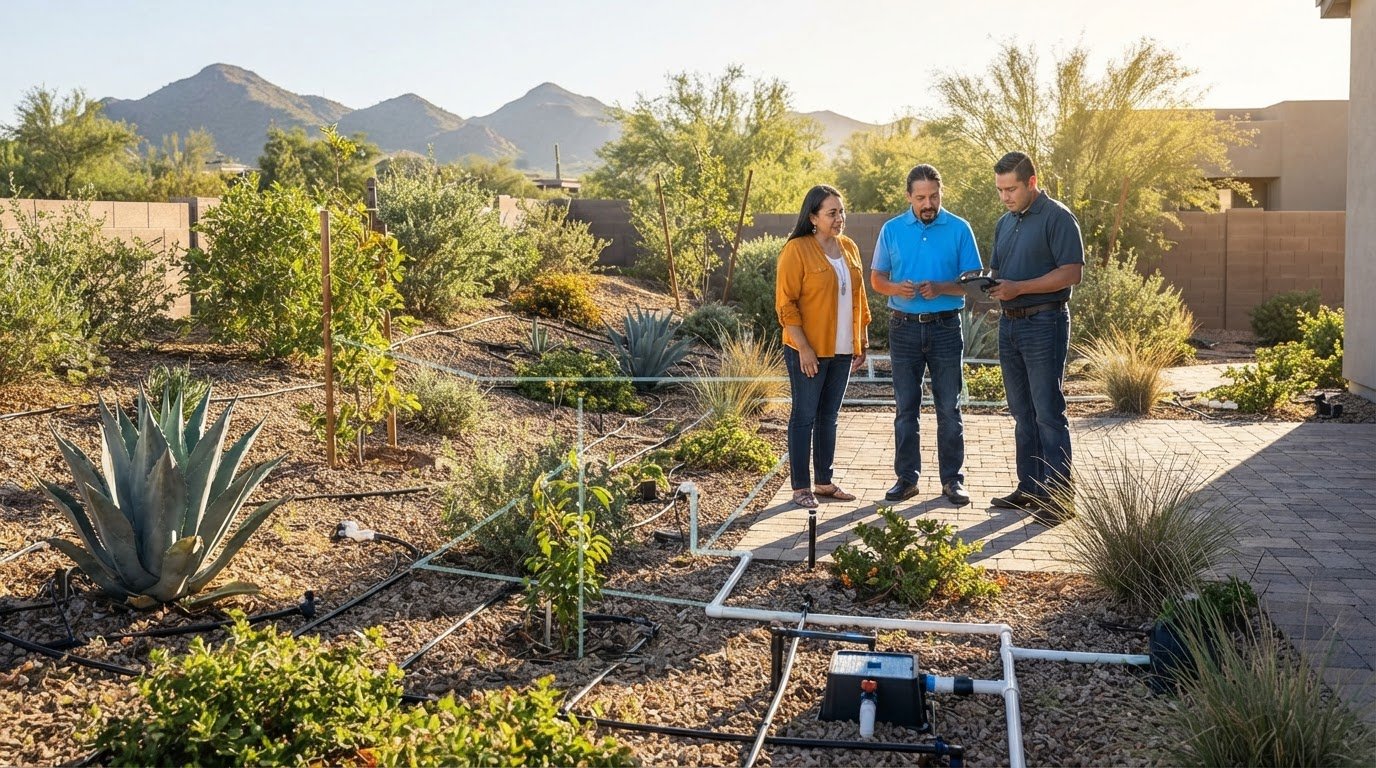
Why does one part of the yard stay dry while another gets soggy, even when the sprinklers run on schedule? Uneven watering can point to poor coverage, but pressure problems or worn components may also be involved. A sprinkler system coverage analysis Peoria homeowners can use starts with observing where water lands, how evenly it reaches each area, and what happens during a watering cycle.
A schedule adjustment may help in some cases, but it won’t correct a spray pattern that misses its target. This guide explains how to assess coverage in a Peoria desert landscape, what patterns to record, and how to distinguish a distribution concern from a possible system issue. Those observations can help identify a practical next step, such as irrigation repair, a sprinkler upgrade, or custom system design for your residential landscape.
Key Takeaways
- A sprinkler system coverage analysis Peoria homeowners can use checks where water actually lands, not just when the controller runs.
- Observe one zone at a time, noting which heads operate and where water reaches, misses, or collects.
- A catch-can test can compare water delivery across one zone and reveal differences that may not be obvious by sight.
- Dry spots, pooling, and overspray can have different causes. Where they appear and whether they return helps guide the evaluation.
- Notes about the affected zone, yard layout, and recurring patterns can help guide a repair, upgrade, or custom design assessment.
What sprinkler system coverage analysis reveals about a Peoria yard
A sprinkler system coverage analysis Peoria homeowners can use examines where irrigation water lands and how evenly it reaches the areas meant to receive it. A controller can run on schedule while a section of turf stays dry, a planting bed gets missed, or spray lands on a walkway. The schedule shows when a zone runs, not whether its spray pattern fits the landscape.
Coverage analysis examines water distribution across the intended area; a general tune-up looks at system operation and condition. The distinction matters because a system can turn on and still distribute water poorly. In Peoria’s hot, dry conditions, it’s useful to assess both where water reaches and how the landscape is exposed. Heat and sun can affect how an area looks between watering cycles, so one glance may not tell the whole story.
The Irrigation Sprinkler Systems overview explains common sprinkler types and their basic operation. The video below illustrates how head-to-head coverage informs sprinkler design.
What does sprinkler coverage mean?
Each zone is intended to water a particular area, and the heads’ spray reach should suit that area. Even coverage doesn’t mean every head must run for the same amount of time or spray every surface. It means water reaches the plants or turf served by the zone without persistent gaps or unnecessary overspray.
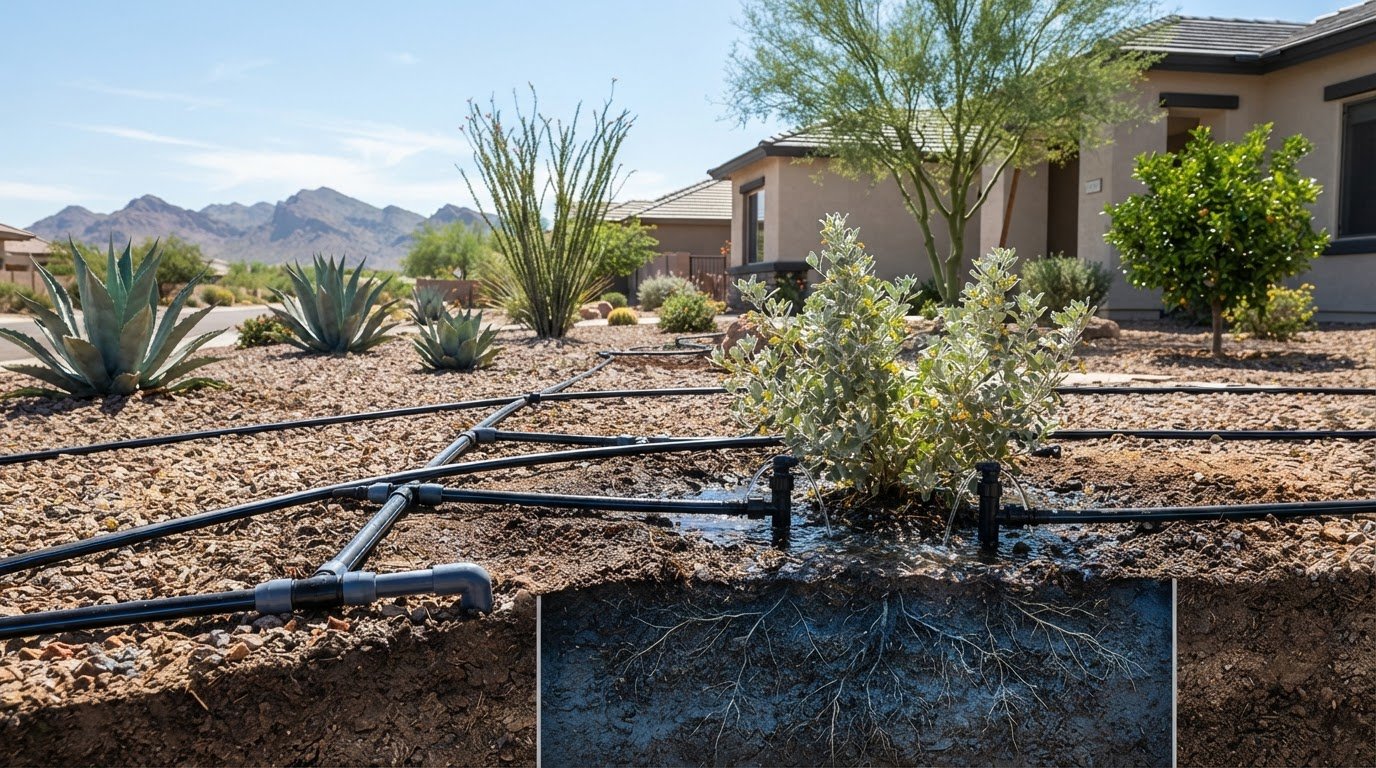
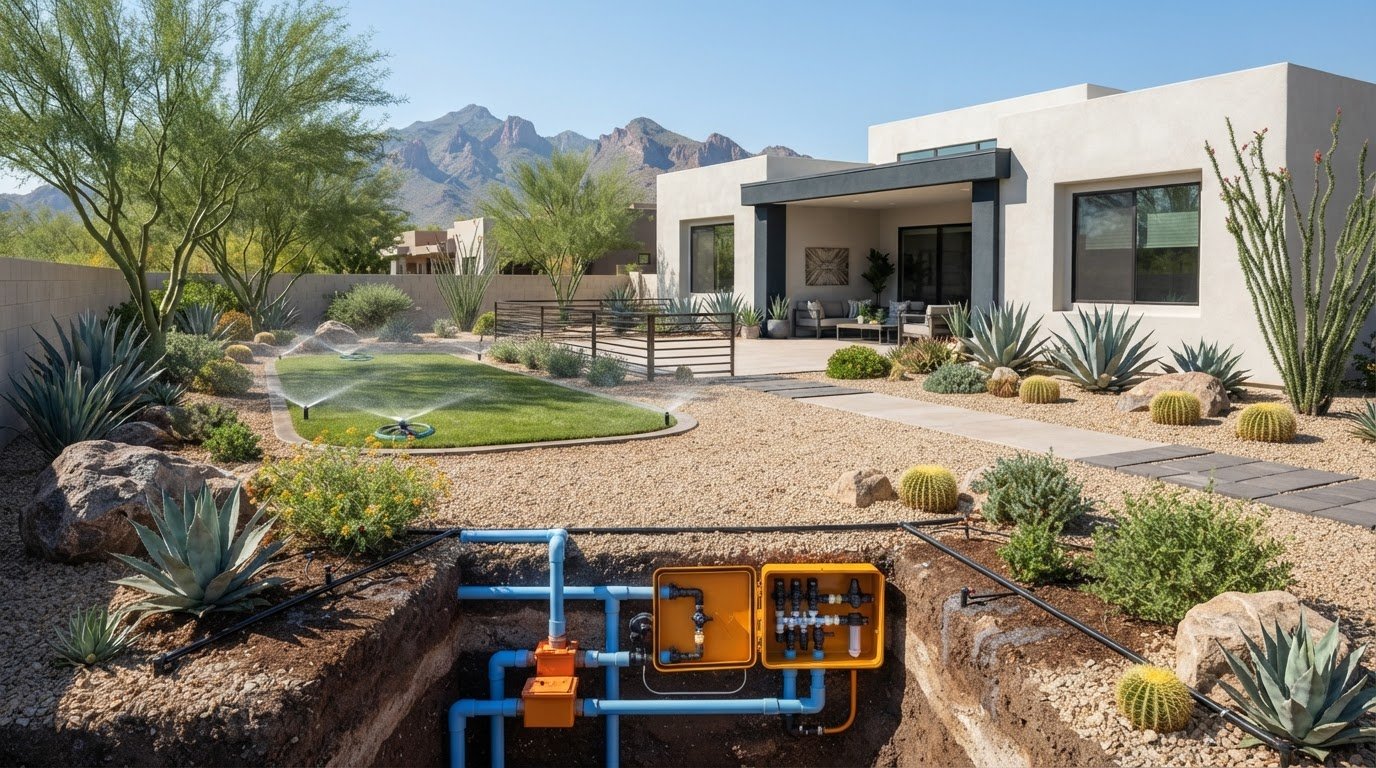
Lawn coverage differs from irrigation for separate planting areas. Turf may need broad, overlapping spray, while shrubs or plants in a bed may call for more targeted delivery. The system layout should reflect those different needs. Custom residential sprinkler design can account for distinct watering areas rather than treating the whole yard as one uniform space.
Why can coverage vary across a Peoria property?
Coverage can change when head spacing leaves gaps, a spray direction shifts, or an obstruction blocks the pattern. Walls, established plants, and changes to the yard can all affect where water lands. Wind exposure may carry spray away from its intended target, while Peoria’s desert heat and sun affect how the landscape looks between watering cycles.
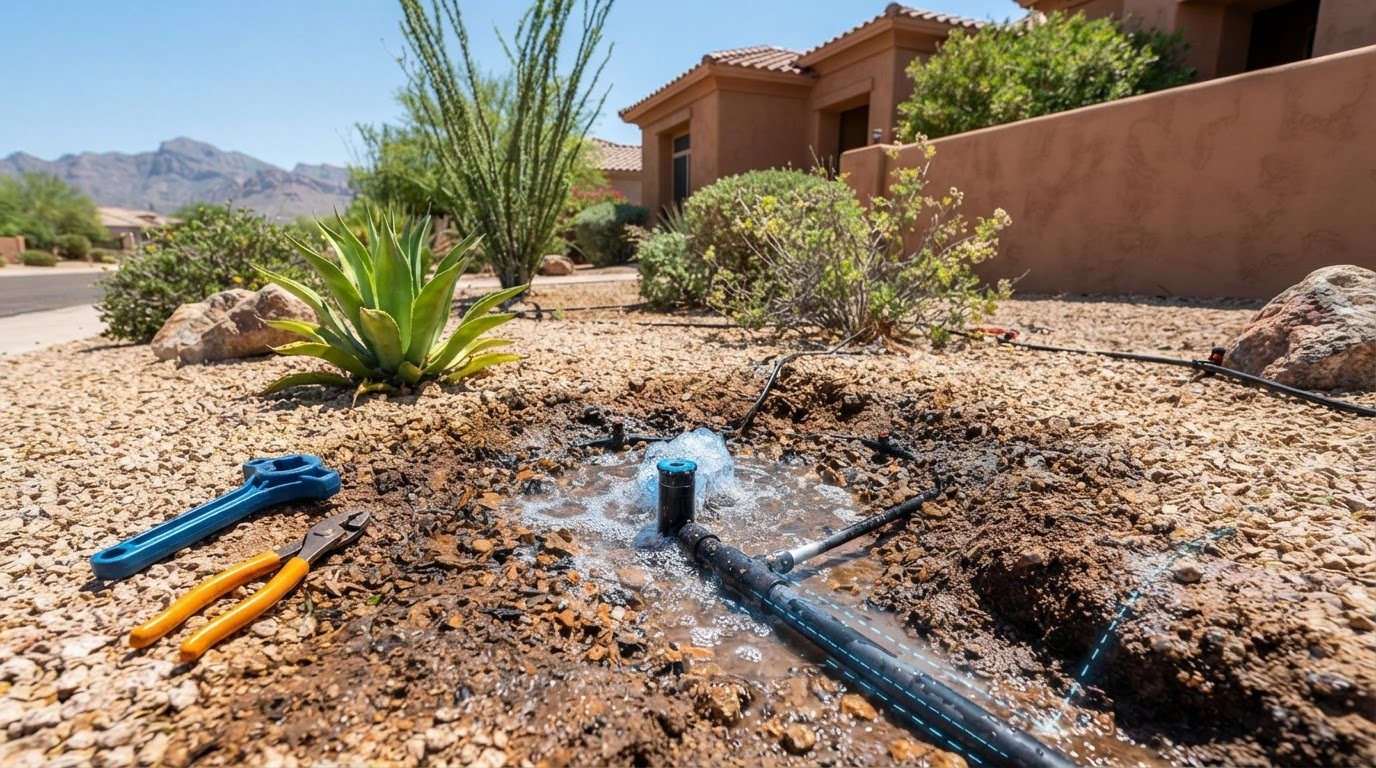
A dry patch or saturated spot is a clue, not a diagnosis. A dry strip that returns in the same place could relate to spray reach or an obstruction, while pooling may reflect how water is delivered or absorbed. Note the location and whether the pattern repeats before settling on a cause. Sonora Sprinkler Inc. considers residential irrigation systems alongside the landscape to help identify a practical next step. Learn how custom sprinkler system design can be tailored to residential watering needs.
How to assess sprinkler coverage without mistaking symptoms for causes
A careful check can show whether a zone distributes water unevenly, but it can’t identify every reason behind the pattern. Start with observations: watch one zone, note what each head does, and record where water collects or misses. Keeping the check focused helps separate a recurring pattern from a one-time visual impression and gives a sprinkler system coverage analysis Peoria homeowners can use a clearer starting point.
Use this sequence to build a useful record without adjusting buried components or wiring:
- Run one zone and note which heads activate and whether any appear tilted, blocked, or visibly inconsistent.
- Watch where spray reaches. Record areas that seem to receive little water and surfaces that get overspray.
- Sketch the zone or mark wet, dry, and pooled areas on a simple yard map.
- Repeat the observation during another watering cycle and compare whether the same pattern returns.
A practical visual check for each irrigation zone
Watch the zone from a safe, dry position while it runs. Note whether each spray pattern reaches its intended area or is interrupted by an obstruction. A head that doesn’t rise or spray normally is worth recording, but that observation alone doesn’t establish the cause. Avoid digging near lines or handling wiring. Your notes are most useful when they clearly describe visible symptoms.
Using catch cans to compare water distribution
Place similar, straight-sided containers in representative locations across one zone, including spots that appear wetter and drier. Run that zone, then compare the amount collected in each container. Keep placement and test conditions consistent if you repeat the check. The results can help show whether water delivery differs across the area, though they don’t explain why.
A catch-can comparison shows relative differences in collected water across a zone; it doesn’t, by itself, identify the cause or establish a universal pass-or-fail standard. Distribution uniformity and irrigation efficiency are useful concepts for interpreting those differences, as explained in the University of Florida’s Irrigation Distribution Uniformity and Efficiency resource. Treat the test as one piece of evidence, not a complete diagnosis.
Read the pattern before choosing a fix
If containers on one side collect less than others, compare that result with the visible spray and your yard map. A gap may relate to spray reach or placement, while an isolated head that sprays irregularly may point to a component issue. Pooling alongside a low collection elsewhere also deserves attention, but neither observation proves a specific fault. Patterns that return across cycles give an irrigation assessment a stronger starting point.
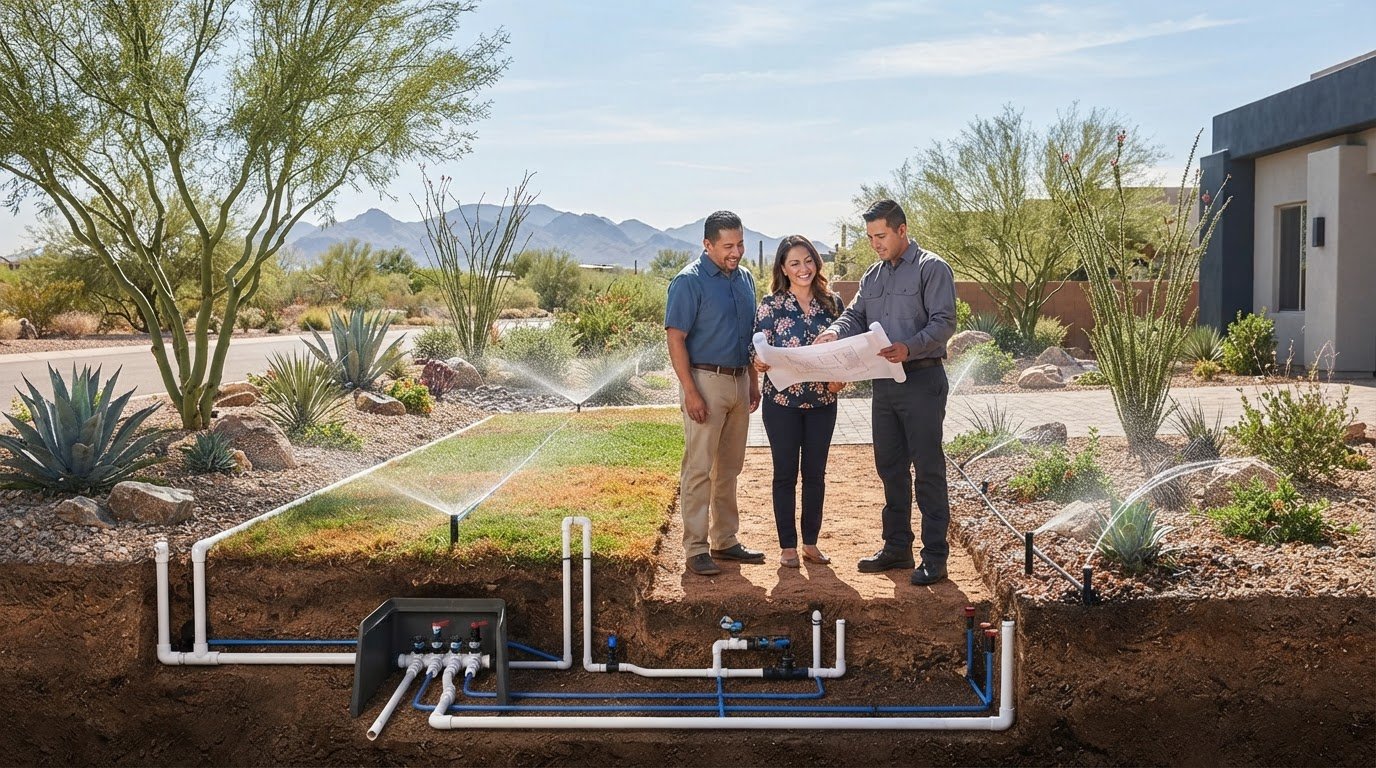
Record the affected zone, when the pattern appears, and what you observed during the cycle. That information helps focus a residential repair or diagnostic assessment on what’s visible before a remedy is selected. If the pattern persists, you can request help with your irrigation concern.
How to interpret dry spots, pooling, and uneven spray in Peoria
A dry patch, puddle, or weak-looking spray pattern is useful evidence, but none of these observations identifies a specific fault on its own. The same symptom can have more than one explanation. Consider where it appears, whether it returns during later cycles, and how it compares with the rest of the zone. In a sprinkler system coverage analysis Peoria homeowners can use, repeated patterns are more informative than one quick look.
Use this comparison as a starting point, not a diagnosis:
Dry strip near a spray boundary: May relate to head spacing, spray direction, or another factor affecting reach. Note whether the strip follows the same edge each cycle.
Pooling in one area: Record its location and when it appears. Consider it alongside the zone’s runtime and behavior rather than assuming a particular cause.
Overspray onto a surface: Shows that some water is landing outside the intended area. Note which head is spraying and whether the pattern repeats.
Inconsistent spray: If one area or head behaves differently from the rest of its zone, it may warrant a closer system evaluation.
What different coverage patterns may indicate
Look at the shape of a symptom as well as its location. A dry band near the edge of a lawn may suggest a gap in reach or a direction mismatch, but the pattern alone can’t confirm either. If water pools in the same place, record whether it begins early or late in the cycle and whether nearby areas receive similar spray. Consistent differences help guide further assessment.
Compare the affected area with nearby parts of the same zone. A whole zone that looks different from another needs to be considered in context, while a small, repeatable difference within one zone can help narrow where attention is needed. Peoria’s heat and exposure can also influence how landscape areas look between watering cycles, so a single visual check may not reflect the full distribution pattern.
When coverage symptoms may involve system condition
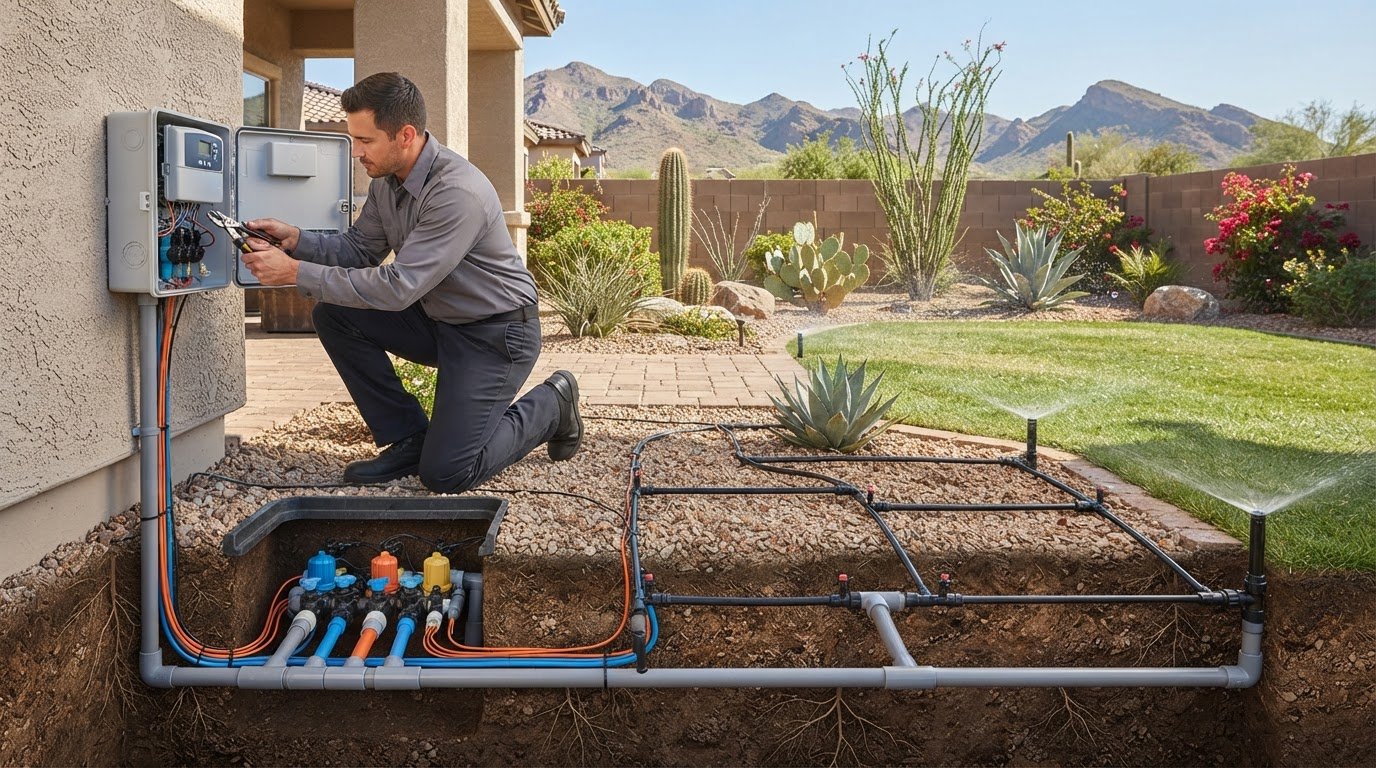
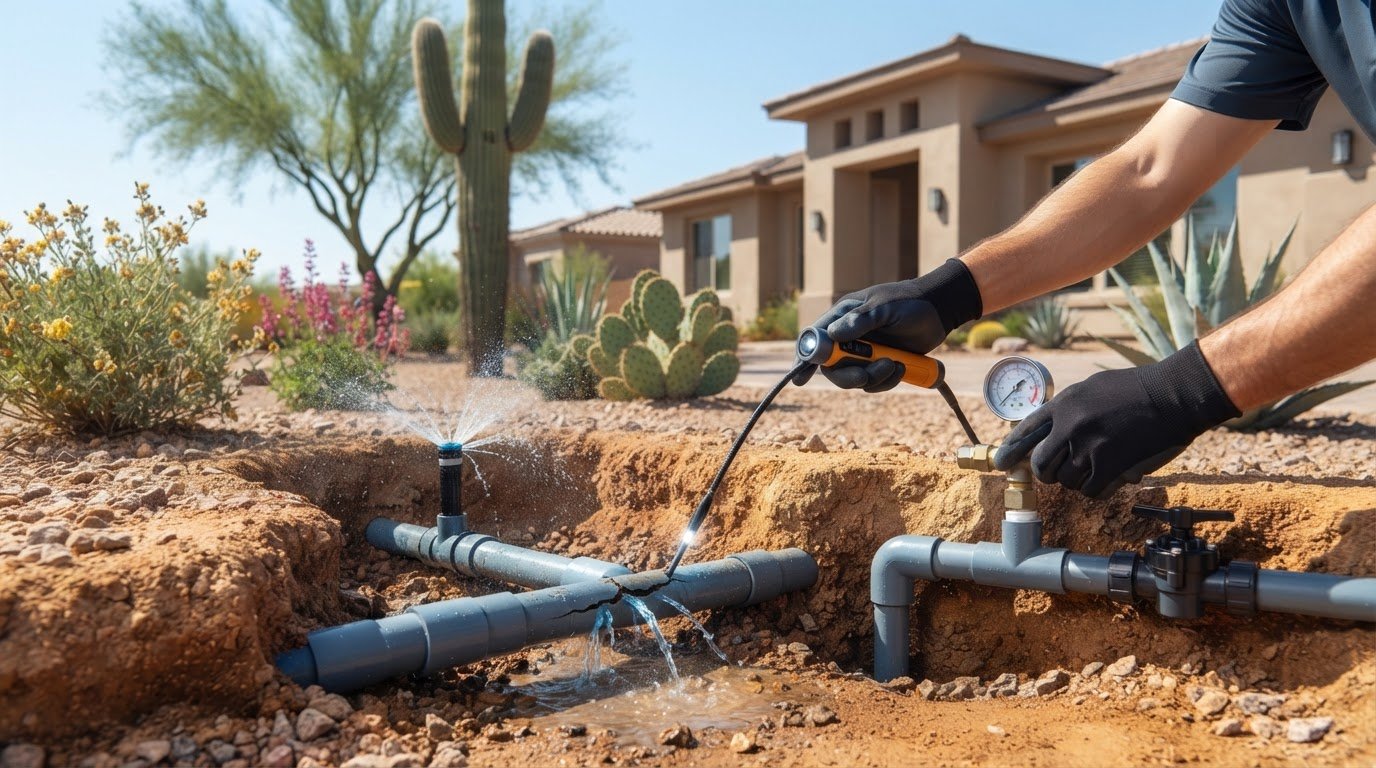
Coverage and system condition can overlap. A head that operates inconsistently, a zone that doesn’t run as expected, or a pattern that persists across cycles may warrant checking irrigation components as part of a broader assessment. Pressure changes, leaks, valve operation, or wiring are possibilities to evaluate, not conclusions to draw from a dry spot or puddle alone.
Keep a brief record of the zone, the symptom’s location, and whether it recurs. That context helps distinguish a distribution pattern from a concern that may require residential irrigation repair and diagnostics. An evaluation can then determine whether repair, adjustment, or another practical remedy fits the observed condition.
What a Peoria sprinkler coverage analysis should evaluate
A useful assessment considers more than whether each sprinkler head turns on. It looks at how the zones are arranged, where heads sit, the direction and reach of their spray, and whether water lands in the areas the zone is meant to serve. This helps show whether an uneven result is limited to one location or reflects a broader mismatch between the irrigation layout and the residential landscape.
Peoria properties can include turf, planted beds, walls, paved edges, and areas with different sun and wind exposure. Each detail can shape how water moves across the yard. A careful sprinkler system coverage analysis connects those site conditions with observed coverage before recommending a change.
Matching sprinkler zones to the landscape
An assessment looks at whether each zone serves an area with reasonably similar watering needs. If one zone covers both a lawn and separate planting beds, the system may distribute water differently than each area requires. The goal isn’t to apply one schedule or spray pattern everywhere. It’s to evaluate whether the irrigation approach fits the areas it serves.
Head placement and spray direction are considered alongside the landscape’s boundaries. A wall, paved edge, or planting location may interrupt a pattern or leave part of the intended area outside its reach. Exposure matters, too: a sunny, open section may behave differently from a sheltered area. These observations provide context without relying on unverified plant-specific schedules or water quantities.
Turning observations into a practical recommendation
The next step is to connect the documented pattern with the system’s layout and condition. A repeatable dry area near the edge of a zone may call for a focused review of placement or spray direction. A head that operates inconsistently may need a repair assessment. If several areas show a mismatch between the existing layout and the landscape, a broader design review may be appropriate.
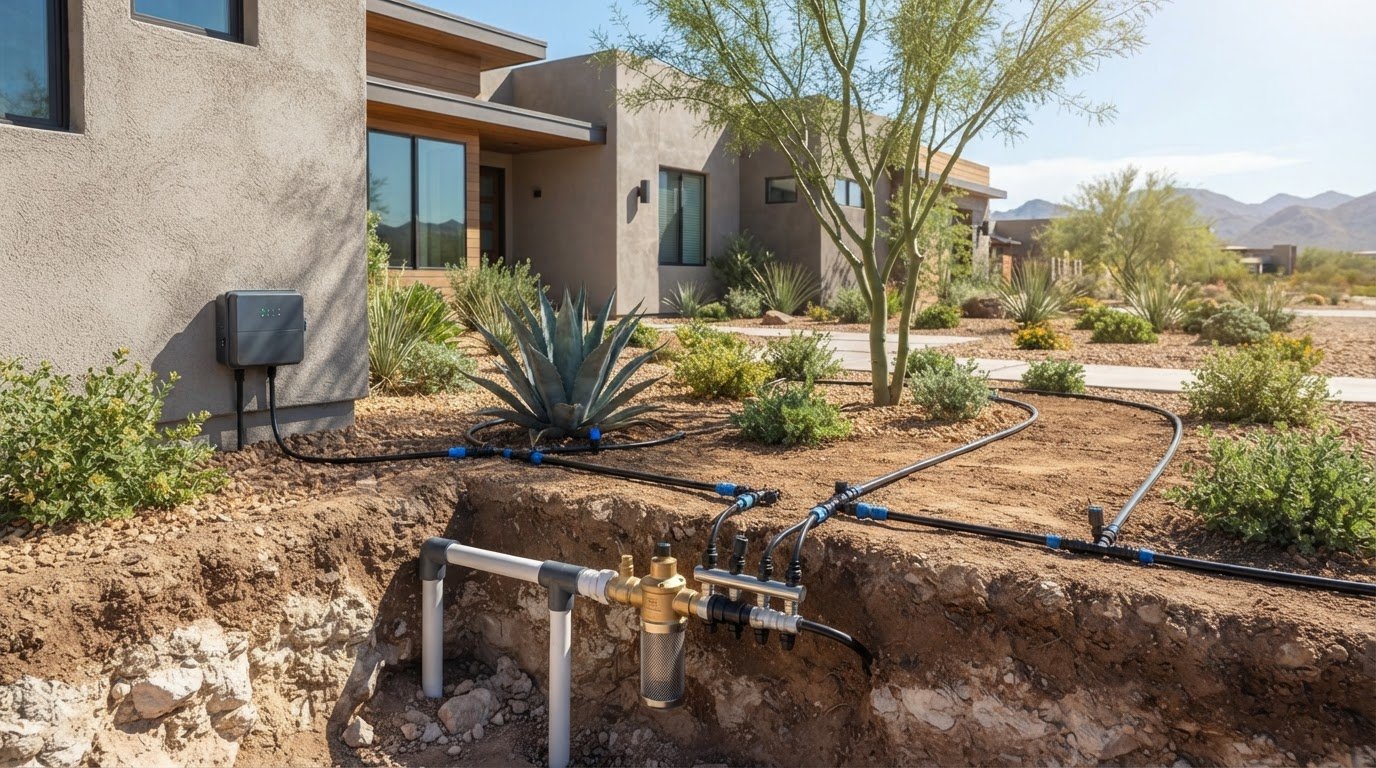
A coverage concern doesn’t automatically call for replacing the system. The remedy should fit what the assessment finds, whether that means a targeted adjustment, irrigation repair, or tailored design work. Custom residential design can address layout changes when the existing arrangement doesn’t serve the intended watering areas well. Sonora Sprinkler Inc. provides residential sprinkler design and installation for landscape-specific needs.
Efficiency improvements are a separate consideration from correcting basic coverage. Once the distribution issue is understood, an assessment can help determine whether a sprinkler upgrade is also worth considering, rather than assuming it’s needed because a dry spot appeared.
For a useful assessment, note the affected zone, the location of the pattern, and whether it recurs. Request a residential sprinkler coverage assessment to identify a practical next step for your Peoria property.
Get a residential sprinkler coverage assessment in Peoria
Once you’ve noticed a recurring dry area, pooling, or uneven spray, a clear record can help turn that observation into a practical next step. Note the affected zone, when you see the pattern, and whether it returns during later watering cycles. These details help distinguish a persistent coverage concern from a one-time change in how the yard looks.
Sonora Sprinkler Inc. is a family-owned residential irrigation specialist serving Peoria and Surprise. Its services include irrigation design, repair, diagnostics, and upgrades suited to Arizona desert landscapes. A sprinkler system coverage analysis Peoria homeowners seek should consider the property and system together, then connect the findings to a remedy that fits the observed issue.
What to document before requesting an assessment
Keep your notes simple and specific. Record which zone is running, where the visible pattern appears, and whether it repeats. Mention changes to the yard, such as a new planting area or an altered boundary, that may affect how the current layout reaches its intended areas. You don’t need to dismantle heads or inspect buried equipment.
- Identify the zone or area where coverage seems uneven.
- Note when the symptom appears and whether it recurs.
- Describe visible dry patches, pooling, overspray, obstructions, or inconsistent spray.
- Share landscape changes that may affect the sprinkler layout.
Even brief notes can be useful. For instance, “the same corner stays dry when the rear zone runs” gives a clearer starting point than “the yard needs more water.” If you’ve observed a pattern during more than one cycle, mention that, too. The goal is to describe what you can see, not to diagnose a pressure problem, leak, or failed component yourself.
Move from coverage findings to a clear next step
During an assessment, the system’s operation and the landscape’s watering needs can be considered together. Findings may point toward irrigation repair, a design change for a particular area, or an appropriate system improvement. The recommendation depends on what the observations show. A dry spot alone doesn’t mean the whole system needs replacement.
In a desert landscape, a practical remedy should address the specific coverage concern and suit the property. Sonora Sprinkler Inc. helps Peoria homeowners understand residential irrigation concerns and identify a fitting direction through its irrigation repair, diagnostics, design, and upgrade services. Whether the issue involves a recurring zone pattern or a layout that no longer suits the yard, the findings provide a basis for deciding what to address.
If you’ve documented an uneven pattern and want help understanding what it may mean for your home, request a residential sprinkler assessment in Peoria.
Take the next step toward dependable coverage
A dry patch can be frustrating, but it doesn’t have to leave you guessing about what to do next. Treat your observations as a starting point for a property-specific decision, not a reason to make broad changes before the cause is understood. A sprinkler system coverage analysis Peoria homeowners can use brings the irrigation system and the yard’s needs into focus, helping you choose a next step with care.
The right recommendation may be focused repair, a tailored design adjustment, or another appropriate improvement. The aim is to address the pattern your system is showing and support the landscape with a solution suited to your property. Sonora Sprinkler Inc. provides residential irrigation services in Peoria and Surprise, with work tailored to Arizona’s desert conditions.
Ready to get a clearer plan for your yard? Contact Sonora Sprinkler Inc. about your Peoria sprinkler coverage concern.
Frequently Asked Questions
What is a sprinkler system coverage analysis?
A sprinkler system coverage analysis Peoria homeowners request examines whether irrigation reaches the parts of the yard it’s meant to serve. For example, a zone near a lawn edge may need closer review if water repeatedly misses the boundary or reaches an adjacent surface. The assessment can help distinguish a distribution concern from an issue that calls for broader system diagnostics, without assuming that a visible symptom proves a component has failed.
How do I check whether my sprinkler system covers my yard evenly?
Compare the spray pattern and water collected in different parts of the same zone, keeping the test conditions consistent. Don’t compare containers from zones that run separately, since differences in their operation can affect the comparison. If one area regularly receives less water than another, record that contrast along with the zone being tested. The result is useful evidence to share, not a stand-alone verdict about whether the system passes or fails.
Why does my lawn have dry spots even when the sprinklers run?
A lawn can stay dry despite scheduled irrigation if water isn’t reaching that patch consistently. A shifted head or new obstruction may change the spray’s path, while changes in the yard can make an existing layout less suitable. Ground conditions and sun exposure can also affect how an area looks after watering. Compare the patch with nearby turf and note whether it follows a visible boundary or appears in different places over time.
Can sprinkler coverage analysis help reduce water waste?
It can reveal water landing beyond the intended area, such as spray repeatedly reaching a path instead of nearby plants. That observation may support a targeted correction, but an analysis can’t promise a particular reduction in water use. Results depend on the system and any changes made. A schedule change alone won’t correct spray that misses its target, so assess where the water goes before relying on runtime adjustments.
When should I have my sprinkler coverage evaluated in Peoria?
Consider an evaluation if watering results change after you alter a planting area, add a barrier, or otherwise change how the yard is arranged. A system may still run normally even though its coverage no longer fits the property. Homeowners in Peoria and Surprise can also seek an assessment when a recurring pattern makes it difficult to decide whether to adjust the layout or investigate the system’s condition.
Does uneven sprinkler coverage mean I need a new system?
No, uneven coverage doesn’t automatically mean the entire system needs replacement. If the concern is limited to one area, a focused repair or adjustment may be appropriate; if the layout no longer serves the yard, custom design may be considered. For example, a changed planting area could call for a different distribution approach without requiring a full replacement. The observed system condition and property needs should guide the recommendation.
What should I prepare before requesting a sprinkler coverage assessment?
Bring a simple record of what you’ve noticed, such as a dated phone photo taken from the same place on separate watering days. Include which zone was operating and whether the image shows a dry edge, overspray, or pooling. Mention changes to planting or paved areas that could affect the current layout. There’s no need to open valves, change wiring, or take equipment apart to prepare useful information.