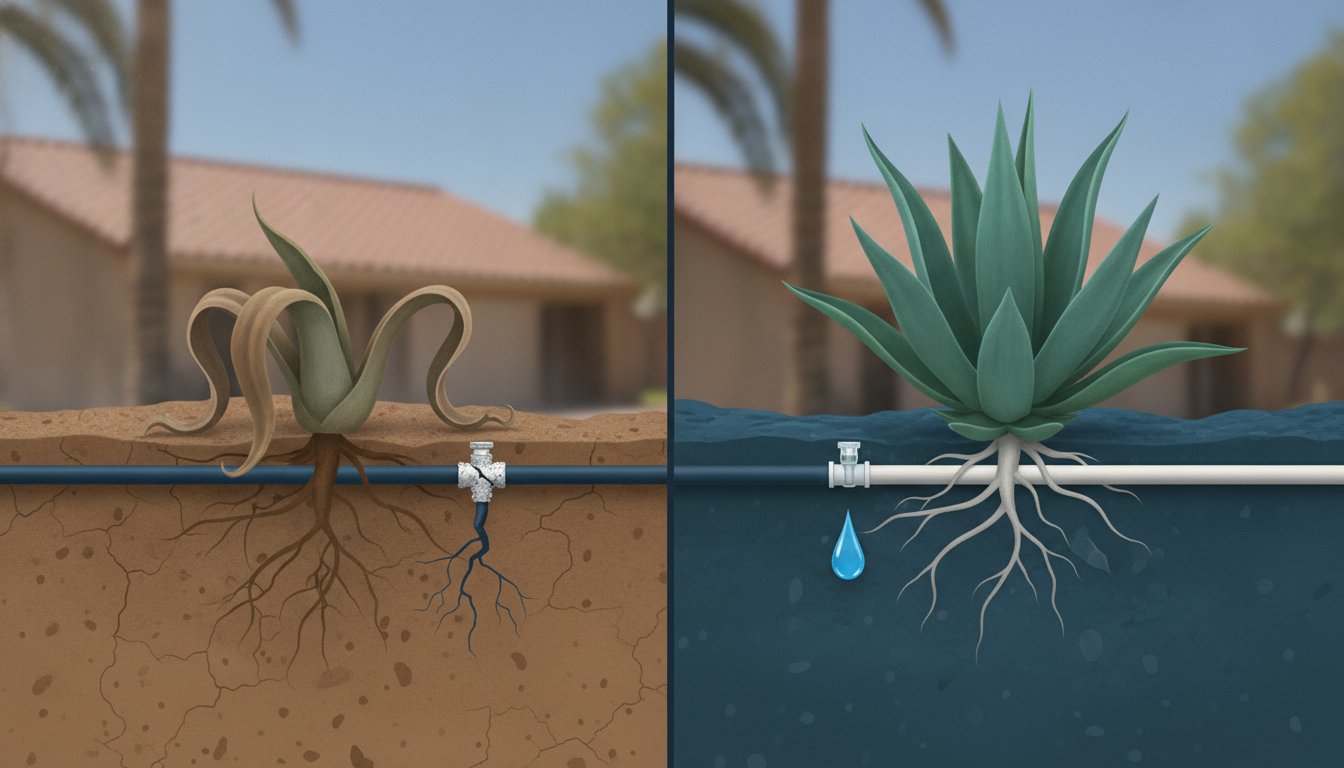
Up to 70% of residential water use across the Phoenix metropolitan area occurs outdoors, yet an aging irrigation setup often wastes thousands of gallons beneath your desert rock before roots absorb a drop. If you are wrestling with cracked poly tubing, blown emitters, and unexplained spikes on your monthly water bill, prioritizing a drip system upgrade water conservation strategy is the most dependable way to regain control. Patching the same brittle lines every summer weekend is frustrating, and temporary fixes rarely protect your desert plantings from extreme heat stress.
You already know that keeping desert flora thriving shouldn't require excessive utility spending or constant yard work. This guide explains how upgrading your residential drip irrigation system cuts water waste, lowers municipal bills, and shields your landscape investments against scorching temperatures. You will learn how switching to durable PVC trunk lines, adding calibrated pressure regulation, and utilizing smart controllers transforms an unreliable system into a sustainable, desert-hardy asset.
Key Takeaways
- Learn how extreme desert heat and caliche subsoil degrade conventional tubing, causing hidden subsurface leaks that starve plant root zones.
- Discover how a comprehensive drip system upgrade water conservation strategy balances manifold pressure regulation and precision filtration to stop emitter blowouts.
- Understand the structural advantages of replacing thin poly lateral lines with Schedule 40 PVC trunk lines for long-term burst resistance.
- Follow a proven four-step diagnostic sequence to audit dynamic line pressure, inspect zone hydraulics, and systematically modernize aging delivery lines.
- See how localized residential engineering in Surprise and Peoria helps your desert landscape withstand heat waves while avoiding higher municipal water tiers.
Why Aging Desert Drip Systems Waste Water Instead of Saving It
Drip irrigation is widely celebrated as the gold standard of water efficiency, yet aging desert systems often turn into silent utility drains. In the Sonoran Desert, surface temperatures routinely bake native soils, while subterranean caliche layers trap escaped water far below active root zones. When thin-walled lines crack or high municipal supply pressure blows emitters off their barbs, thousands of gallons slip unnoticed beneath surface granite. Implementing a targeted drip system upgrade water conservation plan stops this hidden loss before it damages your property.
To see how converting outdated watering methods to targeted micro-lines functions in practice, watch this helpful walkthrough:
The Reality of Poly Tubing Breakdown in Arizona
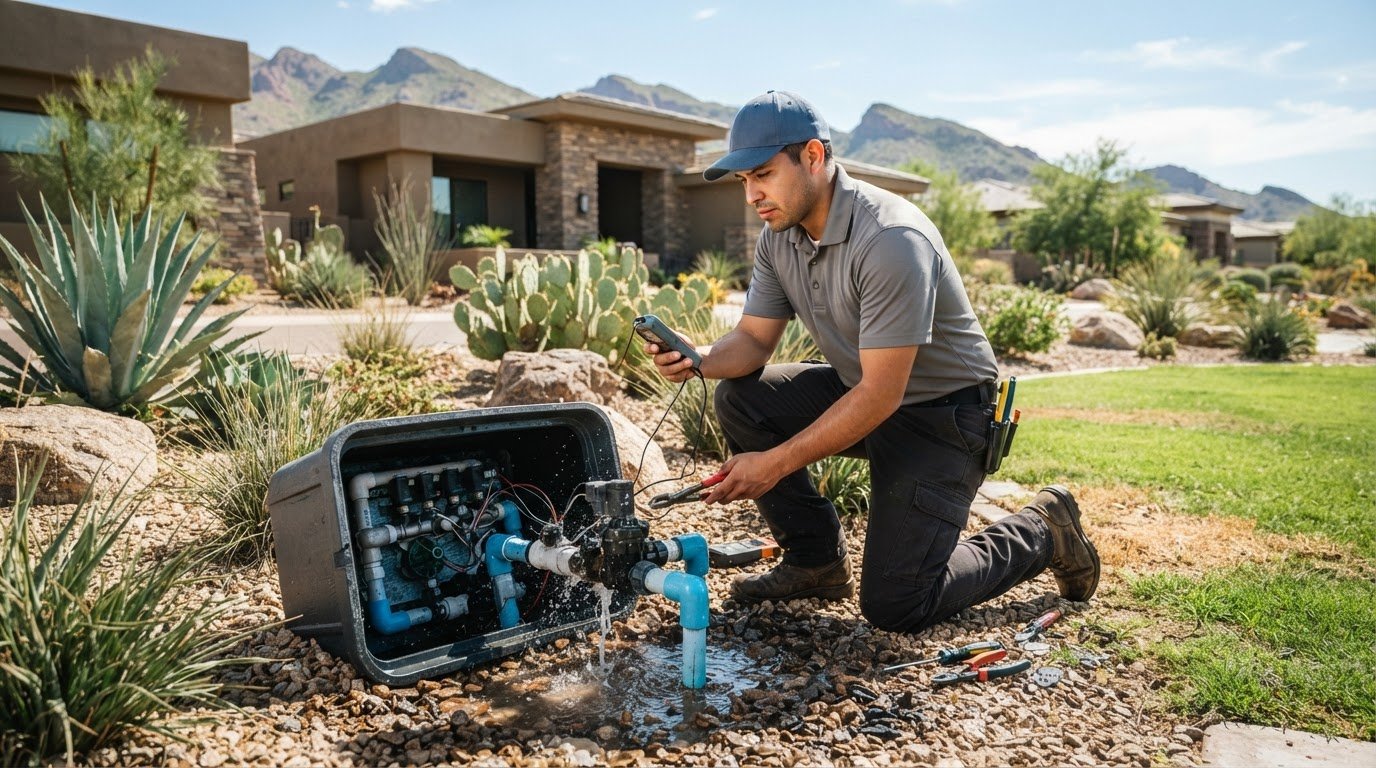
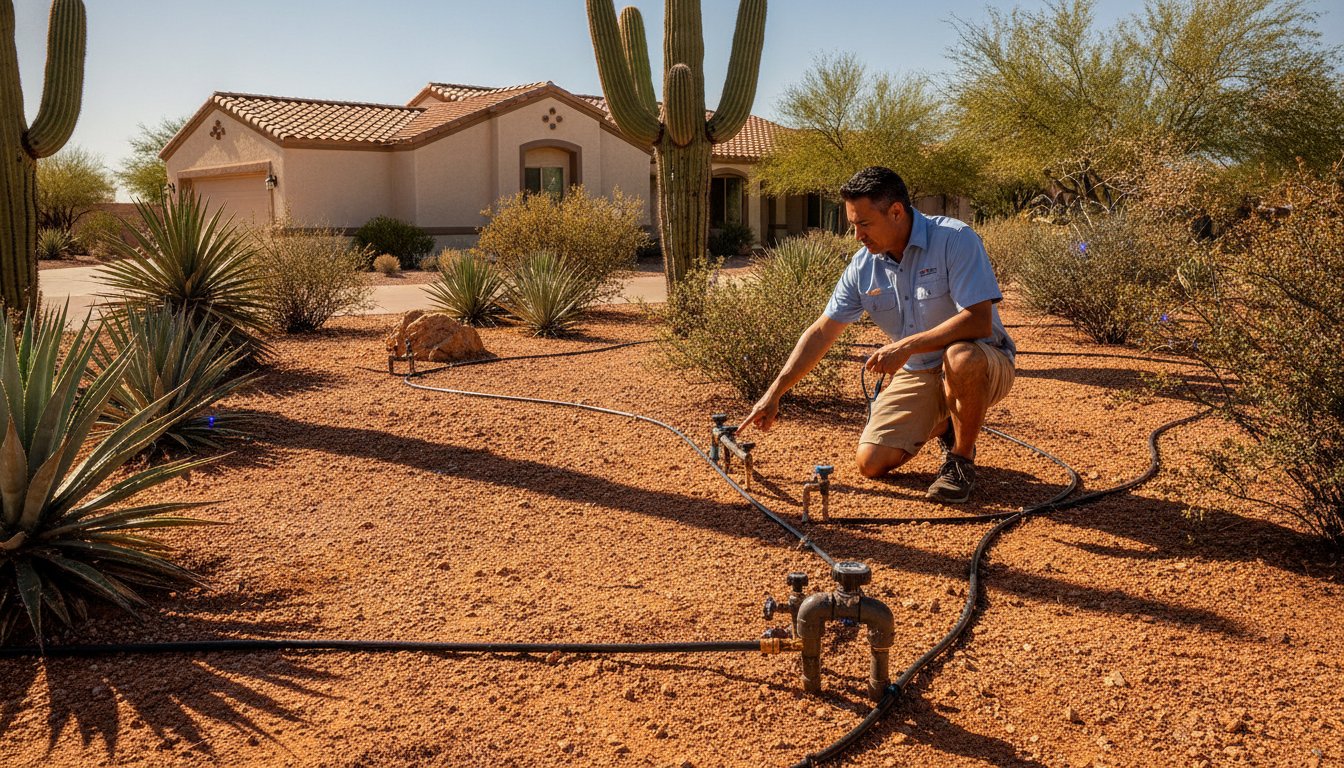
Standard half-inch black polyethylene tubing rarely endures more than five seasons of extreme Arizona heat. The material loses its plasticizers, hardens, and splits along stress points. Constant thermal expansion causes lateral lines to stretch during triple-digit afternoons and contract at night, pulling barbed push-fittings loose. Thirsty desert rodents chew through brittle poly walls, and routine maintenance tools easily puncture exposed lines, sending water directly into non-absorbent soil layers.
Pressure Mismatches and Landscape Thirst Signs
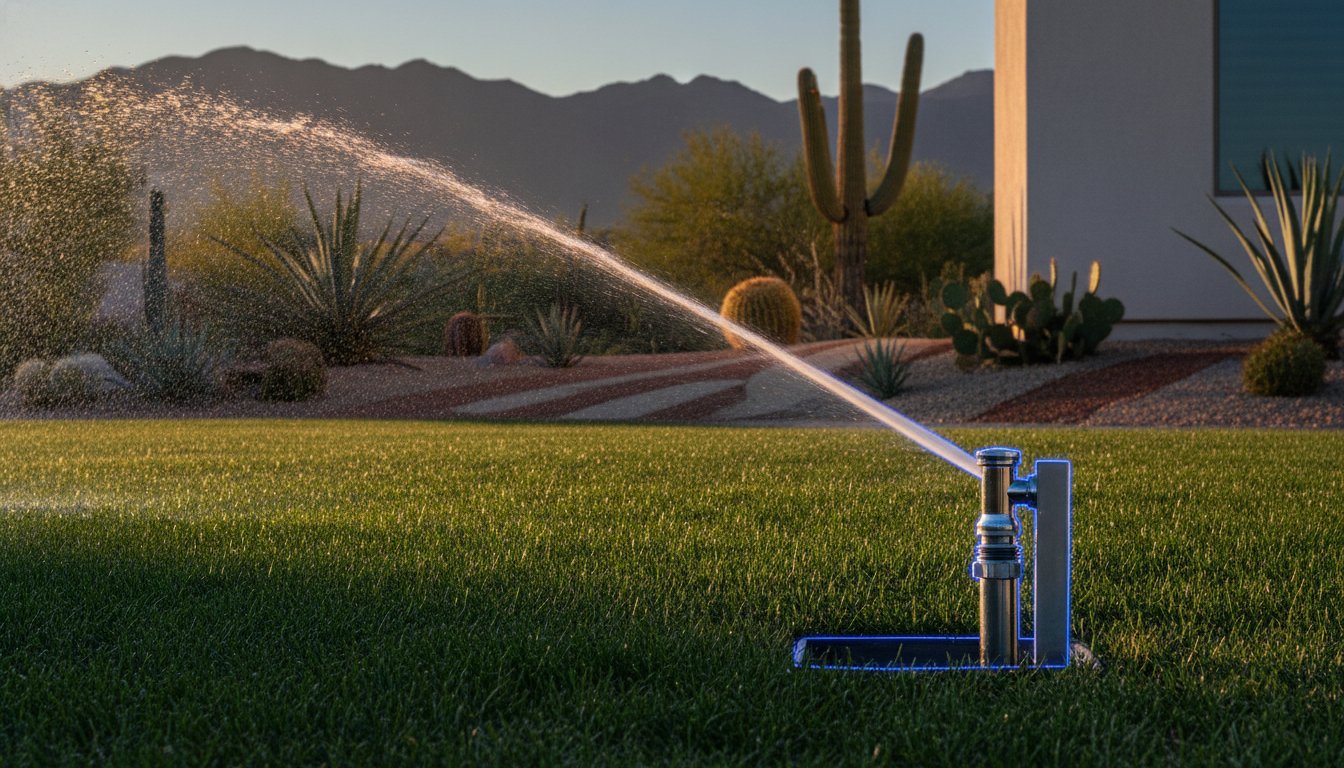
Municipal water supplies in the West Valley often push line pressures exceeding 70 to 80 PSI, far surpassing the 20 to 30 PSI rating required by standard emitters. High pressure atomizes water into fine mist that evaporates on contact, while heavy mineral scale from hard city water clogs downstream outlets. Homeowners often notice stunted growth or wilting foliage and assume their timer needs longer run cycles. Compensating for clogged emitters by running failing drip systems longer only floods subsurface tears elsewhere. True drip system upgrade water conservation eliminates this cycle through mechanical stability rather than excessive run times.
Key Engineering Upgrades That Deliver Maximum Water Conservation
True efficiency requires more than swapping out a few leaking drippers. Systemic modernization treats your yard as a unified hydraulic network, balancing pressure management, mechanical filtration, and calibrated water delivery. As state guidelines for Arizona water conservation demonstrate across broader resource management programs, precision infrastructure prevents substantial waste before distribution begins. Upgrading an aging residential layout protects your landscape and stabilizes monthly utility bills.
Advanced Pressure Regulation and Filtration Assemblies
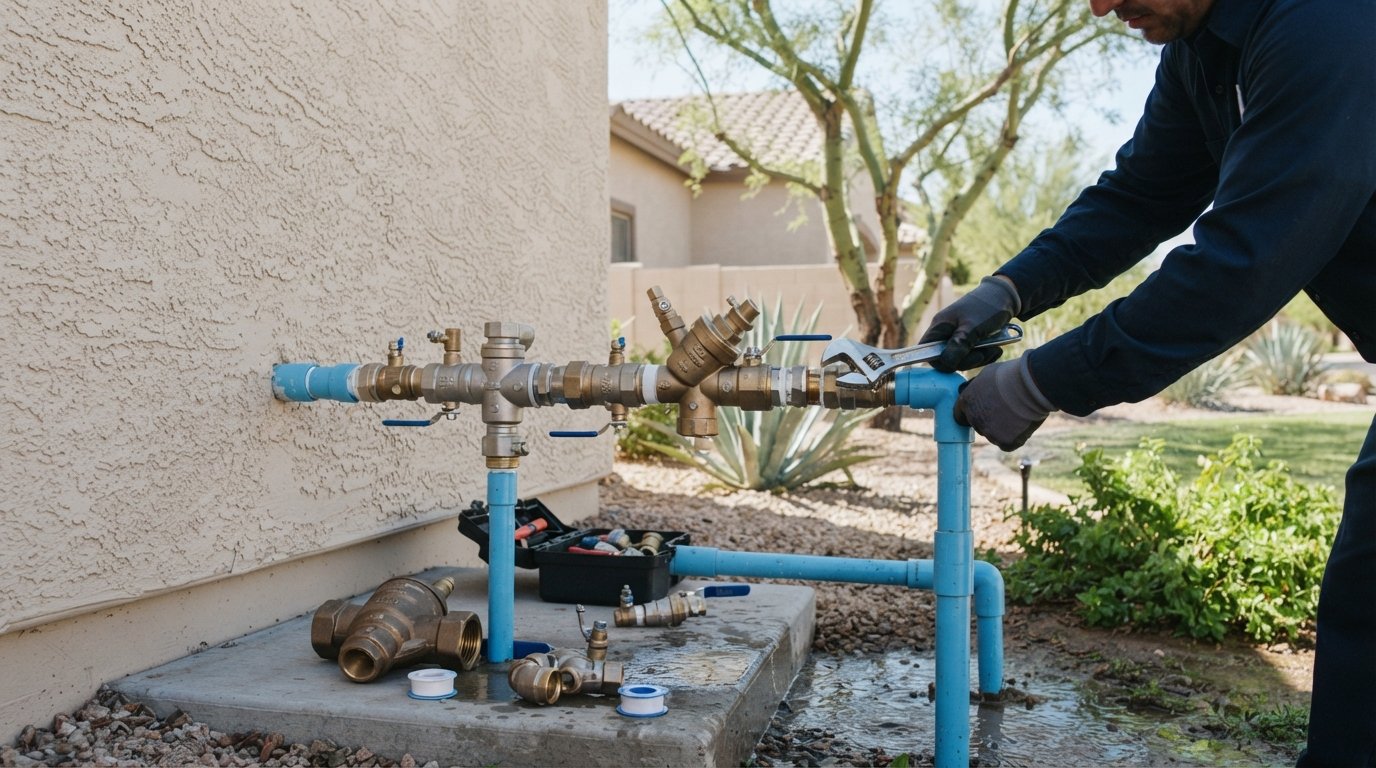
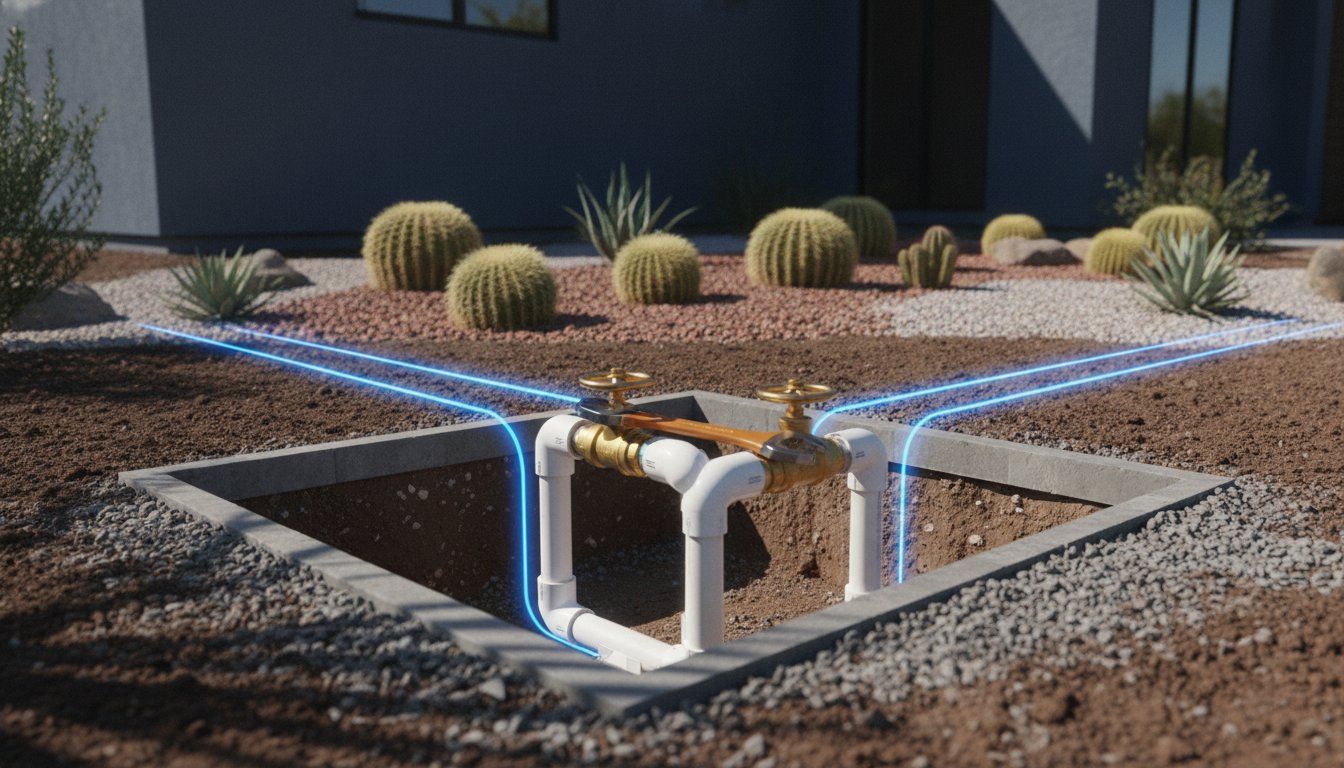
Municipal street main pressures in Peoria and Surprise frequently exceed 70 PSI, which pulverizes residential micro-lines. Installing a dedicated commercial-grade regulator directly at the manifold reduces that incoming force to an optimal 25 to 30 PSI, shielding delicate lines from blowouts. Pairing regulation with a 150-to-200 mesh disc or screen filter stops caliche grit and hard water sediment before they enter lateral lines. Protecting your manifold starts with dependable valve operation, making professional valves and backflow services essential for maintaining line integrity under constant mainline pressure.
Pressure-Compensating Emitters vs. Standard Drippers
Standard non-compensating drippers flood plants near the manifold while starving vegetation at the end of the run, especially across sloped desert properties. Upgrading to self-flushing, pressure-compensating (PC) emitters guarantees an exact, uniform flow rate whether an emitter sits five feet or fifty feet down the line. A successful drip system upgrade water conservation retrofit sizes these emitters deliberately:
- Desert natives: Lower flow rates (1 to 2 gallons per hour) positioned at the outer drip line promote deep taproot expansion.
- Non-native ornamentals and citrus: Higher flow emitters (4 to 8 gallons per hour) ensure adequate hydration without extending station run times.
This targeted zoning prevents surface pooling and protects root crowns from fatal moisture rot.
Smart Controllers and Local Evapotranspiration Tracking
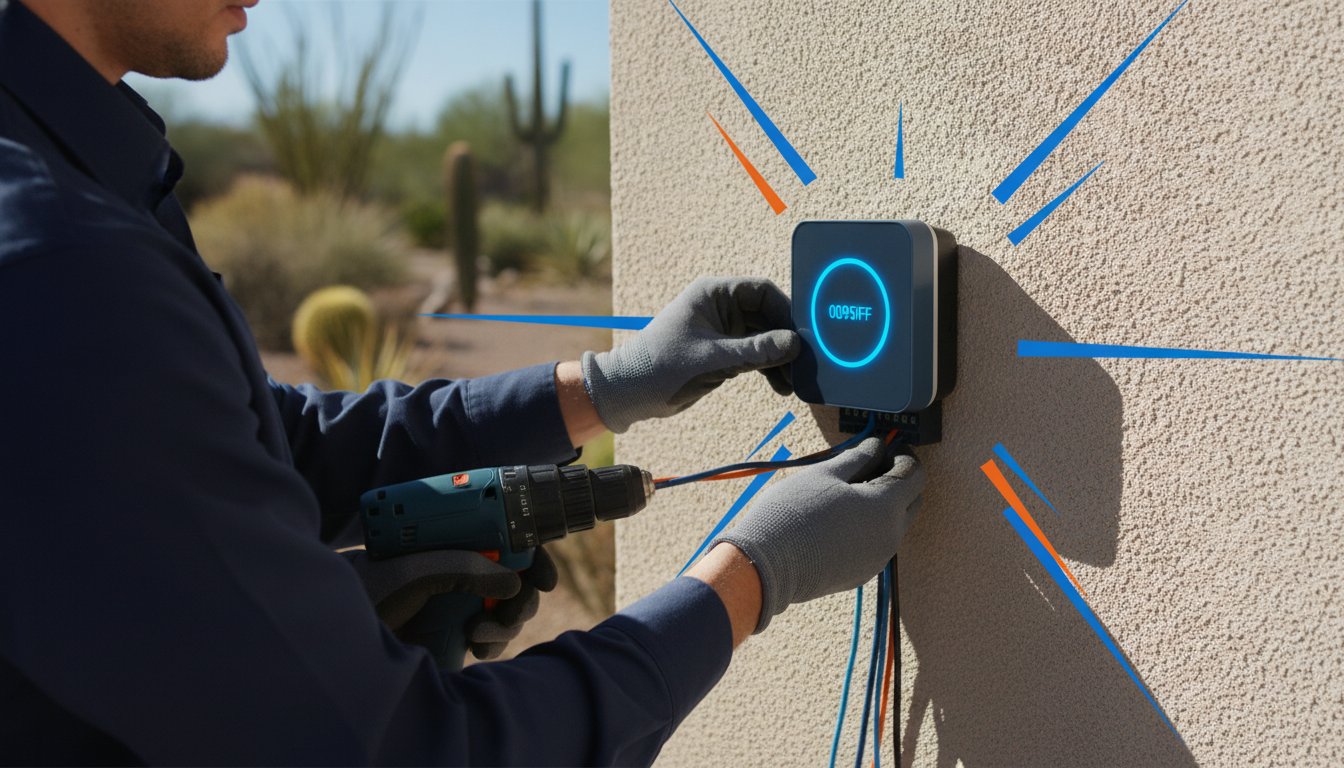
Fixed mechanical timers cannot keep pace with dramatic desert temperature swings. Modern EPA WaterSense-labeled smart controllers track real-time weather metrics, adjusting run cycles automatically as daily evapotranspiration rates fluctuate throughout the West Valley. Built-in cycle-and-soak features break watering windows into brief intervals, giving heavy clay subsoils time to absorb moisture rather than washing topsoil into streets. If your system experiences communication faults or blown solenoid fuses, specialized wiring and diagnostics restore reliable automation. If you need help tailoring these components to your property, reach out to a local specialist to evaluate your existing station hardware.
Standard Poly Drip Lines vs. Commercial-Grade PVC Retrofits
Most residential irrigation installed by tract-home builders relies on thin-wall polyethylene hose buried just beneath decorative rock. While poly hose offers low upfront material costs, it softens rapidly under Arizona summer ground temperatures that often exceed 130 degrees Fahrenheit. Upgrading subterranean delivery lines to rigid Schedule 40 PVC forms the foundation of a lasting drip system upgrade water conservation strategy. Rigid pipe handles high-pressure surges without swelling, eliminating hidden bursts that saturate caliche subsoil.
| Performance Factor | Standard Poly Tubing | Schedule 40 PVC Retrofit |
|---|---|---|
| Expected Lifespan | 3 to 5 years before brittle failure | 20+ years of continuous service |
| Burst & Crush Resistance | Low; pinches under stone, splits at joints | High; withstands ground settling and rock weight |
| Subsurface Leak Risk | High; friction barbs pull free unseen | Negligible; chemically welded joints |
| Hydraulic Delivery | Uneven flow drops over long runs | Stable dynamic pressure throughout zones |
Structural Integrity Under Desert Ground Shifts
Shifting Arizona soils and sharp aggregate routinely crush thin poly tubing beneath two inches of granite mulch. When ground shifts occur, barbed fittings pull apart easily, leaking gallons unnoticed. By contrast, solvent-welded PVC sub-mains create impervious, fused joints that completely prevent root intrusion and mechanical slippage. Transitioning your property to a rigid underground network through comprehensive design and installation stops recurring pipe failures permanently.
Long-Term Water Conservation and Financial Return
Replacing deteriorating lateral lines with a rigid PVC grid delivers immediate utility savings by halting the slow, subterranean seep common to degraded poly lines. Instead of repeating frustrating weekend patch jobs, homeowners gain an enduring hydraulic setup that keeps pressure stable at every plant. You can evaluate the broader efficiency impact by reviewing proven techniques for residential sprinkler system upgrades across our desert communities.
Step-by-Step Modernization: Upgrading Your Drip System for Water Efficiency
Transitioning from an uncoordinated array of patches to a high-efficiency layout requires a systematic engineering approach. Rather than guessing which components fail next, executing an orderly modernization protocol ensures every drop serves your landscape. Homeowners can systematically eliminate mechanical failure points and achieve authentic drip system upgrade water conservation across four essential phases.
- Hydraulic Audit: Measure dynamic station pressure and total gallons-per-minute flow under full load.
- Strategic Hydrozoning: Group plantings with identical hydration requirements onto isolated valve stations.
- Sub-Surface Line Conversion: Lay rigid, solvent-welded Schedule 40 PVC trunk lines beneath rock beds.
- Infiltration Calibration: Program controller cycle-and-soak windows to match local soil permeability.
Step 1 & 2: Hydraulic Auditing and Strategic Hydrozoning
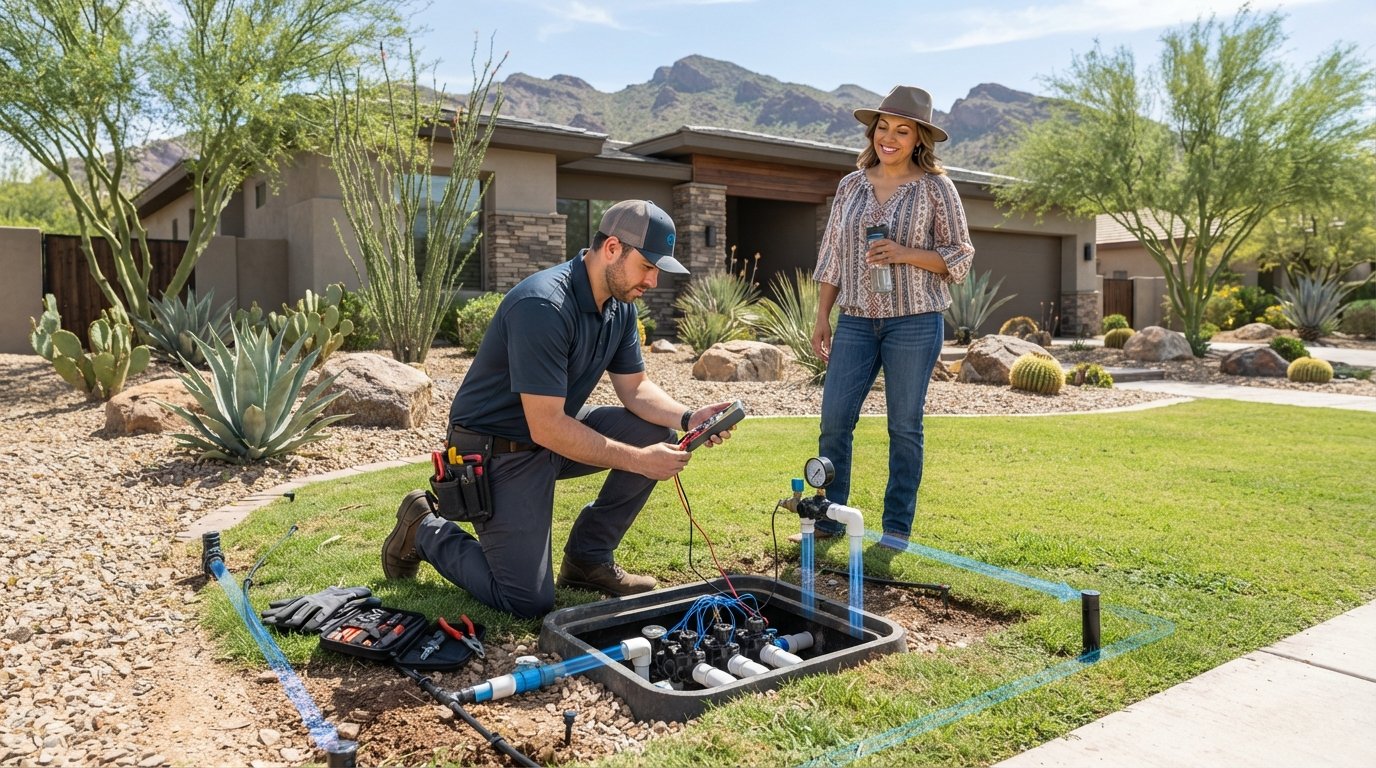
Modernization begins at the test gauge. Auditing dynamic water pressure across every active zone reveals whether your system suffers from hidden underground leaks or restrictive flow bottlenecks. Once baseline operating metrics are established, strategic hydrozoning isolates plant varieties based on biological water demands. Running mature citrus trees, flowering shrubs, and desert succulents on the same valve creates an impossible balance. Desert cacti drown and develop fatal root rot while heavy-drinking fruit trees remain dehydrated. Splitting these groups into independent zones guarantees appropriate hydration volumes without overwatering drought-hardy species.
Step 3 & 4: Sub-Surface Upgrades and Precision Calibration
The physical transformation focuses beneath the surface. Excavating aged poly lines and bedding Schedule 40 PVC trunk lines deep beneath gravel mulch establishes a permanent delivery foundation immune to shovel cuts and heavy surface compaction. Once the rigid infrastructure is secured, smart controller programming must align runtime durations with Sonoran soil mechanics. Desert dirt containing dense caliche layers cannot absorb water quickly. Calibrating cycle-and-soak runtimes applies water in short, separated bursts, allowing liquid to penetrate deep into root profiles instead of puddling. When managing complex manifold overhauls or tricky lateral runs, coordinating your updates with our experienced irrigation repairs and maintenance team ensures seamless execution. To schedule a comprehensive hydraulic inspection of your property, contact our local specialists today.
Professional Drip Conservation Solutions in Surprise and Peoria, AZ
Managing outdoor watering efficiency in the West Valley requires localized mechanical experience rather than generic gardening advice. With the City of Surprise implementing a tiered water rate plan featuring higher charges for excessive monthly consumption, and the City of Peoria adjusting utility rates, undetected irrigation waste directly impacts household budgets. Sonora Sprinkler Inc. delivers dedicated residential irrigation engineering designed specifically for our challenging Sonoran terrain. A professionally calibrated drip system upgrade water conservation overhaul safeguards your desert plantings while eliminating the expensive waste typical of failing builder-grade networks.
Why West Valley Homeowners Rely on Sonora Sprinkler Inc.
As a family-owned specialist serving Surprise and Peoria since circa 1999, our focus remains exclusively on residential irrigation mechanics. Our team understands how dense caliche subsoil traps moisture, how high city static water pressure stresses weak fittings, and where underground lines are most vulnerable to root intrusion. Rather than applying temporary surface patches, we focus on permanent structural stability through Schedule 40 PVC replacements and precision valve rebuilds. You can discover more about our regional engineering standards in our comprehensive Peoria drip irrigation installation guide.
Schedule Your Drip System Efficiency Evaluation
Waiting until mid-summer heat arrives to address dry spots or erratic station pressures often leads to sudden plant loss. An aging manifold or deteriorating line can silently waste tens of thousands of gallons before landscape decline becomes visible at the surface. A professional evaluation provides:
- A comprehensive dynamic pressure test across every active yard station
- A thorough physical inspection of valves, anti-siphon devices, and manifold assemblies
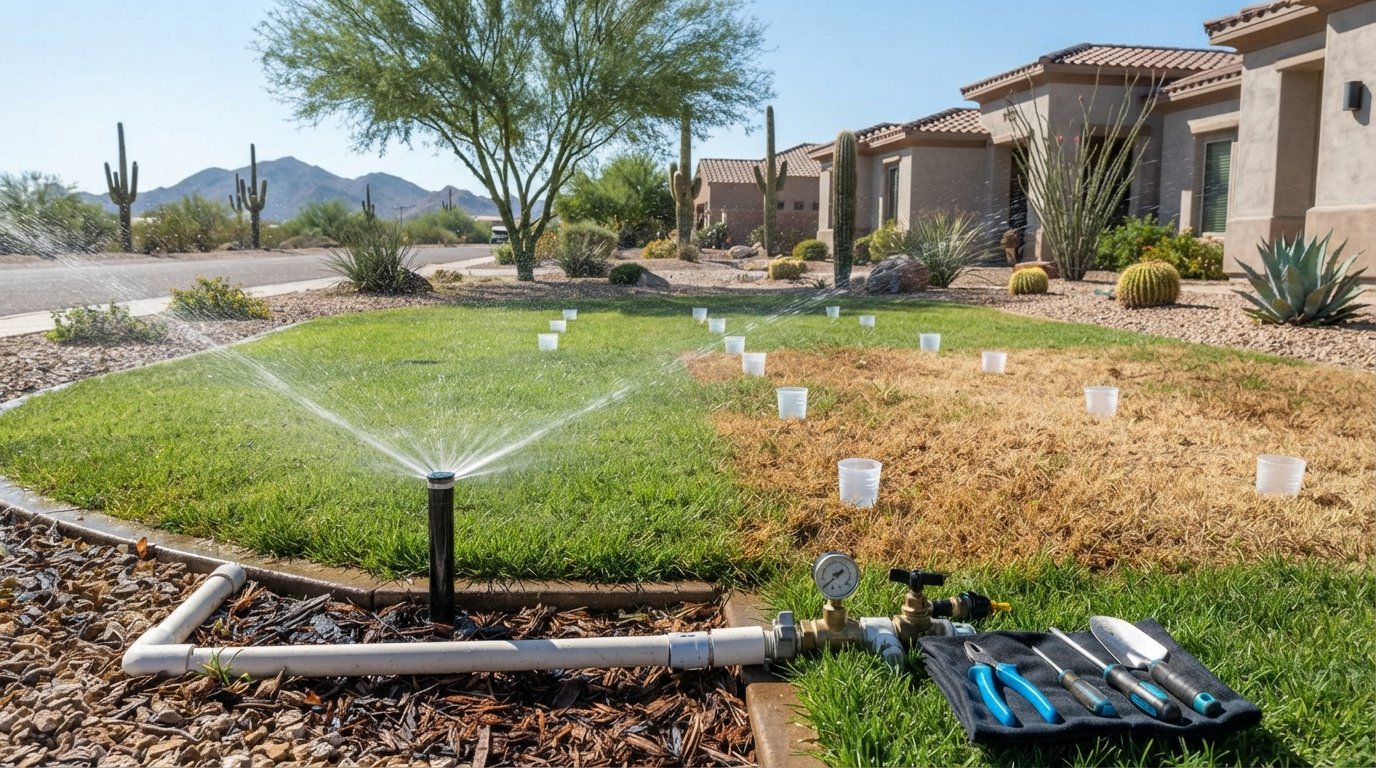
- An accurate assessment of soil infiltration rates and emitter flow distribution
- Clear, practical recommendations for rigid line conversions and smart scheduling
Protect your landscape investment and secure genuine drip system upgrade water conservation for the seasons ahead. Take proactive action today: Schedule your professional irrigation consultation with our West Valley specialists.
Modernize Your Desert Irrigation for Lasting Water Savings
True efficiency in the Sonoran Desert requires structural durability alongside smart delivery. Moving past brittle poly lines in favor of rigid Schedule 40 PVC trunk lines stops unseen subterranean leaks, while calibrated pressure regulation and smart scheduling deliver moisture directly where roots need it most. Committing to a comprehensive drip system upgrade water conservation plan protects your mature desert plantings against extreme summer heat while keeping municipal utility bills under control.
As family-owned residential irrigation specialists serving Surprise and Peoria since circa 1999, Sonora Sprinkler Inc. delivers master craftsmanship built specifically for dense desert soils and local water pressures. You don't have to spend another scorching season battling recurring pipe blowouts and parched vegetation. Schedule your professional irrigation consultation today to build a dependable, high-efficiency watering network that keeps your property thriving year-round.
Frequently Asked Questions
How much water does a modernized drip irrigation system save compared to older lines?
Modernizing an inefficient, degraded drip line can reduce outdoor water consumption by 30% to 50% across typical residential properties. Older systems continuously bleed water through unseen hairline splits, blown emitters, and excessive runtimes. Upgrading to pressure-regulated lines with precision emitters stops subsurface pooling and limits application strictly to root zones. In cities like Surprise and Peoria, this drip system upgrade water conservation strategy keeps household consumption well below expensive higher municipal rate tiers.
What are the first warning signs that my underground drip system is leaking?
Unexplained spikes on your monthly water bill and localized depressions or damp patches in surface gravel are the clearest initial warnings. You might also notice sudden weed outbreaks along lateral pipe runs, low water pressure at the end of a zone, or individual plants wilting while nearby soil stays muddy. Because desert caliche holds water beneath the surface, many significant lateral breaks never pool openly on top of decorative rock.
Why is my drip system blowing off emitter heads when the zone turns on?
Emitter blowouts occur when street water pressure surges directly into micro-tubing without adequate mechanical regulation at the valve manifold. Municipal water lines in the West Valley often operate between 70 and 80 PSI, while drip emitters require a steady 20 to 30 PSI. Without a functioning commercial-grade pressure regulator, opening an irrigation valve creates an explosive hydraulic shock wave that forces push-fit emitters off their barbs and cracks brittle line connections.
Can I connect my upgraded drip irrigation system to a smart Wi-Fi controller?
Yes, modernizing your drip setup pairs seamlessly with EPA WaterSense-labeled Wi-Fi controllers. These smart platforms monitor real-time local weather stations in Surprise and Peoria, automatically adjusting daily run durations according to solar radiation and temperature shifts. Smart controllers also let you manage complex cycle-and-soak schedules right from your smartphone, ensuring water penetrates dense desert soil without causing wasteful street runoff.
What is hydrozoning, and why is it essential for desert water conservation?
Hydrozoning is the practice of grouping plants with identical moisture and root depth requirements onto separate, dedicated irrigation valves. In desert landscapes, mixing high-water citrus or turf borders on the same station as native mesquites or cacti leads to severe overwatering. By isolating plant categories onto distinct zones, you deliver precise gallons where needed, preventing root rot in native plants while achieving authentic drip system upgrade water conservation.
How often should residential drip irrigation emitters be inspected and cleaned in Arizona?
Residential emitters should undergo a full physical inspection at least twice a year, ideally in spring before peak heat and in late autumn. Mineral-heavy tap water in the West Valley leaves calcium and lime deposits that slowly clog micro-orifices. Routine flushes and filter cleaning clear out sediment before emitters seize completely, ensuring every desert shrub receives adequate moisture without requiring you to extend station running times.
Is it better to repair broken poly drip lines or convert the main lines to PVC?
Converting sub-main lines to Schedule 40 PVC is the superior long-term choice once poly tubing passes five years of age. Patching brittle black poly only shifts hydraulic pressure to the next weak spot, locking you into endless weekend repairs. Rigid PVC trunk lines permanently resist shifting rocks, root invasion, and ground heat, creating a durable underground foundation that supports reliable micro-lines for decades.