You step outside in the morning only to find drip emitters blown clear off their tubing and a dense cloud of atomized mist drifting away from your lawn rotors. Dealing with recurring irrigation system pressure regulator issues can quickly turn routine landscape watering into expensive property damage. It's deeply frustrating when you can't tell whether that sudden surge stems from municipal supply swings, your home's primary reducing valve, or a stuck inline regulator at the manifold.
Proper operating pressure protects desert irrigation components from catastrophic blowouts and runaway water waste. In this guide, you'll learn how to accurately test line pressure with a gauge, isolate mechanical diaphragm failure from hard water mineral buildup, and restore balanced pressure across both turf zones and delicate drip circuits. We'll walk through the practical diagnostic steps and reliable repair methods needed to stabilize your plumbing, prevent repeat line failures, and keep your landscape healthy.
Key Takeaways
- Recognize how misting spray heads and detached drip emitters signal severe irrigation system pressure regulator issues before major line blowouts occur.
- Understand how desert heat stress and hard water mineral scale compromise internal regulator springs and rubber diaphragms over time.
- Differentiate between whole-house pressure reducing valves and zone-specific inline regulators to isolate the exact source of abnormal water pressure.
- Master the dynamic pressure testing process using an inline pressure gauge on active zones rather than relying on deceptive static readings.
- Determine when sealed plastic drip regulators require full replacement and how to select proper flow-rated units engineered for long-term desert reliability.
Recognizing the Warning Signs of Irrigation Pressure Regulator Failure
Excess line pressure operates as a silent destroyer across residential landscapes. While a gradual leak often leaves a damp footprint, sudden spikes blow out fittings and rupture lines without warning. A standard residential drip irrigation system relies on delicate downstream parts that cannot withstand unchecked city pressure. When the inline control breaks down, the resulting mechanical stress shows up across your yard through distinct visual and physical cues.
Some homeowners mistakenly assume that leaky valves or fractured lateral lines are just wear and tear from age. In reality, persistent irrigation system pressure regulator issues are frequently the real root cause, sending high-pressure surges straight into components designed for modest water volume. To see how pressure balances across low-volume tubing, watch this helpful walkthrough on handling line dynamics:
High-Pressure Symptoms in Drip Lines and Spray Zones
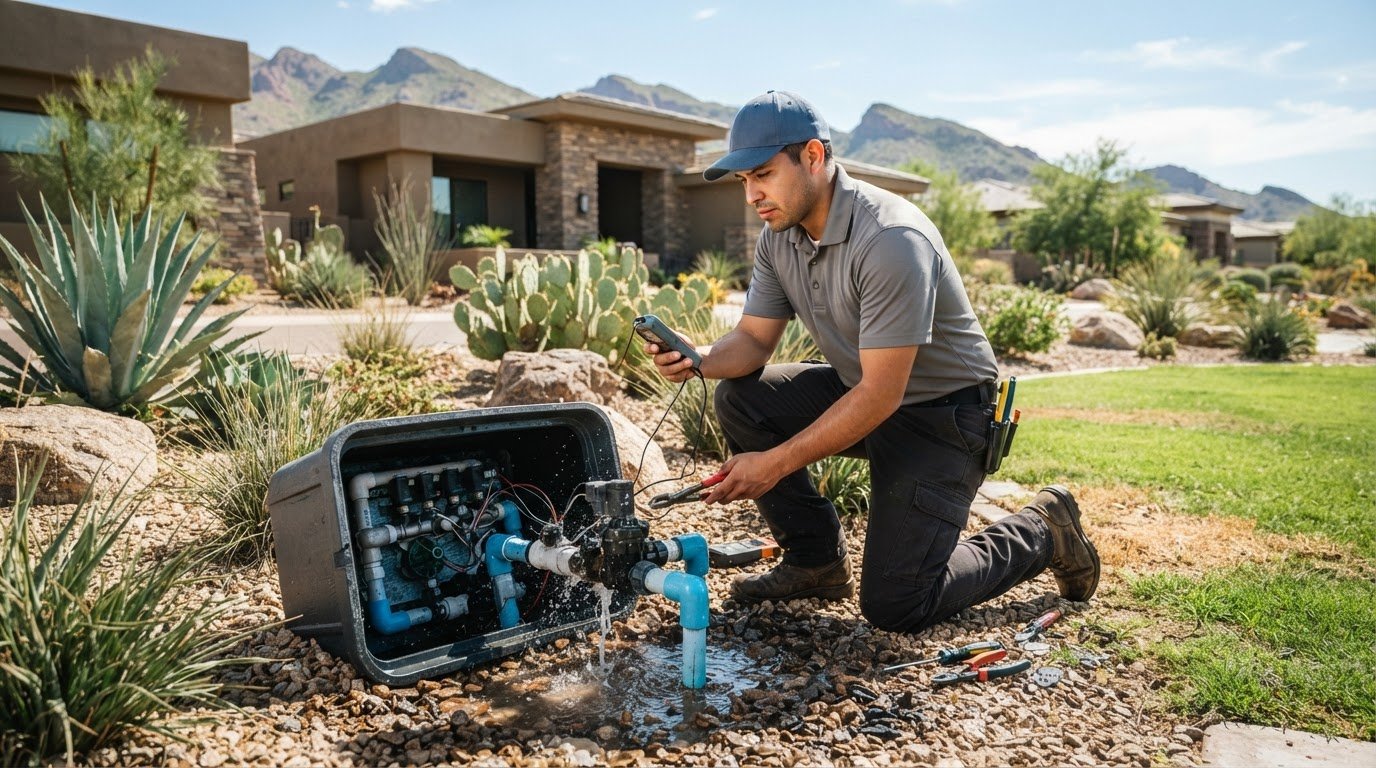
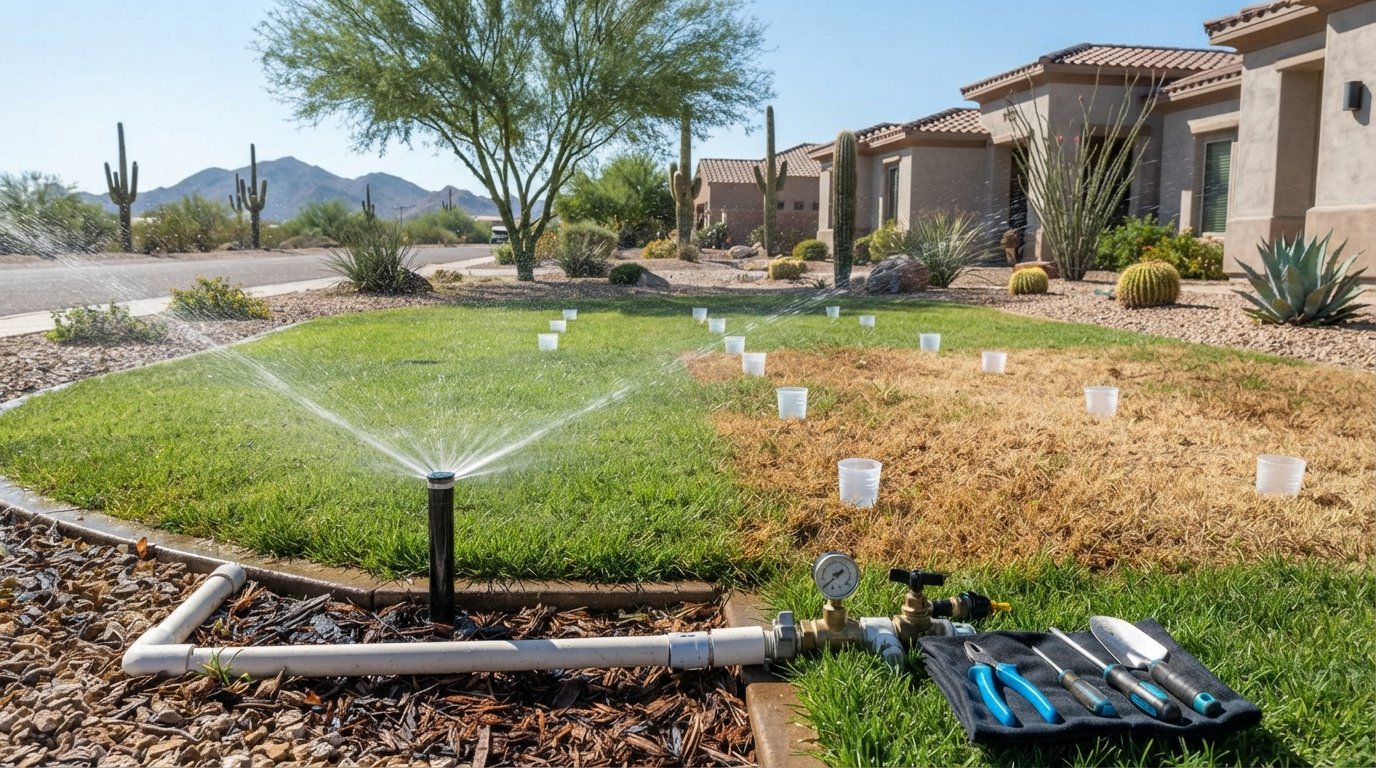
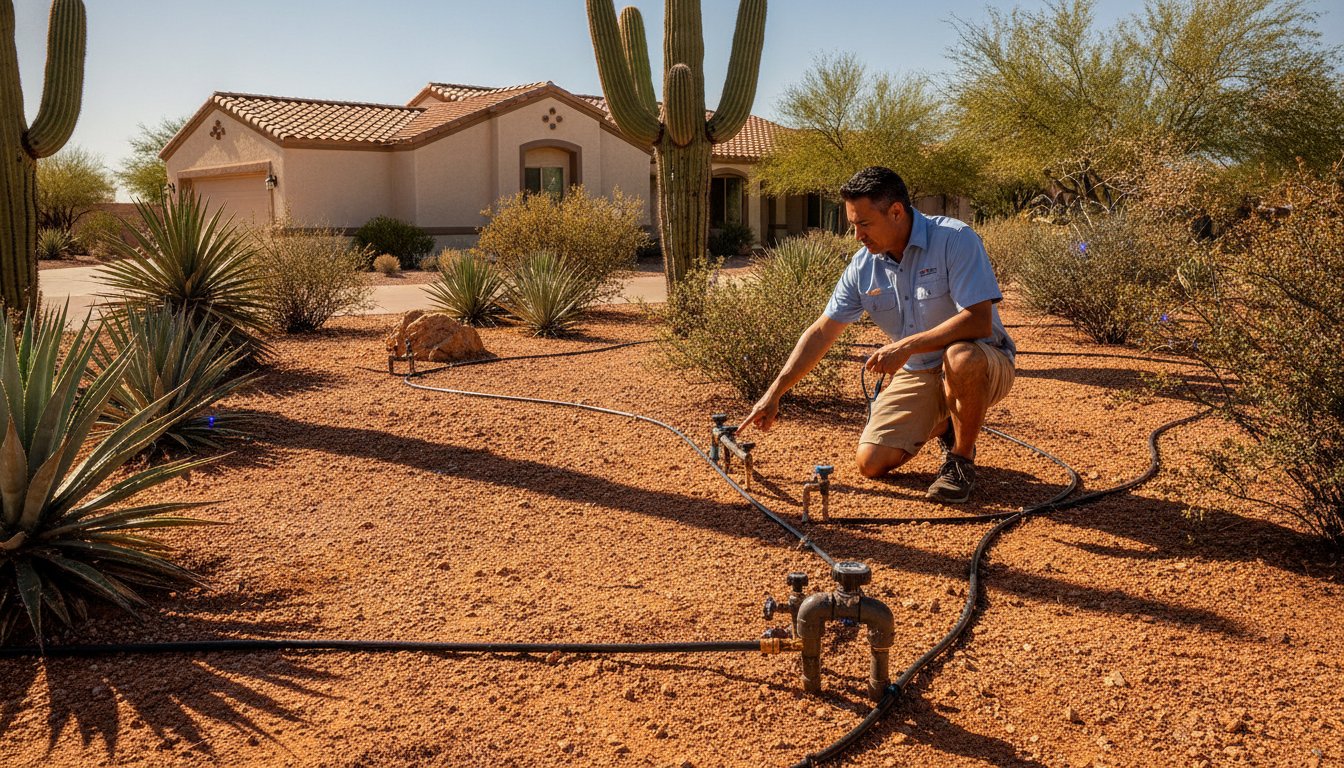
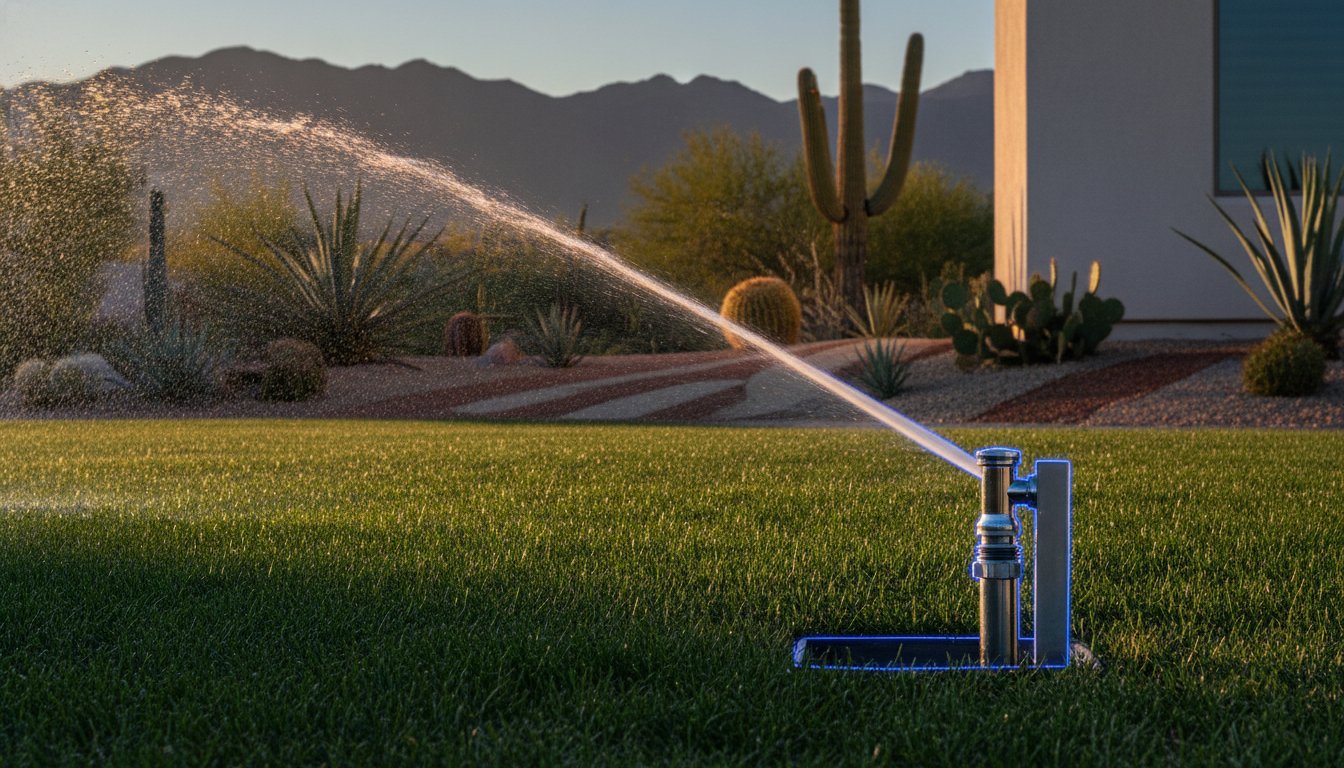
When an internal spring or diaphragm collapses inside the regulator, unreduced mainline pressure surges through the downstream pipe. In poly drip zones, barbed micro-fittings and point-source emitters pop completely out of lateral runs, creating miniature geysers that wash out native soil and plant roots. Turf spray heads present a different symptom; nozzles emit a fine, atomized cloud of mist that simply drifts away in dry breezes instead of landing on the grass. You may also hear sharp metallic banging or pipe shudder, known as water hammer, whenever an electric solenoid valve snaps shut against the uncontrolled surge.
Low-Pressure Symptoms and Zone Underperformance
Regulator failure does not always mean runaway pressure. Debris, hard water scale, and stuck mechanical gates can restrict flow, generating persistent low-pressure problems that starve your plants. Typical indicators include:
- Pop-up sprinkler bodies struggle to lift, failing to clear the grass line or retract after the cycle finishes.
- Drip emitters located at the furthest point from the manifold deliver a weak trickle or cease watering entirely.
- Zone valves chatter or whistle as restricted flow disrupts proper hydraulic seating within the manifold.
Recognizing whether you face an open blow-by or an internal restriction is the essential first step toward resolving recurring irrigation system pressure regulator issues before structural pipe splits occur.
Primary Causes Behind Irrigation Pressure Regulator Malfunctions
While generic plumbing advice often attributes valve failure to basic mechanical age, desert environments introduce aggressive stressors that dramatically shorten hardware lifespans. In Arizona, high ambient heat, caliche dust, and heavily mineralized tap water combine to create an unforgiving environment for sensitive hydraulic regulation devices. When internal components lose their elasticity or bind up under crusty mineral deposits, chronic irrigation system pressure regulator issues become inevitable.
Mineral Calcification and Hard Water Scaling
Municipal water across the West Valley carries heavy loads of dissolved calcium carbonate and magnesium. As water passes through the narrow restrictive orifice of a regulator, pressure drops cause minerals to precipitate out of suspension and coat the internal mechanism. This calcified crust locks the internal brass or stainless steel plunger into a fixed position. If the stem freezes while extended, the valve starves downstream plants; if it freezes open, full street pressure floods the zone. Soaking sealed plastic regulators in vinegar rarely removes calcification from deeply recessed guide paths, making replacement the only reliable path to restore factory calibration.
Mechanical Diaphragm Fatigue and Thermal Stress
Direct exposure to extreme ground heat rapidly alters flexible EPDM rubber regulating diaphragms inside valve boxes. Continuous summer temperatures cook these rubber membranes, causing them to stiffen, crack, or warp. At the same time, high-volume municipal supply lines cycle pressure throughout the night, stretching the brittle elastomer until microscopic tears develop. Once a tear bypasses the internal pressure-reduction chamber, the valve acts as a straight pipe, allowing raw static pressure to blow through the manifold.
Sediment Intrusion and Filtration Failures
Fine granite dust, sand, and caliche particulates frequently overwhelm compromised 150-mesh screen filters installed ahead of drip lines. Micron-level grit migrates past the filter mesh and lodges directly between the sealing poppet and internal rubber seat, physically barring the regulator from shutting down dynamic pressure spikes. Once this seal is broken, fluctuating main line spikes pass directly through to low-pressure drip tubing.
Diagnosing whether your system suffers from calcified plungers or torn rubber diaphragms requires careful physical inspection. If persistent line blowouts leave you uncertain about the health of your manifold hardware, you can reach out to Sonora Sprinkler Inc. for dedicated troubleshooting and system calibration.
Irrigation Pressure Regulators vs. Main PRVs: Diagnosing the Right Valve
Diagnosing hydraulic faults requires tracing where water enters your property and where pressure gets reduced. A frequent mistake homeowners make is assuming that any line surge points to an irrigation-specific part. Residential plumbing layouts often use multiple mechanical devices to control flow. Disentangling whole-house equipment from downstream sprinkler components is crucial when troubleshooting persistent irrigation system pressure regulator issues.
Whole-House Brass PRVs vs. Dedicated Irrigation Regulators
Municipal water mains in desert cities often push dynamic volume above 80 to 100 PSI to maintain fire flow and support sprawling distribution networks. To protect indoor plumbing fixtures, builders install a heavy-duty, whole-house brass pressure reducing valve (PRV) where the primary municipal supply pipe enters the home. This valve steps incoming supply down to an indoor-safe 50 to 60 PSI.
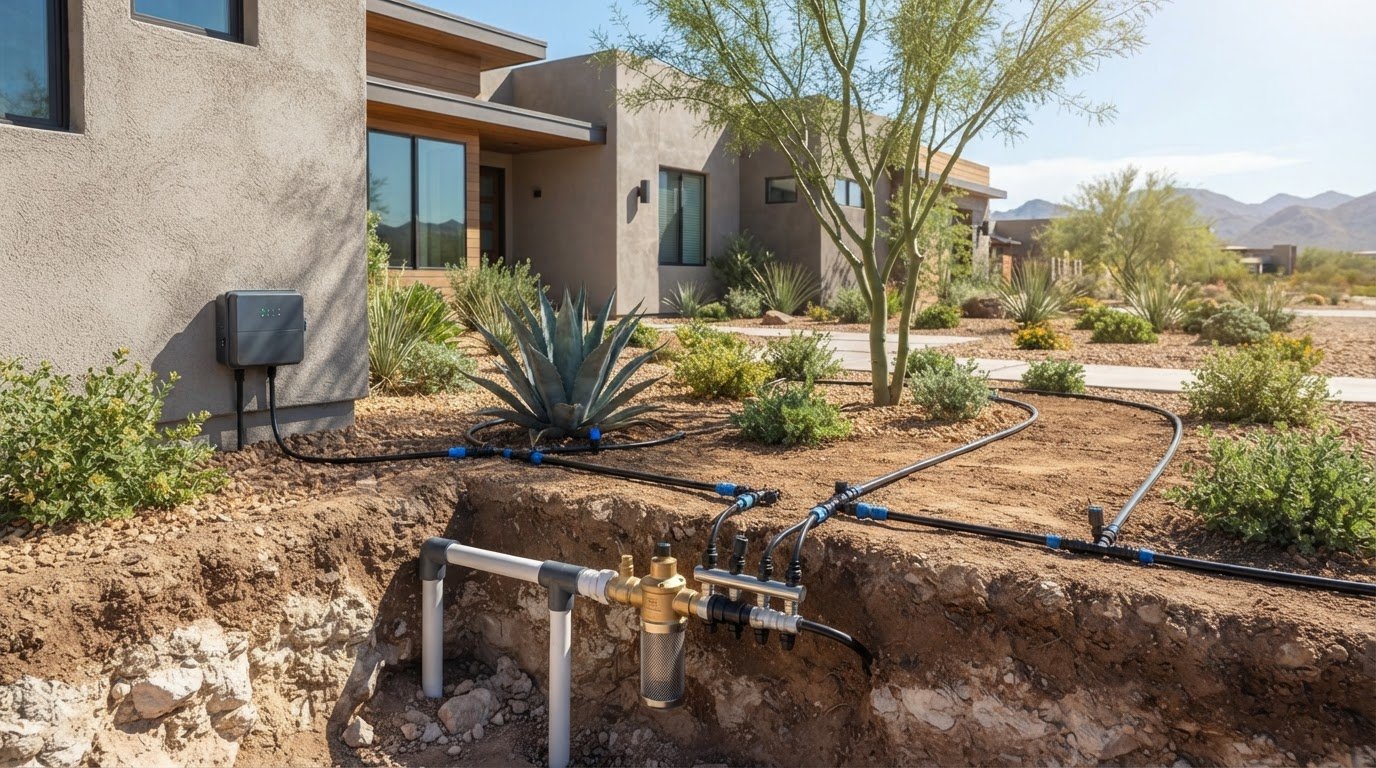
The core challenge lies in the plumbing layout: landscape lines often split off before that main domestic PRV. If your manifold ties directly into raw street water ahead of the house valve, it absorbs full municipal surges. While standard lawn rotors can tolerate 40 to 60 PSI, point-source drip circuits require a dedicated downstream regulator to knock that volume down to 20 to 30 PSI. If your home showers and hose spigots run at normal pressure while drip tubing blows apart outside, your main house valve is functioning properly; the zone-level regulator is the component that failed.
In-Line Drip Regulators vs. Pressure-Regulating Spray Heads (PRS)
Pressure management across your yard typically occurs in one of two distinct locations:
- In-Line Manifold Regulators: Threaded directly behind the zone control valve, these sealed units govern dynamic pressure for the entire downstream circuit. They are vital for drip zones where every lateral line and micro-tube needs low operating pressure.
- Pressure-Regulating Spray Bodies (PRS): These specialized turf sprinkler heads contain built-in micro-pistons within each riser stem. Calibrated to limit internal nozzle pressure to 30 PSI for standard sprayers or 45 PSI for rotary nozzles, they eliminate fogging even if upstream manifold pressure spikes.
Pairing a commercial inline valve with PRS bodies delivers the highest degree of uniformity across properties with sloped grades. Pinpointing whether a pressure failure stems from the primary domestic PRV, the manifold regulator, or an individual pop-up stem prevents unnecessary part replacements and keeps your landscape repair strategy focused on the actual mechanical breakdown.
How to Test and Troubleshoot Your Irrigation Pressure Regulator
Visual inspections only reveal that an imbalance exists; they cannot tell you the exact hydraulic force causing the failure. To resolve recurring irrigation system pressure regulator issues with certainty, you need quantitative data taken under real operating conditions. Testing static pressure with the system turned off provides an incomplete picture. You must measure dynamic operating pressure while water actively flows through your downstream emitters or spray heads.
Step-by-Step Pressure Gauge Diagnostic Testing
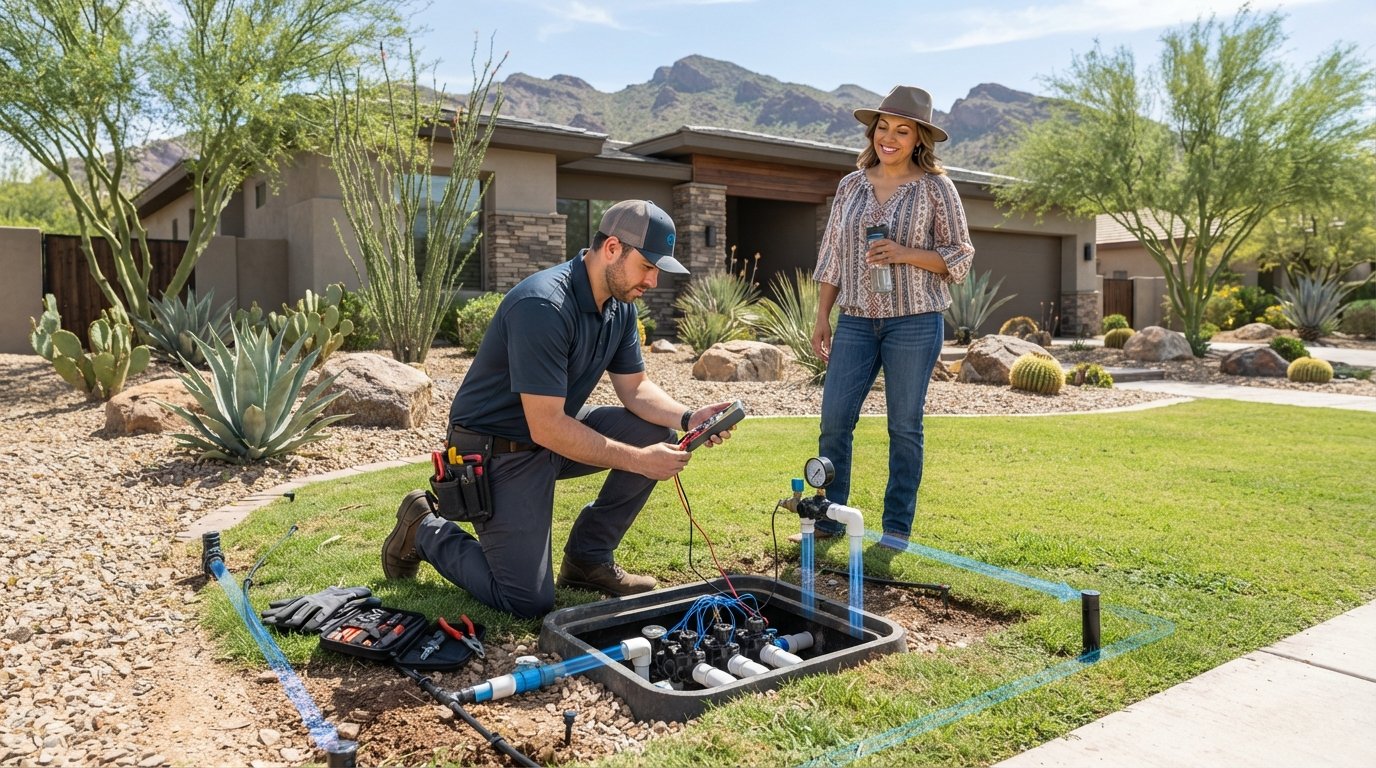
Evaluating your zone regulator requires a standard 0 to 100 PSI liquid-filled pressure gauge fitted with the appropriate hose-thread or barbed adapter. Follow these testing steps:
- Take a baseline reading: Thread your pressure gauge onto an outdoor spigot fed directly from the main line. Record this resting static pressure; municipal supplies usually read between 50 and 80 PSI.
- Connect to the test zone: Move the gauge downstream of the suspected zone regulator. Attach it to a lateral line flush valve, or insert a barbed tee directly into 1/2-inch poly tubing.
- Run the zone: Activate the irrigation cycle from your controller. Allow lines to fully pressurize and purge air pockets before checking the gauge.
- Compare against rating: Most drip regulators carry a factory rating of 20, 25, or 30 PSI stamped into their plastic housing. If your dynamic reading climbs above 40 PSI or matches your baseline municipal pressure, the internal diaphragm has ruptured, completely bypassing regulation.
Isolating Upstream Supply Restrictions from Regulator Faults
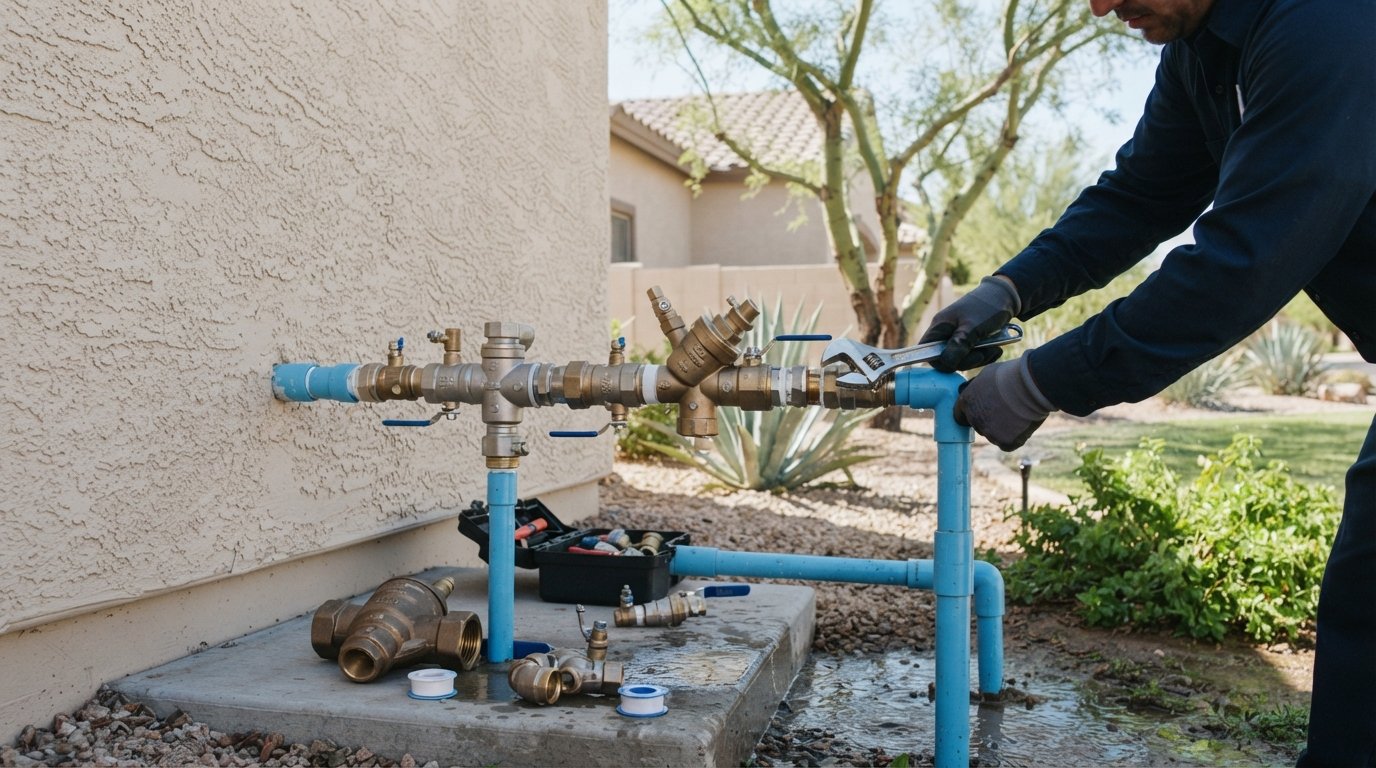
If your dynamic reading shows critically low pressure, say below 10 PSI, don't immediately replace the regulator. First, unscrew the upstream filter cap and pull the screen. Heavy caliche scaling or trapped sand on the mesh restricts flow before water even reaches the regulator chamber. Second, check your backflow prevention assembly to confirm both isolation shutoff ball valves rest fully parallel to the copper pipe. Finally, verify that sudden pressure loss isn't caused by a subterranean PVC break venting volume beneath the turf.
Accurate pressure diagnostics save time and prevent repetitive line repairs across harsh desert landscapes. If your gauge tests reveal wide pressure swings or valve malfunctions you cannot resolve, schedule an on-site diagnostic inspection to recalibrate your zones and protect your property.
Repairing, Replacing, and Upgrading for Long-Term Desert Reliability
Repairing broken drip regulators rarely involves opening up small plastic housings. Unlike large commercial bronze valves that accept rebuild kits, residential inline regulators use sonically welded bodies. Once internal rubber diaphragms tear or springs bind, full replacement is the only lasting remedy. Resolving chronic irrigation system pressure regulator issues requires stepping away from flimsy retail parts and upgrading to commercial-grade components engineered for high radiant heat and abrasive water supplies.
Selecting the Correct Replacement Unit for Desert Landscapes
Mismatched hardware often leads to immediate operational failure. Hydraulic regulators require a specific volumetric flow rate to activate their internal throttling mechanisms. If a low-volume desert drip zone draws only two gallons per minute, an oversized regulator will stay wide open, passing damaging pressure spikes directly into the lines. For native desert plantings, select a dedicated low-flow preset regulator rated between 0.1 and 8 GPM.
Choose a 25 to 30 PSI preset output for standard drip circuits. This operating threshold protects micro-fittings while ensuring emitters at the end of long tubing runs receive adequate volume. Always choose replacement bodies molded from glass-filled polypropylene. This dense, engineering-grade polymer withstands blistering summer soil temperatures without softening, warping, or developing hairline fractures under load.
Professional Installation Standards and Preventative Care
Proper valve positioning preserves mechanical components over the long haul:
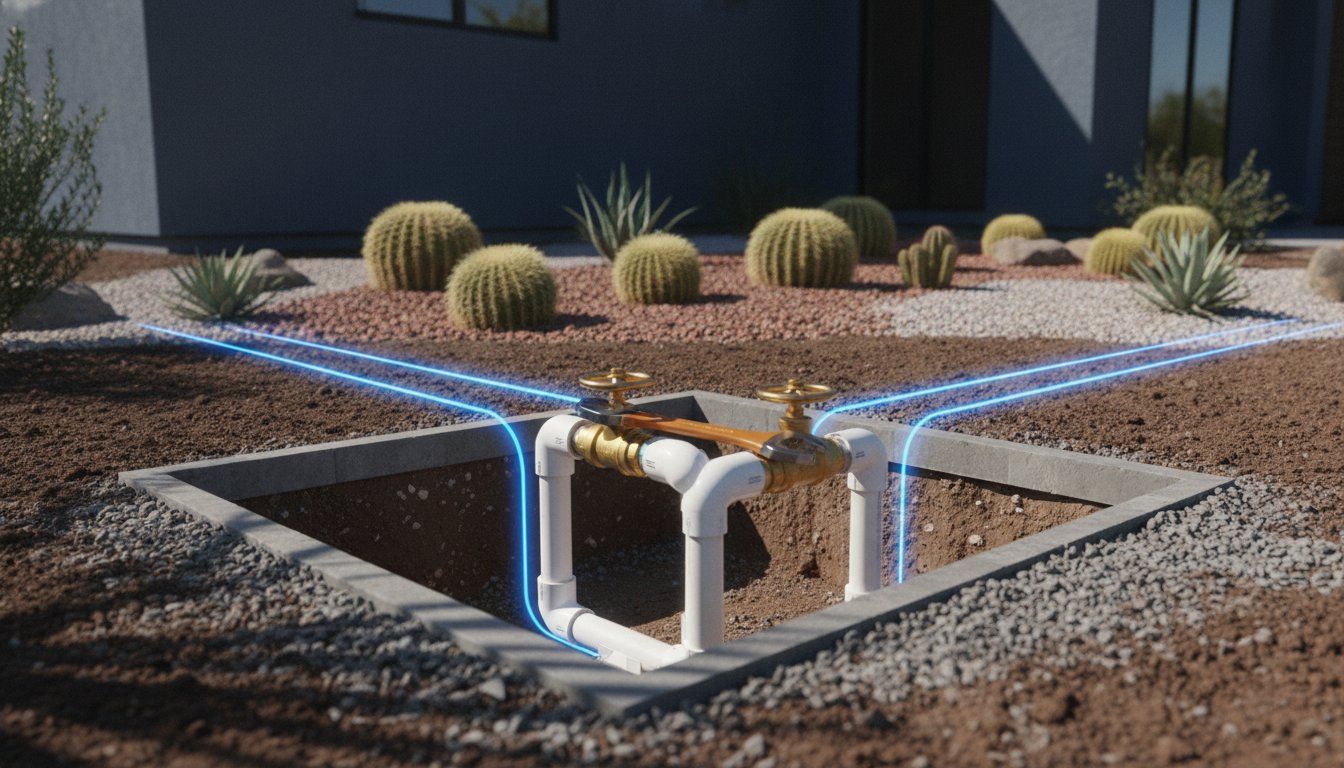
- Install downstream of zone valves: Regulators must always sit on the lateral side of electric control valves. Placing a regulator on the pressurized mainline subjects its internal diaphragm to constant static stress around the clock, cutting its functional life in half.
- Maintain horizontal orientation: Mount the regulator horizontally within a sturdy, accessible ground valve box. Horizontal positioning allows the internal spring and poppet to track smoothly along its axis, preventing lopsided friction and mineral buildup.
- Flush supply lines before installation: Open the upstream control valve manually to blow out PVC shavings, caliche dust, and sand before threading the new regulator onto the pipe.
Scheduling a thorough pressure check each spring ensures your system maintains balanced operating pressure before intense summer temperatures arrive. If persistent line blowouts or fluctuating valve pressures continue across your yard, Schedule an irrigation diagnostic with Sonora Sprinkler Inc. to restore long-term hydraulic balance to your property.
Securing Long-Term Stability for Your Desert Irrigation
Maintaining balanced line pressure is the single most effective way to protect your landscape from expensive pipe blowouts and runaway water waste. When you isolate whole-house PRV performance from zone-level mechanics and measure dynamic pressure under real operating flow, resolving chronic irrigation system pressure regulator issues becomes straightforward. Calibrated pressure keeps micro-emitters firmly anchored in poly tubing, stops lawn sprayers from misting away into the breeze, and protects your below-ground plumbing from sudden municipal surges.
Since 1999, Sonora Sprinkler Inc. has delivered family-owned residential irrigation repair and precision diagnostics across Surprise and Peoria. Our technicians specialize in desert-engineered PVC manifolds, drip system calibrations, and valve assemblies built to endure regional hard water scale and scorching ground temperatures. When you want dependable, long-lasting performance from your yard's hydraulic infrastructure, Restore balanced water pressure with Sonora Sprinkler Inc. and keep your desert plants thriving through every season.
Frequently Asked Questions
What happens when an irrigation pressure regulator fails?
When an irrigation regulator fails, it typically either sticks open or restricts flow entirely. A blow-by failure allows full municipal street pressure to flood into lateral pipes, blowing micro-emitters off drip lines, misting lawn heads, and splitting fittings. If calcification or grit jams the internal spring in a closed position, downstream dynamic pressure drops sharply, causing pop-up sprinklers to stall and under-watering desert plants.
Can you repair a residential drip pressure regulator or must it be replaced?
Residential drip regulators are manufactured with sealed, sonically welded plastic bodies and cannot be taken apart for rebuilds. Once internal rubber diaphragms fatigue or mineral deposits seize the internal mechanism, the entire unit must be replaced. Across Surprise and Peoria, hard water scaling binds these internal springs quickly, making replacement with a commercial-grade low-flow unit the only reliable, permanent fix.
What is the correct water pressure for a residential drip irrigation system?
Residential drip irrigation networks operate best between 20 and 30 PSI. Operating within this range delivers consistent volume through long lateral runs without popping barbed connections or pushing emitters out of poly tubing. Standard turf spray zones require higher operating levels, generally 30 to 45 PSI, which is why drip circuits require independent, dedicated pressure regulation directly at the manifold.
Why are my sprinkler heads misting and blowing fine water vapor?
Sprinkler heads emit fine mist when water enters the spray body well above its engineered operating threshold. High water velocity shears water streams into atomized vapor that drifts away in hot desert air instead of falling onto the turf. Addressing upstream irrigation system pressure regulator issues or replacing outdated risers with pressure-regulating spray bodies restores proper droplet size and stops water waste.
Where should a pressure regulator be installed on an irrigation system?
An inline pressure regulator should always sit downstream from the electric zone control valve. Placing the regulator on the lateral run ensures it only operates under active flow during scheduled watering cycles. Installing a plastic drip regulator upstream of the valve subjects its internal diaphragm to continuous, 24-hour static pressure, leading to accelerated material fatigue and early valve body splits.
Can high water pressure cause irrigation control valves to leak?
Yes, excessive supply pressure can overwhelm the internal rubber diaphragms and bonnet seals inside automatic control valves. Unregulated spikes force water past the internal valve seat, causing sprinklers or drip emitters to weep constantly even when the system is switched off. Unchecked surges can also cause solenoid housing micro-cracks and stress fractures along PVC manifold pipe joints.
How do I know if my main house PRV or irrigation regulator is bad?
Test fixtures inside your home alongside your outdoor irrigation zones. If indoor faucets shudder, toilets run intermittently, and hose bibs exceed 75 PSI, your main whole-house brass PRV has likely failed. If indoor plumbing remains at an optimal 50 to 60 PSI while outdoor drip lines continuously blow apart, the trouble is isolated to irrigation system pressure regulator issues at your yard manifold.