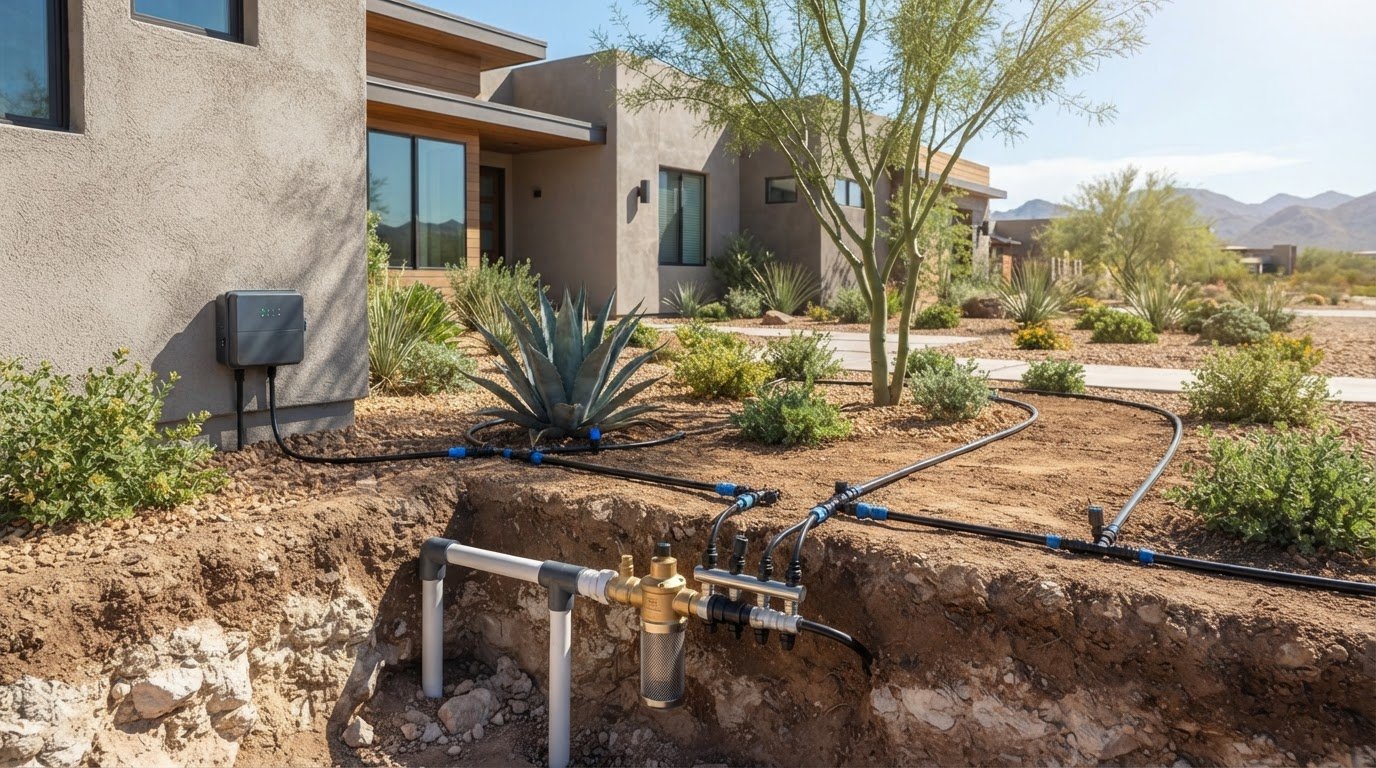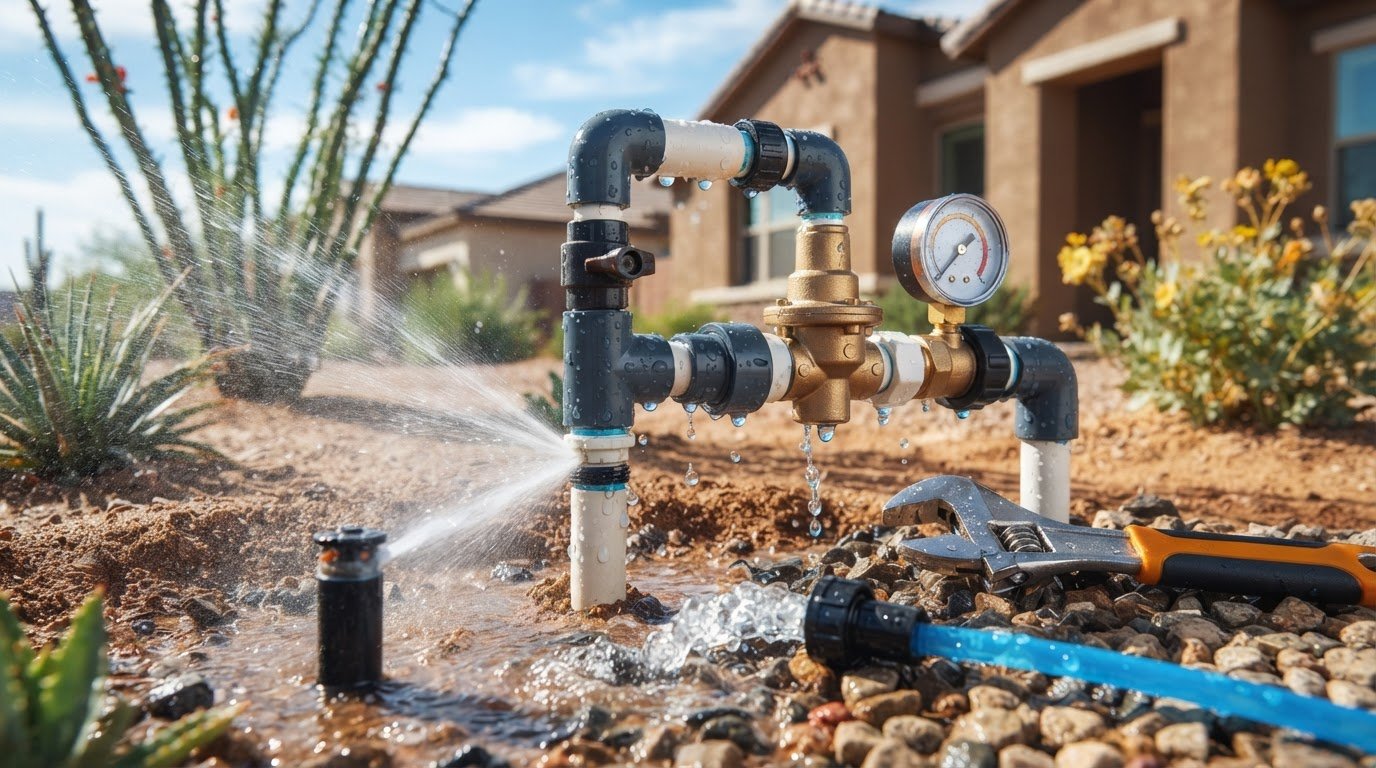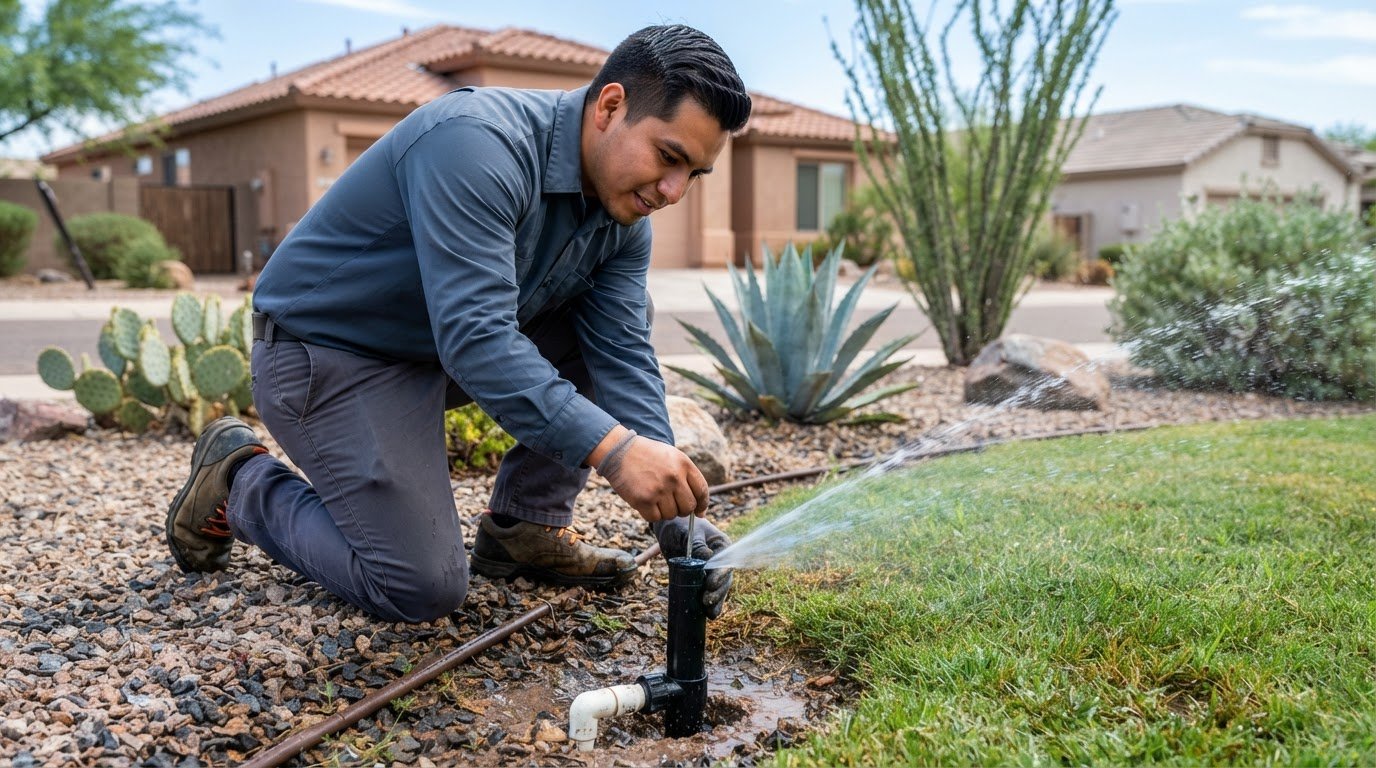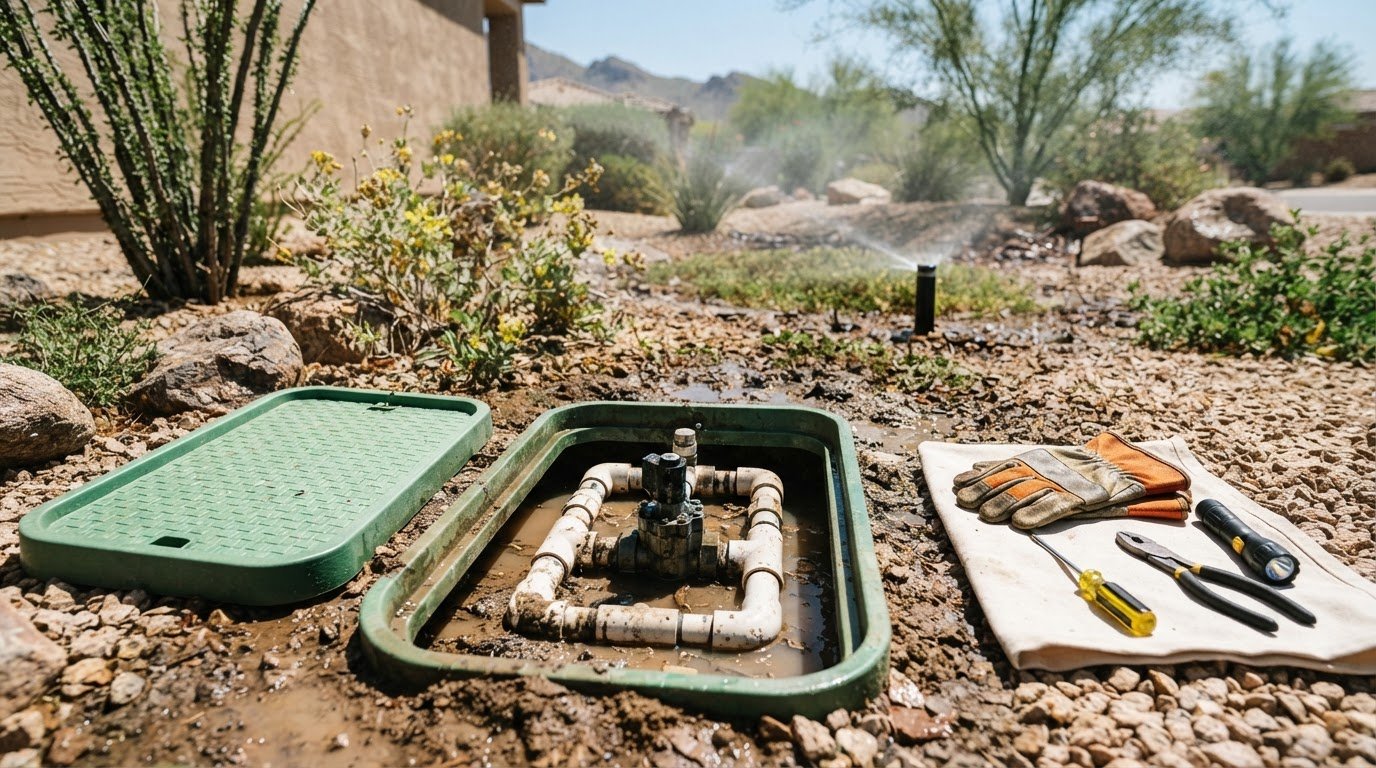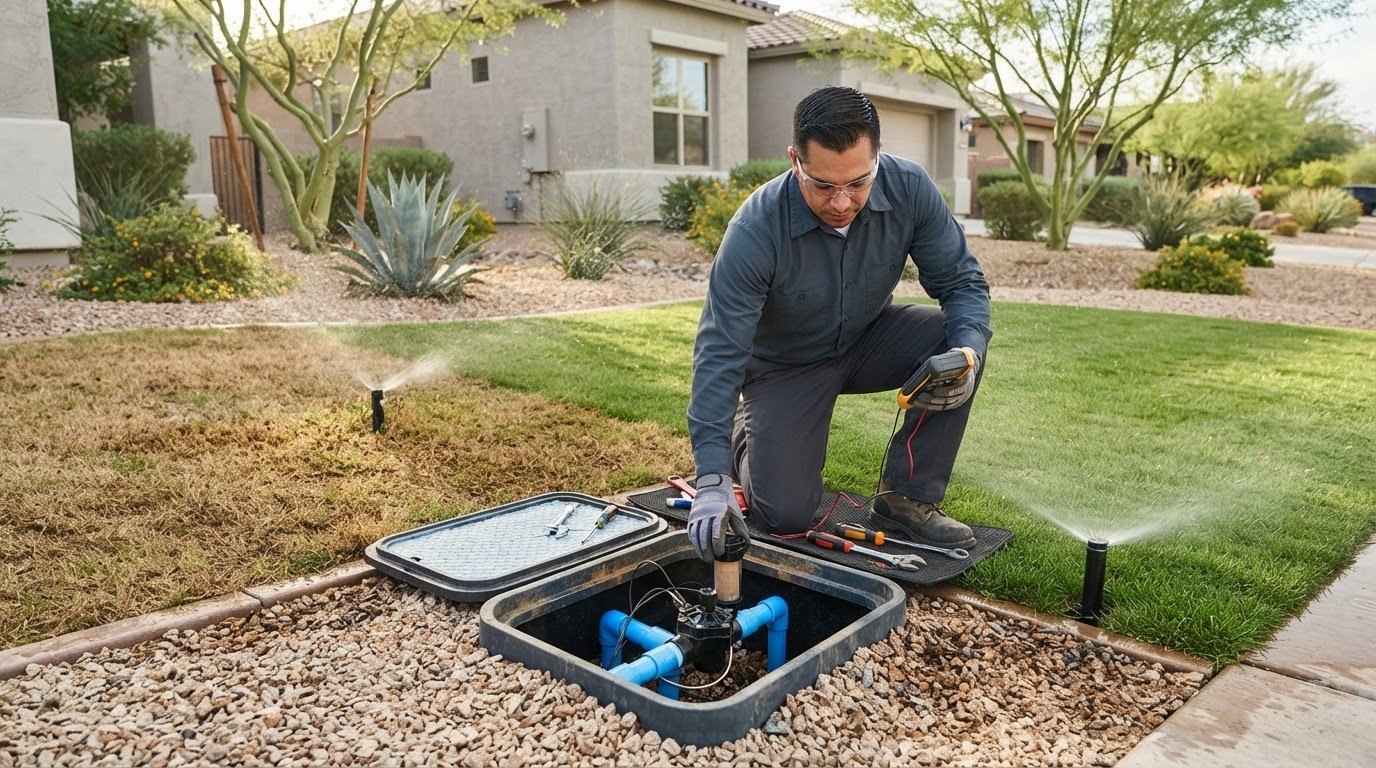
A wet patch in the yard may show where water is surfacing, not where the sprinkler system is leaking. If you’re searching “fix leaking sprinkler system Surprise,” start by noting when and where the water appears before disturbing the soil or replacing parts.
A leak can come from a sprinkler head, valve, or buried pipe, so shutting off the wrong component or digging without a clear indication of the source can make the problem harder to diagnose. A few careful observations can help narrow down what’s happening and limit further water loss safely.
This guide covers signs to look for, ways to pause irrigation without disturbing the system, and how likely leak locations differ. You’ll also learn when a lasting repair may involve a head, valve, wiring diagnosis, or PVC pipe replacement. For Surprise homes, identifying the source first helps match the repair to the existing irrigation system and local desert conditions instead of simply treating the visible wet spot.
Key Takeaways
- Note when water appears, where it collects, and whether the affected irrigation zone is running. These details can help distinguish a leak from brief drainage after a cycle.
- A wet patch is a clue, not a diagnosis. The source may be a sprinkler head or fitting, a valve, a backflow component, wiring, or a buried PVC line.
- To fix leaking sprinkler system Surprise homeowners should begin with careful observations and pause the affected zone if appropriate, rather than digging blindly or opening pressurized components.
- A durable repair traces the leak to its source, matches the fix to the affected component, and checks system operation afterward.
- Arizona’s desert conditions can affect irrigation components. Identifying the underlying cause helps guide a repair suited to the home’s existing system.
How to Recognize a Leaking Sprinkler System at Your Surprise Home
Pooling water, persistently soft ground, unexpected flow, or a zone behaving differently can all point to a sprinkler leak. A wet patch is a useful clue, but it doesn’t identify the failed part by itself. Water can travel through soil before surfacing, so the visible spot and the source may not line up.
In Surprise’s hot, dry conditions, changes in the ground may be easier to notice between watering cycles, when the yard would otherwise be drying out. If you’re searching for “fix leaking sprinkler system Surprise,” track the symptoms before digging where the water appears. An irrigation sprinkler is part of a larger system of heads, valves, and lines, so a clear observation can help guide diagnosis.
This video shows one example of a drip irrigation head repair. It can help you recognize a component, but a visible leak still needs to be traced to its source.
Which signs suggest an active sprinkler leak?
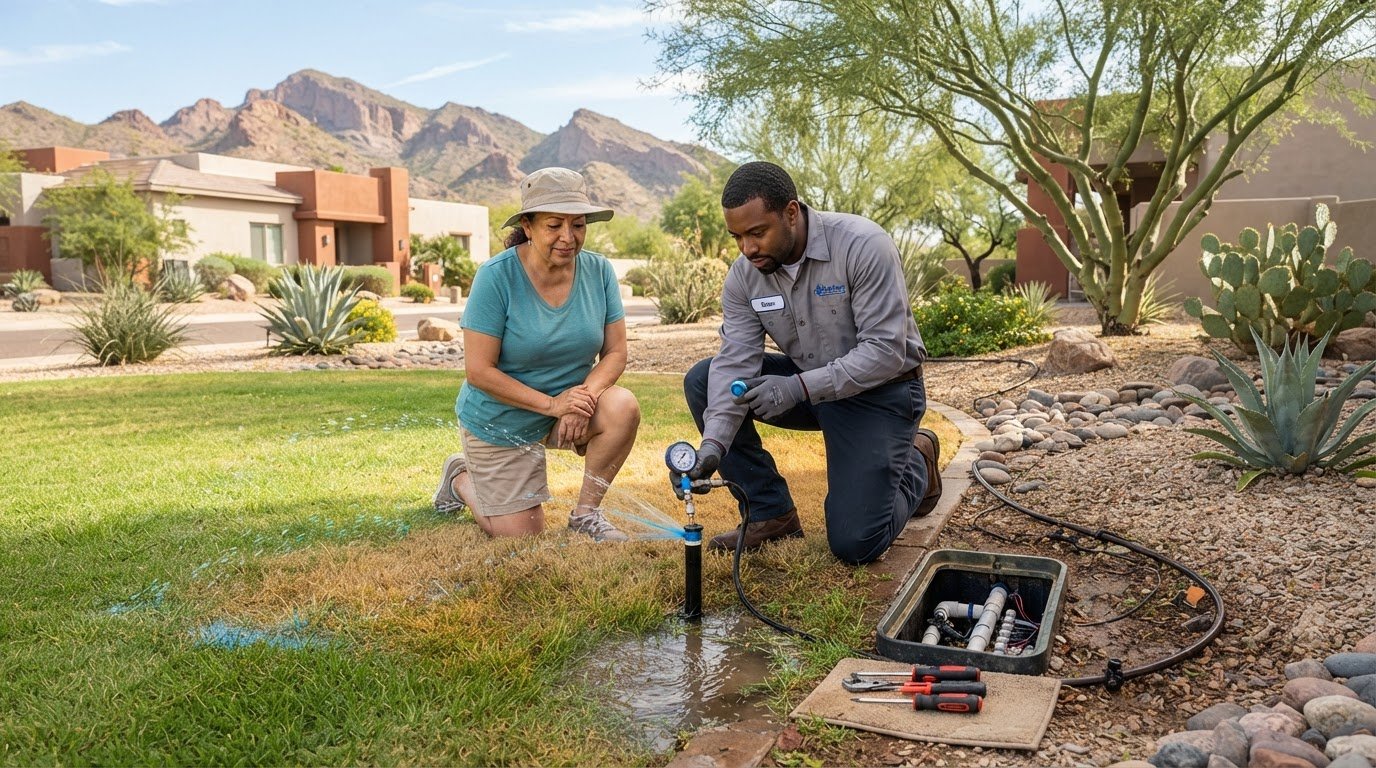
Some runoff can remain briefly after a scheduled cycle, especially if water has collected on pavement or in a low spot. More concerning signs include standing water that persists, a wet area that returns when irrigation hasn’t run, soil erosion, or water around a sprinkler head while its zone is off. A patch that stays soft while nearby ground dries can also help narrow down where to look.
Record the location and time, and note whether irrigation was active. Does the same spot become wet after each cycle? Does a particular zone spray unevenly? Don’t dig or dismantle equipment to investigate. These observations can help distinguish a recurring pattern from normal drainage.
What should Surprise homeowners observe first?
Start with the controller. Check whether a zone is running, whether the displayed schedule matches the watering you expect, and which area is assigned to that zone. Then observe the yard during and after watering from a safe distance. Keep people clear of pooled water, and note where spray, runoff, or soft ground appears and how it changes after the cycle ends.
To check for ongoing water flow, look at the household water meter only when irrigation and all other household water use are off. Movement may indicate that water is flowing somewhere, but it doesn’t locate a sprinkler leak by itself. The timing, location, controller status, and meter observation together provide a more useful starting point. Next, consider which system components could explain those signs.
Common Sprinkler Leak Sources in Surprise: Heads, Valves, and Buried Lines
A sprinkler leak occurs when water escapes unintentionally from a pressurized irrigation component or line. Where it surfaces can offer a clue, but it doesn’t always reveal the exact failure. Water from a buried line may travel through soil before reaching the surface, while a puddle near a head may come from the head, its fitting, or a nearby connection.
Use the pattern to narrow the possibilities, not to settle on a diagnosis. The U.S. Environmental Protection Agency’s spruce up your irrigation system guidance also encourages homeowners to inspect sprinkler performance and look for issues such as broken heads.
Could a sprinkler head or fitting be leaking?
Water spraying in the wrong direction, collecting around a head, or appearing near it while its zone runs may point to a head, fitting, or connection issue. A head that looks damaged, tilted, clogged, or poorly seated is worth noting, but appearance alone doesn’t confirm the cause. The spray pattern can help identify which zone is involved and whether water seems to escape at one point or across a wider area.
Note whether the symptom happens only during watering or continues afterward. For more context on residential system issues, read this residential irrigation repair guide.
Could a valve, backflow device, or buried PVC line be responsible?
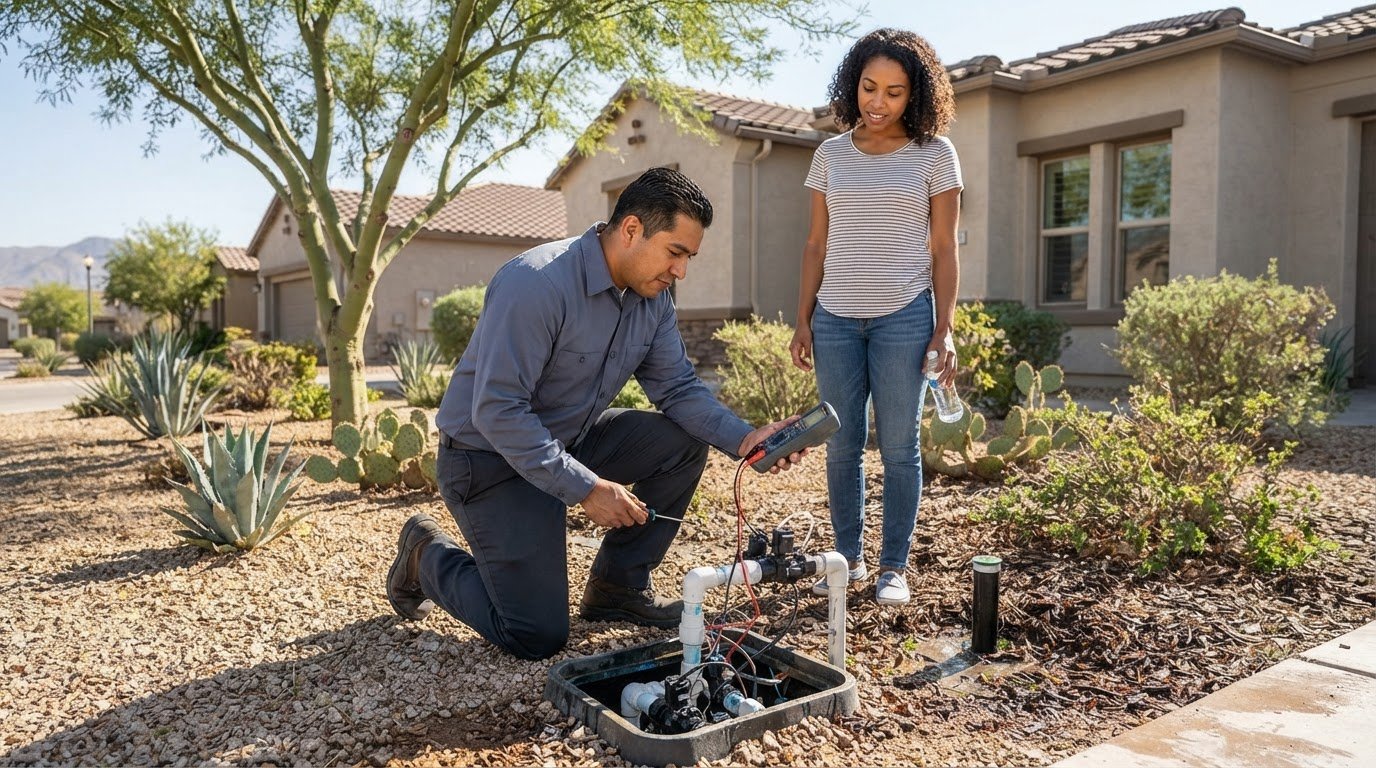
If water continues to flow after a zone ends, or a wet area repeatedly appears near the valve assembly, a valve or adjacent connection may need investigation. Visible seepage around a backflow device is another useful observation. Don’t disassemble the device. Instead, note where and when the water appears. Symptoms near these components may call for valve and backflow services.
A buried PVC line is harder to identify by sight. A recurring wet area away from sprinkler heads or a broad patch of soft ground may point to a possible line issue, but soil can carry water from another source. Don’t assume the surface location marks the pipe or dig to confirm a hunch. Diagnosis should connect the observed symptoms with the system’s components before repair begins.
For homeowners trying to fix leaking sprinkler system Surprise problems, matching the symptom to a likely source is a useful first step, not a substitute for diagnosis. If you’ve noticed repeated flow near a valve, seepage at a backflow device, or an unexplained wet area, share your irrigation repair details so the issue can be addressed based on its source.
Is the Leak Urgent? Separate Sprinkler Leakage from Normal Drainage
Not every wet area means water is escaping continuously. Water may briefly drain across the yard or pavement just after a scheduled cycle. A leak is more likely if flow continues after the zone stops or the same area repeatedly becomes wet between cycles. Timing and pattern help determine whether to monitor the area, limit irrigation, or arrange a closer assessment.
Surface clues can narrow the possibilities, but they can’t confirm the cause of a hidden leak. A buried line may release water away from where it eventually surfaces, and runoff can travel beyond the area where a sprinkler first landed. Use observations to guide the next step, not as a reason to dig.
How can you tell leakage from overspray or runoff?
Watch the area while the zone is active, then again after it shuts off. Overspray is visible water landing outside the intended irrigated area, such as spray reaching a path or wall. Runoff may travel briefly from a watered area before settling. A steady trickle after the cycle or pooling that returns when irrigation is off deserves closer attention.
Look for the same pattern across more than one watering cycle. Note the zone, where water first appears, and whether it stops when the controller ends watering. The EPA's guide to sprinkler maintenance offers practical inspection advice for spotting system issues and improving irrigation performance.
When should you limit irrigation and arrange an assessment?
If water continues escaping from a zone, pause that zone when it’s safe and practical to do so. Avoid shutting down or taking apart components you can’t identify. If the flow continues, pooling spreads, or soil begins to erode, arrange an irrigation assessment so the source can be diagnosed before a repair is chosen.
Base the decision on whether water loss is continuing and affecting the property, rather than on a fixed deadline. A brief wet area that fades after watering may call for observation; persistent flow or worsening pooling calls for action. If you’re unsure how to fix leaking sprinkler system Surprise homeowners can rely on diagnosis that connects the timing and location of symptoms to the irrigation system. Request residential irrigation repair.
What to Do Before Sprinkler Leak Repair in Surprise
A few careful observations can help narrow down a leak without disturbing the irrigation system. Before attempting a repair, focus on where water appears, when it happens, and whether it follows a particular zone. Don’t dig near buried utilities or open pressurized components, valves, or backflow assemblies. If you’re not sure how to operate a control safely, leave it alone.
Which steps can a homeowner take safely?
Use this sequence to record the symptoms and limit further water loss where practical:
- Note the water’s location and timing. Record where you see pooling, seepage, or spray, and whether it appears during watering, after a zone ends, or when irrigation isn’t scheduled.
- Identify the suspected zone. Check the controller display and note which zone was running when the water appeared. If the schedule or zone is unclear, don’t guess at the system controls.
- Pause that zone if appropriate. If you recognize the controller and can safely pause the affected zone, doing so may limit ongoing water loss while you arrange repair.
Stay clear of electrical components, and don’t open valves or backflow equipment to investigate. Avoid digging, even where the ground is wet. Water can travel through soil, and buried utilities or irrigation lines may be nearby.
What information helps a repair diagnosis?
Useful notes describe what you observed without assuming which part failed. Include the affected area, the zone if known, whether the controller was running, and whether water continued after the cycle ended. Mention visible damage or changes in the spray pattern, and note whether the symptom has returned across multiple watering cycles.
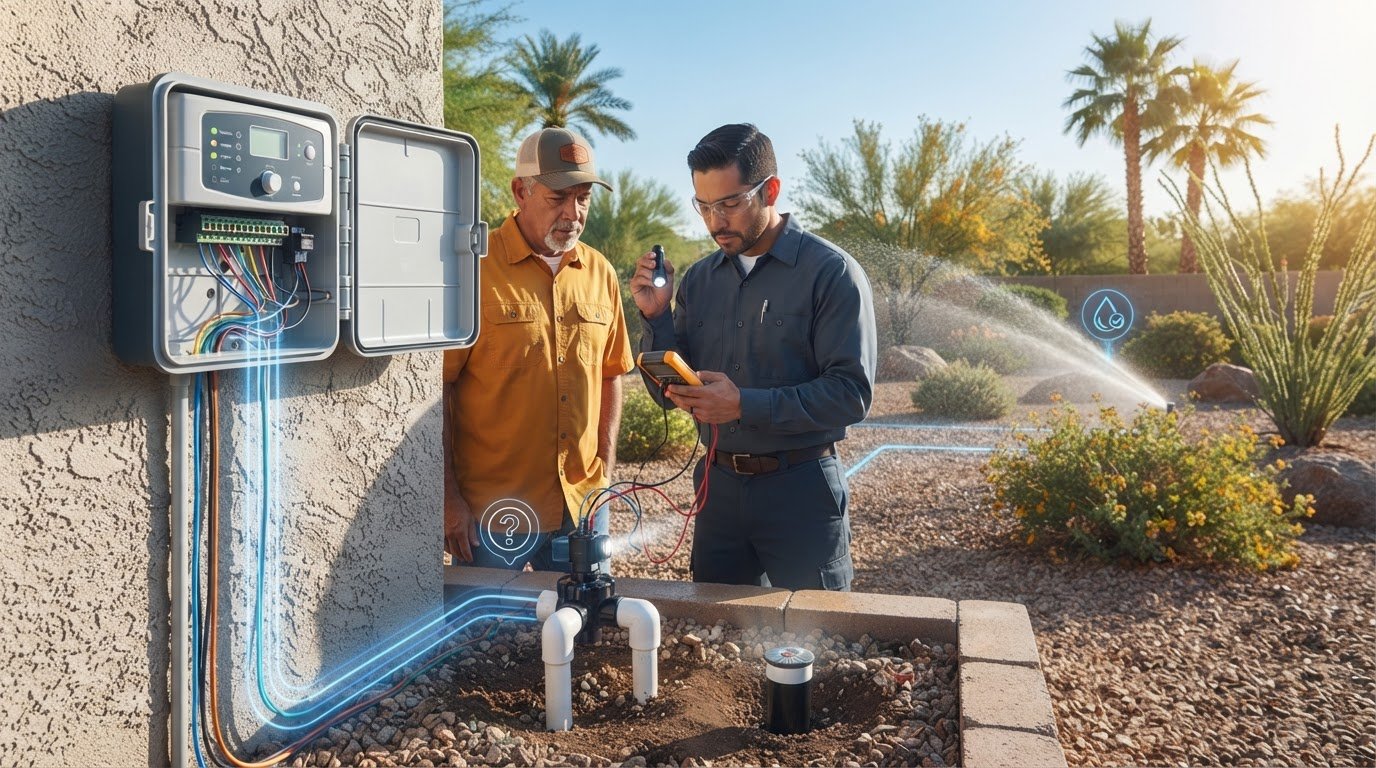
If the controller activates unexpectedly or a zone won’t turn off as scheduled, mention that specifically. Those symptoms may involve irrigation wiring or controls rather than a visible break in a pipe. Learn more about irrigation wiring diagnostics for controller and zone activation concerns.
This information helps focus diagnosis before a repair is selected. Sonora Sprinkler provides residential irrigation repair in Surprise, with the solution based on the source of the problem rather than the wet spot alone. If you’re ready to address the issue, request residential irrigation repair.
How Sonora Sprinkler Repairs a Leaking Residential Irrigation System
A lasting repair starts with the source of the leak, not just the spot where water appears. Sonora Sprinkler reviews the reported symptoms, diagnoses the relevant component, selects a targeted repair, and checks system operation afterward. This connects what you observed, such as a zone that keeps running or a recurring wet area, to the part of the irrigation system that needs attention.
How does professional leak diagnosis narrow the repair?
The reported timing, affected area, controller behavior, and visible water help focus diagnosis on the relevant zone and components. A wet patch alone doesn’t prove that the pipe beneath it has failed; water can emerge some distance from its source. Diagnosis considers the wider system before repair is chosen.
If a zone activates unexpectedly or doesn’t respond as expected, the issue may involve electrical controls rather than a leak in a pipe or head. Irrigation wiring diagnostics can help assess the control side of the system. The goal is to identify the underlying fault before selecting work, rather than replacing parts based on a guess.
What repair options can address the confirmed source?
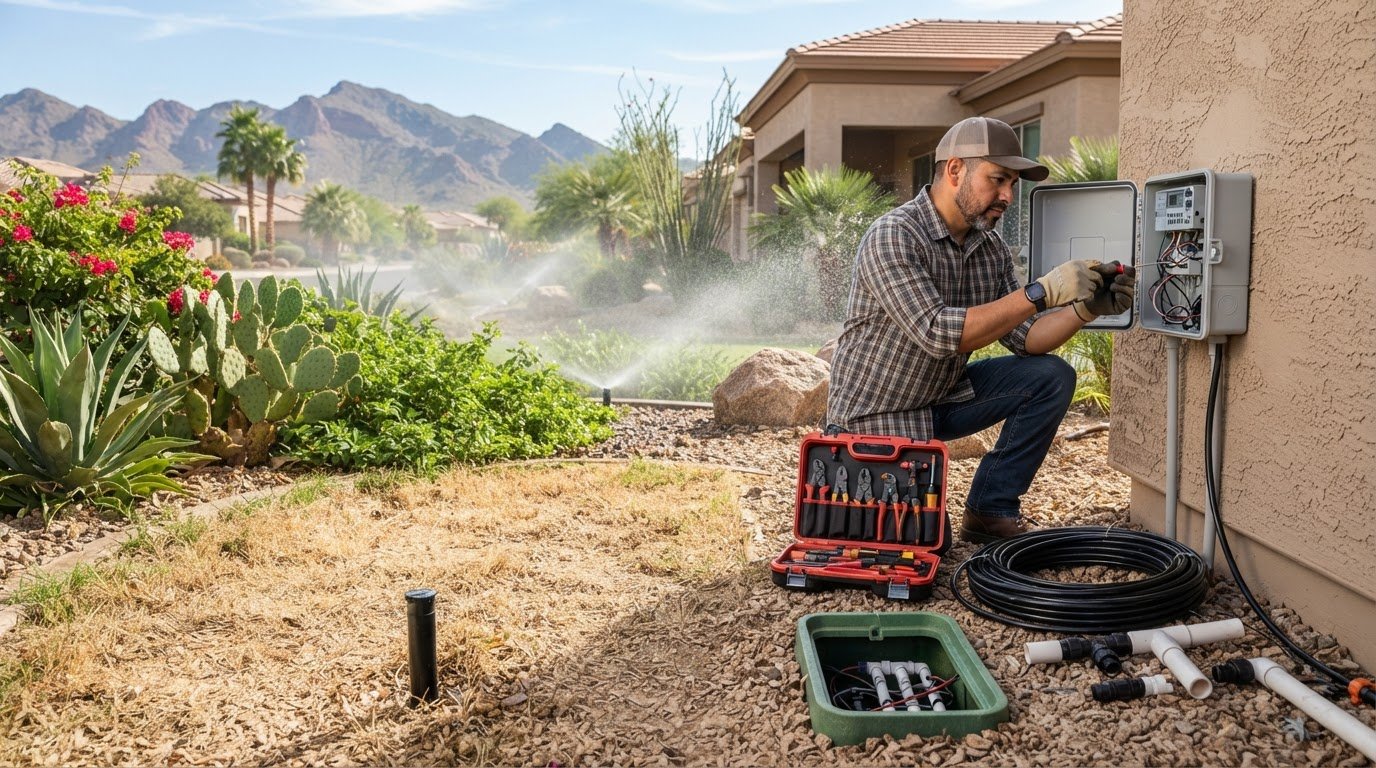
The repair depends on what diagnosis identifies. A head or fitting issue may call for focused sprinkler repair; a valve concern may require valve service; and a damaged buried PVC line may call for pipe replacement. If symptoms point to a backflow component, it can be assessed as part of the repair. The scope follows the diagnosed fault, so unrelated equipment isn’t treated as the source without reason.
Repair decisions also need to suit the existing residential irrigation system and the demands of an Arizona desert landscape. Addressing the cause with a solution that fits the system is more useful than simply covering a visible wet spot. For homeowners searching “fix leaking sprinkler system Surprise,” the practical path is to connect observed symptoms to the affected component, make a targeted repair, and check how the system operates afterward.
Sonora Sprinkler is a family-owned residential irrigation specialist serving Surprise and nearby communities, including Peoria. If you’re ready to address a suspected leak, contact Sonora Sprinkler about a repair.
Take the Next Step Toward a Reliable Repair
A recurring wet spot or water that continues after irrigation stops deserves attention, but the visible symptom alone won’t identify the failed component. Note the timing, affected zone, and water’s location, then avoid digging or opening pressurized equipment. A lasting repair starts by tracing the symptom to its source, whether that involves a sprinkler head, valve, backflow device, wiring, or PVC pipe.
If you’re looking to fix leaking sprinkler system Surprise homeowners can benefit from a repair approach that considers the existing residential system and local desert conditions. Sonora Sprinkler is a family-owned residential irrigation specialist serving Surprise and nearby communities, including Peoria. Its repair and diagnostics services cover valves, backflow devices, wiring, and PVC pipe, helping match the work to the diagnosed issue.
Share what you’ve observed and take the next step toward addressing the leak. Contact Sonora Sprinkler to discuss residential irrigation repair . A clear diagnosis and targeted repair can help you move forward with greater confidence in your home’s irrigation system.
Frequently Asked Questions
How can I tell if my sprinkler system is leaking when it is turned off?
Look for water that continues to appear or flow when the irrigation system isn’t scheduled to run. Recurring wet ground, pooling near a sprinkler head or valve, and a household water meter that moves while irrigation and other household water use are off may warrant investigation. These signs don’t pinpoint the cause. Record where and when you see water, and avoid digging or opening system components to check.
Can a leaking sprinkler head cause water to pool around the yard?
Yes, a leaking head or its nearby fitting can leave water around the sprinkler or contribute to pooling. Water may also move through soil, so a wet patch some distance away doesn’t prove that the nearest head is at fault. Note whether the water appears while the zone runs, whether the spray pattern looks unusual, and whether the area stays wet after the cycle ends.
What should I do first if I find a sprinkler leak in Surprise?
First, note the wet area, the time you noticed it, and whether a particular zone was running. Check the controller if you can do so safely, and pause the affected zone if its controls are familiar and water continues escaping. Don’t dig near buried utilities or disassemble pressurized components. These observations help guide residential irrigation diagnosis in Surprise without risking damage by acting on a guess.
Is water around a sprinkler valve always a sign of a leak?
No. Water near a valve may be runoff or drainage, but persistent seepage or recurring pooling around the valve area deserves attention, especially if it continues after the zone stops. Note whether the controller is running and whether the water returns between cycles. Don’t open the valve assembly to investigate. Diagnosis can determine whether the valve, an adjacent connection, or another part of the system is involved.
How do I know whether a sprinkler leak is coming from a buried pipe?
You usually can’t confirm a buried-pipe leak from surface appearance alone. A recurring wet area away from sprinkler heads, spreading soft ground, or unexplained water loss may suggest a problem with a buried line, but water can travel through soil from another source. Record where the moisture appears and when it occurs. Avoid digging to trace a suspected pipe, particularly near buried utilities.
Can I keep running the other sprinkler zones if one zone is leaking?
Possibly, if you can safely pause the affected zone and the rest of the system operates normally. Don’t continue watering the suspected zone while water is escaping, and avoid changing controls if you’re unsure which zone is involved. If leakage continues after pausing it, or you can’t isolate the affected area, limit system use and arrange an assessment. Diagnosis can establish whether the issue is truly zone-specific.
When should I call for residential sprinkler leak repair?
Arrange residential sprinkler repair if water keeps flowing after a cycle, pooling repeatedly returns, erosion appears, or you can’t safely isolate the affected zone. These signs call for diagnosis rather than guesswork, since the source could involve a head, valve, wiring, backflow device, or buried PVC line. Sonora Sprinkler is a family-owned residential irrigation specialist serving Surprise and Peoria, with repair and diagnostics services for these system components.