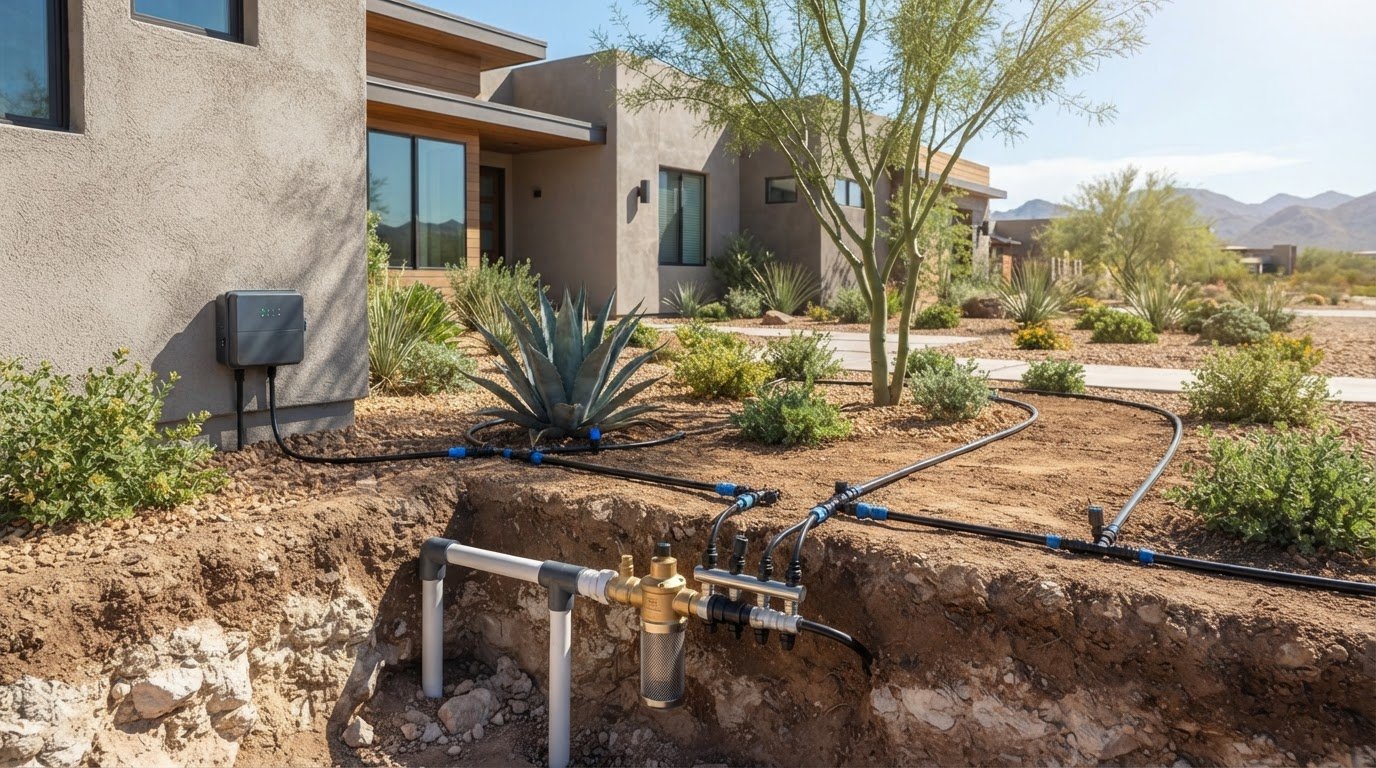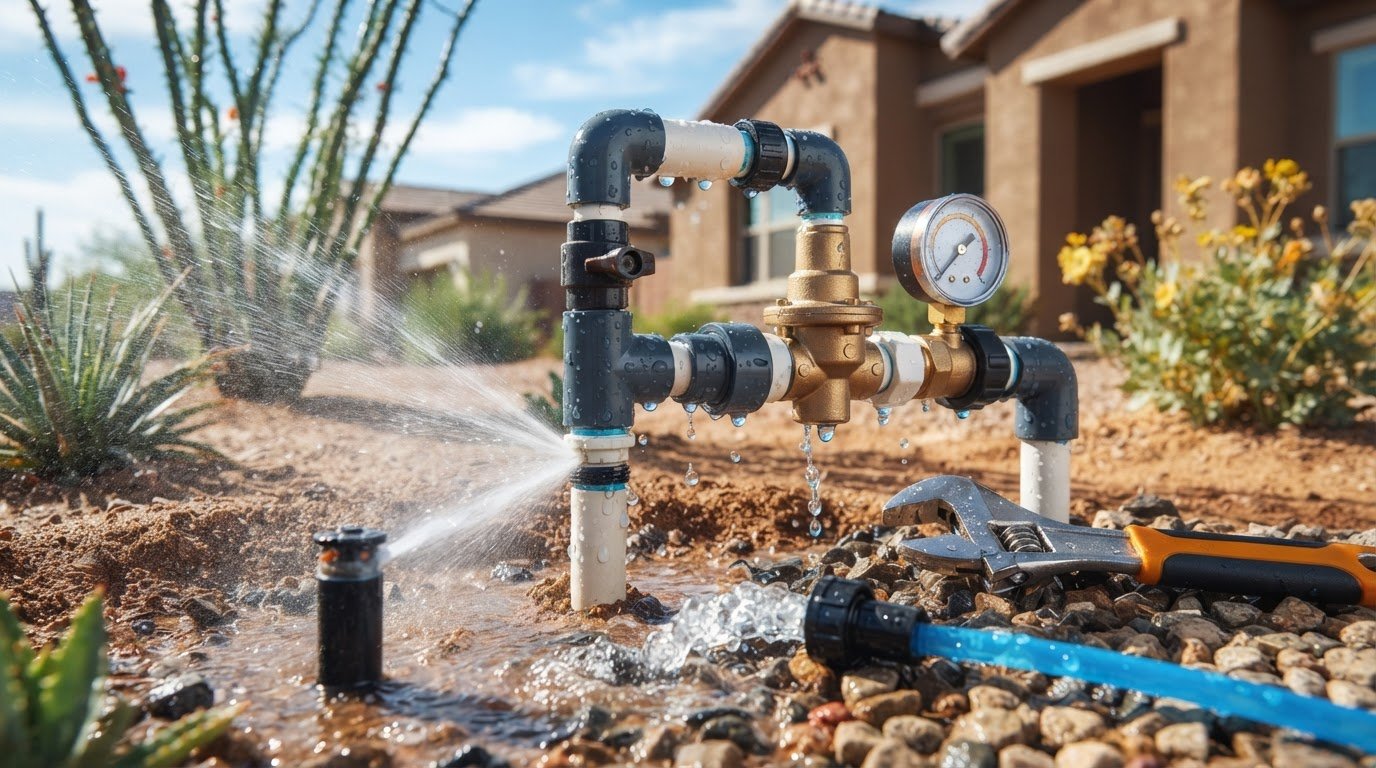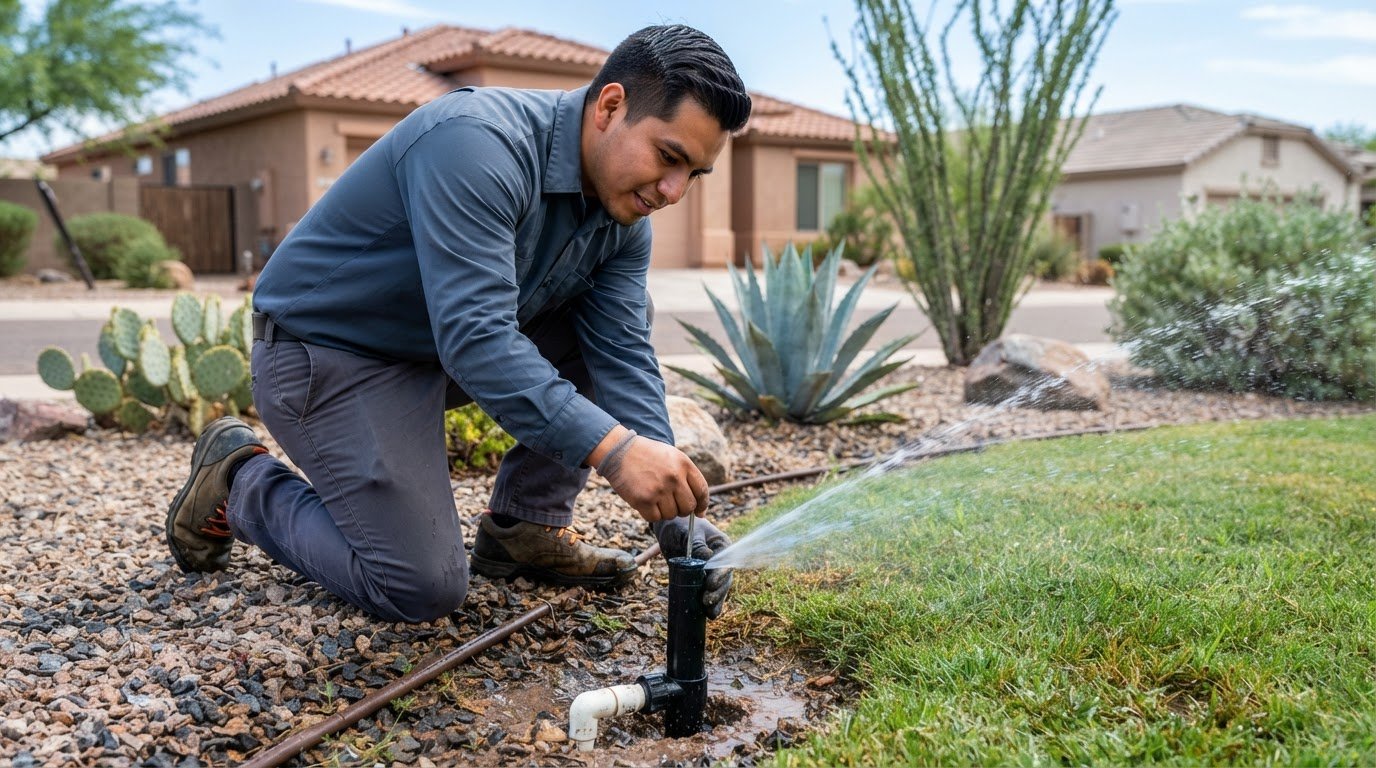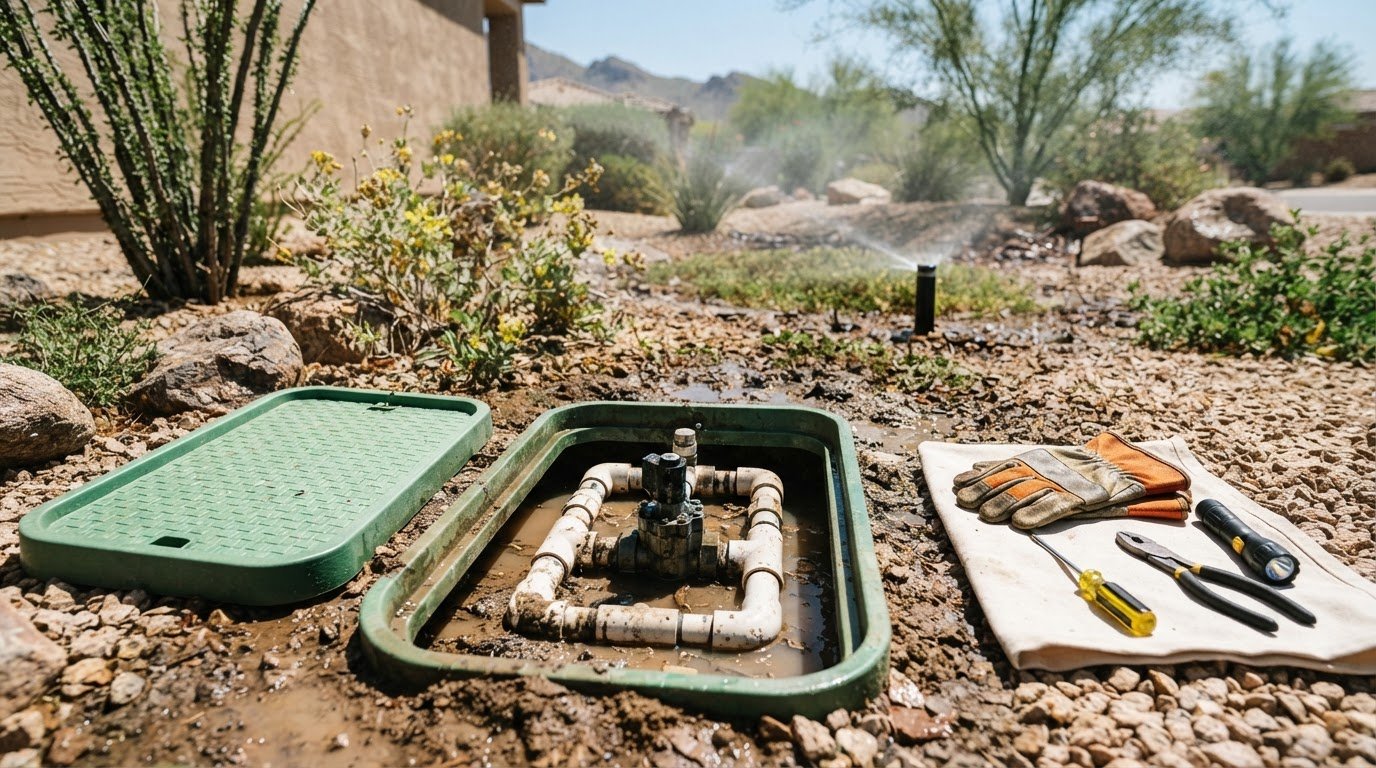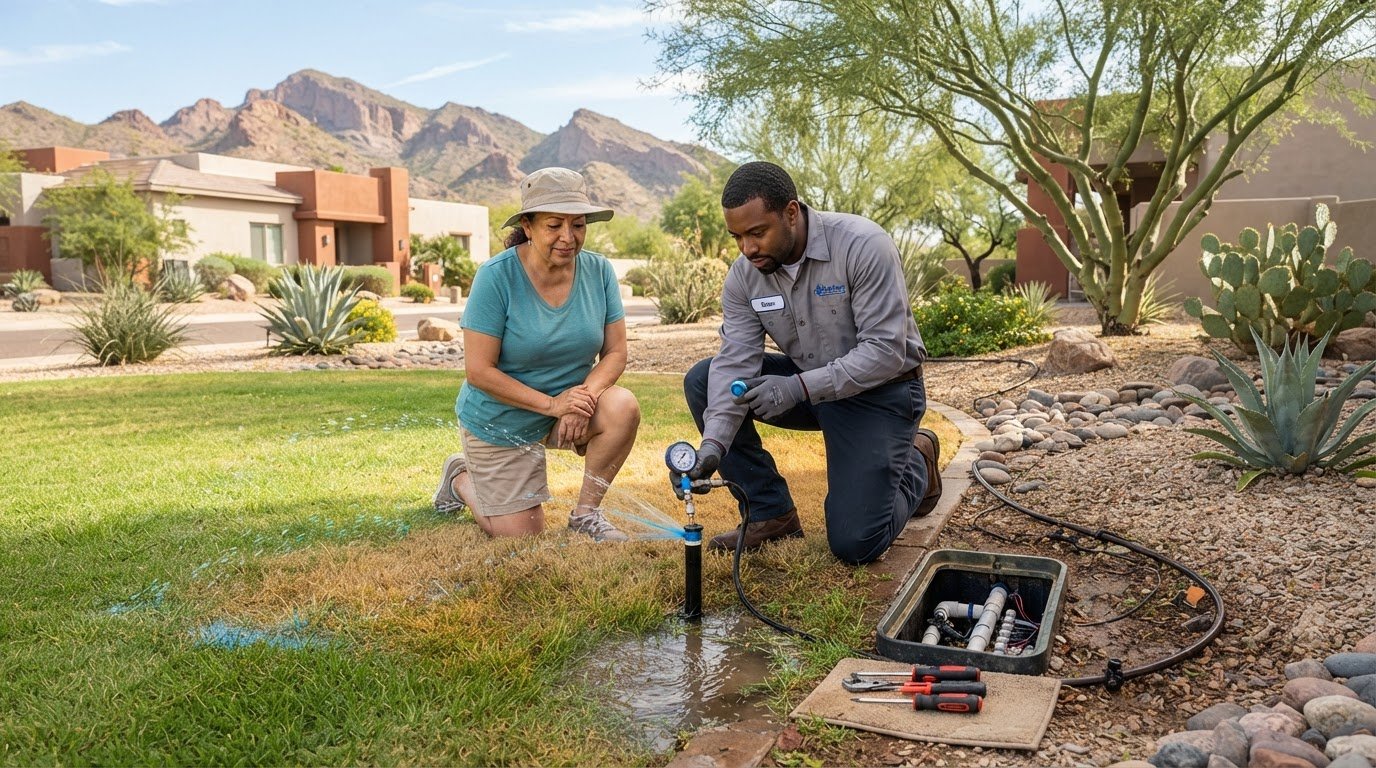
A wet patch or a weak sprinkler zone may point to a failing fitting or valve, not a whole pipe run. One leak alone doesn’t prove that replacement is needed. The pattern matters: repeated leaks, uneven performance, or trouble returning after a repair may warrant a closer look. That distinction is central to PVC irrigation pipe replacement Arizona homeowners may be considering.
It’s understandable to wonder where the problem is and whether a small repair will hold. Arizona’s heat and desert conditions make it important to identify the cause before choosing a fix. This article explains which warning signs warrant professional diagnosis, how localized repair differs from replacing a pipe section, and what to expect during a residential assessment. Sonora Sprinkler Inc. diagnoses and repairs residential irrigation systems in Surprise, Peoria, and surrounding communities. Learn how a technician can distinguish pipe damage from issues with fittings, valves, or other components, so you can make an informed decision for your property.
Key Takeaways
- Treat recurring wet areas, runoff, and reduced sprinkler coverage as clues to investigate, not proof that a pipe has failed.
- Compare isolated damage with repeated leaks or broader pipe concerns to understand whether a repair or replacement assessment may be appropriate.
- Arizona soil conditions, installation details, fittings, and system pressure can contribute to pipe stress, but none proves the cause of a leak on its own.
- Residential PVC irrigation pipe replacement may involve locating the affected section, replacing it, and checking system operation.
- Record when and where symptoms occur to help Sonora Sprinkler assess your residential irrigation system in Surprise, Peoria, and surrounding communities.
PVC Irrigation Pipe Replacement in Arizona: What Leak Signs Really Tell You
Residential irrigation PVC pipe replacement involves removing a damaged section of buried PVC line and installing a replacement section. Homeowners may consider it after a pipe fault is identified, especially when leaks recur or the affected area appears broader than a single repair can address. A symptom is a reason to investigate, not a diagnosis. PVC is one type of plastic piping used in a range of applications; the Plastic pipe overview provides general background on the material.
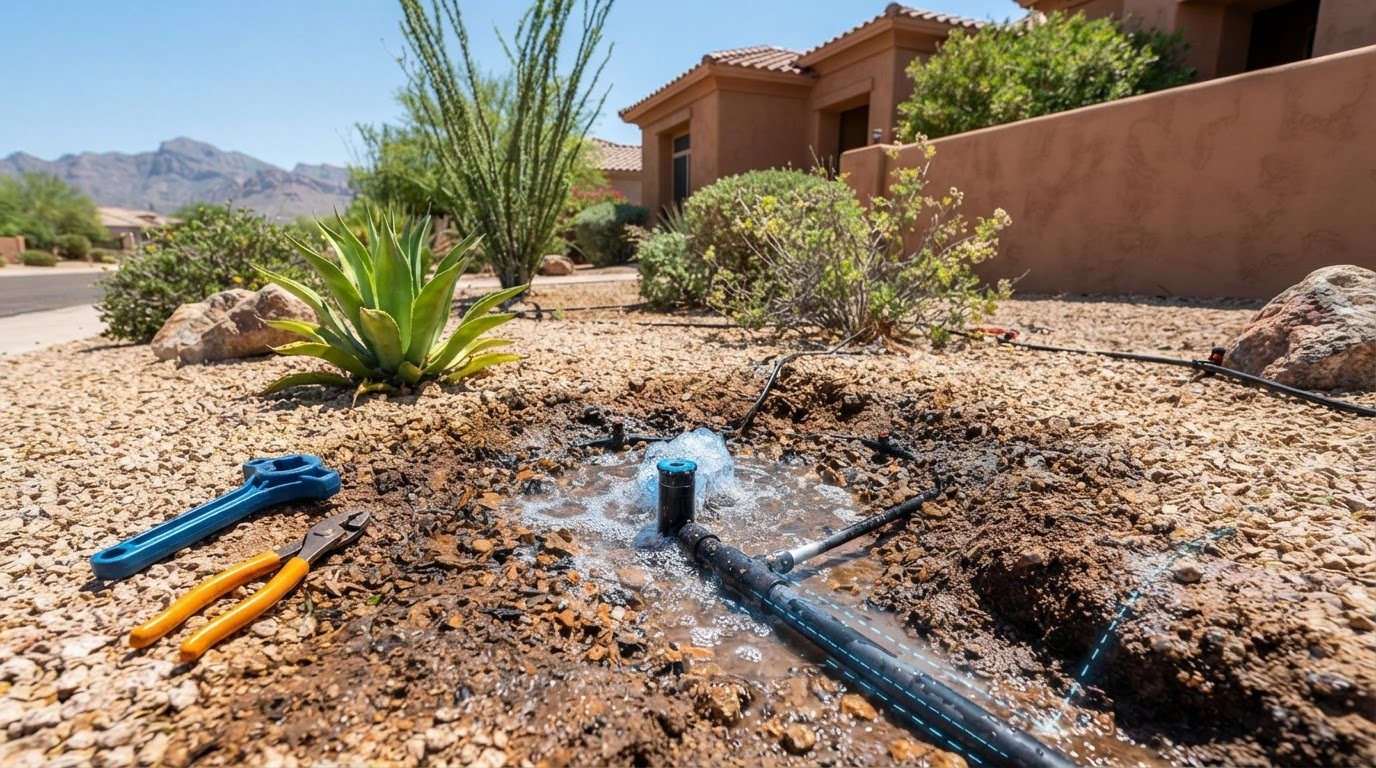
A visible leak is a symptom, not confirmation of an underground pipe failure. Water may also escape from a fitting, valve, sprinkler head, or another system component. Turning off irrigation and observing whether water continues can help narrow down the possibilities, but it won’t identify the source by itself.
Which yard and sprinkler symptoms can point to a leaking PVC line?
Pay attention to where water appears and when the symptom returns. Soggy soil or a recurring wet spot may form near a buried line, while water on a walkway or driveway can suggest runoff or a leak near hardscape. Surface water during a cycle may also result from overspray, drainage, or a component that isn’t containing water properly.
Uneven performance is another clue. If one zone has weak coverage while others operate normally, the problem may be limited to that zone, but it could involve a pipe, fitting, head, or valve. Note whether symptoms recur during irrigation or continue afterward, and record their location and timing. Dirty or discoloured water can have multiple causes, so treat it as a clue rather than proof of pipe damage.
How can you separate a pipe leak from another irrigation problem?
Note which zone is running when water appears and whether the symptom occurs only during irrigation or continues after the system is off. A concentrated wet area can help focus an inspection. Poor coverage across a wider area or control problems affecting more than one zone may point to a different part of the system. These patterns narrow the search, but locating and inspecting the problem is necessary to confirm the fault.
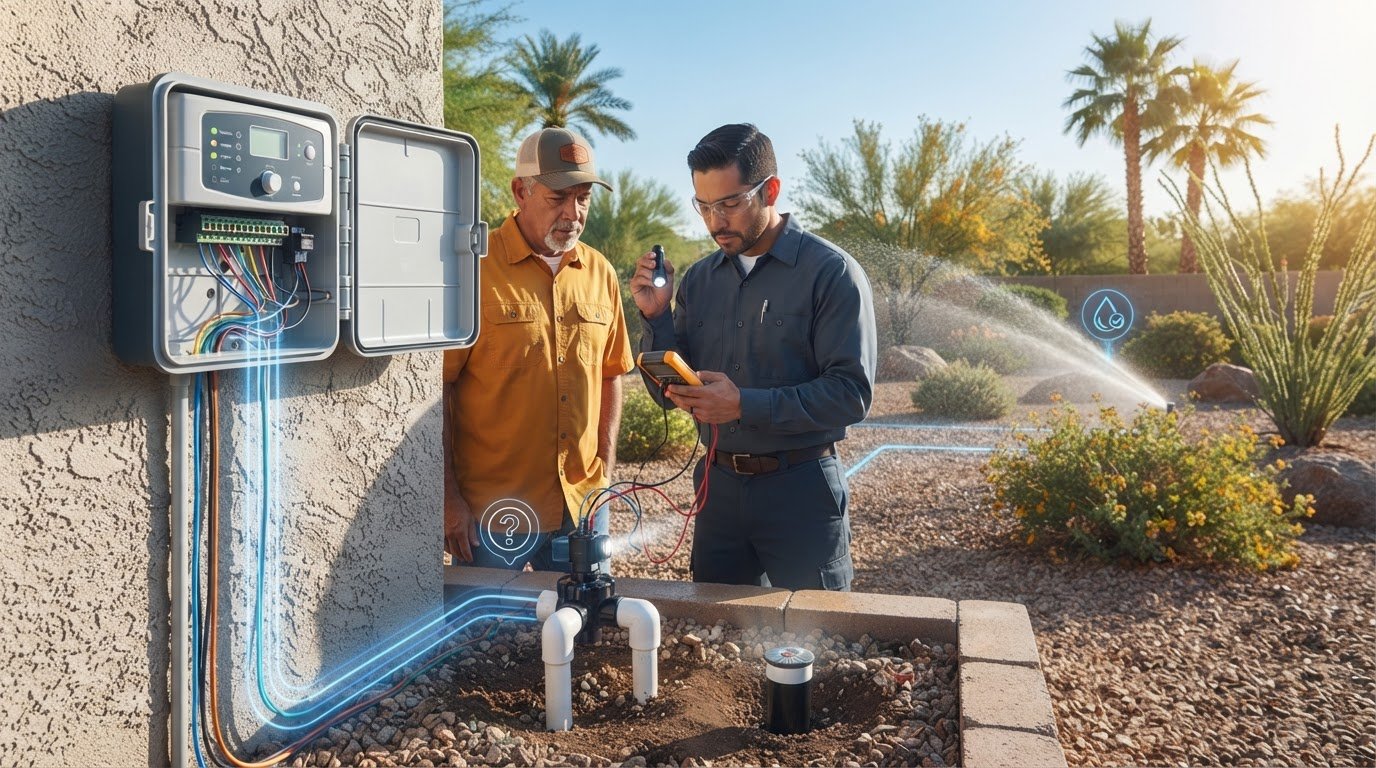
Turn off irrigation and observe the area for continued water or changing soil conditions. If water stops, that still doesn’t prove the line is sound; a leak may occur only under operating pressure. If it continues, the source could be elsewhere in the system, or water may be draining through the soil. A professional assessment helps distinguish pipe damage from a valve, fitting, head, or control issue before deciding whether PVC irrigation pipe replacement Arizona is appropriate. Learn more about residential irrigation repair in Surprise.
Why Arizona Conditions Can Stress PVC Irrigation Pipes
A leak’s location is only part of the picture. Pipe condition, connections, installation details, soil behavior, and operating conditions all help explain why a line may fail and whether the problem is isolated or recurring. Arizona’s environment provides context, but it doesn’t identify the cause by itself. A line in Surprise may face different site conditions from one in Peoria, even within the same neighborhood.
A sound leak diagnosis considers the pipe, its connections, and the system’s operating conditions together. A sudden break may follow a specific disturbance or localized fault. Recurring leaks or several damaged areas may prompt a closer look at a broader section. Neither pattern alone proves that the whole line needs replacement. Inspection findings guide the decision.
How can desert soil and heat affect buried irrigation pipe?
Soil can shift or settle as moisture conditions change, potentially placing stress on buried pipe and the fittings that join sections or change direction. Installation details also matter. Alignment, support, and how soil was placed around a line can influence how it sits underground. These are possible contributors, not automatic explanations for a leak.
Arizona heat is part of the operating environment, particularly for irrigation components exposed at the surface. Buried lines are affected by their surrounding conditions, which vary from property to property. Caliche or other local soil characteristics shouldn’t be treated as proof of damage. An assessment in Surprise or Peoria considers the actual site and pipe condition rather than assuming every residential system faces the same stresses.
Can water pressure or repeated system operation contribute to failure?
System pressure and repeated operation are factors to assess alongside visible pipe condition and connections. A problem in one area may relate to a localized weakness, while a broader concern calls for reviewing more of the system. Without inspection, there’s no basis for assigning a pressure threshold or assuming pressure caused a leak. Adjusting pressure alone also won’t address confirmed damage.
For broader Arizona context on water-efficient irrigation practices, the University of Arizona's Water Irrigation Efficiency Program is a useful resource. It complements, but doesn’t replace, diagnosing a pipe fault. If a recurring issue needs a closer residential assessment, arrange an irrigation assessment with Sonora Sprinkler. An evaluation helps determine whether the right scope is localized repair or PVC irrigation pipe replacement Arizona homeowners may need.
Repair or Replace PVC Irrigation Pipe? Compare the Signs Before Deciding
One leak doesn’t automatically mean the whole irrigation line needs replacement. A localized repair may be suitable when damage is clearly confined, while recurring leaks or concerns about a wider section call for a fuller assessment. The right scope depends on the damage, access to the pipe, and the condition of nearby pipe, fittings, and other system components.
Use this comparison to organize what you’ve noticed, not to diagnose the fault. The problem must be located and assessed before repair or replacement can be recommended.
| Pattern | What it may suggest | What an assessment considers |
|---|---|---|
| One isolated, accessible damaged area | A localized repair may be practical. | Whether the damage is confined and nearby pipe and fittings are sound. |
| Leaks returning in the same area | The original fault may not explain the full problem, or nearby conditions may need closer review. | Whether damage is limited to one section or extends beyond it. |
| Multiple affected areas or broader pipe-condition concerns | A larger replacement section may warrant consideration. | The condition and accessibility of the affected pipe, along with surrounding system components. |
When might a localized PVC pipe repair be appropriate?
A single damaged section that can be located and accessed may be a candidate for localized repair. The assessment should also consider the pipe and fittings around it, since the visible break may not show the full extent of the issue. A pipe repair won’t necessarily resolve separate valve, sprinkler head, or zone-control problems. Those need to be assessed separately.
What signs may support replacing a larger pipe section?
Repeated failures, damage in more than one area, or visible deterioration may justify inspecting a broader stretch before choosing the scope. The aim is to address the pipe condition that’s actually present, not to replace more than the evidence supports. Assessment findings help guide PVC irrigation pipe replacement Arizona homeowners may need.
Replacing a damaged segment is different from redesigning an entire irrigation system. A larger pipe replacement addresses the affected line; a system upgrade considers broader performance or efficiency improvements. The assessment clarifies which need is supported by the findings, rather than relying on a fixed leak count or calendar-based replacement rule.
How PVC Irrigation Pipe Replacement Works at an Arizona Home
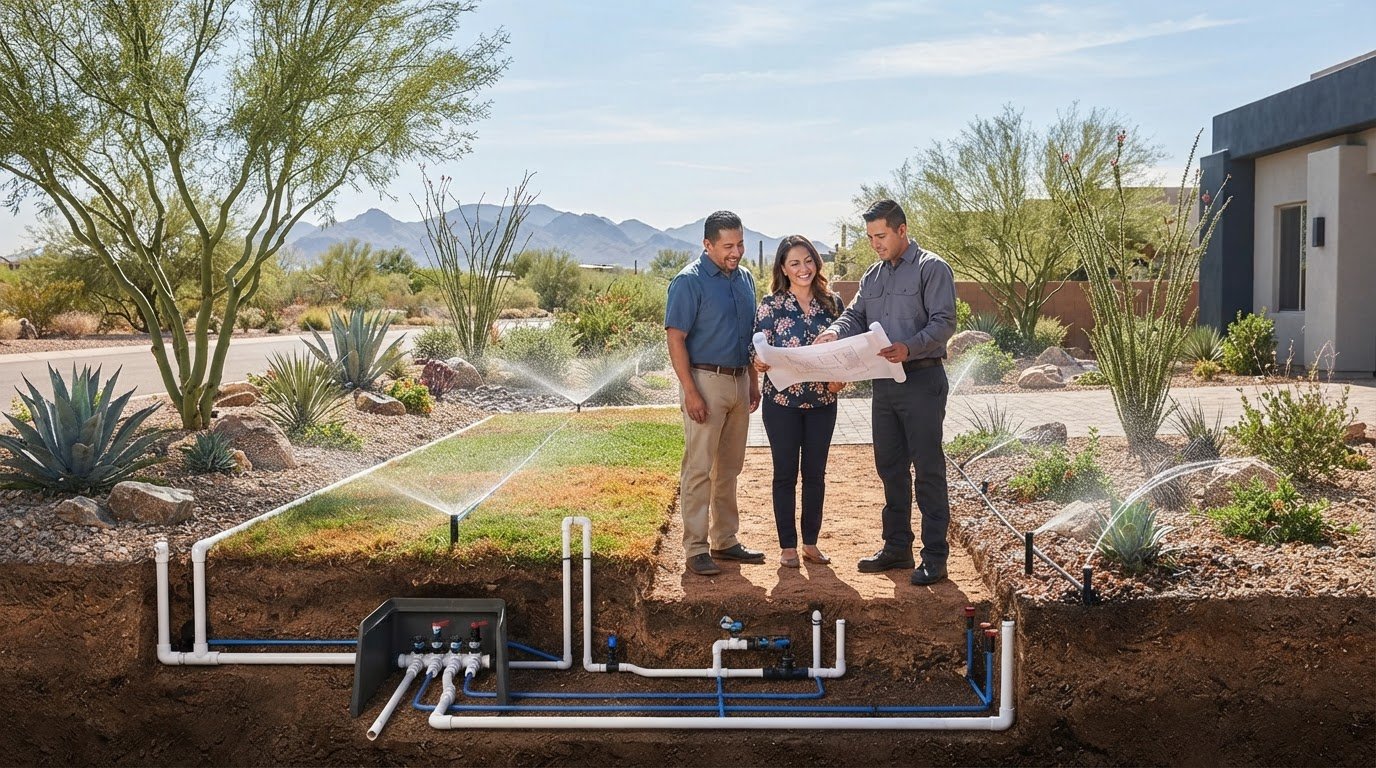
A well-planned replacement follows a clear sequence: assess the symptoms, locate the affected section, define the work, replace the damaged pipe, and check system operation. For homeowners, this helps distinguish a pipe failure from a nearby valve, fitting, or sprinkler issue before excavation begins.
What happens during assessment and excavation?
The assessment starts with the reported symptoms and the irrigation zone involved. The affected line and nearby components are evaluated to narrow down the source and determine whether the work should address a small section or a broader area. Once the scope is established, excavation exposes the relevant pipe while keeping disturbance focused on the work area. Access, soil, and the location of other components can affect how the work proceeds.
Underground irrigation work requires care around buried utilities and system components. You can help by sharing where symptoms appear and when they occur. Locating and exposing the pipe is part of the professional assessment and repair process.
How is the new pipe connected and the system checked?
After the damaged section is exposed, the scope can be refined based on the condition of the pipe and connections. Replacement involves compatible pipe and fittings, installed with appropriate practices. The specific work depends on the system and site conditions, so there isn’t one sequence or timeline for every property.
Once the pipe work is complete, the irrigation system is operated and checked for visible leaks and expected zone function. This helps determine whether the repaired area is holding and nearby components are operating as intended. If a zone still performs unevenly, that may point to an additional issue requiring assessment, rather than proving that the pipe work has failed.
For troubleshooting beyond a pipe section, Sonora Sprinkler also provides residential irrigation repairs and valve and backflow services. An assessment helps determine the appropriate scope for PVC irrigation pipe replacement Arizona homes may need, based on the observed fault and access conditions. Arrange an irrigation assessment to discuss a pipe concern at your home.
PVC Irrigation Pipe Replacement in Surprise and Peoria: Plan Your Next Step
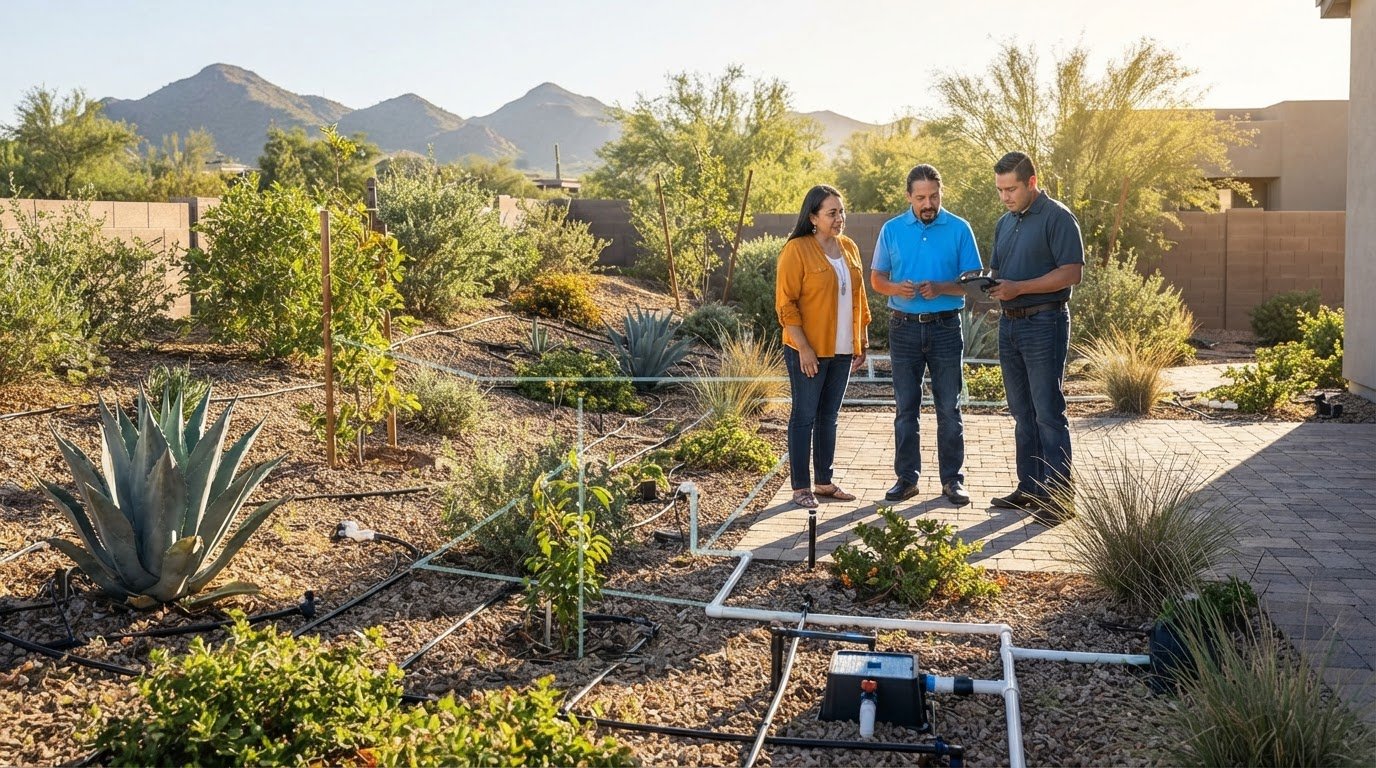
If irrigation symptoms keep returning or the source isn’t clear, a professional assessment can help identify whether the issue involves a pipe, fitting, valve, or another component. If you’re considering PVC irrigation pipe replacement Arizona, a few clear observations can make the assessment more focused. They don’t establish an underground diagnosis, but they give the technician useful context about what happens and where.
What information helps explain a suspected irrigation pipe leak?
Before arranging an assessment, record the location and timing of symptoms. Note which sprinkler zone is operating when water appears, whether the wet area grows during a cycle, and whether water remains after irrigation is off. If the same symptom returns, record that too. Photos taken from a safe distance can show visible surface water, wet soil, or affected hardscape without requiring you to disturb the area.
Keep your observations factual. For example, “water appeared beside the walkway while the front zone was running” is more useful than assuming a buried pipe is broken. Avoid digging to find the line. A professional needs to locate and inspect the affected area to determine what the system requires.
How can Surprise and Peoria homeowners arrange residential service?
Sonora Sprinkler provides residential irrigation repair and PVC pipe replacement for homeowners in Surprise, Peoria, and surrounding communities. During an assessment, reported symptoms help guide the inspection. The location and condition of the fault help determine whether a localized repair or pipe replacement is appropriate, keeping the recommendation tied to the system’s actual needs rather than a guess based on a wet spot.
If symptoms persist, coverage changes, or you can’t tell where water is escaping, share what you’ve recorded when describing the issue. Contact Sonora Sprinkler about residential PVC pipe replacement to discuss the concern at your home.
Take the Next Step Toward Reliable Irrigation
A wet area or uneven sprinkler coverage can signal a problem, but it doesn’t automatically mean an entire line needs replacing. Note when symptoms appear and which zone is running, then have the affected area assessed. The location and condition of the fault help determine whether a focused repair or PVC irrigation pipe replacement Arizona homeowners need is the right approach.
Sonora Sprinkler is a family-owned residential irrigation company serving Surprise, Peoria, and surrounding communities. Residential irrigation repair and PVC pipe replacement are among its services, with recommendations guided by the system’s observed condition and your property’s needs.
If symptoms persist or the source remains unclear, contact Sonora Sprinkler to discuss residential PVC pipe replacement. Arrange an assessment to help identify the issue and choose a practical next step for your irrigation system.
Frequently Asked Questions
Is PVC irrigation pipe replacement necessary after one leak?
No. One visible leak doesn’t automatically mean the entire irrigation line needs replacement. An assessment should locate the failure and inspect the affected pipe and nearby connections. If damage is confined to one accessible section, a localized repair may be appropriate. Repeated problems or broader concerns may call for more replacement. The findings, not a fixed leak-count rule, determine the scope.
What are the signs of a broken PVC irrigation pipe?
Possible signs include recurring wet spots, water surfacing during irrigation, unexpected runoff, reduced sprinkler coverage, or water appearing where it shouldn’t. These clues don’t confirm a broken pipe. A fitting, valve, sprinkler head, or another system issue can cause similar symptoms. Note where water appears, which zone is running, and when it happens. If the problem persists, arrange an assessment to identify the source.
Can Arizona heat or soil conditions damage irrigation PVC pipe?
Heat and soil conditions are part of the local environment, but they don’t prove why a particular pipe failed. Soil movement, installation details, fittings, system pressure, and pipe condition can all factor into an assessment. Properties in Surprise and Peoria may have different site conditions, so don’t assume desert soil or heat caused a specific leak. Inspection should guide the diagnosis and repair scope.
How do I know whether to repair or replace an irrigation pipe?
A localized, accessible damaged section may be suitable for repair, while recurring failures or concerns across a larger area may call for broader replacement. The decision depends on the location and condition of the pipe, its fittings, and the surrounding system. A comparison chart can help explain the factors, but it can’t diagnose underground damage from symptoms alone. An inspection helps establish the appropriate scope for PVC irrigation pipe replacement Arizona homeowners may need.
How long does residential PVC irrigation pipe replacement take?
There isn’t one standard duration for every residential pipe replacement. The work depends on where the damaged pipe is located, how much needs replacement, access to the area, and other site conditions. A small, accessible section can involve different work from a longer or harder-to-reach line. The scope is assessed before work begins, and the system should be checked afterward for visible leaks and expected zone operation.
Should I dig up a suspected leaking irrigation pipe myself?
Avoid extensive digging before the leak location and work area are understood. Unnecessary excavation can damage buried utilities, irrigation components, or the pipe itself. You can help by noting visible water, the affected zone, and when the symptom occurs, without disturbing the area. If the problem persists or the source is unclear, professional diagnosis and excavation can help locate and address the affected section carefully.
Does Sonora Sprinkler replace residential PVC irrigation pipe in Surprise and Peoria?
Yes. Sonora Sprinkler provides residential irrigation repair, including PVC pipe replacement, for homeowners in Surprise, Peoria, and surrounding communities. Share where water appears, which zone was operating, and whether symptoms return after irrigation stops. These details help frame an assessment, while inspection determines whether repair or replacement fits the system’s condition. To discuss residential service, visit Sonora Sprinkler’s contact page.