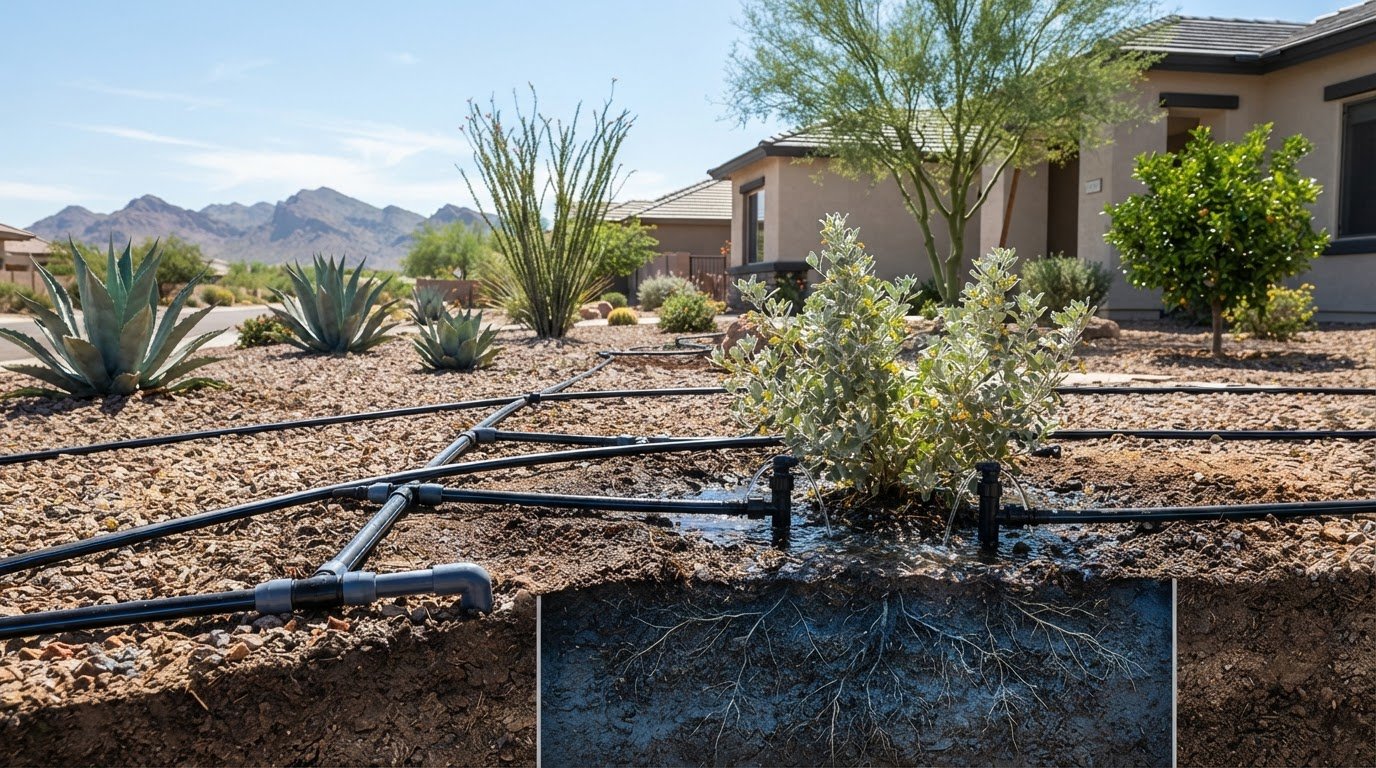
What if a struggling plant doesn’t mean the drip line has failed? For Arizona homeowners searching “drip irrigation line replacement desert,” the first challenge is telling a damaged line from a clogged emitter, loose fitting, or another system fault. Replacing the wrong component can leave watering uneven and established plants under stress.
It’s reasonable to be concerned about desert exposure. Intense sun can make exposed poly tubing brittle, while hard water can clog emitters, so symptoms that look similar may call for different repairs. Soil and existing system layout also matter when assessing where water is going and how to reach a problem without unnecessary disturbance.
This guide explains the common signs of drip line failure, how they differ from other irrigation issues, and what a careful replacement assessment should consider. You’ll also learn how targeted repair can account for Arizona conditions and the needs of your residential landscape. Sonora Sprinkler Inc. provides irrigation repair, diagnostics, and PVC pipe replacement for homes in Surprise, Peoria, and surrounding communities, with work tailored to desert landscapes.
Key Takeaways
- Uneven watering or a visible leak can have several causes, so look for patterns such as repeated leaks or sections that consistently fail to deliver water.
- Desert conditions and the existing irrigation layout help shape a replacement assessment, including how to protect nearby plants during the work.
- Choose between a localized repair and section replacement based on the extent of damage, recurring symptoms, and how the affected area fits the system.
- A thoughtful drip irrigation line replacement desert plan moves from observing symptoms to assessing the zone, selecting a scope, replacing the affected section, and checking operation.
- Residential irrigation repair, drip installation, and PVC pipe replacement can help restore dependable watering for homes in Surprise, Peoria, and surrounding communities.
When Does a Desert Drip Irrigation Line Need Replacement?
Uneven watering or a visible leak can be worrying, but neither automatically means the entire drip line has failed. Water may be escaping from one loose connection, or a plant may be receiving too little because an emitter is clogged. A drip line replacement means replacing tubing, or a damaged section of tubing, after inspection identifies it as the source of the problem. The right scope depends on what the system shows, not on one symptom alone.
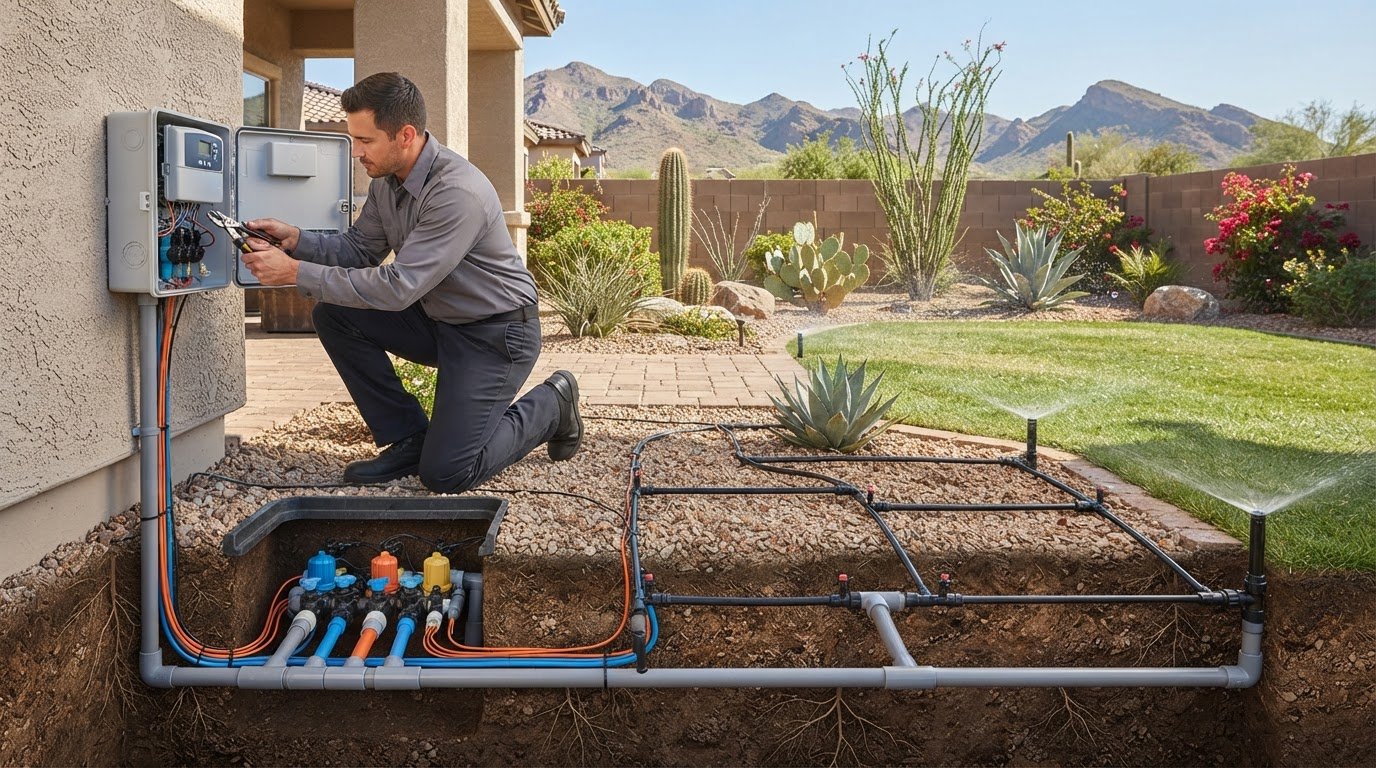
For a drip irrigation line replacement desert assessment, it helps to look at the affected zone as a whole. The Drip irrigation overview describes a system that delivers water through tubing and emitters, so a delivery problem can involve more than the tubing itself.
What signs can point to a damaged drip line?
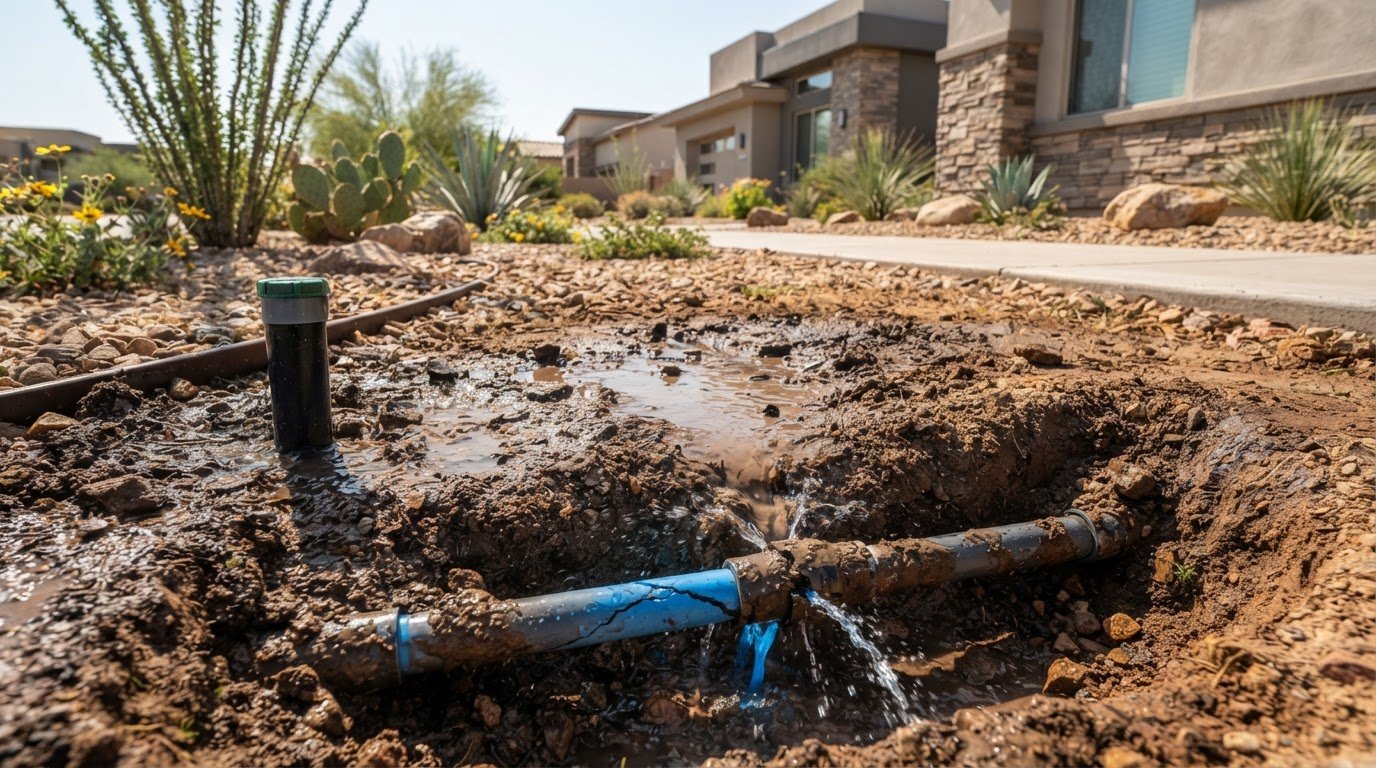
Pooling, unusually wet soil, a visible split, or tubing that has come apart are clues to investigate. A section that repeatedly leaks or no longer appears to deliver water may also indicate damage, particularly if the same area shows the problem during more than one scheduled cycle. These observations help narrow the assessment, but they don’t confirm the cause on their own.
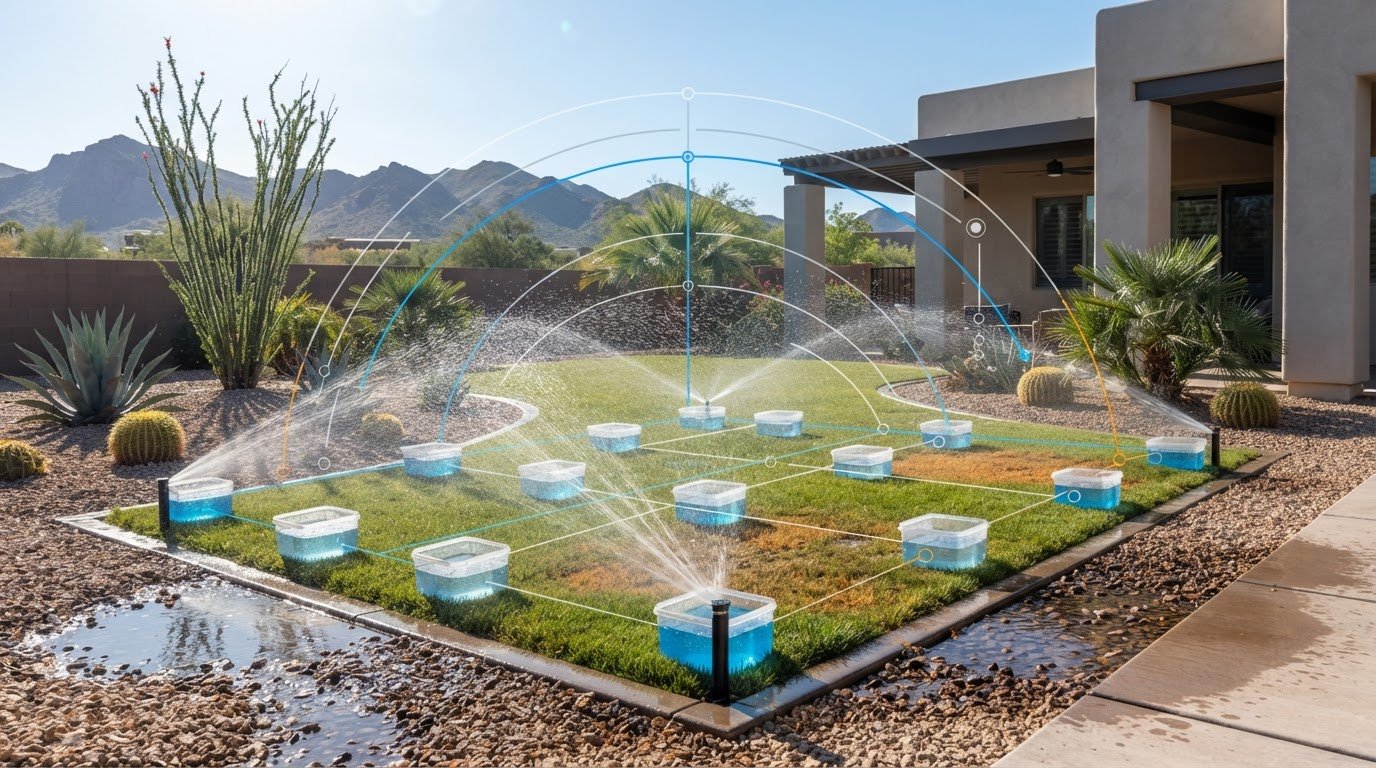
Dry plants and uneven coverage need attention, too, but they can result from a clogged emitter or other delivery issue rather than a failed main line. Note where the soil is wet or dry and whether the pattern returns during watering. A brief record of locations and timing gives a technician useful context without requiring you to disturb the tubing or roots.
When might another component be the real problem?
A leak concentrated around one connection may point to a fitting rather than a longer run of tubing. Similarly, a single plant receiving little water could have an emitter issue, while several affected areas may call for a wider system assessment. Valve operation, wiring, or pressure concerns can also interfere with water delivery beyond one line section. These possibilities are reasons to inspect the system before deciding what to replace.
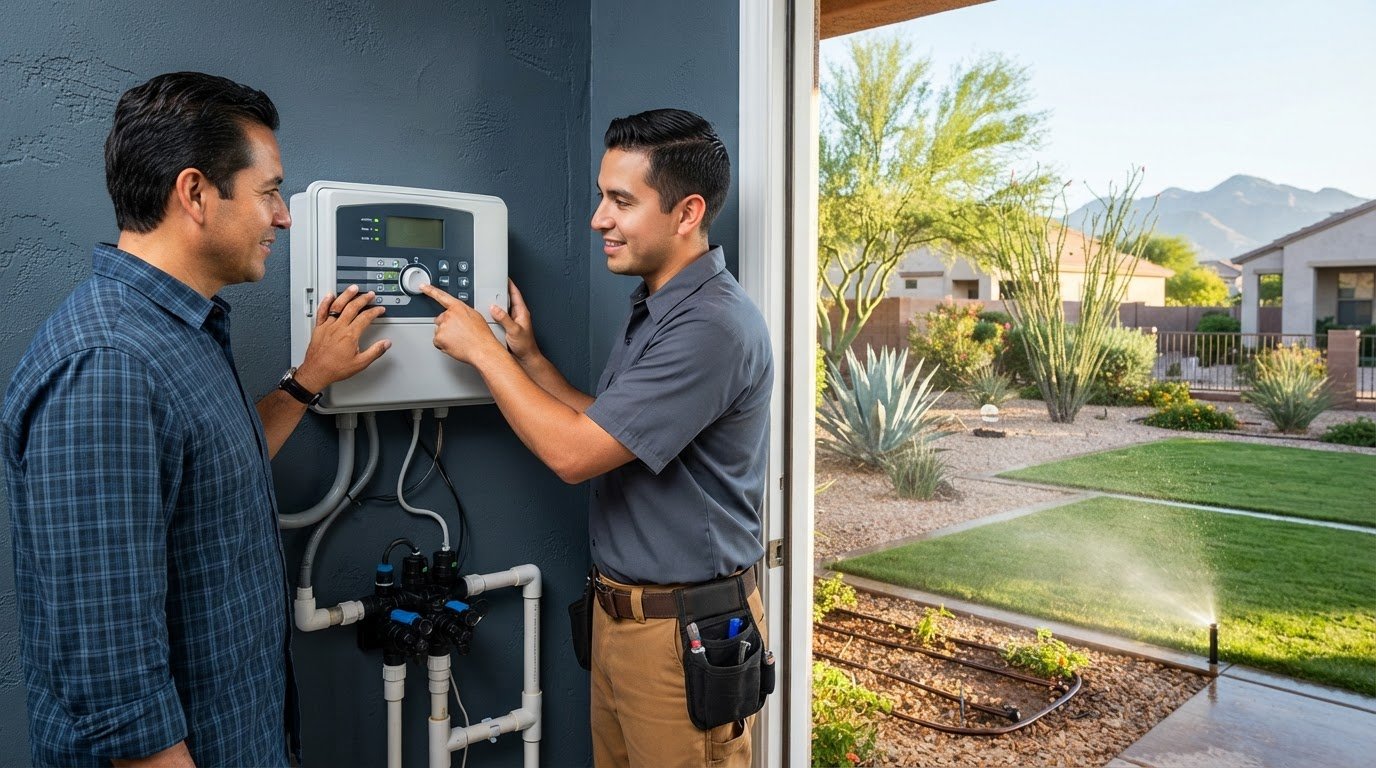
Professional diagnosis considers how the affected zone operates alongside its connected components. Sonora Sprinkler’s drip irrigation system services include system-level support for residential drip irrigation. An assessment can help distinguish a localized fault from a problem that calls for a broader repair, keeping the work focused on what has actually failed.
Before the inspection, note whether symptoms are isolated or recurring, and identify the plants and tubing near the affected area. Avoid assuming that a wet patch proves the line is broken or that a dry plant requires line replacement. Repeated leaks, damaged tubing, or a consistently non-delivering section deserve closer attention. A careful diagnosis helps determine whether to repair a fitting, address an emitter or another component, or replace the affected tubing while limiting unnecessary disturbance to the landscape.
How Arizona Desert Conditions Shape Drip Line Replacement
A replacement plan should fit the property, not a generic desert-system diagram. Arizona homes vary in plant spacing, hardscape, tubing routes, and access to the affected area. Sun exposure, heat, and the way soil must be disturbed are relevant assessment factors, but none proves by itself that tubing has failed. The appropriate replacement depends on the failed section and the system’s site-specific layout.
That distinction matters because a line serving shrubs along a wall may be routed differently from tubing that winds through a planted bed. Reaching one area could mean working near roots, edging, or other irrigation components. In a drip irrigation line replacement desert assessment, these conditions help determine a practical repair scope while limiting unnecessary disruption to established plants.
What should a site assessment consider?
Assessment starts with the affected zone: where its tubing appears to run, which plants it serves, and how the line relates to paths, walls, or other hardscape. Visible conditions and watering behavior add useful context. For example, a recurring wet area in one location may guide attention differently from inconsistent coverage across several planting areas. These observations support diagnosis without assuming a single cause.
The replacement also needs to work with the existing residential system. A generic diagram can’t account for every route, plant location, or site constraint. The Drip Irrigation for the Arizona Landscape guide from University of Arizona Cooperative Extension offers broader regional context on drip irrigation design and components. For a replacement decision, that background is most useful alongside the actual layout and conditions at the home.
Why can generic desert-system recommendations fall short?
Guidance developed for another desert region can help explain general irrigation principles, but it isn’t automatically an Arizona replacement specification. For instance, the Southern Nevada Water Authority’s material provides installation context, not a universal prescription for every Arizona property. Component choices and system arrangements should be considered in relation to the existing setup rather than copied without regard to site conditions.
Nor is there one tubing lifespan or failure schedule that applies to every home. How much tubing is exposed to sun, how the system is arranged, and the conditions around the affected area can differ from property to property. A line’s age may inform the assessment, but it shouldn’t replace observation of its current condition and operation.
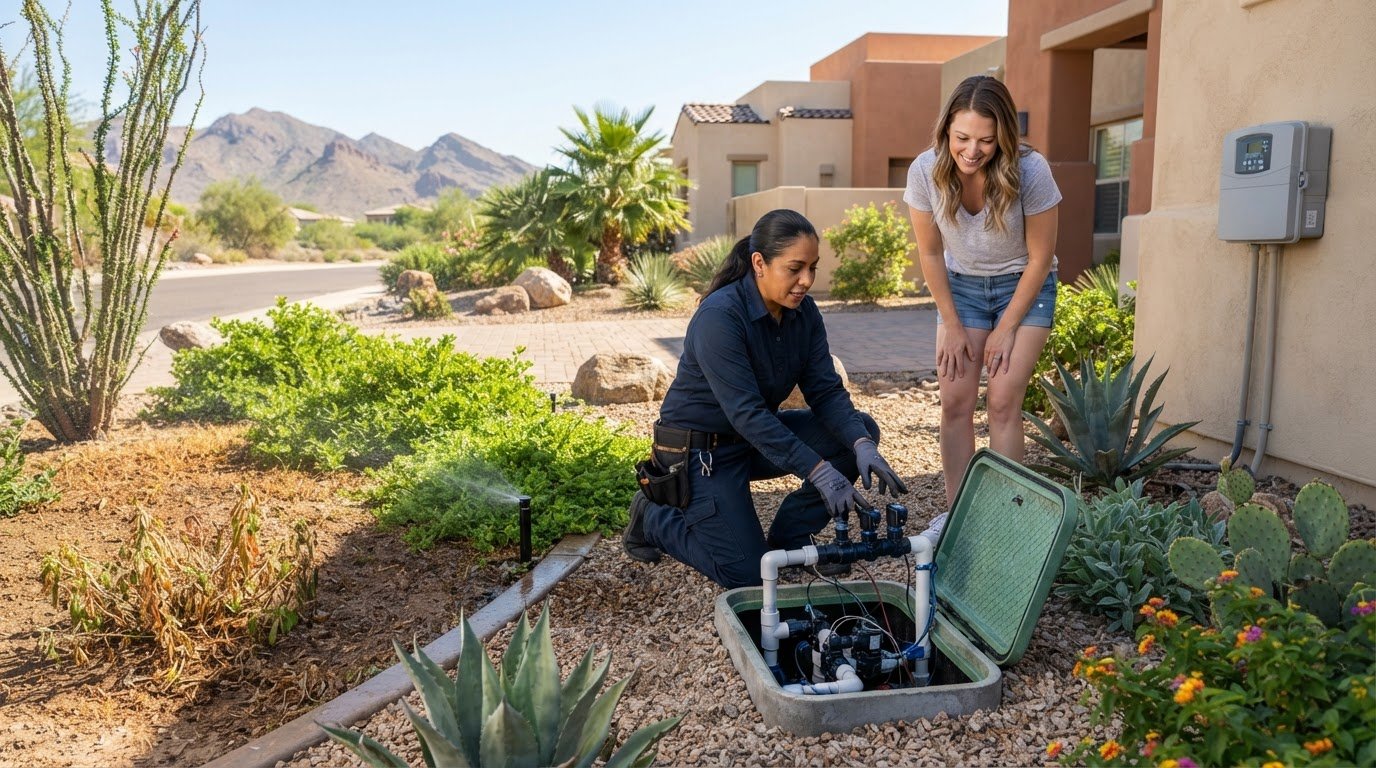
For homeowners in Surprise, Peoria, and surrounding communities, a residential irrigation specialist can assess the problem in the context of the existing layout and plant locations. That helps keep the decision focused on the affected area and the needs of the system. If you’re planning a repair, you can discuss your irrigation concerns with Sonora Sprinkler.
Repair or Replace: Choosing the Right Scope for a Drip Line
A leak doesn’t automatically call for replacement. The aim is to identify which component is failing and choose work that addresses the affected area without expanding the repair unnecessarily. A single, clearly located fault may warrant a different response from damage appearing in several places. Diagnosis should distinguish tubing failure from an emitter, fitting, valve, or broader system issue before settling on the scope.
For a drip irrigation line replacement desert decision, consider the extent and pattern of damage together with how the affected tubing fits the existing layout. The comparison below is a guide to the questions an assessment should answer, not a substitute for inspecting the system.
| Assessment factor | Localized repair | Section replacement |
|---|---|---|
| Extent of damage | One identifiable fault, with surrounding tubing and connections considered | Damage extends across a section or appears in multiple spots |
| Repeat symptoms | Problem appears limited to one location | Leaks or delivery problems recur along the same run or in distributed areas |
| Fit with the system | A targeted fix suits the affected point and existing connections | Replacing a defined section better suits the condition and layout of the run |
When may a localized repair be appropriate?
A limited, identifiable issue is a reason to assess a targeted repair rather than assume the whole line needs replacement. For example, a problem centered on one fitting may call for attention at that connection, while a single damaged point in otherwise serviceable tubing may have a narrower scope than a run with several compromised areas.
The surrounding tubing, nearby connections, and system operation still matter. A visible fault does not show the full condition of the adjacent line, and repairing one spot won’t address an unrelated emitter, valve, or pressure concern. The decision should reflect what the assessment finds, without promising a particular repair lifespan or suggesting one fix will resolve every symptom.
When should a damaged section be considered for replacement?
Repeated leaks or damage distributed along a run can make replacement of a defined section worth assessing. The goal is to set a practical boundary around the affected area, taking the existing layout and accessible, sound connections into account. Replacing a section may suit the condition better than treating multiple faults individually, but the extent should follow the diagnosis, not a blanket rule.
In short, one leak doesn’t mean the whole drip line must go. A residential irrigation assessment can help determine whether the issue is isolated, spread across a section, or rooted in another component. For a separate discussion of scheduling signals, see the article on drip line replacement timing guidance.
What to Expect During Residential Drip Line Replacement
A clear process helps homeowners understand what’s being addressed and why. Residential drip line replacement should begin with the symptoms and the affected irrigation zone, then move through diagnosis, scope selection, repair, and an operational check. The exact work depends on the property and what the assessment finds. In a desert landscape, nearby plants, hardscape, and existing irrigation components also inform how the affected area is approached.
- Observe the symptoms. Note where water appears to pool, which plants seem under-watered, and whether the concern returns during scheduled watering. Sharing these observations helps direct attention to the relevant zone.
- Assess the affected area. A technician considers the symptoms alongside the existing system, including the tubing route, nearby connections, and related components. This helps distinguish a line problem from another cause of inconsistent delivery.
- Determine the work scope. The assessment guides whether a localized repair or replacement of a damaged section better fits the observed condition. The aim is to address the identified fault without assuming that more of the system needs work.
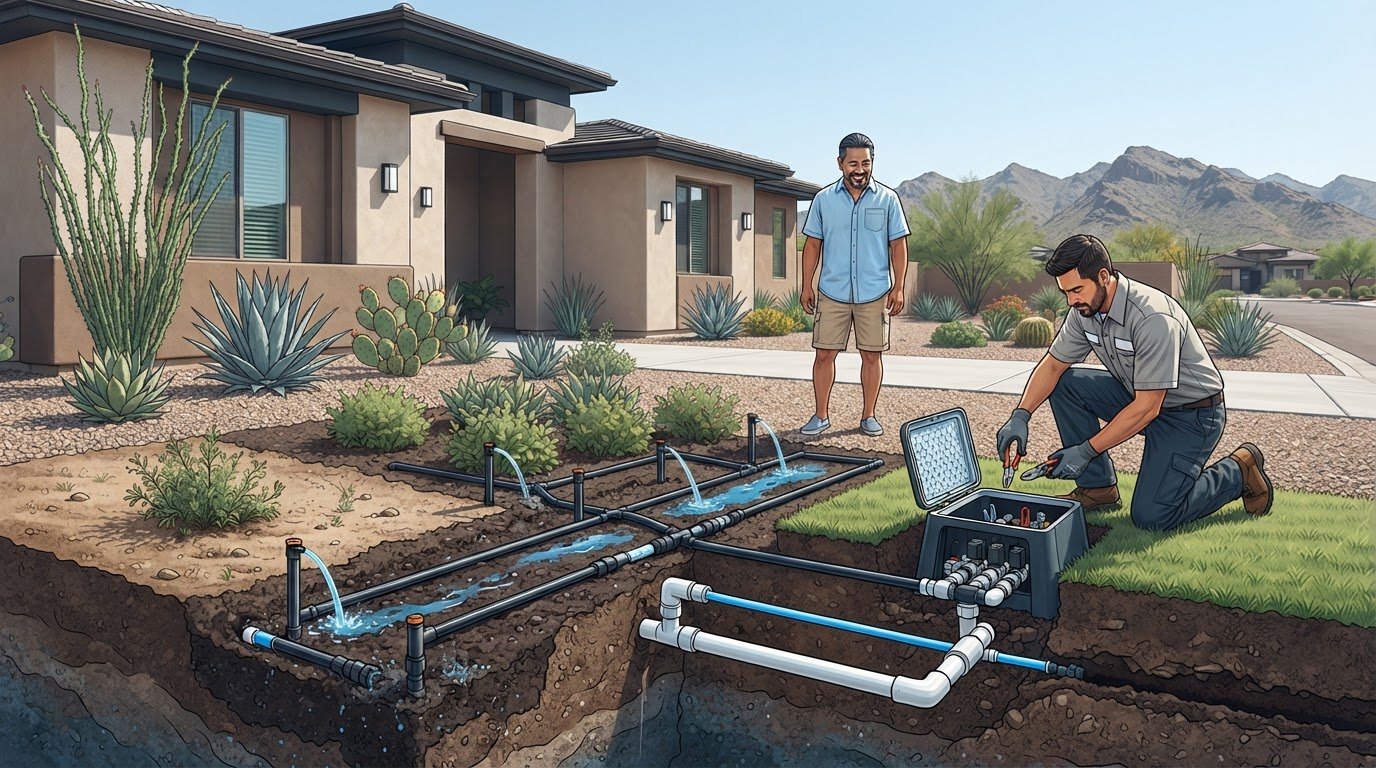
- Replace the affected section. Professional work accounts for the residential layout and plant placement, with attention to nearby roots and other irrigation components. The amount of access required depends on where the line runs and the conditions at the property.
- Check operation. After the work, the affected zone can be checked for water delivery and visible leaks. This provides an opportunity to see whether the repaired area is operating as intended.
How does the assessment guide the replacement plan?
The technician identifies the area associated with the symptoms and considers related components before setting the scope. Plant locations and the existing residential layout help inform access and how the replacement fits the system. For example, tubing routed near a planted bed may require a different approach from a line along an open edge. Repair details are tailored to conditions found at the home, rather than assumed from a generic diagram.
How is the system checked after the work?
The post-work check focuses on the affected zone: whether water reaches the area and whether visible leaks remain. If symptoms continue elsewhere, those may point to a separate issue that needs its own assessment; replacing one section doesn’t automatically resolve unrelated faults. Sonora Sprinkler’s residential irrigation repair and maintenance addresses broader system concerns as well as repair needs.
A careful process supports dependable watering while keeping the work tied to the diagnosed problem. If a drip line in your residential landscape needs attention, schedule a conversation about irrigation repair with Sonora Sprinkler.
Get Desert Drip Line Replacement Help in Surprise and Peoria
Once you’ve noticed a leak or uneven watering, the next step is understanding what the existing system needs. A visible issue doesn’t automatically call for a full line replacement. A tailored assessment can help determine whether the problem is limited to one repair or whether a damaged section should be replaced. For residential properties, that decision should account for the affected zone, surrounding plants, and how the irrigation is laid out.
Sonora Sprinkler Inc. serves homeowners in Surprise, Peoria, and surrounding communities with residential irrigation repair, drip irrigation installation, and irrigation PVC pipe replacement. This local focus helps keep the discussion centered on the property’s current system and the needs of its desert landscape. A thoughtful approach to drip irrigation line replacement desert properties need starts with understanding the specific site, rather than assuming every leak requires the same work.
What information helps describe the problem?
You don’t need to identify the faulty component before arranging service. A few simple observations can help explain what you’re seeing:
- Note which part of the yard or planting area appears affected.
- Record where you’ve seen leaks, pooling, or unusually wet soil.
- Notice whether the symptoms show up during or after scheduled watering.
- Describe changes in plant watering or issues that have returned over time.
These details provide useful context without requiring technical tests or digging. If the signs are intermittent, a note about when they occur can help distinguish a recurring pattern from a one-time observation. Share what you’ve seen and let the assessment determine whether the source may be tubing, a connection, or another system component.
How does local residential expertise support the repair?
Drip systems are part of a property’s existing irrigation layout. Tubing may serve specific plants, follow a bed’s edge, or run near hardscape, so a replacement plan needs to fit the actual site. A residential irrigation specialist can consider those details alongside the observed symptoms and the condition of connected components. The resulting scope may be a localized repair or replacement of an affected section, depending on what the assessment finds.
That system-specific approach is especially useful when the goal is to restore consistent watering without disturbing more of the landscape than necessary. It also helps keep the repair focused on the diagnosed concern rather than applying a generic solution. Sonora Sprinkler provides residential irrigation services for homeowners in Surprise, Peoria, and nearby communities, with work tailored to Arizona desert landscapes.
If you’ve noticed recurring leaks, damaged tubing, or uneven watering, request residential irrigation service to discuss the concern and the next step for your property.
Take the Next Step Toward Consistent Watering
Your landscape changes over time, and its irrigation needs can change with it. A new planting, a growing shrub, or a shifted watering pattern may be a good reason to look again at how the system serves each area. Keep the focus on what the plants and the irrigation are showing, then let the condition of the line guide the scope of work.
A practical approach to drip irrigation line replacement desert homeowners can use is to avoid rushing from symptom to solution. The right repair starts with understanding the concern at your property and choosing work that fits the system, rather than replacing more than the problem requires. That measured next step can help protect established plants and support more consistent watering.
Sonora Sprinkler is a family-owned residential irrigation specialist serving Surprise, Peoria, and surrounding communities, with irrigation repair, drip installation, and irrigation PVC pipe replacement. Request residential drip line service to discuss what you’re seeing and plan a suitable next step for your landscape. A clear assessment can put you on a steadier path forward.
Frequently Asked Questions
How do I know if my drip irrigation line is leaking?
Look for water appearing where it shouldn’t, such as a persistent wet patch, a small stream during watering, or water escaping from a visible split. On a Surprise or Peoria property, check whether the damp area follows the same part of a planting bed each time the system runs. A single observation can be misleading, so note when it occurs and whether it returns before assuming the tubing itself is the source.
Can one section of a drip irrigation line be replaced without replacing the whole system?
Yes, a damaged section can sometimes be replaced without changing the entire system. The suitable repair area depends on how far the damage extends and whether the surrounding tubing and connections can remain in use. For example, a localized problem along one accessible run may have a different scope from wear appearing in several areas. An assessment helps establish where replacement should begin and end.
Is a dry plant always a sign of a damaged drip line?
No, one dry plant doesn’t prove the line is damaged. Its emitter may be obstructed, the tubing may have shifted away from the root area, or the plant’s watering needs may have changed as it grew. Compare the plant with nearby ones on the same zone and observe whether the issue follows a pattern. Those details help distinguish an isolated delivery concern from a broader irrigation problem.
How long does residential drip line replacement take?
There isn’t one reliable timeframe for every residential replacement. The work can vary with the length and location of the affected area, access around plants or hardscape, and whether diagnosis finds another component involved. A limited repair may differ from work involving a longer run or multiple concerns. The scope and site conditions are the best basis for estimating the work, rather than a standard duration applied to every home.
What happens to plants during drip irrigation line replacement?
Plants remain in place, but nearby soil may need to be disturbed to reach tubing, depending on its route and depth. A technician can consider roots, plant spacing, and access when planning the work, though the amount of disturbance depends on conditions at the property. Let the technician know about recently planted or especially sensitive specimens. Avoid changing the watering schedule on your own unless advised, since needs vary by plant and weather.
Can a clogged emitter look like a damaged drip line?
Yes, a clogged emitter can leave one plant or a small area receiving less water, which may resemble a line problem. For instance, if neighboring plants along the same run appear adequately watered but one remains dry, that difference is useful to report. Mineral deposits or debris may affect an emitter, while damage to tubing can affect delivery differently. A system assessment can help identify which component needs attention.
Does Arizona heat mean drip tubing needs to be replaced more often?
Not on a fixed schedule. Sun exposure and heat are relevant conditions, but tubing type, how much of it is exposed, and the system’s condition all affect what an inspection finds. A search for “drip irrigation line replacement desert” shouldn’t be taken as evidence that every Arizona line needs replacement at a set age. In Surprise and Peoria, decisions should be based on observed wear and system performance.