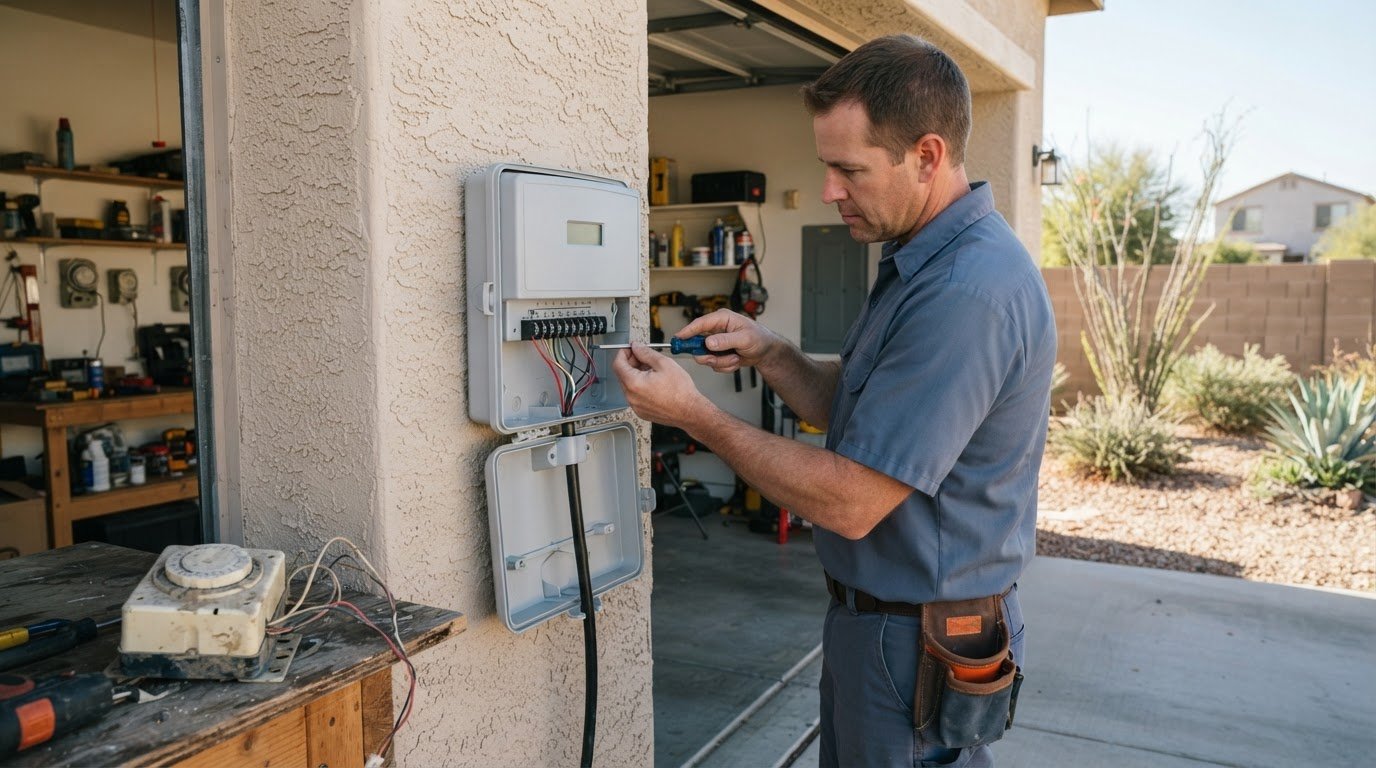
For natural grass, sprinklers usually provide the broad, even coverage a lawn needs. Drip irrigation is generally a better fit for trees, shrubs, and planting beds. When comparing drip irrigation vs. sprinklers for lawns in Arizona, water loss matters: drip delivers water into the soil, while wind and evaporation can affect sprinkler water. A mixed yard often benefits from using both methods in the areas each serves best.
It’s reasonable to weigh water efficiency against installation cost and long-term upkeep, especially where summer heat and soil conditions put extra demands on irrigation. This guide explains how turf type, yard layout, and site conditions affect the choice, what drives installation costs without relying on misleading one-size-fits-all figures, and how each system performs over time. Installation cost depends on the project and is provided after a quote request; factors include the layout, the areas to be irrigated, and the system components required. You’ll also see why natural grass generally calls for sprinkler coverage, when drip can be more effective, and how a combined setup can serve a mixed Arizona yard.
Key Takeaways
- For natural grass, prioritize sprinkler coverage; reserve drip irrigation for trees, shrubs, and planting beds.
- Consider a hybrid layout to match each irrigation method to the areas it serves best.
- Compare installation costs by looking at yard layout, soil, coverage needs, and system components rather than relying on a one-size-fits-all estimate.
- Account for upkeep as well as water use: drip systems need filter and emitter maintenance, while sprinkler alignment affects lawn coverage.
- For a system designed around your property, Sonora Sprinkler Inc. offers drip irrigation installation and custom sprinkler system design.
Drip Irrigation vs Sprinklers: Which Is Better?
For natural grass, sprinklers usually provide broad, even coverage; drip irrigation better targets individual plants. Comparing drip irrigation vs sprinklers for lawns in Arizona starts with the landscape, soil, sun exposure, and seasonal watering needs.
Water Delivery Methods
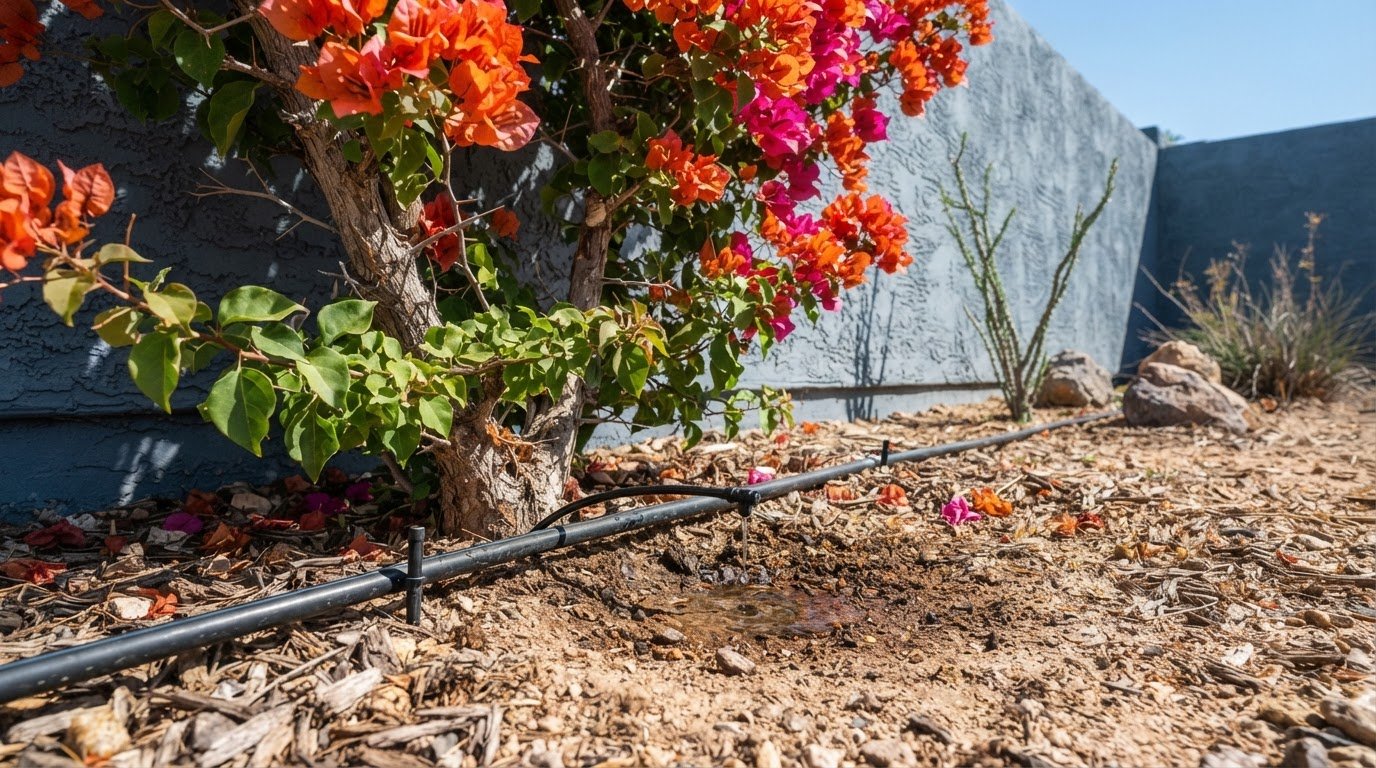
Sprinklers distribute water above ground across a lawn, using spray or rotating heads to cover turf. Drip lines use tubing and emitters to deliver water into the soil near plant roots. That difference matters in Arizona’s desert climate: wind, evaporation, and runoff can affect sprinkler water, while drip limits above-ground exposure. Drip suits planting beds and individual plants, but does not automatically provide even coverage across a grass lawn.
System Advantages and Drawbacks
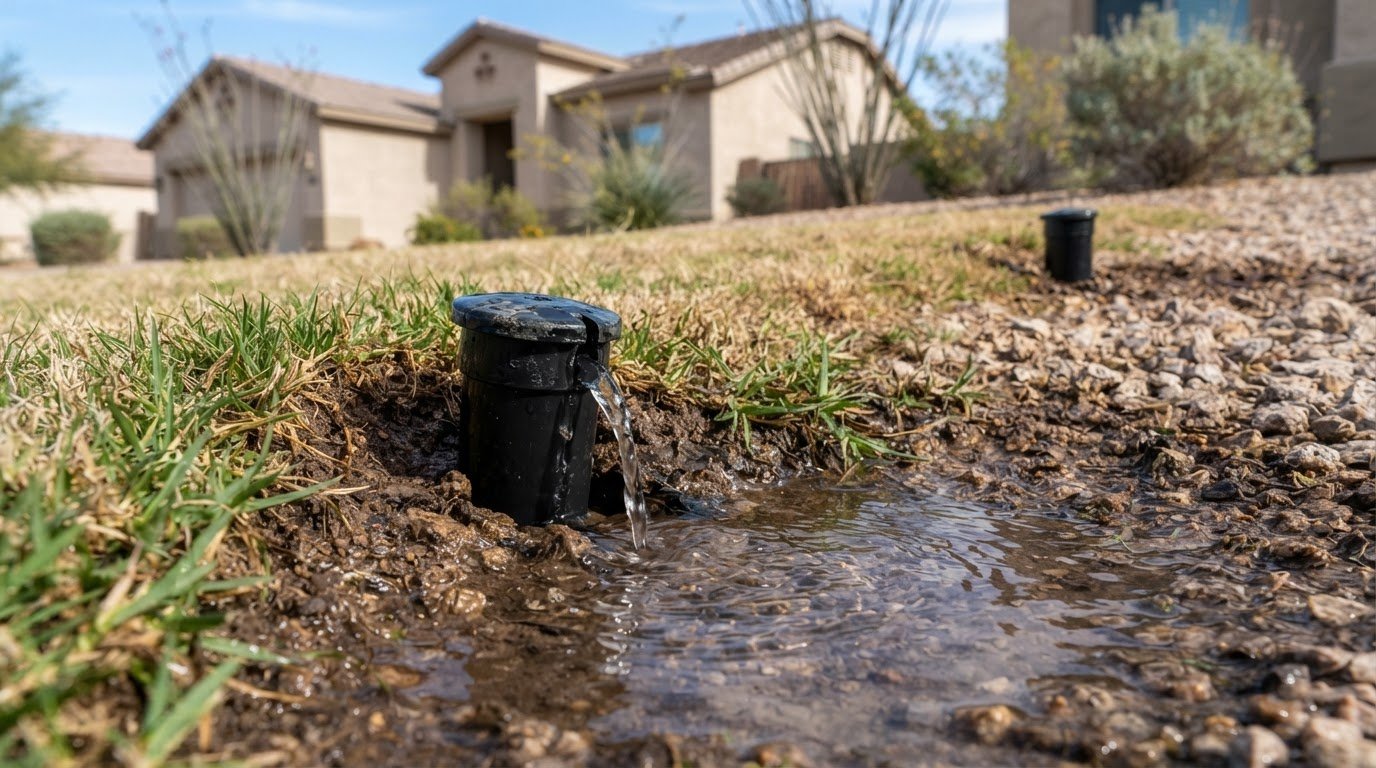
Drip systems can reduce evaporation and overspray, and support slower, deeper watering for trees and shrubs. They also need filters, pressure regulators, and attention to clogged emitters. Sprinklers cover broad turf areas more readily, but tilted or blocked heads can send water onto a driveway or wall instead of grass. Neither system performs well when its coverage doesn’t suit the plants and ground it serves.
Drip irrigation generally uses less water than traditional sprinklers; estimates commonly place the reduction at 30% to 50%. That potential saving doesn’t make drip the automatic choice for every lawn. Coverage, soil drainage, and plant type still matter.
Evaluation and Maintenance Needs
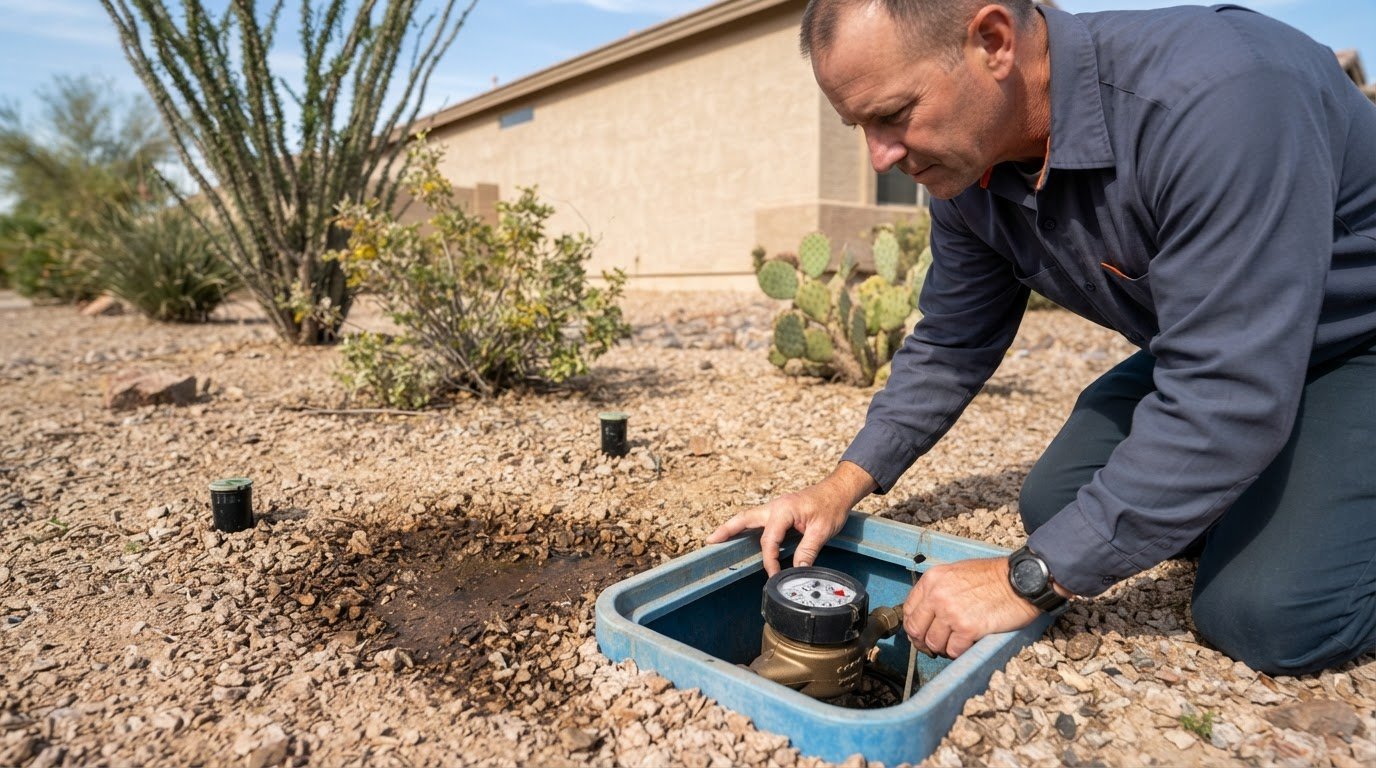
Check for dry patches, pooling, runoff, and water landing beyond the intended area. A soggy spot beside a dry lawn section can point to uneven sprinkler coverage; a dry shrub beside a drip emitter may indicate a clog. Drip lines need periodic filter cleaning and flushing, with frequency depending on water conditions. Inspect sprinkler heads for blockage, tilt, or misalignment so water reaches the turf instead of paved surfaces.
Factors in System Choice
Key factors in choosing drip irrigation vs. sprinklers for lawns in Arizona include plant type, soil, sun exposure, slope, property size, and layout. Natural grass generally needs broad coverage, while trees, shrubs, and planting beds often suit drip. Arizona soils can include sand, clay, caliche, or compacted layers, all of which affect drainage and water retention. Slopes can also increase runoff, especially when water is applied faster than the soil absorbs it.
Is drip irrigation allowed for Arizona lawns under local water-use rules? Whether drip may be used on a lawn depends on the rules applying to the address; the method alone doesn’t establish permission. Local requirements can differ, so use the rules that apply to your property.
How should sprinkler run times and schedules change by Arizona season and region? Adjust schedules as seasonal conditions change, rather than keeping one setting all year. Soil, sun exposure, grass needs, and local climate all affect the appropriate watering duration and frequency.
| Option | Coverage | Water delivery | Maintenance focus |
|---|---|---|---|
| Sprinklers | Broad lawn areas | Water distributed above ground | Check head alignment and coverage |
| Drip irrigation | Plants and defined beds | Water delivered into soil near roots | Clean filters and prevent clogged emitters |
| Combined layout | Turf plus planting areas | Coverage matched to each area | Maintain both system types |
Match coverage to the plants, soil, and yard layout, then adjust watering as Arizona’s seasons change.
Irrigation choices for natural and artificial turf
Natural grass generally needs sprinkler coverage, while artificial turf doesn’t need routine irrigation for plant health. Drip can water turfgrass in some carefully designed applications, but it’s more commonly used for garden beds and individual plants.
Sprinkler Coverage for Turf
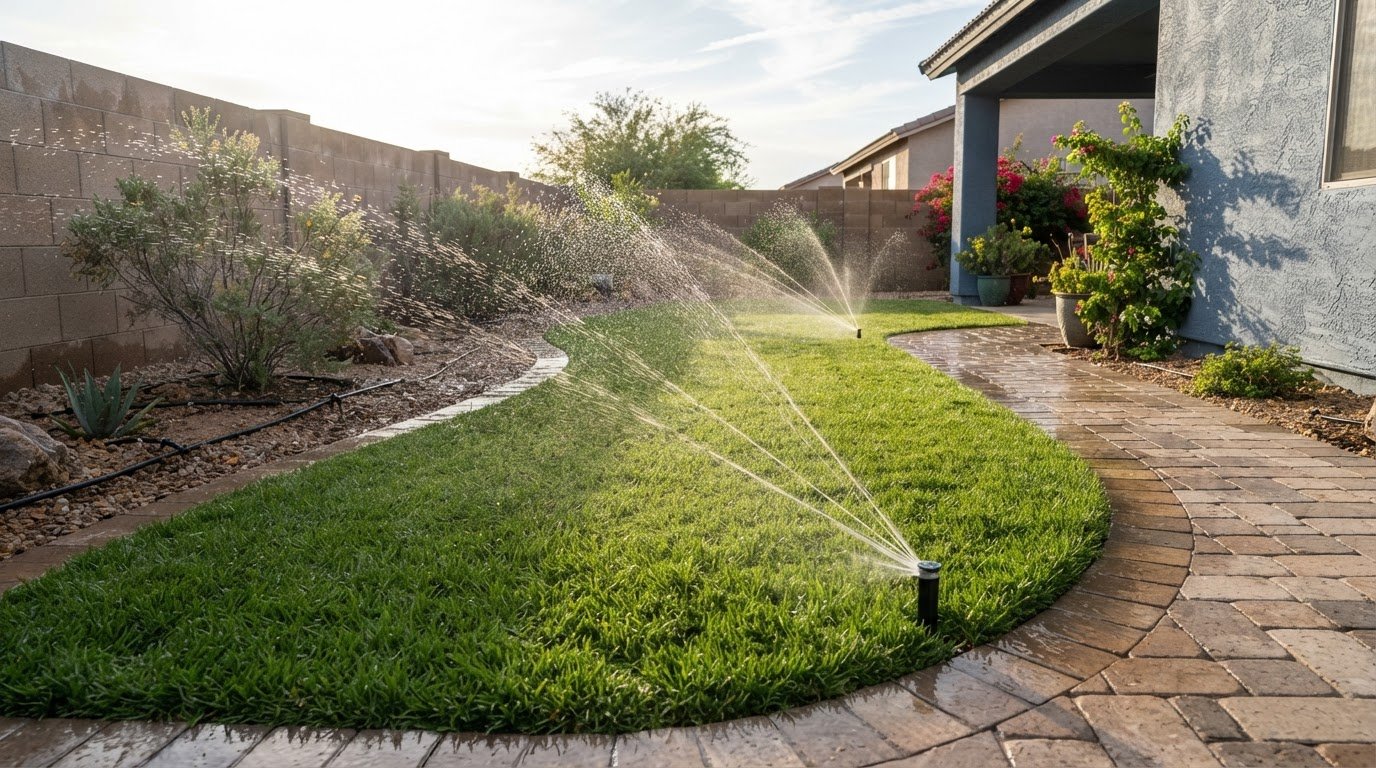
Sprinklers distribute water across turf, making them a practical fit for lawns and larger grass areas. Fixed spray heads commonly serve smaller sections, while rotating nozzles and rotors cover larger lawns. Rotary heads can reach a radius of 30 to 50 feet, which helps with broad coverage when the layout allows.
Coverage also needs to match the lawn’s shape. A narrow strip beside a house may call for a different head arrangement than an open grass area. Poor placement can leave one section dry and another soggy, so system design should account for obstacles, boundaries, and the shape of each turf zone.
Drip Irrigation for Turfgrass
Can drip irrigation adequately water turfgrass, or is it better suited to garden beds? Drip can water turfgrass in some applications, but it’s less common for established residential lawns and requires careful design. For most natural turf, sprinklers remain the more straightforward option because they distribute water across the grass rather than along selected lines.
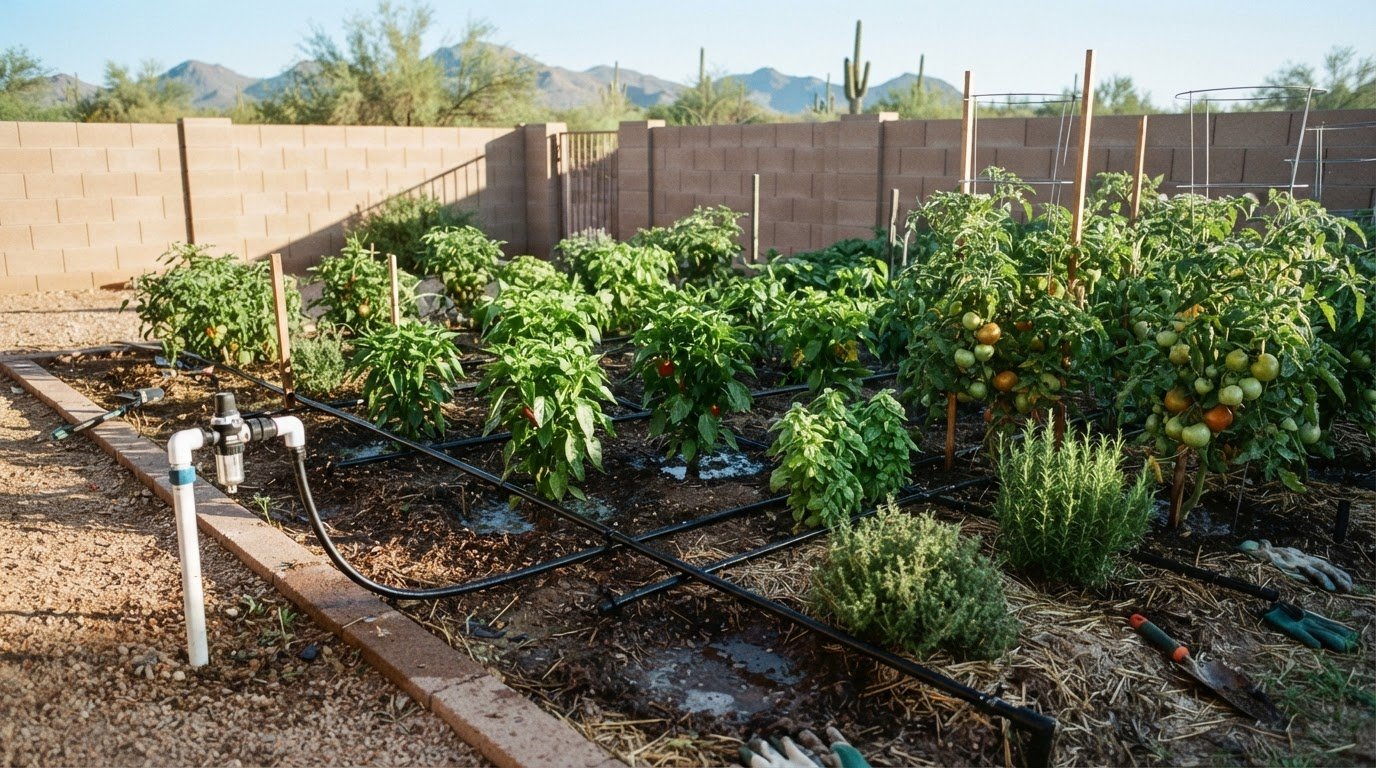
Drip is better suited to planting beds, where emitters can deliver water near individual plants. A mixed yard can use sprinklers for the lawn and drip for nearby shrubs, trees, or flower beds. This gives each area a delivery method suited to its coverage needs, rather than relying on one method throughout the yard.
Natural Turf Irrigation
Natural grass needs water across its root zone, so sprinkler coverage should reach the full turf area without directing water onto paving. Rotating heads may suit a large, open lawn; fixed sprays may fit smaller turf sections. In either case, uneven coverage can produce dry patches beside soggy areas, making head placement and spray patterns important.
Artificial turf has different needs. It doesn’t require regular irrigation for plant health, although occasional rinsing can help remove dust, address pet use, or cool the surface. That is occasional surface care, not the ongoing watering schedule used for natural grass. Keeping these needs separate can prevent unnecessary irrigation across synthetic turf.
For a property with both grass and planting beds, a hybrid layout can assign sprinklers to turf and drip to plants. Discuss a turf-specific irrigation layout when coverage needs differ across the yard.
Installation costs and long-term value
For Arizona homeowners, installation scope is only one part of comparing drip systems with sprinklers. Long-term value also depends on water use, maintenance, coverage, and how well the system fits the plants it serves. A layout that waters lawns, trees, and beds in separate zones avoids treating every area the same way.
Project cost depends on the property and system design, and is provided after a quote request. Factors include the areas requiring coverage, the existing irrigation layout, access to installation areas, and the equipment and changes the project needs. For example, adding drip tubing to a defined planting bed differs from replacing a system across a large lawn. The work required to connect or adapt existing components also affects the scope.
Drip systems deliver water near plant roots, which can help limit overspray and overwatering when emitters are positioned for the plants. Their value is clearest in beds with shrubs, trees, or other plants that don’t need broad lawn coverage. Filters and emitters need maintenance, and clogged outlets can leave individual plants short of moisture. A well-maintained system supports plants without treating every square foot like turf.
Sprinklers may be the more practical option for natural grass because they cover the lawn broadly. A system designed for the turf’s shape can reduce missed areas and avoid watering hard surfaces. Misaligned or blocked heads can undermine that performance by leaving dry patches or sending water away from the grass. Maintenance and seasonal schedule adjustments matter alongside the initial installation.
A long-term comparison should consider water use and upkeep as well as installation scope. Drip irrigation generally uses less water than traditional sprinkler systems, but the difference depends on where and how each method is used. A homeowner with a small lawn and extensive planting beds may benefit from separate irrigation zones. A broad natural lawn, by contrast, needs consistent turf coverage.
Are there Arizona rebates or incentives for replacing lawn sprinklers with drip irrigation or xeriscaping? Programs and eligibility depend on the local utility or other applicable program. Replacing sprinklers alone doesn’t establish eligibility, so count an incentive toward the project only when the program’s terms apply.
To compare options, first separate natural turf from planting beds, then identify which existing components can serve each area. Next, consider the maintenance needs of filters, emitters, sprinkler heads, and controls. Finally, compare the installation scope with likely water use and the coverage each zone requires. Drip irrigation system design can help match tubing and emitters to planting areas, rather than extending lawn-style coverage where it isn’t needed.
When sprinklers suit larger grass areas
Sprinklers are typically the practical choice for natural lawns and larger grass areas because they distribute water across turf. A broad lawn needs coverage throughout its root zone, rather than water delivered only along planting lines. For Arizona properties with both grass and desert plants, separate irrigation zones can match coverage to each area.
System layout matters as much as the choice of sprinkler. A large, open lawn may suit rotating heads, while smaller or irregular sections may need a different arrangement. Trees, walls, walkways, and flower beds affect where water should land. Mapping these features before installation helps direct water onto grass and reduce overspray onto paved surfaces or planting areas.
Assess coverage across the full lawn, not just at one sprinkler head. A dry patch in one area and soggy turf nearby can indicate uneven distribution. Tilted, blocked, or misaligned heads may send water onto a wall or driveway instead of grass. Checking each zone while it runs can reveal gaps and misplaced spray before they affect more of the lawn.
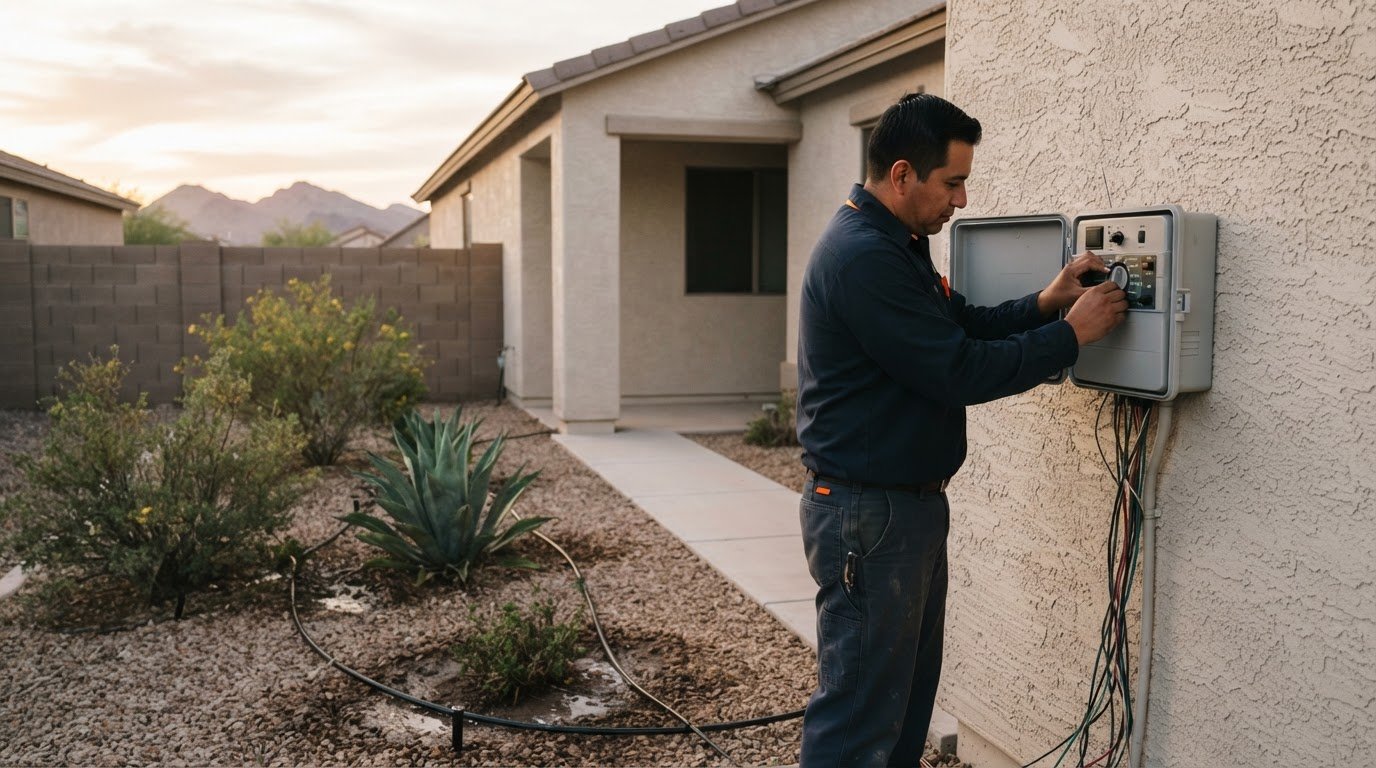
Efficient watering also depends on matching the schedule to changing conditions. Arizona irrigation schedules should shift by season, since a setting that works in June is rarely appropriate for January. A smart controller can adjust schedules based on weather conditions. It doesn’t replace correct head placement, but can help avoid relying on one fixed schedule throughout the year.
In a mixed yard, sprinklers can serve the lawn while drip irrigation waters nearby trees, shrubs, and flower beds. Separate zones let each area receive watering suited to its coverage needs. For example, a lawn beside a narrow bed can get broad sprinkler coverage without applying the same watering method to the bed. This can make the overall system more efficient.
Before changing a system, consider the lawn’s shape, obstacles, soil drainage, and existing irrigation components. A redesign may address dry areas by changing sprinkler placement or coverage, while a worn or damaged component may need repair. The right solution depends on what is causing uneven watering, not simply on the size of the grass area. Custom sprinkler system design can account for lawn boundaries and nearby planting zones.
Sprinklers make the strongest case where turf needs consistent, broad coverage. Drip is better suited to defined planting areas, while artificial turf does not need routine irrigation for plant health. Separating natural grass from flower beds and synthetic surfaces helps avoid watering areas that don’t need the same treatment. That distinction is useful on desert properties with mixed yard materials.
Drip irrigation benefits in Arizona's dry climate
Arizona’s heat makes water placement especially important in planting areas. Drip irrigation sends water into the soil through tubing and emitters, limiting exposure to wind and sun. This targeted delivery suits shrubs, trees, and desert plants better than applying broad lawn coverage throughout the yard.
Which irrigation method produces healthier grass in Arizona’s heat and dry climate? For natural grass, sprinklers generally provide the broad, even coverage turf needs. Drip irrigation’s strengths are more relevant to beds and individual plants; healthy grass depends on water reaching its root zone across the lawn.
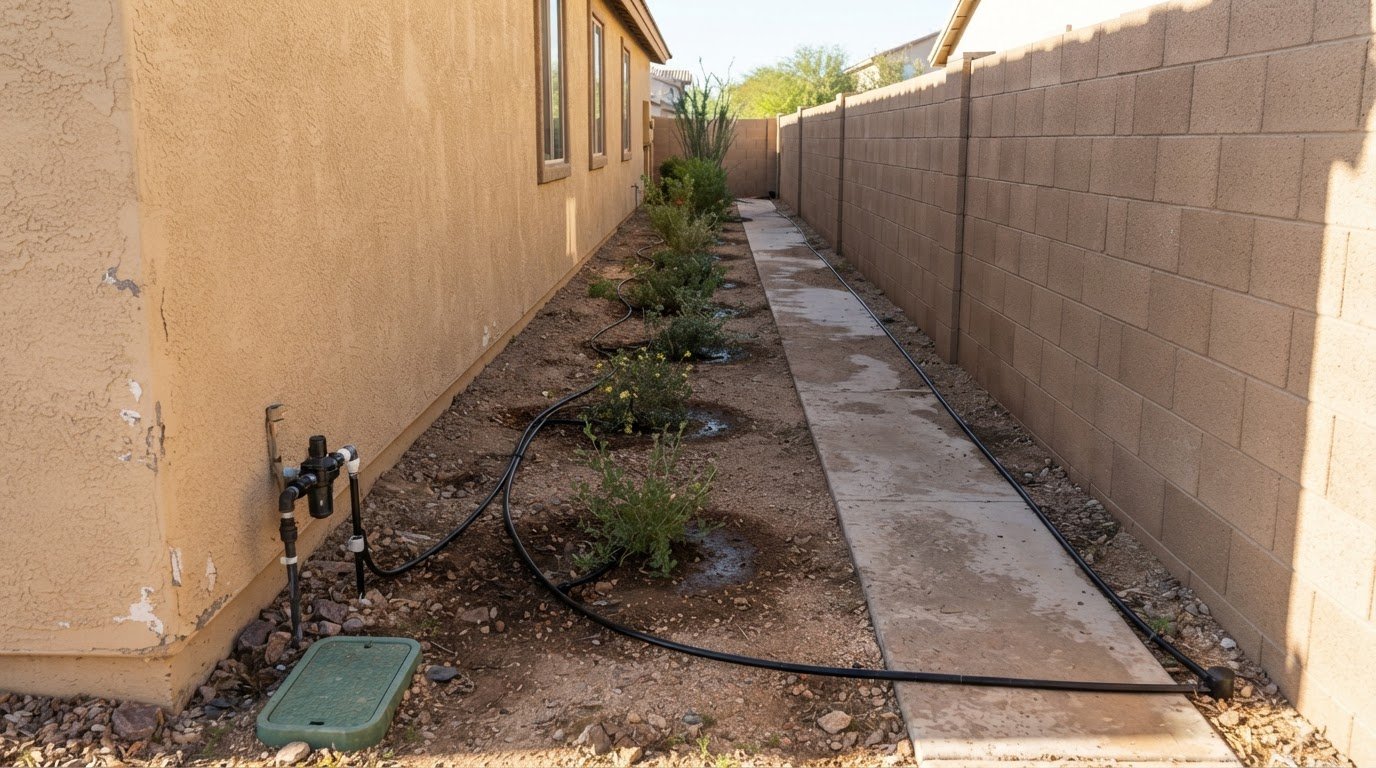
Drip can also help manage water on slopes and in narrow spaces. Slower application can reduce runoff and erosion where sprinkler water might pool or flow downhill. A side yard beside a wall, for example, can receive targeted watering without spraying the wall or pavement. A planting bed near a patio can be watered without wetting nearby hard surfaces.
Arizona soil conditions affect how water moves. Sandy soil may drain quickly, while clay, caliche, or compacted layers can retain water or contribute to runoff. Emitter placement and watering duration should fit the soil and plants, rather than follow one setting across the yard. Beds with different plants may need separate zones to keep moisture near their roots.
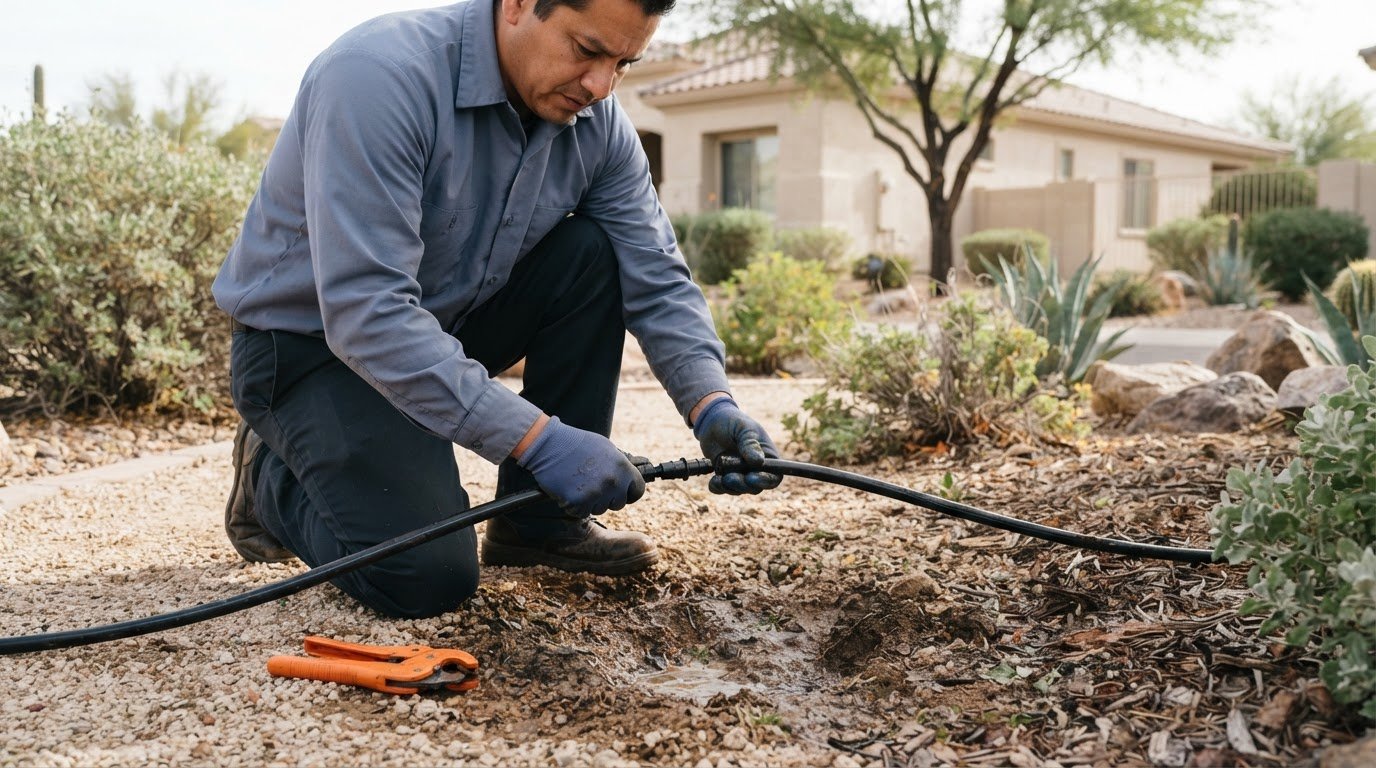
Drip systems require filters and pressure regulators, and emitters can clog. Periodic filter cleaning and line flushing help keep water moving. Exposed tubing also faces Arizona sun, which can shorten the life of materials left in direct exposure. For trees and large shrubs, reposition emitters as plants grow, spreading moisture beneath the canopy instead of concentrating it against the trunk.
Seasonal adjustments matter in Arizona’s dry climate. A schedule suited to June is rarely appropriate for January, and early-morning watering can reduce evaporation. Smart controllers can adjust schedules based on weather conditions. These measures support efficient delivery, but the basic distinction remains: sprinklers serve turf, while drip targets planted areas.
A combined layout can put sprinklers on natural grass and drip lines around shrubs, trees, and flower beds. This keeps turf coverage separate from the slower watering needs of desert plants. As the season changes, check for dry patches, pooling, and clogged emitters, then correct the affected zone rather than increasing watering everywhere.
If a planting bed dries unevenly or runoff persists, request help with a drip irrigation system designed around its soil, plants, and layout.
Sonora Sprinkler Inc.: Drip Irrigation Installation
Sonora Sprinkler Inc. installs drip irrigation for Arizona planting areas where targeted watering suits trees, shrubs, and beds. If your lawn and planting zones need different coverage, the system can pair drip irrigation with sprinklers rather than apply one method across the property.
Drip irrigation installation can account for plant placement and the layout of each bed, while irrigation repair can address existing leaks or uneven delivery. For properties with natural turf, custom sprinkler system design can provide broad lawn coverage alongside drip-irrigated planting areas. This matches the irrigation setup to the needs of each part of the yard.
If you’re considering a drip system for your property, contact Sonora Sprinkler Inc. to discuss your irrigation needs.
Plan an irrigation system that fits your yard
Your next step is to think beyond the immediate installation. A yard can change as trees mature, planting beds expand, or natural grass is replaced with another surface. Choosing drip irrigation vs. sprinklers for lawns in Arizona works best when the layout accounts for those changes, the plants each zone serves, and how the system can be maintained over time.
Before making a change, identify which parts of the property need broad turf coverage and which need targeted watering. That distinction helps frame a practical conversation about system design, repairs, or installation without treating the entire yard as one irrigation zone. A well-planned layout gives each area a clear purpose and makes future adjustments easier.
For guidance on the next step for your property, contact Sonora Sprinkler Inc. A thoughtful plan can help you move forward with greater clarity and confidence.
Frequently Asked Questions
Which System Is Better for Your Plants?
Drip irrigation usually suits individual plants, while sprinklers generally suit natural grass. For example, emitters can deliver water near the roots of a row of shrubs, while a lawn needs coverage spread across the turf. In a mixed yard, separate zones can serve both. In Surprise and Peoria, soil, sun exposure, and plant type help determine where each method fits best.
Which System Uses Less Water?
Drip irrigation generally uses less water than traditional sprinkler systems. Estimates commonly place the reduction at 30% to 50%, though actual use depends on the system layout, watering schedule, soil, and planted areas. Targeted delivery can reduce water reaching paths or walls. For a fair comparison, consider how much of the property is lawn versus beds, and whether each zone is watered only as needed.
How much water do drip irrigation and sprinklers use on Arizona lawns?
Water use depends on lawn area, grass needs, soil, sun exposure, sprinkler coverage, and run time. Total use also changes with the schedule and the number of zones being watered. Rather than relying on one statewide figure, compare water applied to the same area over the same schedule. Dry patches or pooling can indicate that distribution needs adjustment, even if total use seems reasonable.
What are typical installation costs for lawn drip irrigation versus sprinklers in Arizona?
Installation cost depends on the property and project scope, and is provided after a quote request. Key factors include the areas to cover, existing irrigation components, layout complexity, and the equipment or pipe work required. A drip setup serving planting beds differs from a sprinkler installation covering natural turf. Comparing costs is most useful when each estimate addresses the same areas and intended coverage.
What are the maintenance costs and common repairs for drip systems and lawn sprinklers?
Maintenance needs depend on which components require service and the work involved. Drip systems may need filter cleaning, emitter clearing, or tubing repairs. Sprinkler systems may need attention to blocked or misaligned heads, valves, wiring, or damaged pipe. A zone that fails to start or water evenly can help identify where diagnosis is needed. Regular inspection can catch small performance issues before they affect more of the yard.
How much water is lost to evaporation and wind with Arizona sprinklers compared with drip irrigation?
There isn’t one fixed loss amount for every Arizona sprinkler system. Wind, sun exposure, spray height, head alignment, and watering time all affect how much water reaches the soil. Drip irrigation generally loses less to evaporation and wind drift because it applies water at ground level. For sprinklers, early-morning watering can reduce evaporation, while correct alignment helps limit overspray.
What are the risks of using drip irrigation on lawns, including uneven watering and clogged emitters?
Drip irrigation can water turfgrass in some applications, but established residential lawns need carefully designed coverage. Lines that don’t distribute water evenly can leave dry sections, while clogged emitters can interrupt delivery. Filters and periodic flushing help limit clogging, and checking for dry patches can reveal uneven performance. Drip is more commonly used for planting beds, where emitters can be positioned for individual plants.