Did you know that up to 70% of residential water use in the Phoenix metropolitan area is dedicated to outdoor landscaping? When your monthly utility bill suddenly spikes, it's often a silent signal that your irrigation system repair needs have moved from routine maintenance to a critical priority. You've likely experienced the frustration of battling stubborn caliche soil while digging or finding that vital components have failed prematurely under the relentless desert sun.
We understand that maintaining a healthy landscape in Arizona is a constant struggle against environmental attrition. This guide provides the professional assurance you need to identify, troubleshoot, and resolve common failures caused by our unique climate. You'll learn how to protect your property's long-term health while ensuring your system remains water-efficient and cost-effective. Our focus is on providing grounded expertise that helps you manage your resources wisely.
We will examine the mechanical impact of hard water clogs, explain how to leverage municipal rebates for smart controllers in cities like Chandler and Gilbert, and provide a logical progression for repairs that will withstand the next monsoon season. From valve diagnostics to PVC replacement, our goal is to help you achieve a functional landscape that performs reliably year-round.
Key Takeaways
- Learn to identify the five most common signs of system failure in a desert climate, ranging from hidden mechanical leaks to heat-induced electrical malfunctions.
- Understand the "Rule of Three" to determine when a standard irrigation system repair is no longer cost-effective compared to a high-efficiency system upgrade.
- Discover the specialized diagnostic techniques required to troubleshoot irrigation wiring and solenoids, ensuring the electrical components of your system remain reliable.
- Explore the distinct repair methodologies for drip irrigation systems, which have become the professional standard for water conservation in Arizona landscapes.
- Gain professional insights into maintaining hydraulic integrity and proper water pressure to protect your property from environmental stressors while lowering monthly utility costs.
Understanding the Foundations of Irrigation System Repair
Effective irrigation system repair is more than a simple mechanical fix; it's a holistic process of restoring both hydraulic and electrical integrity to a complex network. In the Arizona desert, where temperatures frequently soar above 110 degrees, these systems face unique stressors that don't exist in turf-heavy, temperate climates. One of the most critical factors we monitor is water pressure regulation. High pressure can easily rupture aging PVC pipes, while insufficient pressure prevents emitters from delivering the precise amount of water your plants need to survive. For homeowners in Surprise, AZ, relying on "temporary patches" or DIY quick fixes often leads to catastrophic system failure during the peak of the summer heat.
To better understand how specific components are adjusted during a professional service, watch this helpful video:
The Anatomy of a Residential Irrigation System
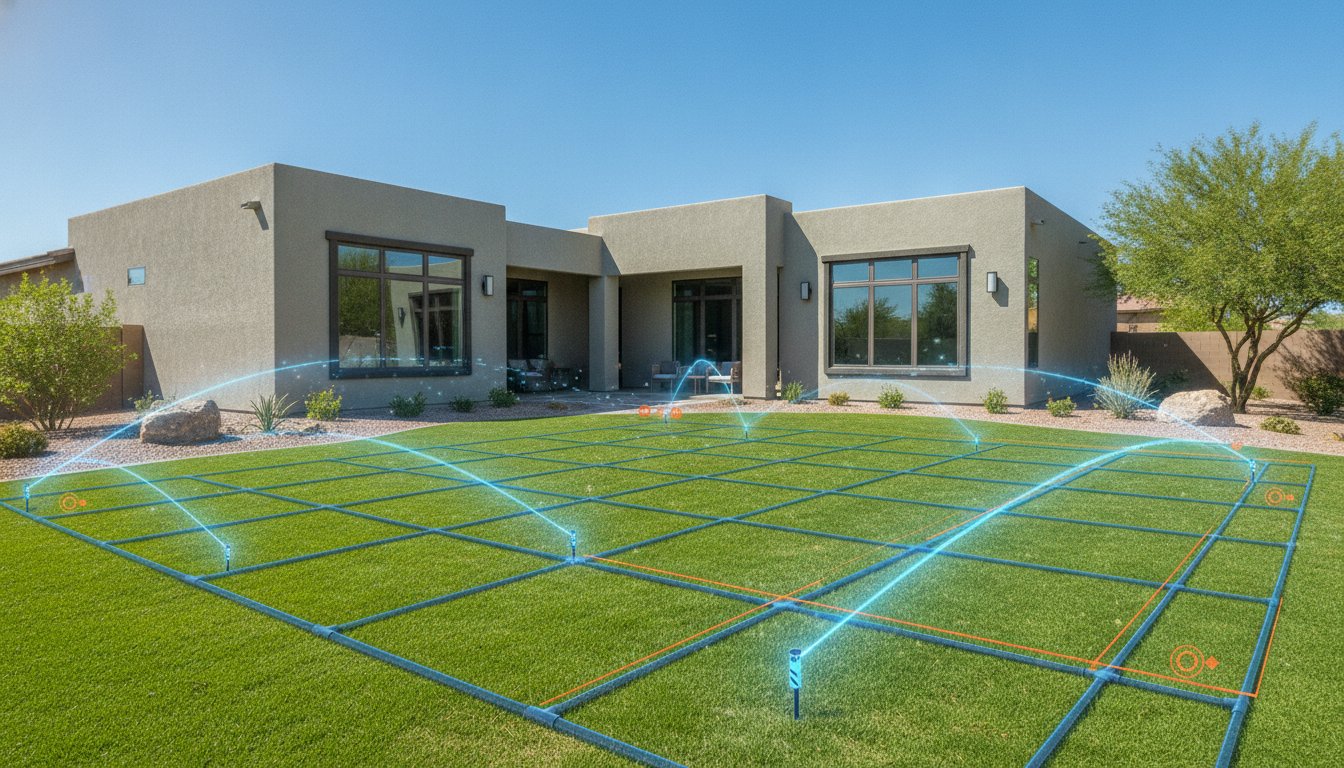
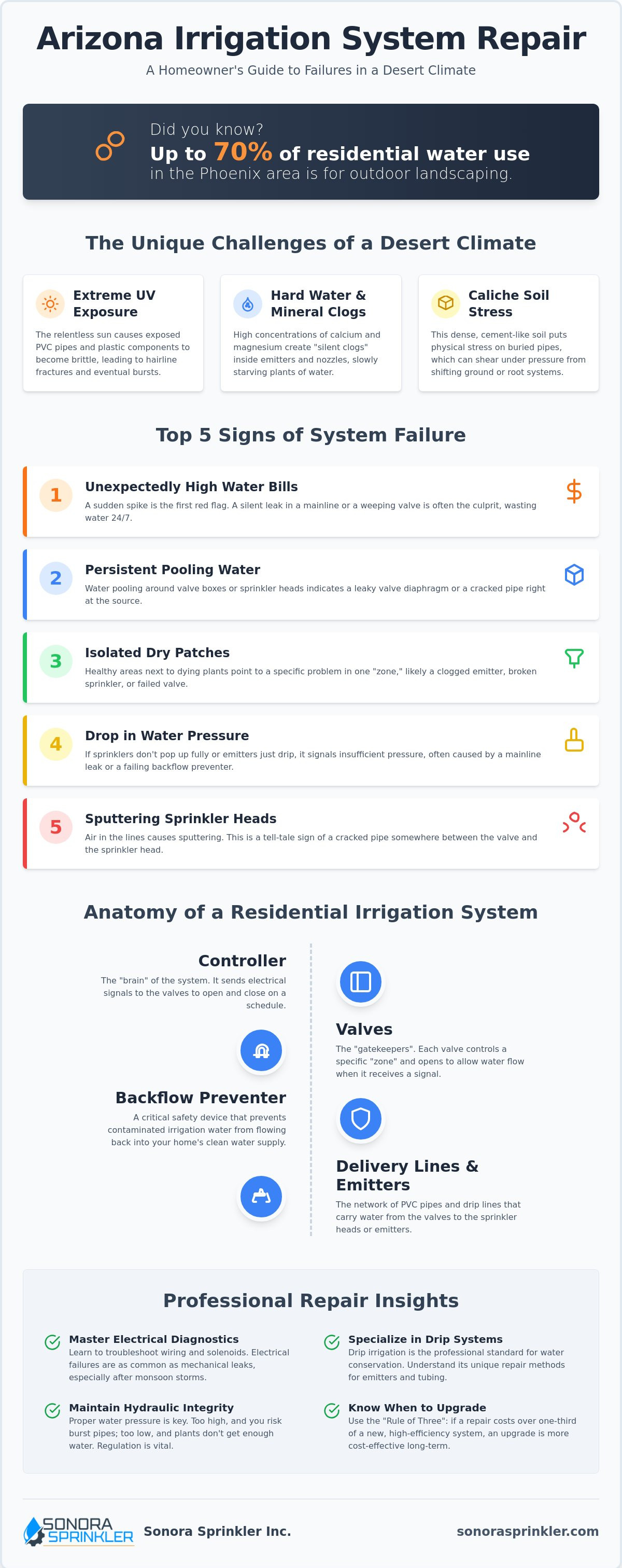
A reliable system relies on four primary pillars: the controller, the valves, the backflow preventer, and the delivery lines. These components work together in a "closed loop" to maintain constant pressure and ensure water reaches its destination without loss. Understanding Irrigation sprinkler basics is essential for diagnosing where a break in this loop occurs. The controller sends an electrical signal to the valve, which then opens the flow of water through the pipes to the emitters. A "Zone" is defined as a specific group of emitters or sprinklers controlled by a single valve, serving as the fundamental unit for all troubleshooting and irrigation system repair efforts.
Why Desert Environments Accelerate System Wear
The Arizona sun is a relentless adversary for any outdoor mechanical system. Extreme UV exposure causes exposed PVC pipes and plastic valve boxes to become brittle, leading to hairline fractures that eventually burst. Beyond the sun, our region's hard water contains high concentrations of calcium and magnesium. These minerals create a "silent clog" within emitters and nozzles, slowly restricting flow until the plant begins to show signs of stress.
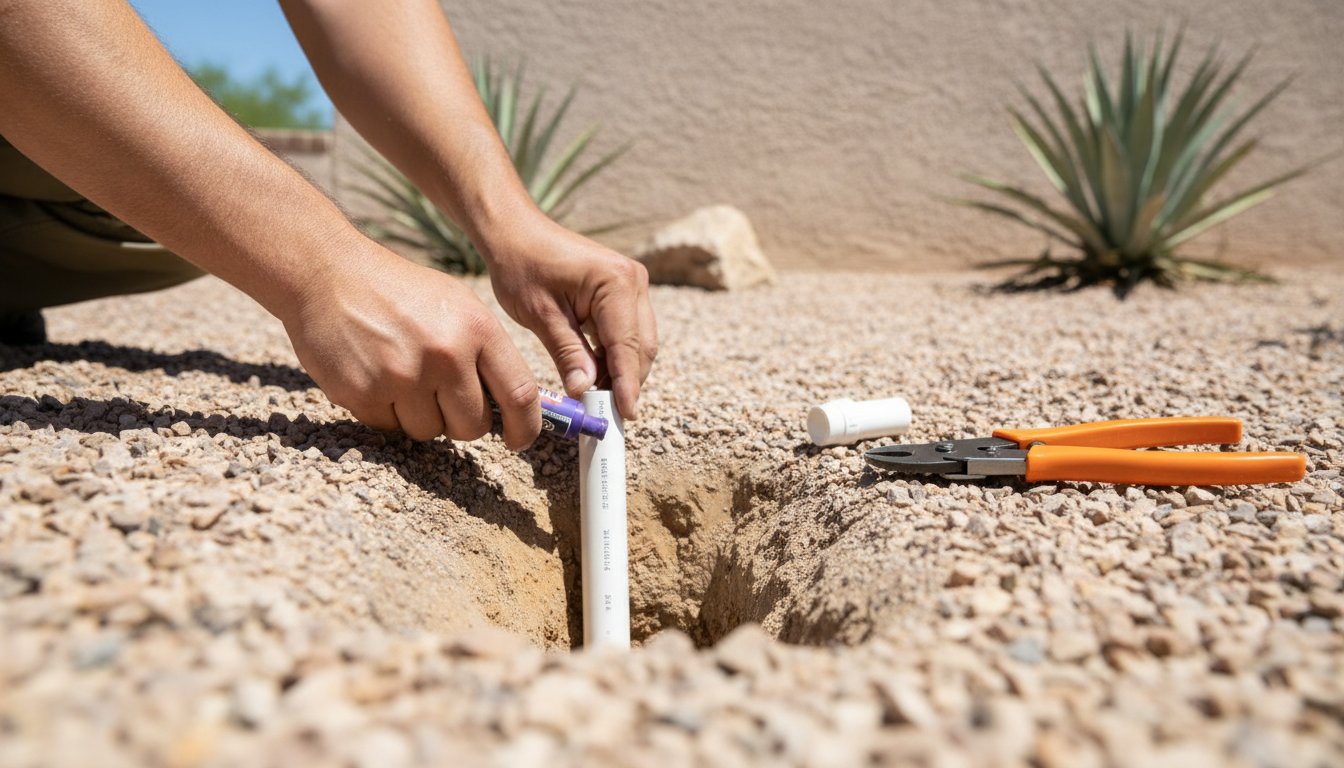
The soil itself presents a major challenge. The presence of "caliche" soil, a natural cement-like layer of calcium carbonate, creates a rigid environment that puts physical stress on buried pipes. This dense material doesn't just make digging difficult; it can cause pipes to shear under the pressure of shifting ground or intrusive root systems. Unlike soft, loamy soils found in other regions, caliche requires specialized tools and a deeper understanding of pipe protection to ensure a repair lasts through the next monsoon season.
Common Failure Points in Arizona Residential Systems
Recognizing early warning signs is the first step in effective irrigation system repair . In the Arizona desert, these indicators often manifest before a total system collapse occurs. The top five signs of failure include unexpectedly high water bills, persistent pooling around valve boxes, isolated dry patches in the landscape, a noticeable drop in pressure at the emitters, and sputtering sprinkler heads. Identifying these failure points early can prevent a minor irrigation system repair from becoming a full-scale landscape renovation. Distinguishing between a mechanical failure, such as a cracked pipe, and an electrical failure, like a frayed wire or burnt solenoid, is vital for a precise diagnosis.
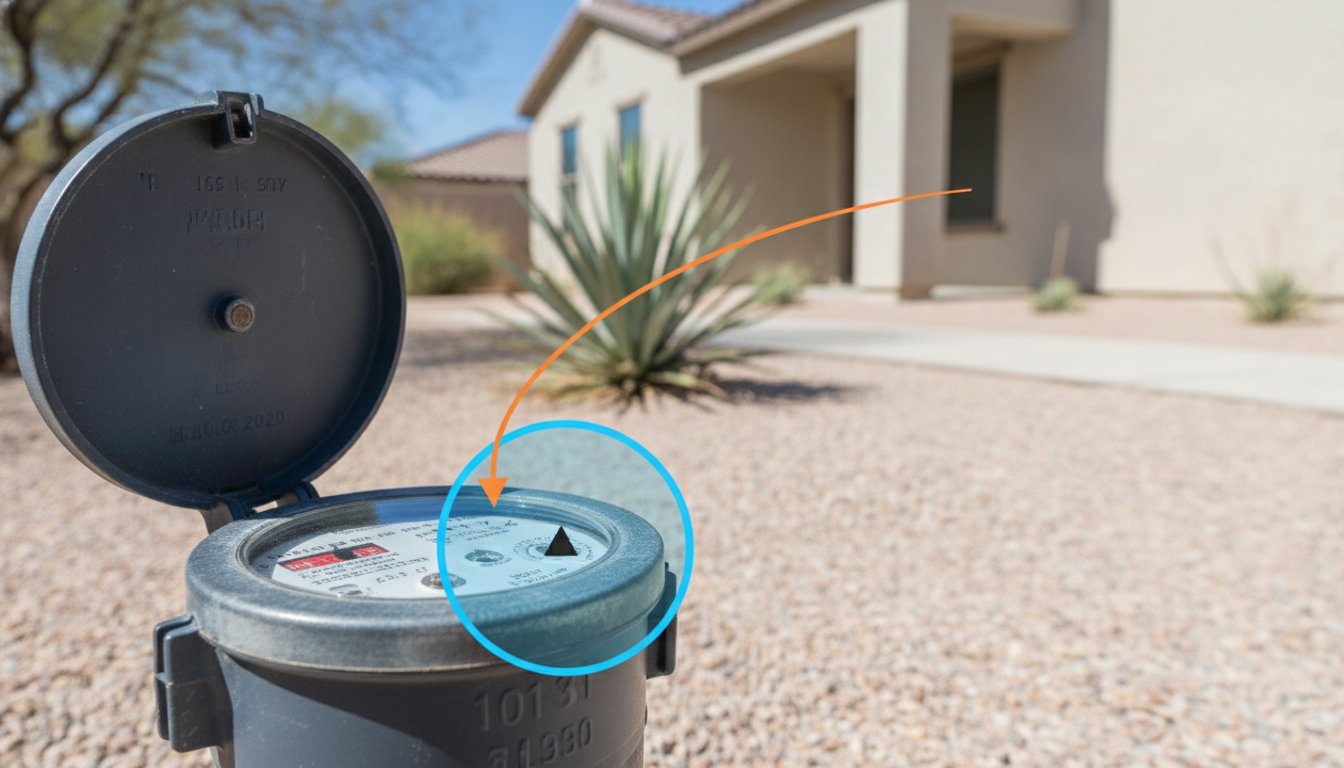
A sudden spike in your utility bill is often the first red flag. You can verify a leak by checking your water meter when no indoor appliances are running. Many modern meters have a small leak indicator wheel or digital icon that spins if water is moving through the system. If the indicator moves while your irrigation controller is off, you likely have a silent leak in a mainline or a weeping valve. This methodical approach to detection ensures you aren't guessing when it's time to dig.
The Arizona monsoon season introduces unique hazards that demand attention. Lightning strikes can fry sensitive circuitry in controllers, while heavy dust and moisture can cause rain sensors to malfunction. Regular inspections during this period help ensure your sensors are calibrated to prevent overwatering when natural rainfall occurs, as outlined in the ADWR Drip Irrigation Guide. Proper sensor maintenance is a simple way to protect the long-term health of your property while conserving water.
Valve and Backflow Complications
A weeping valve occurs when the internal diaphragm fails to seal completely, allowing a constant trickle of water to escape into the zone. This not only wastes water but can lead to root rot in nearby desert plants that require dry periods. Maintaining the backflow preventer is equally critical; it's a legal requirement in many Arizona municipalities to prevent contaminated irrigation water from siphoning back into your home's drinking supply. If you suspect a pressure issue or a slow leak, our valve and backflow services provide the technical solution needed to secure your system's integrity.
Broken Lines and PVC Deterioration
Arizona systems typically utilize Schedule 40 PVC for mainlines due to its durability, whereas thinner poly pipe is often found in drip zones. Identifying a subsurface leak requires a keen eye for subtle changes, such as a patch of ground that feels spongy or a localized area where plants are unusually lush. For a detailed walkthrough on addressing these specific issues, consult our guide on how to fix broken sprinkler lines. If you're unsure where to begin, you can always reach out for a professional evaluation to ensure the repair is handled with grounded expertise.
Drip Irrigation vs. Traditional Sprinkler Repair
Choosing the right irrigation system repair strategy depends heavily on whether you're managing a traditional turf zone or a desert-adapted landscape. Traditional pop-up sprinklers are designed for broadcast coverage, making them ideal for lawns but highly inefficient for desert plants due to rapid evaporation. In contrast, drip systems deliver water directly to the root zone, which is why they've become the standard for desert drip system installation in Surprise and Peoria. While both systems aim to maintain hydraulic integrity, the mechanical failures they experience are vastly different. Sprinklers often fail visibly through broken heads or geysers, while drip systems suffer from "invisible failures" where emitters clog internally without any surface-level indication of trouble.
There's a common misconception among homeowners that drip systems require less maintenance than traditional sprinklers. In reality, the precision of drip technology demands regular oversight to ensure mineral deposits and fine desert dust don't obstruct the flow. Using a seasonal irrigation maintenance guide helps identify these subtle issues before your plants show signs of heat stress. Professional irrigation system repair for drip lines often involves flushing the entire network to remove accumulated sediment that standard filters might miss.
Troubleshooting Drip Emitters and Tubing
Drip tubing, often referred to as "spaghetti lines," is particularly vulnerable to the Arizona environment. These thin lines are frequently targeted by desert rodents seeking moisture and can become brittle after prolonged exposure to intense UV radiation. When a zone fails, follow this methodical checklist to restore flow:
- Inspect individual emitters for salt crusting or mineral buildup.
- Flush the lateral lines by removing the end caps to clear out silt.
- Check the pressure regulator, as drip zones must operate at a much lower PSI than the main supply to prevent emitters from popping off.
- Look for "chew marks" or clean breaks in the tubing caused by local wildlife.
Maintaining consistent pressure regulation is the single most important factor in preventing recurring failures within a drip zone.
Sprinkler Head and Rotor Maintenance
For those maintaining turf or larger shrubs, sprinkler rotors require precise adjustments to remain efficient. Following a significant dust storm, fine grit can settle into the riser seals, preventing heads from retracting properly or causing them to "stick" in a fixed position. Cleaning the internal filter screens is often enough to restore a head's performance, but if the internal gears are stripped or the seal is leaking, a full replacement is the only reliable remedy. Always adjust spray patterns to ensure water hits the soil rather than sidewalks or walls, as overspray on hardscapes leads to significant water waste and unsightly mineral staining.
Advanced Diagnostics: Wiring and Electrical Issues
While a broken pipe is easy to see, electrical failures are the silent disruptors of landscape health. Mastering wiring and diagnostics services requires a shift from hydraulic thinking to electrical troubleshooting. The solenoid acts as the bridge between your controller’s electrical commands and the physical flow of water. When you encounter a "lost zone" that refuses to activate, the culprit is rarely the pipe itself. Instead, it's often a severed common wire or a connection that has succumbed to the corrosive effects of Arizona’s alkaline soil. Precision in this stage of irrigation system repair prevents unnecessary digging and ensures the electrical integrity of your entire property.
Testing the Controller and Solenoids
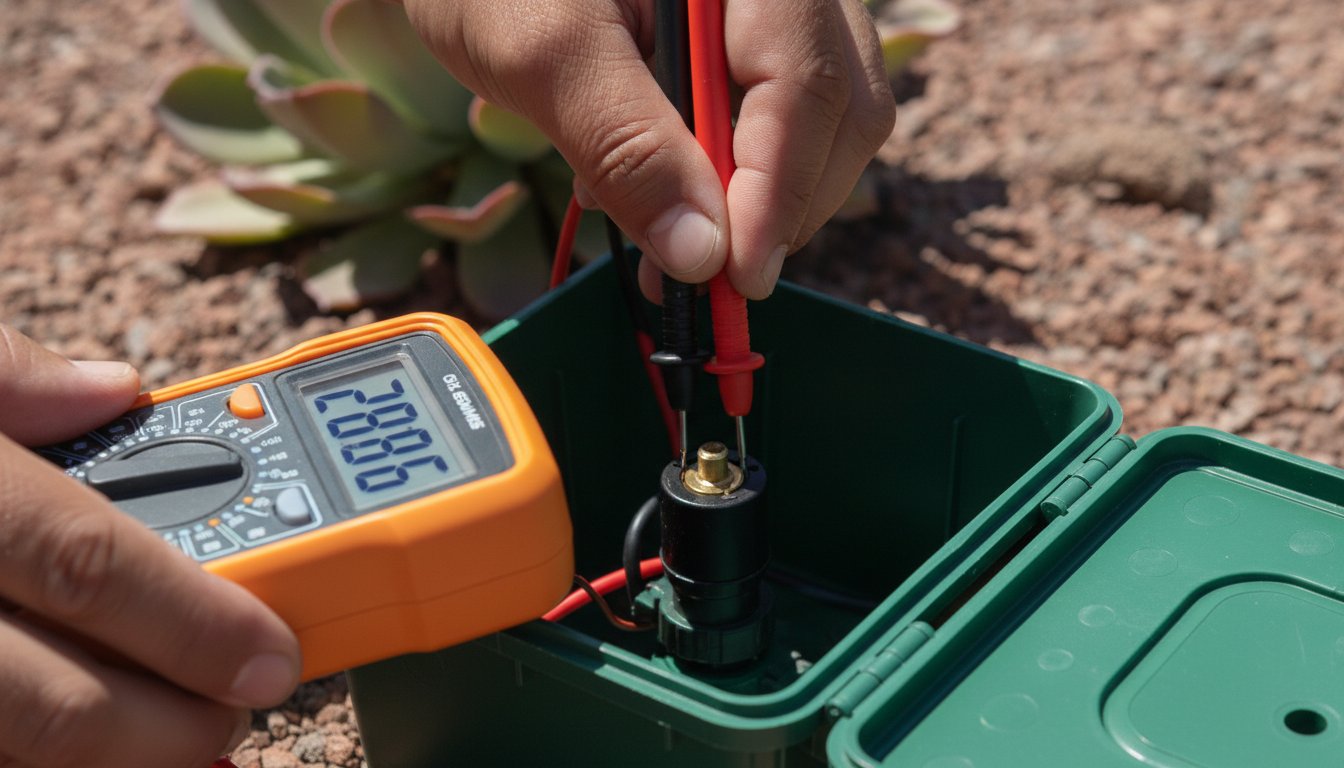
Before you assume a wire is buried and broken, start at the source. You can safely check your controller's output by using a basic multimeter set to AC voltage. If the controller shows 24 to 28 volts at the terminal but the valve won't open, your focus should shift to the solenoid. Performing an "ohm test" is a standard diagnostic step; a healthy solenoid typically registers between 20 and 60 ohms. If the reading is zero, the circuit is open, indicating a break. If it's infinite, the solenoid is shorted. Listen for a "chattering" sound when the zone is active. This rapid clicking often indicates a failing solenoid or a weak electrical signal that can't fully engage the plunger.
Wire Tracing and Fault Detection
Locating a break in a buried wire doesn't have to mean trenching your entire yard. Professionals use specialized equipment like wire tracers and fault finders to induce a signal into the line. This allows us to track the path of the wire and pinpoint the exact location of the break within inches. In our desert environment, the use of waterproof, grease-filled wire connectors is non-negotiable. Standard wire nuts will corrode within a few seasons due to soil moisture and mineral content. Specialized irrigation wiring repair in Surprise, AZ demands these professional-grade materials to withstand the unique stressors of our local terrain. If your system is suffering from intermittent failures or zones that simply won't fire, schedule a diagnostic session to restore your system's communication lines.
When to Repair vs. Upgrade Your Irrigation System
Deciding whether to continue with a localized irrigation system repair or invest in a full system overhaul is a common challenge for Arizona homeowners. We recommend following the "Rule of Three" as a practical framework for this decision. If your system requires three or more major repairs within a single year, such as multiple mainline leaks or consecutive valve failures, it's a strong indicator that the components have reached the end of their functional lifespan. In our desert climate, PVC pipes eventually become brittle and lose their structural integrity. When this happens, a patch in one area often creates a pressure surge that leads to a break elsewhere, creating a cycle of constant maintenance.
Investing in sprinkler system upgrades offers a measurable return on investment through reduced utility costs and improved landscape health. Modern components are designed with water conservation in mind, utilizing pressure-regulated heads and high-efficiency nozzles that minimize misting and wind drift. These upgrades transition your property from a reactive maintenance state to a proactive, efficient operation that can withstand the stressors of the summer heat.
The High Cost of Inefficiency
The financial impact of a neglected system is often hidden within your monthly water bill. A single leaking valve can waste thousands of gallons of water per month, often without showing any surface-level signs of a problem. If you’ve noticed a decrease in the reach of your sprinkler heads or soggy areas in your yard, consult our guide on common causes of low water pressure to determine if a subsurface leak is draining your resources. Upgrading to a smart irrigation controller is another effective strategy; these devices adjust watering schedules based on local weather data and can often pay for themselves in water savings within just one or two Arizona summers.
Planning for Long-Term Reliability
Many residential properties are originally equipped with "builder-grade" systems that prioritize low installation costs over long-term durability. A custom system design from Sonora Sprinkler ensures that your irrigation layout is optimized for the specific hydraulic needs of your plants and soil type. As a family-owned business, we take pride in providing honest, grounded advice that prioritizes the long-term health of your property over quick fixes. We focus on using professional-grade materials that offer the longevity required for the Arizona environment.
Stop the cycle of recurring failures and high water bills. Contact Sonora Sprinkler for a professional diagnostic visit to receive a thorough assessment of your system’s current health and a clear plan for a more reliable future.
Securing Your Landscape’s Future
Maintaining a resilient Arizona landscape requires a proactive approach to irrigation system repair that accounts for our unique environmental stressors. By understanding the foundational balance between hydraulic pressure and electrical integrity, you can better protect your property from the high costs of water waste and premature component failure. Whether you're troubleshooting a silent drip emitter clog or diagnosing a complex wiring fault, the key to longevity lies in choosing solutions that are engineered for the desert’s specific demands.
As a family-owned and operated business since 1999, Sonora Sprinkler brings decades of grounded expertise to every project. We are licensed residential irrigation repair experts who specialize exclusively in the nuances of Arizona desert landscape irrigation. Our team prioritizes functional results and system durability, ensuring your investment remains protected through every heatwave and monsoon season. Don't let a minor mechanical issue evolve into a costly system failure. Schedule Your Professional Irrigation Diagnostic with Sonora Sprinkler today to ensure your system performs with precision and reliability. We look forward to helping you maintain a healthy, water-efficient outdoor space for years to come.
Frequently Asked Questions
How do I know if my irrigation system has a leak?
You can identify a leak by monitoring your water meter when all indoor water sources are turned off. If the meter's leak indicator continues to spin, water is escaping somewhere in your mainline or through a weeping valve. Other physical signs include localized swampy areas in your desert landscaping or a sudden drop in pressure during a scheduled watering cycle.
Why is the water pressure in my sprinklers suddenly low?
Sudden drops in water pressure often indicate a subsurface pipe rupture or a clogged filter screen. In the Arizona desert, hard water minerals can accumulate within nozzles, or shifting caliche soil can put enough stress on a line to cause a hairline fracture. Identifying the source early prevents the loss of sensitive plants that depend on consistent hydration during peak summer months.
Can I replace a sprinkler valve myself?
While homeowners can replace a valve, it requires a precise balance of electrical wiring and hydraulic sealing. Improperly installed valves can lead to "water hammer" or electrical shorts that damage your controller. For a reliable irrigation system repair , professional installation ensures the valve is correctly seated and the wiring is protected with waterproof connectors to prevent corrosion.
How much does the average irrigation repair cost in Surprise, AZ?
The cost of an irrigation system repair in Surprise depends on the complexity of the failure and the depth of the buried components. Factors such as the presence of caliche soil, the need for specialized diagnostic equipment, and the type of replacement parts required will influence the total investment. We focus on providing a thorough assessment to ensure the fix is durable rather than a temporary patch.
How often should I check my drip system emitters for clogs?
We recommend inspecting your drip emitters at least once every three months. Arizona's high mineral content leads to "silent clogs" that can slowly starve your plants of water without any visible signs of a leak. Regularly flushing the lateral lines and cleaning individual emitters ensures that your system remains efficient and your landscape stays healthy through the extreme heat.
What is the difference between a solenoid and a valve?
A solenoid is the electrical component that receives a signal from your controller, while the valve is the mechanical housing that controls the actual flow of water. When the solenoid activates, it lifts a plunger inside the valve to allow water through. If your system has a "lost zone," the problem could be an electrical failure in the solenoid or a mechanical blockage within the valve body.
Why does my irrigation controller keep losing its programming?
Losing a program is typically caused by a depleted backup battery or electrical interference from monsoon activity. Most modern controllers use non-volatile memory to store settings, but older units rely on a small battery to maintain the clock during power flickers. If your controller frequently resets, it's often a sign of aging circuitry or the need for a dedicated surge protector.
Is it better to repair or replace an old irrigation system?
Deciding between repair and replacement depends on the age and frequency of your system's failures. If you're experiencing more than three major breaks in a year, the internal integrity of your PVC lines has likely been compromised by years of heat and pressure. In these cases, a modern upgrade is often more cost-effective than continuing to patch brittle, builder-grade components.