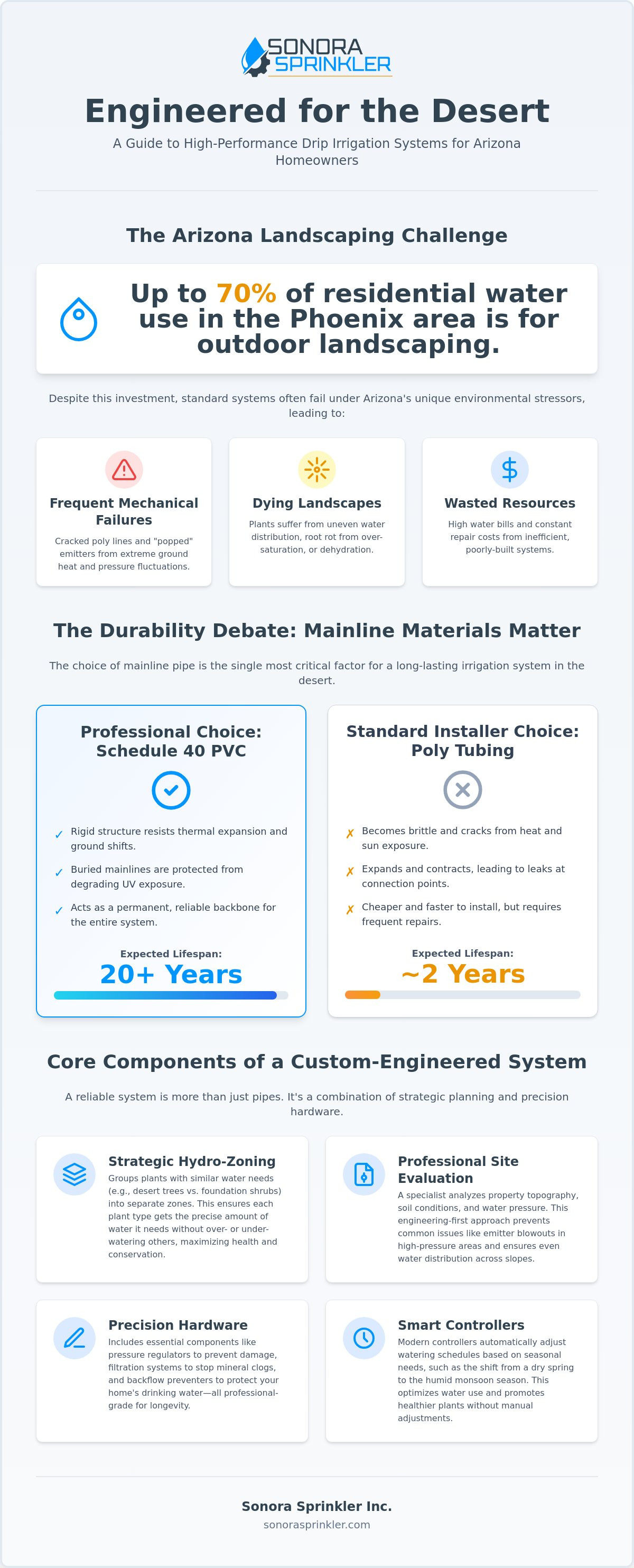
Did you know that up to 70% of residential water use in the Phoenix metropolitan area is dedicated solely to outdoor landscaping? Despite this massive investment, many homeowners still struggle with cracked poly lines and dying shrubs because their systems weren't built for the specific thermal stresses of our region. A custom drip irrigation design Arizona residents can trust is more than just a plumbing layout; it's a precision engineering solution for the desert.
You've likely felt the frustration of seeing your water bills climb while your curb appeal fades under the July sun. We understand that you want a landscape that thrives without constant mechanical failure or wasted resources. This resource will show you how a professionally engineered system protects your plants from extreme heat and ensures long-term reliability. We will explore the essential components of high-efficiency layouts that are designed to last over ten years, helping you achieve a healthy, vibrant yard that stands up to the harshest Arizona summers while significantly lowering your water consumption.
Key Takeaways
- Understand why a professional custom drip irrigation design Arizona homeowners choose must account for unique property topography and soil conditions to outperform generic retail kits.
- Discover the long-term reliability of using PVC pipe replacement for mainlines instead of standard poly tubing to prevent frequent cracking and leaks.
- Learn how strategic hydro-zoning ensures that your desert trees and foundation shrubs receive the specific water volumes they need without wasting resources.
- Identify the essential steps of a professional site evaluation that prevent common mechanical failures like emitter popping in high-pressure water zones.
- Explore how a master craftsman's focus on residential-only irrigation ensures precision in every connection for a system built to last over a decade.
What Defines Custom Drip Irrigation Design in Arizona?
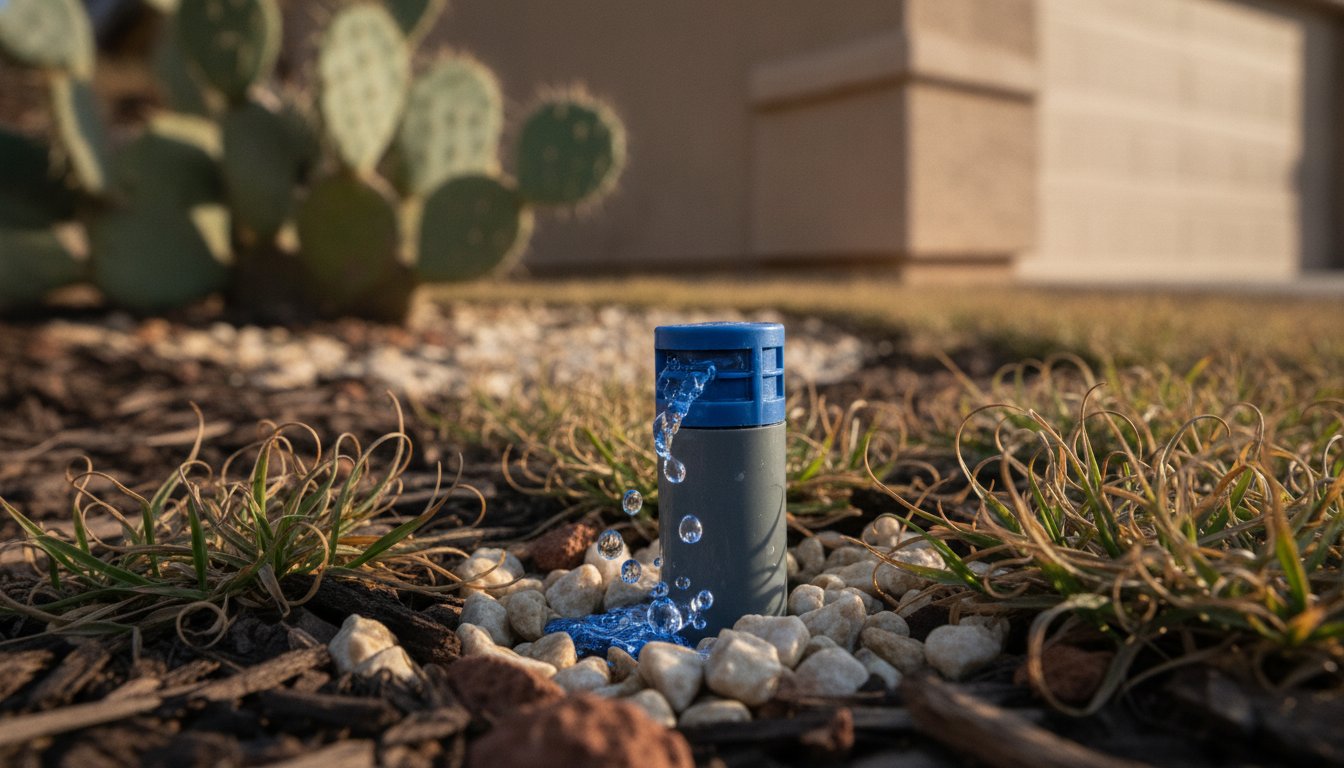
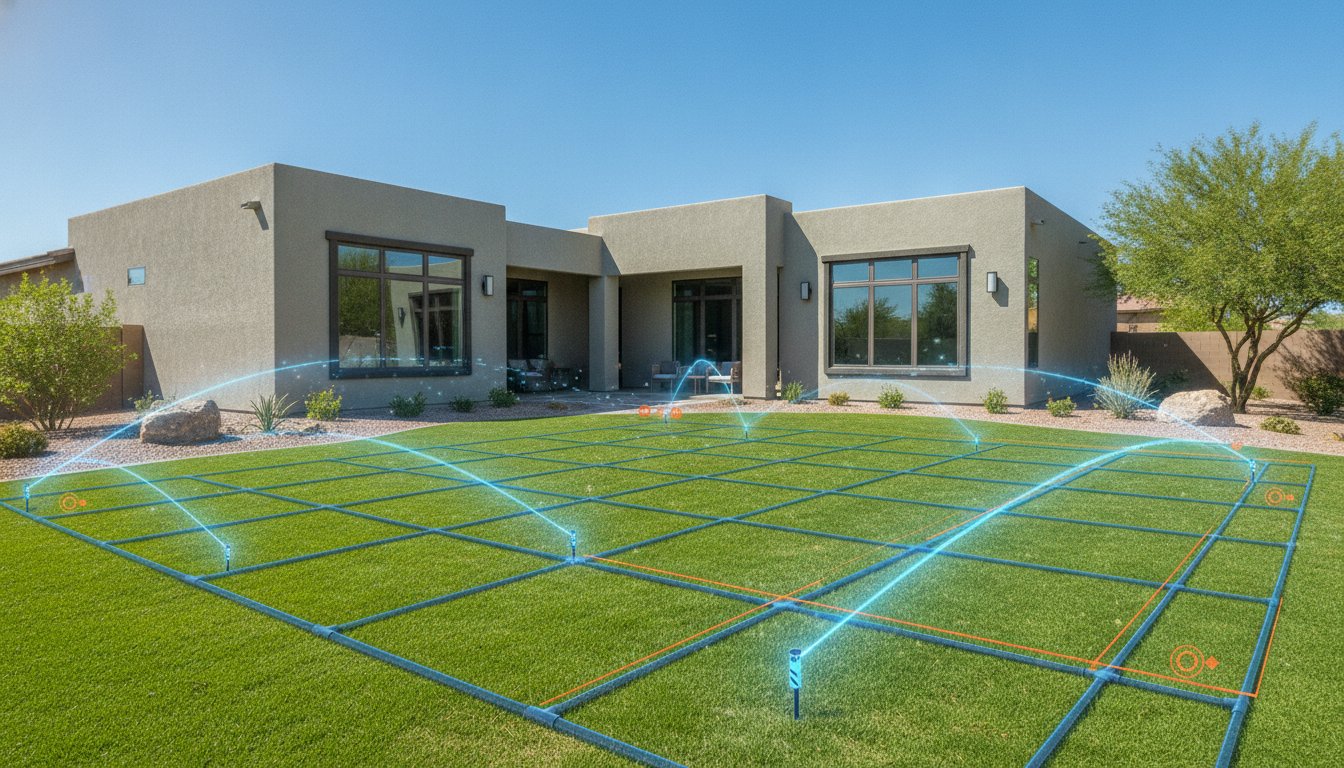
A custom drip irrigation design Arizona homeowners can rely on starts with engineering, not just excavation. Unlike off-the-shelf kits found at big-box retailers, a custom layout accounts for the specific topography and soil density of your property. This tailored approach ensures that water is delivered with precision to the root zone, preventing the waste and mechanical failure common with generic setups.
Professional Drip irrigation systems are designed to deliver water at a controlled rate, ensuring that every gallon is utilized by the plant rather than lost to evaporation. Proper design prevents the over-saturation that leads to root rot, a common killer of desert-adapted plants, while also protecting against line blowouts caused by unregulated pressure.
To better understand this concept, watch this helpful video on how these systems are installed in a local setting:
The Difference Between Landscaping and Irrigation Design
Many property owners assume their general landscaper can handle a complex drip system. However, irrigation is a mechanical discipline that requires a deep understanding of hydraulic pressure and flow rates. While a landscaper focuses on the visual placement of plants, an irrigation specialist focuses on the long-term health of those plants through precise water management. A dedicated specialist ensures your system integrates seamlessly with your overall sprinkler system layout design. This focus on engineering prevents common issues like uneven water distribution or localized flooding that can damage your home's foundation. By treating the layout as a technical project rather than a secondary task, we ensure that every emitter provides the exact flow required for the specific species it serves.
Addressing Arizona’s Unique Environmental Stressors
The Surprise and Peoria regions present specific challenges, such as heavy clay soils that expand and contract with moisture changes. Investing in a custom drip irrigation design Arizona residents trust means using materials that can withstand these shifts without snapping or leaking. Standard poly tubing often fails under these conditions, especially when surface temperatures exceed 110 degrees. We prioritize professional-grade materials and UV-protected components to maintain system integrity. This protective approach ensures that exposed parts don't become brittle and crack, shielding your investment from the harsh desert sun. A custom design also helps homeowners remain in compliance with local water conservation guidelines. It provides a sustainable solution that balances a beautiful landscape with environmental responsibility, ensuring your yard thrives even during the most restrictive drought periods.
Core Components of a High-Performance Desert Drip System
A custom drip irrigation design Arizona homeowners can rely on isn't just about where the water goes, but what carries it there. Reliability in the West Valley depends on specific hardware choices that can withstand 115-degree soil temperatures and high mineral content. When we engineer a system, we focus on durability and precision to ensure your landscape survives the most demanding seasons without constant maintenance.
PVC vs. Poly Pipe: The Durability Debate
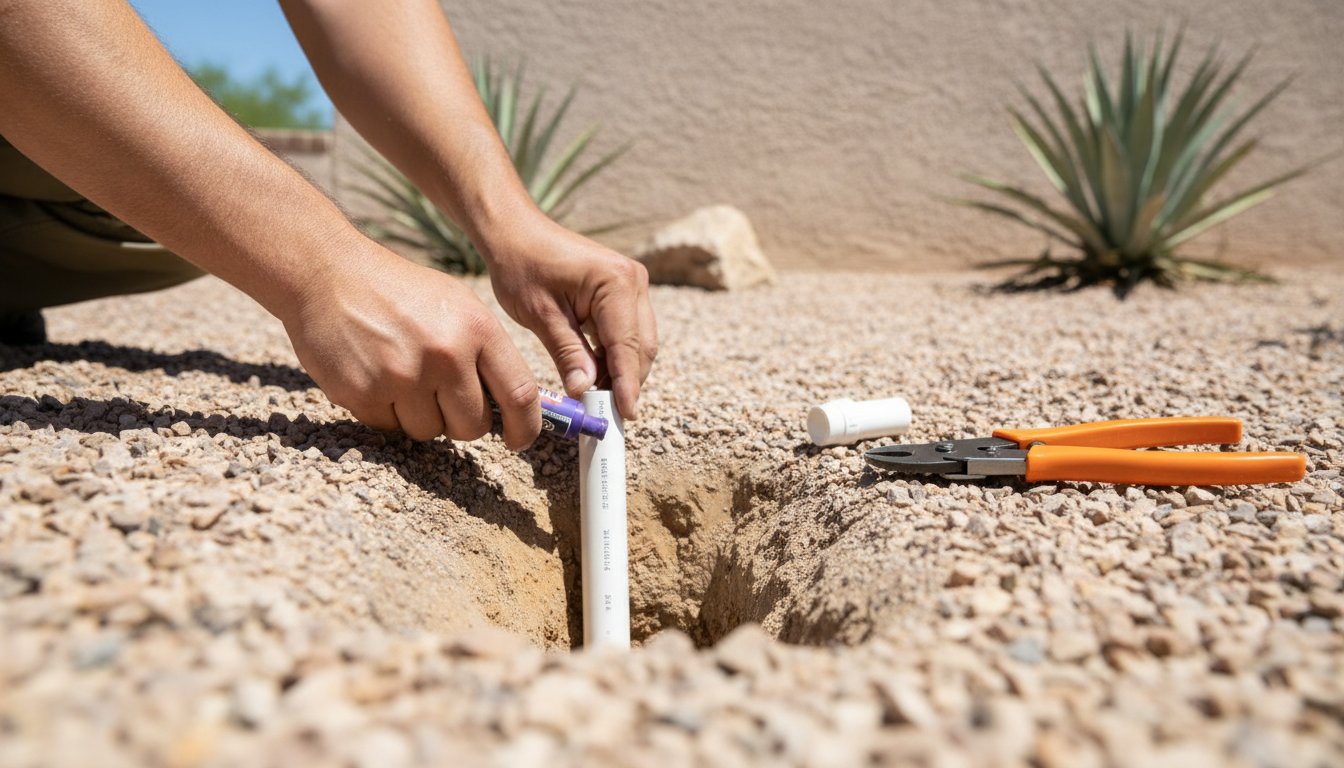
PVC is the gold standard for Arizona mainlines because its rigid structure resists the thermal expansion and contraction that causes standard poly tubing to fail within two years. While many installers use thin-walled poly tubing because it's cheaper and faster to lay, surface-level poly lines degrade rapidly under UV exposure and ground heat. Buried Schedule 40 PVC acts as a permanent backbone for your system, often lasting 20 years or more. Professional PVC installation significantly reduces the frequency of future irrigation repairs by eliminating the weak points where leaks typically occur. This choice protects your property from the erosion and high bills caused by underground breaks.
Precision also requires managing the invisible forces within the pipes. Pressure regulation is vital in areas like Surprise and Peoria, where municipal water pressure can fluctuate. Without a regulator, emitters often "pop" off the lines, leading to localized flooding and plant dehydration. Similarly, a high-quality filtration system is necessary to catch the mineral deposits common in our local water supply before they clog delicate emitters. To ensure the safety of your family, we also integrate backflow prevention assemblies. These devices stop irrigation water from siphoning back into your home's clean drinking water, maintaining compliance with local health codes.
Smart Controllers and Valve Precision
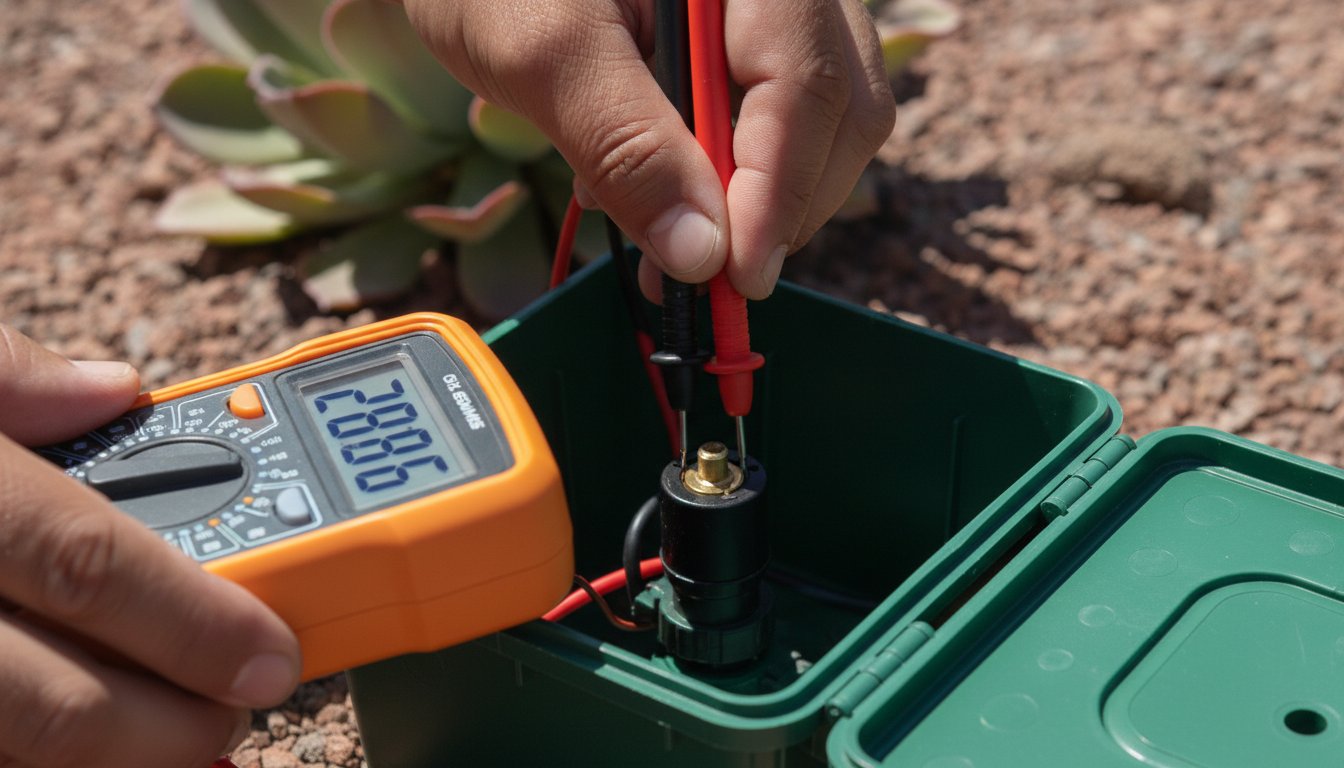
Automation is the final piece of a high-performance system. A modern controller does more than just turn the water on; it adjusts for the dramatic shift between our dry spring and the humid "Monsoon" season. These smart systems rely on accurate irrigation wiring diagnostics to ensure every valve responds correctly to programmed schedules. For drip applications, selecting low-flow valves is crucial. Standard valves often fail to close properly when used with the low volumes required by emitters, leading to wasted water and "weeping" zones.
Following guidelines like Landscape Watering by the Numbers helps you maximize these components for the best results. If you aren't sure if your current setup includes these safeguards, you can request a professional system evaluation to identify potential weak points before they lead to plant loss.
Strategic Zoning: Matching Water Delivery to Plant Needs
Effective water management in the desert requires more than just a functional pump. It demands a strategic approach known as hydro-zoning. A custom drip irrigation design Arizona residents use to protect their property ensures that plants with similar metabolic needs are grouped on the same valve. This prevents the common mistake of overwatering a drought-tolerant agave just because the nearby hibiscus needs a daily drink. By separating these zones, you ensure every plant receives its ideal moisture level without wasting a drop.
Your desert trees and foundation shrubs occupy different layers of the soil and have vastly different root structures. Trees require deep, infrequent watering to encourage downward root growth, which provides stability during high-wind events. In contrast, smaller shrubs often need more frequent cycles to maintain their foliage. By calculating flow rates in Gallons Per Hour (GPH) based on plant maturity, we can deliver the exact volume required for long-term health. For instance, a young tree might start with two 2-GPH emitters, but as it matures, the layout must allow for additional emitters to be added further from the trunk to reach the expanding root zone.
Cacti and Succulents vs. Tropical Palms
Native flora like Saguaros or Barrel Cacti are adapted to long periods of drought and are highly susceptible to root rot if watered too often. These require low-frequency zones that might only activate every 18 to 20 days during the peak of summer, according to regional watering guidelines. Conversely, non-native species common in Surprise residential yards, such as Queen Palms or tropical hibiscus, require high-output zoning with much more frequent cycles. Designing these as independent systems ensures each species thrives in its ideal micro-climate, preventing the yellowing leaves and fungal issues that plague poorly zoned yards.
Managing Elevation and Slope in Custom Layouts
Topography plays a significant role in how water moves through your pipes. Gravity can cause pressure to drop at the end of a long drip run or lead to low-point drainage once the system shuts off. We utilize check valves to prevent this unwanted drainage, ensuring that water doesn't pool in low areas and cause soil saturation. Equal water distribution on sloped Arizona lots is achieved through pressure-compensating emitters, which maintain a steady flow regardless of the elevation changes across your landscape. This level of detail ensures your system remains efficient and protects your home's foundation from unnecessary moisture accumulation. A well-planned layout also leaves room for future landscape expansion, ensuring your mainline can handle new zones without a complete system overhaul.
Evaluating a Custom Drip Irrigation Specialist in Arizona
Selecting the right contractor for a custom drip irrigation design Arizona homeowners can trust requires looking beyond the bottom line. A professional specialist focuses on the mechanical integrity of the system rather than just the aesthetic of the plants. When reviewing a local Surprise or Peoria irrigation contractor's portfolio, look for projects that emphasize residential durability and clean, engineered layouts. A true expert will insist on a thorough site evaluation before providing a quote, as they need to assess your property's specific water pressure, soil density, and existing plant health.
Low bids are often tempting, but they frequently lead to a cycle of expensive failures. "Cheaper" quotes typically rely on thin-walled poly tubing and low-grade emitters that aren't designed for our extreme thermal stress. Within five years, these materials often become brittle and crack, necessitating a complete drip line replacement. Investing in a master craftsman who uses high-quality materials ensures your system lasts for a decade or more, protecting your landscape and your wallet from the costs of frequent repairs.
The Value of Local Expertise in the West Valley
Local knowledge is essential when navigating the specific challenges of the West Valley. Cities like Surprise and Peoria have unique municipal water regulations and conservation rebates that a generalist might overlook. Furthermore, our regional soil often contains caliche, a hardened layer of calcium carbonate that makes trenching difficult. A specialist understands how to manage these soil conditions to ensure proper pipe depth and protection. Choosing a family-owned, neighborly business means you're working with someone who understands the local climate because they live in it too. This grounded expertise leads to a more reliable system that respects both your property and our local water resources.
Red Flags in a Drip System Quote
Be cautious of any quote that lacks technical detail. If a contractor doesn't specify the pipe material or mention pressure regulation, they likely aren't planning for the long-term health of your yard. High water pressure in many Arizona neighborhoods will quickly blow apart a system that hasn't been properly regulated. Another major red flag is a lack of planning for valves and backflow assemblies. These components are vital for controlling water flow and protecting your home's clean water supply from irrigation contaminants. Always ask about licensing, warranties, and what kind of post-installation support is provided to ensure you aren't left with a failing system once the contractor leaves.
To ensure your property receives the precision it deserves, you can schedule a professional site evaluation with our team today.
The Sonora Sprinkler Approach to Custom Drip Design
At Sonora Sprinkler, we operate with a singular focus on residential irrigation. We don't offer landscaping or commercial services because we believe that true expertise requires specialization. Our master craftsman philosophy means we treat every custom drip irrigation design Arizona homeowners request as a precision engineering project. By focusing exclusively on home systems, we've developed a deep understanding of the specific hydraulic needs and environmental pressures unique to local neighborhoods.
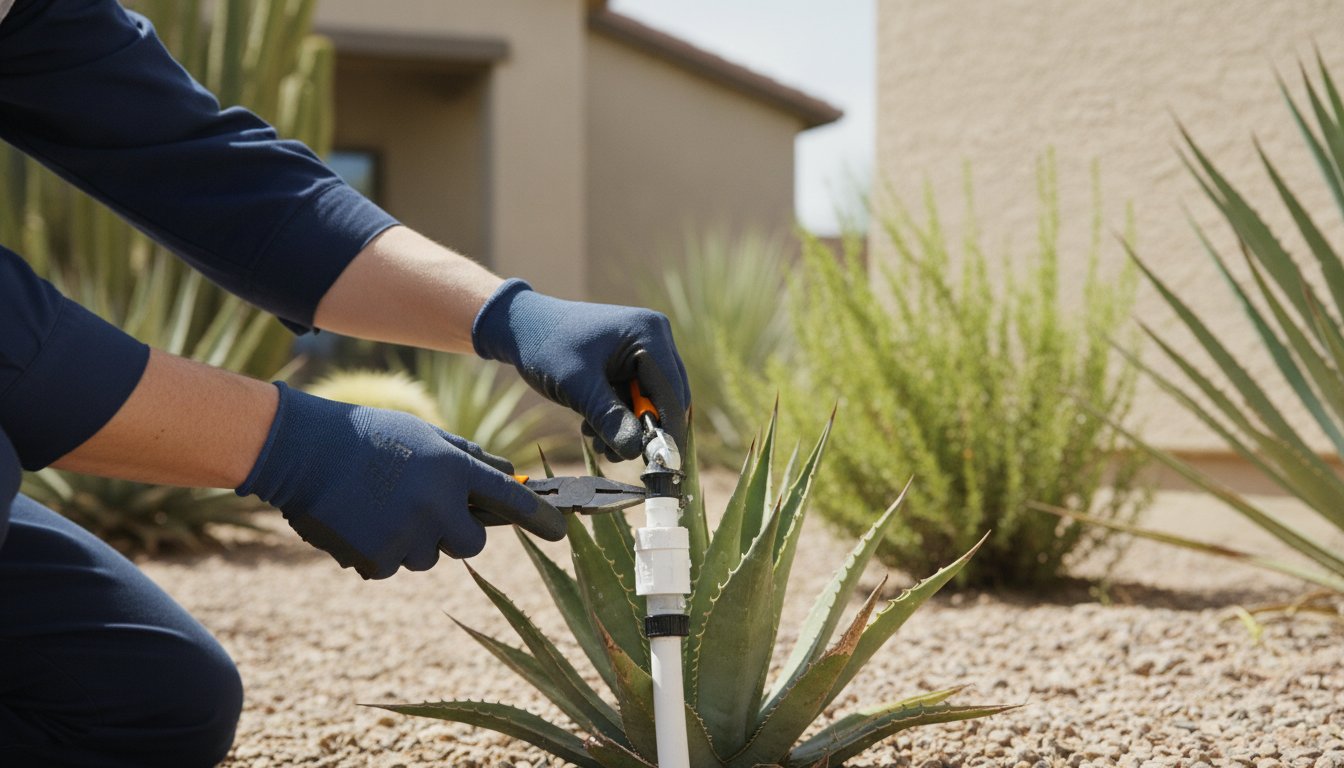
Our process begins with a comprehensive diagnostic site-walk. We don't just look at where the plants are; we evaluate the property's topography, existing pipe integrity, and water pressure levels. This thorough assessment allows us to create a plan that addresses the root cause of previous system failures. Once the design is finalized, our installation team ensures every PVC joint is solvent-welded for maximum durability and every emitter is placed with surgical precision. We conclude every project with rigorous flow testing to verify that water is reaching the intended zones at the correct GPH rates.
Engineered for Reliability
We build systems designed to last over a decade. Our focus on high-quality design and installation significantly reduces long-term maintenance costs for our clients. Instead of just patching leaks, we troubleshoot the underlying mechanics of your current layout to build a superior replacement. This often involves replacing failed poly mainlines with rigid PVC to eliminate common failure points. We also ensure that every valve and manifold is easily accessible. This thoughtful placement makes future service and upgrades straightforward, protecting the long-term health of your Surprise property without requiring disruptive excavation later on.
Start Your Custom Design Consultation
Your journey toward a more efficient landscape starts with a professional residential consultation. During this initial meeting, we listen to your specific backyard goals and evaluate your current irrigation challenges. Whether you're looking to protect a mature desert canopy or lower your monthly water bill, we tailor our solutions to fit your property's needs and your budget. We take the time to explain the technical necessity of each component, from pressure regulators to smart controllers, ensuring you feel confident in the reliability of your new system. Schedule your custom drip design consultation today to secure the future of your Arizona landscape.
Securing Your Arizona Landscape for the Long Term
A well-engineered system is the difference between a yard that survives and one that thrives. By prioritizing expert PVC mainline installation and strategic hydro-zoning, you eliminate the common failures that plague standard poly-based systems. These technical choices ensure your plants receive precise hydration while your water bills remain manageable. Since 1999, our team has served the Surprise and Peoria areas with specialized residential-only expertise. We understand the unique pressures our climate places on your property's infrastructure.
To further enhance and showcase your property's beauty, LED Artistry provides custom architectural lighting designs that ensure your thriving desert landscape remains a focal point of your home long after sunset.
Implementing a custom drip irrigation design Arizona homeowners can rely on is a direct investment in the durability and beauty of your outdoor space. It's about more than just convenience; it's about the long-term health of your property. Request Your Custom Drip Design Quote from Sonora Sprinkler today to start building a more resilient landscape. You deserve a yard that stands strong against the desert heat for years to come.
Frequently Asked Questions
How much does a custom drip irrigation design cost in Arizona?
The investment for a custom drip irrigation design Arizona residents choose depends on property size, plant density, and the complexity of the topography. While industry data from late 2025 indicates a wide range for standard residential setups, a tailored engineering solution focuses on the number of zones and the quality of materials required for long-term stability. Factors like the choice of mainline pipe and the inclusion of smart controllers will influence the final project scope for your specific landscape.
Is PVC better than poly tubing for a desert drip system?
Yes, PVC is significantly superior for mainlines because it offers much greater resistance to the extreme thermal expansion and contraction found in the desert. Unlike standard poly tubing, which often becomes brittle and cracks within two years of UV exposure and soil heat, Schedule 40 PVC provides a rigid backbone that can last for decades. Utilizing PVC for the primary distribution lines reduces the frequency of underground leaks and ensures the long-term integrity of the system.
Can I convert my existing sprinkler system to a custom drip layout?
Most traditional sprinkler systems can be converted to a drip layout by replacing high-flow spray heads with low-flow manifolds and installing the necessary pressure regulators. It's essential to verify that your existing valves are compatible with the lower flow rates required by emitters to prevent "weeping" or mechanical failure. A professional site evaluation can determine if your current infrastructure can support a more efficient custom drip irrigation design Arizona homeowners use to save water.
How often should a custom drip system run in the Arizona summer?
Watering frequency in the peak of July depends on the specific plant species, as desert-adapted shrubs typically need water every 12 days while high-water-use plants may require it every 5 days. Trees generally need deep, infrequent cycles every 8 to 14 days to encourage stable root growth. These schedules should be programmed into your controller based on regional guidelines, ensuring that moisture reaches the deep root zones without causing the saturation that leads to fungal issues.
What are the signs that my current drip system design is failing?
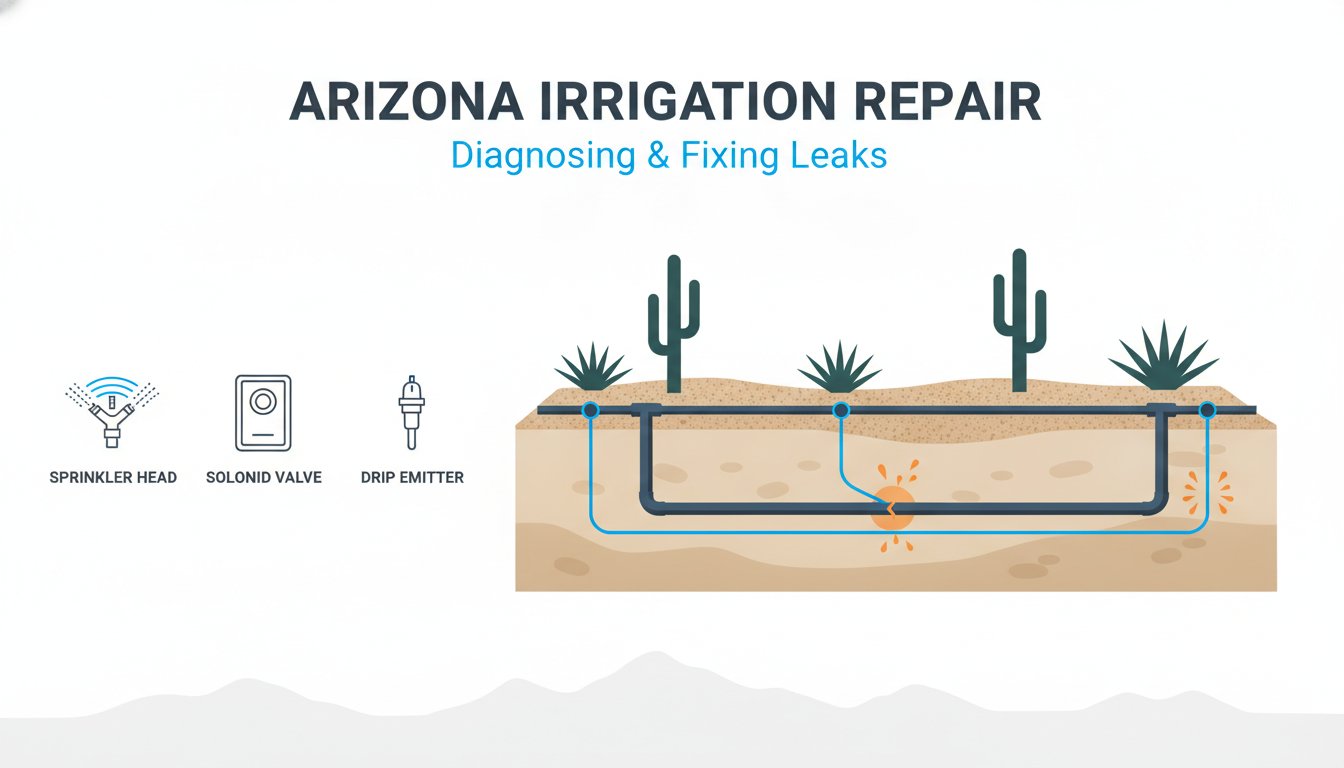
Common signs of failure include localized pooling of water, yellowing foliage, and a sudden increase in your monthly water bill. You might also notice emitters "popping" off the lines due to high pressure or hear a constant hissing sound near the valve box, which indicates an underground leak. If your plants are wilting despite the system being active, it's likely that cracked poly lines or clogged emitters are preventing water from reaching the roots effectively.
Do I need a permit for custom irrigation installation in Surprise, AZ?
Most residential irrigation projects in Surprise do not require a city permit, but homeowners must strictly comply with backflow prevention regulations to protect the potable water supply. Arizona Administrative Code requires that all backflow prevention assemblies be tested annually by a certified professional. It's always a good practice to check with the local Water Resource Management department if you are planning a major system overhaul or installing a completely new mainline connection.
How long does a professionally designed drip system last in the desert?
A professionally engineered system built with high-quality materials like Schedule 40 PVC and professional-grade valves should last between 10 and 20 years. The longevity of your system depends heavily on protecting components from UV rays and utilizing pressure regulation to prevent mechanical stress. While individual emitters may require occasional maintenance, the core infrastructure of a custom design is intended to be a permanent fixture that supports the long-term health of your property.
What is the best way to prevent clogged emitters in Arizona soil?
Installing a high-quality filtration system at the valve is the most effective way to prevent clogs caused by the high mineral content in Arizona water. These filters catch sediment and calcium deposits before they can enter the distribution lines and obstruct the small openings in your emitters. Additionally, using pressure-compensating emitters helps maintain a consistent flow that can flush out minor debris, ensuring that every plant receives steady hydration even as the system ages.