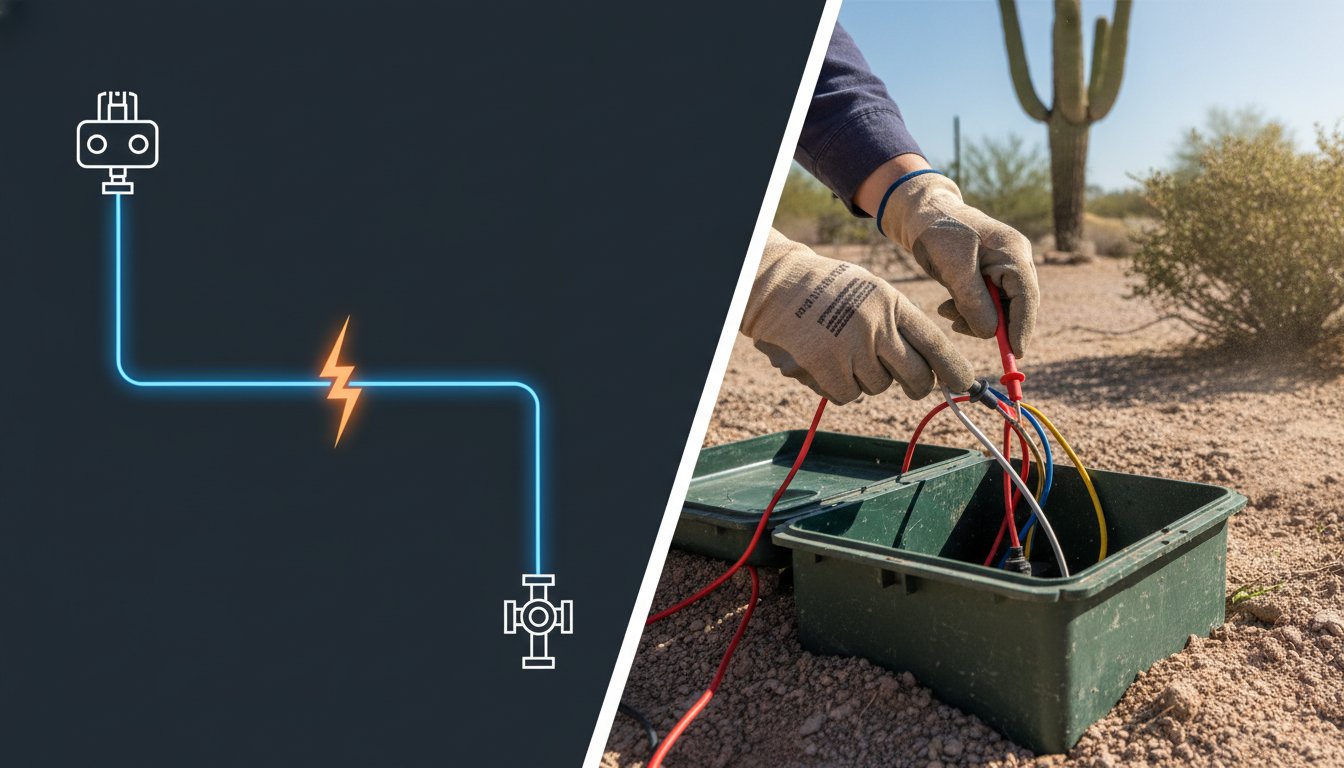
What if that sudden spike in your water bill isn't just a seasonal shift, but a silent warning that your system's primary defense is failing? In the harsh desert environment of Surprise and Peoria, a malfunctioning valve can quickly escalate from a minor nuisance to a costly property headache. Most homeowners feel a rightful sense of caution when considering an irrigation shut off valve repair, as the fear of cracking a brittle PVC main line is a very real concern for even the most capable DIYer.
We understand that you want to protect your landscape while keeping your water usage within the strict limits of current local conservation alerts. This guide provides a professional diagnostic checklist designed to help you identify specific mechanical failures and troubleshoot common issues with confidence. You'll gain a clear understanding of whether a simple fix will suffice or if the complexity of the repair requires a specialist's touch to ensure long-term system reliability and efficiency.
Key Takeaways
- Learn how to distinguish your master shut-off valve from individual zone valves to ensure you are targeting the correct mechanical component.
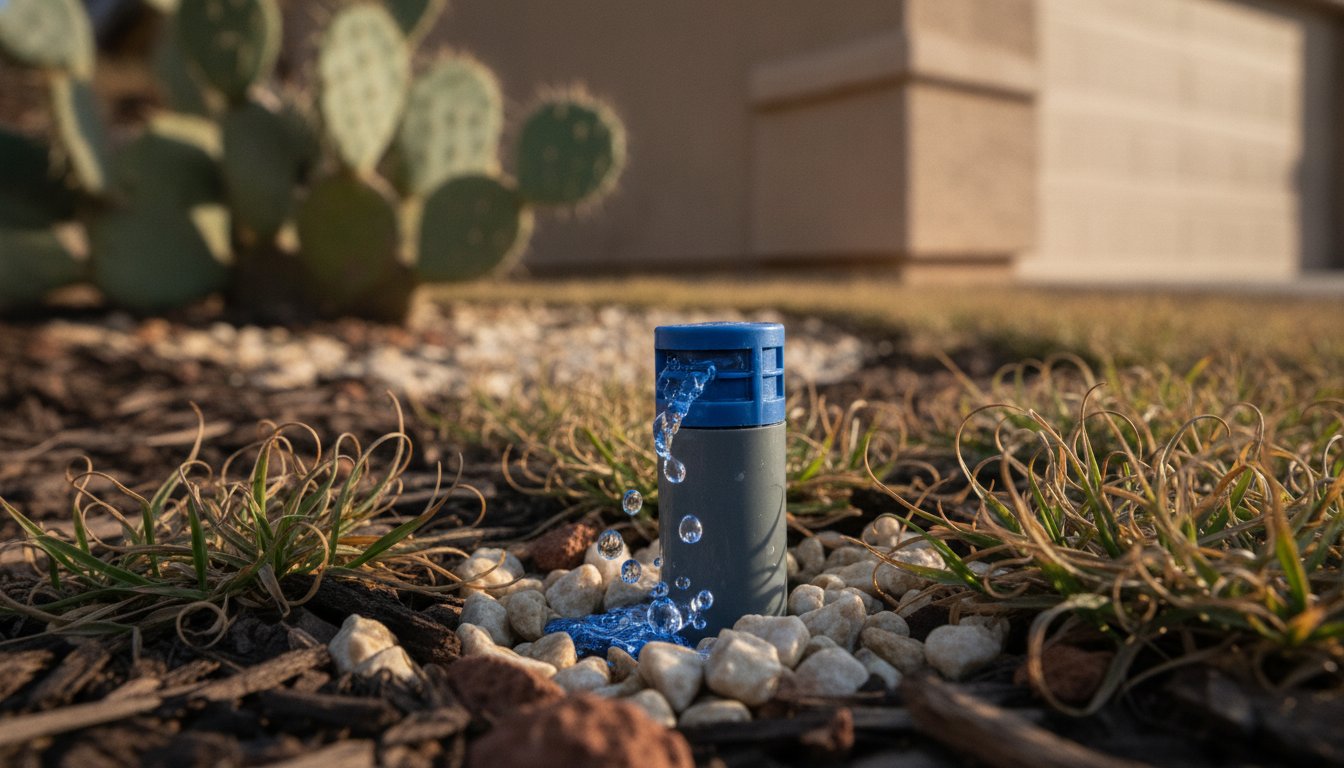
- Identify the primary symptoms of valve failure, including persistent soggy spots near the valve box or sprinkler heads that continue to weep after the cycle ends.
- Understand why internal component replacement is often the superior choice for irrigation shut off valve repair, as it preserves the integrity of your existing PVC main lines.
- Follow a structured pre-repair process to safely relieve system pressure and prevent accidental damage during your diagnostic check.
- Determine when the complexity of your valve and backflow assembly requires the specialized insight of a residential irrigation expert.
Identifying the Irrigation Shut-Off Valve in Arizona Landscapes
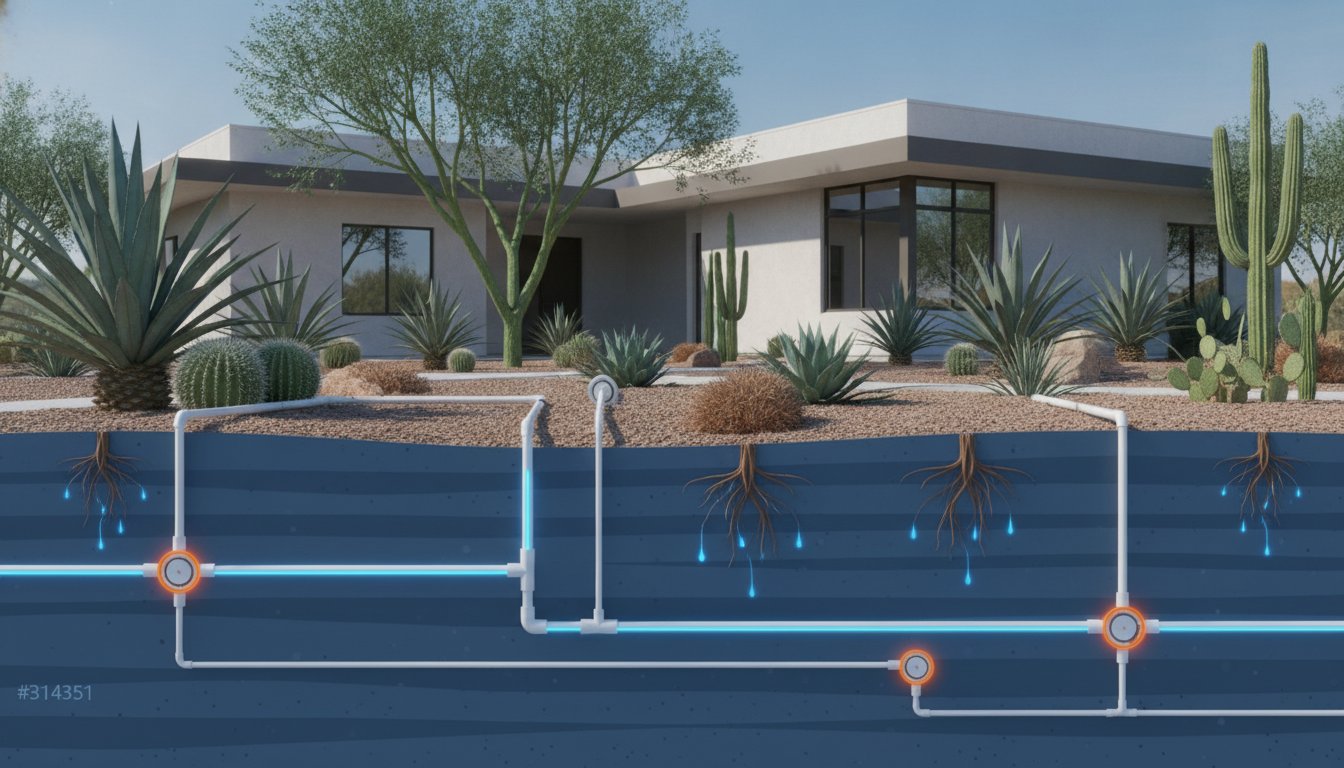
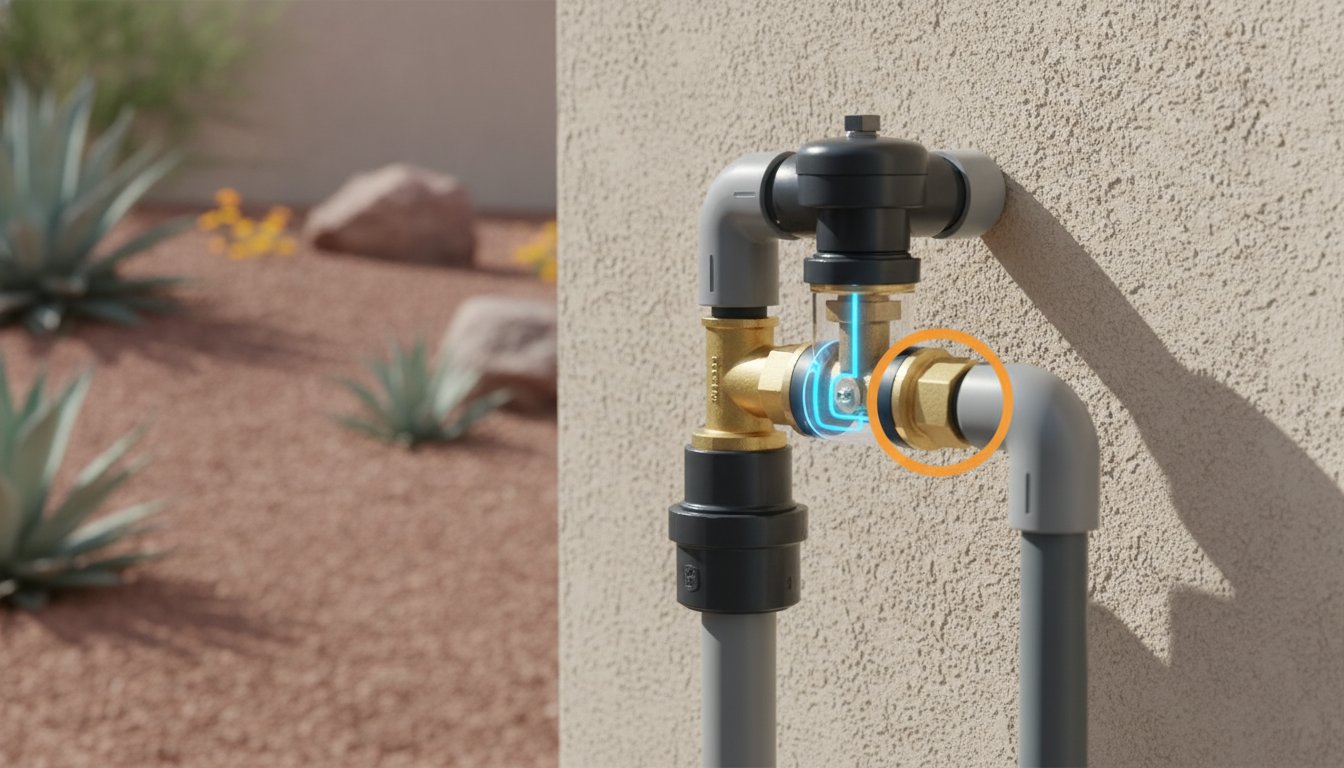
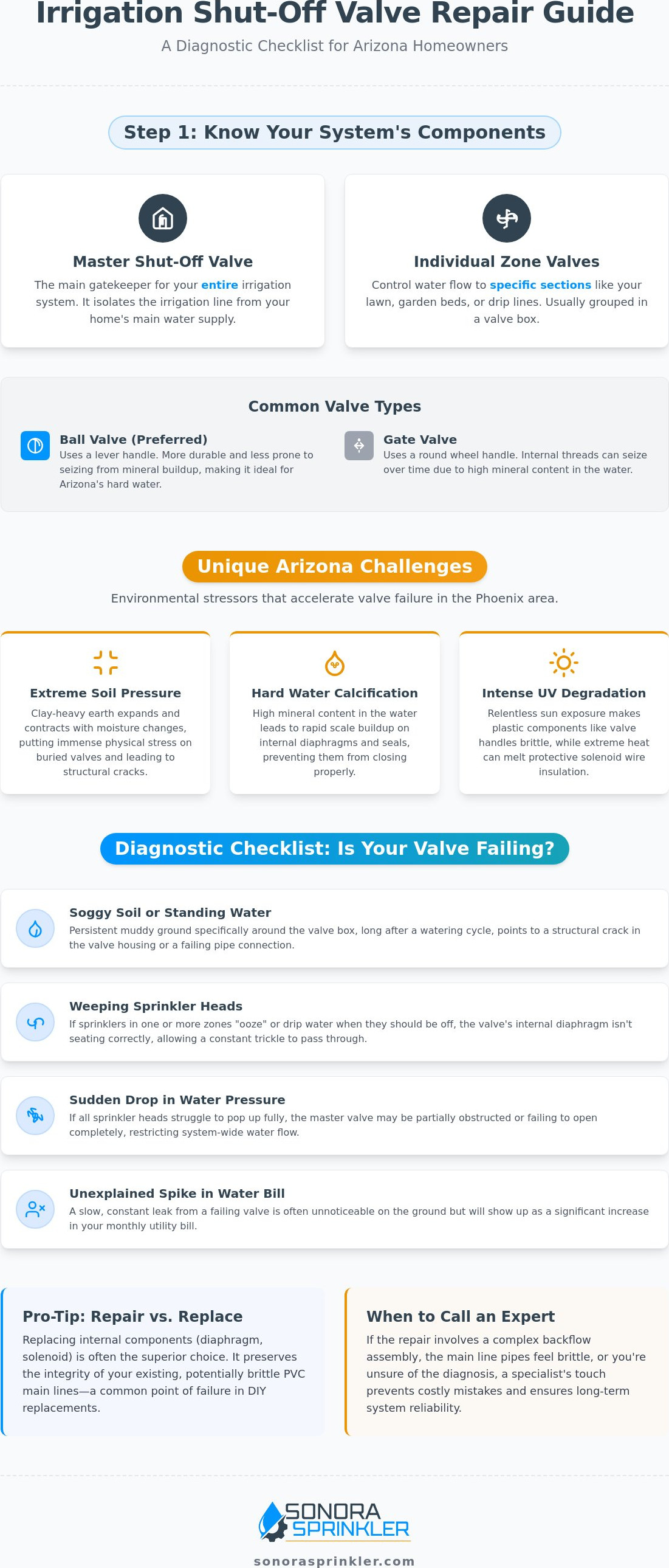
The irrigation shut-off valve, often referred to as the master valve, serves as the primary gatekeeper for your entire watering system. It's distinct from the individual zone valves that manage specific sections of your lawn or garden. Understanding what a stopcock is helps clarify this component's role; it's a manual device used to isolate the irrigation line from the rest of your home's water supply. In our local Surprise and Peoria landscapes, this valve allows you to perform maintenance or address a leak without cutting off water to your kitchen or bathrooms.
To better understand the physical components and the process of identifying these parts, watch this helpful video:
Homeowners often encounter two primary types of shut-off valves: ball valves and gate valves. Ball valves utilize a lever handle to rotate an internal sphere, while gate valves use a round wheel to raise or lower a metal wedge. In the West Valley, ball valves are generally preferred for their durability. Gate valves often have internal screw threads that can seize over time due to the high mineral content in our water. When you're starting an irrigation shut off valve repair, knowing which type you're dealing with determines the specific tools and replacement parts you'll need.
Locating Your System's Main Shut-Off
Finding your valve box in a desert yard sometimes requires a bit of investigation. Start your search near the water meter or the backflow preventer assembly, which is typically located on the side of the house. You're looking for a rectangular or round plastic lid recessed into the ground, often hidden beneath a layer of decorative granite. Inside this box, you'll find the emergency shut-off handle, which is frequently colored red or blue for high visibility. If the box is filled with dirt, carefully clear it out to ensure you have full access to the handle and the connecting pipes.
Why Arizona Valves Fail Differently
The environmental stressors in the Phoenix metropolitan area are unique and can accelerate the need for irrigation repair. The extreme soil expansion and contraction in our clay-heavy earth can put immense physical pressure on buried valves, leading to structural cracks. Additionally, the "hard" water common in Surprise and Peoria leads to rapid mineral calcification on internal diaphragms, preventing them from sealing properly. Perhaps most notably, our intense summer heat causes rapid UV degradation of any exposed plastic components, making handles brittle and melting the protective insulation on solenoid wiring.
Diagnostic Checklist: Signs Your Shut-Off Valve Needs Repair
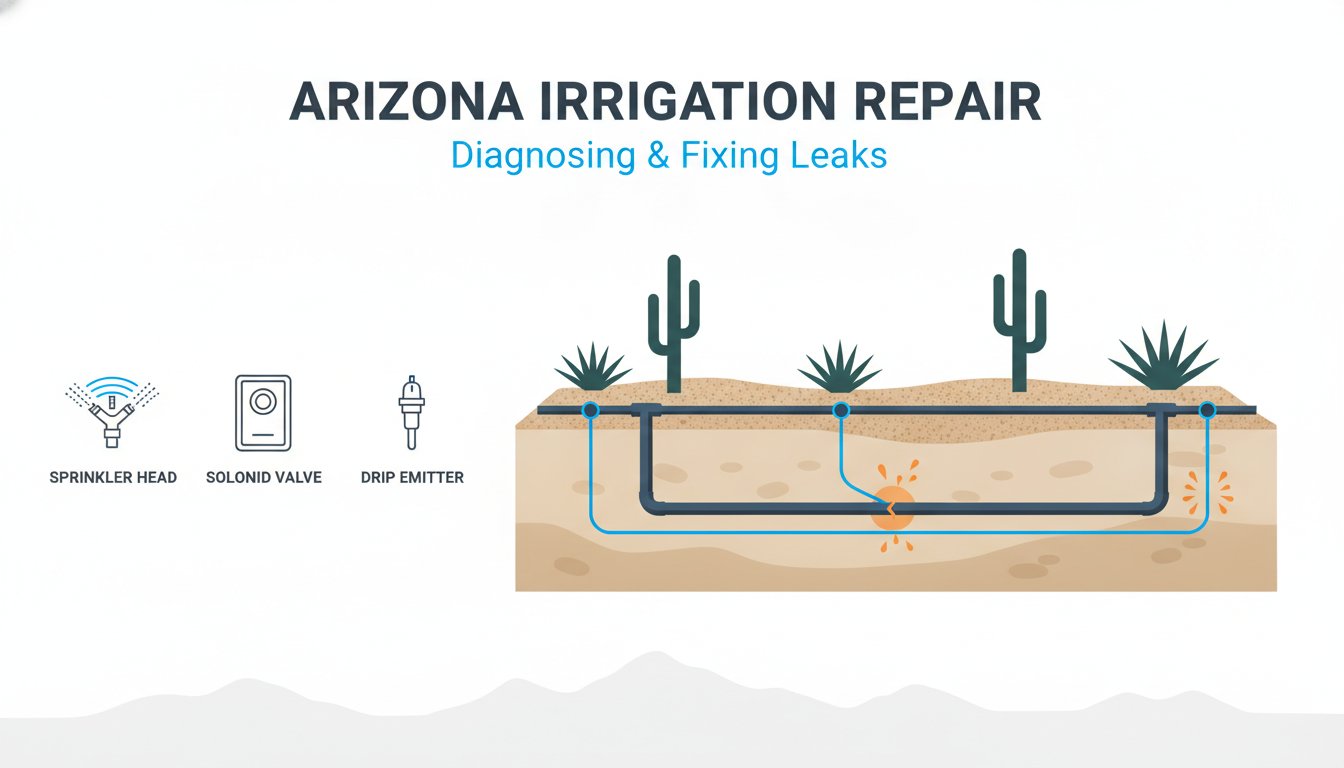
Identifying a need for irrigation shut off valve repair begins with recognizing the subtle cues your system sends before a total failure occurs. While a massive geyser is hard to miss, most residential valve issues manifest as slow, persistent inefficiencies that quietly drain your bank account and saturate your soil. Just as homeowners rely on SI Insurance to mitigate financial risks from property damage, a structured approach to diagnosis is essential to avoid replacing parts that are still functional or overlooking a problem that could damage your landscape.
A primary indicator of a failing shut-off is the presence of soggy soil or standing water specifically around the valve box area. If the ground remains muddy long after the system has finished its cycle, the valve housing or the connection to the main line likely has a structural crack. Conversely, you might notice that sprinklers in a specific zone continue to "ooze" or weep water when they should be off. This suggests the internal diaphragm isn't seating correctly, allowing a constant trickle of water to bypass the seal and move downstream.
You should also monitor for a sudden drop in water pressure across all zones. If heads that used to pop up fully are now struggling to clear the grass line, the master valve may be partially obstructed or failing to open completely. In some cases, you might hear strange vibrating or humming noises echoing through your home's pipes when the irrigation isn't running. This phenomenon, often called "water hammer," signals that the valve's internal components are oscillating under pressure, which can eventually lead to a burst pipe.
Monitoring your monthly utility bill is perhaps the most reliable way to catch a silent leak. As Phoenix currently operates under a Stage 1 Water Alert, every gallon saved contributes to regional stability. Taking the time to spruce up your irrigation system through regular inspections can prevent these unexplained spikes. If you find your bill climbing without a change in your watering schedule, your shut-off valve is a prime suspect.
Visual Inspection Checklist
- Examine the Valve Body : Look closely at the bonnet, which is the top cover, for hairline fractures that might only leak when the system is under full pressure.
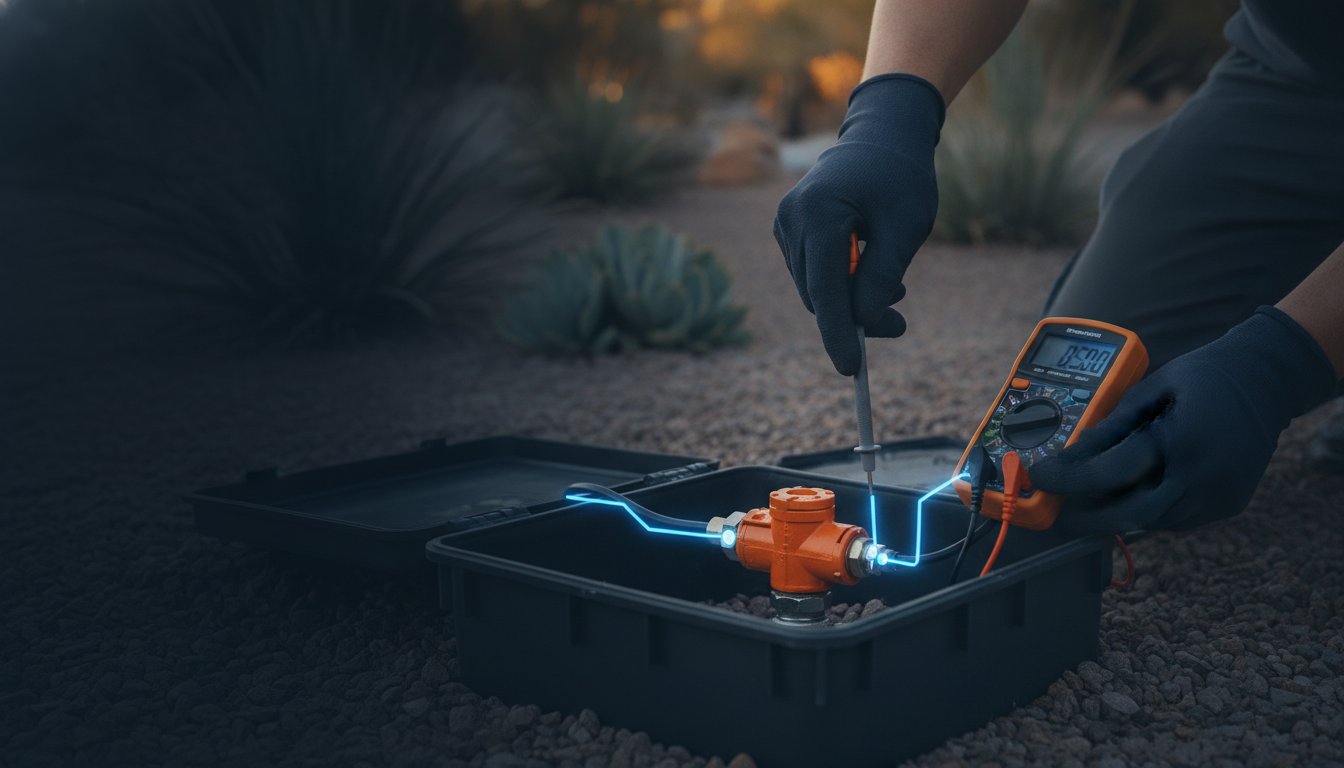
- Assess the Solenoid : Check the wiring leading to the solenoid for corrosion or fraying. These wires often become brittle due to the intense Arizona sun.
- Check for Seepage : Inspect the area around the handle or the manual bleed screw for active moisture, which indicates a failing O-ring or a worn seal.
Performance Testing Steps
To confirm your suspicions, manually turn the valve to the "Off" position. If the weeping at your sprinkler heads stops immediately, you've confirmed the valve is the culprit. Listen carefully for any clicking sounds when the system starts; a lack of sound might mean the solenoid has failed electrically. Finally, verify that the handle turns freely. A handle that is seized or feels "crunchy" when turned is often a victim of mineral buildup from our local hard water. If these tests leave you uncertain about the repair path, it may be time to consult with an irrigation professional to ensure your system's long-term health.
Repairing vs. Replacing: Evaluating Your Irrigation Valve Components
Once you have identified a fault, the next logical step in an irrigation shut off valve repair is determining the most non-invasive path to restoration. Many homeowners assume that a malfunctioning valve necessitates cutting the pipes and installing an entirely new unit. However, unless the high-density plastic body of the valve is physically cracked or the threads are stripped, a "guts swap" is often the superior technical solution. This method involves replacing only the internal moving parts while leaving the original valve housing undisturbed in the ground.
Preserving the original valve body is especially beneficial because it maintains the integrity of the existing PVC connections. Cutting into a pressurized main line introduces new points of potential failure, such as improper primer application or insufficient curing time for the solvent cement. By focusing on internal components, you avoid the risks associated with disturbing the surrounding soil and pipe geometry. For complex systems where the shut-off is integrated into a larger assembly, you can learn more about valves and backflow services to see how professional technicians approach these delicate components.
Common Repairable Components
- Faulty Solenoids : This electrical cylinder sits atop the valve. If your controller sends a signal but the valve fails to open, replacing the solenoid is a simple, five-minute fix that requires no pipe cutting.
- Rubber Diaphragms : This internal seal is the most common point of failure. Over time, desert heat and mineral-heavy water cause the rubber to become brittle or tear. Replacing the diaphragm usually restores a watertight seal immediately.
- Bonnets and O-Rings : The bonnet is the top cover of the valve. If water is seeping from the top, a new O-ring or a replacement bonnet can stop the leak without affecting the main plumbing.
There are, however, specific scenarios where a full replacement is unavoidable. If the valve body has been cross-threaded during a previous repair attempt, or if the plastic has "frozen" due to extreme calcification, the entire unit must be removed. Structural cracks in the valve housing, often caused by shifting soil or physical impact, also require a complete overhaul of that section of the line.
The Risks of DIY PVC Cutting
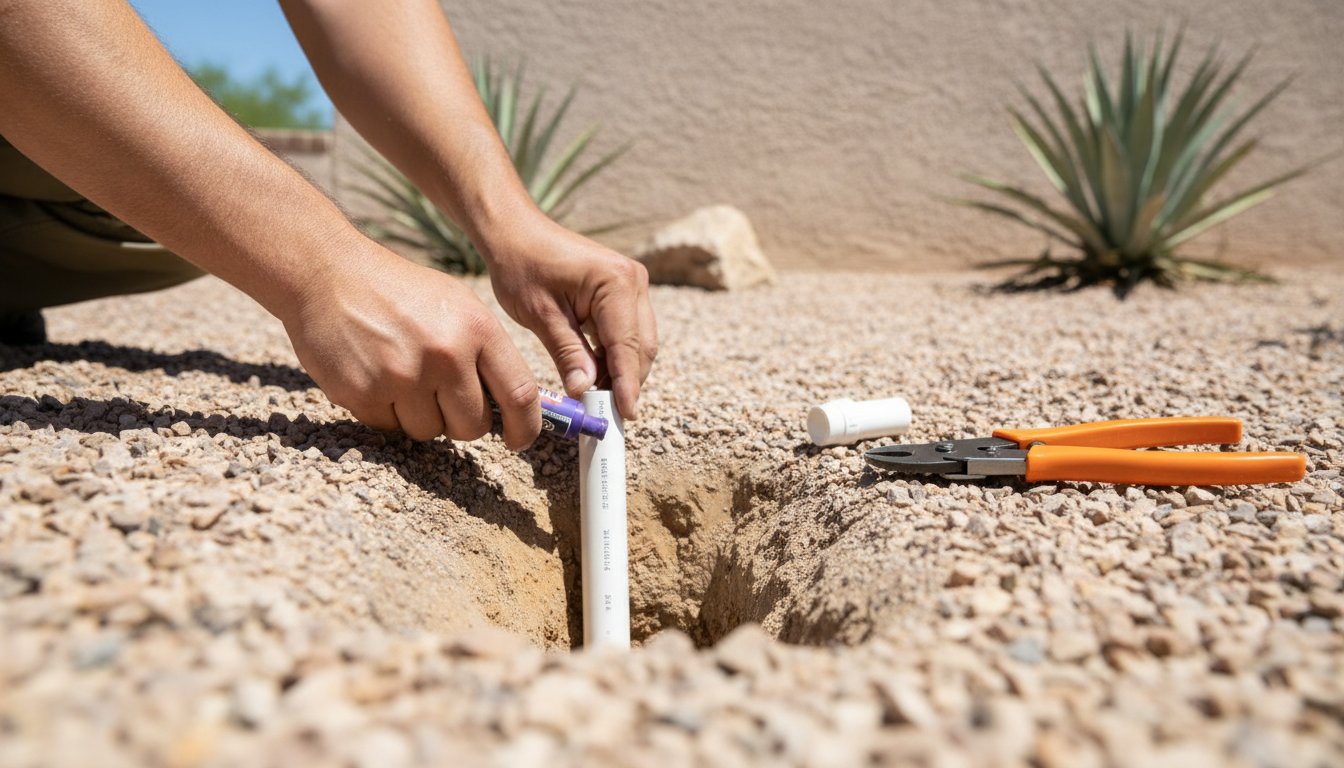
Working within the confined space of a standard residential valve box presents significant challenges for the average DIYer. There is very little room to maneuver a saw or apply the necessary leverage for a clean cut. In many Surprise and Peoria neighborhoods, you'll also encounter "caliche," a naturally occurring, cement-like layer of soil. Excavating enough space to properly fit new couplings into this hardened earth is labor-intensive and requires specialized tools. If the new seal isn't perfectly square on the main pressure line, the constant vibrations of the system will eventually cause a catastrophic blowout, leading to significant water waste and property damage.
Pre-Repair Checklist: Preparing for Irrigation Valve Maintenance
Before you begin an irrigation shut off valve repair , the quality of your preparation determines the success of the outcome. Rushing into a mechanical fix without isolating the system often leads to avoidable messes and potential component damage. A methodical approach ensures that once you open the valve, you aren't fighting pressurized water or losing small parts in the desert soil. The first and most critical step is to locate and shut off the main water supply dedicated to your irrigation system. This prevents a constant flow of water from flooding your work area while you are mid-repair.
Once the source is closed, you must relieve the residual pressure trapped within the lines. You can achieve this by manually opening a zone valve downstream from the shut-off or using the bleed screw on a nearby valve. This step is vital; it prevents a sudden, high-pressure burst of water when you eventually loosen the bonnet screws. After the pressure is dissipated, take a moment to clean all dirt and debris out of the valve box. In our local Surprise and Peoria landscapes, these boxes often become filled with fine silt and granite that can easily migrate into the open valve body, causing a new leak immediately after you finish the job.
Documentation is your best tool for a smooth reassembly. Before you disconnect any electrical components, take a clear photo of the solenoid wiring configuration. Identifying which lead connects to the common wire and which goes to the controller terminal is much easier with a visual reference than by memory. If you find the wiring is brittle or the connections are heavily corroded, you may need to look into professional irrigation wiring and diagnostics to ensure the signal from your timer actually reaches the new valve components.
Safety and Contamination Control
- Protect Your Eyes : Wear impact-resistant eye protection. Even with the water off, pressurized lines can spray scale or small pebbles unexpectedly when first opened.
- Clear Standing Water : Use a shop-vac to remove any water pooled in the bottom of the valve box. This gives you a dry, clear view of the bolts and seals you need to manipulate.
- Cover Open Lines : Once the valve top is removed, immediately cover the open housing with a clean rag. This keeps abrasive desert sand out of the system, protecting your downstream sprinkler heads from clogs.
Tool and Part Verification
Confirm the exact make and model of your valve before purchasing parts. Components for a Hunter valve will not fit a Rain Bird housing, and even within brands, different series have specific diaphragm shapes. Check that you have fresh waterproof wire connectors, often called grease caps, for the solenoid. Reusing old connectors is a common cause of intermittent system failure. If the preparation reveals a more complex structural issue than a simple "guts swap" can fix, it's often safer to request a professional assessment before you begin cutting into your main pressure lines.
Professional Valve and Backflow Solutions in Surprise and Peoria
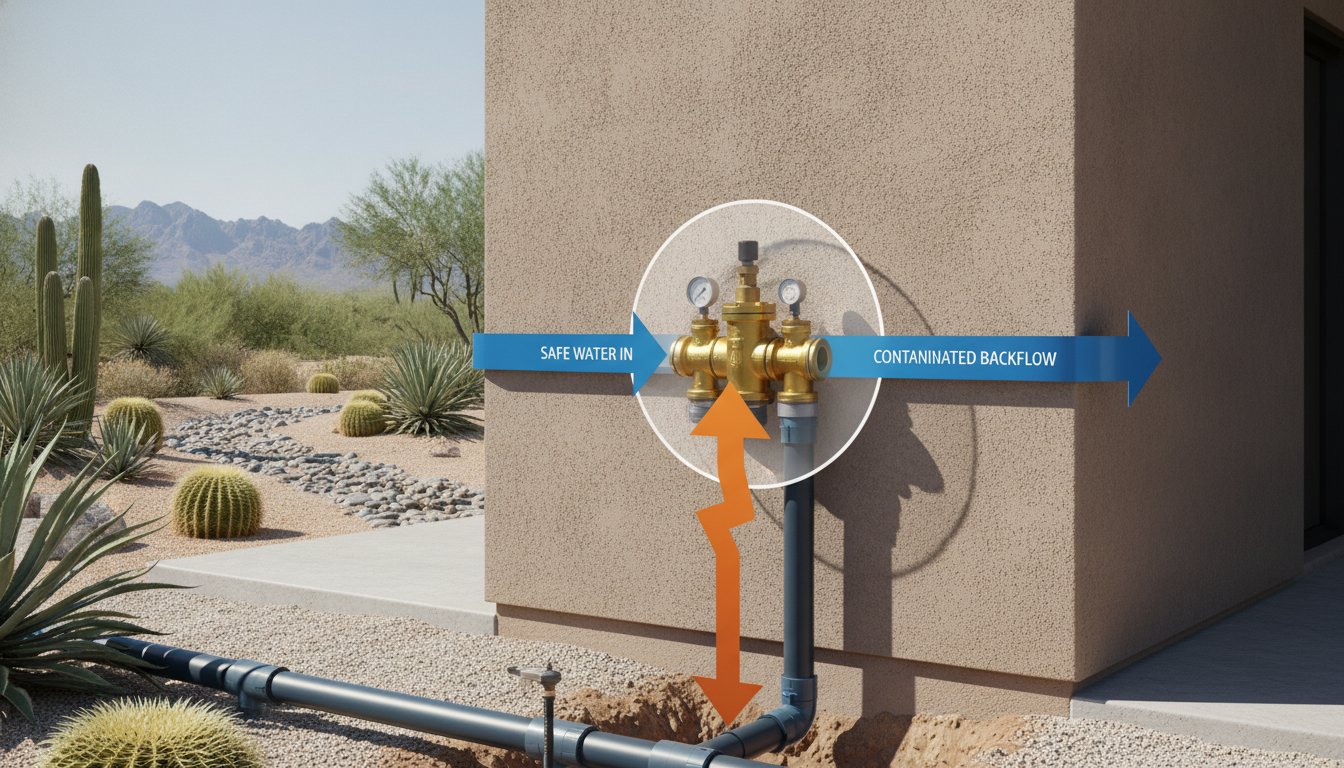
In the West Valley, residential irrigation systems face unique environmental pressures that demand more than a generalist's approach. For homeowners in Surprise, specialized expertise is vital because our desert-optimized systems are often integrated with specific backflow prevention assemblies required by local code. Your shut-off valve works in tandem with the backflow preventer to protect your home's potable water supply from contamination. If either component fails, the resulting pressure imbalances can lead to catastrophic leaks or even health hazards. Understanding how these parts interact is a key part of any successful irrigation shut off valve repair strategy.
Since 1999, Sonora Sprinkler Inc. has focused on providing reliable, long-term solutions for homeowners in our community. We understand that a valve is only as good as the manifold it supports. For those looking to understand the broader context of their system's control center, we recommend reviewing our guide on irrigation manifold repair. By addressing the system as a whole, we ensure that every repair contributes to the overall efficiency and durability of your landscape's water management.
Comprehensive Diagnostics by Sonora Sprinkler
Professional diagnostics go far beyond simple visual checks. Our team utilizes advanced wire tracing and electrical diagnostic tools to pinpoint faults within the solenoid or the controller wiring without unnecessary excavation. These tools allow us to identify "silent" leaks, those that occur underground or within the valve body itself, which often escape the notice of standard DIY inspections. In cities like Peoria, where water-waste regulations are strictly enforced, these precise diagnostics are essential. We focus on tailored upgrades that not only resolve the immediate failure but also improve your system's water conservation, helping you meet local environmental standards.
Schedule Your Professional Inspection
While the diagnostic checklist provided in this guide serves as an excellent starting point, the physical reality of an irrigation shut off valve repair can be daunting. The intense Arizona heat and the physical strain of working in cramped valve boxes often lead to frustration and accidental damage to the main line. Choosing a professional irrigation repair ensures the job is done correctly the first time, protecting your landscape and your property's value. Don't let a minor valve issue turn into a major plumbing emergency. You can contact Sonora Sprinkler Inc. for expert valve diagnostics today and restore the reliability your desert home deserves.
Securing Your System’s Long-Term Efficiency
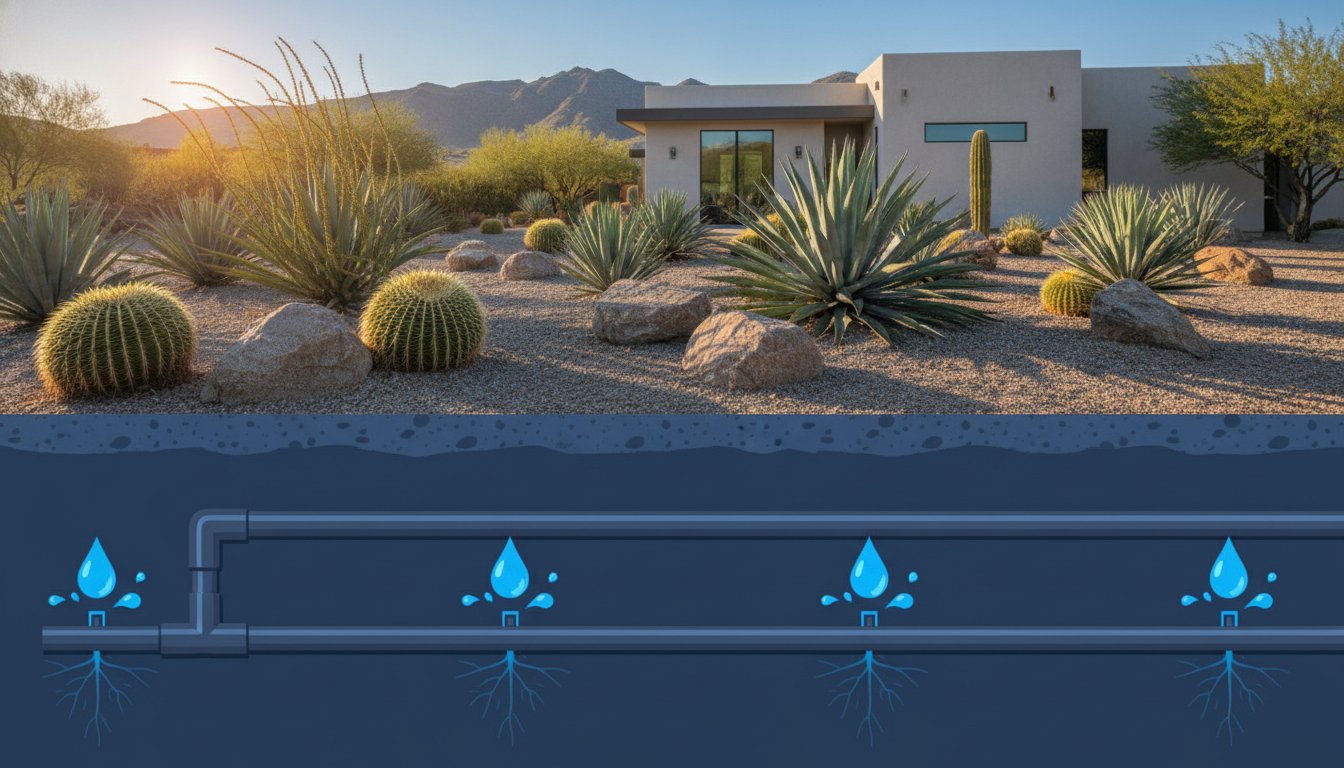
Maintaining a functional irrigation system in the West Valley requires a blend of regular observation and technical precision. By utilizing our diagnostic checklist, you can now distinguish between simple component failures and structural issues that threaten your property’s water efficiency. Remember that a proactive approach to irrigation shut off valve repair , focusing on internal component swaps rather than invasive pipe cutting, is often the most effective way to preserve your system's integrity while navigating Arizona's unique soil conditions.
As family-owned and operated licensed residential irrigation experts since 1999, we specialize in desert-optimized systems that stand up to our local climate. If your diagnostic checks reveal a complex failure or if you simply prefer the grounded assurance of a master craftsman, our team is ready to assist. Schedule your professional irrigation valve diagnostic in Surprise or Peoria to ensure your landscape remains healthy and your water bills stay under control. Protecting your home’s outdoor investment is a rewarding process; with the right diagnostic path, you can maintain a resilient and efficient system for years to come.
Frequently Asked Questions
How do I know if my irrigation shut-off valve is leaking underground?
You can identify an underground leak by monitoring your water meter when all indoor and outdoor fixtures are turned off. If the low-flow indicator continues to spin, water is escaping somewhere in the line. In the dry soil of Surprise or Peoria, you may also notice a localized area of unusually green grass or a soft, sunken patch of earth directly above the buried pipe.
Can I replace just the solenoid on my sprinkler valve?
Yes, you can replace just the solenoid if the rest of the valve is functionally sound. This electrical component is often the first part to fail due to Arizona’s intense UV exposure and heat. Swapping it out is a standard part of an irrigation shut off valve repair that doesn't require cutting into your main water lines.
Why is my irrigation valve box always full of water?
A valve box full of water usually points to a failing seal, a loose bonnet, or a crack in the valve body itself. Because our local water has a high mineral content, calcification can build up around the O-rings and prevent a watertight seal. If the water returns shortly after you bail it out, the leak is likely on the pressurized side of the shut-off valve.
What is the difference between a master valve and a zone valve?
A master valve acts as the primary gatekeeper for your entire system, sitting upstream from all other components. Zone valves are located further down the line and only manage water for specific areas, such as your lawn or desert shrubs. If the master valve fails, it can cause a system-wide pressure loss or a continuous leak that affects every zone.
How much does it typically cost to repair an irrigation valve in Arizona?
Repair costs in Arizona are typically influenced by the depth of the valve and whether the technician must excavate through hardened caliche soil. While a simple component swap is relatively straightforward, a full replacement requiring trenching or manifold reconfiguration will involve more labor hours. Homeowners should always request a detailed diagnostic to understand the specific mechanical needs of their desert-optimized system.
Is it better to repair or replace a 20-year-old irrigation valve?
For a 20-year-old valve, a professional "guts swap" is often the safest path if the valve body remains structurally sound. Cutting into two-decade-old PVC can be risky, as the pipes become brittle over time in the desert heat. However, if the internal threads are stripped or the housing is visibly warped, a full replacement is the only way to ensure long-term reliability.
How can I tell if the diaphragm in my valve is torn?
The most common sign of a torn diaphragm is a sprinkler zone that refuses to shut off entirely. Even when the controller is powered down, water will continue to "ooze" or weep from the heads because the damaged rubber can't create a complete seal. You might also hear a distinct humming or vibrating sound, known as water hammer, coming from the pipes.
Does a failing shut-off valve affect my home's water pressure?
A failing irrigation valve rarely affects your home's internal water pressure unless there is a catastrophic break on a shared main line. Most residential systems in our area utilize a backflow preventer to isolate the irrigation from the house. You are more likely to notice a pressure drop within the sprinkler zones themselves rather than at your kitchen or bathroom faucets.