In the Arizona desert, a drip system isn't just a convenience; it's a life-support system that many homeowners unintentionally sabotage by using thin, hardware-store materials. It's frustrating to watch your water bills climb while your landscape struggles to survive the relentless summer heat. You likely transitioned to desert landscaping to save time and money, but without a high-quality residential drip system installation, constant leaks in cheap poly-pipe can turn your yard into a source of stress rather than a sanctuary.
This guide will show you how a professionally designed system using durable PVC protects your landscape, slashes water waste, and endures for a decade or more. We'll explore the technical requirements for our unique soil, the current 2026 water regulations in cities like Phoenix and Surprise, and the specific components that ensure your system survives the intense UV exposure of the West Valley. By shifting from temporary fixes to a grounded, professional approach, you can enjoy a maintenance-free landscape that thrives even in the peak of July.
Key Takeaways
- Discover why low-pressure delivery is the gold standard for Arizona xeriscaping, providing deep hydration while minimizing the evaporation common with traditional methods.
- Learn how hydrozoning and precise flow rate calculations protect your investment by matching water delivery to the specific needs of each plant group.
- Understand the necessity of using schedule 40 PVC during a professional residential drip system installation to provide the structural integrity required in desert soil.
- Identify the localized environmental stressors, such as UV degradation and hard water deposits, that lead to premature system failure if not properly addressed.
- Evaluate the durability of professional-grade components compared to retail kits to ensure your irrigation system remains functional and efficient for the long term.
What is Residential Drip System Installation?
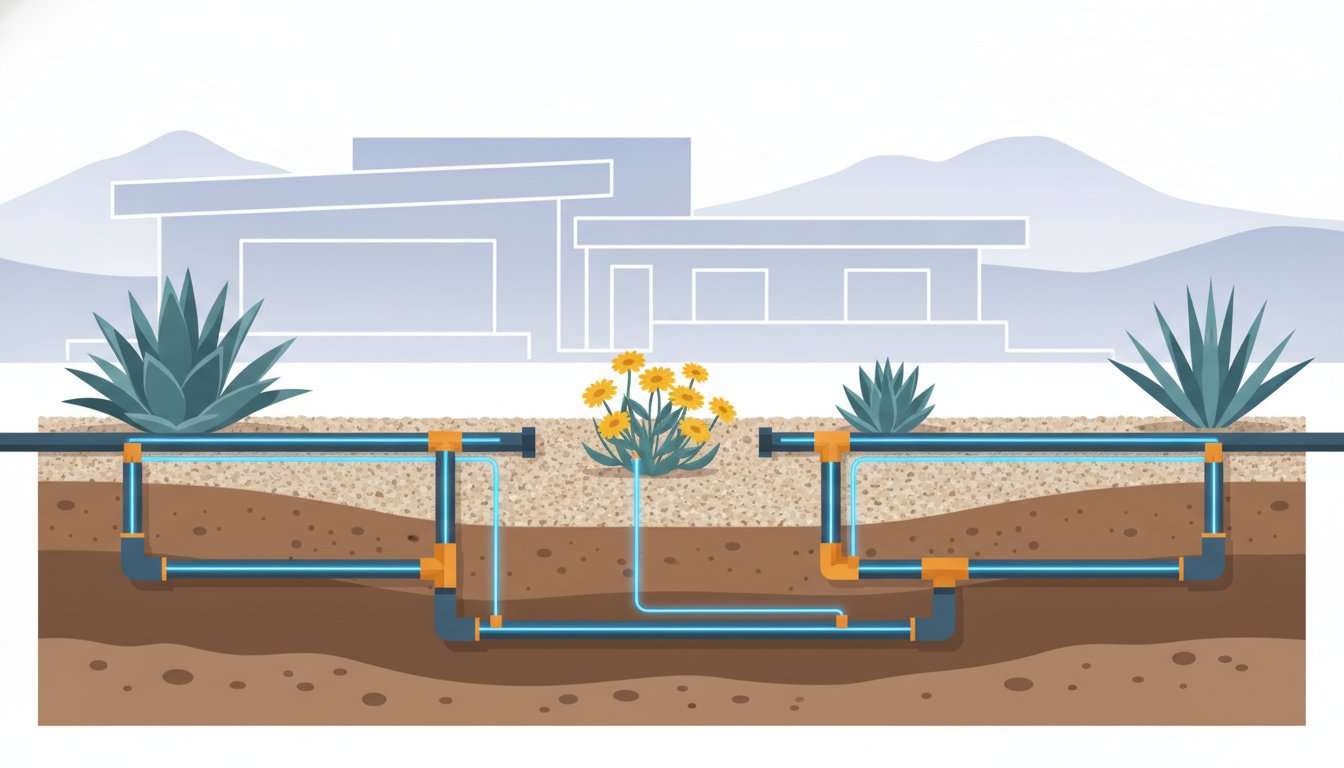
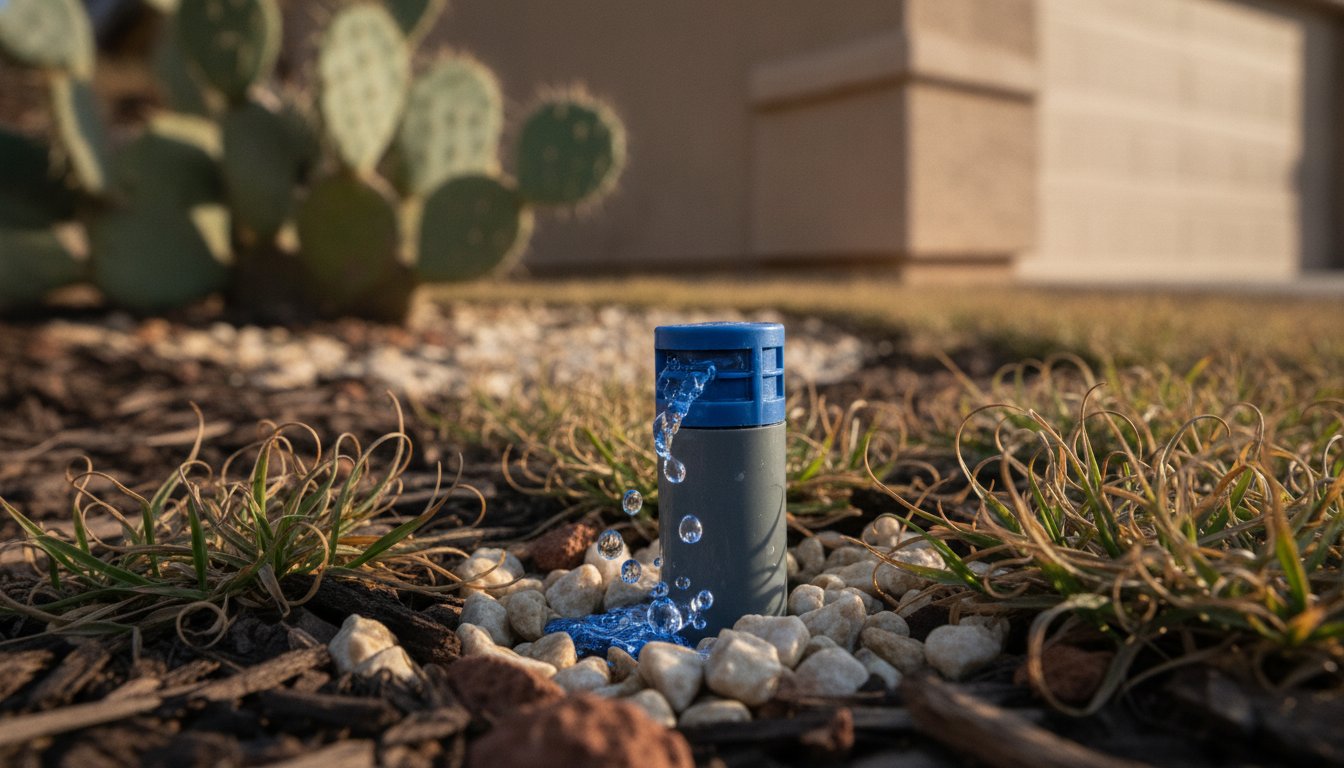
Drip irrigation is a specialized watering method that delivers moisture directly to the root zone of a plant through a network of valves, pipes, and emitters. Unlike traditional spray heads that throw water into the air, a residential drip system installation focuses on precision. It operates as a low-pressure, low-volume delivery system, ensuring that every gallon used reaches the soil rather than evaporating in our dry desert air. This approach is fundamentally different from agricultural systems that use temporary, surface-level tape for seasonal crops. A residential setup is a permanent infrastructure investment designed to sustain your landscape for years.
This system integrates directly with your home's main water line, typically connecting after the backflow prevention assembly. It is widely considered the gold standard for Arizona xeriscaping and desert trees because it mimics the natural absorption rate of our local soil. By delivering water at a slow rate, usually between 0.5 and 4 gallons per hour, it prevents the messy runoff and soil erosion often seen with high-output sprinklers. It's a controlled way to keep your property's vegetation hydrated without wasting a precious resource.
To better understand how these components come together in a real-world setting, watch this brief overview of the installation process:
The Anatomy of a Desert Drip System
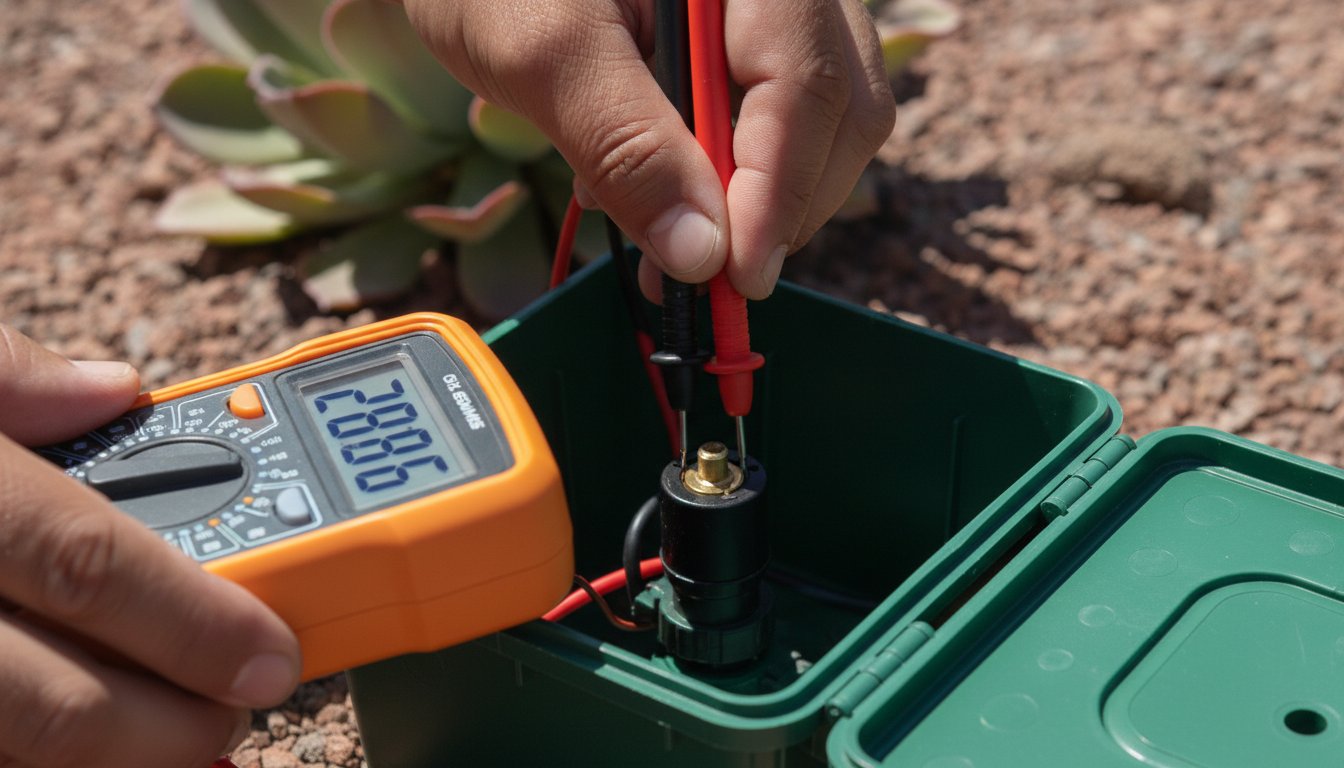
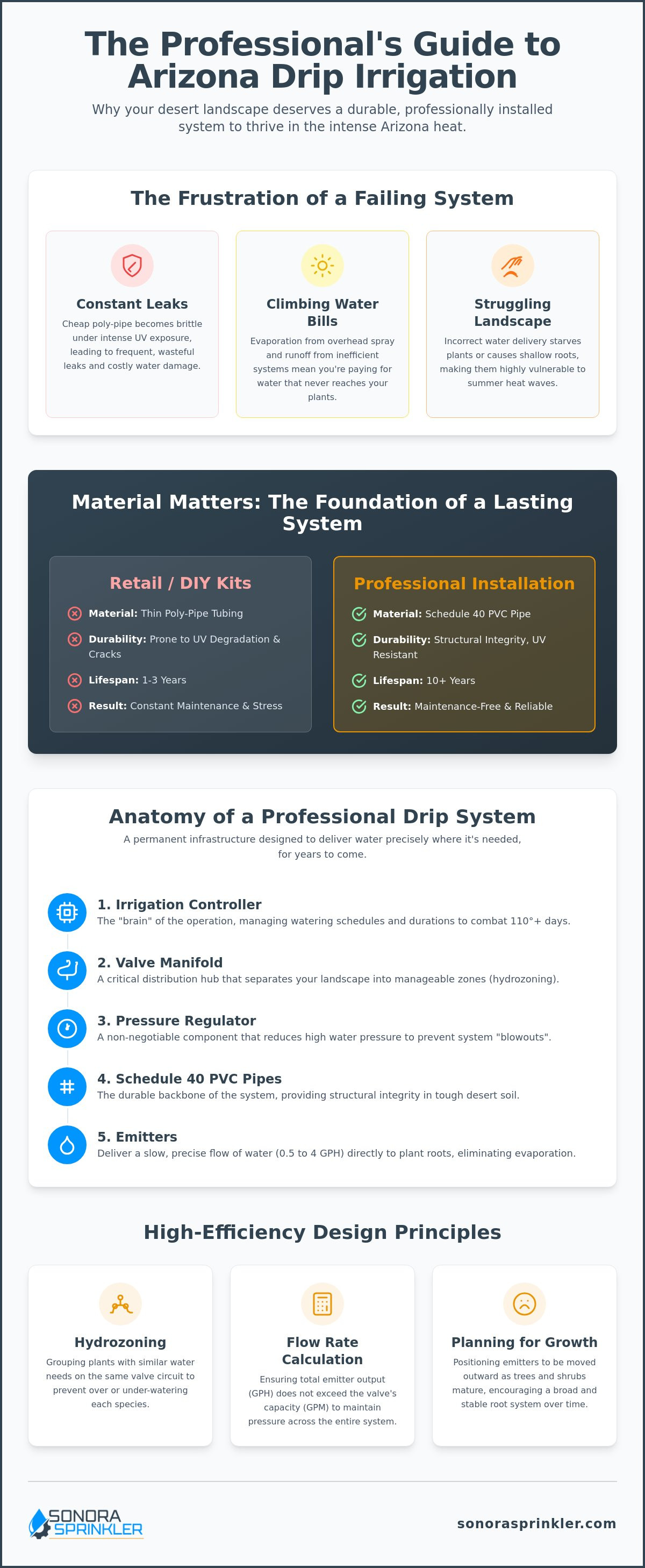
A reliable system in the West Valley requires more than just basic tubing; it needs a structured design to survive the elements. The process starts with the irrigation controller, which acts as the brain of the operation. This device manages the specific timing and duration of watering cycles, which is vital for helping plants survive 110-degree days. Water moves from the main line into a valve manifold, a critical distribution hub that separates different areas of your yard into manageable zones. In Surprise landscapes, these manifolds are often housed in protective boxes to shield them from the sun. Finally, pressure regulators are a non-negotiable component. They reduce the high pressure of your home's water supply to a level the emitters can handle, preventing the "blowouts" that often plague cheaper, unmanaged systems.
Benefits for Arizona Homeowners
The primary advantage of this technology is survival. In our intense summer heat, overhead sprinklers can lose a significant amount of water to evaporation before it even touches the ground. Drip systems eliminate this issue by keeping the water at the soil level. The benefits extend beyond just saving water:
- Stronger Plant Health: Slow, deep watering encourages roots to grow further into the cooler soil, making your trees and shrubs more resilient against heat waves.
- Significant Cost Savings: By targeting only the plants you want to grow, you don't pay to water the surrounding weeds or the sidewalk. It's a more efficient use of every dollar on your utility bill.
- System Longevity: When installed with professional-grade materials like schedule 40 PVC, these systems aren't prone to the frequent leaks and brittle breaks that define low-end poly-pipe alternatives.
Designing a High-Efficiency Drip Layout for Desert Plants
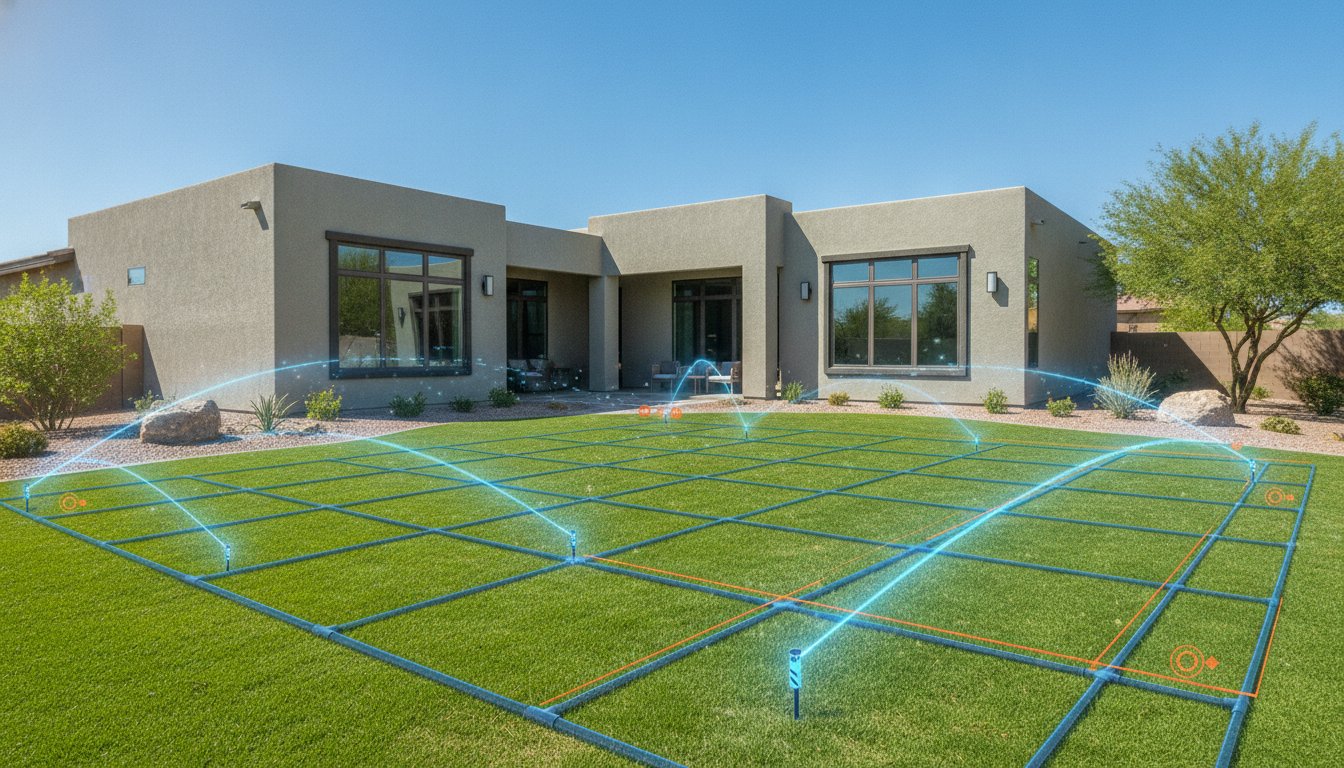
Effective design starts with understanding that a desert landscape is a collection of micro-climates. A successful Custom Drip Irrigation Design relies on a principle called hydrozoning. This involves grouping plants with similar water requirements onto the same valve circuit. For example, your drought-tolerant agave shouldn't be on the same line as a thirsty citrus tree. If they are, you'll likely drown the agave or starve the citrus. Proper zoning ensures that each species receives the precise volume of moisture it needs to flourish without wasting a drop.
Calculating flow rates is the next critical step in a residential drip system installation. Every valve has a maximum capacity, usually measured in gallons per minute (GPM). You must ensure the total output of your emitters doesn't exceed this limit. If you oversubscribe a valve, the pressure drops significantly; this causes the emitters at the end of the line to fail. It's a balance of math and mechanical layout that ensures every plant receives its fair share of water, even during the hottest months of the year.
Planning for the future is often overlooked by generalists. As trees mature, their root zones expand horizontally. Emitters placed at the base of a sapling's trunk must be moved outward toward the drip line of the canopy over time. Following principles from Water Wise Irrigation helps ensure your system remains efficient as your yard grows. This proactive approach prevents root rot and encourages a broad, stable root system that can withstand monsoon winds.
Choosing the Right Emitters
Most professional installations in Surprise and Peoria utilize pressure-compensating (PC) emitters. These components maintain a consistent flow regardless of elevation changes or pipe length. While adjustable bubblers are common in DIY kits, they often lead to water waste through over-saturation. For larger desert trees, we often use multi-outlet emitters. These allow us to distribute water to multiple points around a single root ball from one central hub, promoting even growth and deep soil penetration.
The Role of Backflow Prevention
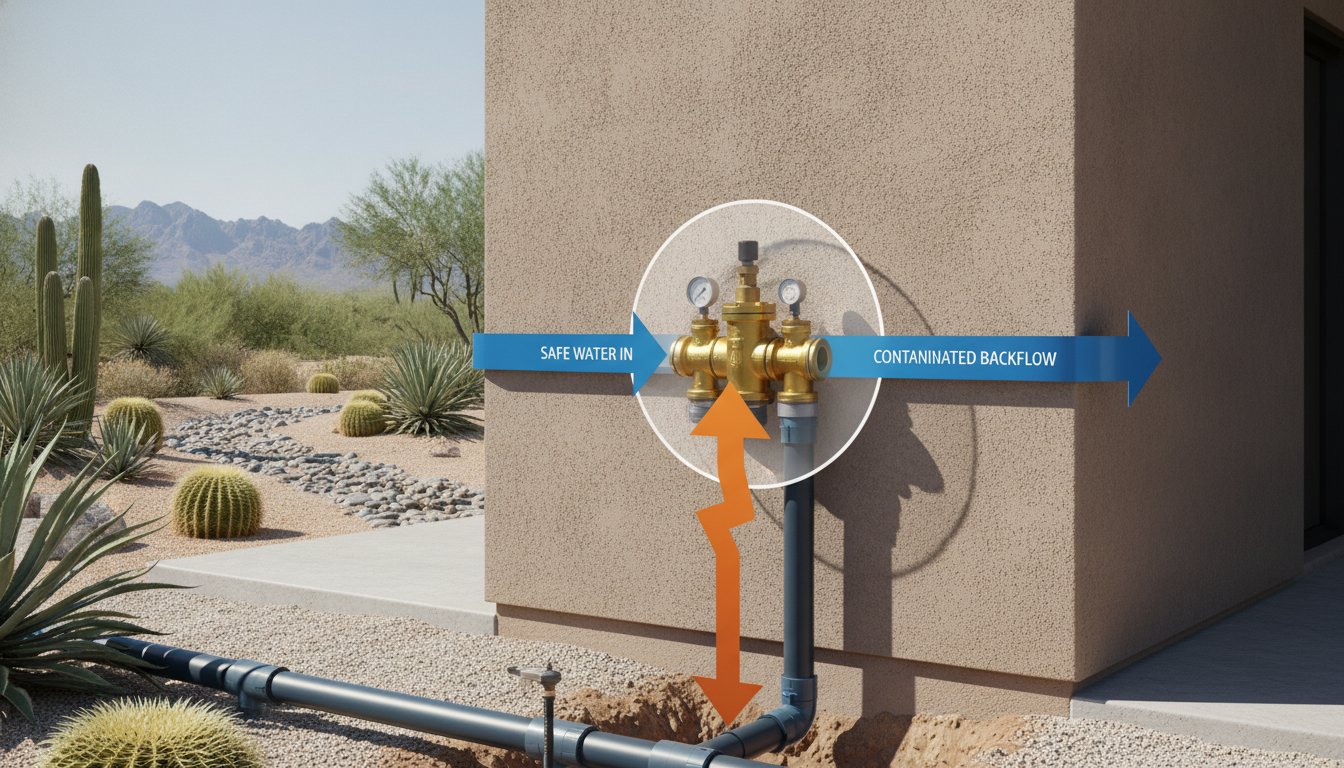
Arizona plumbing codes require a backflow preventer on all irrigation systems. This device acts as a one-way street, preventing fertilizers, soil pathogens, or stagnant water from being sucked back into your home’s drinking water supply. High-quality Valves and Backflow Services are essential for keeping your family’s water safe and ensuring your property remains compliant with municipal standards. If you're unsure if your current layout meets these safety requirements, you can reach out to a specialist for a professional assessment.
The Professional Installation Process: Step-by-Step
A successful residential drip system installation follows a methodical sequence to ensure the infrastructure remains hidden and functional. It isn't just about connecting tubes; it's about building a subterranean network that withstands soil shifting and thermal expansion. When we approach a new project, we prioritize a "boots-on-the-ground" philosophy that focuses on long-term reliability over quick assembly.
This meticulous approach to water infrastructure is vital for any property; for instance, those in Central Florida can rely on Alberto Pro Plumbing for professional residential and commercial plumbing services that prioritize long-term system integrity.
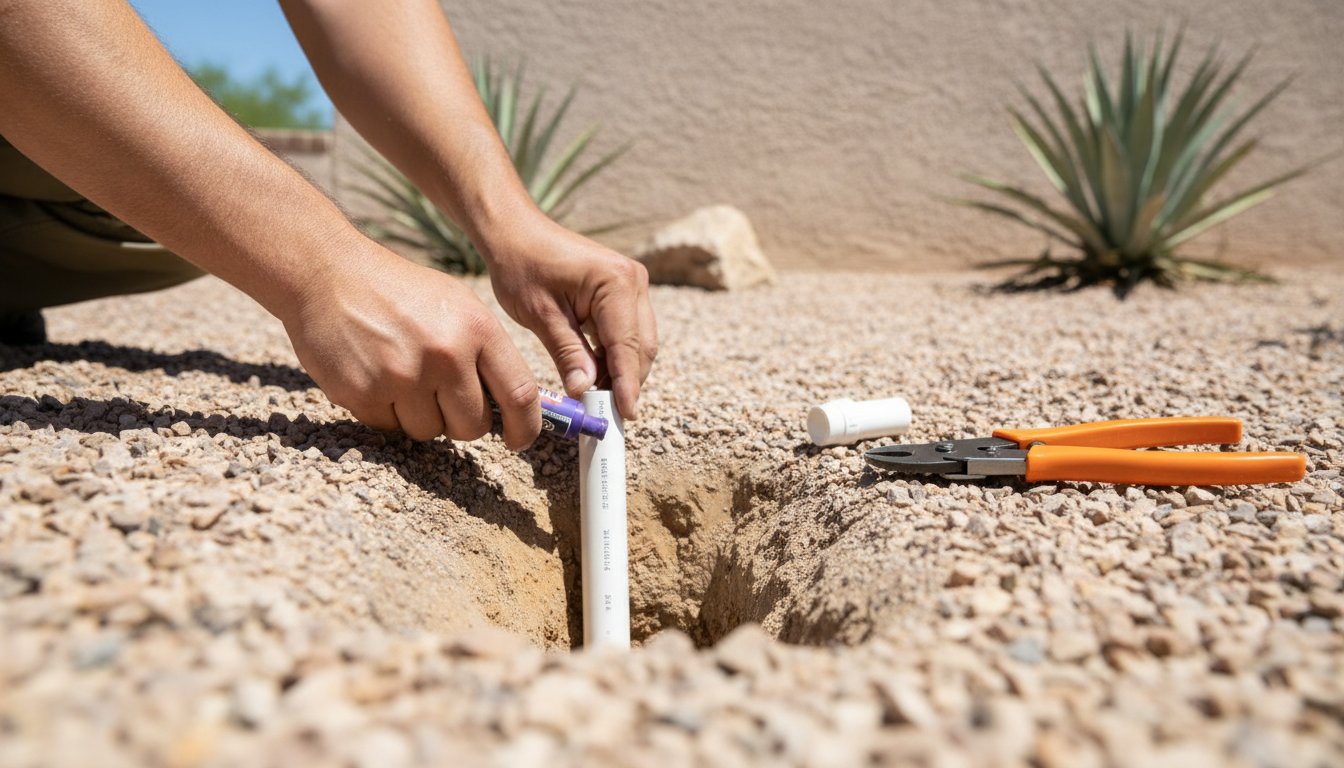
Step 1: Trenching and Main Line Installation. We begin by excavating trenches to a depth of at least 10 to 12 inches. This depth is vital for protecting the main line from the sun's UV rays and accidental damage from future gardening or shovel strikes. We exclusively use Schedule 40 PVC for these lines to provide a rigid, durable backbone for the system.
Step 2: Manifold Assembly and Valve Connection. This stage involves building the control hub where the main water supply splits into different zones. Each valve is carefully connected to the controller, allowing for automated, precise watering schedules. We house these components in a sturdy valve box to keep them accessible yet protected from the elements.
Step 3: Running Lateral Lines and Micro-tubing. From the valves, we run lateral lines out to the specific plant groupings identified during the design phase. We then attach micro-tubing that leads directly to the base of each tree or shrub, ensuring the water reaches the root zone exactly where it's needed.
Step 4: System Flushing and Pressure Testing. Before the trenches are backfilled, we run water through the lines to clear out any dirt, rocks, or PVC shavings that may have entered during construction. We then pressure test every joint and emitter to guarantee a leak-free system. This final verification prevents future sinkholes or wasted water once the pipes are buried.
Why PVC is Superior for Arizona Main Lines
In West Valley communities like Surprise and Peoria, soil pressure and intense heat make standard poly-pipe a liability. While flexible tubing is faster to install, it often becomes brittle and collapses within a few years of burial. We focus on an Irrigation PVC Pipe Replacement strategy for homeowners who want to move away from these temporary fixes. Using professional-grade primers and cements ensures that every joint is chemically welded. This creates a monolithic structure that can endure the expansion and contraction cycles of our desert climate for a decade or more.
Wiring and Controller Setup
The final phase involves Irrigation Wiring Diagnostics and connection. We wire each valve to the irrigation timer using direct-burial cable rated for underground use. Using waterproof, grease-filled wire connectors in the valve boxes is a non-negotiable standard in our process. Without these sealed connections, moisture will eventually corrode the copper wiring, leading to intermittent failures or a complete system shutdown. This automated setup ensures your landscape receives consistent hydration without the need for manual intervention.
Why Arizona Drip Systems Fail (and How to Prevent It)
Desert conditions are unforgiving to mechanical systems that aren't engineered for extreme heat. Even a well-intentioned residential drip system installation can fail prematurely if it doesn't account for the specific environmental stressors of the West Valley. Understanding these failure points is the first step in protecting your property's long-term health. Most systems that fail within the first five years do so because they were designed for a more temperate climate, not the 115-degree reality of a Surprise summer.
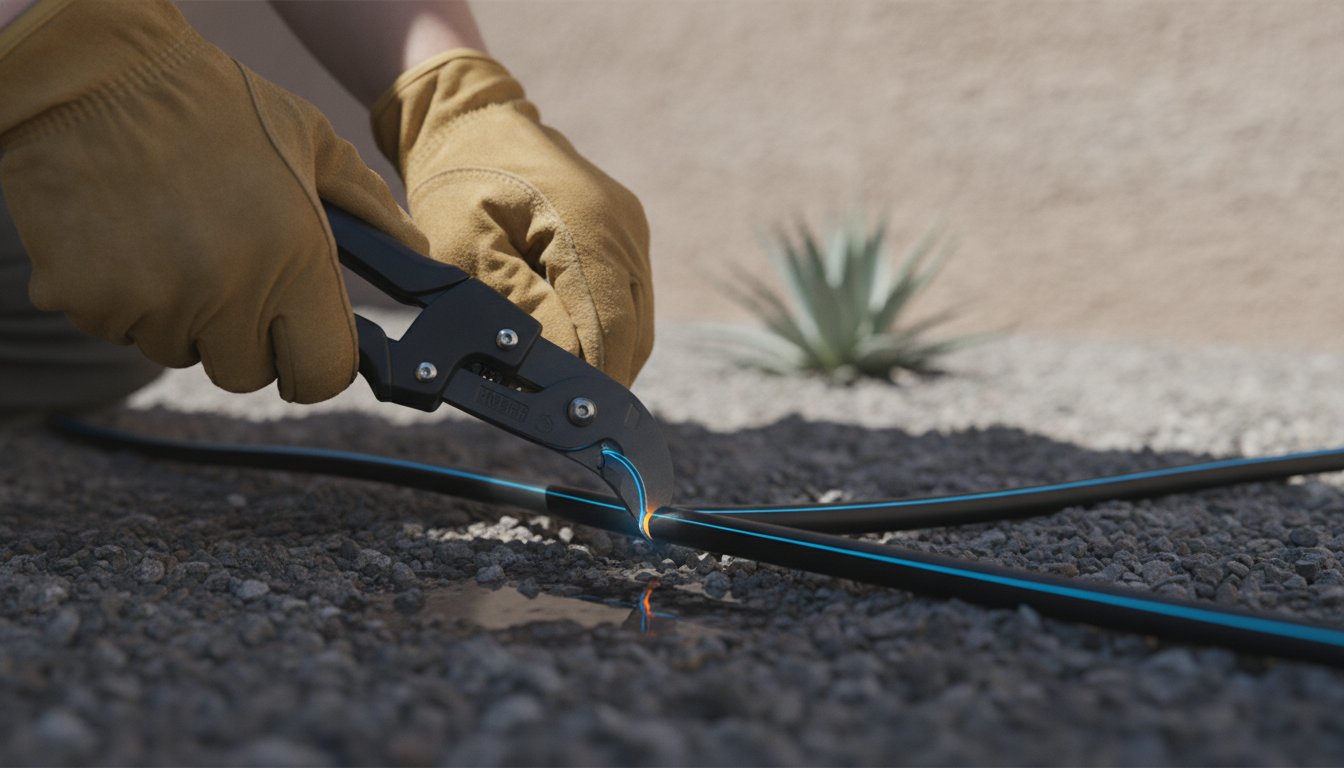
UV degradation is the primary killer of low-end irrigation setups. The intense Arizona sun effectively "bakes" flexible poly-tubing that is left exposed or buried too shallow. Over time, the plastic loses its plasticizers, becoming brittle and prone to longitudinal cracks. Beyond the sun, the hard water in the West Valley presents a silent threat. High calcium and mineral content leads to heavy deposits that eventually clog emitters. This restricts flow and starves your plants of hydration. Local wildlife also plays a disruptive role; desert critters like rabbits and ground squirrels often chew through thin drip lines in a desperate search for moisture during the dry months.
Poor initial design remains the root cause of most systemic failures. When a system is installed without proper pressure regulation or filtration, the mechanical components are under constant stress. This leads to a cascade of leaks and component blowouts that can't be solved with simple patches. A grounded, professional design avoids these pitfalls by using high-density materials and protective infrastructure.
Maintenance Strategies for Longevity
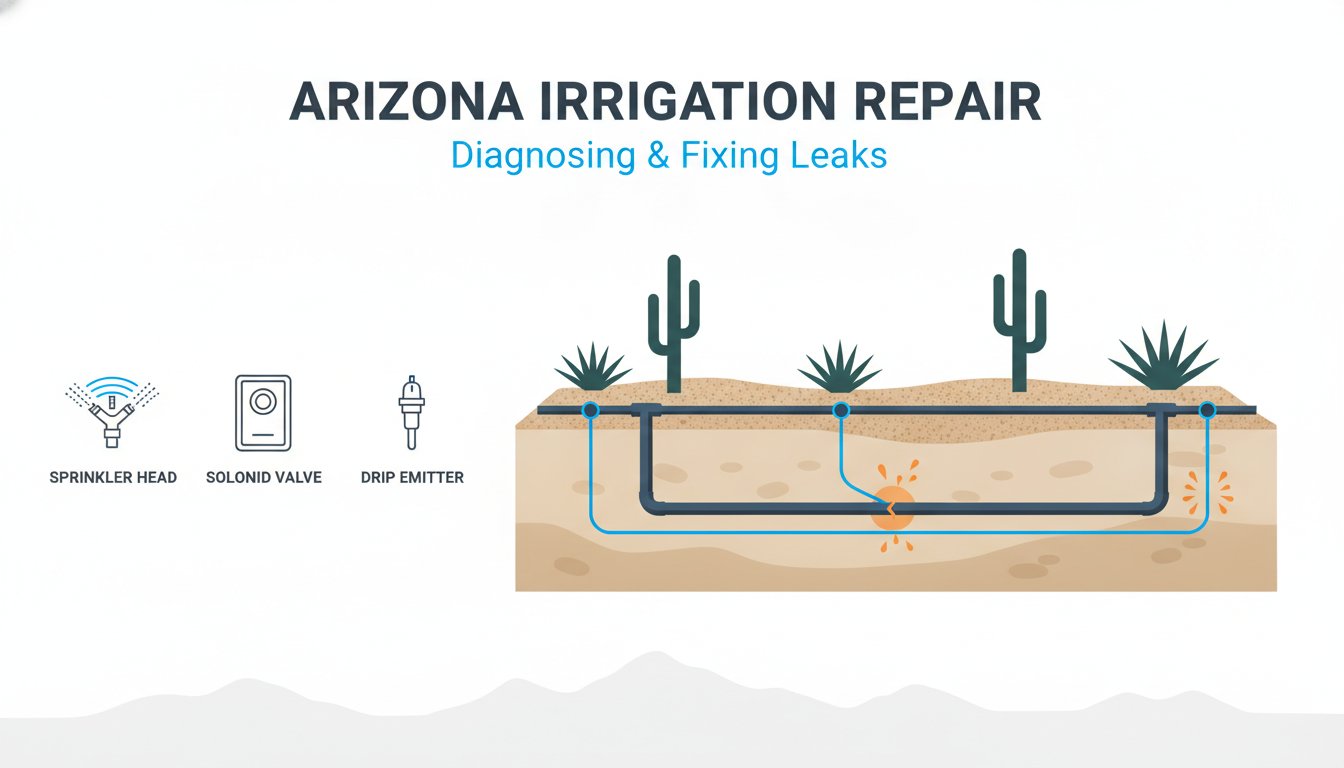
Maintaining system integrity requires a proactive approach. You should perform seasonal adjustments to your controller to match the extreme temperature swings between our winter nights and summer days. It's also vital to monitor your water bill for unexpected spikes, which are often the first sign of a subterranean leak. For more detailed guidance on identifying these issues, you can read our guide on Drip System Troubleshooting in Surprise. Regularly flushing your lines and cleaning filters can also prevent calcium buildup from becoming a terminal problem.
Upgrading an Existing System
There comes a point where patching an old, failing system is no longer cost-effective. If you're constantly dealing with brittle lines and clogged emitters, a full drip line replacement is often the most reliable path forward. We often help homeowners by converting old, inefficient sprinkler zones into precision drip zones that better serve their xeriscaping. Investing in professional irrigation repairs and maintenance can extend the life of your system and prevent the need for a total overhaul. If you're tired of constant repairs and dying plants, contact our team for a professional evaluation of your current system.
Professional Drip System Design vs. DIY Kits
While big-box store kits are often marketed as a quick weekend project, they frequently carry hidden costs that surface within the first season. These retail bundles typically rely on thin-walled tubing and light-duty emitters that aren't built to withstand the high static pressure of Arizona municipal water lines. A professional drip system installation utilizes commercial-grade components from manufacturers like Rain Bird or Hunter. These parts are engineered for durability, featuring UV-resistant plastics and pressure-compensating mechanisms that outlast generic alternatives by years.
The true value of a professional approach lies in the master craftsman's local knowledge. In communities like Surprise and Peoria, the presence of caliche, which is a hardened layer of calcium carbonate, can make manual trenching nearly impossible for a DIYer. A specialist understands how to navigate these soil conditions while ensuring the system maintains hydraulic balance across the entire property. This expertise prevents the common DIY pitfall of emitter starvation, where plants at the end of a line receive significantly less water than those near the valve hub.
The Sonora Sprinkler Difference
At Sonora Sprinkler, we focus exclusively on residential-only properties in the West Valley. Being family-owned since 1999, we've developed a deep understanding of the unique environmental stressors in Sun City West and Surprise. We don't believe in quick fixes or one-size-fits-all solutions. Instead, we prioritize the long-term health of your landscape by using heavy-duty PVC main lines and custom-designed layouts. Our commitment is to build a system that remains a dependable fixture of your property for a decade or more, protecting your vegetation from the relentless desert heat.
Getting Started with Your New Installation
A professional consultation is the first step toward a maintenance-free yard. During this process, we evaluate your existing landscape, identify the specific water needs of your trees and shrubs, and map out a layout that maximizes efficiency. While the initial investment in a custom design is higher than a retail kit, it saves money over the system's lifespan by reducing water waste and eliminating the need for constant repairs. If you're ready to transition to a reliable, water-efficient irrigation solution, contact Sonora Sprinkler for a professional consultation and let us help you build a landscape that thrives.
Protecting Your Arizona Investment for the Long Term
A successful desert landscape requires more than just water; it needs a resilient delivery system that respects the intensity of our climate. By prioritizing hydrozoning and durable PVC infrastructure, you move away from the cycle of constant repairs and toward a truly maintenance-free yard. We've seen how the right materials and a meticulous design protect your investment from UV damage and the hard water buildup typical of the West Valley. This philosophy of quality and professional vetting is shared by experts like Rescue Roofing Tulsa, who offer guidance on selecting reliable contractors for critical home maintenance.
This commitment to professional quality is essential for all home upgrades; for example, you can discover X Cabinet & Stone when seeking expert kitchen and bathroom remodeling to enhance your property's interior.
Similarly, protecting your home from the effects of extreme heat includes maintaining a robust HVAC system; for expert guidance and service, Christensen Heating and Cooling provides the professional support necessary for reliable residential heating and cooling.
Additionally, keeping your home's exterior in top condition is vital for long-term value; for premium painting and restoration services in the Scottsdale area, click here.
Furthermore, managing the impact of the sun on your home's glass surfaces can significantly reduce cooling costs and interior UV damage; for professional window film installation, check out Sunnyside Glass Solutions Ltd.
For those looking to maintain their property's curb appeal in other regions, such as New Mexico, Chaparro's Painting, LLC provides expert residential painting services to protect and beautify your home's exterior.
In addition to landscape hydration and painting, quality hardscaping defines the structure of your outdoor space; for professional paver installation in the San Francisco Bay Area, baysidepavers.com provides expert craftsmanship.
Beyond the landscape, keeping your home's primary water lines in top condition is a vital part of property care; for expert residential services, you can visit Pioneer Plumbing CDA to learn more about professional waterline and drainline repairs.
Beyond physical maintenance, securing your property's value often involves professional risk management. Just as homeowners and business owners turn to SI Insurance for comprehensive coverage, investing in a high-quality irrigation system is a proactive step in protecting your overall estate from environmental hazards.
Investing in a professional residential drip system installation ensures that your property's vegetation receives the deep, targeted hydration necessary for long-term health. Since 1999, Sonora Sprinkler Inc. has served as a neighborly expert specializing in Arizona desert irrigation. As residential-only specialists for Surprise and Peoria, we focus on expert PVC pipe replacement to provide a level of durability that off-the-shelf kits simply can't match. You don't have to battle the desert heat alone when you have a grounded, professional system in place—much like how homeowners in other climates rely on professional lawn care Ooltewah TN to maintain their own property value and beauty.
Schedule Your Professional Drip System Design with Sonora Sprinkler today. We're ready to help you build a sustainable, flourishing landscape that stands the test of time.
Frequently Asked Questions
How much does residential drip system installation cost in Arizona?
The cost for a residential drip system installation in Arizona typically ranges from $2,500 to $5,000 for standard yards, depending on the complexity and acreage. Smaller front yard projects may fall between $1,500 and $2,500. Factors such as the number of watering zones, the choice between PVC and poly-pipe, and the inclusion of smart controllers will influence the final investment needed to protect your landscape.
Is it better to use PVC or poly-pipe for my drip system in Surprise?
For main lines in Surprise, Schedule 40 PVC is the superior choice because it withstands our high soil temperatures and pressure better than flexible poly-pipe. While poly-pipe is suitable for short lateral runs to individual emitters, using it for main lines often leads to premature failure and frequent leaks. Buried PVC provides a rigid, durable backbone that can last for decades in desert conditions.
How long does a professional drip irrigation system last in the desert?
A professionally installed system using PVC main lines and high-quality components can last 10 to 15 years or more with regular maintenance. In contrast, DIY systems or those relying heavily on thin-walled poly-tubing often begin to degrade within 3 to 5 years due to UV exposure and soil expansion. Longevity depends on protecting the infrastructure from the sun and managing hard water mineral buildup.
Can I convert my existing sprinkler system to a drip system?
You can convert an existing sprinkler zone to a drip zone by installing a conversion kit that includes a pressure regulator and a filter. This process involves capping off unnecessary spray heads and replacing the main delivery point with a manifold for drip tubing. It's a highly effective way to transition from a high-water-use lawn to a water-efficient xeriscape without replacing your entire plumbing network.
What are the best plants for a drip system in Peoria, AZ?
Desert-adapted species like agave, ocotillo, and Texas sage are ideal for drip systems in Peoria because they thrive on infrequent, deep watering cycles. Drip irrigation is also the preferred method for citrus trees and desert willow, as it allows for precise moisture delivery at the root zone. Grouping these plants by their water needs, or hydrozoning, ensures that each species survives the summer without being overwatered.
How often should I run my drip irrigation in the summer?
During the peak of summer, most desert shrubs and trees require deep watering cycles run two to three times per week. The duration should be long enough to reach a soil depth of 12 inches for shrubs and up to 36 inches for mature trees. Running your system during the early morning hours minimizes evaporation and helps your plants withstand the daytime heat more effectively.
Do I need a permit for drip system installation in Surprise, AZ?
Most simple residential irrigation projects in Surprise don't require a specific building permit, but all systems must comply with local plumbing codes regarding backflow prevention. Municipalities require a certified backflow assembly to prevent irrigation water from contaminating the city's potable supply. It's always a good practice to verify current requirements with the Surprise Planning and Zoning Department before starting a major installation.
How do I know if my drip emitters are clogged?
You can identify clogged emitters by looking for dry spots around the base of your plants or noticing signs of heat stress like wilting or yellowing leaves. A visual inspection while the system is running will reveal if an emitter is barely dripping or completely dry. Hard water calcium deposits are the most common cause of clogs in the West Valley, often requiring emitter replacement to restore proper flow.