That small assembly of brass and plastic near your water main is the only thing standing between your family's drinking water and the fertilizers, pesticides, and desert bacteria living in your soil. It's easy to overlook this component until you notice a mysterious leak or receive a compliance notice from the city. Managing irrigation backflow maintenance in the intense Arizona heat can feel like a chore, especially when plastic parts become brittle and local requirements seem to change every season. We understand that you want a reliable system that keeps your household safe without the stress of unexpected repairs or water service interruptions.
This guide provides the clarity you need to handle your backflow preventer with confidence. You'll learn the essential role these devices play in preventing cross-connection contamination and how to perform a simple DIY inspection to spot trouble before it starts. We will also walk through the latest 2026 regulations, including the new digital reporting mandates that require certified testers to file reports online. By the end, you'll know exactly how to maintain your system's integrity and when it's time to bring in a professional for your annual testing as mandated by Arizona Administrative Code R18-4-215.
Key Takeaways
- Understand how backpressure and backsiphonage can pull contaminants into your home's drinking water and why a functioning preventer is your first line of defense.
- Establish a seasonal schedule for irrigation backflow maintenance to identify brittle components and protect your system from extreme Arizona heat.
- Learn to recognize the warning signs of a failing device, such as chattering noises or constant dripping from the assembly bell.
- Differentiate between routine homeowner inspections and the annual certified testing required by Arizona law to maintain municipal compliance.
- Discover why specialized diagnostics are essential for maintaining residential irrigation systems in the unique desert environments of Surprise and Peoria.
Why Irrigation Backflow Maintenance is Critical for Arizona Homeowners
In the Arizona desert, the integrity of your home's plumbing relies on more than just high-quality pipes. Irrigation backflow maintenance is a fundamental part of protecting your family's health because it prevents the unintended reversal of water flow. This phenomenon, known as backflow, occurs when contaminated water from your lawn, flower beds, or drip system is pulled backward into your clean drinking water supply. It's a silent risk that many homeowners don't consider until the quality of their tap water is already compromised; to see how specialists in other areas manage residential safety and quality, you can learn more about Arkansas Home Improvement and their exterior remodeling services.
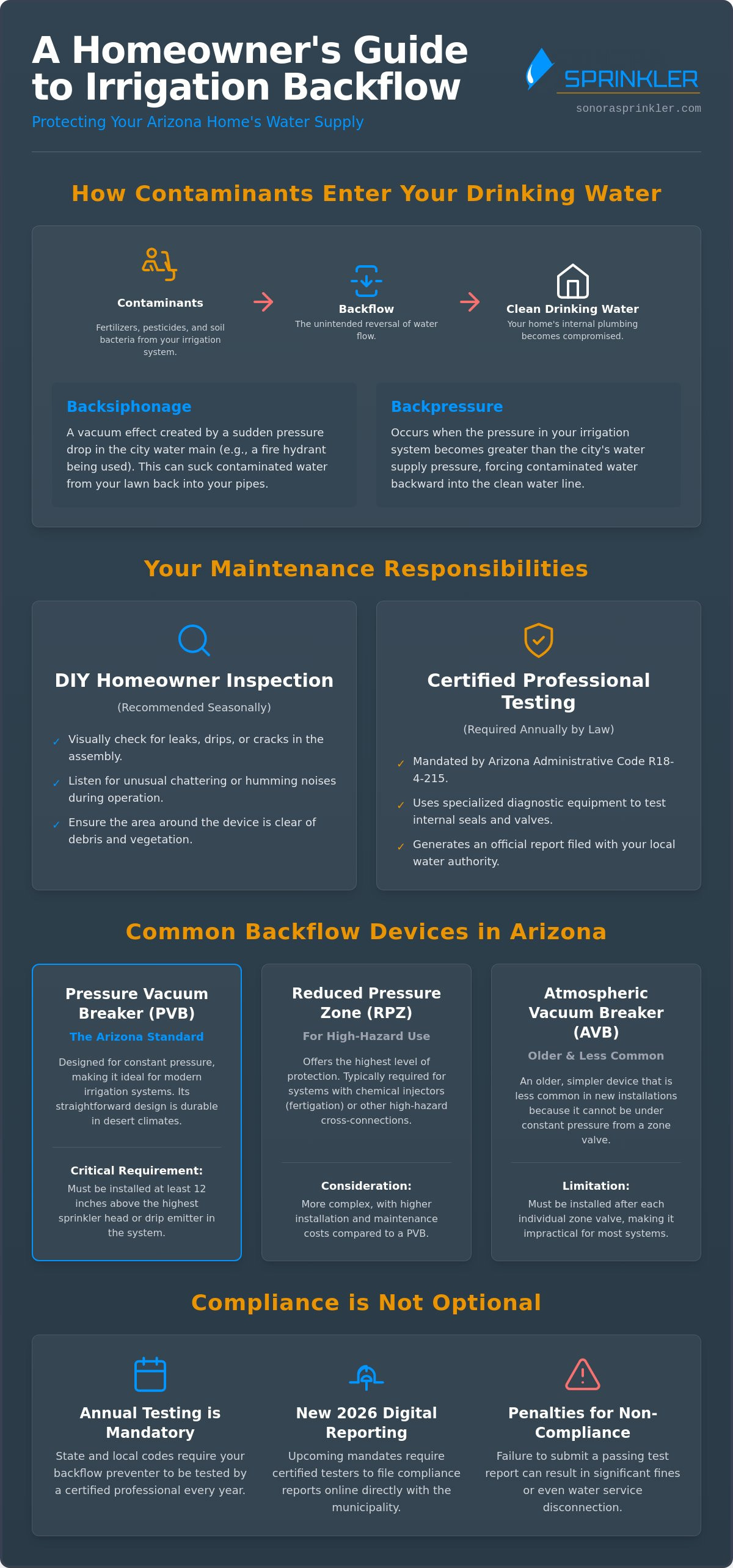
This reversal usually happens through two mechanical processes: backpressure and backsiphonage. Backpressure occurs when the pressure in your irrigation lines exceeds the pressure in the city's supply line, often due to thermal expansion or downstream pumps. Backsiphonage is more common during the peak of an Arizona summer. When municipal water demand reaches its highest point or a nearby fire hydrant is opened, the resulting pressure drop in the main line creates a vacuum effect. Without a functioning backflow prevention device, this vacuum can suck fertilizers, pesticides, and soil-borne bacteria directly into your home's internal plumbing.
To better understand how these systems function within your landscape, watch this helpful video:
The Role of the Backflow Preventer Device
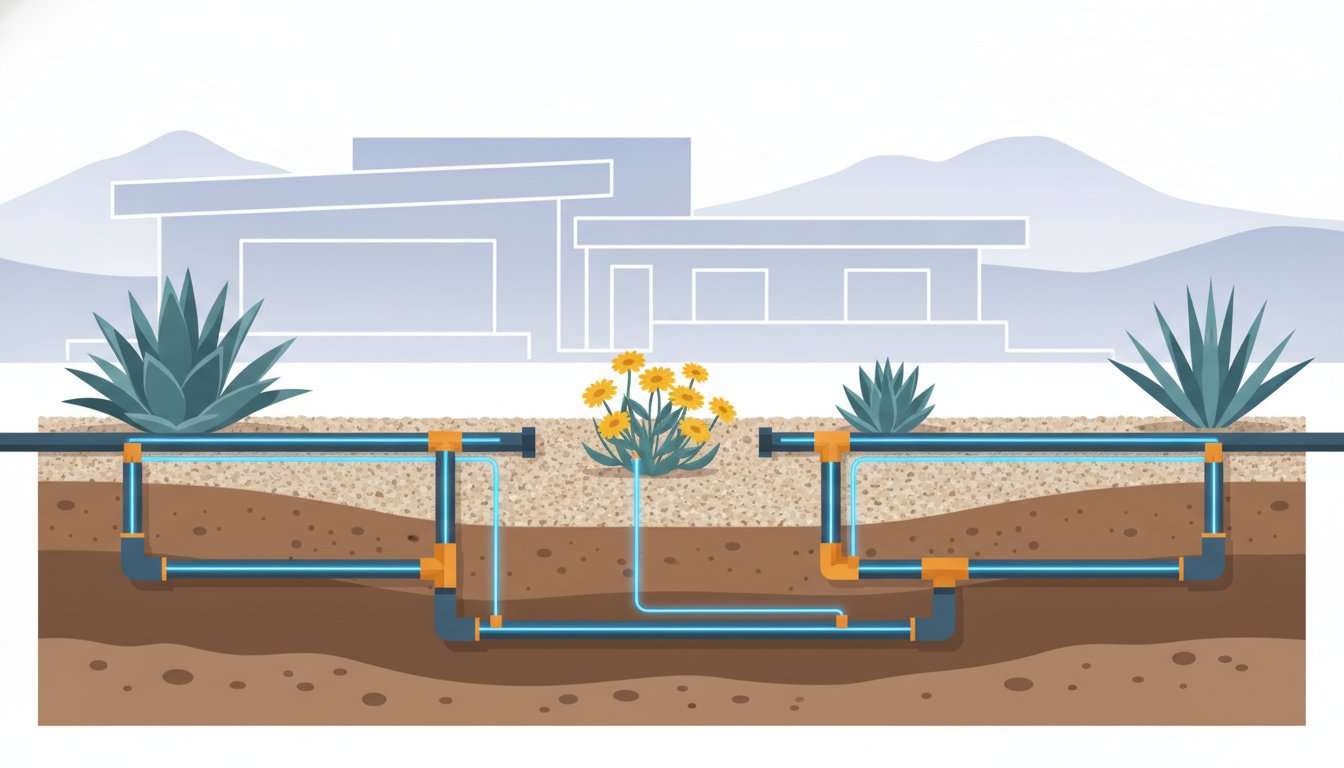
Think of the assembly as a one-way mechanical safety gate. It contains internal check valves, springs, and air ports designed to physically block water from moving in the wrong direction. These components must remain flexible and airtight to function correctly. However, the extreme heat in Surprise and Peoria often causes plastic housings to warp and rubber seals to dry out. Regular oversight ensures these internal parts haven't become brittle or seized. You can find more information about these specific components on our valves and backflow service page, which illustrates the hardware we service daily.
Legal and Regulatory Requirements in Surprise and Peoria
Municipalities like Surprise and Peoria have strict codes requiring these assemblies because a single contaminated home can affect the entire neighborhood's water supply. Arizona's cross-connection control program is a state-mandated initiative designed to protect public drinking water from potential sources of contamination. Local water authorities actively monitor compliance through annual testing records. If you neglect your irrigation backflow maintenance or fail to submit a passing test report, the city may issue significant fines or even disconnect your water service to mitigate the risk to the public water system.
Common Backflow Prevention Devices in Desert Landscapes
Selecting the right hardware is the first step in establishing a reliable system, but the unique environment in Surprise and Peoria dictates which assemblies are most effective. Homeowners in these areas will primarily encounter three Types of Backflow Prevention Devices, each with specific installation requirements. While some regions utilize Double Check Valve Assemblies (DCVA) that can be installed below ground, these are rare in Arizona residential landscapes. Local codes and the high risk of soil contaminants generally require above-ground assemblies that are easier to inspect and maintain.
The Pressure Vacuum Breaker (PVB) is the undisputed standard for Arizona residential irrigation. It's designed to handle the constant pressure of modern drip and sprinkler systems while providing a high level of protection against backsiphonage. In contrast, the older Atmospheric Vacuum Breaker (AVB) is far less common today because it cannot be under constant pressure and must be installed after every single zone valve. For homes with high-hazard features, such as those with dedicated chemical injection systems for fertilization, a Reduced Pressure Zone (RPZ) assembly might be required, though these are more complex and costly to maintain than a standard PVB.
The PVB: Arizona’s Standard for Irrigation Safety
The PVB is preferred for desert landscapes because of its durability and straightforward mechanical design. For the device to function correctly, it must be installed at a "critical level," which is at least 12 inches above the highest sprinkler head or drip emitter in the entire system. This elevation ensures that gravity helps the internal check valve seat properly. The most vulnerable parts of this unit are the plastic bonnet and poppet located under the metal bell. These components are designed to break if the unit freezes; however, in our climate, they're more likely to fail due to material fatigue from years of operation.
Desert Stressors: Heat, UV, and Hard Water
The Arizona sun is the primary enemy of consistent irrigation backflow maintenance . When summer temperatures regularly exceed 110°F, the rubber seals and diaphragms inside the assembly begin to lose their elasticity. Once these seals become brittle, they can no longer create the airtight vacuum necessary to block contaminated water. UV radiation also takes a heavy toll, causing the protective plastic covers and internal plastic components to become chalky and prone to cracking under pressure.
Mineral buildup presents another significant challenge. Arizona is known for its hard water, which leaves behind heavy deposits of calcium and limescale. These minerals accumulate on the brass seats and internal springs of the check valves, preventing them from closing fully. If you notice white, crusty buildup around the test cocks or the base of the bell, your system's internal components are likely struggling. If your assembly is showing these signs of environmental wear, it may be time to reach out for a professional inspection to ensure your drinking water remains protected.
The Homeowner’s Maintenance Checklist: DIY vs. Professional Service
Effective irrigation backflow maintenance involves a two tiered approach. On one level, you have the routine vigilance of the homeowner to prevent environmental damage. On the other, you have the specialized technical verification required by law. This commitment to property care is similar to how you might learn more about Rescue Roofing Tulsa when seeking specialists to protect your home’s exterior from the elements. Establishing a consistent rhythm is the most effective way to ensure your system survives the transition between Arizona's mild winters and the punishing summer heat. Homeowners who take an active role in monitoring their equipment often catch small leaks before they lead to expensive water bills or system failures.
We recommend a seasonal cadence focused on two critical windows. In March, a pre summer inspection ensures the device is ready for the high pressure demands of peak irrigation season. In October, a post summer check allows you to assess any damage caused by monsoon storms or intense UV exposure before the cooler months arrive. For these checks, you only need a few basic tools: a bright flashlight for spotting hairline cracks in the housing, a soft brush for clearing away desert dust, and a clean towel to wipe down surfaces for a better view of the seals.
Safety Warning: Never attempt to disassemble any part of the backflow assembly while the system is under pressure. The internal springs are under significant tension, and the water pressure itself can cause the bonnet to fly off with dangerous force. Always shut off the water supply and bleed the pressure through the test cocks before performing any hands on work.
Monthly Homeowner Inspection Steps
Small issues can escalate quickly in our environment. Once a month, take five minutes to perform a visual scan of the assembly. Start by looking for "weeping" or active water dripping from the air vent under the metal bell. While a small puff of water is normal when the system cycles on or off, constant dripping indicates a failing internal poppet or a fouled check valve.
Next, inspect the shut off handles for corrosion or restricted movement. They should move smoothly without significant resistance. If they feel stuck or show signs of heavy green oxidation, the internal ball valves may be seizing. Finally, check the protective cover for cracks or residents. These covers often become prime real estate for wasps, black widow spiders, or small rodents. Clearing these out prevents debris from obstructing the mechanical movement of the assembly.
When to Call a Professional for Testing
While DIY care keeps the exterior and seals in good shape, it doesn't satisfy the legal requirements in Surprise or Peoria. Most local water providers mandate an annual test conducted by a certified technician. This process is far more technical than a visual check. Professionals use calibrated differential pressure gauges to measure the exact PSI at which the internal check valves open and close.
This measurement ensures the device can withstand backpressure without failing. If your system fails this mandatory test or if you encounter complex mechanical issues during your monthly scan, it's time to seek expert irrigation repairs and maintenance. A certified professional can diagnose internal failures that aren't visible to the naked eye, ensuring your home remains compliant with Arizona's health standards.
Troubleshooting and Repairing Common Backflow Issues
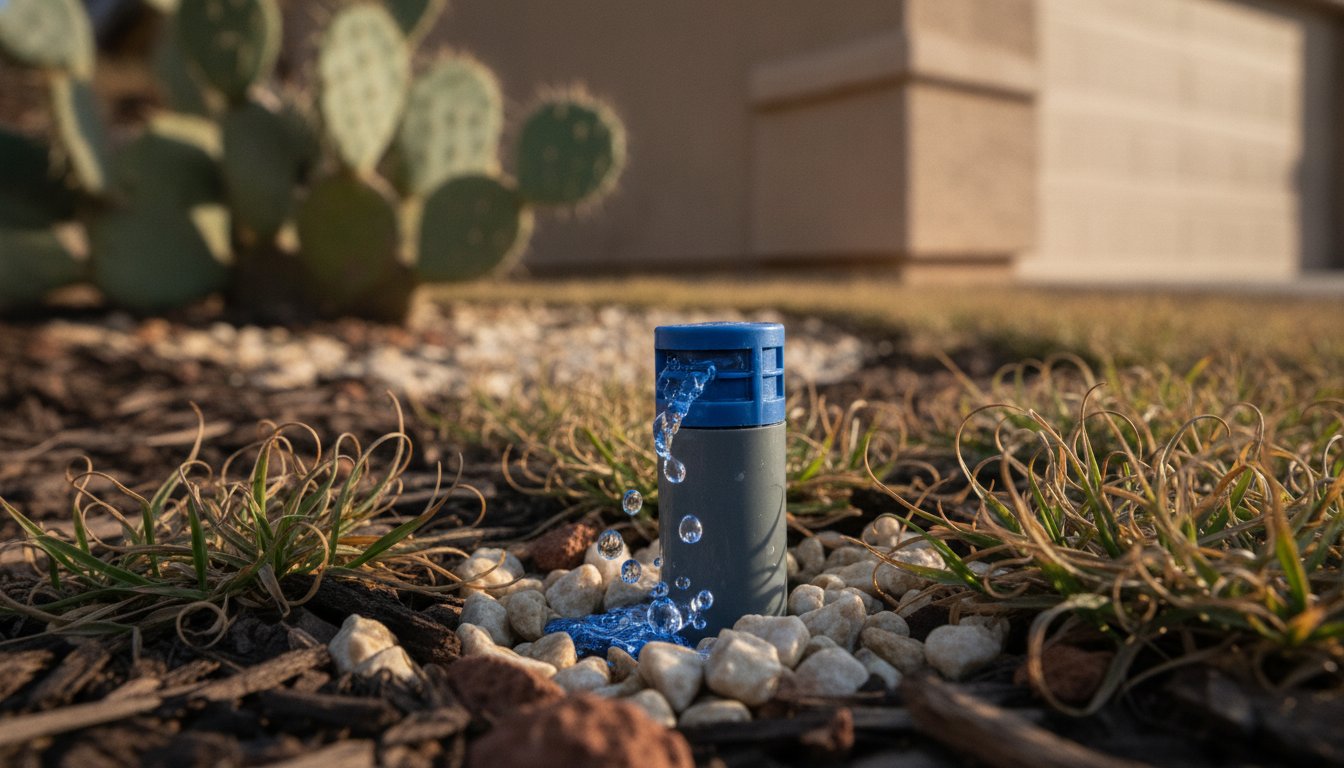
Identifying a failure in your system often starts with a visual or auditory cue. The most frequent symptom homeowners encounter is water constantly spraying or dripping from the bell shaped canopy at the top of the assembly. This usually indicates that the internal poppet has failed to seal against the bonnet, allowing water to escape through the air vent. While a quick puff of water is normal when the system starts up, a continuous stream suggests that the internal components are no longer capable of maintaining the necessary vacuum seal. This is a primary indicator that your irrigation backflow maintenance schedule has been interrupted by mechanical wear.
You might also notice a chattering or vibrating noise echoing through your pipes when the irrigation is active. This "machine gun" sound typically occurs when the internal spring has lost its tension or when mineral deposits are preventing the check valve from seating firmly. Another subtle sign of trouble is a sudden drop in water pressure across your entire yard. If the check valve is fouled with debris or heavy limescale, it may only open partially, which restricts the volume of water available to your sprinklers and drip emitters. Over time, these issues are often exacerbated by "water hammer," which is the hydraulic shock caused by valves closing too quickly. This repetitive force can fatigue the brass body and shatter the delicate plastic internals.
How to Repair a Leaking PVB Bonnet and Poppet
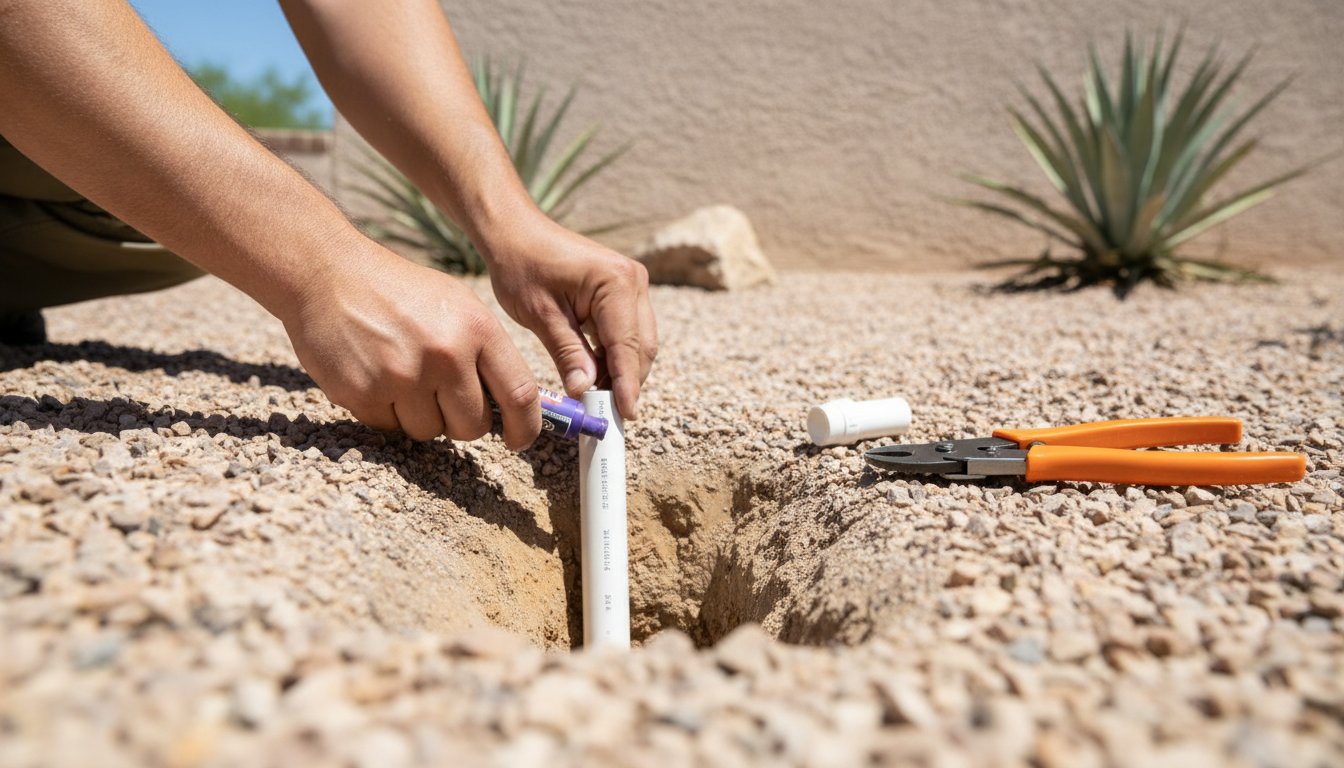
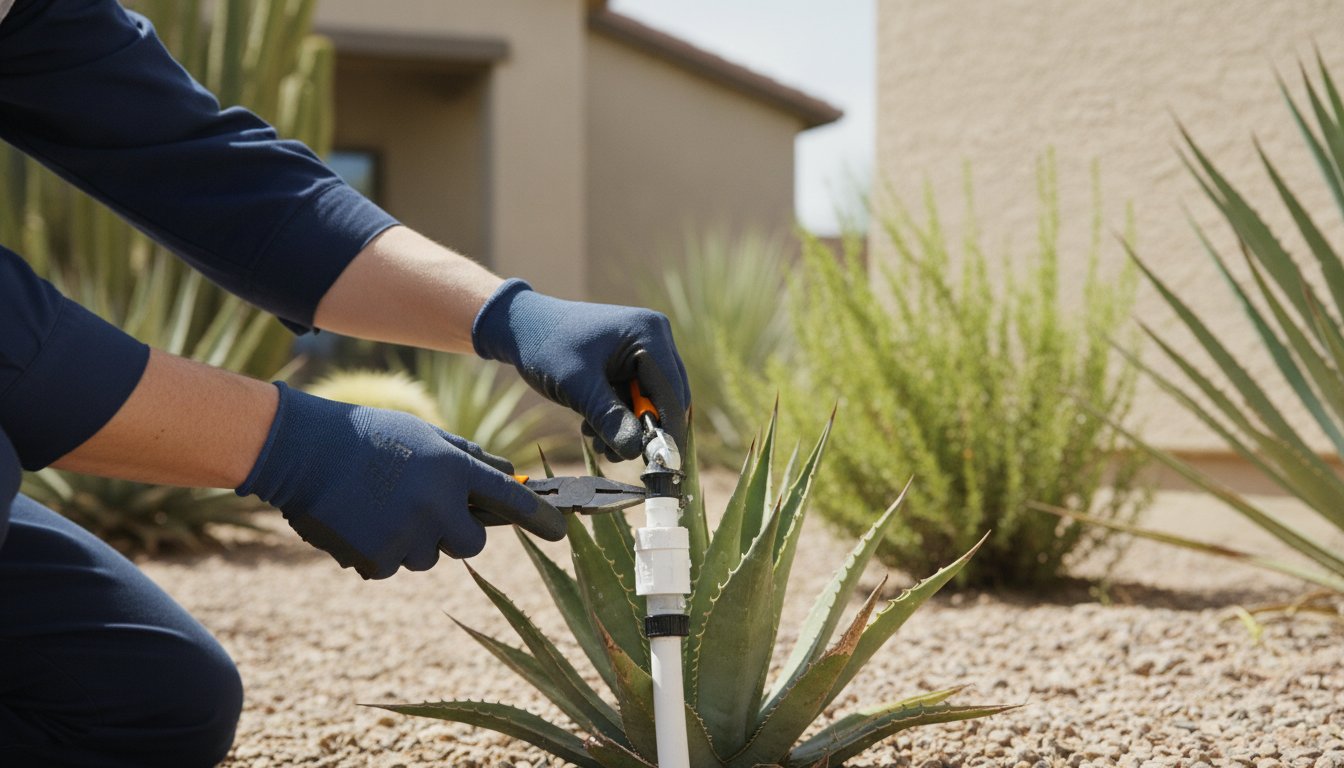
If you have identified a leak coming from the top of your Pressure Vacuum Breaker, you can often resolve the issue by replacing the bonnet and poppet kit. This is a common repair that addresses the parts most susceptible to Arizona's environmental stressors. Follow these steps to ensure a safe and effective fix:
- Step 1: Shut off the water supply to the irrigation system using the ball valve located on the riser pipe below the assembly.
- Step 2: Carefully remove the metal canopy by unscrewing the top nut, then unscrew the plastic bonnet assembly from the brass body.
- Step 3: Inspect the internal chamber for pebbles, sand, or cracked plastic, and check the rubber O-rings for signs of tearing or thinning.
- Step 4: Reassemble the unit using new manufacturer approved parts and slowly restore water pressure to the system to avoid a sudden pressure shock that could damage the new seals.
Dealing with Frozen or Cracked Backflow Bodies
While we primarily design systems for heat, the rare "desert freeze" in Surprise and Peoria can be devastating to irrigation hardware. If standing water inside the brass body freezes, the expansion can cause the metal casing to crack or bulge. Unlike the plastic internal parts, a cracked metal body cannot be reliably repaired and almost always requires a full device replacement to maintain structural integrity and municipal compliance. To mitigate this risk, we recommend the use of insulated backflow blankets during the winter months. These specialized covers provide a thermal barrier that protects the brass from reaching freezing temperatures on cold desert nights. If you notice a hairline crack in the metal or if your DIY efforts don't stop a persistent leak, it's essential to schedule a professional backflow service to restore your system's safety.
Professional Backflow Services: Protecting Your Home with Sonora Sprinkler
While routine homeowner vigilance is the first line of defense, professional irrigation backflow maintenance ensures that your system remains compliant and mechanically sound. At Sonora Sprinkler, we approach every service call with the understanding that your irrigation system is a complex network of valves, timers, and pressure regulators. A failure in one area often signals underlying stress in another. Our technicians don't just perform a surface level check; we evaluate the structural integrity of your entire assembly to ensure it can withstand the extreme pressure fluctuations common during Arizona's peak water demand months.
Choosing a specialist over a general landscaper makes a significant difference in the longevity of your hardware. Generalists often lack the specialized tools and diagnostic training required to identify subtle internal check valve failures or hairline fractures in brass bodies. By focusing our expertise on residential systems, we provide a thoroughness that protects both your landscape investment and your household's health. This commitment to security is why many homeowners also explore Auto Insurance to ensure their vehicles are protected against the unexpected. Proactive maintenance in the spring can prevent the emergency repairs that often occur when the summer heat puts maximum stress on brittle plastic components and rubber seals.
The Sonora Sprinkler Difference
Our family owned and operated business has been a fixture in the Surprise and Peoria communities since 1999. With over 25 years of "boots on the ground" experience, we have developed a deep understanding of how the local environment impacts irrigation mechanics. We know exactly how the intense UV rays and hard water deposits in our region degrade even the highest quality assemblies. Because we specialize exclusively in residential irrigation, we offer a neighborly level of service that larger corporate competitors cannot match. This focused expertise allows us to provide precise results that prioritize the long term health of your property; just as we value our Arizona heritage, you can visit Rainier Roofing LLC to discover the rich history of the Florida community where they provide their expert services.
Schedule Your Irrigation Health Check
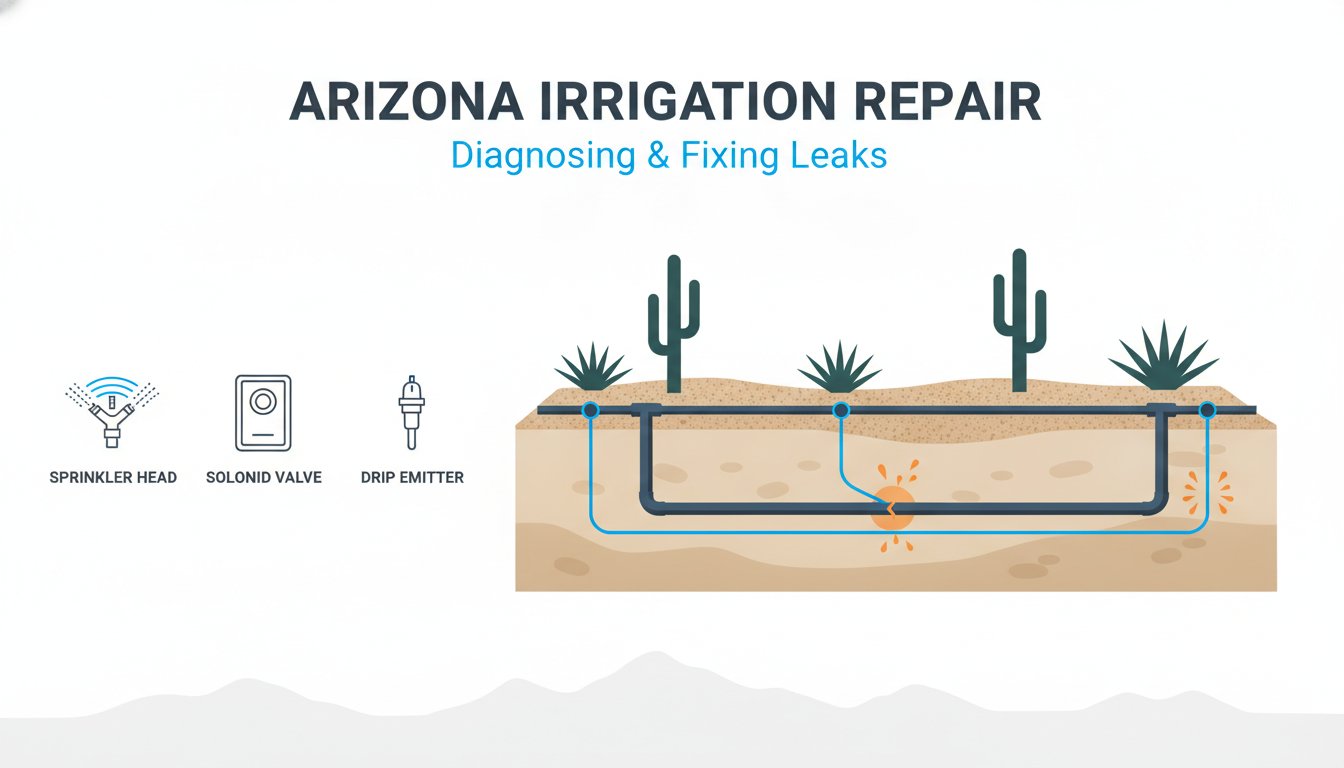
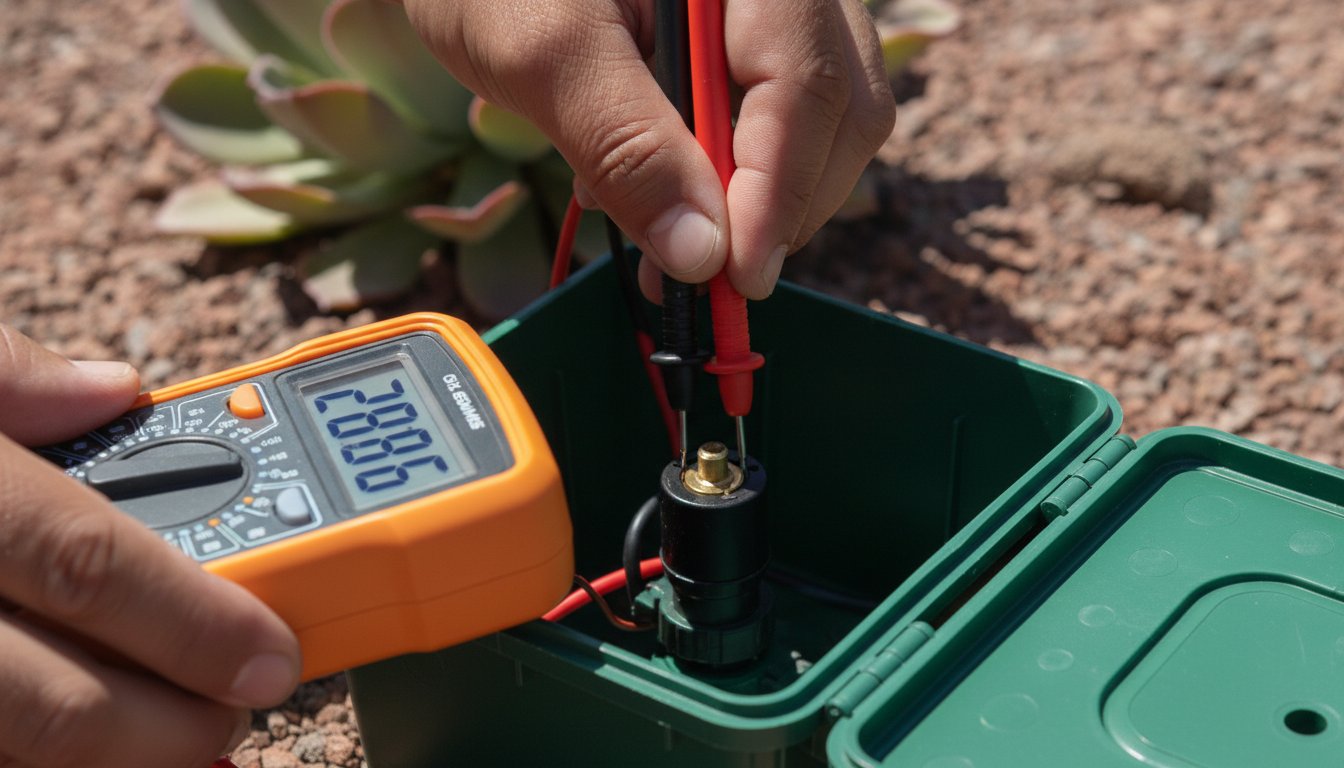
A professional backflow inspection is the ideal time to perform a comprehensive irrigation health check. During our visit, we often find that the health of your backflow assembly is closely tied to the efficiency of your electrical components. Our specialized approach to wiring and diagnostics allows us to identify if a faulty solenoid or a wiring short is causing your valves to close too abruptly, leading to the damaging water hammer effect mentioned earlier. This holistic view ensures that every part of your system is working in harmony.
Securing the safety of your home's water supply provides a level of peace of mind that is well worth the investment in professional care. Don't wait for a compliance notice from the city or a visible failure to address your system's needs. If you are ready to ensure your irrigation is reliable and safe, please visit our contact page to schedule a professional inspection. We are committed to providing the steady, expert guidance you need to maintain a functional and efficient desert landscape.
Securing Your Home’s Water Supply for the Long Term
A functioning backflow assembly is more than a municipal requirement; it's a vital mechanical safeguard that protects your family's health from the contaminants found in landscape soil. By understanding the stressors of the Arizona climate, you can transition from reactive repairs to proactive irrigation backflow maintenance . This approach preserves the integrity of your brass and plastic components while ensuring your system remains compliant with local water authority standards. Consistency in your seasonal inspections allows you to spot brittle seals or mineral buildup before they lead to significant failures.
As a family owned and operated business serving Surprise and Peoria since 1999, Sonora Sprinkler specializes exclusively in residential irrigation. We bring a level of grounded expertise that generalists simply cannot provide, focusing on the specific needs of desert landscapes. Our technicians are dedicated to ensuring your system operates with total reliability throughout the year. Ensure your home's water is safe—Schedule a Backflow Inspection with Sonora Sprinkler today! Taking this step today protects your property’s long term health and provides the peace of mind you deserve.
Frequently Asked Questions
How often should I have my irrigation backflow preventer tested?
You must have your assembly tested at least once every year according to Arizona Administrative Code R18-4-215. This annual requirement ensures the internal check valves are functioning properly to protect the public water supply. You also need a new test whenever the device is moved, repaired, or replaced. Consistent irrigation backflow maintenance and testing are the only ways to remain compliant with local municipal codes in Surprise and Peoria.
Why is my backflow preventer leaking from the top?
Constant leaking from the bell shaped canopy usually points to a failed internal bonnet and poppet assembly. In the Arizona heat, these plastic components often become brittle or warp, which prevents the air vent from sealing correctly when the system is pressurized. While a quick puff of water is normal during startup, a steady stream indicates that the internal parts need immediate replacement to restore the vacuum seal.
Can I repair my backflow preventer myself?
You can perform basic repairs like replacing a bonnet kit yourself, but you cannot legally conduct the mandatory annual testing. Arizona law requires that a certified tester performs the official inspection and submits the report to your water purveyor. Many homeowners handle the visual irrigation backflow maintenance but rely on professionals for the technical diagnostics and digital filing required for municipal compliance.
What is the difference between a check valve and a backflow preventer?
A check valve is a single mechanical part that allows water to flow in one direction, while a backflow preventer is a complex assembly designed for high level safety. Backflow preventers contain multiple check valves, test cocks, and air ports that work together to prevent contaminated water from entering the drinking supply. While a simple check valve might be used inside an irrigation zone, it doesn't meet the legal safety standards for a main water connection.
How do I protect my backflow preventer from Arizona's extreme heat?
The most effective way to protect your device is by installing a high quality insulated backflow blanket. These covers shield the brass and plastic components from direct UV radiation, which prevents the material fatigue caused by 110°F+ temperatures. They also provide a critical thermal layer during the winter months, reducing the risk of the brass body cracking during a sudden overnight freeze in the desert.
Do I need a backflow preventer if I only have a drip irrigation system?
Yes, a backflow preventer is required for all irrigation systems, including drip lines. Drip emitters sit directly in the soil where they are exposed to fertilizers, pesticides, and animal waste. If a pressure drop occurs in the city main, these contaminants can be sucked backward through the emitters and into your home's clean water supply. The assembly acts as the necessary barrier to prevent this cross connection.
What happens if my backflow preventer fails its annual test?
If your device fails, you are responsible for completing the necessary repairs and scheduling a retest. Most water providers in the Phoenix metro area give homeowners a specific window to resolve the issue before they take enforcement action. Failure to submit a passing report through the required digital portal can lead to fines or the temporary disconnection of your residential water service to protect the public supply.
Is it normal for a backflow preventer to spit water when the sprinklers turn off?
A brief discharge of water is perfectly normal when your irrigation zones shut down. This happens because the internal poppet drops to open the air vent, which breaks the vacuum and allows the system to drain. This mechanical action is a sign that the device is working as intended. However, if the water continues to flow or spray after the initial shutoff, the internal seals likely need professional attention.