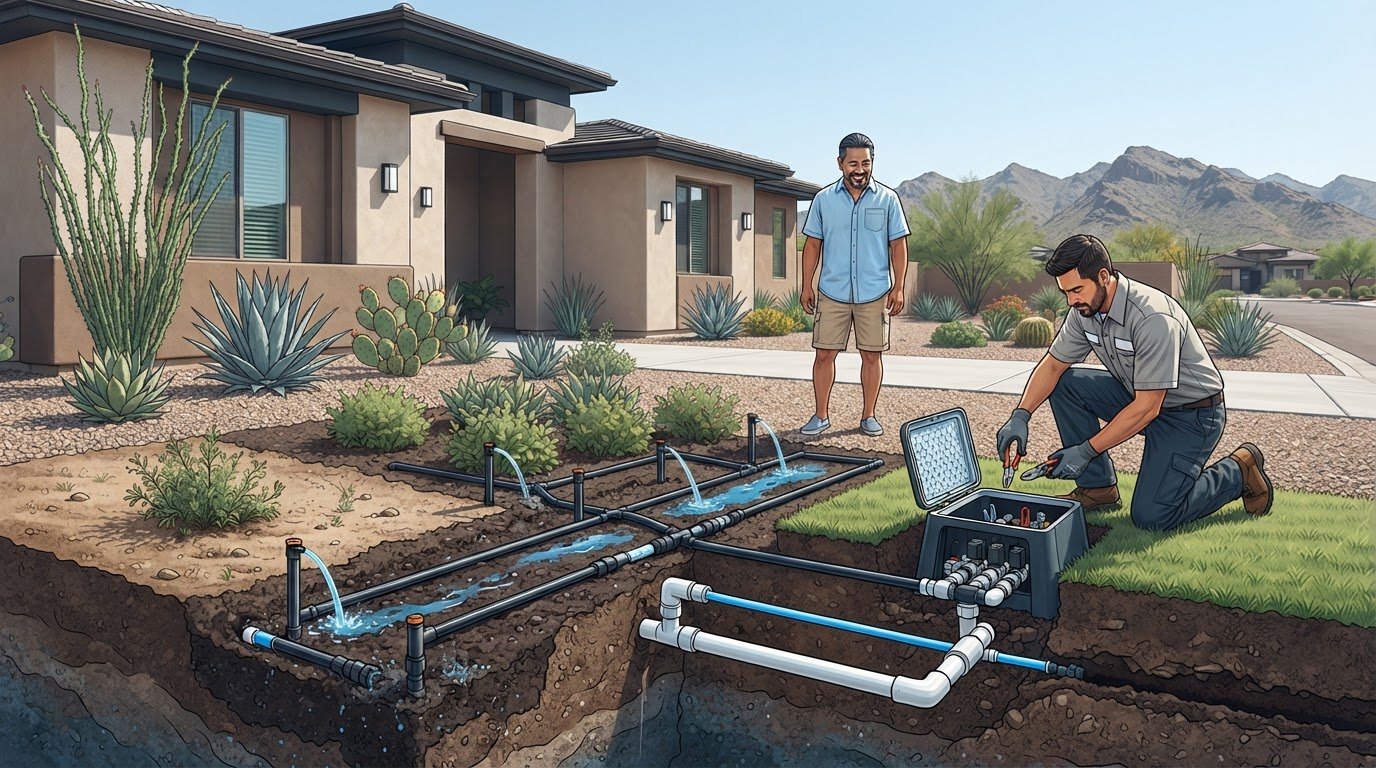
Most homeowners assume a standard drip kit from a big-box store is enough to keep their landscape alive, but in the West Valley, that's often a recipe for system failure. When temperatures regularly exceed 115°F, your yard needs more than just a few plastic lines. It requires a precision-engineered life-support system. Achieving the right irrigation design for desert plants Arizona residents can rely on means moving beyond basic plumbing and into the realm of environmental protection. You've likely felt the frustration of watching brittle poly-tubing crack after only two seasons or seeing your water bill spike while your shrubs still look parched. It's a common struggle in our unique climate where the soil is often as hard as concrete and the sun is relentless.
This guide will teach you how to build a durable residential system that mimics natural deep-soil hydration while maximizing every drop of water. Efficiency is the goal. We'll detail why professional-grade Schedule 40 PVC outperforms standard tubing in our rocky soil and how to leverage smart technology to hit that 90% efficiency mark. From navigating caliche layers to securing local rebates in Surprise and Peoria, we're providing the roadmap for a healthy, vibrant landscape that costs less to maintain over the long haul. You will learn to engineer a setup that balances the unique hydration needs of native flora with the necessity of long-term water conservation.
Key Takeaways
- Understand why standard builder-grade systems fail in the West Valley heat and how a custom irrigation design for desert plants Arizona residents need can prevent premature system collapse.
- Identify the precise hydration depth targets for different plant types to ensure deep root establishment and survival during 115°F+ summers.
- Learn why professional-grade Schedule 40 PVC is the superior choice for mainlines in rocky soil to minimize frequent repairs and water waste.
- Discover how to properly zone your landscape so that trees, shrubs, and cacti receive the specific water volume they require without over-saturating delicate species.
- Explore how professional diagnostics and custom residential designs can significantly lower your long-term maintenance costs while improving plant health.
Why Standard Irrigation Design Fails Arizona’s Desert Landscapes
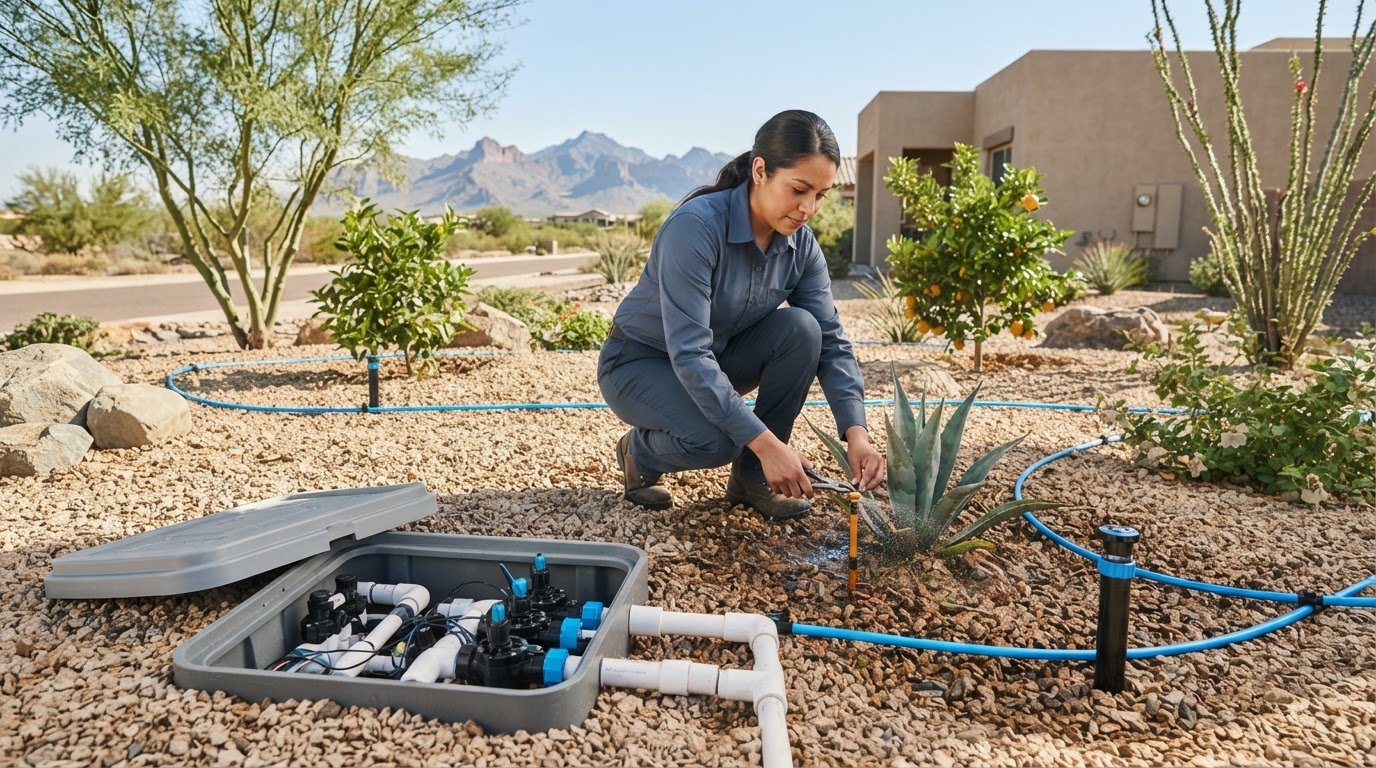
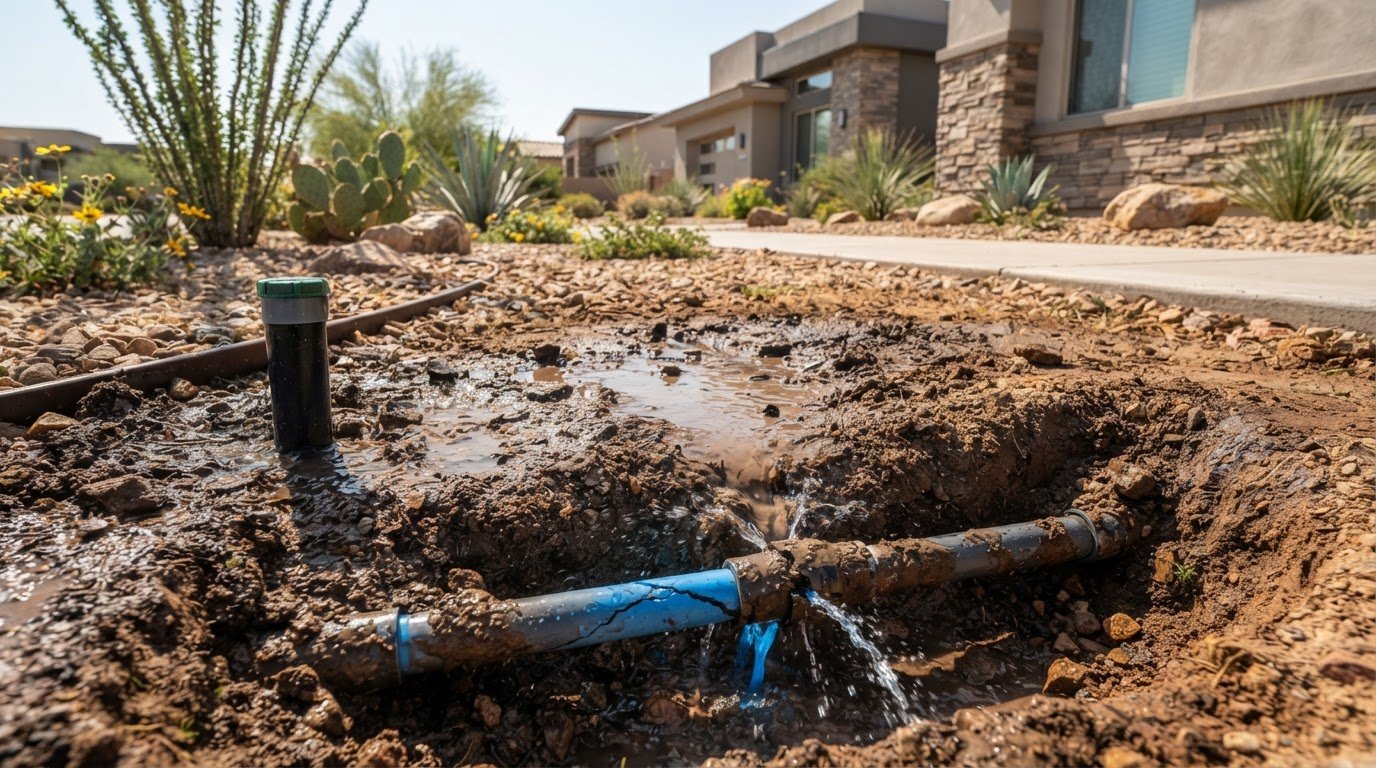
Standard irrigation systems designed for temperate climates aren't built to survive the Sonoran Desert. A true irrigation design for desert plants Arizona homeowners can trust is a system specifically engineered for high heat and low humidity. Most new builds in Surprise fall into the "Builder-Grade" Trap. These homes come with thin-walled poly-tubing that often fails within five years. The material becomes brittle under the pressure of Arizona’s 40-degree diurnal temperature swings. These rapid shifts between daytime highs and nighttime lows cause irrigation joints to expand and contract constantly. This leads to hairline fractures and eventual blowouts that can go unnoticed until a plant dies or your water bill arrives.
The Problem with Surface-Level Watering
Many systems fail because they focus on the surface. In Peoria, the dense caliche layer creates a hard, cement-like barrier that prevents water from moving downward. When water stays near the surface, it evaporates quickly. This leaves behind concentrated salts that can burn delicate roots. A properly designed drip irrigation system avoids "frequent but short" cycles. These cycles encourage shallow root growth, making plants highly vulnerable during a heatwave. Instead, professional engineering prioritizes deep-soil penetration. This strategy flushes salts away from the root zone and encourages resilient, deep-reaching roots that can survive a pump failure or a record-breaking summer. It's about protecting the long-term health of your property through better physics.
Environmental Stressors in the West Valley
The West Valley presents unique challenges that standard designs ignore. Our high UV index acts like a slow-motion torch on exposed lines. Over time, the sun bleaches and weakens plastic components until they crumble. Monsoon season adds another layer of risk. Heavy rains cause soil to shift, putting immense pressure on rigid pipes and snapping connections. Even local wildlife, searching for moisture in 115°F heat, will often chew through thin tubing. Investing in custom drip systems that use high-durability materials is the only way to combat these factors. Protecting your system requires buried lines and robust components that can withstand both the ground heat and the external pressure of our environment. It's a matter of choosing durability over convenience.
Engineering for Deep Root Zones: The Key to Plant Longevity
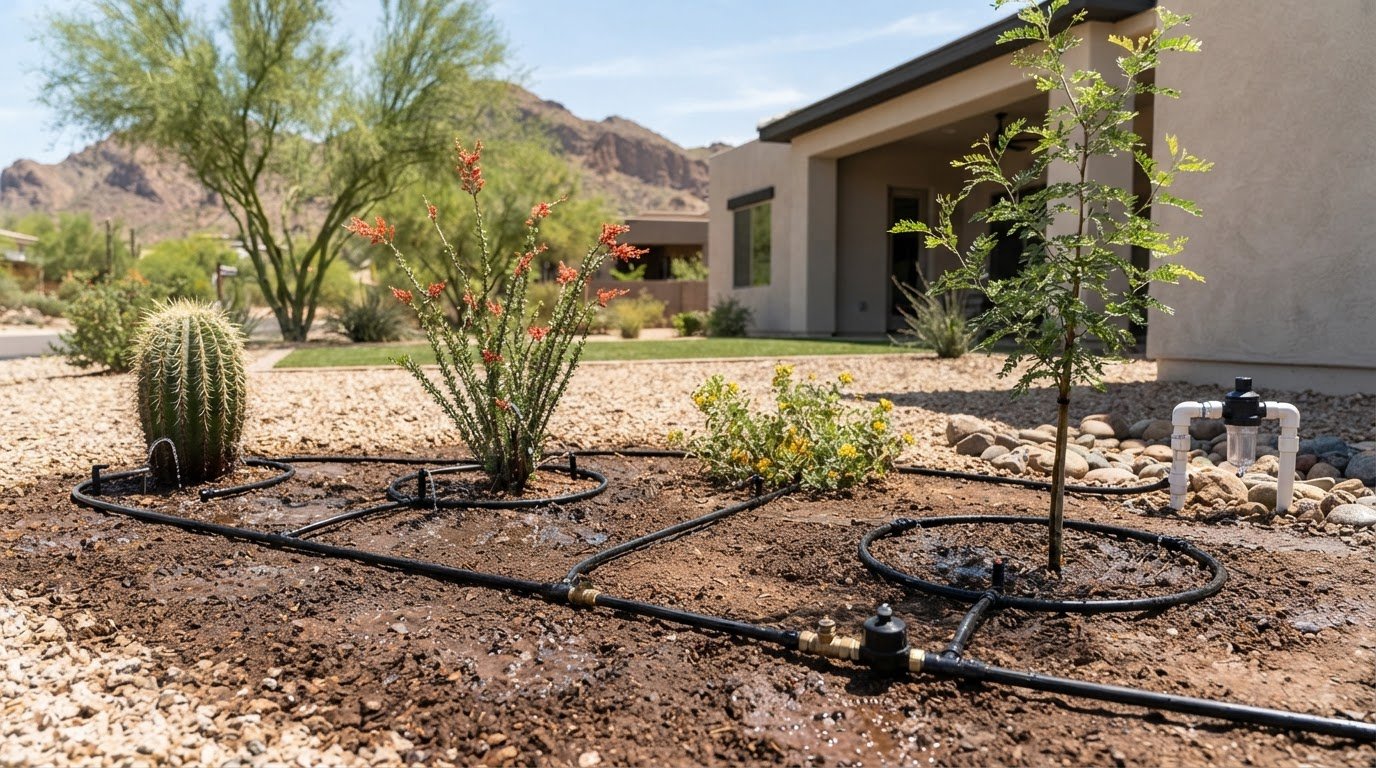
Effective irrigation design for desert plants Arizona requires understanding the "drip line." Many homeowners place emitters directly at the base of the trunk. This is a mistake. It encourages root rot and creates a weak, unstable root system. Roots grow where the water is. To build a resilient landscape, you must place emitters at the outer edge of the plant's canopy. As a tree grows, its root system should mirror its branch spread. Designing for the future means placing emitters where roots will be in five years, not just where they sit on installation day. Using three or four emitters per tree ensures uniform development rather than lopsided growth. This forward-thinking approach is what separates a professional irrigation design for desert plants Arizona from a basic DIY fix.
Hydration depth is equally critical for long-term health. We follow a specific standard for soil penetration: 12 inches for small perennials, 24 inches for shrubs, and 36 inches for trees. Reaching these depths ensures that water remains available even when the surface soil is scorched. It protects the investment you've made in your property's curb appeal.
Calculating Emitter Flow Rates for Desert Flora
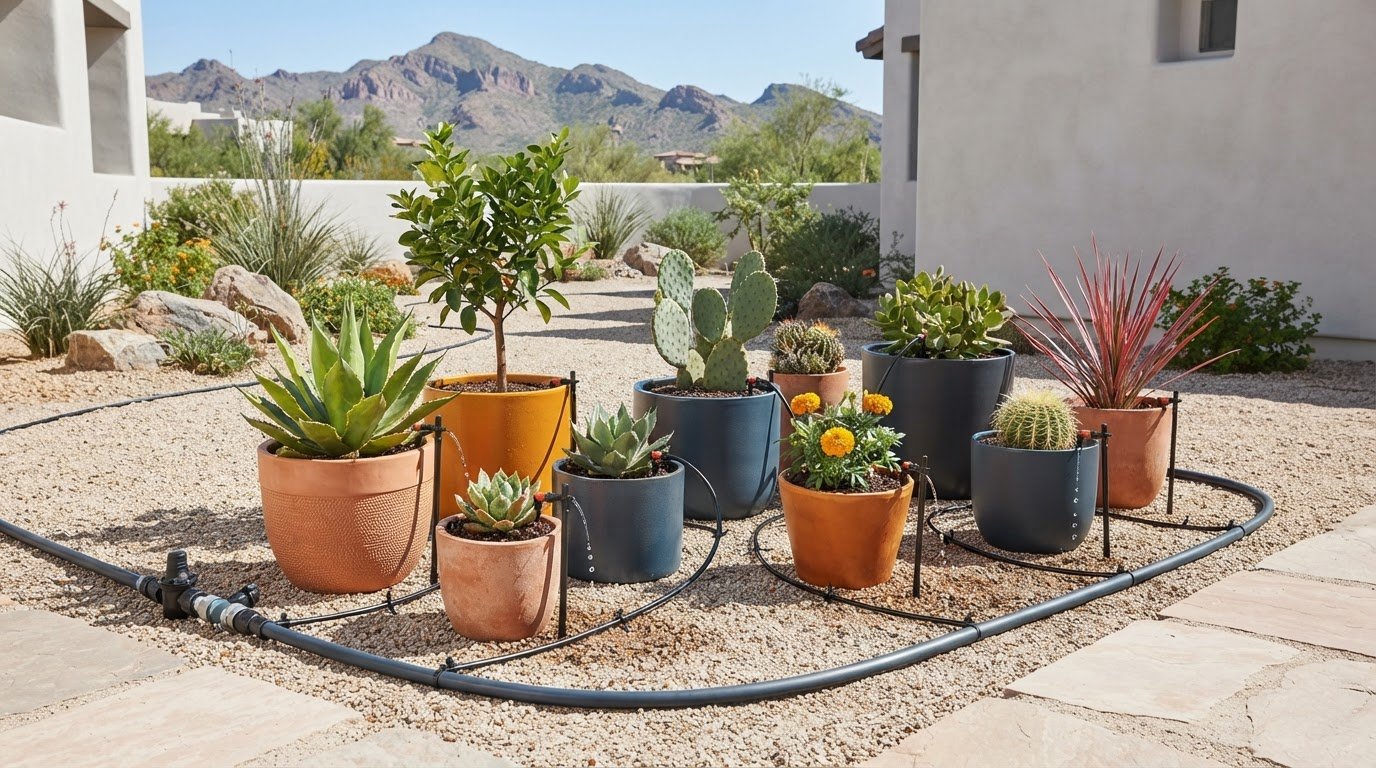
Matching your emitter's Gallons Per Hour (GPH) to soil absorption is vital. In the heavy clay or caliche-ridden soil of Surprise and Peoria, high-flow heads often cause runoff. Using 0.5 GPH or 1 GPH emitters allows water to soak in deeply rather than pooling on top. This precision is part of hydrozoning. Hydrozoning is the practice of grouping plants with similar water needs on the same valve. It prevents overwatering a cactus while trying to keep a hibiscus alive. By controlling the flow rate, you ensure every plant receives exactly what it needs without wasting a drop.
The Importance of Deep, Infrequent Cycles
Deep watering acts as a form of drought-proofing. When you provide a heavy soak followed by a period of drying, you force roots to dive deeper into the earth for moisture. This creates a buffer against extreme heat. Your schedule must adjust with the seasons. A 2026 winter schedule should be significantly less frequent than a July peak. For a practical starting point, refer to the City of Surprise watering schedule. Understanding these nuances is key to a successful residential drip system installation in Arizona. If you're unsure if your current layout is reaching the right depths, a professional system evaluation can identify where your design might be falling short.
Selecting Durable Materials: PVC vs. Poly for Arizona Soil
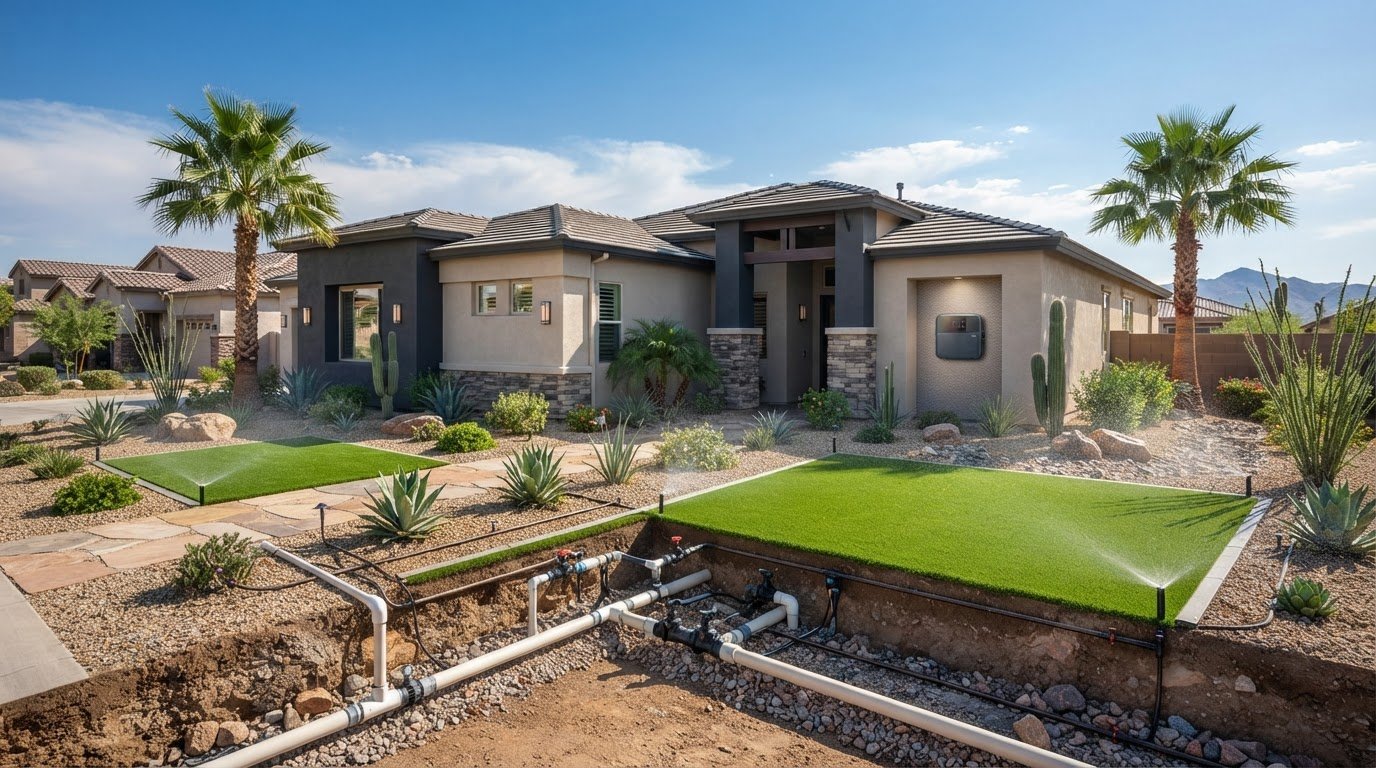
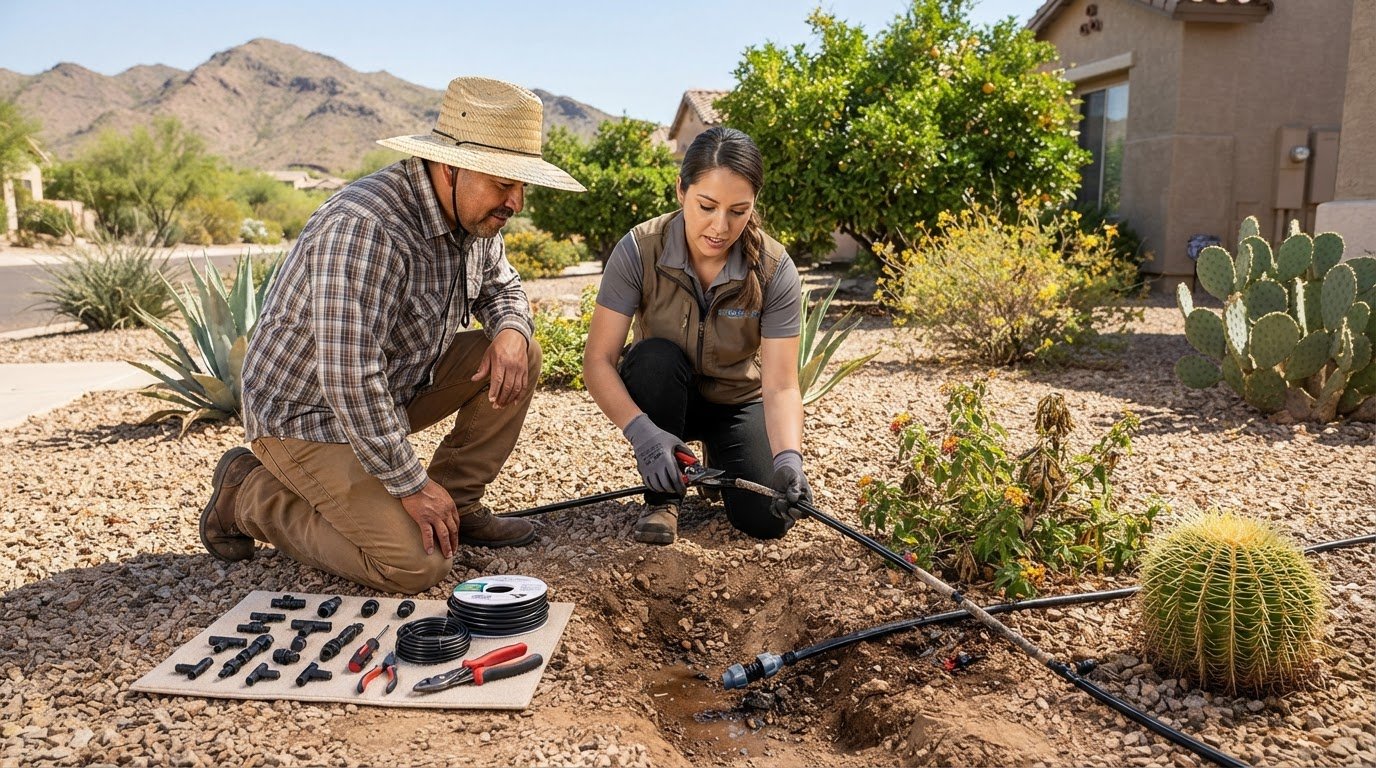
While choosing the right flora is essential, the mechanical integrity of your system determines its lifespan. A robust irrigation design for desert plants Arizona requires moving away from flexible "spaghetti" lines and toward rigid mainlines. Schedule 40 PVC is the gold standard for residential properties in the West Valley. It provides the structural strength needed to withstand both internal water pressure and external soil shifts. Polyethylene tubing, while cheaper to install, is the primary culprit behind frequent irrigation repairs and maintenance calls. Its thin walls are easily pierced by sharp rocks or compromised by the relentless Arizona sun.
Why PVC Pipe Replacement is a Long-Term Investment
Choosing Schedule 40 PVC over poly-pipe is a strategic decision for the long-term health of your yard. In the rocky soil of Surprise, PVC offers several distinct advantages that poly simply cannot match. Consider these factors when evaluating your system's durability:
- Longevity: PVC systems can reliably serve a property for over 20 years, whereas poly systems often degrade and require replacement in 5 to 7 years.
- Root Resistance: The rigid nature of PVC prevents the invasive root systems of desert trees from crushing or penetrating the line.
- Structural Integrity: PVC resists the physical damage caused by monsoon-driven soil movement and local wildlife looking for a water source.
By prioritizing durability during the installation phase, you protect your landscape from the sudden failures that lead to parched, dying plants. It's a protective measure for your property's value.
Pressure Regulation and Filtration
The "heart" of your system, which includes the valves and backflow preventer, must be shielded from UV exposure and ground heat. Beyond physical protection, a professional irrigation design for desert plants Arizona must include precise pressure regulation. Drip emitters are designed for low-pressure operation, typically between 20 and 30 PSI. Without a regulator, the high municipal water pressure common in Peoria can cause emitters to "blow out," leading to significant water waste and erosion.
Additionally, Arizona’s hard water contains high mineral content that can quickly clog small emitter orifices. Integrating a high-quality filtration system at the valve manifold is essential to catch mineral scale before it reaches your plants. Selecting valves specifically rated for high-heat environments ensures the system remains responsive even when ground temperatures exceed 130°F. Reliability is built into the small details of the mechanical design.
Zoning Your Desert Landscape: Trees, Shrubs, and Cacti
Zoning is the mechanical foundation of water conservation. A precise irrigation design for desert plants Arizona residents install must account for the vastly different hydration rhythms of native flora. For example, a Palo Verde tree and a Lantana shrub have incompatible needs. The tree requires a high volume of water delivered deeply but infrequently. The Lantana needs smaller amounts more often to maintain its vibrant blooms. Placing them on the same valve results in either a drowned shrub or a parched tree. It's a common oversight that leads to unnecessary plant loss and inflated water bills.
Effective layout strategy involves grouping plants into "hydrozones" based on their botanical requirements. This approach minimizes pipe length while ensuring every plant receives the correct volume. We often design systems with high-water "oasis" areas near the patio and low-water perimeter zones for desert-adapted species. Cacti and succulents require their own dedicated zone. During the winter months, these plants often need zero supplemental water. Having them on a separate valve allows you to shut off that specific line without affecting the rest of your landscape. It's a protective measure that mirrors the natural dormancy of the desert.
The Tree Zone: Designing for Canopy Growth
Established desert trees don't thrive on a "sprinkle" of water. They require a heavy soak that reaches the lower root structure. As the canopy expands, the emitters must be moved outward to the drip line. This encourages the roots to spread, providing better stability during the high winds of monsoon season. If your current layout is outdated or your trees have outgrown their original emitter placement, considering sprinkler system upgrades can help transition your landscape to a more efficient, growth-oriented delivery method. It ensures your largest investments remain healthy and secure.
Integrating Native Plants into Your Design
Species like Agave, Ocotillo, and Saguaro are masters of water storage, but they still require attention in a residential setting. A professional drip irrigation system provides "supplemental irrigation" during record-breaking heat waves. While these plants survive on rainfall in the wild, the reflected heat from house walls and decorative gravel in Surprise yards creates additional thermal stress. A dedicated line for natives ensures they receive just enough moisture to prevent shriveling without the risk of root rot. If your yard has a mix of mature trees and new desert plantings, it's time for a professional layout. Schedule a custom design consultation to ensure your zones are correctly balanced for long-term health.
Professional Irrigation Design and Installation in Surprise & Peoria
At Sonora Sprinkler Inc., we believe that a successful landscape begins below the surface. A professional irrigation design for desert plants Arizona homeowners can trust isn't a one-size-fits-all product. It's a custom-engineered solution tailored to the specific topography and plant palette of your lot. Since 1999, our family-owned business has focused exclusively on residential systems in Surprise and Peoria. We understand the local soil conditions, from the stubborn caliche layers to the unique drainage needs of West Valley properties. Our approach prioritizes precision engineering over quick fixes, ensuring that every valve, pipe, and emitter serves a specific purpose in your yard's ecosystem.
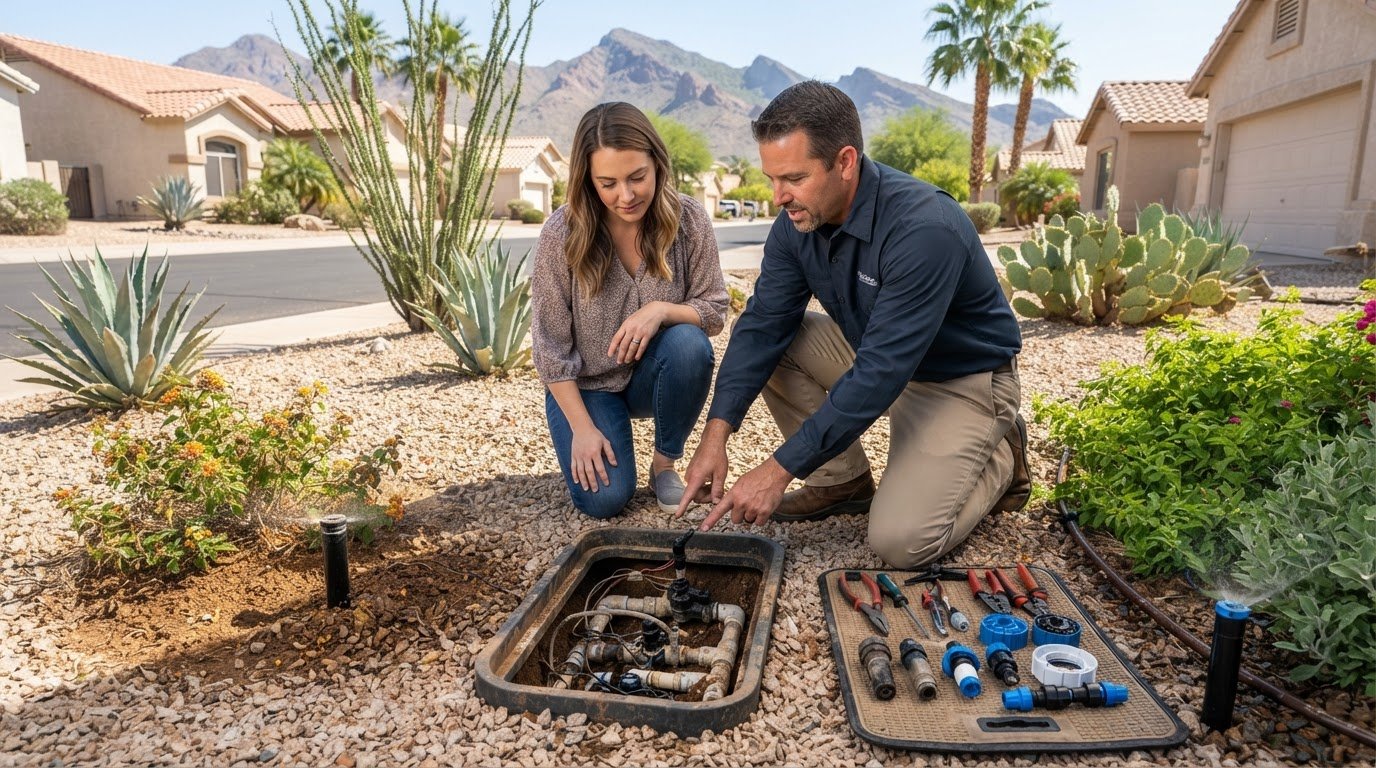
Professional diagnostics are the essential first step in any system redesign. Rather than simply replacing broken heads, we conduct a thorough audit of your entire setup. This includes testing for pressure imbalances, evaluating wiring integrity, and identifying hidden leaks that contribute to high water bills. A properly designed system does more than keep plants green. It increases property value by protecting your mature trees and reduces long-term maintenance costs by using durable, high-grade materials. Our commitment to water conservation means we design for maximum efficiency, helping you maintain a vibrant landscape while respecting Arizona's precious water resources.
Custom Residential Solutions
We focus exclusively on the residential needs of our neighbors in Surprise and Peoria. Our process centers on high-durability design and installation techniques. This includes replacing vulnerable poly-tubing with Schedule 40 PVC mainlines and optimizing drip delivery for the specific growth stages of your flora. By focusing on the mechanical foundation of your yard, we create systems that withstand our 115°F+ summers. We don't just install pipes; we install peace of mind for the long-term health of your property through the expertise of Sonora Sprinkler Inc.
Schedule Your Design Consultation
Now is the time to audit your system before the next summer heat wave arrives. Waiting for a pipe to burst in July often leads to emergency repairs and lost plants. During a professional diagnostic visit, we'll assess your controller settings, check your backflow preventer, and ensure your zones are correctly balanced for your specific plant types. We provide a clear, step-by-step plan to bring your system up to professional standards and improve its overall reliability. Contact Sonora Sprinkler Inc. for a custom design quote and take the first step toward a more resilient, efficient desert landscape.
Securing Your Landscape’s Future
A resilient yard doesn't happen by accident. It requires a shift away from fragile builder-grade materials toward a system built for the Sonoran Desert's thermal extremes. By prioritizing Schedule 40 PVC and engineering distinct zones for trees and succulents, you ensure your property remains a vibrant sanctuary even during record-breaking summers. A precision-engineered irrigation design for desert plants Arizona residents can rely on protects your landscape investment and reduces the constant need for emergency repairs. It's about building for the next twenty years, not just the next season.
Sonora Sprinkler Inc. has been family-owned and operated since 1999. As licensed specialists in residential irrigation, we focus on high-durability PVC pipe replacement and custom drip system designs that thrive in Surprise and Peoria soil. We understand the specific mechanical needs of our local environment and remain committed to helping you achieve a sustainable, healthy yard. Don't wait for the next heat wave to audit your system. Get a Professional Irrigation Design Quote for Your Surprise Home and take the first step toward a more resilient, efficient desert landscape. Your plants will thrive with steady, reliable hydration provided by Sonora Sprinkler Inc.
Frequently Asked Questions
Do desert plants really need an irrigation system in Arizona?
Yes, supplemental hydration is vital for success in residential landscapes. While native species survive on rainfall in the wild, the reflected heat from decorative gravel and house walls in Surprise creates an environment far harsher than the open desert. A professional irrigation design for desert plants Arizona homeowners utilize ensures that young plants establish deep roots and mature specimens survive prolonged 115°F+ heat waves without succumbing to thermal stress.
What is the best time of day to water desert plants in Surprise?
The most effective time to water is during the early morning hours, typically between 3:00 AM and sunrise. Watering during this window significantly reduces loss due to evaporation and wind drift, allowing moisture to penetrate the soil deeply before the surface temperature rises. This timing also ensures that plant foliage dries quickly once the sun comes up, which helps prevent the development of fungal diseases that occur with evening watering.
How many emitters should I have per desert tree?
Most established desert trees require three to four emitters to ensure uniform root development. These should be placed at the drip line, which is the outer edge of the canopy, rather than near the trunk. As the tree grows, you must move or add emitters to mirror the expanding branch spread. This layout encourages roots to grow outward and downward, providing the structural stability needed to withstand high winds during monsoon season.
Why does my drip system keep leaking every summer?
Summer leaks are frequently caused by the degradation of standard polyethylene tubing and extreme diurnal temperature swings in the West Valley. Arizona’s 40-degree shifts between day and night cause plastic components to expand and contract, eventually leading to hairline fractures or loose fittings. If your system uses thin-walled poly-pipe, it likely becomes brittle under high UV exposure. Upgrading to Schedule 40 PVC mainlines is the most effective way to eliminate these recurring failures.
Can I put my cacti and citrus trees on the same irrigation zone?
No, you should never place cacti and citrus trees on the same valve. Citrus trees require frequent, high-volume watering to produce fruit, whereas cacti are adapted for minimal moisture and are highly susceptible to root rot if overwatered. Effective irrigation design for desert plants Arizona landscapes require involves hydrozoning. This is the practice of grouping plants with similar hydration needs on dedicated lines to ensure each species receives the correct water volume.
Is PVC better than poly tubing for Arizona irrigation systems?
Schedule 40 PVC is significantly better for Arizona mainlines due to its superior durability and resistance to environmental stressors. While poly tubing is prone to cracking and animal damage, rigid PVC can reliably serve a property for over 20 years. In the rocky soil found in Peoria and Surprise, PVC provides the structural integrity necessary to resist root intrusion and soil shifting, making it a much more cost-effective long-term investment for residential properties.
How often should I adjust my irrigation controller for the desert seasons?
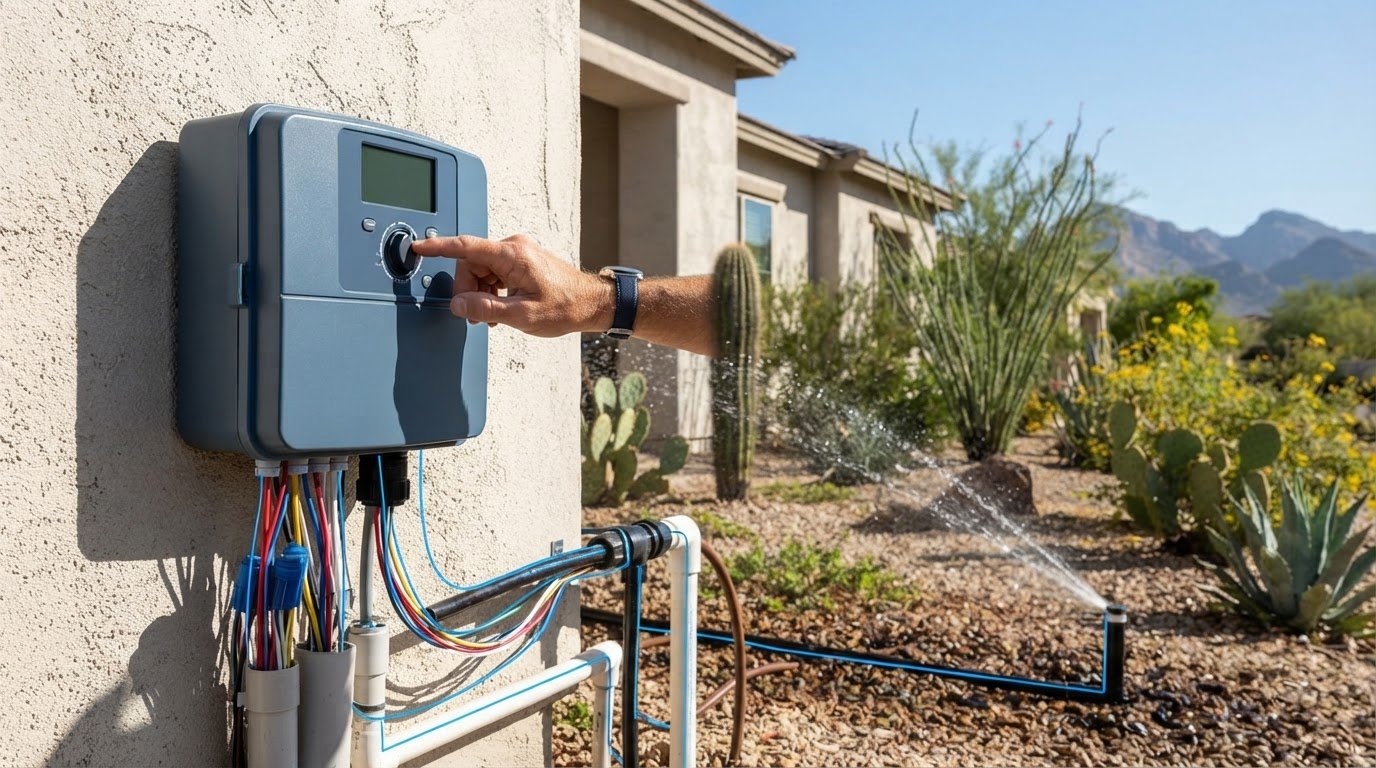
You should adjust your irrigation controller at least four times per year to match the changing seasons. A schedule that works in the heat of July will significantly overwater your landscape during the cooler winter months. In Surprise, winter cycles often require 50% to 70% less water than summer cycles. Utilizing a smart, WaterSense-labeled controller can automate these adjustments based on local weather data, helping you maintain plant health while maximizing water conservation.
What are the signs that my desert plant is being overwatered?
Common signs of overwatering include yellowing leaves that remain attached to the plant, soft or mushy stems, and the presence of mushrooms on the soil surface. Desert species are particularly sensitive to "wet feet," which occurs when water fills the air pockets in the soil and suffocates the roots. If you notice a plant looking wilted despite the soil being damp, it's often a sign that the root system has already begun to rot.