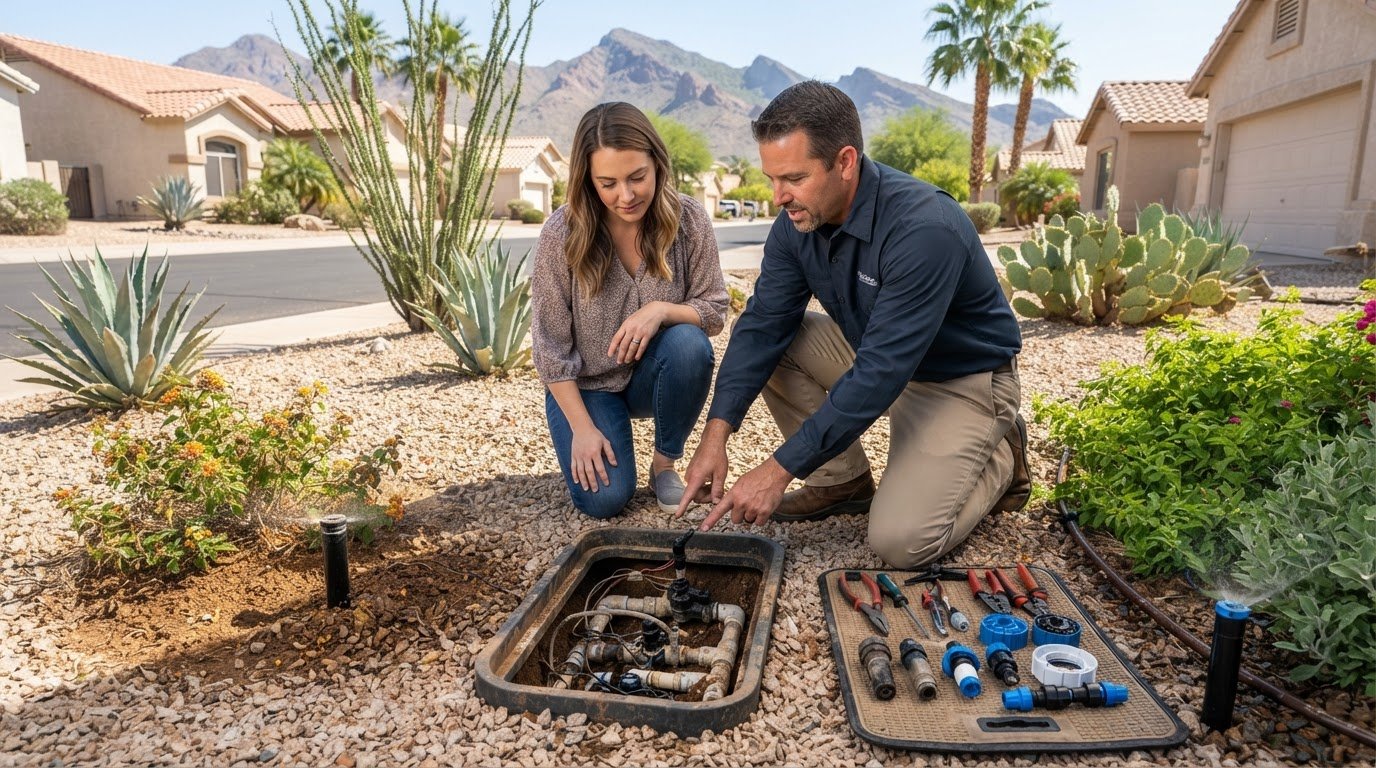
Did you know that up to 70% of a Phoenix household's total water use happens outdoors? In the harsh environment of the Sonoran Desert, your irrigation setup isn't just a convenience; it's a critical lifeline for your property. We understand the frustration of seeing a summer water bill spike while watching your drip lines crack under intense UV exposure. It's a common struggle for homeowners who want a vibrant yard but feel like they're fighting a losing battle against mineral buildup and rising costs. Consistent sprinkler system maintenance Arizona residents can rely on is the most effective way to stop water waste before it impacts your budget.
This guide provides grounded, professional strategies to help you mitigate hard water calcification and optimize your system for long-term reliability. You'll learn how to identify failing components early, adjust for the 2026 Colorado River water cuts, and implement technical upgrades that keep your plants healthy without wasting a drop. We'll examine everything from valve diagnostics to seasonal schedule adjustments that ensure your desert oasis remains resilient all year long. By focusing on precision and durability, you can avoid a total system failure when the temperature climbs and protect the investment you've made in your home's outdoor space.
Key Takeaways
- Understand how extreme UV exposure and hard water calcification impact system longevity, requiring specialized technical solutions for the Sonoran Desert.
- Learn to implement a monthly inspection routine that prioritizes controller accuracy and drip zone integrity to prevent unexpected water waste.
- Discover why professional-grade materials are essential for effective sprinkler system maintenance Arizona homeowners use to combat the five-year failure cycle of standard drip lines.
- Master the seasonal adjustments necessary to transition your landscape through the spring "pre-burn" and the high-demand irrigation needs of mid-summer.
- Identify the warning signs of silent leaks and electrical wiring faults that signal when it's time for a professional diagnostic review of your system.
Why Arizona Sprinkler Systems Require a Unique Maintenance Approach
Maintaining a healthy landscape in the Sonoran Desert requires moving beyond the basics of sprinkler irrigation used in more temperate regions. In Arizona, irrigation components don't just wear out; they're subjected to a relentless environmental assault. While homeowners in Northern Arizona might focus on winterization, residents in Surprise and Peoria face a different set of stressors. The combination of intense UV radiation, extreme surface temperatures, and mineral-heavy water creates a volatile environment for standard irrigation hardware. Reliable sprinkler system maintenance Arizona homeowners invest in must address these specific regional challenges to ensure long-term functionality.
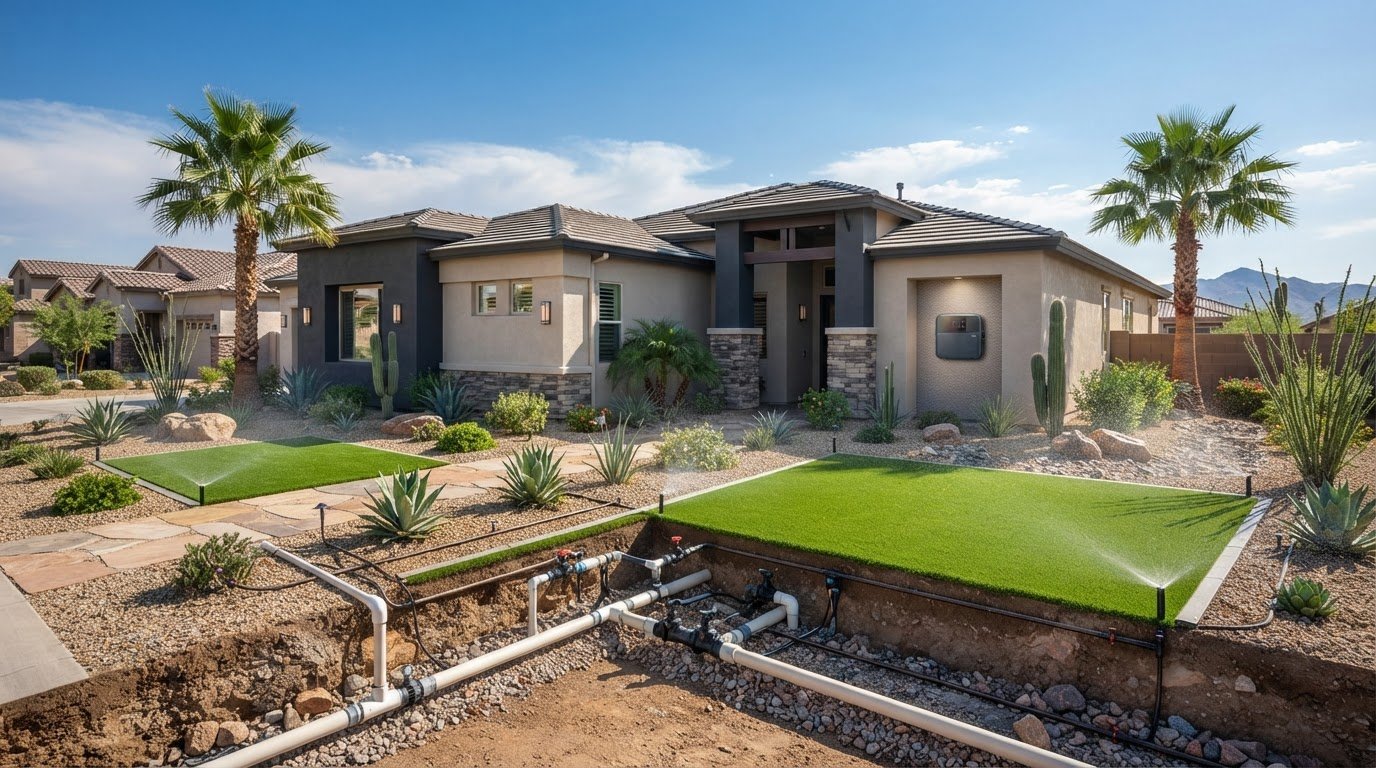
One often overlooked factor is the composition of the ground itself. Caliche soil, a layer of soil particles cemented together by calcium carbonate, is prevalent throughout the West Valley. This rock-like substance doesn't just make irrigation repairs difficult; it creates a rigid, unforgiving environment for underground PVC pipes. When the ground shifts or settles, these pipes have no room to flex, leading to stress fractures at the joints.
The 'Heat Factor' in Desert Irrigation
The low-desert sun is a primary catalyst for system failure. During a typical July, surface temperatures can exceed 150 degrees, causing significant thermal expansion in PVC joints and rubber valve diaphragms. This constant cycle of expansion and contraction eventually weakens the structural integrity of the components. Exposed poly-tubing is particularly vulnerable; without the protection of a thick mulch layer, UV rays cause "sun-rot," turning flexible lines brittle and prone to cracking. Because of this, summer isn't just a high-usage period. It's the most critical time for monitoring your system for sudden pressure drops or weeping valves.
Hard Water and Mineral Buildup
Arizona's water supply is notoriously high in dissolved minerals, which can be devastating for precision irrigation parts. You might notice a visible "white crust" on your sprinkler heads. This is a clear indicator that calcium and magnesium are accumulating inside the mechanism. While a crusty sprinkler head is easy to spot, the danger is often hidden within drip irrigation systems. Calcification is the primary cause of uneven watering in Arizona, as mineral deposits gradually restrict the flow of water through narrow emitter openings. This silent clogging can starve a plant of water for weeks before any visible wilting occurs, making regular professional inspections a necessity for sprinkler system maintenance Arizona landscapes require.
The Essential Arizona Sprinkler Maintenance Checklist
Systematic maintenance in the Phoenix valley is not a "set-and-forget" task. High temperatures and mineral-heavy water mean that even a small oversight can lead to a dead landscape within days. A reliable routine for sprinkler system maintenance Arizona homeowners follow includes monthly visual checks to catch issues before they escalate. Consistent oversight prevents the common "silent leaks" that hide beneath desert landscaping. Your checklist should prioritize the following mechanical reviews:
- Monthly visual inspection of all sprinkler heads and drip zones while the system is running.
- Testing the irrigation controller for battery health and program accuracy to prevent data loss during power surges.
- Cleaning and flushing the filter system to remove desert silt and minerals that clog fine emitters.
- Manual operation of valves to ensure they open and close completely without "weeping."
- Checking the backflow preventer for leaks or cracked housing caused by intense heat exposure.
Step 1: Inspecting the Hardware
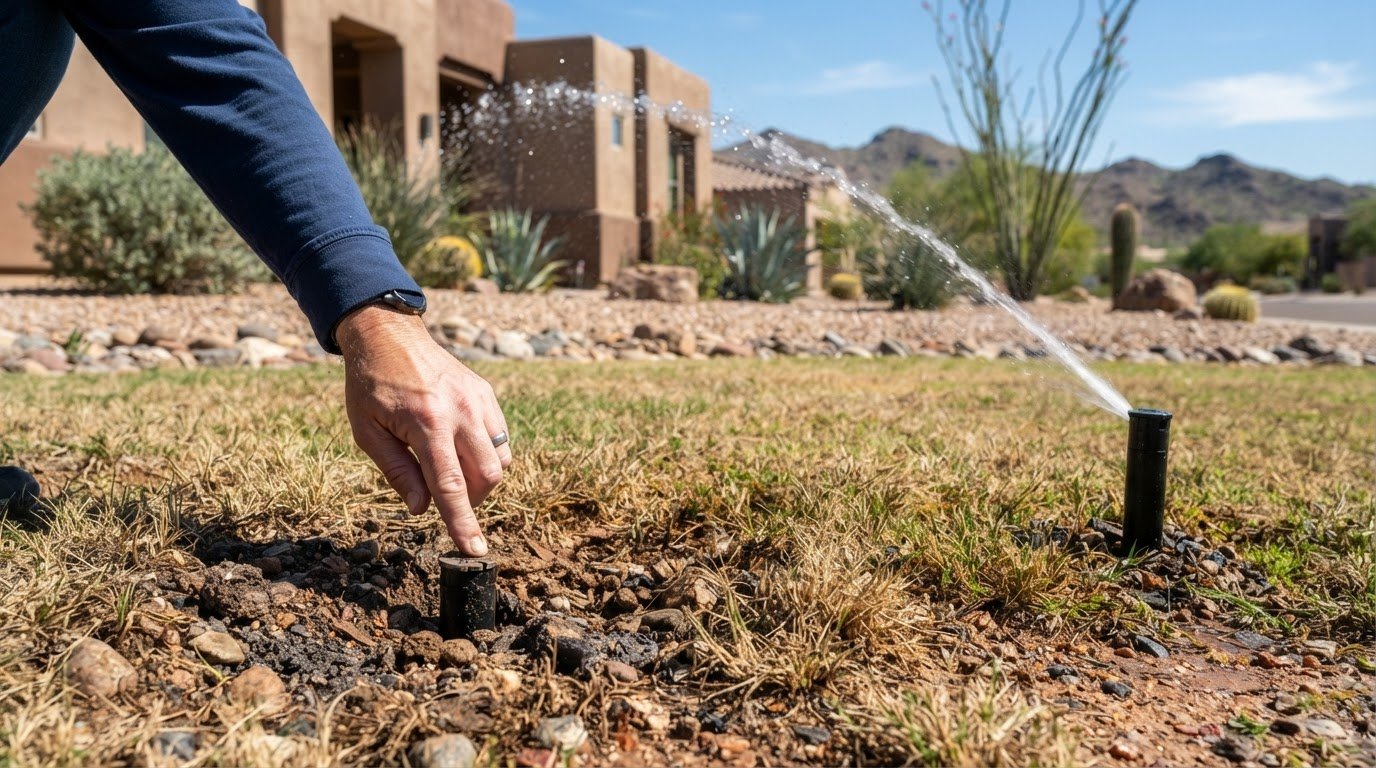
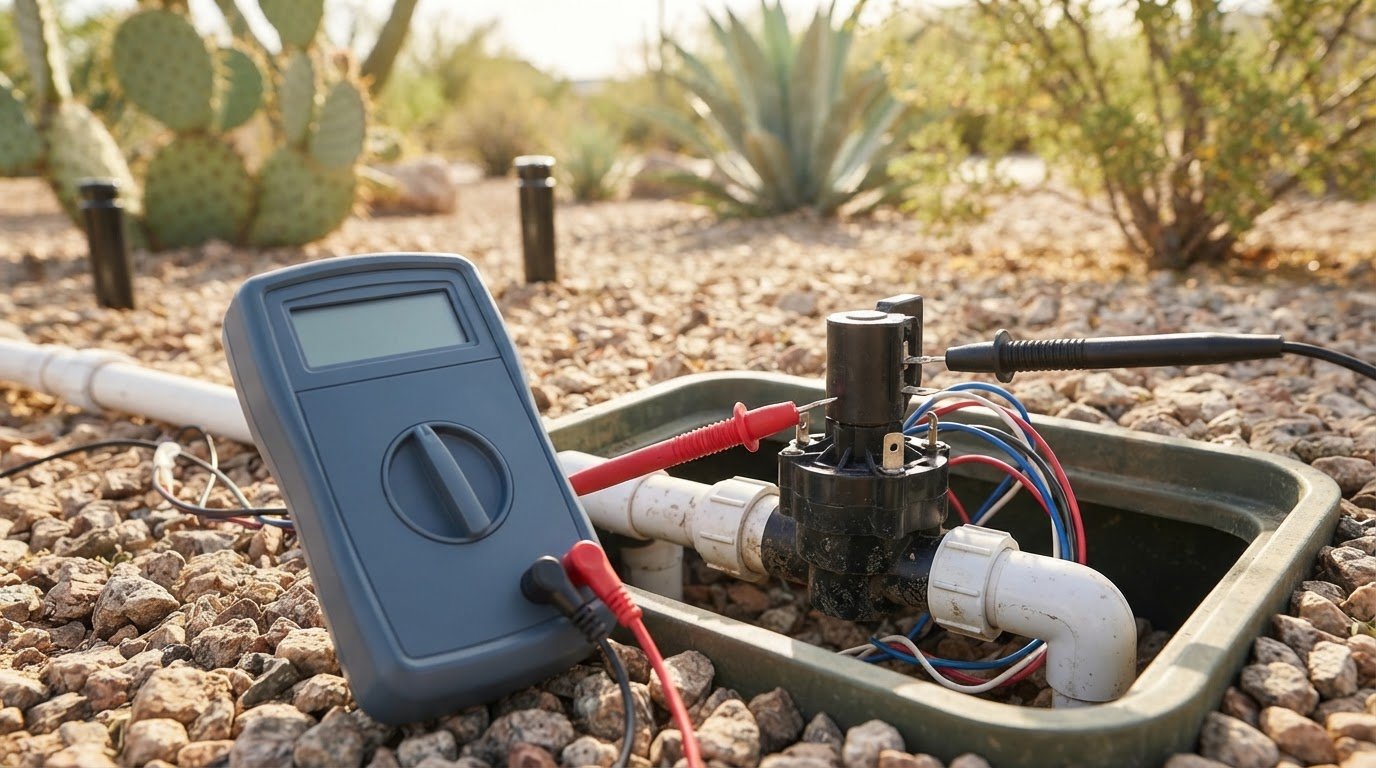
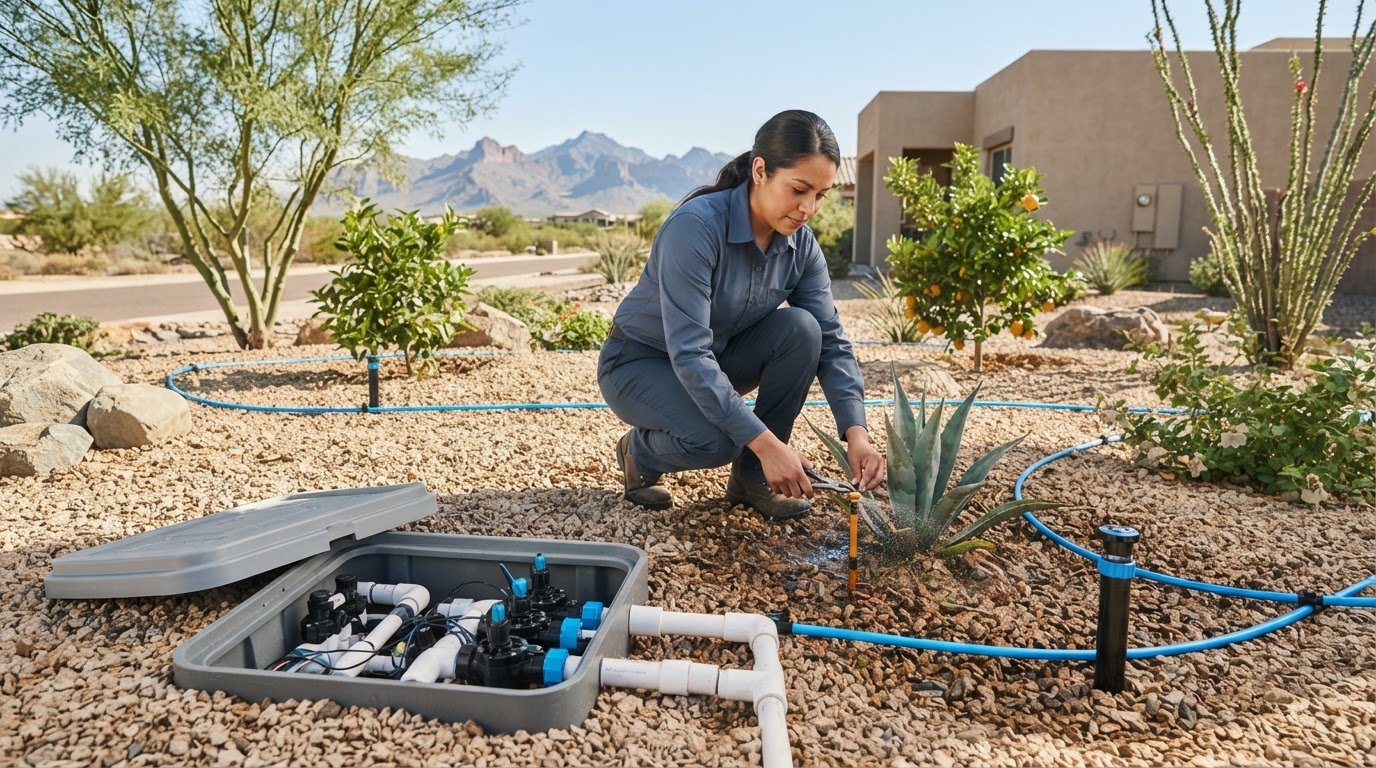
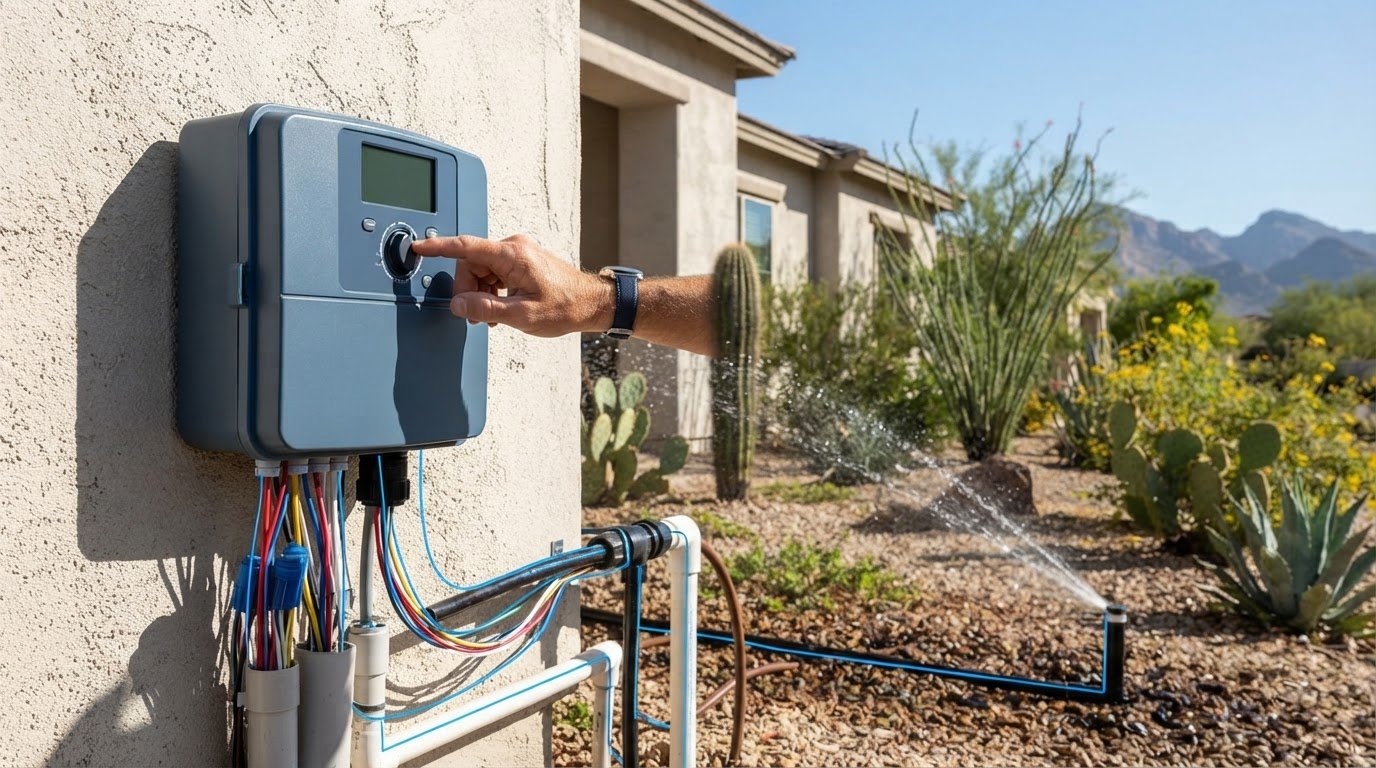
Focus on the irrigation controller first. It's the brain of your entire setup. Research indicates that adjusting your irrigation schedule seasonally can reduce landscape watering by 30 to 50 percent. Check your battery backup; it prevents your program from resetting to factory defaults during monsoon power surges. Look for "geysers" in your grass zones caused by broken nozzles and inspect your valve boxes for sun-damaged lids. If you notice zones failing to turn on, you may need professional irrigation wiring diagnostics to locate underground faults or corroded connections.
Step 2: Zone-by-Zone Performance Audit
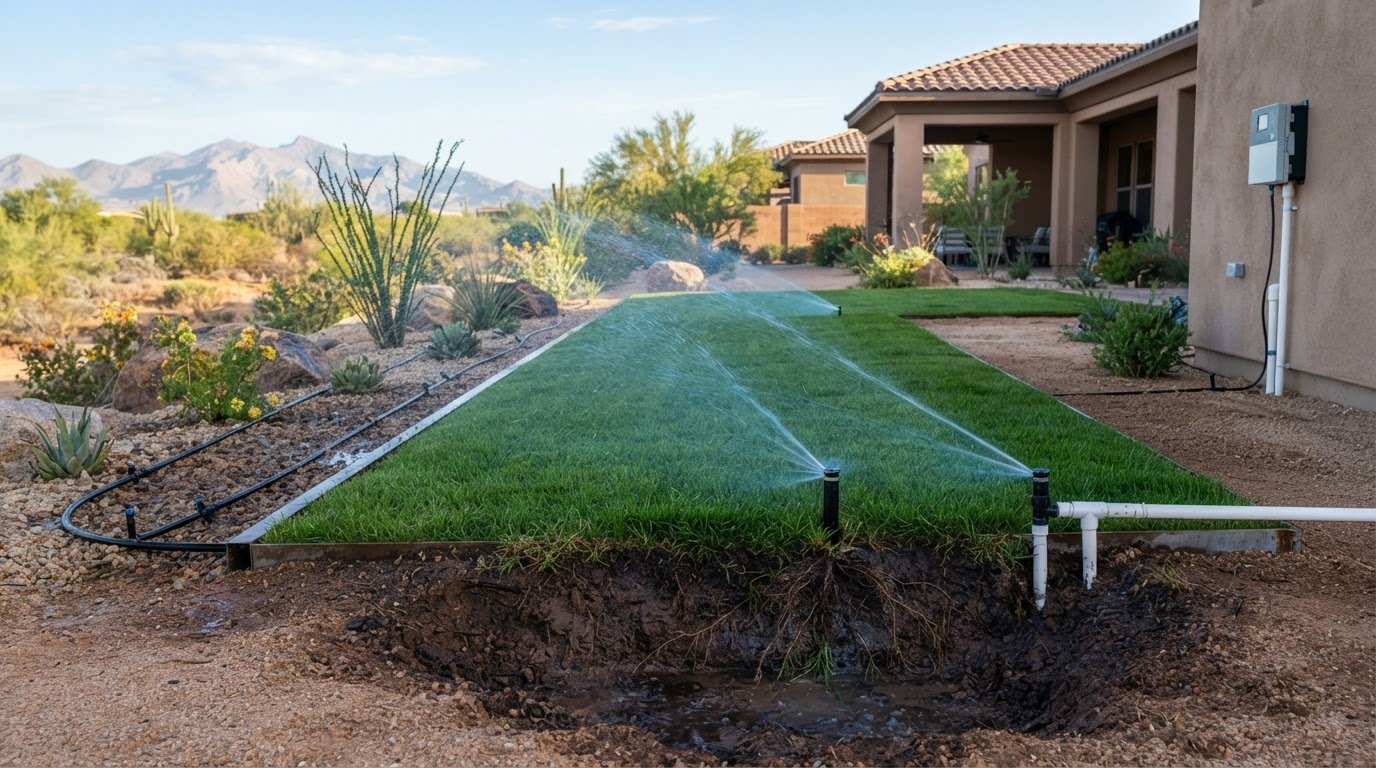
In desert landscapes, many leaks are hidden beneath layers of decorative gravel. Walking the drip lines is the only way to find these failures. Look for damp spots or unusually green patches of weeds that shouldn't be there. Verify that every emitter is providing adequate flow directly to the root ball. Soil settles over time, and grass grows higher. You must periodically adjust the height of your sprinkler heads to ensure the spray pattern remains unobstructed. This level of detail is the cornerstone of effective sprinkler system maintenance Arizona properties need to survive the summer months.
If your system is showing signs of age or inefficiency, our team can help you restore its reliability. Reach out to us for a professional system evaluation.
Drip Irrigation Maintenance: The Desert Homeowner’s Priority
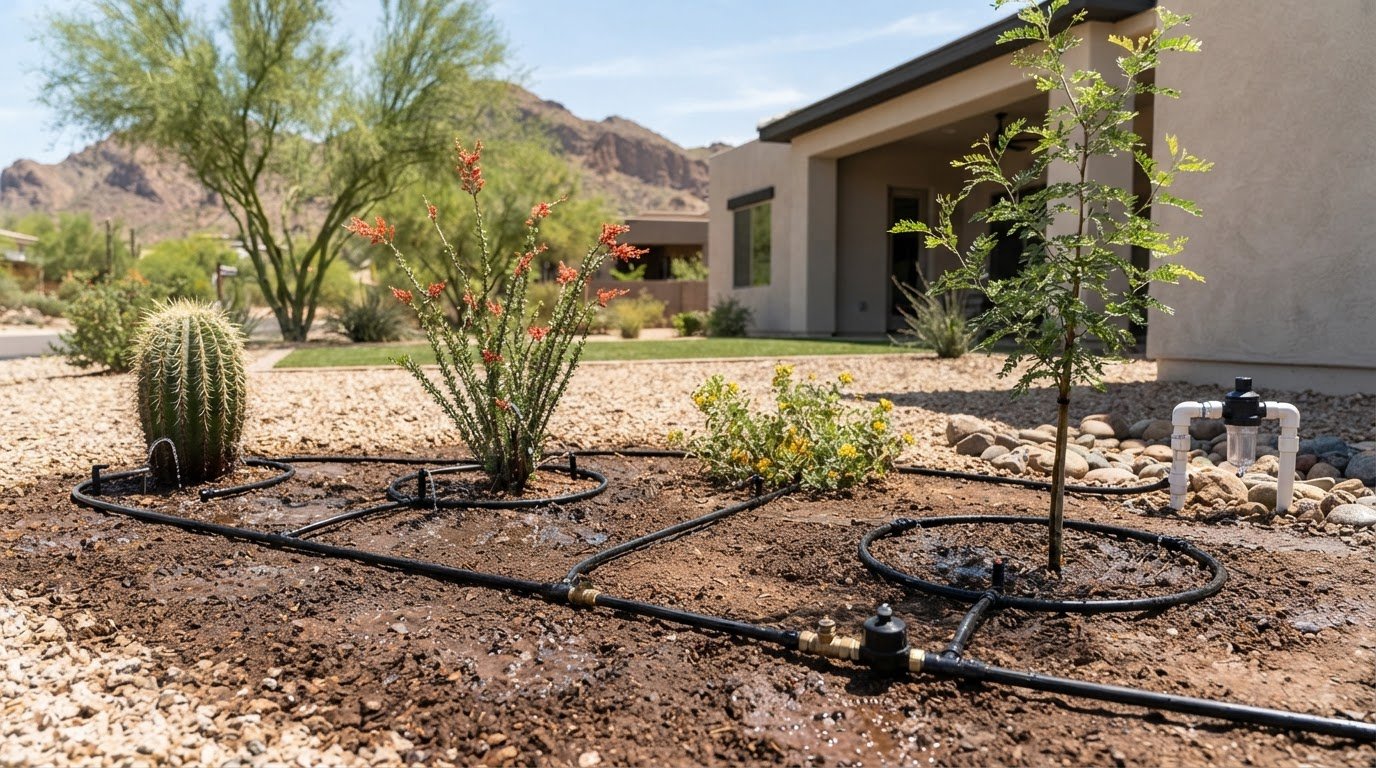
While traditional lawn sprinklers are visible and easy to monitor, drip systems operate quietly beneath the surface of your desert landscape. In the Surprise and Peoria areas, these systems are often marketed as a low-maintenance solution, yet they represent the most frequent point of failure in residential yards. Without consistent sprinkler system maintenance Arizona plants require, most drip zones reach the end of their functional life within 5 to 7 years. This rapid decline is often caused by the use of thin, consumer-grade "spaghetti" lines that lack the UV resistance of professional-grade poly tubing. When these lines become brittle, they crack under the weight of the surrounding gravel or split due to thermal expansion.
Determining whether to repair or replace a drip zone is a matter of long-term stability. A single puncture from a shovel is a simple fix. However, if your lines are leaking in multiple spots or the material feels "crunchy" to the touch, the system is likely beyond the point of effective maintenance. As your desert trees and shrubs mature, their water requirements increase significantly. A five-gallon plant needs approximately five gallons of water at each watering to establish a strong root system. If you haven't increased your emitter counts to match the growth of your canopy, your plants may be surviving on a fraction of the moisture they actually need.
Common Drip Failures in Surprise and Peoria
Environmental stressors in the West Valley go beyond just heat. Desert wildlife, including pack rats and ground squirrels, frequently chew through irrigation lines in their search for moisture during the dry months. Additionally, aggressive roots from native trees like Mesquites can sense the water inside your lines and grow directly into the emitters, causing permanent clogs. For homeowners dealing with systemic failures, reviewing a guide on residential drip system installation can help you understand the benefits of a modern, professional-grade layout.
Optimizing Drip Efficiency
Precision is the key to water conservation. Every drip zone should include a pressure regulator to prevent "blown" emitters, a common issue where high municipal pressure causes the emitter heads to pop off entirely. As your landscape grows, it's necessary to move emitters outward to follow the "drip line" of the foliage, which encourages a broad and stable root base. To ensure long-term health, desert shrubs should be watered to a depth of 18 to 24 inches at each irrigation cycle. This deep, infrequent watering strategy is the most effective way to build drought resistance and maintain a vibrant yard during a heatwave.
Seasonal Adjustments for Arizona Landscapes
A static irrigation schedule is one of the most common causes of plant failure and high water bills in the West Valley. As the seasons shift in the Sonoran Desert, your system must adapt to changing evaporation rates and plant needs. In March, homeowners should prepare for the "pre-burn" by checking for cracks that may have developed during the cooler months. As June arrives, the Phoenix metro area often enters a Stage 1 Water Alert, as seen in June 2026. While conservation is currently voluntary, preventing runoff onto streets remains a legal requirement under Chapter 37 of the Phoenix City Code. High-quality sprinkler system maintenance Arizona residents perform during these months involves increasing watering frequency while maintaining a deep and infrequent schedule. For established desert landscaping, this means watering as infrequently as every 7 to 21 days to encourage deep, drought-resistant root growth.
October marks the transition to the dormant phase for many native species. As temperatures drop, plants require significantly less moisture to maintain health. Failing to reduce run times during this window leads to water waste and potential root rot. By December, the focus shifts to protecting the backflow preventer from occasional overnight freezes. Even in the low desert, a single night of 32-degree weather can crack an uninsulated brass valve, leading to a costly and avoidable repair in the morning.
Programming for the 'Monsoon' Season
Monsoon storms in July and August bring high humidity and sudden, intense downpours. Using rain sensors is a practical way to save money, as they automatically pause your schedule when natural precipitation is sufficient. Humidity changes also mean soil stays damp longer, so your controller shouldn't run on a static summer program during a wet week. Always check for soil erosion around your sprinkler heads after a heavy storm. Exposed PVC pipes are highly susceptible to the UV damage and "sun-rot" discussed earlier in this guide, making it vital to keep them buried under a protective layer of soil or gravel.
Winter Protection for the Phoenix Valley
Proper winter care involves more than just turning the system down. Insulating your backflow assembly with a dedicated cover protects against internal freezing during rare cold snaps. Excessive watering during the winter doesn't just waste money; it creates a breeding ground for fungus and root rot in desert-adapted species. For more technical details on maintaining these critical safety components, review our guide on backflow preventer repair Surprise residents can use for safety and compliance. Regular adjustments ensure your system remains efficient even as the landscape goes dormant.
Is your controller ready for the next seasonal shift? Contact us to schedule your seasonal system tune-up and ensure your landscape remains resilient year-round.
When to Call a Professional Irrigation Specialist
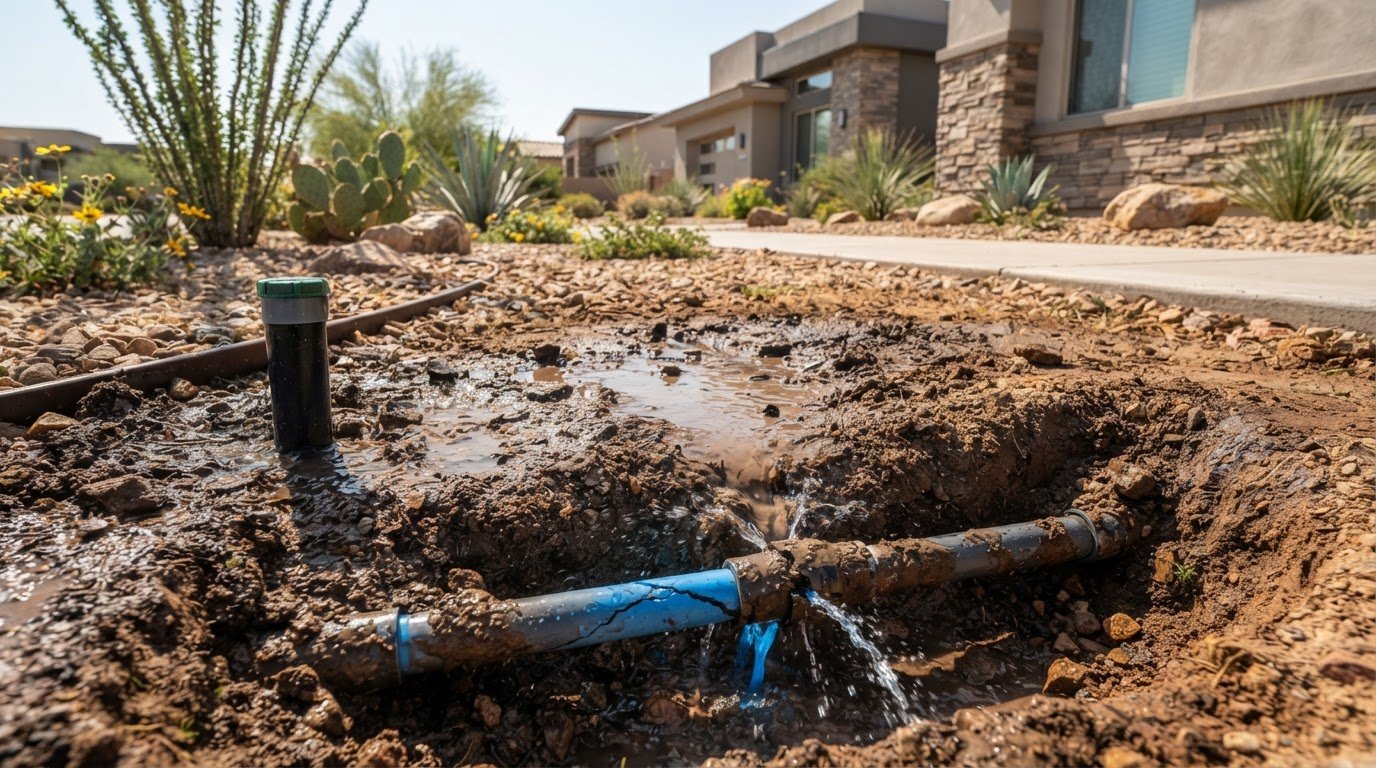
While a consistent routine for sprinkler system maintenance Arizona homeowners perform can prevent many common issues, some failures require specialized diagnostic tools. A primary indicator that your system needs professional attention is the "silent leak." If your monthly water bill shows a significant spike despite no visible surface water or swampy patches in the yard, a subterranean break is likely the culprit. These leaks often occur beneath the gravel or within the manifold where they remain undetected until the financial impact becomes clear. A professional irrigation system tune-up can uncover these hidden defects before they lead to catastrophic plant loss or structural damage to your property.
Electrical issues represent another complex challenge for the average homeowner. When your irrigation controller displays a "fault" or "error" message, it's often a sign of a shorted solenoid or a compromised underground wire. These problems aren't solved by simply replacing the controller; they require a systematic diagnostic approach to locate the exact point of failure within the field wiring. Additionally, any issues with your backflow preventer should be handled by a specialist. Because this device prevents contaminated irrigation water from entering your home's clean water supply, a failure is a genuine health and safety concern that requires precise mechanical repair.
Complex Diagnostics vs. Simple Repairs
Tricky irrigation issues often require more than just a shovel and a replacement head. Tracing buried wires and locating hidden valves requires specialized equipment that most generalists don't carry. When a system reaches the point where irrigation PVC pipe replacement becomes necessary, the work must be followed by precise pressure testing. This ensures that the new joints can withstand the high-pressure surges typical of West Valley municipal water systems. Attempting a DIY repair on a backflow assembly or a complex valve manifold without the proper licensing and specialized parts can lead to further leaks and potential code violations.
The Sonora Sprinkler Difference
We believe that residential irrigation requires a focused, "boots-on-the-ground" expertise that commercial generalists often lack. Since 1999, our family-owned business has specialized exclusively in residential systems throughout Surprise and Peoria. This focus means we understand the specific nuances of local soil conditions and the environmental stressors that impact your backyard. We take pride in providing a steady, professional service that prioritizes the long-term health of your landscape over quick, temporary fixes. Our goal is to ensure your system operates with the reliability and precision required to sustain a vibrant desert oasis. Contact Sonora Sprinkler for a professional system audit to protect your landscape and optimize your water usage.
Protecting Your Desert Investment
Maintaining a reliable irrigation system in the Sonoran Desert is an ongoing commitment to efficiency and property health. You now understand how the combination of extreme heat, UV exposure, and mineral-heavy water creates unique mechanical stressors that standard systems aren't always built to handle. By prioritizing monthly hardware inspections and making seasonal adjustments to your controller, you can significantly reduce water waste and prevent the silent leaks that drive up monthly bills. Implementing a consistent routine for sprinkler system maintenance Arizona requires is the most effective way to ensure your landscape remains a vibrant sanctuary even during the most intense summer heatwaves.
As licensed residential irrigation specialists, we've been family-owned and operated since 1999. We understand the specific soil and water challenges facing residents in Surprise and Peoria; our team focuses on providing technical solutions that prioritize the durability and longevity of your system. Schedule Your Residential Irrigation Maintenance with Sonora Sprinkler to secure your landscape's future with grounded expertise. Your desert oasis is a valuable investment, and we're here to help you protect it with reliable, neighborly service.
Frequently Asked Questions
How often should I check my sprinkler system in Arizona?
You should perform a visual inspection of your system at least once a month. In the Surprise area, the extreme heat and shifting soil can cause components to fail rapidly. Walking through each zone while it's running allows you to spot "geysers," broken emitters, or weeping valves early. Regular sprinkler system maintenance Arizona homeowners perform monthly prevents small issues from turning into expensive landscape losses during a July heatwave.
Why is my water bill so high even though I haven't changed my watering schedule?
A sudden spike in your water bill usually indicates a "silent leak" hidden beneath your desert landscaping. These breaks often occur in underground PVC lines or at the valve manifold where water can seep into the porous soil without surfacing. A stuck valve that doesn't close completely after a cycle is another common culprit. If you can't find a surface leak, it's time for a professional diagnostic to locate the subterranean fault.
Do I need to winterize my sprinklers in the Phoenix/Surprise area?
Unlike colder climates, Surprise and Peoria don't require full system blowouts. However, you must protect your backflow preventer from occasional overnight freezes. A single night below 32 degrees can crack the brass internal components of an uninsulated unit. Instead of draining the lines, focus on insulating the exposed assembly with a dedicated cover and reducing your controller's run times as plants enter their dormant phase in December.
What is the best time of day to water my desert landscape?
The ideal time to water is between 3:00 AM and 6:00 AM. Watering during these early morning hours minimizes evaporation caused by the afternoon sun and ensures that wind doesn't disrupt spray patterns. It also allows the water to soak deeply into the root zones before the heat rises. Avoid watering at night, as stagnant water on grass can encourage fungal growth in our humid monsoon months.
Why do my drip emitters keep clogging every summer?
Clogging is usually caused by Arizona's high mineral content, leading to rapid calcification inside the narrow emitter openings. As water evaporates at the tip, it leaves behind calcium and magnesium deposits that gradually restrict flow. Additionally, silt from the municipal water supply or fine desert dust can settle in the lines. Installing a high-quality filter and performing regular line flushes are essential steps for sprinkler system maintenance Arizona landscapes require to stay healthy.
Can I repair a broken underground PVC pipe myself?
While homeowners can handle small surface repairs, underground PVC issues in Surprise often involve caliche soil and high-pressure lines. Digging through rock-hard caliche without damaging other utilities is difficult. Professional repairs include pressure testing and the use of high-grade primers and cements to ensure the new joints can withstand the thermal expansion typical of our climate. For deep or complex breaks, professional expertise ensures the repair lasts longer than a temporary DIY patch.
How long do sprinkler valves typically last in the Arizona heat?
Most high-quality residential valves last between 10 and 15 years, though the internal rubber diaphragms often fail sooner. The intense heat in Peoria can cause these rubber components to become brittle and lose their seal within 5 to 7 years. If you notice a valve "weeping" or failing to shut off, replacing the internal assembly is usually more cost-effective than a total valve replacement. Regular inspections help identify these failures before they waste significant water.
Is a smart irrigation controller worth it for an Arizona home?
A smart controller is a highly effective investment for desert properties. These devices use local weather data to adjust watering schedules automatically based on real-time evaporation rates and rainfall. Research shows that seasonal adjustments can reduce landscape watering by 30 to 50 percent. In a region where outdoor watering accounts for 70% of household use, the savings on your monthly bill can often pay for the upgrade within a single summer season.