In the Arizona desert, your drip irrigation system isn't just a convenience; it is a lifeline operating under a constant state of environmental siege. With outdoor landscaping accounting for 50% to 70% of a typical household's water consumption, a single hidden malfunction can quickly lead to an expensive utility bill. The combination of intense UV radiation, heavy mineral scaling, and shifting soil creates a specific trifecta of stress that standard systems aren't always prepared to handle. It is incredibly frustrating to find a prized desert willow wilting or to see water pooling in the street because of a cracked line. If you've struggled to find the source of a leak, you know that drip irrigation troubleshooting Arizona requires a specialized approach tailored to our unique climate.
You deserve a landscape that thrives without draining your bank account or your patience. This guide provides the professional clarity you need to move from confusion to confident repair. We will explore how to identify the subtle signs of emitter clogs and the mechanical steps required to restore your system's efficiency. By understanding the specific ways our climate impacts PVC and poly tubing, you can ensure your plants survive the summer while keeping your water usage under control. From diagnosing valve failures to mastering your timer settings, we'll walk through the practical solutions every homeowner needs to maintain a durable and reliable irrigation network.
Key Takeaways
- Identify the specific visual cues of a failing system, such as sudden wilting or salt buildup, to prevent plant loss before it becomes irreversible.
- Learn the fundamentals of drip irrigation troubleshooting Arizona to identify how extreme UV rays and hard water minerals compromise your system's integrity.
- Follow a structured diagnostic framework to inspect valve manifolds and pressure regulators for hidden mechanical failures that drive up utility costs.
- Understand practical repair techniques, including proper PVC solvent welding, to ensure your system fixes withstand the intense desert heat.
- Discover how smart controller upgrades and professional diagnostics can optimize water delivery during the shifting monsoon and dry seasons.
Identifying Symptoms of a Failing Drip System in Arizona Landscapes
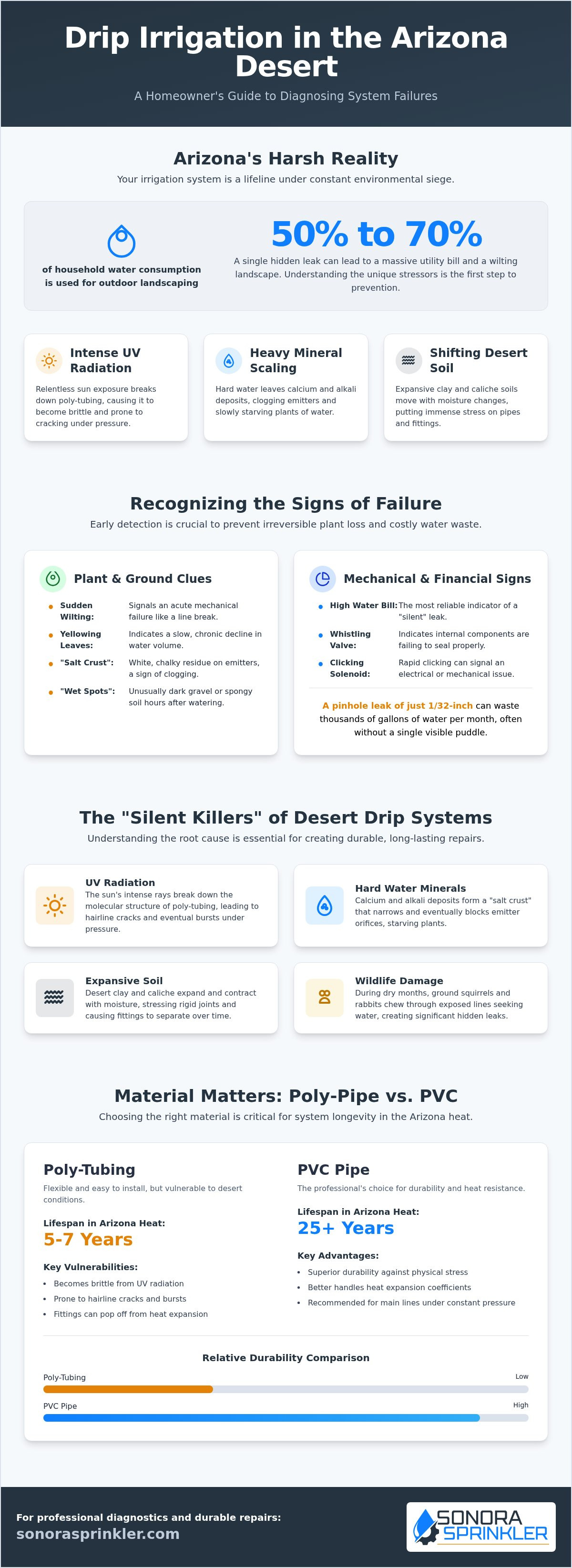
A functional Drip irrigation system is designed to maintain a delicate balance by replacing the moisture lost through plant evapotranspiration. In our desert climate, failure occurs the moment water delivery drops below these essential rates. Effective drip irrigation troubleshooting Arizona starts with recognizing that your system is struggling before your landscape reaches a point of no return. You might notice yellowing leaves on a desert-adapted palo verde, which often indicates a slow, chronic decline in water volume. Conversely, sudden wilting in a hibiscus or citrus tree signals an acute mechanical failure that requires immediate attention.
To better understand this concept, watch this helpful video:
Because most Surprise and Peoria landscapes utilize decorative granite, underground leaks are frequently masked. You should perform a "wet spot" test by looking for unusually dark gravel or areas where the soil feels spongy, even hours after a cycle. This is particularly important in areas with caliche, a natural cement-like layer in Arizona soil that prevents vertical drainage and forces leaked water to travel horizontally. Performing consistent drip irrigation troubleshooting Arizona homeowners can manage themselves, like checking for these wet spots, prevents minor issues from becoming costly replacements. You should also listen for mechanical distress; a whistling valve or a rapidly clicking solenoid often indicates that the internal components are failing to seat properly.
The High Water Bill Red Flag
Your water meter is the most reliable tool for uncovering a "silent" leak. If you notice your usage spiking beyond the typical seasonal patterns for a residential lot in Surprise, it's time for a professional irrigation repair diagnostic. It is a sobering reality that a pinhole leak as small as 1/32-inch can waste thousands of gallons of water monthly without ever showing a puddle on the surface.
Localized Plant Stress Markers
Arizona’s high mineral content is a primary cause of emitter failure. Over time, calcium and alkali deposits build up, creating a visible "salt crust" around the emitter head. This white, chalky residue is a clear warning that the orifice is narrowing and will soon clog completely. It's vital to differentiate these symptoms from overwatering, which typically results in soft, mushy leaves rather than the brittle, scorched edges associated with a drip system failure. Identifying these markers early ensures your landscape remains resilient against the extreme desert heat.
The "Silent Killers" of Desert Drip Systems: Heat, Minerals, and Soil
While identifying symptoms is the first step in maintaining your landscape, understanding the underlying causes is essential for durable repairs. In Surprise and Peoria, systems face environmental stressors that simply don't exist in milder climates. Effective drip irrigation troubleshooting Arizona requires a look at the chemical and physical forces at play both underground and on the surface. These "silent killers" work slowly, often compromising your system’s integrity long before a major failure occurs.
UV radiation is perhaps the most relentless force in the desert. Flexible poly-tubing, while popular for its ease of installation, becomes brittle as the sun breaks down its molecular structure. This leads to hairline cracks that eventually burst under pressure. Below the surface, caliche and desert clay expand and contract significantly with moisture changes. This shifting soil puts immense pressure on rigid joints and can cause fittings to pull apart. During the driest months, local wildlife like ground squirrels and rabbits often chew through exposed lines in search of water, creating significant leaks that remain hidden under decorative rock.
Poly-Pipe vs. PVC in the Arizona Environment
Standard poly-tubing typically has a lifespan of only 5 to 7 years in our intense heat before it loses its flexibility. For main lines that stay under constant pressure, we frequently recommend irrigation PVC pipe replacement. PVC offers superior durability and can better handle the heat expansion coefficients that cause poly-fittings to pop off during the peak of summer. A well-designed system, as outlined in this Backyard Drip Irrigation Guide, balances material strength with the flexibility needed to navigate our challenging desert terrain.
Hard Water and Emitter Calcification
Arizona’s water is notoriously hard, containing high concentrations of calcium and alkali. This creates a chemical environment where mineral scaling is almost inevitable. This buildup is particularly aggressive inside the small orifices of 1-GPH and 2-GPH emitters. Even emitters marketed as "self-cleaning" often fail in the Phoenix metro area because the mineral deposits eventually fuse the internal diaphragm shut. Long-term solutions involve using larger-orifice emitters where appropriate or installing high-capacity filters that can be flushed regularly to remove sediment. If you find yourself replacing emitters every season, it might be time to consult with a specialist about a more robust system design that accounts for our unique water chemistry. Using drip irrigation troubleshooting Arizona techniques to identify these mineral issues early can save your plants and your budget.
Troubleshooting Framework: Emitters, Valves, and Pressure Regulators
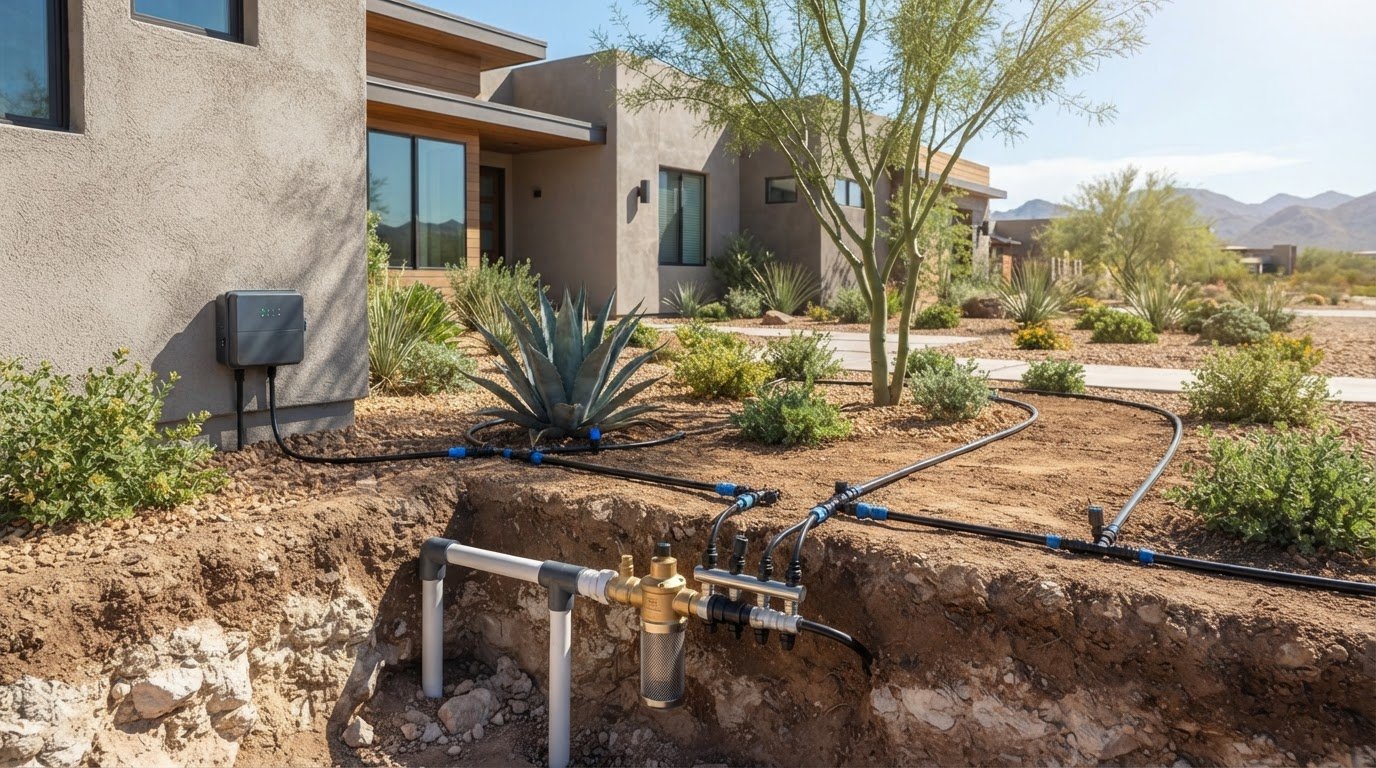
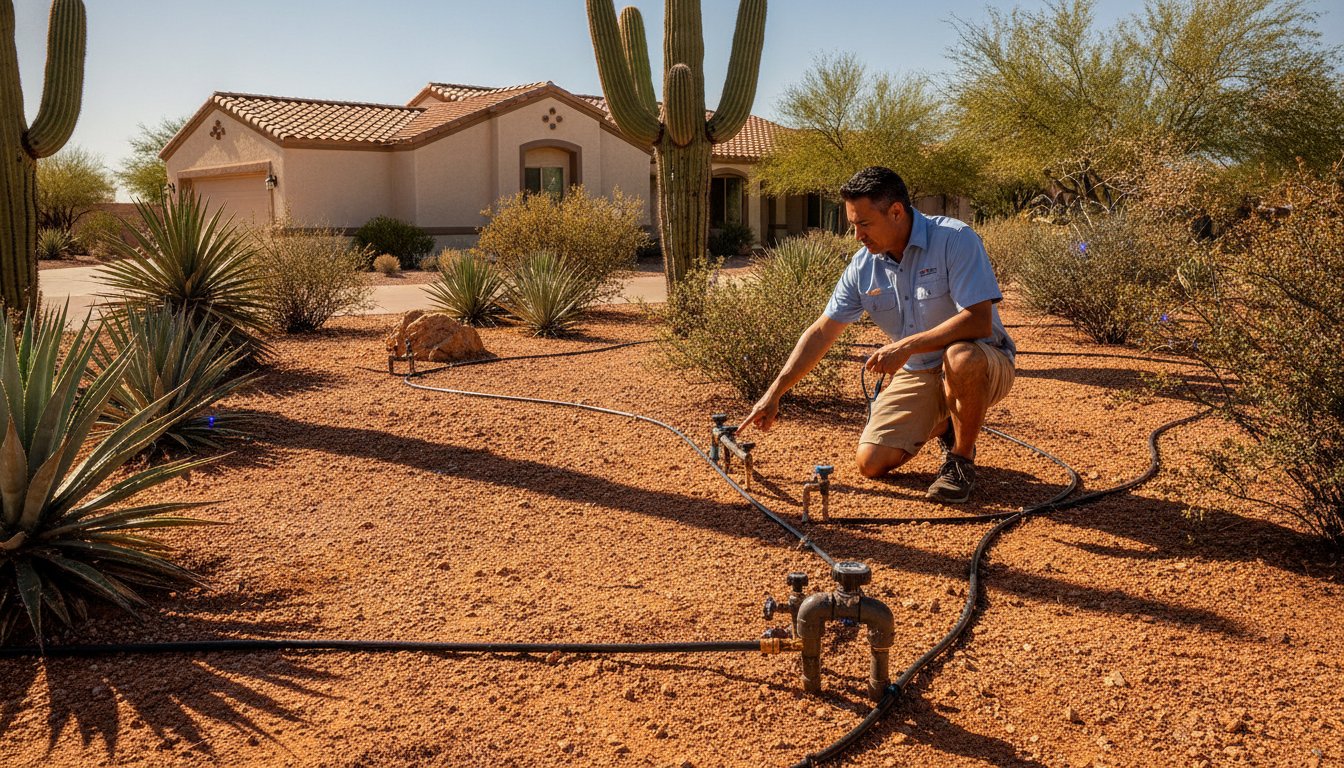
A methodical approach is the only way to effectively manage drip irrigation troubleshooting Arizona homeowners face. You should begin at the valve manifold, which serves as the control center for your system’s water distribution. Start by inspecting the filter and pressure regulator; if the filter is packed with sediment or the regulator has failed, the rest of your system will suffer regardless of how many emitters you replace. Once the manifold is cleared, walk your lateral lines while the system is running. Look specifically for "geysers" or bubbling water beneath the granite, which indicate a clean break in the poly-tubing or a fitting that has slipped due to soil movement.
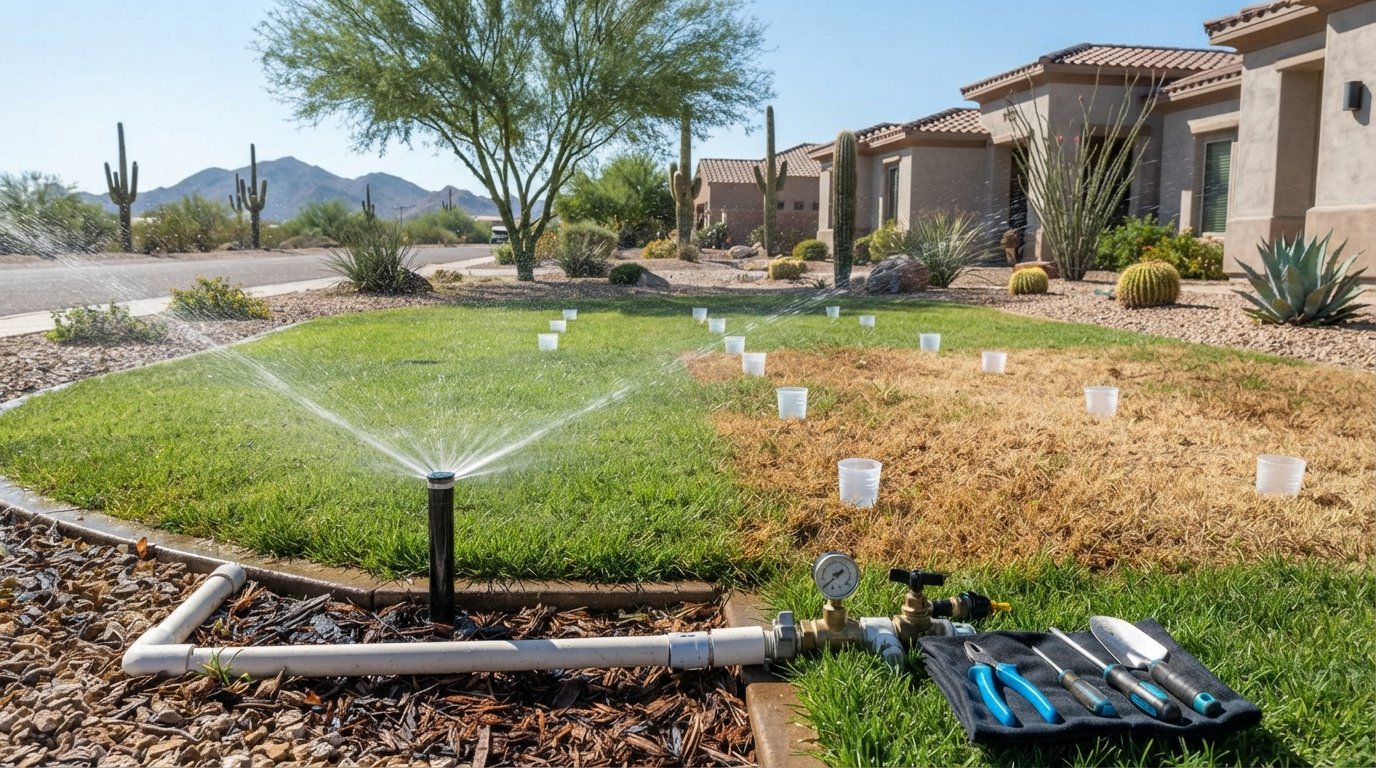
Testing individual output is the next logical step. You can perform a "can test" by placing a small container under several emitters across the zone to verify they are delivering the intended gallons per hour. If the output is inconsistent, it's often more effective to replace the emitter than to attempt cleaning it. Some guides suggest poking holes in clogged emitters with a needle, but this is a temporary fix that often results in overwatering or a drop in system-wide pressure. You should also check your irrigation controller for battery failure or programming errors, as a simple power surge can reset your carefully planned schedule. Finally, take time to inspect your valves and backflow preventers for weeping water or stuck diaphragms that prevent the system from shutting down completely.
Diagnosing Pressure Regulator Failure
Pressure issues are a leading cause of system stress in the Phoenix valley. If you see emitters popping off their stakes or water "misting" into the air like a fogger, your pressure regulator has likely failed. Conversely, if emitters at the end of a long run are barely dripping while those near the valve are flowing strongly, the pressure is too low to overcome the friction loss in the pipe. You can verify this by attaching a standard pressure gauge to the end of a drip thread. Most residential systems require a steady 25 to 30 PSI to function correctly without straining the components.
Testing Irrigation Solenoids and Wiring
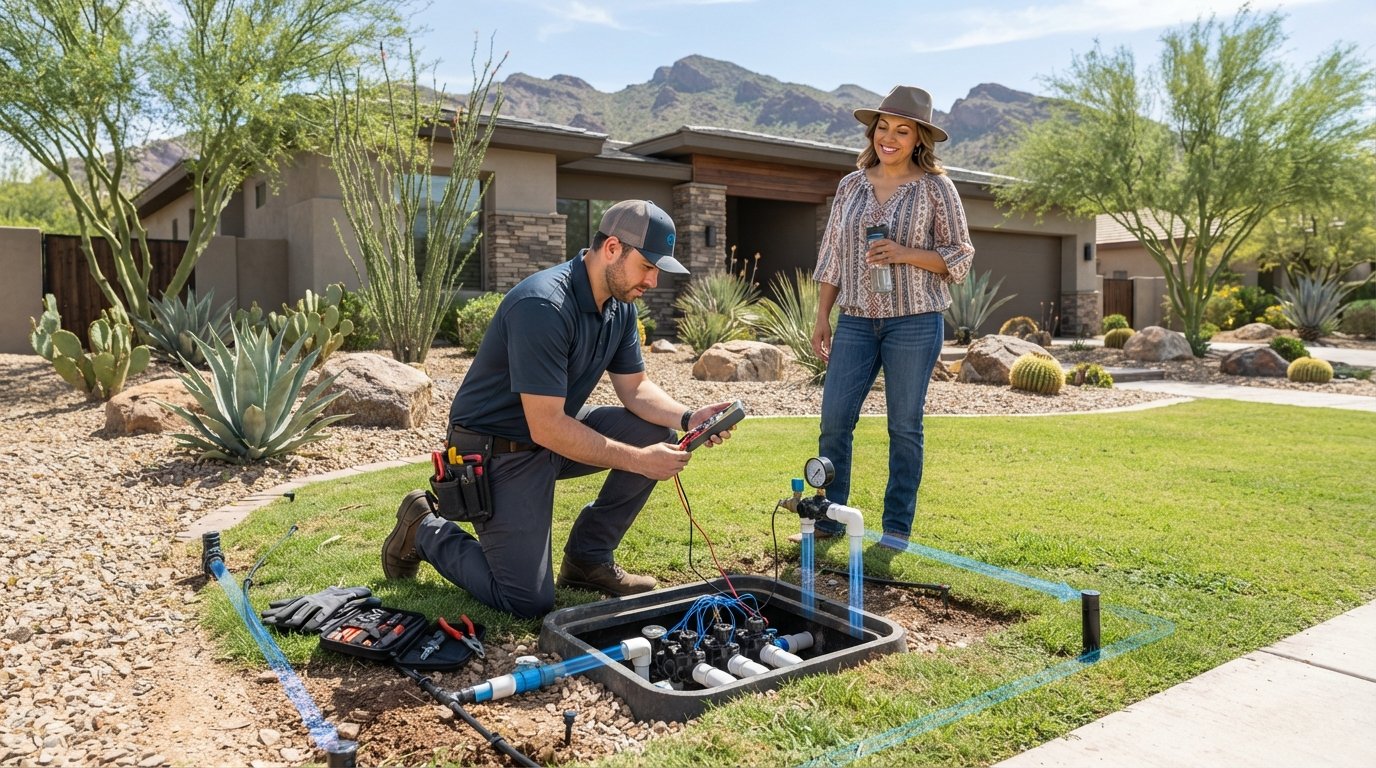
Electrical issues often present as a zone that simply refuses to turn on. Using a multimeter allows you to check for continuity in your irrigation wiring, helping you pinpoint whether the problem lies in the controller, the solenoid, or the wire path. If you hear a "chattering" or humming sound coming from a valve, it's a sign that the solenoid is receiving power but the internal plunger is stuck. Our dry, abrasive soil can also cause wire insulation to degrade over time, leading to shorts that require professional diagnostic tools to locate and repair. This disciplined framework ensures that every mechanical and electrical component is verified for long-term reliability.
Repairing Common Leaks and Mechanical Failures
Once you've identified the source of your system’s distress, the focus shifts to executing repairs that can withstand the harsh Arizona environment. Effective drip irrigation troubleshooting Arizona doesn't end with a diagnosis; it requires a commitment to using materials and techniques that won't fail during the next heatwave. For cracked poly-tubing, the "cut and couple" method is the most reliable approach. You simply cut out the brittle or damaged section and bridge the gap with a high-quality compression coupling. This creates a mechanical seal that is far more durable than attempting to patch a hole with tape or sealant.
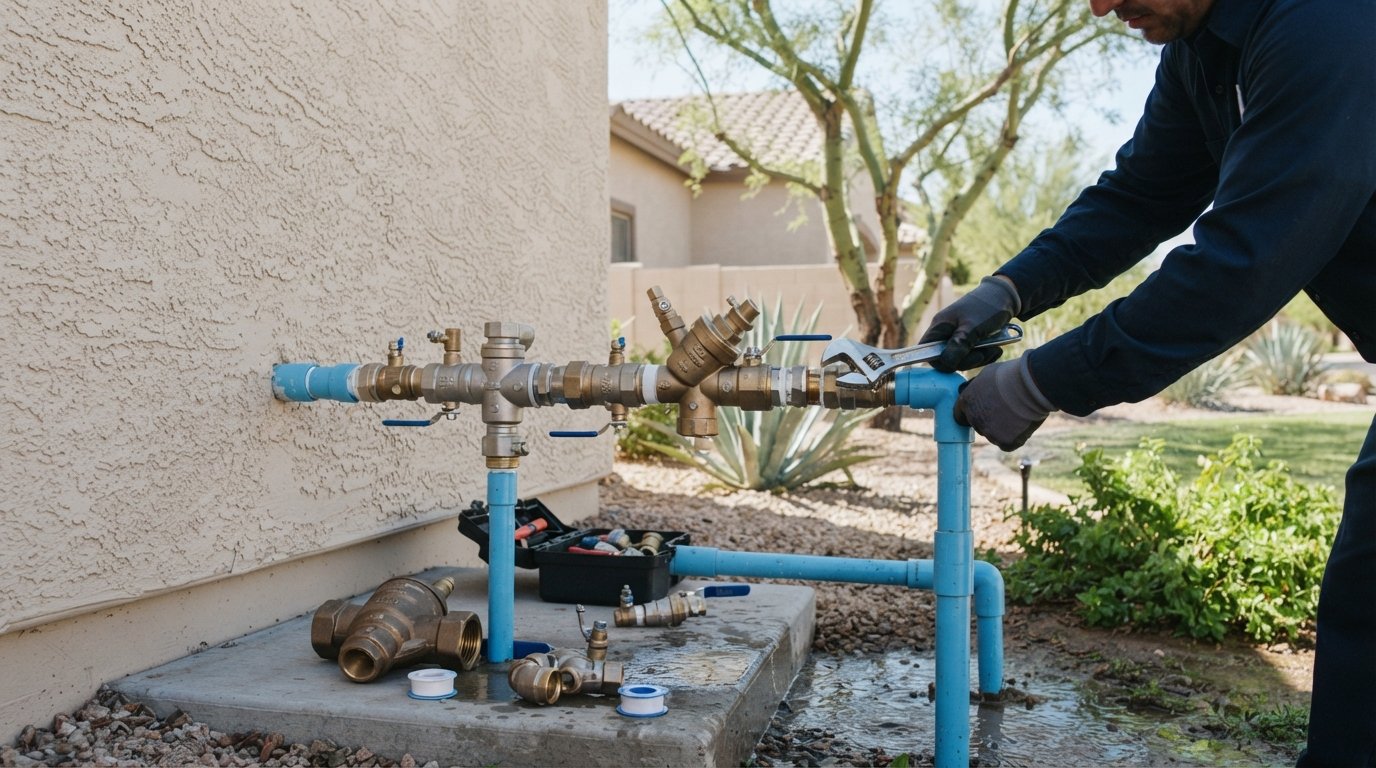
Working with PVC in the desert presents its own set of challenges, particularly during the summer months when ambient temperatures exceed 110 degrees. Proper PVC solvent welding requires speed and precision because the primer and cement evaporate almost instantly in our dry air. You must apply a generous amount of primer to soften the plastic and then work quickly to seat the joint before the glue sets. If you rush this process or skip the priming stage, the joint will likely fail under the high pressure of our local municipal water supplies. After any repair, you must perform a thorough system flush. Opening the end caps and running the water for several minutes clears out the dirt and plastic shavings that inevitably enter the lines during the repair process.
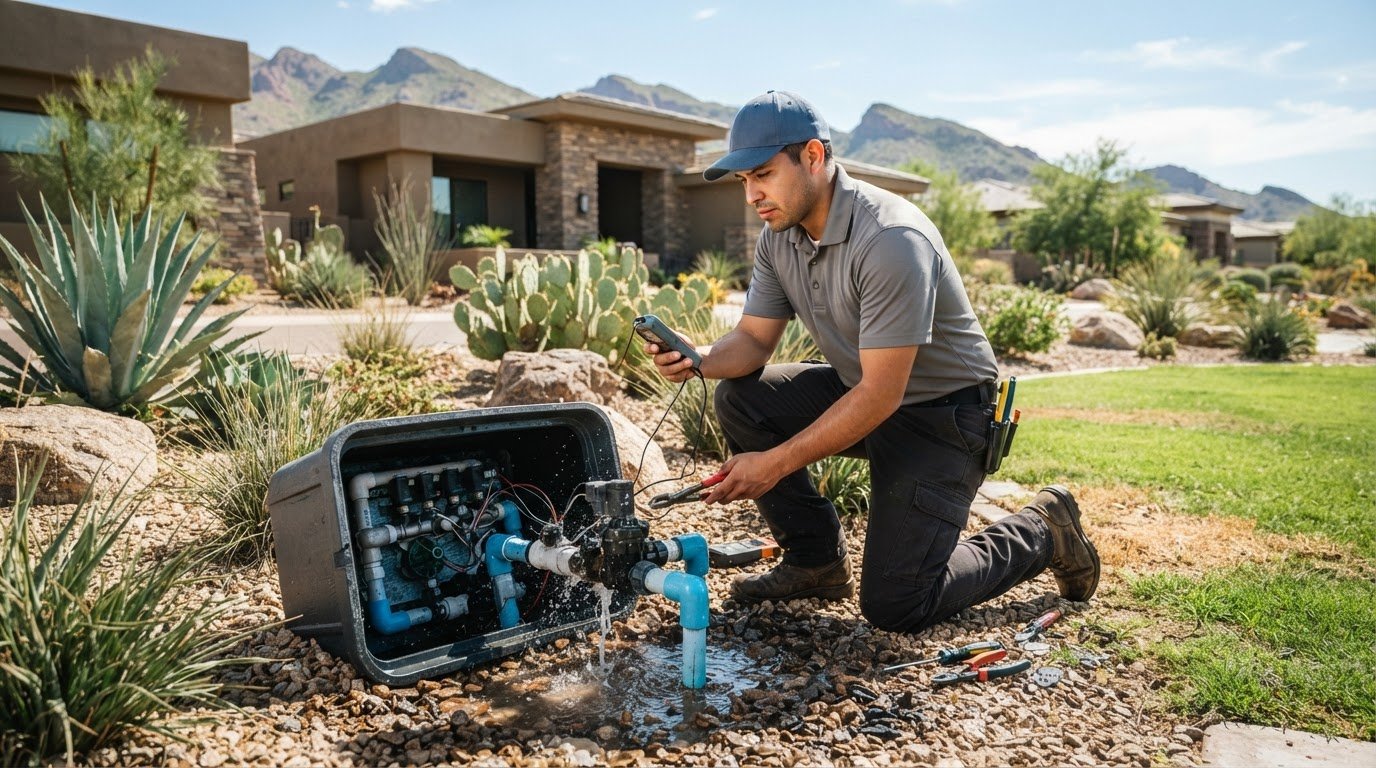
Mechanical failures often occur within the valve itself. If a zone stays on or leaks constantly, you can often replace a faulty valve diaphragm without removing the entire valve body from the ground. This saves significant time and prevents the need to rebuild the entire manifold. You simply unscrew the bonnet, inspect the internal spring and rubber diaphragm for tears or mineral buildup, and drop in a replacement. This targeted approach restores function while maintaining the integrity of your existing valve and backflow services.
Emitter Replacement and Cleaning
While minor mineral scaling can sometimes be dissolved with a vinegar soak, we generally recommend replacing damaged emitters to ensure long-term reliability. Standardizing your system with pressure-compensating (PC) emitters as part of your drip irrigation installation ensures that every plant receives the same amount of water, regardless of its distance from the valve. Mastering these small components is a key part of drip irrigation troubleshooting Arizona homeowners can handle, as you should never leave a drip line "open-ended" after an emitter pops off. This ruins the hydraulics of the entire zone, causing a massive drop in pressure that prevents other emitters from functioning correctly.
Fixing Manifold and Valve Box Leaks
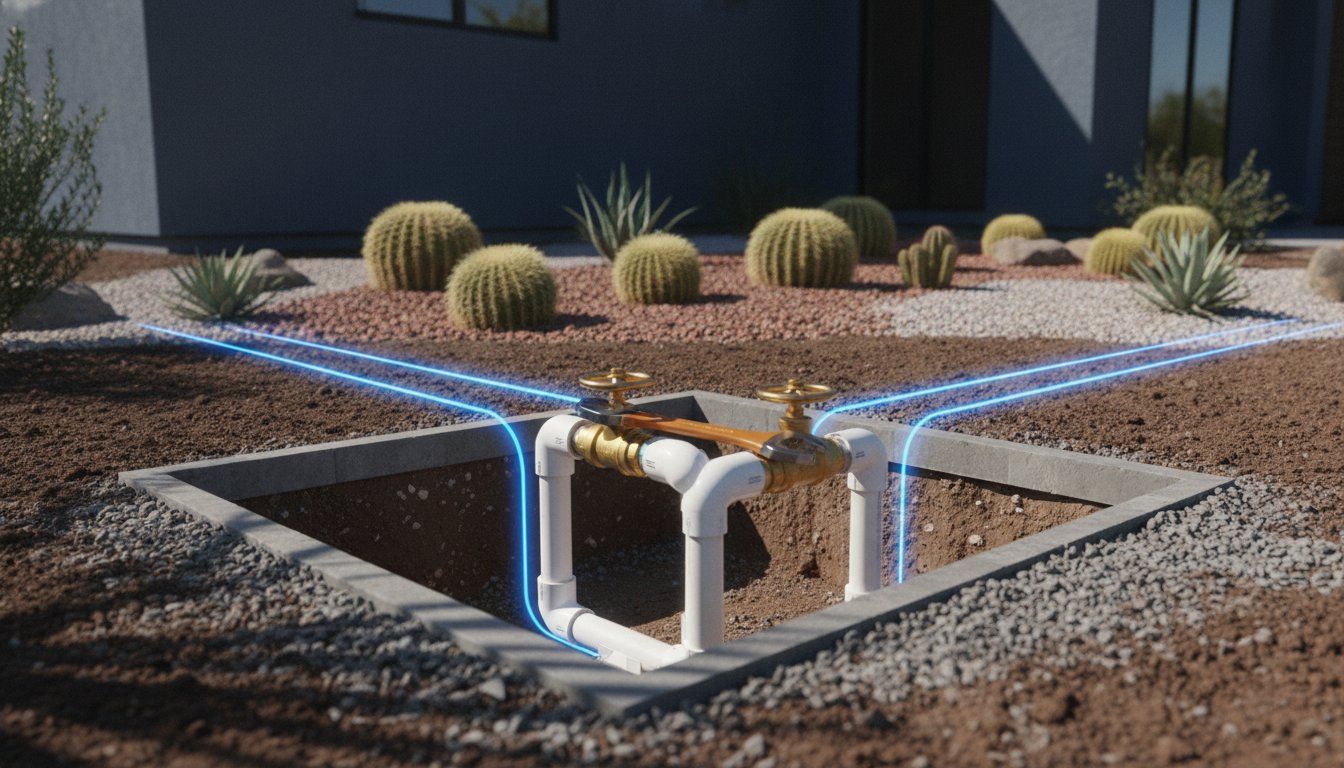
Leaks at the manifold often occur at the "T" joints or where the poly-tubing connects to the PVC main line. These areas are under constant stress from soil movement and thermal expansion. If a valve won't shut off, it's often because a small piece of debris is trapped in the internal port. A master valve can be a lifesaver in these scenarios, as it acts as a secondary fail-safe to prevent catastrophic flooding if a single zone valve fails. If you're dealing with persistent leaks that seem to reappear every season, schedule a professional system evaluation to ensure your manifold is built for long-term desert durability.
Professional Solutions: Restoring Efficiency to Your Surprise or Peoria Home
While basic maintenance can extend the life of your system, certain challenges require the specialized equipment and diagnostic experience of a professional. Homeowners often find that drip irrigation troubleshooting Arizona reaches a point of diminishing returns when leaks are located deep beneath decorative rock or soil layers. Professional diagnostics provide a comprehensive view of your system's health, uncovering hidden inefficiencies that a surface-level inspection might miss. By identifying these systemic weaknesses early, you can avoid the cycle of reactive repairs and move toward a more sustainable, high-performance landscape.
Modern water management in the desert also benefits from technological upgrades. Smart controllers are particularly effective in our climate, as they automatically adjust watering schedules based on local weather data. This is vital during the transition between the extreme dry heat of June and the high-humidity monsoon season in July and August. A system that adjusts itself prevents the water waste associated with fixed timers and ensures your plants receive exactly what they need to thrive. Unlike "off-the-shelf" kits found at big-box stores, a custom-designed system from Sonora Sprinkler Inc. is built with heavy-duty components meant to endure the specific mineral and heat stressors found in the Phoenix valley.
When to Call an Irrigation Specialist
There are several scenarios where a DIY approach may lead to further damage or safety risks. Complex electrical faults often require professional irrigation wiring and diagnostics to trace breaks without digging up the entire yard. Main line leaks located under driveways, patios, or expensive hardscaping also demand a precise, surgical approach to minimize property disruption. Additionally, any failure in your backflow prevention device is a serious matter. These components are critical for protecting your home’s potable water supply from contamination and require expert valve and backflow services to ensure they meet local safety standards.
Scheduling Your Diagnostic Visit
When you schedule a visit with Sonora Sprinkler Inc., you are enlisting a team that has specialized in desert water management since 1999. Our process begins with a thorough evaluation of your entire system, from the controller programming down to the last emitter on the line. We don't just patch the visible leaks; we look for the root cause of the failure to ensure a long-term solution. For residents in Surprise and Peoria, this means tailoring your system to handle local soil conditions like caliche while maximizing every drop of water. We prioritize precision and durability in every repair, giving you the confidence that your landscape will remain resilient through the hottest months of the year. Ready to stop the leaks? Contact Sonora Sprinkler Inc. for expert irrigation repair today.
Securing Your Landscape’s Future in the Desert
Managing a desert landscape requires more than just a set-and-forget approach to watering. By understanding the visual cues of plant stress and the mechanical impact of mineral scaling, you've taken the first step toward a more resilient yard. A methodical approach to drip irrigation troubleshooting Arizona ensures that small leaks don't turn into massive utility bills. Whether you're replacing a brittle poly-line or upgrading to a smart controller, these proactive measures protect the long-term health of your property and your wallet.
Some challenges require a deeper level of technical precision to solve effectively. Since 1999, Sonora Sprinkler Inc. has provided specialized solutions for the unique environmental stressors of the West Valley. Our licensed and expert residential irrigation technicians understand the nuances of desert-specific drip system design and are committed to helping you restore efficiency to your watering network. We take pride in being a dependable fixture in the community, offering the grounded expertise needed to navigate complex mechanical and electrical failures.
Request a Professional Irrigation Diagnostic in Surprise or Peoria today from Sonora Sprinkler Inc. to ensure your system is ready for the next heatwave. Your landscape is a significant investment; we're here to help you protect it. You can rest easy knowing your irrigation is in the hands of seasoned guides who prioritize functional results and long-term durability.
Frequently Asked Questions
Why is my drip irrigation system losing pressure in my Surprise home?
Pressure loss is often caused by a failed pressure regulator or a clogged manifold filter. In Surprise, the high mineral content in the water can cause the regulator's internal components to seize or the filter screen to become completely blocked. If the manifold is clear, you likely have a "silent" leak along the lateral lines. Professional drip irrigation troubleshooting Arizona specialists can help locate these hidden breaks without extensive digging or property damage.
How do I know if my drip emitters are clogged with calcium?
You can identify calcium clogs by the presence of a white, chalky residue known as "salt crust" around the emitter head. This mineral buildup restricts water flow, eventually leading to a complete blockage. If you notice that some plants are wilting while others are thriving, it is a sign that individual emitters have failed due to scaling. Replacing these with pressure-compensating models is much more effective than attempting to clean them with vinegar.
Can I fix a broken underground drip line myself?
You can repair a broken underground line using compression couplings and the "cut and couple" method. It is essential to clear away all dirt and debris from the damaged section before inserting the new fitting to ensure a watertight seal. While this is a common DIY task, the shifting nature of Arizona’s clay and caliche soil means that improper repairs may pull apart during the next seasonal temperature swing or high-pressure surge.
What is the best way to detect a leak in a desert landscape?
The most effective way to detect a leak in a desert landscape is to monitor your water meter and look for localized "wet spots" in your granite. If the meter’s low-flow indicator moves while all indoor water is shut off, you definitely have a leak. On the surface, look for unusually dark gravel or areas where the soil remains damp long after the irrigation cycle has finished, as these signal an underground break in the line.
How often should I replace my drip irrigation tubing in Arizona?
Standard poly-tubing generally requires replacement every 5 to 7 years because intense UV radiation makes the plastic brittle and prone to cracking. In contrast, rigid PVC pipes used for main lines can last significantly longer if they are buried at the proper depth. Consistent drip irrigation troubleshooting Arizona homeowners perform annually can help identify when the tubing has reached the end of its functional lifespan before a major blowout occurs during the summer peak.
Why does my irrigation valve keep running even when the timer is off?
An irrigation valve that continues to run usually has a torn rubber diaphragm or a small piece of debris trapped in the internal port. This prevents the valve from forming a complete seal when the timer shuts off. You can often fix this by unscrewing the valve bonnet and cleaning the internal components, though a heavily scarred diaphragm will require a full replacement to stop the weeping water and prevent landscape flooding.
Is a smart irrigation controller worth it for an Arizona drip system?
A smart irrigation controller is a valuable investment because it uses local weather data to adjust for Arizona’s monsoon and dry seasons. This automation ensures your plants receive deep watering during the hottest months while preventing waste when humidity rises or rain occurs. Many municipalities, including Surprise and Peoria, offer rebates for WaterSense labeled controllers, making the upgrade an economically sound decision for long-term water management and lower monthly utility costs.
How do I test if my irrigation solenoid is bad?
You can test an irrigation solenoid by using a multimeter to check for electrical continuity or by listening for a humming sound at the valve. A healthy solenoid should typically show a resistance reading between 20 and 60 ohms. If the reading is zero or infinite, the internal coil has failed. Additionally, a "chattering" sound often indicates that the solenoid is receiving power but the internal plunger is physically stuck due to mineral buildup.