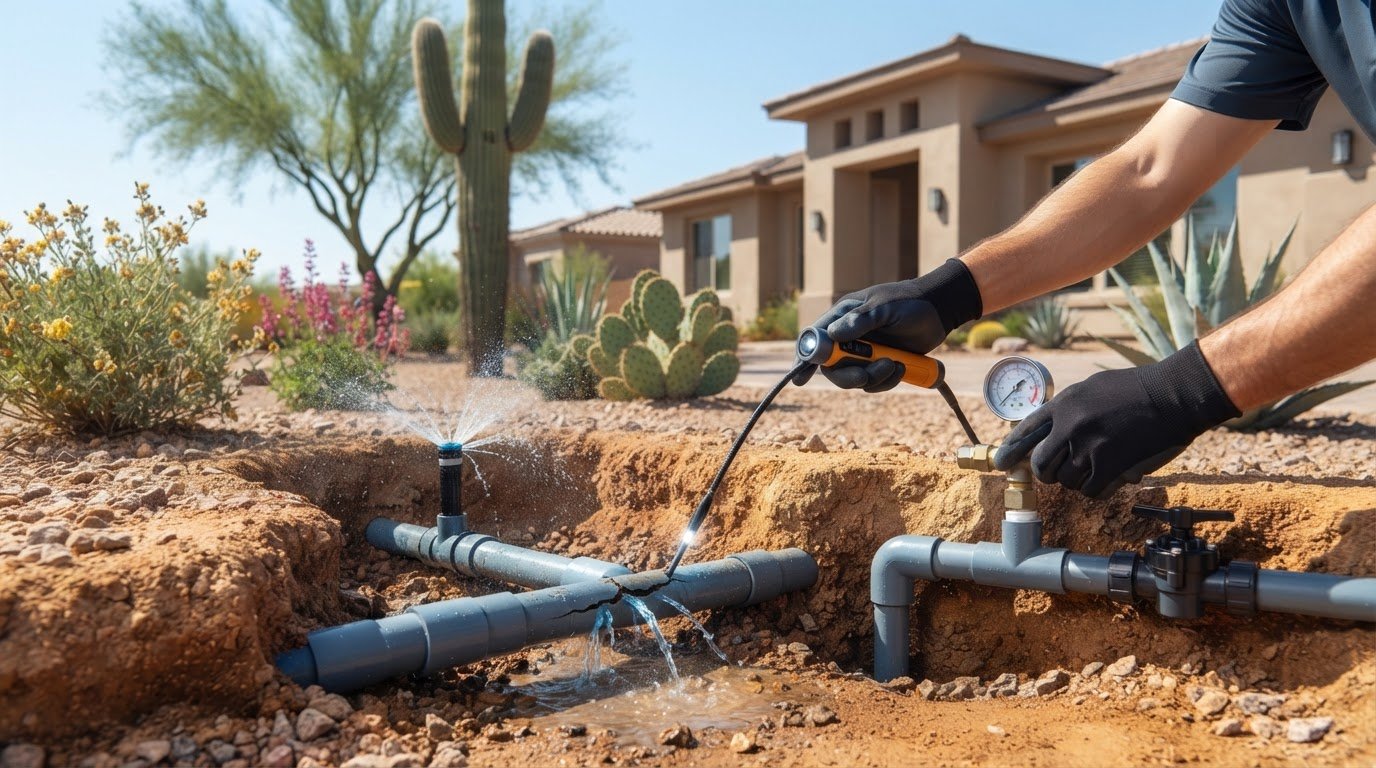
In the harsh climate of the West Valley, your drip irrigation system serves as a critical life-support network for every plant on your property. When that system falters, the desert environment doesn't offer much of a grace period before your landscape begins to suffer. If you are currently struggling with unpredictable water bills or the sight of dying desert plants, you need a solution for drip irrigation repair Peoria AZ that addresses the unique mechanical stressors of our region. It's common to feel overwhelmed by recurring leaks in thin poly tubing or the technical confusion of diagnosing valve versus wiring failures.
We understand that a functional irrigation system is about more than just convenience; it's about protecting the long-term health and value of your home. This article will help you identify and diagnose the specific failures caused by our local environment, including the difficult caliche soil that often complicates underground repairs. You'll discover how a professional approach to diagnosis can uncover root causes rather than just treating symptoms. We'll preview the steps to transitioning your system toward a reliable, leak-free future that prioritizes durability and lower monthly water costs.
Key Takeaways
- Understand how Peoria's extreme heat and caliche soil create unique mechanical stressors that lead to premature irrigation system failure.
- Learn to distinguish between minor emitter clogs and major valve failures to prevent unnecessary water waste and protect your landscape.
- Evaluate the long-term durability of Schedule 40 PVC compared to standard poly tubing to ensure your system survives the desert climate for decades.
- Apply the "Rule of Three" to decide whether a simple repair is sufficient or if a full system replacement is the more cost-effective choice.
- Discover how specialized drip irrigation repair Peoria AZ provides the professional diagnosis needed to solve root causes rather than just fixing symptoms.
The Unique Challenges of Drip Irrigation in Peoria, AZ
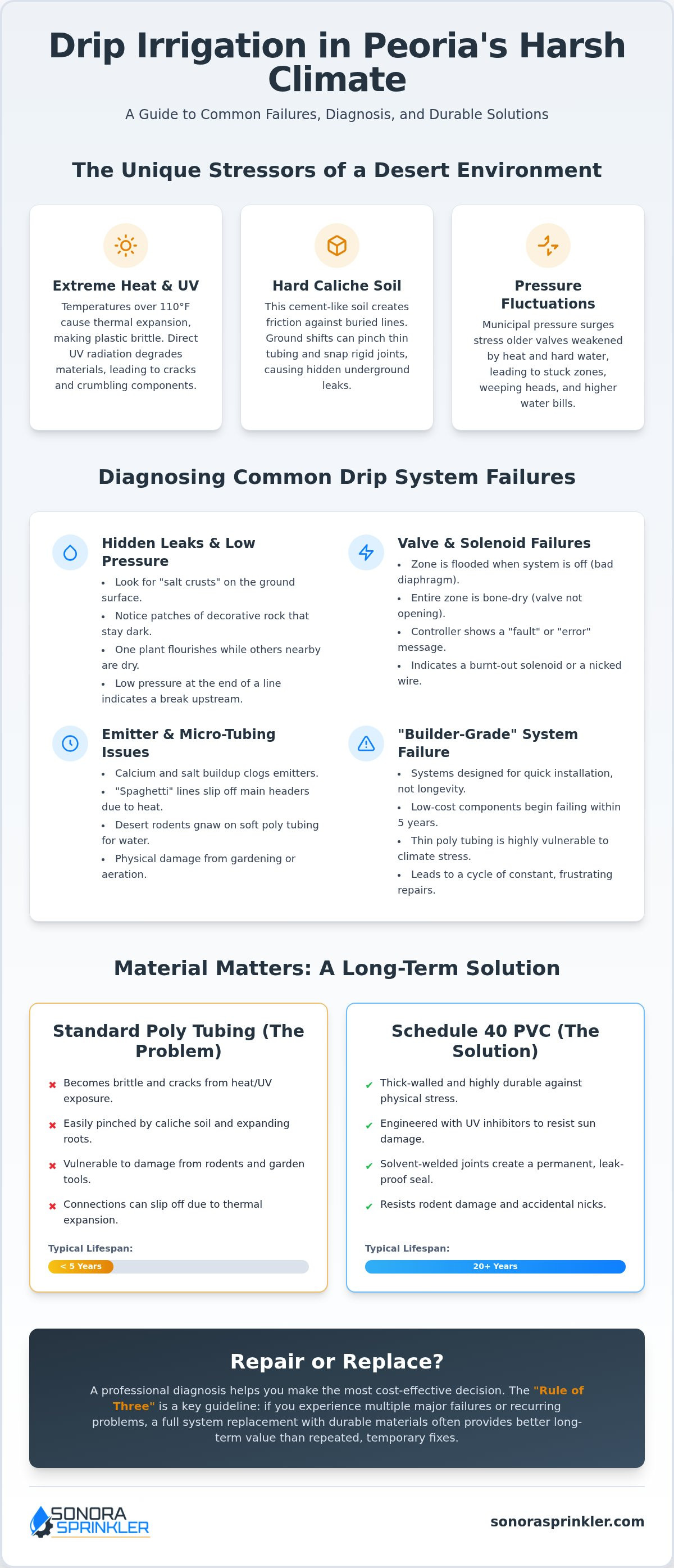
Peoria residents often discover that their landscaping is only as resilient as the plumbing supporting it. In our desert environment, Drip irrigation systems face stressors that simply don't exist in other regions. Many homeowners find themselves caught in the "builder-grade" trap, where systems installed during initial development are designed for speed rather than longevity. These systems often begin to fail within five years as the materials succumb to the intense Arizona climate and the physical limitations of low-cost components.
Water pressure fluctuations across Peoria neighborhoods also play a silent role in system stress. As the city manages its diverse water portfolio, pressure surges can occur within the municipal lines. Older valves that have already been weakened by heat and hard water deposits often fail during these spikes. This leads to stuck zones or weeping heads that drive up monthly bills, making expert drip irrigation repair Peoria AZ essential for maintaining system efficiency and protecting your plants.
Peoria’s Soil and Your Irrigation System
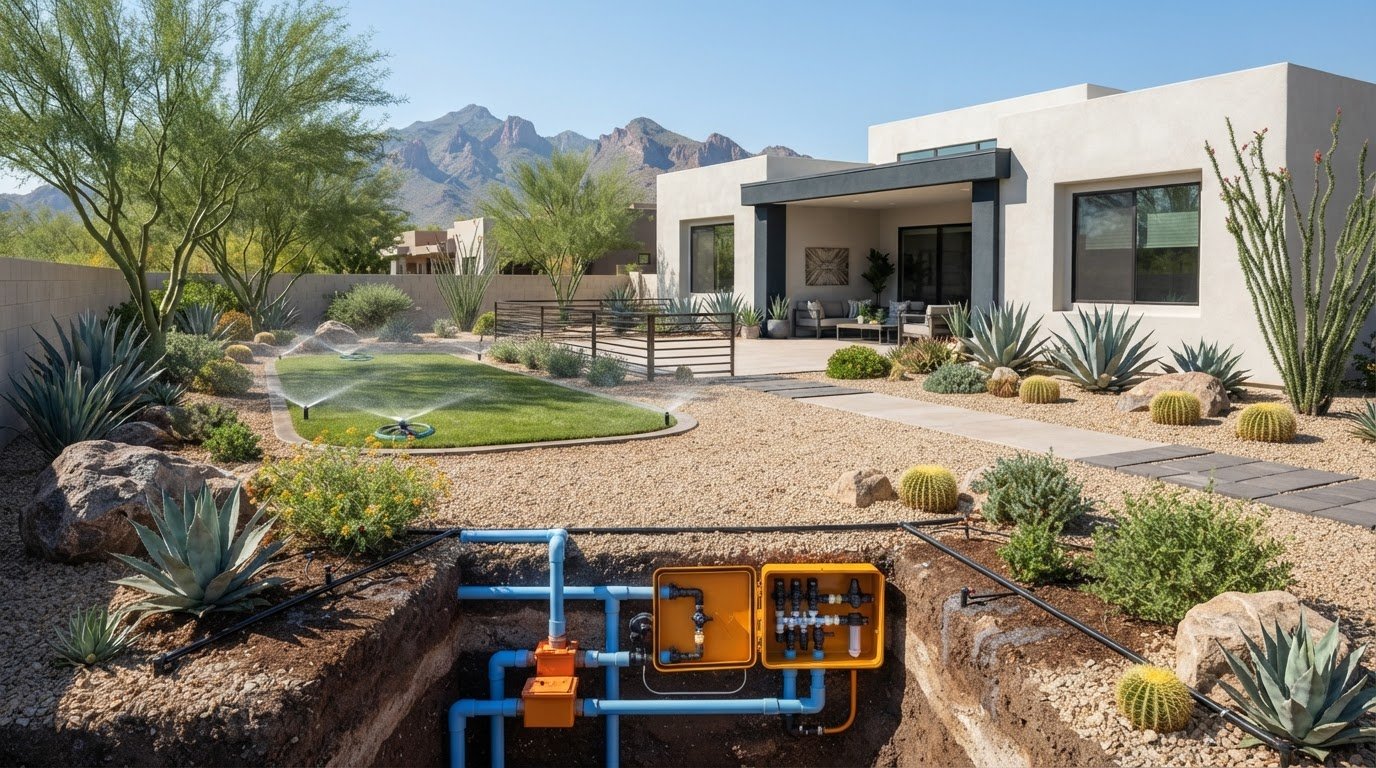
The ground beneath your lawn is rarely just dirt; it's often a mix of rock and hard-packed caliche. This dense, cement-like layer makes professional drip irrigation repair Peoria AZ a necessity because it creates significant friction against buried lines. When the desert floor shifts or expands during seasonal changes, the pressure can cause rigid joints to snap or thin tubing to pinch. Shallow-buried poly lines are particularly vulnerable, as routine gardening or aeration can easily slice through the soft material. Soil expansion in the desert puts constant tension on PVC joints, which requires precise solvent welding to prevent future leaks.
Thermal Expansion and UV Degradation
Heat is the primary enemy of irrigation longevity in the West Valley. With summer temperatures regularly exceeding 110 degrees, the physical expansion and contraction of plastic components are extreme. Standard poly tubing eventually loses its flexibility, becoming brittle and prone to hairline cracks that are difficult to locate. Exposed drip emitters are often the first to fail, as direct UV radiation bleaches the plastic until it crumbles under pressure. Professional-grade materials, such as those used in our drip systems, are engineered with UV inhibitors and thicker walls to resist this degradation and provide the durability your landscape requires.
Diagnosing Common Drip Irrigation Failures
Identifying a leak before your water bill spikes is the first step in effective drip irrigation repair Peoria AZ. In our arid climate, water doesn't always pool on the surface; it often drains straight down into the porous subsoil. You should look for "salt crusts" on the surface or patches where the decorative rock stays darker than the surrounding area. If one plant is suddenly flourishing while others nearby look parched, you likely have a localized leak. Low pressure at the end of a line is another red flag. It usually points to a significant break upstream that's diverting water before it can reach the end of the run.
Properly diagnosing these issues helps you avoid the frustration of "parts-swapping" without fixing the root cause. Understanding the Challenges of Drip Irrigation in Peoria, AZ means knowing that a failed zone valve and a clogged emitter require very different solutions. A systematic check of your system can save both your plants and your budget.
Valve and Solenoid Troubleshooting
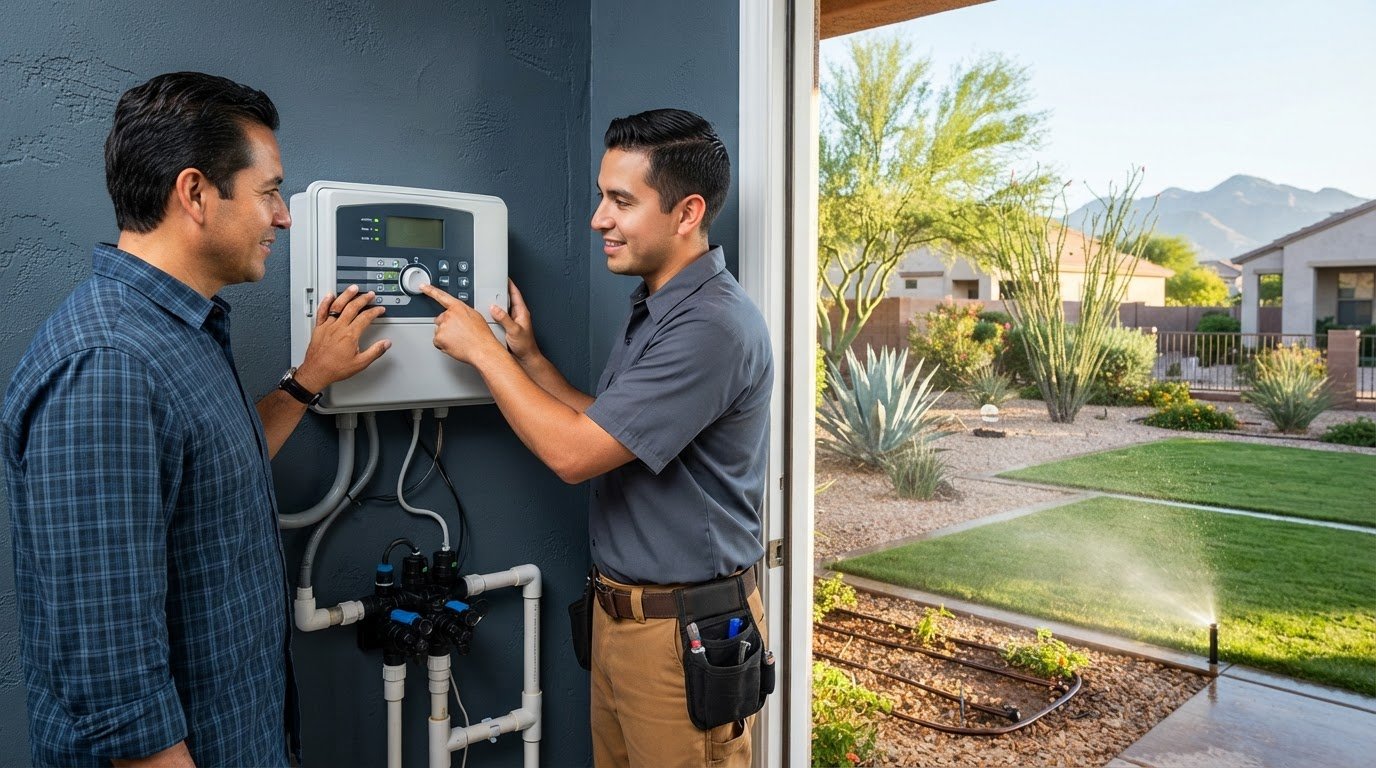
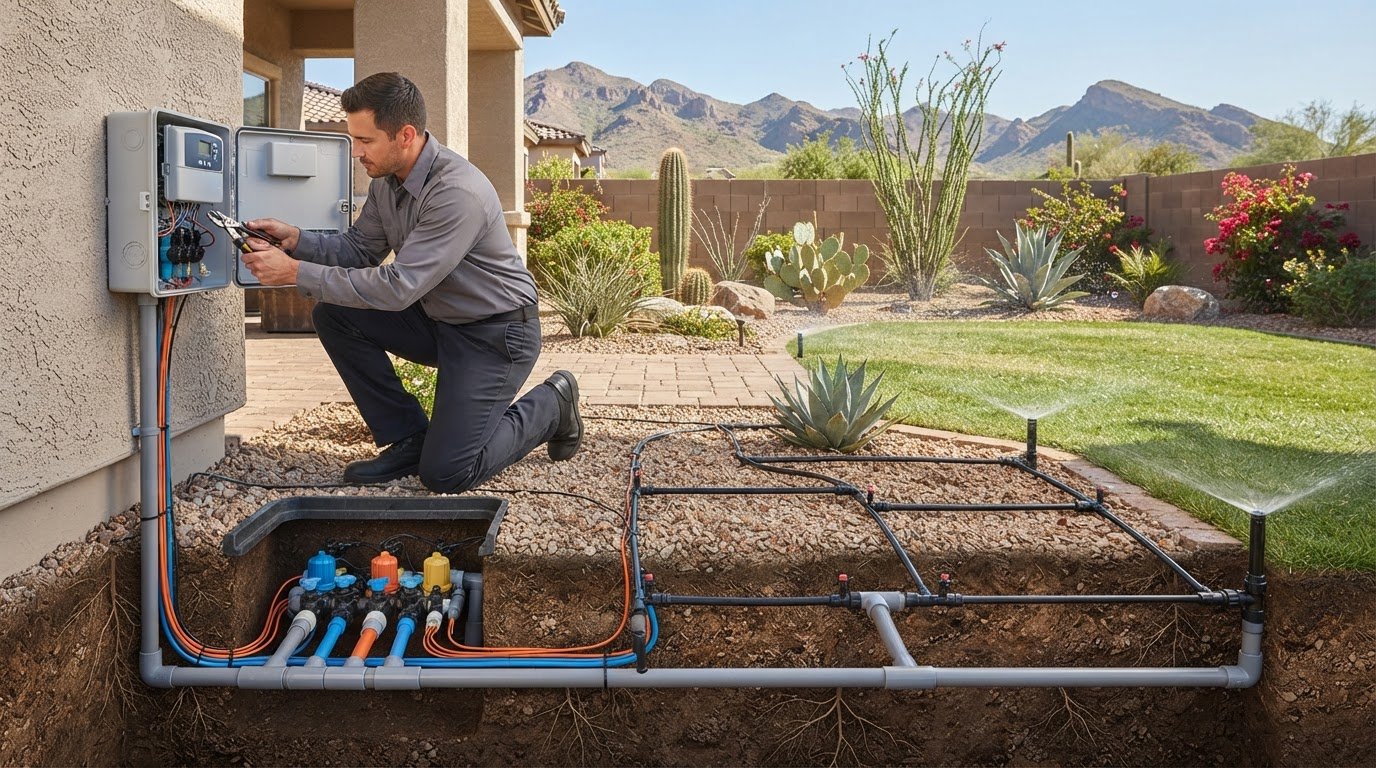
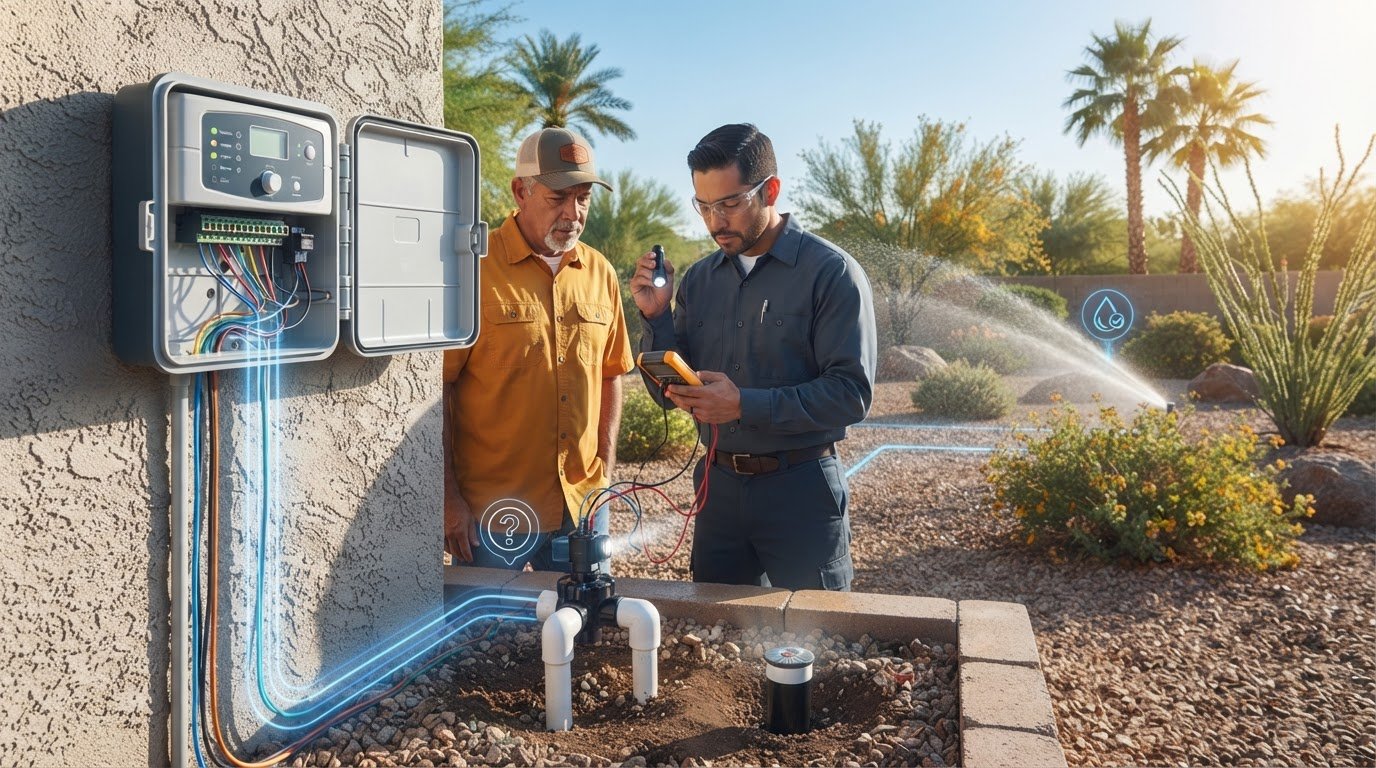
A failed zone valve is often the culprit when an entire section of your yard is either bone-dry or constantly flooded. If a zone remains saturated even when the timer is off, the valve's internal diaphragm has likely collected sediment that prevents it from sealing properly. Electrical failures present differently. If your controller displays a "fault" or "error" message, the problem could be a burnt-out solenoid or a nicked wire underground. Professional wiring and diagnostics are the most efficient way to pinpoint these electrical breaks without digging up your entire yard.
Emitter and Micro-Tubing Issues
Mineral deposits are a fact of life for Peoria homeowners. Over time, calcium and salt buildup can calcify standard emitters, starving your plants of their water supply. We also see many "spaghetti" lines that have simply pulled away from their main headers. The intense desert heat causes poly tubing to soften and expand, which allows it to slip off the plastic barbs. Additionally, thirsty desert rodents often gnaw on these soft lines, creating jagged holes that drop the system's pressure. If you're noticing these recurring issues, it's time for a professional assessment. You can reach out to our team for a thorough system evaluation and long-term solution.
PVC vs. Poly: Choosing the Right Materials for Peoria
Choosing the right material for your system is the primary factor in determining how often you'll need drip irrigation repair Peoria AZ. At Sonora Sprinkler Inc., we prioritize PVC pipe replacement because it offers a level of residential reliability that standard materials can't match. Most homeowners are surprised to learn that standard poly tubing has a functional lifespan of only 3 to 5 years in our extreme climate before it becomes brittle and prone to cracking. In contrast, Schedule 40 PVC is a professional-grade solution that can last 20 years or more when installed correctly.
The cost-benefit analysis of this material choice is clear for long-term homeowners. While a PVC-based system requires a higher upfront investment, it prevents the recurring costs of plant replacement. Mature desert trees and shrubs represent a significant financial investment. When a thin poly line fails during a July heatwave, you might lose thousands of dollars in landscaping before you even notice the leak. Investing in durable materials acts as an insurance policy for your property's curb appeal and ecological health.
Structural integrity is also vital for the larger residential lots found throughout Peoria. These properties often require higher operating pressures to move water efficiently from the valve box to distant perimeter walls. Poly systems frequently suffer from "blowouts" at the connection points when subjected to these pressures. PVC handles these surges with ease, ensuring that water reaches every plant with consistent volume and velocity.
The Durability of Schedule 40 PVC
We utilize Schedule 40 PVC as the "backbone" of our irrigation systems because of its superior resistance to the local environment. It's thick enough to withstand root intrusion from aggressive desert trees and won't collapse under the weight of hard-packed caliche soil. Unlike poly, which sharp rocks can easily puncture, PVC provides a rigid barrier against physical damage. If you're looking to upgrade a failing system, our expertise in design and installation ensures your new main lines are built to endure the specific challenges of the West Valley floor.
When Poly Tubing is Still Appropriate
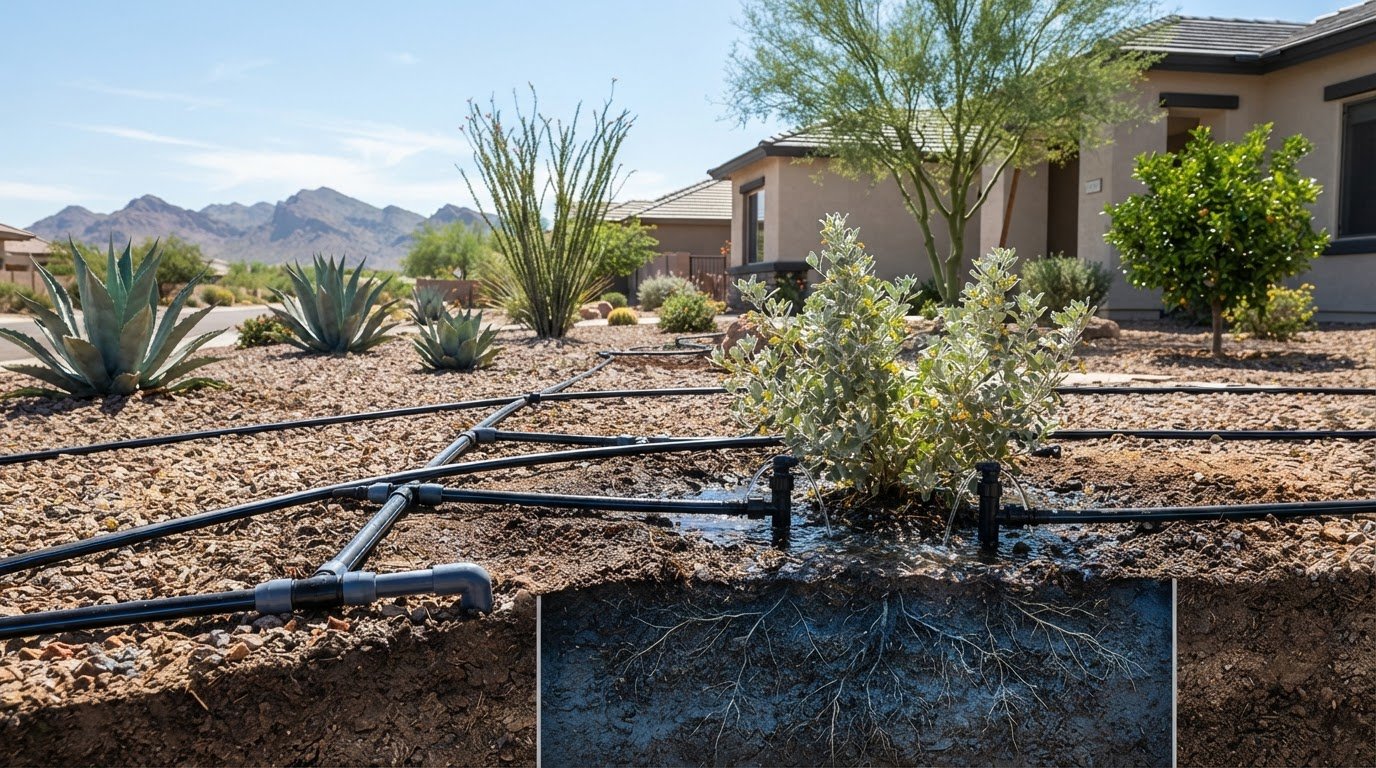
Poly tubing isn't entirely obsolete; it simply needs to be used in the right context. We use high-quality micro-tubing for the "final foot" of the system, where water transitions from the buried PVC pipe to the individual plant's root zone. It's essential to use modern materials with UV-resistant coatings to prevent the sun from bleaching and weakening the plastic. To manage the "creeping" that happens as materials expand in the 110-degree heat, we secure these lines with heavy-duty stakes. This keeps the emitters properly positioned, preventing them from migrating away from the plants they're meant to keep alive.
When to Repair vs. Replace Your Drip System
Many homeowners in the West Valley attempt to manage their own drip irrigation repair Peoria AZ by using simple plastic couplers to patch visible leaks. While a single patch might solve a temporary problem, we recommend following the "Rule of Three." If you find yourself repairing three or more leaks on a single line within one season, the material itself has likely reached its breaking point. Systemic failure occurs when the plastic has degraded so significantly that fixing one leak simply creates enough pressure to cause a new break elsewhere along the run.
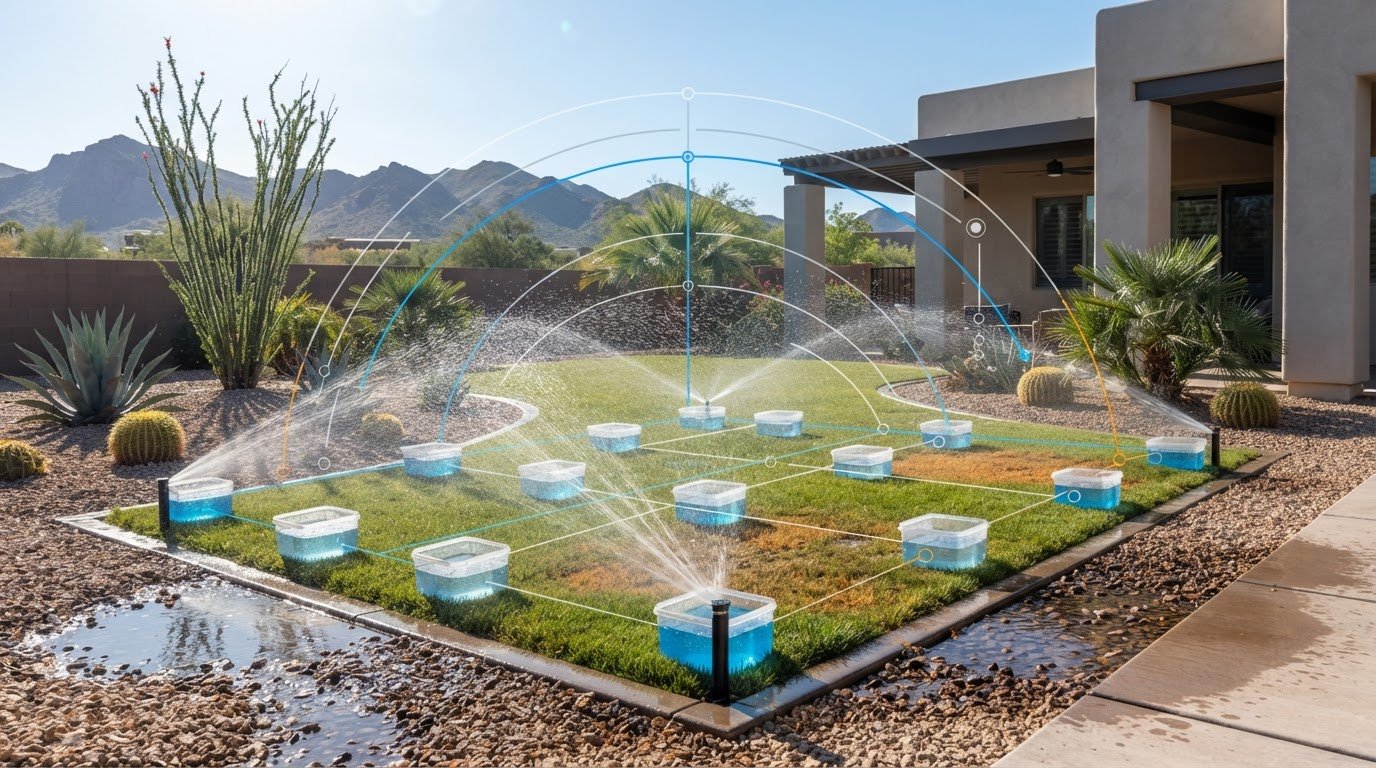
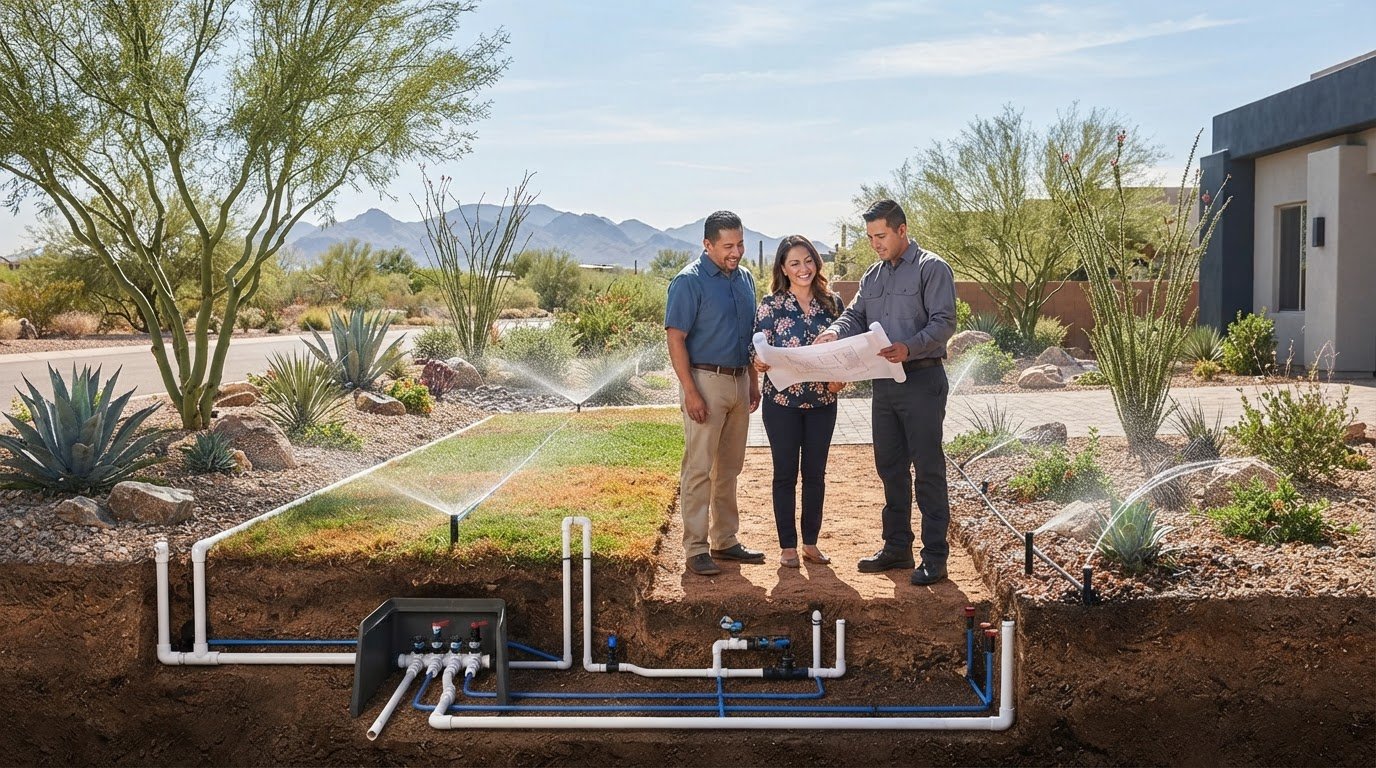
Age is the most reliable indicator of system health in our environment. If your drip lines are over seven years old, they've survived nearly 3,000 days of intense Arizona sun and constant soil expansion. At this stage, frequent repairs become a "sunk cost" where the cumulative price of service calls and plant replacements quickly exceeds the cost of a full upgrade. A professional audit can determine if your current layout is efficient or if a poor design is slowly starving your plants, which often results in higher monthly Peoria water utility bills.
Signs Your System is Beyond Simple Repair
Recognizing the difference between a minor fix and a total failure can save you hundreds in wasted water. You should consider a larger intervention if you notice these specific red flags:
- Brittle, "crunchy" tubing that snaps or crumbles when touched.
- Widespread pressure loss that prevents emitters at the end of the line from dripping.
- Frequent valve failures caused by plastic flakes from disintegrating pipes getting stuck in the valve diaphragm.
Upgrading for Efficiency
Modern upgrades do more than just stop leaks; they provide better control over your water management. Integrating pressure-compensating emitters ensures that plants on slopes or at the end of long runs receive the exact same amount of water as those near the valve box. We also focus on the role of backflow preventers, which are essential for keeping irrigation water from siphoning back into your home’s clean water supply. Maintaining these components is a standard part of our valves and backflow services. If you're tired of chasing leaks in an aging system, you can contact our team for a professional system audit to find a permanent solution.
Why Choose Sonora Sprinkler Inc. for Peoria Irrigation Repair?
Selecting a service provider for drip irrigation repair Peoria AZ requires finding a partner who understands the specific mechanical demands of the West Valley. Since 1999, Sonora Sprinkler Inc. has operated as a family-owned business with deep roots in the community. This tenure has allowed us to witness how different neighborhoods and soil types in Peoria affect irrigation longevity over decades, not just seasons. Unlike larger franchise companies that prioritize volume, our family-owned structure ensures a level of personal accountability and grounded expertise that is becoming increasingly rare in our industry.
Our business model is built on a strict residential focus. We don't get distracted by commercial contracts, hardscaping projects, or weekly lawn mowing schedules. This specialization allows us to dedicate 100% of our training and equipment to the technical mechanics of residential irrigation. When we arrive at your home, our goal is to provide a permanent solution through high-quality PVC-based upgrades that end the frustrating cycle of constant patching and recurring leaks. We believe in doing the job right the first time, using materials that are engineered to survive the Arizona sun.
A Specialized Approach to Residential Care
Being a "landscaping-free" company makes us significantly better at technical diagnostics. While a general landscaper might just see a wet spot, our master craftsmen understand the relationship between your controller’s wiring, the valve’s diaphragm, and the hydraulic pressure within your lines. We treat your property with the respect it deserves, utilizing precise excavation techniques to handle delicate residential yards with minimal disruption to your decorative rock or existing plants. You can learn more about our history and values by visiting About Sonora Sprinkler Inc.
Next Steps for Peoria Homeowners
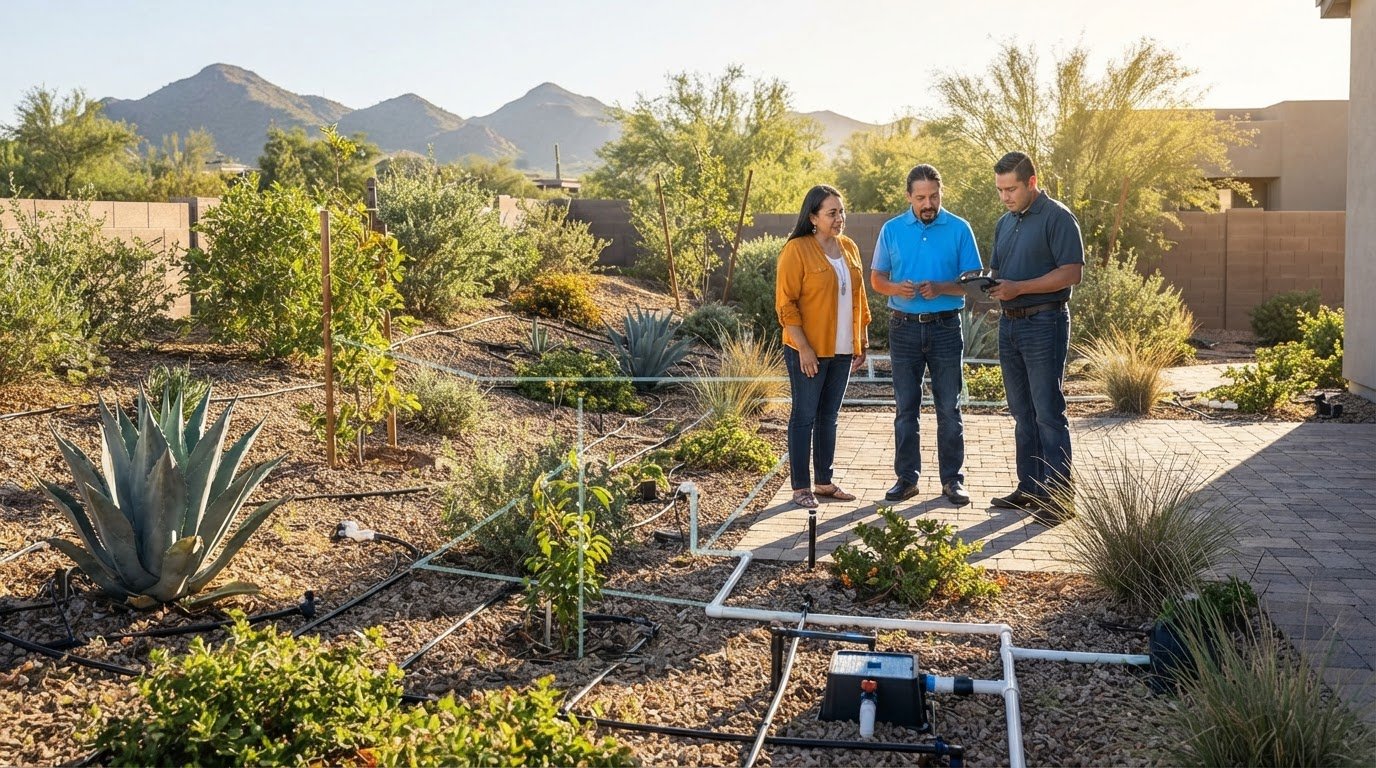
Restoring your system's efficiency begins with a clear understanding of its current condition. Scheduling a professional diagnostic visit is a straightforward process that prioritizes your time and your landscape's health. During a comprehensive system evaluation, we don't just look for surface leaks. We perform a "boots-on-the-ground" inspection of your entire layout, checking valve boxes for weeping, testing wiring integrity, and ensuring your emitters are delivering the correct gallon-per-hour flow to every plant.
This methodical approach ensures that we identify the root cause of your system's failure before any digging begins. We provide you with a transparent assessment and a logical path forward, whether that involves a targeted repair or a strategic upgrade to more durable PVC components. Don't wait for the next heatwave to discover a hidden failure in your lines. Contact Sonora Sprinkler Inc. today to protect your desert landscape and restore your irrigation system to peak performance.
Securing the Future of Your Desert Oasis
Maintaining a healthy landscape in the West Valley requires a shift from reactive patching to proactive system management. We've explored how Peoria’s unique heat and caliche soil demand professional-grade materials and precise diagnostics to prevent the loss of expensive desert plants. By prioritizing high-durability PVC replacements over temporary poly fixes, you can finally end the cycle of rising water bills and constant failures. A reliable system isn't just a convenience; it's a long-term investment in your home's value.
Since 1999, our family-owned and operated team has focused exclusively on residential irrigation mechanics. With over 25 years of experience serving Peoria and Surprise, we understand the nuances of our local climate better than anyone. If you're ready for a reliable, leak-free system that protects your property for years to come, our master craftsmen are here to guide you. Take the first step toward a more efficient home by choosing an expert for your drip irrigation repair Peoria AZ .
Schedule Your Peoria Drip System Diagnostic today and ensure your landscape thrives even in the peak of summer.
Frequently Asked Questions
How much does drip irrigation repair usually cost in Peoria, AZ?
The cost for residential repairs typically depends on the specific components that have failed and the depth of the buried lines. A standard service visit covers the initial diagnostic labor, while replacement parts like valves, controllers, or high-durability piping are billed separately. Environmental factors, such as the presence of hard-pan caliche soil, can also influence the total labor time required to access and repair underground mechanical issues safely.
How long should a drip irrigation system last in the Arizona desert?
System longevity is primarily determined by the quality of the materials installed. Standard poly tubing systems often begin to become brittle and crack after 3 to 5 years due to intense UV exposure and thermal expansion. In contrast, systems utilizing Schedule 40 PVC for the main lines are far more resilient. These professional-grade installations frequently last 20 years or more, providing a much higher return on your initial landscape investment.
Why is my water bill so high even though I don't see any leaks?
High water bills without visible pooling often indicate a silent underground leak or a weeping valve. Because Peoria’s desert soil is porous, water from a broken line can drain directly into the subsoil rather than rising to the surface. Identifying these hidden failures requires professional drip irrigation repair Peoria AZ to perform pressure tests and inspect valve diaphragms for sediment buildup that prevents a complete, watertight seal.
Can I replace my own drip irrigation valves?
While some homeowners attempt DIY valve replacement, the process involves technical plumbing and electrical work that must meet specific standards. An incorrectly installed valve can lead to slow leaks that eventually undermine your home's foundation or cause electrical shorts in your controller. Professional installers ensure that new valves are correctly sized for your system's pressure requirements and that all waterproof connectors are secured to prevent future corrosion or failure.
What is the best time of day to run my drip system in Peoria?
Running your system in the early morning hours, typically between 4:00 AM and 7:00 AM, is the most efficient choice for West Valley landscapes. This window minimizes water loss from evaporation and allows moisture to reach the root zone before the daytime heat peaks. It also prevents the fungal issues that can arise when plants stay wet overnight. Proper timing supports plant health while helping you meet local water conservation goals.
Is PVC really better than poly tubing for my backyard drip system?
Schedule 40 PVC is the superior choice for the main backbone of any residential system. PVC provides a rigid, durable barrier that resists punctures from rocky soil and damage from aggressive desert tree roots. It also handles the higher operating pressures required for large Peoria lots without the risk of blowouts. While poly tubing is appropriate for the final foot of water delivery, PVC ensures the long-term integrity of the system.
Do you offer emergency 24/7 irrigation repair in Peoria?
We do not offer 24/7 emergency services, as we prioritize providing methodical and permanent residential solutions during our standard business hours. If you experience a major leak, we recommend turning off your main irrigation shut-off valve to stop the water flow and protect your property. This allows our master craftsmen to perform a thorough diagnostic visit and implement a professional drip irrigation repair Peoria AZ that addresses the root cause of the failure.
How do I know if my irrigation controller is broken or if it's a wiring issue?
Distinguishing between a controller failure and a wiring break requires specialized diagnostic equipment. A blank or unresponsive screen usually indicates the unit itself has failed. However, if you see specific zone fault messages, the problem is likely a nicked wire or a failed solenoid at the valve. Professional wiring diagnostics can pinpoint the exact location of an underground break, which prevents unnecessary digging and ensures your system's electrical integrity is restored.