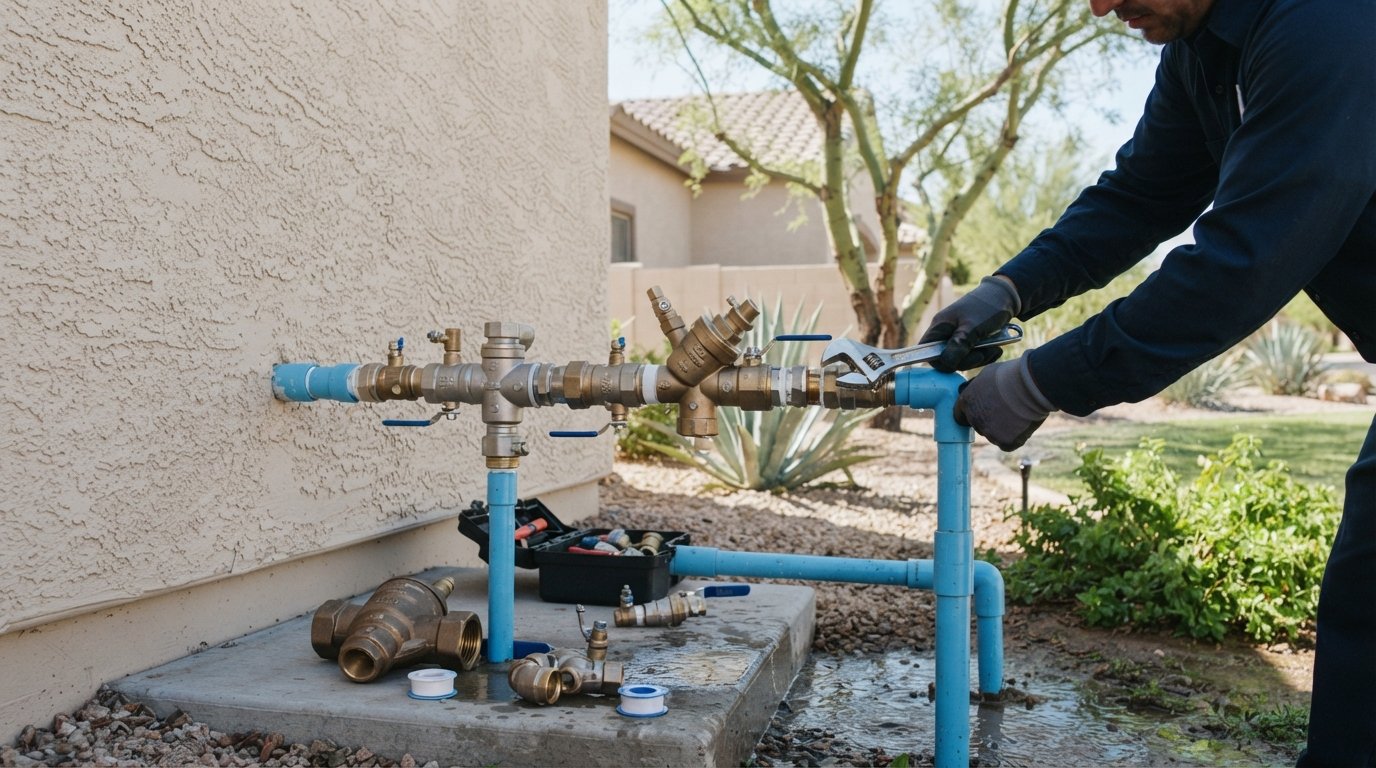
Did you know that a single broken sprinkler head can waste over 10,000 gallons of water in just one season? In Surprise, where we are currently under a Stage 1 Water Alert, that level of waste is more than just a nuisance; it's a direct threat to the health of your desert landscape and your monthly budget. It's frustrating to watch water pool around a head while your plants suffer from uneven pressure, and it's even harder to tell if the problem is a simple fix or a failing valve buried deep underground.
We understand the importance of a reliable irrigation system that stands up to the unique stressors of our Arizona climate. This guide provides the clarity you need for leaking sprinkler head repair Surprise AZ, helping you identify the root cause of those stubborn leaks and decide whether to grab your tools or call in a specialist. You'll learn how to diagnose common mechanical failures, stop water loss immediately, and optimize your system to ensure your property remains resilient through the peak of summer. By the end, you'll have a clear path to restoring efficiency and protecting your home's curb appeal.
Key Takeaways
- Identify how extreme Arizona heat and hard water mineral buildup contribute to the premature failure of plastic risers and spray nozzles.
- Learn the diagnostic steps to determine if a leak is caused by simple low head drainage or a more complex weeping valve issue.
- Evaluate the long-term cost benefits of upgrading to modern, pressure-regulated heads versus performing a standard repair on an aging system.
- Master a methodical, step-by-step approach to leaking sprinkler head repair Surprise AZ that prevents soil contamination and ensures a watertight seal.
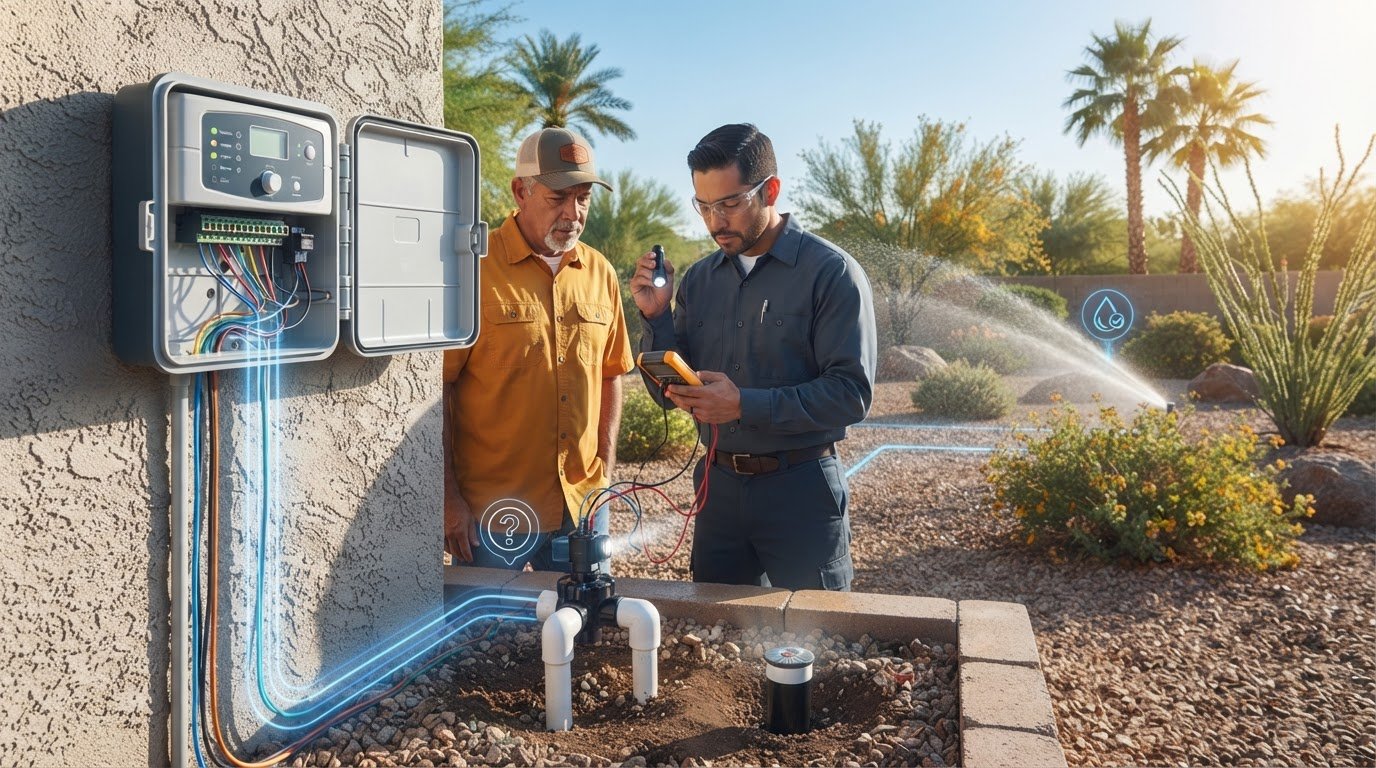
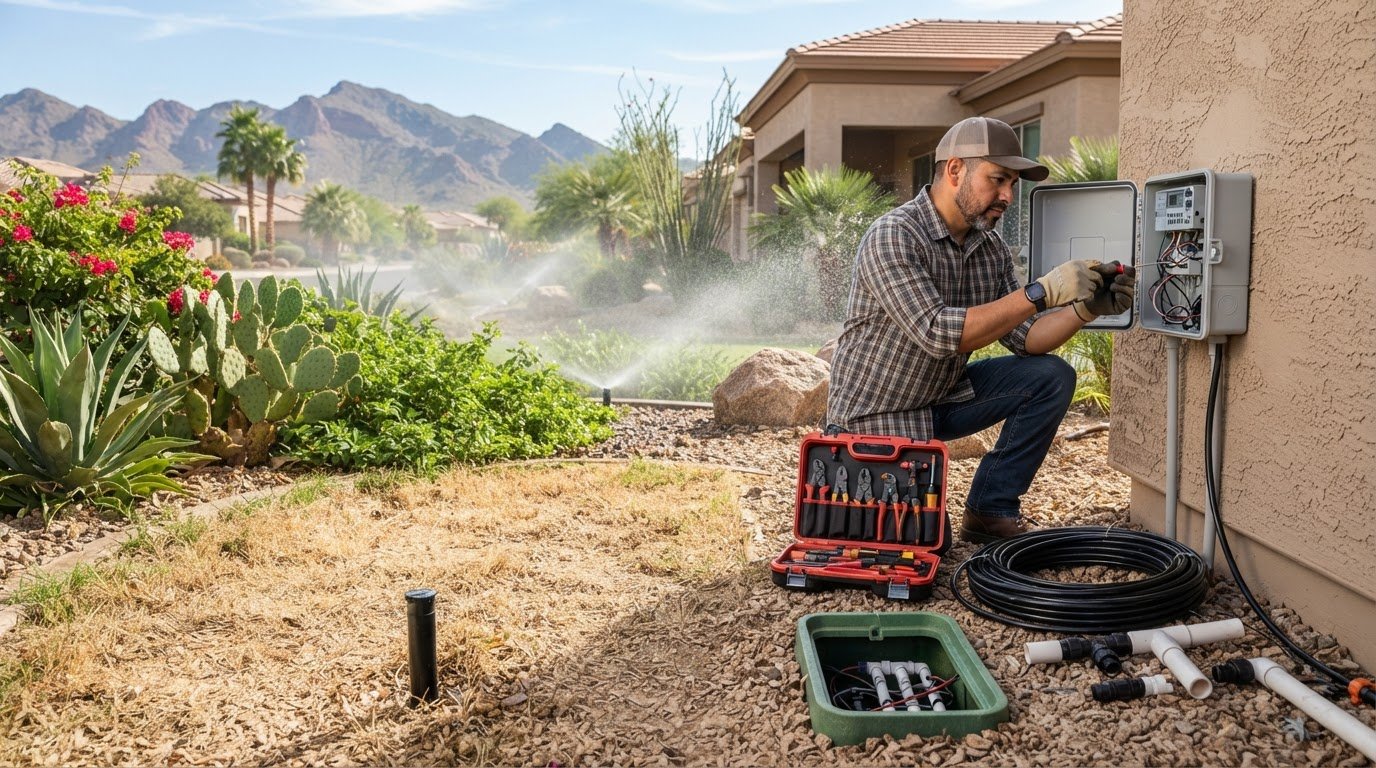
- Understand when to leverage professional expertise for wiring diagnostics and PVC pipe replacement to protect the structural integrity of your landscape.
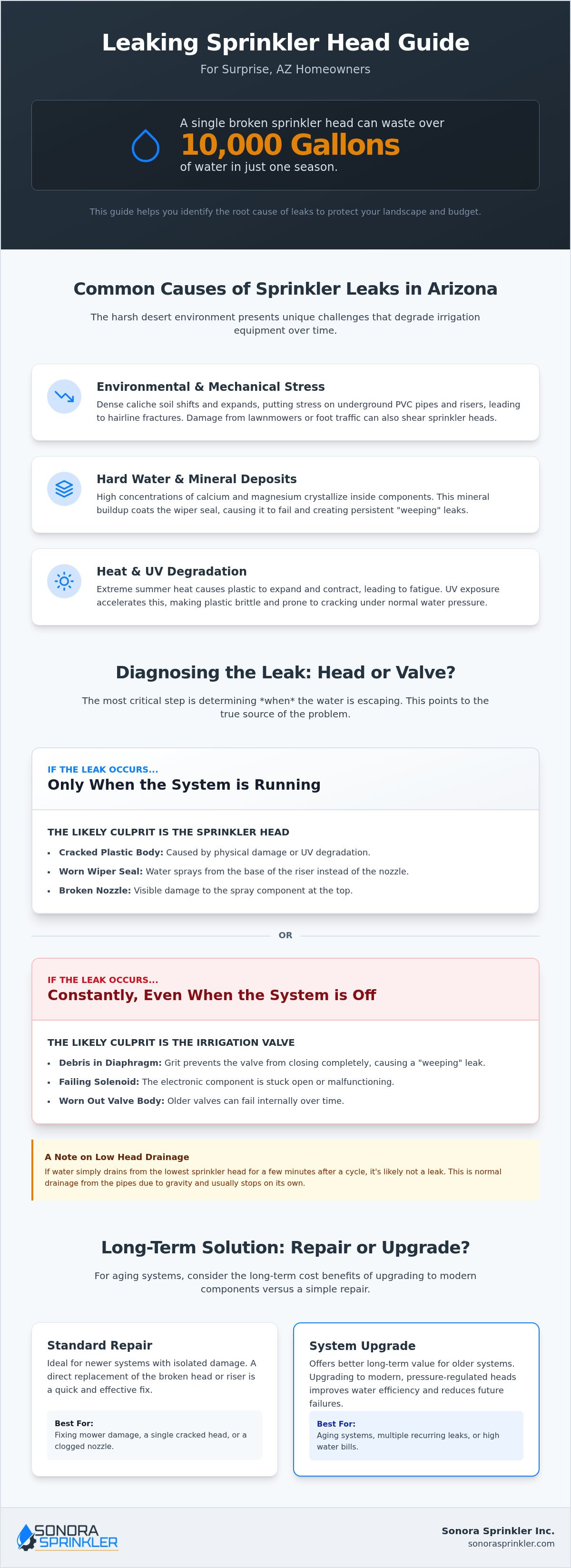
Common Causes of Leaking Sprinkler Heads in Surprise, AZ
The desert environment in Surprise presents a unique set of challenges that can quickly compromise even the best irrigation sprinkler systems. While a leak might seem like a simple mechanical failure, it's often the result of several environmental factors working in tandem to degrade your equipment. Identifying these causes is essential for a lasting leaking sprinkler head repair Surprise AZ, as it allows you to address the root of the problem rather than just the symptoms.
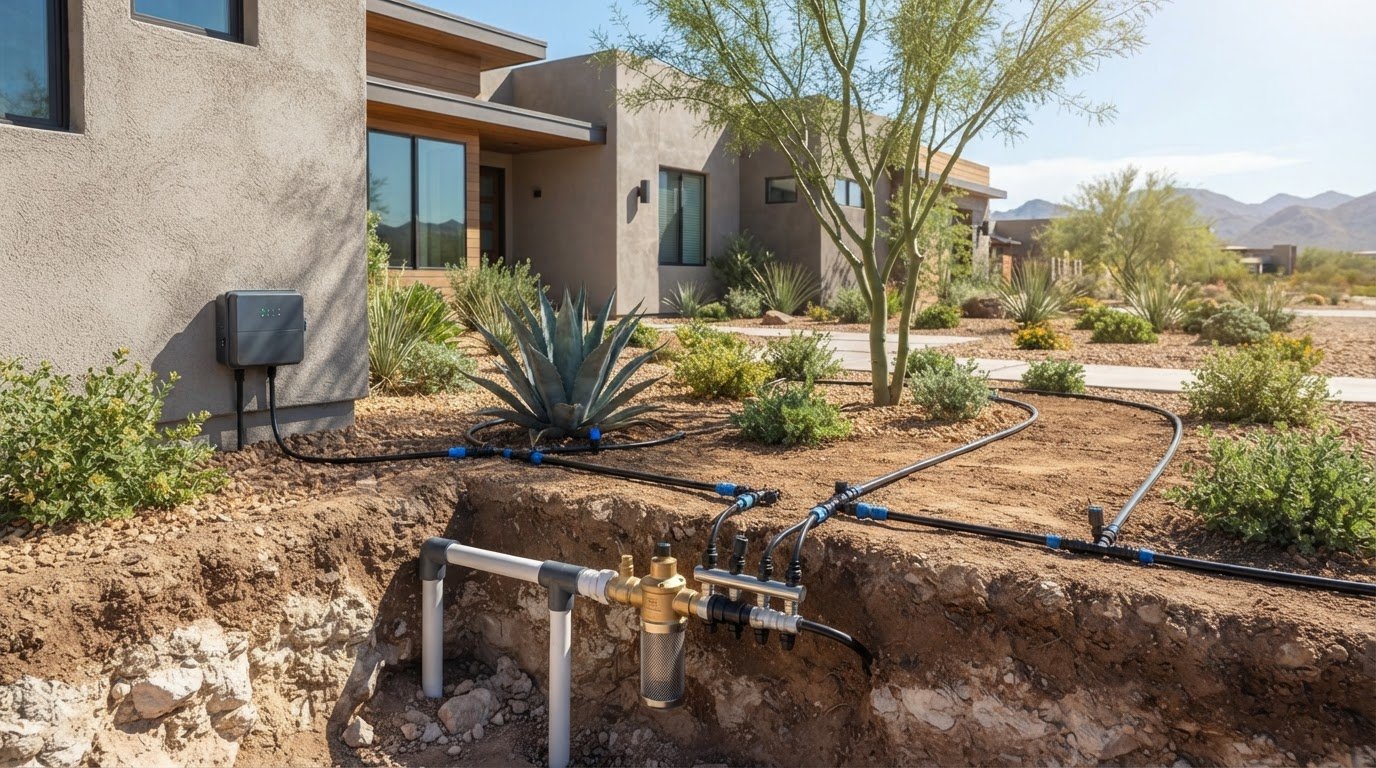
One of the most frequent issues we see stems from our local geography. Surprise is known for its caliche soil, a dense, rock-like layer of calcium carbonate. This soil doesn't just make digging difficult; it shifts and expands during our seasonal transitions. This movement puts significant stress on underground PVC pipes and vertical risers. When the ground moves, a riser can develop hairline fractures or be pushed out of alignment, leading to persistent leaks at the base of the head. Additionally, mechanical damage from lawn mowers or heavy foot traffic often shears the tops of heads that haven't fully retracted, creating an immediate and obvious water waste problem.
Hard Water and Mineral Deposits
Surprise residents deal with some of the hardest water in the valley. High concentrations of calcium and magnesium eventually crystallize inside the sprinkler's internal components. This mineral buildup often coats the wiper seal, which is the flexible part that allows the head to pop up and down smoothly. When this seal becomes encrusted with grit, the head fails to retract fully or develops a "weeping" leak where water constantly trickles out even when the zone is active. While some homeowners try to soak these parts in vinegar, the mineral etching on the plastic is usually permanent. Cleaning is frequently a temporary fix that fails to restore the airtight seal required for modern irrigation repairs and maintenance.
Thermal Expansion and Plastic Fatigue
Our 110-degree summer days are brutal on standard irrigation plastics. The extreme temperature swings between the scorching afternoon sun and the relatively cooler nights cause plastic components to expand and contract rapidly. Over several seasons, this thermal cycling leads to plastic fatigue. UV exposure further accelerates this process, making the exposed portions of the sprinkler head brittle and prone to cracking. In many established Surprise neighborhoods, older systems are simply reaching the end of their functional lifecycle. The plastic becomes so degraded that it can no longer withstand the internal water pressure, resulting in cracked bodies or blown-out nozzles that require professional replacement to protect the surrounding landscape.
Diagnosing the Leak: Is it the Head or the Valve?
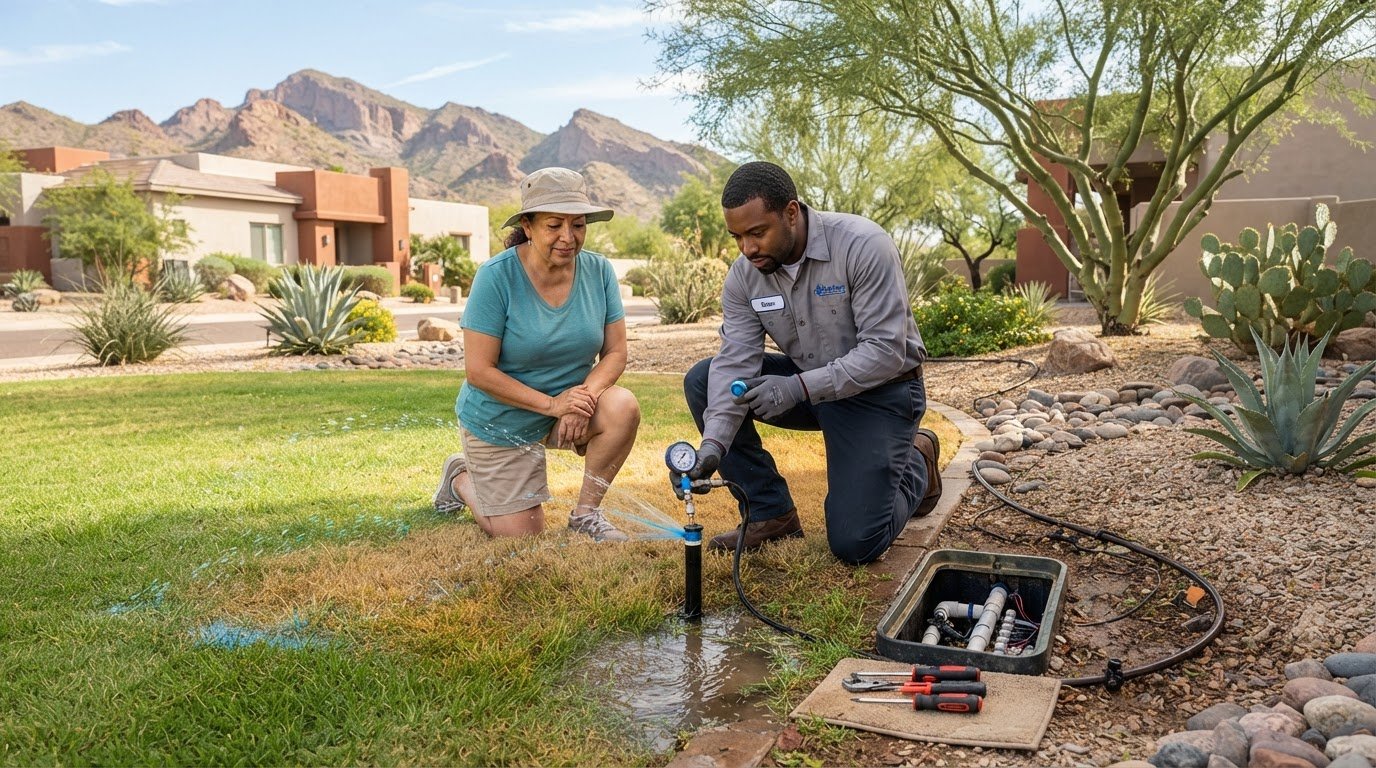
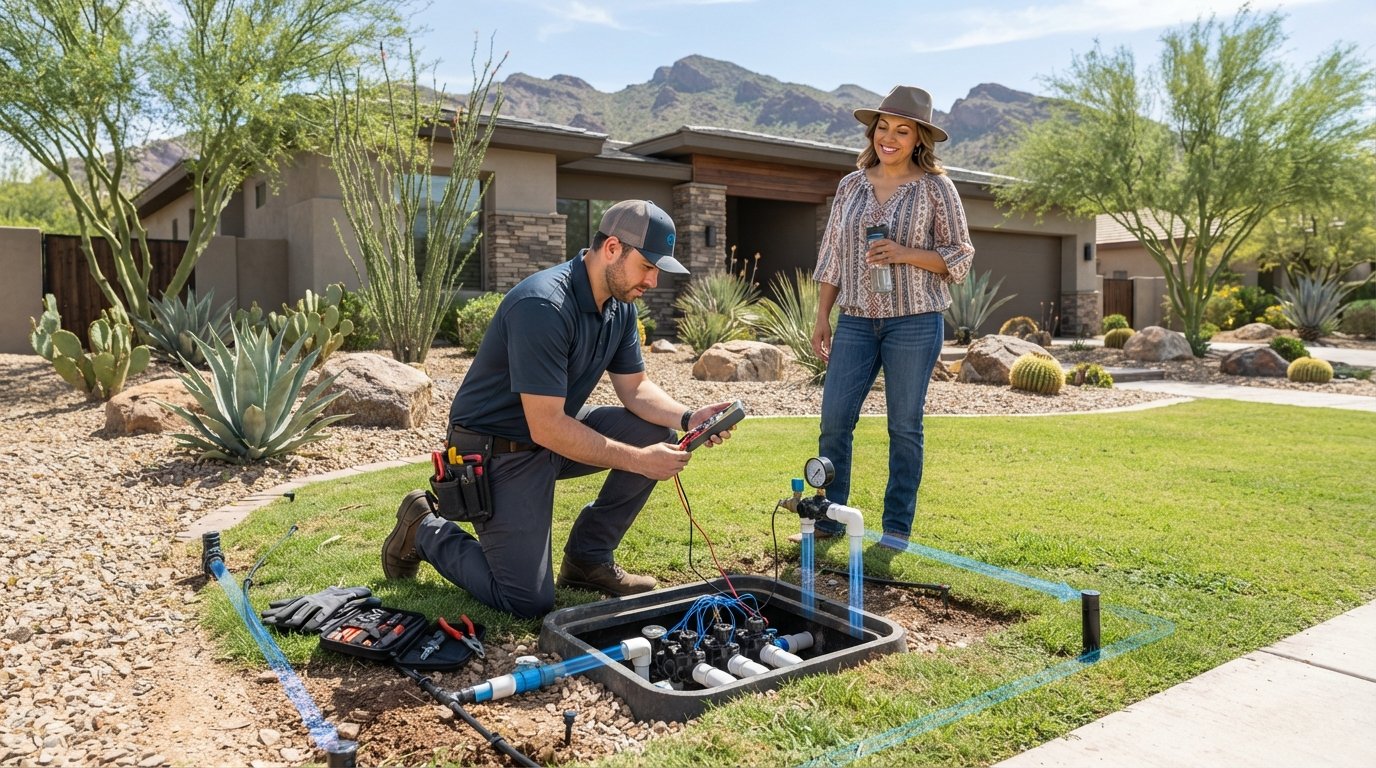
The most critical part of a successful leaking sprinkler head repair Surprise AZ involves determining exactly when the water is escaping. Start by turning your system off and waiting thirty minutes. If the area remains saturated or water continues to trickle from the nozzle, the issue likely resides in the control valve rather than the head itself. Conversely, if the leak only manifests while the zone is active, the problem is usually localized to the specific sprinkler component or the vertical riser connecting it to the lateral line.
Distinguishing between low head drainage and a weeping valve is essential for preventing unnecessary part replacements. Low head drainage occurs when water remaining in the pipes after a cycle flows out of the lowest sprinkler in the circuit. This is a common occurrence in Surprise yards with slight elevation changes and usually stops once the pipes are empty. If you find a persistent puddle at the lowest point of your yard hours after watering, it's a sign of a deeper mechanical failure. Regularly maintaining your irrigation system through visual inspections can help you catch these subtle signs before they impact your water bill.
Testing for Valve Seepage
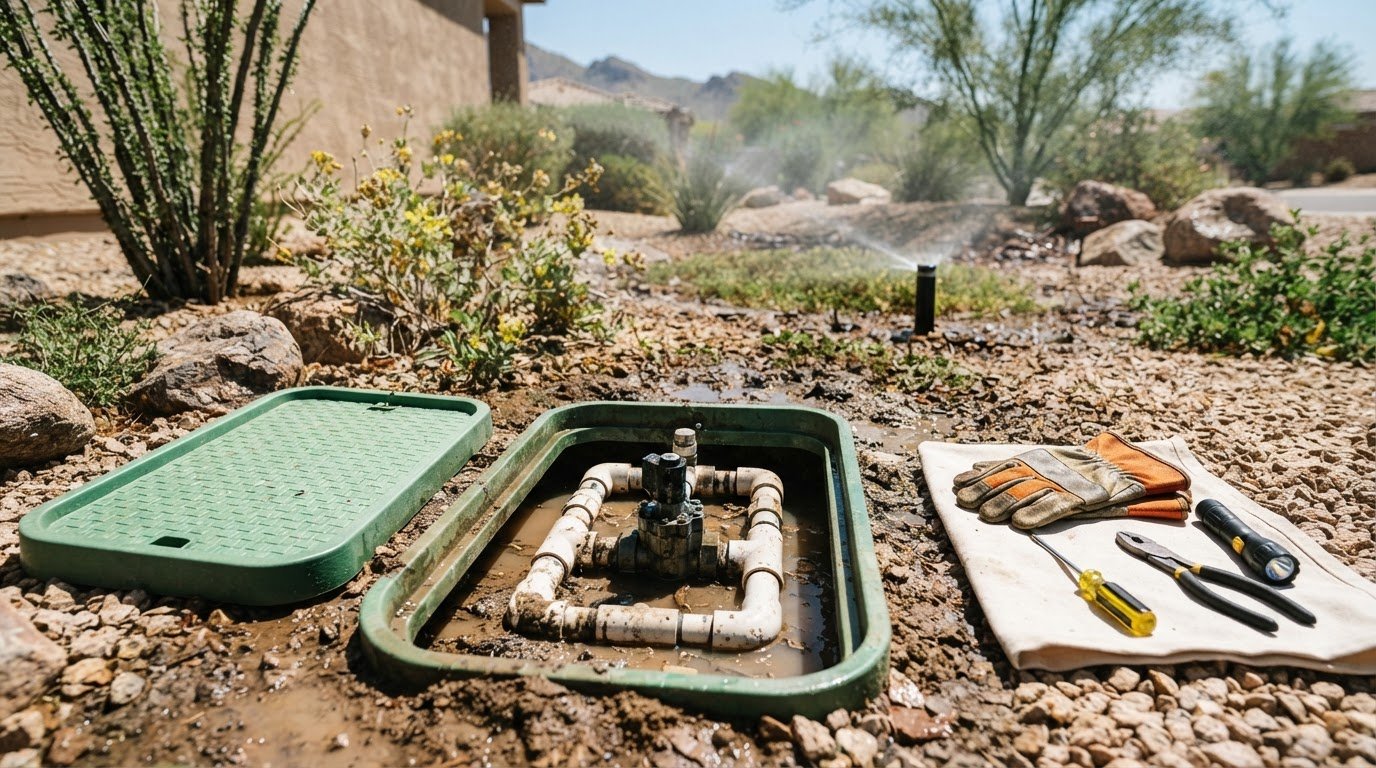
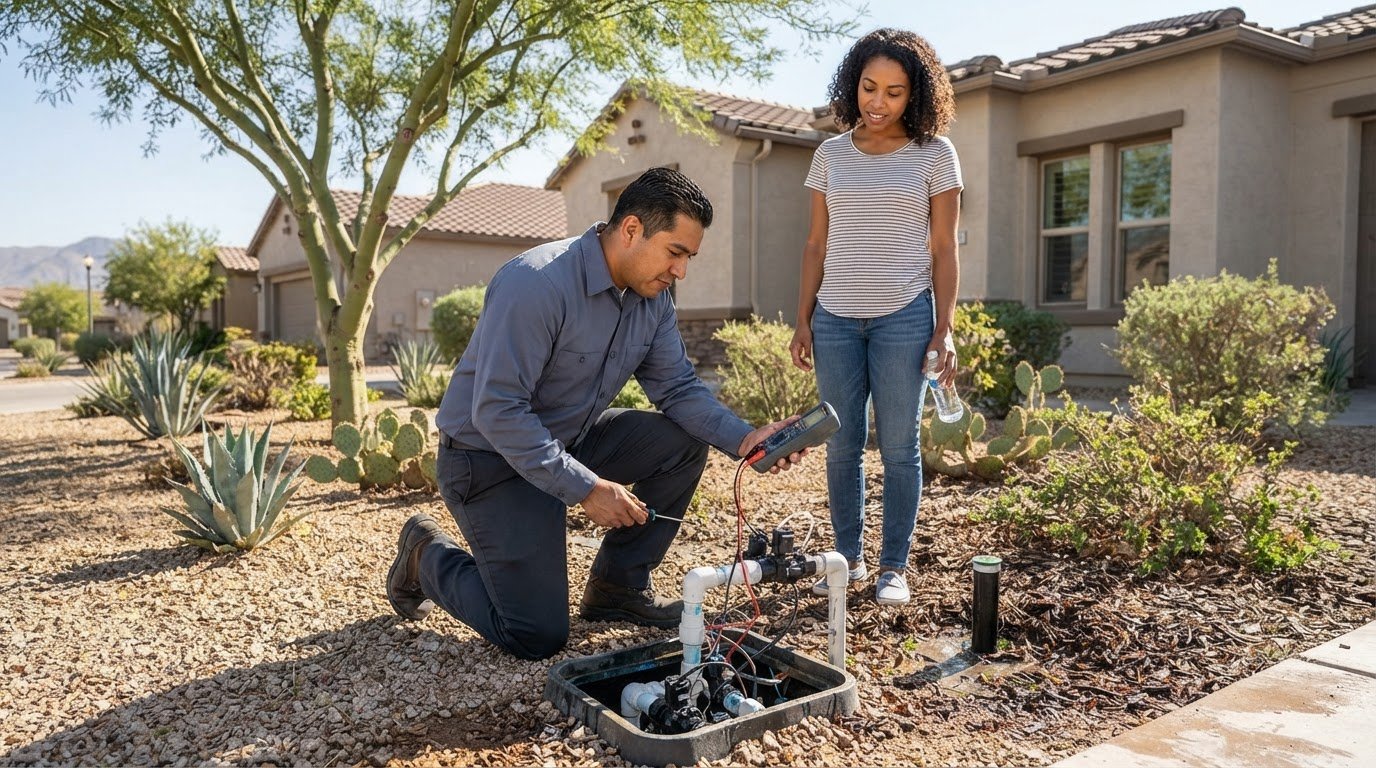
When a sprinkler head leaks constantly, the irrigation valve is usually failing to create a watertight seal. This often happens when a small piece of desert grit or mineral scale becomes lodged in the valve's diaphragm. This debris prevents the rubber seal from seating fully, allowing a small amount of pressurized water to bypass the valve and "weep" through the heads. You should also listen for a faint humming or clicking sound from the valve box, which may indicate a solenoid that's electronically stuck or failing to retract. If you're unsure where your valve boxes are located, requesting a professional diagnostic can save you hours of searching and digging.
Identifying Physical Head Damage
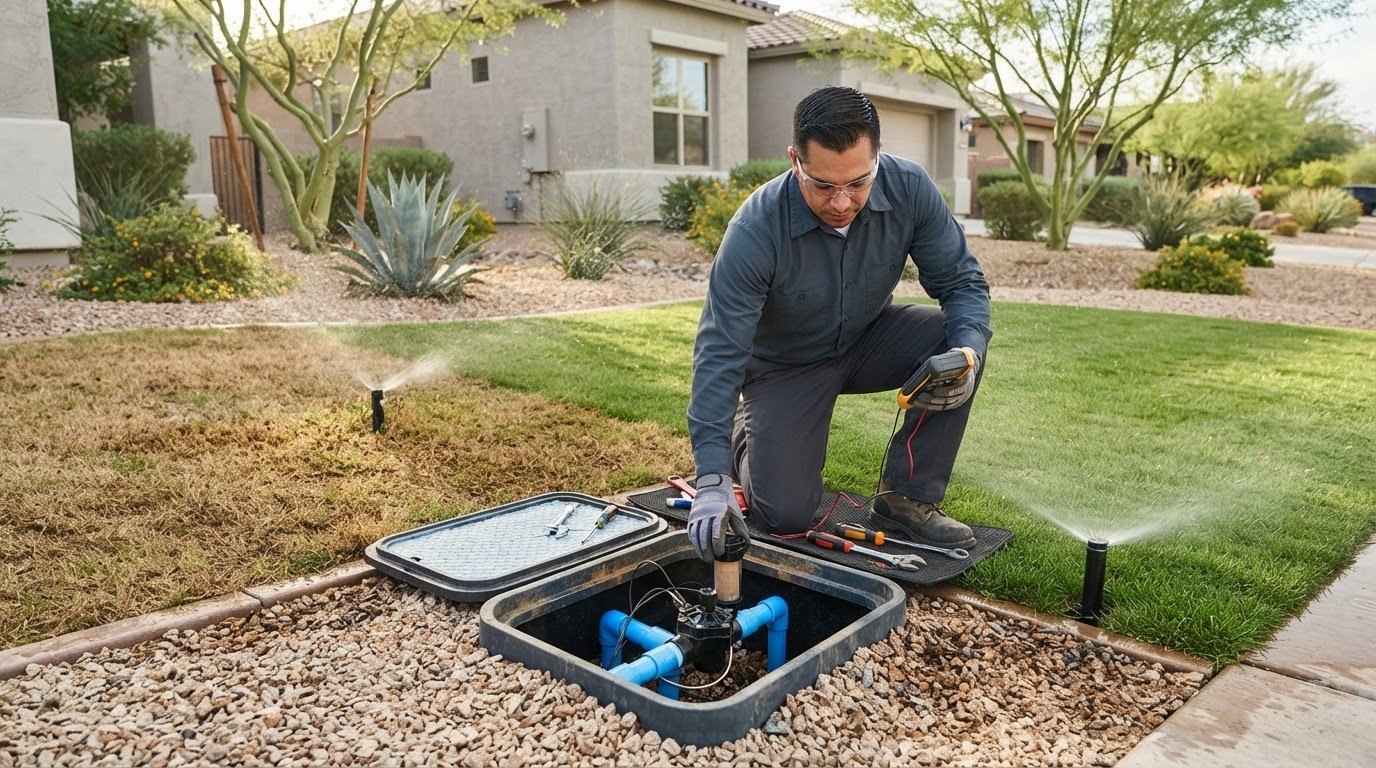
Physical damage is often easier to spot but requires a methodical check. Inspect the nozzle for missing components or visible cracks in the plastic body. A common failure point in our climate is the wiper seal, the ring around the pop-up riser. If water sprays upward from the base of the riser rather than the nozzle, the seal has likely perished from UV exposure. You can test the pop-up mechanism by gently pulling the riser up manually while the system is off. It should move smoothly and snap back into place without resistance. If it feels gritty or gets stuck halfway, the internal spring or the housing has likely been compromised by Surprise's fine soil particles.
Repair vs. Replace: Making the Right Call for Your System
Determining whether to attempt a minor fix or invest in a full unit replacement is a pivotal decision for any homeowner. While a simple nozzle cleaning might seem cost-effective, it often ignores the underlying degradation of the internal spring and wiper seal. If your system was installed over five years ago, the plastic housing has already endured thousands of hours of high-intensity UV exposure and thermal expansion. In these cases, a full replacement is usually the more reliable path for leaking sprinkler head repair Surprise AZ , as it provides a fresh mechanical lifespan and ensures the unit can handle the standard operating pressures of a residential zone.
One often overlooked factor is the efficiency gain found in modern, pressure-regulated heads. Older models often "mist" or "fog" when the water pressure is too high, causing significant water loss through evaporation before the droplets even hit the turf. Upgrading to heads with internal pressure regulation ensures a consistent spray pattern regardless of fluctuations in the main line. It's also vital to match head types within a single zone. Mixing rotors with spray heads leads to uneven precipitation rates, leaving some areas flooded while others remain parched and stressed.
When to Upgrade to High-Efficiency Nozzles
Switching to rotating nozzles is one of the most effective ways of upgrading your system for the desert. Unlike traditional spray heads that dump a high volume of water quickly, rotating nozzles deliver multiple streams at a slower rate. This allows our local caliche-heavy soil enough time to absorb the moisture, significantly reducing the messy runoff that often pools on sidewalks and driveways. By matching the precipitation rates across your lawn, you eliminate the stubborn brown spots that usually trigger homeowners to overwater their entire yard.
Long-Term Durability in Surprise Landscapes
Investing in professional-grade components offers a distinct advantage over the lightweight alternatives found at big-box retailers. Professional heads feature thicker walls, heavy-duty retraction springs, and reinforced seals designed to keep out the fine silt common in our soil. During a repair, we often find that a PVC pipe replacement or a new swing joint is necessary at the base of the head. If a riser is too high, it becomes a target for lawn equipment; if it's too low, it sucks in debris every time the system turns off. Ensuring the correct riser height and using durable materials is the only way to protect the long-term health of your property.
Step-by-Step Guide to Sprinkler Head Replacement
For homeowners attempting a DIY approach to leaking sprinkler head repair Surprise AZ , precision is the difference between a durable fix and a recurring headache. Before unscrewing any components, you must clear a wide radius around the existing head. In our fine Surprise silt, even a tiny grain of desert grit falling into the open pipe can ruin a new nozzle instantly. Dig down carefully until the connection between the head and the vertical riser is fully exposed, ensuring you have enough room to work without knocking loose soil into the trench.
Once the area is clear, unscrew the damaged unit by hand. Avoid using heavy wrenches on plastic components, as this can easily crack the underground lateral lines. After removal, inspect the vertical riser for hairline fractures. If the riser is compromised, a new head won't stop the leak at the base. Replacing the riser is a standard part of irrigation repairs and maintenance and ensures the entire assembly remains watertight under pressure.
Proper Line Flushing Techniques
This is arguably the most critical step in the replacement process. Before you screw on the new nozzle, turn the zone on for roughly 15 seconds. This simple action forces out any dirt, PVC shavings, or air pockets that entered the line during the swap. Modern high-efficiency nozzles have incredibly fine internal filters. Even a microscopic particle can disrupt the spray pattern or cause the pop-up mechanism to stick, leading to the same "weeping" issues you set out to fix. Once the water runs clear, you can safely install the final components.
Adjusting for Precision Coverage
After flushing the line, install the new nozzle and ensure the head sits perfectly flush with the soil surface. A head that protrudes too far is a target for lawn equipment; a head buried too deep will recycle muddy water back into the system during the low head drainage phase. Calibrate the arc and radius to ensure "head-to-head" coverage. In our intense Arizona heat, turf requires the spray from one head to reach the base of the next to avoid heat stress and brown spots. Perform a final pressure test by running the zone and checking for leaks at the base of the new unit. If you find the job requires specialized tools or you uncover a larger break in the line, you can contact our team for expert assistance.
Why Surprise Homeowners Trust Sonora Sprinkler Inc.
Choosing a partner for your home's irrigation needs requires more than just finding a generalist with a shovel. Since 1999, Sonora Sprinkler Inc. has remained a family-owned fixture in the West Valley, providing a level of stability and local knowledge that only comes with decades of service. Our team understands that a leaking sprinkler head repair Surprise AZ is rarely a standalone event. It's often the result of the specific environmental pressures we've discussed, from caliche soil expansion to the relentless desert sun. We treat every repair as an opportunity to reinforce the long-term health of your property, ensuring your system is as resilient as the landscape it supports.
Our commitment to residential specialization allows us to provide a more personalized and detail-oriented service than larger commercial firms. We don't divide our attention between massive construction projects and home repairs. Instead, we focus exclusively on the nuances of residential irrigation repair in Surprise. This focus ensures that we arrive with the specific parts, tools, and diagnostic expertise required to fix your system correctly the first time, preventing the need for costly return visits or secondary failures.
The Sonora Sprinkler Difference
With over 25 years of experience in the Surprise and Peoria area, we've developed a "boots-on-the-ground" approach to diagnostics that goes beyond surface-level fixes. We don't just swap out a broken head and leave. We take the time to evaluate the surrounding environment, checking for mineral buildup in the lines and ensuring your vertical risers are set at the optimal height for durability. Our focus on water conservation means we prioritize repairs that reduce waste and lower your utility bills. Every component we install is chosen for its ability to withstand the unique stressors of our climate, providing you with a system that performs reliably year after year.
Schedule Your Professional Diagnostic Today
Small leaks can quickly escalate into major financial burdens and property damage if left unaddressed. A single weeping head or cracked riser can waste thousands of gallons of water, often going unnoticed until the monthly bill arrives or plants begin to die from uneven pressure. We encourage homeowners to reach out at the first sign of trouble. A professional system check provides a thorough evaluation of your valves, wiring, and distribution lines, giving you peace of mind that your landscape is protected. If you're ready to restore efficiency to your irrigation system, contacting the team for a professional quote is the first step toward a healthier, more sustainable yard.
Protecting Your Surprise Landscape for the Long Term
A functional irrigation system is the backbone of a healthy Arizona yard. By distinguishing between simple low head drainage and a true mechanical failure, you can take the necessary steps to stop water waste and preserve your property's curb appeal. Whether you choose a methodical DIY approach or require professional leaking sprinkler head repair Surprise AZ , the primary goal remains the same: a durable, efficient system that stands up to our unique environmental stressors like caliche soil and extreme summer heat.
Upgrading to professional-grade, pressure-regulated components isn't just about a quick fix; it's an investment in your home’s longevity and water efficiency. As a family-owned and operated business since 1999, we specialize in the specific demands of residential desert irrigation. Our licensed experts are here to ensure your system operates with precision and reliability throughout the hottest months of the year. We take pride in providing the grounded expertise our neighbors have relied on for over two decades.
Don't let a minor leak turn into a major expense that threatens your plants and your budget. Schedule your professional sprinkler repair in Surprise today with Sonora Sprinkler Inc. and let our "boots-on-the-ground" experience work for you. We look forward to helping you maintain a vibrant, water-wise landscape.
Frequently Asked Questions
How do I know if my sprinkler head is leaking or if it's just low head drainage?
Low head drainage typically stops shortly after the irrigation cycle finishes as gravity empties the remaining water in the pipes through the lowest point. If you notice water trickling or pooling for several hours or even overnight, you are likely dealing with a leaking valve. A persistent leak indicates that the valve diaphragm isn't sealing properly, allowing pressurized water to bypass the system and escape through the heads.
Can a leaking sprinkler head cause low water pressure in the rest of the zone?
Yes, a significant leak or a cracked housing diverts a large volume of water away from the intended nozzles. This loss of internal pressure often prevents other heads in the same zone from popping up fully or reaching their calibrated spray distance. You will notice uneven coverage and stressed plants in areas that should be receiving water. Restoring the seal ensures the entire circuit maintains the pressure required for uniform distribution.
Is it better to repair the internal parts of a sprinkler head or replace the whole unit?
Replacing the entire unit is usually the more reliable and cost-effective choice for Surprise homeowners. While individual seals or springs can sometimes be replaced, the plastic body often becomes brittle from years of UV exposure and thermal expansion. A new professional-grade unit ensures all components have a fresh mechanical lifespan. This comprehensive approach provides better long-term durability and protects your landscape from the recurring failures common with aging equipment.
Why does my sprinkler head keep leaking even after I replaced the nozzle?
A leak that persists after a nozzle swap usually points to a compromised wiper seal or a damaged vertical riser. If water is bubbling up from the base of the head, the riser may have a hairline fracture caused by shifting caliche soil. If the water is trickling out while the system is completely off, the issue is likely a weeping control valve. In these scenarios, professional leaking sprinkler head repair Surprise AZ is required to address the deeper mechanical failure.
How much water is wasted by a single leaking sprinkler head in Surprise?
According to research from HomeScore in May 2026, a single broken sprinkler head can waste over 10,000 gallons of water in just one season. In our desert environment, where we are currently under a Stage 1 Water Alert, this level of waste is significant. This volume of water not only inflates your monthly utility bill but can also cause soil erosion and damage the structural integrity of nearby hardscaping or foundations, potentially requiring professional assessment from a specialized service like Dryrite Restoration to ensure no long-term water damage has occurred.
Persistent moisture in our arid climate creates an ideal breeding ground for pests such as crickets, roaches, and mosquitoes. Stagnant water also encourages fungal growth and root rot, which can quickly kill off Bermuda grass or desert-adapted plants. Because our local soil often contains dense caliche layers, the water does not drain away quickly. This creates a moist environment that can attract unwanted insects and compromise the health of your lawn.
How often should I inspect my sprinkler heads for leaks in the desert?
We recommend performing a visual inspection of your entire system at least once a month during the peak growing season. The intense Arizona heat and high mineral content in our water accelerate the degradation of plastic components and seals. Monthly checks allow you to identify small weeping leaks or clogged nozzles before they lead to plant loss or high water bills. Consistent maintenance is the best way to ensure your system remains efficient and reliable.