A clogged sprinkler head is often a symptom, not the whole problem. To prevent sprinkler heads from clogging, schedule system inspections twice a year and clean head filters at least annually. Hard water or sandy soil calls for filter checks twice a year. Finding the cause first helps distinguish debris and mineral deposits from problems elsewhere in the irrigation line.
When a nozzle sprays unevenly, it may be tempting to reach for a strong cleaner, but bleach or CLR shouldn’t be the automatic fix. Mineral buildup may need a different treatment than sediment or a blocked screen, so choose a cleaning method based on what is causing the blockage.
This guide covers how to diagnose clogged heads, clean filters, and address mineral deposits with a vinegar-and-water solution. It also explains routine checks that can help limit recurring clogs and when irrigation repair may be needed.
Key Takeaways
- Uneven spray can point to a blocked screen, mineral deposits, or a problem elsewhere in the irrigation line, so diagnosis matters before cleaning.
- Professionals can remove mineral buildup by soaking nozzles in equal parts vinegar and water for 30 minutes.
- Recurring clogs may call for flushing the line or investigating sediment, pressure loss, or backflow concerns.
- Routine system inspections can catch debris and worn components before they disrupt coverage across the yard.
- When cleaning doesn’t restore a consistent spray pattern, irrigation repair can address the underlying system issue.
How often should a professional clean sprinkler head filters?
Have a professional inspect sprinkler heads and screens during routine system checks. Nozzles and screens should be removed and rinsed annually. With hard water or sandy soil, check filters twice a year, in spring and mid summer.
-
Have a Professional Inspect Nozzles for Dirt and Debris
Have each head checked for blocked openings, compacted soil, grass clippings, and mulch. Dirt can enter after mowing, windy weather, or foot traffic over a sprinkler head. The inspection should also look for spider webs, ants, and mud-wasp nests obstructing the nozzle opening.
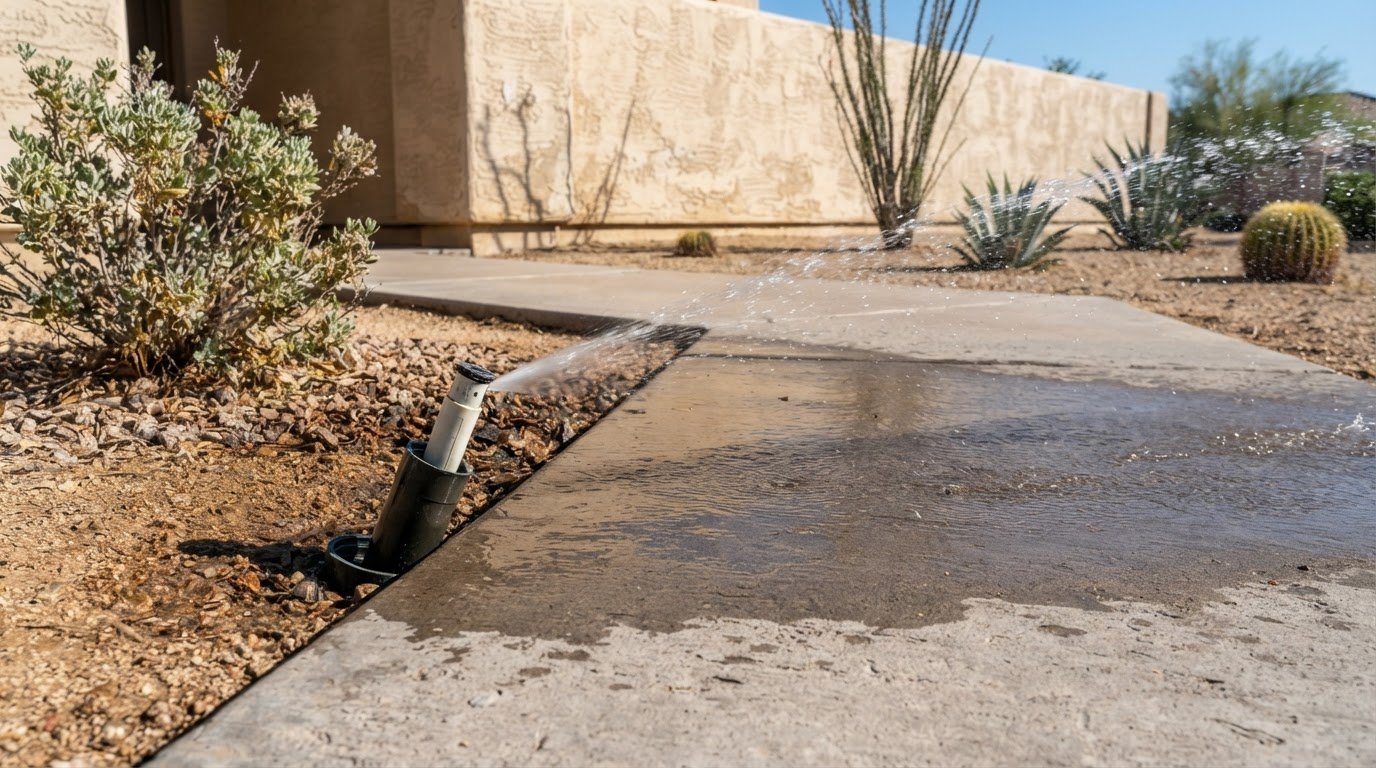
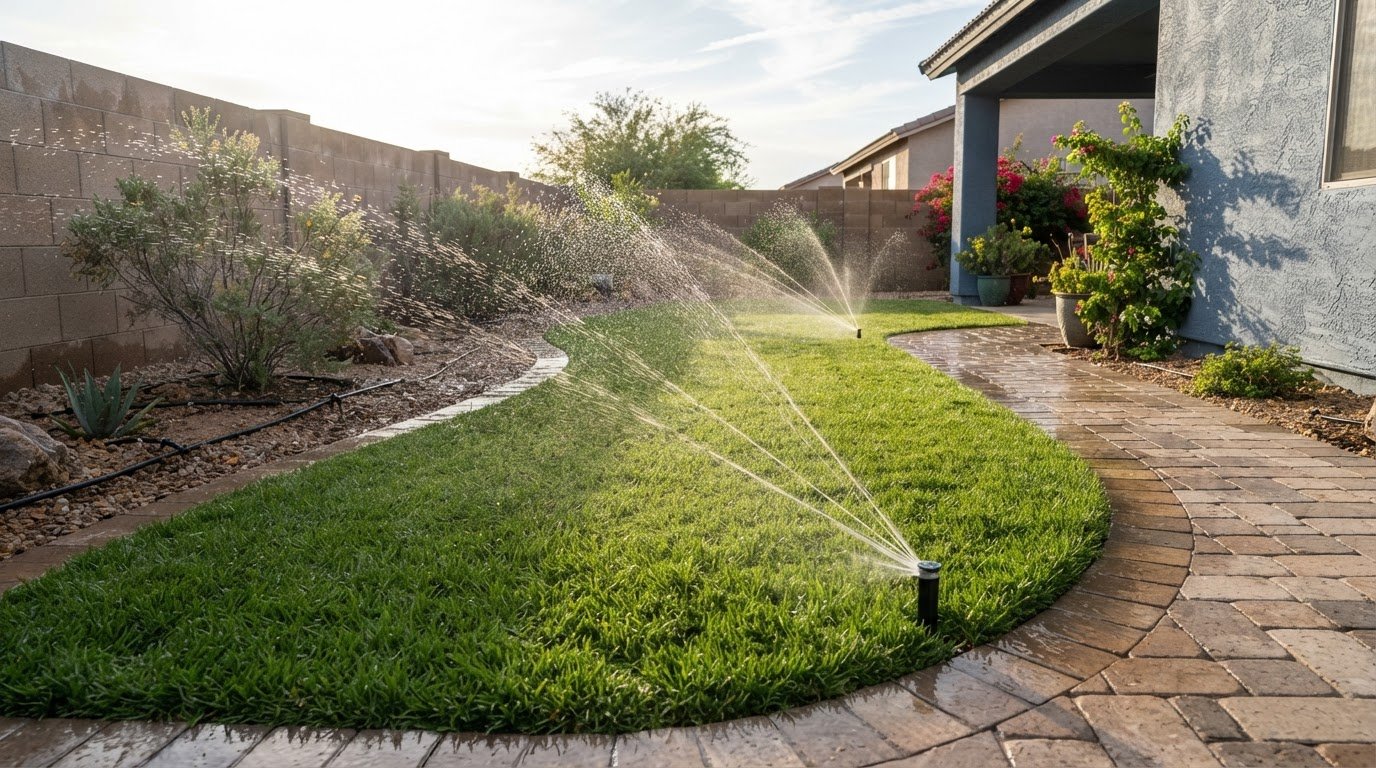
When one head sprays unevenly, compare its pattern with nearby heads in the same zone. A cracked nozzle can create turbulence that encourages debris to settle and block the passage again. Scale, rust, and other solid materials can also clog heads, according to the U.S. Government Publishing Office.
-
Have a Professional Clean Nozzles and Filter Screens
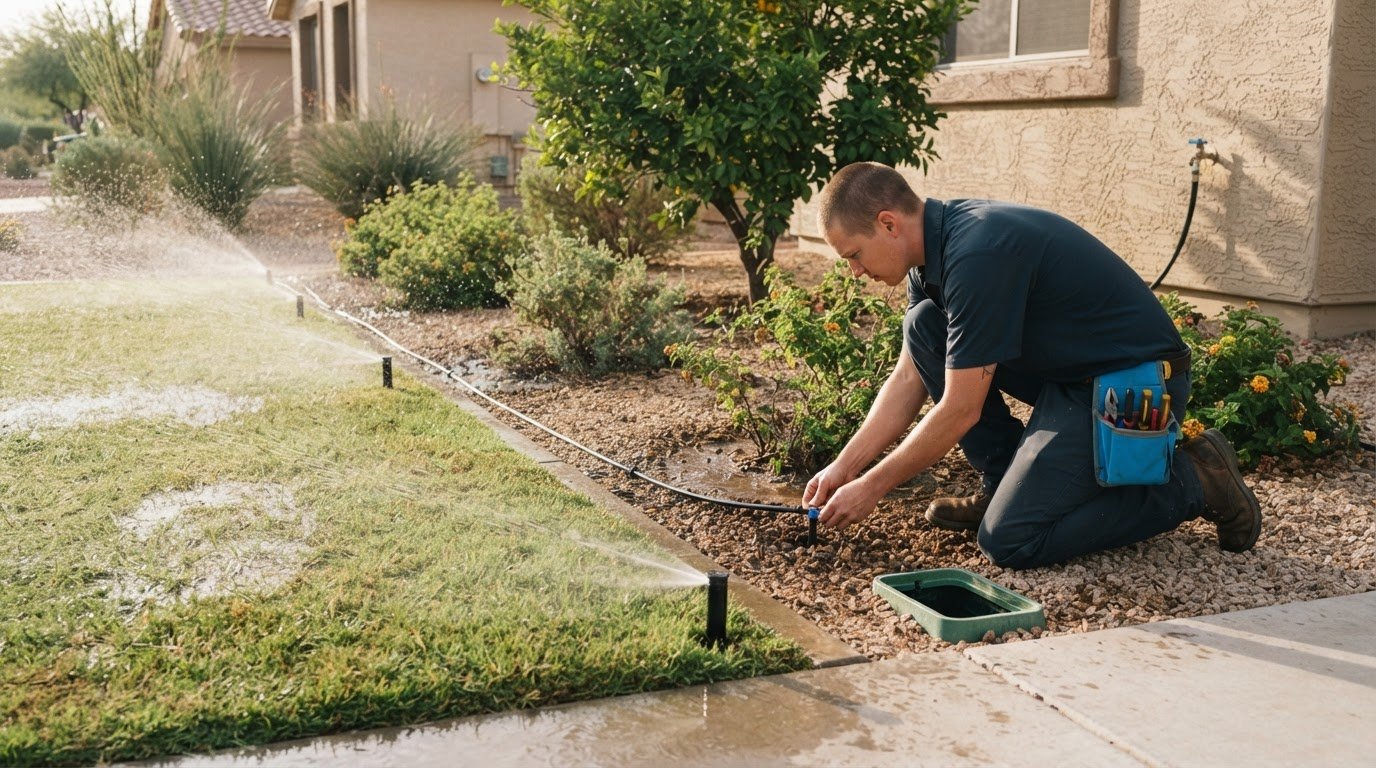
Have the nozzle and its small mesh filter removed, then rinse both to clear trapped debris. The screen catches fine particles before they reach the nozzle, but it can become blocked itself. After cleaning, reinstall the parts and test the spray pattern for consistent coverage.
For mineral deposits, the professional can soak the nozzle in equal parts vinegar and water for 30 minutes. This targets hard-water scale; it isn’t a substitute for removing soil or sediment. Cleaning should match the blockage, rather than relying on harsh chemicals such as bleach or CLR.
-
Check Nozzle Screens and Designs
Confirm that each nozzle has its factory screen in place. A filter on the water supply line can help keep debris from clogging small nozzle openings, according to Merit Partnership. A professional can also assess whether an inline filter suits the system’s water source and the debris reaching its heads.
Adjustable spray nozzles tend to clog more easily because their internal passages are smaller and flow is restricted when adjusted. Fixed spray nozzles generally have fewer clogging concerns. Rotary nozzles have larger flow paths and often include features that help reduce debris and root intrusion. Match the nozzle design to the zone’s spray needs.
Removing mineral deposits with vinegar: when to call a professional
Hard water can leave mineral deposits on sprinkler screens and internal parts, narrowing openings and disrupting spray. To prevent repeat buildup, identify the water source, clean affected nozzles, and assess whether high mineral or iron content needs treatment.
- Have a professional distinguish mineral scale from other blockages. City water can contribute to mineral buildup, while well systems may introduce iron, rust, and sediment. These materials can look similar at a nozzle but may need different responses. A professional can examine the deposits and affected components, then determine whether the blockage is limited to one nozzle or appears across several heads. That distinction helps establish whether cleaning is enough or water quality needs further attention.
- For hard-water scale on a removable nozzle, have the professional soak it in equal parts vinegar and water for 30 minutes. This treatment targets mineral deposits on the nozzle; it doesn’t establish that sediment or rust in the supply line has been removed. After soaking, the professional can rinse the component, reinstall it, and run the zone to assess whether the spray pattern has improved. Avoid treating vinegar as a substitute for diagnosing recurring blockages.
- If scale or iron-related deposits return, have the irrigation water and system filtration needs assessed. Treatment systems can help reduce buildup where water has high iron or mineral content. The next step depends on the inspection: mineral deposits on removable nozzles differ from rust or sediment entering through the water supply. Identifying the difference helps determine whether treatment is appropriate, rather than repeating nozzle cleaning without addressing the source.
- Call a professional when mineral buildup affects several heads, returns after cleaning, or appears alongside rust-colored residue. Those signs can point beyond a single nozzle and may warrant a broader look at the water source and irrigation components. A professional assessment can clarify whether vinegar cleaning, filtration, or treatment better fits the observed buildup. If the cause keeps returning, request a professional irrigation assessment to discuss the system’s symptoms and next steps.
Tired of Dealing with Clogged Sprinklers?
Flushing can clear loose debris from sprinkler lines, but recurring clogs need diagnosis. A professional can determine whether flushing suits the symptoms or whether the system needs a broader inspection.
-
Have a Professional Flush Sprinkler Lines
Ask a professional to flush the affected line when several heads show debris-related spray problems. The professional removes the nozzle and filter, then runs the zone to move loose material out through the open riser. For an individual head, the flush should run for 20 to 30 seconds. The nozzle and filter stay off during this step.
After flushing, reinstall the components and test the spray pattern. If the same heads clog again, repeated flushing may not address the source. Sediment in the water line or another system issue may need investigation.
-
Have a Professional Flush Lines After Repairs
After irrigation repairs, have the professional remove the nozzle, hold the riser up, and briefly run the zone. This allows debris disturbed during the repair to leave the line before it reaches the nozzle. The professional then reinstalls the nozzle and checks its spray pattern, looking for an even, unobstructed discharge.
This sequence is especially relevant when a repair involves the irrigation line. Skipping the flush can leave loose material in the pipe, where it may move toward a small nozzle opening during later watering. A professional can include the flush and spray test as part of the repair process.
-
Know When to Call a Professional
Arrange an inspection if several heads stop working, the same head clogs repeatedly, or flushing doesn’t restore its spray. These patterns can point to debris in the line rather than a single blocked opening. Don’t keep flushing without finding out why material continues to reach the heads.
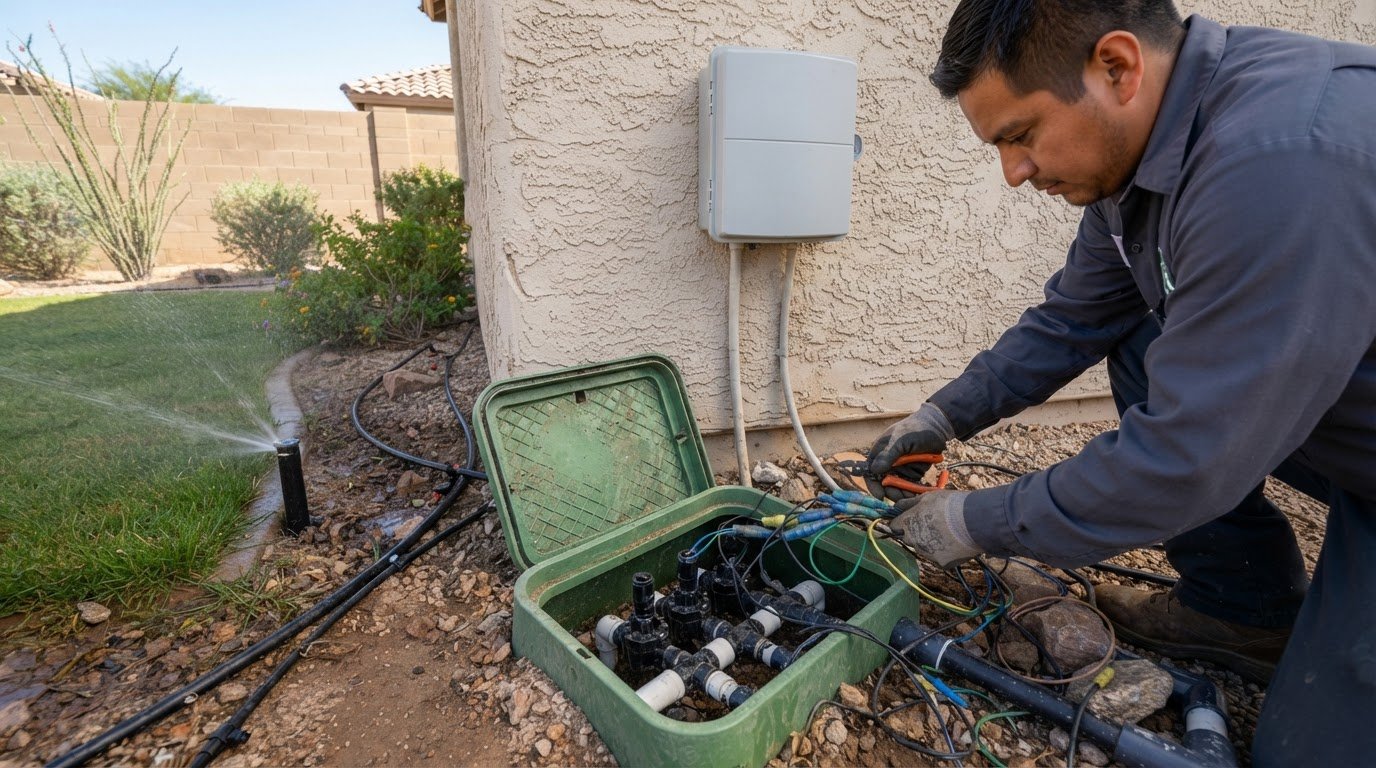
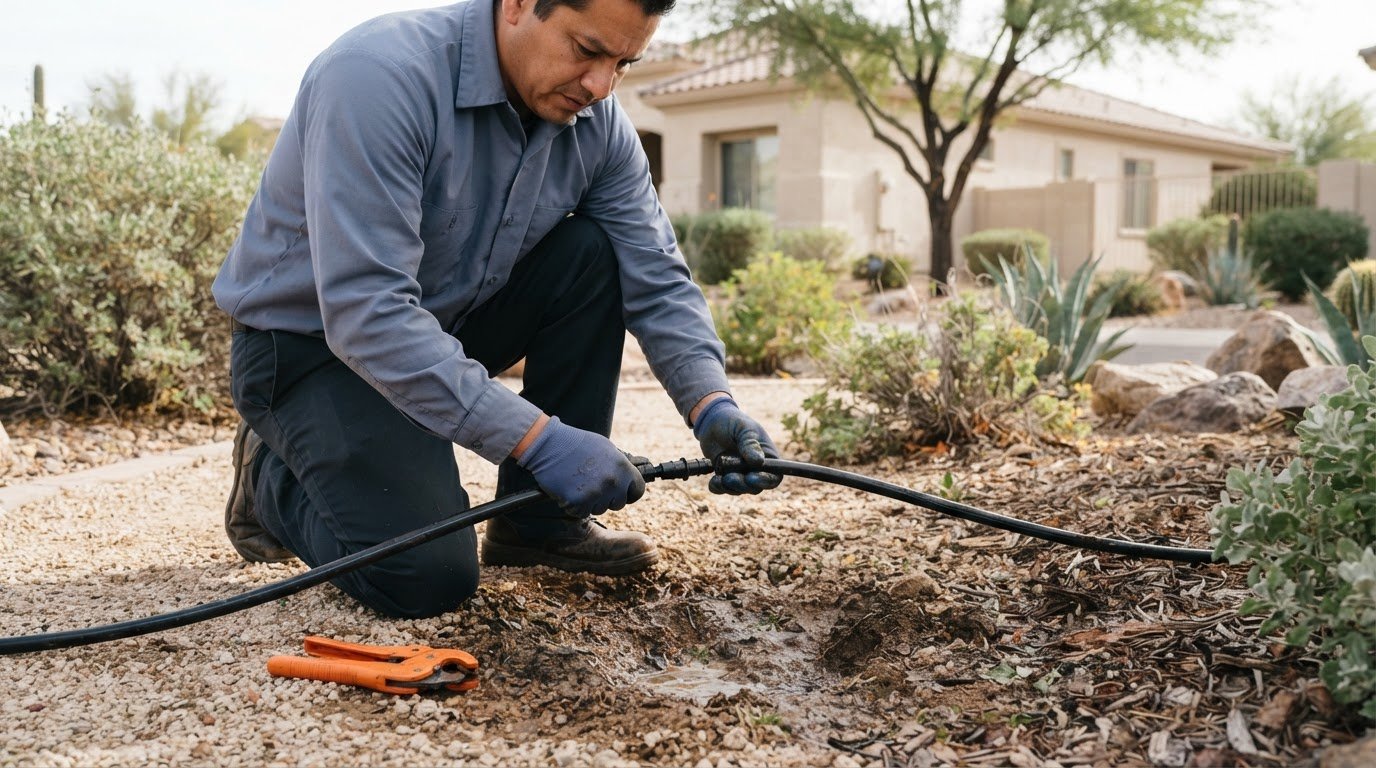
A professional can assess whether the problem is limited to one zone or affects the wider system. That distinction guides whether the next step is a targeted flush or broader diagnosis. Persistent clogs may also call for checking sediment in the water line or pressure loss from a cracked pipe.
- Schedule a system check after a long period without irrigation. Disuse can leave debris or other issues unnoticed until the system runs again. A professional can operate the zones, inspect the heads, and identify weak or obstructed spray before routine watering resumes.
If the irrigation system has never been flushed, arrange a full system cleaning. A professional can assess the lines and heads, flush where needed, and test the spray afterward. This is more useful than repeatedly treating individual heads when debris may remain throughout the system.
Routine system inspections and filter cleaning
Arrange professional inspections at least twice a year, at spring startup and again mid season. Before winter or another long pause, schedule a condition check. After seasonal startup, have each zone run and assessed.
-
Have a Professional Inspect the System Routinely
Have the irrigation system inspected at spring startup and mid season. Operating each zone helps reveal heads that don’t rise, spray unevenly, or fail to distribute water as expected. The inspection can also show where debris is collecting and whether a problem is isolated or affects several heads in one zone.
Use the inspection to compare current performance with the system’s intended coverage. For example, a head that sprays poorly after seasonal startup may need attention before its zone is relied on regularly. A mid-season check can identify changes that developed after startup.
-
Have a Professional Clean the Filters
Have a professional inspect and clean sprinkler-head filters at least once a year, typically during spring system startup. The fine mesh screens trap debris before it reaches nozzle openings, but collected material can restrict flow. The professional can remove and rinse each screen, then reinstall it and assess the nozzle’s spray.
With hard water or sandy soil, schedule filter checks twice a year, in spring and mid summer. A professional can determine whether screens need rinsing or replacement based on their condition. This keeps filter care focused on the material caught in the mesh, rather than treating every spray problem as the same blockage.
- Before a long seasonal pause, arrange a system inspection rather than leaving newly noticed issues unaddressed. The inspection can document heads with weak or uneven spray, blocked filters, or signs of debris. After the system has been unused, schedule another check before regular watering resumes. Testing each zone can reveal problems that developed during disuse.
This approach makes seasonal care practical without assuming every system needs the same work. A professional can distinguish a head that needs filter cleaning from a broader spray or line concern. Next steps can then reflect the system’s condition, rather than a fixed list of tasks that may not fit.
- Keep the two routine inspection points distinct: spring startup and mid season. At startup, have the system assessed as it returns to use and clean the head filters. During the mid-season inspection, look for performance changes and check filters more often where hard water or sandy soil applies.
Use the findings to guide the next maintenance visit. If screens collect debris quickly, their condition can help determine when to check them again. If the filters remain clear but a head still sprays poorly, investigate other causes instead of repeating filter cleaning without evidence.
Professional diagnosis of clogged sprinkler heads
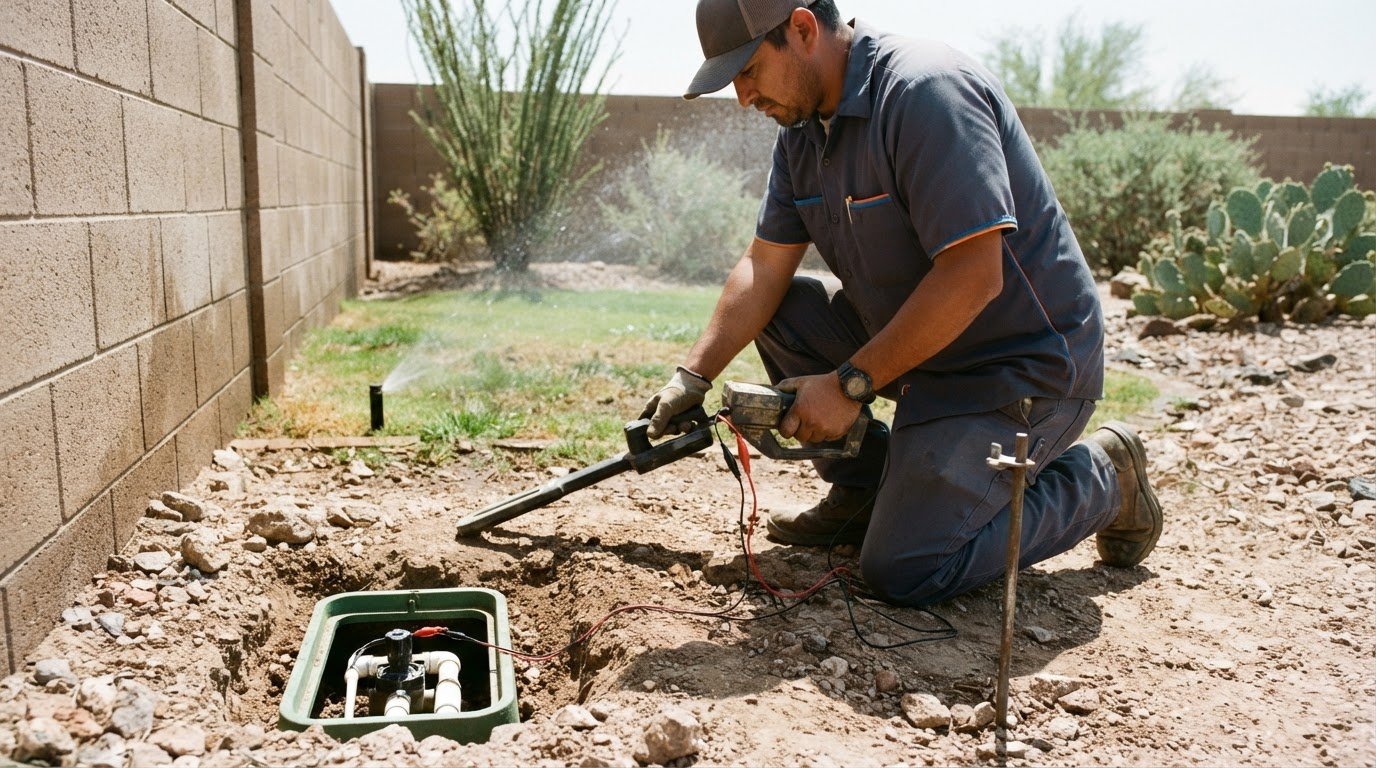
A clogged head may be the visible symptom, while the cause lies elsewhere. Diagnosis compares spray patterns, checks the nozzle and screen, and traces recurring problems through the affected zone. Knowing how to prevent sprinkler heads from clogging also means recognizing when cleaning alone won’t resolve the underlying issue.
- Have the professional compare the affected head with nearby heads in the same zone. A single weak or irregular spray pattern can indicate a local blockage, while several affected heads suggest a broader issue. The inspection should include the nozzle opening, filter screen, and head exterior. A head that no longer sprays as expected gives the professional a starting point, not proof that cleaning alone will solve the problem.
- Ask for a close inspection of the nozzle and head opening for nests or webbing. Spider webs, ants, and mud-wasp nests can obstruct a head even when its filter screen is clear. The professional can remove and clean the affected head, then test its spray pattern. If the blockage returns, that detail matters: recurring obstruction may indicate debris is entering the head again, rather than a one-time nest or web.
- Have the professional inspect the nozzle for cracks and deformation. A cracked nozzle can disrupt water flow, create turbulence, and make debris settle inside the passage more quickly. The professional should consider the nozzle’s condition alongside its spray pattern. If cleaning restores the pattern only briefly, a damaged nozzle may explain why the same head clogs again. Finding that cause helps prevent repeat cleaning from becoming the only response.
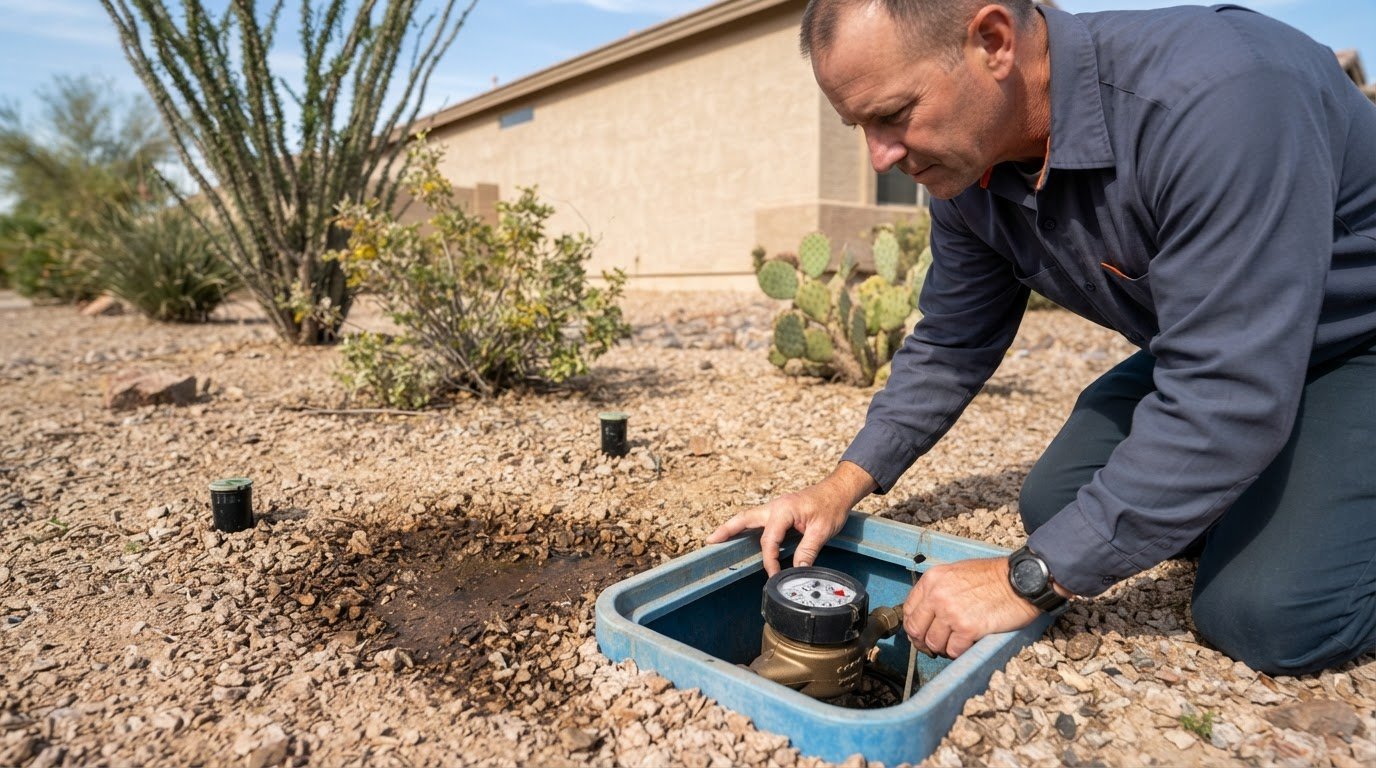
- If several heads keep clogging, ask the professional to assess the water line, pressure, and backflow prevention. Persistent blockages may indicate sediment in the line, low pressure from a cracked pipe, or poor backflow prevention. These causes require broader diagnosis than cleaning one nozzle. The professional can trace whether symptoms affect one head, one zone, or multiple zones, then identify which system issue best fits the pattern.
- Use the diagnosis to guide the next repair, rather than repeating the same cleaning after every blockage. A clear screen with a cracked nozzle calls for a different response than several heads affected by sediment. Part of how to prevent sprinkler heads from clogging is recognizing when a clean nozzle isn’t the real solution. Share which heads clog and whether the problem returns. For recurring symptoms, request a professional sprinkler system diagnosis to discuss the next step.
Sonora Sprinkler
Sonora Sprinkler Inc. can help when clogged heads keep returning, several zones show uneven spray, or cleaning doesn’t resolve the issue. A professional assessment can distinguish a blocked nozzle from a wider irrigation problem and identify whether repair or system changes are appropriate.
For recurring issues, irrigation repair can address system problems affecting sprinkler performance. If the existing layout or equipment needs a broader rethink, custom sprinkler system design may better fit the property’s irrigation needs. The right next step depends on the inspection findings.
Contact Sonora Sprinkler Inc. to discuss persistent sprinkler clogs and possible next steps.
Keep Your Irrigation Ready for the Next Season
Knowing how to prevent sprinkler heads from clogging is useful, but persistent blockages can point to a system issue that cleaning alone won’t resolve. Address the cause before inconsistent spray affects more of the property. A professional can assess whether repair or changes to the irrigation setup fit the symptoms.
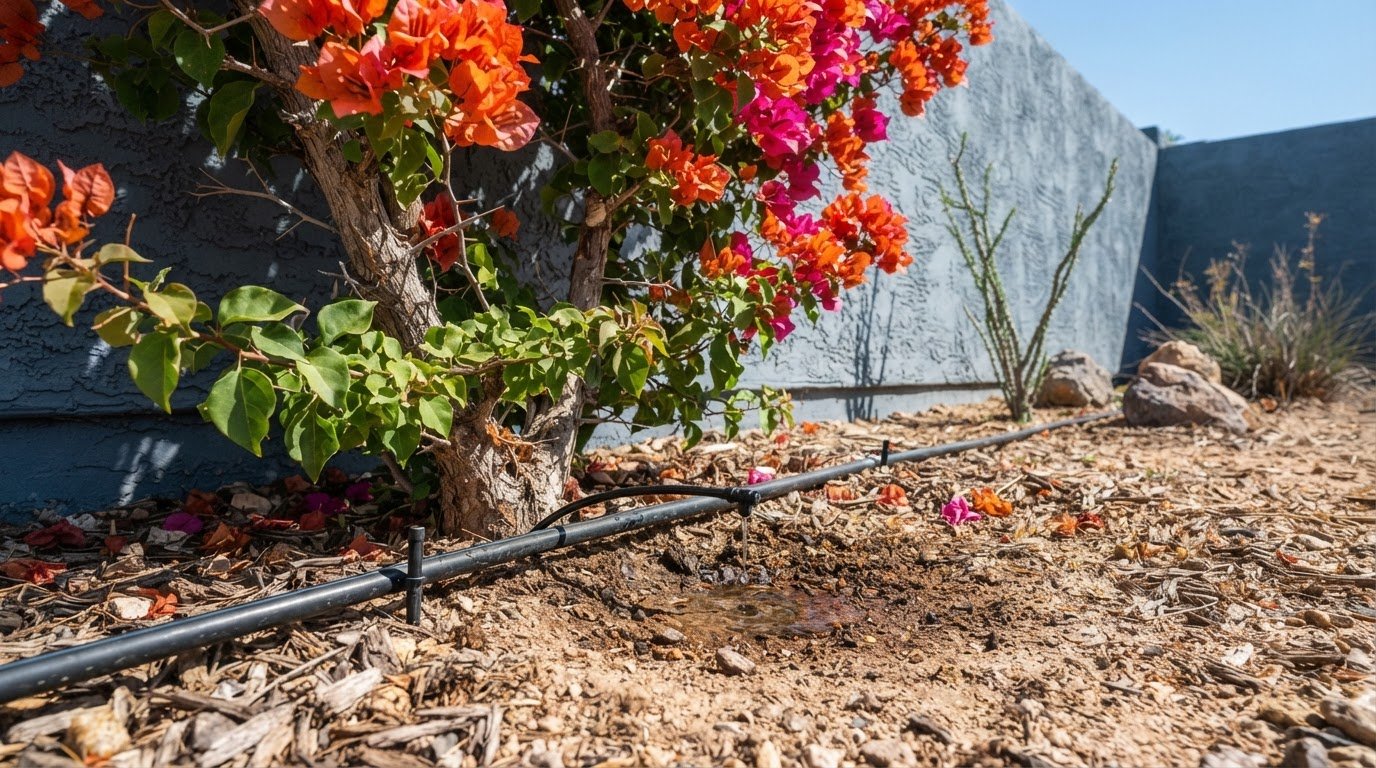
Sonora Sprinkler offers irrigation repair, irrigation installation, and drip irrigation installation. These services can address damaged components, revise an existing setup, or provide a different irrigation approach for the property. The right direction depends on the system’s condition and the source of recurring trouble.
Share which heads are affected and whether the problem returns after cleaning. That practical starting point can help focus the discussion on the system’s needs. Contact Sonora Sprinkler to discuss your sprinkler system, and take a clear next step toward reliable irrigation.
Frequently Asked Questions
Can a professional use harsh chemicals like CLR or bleach to clean sprinkler heads?
Harsh chemicals shouldn’t be the default for cleaning sprinkler heads. The professional first identifies whether the blockage is mineral scale, sediment, or organic debris, since each has a different cause. For hard-water deposits, a removable nozzle can be soaked in equal parts vinegar and water for 30 minutes. That method targets mineral buildup; it won’t remove sediment from an irrigation line or fix a damaged nozzle.
How does a professional find a clogged sprinkler head?
A professional runs the affected zone and compares the spray pattern across nearby heads. They inspect the nozzle opening and screen and look for obstructions such as webbing, nests, or compacted debris. If several heads are affected, diagnosis extends beyond individual nozzles to possible line sediment, pressure loss, or backflow concerns. For residential systems in Surprise or Peoria, this zone-by-zone assessment helps pinpoint where symptoms begin.
What causes sprinkler heads to clog?
Sprinkler heads can clog when soil, grass clippings, mulch, or other debris enters the nozzle. Fine particles may collect in the head’s screen, while mineral scale, rust, and sediment can also obstruct openings. Nests and webbing can block a head from outside. A cracked nozzle may disrupt flow and encourage debris to settle, so a blockage can involve more than dirt at the opening.
How does a professional clean a clogged sprinkler head step by step?
First identify the affected head and check its spray pattern, nozzle, and screen. Remove the nozzle and filter, inspect them for debris or mineral scale, then rinse or clean the parts using a method suited to the blockage. For scale, vinegar and water can be used. Reinstall the parts, flush the head if needed, and test the spray again.
How often should sprinkler heads and filters be professionally cleaned?
Have sprinkler nozzles and filter screens removed and rinsed annually. With hard water or sandy soil, arrange filter checks twice a year, in spring and mid summer. A wider system inspection is recommended at spring startup and again mid season. These schedules address different needs: cleaning nozzles and screens removes accumulated material, while system inspections can reveal performance problems beyond the head itself.
How can irrigation filters prevent sprinkler head clogs?
Irrigation filters trap particles before they reach small nozzle openings. Screens inside sprinkler heads catch fine debris close to each nozzle, while a filter on the water supply line can intercept material earlier in the system. Filters need attention too: trapped particles can restrict flow if screens become clogged. A professional can assess where filtration belongs and whether the existing filters are collecting debris.
What filter mesh size is recommended for a professionally designed sprinkler system?
There isn’t one mesh size that suits every sprinkler system. The appropriate screen depends on the nozzle openings and the particles the system needs to catch. A screen that doesn’t suit the nozzle may fail to protect its openings or may itself become obstructed. During system design, match filtration to the selected sprinkler components and the debris load in the irrigation water.
How do professionals flush irrigation lines to remove debris?
For an individual head, the professional removes the nozzle and filter, then runs the zone for 20 to 30 seconds to move loose debris out through the open riser. After repairs, they can hold the riser up and briefly run the zone before reinstalling the nozzle. They then test the spray pattern. If multiple heads keep clogging, line flushing may need to be paired with further diagnosis.