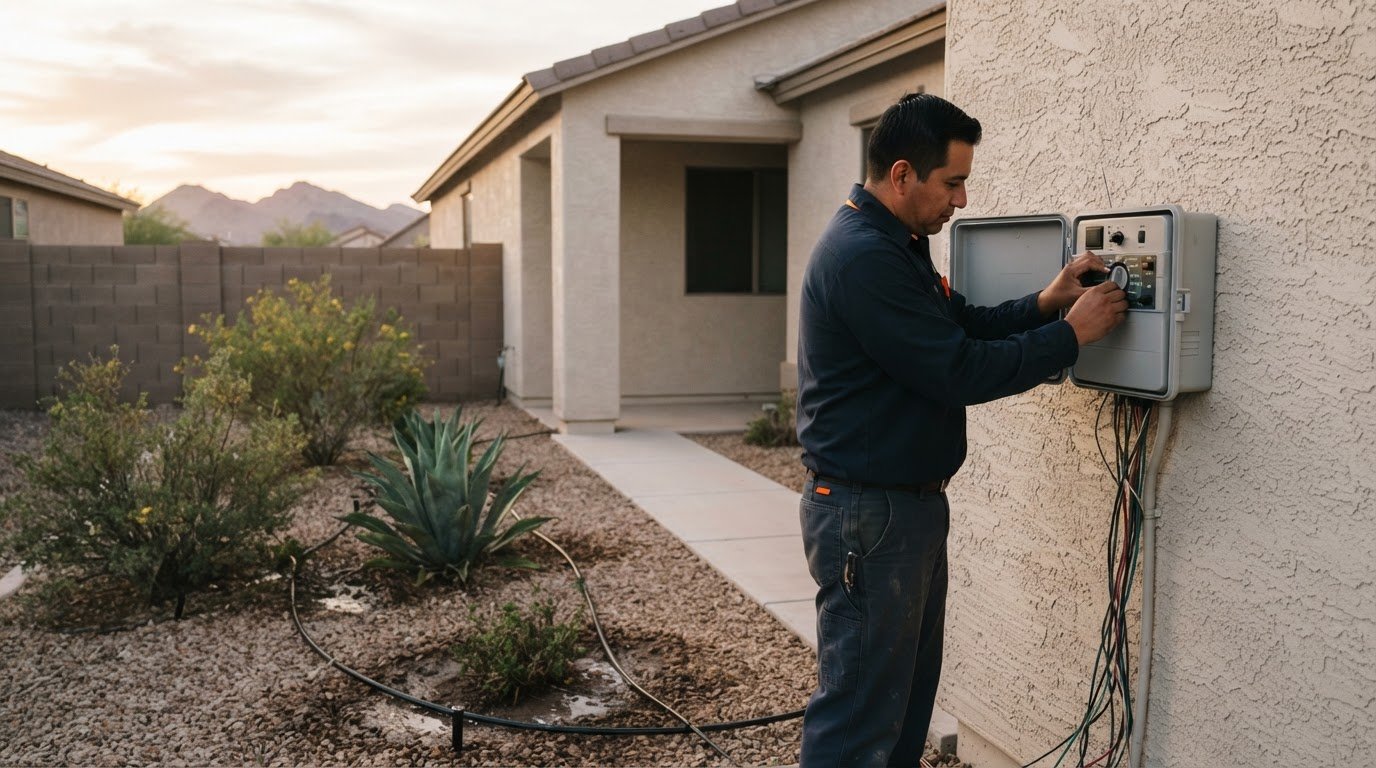
An automatic schedule is only as dependable as the zones and valves behind it. Replacing manual sprinklers with an automatic system in Surprise starts with matching the controller to the irrigation zones and compatible valves, then setting schedules suited to the landscape. Each zone should be tested after programming to make sure valves operate properly, sprinkler heads are aligned, and leaks aren’t present.
Manual watering can seem simple, but planting areas often need different schedules. Surprise’s heat, rainfall, drought conditions, and local watering requirements all matter when planning irrigation. A well-designed setup accounts for those differences instead of treating every zone alike.
This guide explains what a professional assesses when replacing manual sprinklers with an automatic system in Surprise, from the existing valves and wiring to the controller and zone schedules. It also covers how weather and local watering requirements inform the plan, so you can understand the work involved before deciding how to proceed.
Key Takeaways
- Have the irrigation layout assessed by zone so the controller’s capacity and valve compatibility suit the existing system.
- Find out whether manual valves need to be replaced with electric solenoid valves before the system can run automatically.
- Choose scheduling features that fit the yard: basic timers repeat set cycles, while some controllers provide separate zone settings or weather-related functions.
- Match the watering method to the landscape, including considering drip irrigation for planting areas with different needs.
- A professional system design can bring the controller, valves, and schedules together for Surprise’s local conditions.
How a professional accounts for local watering restrictions, rain, and drought when replacing manual sprinklers with an automatic system
- Estimate potential water savings from your current watering routine, not from automation alone. An automatic system may reduce unnecessary watering when schedules suit the plants and zones work correctly. Results vary with past watering habits, leaks, soil, plant types, and runtime. For example, separate schedules for the lawn and planted beds can avoid running every area for the same length of time. No single savings estimate applies to every Surprise property.
- Treat current Surprise watering requirements as a constraint when setting the controller. The professional identifies the rules that apply to the property and builds the program around them. Each zone then gets a schedule suited to its plants, rather than one blanket runtime. A lawn and a drip-irrigated planting bed, for example, may need different schedules. This helps align the program with local requirements and the yard’s varied irrigation needs.
- Treat the schedule as adjustable, not permanent, as rainfall and drought conditions change. After rain, a professional can assess whether planned irrigation still suits the soil and planted areas. During dry conditions, the schedule may need review while still following local requirements. Weather-responsive controller features can help adjust watering, but zone needs and system performance still matter. Use rainfall to inform scheduling, not as a substitute for a properly planned program.
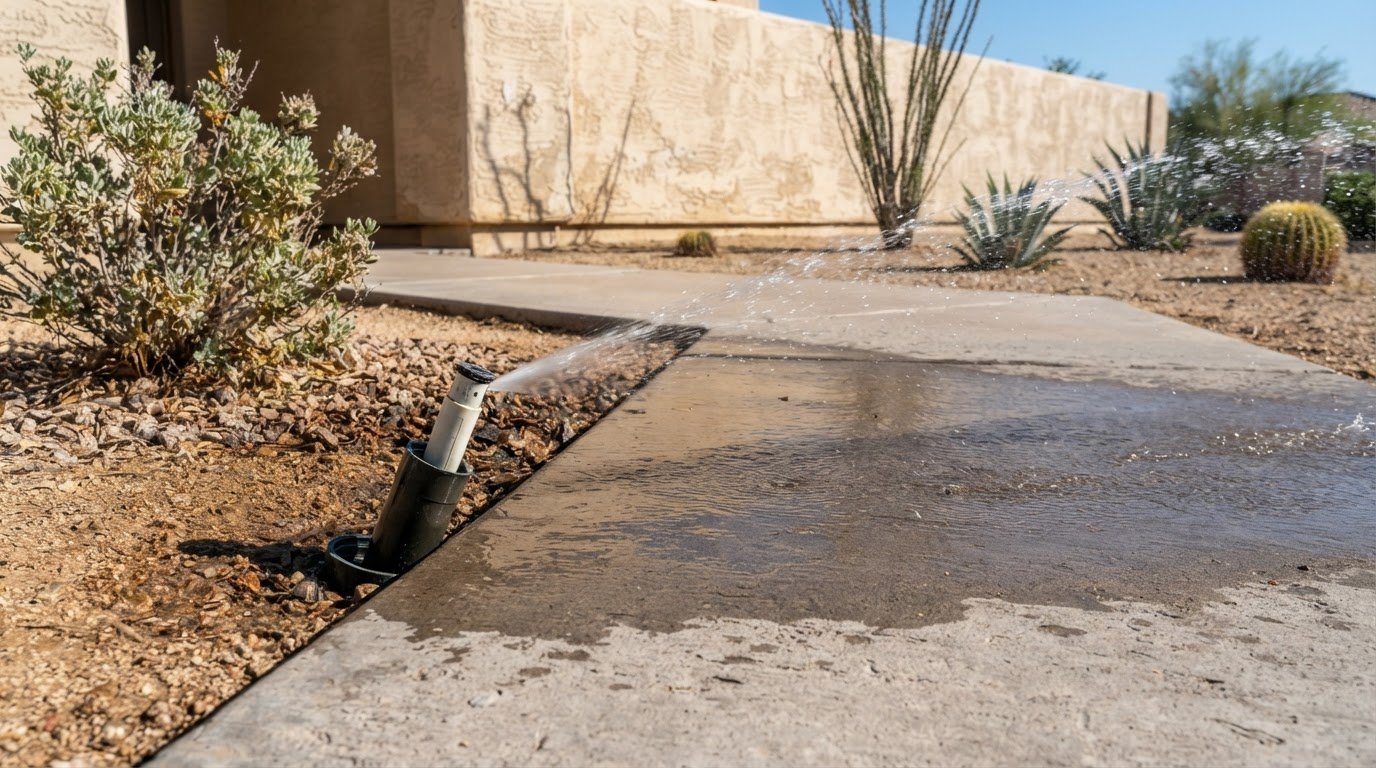
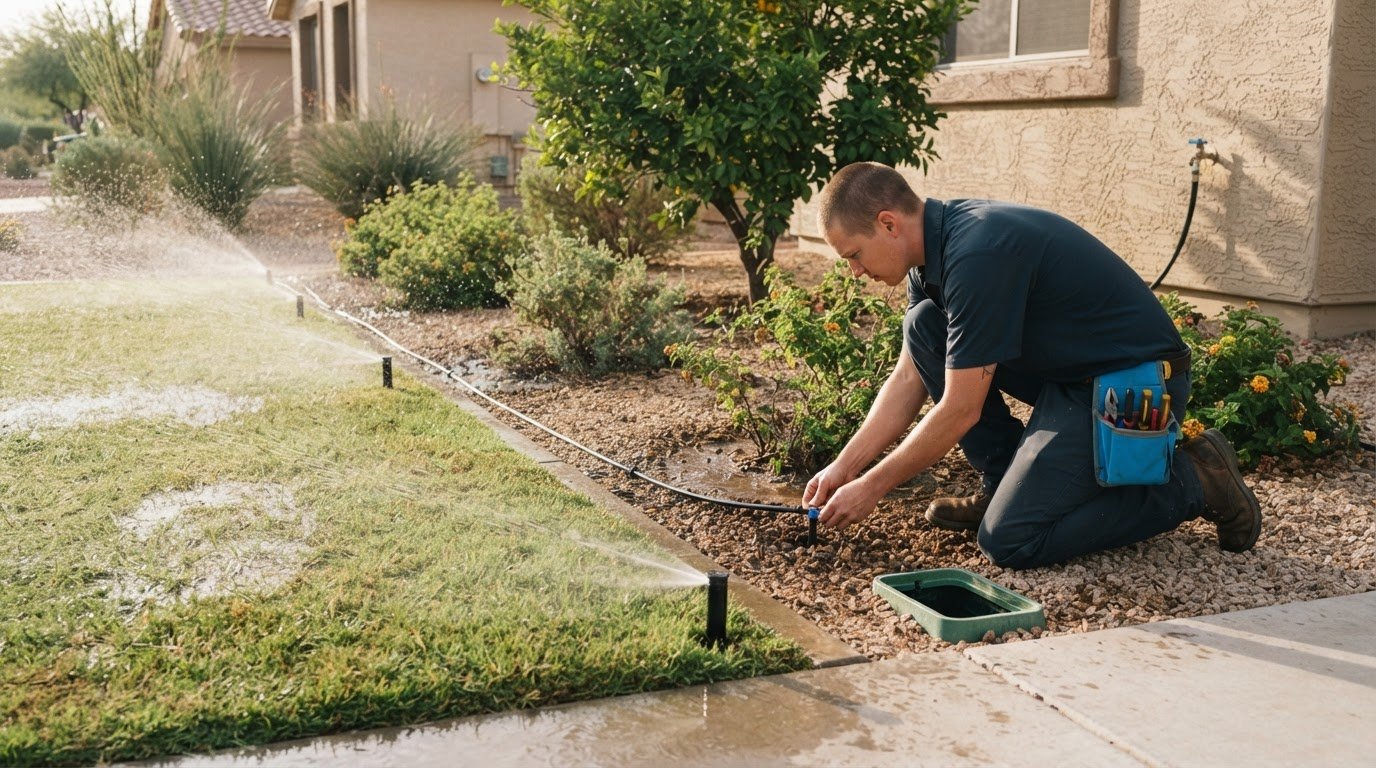
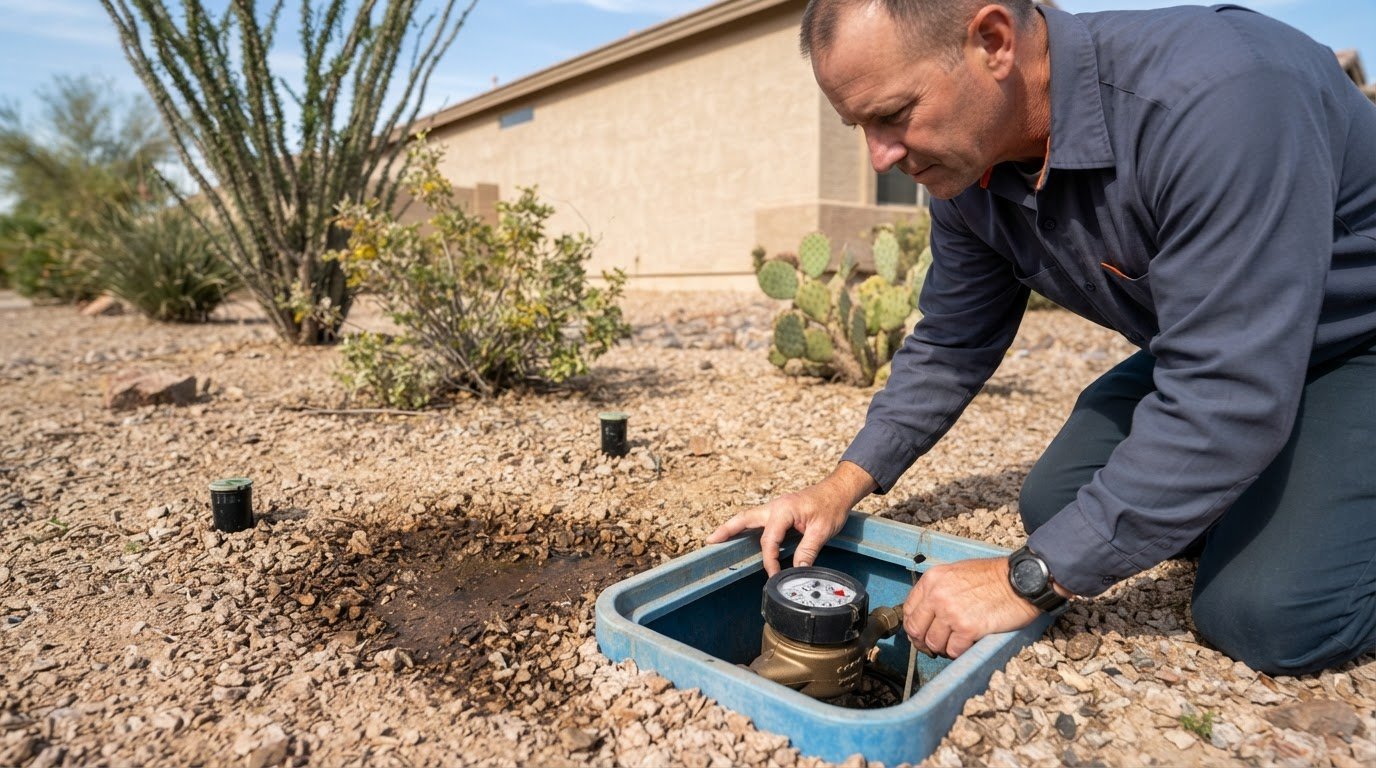
- Test every zone after programming and fix problems before relying on the schedule. The professional checks that valves open and close properly, sprinkler heads are aligned, and there are no leaks. A misaligned head can spray paving instead of the intended planting area. A leaking valve can allow water to continue flowing when it should stop. These checks confirm that the programmed plan delivers water as intended throughout the yard.
- Check permit requirements against the exact work planned in Surprise. Requirements can depend on whether the project changes irrigation components alone or includes other work, such as adding electrical service. Installing an outdoor GFCI outlet near a valve manifold may require a licensed electrician. The professional accounts for applicable city requirements before work begins, rather than assuming every conversion has the same permit needs. Controller changes and additional electrical work are not necessarily subject to the same requirements.
For a conversion that needs coordinated zone planning, a professional custom sprinkler system design can account for landscape needs and local scheduling considerations.
How a professional chooses a controller compatible with the irrigation zones and valves
- Map the existing zones before selecting a controller. The professional identifies how many independently operated zones the yard needs. A zone is an area controlled separately, such as a lawn or planting bed. The controller must have enough capacity for that layout. Starting with the actual irrigation plan helps prevent choosing a controller that cannot operate each area independently.
- Match the controller to the installed valves. An automatic controller must be compatible with the system’s valves. If manual valves lack electric solenoids, compatible automatic valves are needed for controller operation. The professional checks valve type and condition when selecting equipment. A controller alone cannot automate valves that cannot respond to its electrical commands.
- Plan the wiring path and connections. Irrigation valve wiring typically includes a common wire, usually white, and a color-coded wire for each zone. The professional traces these connections and checks whether they suit the planned controller and valves. Damaged wiring or incorrect connections can stop a zone from activating. Installation can also disturb pipe or valve connections, so both electrical operation and water delivery need attention.
- Choose scheduling functions to suit the zone layout. Some timers allow different settings for different zones, which can help when a yard has varied planting areas. The professional considers whether separate schedules are useful and matches the controller’s zone controls to the system. Smart features should support the irrigation plan, not replace compatible valves or correctly wired zones. Each zone still needs an operational test.
- Account for backflow, electrical work, and incentives separately. For a Surprise residence, backflow prevention or inspection needs depend on the water connection and the scope of the modification. The controller alone doesn’t establish those requirements. Installing an outdoor GFCI outlet near a valve manifold may require a licensed electrician. Rebate eligibility also depends on program terms and equipment criteria, so a controller choice shouldn’t assume an incentive will apply. For help coordinating system wiring and component choices, discuss your irrigation project.
How a professional installs electric solenoid valves when converting manual sprinklers to an automatic system
A professional assesses the manual valves and replaces those without compatible electric solenoids, then connects the valves to a controller. The work is completed by operating each zone and checking water delivery.
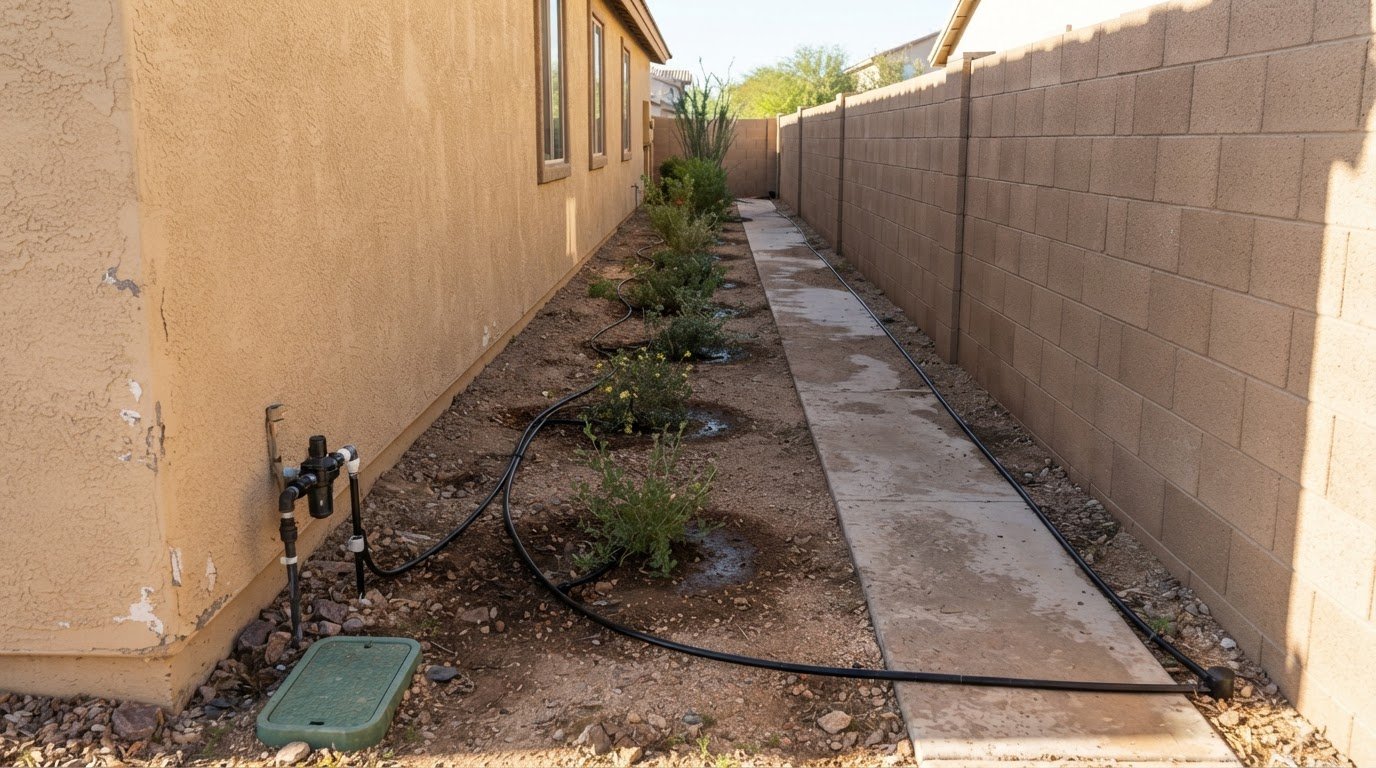
- Inspect the existing valve layout. The professional locates the manual valves and identifies the irrigation areas each one controls. This shows how many automatic valves the conversion needs and how they connect to existing pipes. The assessment also notes damaged valve components, visible leaks, and access around the manifold. For example, separate lawn and planting areas may need independent control. The layout guides valve selection and wiring.
- Determine whether the manual valves can be automated. A controller cannot operate a manual valve without an electric solenoid. If the system lacks electric solenoid valves, compatible automatic valves must replace them. The professional matches replacement valves to the existing irrigation arrangement instead of selecting components in isolation. Pipe connections matter too: a poor fit or disturbed joint can leak. The conversion plan accounts for automatic operation and dependable water flow.
- Install compatible automatic valves at the manifold. The professional connects the selected valves to the irrigation lines and arranges them so each zone can operate separately. Compatibility matters because the controller sends electrical commands to open and close each valve. A mismatch can leave a zone unable to respond as intended. The work also accounts for existing connections and valve condition. Valve and backflow services help maintain reliable irrigation operation.
- Connect valve wiring to the controller. Typical irrigation valve wiring has a common wire, usually white, and a color-coded wire for each zone. The professional maps each zone wire to its corresponding valve and connects the common wire appropriately. This helps the controller activate the intended area rather than another zone. Wiring condition matters: a damaged or incorrectly connected wire can interrupt the signal and leave a valve unresponsive, even when its schedule is set.
- Provide suitable power and test operation. The professional connects the controller to its power source and runs each zone to confirm that the valves open and close. Most automatic controllers are designed for a standard outdoor-rated outlet, while some can be hardwired. During testing, the professional checks valve response, water flow, and visible connections. Any leaks or wiring issues should be fixed before the regular schedule begins.
WiFi-enabled smart controllers and programmable timers
- Choose the control style to suit the schedule. A programmable timer can repeat a watering cycle daily or weekly. A controller may also offer zone control, weather syncing, and smart technology. The professional considers whether the system needs a repeating cycle or more flexible control. For example, individual zone settings may help in a yard with varied irrigation needs. Match features to the irrigation plan, rather than choosing functions the yard will not use.
- Separate timer basics from smart features. A timer provides scheduled operation, while a smart controller may add weather syncing or other connected functions. WiFi capability can support a connected controller, but it does not replace sound zone planning or compatible valves. The professional considers what the controller actually offers and whether those features suit the property. A basic weekly schedule may suit a straightforward layout, while a more varied yard may benefit from individual zone settings.
- Plan how power will reach the controller. Most automatic sprinkler controllers are designed to plug into a standard outdoor-rated electrical outlet. Some models can be hardwired. The professional considers the controller’s location and available power when planning installation. If an outdoor GFCI outlet is needed near a valve manifold, installing it may require a licensed electrician. Power planning is part of the conversion design because the controller needs a suitable electrical connection to run its schedule.
- Consider solar power only when the setup suits it. Solar-powered sprinkler controllers are an option for remote areas or hose-end systems and tend to work best for smaller setups. The professional considers the irrigation layout and controller location before selecting this option. A small hose-end arrangement differs from a larger yard with several wired valves. Solar power is not a universal substitute for a standard outlet-powered or hardwired controller. The system type and scale guide the choice.
- Confirm the programmed cycle matches the installed system. Once the controller and power source are selected, the professional sets a schedule for the intended zones. Daily or weekly repeats should reflect the irrigation plan, and any zone controls should correspond to the valves. Weather syncing can inform scheduling, but does not remove the need to test operation. A final review confirms that programmed zones activate as expected and that the control method suits the property.
The distinction helps keep the choice focused on the control you need. A sprinkler timer provides basic scheduling, while a controller may also offer zone control, weather syncing, and smart technology. Consider which capabilities the irrigation plan requires before choosing. If you only need a schedule, a basic timer may be suitable. If other functions matter, compare controller options against those needs.
A longer feature list does not automatically make a device a better fit. Choose one that supports the intended operation without adding controls the yard does not need. Reviewing the planned functions makes it easier to select a device that suits the system and keeps programming focused on your irrigation goals. Streamlining home maintenance tasks also frees up time to focus on personal and family wellbeing, much like how modern in-home health services such as Hakeem at Home offer tailored comfort and care directly where it is needed most.
What types of automatic sprinkler systems work best for Surprise AZ yards and desert landscaping?
- Start with the yard, not a single system type. A Surprise yard may combine lawn, shrubs, trees, and planted beds, each with different irrigation needs. A professional assesses these areas before deciding how to distribute water. For example, a lawn and a row of shrubs may need separate zones. For homeowners replacing manual sprinklers with an automatic system in Surprise, this assessment helps determine where overhead coverage is suitable and where drip irrigation may work better.
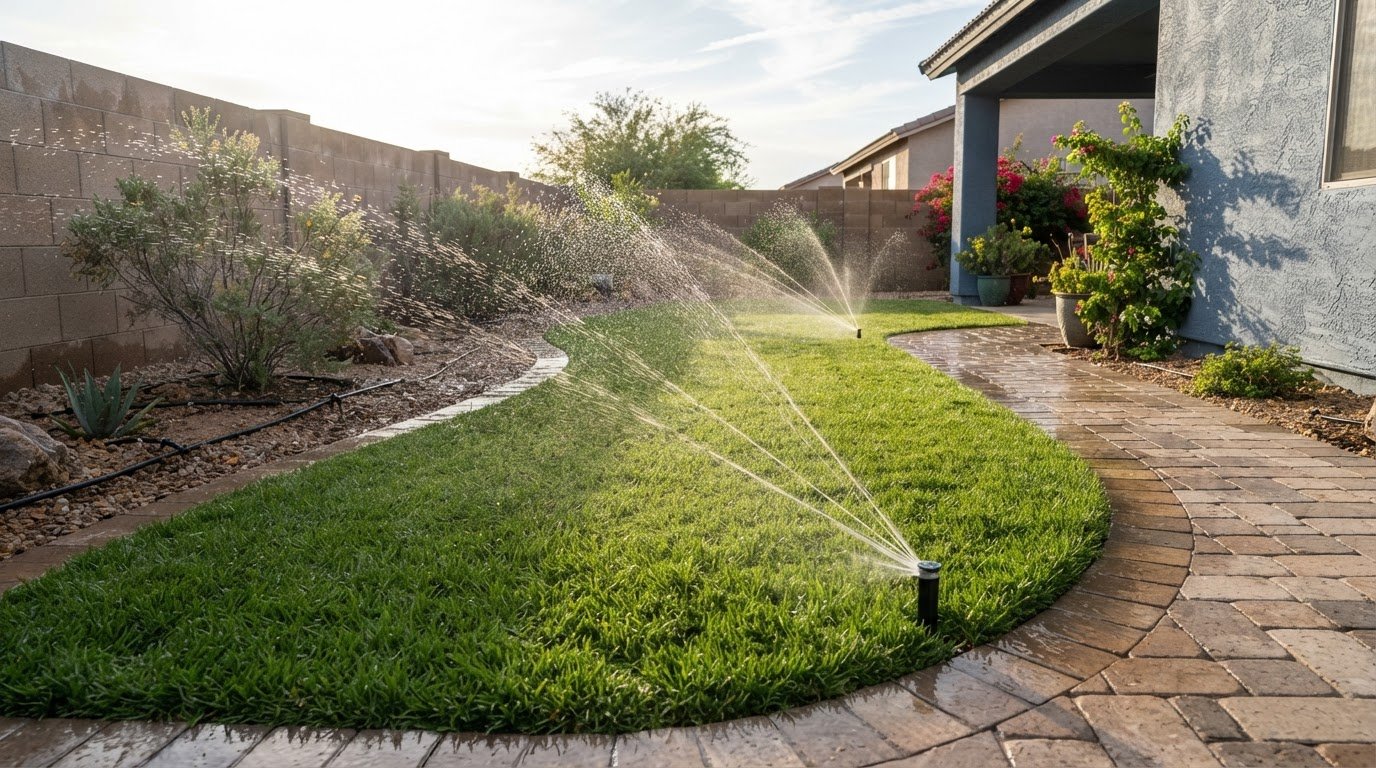
- Use sprinkler heads where overhead coverage is appropriate. Turf areas are often planned around sprinkler heads that distribute water across the lawn. Placement and alignment matter: water should reach the grass, not nearby paving or walls. A narrow side yard may need a different layout from an open lawn. The professional considers the lawn’s shape and nearby obstacles, then plans coverage for the property rather than relying on a standard pattern.
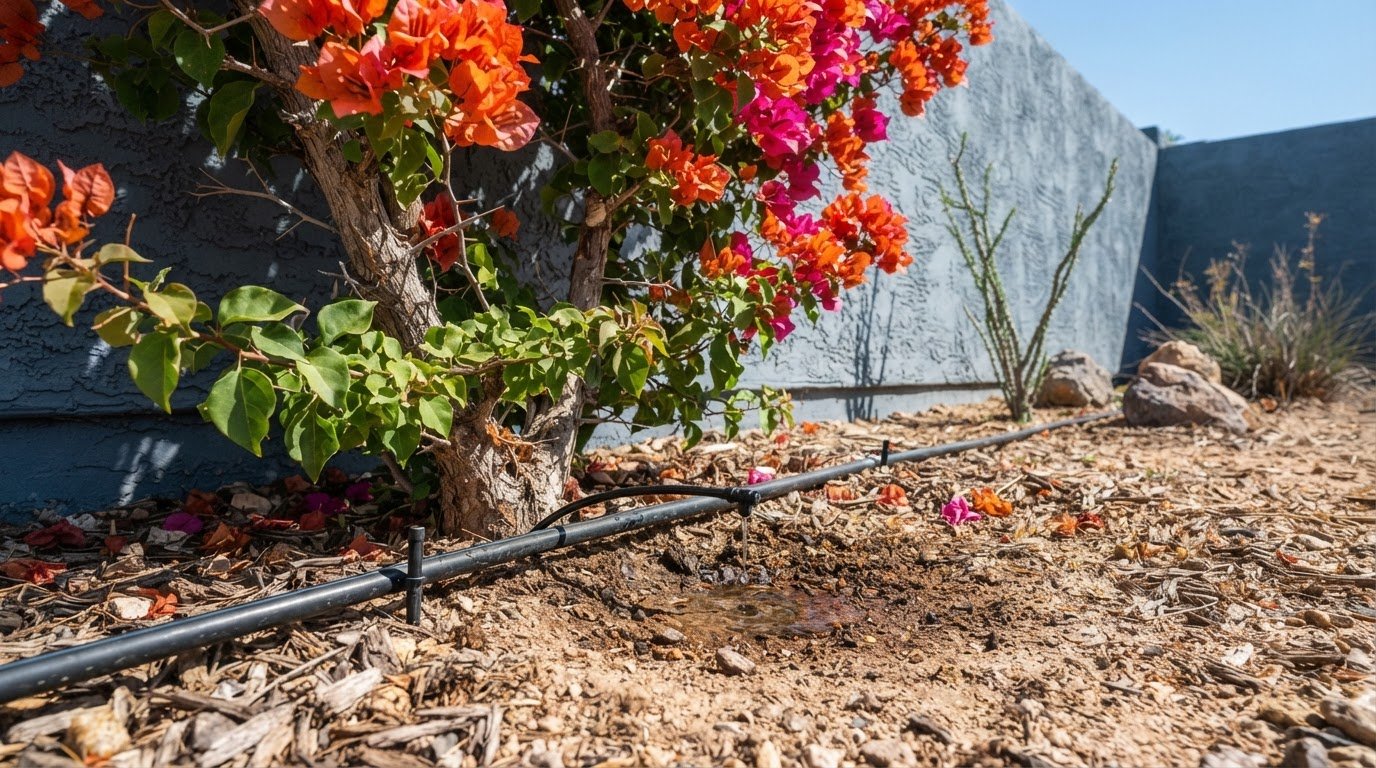
- Consider drip irrigation for planted beds and individual plants. Drip irrigation delivers water through tubing and emitters near plants, making it an option for desert planting areas. Shrub beds and tree groupings have different coverage needs from turf. A professional can plan drip zones around the planting arrangement and connect them to automatic controls. For homeowners replacing manual sprinklers with an automatic system in Surprise, drip irrigation may suit planted beds while sprinkler coverage serves the lawn.
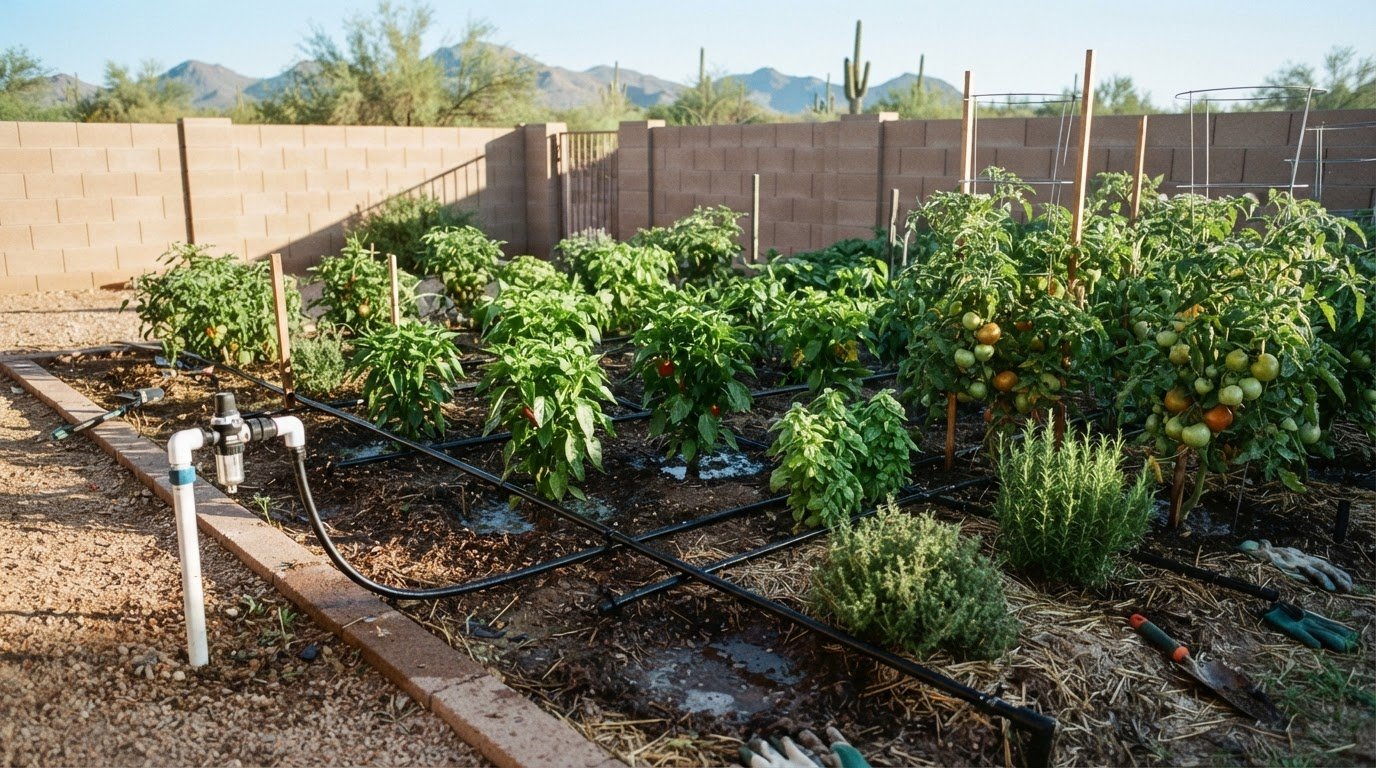
- Separate areas with different watering needs. Automatic control is more useful when the system reflects meaningful differences across the yard. A lawn, a shaded planting bed, and a sunny bed may need distinct schedules or watering methods. The professional assesses the yard and groups areas accordingly, rather than applying one routine everywhere. In a mixed desert yard, separating lawn irrigation from drip-irrigated beds can better match water delivery to the plants and their locations.
- Choose a design that can adapt to the property. Planting areas may change as shrubs mature or beds are replanted. A professional considers how the irrigation layout serves the current yard and supports future adjustments. Custom design can coordinate sprinkler coverage, drip zones, valves, and automatic controls. The right arrangement depends on planting, layout, and existing components, not a system label alone. To plan an automatic setup around your yard, discuss your irrigation design.
Sonora Sprinkler: Custom Sprinkler System Design
Sonora Sprinkler Inc. designs custom sprinkler systems for homeowners converting manual watering to automatic operation. The design takes the existing irrigation layout and different planting areas into account, helping match system components to the property’s watering needs. Where appropriate, drip irrigation can serve planted beds alongside sprinkler coverage.
Turn to Sonora Sprinkler Inc. when you need a coordinated design, irrigation installation, or repair of existing components before automation. A clear assessment of the current system helps shape the next steps for the conversion. Contact Sonora Sprinkler Inc. to discuss your irrigation project.
Plan an irrigation system that can adapt with your yard
As planting areas mature or change, irrigation needs can shift too. Before replacing manual sprinklers with an automatic system in Surprise, consider which areas may be replanted and how the irrigation layout could accommodate those changes. This helps shape a system for lasting use, rather than a quick controller change. A professional can assess whether existing components need repair or installation work would better support the yard’s current plan.
Replacing manual sprinklers with an automatic system in Surprise is an opportunity to plan for the property’s future needs as well as its current layout. Sonora Sprinkler offers irrigation repair, irrigation installation, and drip irrigation installation. Share which areas need attention and what you want the system to support. Contact Sonora Sprinkler to discuss your project. A thoughtful plan is a positive step toward irrigation that fits your yard.
Frequently Asked Questions
Which irrigation contractors in Surprise AZ install or automate sprinkler systems, and what do they charge?
Sonora Sprinkler Inc. provides residential irrigation installation and custom sprinkler system design in Surprise, including work to support automatic operation. The price depends on the existing system, its zones and components, and the installation or repair work required; it’s provided after a quote request. For example, a system needing valve, wiring, or pipe work may require a different scope from one with components ready for a controller.
How much water can an automatic sprinkler system save compared with manual watering in Surprise AZ?
An automatic system may reduce unnecessary watering when schedules suit plant needs and zones work correctly, but results vary with past watering habits, leaks, soil, plant types, and runtime. No single savings estimate applies to every property.