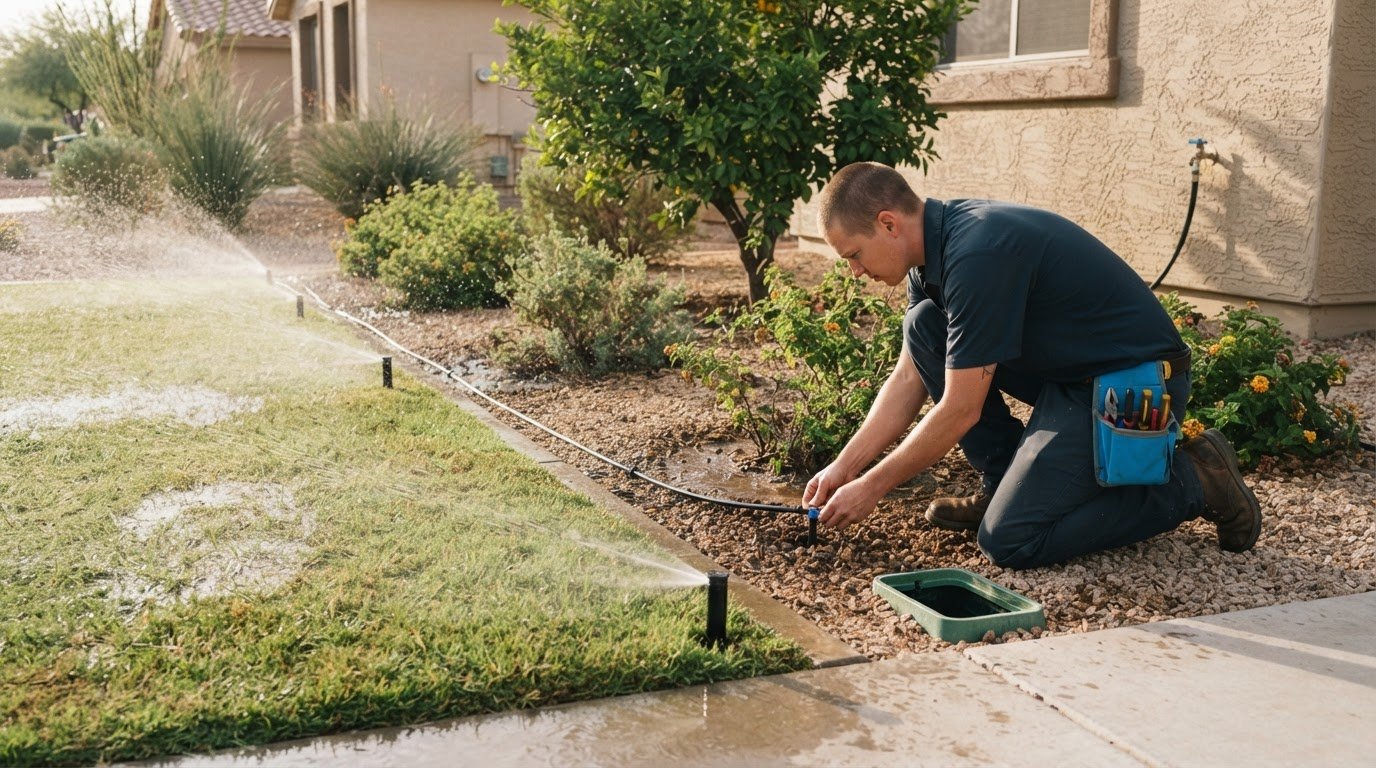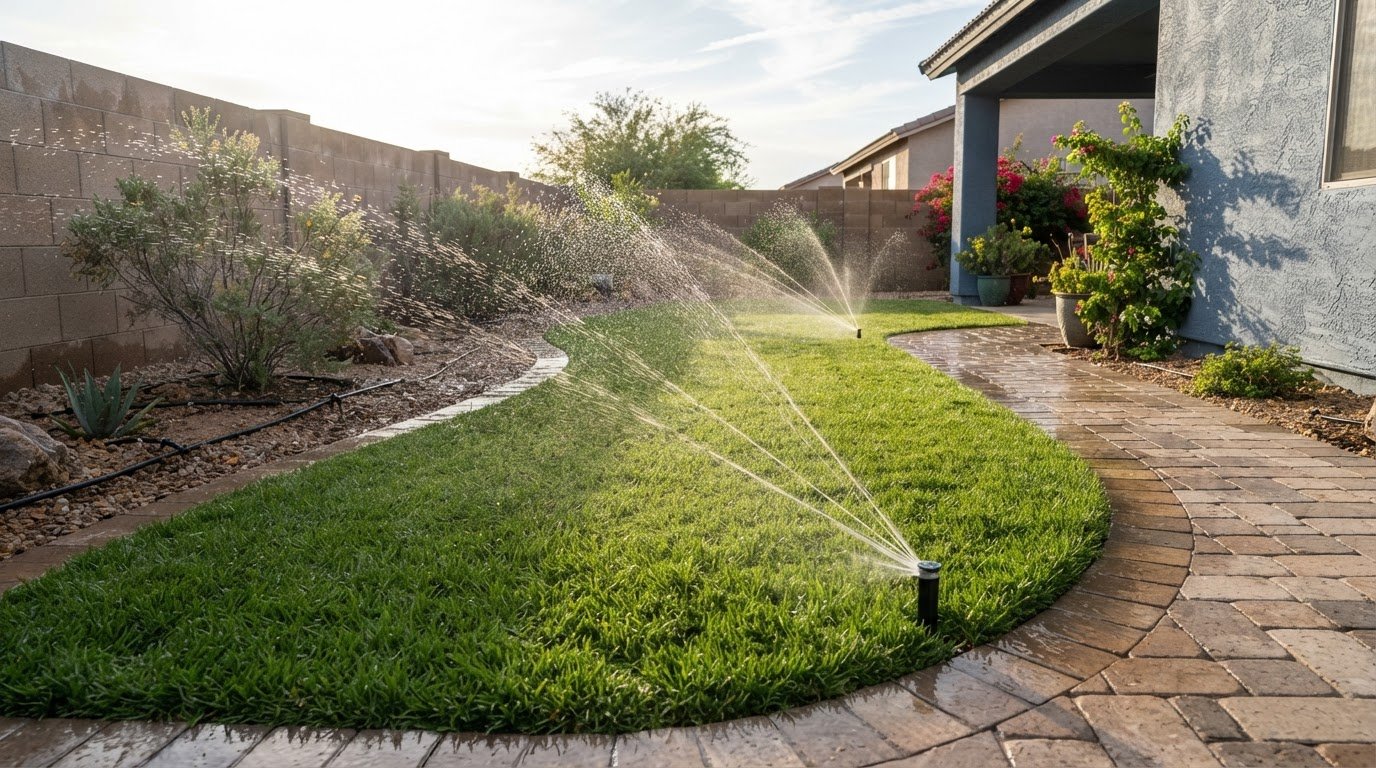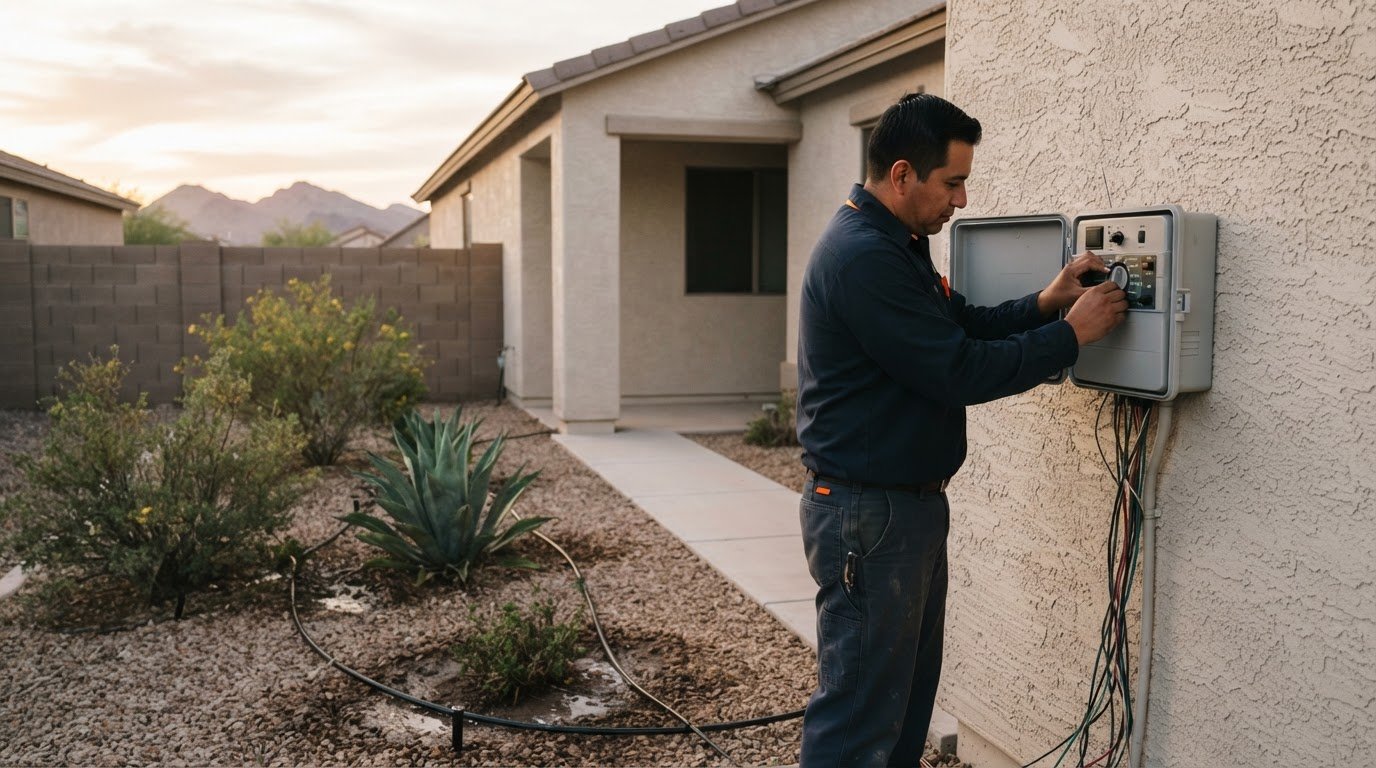
Uneven watering is a clear warning: dry patches, overspray onto pavement, and sprinkler heads aimed away from plants are signs your irrigation system is inefficient. One part of the lawn may look thirsty while another stays soggy, even as the system continues to run.
It’s easy to assume dry spots simply need more water. But increasing the run time for an entire zone can overwater other areas. Misaligned heads, inconsistent pressure, worn components, or a schedule that no longer suits the planting areas may be contributing to the problem.
This guide explains what to watch for while your sprinklers run and how to check for uneven coverage, overspray, pooling, and misplaced heads. You’ll also learn when an adjustment may help and when persistent signs point to an irrigation issue that needs professional inspection.
Key Takeaways
- Watch for rising water use, water reaching pavement, or moisture that lingers after a cycle; these clues can point to leaks or controller issues.
- Compare how each zone performs while running. Weak reach, irregular spray, or heads that fail to rotate can signal pressure or component problems.
- Consider weather, soil, and plant needs when reviewing a watering schedule; a fixed program may not suit changing conditions.
- Pooling, runoff, and soil erosion can reveal that water is not being absorbed effectively or that a line or valve needs attention.
- When problems persist or coverage no longer fits the landscape, a system inspection can help determine whether repair, adjustment, or custom design is appropriate.
1. Uneven sprinkler coverage and dry patches
Dry patches beside saturated soil are clear signs your irrigation system is inefficient. A sprinkler zone can use excessive water while turf or planting beds still show moisture stress. For example, grass near one head may stay green while the far edge browns. That contrast points to uneven distribution, not simply too little total run time. Adding minutes across the whole zone can soak healthy areas without reaching the dry ones.
Observe a zone while it runs and compare the spray reaching nearby areas. Note whether each sprinkler head rises, sprays steadily, and reaches the surrounding ground. A head that barely rises or sprays weakly may indicate a pressure problem, not just a faulty nozzle. If several heads in one zone have reduced reach, the cause may affect the wider system.
Pressure changes during operation can make coverage uneven. Low pressure can shorten sprinkler reach, while high pressure can create fine mist that evaporates before reaching the soil. Look for a head that sprays less far than neighboring heads, or a misty plume instead of a steady pattern. These differences can help distinguish a pressure issue from a single dry planting area.
Sprinkler type and zone layout also matter. Rotors and spray sprinklers apply water at different rates, so putting both on one zone can create uneven moisture. A nearby spray head may soak its section while a rotor takes longer to cover its arc. The same run time may not suit both areas.
Head position and spacing can create dry or brown patches even when pressure seems steady. A head aimed away from the lawn, blocked by a plant, or set too far from its neighbor may leave gaps in coverage. Check whether a rotor turns through its intended arc and whether neighboring heads reach the same strip of turf. A rotor that stops spinning can leave one area consistently dry.
Changes around the property can alter coverage that once worked. A growing shrub may block a sprinkler, while new seed needs consistent moisture across the seeded area. Compare dry patches with current head positions and nearby plants before changing the schedule. If only one section stays dry, a local distribution issue is more likely than a whole-yard shortage.
Use a simple zone-by-zone check to narrow down the cause. Run each zone separately, note which heads spray weakly or miss their targets, and compare dry areas with saturated ones. Then consider whether the water bill has risen without a change in outdoor watering needs. These clues can show whether an adjustment, repair, or layout review is warranted.
2. Sprinklers watering pavement and other non-landscaped areas
Water spraying across sidewalks, driveways, walls, or bare ground is a visible sign of misplaced irrigation. A sprinkler head may be aimed too far, its nozzle may be damaged, or the zone may no longer suit the planting areas. Watch a full cycle: water should reach its intended destination, not repeatedly wet pavement or buildings.
An inefficient irrigation system can waste thousands of gallons of water every season. Plants may still show stress, especially when water misses their root areas or a leak goes unnoticed. High use alone doesn’t explain the cause, so compare the plants’ condition with where each zone sends water.
Declining plant health alongside heavy watering deserves attention. Dry shrubs beside a soggy sidewalk, for example, may point to poor distribution rather than a need for longer run times. Water running off pavement cannot soak into the intended soil. Extending the schedule may increase water use without fixing the coverage problem.
Seasonal conditions also change watering needs. A schedule set for hotter, drier weather may continue unchanged after temperatures fall or rainfall increases. Review the controller’s programmed days and run times when the season changes, and note whether watering continues during rain. A fixed schedule can apply more water than the plants and soil need.
Unexpectedly high water bills can reveal a leak or a controller running longer than intended. A sudden increase may follow a broken sprinkler head, a damaged fitting, or a programming change. A gradual rise of 10-15% over several months can point to a small, slow leak or seeping valve. Compare bills across several months and consider changes in watering and landscape needs.
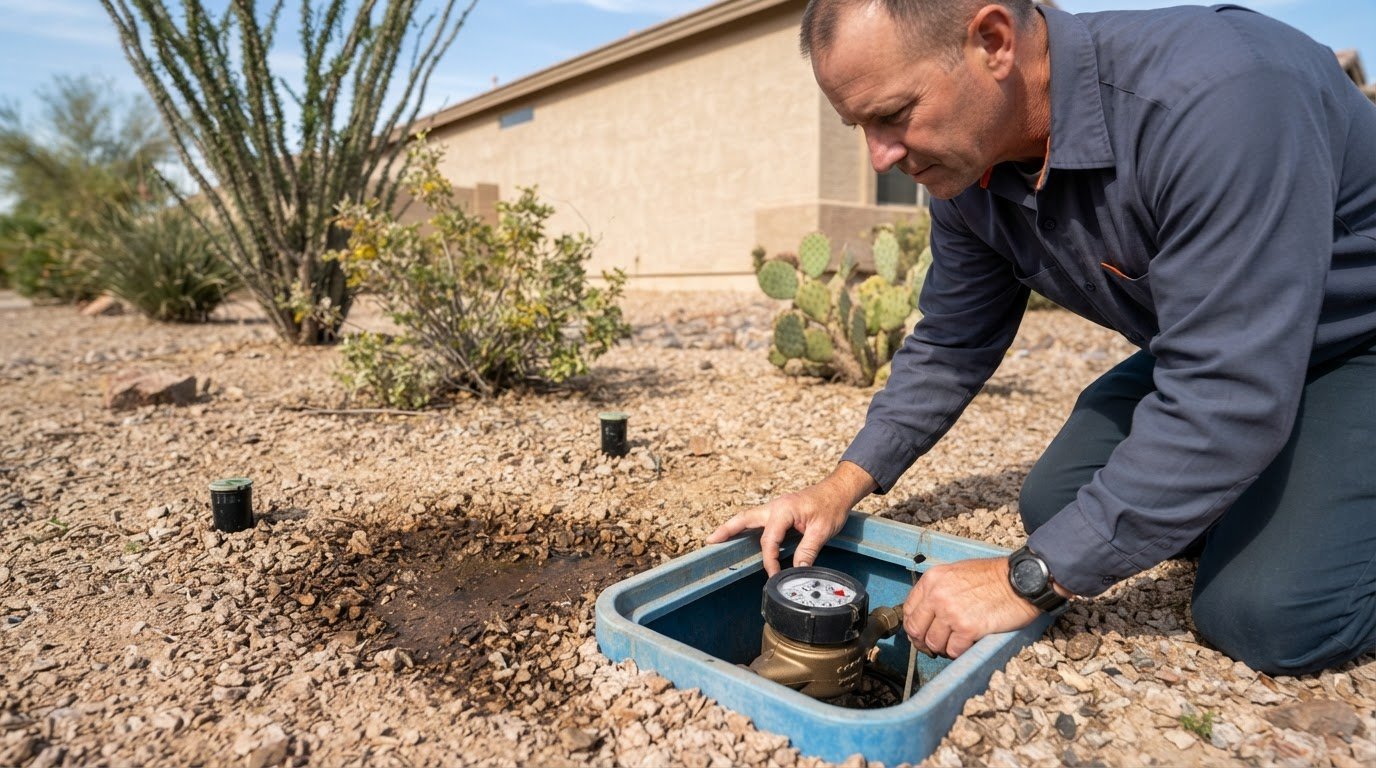
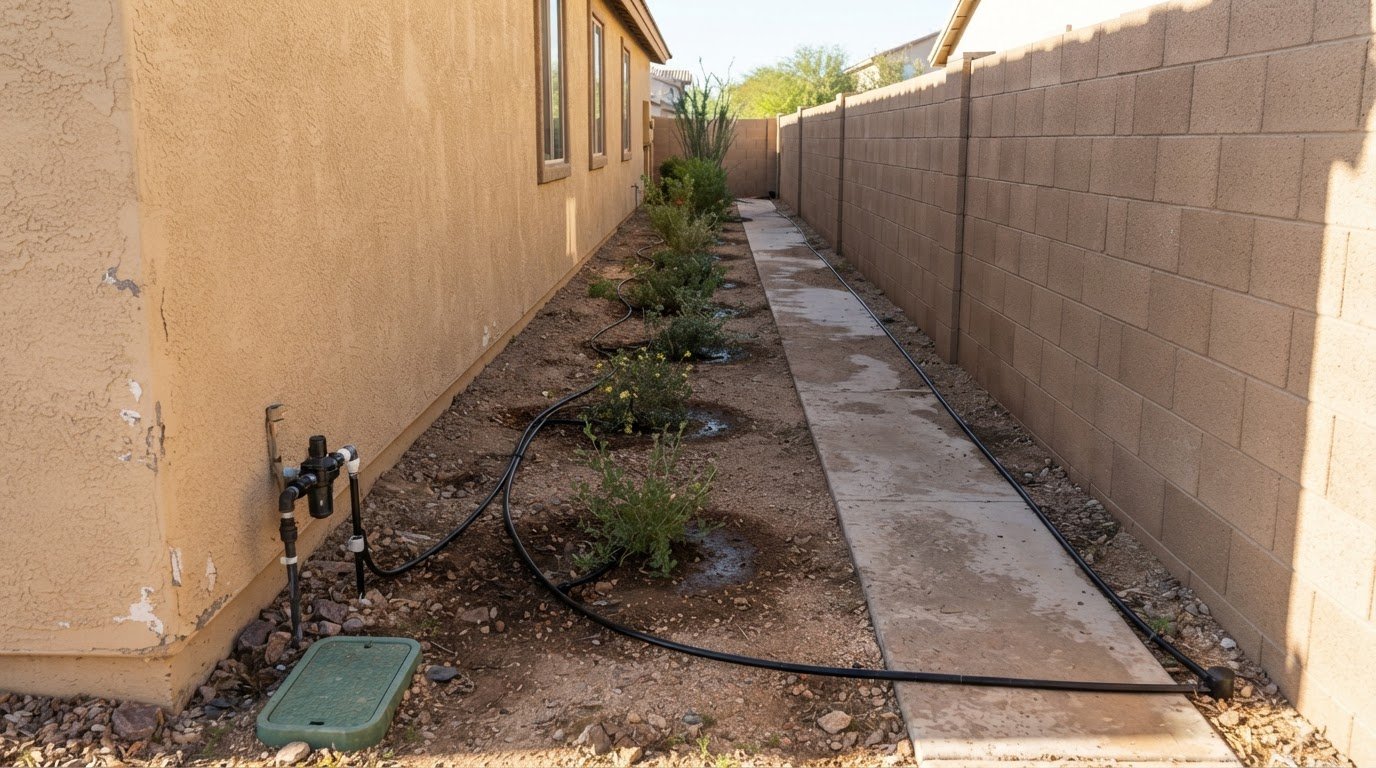
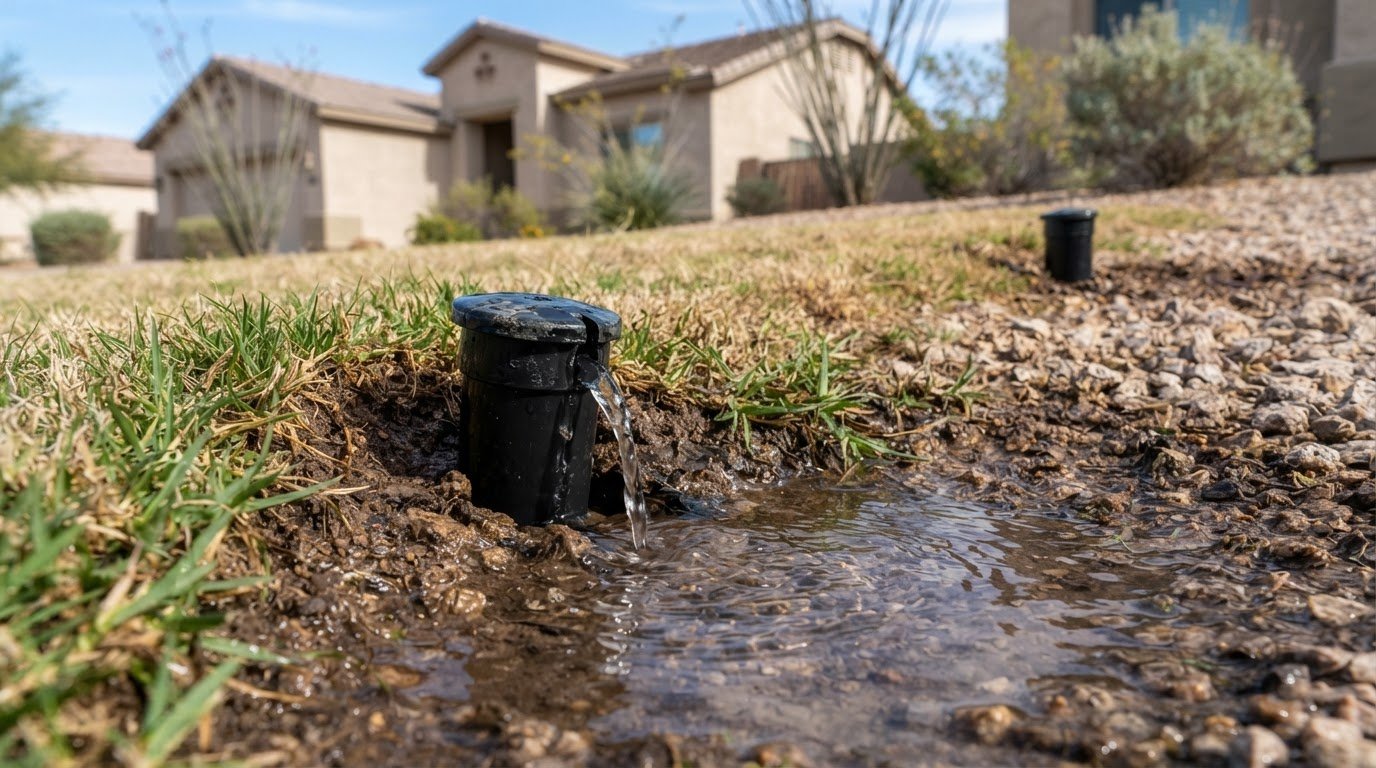
Some leaks aren’t obvious from the spray pattern. Check for persistently wet soil near a valve, water trickling from a head after the system stops, or an unusually lush patch of grass. These signs can indicate water escaping underground or through a valve. A zone that runs when the controller is off also needs prompt diagnosis and repair.
To narrow down the issue, observe each zone and note where water lands, then compare the controller schedule with the current season. If pavement stays wet, plants remain stressed, or water use rises without a landscape change, an irrigation repair assessment can identify the source and guide a targeted correction. Discuss an irrigation repair assessment when the cause isn’t clear.
3. Irrigation system inspections and adjustments
Watering rules and rebates vary by location, so schedules and program eligibility depend on the property. An inspection can also reveal whether the system follows its programmed schedule and responds properly to weather. A controller running during rain, for example, may indicate that a sensor or setting needs attention.
A useful inspection follows the system zone by zone. The technician runs each zone and checks whether all heads start, stop, and distribute water as intended. A zone that won’t start or stays on may have a controller, wiring, or solenoid issue. Repeated symptoms across zones can point to a broader electrical or control problem.
Valves and fittings deserve close attention because some leaks happen quietly. Water trickling from a sprinkler head after shutoff can indicate a leaking or weeping valve. A valve stuck partly open may allow unnecessary flow between cycles. Damaged fittings can also release water slowly, even when the spray pattern looks normal during operation.
An inspection should include the controller’s schedule and how it matches current watering needs. Temperature, rainfall, sunlight, soil, and plant growth all affect those needs. A spring schedule may not suit hotter conditions later in the season. A manual timer follows fixed settings, while a properly programmed smart controller can adjust to changing weather.
Adjustments should address the cause rather than extend every cycle. If one zone has weak flow, an inspection can look for a local obstruction, valve issue, wiring fault, or pressure concern. If one area receives too much water, its run time or distribution may need adjustment. Longer watering across the whole system can worsen excess moisture elsewhere.
Water bills can provide another signal, especially when use rises without a change in outdoor needs or the schedule. Compare the bill with recent controller settings and look for water flow outside scheduled cycles. A rain sensor or smart controller can help manage unnecessary watering, but the equipment and programming must work alongside reliable coverage.
The U.S. Department of Energy says smart irrigation controller systems could provide up to 38% water savings compared with older timer-based systems. That figure is a potential comparison, not a promised result for every property. During an inspection, the current controller, system components, landscape needs, and watering pattern help determine whether adjustments or repairs can address the observed inefficiency.
Applicable watering rules and rebate eligibility depend on the property’s location.
4. Misaligned, tilted, or improperly positioned sprinkler heads
A sprinkler head can shift after mowing, foot traffic, or weather, changing where its spray lands. A tilted head may send water into the nearby ground instead of across its intended arc. A head aimed toward a fence or sidewalk can leave part of the planted area short of coverage. These visible changes are a warning that the system’s physical components need attention.
Clogged, leaking, or misaligned sprinkler heads waste water by applying it unevenly or outside the planting areas. A clogged nozzle can weaken or distort the spray; a leak releases water at the head or fitting. A misaligned head directs water onto pavement or away from plants, leaving the intended soil with less water.
Look at each head during operation, noting its angle, height, and spray pattern. A pop-up head should rise clear of surrounding soil and plants; a buried or obstructed head can’t distribute water as designed. Check whether the spray reaches the intended area and whether nearby heads cover the gaps. This can help distinguish a positioning issue from a failing part.
Watch for changes near lawn edges, where mower wheels can strike exposed heads. Foot traffic can tilt a head, while shifting soil can leave it leaning or partly buried. For example, a head aimed toward a walkway may keep the concrete wet while a narrow strip of grass stays dry. Correcting its direction or position can restore coverage without extending the zone’s run time.
Not every irregular spray means the head needs repositioning. Debris, worn components, or unstable pressure can also change its reach and pattern. If several heads in one zone spray poorly, the issue may involve the zone rather than a single nozzle. A valve or pressure concern can affect multiple heads, so repeated symptoms call for a broader system assessment.
Controllers and smart irrigation equipment manage schedules, but they can’t straighten a tilted head or clear a blocked nozzle. A well-timed program may still waste water if a head points away from the planting area. Likewise, replacing a nozzle won’t correct a head installed too close to a wall or positioned where plants now block its spray.
When several heads have shifted, or planting areas have changed since installation, the spacing and layout may need review. A targeted sprinkler repair can address damaged or failing components; a broader redesign may suit coverage that no longer matches the property. The key is to correct the cause at the head, zone, or layout level, rather than compensate with unnecessary watering.
5. What do soggy spots, runoff, or erosion indicate about an irrigation system?
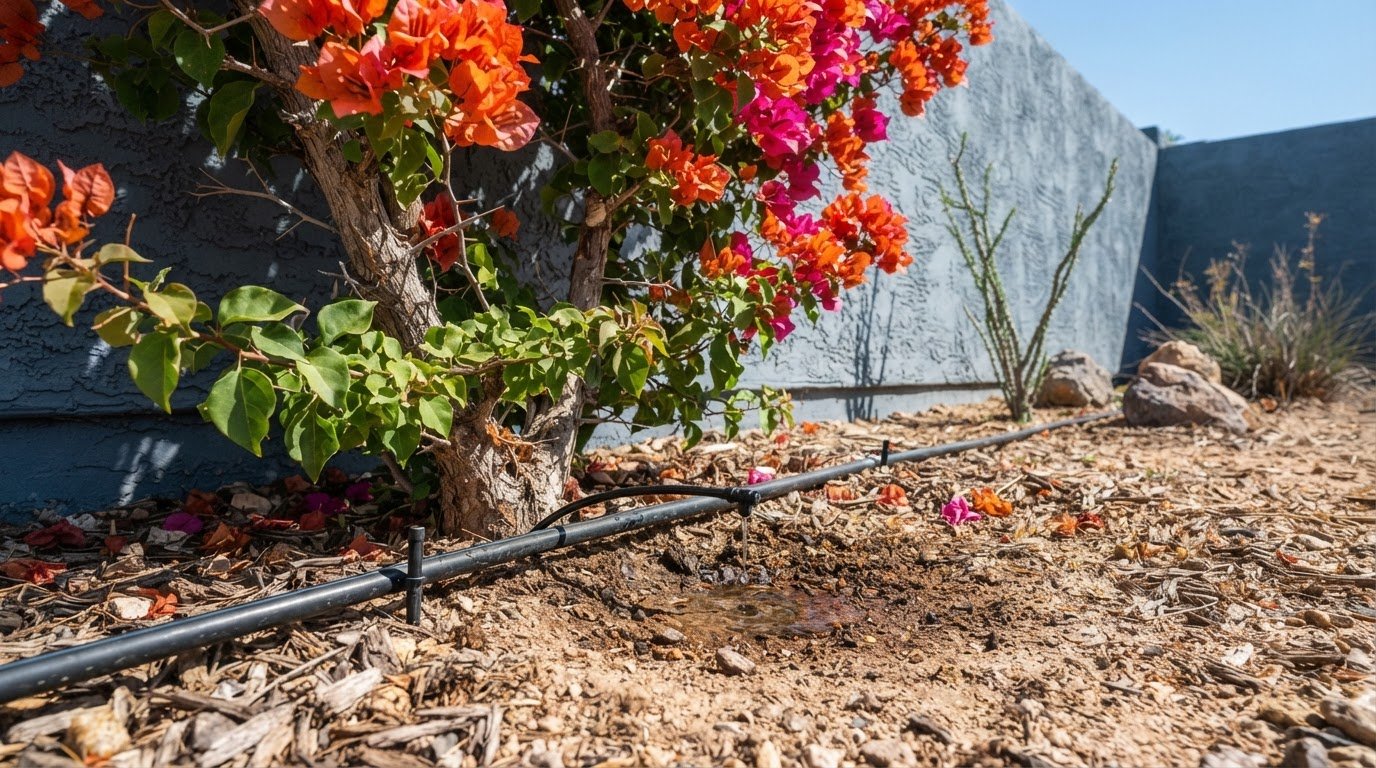
A puddle that remains after a zone finishes can signal a leak, faulty valve, or excess watering. Its location offers a useful clue: water pooling beside a sidewalk differs from flooding between sprinkler heads. Note whether the wet area appears during irrigation, after shutoff, or while the system is idle. That timing helps distinguish runoff from water escaping a pipe or valve.
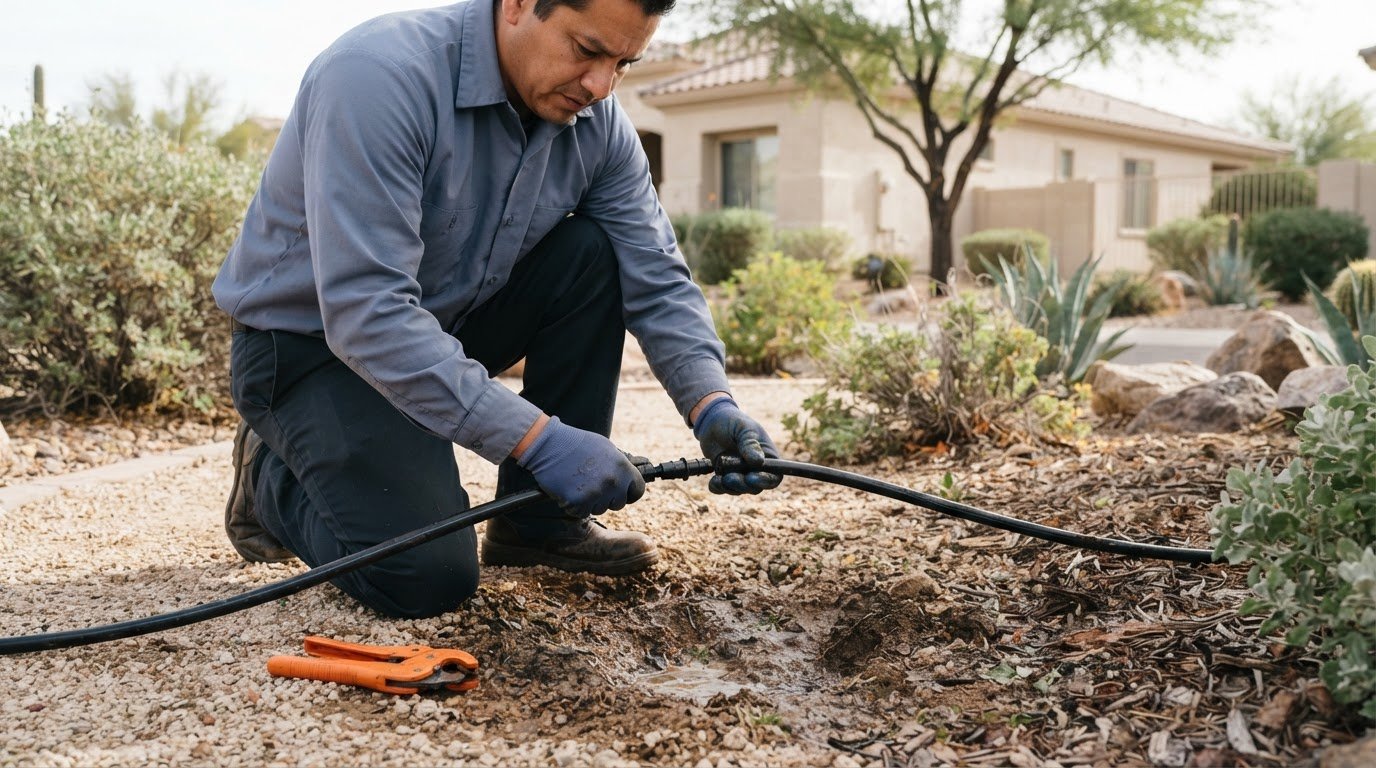
Look closely at the ground between heads. Flooding there can point to a slow leak in an underground lateral line, while water spurting between heads can indicate a broken line. A persistently wet patch near one sprinkler may also come from a damaged fitting. If the soil stays saturated after the cycle ends, shortening another zone may not stop the source.
Runoff shows that water is moving away before the soil can absorb it. For example, water flowing across a sloped lawn and over a curb may reflect excessive application, poor drainage, or a damaged head. Repeated runoff can carry soil downhill and leave exposed roots or shallow channels. The affected route can reveal where water starts and how it travels.
Changes in nearby plants can reveal hidden leaks. Taller or darker grass around a sprinkler head may indicate a cracked underground pipe saturating the area. A fan-shaped deposit of sediment on a sidewalk can also accompany a broken head. These signs are especially useful when the damaged section is underground and no pipe is visible.
Check whether a puddle appears after the same zone runs each time. If wetness develops during one zone, the issue may involve its lateral line, valve, or heads. If water keeps trickling after shutoff, a valve may be allowing flow when the system should be off. Water near a driveway can also signal a system problem, though drainage and surface slope affect where it collects.
Soil erosion is more than a cosmetic concern. Ongoing runoff can move sediment onto paths and gradually expose roots or pipe sections. A technician can trace the wet area, inspect the relevant line and valve, and determine whether irrigation repair or a schedule adjustment is needed. The right fix depends on whether water is leaking, pooling, or running off faster than the ground can absorb it.
Keep track of where water appears and which zone was operating; those details help narrow the diagnosis. Persistent puddles, spurting water, or a new sediment fan call for a closer system assessment. Request an irrigation system assessment to identify the source and address the underlying problem.
Sonora Sprinkler: Custom Sprinkler System Design
Sonora Sprinkler Inc. provides Custom Sprinkler System Design when recurring dry spots, overspray, or changed planting areas point to a layout that no longer fits. A custom design can address coverage needs; isolated leaks or damaged components may call for Irrigation Repair instead.
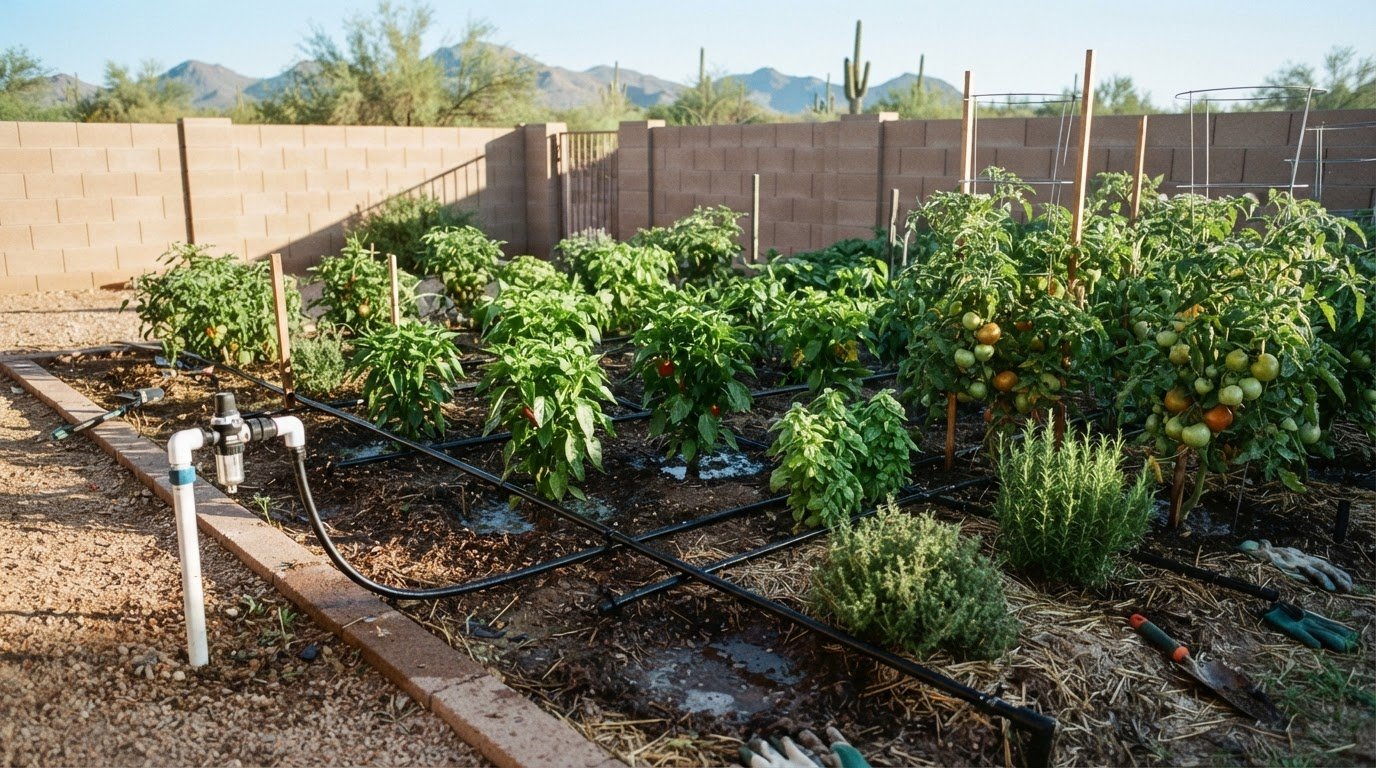
For systems that need a broader change, custom sprinkler design and installation can provide a path suited to the landscape. Drip Irrigation Installation may also fit planting areas that need a different delivery method. The right next step depends on whether the problem lies in the layout, a component, or the system’s condition.
Contact Sonora Sprinkler Inc. to discuss the irrigation concerns on your property.
Keep Your Irrigation System Working With Your Landscape
Recognizing signs that your irrigation system is inefficient gives you a chance to address water waste before it becomes a recurring problem. The next step is to match the remedy to the system’s condition: a focused repair may resolve a component failure, while a new installation or drip system may better suit changing property needs.
Sonora Sprinkler Inc. provides Irrigation Repair, Irrigation Installation, and Drip Irrigation Installation for homeowners in Surprise and Peoria. An assessment can help determine which approach fits your irrigation concerns and how to maintain more consistent watering across the property.
Contact Sonora Sprinkler Inc. today to discuss the next step for your system. A considered adjustment can help protect your landscape and make each watering cycle work more effectively.
Frequently Asked Questions
How Do I Know if My Irrigation System Is Efficient?
An efficient system delivers water where plants need it without persistent runoff or unexplained use. Check whether the controller’s schedule reflects current weather and whether each zone serves areas with similar watering needs. In Surprise and Peoria, changing desert conditions can affect how quickly soil dries. Consistent plant health, predictable operation, and no unexplained water use are useful indicators, though they don’t replace an inspection when problems persist.
What Causes These Inefficiencies?
Inefficiency can stem from worn parts, leaks, poor zone design, or outdated controller settings. For example, a valve that doesn’t close fully can allow water through between cycles, while a wiring fault may prevent a zone from operating as programmed. Changes to the property can also make the original layout unsuitable. Identifying whether the issue is mechanical, electrical, or schedule-related helps determine the right adjustment or repair.
What are common signs an irrigation system is inefficient?
Common warning signs include water use that rises without a clear reason, zones that fail to start or stop on schedule, and plants that decline despite regular watering. A controller display that doesn’t match system operation may point to a timer or wiring issue. In Surprise and Peoria, note whether problems recur as watering-season conditions change. A pattern across several zones can indicate a system-wide issue.
How can uneven watering reveal irrigation problems?
Compare plant condition within the same zone and note whether similar plants receive noticeably different moisture. If one section repeatedly needs attention while another thrives under the same schedule, the zone may not suit both areas. Differences in sun exposure, soil, and plant maturity can also affect water needs. Separating areas with different requirements can help avoid treating the entire zone as if conditions were identical.
How can unusually high water bills signal irrigation inefficiency?
A higher bill can indicate irrigation use has changed, particularly if household habits and outdoor needs stayed similar. Compare usage across billing periods and consider whether the controller’s schedule changed or a watering season began. A bill increase alone doesn’t identify the fault, but it helps establish when the change started. Pair that timing with system behavior to narrow down a possible leak, valve, or programming issue.
How can irrigation leaks be detected and measured?
Look for continuing water movement when irrigation is off, damp soil near system components, or a change in water pressure. To check for possible flow, note the water meter reading when household and irrigation use are stopped, then compare it after a period without water use. Movement may indicate a leak, but other water use can affect the reading. A technician can isolate the irrigation system and diagnose the source.
How do you check whether sprinkler coverage is uniform?
Run one zone and compare the water reaching several points across its area. Catch containers placed at different locations can show whether some spots receive noticeably more water than others. Keep the containers at similar heights and compare the collected water after the cycle. Large differences can point to a coverage or equipment issue. This comparison can guide an adjustment, though it won’t identify every underground fault.
What are the best ways to improve irrigation efficiency?
Start by matching each zone’s schedule to its plants, soil, and exposure, then address malfunctioning components. An inspection before each watering season can help identify wear or programming problems; Sonora Sprinkler recommends bi-annual inspections. For homeowners in Surprise and Peoria, Irrigation Repair, system installation, or drip irrigation may suit different needs. The best improvement depends on whether the cause is a fault, layout, or watering schedule. Contact Sonora Sprinkler Inc. to arrange an irrigation assessment.