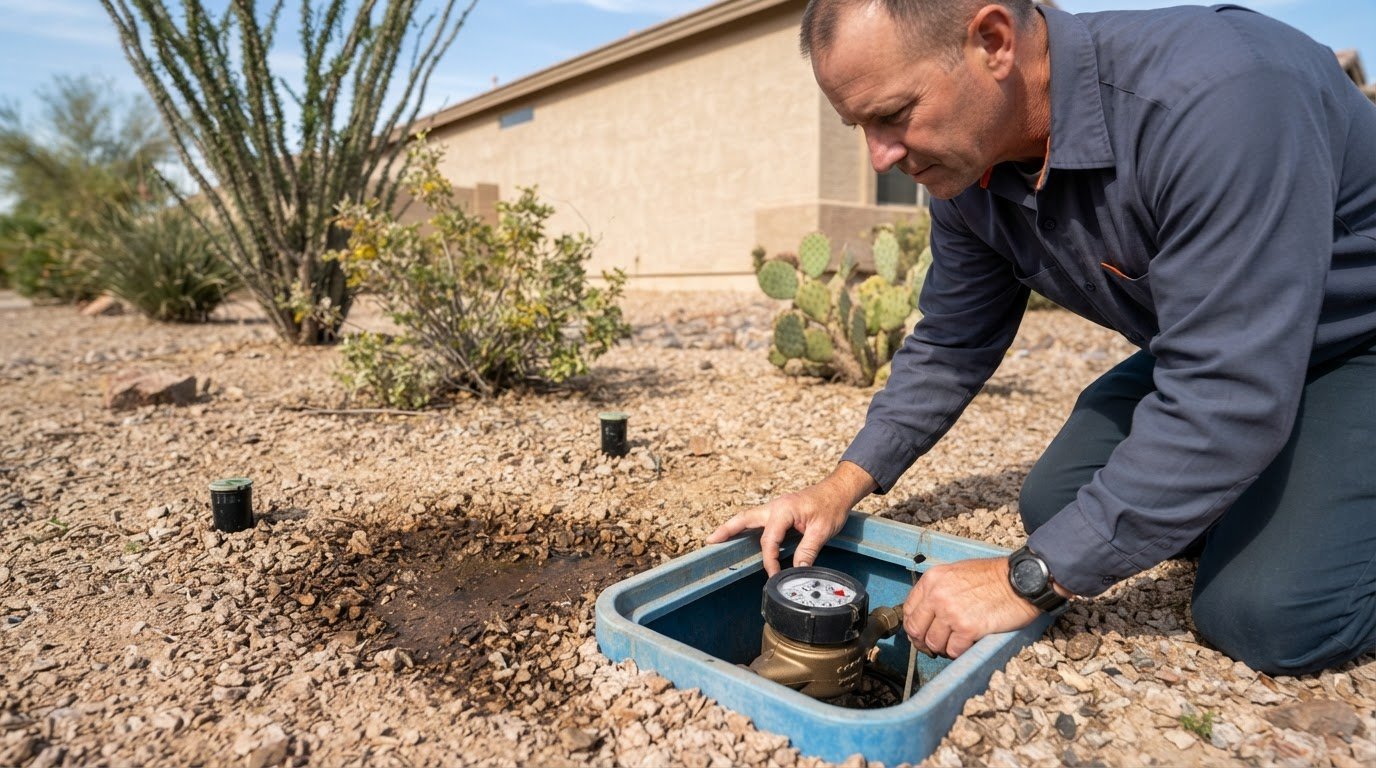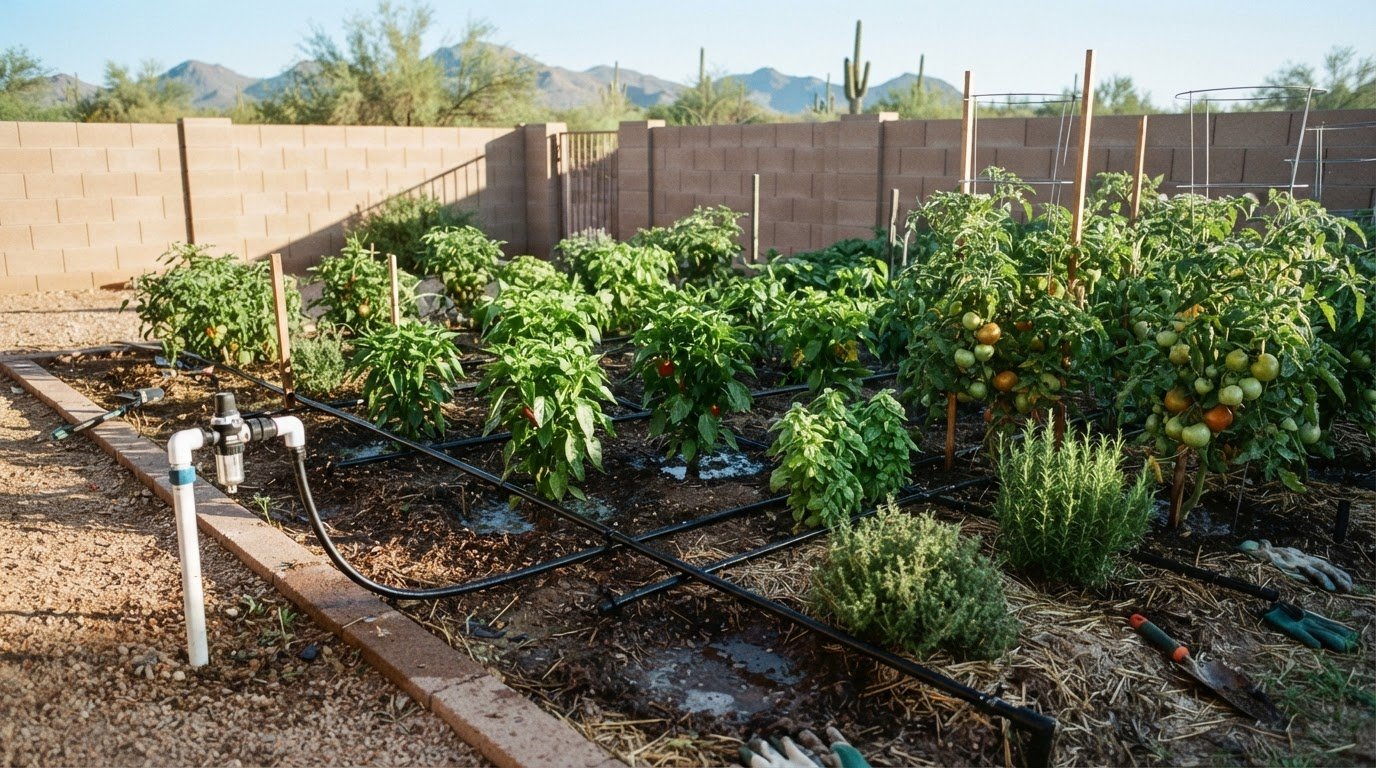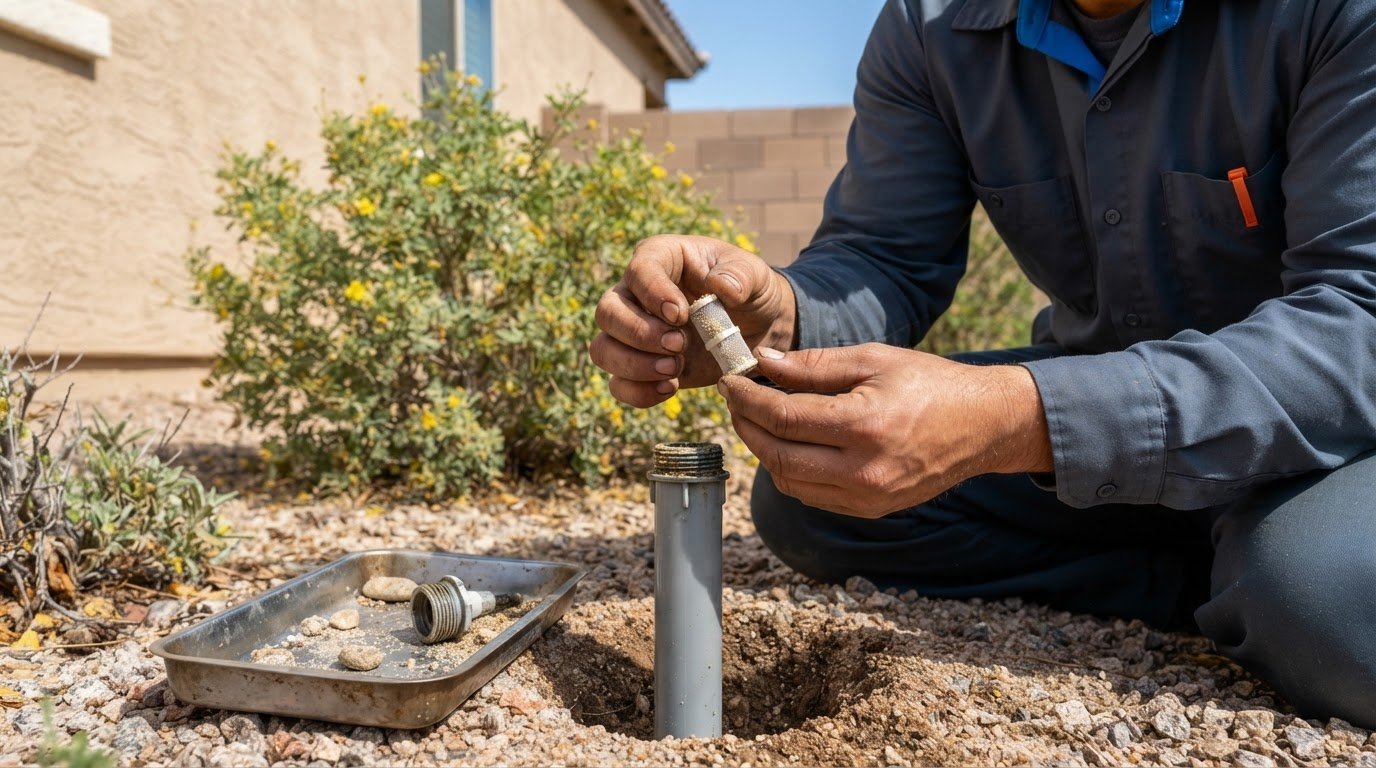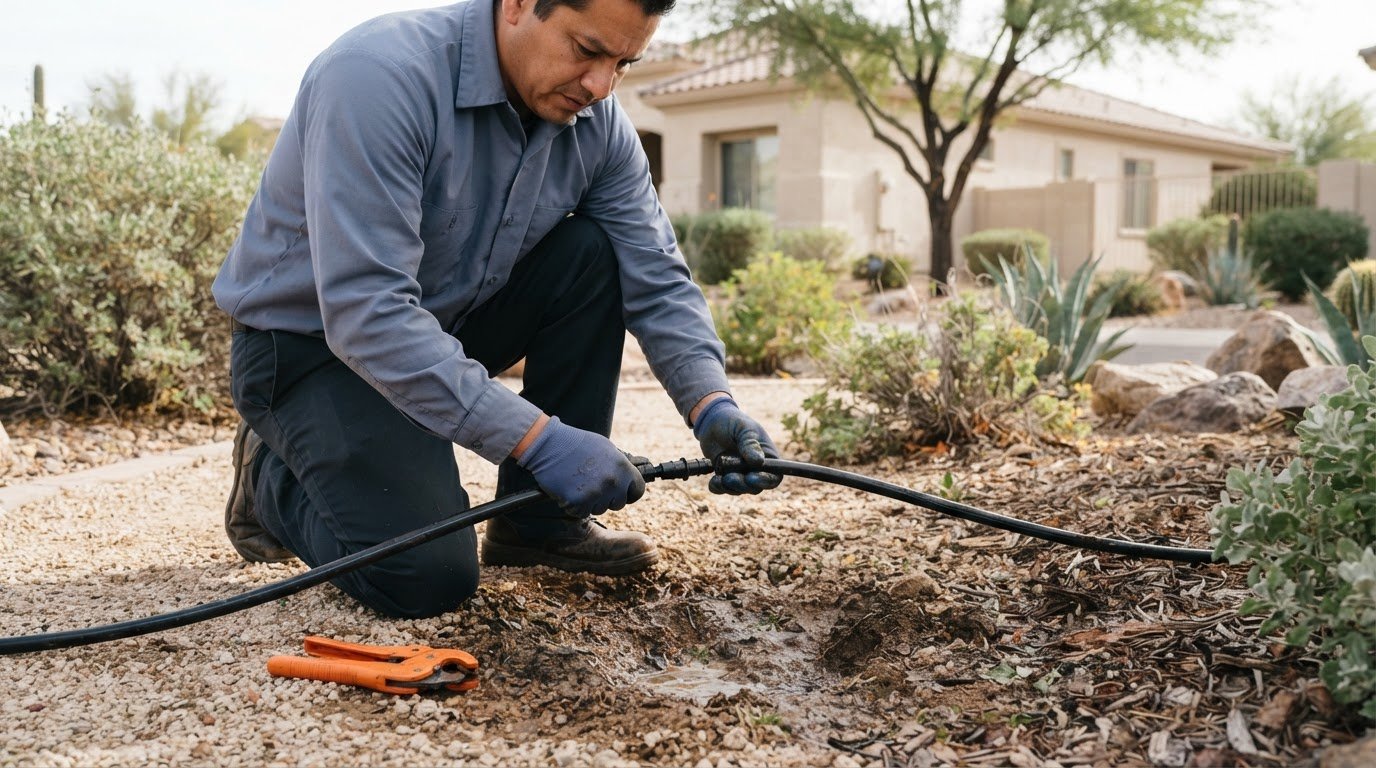
A single valve can control water entering the entire sprinkler system, not just one area of the yard. To understand what a master valve on a sprinkler system does, look at how it works with the controller: it opens when watering starts and closes when the cycle ends, shutting off the supply to the irrigation mainline between cycles. This can help limit continuous water loss from a downstream leak or faulty zone valve.
It’s easy to mistake a master valve for an ordinary zone valve because both are part of an irrigation system. The difference is what each controls: the master valve serves the system as a whole, while zone valves direct water to individual areas.
This guide explains where a master valve is typically installed, how it differs from zone valves, and what clues can help you identify one. You’ll also learn why some systems don’t have one and when a valve or wiring issue may call for irrigation repair or diagnostics.
Key Takeaways
- Locate the valve near the water supply and upstream of the branches feeding individual zones.
- Use the controller’s master-valve or pump-start terminal labels as one clue when identifying the system’s wiring.
- Distinguish system-wide water control from a zone valve’s control of a single irrigation area.
- A master valve can limit water loss between cycles, but it can’t stop a leak in the mainline while it’s open.
- Not every sprinkler system needs a master valve; the system’s layout and water-management needs help determine whether one is useful.
1. What Is an Irrigation Master Valve and How Does It Work?
A master valve on a sprinkler system is an electrically operated valve on the mainline supplying the system. It follows the controller’s watering schedule: it opens when irrigation starts and closes when the cycle ends. This cuts off the downstream mainline between cycles, helping limit ongoing water loss from a faulty zone valve or a leak beyond the master valve.
The controller coordinates the master valve with the selected zone valve. When a scheduled zone starts, the controller activates both circuits, allowing water to reach that zone. When the zone finishes, its valve closes; when the watering cycle ends, the master valve closes too. The master valve controls the system’s shared supply, while the zone valve directs water to one area.
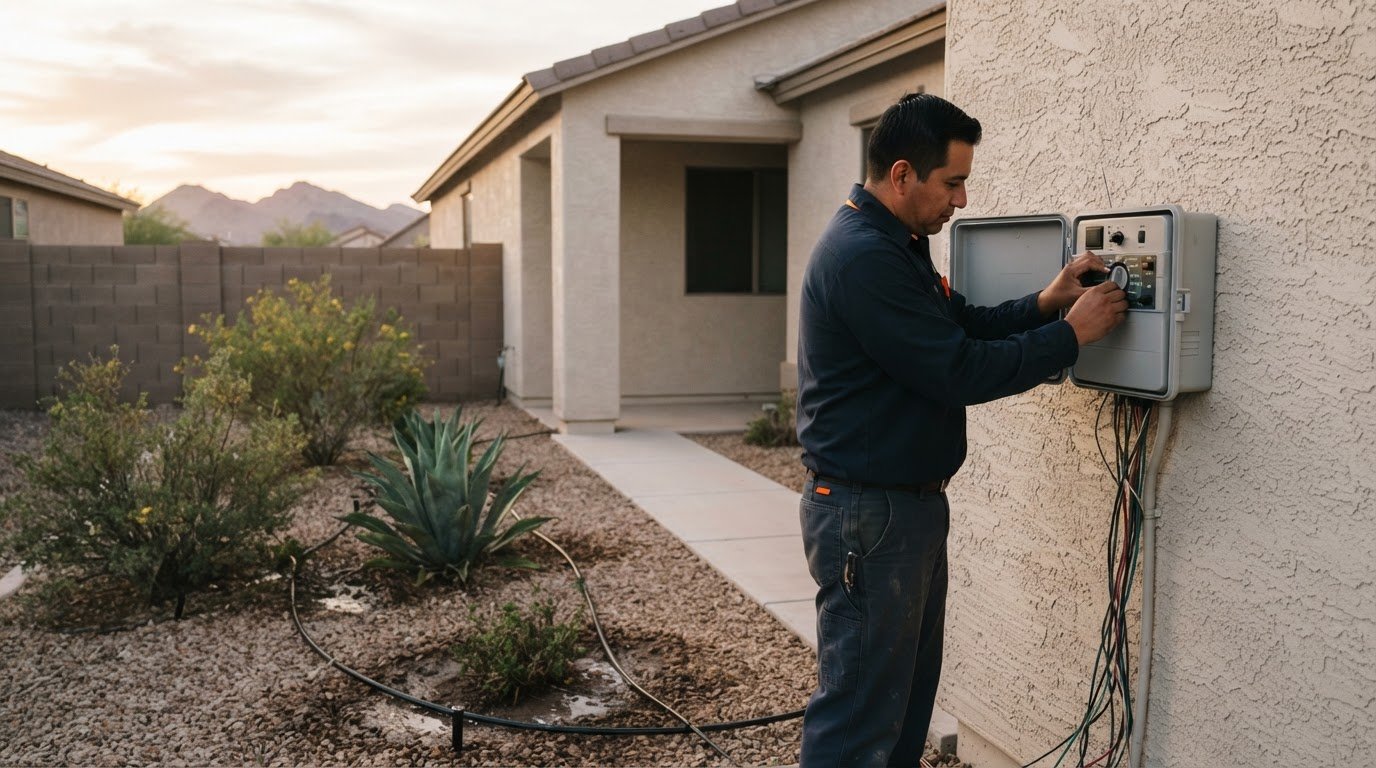
Many automatic controllers have a dedicated master-valve or pump-start terminal, labeled M, MV, or PUMP. Most residential irrigation controllers use 24-volt AC valve solenoids. A standard master valve typically uses two electrical wires: one connects to the controller’s master-valve terminal, and the other connects to the common terminal. The controller’s schedule and wiring therefore need to match the valve’s intended operation.
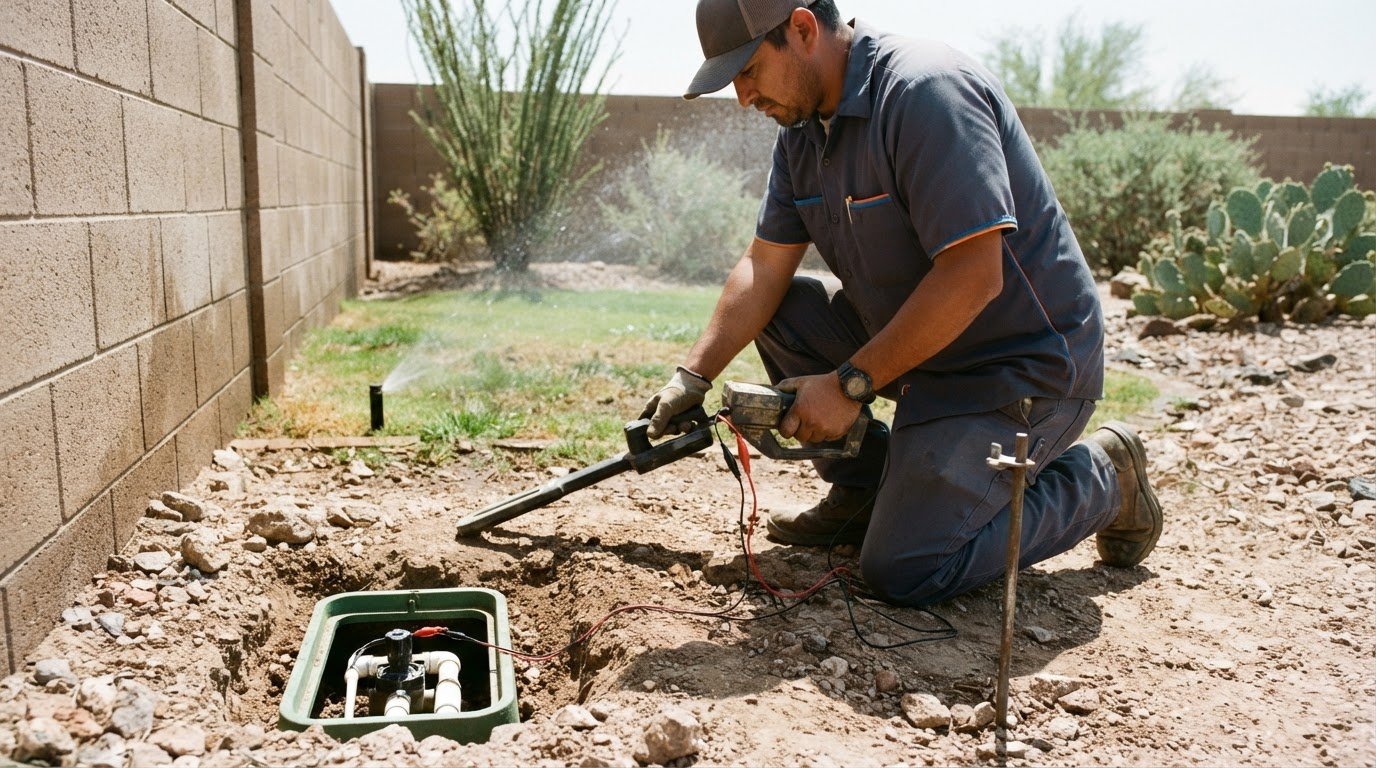
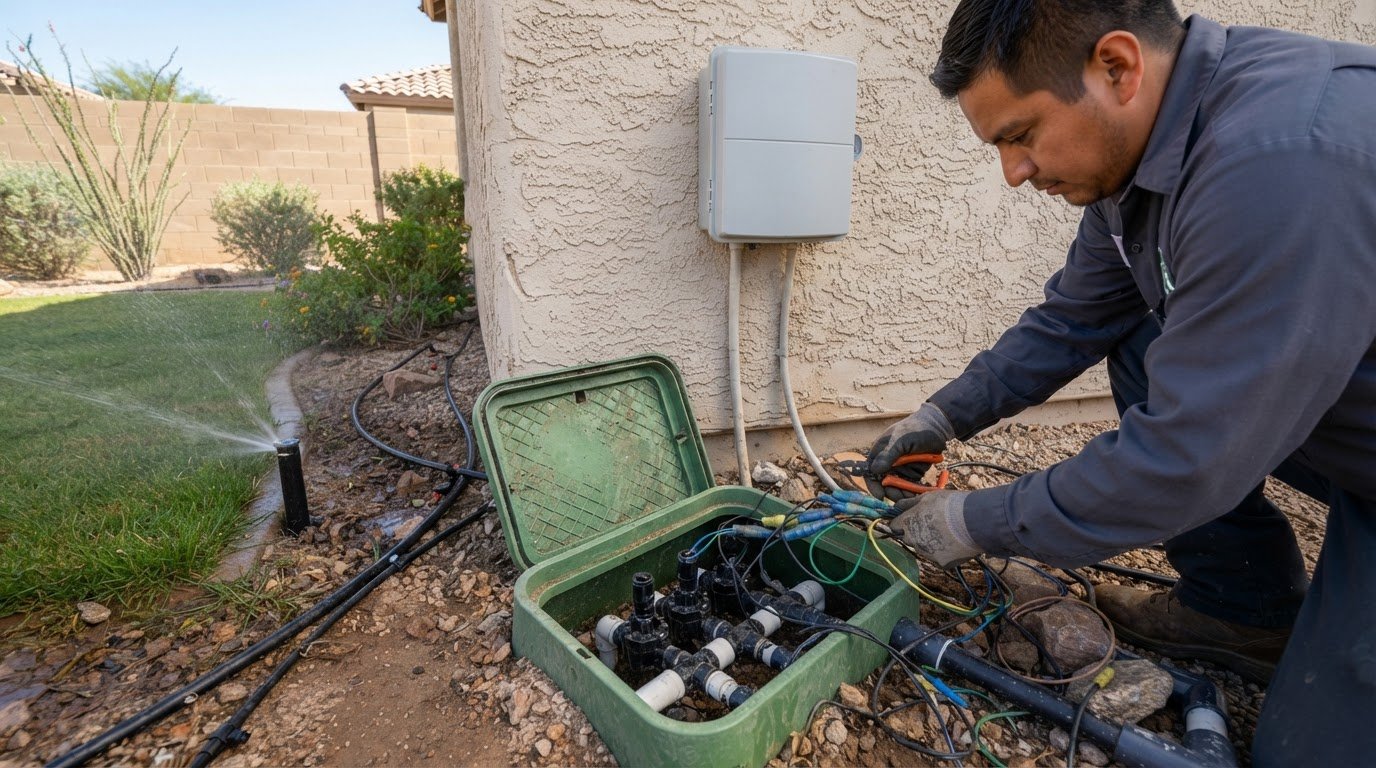
During diagnosis, a useful first step is to compare controller activity with water flow. If a zone is scheduled but receives no water, the master valve may not be opening, or its wiring may not be completing the circuit. If water continues beyond the scheduled cycle, the valve may not be closing, or a downstream zone valve may be stuck open. Wiring faults can also prevent the controller signal from reaching the solenoid. Irrigation wiring and diagnostics can help identify whether the problem is electrical or valve-related.
Are master valves required by plumbing codes or local regulations? Not every sprinkler system needs a master valve. That design fact doesn’t determine whether a particular plumbing code or local rule applies, and having a master valve doesn’t establish code compliance.
How much does a sprinkler system master valve cost to buy and install? The cost depends on the valve, system flow and pressure, wiring, and any piping changes required. Installation pricing is provided after a quote request.
What are common master valve problems and symptoms? If a valve fails to open, scheduled zones may not receive water. If it fails to close, water may keep flowing after irrigation ends. A faulty solenoid or wiring connection can also interrupt operation, so diagnosis should distinguish an electrical issue from a mechanical valve problem.
2. Master valve placement upstream of the zone valves
A master valve sits on the irrigation system’s mainline, before the pipe branches toward individual zones. This placement lets it control the supply to all downstream sprinkler zones. In a typical layout, water flows from the meter through the backflow prevention device, then the master valve, followed by the mainline and its zone branches. The master valve is upstream of every zone valve it serves.
The master valve is usually positioned just after the backflow prevention device. The backflow device protects the water supply from backflow; the master valve controls water entering the irrigation mainline. They have separate jobs, so one cannot replace the other. The master valve is typically downstream of the meter and backflow device, but upstream of the mainline branches.
To understand the layout, trace the pipe from the water source toward the sprinklers. First, identify the backflow device. Then follow the irrigation pipe leaving it: if there’s a master valve, it should be on that route before the pipe divides into separate zones. For example, if the mainline branches toward front-yard and backyard valves, the master valve generally sits before those branches.
Placement matters: a valve on only one zone branch controls that zone, not the entire system. A master valve belongs on the shared supply line, before the zone valves. This allows it to stop water feeding the downstream system between watering cycles. It cannot stop water escaping from a section of mainline upstream of the valve.
Access and pipe routing can affect where the valve fits, but the functional order remains the same: backflow device, master valve, mainline, then zone branches. Check the valve’s flow-direction markings too. Installing it backward can interfere with proper operation, so the marked direction must match the flow from the supply toward the zones. The valve should also suit the system’s flow and pressure.
During installation or troubleshooting, trace the water path to distinguish components. A valve near the source, before several branches, may be the master valve. A valve farther along a branch serves a particular zone. If several pipes or buried fittings make the layout unclear, tracing the mainline can confirm which valve controls the shared supply.
For a system where valve location or backflow connections are unclear, ask about valve and backflow service to help assess the arrangement and the work needed.
3. Differences between master valves and zone valves
A master valve and a zone valve both regulate irrigation water, but they control different parts of the system. The master valve controls the shared supply to the sprinkler network. A zone valve controls flow to one irrigation area, such as front-yard spray heads or backyard drip lines. Their positions and roles explain why the valves aren’t interchangeable.
Consider a system with separate front-yard and backyard zones. The master valve controls water entering the mainline that feeds both areas. The front-yard zone valve opens only when the controller runs that zone; for backyard watering, the controller opens the backyard valve instead. The master valve works with either zone, while each zone valve responds to its assigned area.
The controller’s operation also distinguishes the two valves. During a watering cycle, it can activate the master valve alongside the selected zone valve. The zone valve determines which section receives water; the master valve controls whether the shared supply is available. If the controller runs zones at separate times, each zone valve opens for its assigned cycle, while the master valve serves the system during active watering.
Fault symptoms can help narrow down which valve needs attention. If one zone stays dry while others operate, that zone’s valve or wiring may be involved. If every zone lacks water during a scheduled cycle, the master valve or its control circuit may be a factor. If water continues after irrigation ends, a zone valve may be stuck open or the master valve may not be closing.
A master valve can limit ongoing water loss from a downstream zone valve that doesn’t close properly. When the master valve closes between cycles, it cuts off the supply to that downstream section. It can’t stop a mainline leak while it’s open. A zone valve has a narrower role: it controls flow to its own area and can’t shut off the rest of the system.
For diagnosis, start with the scope of the symptom: does it affect one irrigation area or the whole system? A single-zone problem points toward that zone’s valve, wiring, or downstream pipe. A system-wide problem calls for checking shared components, including the master valve. Sonora Sprinkler’s valve and backflow services address valve-related problems that need inspection or repair.
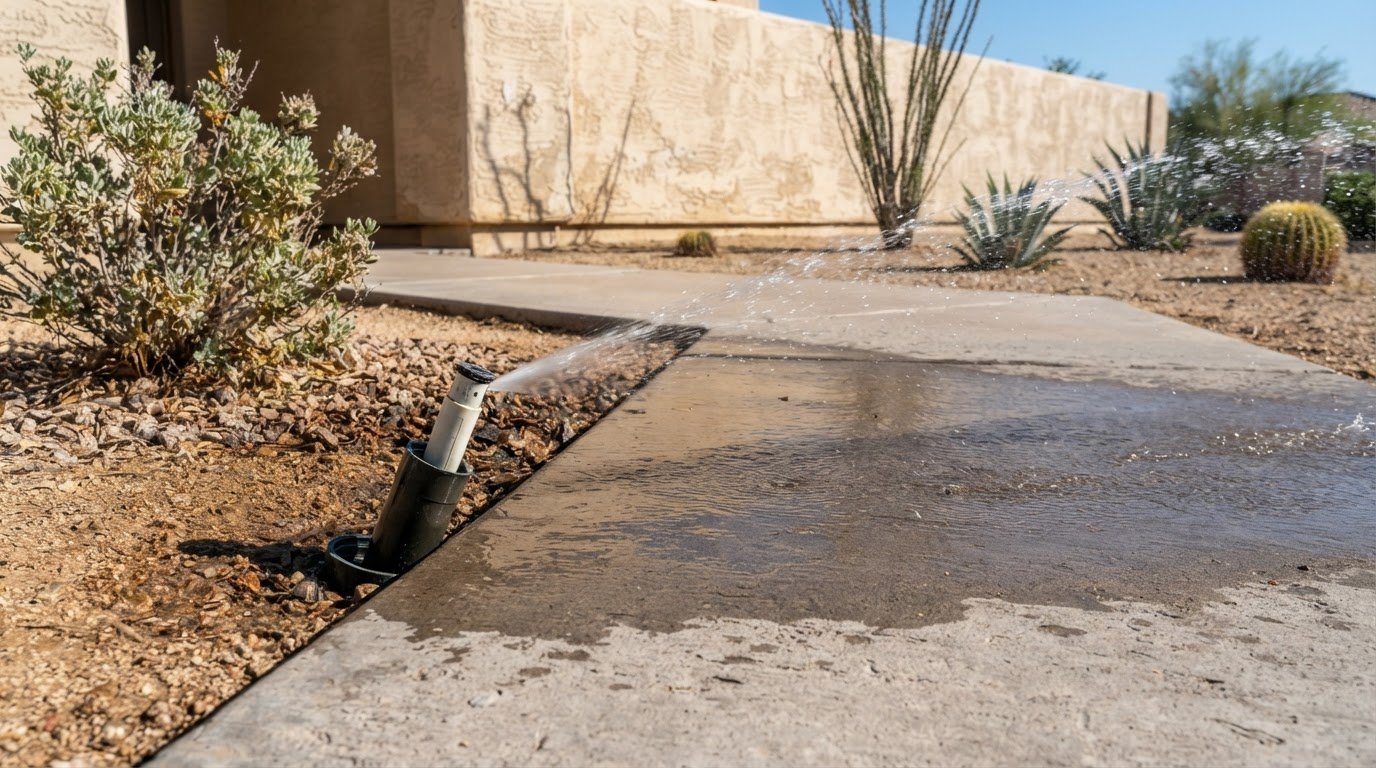
Without a master valve, the sprinkler system’s mainline remains pressurized continuously. Leaks from failed zone valves, cracked pipes, or loose underground fittings can therefore continue between watering cycles and go unnoticed.
4. Identifying whether a system already has a master valve
Start at the irrigation controller and compare its terminals with the installed wiring. Look for a dedicated terminal labeled M, MV, or PUMP. These labels may indicate master-valve or pump-start control, but a label alone doesn’t prove a valve is installed. The terminal may be unused, or its wire may lead to another component.
Next, trace the irrigation wiring from the controller toward the valve area. A standard master valve uses two wires: one connects to the master-valve terminal and the other to the common terminal. Find where those wires meet a valve on the shared irrigation mainline. A wire connected to M or MV and paired with a valve before the zone branches is stronger evidence than the controller label alone.
The pipe layout offers a separate clue. Follow the supply from the water meter through the backflow prevention device toward the zone branches. A master valve is typically installed on this shared route, before the water divides among individual zones. A valve on one branch is more likely to control that zone rather than the whole system.
Controller labels vary, so consider the label, wiring, and pipe route together. For example, an MV terminal with a connected wire doesn’t establish the valve’s location. If the wire reaches a valve on the mainline before several zone pipes branch off, that supports its role as a master valve. If the wire ends at a pump, the PUMP label alone doesn’t identify a master valve.
Operation provides another clue. During a scheduled watering cycle, observe whether the shared supply becomes active along with the selected zone. When the cycle ends, a functioning master valve should close and stop flow beyond it. This can help distinguish a system-wide control valve from a zone valve, which affects only its own irrigation area.
Symptoms add context, but don’t identify a valve by themselves. If every zone lacks water during a scheduled cycle, the master valve or its control circuit may be involved. If only one area fails, that zone’s valve or wiring may be the cause. A pipe map, controller labels, wire connections, and valve locations together give a clearer picture than any single clue.
Buried valves, altered wiring, or unclear pipe routes can make identification difficult. Sonora Sprinkler’s custom sprinkler system design can help document the system layout and show where a master valve fits.
5. Does every sprinkler system need a master valve?
No. Not every sprinkler system needs a master valve, and its absence doesn’t automatically mean the system is faulty. The decision depends on the layout, water-management priorities, and whether shutting off the shared irrigation supply between cycles would address a specific concern. Limiting ongoing water loss may justify adding one to some systems; others can operate appropriately without it.
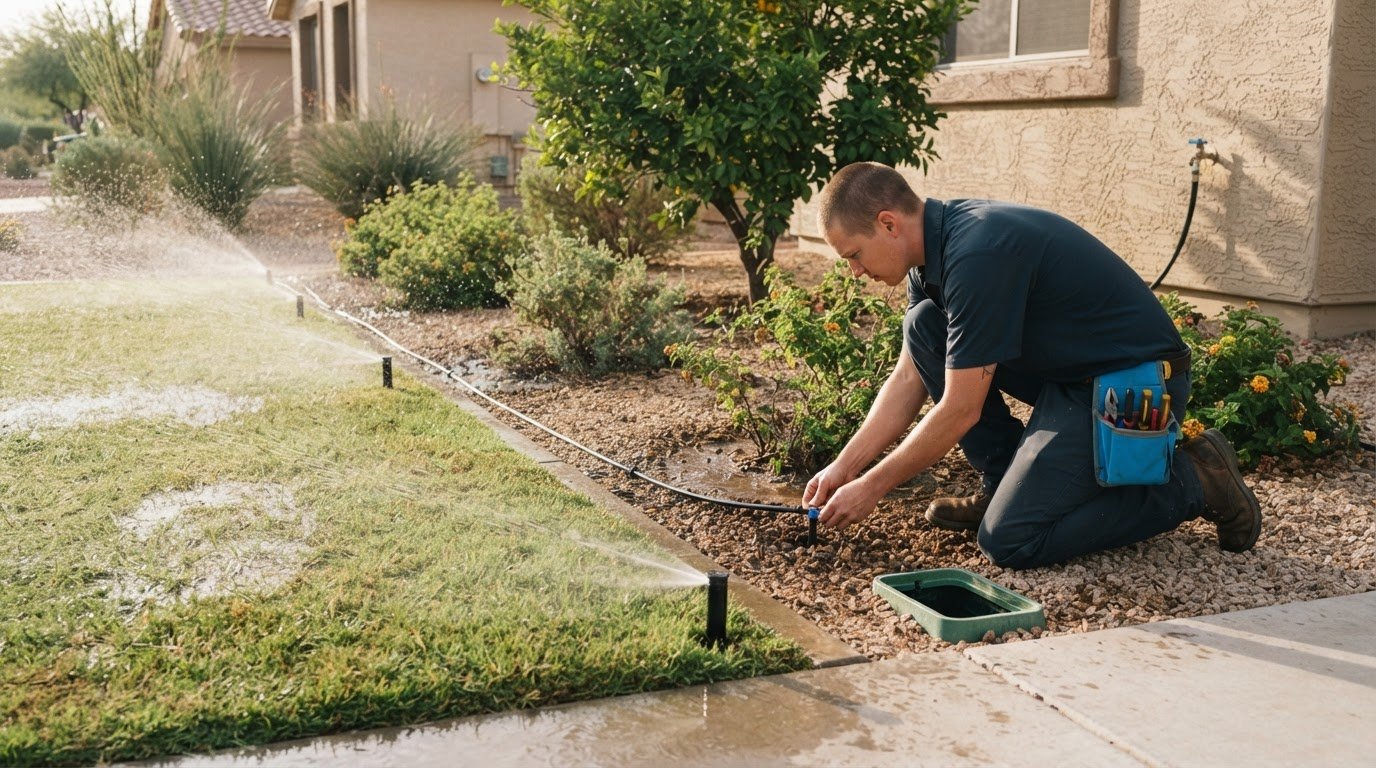
Consider what happens if a downstream zone valve sticks open. Without a master valve, the pressurized mainline can keep supplying water, potentially allowing a leak or unintended flow to go unnoticed between scheduled cycles. A master valve can shut off that downstream supply when irrigation ends. It can’t stop a mainline leak while open.
The potential water loss can be substantial. According to the U.S. Environmental Protection Agency’s WaterSense program, an irrigation leak as small as 1/32 of an inch can waste up to 6,300 gallons of water per month. That figure doesn’t mean every property needs a master valve. It illustrates why the consequences of an unnoticed downstream leak may matter when evaluating a system’s design.
Start by considering the system’s existing components. If zone valves, buried pipe, or wiring already have recurring problems, adding a master valve may help limit water flow after a cycle. If the concern is a mainline leak, a master valve won’t stop it while water is flowing. The fault’s location matters as much as whether a master valve is present.
Compatibility matters too. Select a master valve for the system’s flow and pressure, install it in the marked flow direction, and connect it to controller wiring that operates during scheduled watering. If a battery-operated controller is used, it should match the existing watering schedule, and its battery life should be checked routinely. These details affect whether the added control works as intended.
For a system with persistent downstream leakage, recurring valve trouble, or an unclear layout, an assessment can clarify whether a master valve addresses the actual issue. The decision should distinguish between downstream flow that the valve can shut off and upstream or mainline leaks it cannot stop while open. Discuss master valve options for your sprinkler system when you’re weighing a design change or upgrade.
Sonora Sprinkler Inc.: Custom Sprinkler System Design
Sonora Sprinkler Inc. can help when you’re planning an irrigation layout, adding a master valve, or diagnosing a valve issue in Surprise, Peoria, and surrounding Arizona communities. With custom sprinkler system design, the mainline, zone branches, controller, and valve placement can be considered together, rather than treating the master valve as an isolated component.
If your setup has unclear wiring, a suspected valve fault, or backflow concerns, Sonora Sprinkler’s valve and backflow services or irrigation repair can address the system’s needs. For a new layout or broader changes, irrigation installation can help plan the system around your property and watering requirements.
Contact Sonora Sprinkler Inc. to discuss your sprinkler system.
Make Your Next Irrigation Decision With Confidence
Understanding what a master valve on a sprinkler system can and cannot control helps you decide what to investigate next. Before changing the setup, note whether the concern affects one watering area or the whole system, and whether it happens during or between cycles. These details can help focus an assessment on the relevant parts of your irrigation system.
A system change should suit the property, existing pipe layout, controller, and watering needs. If you’re planning an installation or dealing with a valve problem, discuss the system’s symptoms and goals with Sonora Sprinkler Inc. The company provides residential irrigation repair, irrigation installation, and drip irrigation installation in Surprise, Peoria, and surrounding Arizona communities.
Talk with Sonora Sprinkler Inc. about your irrigation system and choose a clear path forward for your property.
Frequently Asked Questions
What is a master valve on a sprinkler system, and how does it work?
An irrigation master valve is an electrically controlled valve that regulates water entering the sprinkler system. During a watering cycle, the controller signals it to open, allowing the selected zone to receive water. For example, when the controller runs a front-yard zone, the master valve enables the supply while that zone’s valve directs water to its area. The master valve closes at the end of the cycle.
What is a master valve on a sprinkler system used for?
It serves as the system-level shutoff controlled by the irrigation controller. Unlike a manual shutoff, it operates as part of the automatic watering schedule. Its purpose is to stop water from continuing into the downstream irrigation network between cycles. It can help limit water loss from a downstream leak, but it cannot stop a mainline leak while open.
How does a sprinkler system master valve work?
The controller signals the master valve to open when irrigation begins and close when watering ends. It works alongside the zone valve selected for that cycle: the master valve allows water into the network, and the zone valve directs it to the scheduled area. If the system doesn’t water as programmed, the controller setting, wiring, solenoid, or valve operation may need diagnosis.
Where is the master valve installed in a sprinkler system?
A master valve is typically installed on the shared irrigation mainline, after the backflow prevention device and before the pipe branches to individual zones. To understand the arrangement, trace the water path from the meter through the backflow device toward the zone pipes. A valve on one branch controls that area; a valve on the shared line can serve the downstream system.
What is the difference between a master valve and a zone valve?
A master valve controls water entering the irrigation network, while a zone valve controls one watering area. For example, if only a backyard zone fails to operate, its valve or wiring may be involved. If every zone fails during a scheduled cycle, a shared component may be the issue. These symptoms are useful clues, but they don’t identify the faulty part by themselves.
What are the benefits of installing a sprinkler master valve?
A master valve can shut off the downstream irrigation supply between watering cycles, helping limit continued flow from a faulty zone valve or downstream leak. Its value depends on the system layout and the type of water-loss concern. It won’t stop a mainline leak while watering is underway, and not every sprinkler system needs one. Correct sizing, flow direction, and controller operation matter too.