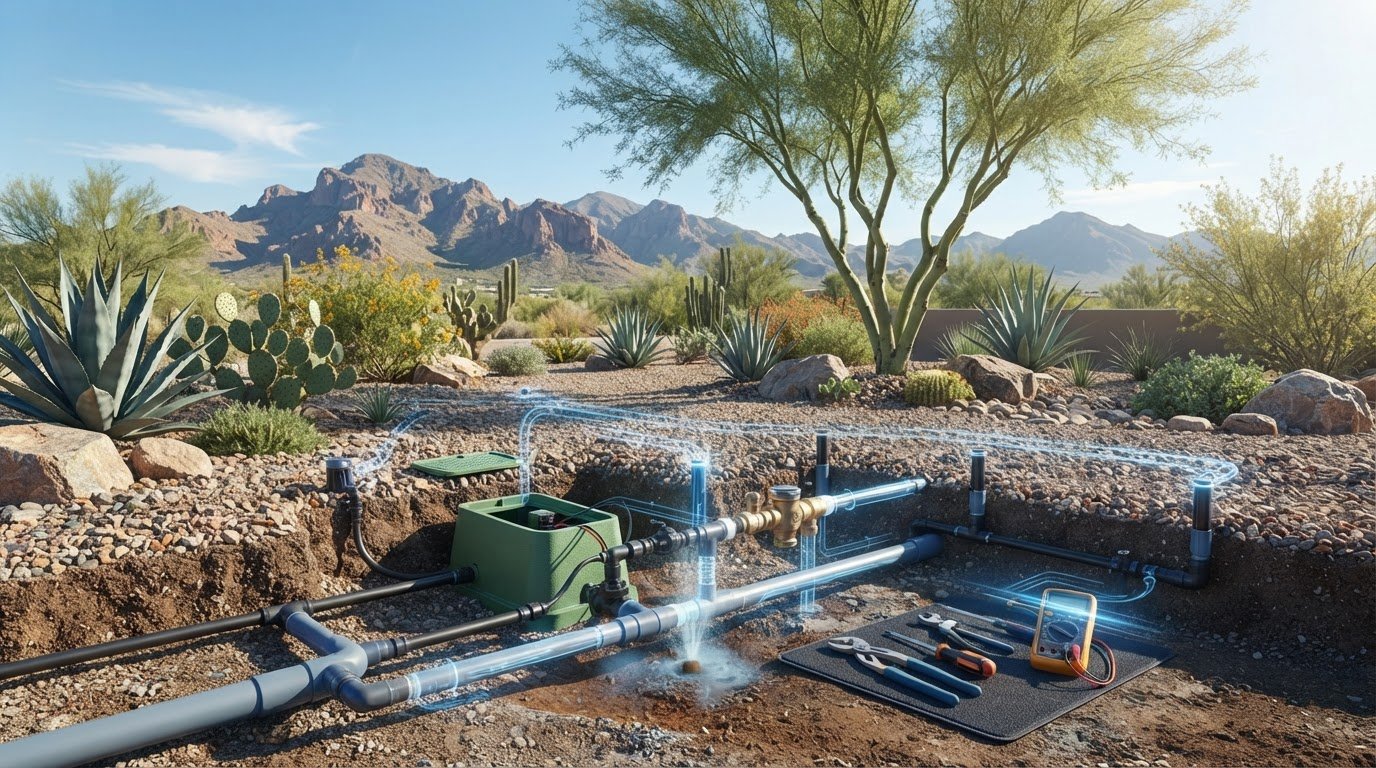
Did you know that up to 70% of residential water use in the Phoenix metropolitan area happens outdoors? In a city where tiered water rates can climb as high as $7.19 per 1,000 gallons for heavy users, a small mechanical failure in your yard is more than a nuisance; it is a direct hit to your monthly budget. Identifying common irrigation problems Surprise AZ homeowners encounter requires a technical understanding of how our intense heat and unique soil conditions stress every component of a watering system. You likely already feel the frustration of seeing a prized desert plant struggle despite a rising water bill.
We believe your landscape should be a source of pride, not a source of stress. This guide provides the diagnostic clarity needed to identify the root causes of system failure before they lead to permanent plant loss or excessive waste. By focusing on precision and professional standards, you can protect your property investment and restore long-term efficiency. We will walk through the specific mechanical failures common to our region, including valve malfunctions and drip line clogs, while providing a clear path toward a reliable and durable solution.
Key Takeaways
- Understand how extreme heat and caliche soil contribute to common irrigation problems Surprise AZ homeowners encounter, leading to premature system wear.
- Identify the early warning signs of clogged emitters and drip line leaks to protect your plant investment from the harsh desert sun.
- Learn to diagnose faulty solenoids and irrigation valves that cause systems to stay on or fail to activate properly.
- Use the "Meter Test" method to uncover silent underground pipe leaks that inflate your water bill without leaving a visible trace.
- Discover why specialized irrigation diagnostics and PVC pipe replacement offer a more durable solution than temporary patches or general landscaping fixes.
Why Arizona’s Desert Environment Challenges Residential Irrigation
Maintaining a lush landscape in the Sonoran Desert is a constant battle against environmental extremes. In Surprise, the same sun that fuels our citrus trees simultaneously degrades the very systems designed to keep them alive. Understanding the comprehensive overview of irrigation challenges unique to our region is the first step toward preventing system failure. Unlike milder climates, Arizona requires hardware that can withstand intense UV radiation, high mineral content in the water, and soil that behaves more like concrete than earth.
These environmental stressors lead to many common irrigation problems Surprise AZ homeowners face, often resulting in silent leaks or sudden component failure. While many general landscapers focus on plant health, a specialized approach is necessary to address the mechanical integrity of the delivery system itself. To better understand these concepts, watch this helpful video:
The Impact of Heat on Irrigation Hardware
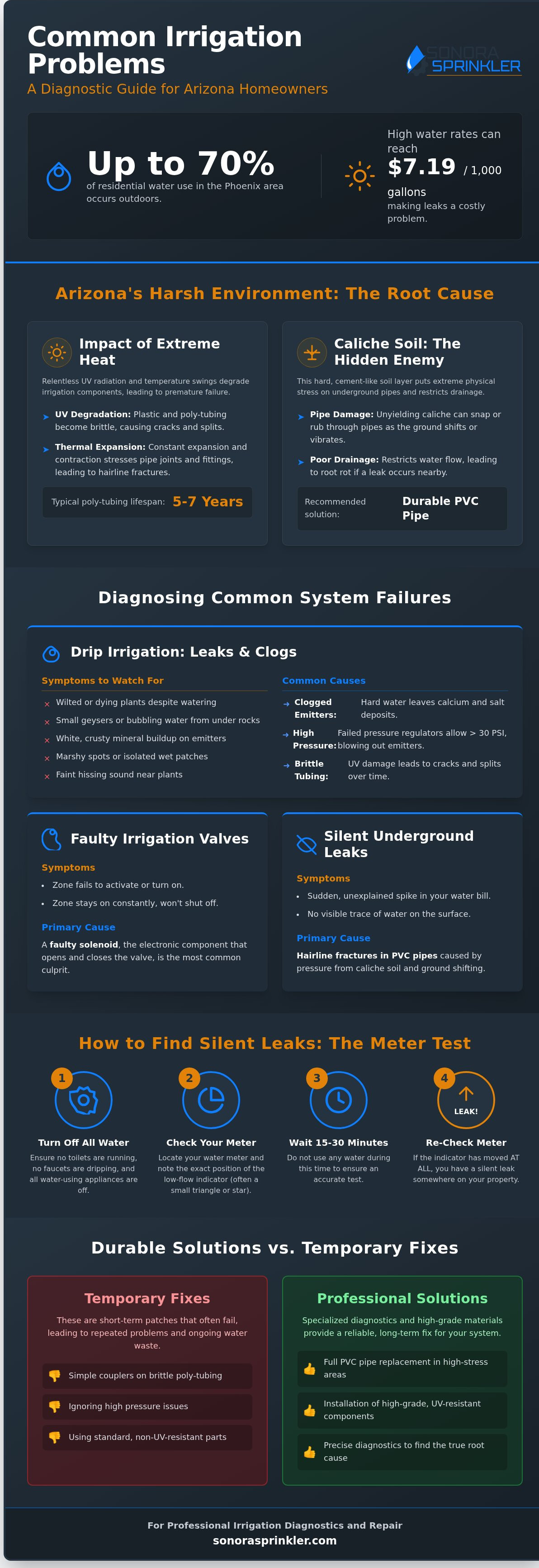
The desert sun is relentless on exposed plastic. Standard poly-tubing, frequently used in drip systems, often reaches its breaking point every five to seven years in Surprise. UV rays penetrate the material, causing it to become brittle and prone to cracking. This degradation is accelerated by thermal expansion; as temperatures swing from day to night, pipes expand and contract. This constant movement puts immense pressure on PVC joints and fittings, eventually leading to hairline fractures that go unnoticed until your water bill spikes. Professional irrigation repairs and maintenance prioritize using high-grade, UV-resistant components to combat this cycle of decay.
Caliche Soil: The Hidden Enemy of Underground Pipes
Beneath the surface, Surprise homeowners deal with caliche, a natural cement-like layer of calcium carbonate. This hardened soil creates two major issues for irrigation systems. First, it restricts drainage, which can lead to root rot if a leak occurs. Second, caliche doesn't give or take like softer soils. When the ground shifts or pipes vibrate during a watering cycle, the unyielding caliche can snap PVC pipes or rub through thinner poly-lines. Proper design and installation in this terrain requires specialized trenching techniques and the use of durable PVC pipe replacement rather than temporary patches. Without professional-grade installation, underground lines are at constant risk of structural failure due to the sheer density of the surrounding desert earth.
Troubleshooting Drip Irrigation Leaks and Emitter Failures
In the arid climate of the West Valley, drip systems are the primary lifeline for residential greenery. Because these systems deliver water slowly and often under a layer of decorative rock, failures can remain hidden for months. Many common irrigation problems in these setups stem from the delicate balance required to maintain low-flow emitters. When this balance is disrupted by mineral buildup or mechanical wear, your landscape is immediately at risk.
The hard water common to our region is a leading cause of clogged emitters. As water evaporates at the tip of an emitter, it leaves behind calcium and salt deposits. You might notice a white, crusty ring around the base of a plant; this is a clear indicator that the emitter is struggling to provide a consistent flow. If left unaddressed, the emitter will eventually seal shut, starving the plant of moisture during the peak of summer heat.
While clogs are a silent threat, "geysers" provide a more dramatic sign of failure. These occur when an emitter blows out of the poly-tubing or when the tubing itself splits due to age. You may see water bubbling up through the granite or shooting into the air. These failures often indicate that the pressure regulator at the valve has failed, allowing high-pressure water to surge through lines designed for only 20 to 30 PSI. Identifying these common irrigation problems Surprise AZ homeowners face requires a methodical check of the system's operating pressure and line integrity.
Common Symptoms of Drip System Failure
Effective diagnosis begins with observing wetting patterns. Healthy desert plants should have a deep, wide moisture zone. If you see small, isolated damp spots or, conversely, large marshy areas in your desert landscaping, the system is failing. Sometimes you can actually hear a leak before you see it. A faint hissing sound near a plant often signals a hairline crack in the poly-pipe. These small leaks are deceptive; they don't create a geyser, but they can waste hundreds of gallons over a single watering cycle.
Repairing vs. Replacing Drip Lines
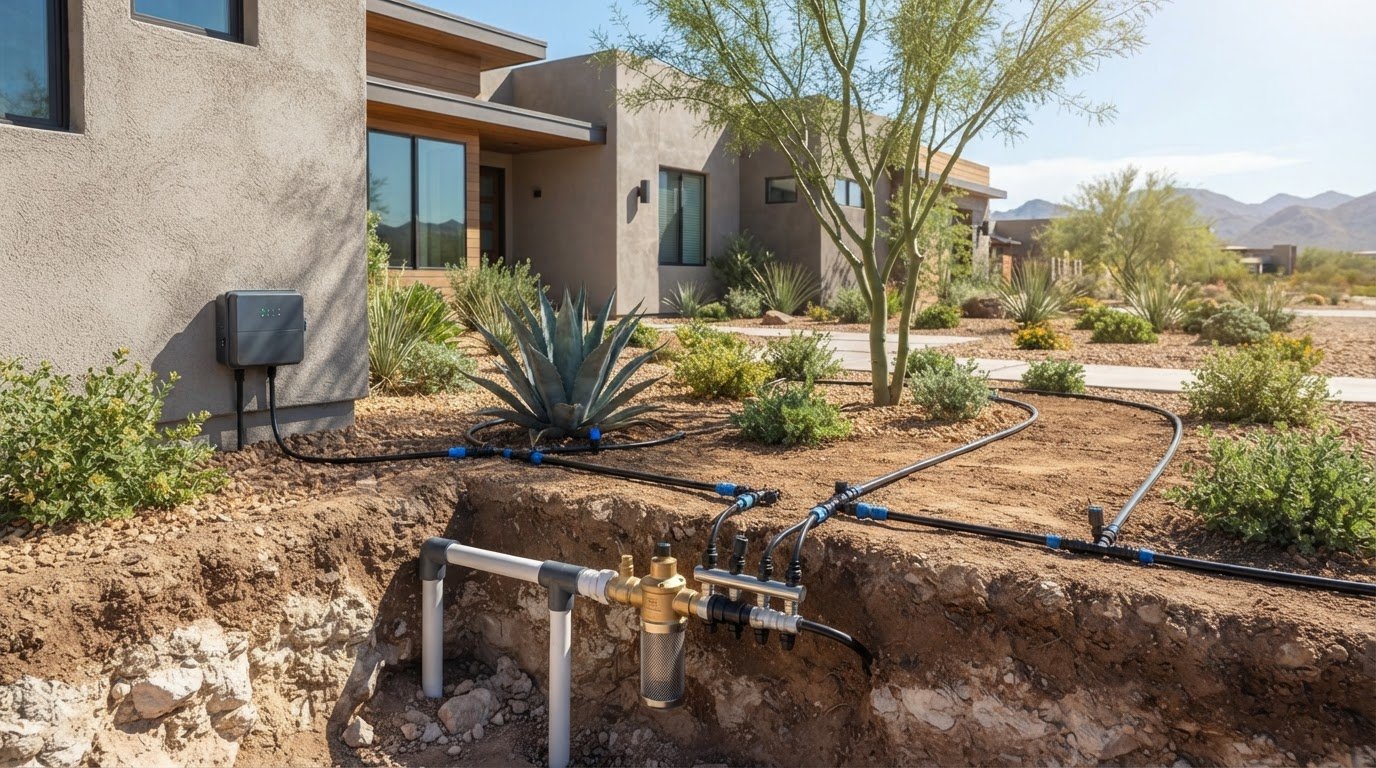
Homeowners often wonder if a simple patch is enough. While a single puncture can be repaired with a coupler, brittle poly-tubing that has reached the end of its lifespan will continue to crack. In these cases, a full drip line replacement is the only way to ensure long-term reliability. We often recommend upgrading to high-quality PVC drip headers, which offer far greater durability against Arizona soil conditions than standard poly-tubing. A professional drip irrigation installation focuses on these high-durability materials to prevent the frequent clogs and blowouts associated with lower-grade systems. If you suspect your system is losing efficiency, it might be time to consult with a specialist to evaluate your system's health.
Identifying Faulty Valves and Irrigation Wiring Issues
The irrigation valve acts as the gatekeeper for your landscape's water supply. While emitters deliver the moisture, the valves and their electrical counterparts dictate exactly when and how much water is released. In our local environment, these components are under constant stress. Faulty valves and electrical glitches are among the most frustrating common irrigation problems Surprise AZ residents encounter because they often happen underground or inside a control box, away from plain sight.
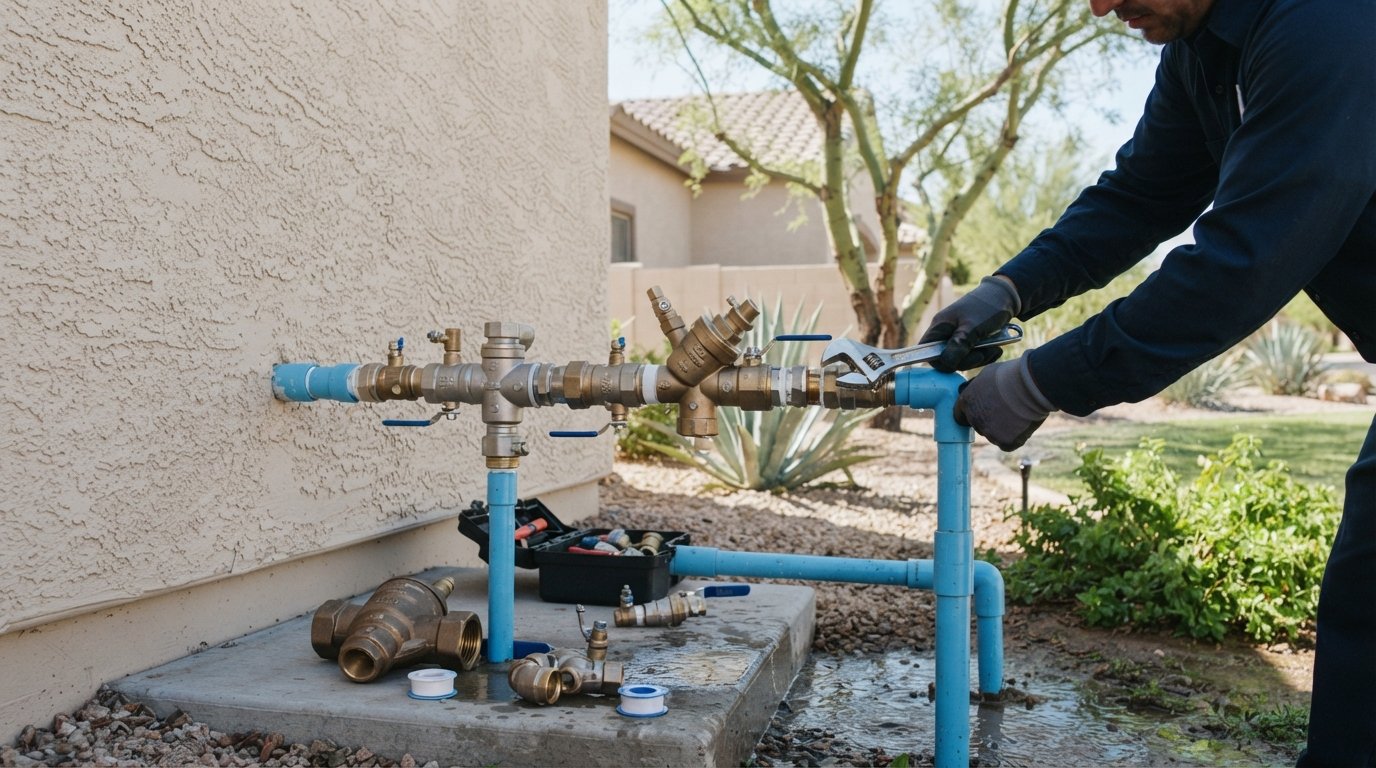
Every system also relies on a backflow preventer to maintain safety. This device ensures that irrigation water, which may contain fertilizers or soil pathogens, cannot flow backward into your home's clean water supply. A malfunctioning backflow preventer is a serious concern that requires immediate professional attention to keep your household water safe and compliant with local standards.
Mechanical Valve Failures
A primary mechanical failure involves the valve diaphragm, which is the flexible rubber seal that opens and closes to control water flow. Over time, desert heat and hard water minerals cause this rubber to tear or become brittle. When a diaphragm fails, you might notice a zone that won't turn on or, more dangerously, a valve that gets stuck open. A valve that fails to shut off leads to catastrophic water waste, potentially pushing a household into the highest tier of Surprise water rates, which currently reach $7.19 per 1,000 gallons for usage over 30,000 gallons.
Debris from our local water supply also poses a risk. Small grains of sand or mineral flakes can wedge themselves inside the valve seat. This prevents a complete seal, resulting in a constant, low-level leak at the furthest emitter in that zone. Consistent valve and backflow services are essential for maintaining the precision required to keep a desert landscape healthy without wasting resources.
Electrical and Wiring Diagnostics
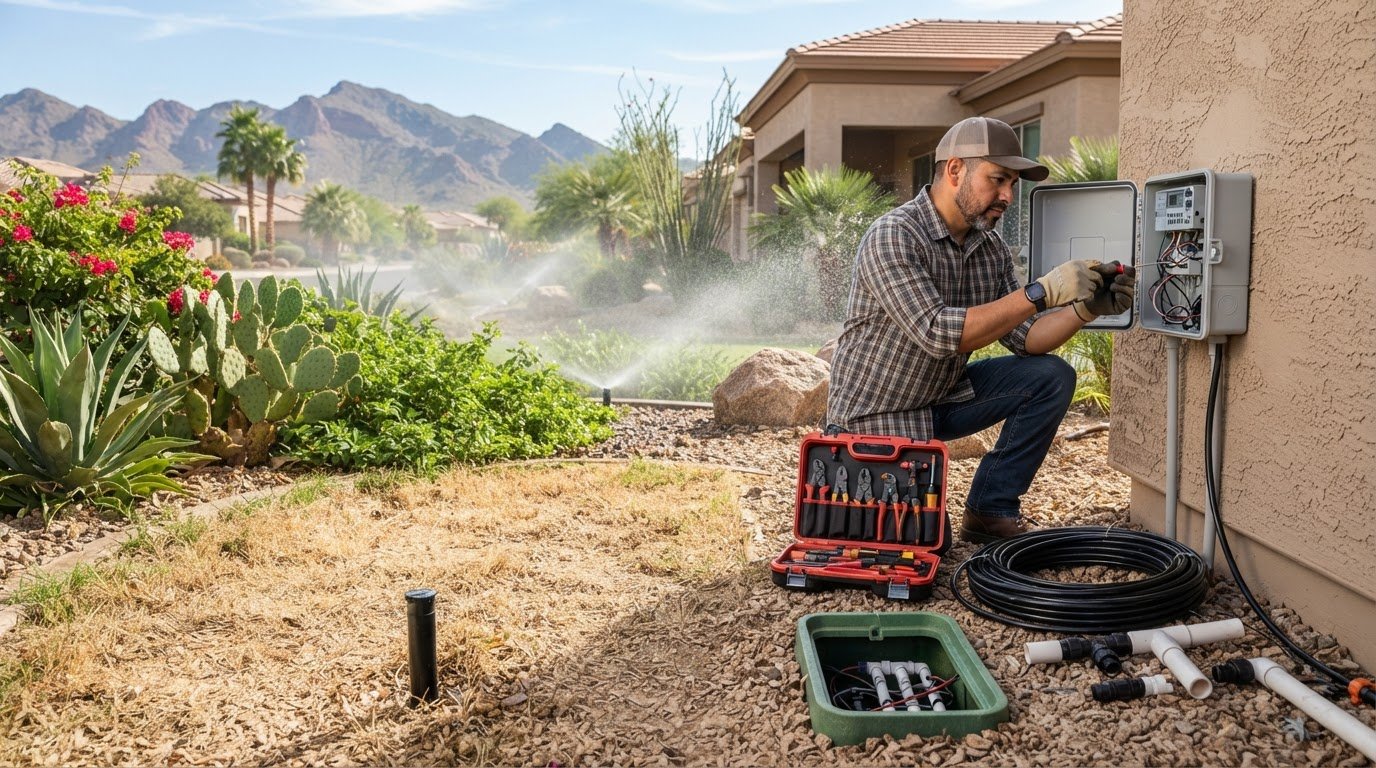
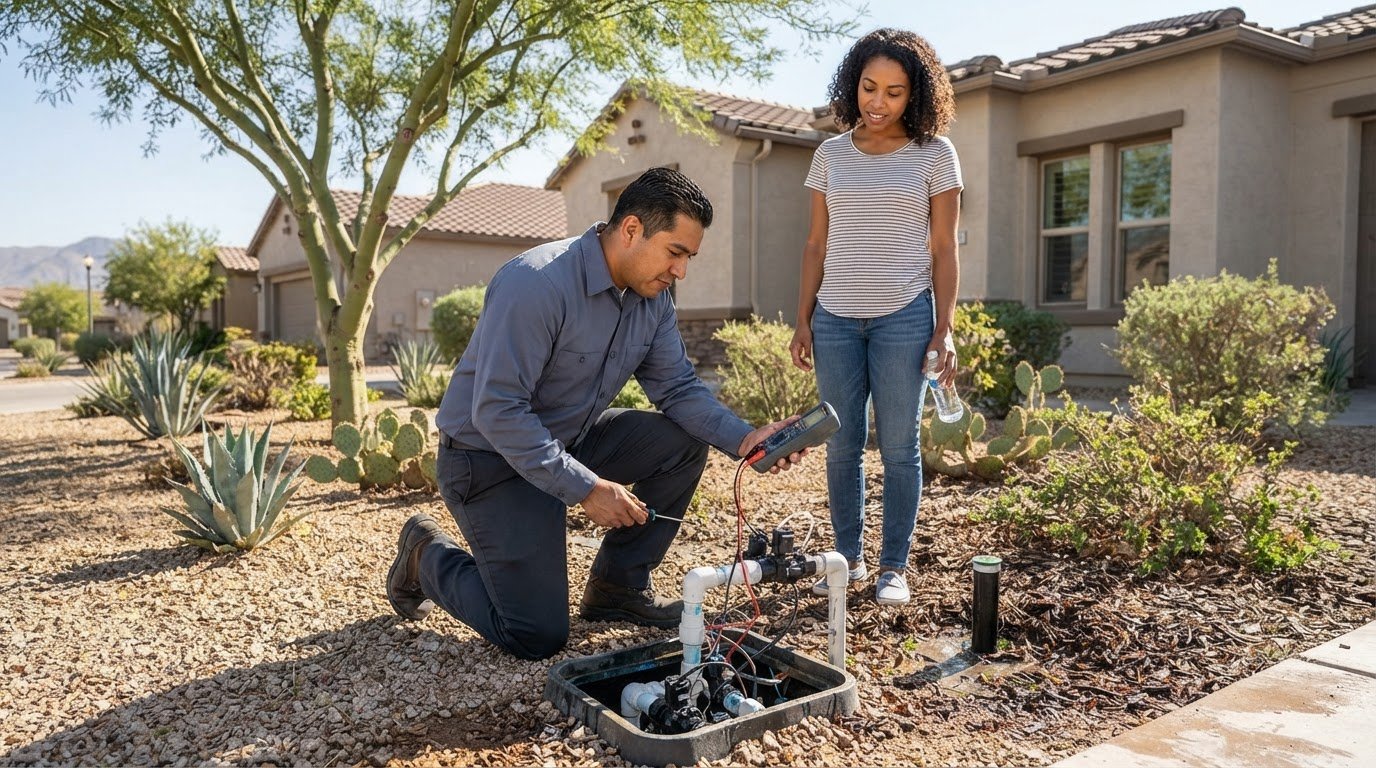
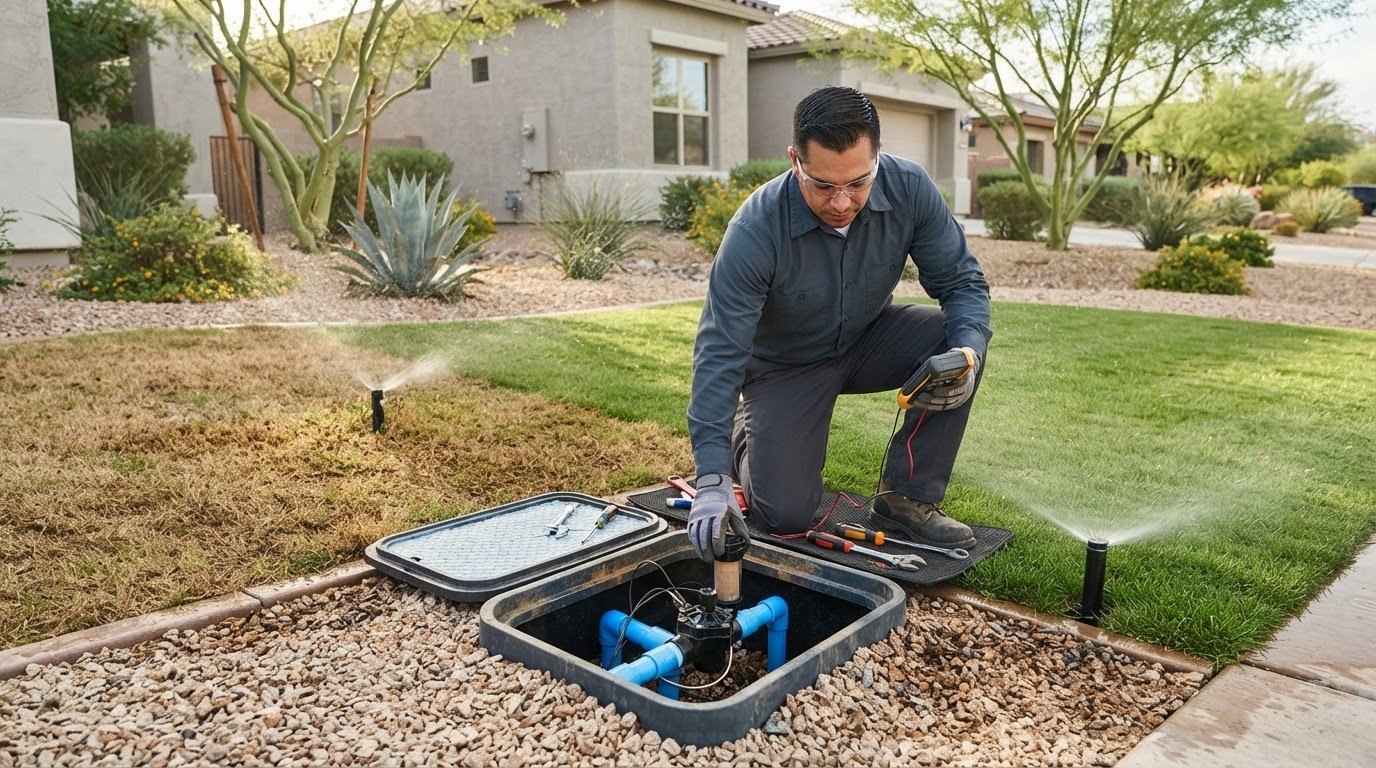
When a controller shows a zone is active but no water flows, the issue is often electrical rather than mechanical. This typically points to a failing solenoid, which is the electromagnetic coil that pulls the valve open, or a break in the wiring. In Surprise, wiring often corrodes at the connection points inside the valve box due to moisture or poor initial installation. You might find that loose wire nuts or "grease caps" have failed, allowing the copper to oxidize and lose its connection.
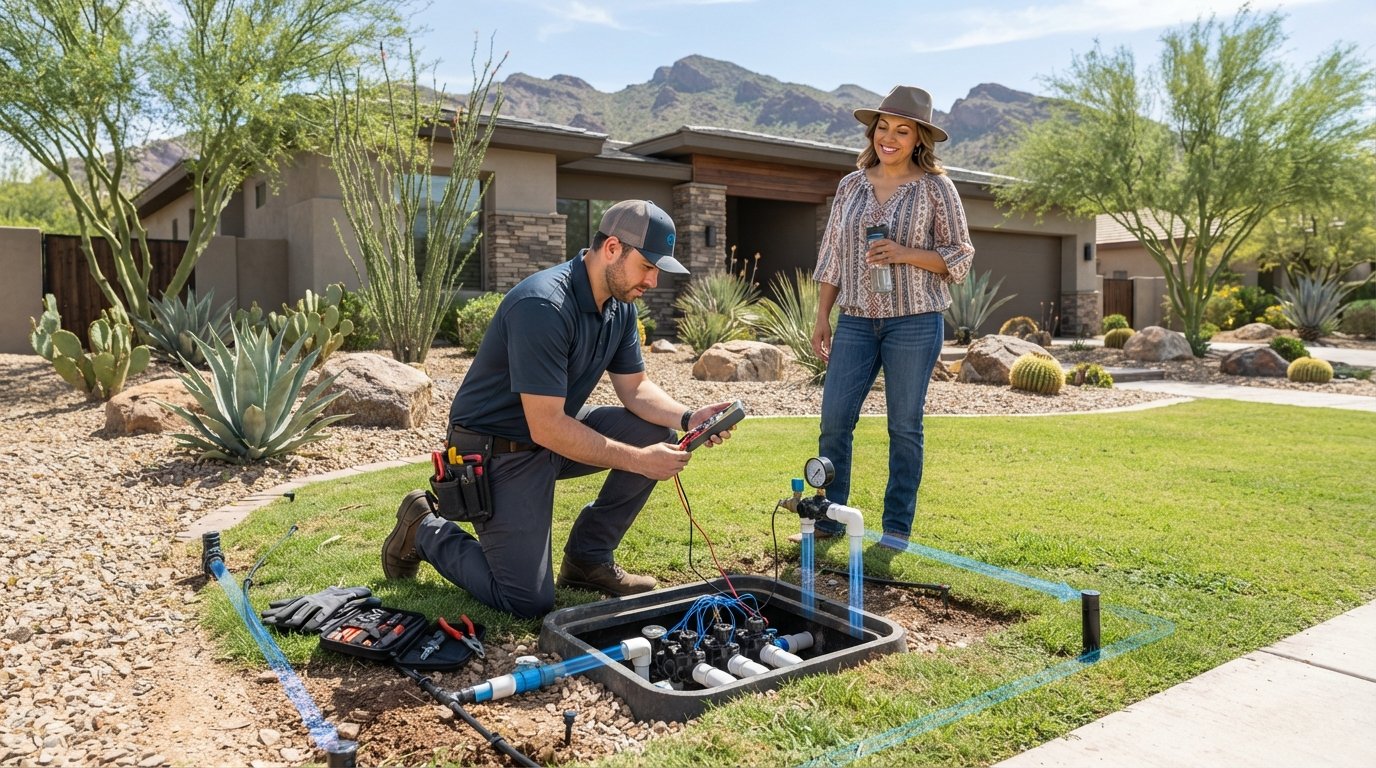
Diagnosing a "no zone" response requires a methodical approach to trace the electrical signal from the controller to the valve. If you're dealing with multi-zone failures or intermittent connectivity, you likely need professional irrigation wiring diagnostics to pinpoint the exact location of the short or break. Unlike a simple pipe patch, electrical troubleshooting requires specialized tools to measure resistance and continuity, ensuring the system communicates reliably across your entire property.
How to Detect Underground Pipe Leaks Before Your Water Bill Soars
Underground failures are the most deceptive of the common irrigation problems Surprise AZ homeowners encounter. Because our local soil is often capped with decorative granite or river rock, a significant pipe fracture can exist for weeks without appearing on the surface. These "silent" leaks bypass the visible warnings of a broken emitter, instead manifesting as a sudden, unexplained jump in your monthly utility statement. In many cases, the water follows the path of least resistance through the caliche layer, pooling far from the actual break and making it difficult for a generalist to locate.
Performing a Residential Leak Audit
The most reliable way to confirm a leak is the "Meter Test." First, ensure all indoor faucets, appliances, and hose bibs are completely off. Locate your water meter, usually housed in a concrete box near the sidewalk, and watch the low-flow indicator, which is often a small red or blue triangle or a digital readout. If this indicator moves while all indoor water is off, you have a leak. To determine if the issue is in your yard, close the irrigation shut off valve. If the meter stops moving, the leak is within your irrigation lines rather than your home's interior plumbing.
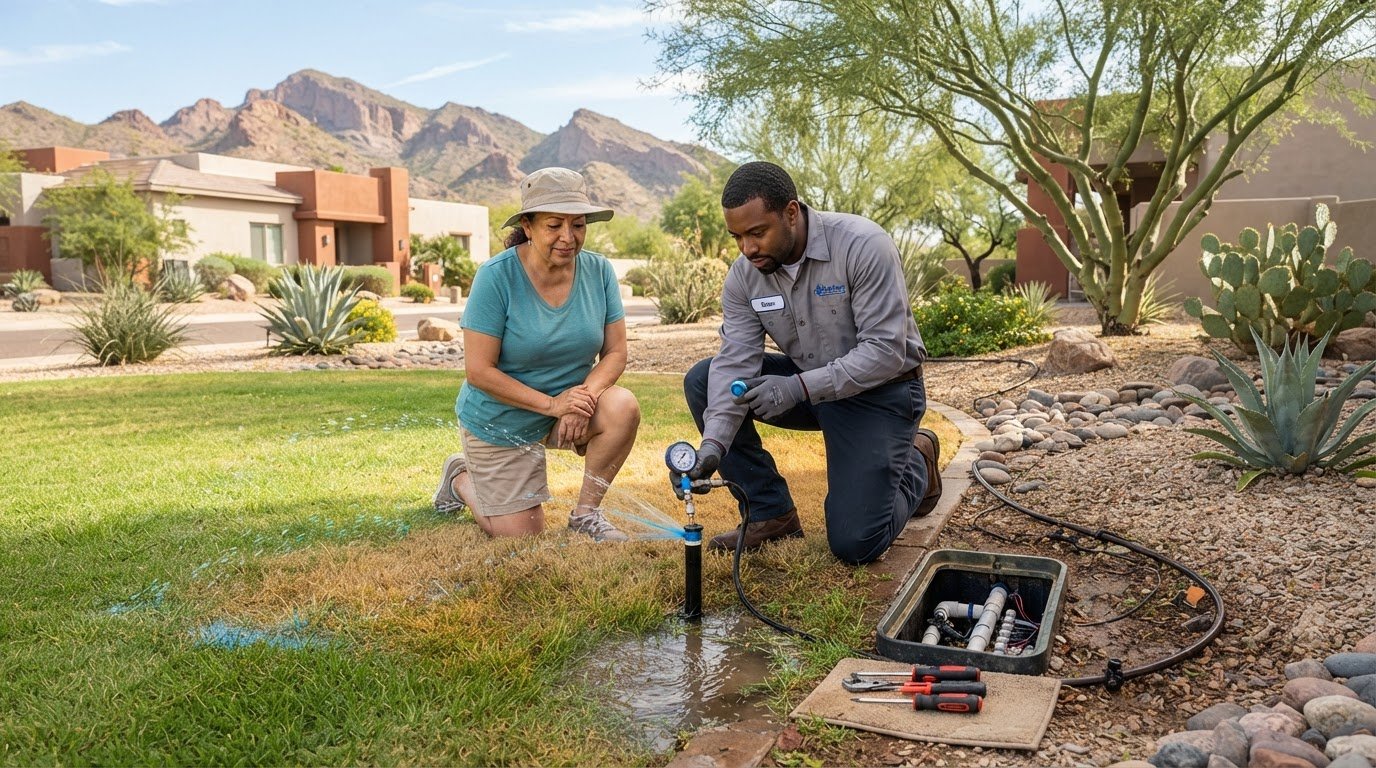
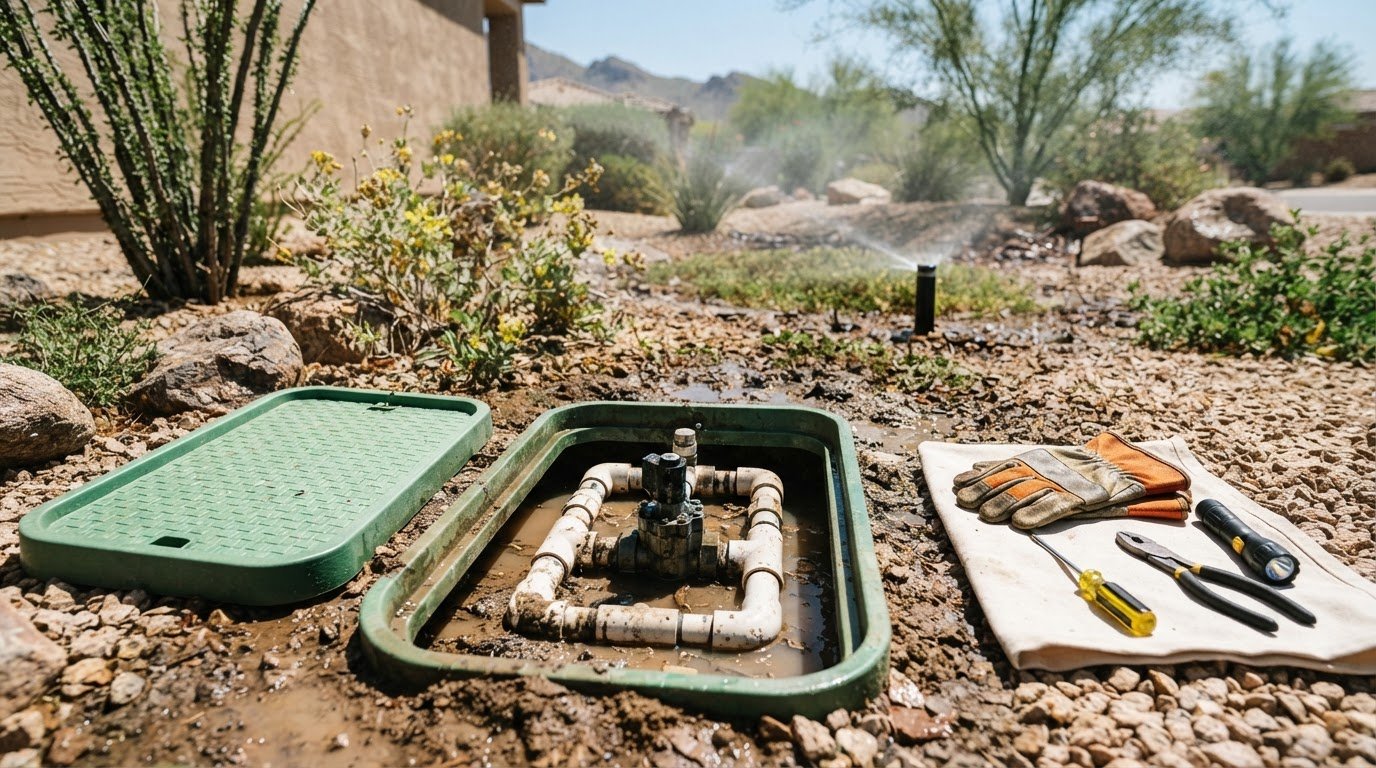
Once you've confirmed the system is leaking, run each zone manually from your controller. A sudden drop in pressure or a lack of throw from sprinkler heads in one specific zone suggests a line break. While the water may not shoot into the air, look for marshy spots or unusually vibrant patches of weeds in your dry desert landscaping. Additionally, check your valve boxes; standing water inside the box often indicates a weeping fitting or a cracked manifold that requires specialized repair to prevent further waste.
The Cost of Ignoring Small Leaks
Small leaks are never static and will only worsen over time as the pressure continues to stress the weakened material. Industry data suggests that a tiny 1/8-inch crack in a PVC pipe can waste over 2,500 gallons of water per day, quickly pushing your consumption into the highest Surprise water tiers where rates reach $7.19 per 1,000 gallons. Beyond the financial impact, persistent underground leaks can lead to soil erosion or even foundation issues if the water pools near your home's slab for extended periods. A professional sprinkler system tune up provides a comprehensive inspection that identifies these minor fractures through pressure testing and visual diagnostics before they cause structural damage.
If your water meter is spinning or your landscape has developed mysterious wet spots, contact our team for a thorough system evaluation to restore your property's efficiency.
Professional Irrigation Solutions for Surprise and Peoria Homeowners
Resolving the common irrigation problems Surprise AZ residents face requires a level of precision that goes beyond simple maintenance. While a general landscaper might offer to fix a broken pipe as part of a larger yard project, specialized irrigation repair is a distinct mechanical discipline. It involves balancing water pressure, managing electrical signals, and ensuring the long-term integrity of underground PVC networks. By choosing a dedicated specialist, you ensure that your system is not just patched, but optimized for the specific demands of our desert climate. This dedication to mechanical excellence is a trait shared by specialists in other fields; for instance, motorcycle enthusiasts can learn more about Suspension Store to see how precision components improve performance and safety.
In addition to mechanical systems, a healthy yard requires attention to the surrounding environment and structural elements; resources from professionals like Landscape By Design Of Palmetto can help homeowners understand the broader challenges of property maintenance and pest prevention.
The technical requirements for modern systems have evolved significantly over the years. We utilize advanced tools specifically for wiring and diagnostics, allowing us to locate electrical shorts or valve failures without unnecessary excavation. This "boots-on-the-ground" expertise is born from a residential-only focus that Sonora Sprinkler Inc. has maintained since 1999. As a family-owned business, we understand that your home's landscape is a significant investment that deserves specialized care rather than a one-size-fits-all approach.
Our methodology emphasizes durability in every repair. In Arizona soil, we prioritize high-quality PVC pipe replacement over the temporary poly-tubing patches often used by generalists. This focus on mechanical standards ensures that your system can withstand the thermal expansion and soil pressure unique to Surprise and Peoria. We don't dilute our expertise with landscaping or hardscaping; we remain committed to being the authoritative guide for your property's water management systems.
Next Steps for Your Surprise Landscape
Identifying when to stop DIY troubleshooting is essential for protecting your property. If you've performed a leak audit and the meter continues to spin, or if your controller is failing to trigger specific zones, it's time for professional residential irrigation repair. Continuing to run a compromised system not only risks your plants but also leads to preventable utility costs.
Before your technician arrives, it's helpful to note which zones are underperforming and check for any visible "geysers" or marshy spots. This information allows us to move quickly through the diagnostic phase. To restore your system's efficiency and protect your desert investment, contact Sonora Sprinkler Inc. for a comprehensive system evaluation. We provide the steady, professional assurance you need to ensure your irrigation system remains a reliable fixture of your home for years to come.
Protect Your Landscape with Proactive Irrigation Care
Managing the common irrigation problems Surprise AZ properties face is a continuous process of observation and technical adjustment. From identifying silent underground leaks through a meter audit to recognizing the signs of heat-stressed poly-tubing, your vigilance is the first line of defense against rising water costs and plant loss. By understanding how our unique desert environment impacts every valve and emitter, you can make informed decisions about when to repair and when to upgrade your hardware for better durability.
When DIY troubleshooting reaches its limit, the expertise of a dedicated specialist ensures a precise and lasting resolution. Since 1999, Sonora Sprinkler Inc. has served as a licensed residential irrigation specialist with a focus exclusively on irrigation, not landscaping. This specialized approach allows us to provide thorough diagnostics and professional-grade repairs that protect your home's long-term health and investment. We don't just patch problems; we provide solutions that endure the desert's demands.
Schedule your expert irrigation diagnostic with Sonora Sprinkler Inc. today to restore your system's efficiency. With the right care, your desert landscape will continue to thrive for years to come.
Frequently Asked Questions
How do I know if my irrigation leak is underground or at the emitter?
Check the surface for bubbling water or "geysers" to identify emitter blowouts. Underground leaks are typically silent and don't show surface water because the moisture follows the caliche layer deep into the soil. Use the "Meter Test" described earlier to confirm a leak exists when all emitters appear dry. If the meter spins but the ground is dry, the fracture is likely in the main or lateral PVC lines.
Why is my water bill so high even though my sprinklers look fine?
High water bills often stem from common irrigation problems Surprise AZ homeowners overlook, such as a "stuck" valve or a silent underground crack. Even if the sprinklers look functional during their cycle, a valve that fails to close completely will weep water 24 hours a day. This constant flow can waste thousands of gallons monthly, pushing you into the highest tiered water rates without any visible surface indicators.
Can caliche soil cause my irrigation pipes to break more often?
Yes, caliche acts like a layer of natural concrete that puts immense physical stress on buried PVC. Unlike softer soils that allow for slight movement, caliche is unyielding. When your pipes vibrate during a watering cycle or the ground shifts due to moisture changes, the rigid caliche can cause hairline fractures or snap joints. This makes professional trenching and high-quality pipe replacement essential for long-term system durability in our region.
How often should I replace the drip lines in my Surprise, AZ home?
Standard poly-tubing drip lines in our desert environment generally require replacement every five to seven years. The intense UV radiation and extreme surface temperatures make the plastic brittle over time, leading to frequent cracks and emitter blowouts. Upgrading to a professional-grade system with PVC headers can significantly extend this lifespan by protecting the most vulnerable components from direct exposure to the harsh Arizona sun and shifting soil.
What are the signs that my irrigation valve needs to be replaced?
Look for a zone that stays on after the controller has finished its cycle or a zone that refuses to turn on at all. You might also notice water pooling around the valve box or a constant "hissing" sound indicating a leak. These symptoms usually point to a torn rubber diaphragm or a failing solenoid. Because valves control the system's flow, a malfunction here is often the root cause of excessive water waste.
Is it better to repair a broken PVC pipe or replace the entire line?
A single repair is appropriate for a localized puncture, but widespread brittleness or multiple leaks suggest the entire line has reached the end of its functional life. In Surprise, older PVC can become fragile due to soil pressure and heat. Replacing the entire section with high-quality schedule 40 PVC is often more cost-effective than paying for repeated service calls to patch a failing line that will likely break again nearby.
Why does my irrigation controller say 'error' or skip certain zones?
An "error" message typically indicates an electrical short or a broken wire between the controller and the valve solenoid. This is one of the more technical common irrigation problems Surprise AZ residents face, often caused by corroded wire nuts or damage from pests. If the controller skips a zone, it has likely detected an electrical fault and bypassed that circuit to protect the internal hardware from damage.
How can I tell if my backflow preventer is leaking or failing?
Visible signs include water constantly dripping from the relief valve or a "spitting" sound when the system activates. You might also notice a significant drop in water pressure across your entire irrigation system. Since the backflow preventer is a critical safety component that keeps non-potable water out of your home's drinking supply, any signs of weeping or structural damage require an immediate diagnostic check by a licensed specialist.