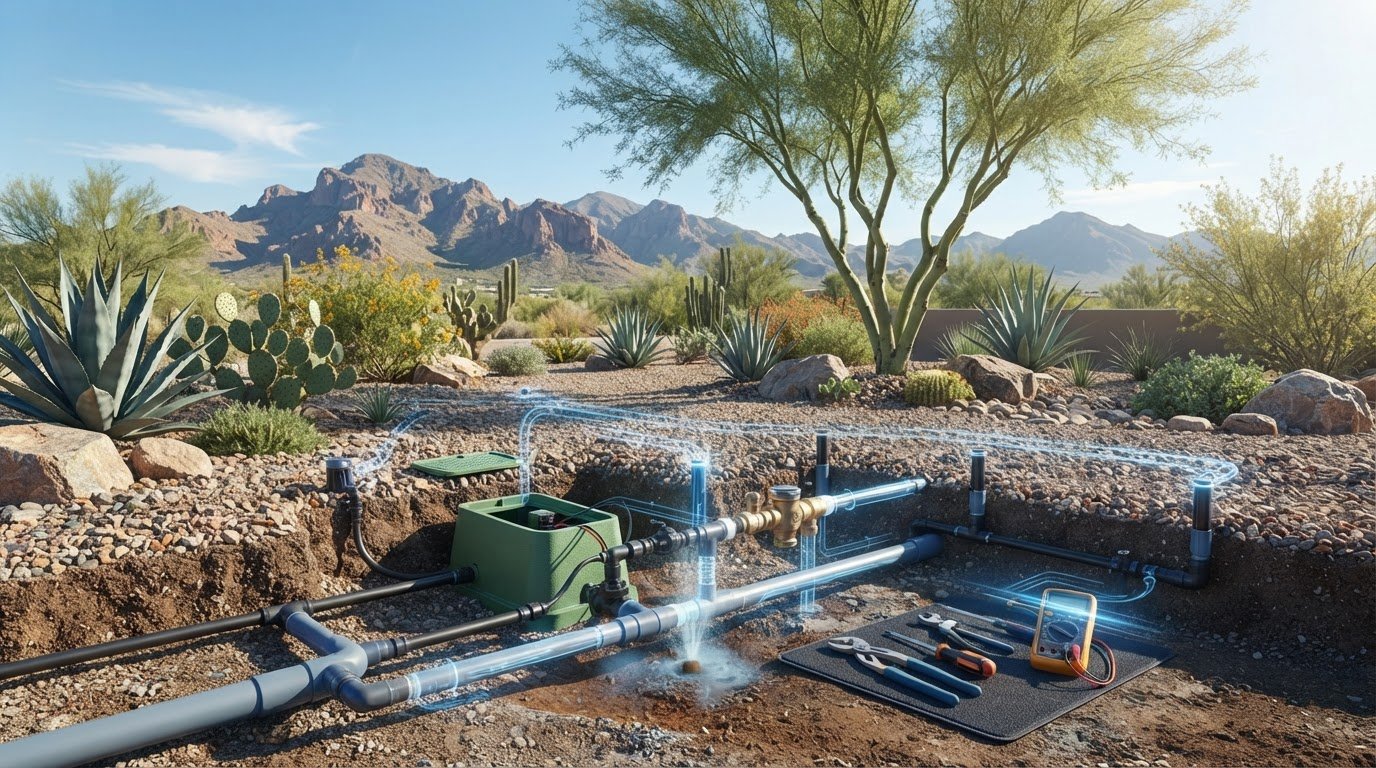
In the Sonoran Desert, a drip irrigation system isn't a "set it and forget it" convenience; it's a mechanical lifeline that the Arizona sun is constantly trying to dismantle. You've likely noticed the signs of this environmental wear, from the frustration of an unexplained spike in your water bill to brittle poly tubing cracking under the heat. By implementing a few professional drip irrigation maintenance tips Arizona homeowners can trust, you can transform your watering system from a source of stress into a durable, high-performing asset.
It's common for residents in Surprise and Peoria to feel like they're fighting a losing battle against hard water deposits that cement emitters shut just when trees need hydration most. We understand that your landscape represents a significant investment in your home's value and your own comfort. Protecting that investment requires a grounded, proactive approach that accounts for the unique challenges of our local soil and extreme climate.
This guide shares the professional maintenance routine required to protect your landscape and lower your water bills during our harshest seasons. We'll walk through a methodical process designed to flush out mineral buildup, identify hidden leaks, and ensure your system remains reliable even when temperatures soar past 110°F.
Key Takeaways
- Understand why the relentless Sonoran heat and mineral-heavy water necessitate a more rigorous maintenance schedule to protect your desert landscape.
- Implement essential drip irrigation maintenance tips Arizona residents need for monthly visual inspections and emitter audits to prevent plant loss.
- Learn the "sweet spot" for system pressure and how to adjust watering schedules to match the shifting demands of the spring, summer, and monsoon seasons.
- Identify the mechanical signs of high water bills and uneven pressure before they lead to costly system failures or landscape damage.
- Recognize when complex wiring issues or backflow preventer malfunctions require professional diagnostics to ensure long-term system reliability.
Why Arizona Drip Systems Require Specialized Maintenance
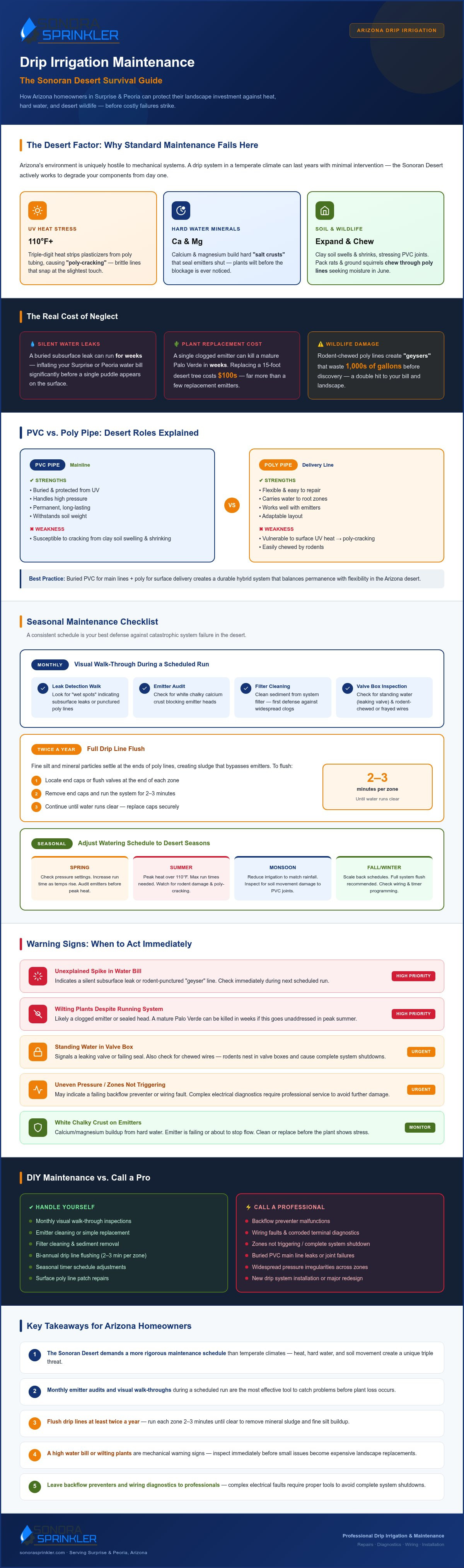
Arizona's environment is uniquely hostile to mechanical systems. While a drip system in a temperate climate might last for years with minimal intervention, the Sonoran Desert actively works to degrade your irrigation components from the day they're installed. Understanding these environmental stressors is the first step in applying effective drip irrigation maintenance tips Arizona homeowners can use to protect their property. The combination of intense UV radiation, mineral-heavy water, and shifting desert soil creates a trifecta of challenges that require a specialized approach to care.
The "Desert Factor" is primarily driven by relentless sun exposure. Most drip systems rely on polyethylene tubing that, while durable, eventually loses its plasticizers under triple-digit heat. This leads to "poly-cracking," where the line becomes brittle and snaps at the slightest touch. Beyond the heat, our local water supply carries high concentrations of calcium and magnesium. As water evaporates at the emitter head, these minerals leave behind hard "salt crusts" that eventually seal the opening entirely. Without regular irrigation repairs and maintenance, these clogged emitters can go unnoticed until a plant begins to wilt.
Physical threats also come from below the surface and the surrounding wildlife. Arizona's expansive clay soil swells when wet and shrinks when dry, putting immense stress on PVC joints and connections. Meanwhile, desert rodents like pack rats and ground squirrels often chew through poly lines in a desperate search for moisture during the height of June. These punctures create "geysers" that waste thousands of gallons of water before they're ever discovered.
Poly Pipe vs. PVC in the Arizona Landscape
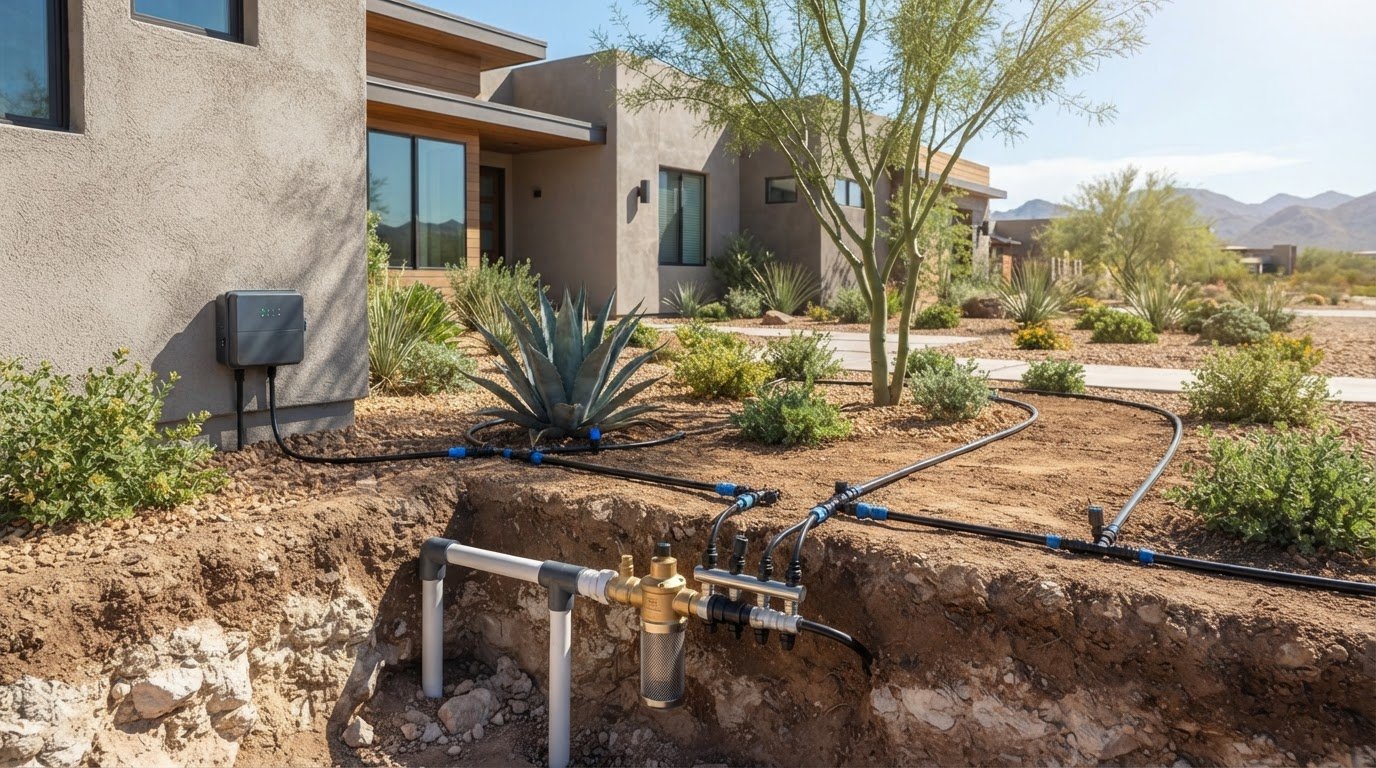
Most residential systems utilize a hybrid approach to durability. Buried PVC pipe serves as the high-pressure mainline because it's protected from the sun and can withstand the weight of the soil. However, the final delivery to your plants usually relies on flexible tubing. Poly pipe acts as the flexible lifeline of desert irrigation, carrying water from the main source directly to the root zones of individual plants. While PVC is more permanent, it's susceptible to cracking from soil movement; conversely, poly pipe is easy to repair but vulnerable to surface-level heat damage. Balancing these two materials is essential for a long-lasting drip irrigation installation.
The Cost of Neglect: Water Waste and Plant Loss
The financial consequences of a failing system are often twofold. First, there's the immediate impact on your Surprise or Peoria water bill. A "silent leak" in a buried line can run for weeks, inflating costs without showing a single puddle on the surface. Second, the cost of plant replacement far exceeds the price of a few replacement emitters. A single clogged head can kill a mature Palo Verde tree in just a few weeks of mid-summer heat. Replacing a 15-foot desert tree can cost hundreds of dollars, making proactive diagnostics a much wiser investment than reactive landscaping fixes.
Seasonal Drip Irrigation Maintenance Checklist
Maintaining a drip system in the desert requires a methodical approach that goes beyond simply checking the timer. Because our environment is so taxing, a consistent schedule is your best defense against catastrophic failure. By following these drip irrigation maintenance tips Arizona homeowners can keep their landscapes thriving while avoiding the high costs of system neglect. A reliable routine ensures that every gallon of water reaches its intended destination without waste.
Monthly visual inspections are the cornerstone of system health. You should walk your irrigation lines during a scheduled run to look for "wet spots" that indicate a subsurface leak or a punctured poly line. At the same time, perform an emitter audit. In Surprise and Peoria, our hard water often leaves a white, chalky calcium crust on emitter heads. If an emitter is crusted over, it's either already failing or about to stop the flow of water to your plant's root zone. Additionally, check your system filter once a month; cleaning out trapped sediment is the first line of defense against widespread clogs.
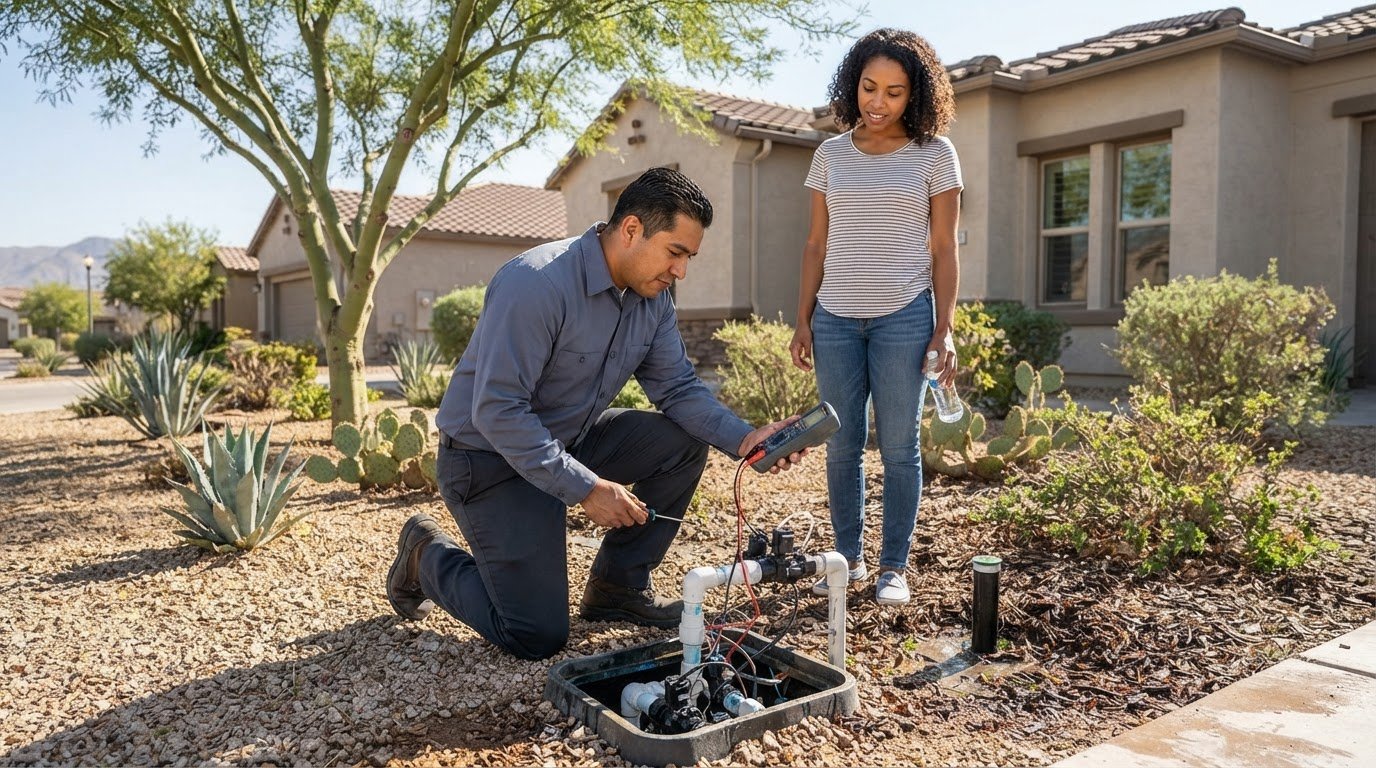
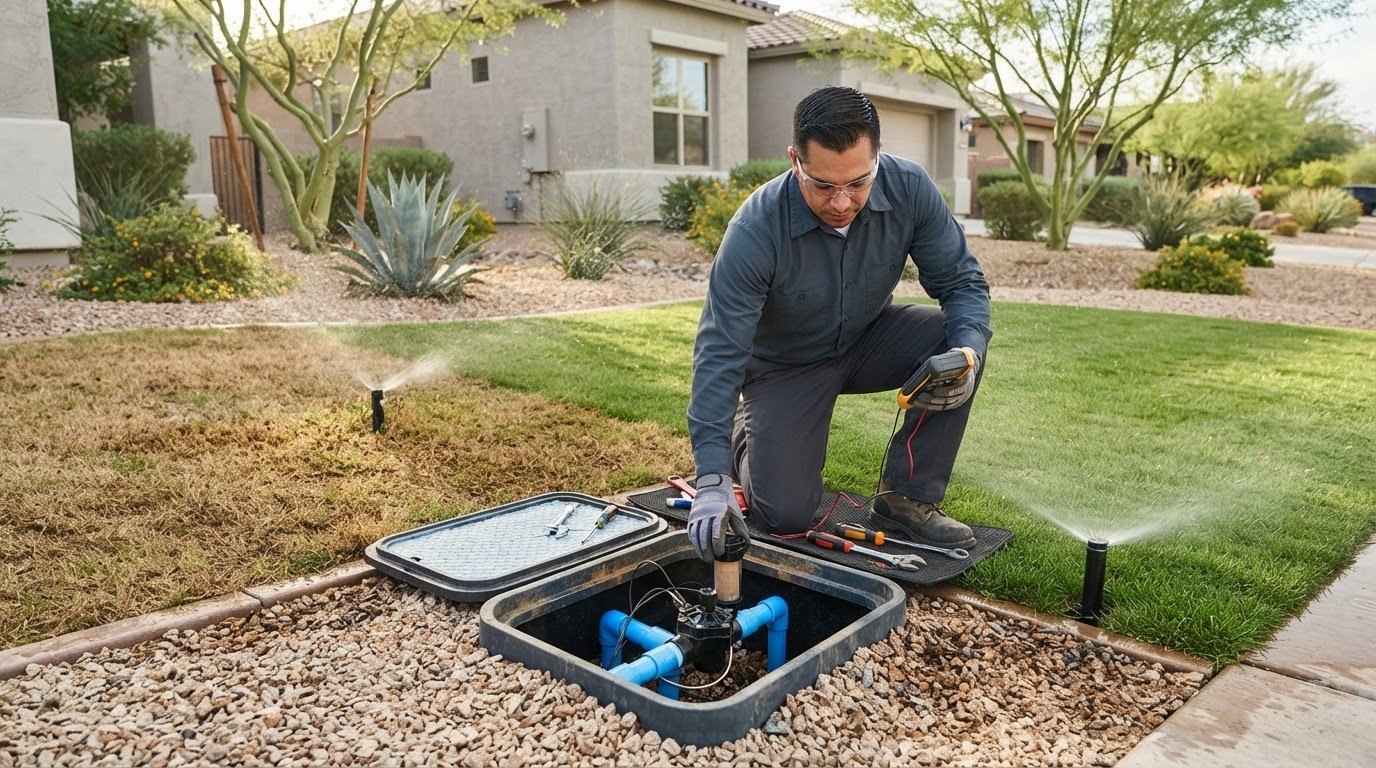
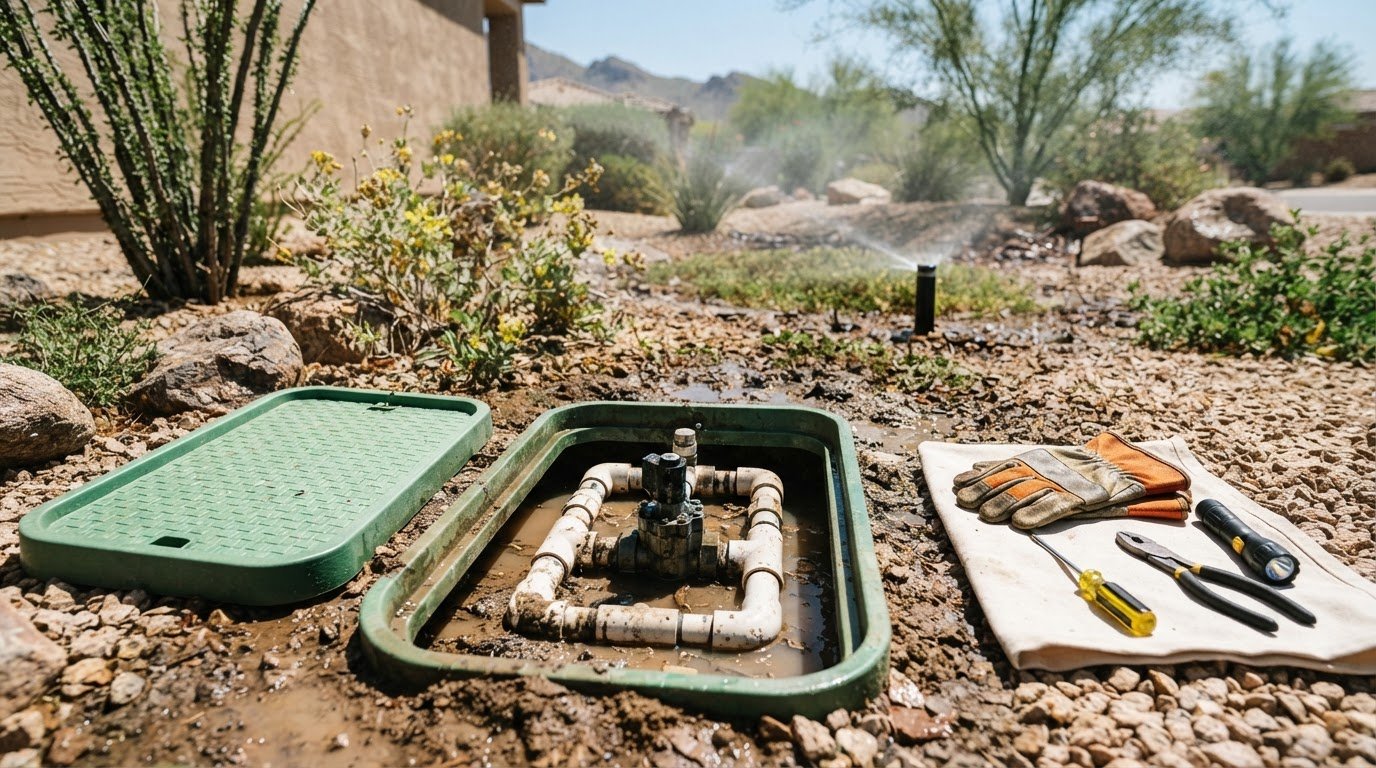
Don't overlook the valve box. This is where mechanical components meet sensitive electrical connections. Check for standing water, which often signals a leaking valve or a failing seal. Look for signs of chewed or frayed wires, as desert rodents often find these boxes to be ideal nesting spots. If you notice loose connections or corroded terminals, it's best to address these irrigation wiring issues before they cause a complete system shutdown.
Flushing Your Drip Lines Safely
Flushing is a critical but often ignored step in desert irrigation care. Over time, fine silt and mineral particles settle at the ends of your poly lines, creating a sludge that eventually bypasses emitters. To clear this debris, locate the end caps or flush valves at the end of each zone. Remove the caps and run the system for two to three minutes until the water runs clear. In the West Valley, we recommend performing this flush at least twice a year to prevent sediment from migrating into your emitters and causing permanent blockages.
Cleaning and Replacing Clogged Emitters
A healthy emitter should provide a steady drip or a controlled stream, depending on its specific gallon-per-hour rating. If you notice an emitter is spraying wildly or barely dampening the soil, it's time for intervention. For minor mineral buildup, you can try the "soak and poke" method by clearing the orifice with a small needle or soaking the head in a descaling solution. However, if the internal diaphragm is damaged by UV exposure, you'll need a professional drip irrigation emitter repair to restore proper flow rates. If your system requires extensive component updates, scheduling a professional evaluation is the most efficient way to ensure long-term reliability.
Troubleshooting Common Failures in Desert Systems
When an irrigation system underperforms, the symptoms often overlap, making the process of isolation essential for a successful repair. Troubleshooting is a methodical search for the point of failure, whether it's a mechanical break or an electrical fault. By applying these drip irrigation maintenance tips Arizona homeowners can often identify the root cause of a problem before it leads to widespread landscape loss. The key is to look for physical clues that point toward specific component failures.
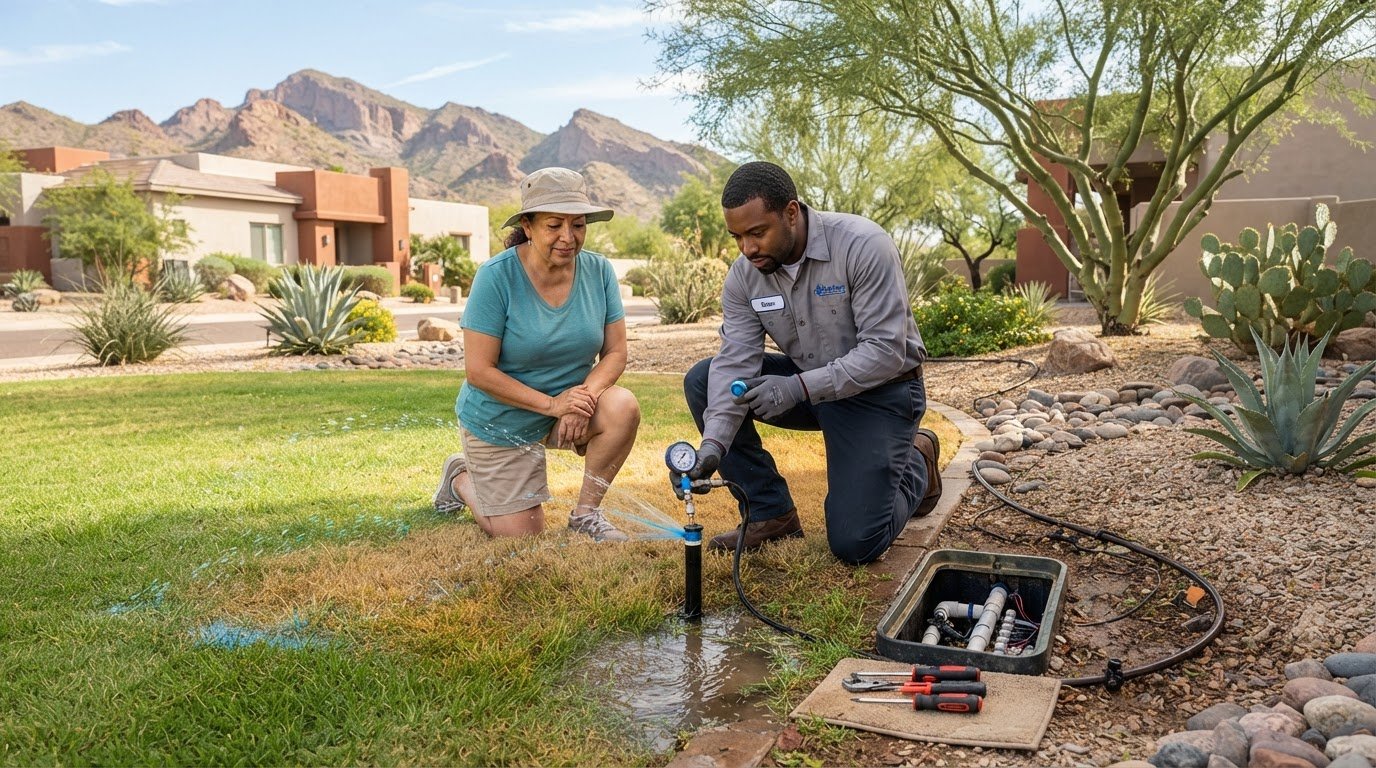
Low water pressure is a frequent issue that can stem from several sources. While a visible geyser indicates a broken poly line, a general drop in pressure across an entire zone often points toward a failing backflow preventer or a partially closed main shut-off valve. Conversely, uneven watering, where plants at the end of the line are dying while those closest to the valve thrive, typically indicates that the system's pressure has dropped below the threshold required to push water through the entire circuit. This is often caused by adding too many emitters to a single line or a hidden mid-line restriction.
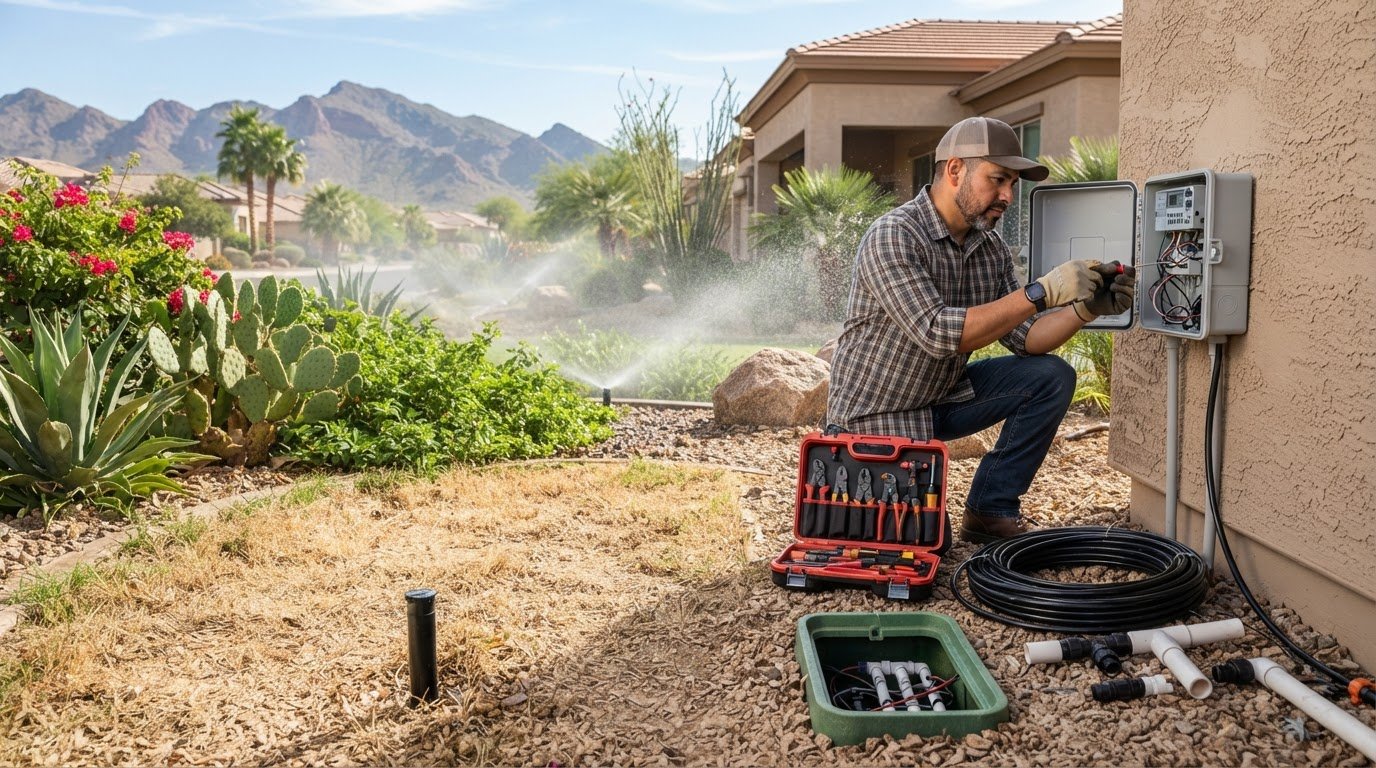
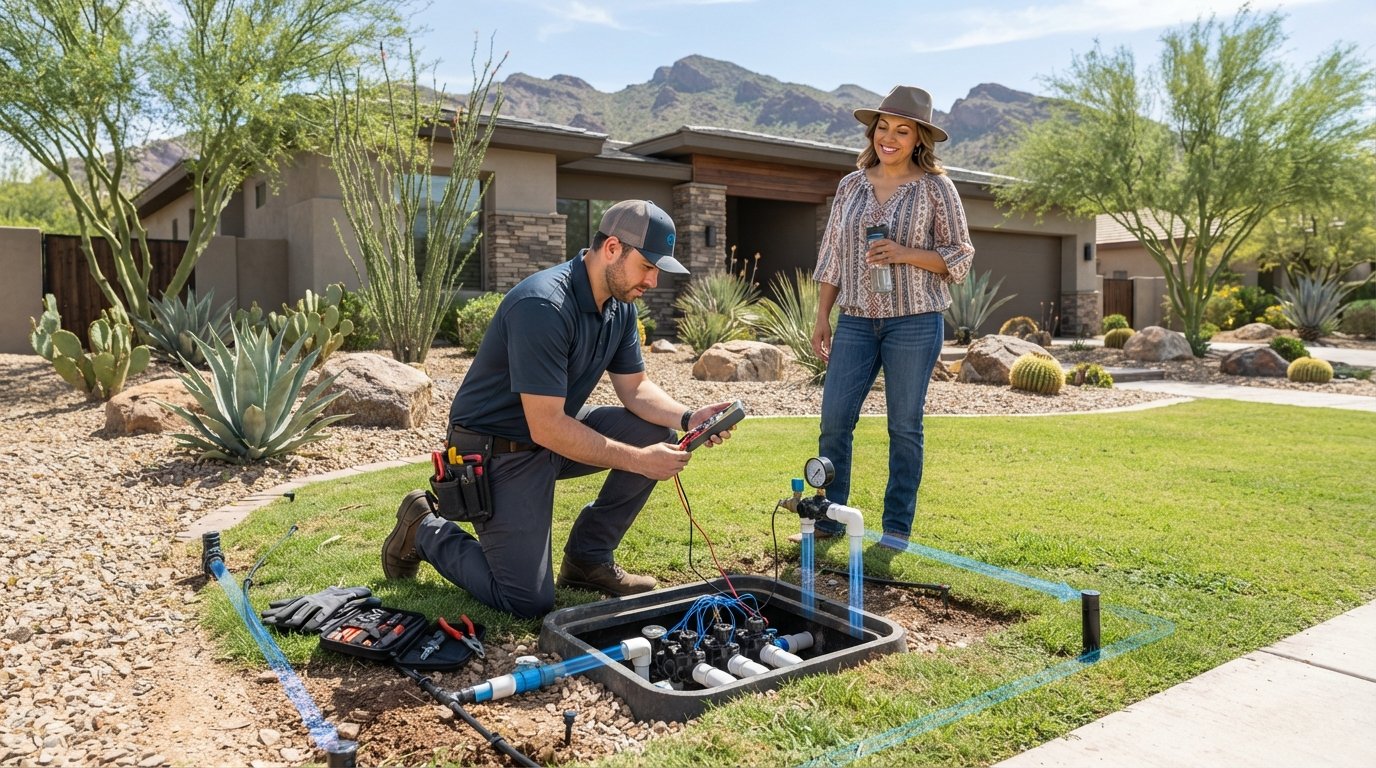
Timer issues also require a specific diagnostic approach. If your controller is unresponsive, always begin by replacing the backup battery. However, if the timer appears functional but certain zones fail to activate, the problem likely resides in the field. Persistent electrical issues or "fault" codes on your screen often necessitate professional irrigation wiring diagnostics to locate shorted solenoids or corroded underground splices that prevent the signal from reaching the valves.
Diagnosing Valve and Solenoid Issues
A zone that refuses to turn off or fails to start often has a valve-related malfunction. You can test this by using the manual bleed screw on the valve itself. If turning the screw activates the zone, the problem is likely electrical, involving the solenoid or the wiring. If the zone still won't start or won't shut down when the screw is tightened, the internal diaphragm is likely torn or obstructed by mineral scale. Maintaining your valves and backflow assembly is vital, as these components regulate the entire system's timing and safety.
Detecting Underground Pipe Leaks
The "Soggy Spot" mystery is a common occurrence in Surprise and Peoria yards, where a patch of gravel remains damp long after the system has finished running. To confirm a hidden leak, perform a "Meter Test" by ensuring all water in the house is off and checking your water meter's flow indicator. If the dial is spinning, you have a leak. Utilizing professional irrigation pipe leak detection is the most reliable way to pinpoint a break without unnecessary digging. Once found, a professional irrigation PVC pipe replacement will restore the integrity of your mainline and stabilize your monthly water costs.
Optimizing Your System for Water Conservation
Another key strategy for conservation is the use of hydrozones. By grouping plants with similar water requirements on separate valves, you avoid the common mistake of overwatering desert-adapted cacti just to keep a citrus tree alive. This targeted approach prevents root rot in native species while ensuring high-water-use plants get the deep hydration they require. When your landscape is zoned correctly, you stop paying for water that your desert-hardy plants don't actually need.
The Role of Pressure Regulators
Arizona's municipal water pressure often exceeds 60 or 80 PSI, which is far too high for delicate drip components. When pressure isn't controlled, it leads to "blown out" emitters that pop off their lines, creating massive water waste and potential plant damage. We recommend maintaining a steady 20-30 PSI, which is the "sweet spot" for ensuring consistent flow without stressing the fittings. Pressure regulation is the #1 way to extend poly pipe life. If you hear a high-pitched whistling from your valve box or see misting rather than dripping at the emitter, your regulator has likely failed and needs replacement.
Smart Controller Programming for Surprise, AZ
Modern irrigation technology has made conservation much simpler for residents in Surprise and Peoria. Upgrading to a smart controller allows your system to track real-time weather data and automatically skip cycles during a rain event. For homes with heavy caliche soil, we program a "Cycle and Soak" routine. This method breaks a long watering session into several shorter bursts, allowing the water to penetrate the dense soil rather than running off into the street. During the Monsoon season, the increased humidity means plants lose less moisture to evaporation, so your controller can reduce run times accordingly. If you're looking to modernize your layout, our team provides comprehensive design and installation services to maximize efficiency. To begin your system upgrade, contact our specialists today for a professional consultation.
When to Call a Professional Irrigation Specialist
Distinguishing between a DIY fix and a professional requirement is vital for protecting your property. While most drip irrigation maintenance tips Arizona homeowners follow cover surface-level issues, some failures occur deep within the mechanical or electrical infrastructure of the system. Complex electrical faults, for example, often involve underground wiring that has corroded or been severed by shifting desert soil. Locating these breaks without digging up your entire yard requires specialized wire-tracing equipment and professional diagnostics to restore communication between your timer and valves.
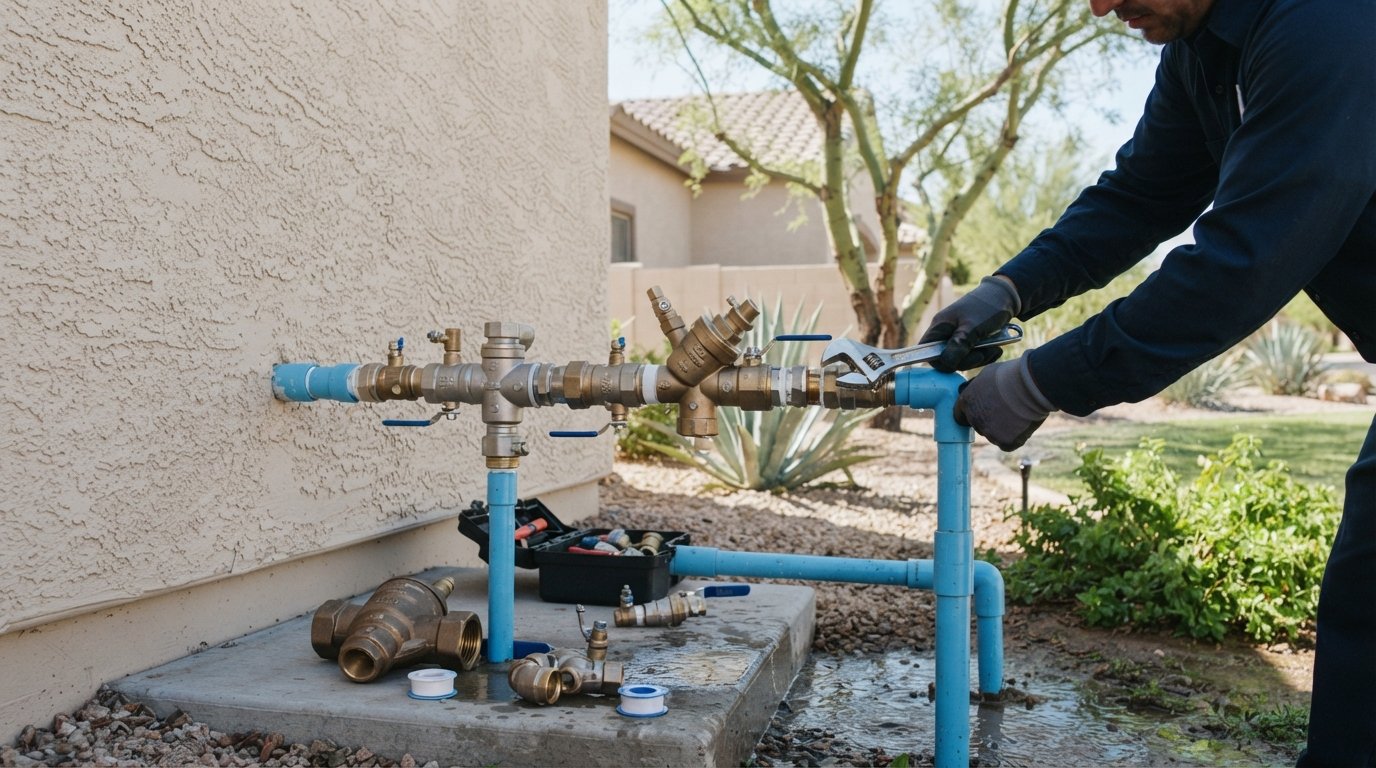
Safety and code compliance also dictate when a specialist is necessary. Your backflow preventer is a critical safety component that keeps non-potable irrigation water from siphoning back into your home's drinking supply. If you notice a steady leak from the backflow assembly or a drop in house pressure, it represents a potential health hazard that requires immediate attention. Similarly, major PVC mainline breaks, especially those located under concrete driveways or within the root balls of mature trees, require precise surgical repairs to restore flow without compromising your home's foundation.
Many homeowners eventually realize that their original "builder grade" system was never designed for long-term desert survival. If you're constantly chasing leaks or replacing cracked poly lines, it may be time to move beyond patchwork repairs. Investing in a custom drip irrigation design allows for a more robust layout featuring thicker-walled tubing and strategically placed valves that can actually withstand 115°F summers.
The Sonora Sprinkler Inc. Difference
As a family-owned business founded circa 1999, we've spent decades refining our approach to residential irrigation in the West Valley. We don't split our focus with landscaping or commercial projects; instead, we maintain a master-level specialization in the unique plumbing and electrical needs of Surprise and Peoria homes. Our philosophy centers on steady, professional assurance and grounded expertise. Sonora Sprinkler Inc. prioritizes the long-term health of your property by providing durable, permanent solutions rather than temporary patches that will only fail during the next heatwave. While following basic drip irrigation maintenance tips Arizona residents can manage on their own is helpful, our team provides the technical depth required for complex system stabilization.
Schedule Your Drip System Tune-Up
A professional "Summer Ready" audit goes beyond the standard drip irrigation maintenance tips Arizona homeowners use by providing a deep-dive mechanical assessment. Our team performs a comprehensive diagnostic check of your valves, wiring, and pressure regulators to ensure every component is functioning at peak efficiency. By addressing minor wear now, you prevent the stress of plant loss and high water bills later in the season. We identify potential failures before they become landscape emergencies, giving you peace of mind throughout the hottest months. Contact Sonora Sprinkler Inc. today for expert drip irrigation maintenance and give your desert landscape the reliable hydration it deserves.
Ensuring System Longevity in the Sonoran Desert
Maintaining a healthy landscape in the West Valley requires more than just a functional timer; it demands a system that can withstand the unique environmental pressures of our region. By implementing the drip irrigation maintenance tips Arizona homeowners need, such as routine line flushing and pressure regulation, you can prevent mineral clogs and avoid the high costs of plant loss. These proactive steps ensure your irrigation components remain durable through the most extreme summer heat.
As licensed residential irrigation experts, Sonora Sprinkler Inc. has been serving the West Valley since 1999. We specialize exclusively in desert drip and PVC systems, providing the technical precision required for complex diagnostics and repairs. If your system is showing signs of age or inefficiency, don't wait for a mid-summer emergency. Request a Professional Irrigation Diagnostic in Surprise & Peoria to secure the long-term health of your property. With a well-maintained system, you can enjoy a thriving desert landscape and stable water costs for years to come.
Frequently Asked Questions
How often should I check my drip system in Arizona?
You should perform a visual inspection of your drip system at least once a month. Walking the lines while they're running allows you to spot "geysers" from rodent damage or dry zones caused by clogged emitters before your plants suffer. These monthly checks are among the most effective drip irrigation maintenance tips Arizona homeowners can follow to prevent expensive landscape loss during the peak summer months.
Why are my drip emitters constantly clogging with white crust?
The white crust is a mineral deposit caused by the high calcium and magnesium content in Arizona's hard water. As water evaporates at the emitter head, these minerals solidify into a "salt crust" that eventually seals the opening. Regular flushing of the lines and cleaning emitter heads with a descaling solution can help, but heavily crusted emitters usually require professional replacement to restore proper flow.
What is the best time of day to run drip irrigation in Surprise, AZ?
The ideal time to run your irrigation in Surprise and Peoria is between 3:00 AM and 6:00 AM. Watering during these early morning hours minimizes moisture loss from evaporation and ensures that water reaches the root zone before the ground heats up. Avoiding evening watering is also beneficial, as it prevents water from sitting on foliage overnight, which can sometimes encourage fungal growth in certain plant species.
How long should I run my drip system for desert trees vs. shrubs?
Desert trees and shrubs require deep, infrequent watering to encourage strong root systems. For mature desert trees, run your system for 2 to 4 hours to ensure water reaches a depth of 24 to 36 inches. Shrubs typically need 1 to 2 hours to reach a depth of 12 to 18 inches. Always adjust these durations based on the specific gallon-per-hour rating of your emitters and current seasonal temperatures.
Can I repair a broken poly drip line myself?
You can often repair minor surface-level punctures in poly tubing using basic couplers and "goof plugs" found at local hardware stores. However, repairs to buried PVC mainlines or complex valve issues should be handled by a specialist. Professional intervention ensures that the repair can withstand the high pressure of our local municipal water supply and prevents recurring leaks that lead to water waste.
Why is my water bill so high even though my plants look dry?
High water bills coupled with dry plants usually indicate a "silent leak" in your mainline or a failing valve that isn't opening properly. If the leak is underground, water may be draining into the soil without ever reaching the surface or your plants' roots. A professional diagnostic can pinpoint the exact location of the break, saving you from inflated monthly costs and the eventual death of your landscape.
Do I need to turn off my drip system during the Arizona Monsoon?
You should adjust your watering schedule during the monsoon season if your yard receives significant rainfall. While the humidity helps plants retain moisture, a single heavy storm doesn't always provide enough deep saturation for trees. Using a smart irrigation controller is the most efficient solution, as it utilizes local weather data to automatically skip cycles when it rains, ensuring you don't waste water during active storms.
What is the average lifespan of a drip irrigation system in the desert?
A standard drip system in the Arizona desert typically lasts between 10 and 15 years before the poly tubing becomes too brittle for reliable use. While buried PVC mainlines can last much longer, the surface-level components face constant degradation from UV rays and extreme heat. Consistent care and timely repairs are essential to maximize this lifespan and protect the long-term health of your desert landscape investment.