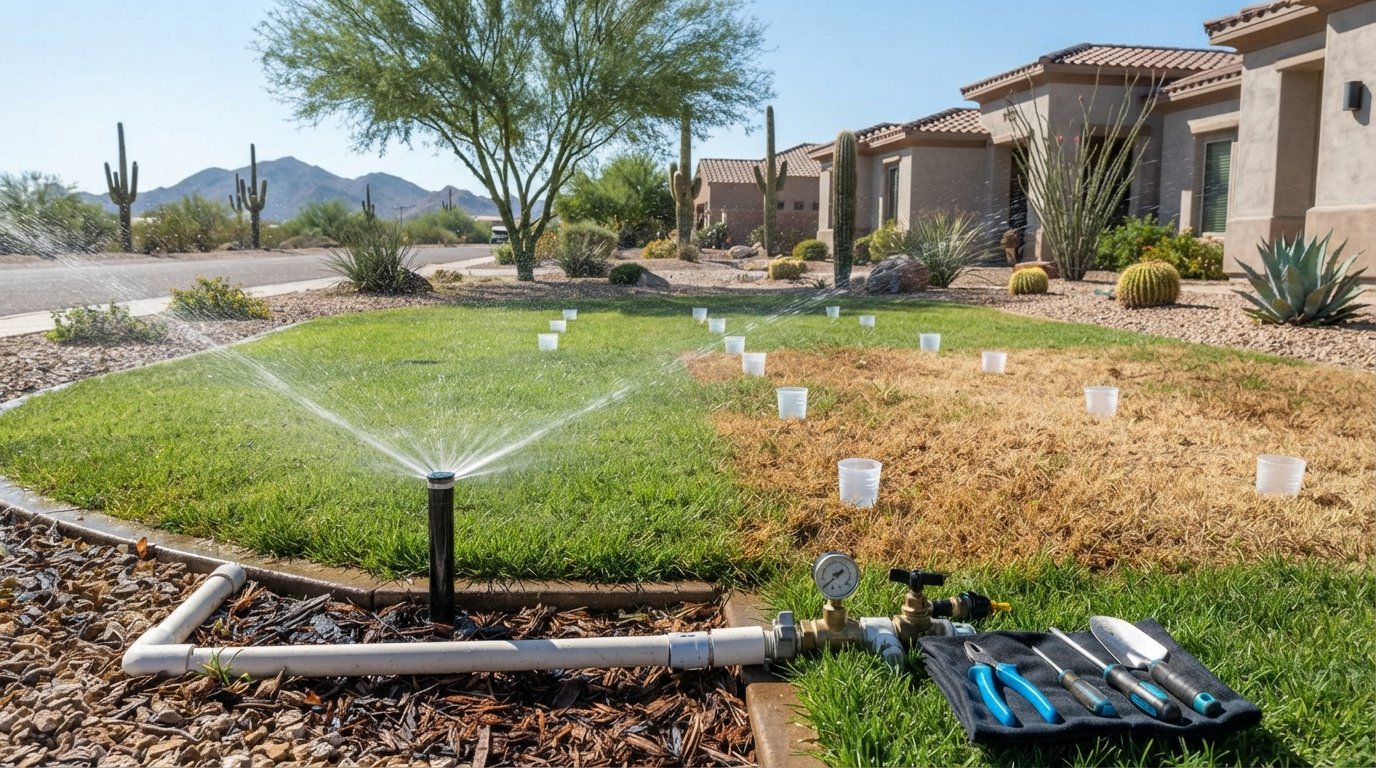
What if the widening brown patch in your Peoria lawn isn't a clogged nozzle or a broken pipe, but a silent communication failure buried deep underground? It's a common frustration for homeowners who see their controller's screen active while their plants remain parched. You shouldn't have to resort to trial and error parts swapping that only drains your wallet without fixing the root cause. When you need reliable irrigation wiring repair Peoria AZ, the goal isn't just a quick fix; it's about protecting your landscaping from the unforgiving Arizona sun.
We understand the worry that comes with unexplained dry spots and the potential for costly controller damage. This article explains how professional diagnostics can identify specific electrical breaks, restoring the nervous system of your watering setup. You'll discover how desert-hardened repair techniques withstand our unique soil conditions and why precision troubleshooting is the only way to ensure long-term automation. We'll walk through the process of moving from manual hose-watering back to a system you can actually trust.
Key Takeaways
- Understand how the low-voltage "nervous system" of your irrigation setup connects your controller to your valves and why it is sensitive to electrical resistance.
- Identify the environmental factors in Arizona that cause wire insulation to fail, necessitating expert irrigation wiring repair Peoria AZ to prevent permanent controller damage.
- Learn how professional wire tracing and multimeter diagnostics can pinpoint the exact location of an electrical break without the need for destructive digging.
- Recognize the common symptoms of a communication failure, such as a specific watering zone failing to fire even when the timer shows it is active.
- Discover how utilizing desert-rated materials and protective PVC conduits ensures your system remains durable against Peoria's extreme soil temperatures.
Understanding the Complexity of Irrigation Wiring in Peoria Landscapes
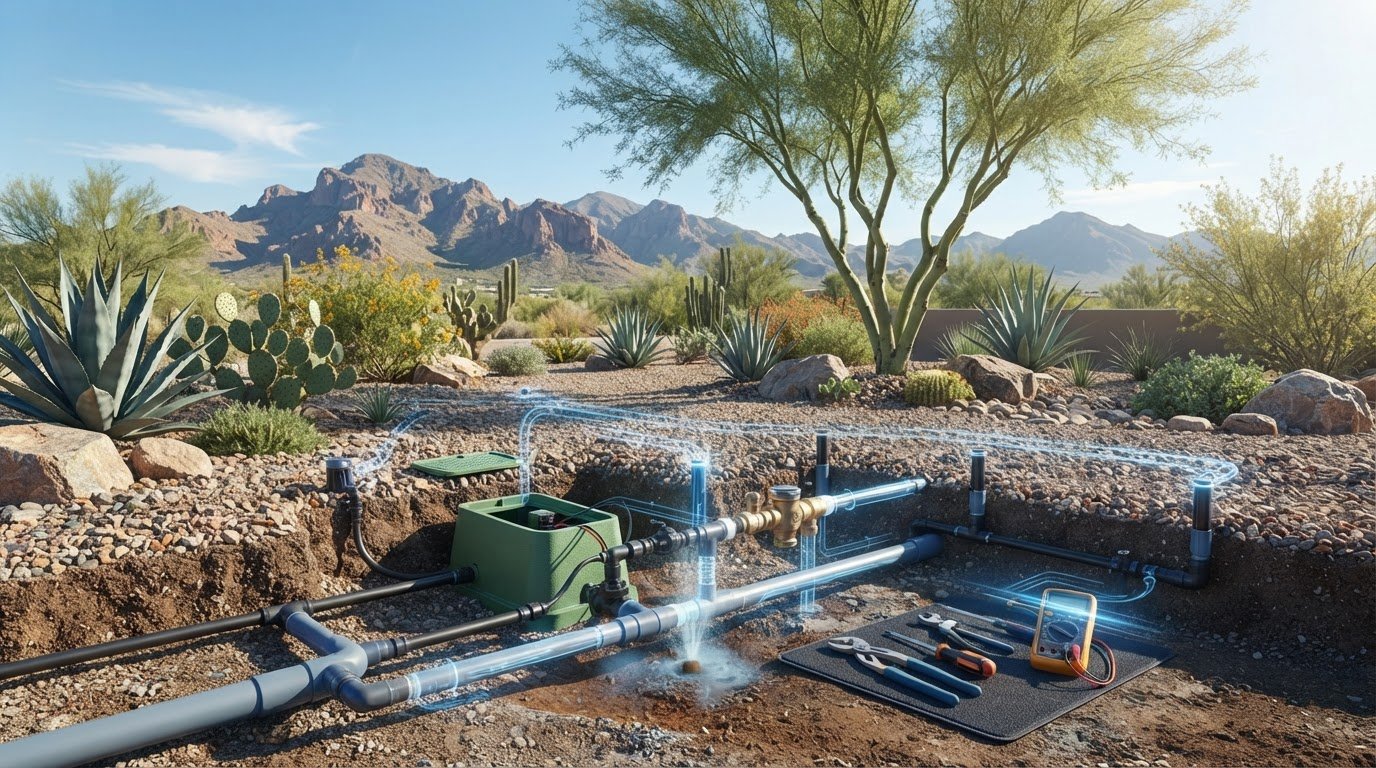
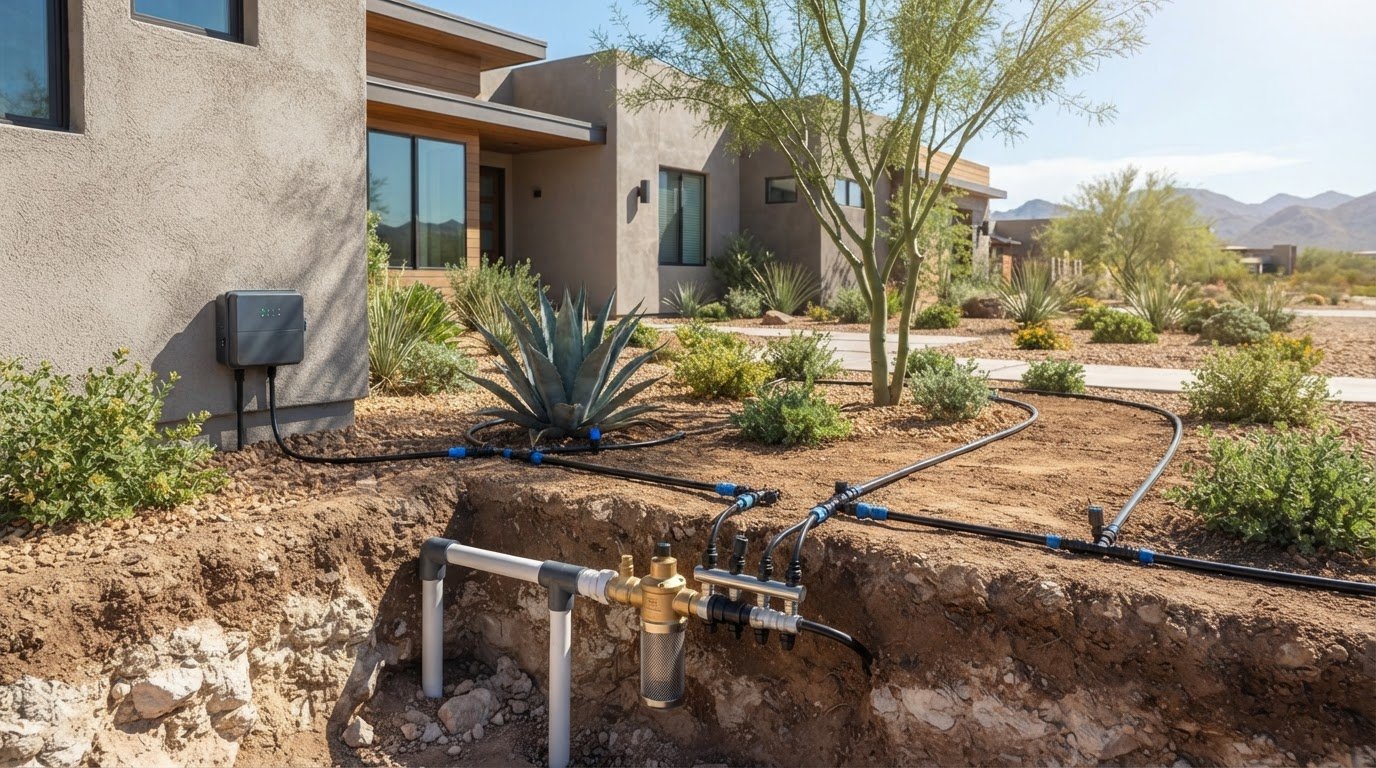
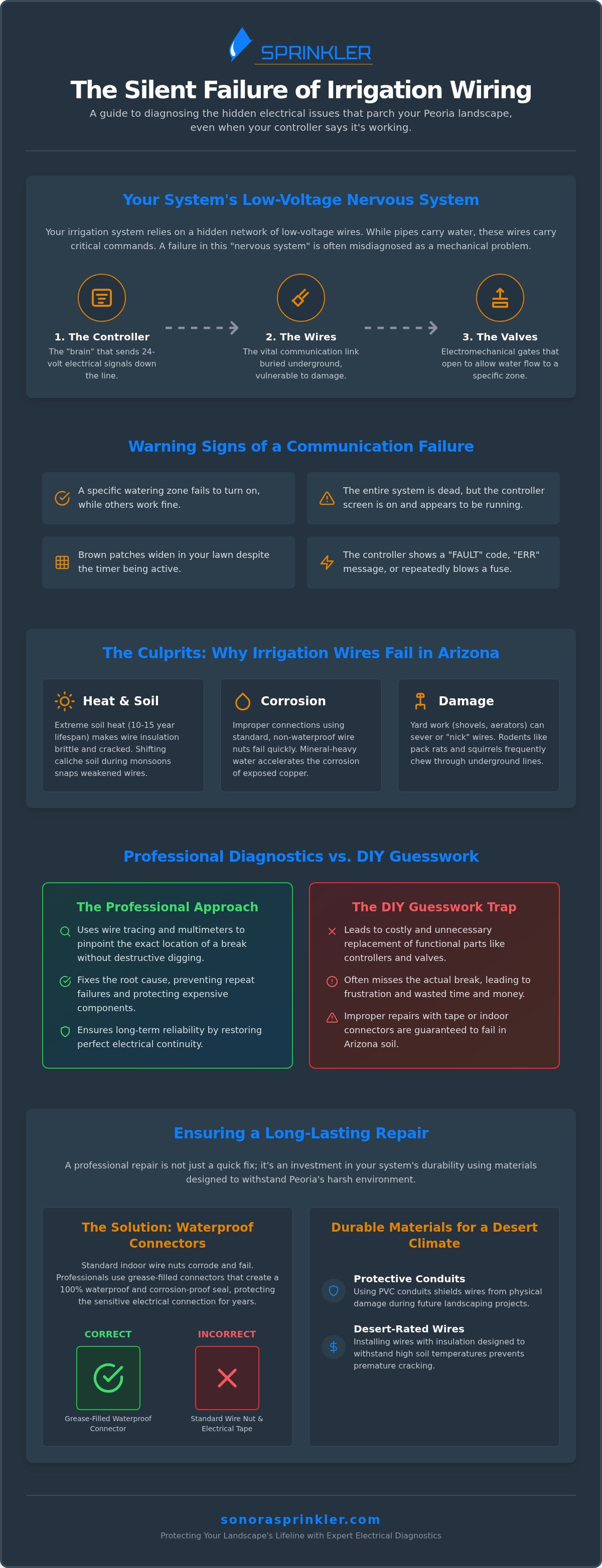
Peoria landscapes rely on a hidden network of low-voltage wires that function as the irrigation system's nervous system. This wiring acts as the vital communication link between the controller, usually mounted in your garage or on an exterior wall, and the individual valves buried in your yard. While the pipes carry the water, these wires carry the commands. When this link fails, your plants stop receiving the hydration they need, even if your timer appears to be functioning perfectly. Many homeowners mistakenly replace expensive controllers or valves when the real culprit is a degraded wire or a loose connection. Seeking professional irrigation wiring repair Peoria AZ ensures that the actual point of failure is identified rather than simply replacing functioning parts.
Wiring issues are deceptive because they often masquerade as mechanical failures. A zone that won't turn on looks like a stuck valve, while a completely dead system looks like a broken controller. In most residential setups, a single "common" wire serves every valve in the system. If this one wire is severed by a shovel or corroded by soil moisture, the entire system will fail to activate. This creates a confusing scenario where the controller shows the system is running, but no water ever reaches the lawn. Without technical diagnostics, it's easy to waste money on parts that don't need replacing.
The Role of the Irrigation Controller
The controller serves as the central hub, sending 24-volt electrical signals to specific zones based on your programmed schedule. This localized automation mirrors the complex systems managed by professionals like Boyd Brothers Service Inc., who specialize in integrated building automation and electrical efficiency. The solenoid acts as the electromechanical bridge between the system's electricity and the actual flow of water. If a wire is frayed or touching another wire, it can cause a short circuit. This often results in a blown internal fuse or a "fault" code on a modern digital controller, which protects the sensitive electronics from permanent damage. Identifying these shorts early is essential to prevent the need for a total controller replacement.
Why Low-Voltage Systems Require High-Level Precision
Low-voltage systems are incredibly sensitive to electrical resistance. While a high-voltage household circuit might push through a mediocre connection, a 24V irrigation system requires perfect continuity to operate correctly. Simple wire twists secured with standard electrical tape are insufficient for the damp, high-heat environment of Arizona soil. Over time, these poor connections oxidize and increase resistance, leading to a significant voltage drop. On larger Peoria properties with long wire runs, this drop can become so severe that the solenoid never receives enough power to click open. Professional irrigation wiring repair Peoria AZ focuses on restoring this electrical continuity through precise tracing and the use of durable, waterproof splicing techniques.
Common Causes of Electrical Irrigation Failure in Arizona
Arizona's climate presents a unique set of challenges for residential irrigation systems. While the scorching surface temperatures are well-known, the heat that penetrates the soil is equally destructive. Over a lifespan of 10 to 15 years, extreme soil heat causes wire insulation to become brittle and crack. Once the protective coating fails, moisture enters the copper core, leading to rapid degradation and system failure. Homeowners often find that a system that worked for a decade suddenly requires comprehensive irrigation wiring repair Peoria AZ because the original materials have reached their environmental limit.
The geology of the West Valley also plays a significant role in these failures. Peoria's caliche soil is notoriously difficult to work with; it's a hardened layer of calcium carbonate that acts much like concrete. During heavy monsoon rains, the soil can shift or expand, putting immense physical stress on buried lines. These shifts can snap brittle wires or pull connections apart at their weakest points. Additionally, desert wildlife such as pack rats and ground squirrels are frequently to blame. These rodents often chew through irrigation lines and wiring, causing immediate and confusing electrical failures that require specialized tracing to locate.
Corrosion and Improper Waterproofing
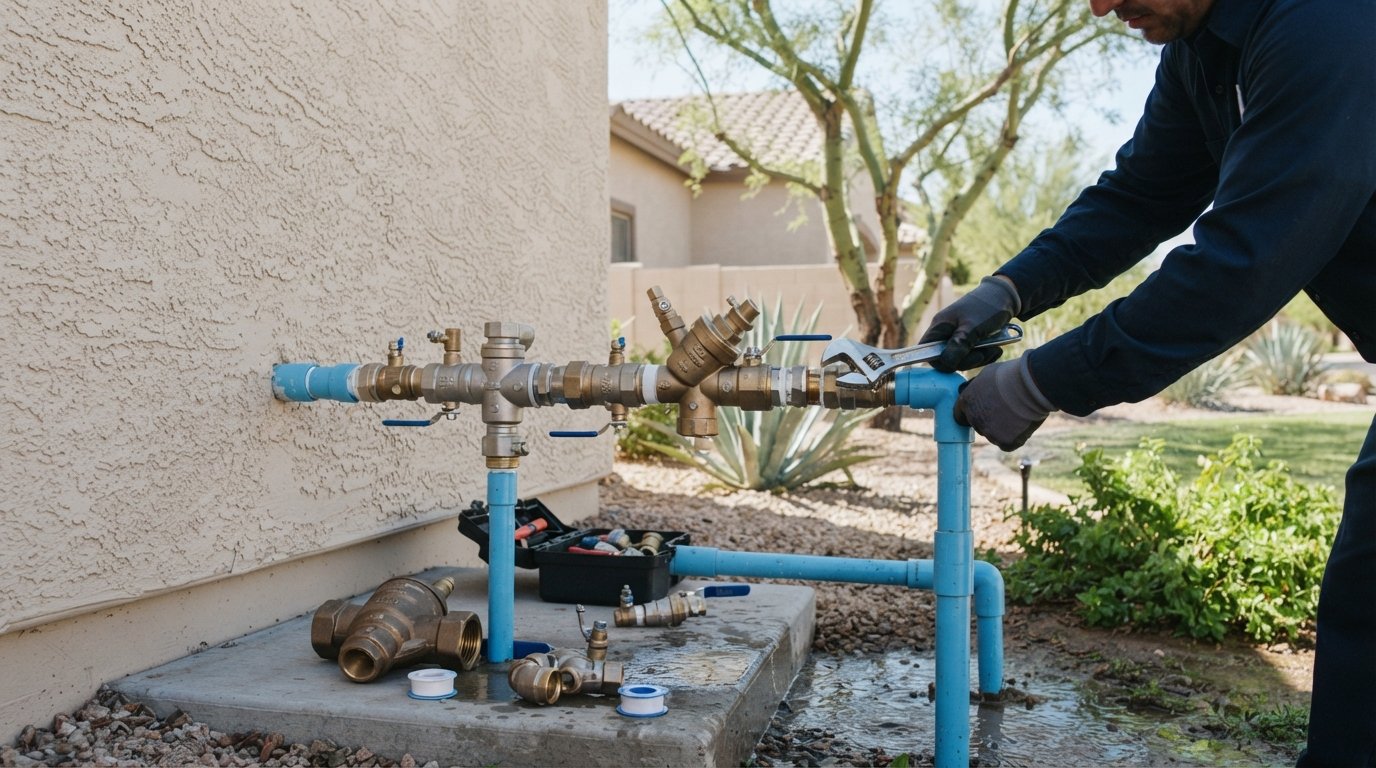
A common mistake in DIY repairs or substandard installations is the use of standard electrical wire nuts. These are designed for dry, indoor environments and quickly fail in the damp, humid conditions of an irrigation valve box. Peoria's mineral-heavy water is particularly aggressive, accelerating the corrosion of exposed copper terminals. To ensure a lasting fix, we utilize grease-filled waterproof connectors that seal out moisture and minerals. This level of protection is vital for maintaining the low-voltage signals required for your system to operate reliably throughout the year.
Mechanical Damage from Landscaping and Digging
Mechanical failures often occur during routine yard maintenance. A misplaced shovel strike or the use of a heavy-duty aerator can easily sever hidden lines. Perhaps more dangerous are "nicked" wires. These are wires that were hit but not completely cut; they continue to function for a few months before the internal copper eventually corrodes away and the connection breaks. If you are planning a major yard project, following professional Design and Installation standards for wire burial depth can prevent these accidents. If your system is already showing signs of intermittent failure, scheduling a diagnostic review can help identify these hidden damage points before they cause a total system shutdown.
Professional Wiring Diagnostics and Wire Tracing Explained
Professional irrigation wiring repair Peoria AZ is fundamentally about precision diagnostics. The objective of a master technician is to identify the source of a failure without turning your well-maintained yard into a series of trenches. While a generalist might suggest replacing the entire controller or digging up every valve box, an expert uses electrical data to guide the repair. This methodical approach ensures that the "nervous system" of your system is restored with minimal disruption to your property's aesthetics. It's a surgical process that prioritizes accuracy over guesswork.
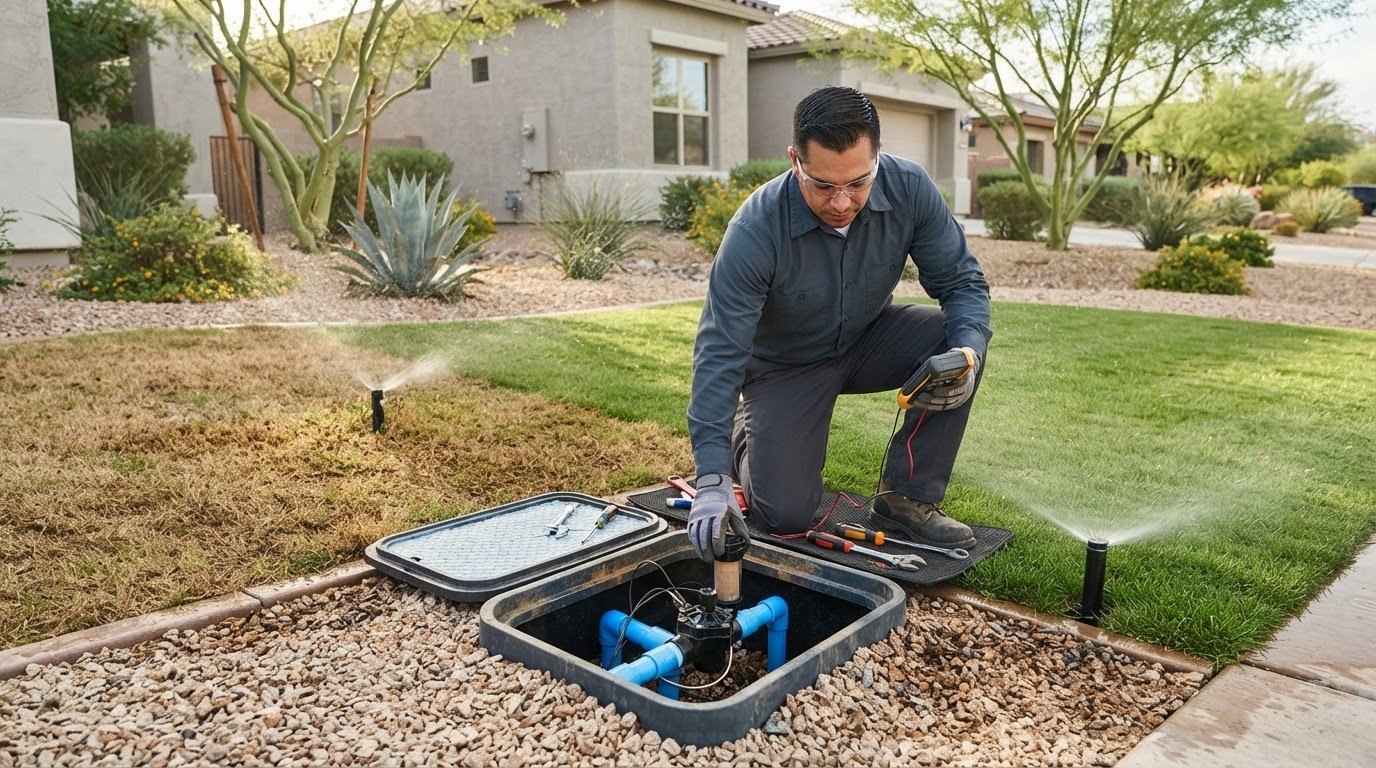
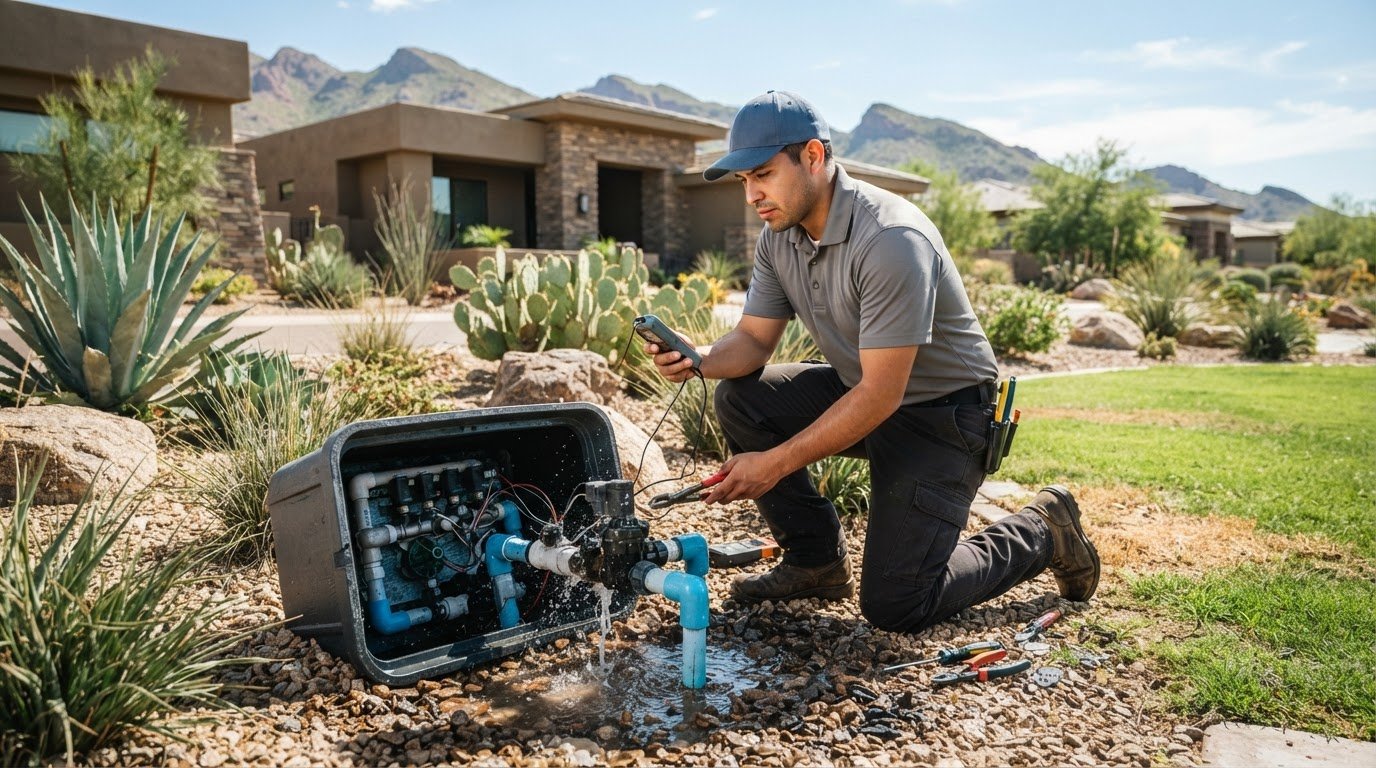
Many homeowners fall into the trap of "trial and error" part replacement, which often proves more expensive than a professional diagnostic service. You might spend hundreds of dollars on a new smart controller only to find the original wiring fault still prevents the zones from firing. We begin every electrical service by using a multimeter to test for ohms and voltage directly at the controller terminals. This allows us to see exactly how much resistance is on each circuit. If the resistance is too high, there's a bad connection; if it's zero, the wire is completely severed. These numbers don't lie, and they provide a clear roadmap for the repair.
The Step-by-Step Diagnostic Process
We follow a logical progression to isolate the fault, moving from the brain of the system out to the field. This systematic approach includes:
- Step 1: Testing Controller Output: We verify that the timer is actually sending the required 24 volts to the terminal strip. This rules out a computer failure or a blown internal transformer.
- Step 2: Checking Solenoid Resistance: By measuring the ohms of each zone wire, we can determine if the solenoid in the ground is electrically sound or if it has "shorted out" and died.
- Step 3: Tracing the Wire Path: Once we confirm the controller and solenoid are healthy, we use induction tracing to identify the exact point of the "open" or "short" in the buried wire run.
Advanced Equipment: Wire Tracers and Fault Finders
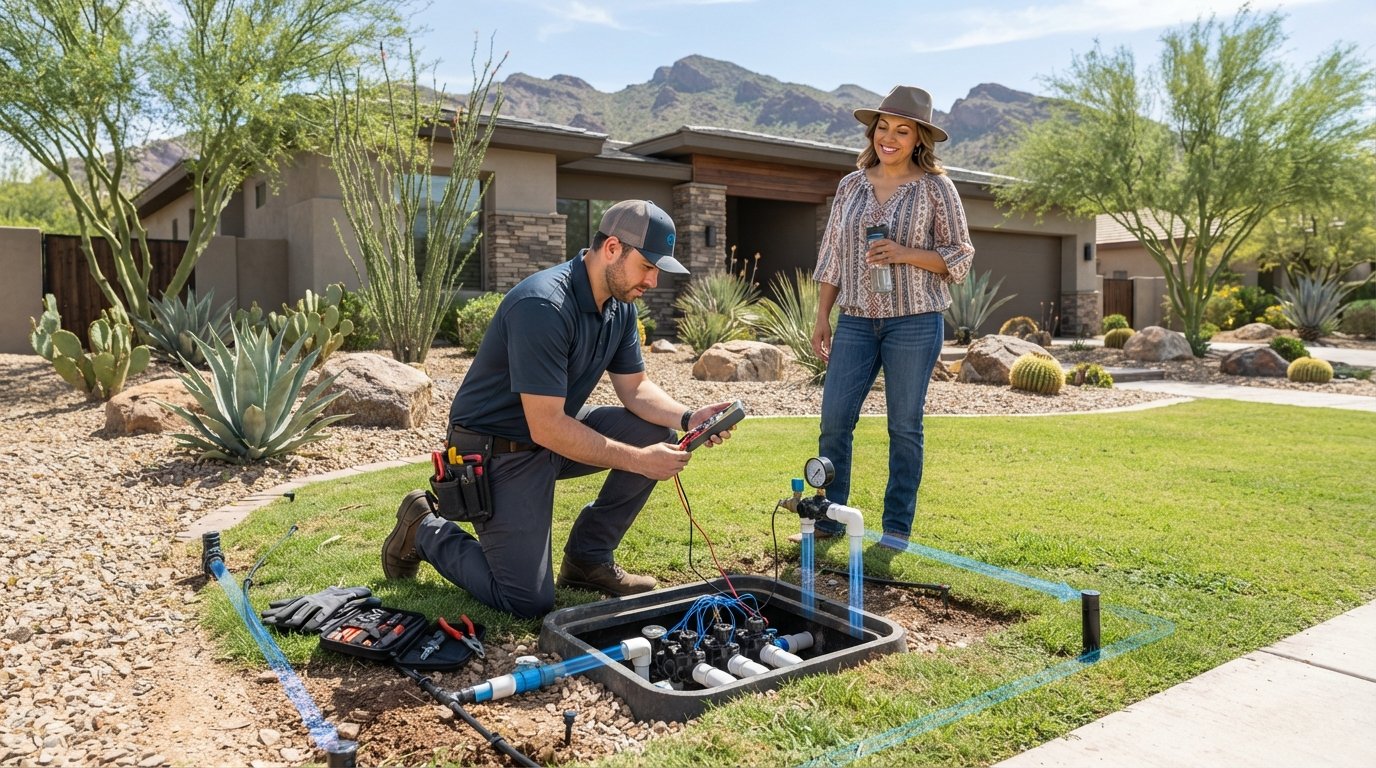
Locating a single broken wire beneath several inches of soil and decorative rock requires specialized technology. An induction wire tracer consists of a transmitter that sends a specific frequency through the wire and a handheld receiver that allows a technician to "hear" the signal through the ground. As we walk the path of the wire, the signal remains steady until we reach the break, where the sound drops off completely. Fault finders detect electricity leaking into the Peoria soil through damaged insulation. This allows us to pinpoint a break to within a few inches, ensuring that our repair footprint is as small as possible while providing a permanent, desert-hardened solution.
Signs Your Peoria System Needs Expert Electrical Repair
Identifying an electrical fault requires looking beyond the sprinkler heads. While a broken pipe creates a visible puddle, a wiring failure is often invisible. The most common sign is the "Zone Won't Fire" scenario. You look at your controller and see the station is active, but out in the yard, there's no water flow. This indicates a break in the communication line. If you notice several zones failing simultaneously, the issue is likely the "common wire" that connects all valves back to the timer. When multiple valves stop responding at once, it's rarely a mechanical coincidence; it's a signal that you need expert irrigation wiring repair Peoria AZ .
Modern digital controllers often provide a direct warning through "Fault" or "Error" messages. These codes are designed to protect the internal circuitry from damage caused by a short circuit. If your screen displays these alerts, it's a clear signal that the system has detected an electrical abnormality. Ignoring these warnings can lead to a complete board failure. This turns a simple wiring fix into a full controller replacement. The controller says "on." The grass stays dry. This mismatch is the hallmark of a system's nervous system failure.
Intermittent Performance and Ghost Issues
Heat-related issues are particularly common in the West Valley. You might find your system runs perfectly during a 5:00 AM test but fails during a scheduled afternoon cycle. This happens because high temperatures cause copper and insulation to expand. This expansion can pull a marginal connection just far enough apart to break the circuit. These "ghost issues" also include phantom activations where a zone turns on without being programmed. For a deeper look at these specific technical failures, you can read our guide on Irrigation Wiring Diagnostics.
Visual Red Flags in the Valve Box
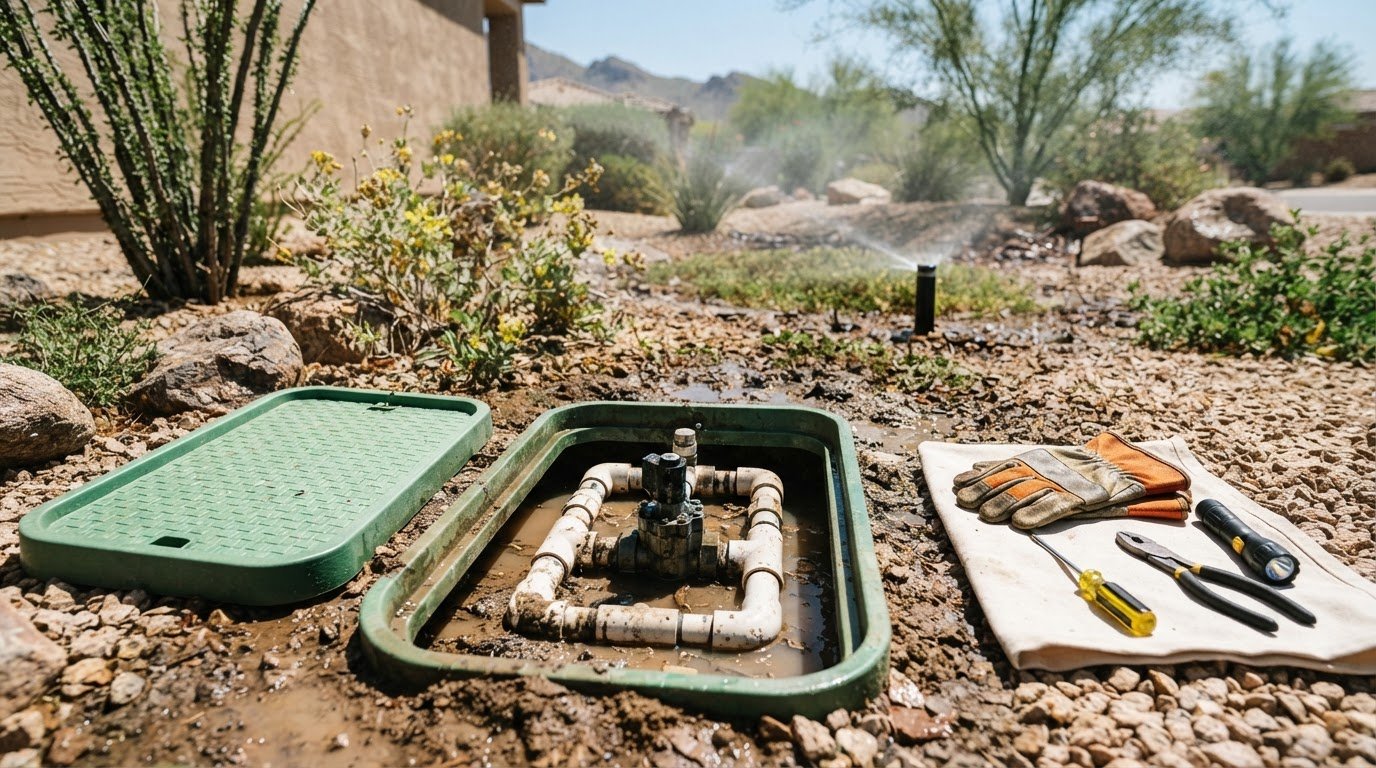
Sometimes the evidence is visible if you know where to look. Open your valve box and inspect the wire connections carefully. Burnt or melted wire nuts are a sign of a high-resistance short circuit that has generated significant heat. You may also see a fine white powder on the wires. This is a symptom of advanced copper corrosion caused by mineral-heavy water and soil moisture. If you see these red flags, it's time to stop DIY troubleshooting and contact a professional for expert irrigation wiring repair Peoria AZ. Restoring these connections properly requires specialized waterproof materials that standard hardware stores often don't carry.
Reliable Irrigation Wiring Repair with Sonora Sprinkler Inc.
Choosing a specialist for irrigation wiring repair Peoria AZ means prioritizing the longevity of your home's most expensive outdoor asset. Since 1999, Sonora Sprinkler Inc. has operated as a family-owned business dedicated exclusively to the residential needs of West Valley homeowners. We understand that a quick fix often leads to a repeat failure when the next monsoon hits or the summer soil temperatures peak. Our approach centers on stability and reliability. We don't just twist wires together; we use professional-grade, grease-filled connectors and, where necessary, protective PVC conduit to shield your system's communication lines from the elements and local wildlife.
Working with a licensed and bonded professional provides a layer of protection that a general handyman cannot offer. Irrigation electrical systems are sensitive. A single mistake during a DIY repair can send a surge back to your timer, potentially frying the logic board of a modern smart controller. By addressing wiring faults proactively, you protect your investment and ensure your landscaping receives consistent hydration without the need for manual intervention. It's about maintaining a system that works as hard as you do to keep your property looking its best.
Our Commitment to Peoria Homeowners
We provide a steady, professional assurance that comes from decades of boots-on-the-ground experience in the Arizona desert. Our goal is to move beyond temporary patches to ensure the long-term health of your landscape. We treat every property with the detail-oriented care of a master craftsman, focusing on precision diagnostics that save you money by avoiding unnecessary parts swapping. You can learn more about our comprehensive approach to Irrigation Repairs and Maintenance to see how we keep systems running efficiently year-round.
Schedule Your Wiring Diagnostic Today
If your controller is showing error codes or specific zones have stopped responding, don't wait for the Arizona heat to take a toll on your plants. We offer the technical troubleshooting expertise required to find and fix complex electrical failures quickly and accurately. Our team is ready to restore your system's automation with the reliability you expect from a local leader. Take the first step toward a worry-free lawn and schedule your professional wiring repair today.
Protect Your Landscape with Precision Electrical Solutions
Maintaining a healthy landscape in Arizona requires a functional communication network between your controller and your valves. We've explored how environmental stressors like caliche soil and extreme heat can degrade your system's nervous system over time. Rather than wasting money on unnecessary part replacements, choosing professional irrigation wiring repair Peoria AZ ensures that the exact point of failure is identified and corrected with precision. Our use of specialized induction wire tracing technology allows us to pinpoint breaks without the disruption of digging up your entire yard.
Since 1999, our family-owned and operated business has focused on providing desert-hardened solutions for local residents. As licensed and bonded experts, we prioritize the long-term health of your property by using materials designed to withstand the harsh West Valley climate. Don't let a simple wiring fault lead to a complete controller failure or parched landscaping. Request a Professional Wiring Diagnostic in Peoria today to restore your system's automation. We're ready to help you keep your outdoor space vibrant and efficient.
Frequently Asked Questions
How do I know if my sprinkler problem is the wire or the valve?
You can distinguish between the two by using a multimeter to test electrical resistance, measured in ohms, at the controller terminals. A reading of zero indicates a completely broken wire, while a very high reading often suggests a solenoid failure within the valve. If the controller indicates a zone is active but the valve doesn't click or vibrate, the electrical signal likely isn't reaching its destination due to a wiring fault.
Can rodents really cause irrigation wiring failure in Peoria?
Yes, desert rodents such as pack rats and ground squirrels frequently chew through buried irrigation wires in the West Valley. These animals are often attracted to the salt in the wire insulation or simply use the lines to sharpen their teeth. This damage requires specialized irrigation wiring repair Peoria AZ to locate the specific breach point hidden beneath your landscaping rock or soil without digging up the whole yard.
Is it safe to repair irrigation wiring myself?
While the 24-volt current in an irrigation system is generally safe for humans, DIY repairs carry a high risk of damaging your expensive controller. Incorrectly splicing wires or creating a short circuit can send a power surge back to the timer's logic board, leading to a total system failure. Professional repairs use waterproof, grease-filled connectors that ensure a long-term, corrosion-resistant seal that standard electrical tape simply cannot provide.
What does a 'zone fault' error on my controller mean?
A "zone fault" or "short" error message means the controller has detected an electrical abnormality that could damage its internal circuitry. This usually happens when two wires touch or a solenoid has failed internally. The controller automatically shuts down that specific zone to protect itself from a surge. You should leave the system off and seek professional diagnostics to prevent a permanent board failure that requires a full replacement.
How long does a professional irrigation wiring diagnostic take?
A professional wiring diagnostic typically takes between 45 and 90 minutes depending on the complexity of the system and the size of the property. This window includes testing the controller output, checking solenoid resistance, and using induction tracing to map the buried wire path. Our goal is to provide an accurate diagnosis quickly so we can move directly to a durable, desert-optimized repair that restores your system's automation.
Why did my common wire fail while the other wires are still working?
The common wire is the single return line that completes the electrical circuit for every valve in your system. If this specific wire breaks, none of your zones will function, even if the individual "hot" wires for each zone are perfectly intact. This explains why a single point of damage can cause a total system shutdown. Identifying a common wire break is a priority during any irrigation wiring repair Peoria AZ service.
Can monsoons damage my underground irrigation wiring?
Arizona monsoons cause significant soil expansion and shifting, especially in Peoria areas with high clay or caliche content. This physical movement can put enough tension on brittle, heat-aged wires to snap them deep underground. Additionally, heavy rains can flood valve boxes, accelerating copper corrosion in connections that weren't properly waterproofed with grease-filled nuts during the original installation. These environmental factors often lead to sudden, unexplained failures.
Will you have to dig up my whole yard to find a wire break?
No, we use advanced induction wire tracing technology to pinpoint the exact location of a break within a few inches. This specialized equipment allows our technicians to "hear" the electrical signal through the ground, identifying the fault without unnecessary trenching. We only need to excavate a small area at the specific point of failure. This surgical approach preserves the beauty of your landscape while ensuring a permanent fix.