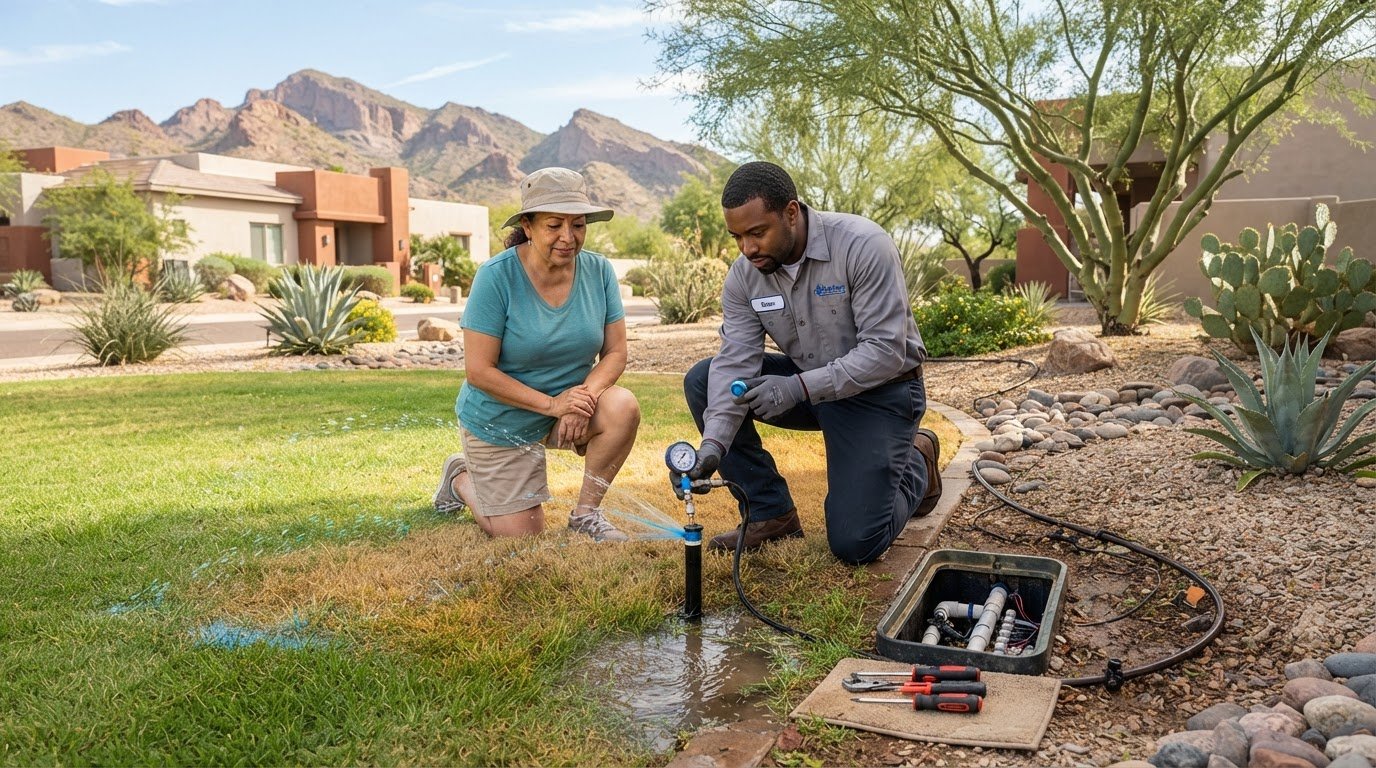
Last Tuesday, a homeowner in Surprise watched his pop-up heads barely crest the soil line while his Bermuda grass turned a brittle shade of straw. Despite his meter spinning rapidly, the spray barely reached two feet. This frustrating scenario is a common sign that you need a low water pressure sprinkler system fix Arizona homeowners can rely on before the summer heat does permanent damage. It's a stressful position to be in when you're caught between rising utility costs and a dying landscape.
You likely already know that water is our most precious resource in the desert, and seeing it wasted through inefficiency is painful for both your wallet and your property's health. We understand the confusion of wondering if the city has dropped your pressure or if a hidden pipe has finally succumbed to the heat. This guide will help you identify the root cause of your pressure loss. We'll cover everything from backflow preventer settings to those elusive underground PVC leaks. By the end, you'll have a clear path toward restoring full coverage and protecting your investment in the Arizona landscape.
Key Takeaways
- Learn to distinguish between localized zone issues and total system failures to accurately target the source of your irrigation trouble.
- Identify the common desert-specific causes of pressure loss, including heat-stressed PVC pipe cracks and backflow valve obstructions.
- Master a step-by-step diagnostic routine to decide if you need a professional low water pressure sprinkler system fix Arizona specialists provide or a simple DIY adjustment.
- Discover how restoring proper head pop-up and spray coverage prevents plant loss while significantly reducing your monthly water waste.
Identifying the Symptoms of Low Water Pressure in Arizona
Low water pressure in a residential irrigation system occurs when the water lacks the mechanical force required to fully deploy and operate the sprinkler heads. This isn't just a minor performance issue; it's a failure that prevents your landscape from receiving the hydration it needs to survive the desert climate. Dynamic pressure is defined as the force of water measured while the system is actively running. This measurement is often much lower than the static pressure found when the system is off, especially if there's a leak or blockage hidden underground.
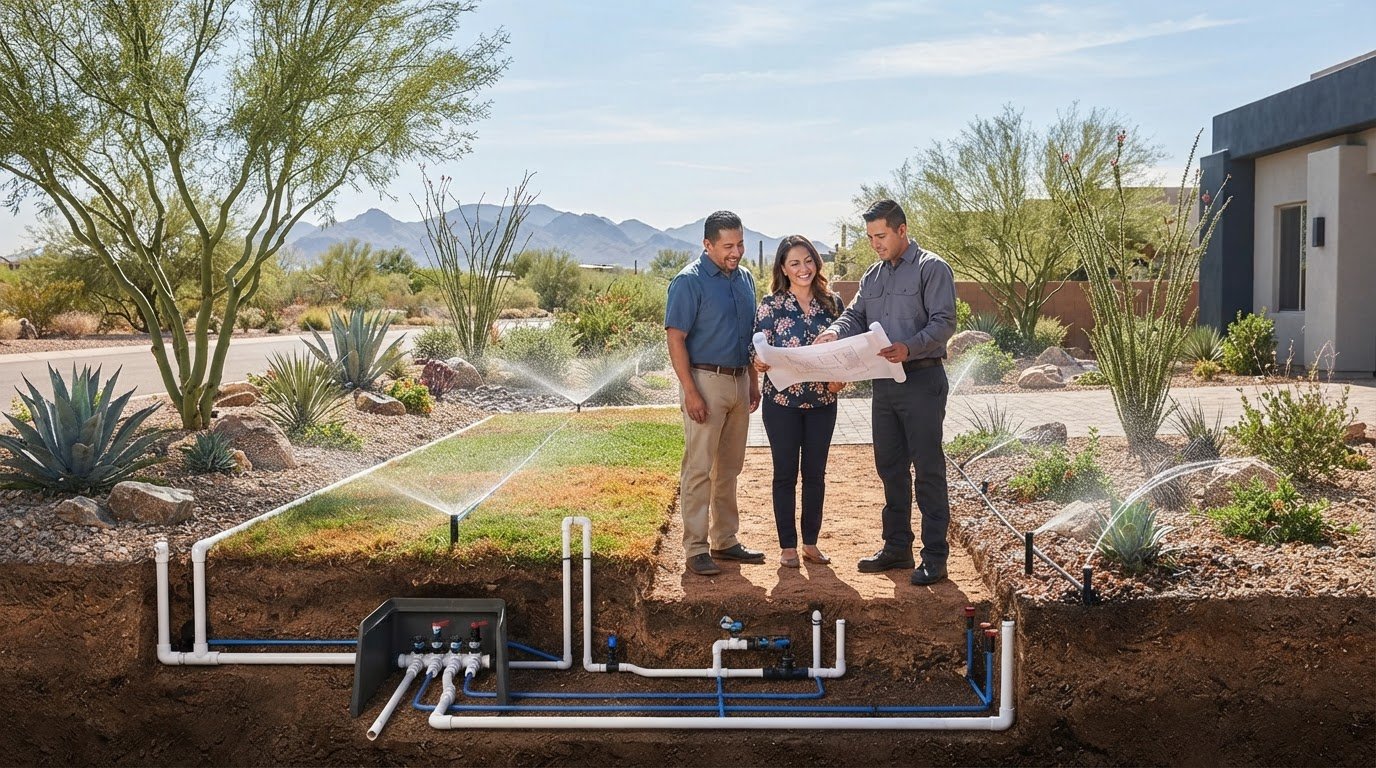
Distinguishing between a single zone failure and a whole-system drop is the first step in any diagnostic process. If only one area of your yard is struggling, the problem is likely localized to a specific valve or a crushed lateral line. However, if every head across your property is underperforming, the issue usually lies with the main line, the backflow preventer, or the municipal supply. In Surprise and Peoria, municipal water pressure is generally consistent, but local demand or aging home pressure regulators can cause noticeable fluctuations. A reliable low water pressure sprinkler system fix Arizona residents can count on begins with identifying these broad patterns before digging into the soil.
Sprinkler Heads That Fail to Pop Up
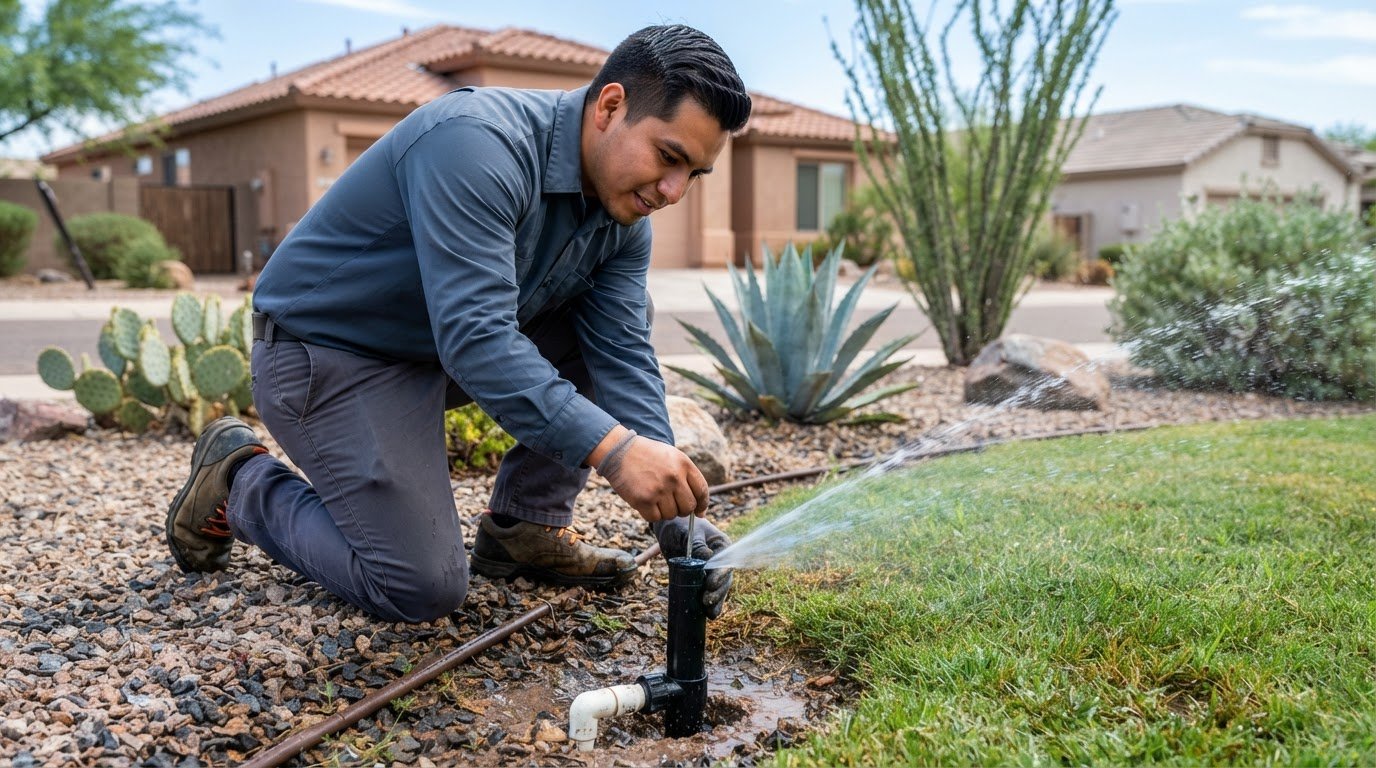
The most common sign of a pressure drop is a sprinkler head that refuses to rise above the grass line. Most modern sprinkler irrigation systems utilize an internal spring mechanism designed to stay retracted until a specific PSI threshold is met. If the pressure falls below this level, the head stays buried or "weeps" water around the base without spraying. In the intense Arizona heat, rubber seals and gaskets can become brittle and crack. When these seals fail, they allow water to bypass the riser, which bleeds off the pressure needed for the head to pop up properly and deliver water to your lawn.
Uneven Spray Patterns and "Dry Spots"
Low pressure doesn't always result in total system failure; sometimes it manifests as poor distribution. You might notice "doughnut" patterns where a ring of green grass surrounds a brown, dry spot directly around the sprinkler head. This happens because the water lacks the velocity to reach its intended radius, causing it to fall short. During peak summer months, under-watering desert plants even slightly can lead to rapid decline. Identifying a low water pressure sprinkler system fix Arizona homeowners can implement often starts with observing whether your heads are misting or producing heavy droplets. If you see large droplets falling close to the head instead of a fine, even spray, your system likely needs professional irrigation repairs and maintenance to restore its efficiency.
The 4 Most Common Causes of Low Sprinkler Pressure
Identifying the specific mechanical or environmental failure is the first step toward a permanent low water pressure sprinkler system fix Arizona landscapes require. While some issues are visible on the surface, others are buried deep in our unique desert soil. We find that most pressure drops stem from four primary categories: valve obstructions, line integrity, electrical failures, or mineral buildup. Pinpointing which one is affecting your property prevents unnecessary digging and ensures a targeted repair.
Backflow Preventer and Main Shut-Off Issues
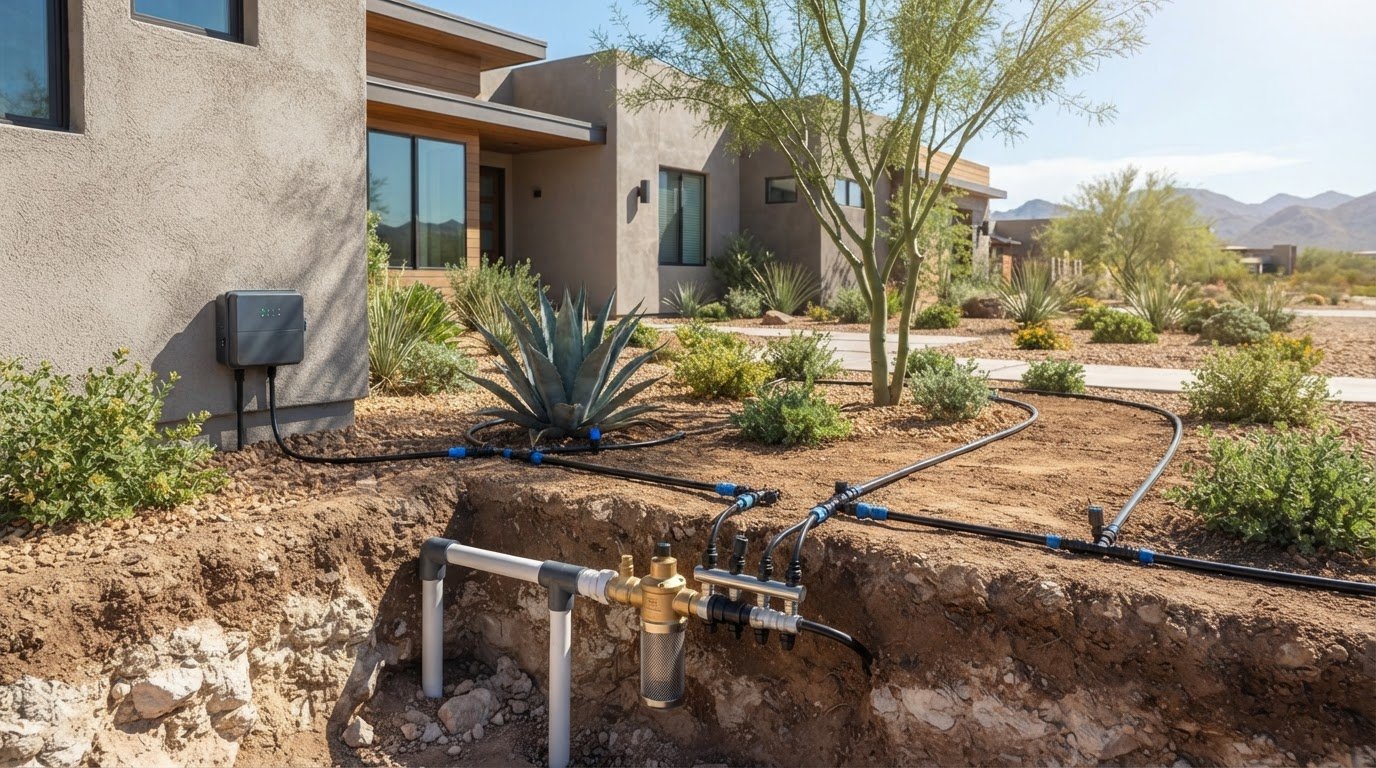
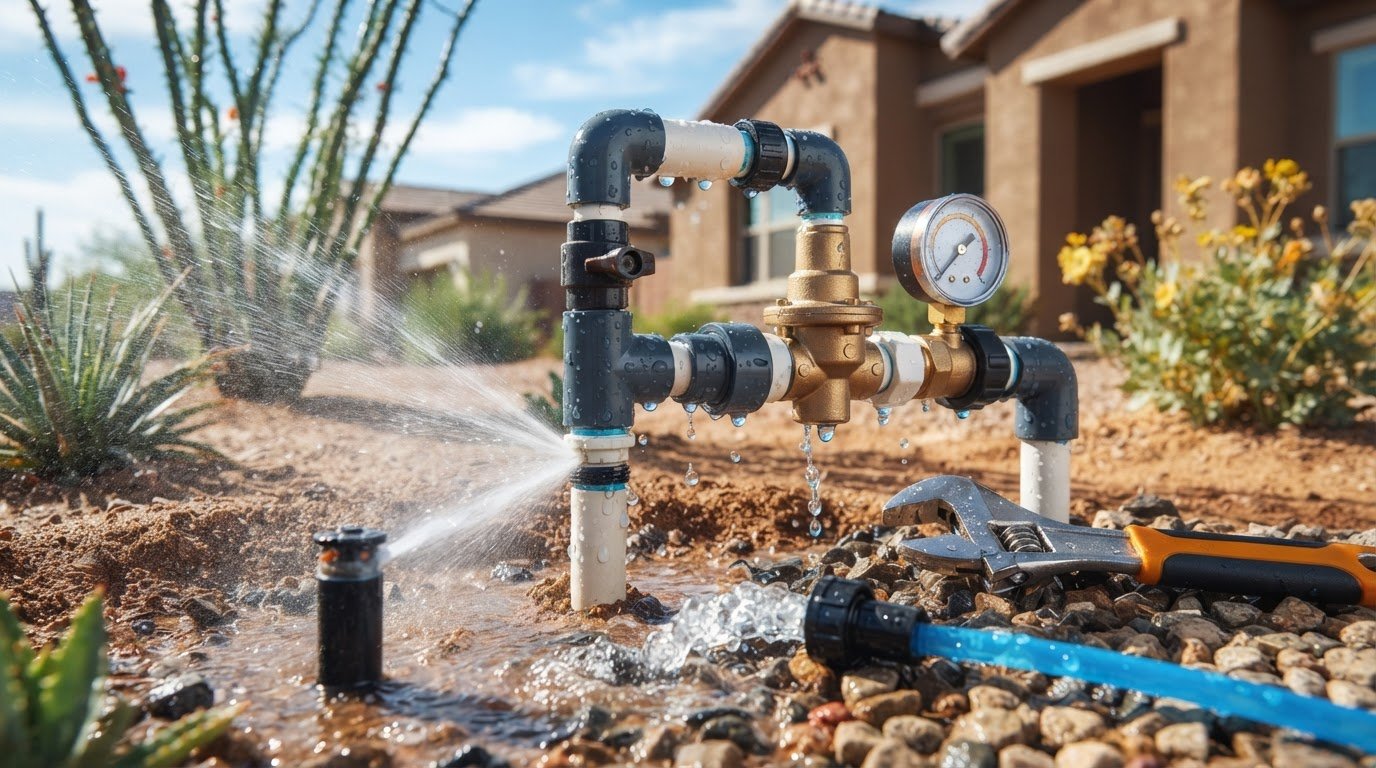
The backflow preventer is the gatekeeper of your irrigation system. It's common for a shut-off handle to be bumped or only partially opened after a seasonal check. For maximum flow, the handles must be perfectly parallel to the pipe. If they are even slightly angled, they restrict the volume of water entering the system, leading to a noticeable drop in dynamic pressure across all zones. If you suspect a mechanical failure in this component, our valves and backflow services can ensure your water supply remains both safe and powerful.
Underground PVC Pipe Leaks
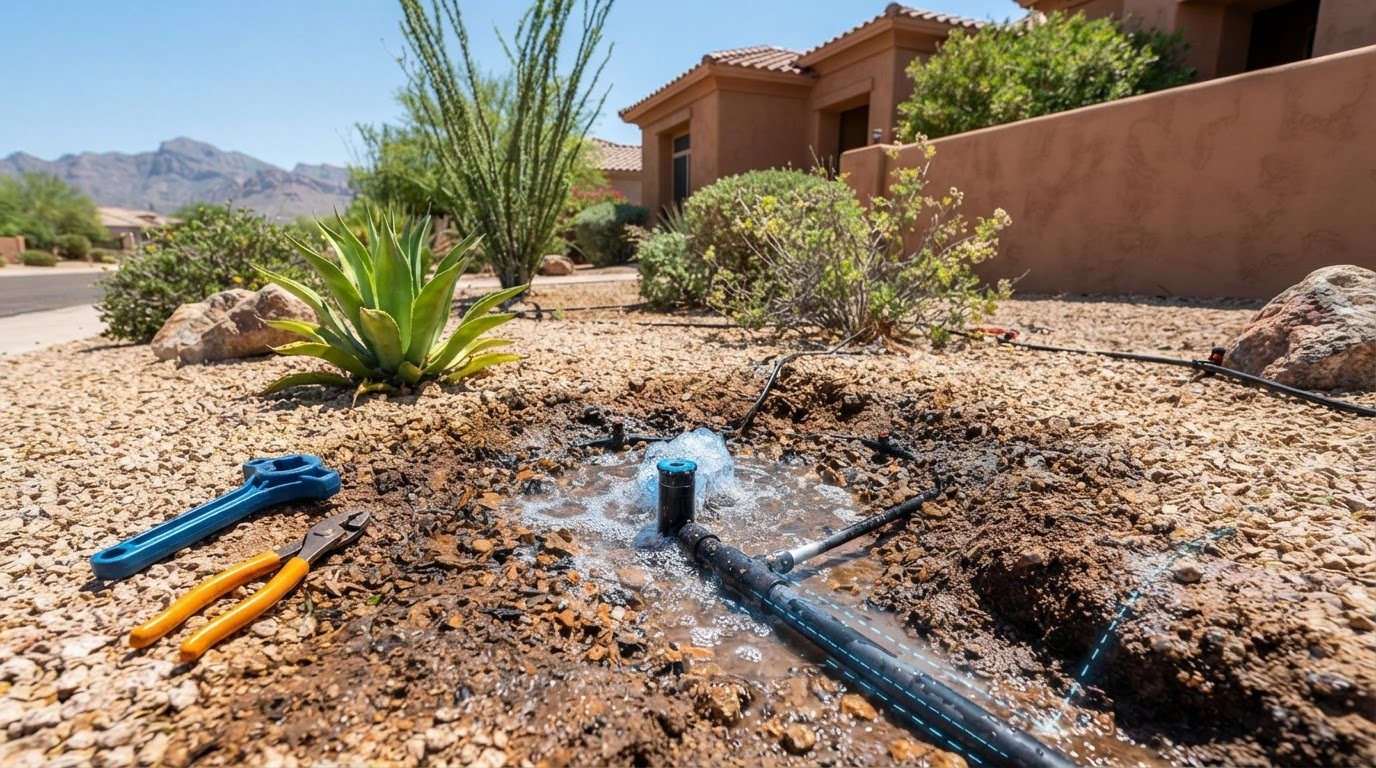
Arizona's soil presents a challenge known as caliche, a hardened, rock-like layer of calcium carbonate. As the ground shifts during our extreme temperature swings, older PVC lines can crack against these hard deposits. You might not see a geyser; instead, look for unusually lush or marshy spots in your desert landscape. These hidden leaks bleed off the pressure required for your sprinkler heads to function. Tree roots are another common culprit. They can wrap around a line, slowly crushing the pipe or piercing the wall as they seek out moisture in the dry earth.
Valve and Solenoid Failures
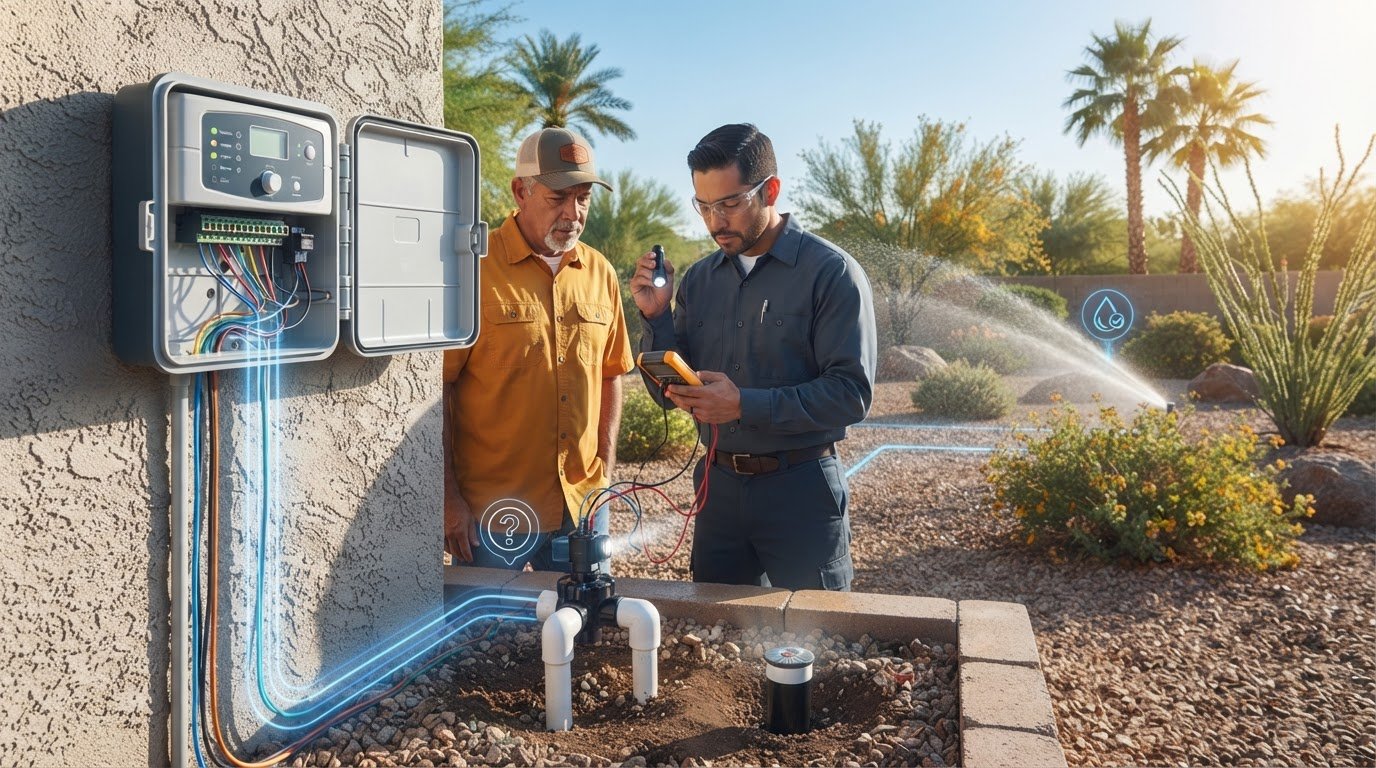
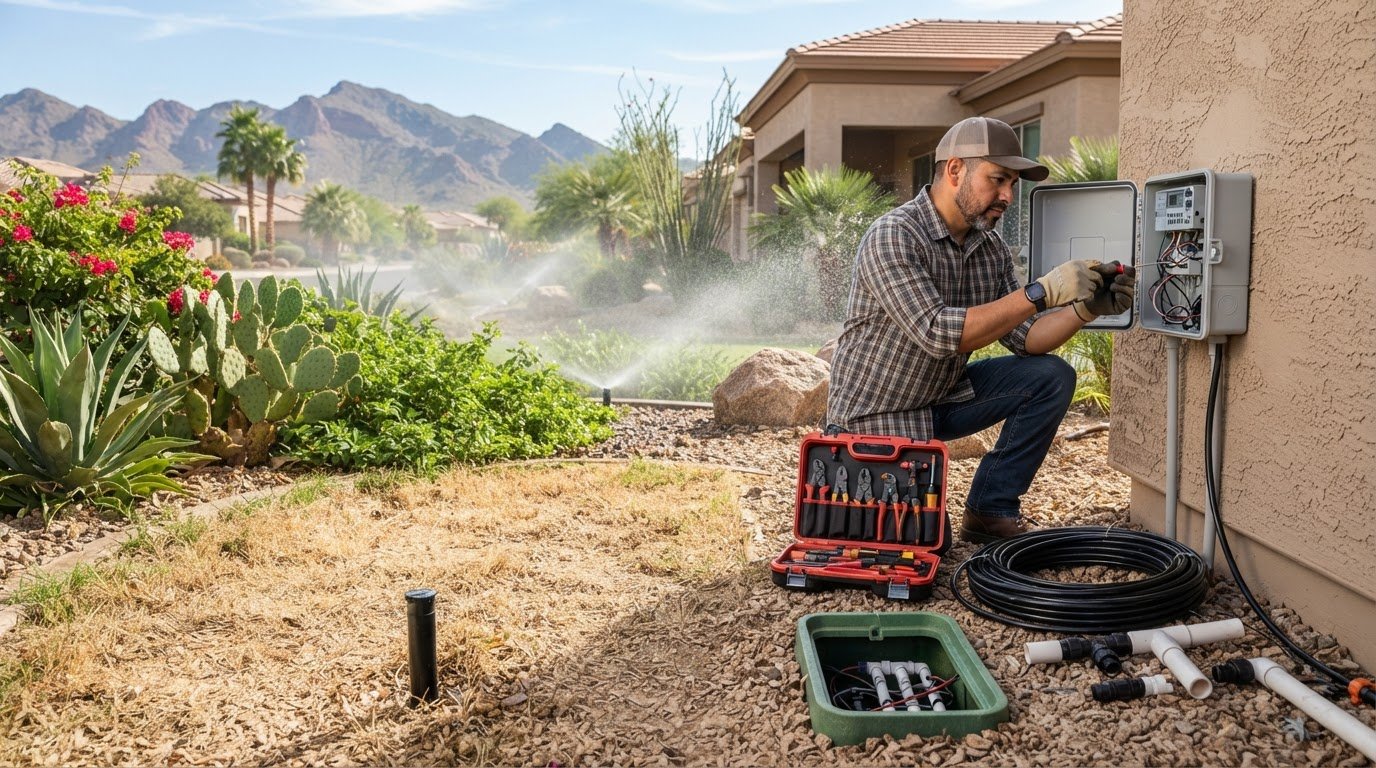
Inside every irrigation valve is a flexible rubber diaphragm. Over time, these can tear or become brittle. A damaged diaphragm might not open fully, creating a bottleneck that starves the zone of pressure. Electrical issues also play a role. If the solenoid, the component that receives the signal from your timer, isn't getting the correct voltage, it won't pull the plunger up completely. We often perform irrigation wiring diagnostics to rule out these electrical bottlenecks and restore full valve functionality.
Arizona’s hard water is a final, silent contributor to system decline. Mineral deposits constrict flow through filters and nozzles, much like a clogged artery. Utilizing WaterSense labeled spray sprinkler bodies can help regulate this flow and maintain efficiency despite these mineral challenges. If your system is struggling to perform and you can't find the source, you can reach out to our team for a thorough, professional diagnostic.
Step-by-Step Diagnostic Check for Homeowners
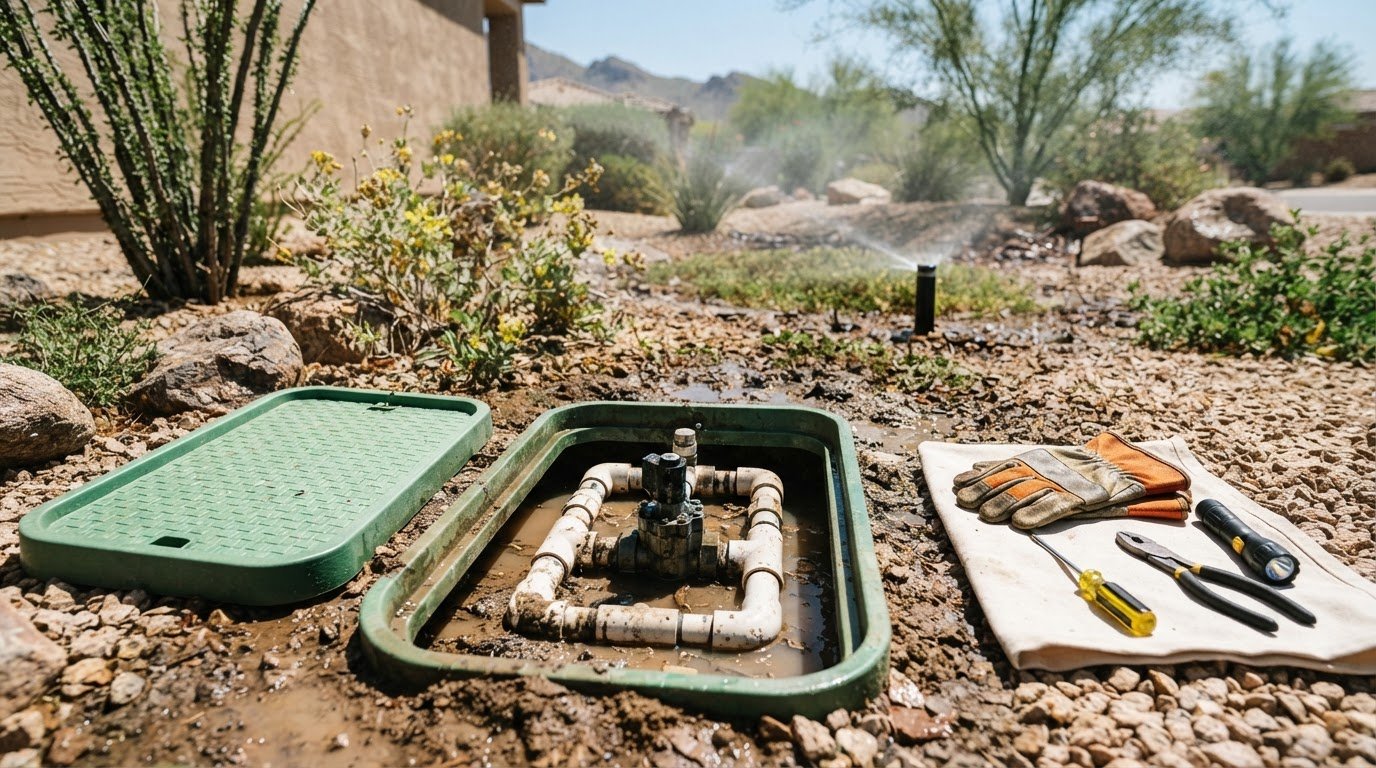
A logical diagnostic process saves time and prevents unnecessary property damage. Start by checking the house's main water pressure. If the faucets inside are sputtering or show weak flow, the issue is likely municipal or a failing house pressure regulator rather than your yard. Next, head to the backflow preventer, which is usually located in a green box in the front yard or near the side of the home. Ensure the handles are perfectly parallel to the pipe and check for any water dripping from the relief valve. These simple initial steps often lead to a quick low water pressure sprinkler system fix Arizona residents can handle without specialized tools.
Isolating the Problem Zone
Testing zones individually is the most effective way to determine if your issue is systemic or isolated. Use your irrigation controller to cycle through each section manually. A common indicator of a localized problem is seeing full pressure in your drip zones while your lawn zones struggle. Since drip systems require much lower PSI, they might appear functional even when a lateral line feeding the grass is compromised. If only one area shows symptoms, focus your inspection on the valves and pipes specific to that zone.
Searching for the "Hidden" Leak
When a visual inspection doesn't reveal a geyser, you must look for subtle clues in the landscape. The "bubble test" involves pouring a small amount of soapy water around the base of a struggling sprinkler head. If you see bubbles forming while the system is running, the seal or the riser connection is leaking. For a more comprehensive check, turn off all water inside the house and watch your water meter. If the dial or digital readout continues to move while the irrigation is off, you likely have a main line leak. In Surprise and Peoria, the high clay content in some areas can mask leaks for weeks before a sinkhole finally appears.
Finally, inspect the heads themselves for physical obstructions that might be choking the flow. Sand and hard water minerals can lodge in the nozzles, creating a bottleneck that mimics a major pipe break. Regularly maintaining a home irrigation system involves unscrewing these nozzles and flushing the lines to clear this debris. If the heads are clear and the valves are open, but pressure remains low, the problem likely requires a professional diagnostic to locate a crushed pipe or a failing master valve.