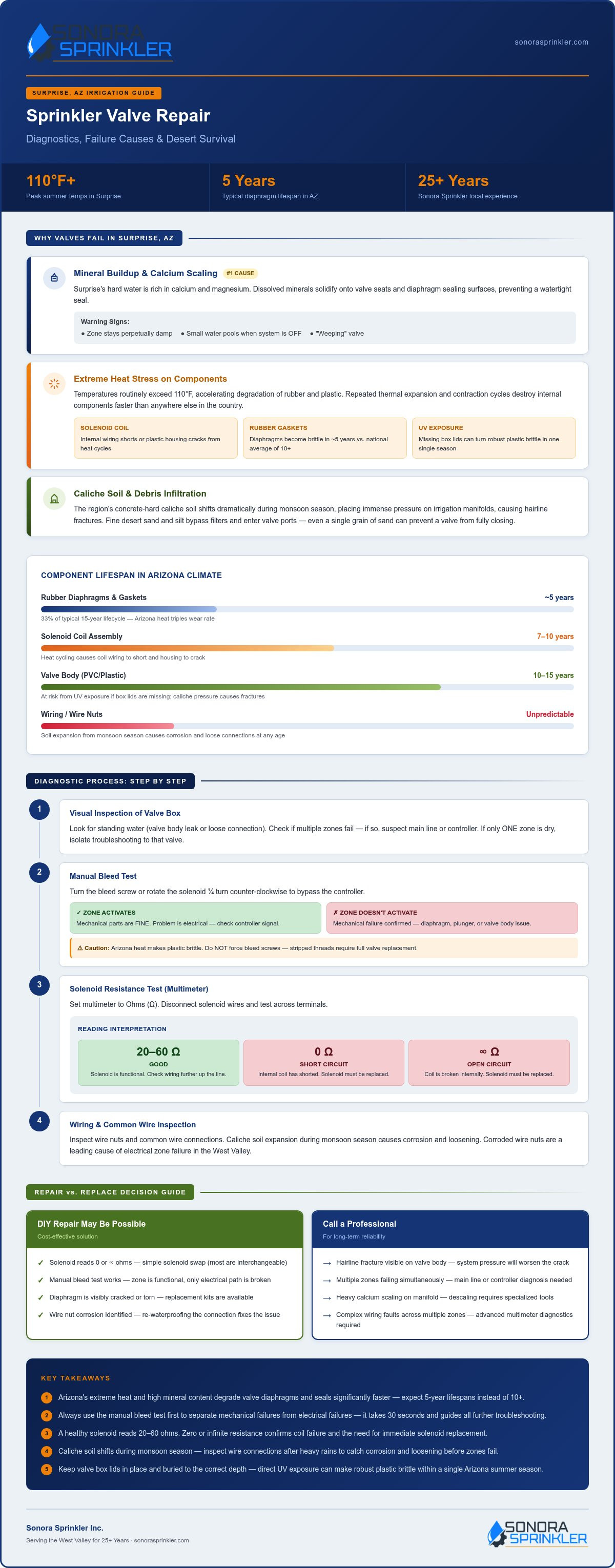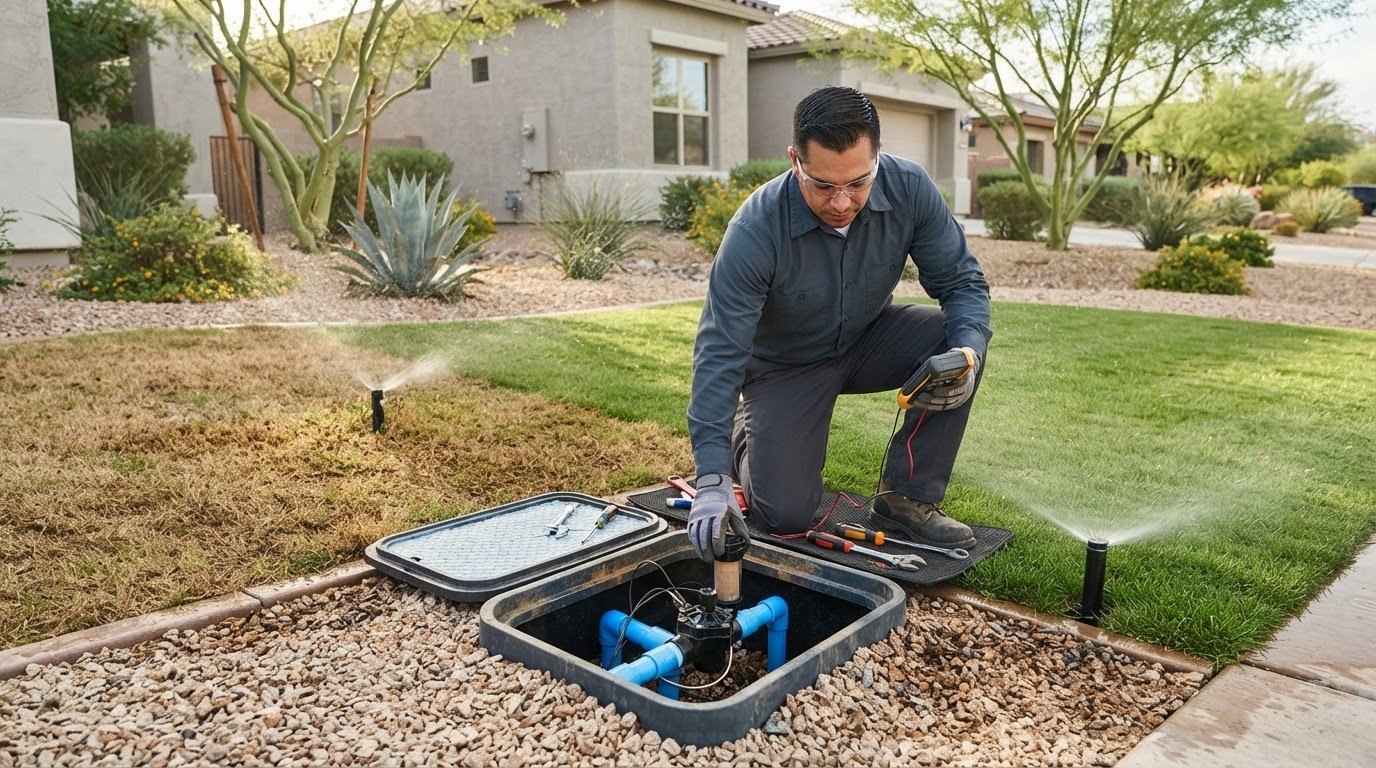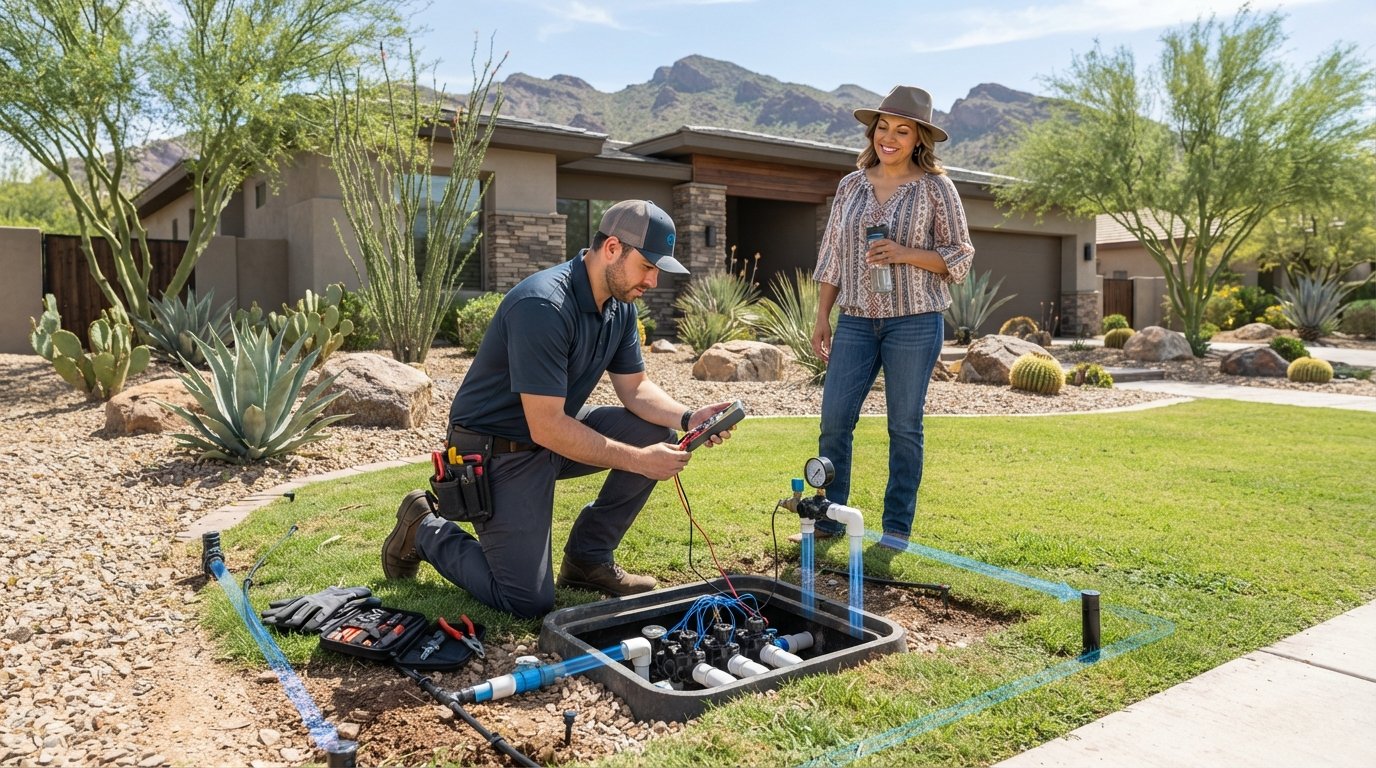
Could a single cracked diaphragm or a faulty solenoid really be the reason your water bill doubled while your lawn turned brown? In the intense heat of the Sonoran Desert, your irrigation system is the lifeblood of your property. When a zone fails to activate or a leak goes undetected, the consequences are almost immediate. It's frustrating to watch your landscape suffer while you struggle with complex wiring or stuck valves. We understand that local homeowners need reliable solutions that stand up to our unique climate. Seeking professional sprinkler valve repair Surprise AZ is a critical step in protecting your outdoor investment and managing your monthly utility costs.
This guide will help you master the essentials of sprinkler valve diagnostics and repair, focusing on the specific maintenance needs of our desert environment. You'll gain the confidence to identify whether you need a simple part replacement or a more extensive system upgrade. We'll cover everything from solenoid testing to advanced wiring troubleshooting; ensuring your residential irrigation system remains efficient, healthy, and ready to withstand the next 100°F afternoon.
Key Takeaways
- Identify how extreme Arizona heat and high mineral content degrade critical valve components like diaphragms and seals over time.
- Learn a logical diagnostic process using manual overrides and electrical testing to pinpoint the exact cause of a watering zone failure.
- Discover how to properly maintain your valve box to protect sensitive components from desert pests, soil accumulation, and poor drainage.
- Determine when a cost-effective diaphragm fix is possible versus when professional sprinkler valve repair Surprise AZ is required for long-term system reliability.
- Apply expert insights from over 25 years of local experience to ensure your residential irrigation system is engineered to survive the harsh Sonoran climate.
Common Causes of Sprinkler Valve Failure in Surprise, AZ
Irrigation valves in the West Valley operate under extreme conditions that most standard components aren't designed to handle indefinitely. When you need sprinkler valve repair Surprise AZ, the root cause is rarely a manufacturing defect. Instead, it's usually the result of our local environment working against the mechanical integrity of the system. From the chemical composition of our water to the physical density of the earth, several factors contribute to valve failure.
Mineral Buildup and Calcium Scaling
Mineral calcification in Surprise irrigation systems is the process where dissolved solids solidify onto internal valve surfaces, creating a crust-like layer that interferes with mechanical movement. The water in our region is notoriously hard, containing high concentrations of calcium and magnesium that eventually precipitate out of the water stream.
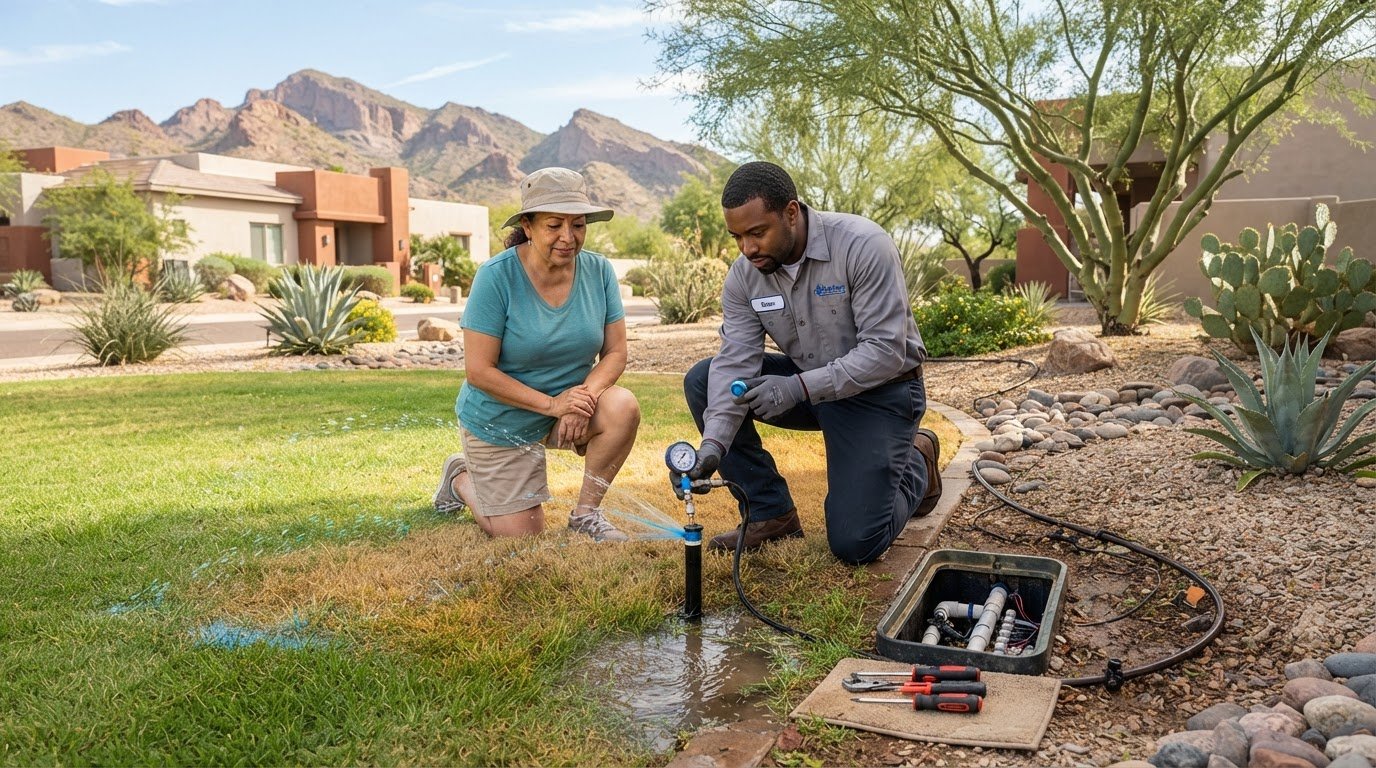
These deposits often settle on the valve seat or the diaphragm's sealing surface. When this happens, the valve cannot form a watertight seal, leading to a "weeping" valve. You'll notice this when a specific zone remains perpetually damp or has small pools of water even when the controller is off. Over time, this constant flow wastes thousands of gallons and can lead to localized soil erosion or root rot in your landscape.
Heat Stress on Solenoids and Seals
Surprise frequently experiences temperatures exceeding 110°F, which creates a punishing environment for plastic and rubber. While the valve box provides some shade, the ambient ground temperature remains high enough to accelerate the degradation of internal components. Seasonal checks are vital for preventing mid-summer valve blowouts when the system is under the most pressure.
- Solenoid Failure: The electrical coil inside the solenoid can expand and contract during extreme heat cycles, eventually causing the internal wiring to short or the plastic housing to crack.
- Gasket Breakdown: The rubber gaskets and diaphragms that facilitate the valve's opening and closing typically operate on a five-year lifecycle in Arizona before the material becomes brittle.
- UV Exposure: If valve boxes are missing lids or aren't buried deeply enough, direct UV rays can turn robust plastic components brittle in a single season.
Caliche Soil and Debris Infiltration
Our local caliche soil is as hard as concrete and doesn't yield easily to ground movement. As the earth shifts during the monsoon season, it puts immense pressure on the irrigation manifold. This physical stress can cause hairline fractures in the valve body itself. Additionally, fine sand and silt common in our desert landscape can bypass filters and enter the valve's internal ports. Even a single grain of sand in the wrong place can prevent a valve from closing, necessitating professional sprinkler valve repair Surprise AZ to restore proper function.
Diagnostic Steps: Testing for a Bad Sprinkler Valve
Before committing to a full replacement, it's essential to pinpoint the exact failure point of your system. Accurate diagnostics prevent the unnecessary expense of replacing functional components when the issue might be a simple wiring loose end or a minor mechanical blockage. In our desert climate, components often fail in predictable ways, but a logical testing sequence is the only way to ensure a lasting fix. If you're unsure about the results of these tests, seeking professional sprinkler valve repair Surprise AZ can save you hours of trial and error.
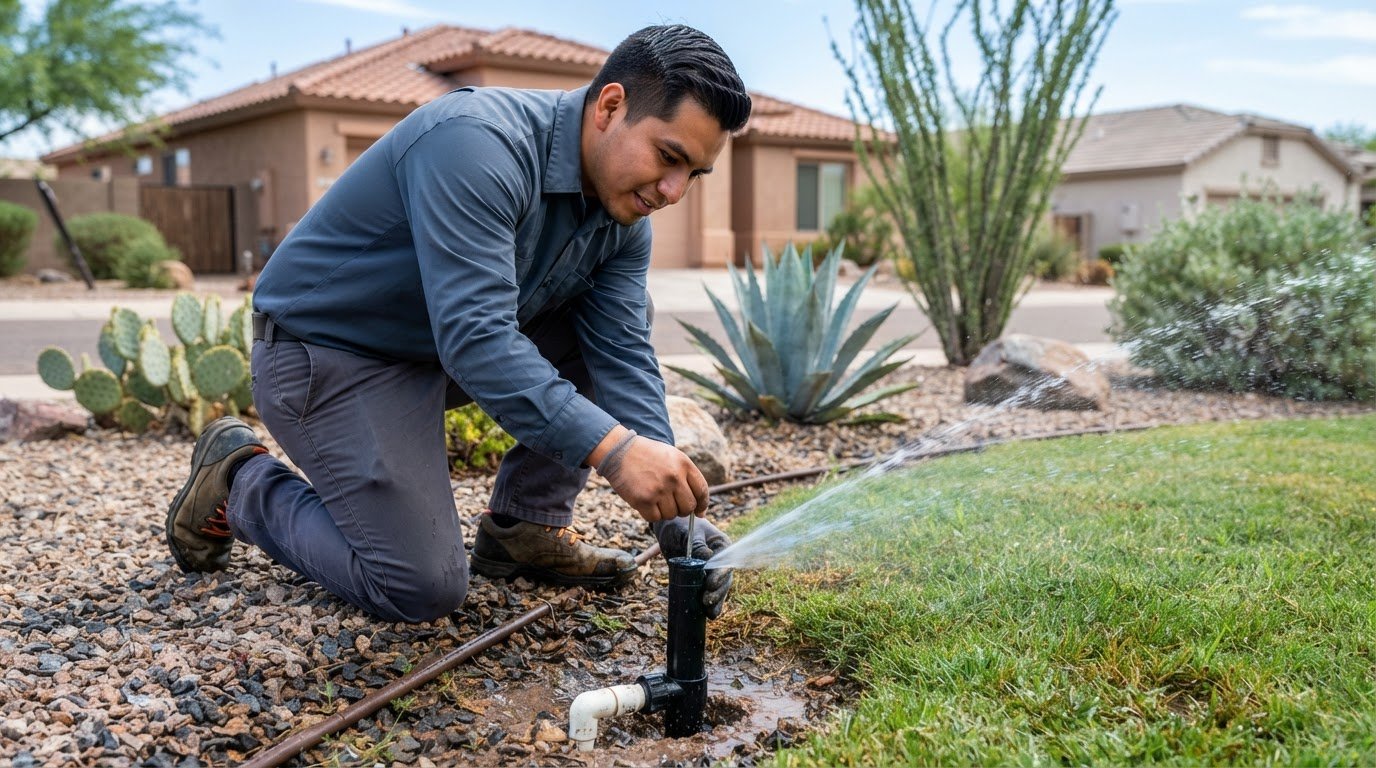
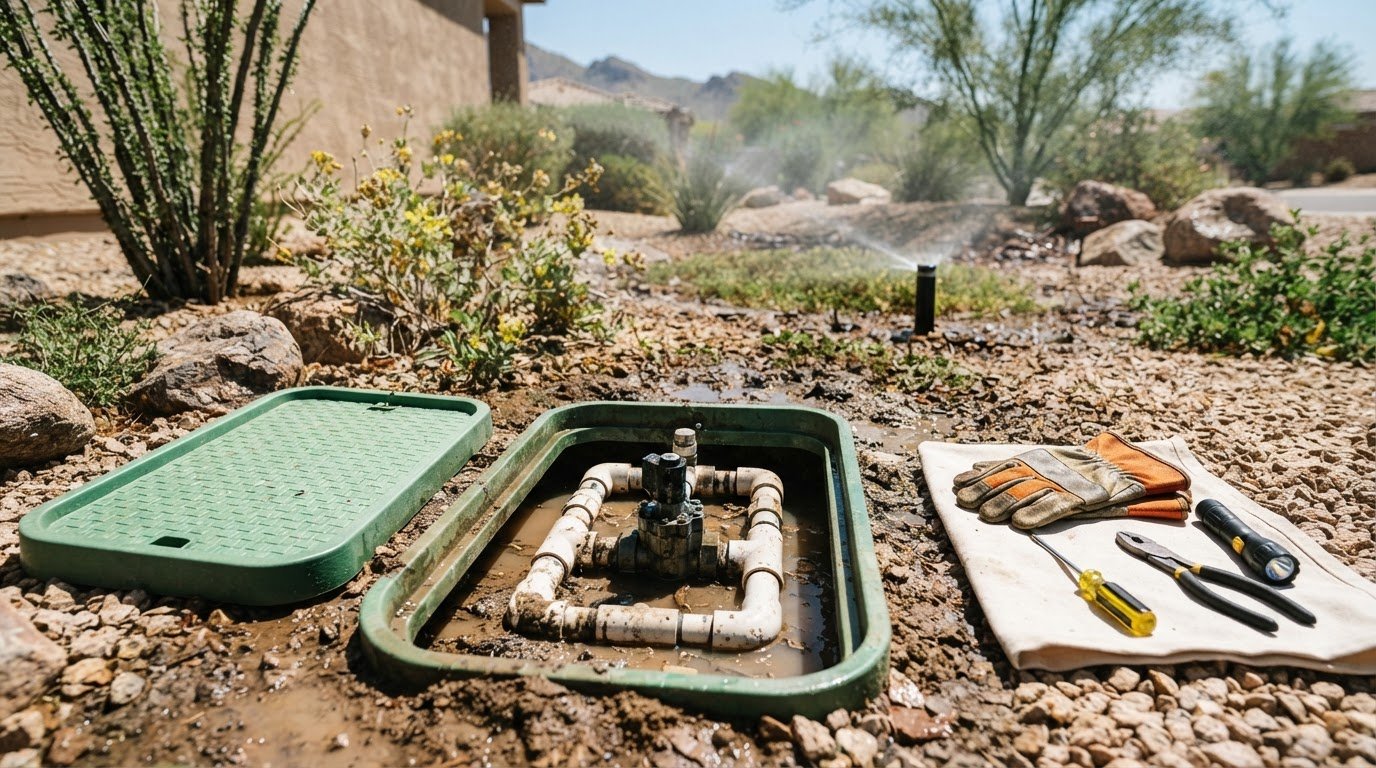
Start with a thorough visual inspection of the valve box. Look for standing water, which indicates a leak in the valve body or a loose connection. Check the zone's performance; if multiple zones fail to activate, the problem likely resides in the main line or the controller itself. However, if only one area of your landscape is dry, you can isolate your troubleshooting to that specific valve.
The Manual Bleed Test
The manual override is the fastest way to determine if a valve's failure is electrical or mechanical. Most modern valves feature a manual bleed screw or allow you to turn the solenoid itself a quarter turn counter-clockwise to bypass the controller. If the zone activates when you do this, the internal diaphragm and plunger are functioning correctly. This result confirms that the mechanical parts are sound, but the electrical signal from the timer is not reaching the valve. Be careful not to force these components. Plastic becomes brittle after years of Arizona heat, and excessive force can easily strip the threads.
Irrigation Wiring and Solenoid Checks
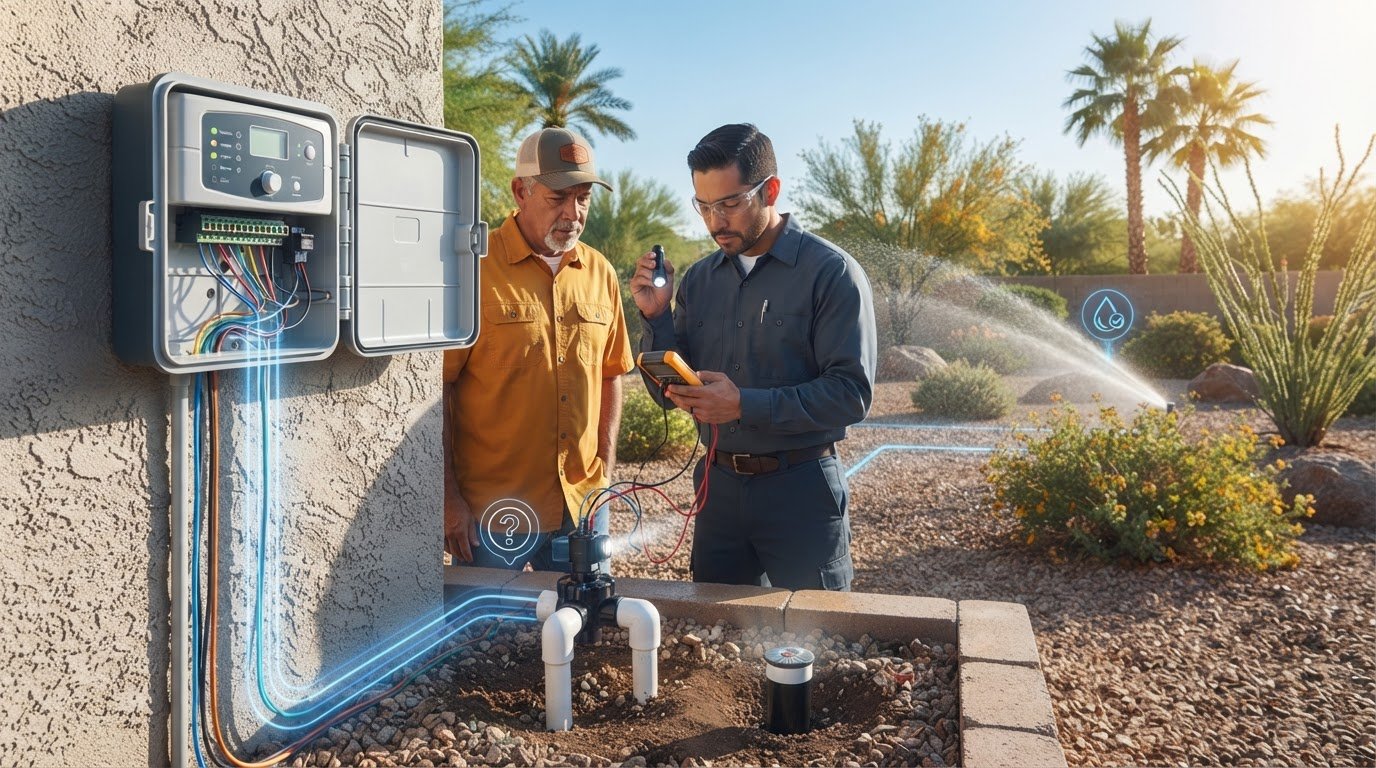
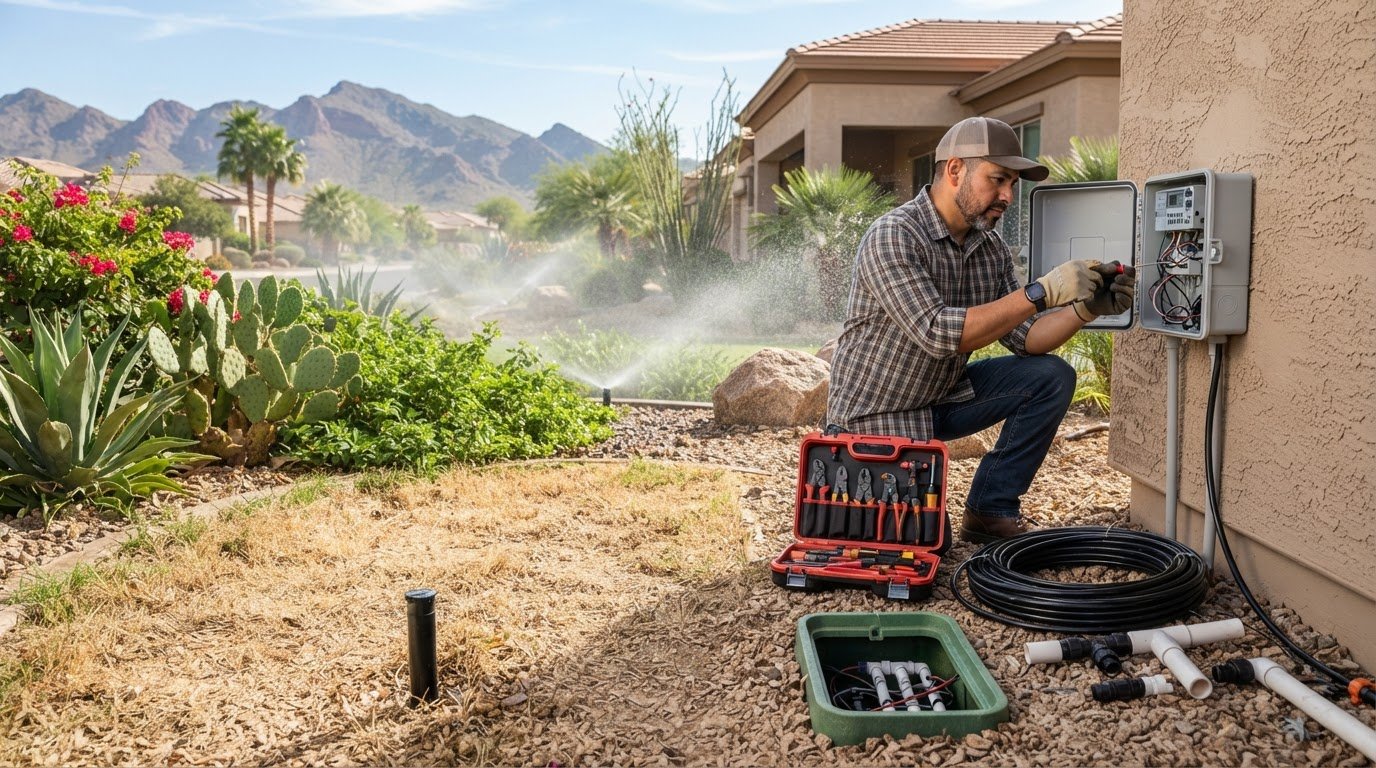
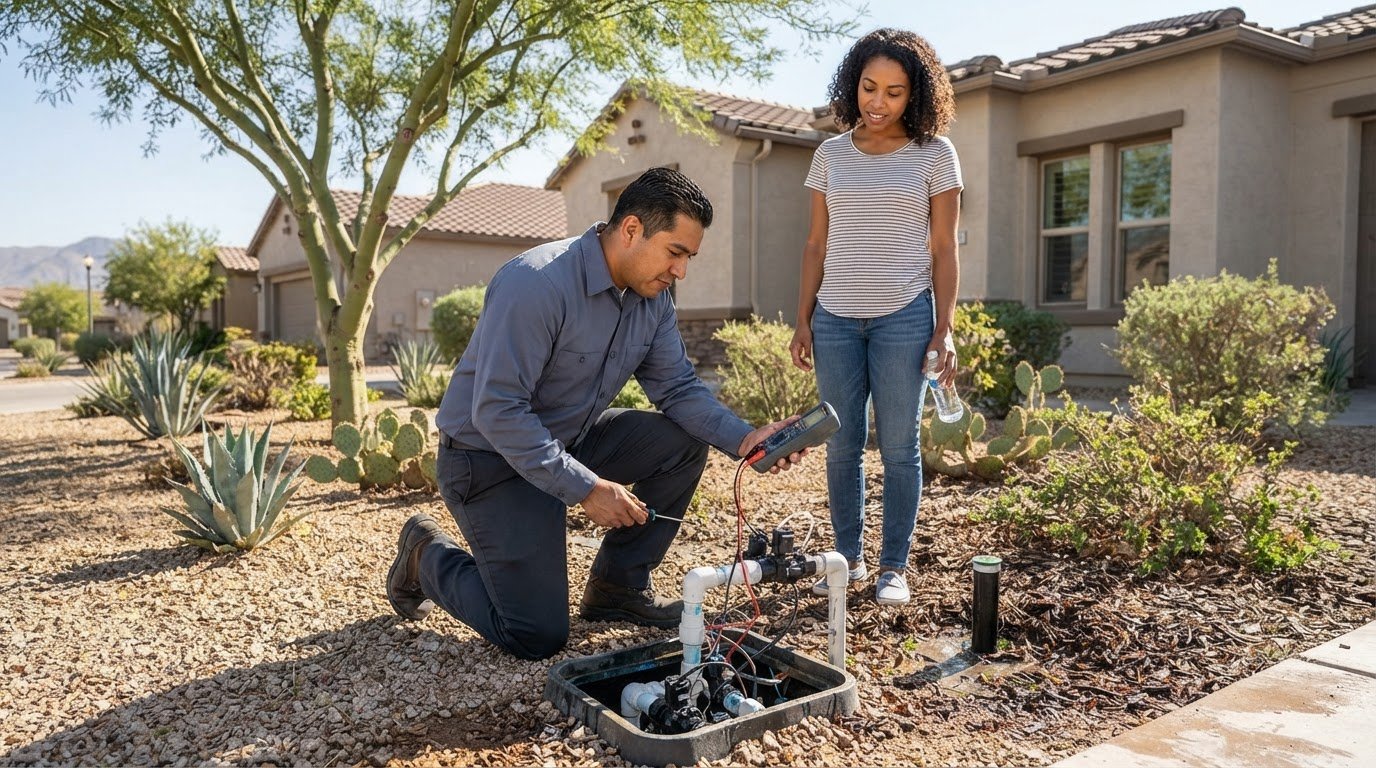
Electrical failures are common in the West Valley due to soil expansion and high ground temperatures. If your valve passed the manual test but won't turn on from the controller, you'll need to inspect the wiring. Use a multimeter set to the Ohms (resistance) setting to check the solenoid. A functional solenoid typically registers between 20 and 60 ohms. A reading of zero or an "infinite" result indicates the internal coil has failed and requires replacement.
Check for corroded wire nuts or loose common wires, which often occur as the ground shifts in our local caliche soil. For more complex electrical issues, you can learn about irrigation wiring diagnostics to identify shorts or breaks in the field. When troubleshooting becomes overwhelming, don't hesitate to reach out for professional diagnostics to protect your residential landscape from further stress.
Valve Diaphragm Repair vs. Full Valve Replacement
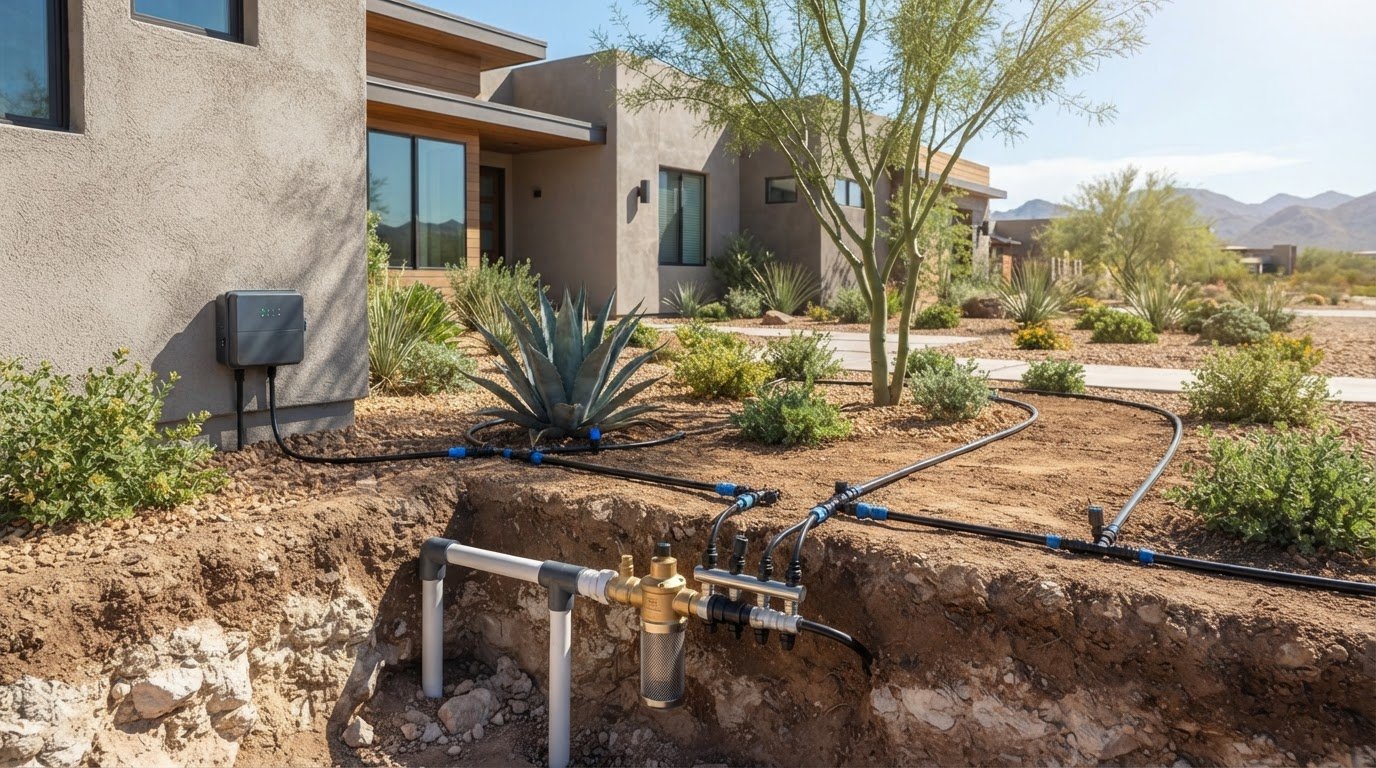
Every residential irrigation valve consists of four primary components: the valve body, a rubber diaphragm, a tension spring, and the top bonnet. Understanding this anatomy is the first step in determining the most efficient path for sprinkler valve repair Surprise AZ. Often, a homeowner assumes a malfunctioning zone requires a total system overhaul, but a targeted repair of the internal parts can frequently restore full functionality without the need for extensive excavation.
When to Replace Just the Diaphragm
The diaphragm is the flexible seal that moves up and down to control water flow. Because it's made of rubber, it's the component most susceptible to the mineral scaling and heat-related brittleness discussed earlier. If you notice a "weeping" zone where water never fully stops flowing, a torn or pin-holed diaphragm is usually the culprit. Replacing just this internal part is the most cost-effective solution because it avoids the labor-intensive process of cutting and solvent-welding new PVC pipe.
Using Original Equipment Manufacturer (OEM) parts is critical during this process. Generic seals often fail to seat properly against the valve body, leading to immediate leaks. By focusing on high-quality internal replacements, you maintain the integrity of the manifold while significantly extending the life of the system. This "gutting" technique allows us to refresh the valve's internals while leaving the original body undisturbed in the ground.
Identifying Irreparable Valve Body Damage
There are specific scenarios where a simple part swap won't suffice. High static water pressure, common in certain Surprise neighborhoods, can eventually "bell" or warp the plastic valve body. Once the body loses its perfect circular shape, a new diaphragm cannot create a watertight seal. You should also look for signs of physical trauma to the housing, such as:
- Stripped Screw Holes: If the bonnet screws can't be tightened securely, the valve will leak under pressure.
- Body Fractures: Hairline cracks in the lower housing, often caused by ground movement or caliche pressure, require a full replacement.
- Internal Pitting: Deep grooves worn into the valve seat by sand or silt infiltration.
When the valve body is compromised, a full irrigation repair is necessary. This involves carefully cutting out the damaged unit and installing a new, durable residential valve. While this requires more labor, it ensures the system can withstand the high-pressure demands of the Arizona summer without failing when your landscape needs water the most.