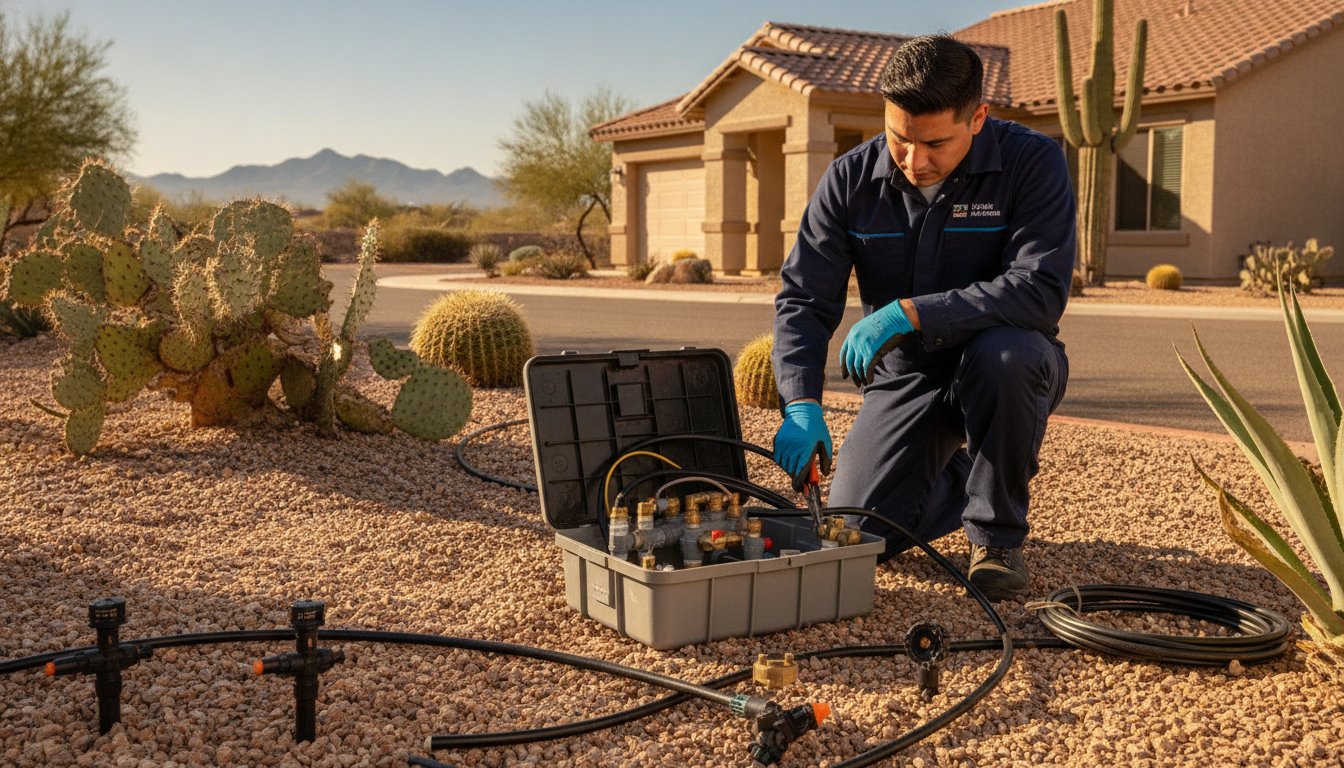
Have you ever wondered why certain areas of your grass remain parched and brittle even when you've increased your controller's run times? It's a common sight in Surprise and Peoria, where the desert heat exposes every minor flaw in a sprinkler system's design. Many homeowners assume the solution is simply more water, but the reality is often more technical. To truly master a dry spots lawn irrigation fix Arizona residents need to look past the surface and evaluate the hydraulic integrity of their specific setup.
It's incredibly discouraging to see your curb appeal suffer while your utility bills continue to rise. You've likely tried adjusting heads or soaking the area by hand, yet the uniform green coverage you desire remains elusive. This guide provides the professional clarity you need to restore your property's health. We'll explore the specific mechanical reasons behind uneven coverage and explain how to determine if you're dealing with a minor nozzle clog or a significant pressure failure. By following this structured approach, you'll gain the expertise required to achieve a water-efficient system that keeps your lawn resilient all year long.
Key Takeaways
- Identify whether brown patches are caused by fungal disease or irrigation mechanical failure to avoid wasting water on the wrong solution.
- Discover how to implement a professional dry spots lawn irrigation fix Arizona yards need by evaluating water pressure and checking for aging PVC line failures.
- Learn to perform a "Catch Can Test" to visualize actual water distribution patterns across your lawn for precise troubleshooting.
- Recognize the technical risks of DIY PVC repairs and why proper priming and professional diagnostics are vital for system longevity.
- Evaluate high-efficiency sprinkler upgrades, such as pressure-regulating heads, that help maintain uniform coverage despite the extreme desert heat.
Common Causes of Dry Spots in Arizona Irrigation Systems
Arizona's climate is unforgiving, and your lawn's health depends entirely on the precision of your irrigation hardware. When brown patches appear, many homeowners' first instinct is to increase the watering time on their controller. However, if the underlying issue is a mechanical or design flaw, simply watering longer won't help. It often just wastes water and increases your utility bills without solving the problem. To achieve a lasting dry spots lawn irrigation fix Arizona residents must first distinguish between environmental stress and actual system failure.
Before diving into the mechanics, it's vital to rule out fungal disease. While irrigation-related dry spots typically follow the spray pattern of a specific head or a lack of overlap, fungal issues often present as distinct rings or patches with a slimy texture. If the grass is simply brittle, yellowing, and localized to one area, the problem is almost certainly your water delivery. Most professional irrigation sprinkler systems are designed with head-to-head coverage in mind. This means the water from one sprinkler head should reach all the way to the base of the next one. When this overlap is missing, the extreme summer heat in Surprise and Peoria quickly exposes the "gap," resulting in stubborn brown spots.
Mechanical Failures: Beyond the Broken Head
A dry spot isn't always caused by a shattered sprinkler body. In fact, the most common culprits are often invisible from the sidewalk. Arizona is known for high mineral content in its water supply. Over time, these minerals crystallize inside the nozzle, distorting the spray pattern or reducing the radius. This "hard water" buildup prevents the head from reaching its designated neighbor, breaking the head-to-head coverage mentioned earlier.
Leaking seals are another frequent issue. If a pop-up head doesn't fully seal when pressurized, water bypasses the nozzle and bubbles up around the base. This reduces the pressure available for the actual spray, leaving the perimeter of that zone parched. If you notice a specific zone isn't popping up fully, you might be dealing with a failing solenoid or a stuck valve. Our specialized irrigation repairs and maintenance services focus on these technical diagnostics to ensure every component operates at peak efficiency.
Environmental Factors in the Desert
The unique environment of the West Valley adds another layer of complexity. Morning wind drift is a significant factor in Surprise and Peoria. Even a light breeze can push fine mist away from its intended target, leaving "shadow" areas that never receive moisture. Additionally, our native soil is often heavy with clay or caliche. This leads to rapid soil compaction, which prevents water from penetrating the root zone. Instead of soaking in, the water simply runs off the surface.
Finally, consider your maturing desert plants. A shrub that was small five years ago may now be blocking the path of a sprinkler head. This creates a physical barrier that prevents water from reaching the lawn behind it. Checking for plant interference is a simple but essential step in maintaining a uniform green coverage throughout the year.
Technical Diagnostics: Why Your Sprinklers Are Underperforming
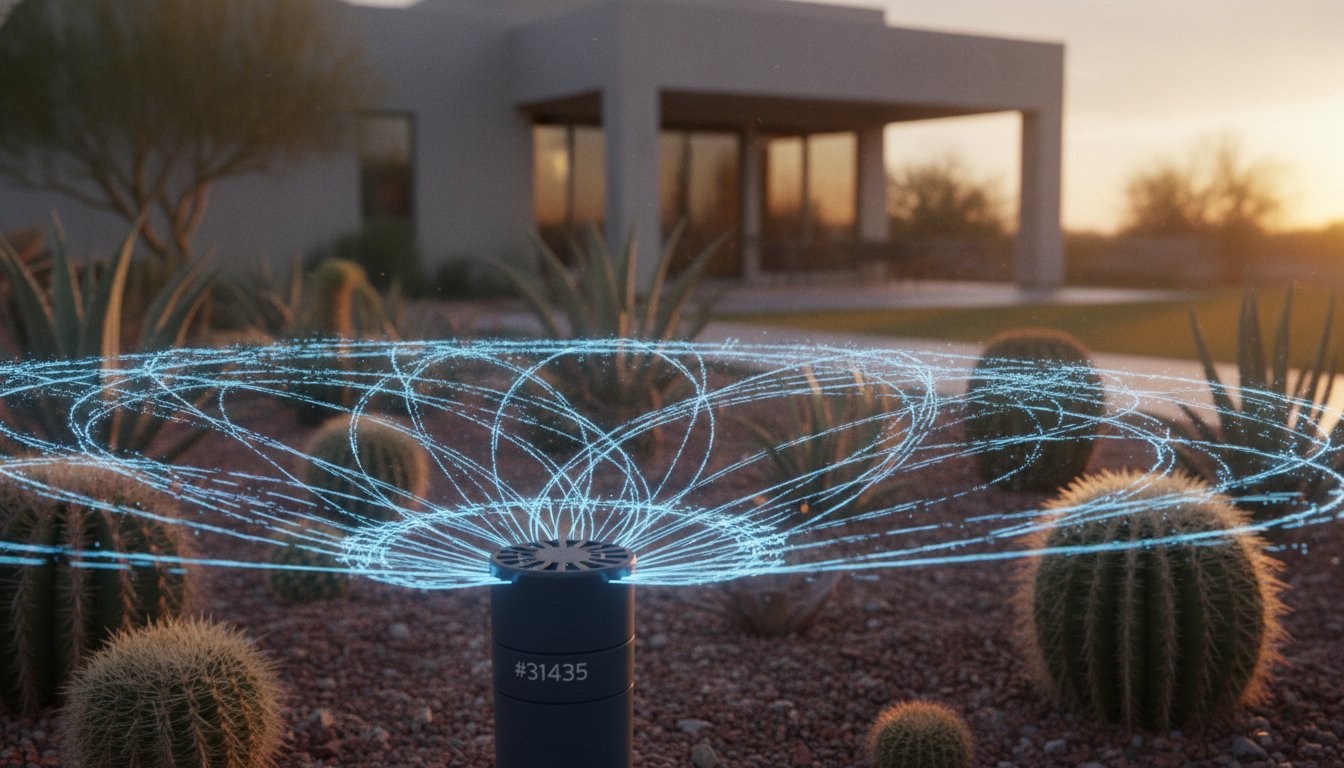
Diagnosing the root cause of uneven coverage requires looking beyond the surface. While a broken head is easy to spot, many hydraulic issues remain hidden underground. One of the most overlooked factors in a dry spots lawn irrigation fix Arizona homeowners struggle with is water pressure. Pressure that's too high is just as damaging as pressure that's too low. When your PSI exceeds the nozzle's rating, the water atomizes into a fine mist. This mist is easily carried away by the desert wind or evaporates before it ever reaches the soil. Conversely, low pressure prevents the head from reaching its full radius, leaving the outer edges of your lawn parched.
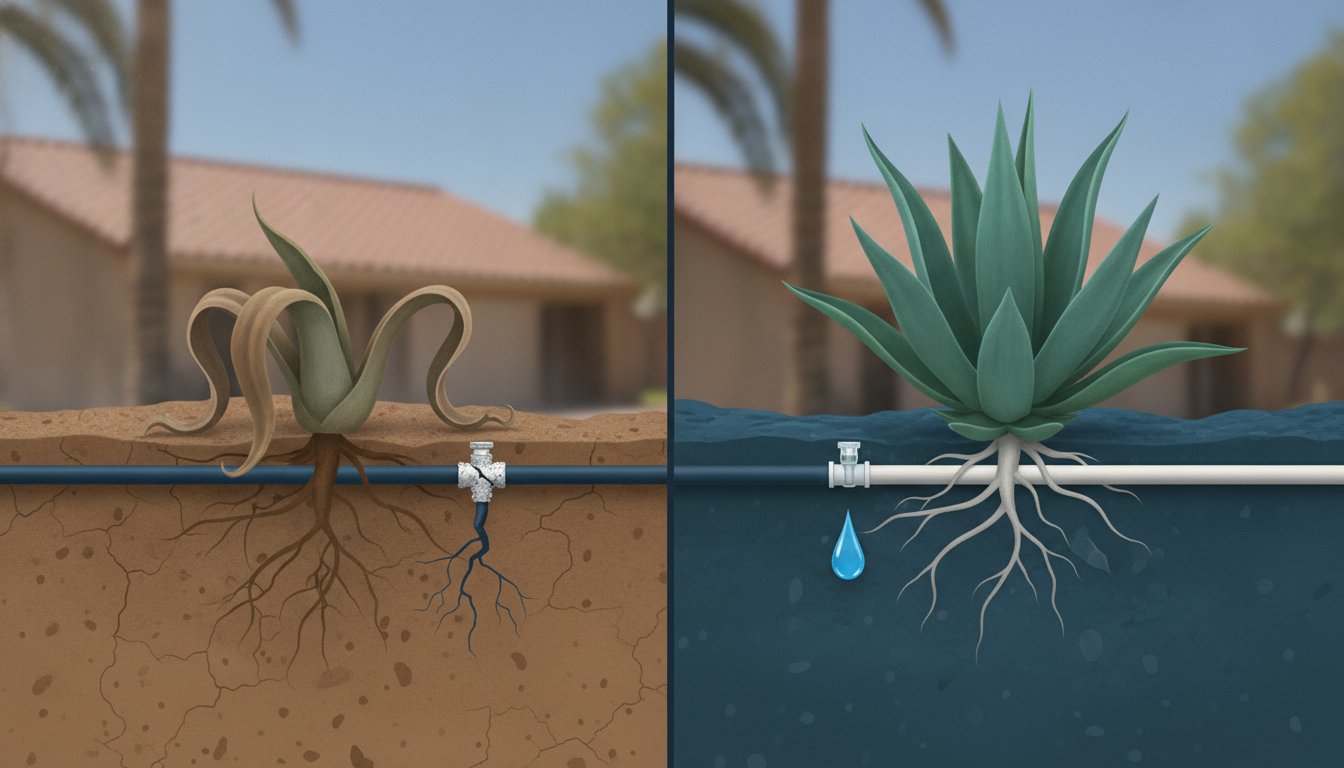
Another technical hurdle is maintaining matched precipitation rates within a single zone. This occurs when different types of sprinkler heads, such as rotors and fixed sprays, are installed on the same valve. Rotors deliver water much slower than sprays. If they're mixed, the area served by the rotors will always be underwatered compared to the rest of the zone. Over time, aging PVC lines also contribute to performance drops. Friction inside older, mineral-encrusted pipes causes "line loss," reducing the available pressure at the furthest heads. If you aren't seeing results after basic cleaning, a professional diagnostic can identify these hydraulic failures. You can reach out to us for a thorough system evaluation.
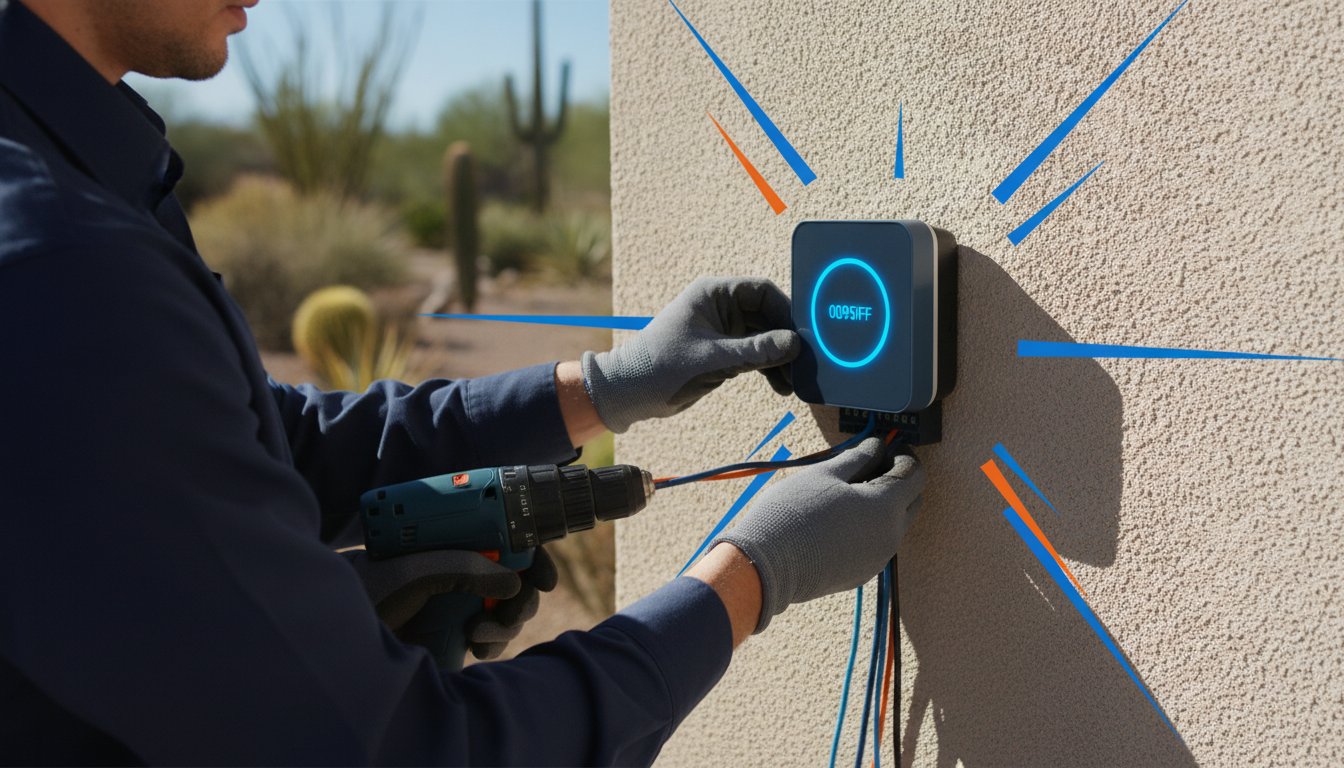
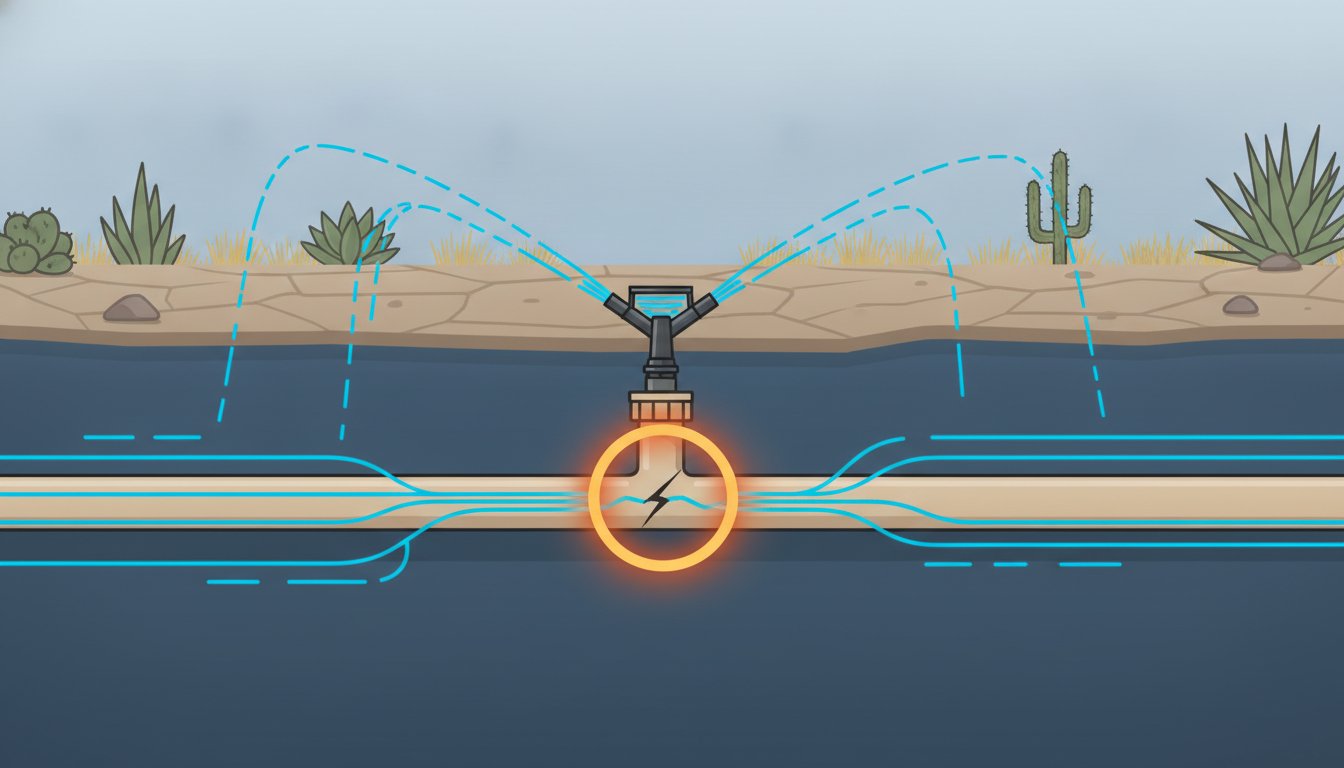
Intermittent electrical issues can also mimic mechanical failures. Irrigation wiring diagnostics often reveal that a solenoid or wire connection is failing only when it gets hot. This means a zone might run perfectly at 4:00 AM but fail to activate during a manual test in the afternoon. Upgrading to EPA WaterSense smart irrigation controllers can help manage these cycles more effectively, though they cannot compensate for poor wire integrity or failing valves.
Low Water Pressure Diagnostics
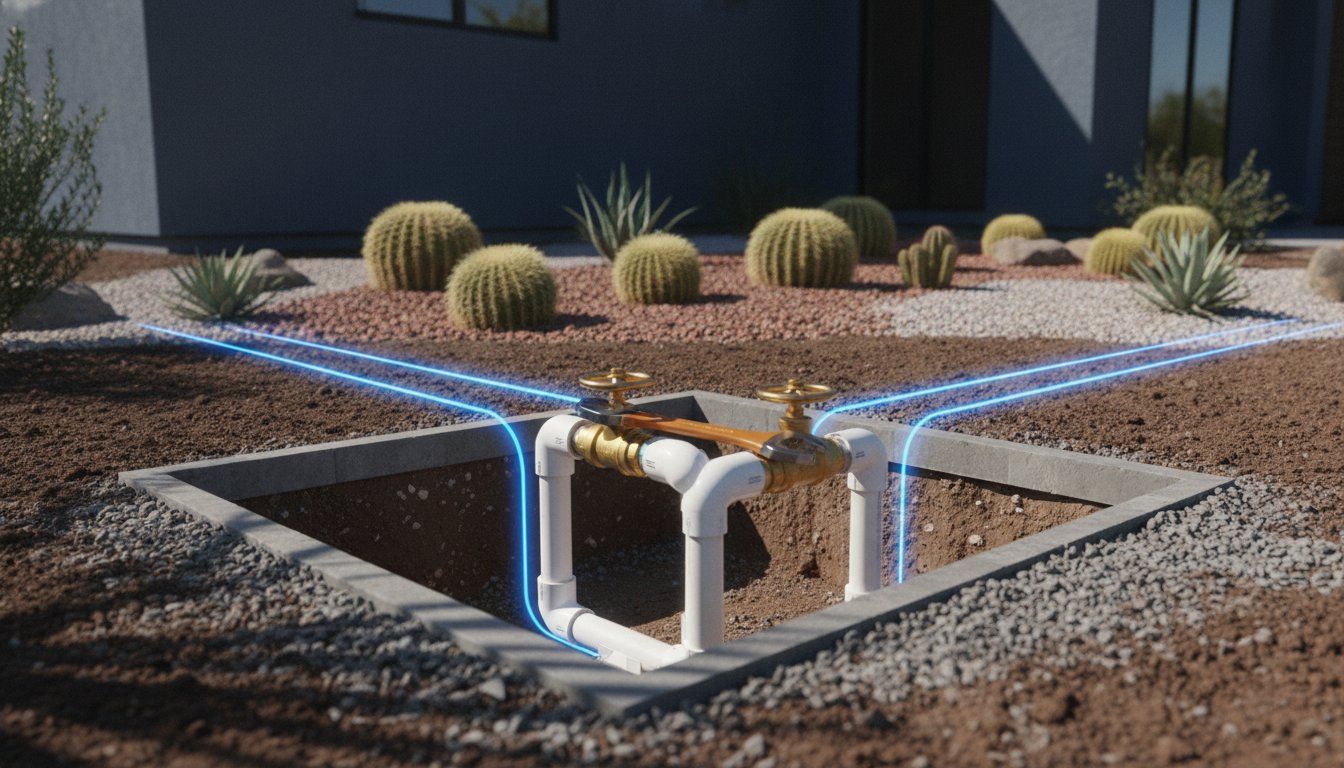
If your entire system seems sluggish, the first place to check is the backflow preventer. Internal components can become restricted by debris or mineral scale, choking the water flow before it even reaches your valves. We also look for signs of a failing master valve or manifold leaks. Even a small underground leak in the main line can sap enough pressure to prevent your pop-up heads from fully extending, creating those stubborn brown patches in your turf.
Drip System Failures in Desert Landscapes
Drip irrigation is essential for Arizona trees and shrubs, but it's prone to unique failures. Dry spots at the base of a tree often indicate emitter salt buildup. As water evaporates at the emitter tip, it leaves behind minerals that eventually plug the opening. Furthermore, the "poly pipe" used in many older Surprise and Peoria systems degrades under our intense UV rays. This leads to cracks or kinking that restricts flow. Testing for these issues involves checking for soil moisture consistency and physically inspecting lines for compression or heat-related damage.
DIY vs. Professional Irrigation Fixes for Arizona Lawns
Deciding whether to tackle a dry spots lawn irrigation fix Arizona project yourself often comes down to the complexity of the failure. Many homeowners can handle surface-level maintenance, but structural repairs require a different level of precision. For instance, a DIY PVC repair might seem straightforward, but improper pipe priming or using the wrong solvent cement leads to joint failure under the high-pressure surges common in our local water lines. A minor mistake underground can eventually turn a small leak into a major washout that damages your property's foundation or hardscape.
Hiring a specialist in Surprise or Peoria saves water and money in the long run because we look at the system as a complete hydraulic circuit. While a general landscaper might just replace a head, we evaluate why that head failed and if the zone's design is still meeting the needs of your maturing lawn. We use professional-grade tools, such as ultrasonic leak detectors and station-specific pressure gauges, to find the exact source of underperformance without unnecessary digging.
Homeowner Maintenance Tasks
There are several preventative measures you can take to keep your system running efficiently between professional inspections. Cleaning the small plastic filters located beneath each sprinkler nozzle is a simple way to restore a distorted spray pattern. You can also safely flush lateral lines by removing the last head on a run and activating the zone for thirty seconds to clear out silt. Additionally, adjusting the arc and radius on modern heads ensures water stays on the grass rather than the sidewalk. To optimize your system's performance, we recommend following the University of Arizona Cooperative Extension irrigation scheduling guidelines, which help you adjust your controller settings for our unique seasonal shifts.
When to Call a Professional Specialist
Certain technical challenges require specialized equipment and licensing to resolve safely. If your controller shows a "fault" or "short" error, you'll need irrigation wiring diagnostics involving multi-meter testing to locate the break or failing solenoid. Electrical troubleshooting is a process of elimination that requires a deep understanding of circuit resistance and grounding.
You should also seek professional help for mainline leaks or complex irrigation PVC pipe replacement. These high-pressure lines are the backbone of your system and require professional-grade fittings and proper curing times to ensure durability. Finally, if you notice water constantly weeping from a head even when the system is off, you likely have a failing valve diaphragm or a backflow preventer issue that needs immediate attention to prevent significant water waste.
Step-by-Step: Troubleshooting Your Lawn's Dry Spots
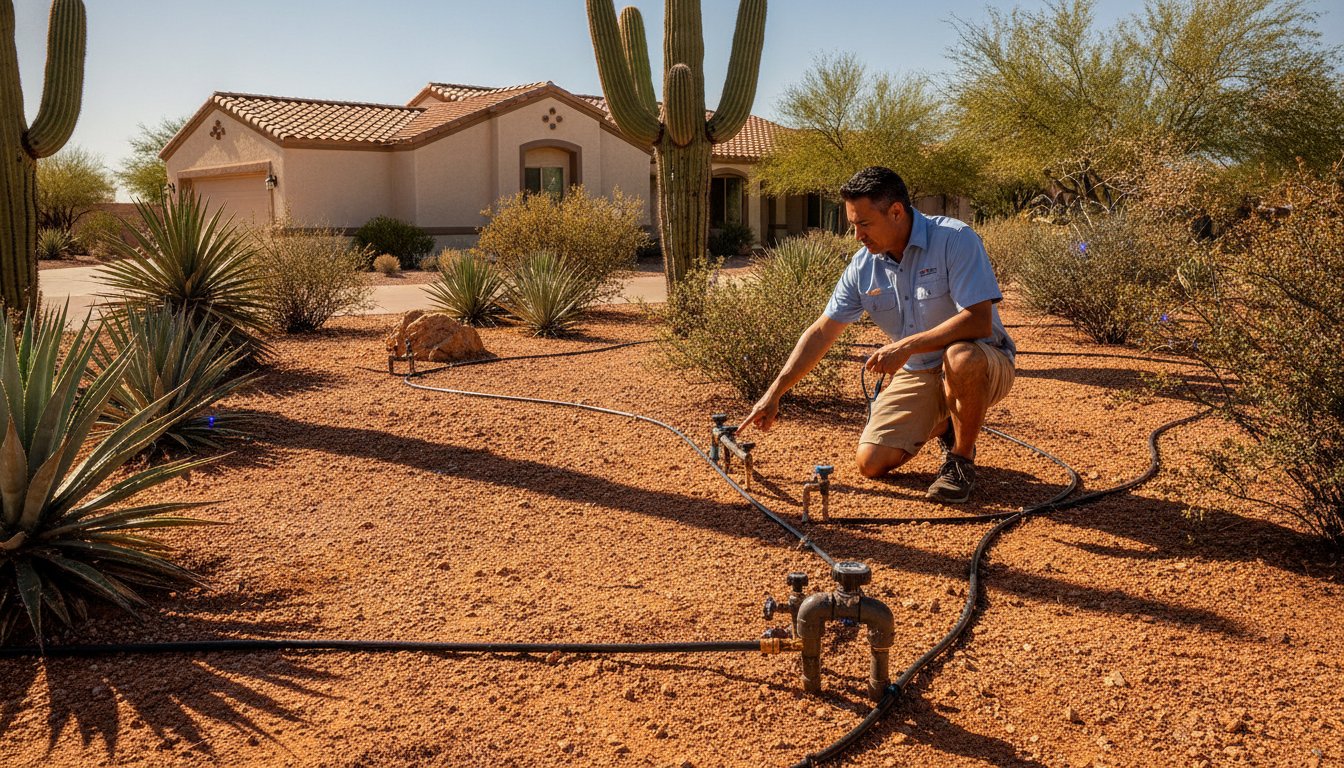
A successful dry spots lawn irrigation fix Arizona homeowners can implement starts with a comprehensive "wet test." You can't accurately diagnose a system while it's dry; you must observe it in action to see how the water actually travels across your property. As the heads pop up, look for a "doughnut" pattern where water lands in a distinct ring, leaving the area directly around the head parched. This often signals that the nozzle's trajectory is incorrect or the pressure is too high, causing the water to over-shoot the immediate area and atomize into a mist that evaporates before it hits the ground.
While the system is running, pay close attention to the base of each sprinkler. If you see water bubbling up from the soil, you likely have a leak in the "swing pipe" or "funny pipe." This flexible tubing connects the rigid PVC line to the sprinkler head, allowing for easier adjustment and protection against heavy mowers. In the desert landscapes of Surprise and Peoria, maturing roots from nearby shrubs can easily pinch these flexible lines, restricting flow and creating localized dry patches that are difficult to diagnose without a visual inspection of the active system.
Conducting the Catch Can Test
The Catch Can Test is a professional-grade method for measuring the actual uniformity of your water distribution. To begin, place five to ten identical, flat-bottomed containers, such as empty tuna or cat food cans, randomly across the zone. Ensure you place several in the healthy green sections and others directly in the brown, brittle areas. Run that specific zone for exactly 15 minutes and then measure the depth of the water in each container with a ruler.
If the containers in the dry spots have significantly less water than those in the green areas, you've confirmed a mechanical distribution failure. This data tells you exactly where the system is underperforming, allowing you to focus your repairs on specific heads rather than guessing. If the water levels are uniform across all cans but the grass is still dry, the problem likely lies in your overall controller run times or soil compaction issues rather than the hardware itself.
Cleaning and Clearing Nozzles
Arizona's mineral-heavy water frequently causes internal clogs that a simple visual check might miss. Over time, calcium and magnesium deposits build up inside the nozzle and the fine mesh screen located beneath it, distorting the spray pattern. To fix this, carefully unscrew the nozzle while holding the riser up. Be sure to keep the area clear so no dirt or sand falls into the open pipe. Soak the nozzle and screen in a mild vinegar solution for about an hour to dissolve the stubborn mineral scale.
Before you put the clean nozzle back on, you must flush the system to ensure the line is clear. Flushing is the process of running water through the head without a nozzle to clear the line of any remaining debris. This prevents any loose sediment from immediately clogging your freshly cleaned components. If your troubleshooting reveals deeper hydraulic issues or broken underground lines, you can contact our team to schedule a professional diagnostic and repair.
Professional Upgrades for a Drought-Resistant Yard
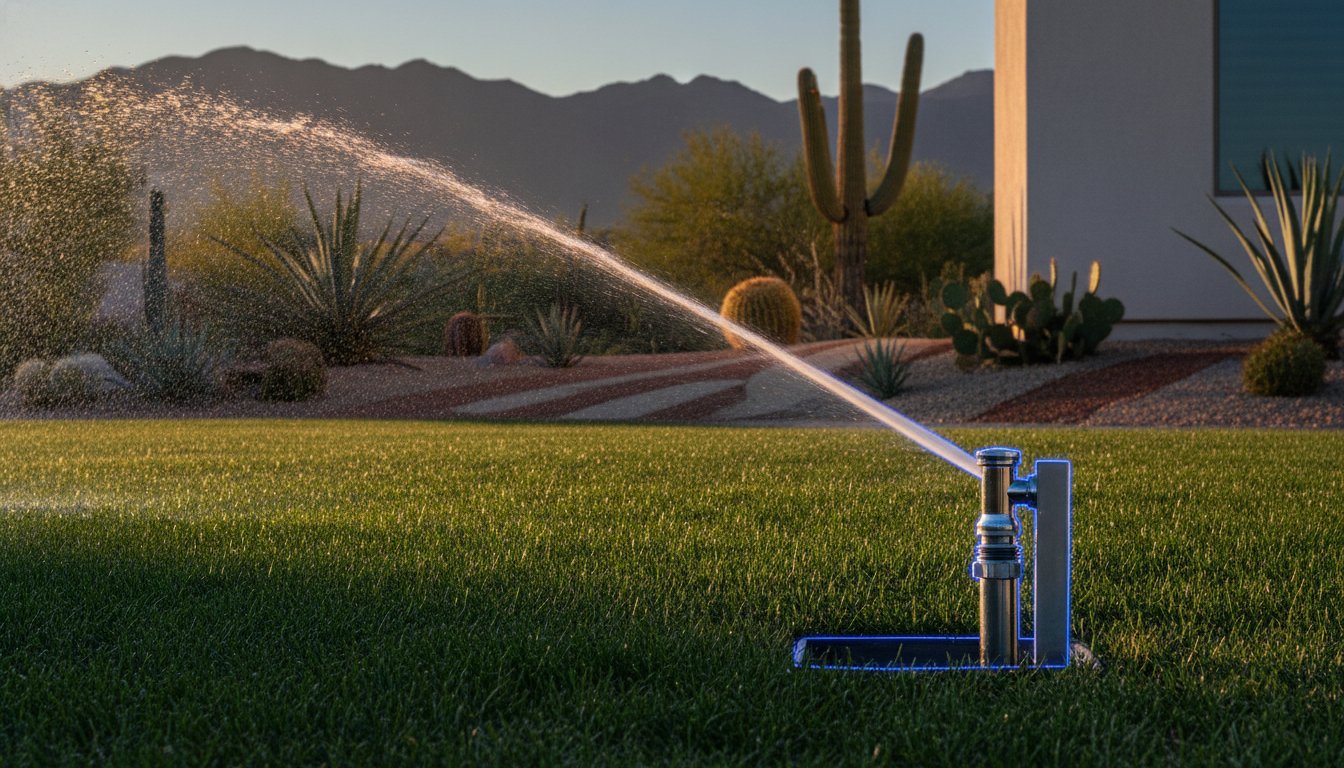
Once you've identified the mechanical failures, the next step is moving toward a more resilient setup. A permanent dry spots lawn irrigation fix Arizona yards benefit from most involves transitioning to high-efficiency rotary nozzles. Unlike traditional spray heads that create a fine mist, rotary nozzles deliver multiple rotating streams of water. This design is significantly more resistant to wind drift, which is a major concern in the open landscapes of Surprise and Peoria. Because the water is applied at a slower, more deliberate rate, it has time to soak into our clay-heavy soil rather than running off into the street.
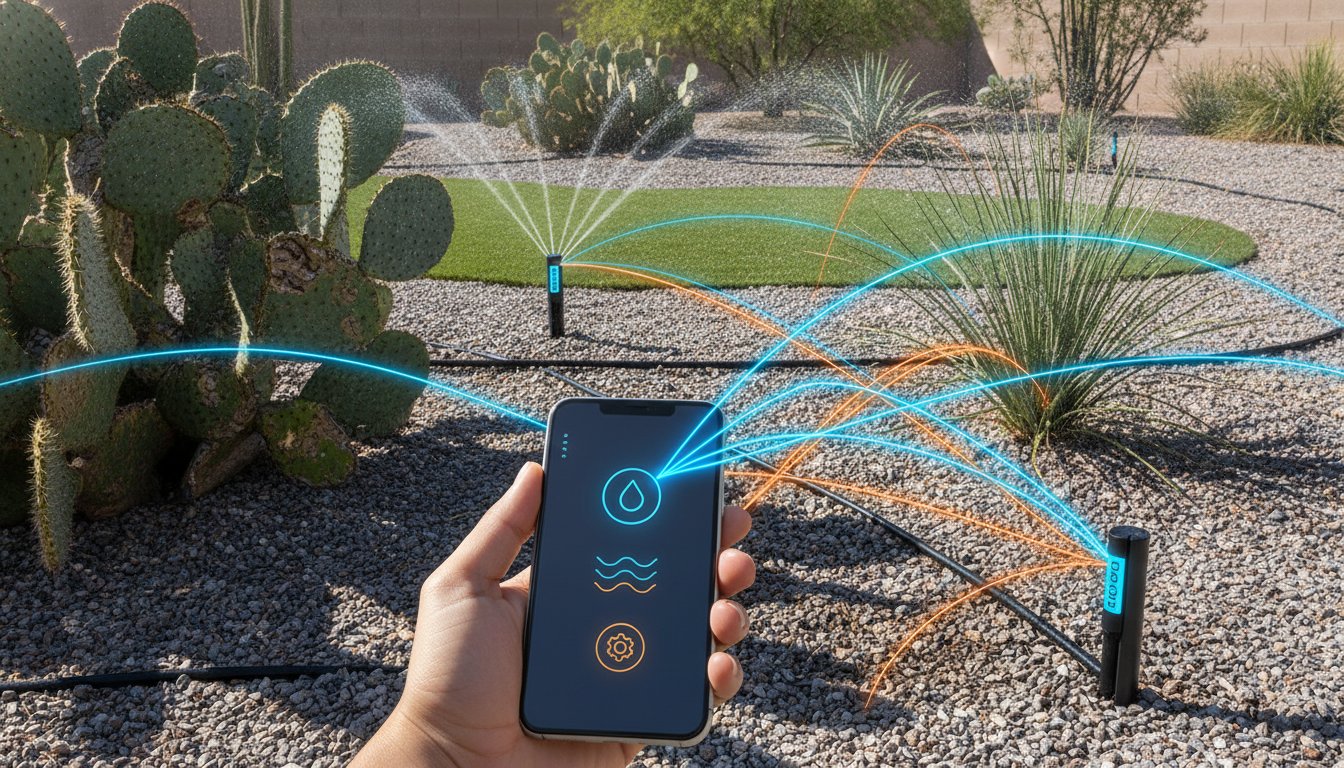
In many West Valley neighborhoods, high municipal water pressure can actually hinder system performance. Installing pressure-regulating heads ensures that every nozzle operates at its ideal PSI. This prevents the misting effect discussed earlier and extends the life of your hardware by reducing internal wear. Modernizing your system also means updating the brain of the operation. A smart irrigation controller with local weather-sensing capabilities adjusts your watering schedule based on real-time temperature and humidity data. As your yard matures, a custom sprinkler system design becomes necessary to ensure that new growth isn't blocking the spray paths intended for your turf.
High-Efficiency Hardware Upgrades
Investing in sprinkler upgrades often pays for itself through reduced monthly utility costs and improved plant health. Beyond nozzles, we often recommend installing heads with built-in check valves. These valves prevent low-head drainage, a common issue where water leaks out of the lowest head in a zone after the cycle ends. This simple addition eliminates small puddles and prevents soil erosion near your sprinkler bodies, ensuring your property remains functional and tidy.
Optimizing Your Drip System
While your lawn needs uniform spray, your desert trees and shrubs require a different approach. Many older homes still rely on thin-walled poly tubing that eventually cracks under the intense Arizona sun. We focus on replacing these vulnerable lines with professional-grade PVC for maximum longevity. Adding pressure-compensating emitters ensures that a tree at the end of a long line receives the exact same amount of water as the one closest to the valve. If you're looking to modernize your desert landscape's water delivery, you can request a residential drip system installation consultation to evaluate your current setup. This proactive approach to a dry spots lawn irrigation fix Arizona homeowners can rely on ensures that your entire property stays healthy through the summer peak.
Restoring Your Lawn's Health and Efficiency
Achieving a uniform green lawn in the Arizona desert requires moving beyond simple timer adjustments. We've explored how mechanical failures, hydraulic design gaps, and environmental stressors like wind drift create those frustrating brown patches. By utilizing technical diagnostics such as the catch can test and upgrading to high-efficiency hardware, you can ensure your system delivers water precisely where it's needed. Finding a permanent dry spots lawn irrigation fix Arizona residents can trust involves a commitment to precision and system longevity.
Sonora Sprinkler Inc. has been family-owned and operated since 1999. As licensed residential irrigation specialists, we provide expert PVC and drip system diagnostics that general landscapers often overlook. Our focus is strictly on irrigation, ensuring your system operates at peak performance throughout the peak summer heat. Request a Professional Irrigation Diagnostic in Surprise & Peoria to protect your property's value and reduce water waste. Your yard's resilience is within reach with the right professional guidance and a system built to last.
Frequently Asked Questions
Why does my grass have brown spots even though I water every day?
Watering daily often leads to shallow root systems that can't withstand the intense heat in Surprise. If your system has design gaps or poor head-to-head coverage, those specific areas will never receive enough moisture regardless of frequency. You might also be dealing with soil compaction, where the water runs off rather than soaking in. A professional dry spots lawn irrigation fix Arizona yards need involves checking the soil's absorption rate and the system's distribution uniformity.
How do I know if my sprinkler head is clogged or if the pipe is leaking?
A clogged nozzle usually results in a distorted spray pattern or a reduced radius that fails to reach the next head. If you notice a "doughnut" pattern or fine misting, cleaning the internal filter is the first step. Conversely, an underground leak typically manifests as bubbling water at the base of a head or a significant drop in pressure across the entire zone. Persistent soggy spots in your turf, even when the system is off, strongly indicate a leaking pipe.
What is the best time of day to water my lawn in Arizona to avoid dry spots?
The ideal window for watering in Peoria and Surprise is between 3:00 AM and 6:00 AM. During these early morning hours, temperatures are at their lowest and wind speeds are typically calm. This reduces the amount of water lost to evaporation and prevents wind drift from pushing the spray away from intended targets. Watering at night should be avoided, as stagnant moisture on the grass blades can encourage fungal growth in our humid monsoon season.
Can a bad irrigation valve cause low pressure and dry patches?
Yes, a failing valve is a frequent cause of localized underperformance. If the internal diaphragm is torn or restricted by mineral buildup, the valve may not open fully, which starves the zone of necessary pressure. This prevents the sprinkler heads from popping up completely or reaching their designed radius. Our team specializes in valve and backflow services to ensure your system's "heart" provides the consistent flow required for a healthy, green lawn.
How much water pressure does a residential sprinkler system need in Surprise, AZ?
Most residential systems in Surprise operate most efficiently between 30 and 50 PSI for standard spray heads. Rotor heads often require slightly higher pressure, ranging from 40 to 60 PSI, to rotate correctly. If your pressure exceeds 70 PSI, which is common in some West Valley developments, you'll experience excessive misting and water waste. In these cases, we recommend installing pressure-regulating heads or a master regulator to maintain the integrity of your hardware and prevent dry spots.
Will a smart controller fix the dry spots in my lawn?
A smart controller is an excellent tool for managing seasonal weather shifts, but it cannot fix mechanical failures or poor hydraulic design. If your dry spots are caused by a clogged nozzle, a leaking pipe, or incorrect head spacing, increasing the run time via a controller will only waste water. You must first resolve the physical delivery issues before a smart controller can truly optimize your yard's efficiency and ensure long-term water conservation.
How often should I have my irrigation system professionally inspected in the desert?
We recommend a professional inspection at least twice a year, specifically during the transition into spring and again before the winter months. The extreme temperature fluctuations in the Arizona desert cause PVC pipes and rubber seals to expand and contract, which leads to cracks and leaks over time. Regular diagnostics help identify small issues, such as failing solenoids or mineral-clogged emitters, before they result in costly water bills or the loss of your lawn.
Why are my drip emitters not putting out enough water for my trees?
Drip emitters in our region often fail due to calcium and salt buildup from our hard water supply. These minerals crystallize at the emitter tip, slowly choking off the flow until the plant begins to show stress. Additionally, older poly tubing can become brittle or kinked underground, especially as tree roots grow and shift the soil. Transitioning to professional-grade PVC and pressure-compensating emitters provides a more durable solution for long-term desert plant health.