In the Arizona desert, effective water conservation isn't just about watering your plants less. It's about the mechanical precision of your delivery system and ensuring every drop reaches its intended target. You've likely felt the frustration of opening a summer utility bill that looks more like a mortgage payment, or perhaps you're tired of patching brittle drip lines that seem to fail every time the temperature spikes. It's common for Surprise and Peoria homeowners to feel overwhelmed by complex smart controller settings while their landscape struggles to survive the heat.
We understand that a healthy yard shouldn't come at the cost of your peace of mind or your monthly budget. This guide will show you how to achieve true water conservation irrigation Arizona residents can depend on by focusing on high-quality repairs and strategic system upgrades. You'll learn how to identify hidden system failures, simplify your controller's schedule, and implement durable solutions that protect your property for the long term. By the end, you'll have a clear roadmap to a more efficient, low-maintenance irrigation system that keeps your desert landscape thriving without the wasted water.
Key Takeaways
- Understand why Arizona's Active Management Areas make efficient water use a necessity for homeowners in Surprise and Peoria.
- Discover the essential mechanical components of water conservation irrigation Arizona landscapes need to thrive, including pressure regulation and precision emitters.
- Learn how to identify "silent killers" of efficiency like underground PVC pipe cracks and electrical wiring failures before they impact your utility bill.
- Evaluate the financial return on investment for various system upgrades to prioritize repairs that offer the greatest water savings per dollar.
- Recognize why a technical, mechanical approach to irrigation maintenance ensures greater system durability than standard landscaping services.
The Reality of Water Conservation Irrigation in Arizona Landscapes
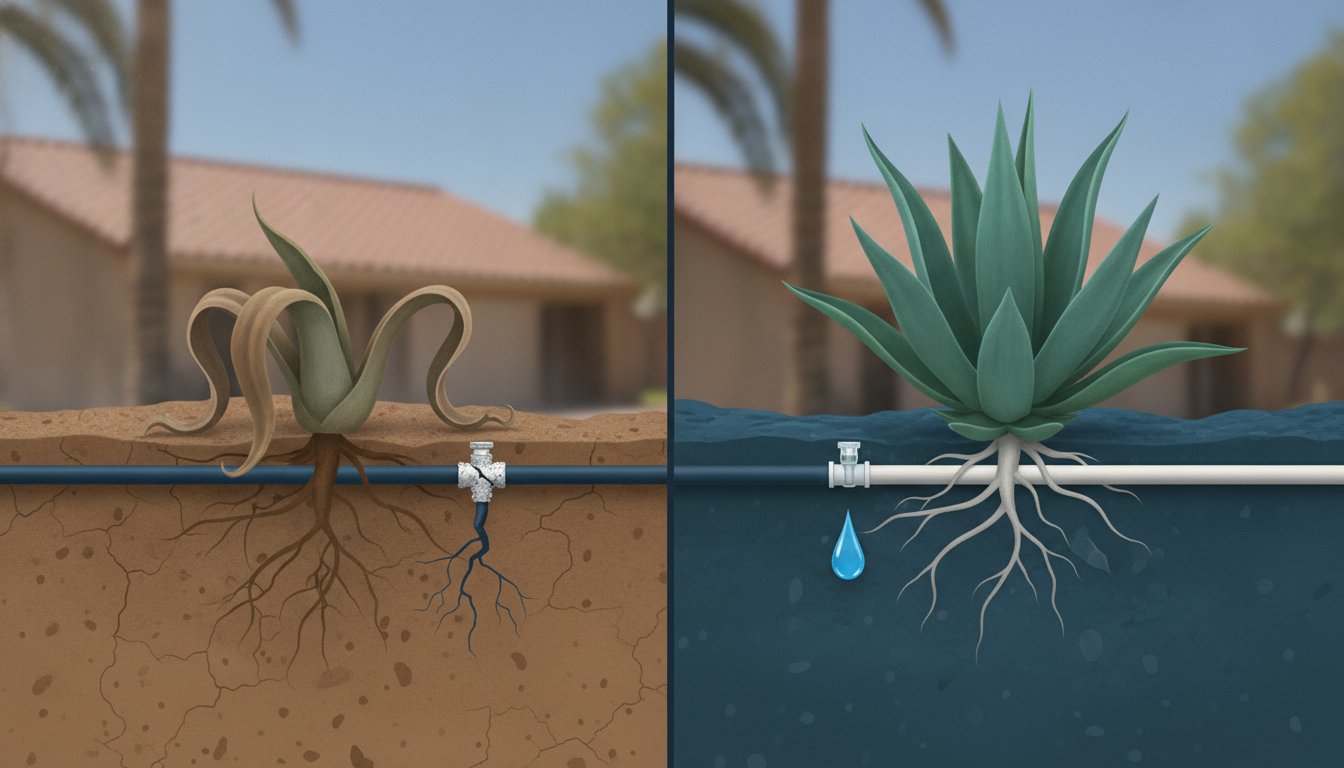
Living in the desert requires a unique understanding of how water interacts with your property. Arizona operates under "Active Management Areas" (AMAs), which are regions where groundwater use is strictly regulated to protect our future supply. For homeowners in Surprise and Peoria, this regulatory environment means that residential efficiency is a high priority. Effective water conservation irrigation Arizona strategies aren't just about using less water; they're about ensuring every gallon performs a specific task. We view conservation as a proactive mechanical strategy. It's the difference between a system that simply "runs" and one that is engineered to endure. Inefficient systems do more than inflate your bill. They can lead to soil saturation that damages home foundations or causes root rot in expensive desert trees.
Arizona's Climate Challenges for Home Irrigation
The local environment is incredibly harsh on mechanical hardware. When summer temperatures climb past 110°F, standard PVC pipes and poly-tubing undergo intense thermal expansion. This physical stress weakens joints and causes brittle components to snap under pressure. In the soil of Surprise and Peoria, homeowners also contend with caliche. This dense, rock-like layer of calcium carbonate acts as a barrier to both roots and drainage. When an irrigation system isn't designed for these specific conditions, water pools on the surface or sits against underground pipes, leading to premature failure. This is why "standard" irrigation kits from big-box retailers often fail within three years. They aren't built for the unique geological and thermal stresses of the Sonoran Desert.
The Financial Incentive for System Optimization
Utility providers in Surprise and Peoria use tiered water rates to encourage conservation. As your consumption increases, the cost per gallon jumps significantly. A single leaking valve or a cracked lateral line can waste thousands of gallons in a single month, often pushing your household into the most expensive billing bracket. Many homeowners find that transitioning to professional drip irrigation systems is the most effective way to regain control over these costs. We define water-efficient irrigation as the precise delivery of water to the root zone with zero runoff. By investing in irrigation repairs and maintenance, you ensure that your water conservation irrigation Arizona plan is physically capable of delivering the savings you expect.
The Core Components of an Efficient Desert Drip System
Drip irrigation is the gold standard for the Southwest because it minimizes evaporation and eliminates wind drift. Unlike traditional sprays that lose significant volume to the air, a well-engineered drip irrigation installation delivers moisture directly to the root zone. This precision is the backbone of water conservation irrigation Arizona homeowners rely on to maintain lush landscapes without waste. A high-efficiency zone consists of four critical parts working in harmony: the control valve, a high-mesh filter, a pressure regulator, and professional-grade distribution tubing. Without these components, you risk "water overlap," where certain areas are oversaturated while others remain bone dry.
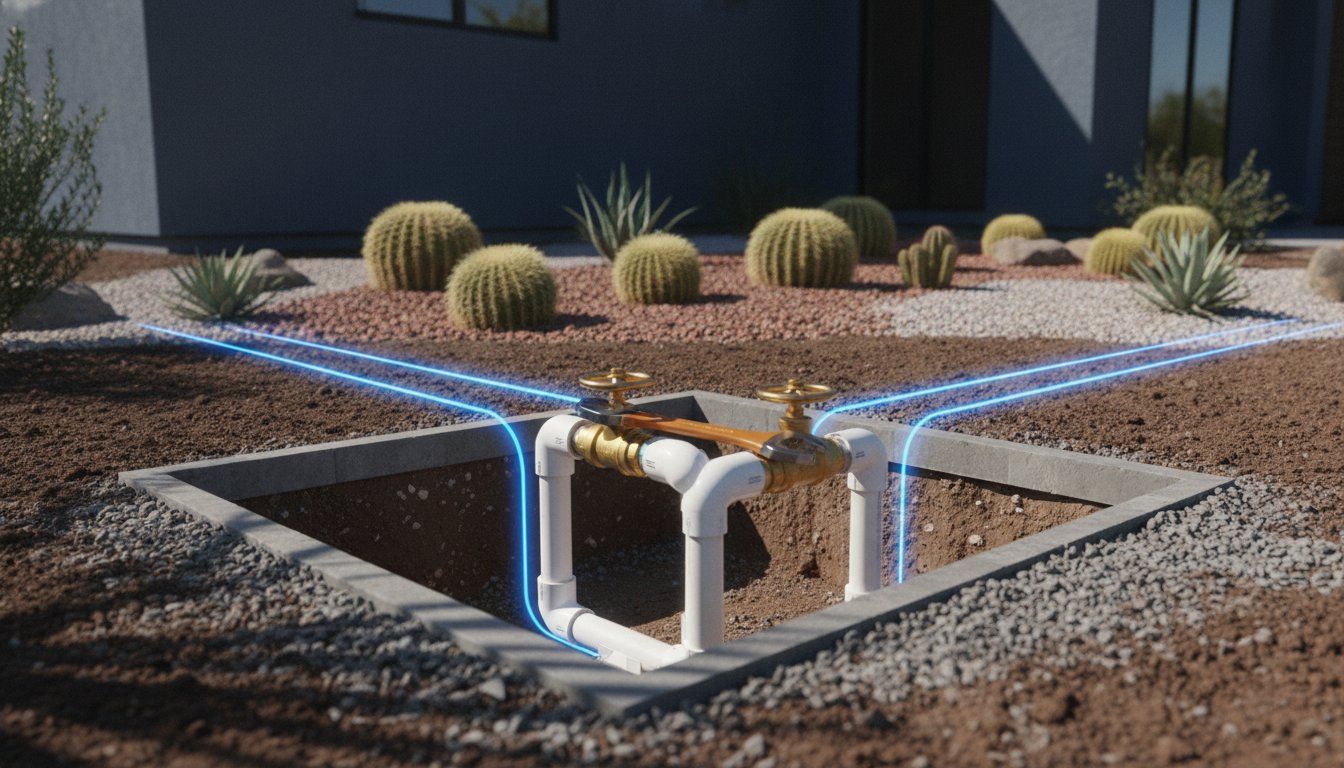
Pressure regulation is perhaps the most overlooked factor in desert water waste. Arizona municipal water pressure often exceeds the 25 to 30 PSI limit that drip components are designed to handle. Excessive pressure causes emitters to "mist" or pop off the line entirely. This leads to massive leaks that often go unnoticed beneath a layer of decorative rock. By installing a dedicated regulator at the valve, we ensure the system operates within its mechanical limits. This small adjustment prevents component failure and extends the life of your entire system.
High-Efficiency Drip Irrigation Hardware
Professional-grade hardware differs significantly from the kits found in big-box stores. We prioritize pressure-compensating emitters because they provide a consistent flow rate regardless of elevation changes or the distance from the valve. This ensures that a tree at the end of a long line gets the same amount of water as one right next to the house. Additionally, using UV-resistant professional tubing is mandatory in Surprise and Peoria. The intense desert sun quickly degrades standard poly-tubing, making it brittle and prone to cracking within just a few seasons. If you're concerned about the durability of your current setup, it's worth considering a professional assessment of your irrigation system design.
Smart Controllers and Weather-Based Scheduling
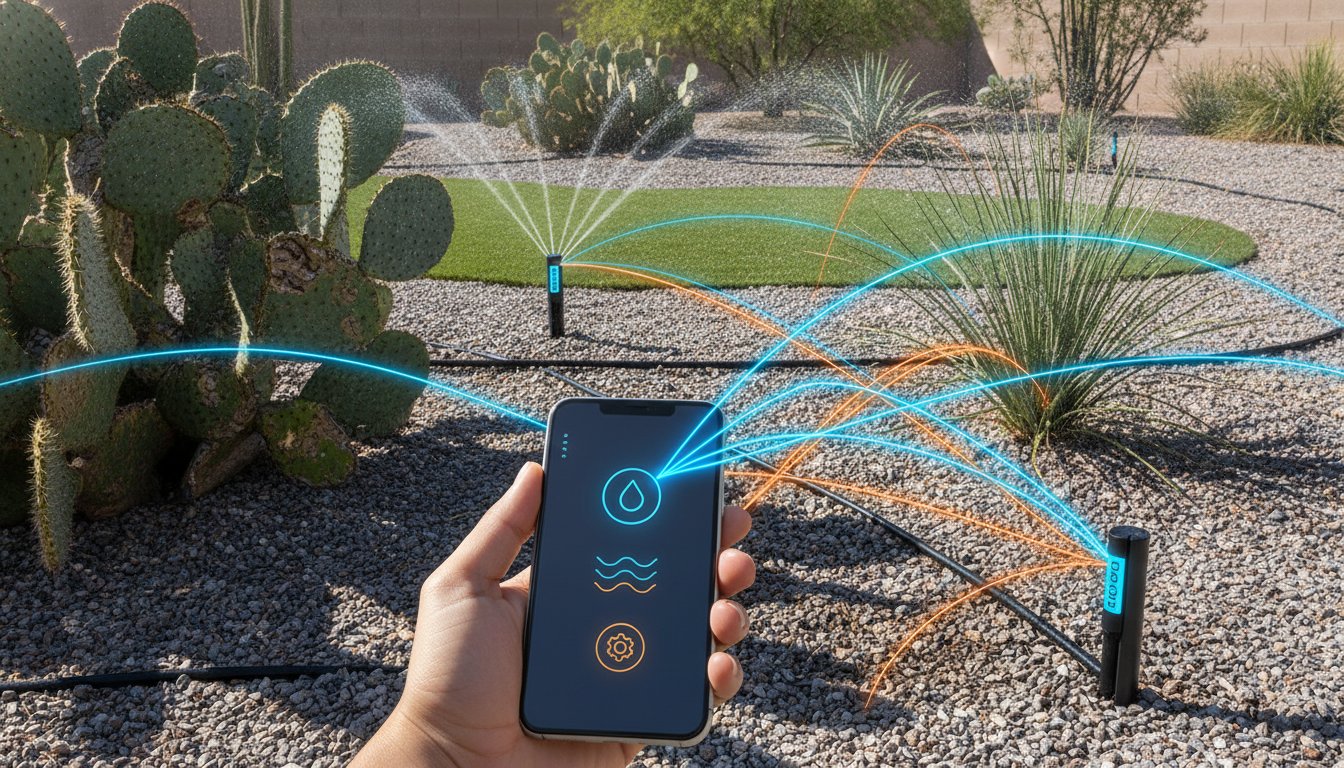
Modern technology plays a vital role in managing our limited resources. Smart controllers that utilize local Peoria weather data can automatically adjust run times based on real-time evaporation rates. This prevents overwatering during cooler weeks and ensures plants have enough moisture during a sudden heatwave. According to University of Arizona water-efficient irrigation research, proper scheduling is just as important as the hardware itself. For our local hard soils, we recommend "cycle and soak" settings. This method applies water in shorter bursts, allowing it to penetrate the dense earth rather than running off the surface. Integrating rain sensors further protects your budget by shutting the system down during monsoon storms.
Identifying and Fixing Mechanical Water Waste
Many homeowners adjust their timers and wonder why their utility bills remain high. The reality is that mechanical failures often bypass even the smartest controllers. Achieving true water conservation irrigation Arizona standards requires a deep dive into the physical integrity of the pipes and valves. While a schedule manages "when" the water flows, the mechanical state of the system determines "how much" is actually lost. We focus on identifying the silent killers of efficiency that standard landscaping services often overlook. These issues range from electrical malfunctions to structural pipe failures that can waste thousands of gallons before they are even detected.
Diagnosing Irrigation Valve and Solenoid Issues
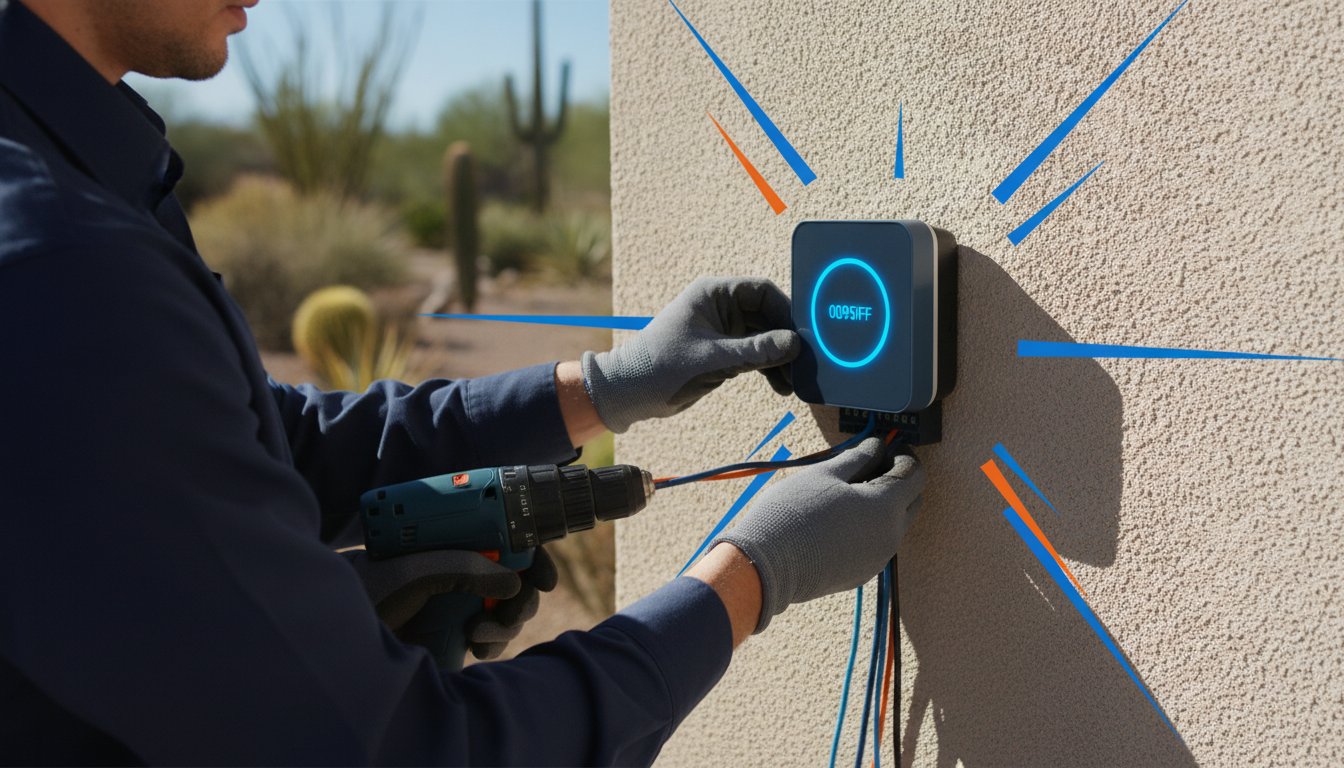
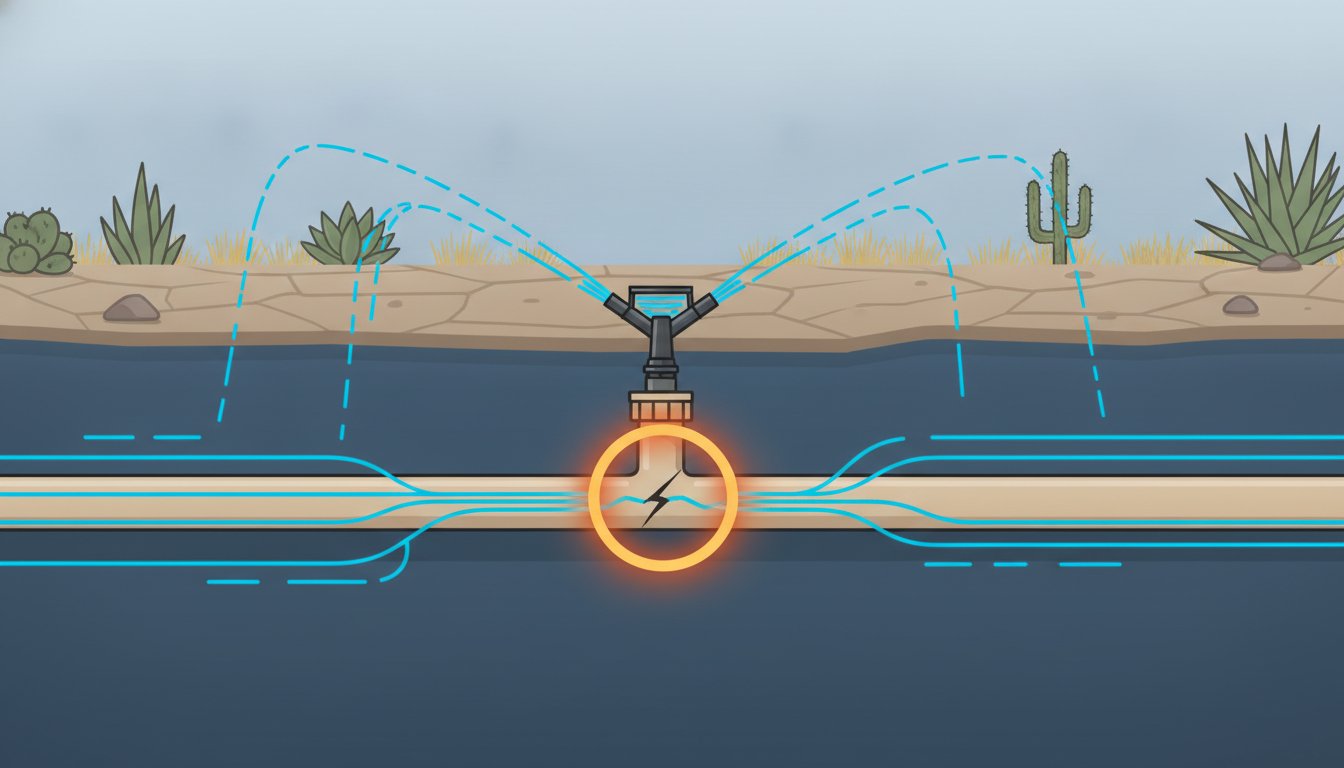
A "weeping" valve is one of the most common causes of hidden water waste. This occurs when a small piece of debris or a worn-out rubber diaphragm prevents the valve from sealing completely. Water continues to trickle into the zone 24/7. Because this water often stays underground or evaporates quickly in the Peoria heat, you won't always see a surface puddle. Additionally, faulty wiring can cause zones to skip or run twice, leading to erratic watering cycles. Professional irrigation wiring and diagnostics are necessary to trace these shorts and ensure your solenoids respond correctly. You can learn more about valves and backflow maintenance to ensure your system shuts off completely when the cycle ends.
Detecting Underground PVC Pipe Leaks
In established neighborhoods in Surprise and Peoria, aging PVC lines are reaching the end of their functional lifespan. Irrigation PVC pipe replacement becomes essential as ground shifts and thermal stress create hairline fractures in the plastic. You can identify high-volume leaks through a simple meter test. Shut off all water inside the house and check your utility meter. If the dial continues to move, you likely have a leak. Root intrusion from desert trees like Mesquites or Palo Verdes often targets these small cracks, eventually filling the pipe with roots and crushing the line. Addressing these leaks promptly prevents soil erosion and protects the long-term health of your landscape.
Backflow prevention devices are also critical for system integrity and water safety. These assemblies prevent contaminated irrigation water from flowing backward into your home's clean drinking supply. A failing backflow assembly doesn't just waste water; it's a significant health risk. Signs your system needs immediate mechanical attention include:
- Unexplained wet spots or lush patches of weeds in an otherwise dry yard.
- A sudden, noticeable drop in water pressure at your drip emitters.
- The faint sound of running water near the valve box when the system is off.
- Visible corrosion or constant dripping from copper backflow components.
Step-by-Step Upgrades for Maximum Water Savings
Modernizing a legacy irrigation system requires more than just swapping out a few parts. To prepare for the tightening water restrictions expected in the 2026 climate, homeowners need a logical progression that addresses the most significant losses first. We prioritize these improvements based on a "Gallons Saved Per Dollar" return on investment. This ensures your budget is directed toward the mechanical failures that impact your utility bill the most. Effective water conservation irrigation Arizona strategies start with a sound physical foundation before layering on advanced technology. By following a phased approach, you can systematically eliminate waste while protecting the health of your desert landscape.
Phase 1: The Mechanical Audit
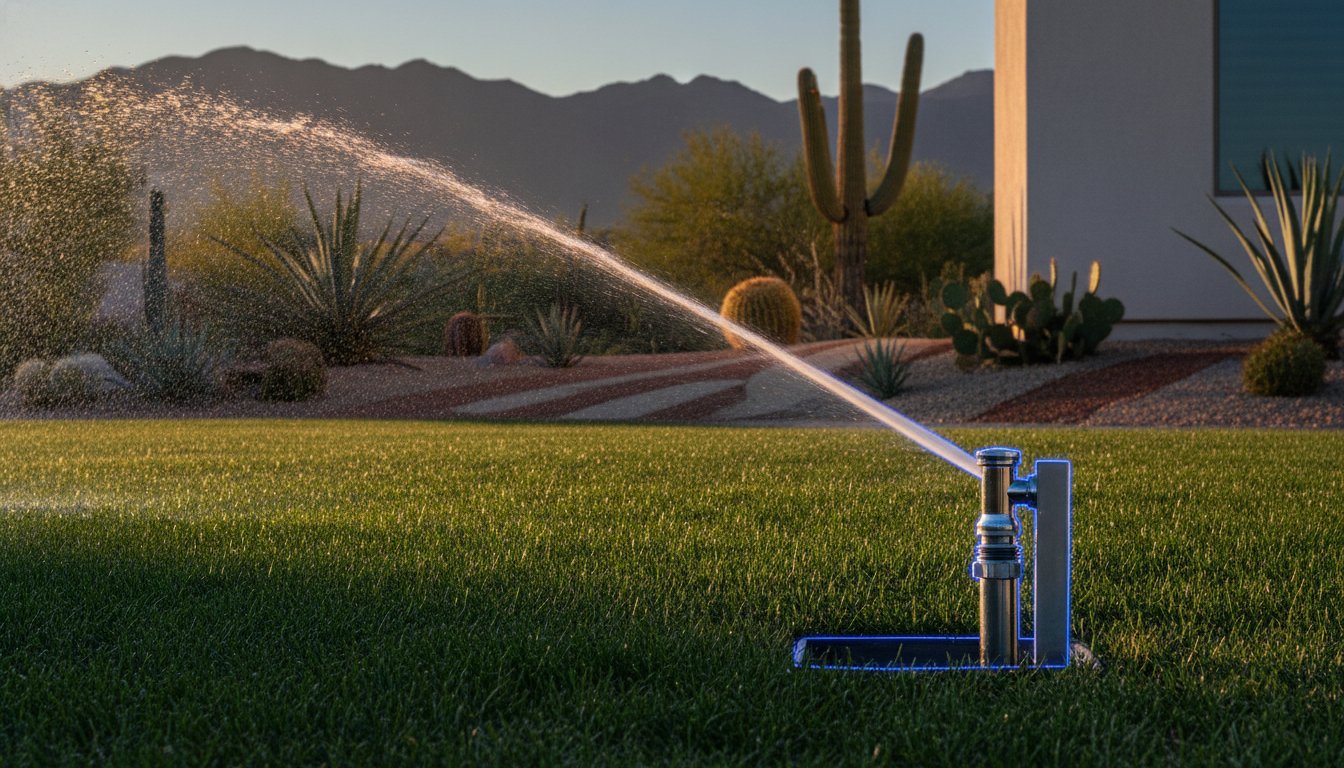
The first step in any upgrade is a comprehensive pressure test of the existing infrastructure. We identify weak points in the lateral lines and manifolds that might fail under the stress of high summer demand. Replacing outdated, high-volume spray heads with high-efficiency rotary nozzles is often the most cost-effective upgrade. These nozzles deliver larger water droplets at a slower application rate. This reduces misting and wind drift, allowing the water to penetrate the dense Arizona soil rather than running off into the street. For a deeper look at these technical improvements, see our guide on residential sprinkler system upgrades.
Phase 2: Hardware Modernization
Once the distribution lines are secure, we focus on high-impact hardware. Installing a master valve is a critical safeguard for Surprise and Peoria properties. This valve remains closed unless a zone is actively running, which prevents catastrophic water loss if a main line develops a major break while you're away from home. Next, we recommend upgrading to a smart, Wi-Fi enabled controller with local weather sensing. These units automatically adjust run times based on real-time evaporation rates in your specific neighborhood. Finally, converting non-functional turf areas—those patches of grass that serve no recreational purpose—to low-flow drip irrigation provides the ultimate reduction in monthly water consumption.
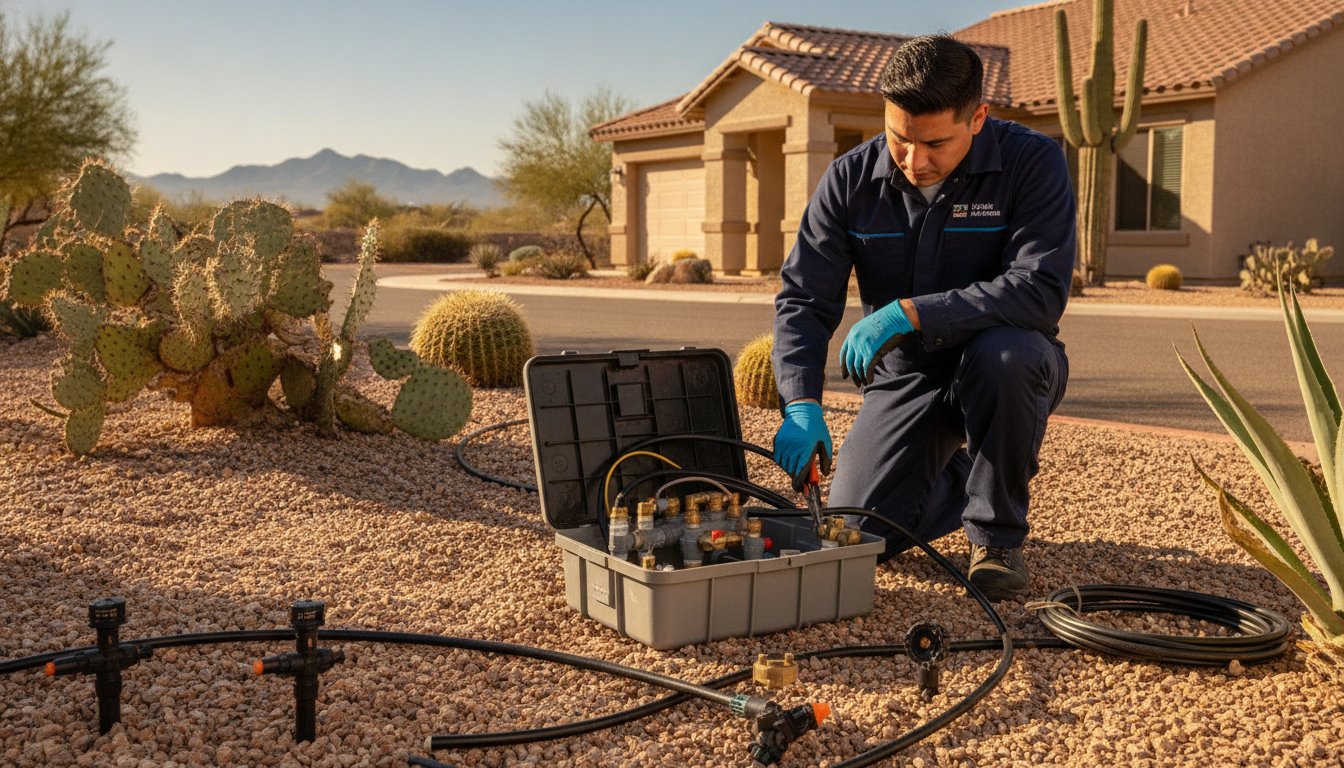
It's important to remember that hardware installation is only half the process. Professional calibration is required after every change to ensure that flow rates and pressures are perfectly balanced for your specific soil type and plant needs. Without precise adjustment, even the most advanced components can lead to inefficient watering patterns. If you're ready to transition your property to a more sustainable model, contact us for a professional sprinkler upgrade to ensure your system is optimized for long-term desert performance.
Professional Irrigation Management: The Sonora Sprinkler Advantage
When homeowners seek to improve their outdoor efficiency, they often turn to general landscapers. However, there is a fundamental difference between maintaining aesthetic appeal and mastering the complex mechanics of water delivery. True water conservation irrigation Arizona requires a level of technical precision that goes beyond mowing and planting. At Sonora Sprinkler, we view ourselves as irrigation mechanics. We focus on the hydraulic and electrical integrity of your system to ensure every component operates at peak performance. This specialized approach allows us to solve persistent issues like low pressure or erratic zone behavior that generalists might overlook. By prioritizing mechanical durability, we protect the long-term health of your property.
Focused Expertise in Residential Mechanics
We have been family-owned since 1999, specializing exclusively in residential irrigation. This focus means we understand the specific environmental stressors that Surprise and Peoria homeowners face daily. Our knowledge of the local caliche soil and extreme thermal shifts informs every custom sprinkler system design we implement. We don't just patch leaks; we engineer solutions for durability. We understand that your irrigation system is a significant investment that requires a "boots-on-the-ground" expert who knows the nuances of desert terrain. If you aren't sure where your system is losing water, you can contact us for a professional system evaluation.
Protecting Your Investment and the Environment
Modern irrigation systems rely on intricate electrical networks to function correctly. Our expertise in irrigation wiring and diagnostics allows us to pinpoint failures in the controller or solenoid before they lead to massive water waste. We also prioritize the safety of your home's water supply through expert valve and backflow services. These mechanical safeguards are essential for preventing cross-contamination and ensuring your system shuts down completely after every cycle. Our team takes pride in professional standards, ensuring that every drip irrigation installation or repair we perform stands up to the Arizona heat. Professional irrigation repair is the most effective way for Arizona homeowners to achieve permanent water conservation.
Secure Your Desert Landscape for the Future
Achieving lasting water conservation irrigation Arizona residents can rely on requires a move from passive watering to active mechanical management. By addressing the physical vulnerabilities of your system, from brittle drip lines to weeping valves, you protect both your property and your monthly budget. We've seen how precision upgrades and smart technology integration create a resilient landscape that thrives despite the intense Sonoran heat. Taking a proactive approach now ensures your system remains functional and efficient as local water regulations continue to evolve.
Since 1999, Sonora Sprinkler has provided specialized residential irrigation services across Surprise and Peoria. Our team focuses on the technical nuances that generalists often miss, including expert diagnostics for complex wiring and valve issues. We take pride in being a dependable local fixture, ensuring your system is engineered for durability and longevity. Don't let hidden leaks or outdated hardware dictate your utility costs or compromise the health of your desert plants.
Schedule your professional irrigation efficiency audit with Sonora Sprinkler today! We're here to help you build a more reliable, low-maintenance irrigation system that serves your home for years to come.
Frequently Asked Questions
What is the most water-efficient irrigation system for Arizona?
Drip irrigation systems utilizing pressure-compensating emitters are widely considered the most efficient choice for our desert environment. These systems apply water directly to the plant's root zone, which significantly reduces the volume lost to wind drift and evaporation. By integrating professional water conservation irrigation Arizona strategies like high-mesh filtration and precise pressure regulation, you ensure that every gallon is utilized by your landscape rather than being wasted on non-target areas or runoff.
How much water can a smart irrigation controller really save in Surprise, AZ?
While specific savings vary based on your landscape size and previous habits, smart controllers often reduce outdoor water consumption by 20 percent or more according to regional utility data. In Surprise, these devices use local weather sensors to skip watering cycles during rain or high humidity. This technology eliminates the "set it and forget it" mentality that leads to overwatering. However, a smart controller works best when paired with a mechanically sound system free of leaks.
Is drip irrigation better than sprinklers for desert landscapes?
Drip irrigation is superior for desert trees, shrubs, and cacti because it targets the roots without wetting the foliage or surrounding soil. In the intense heat of Peoria, traditional sprinklers lose a high percentage of water to evaporation before it even hits the ground. Drip systems eliminate this waste and prevent weed growth in dry areas. Sprinklers should generally be reserved for functional turf areas where uniform coverage is required for grass health.
How do I know if my underground irrigation pipes are leaking?
The most reliable way to identify a hidden leak is by performing a meter test. Ensure all water inside your home is off and watch your utility meter; if the dial moves, water is escaping somewhere. Other signs include unexplained lush patches of grass, standing water near valve boxes, or a sudden drop in emitter pressure. Since caliche soil can hide puddles, these mechanical checks are essential for detecting failures in your underground PVC lines.
Are there water conservation rebates available for Peoria residents in 2026?
Peoria and Surprise municipalities frequently offer rebates for smart controller installations and turf removal, though specific programs for 2026 should be verified through your local utility provider's website. These incentives are designed to offset the cost of upgrading to more efficient hardware. We recommend checking current availability before starting a project. Professional installation of these components ensures they meet the technical requirements necessary to qualify for most municipal conservation programs in the West Valley.
How often should I have my Arizona irrigation system professionally inspected?
We recommend a professional inspection at least twice a year, typically in the spring and fall. Arizona's extreme temperature swings cause significant thermal expansion and contraction, which can loosen fittings or crack older PVC pipes. A seasonal check allows a technician to adjust your controller for changing evaporation rates and identify weeping valves before they cause a spike in your bill. Regular maintenance is the key to ensuring long-term system durability and plant health.
Can I convert my old sprinkler system to a drip system?
Yes, converting an old sprinkler zone to a drip system is an effective way to increase efficiency. This process involves retrofitting existing valves with pressure regulators and filters before laying out new distribution lines. A custom sprinkler system design can transition high-waste lawn areas into low-flow desert zones. This conversion not only saves water but also reduces the maintenance requirements of your landscape by eliminating the need for frequent mowing and edging.
What causes high water bills even when my irrigation is turned off?
High bills when the system is "off" are usually caused by a "weeping" valve or a leak in the main line before your zone valves. A weeping valve occurs when internal debris prevents the diaphragm from sealing, allowing water to trickle into the lines 24/7. Because this water often stays underground, it may not create a surface puddle. Professional valve and backflow services are necessary to diagnose these silent failures and restore the mechanical integrity of your system.