In the peak of an Arizona summer, a sudden drop in irrigation performance is more than a minor annoyance; it is an immediate threat to the health of your desert landscape. You might notice your grass turning brittle or your drip emitters barely trickling, leaving you to wonder why your low water pressure sprinkler system Arizona is failing when you need it most. It's a frustrating scenario, particularly when you're already managing rising municipal water rates and the strict local ordinances against water waste.
We recognize that seeing an unexpectedly high water bill alongside a dying lawn makes any homeowner feel uneasy about the complexity of valves and buried PVC. This guide provides a systematic diagnostic approach to help you identify the root cause of weak flow, whether the issue is a simple mechanical clog or a hidden underground leak. You'll learn how to determine if the problem stems from municipal supply changes or mechanical fatigue, giving you the professional insight needed to restore full pressure and protect your home's long-term value. We will walk through the steps to evaluate your system's health and help you decide when it is time to call in a local specialist for a precise repair.
Key Takeaways
- Learn to isolate pressure issues by testing individual zones at the controller to identify whether the fault is localized or system-wide.
- Identify how Arizona’s extreme heat and soil conditions lead to a low water pressure sprinkler system Arizona through brittle PVC and mineral scaling.
- Examine the role of the backflow preventer and main shut-off valves in maintaining the consistent flow required for desert landscapes.
- Understand how modern irrigation upgrades, such as high-efficiency rotary nozzles, can restore performance while reducing overall water consumption.
- Determine when professional diagnostic tools are necessary to locate hidden leaks and prevent the need for extensive excavation.
Why Your Arizona Sprinkler System Has Low Water Pressure
Low pressure in a residential irrigation setup is defined by a drop in pounds per square inch (PSI) that prevents the system from functioning as designed. When the pressure falls below the manufacturer's required threshold, an irrigation sprinkler may fail to pop up fully or stop rotating entirely. This results in localized flooding near the head while the rest of the lawn remains dry. In our region, a low water pressure sprinkler system Arizona homeowners often encounter is frequently the result of environmental fatigue. The extreme desert heat accelerates the wear on plastic components and rubber seals, causing them to warp or crack over time. These small structural failures allow water to bleed off internally, reducing the force available to drive the sprinkler heads.
Understanding the difference between static and working pressure is essential for a proper diagnosis. Static pressure is the force of the water when the system is off; working pressure is the force while the water is flowing. A significant drop when the valves open suggests that water is escaping through a leak or being restricted by an obstruction. If every zone in your yard is underperforming, the issue likely resides in the main supply line or the backflow assembly. Conversely, if the weakness is limited to a single area, the fault usually lies within that specific zone's valve or lateral piping.
The Impact of Arizona’s Hard Water
Arizona is known for high mineral content in the water supply. Over years of operation, calcium and magnesium deposits create scaling inside narrow orifices. This buildup constricts the flow in emitters and valve ports, much like a clogged artery. Desert dust and silt can also infiltrate the lines during a pipe break, creating physical blockages that reduce output. Mineral scaling is a primary cause of valve diaphragm failure in Surprise.
Municipal vs. On-Property Pressure Issues
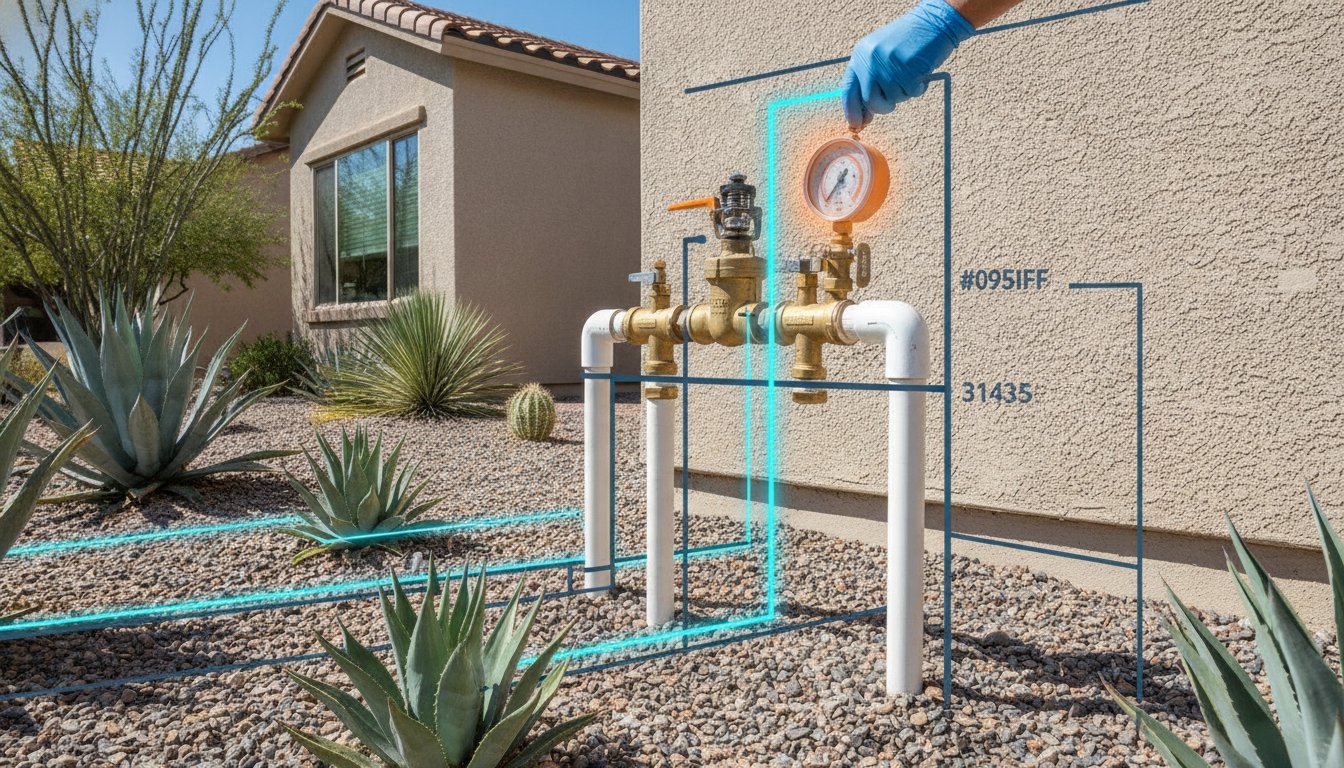
Sometimes the issue originates outside your property. If you notice weak flow at your indoor faucets or outdoor hose bibs, the problem may be a municipal supply fluctuation or a city-side leak. However, if the rest of the house has strong pressure, you should inspect your main irrigation shut-off valve and backflow preventer. These components can become partially obstructed by debris or internal mechanical failure. We often find that backflow preventer repair Surprise is the necessary step to restore full volume to the entire system.
Primary Culprits: From Hidden Leaks to Valve Failures
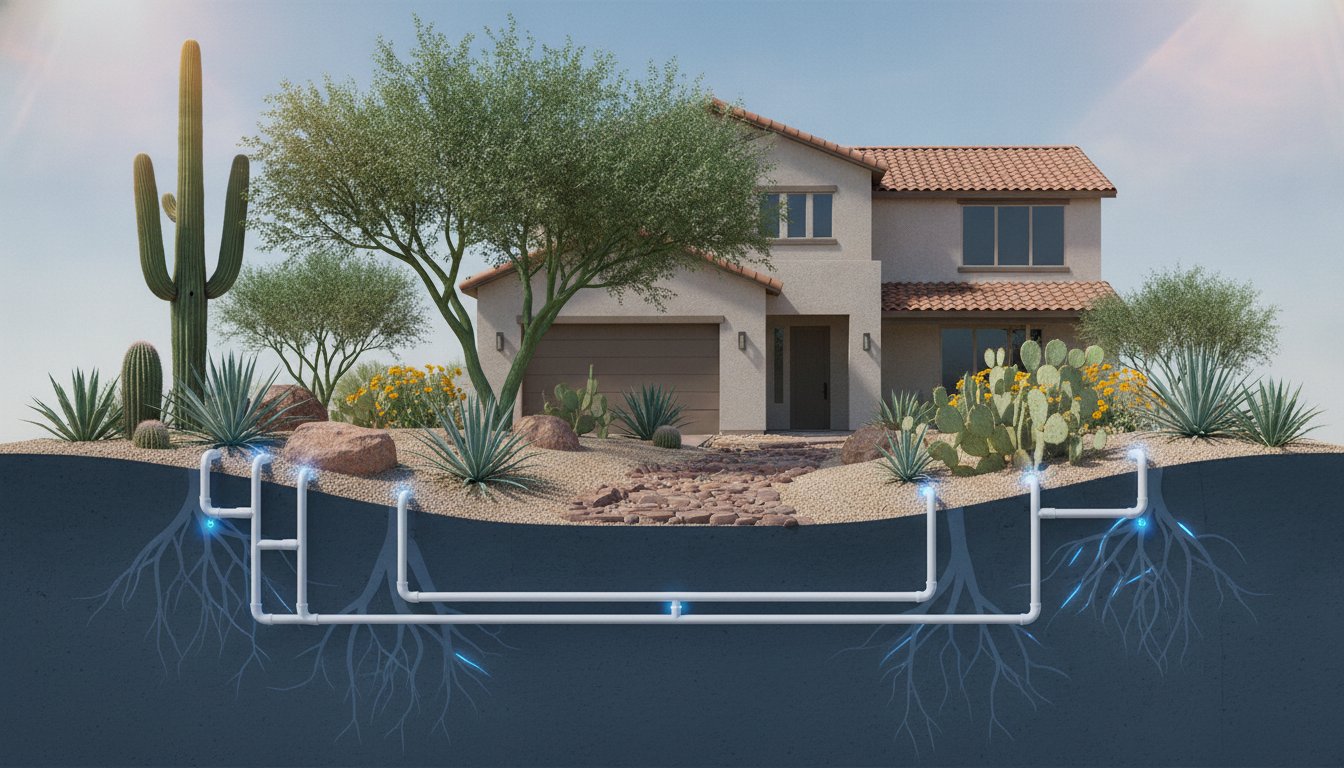
Identifying the source of a low water pressure sprinkler system Arizona homeowners face often requires looking beneath the surface. While mineral scaling is a common culprit, mechanical failures within the system's infrastructure are equally likely. In our desert environment, the soil itself plays a role. The expansion and contraction of caliche-heavy soil, combined with extreme temperature swings, causes PVC pipes to become brittle over time. This leads to hairline cracks that slowly bleed off pressure, preventing the heads at the end of the line from reaching their full operating PSI.
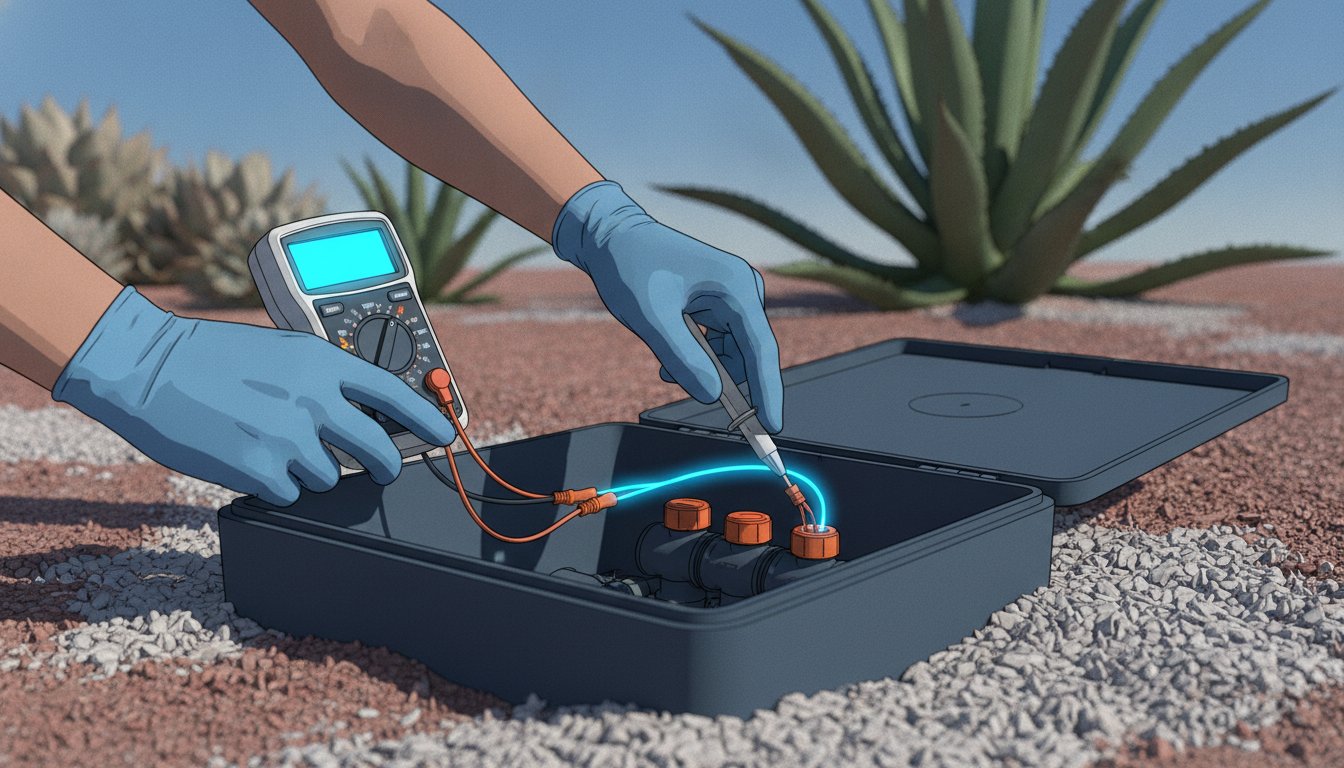
Another frequent issue involves the irrigation solenoid. This component acts as the gatekeeper for each zone. If the solenoid suffers from electrical fatigue or a partial short, it may not pull the valve plunger open completely. When the valve is only partially open, it restricts the volume of water flowing into the zone, which mimics the symptoms of a supply-side pressure drop. For those dealing with intermittent performance, reviewing irrigation wiring diagnostics can help determine if the problem is hydraulic or electrical.
Root intrusion is a uniquely aggressive challenge in Surprise and Peoria. Desert trees like Mesquite and Palo Verde have expansive, opportunistic root systems that seek out the moisture around irrigation lines. These roots can eventually surround and crush PVC pipes or infiltrate joints, creating severe blockages. When diagnosing irrigation pressure issues, it's vital to consider the proximity of mature trees to your mainline.
Hidden Underground Leaks and PVC Fatigue
Not every leak results in a visible geyser. In the porous soil of the Arizona desert, water from a cracked pipe often drains downward rather than bubbling up. You should look for "silent" indicators: patches of unusually vibrant weeds or areas where the soil remains damp long after the cycle ends. These are signs that the system's integrity is compromised. For older homes with original infrastructure, a professional irrigation PVC pipe replacement is often the most cost-effective way to stop water waste and restore pressure.
Drip System Pressure Loss
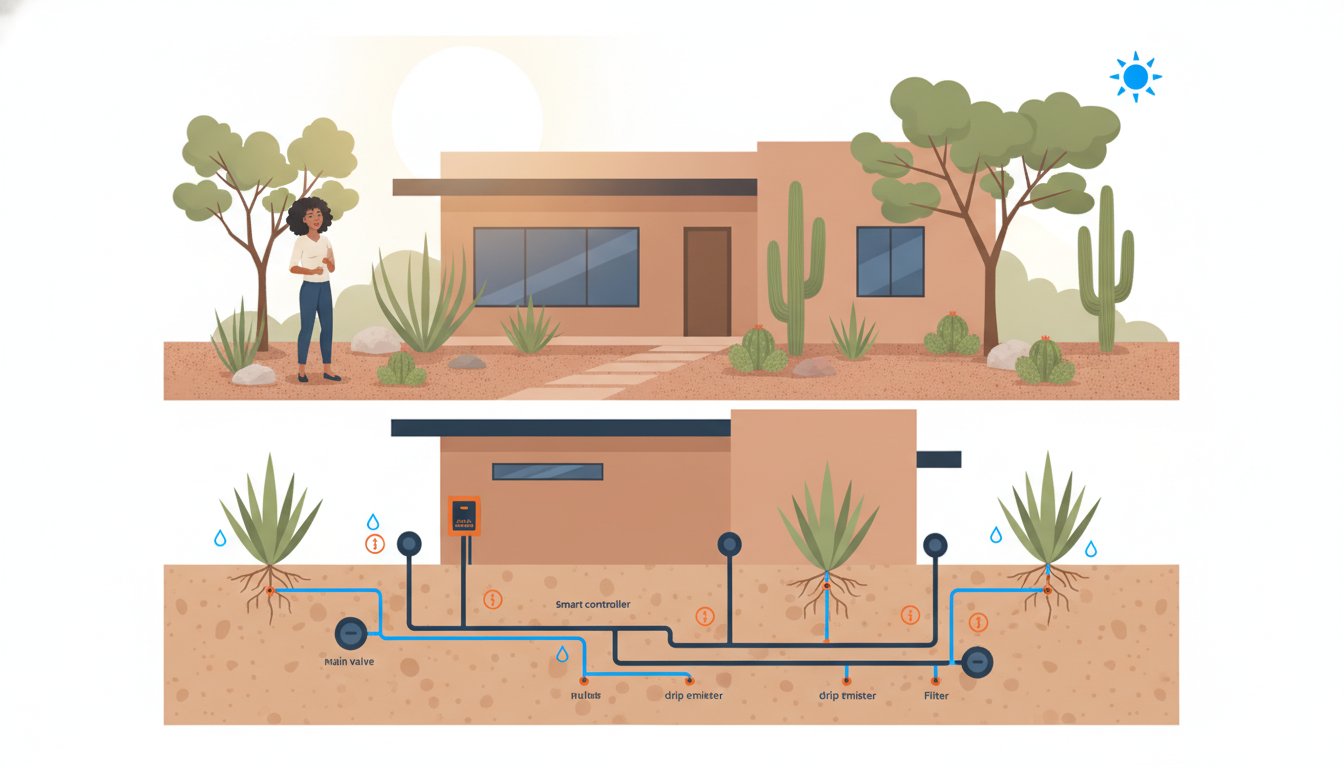
Drip zones are particularly sensitive to pressure fluctuations. Popped emitters or cracked poly tubing allow water to escape at a high volume, which starves the rest of the plants in that zone. This is often caused by a failed pressure regulator. Without a functioning regulator, the high static pressure of the main line can cause "blowouts" in the thin-walled tubing. If your system is outdated, a modern residential drip system installation can provide the durability needed to withstand the local climate. If you're unsure where your pressure is escaping, reaching out for a professional diagnostic can save you hours of unnecessary digging.
Step-by-Step: Diagnosing Irrigation Pressure Issues at Home
When you encounter a low water pressure sprinkler system Arizona homeowners often feel compelled to start digging immediately. However, a methodical diagnostic approach can save you significant time and manual labor. The first step is to isolate the problem by testing each zone individually at your controller. If the pressure drop is isolated to a single zone, you can rule out the main supply line and focus your attention on that specific valve or the lateral piping. If every zone across the property is struggling to pop up, the restriction is likely located at the main shut-off valve or the backflow preventer assembly.
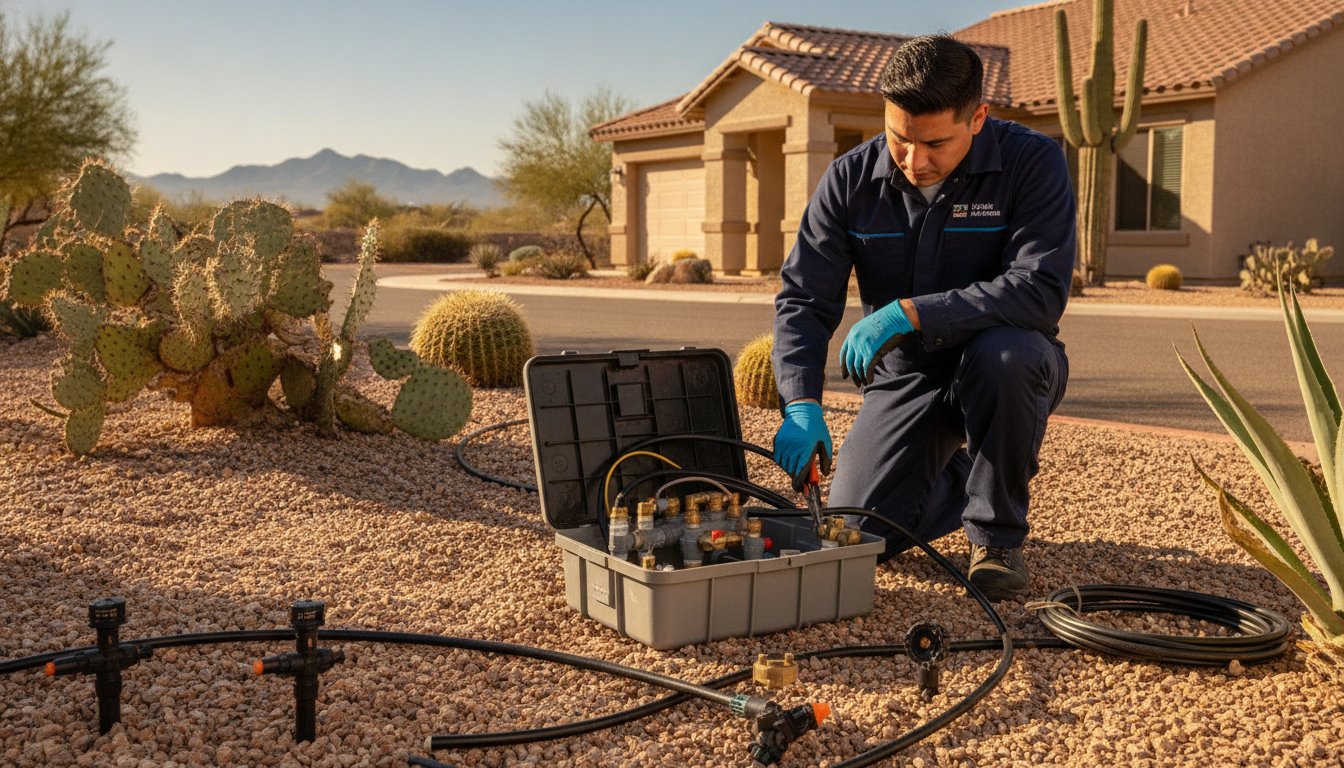
Before assuming you have a major break, inspect the handles on your backflow preventer and the main irrigation shut-off. These valves must be fully engaged to allow maximum volume. It's common for these to be partially closed during routine yard work or by accident. You should also rule out simple debris by unscrewing the nozzles on the affected heads. Small grains of desert sand or mineral flakes can easily clog the internal filters. If cleaning the nozzles doesn't restore the spray pattern, check the valves for "weeping." A valve that leaks water even when the system is off indicates a worn internal diaphragm, which can bleed off the pressure needed for the next cycle.
The Bucket Test and Pressure Gauges
To establish a baseline, you can use a simple pressure gauge that threads onto a standard outdoor hose bib. This tool allows you to see your home's static PSI. If your static pressure is significantly lower than the local average, the issue may be municipal. However, if your static pressure is high but drops drastically when the sprinklers activate, you have a restriction or a leak on your property. Knowing this distinction helps you decide when to stop DIY efforts. If you find that your valves and backflow assembly are failing to maintain working pressure, calling a professional is the best way to avoid further property damage.
Visual Inspection Checklist
A thorough walk of the property while the system is running is the most effective way to find hidden failures. Look for these specific indicators:
- Bubbling water: This suggests a cracked riser or a broken pipe just below the surface.
- Sunken soil: Persistent wet spots that feel soft or "spongy" often hide a slow PVC leak.
- Flooded valve boxes: Standing water or mud inside the box usually points to a loose fitting or a cracked valve body.
Professional Fixes and Efficiency Upgrades for 2026
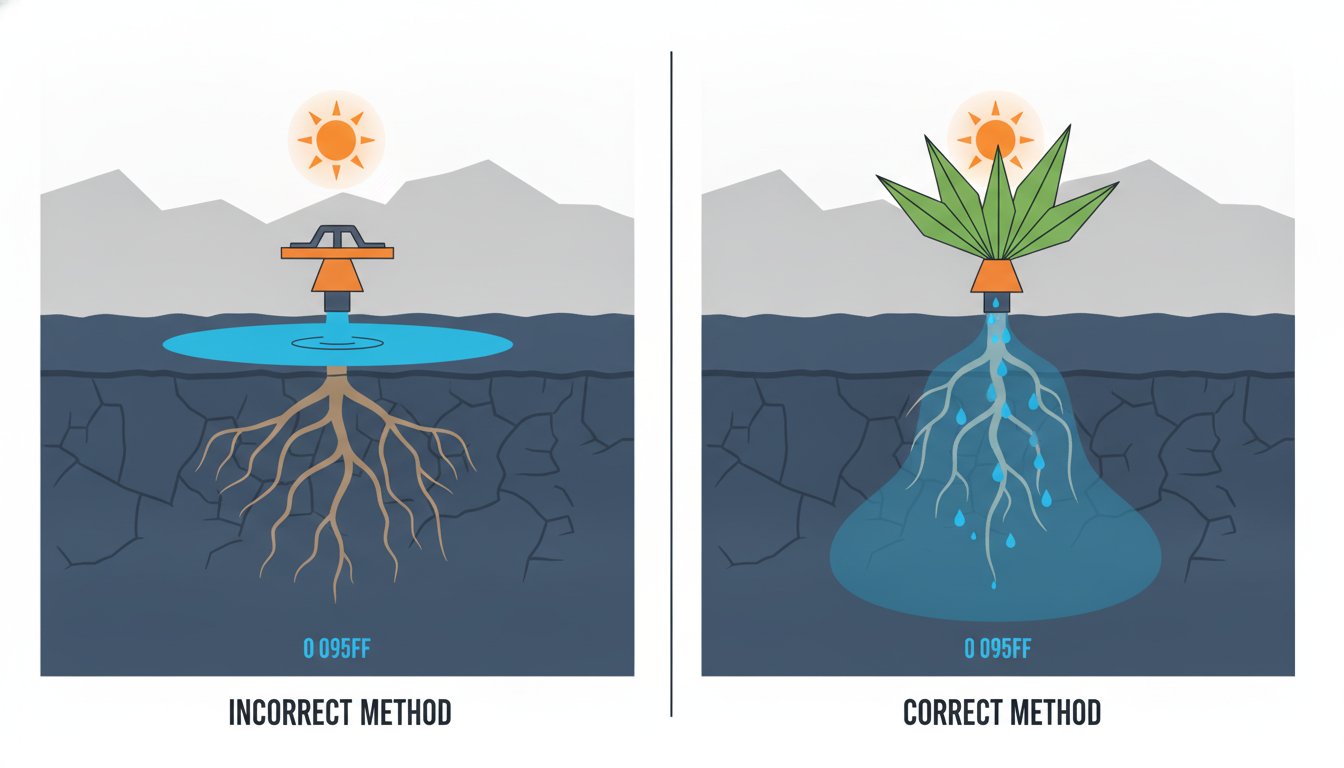
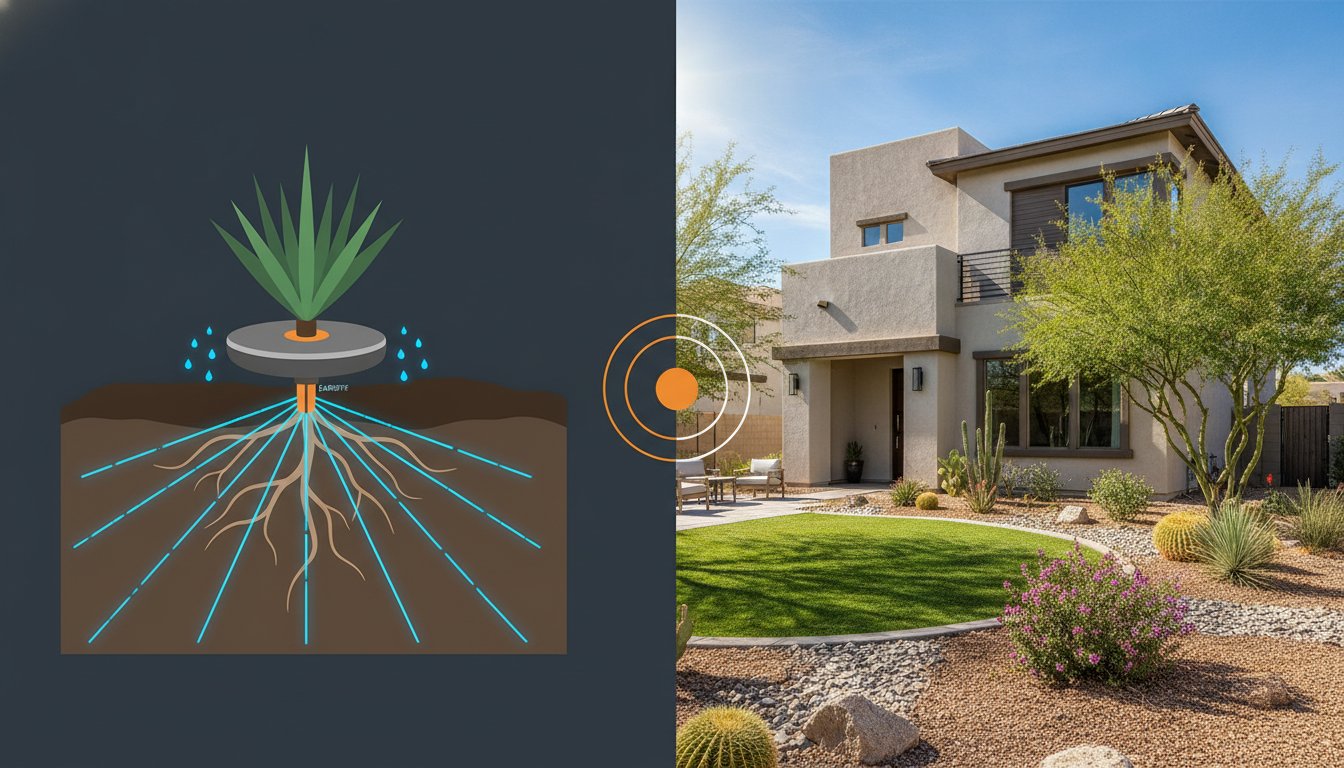
Once you have identified that your low water pressure sprinkler system Arizona isn't performing due to mechanical limitations, it's time to look at professional solutions. One of the most effective ways to combat low PSI is by switching to high-efficiency rotary nozzles. Unlike traditional spray heads that require high pressure to maintain a misting pattern, rotary nozzles use multiple rotating streams. This technology allows them to operate effectively at lower pressures while providing better wind resistance and more uniform coverage. Integrating these components is a central part of residential sprinkler system upgrades that help homeowners maintain healthy landscapes despite regional water restrictions.
We also recommend the installation of a master valve as a protective measure for your property. A master valve is located at the beginning of your irrigation mainline and only opens when the controller activates a zone. If a lateral pipe bursts or a zone valve fails to close, the master valve acts as a fail-safe to prevent continuous flooding. Ensuring these components are correctly integrated requires specialized knowledge of local plumbing codes. Professional valve and backflow services are significantly more reliable than DIY attempts, as they guarantee the system remains airtight and protected against back-siphonage into your home's drinking water.
Advanced Leak Detection and Repiping
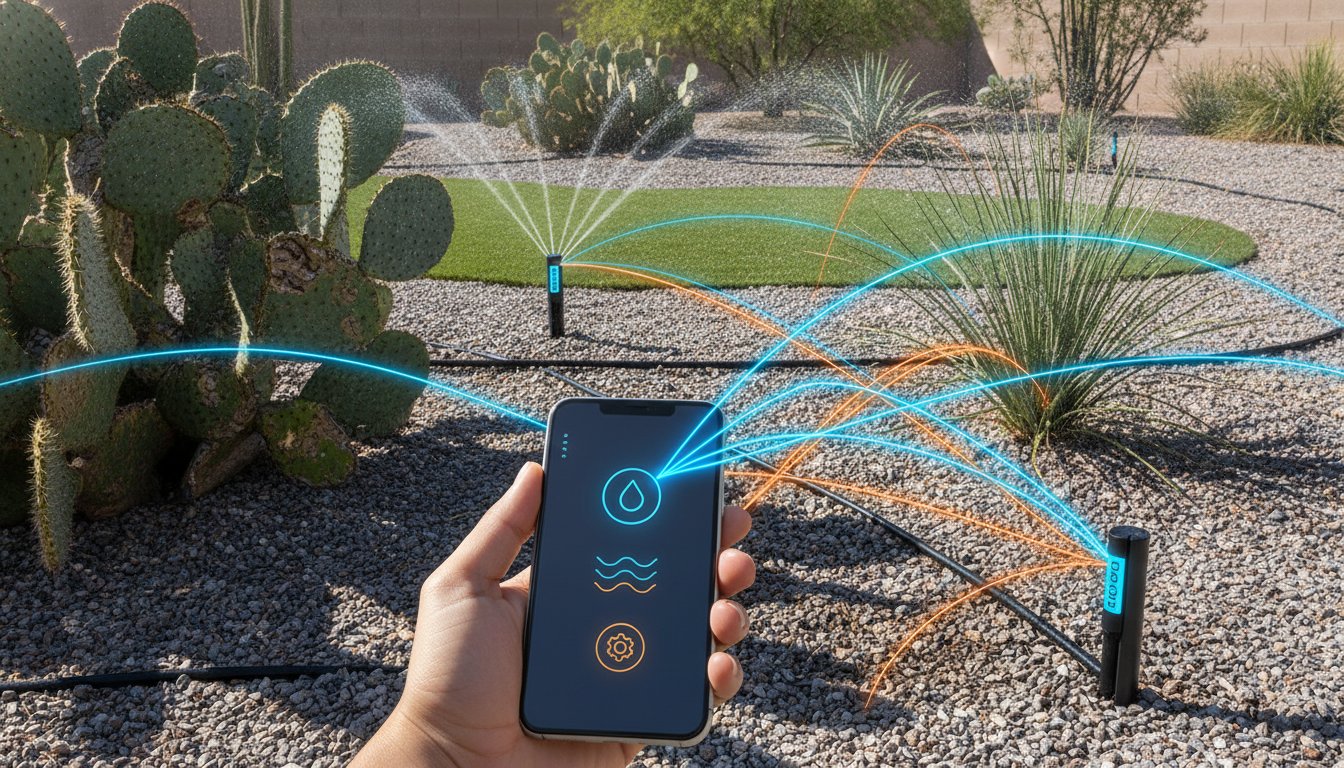
Modern diagnostic technology has changed how we locate underground failures. We use specialized acoustic equipment to pinpoint the exact location of a leak, which eliminates the need to trench your entire yard to find a single cracked joint. For homes with aging black poly pipe, we often suggest a transition to high-grade Schedule 40 PVC. PVC offers superior durability against the shifting caliche soils found in Surprise and Peoria. Additionally, modern smart controllers can now be paired with flow sensors to alert you to sudden pressure drops via your smartphone, allowing you to address issues before they damage your plants.
Zoning and Design Adjustments
A common cause of pressure loss is "over-heading," which occurs when a single zone has more sprinkler heads than the water supply can support. If your system was expanded without adjusting the valve capacity, the available gallons per minute (GPM) will be spread too thin. Resolving this often requires re-zoning the system to balance the hydraulic load. This is a key benefit of custom sprinkler system design, where we calculate the precise pressure requirements for every inch of your landscape. By adjusting the flow control on individual valves, we can ensure that every head pops up fully and provides the coverage your lawn needs. If you're ready to stop guessing and start restoring your system's performance, contact our team for a professional evaluation.
Restoring Your System with Sonora Sprinkler Inc.
Managing a low water pressure sprinkler system Arizona requires a nuanced understanding of how local environmental stressors impact residential infrastructure. In the West Valley, where caliche soil and extreme heat are the standards, a "one-size-fits-all" approach to irrigation often fails. Since 1999, we've dedicated our practice to solving these desert-specific challenges for homeowners. Our 25 years of local experience allows us to quickly differentiate between a simple mechanical clog and a complex hydraulic failure, ensuring that your landscape receives the precise volume of water it needs to survive.
The process of restoring your system begins with a thorough, professional diagnostic. We don't believe in guesswork or unnecessary digging. Instead, we perform a systematic evaluation of your controller, valves, and mainline integrity to identify the exact point of pressure loss. This methodical approach is designed to protect the long-term health of your property while maintaining the high professional standards our neighbors have come to expect. By addressing pressure issues early, you avoid the much higher costs associated with replacing mature desert trees or re-sodding a lawn that has suffered during a heatwave.
A functional irrigation system is your property's primary defense against the harsh Arizona climate. When flow is restricted, your plants don't just stop growing; they begin a cycle of stress that makes them vulnerable to pests and disease. Our team focuses on providing durable, high-quality repairs that prioritize both water conservation and system longevity. We take pride in being a dependable fixture in the community, offering the specialized expertise that only a "boots-on-the-ground" master craftsman can provide.
Expert Repairs for Surprise and Peoria Homeowners
As a family-owned business, we maintain a neighborly approach that prioritizes reliability and transparent communication. We focus exclusively on residential systems, which means our technicians are specialists in the specific types of valves, timers, and PVC configurations found in Surprise and Peoria homes. We prioritize precision in every repair, from simple valve maintenance to complex pipe replacements. We invite you to Contact Sonora Sprinkler Inc. to schedule a professional system evaluation. Let us help you restore the full performance of your irrigation system and ensure your desert landscape remains a vibrant, healthy asset for years to come.
Protecting Your Desert Landscape Through Professional Diagnostics
Restoring a low water pressure sprinkler system Arizona requires more than a quick fix; it demands a thorough understanding of the local climate's impact on irrigation mechanics. By systematically isolating zones and identifying the specific cause of flow restriction, you can prevent the premature loss of mature desert plants. Whether the issue is mineral scaling in Surprise or aging PVC in Peoria, taking action now ensures your system remains efficient and compliant with local water conservation standards.
Sonora Sprinkler Inc. has been a family-owned and operated fixture in the West Valley since 1999. As licensed and insured residential specialists, we bring over 25 years of local experience to every diagnostic call. We prioritize the durability of your system and the health of your property, providing the grounded expertise needed to resolve complex hydraulic issues without unnecessary digging. Don't wait for a minor pressure drop to become a major landscape replacement.
Schedule Your Professional Irrigation Diagnostic with Sonora Sprinkler Inc. Today and ensure your yard remains a resilient, vibrant asset throughout the year.
Frequently Asked Questions
Why is my sprinkler pressure low in only one zone?
If your pressure drop is limited to a single zone, the cause is usually a localized obstruction or a failure within that specific zone's valve. A low water pressure sprinkler system Arizona homeowners encounter often results from a torn valve diaphragm or a crushed lateral pipe beneath the yard. Because other zones function correctly, you can rule out mainline issues. We recommend checking the zone's flow control screw first before inspecting the lateral lines for root intrusion or soil compaction.
Can a dirty filter cause low water pressure in a drip system?
Yes, a clogged filter is one of the most common reasons for pressure loss in a residential drip system. Arizona’s hard water contains high levels of minerals that create scaling, while desert silt can infiltrate lines during minor repairs. When these particles accumulate in the filter screen, they restrict the volume of water reaching your emitters. Regularly cleaning or replacing the filter is a simple way to maintain the necessary flow for your desert plants.
How do I know if my irrigation valve is bad?
You can identify a failing irrigation valve by looking for signs of "weeping," where water constantly leaks from the heads even when the system is off. Other indicators include a valve that fails to open fully or a solenoid that makes a persistent buzzing sound. If you open the manual bleed screw and the pressure improves, the issue is likely electrical. In Surprise, mineral buildup often prevents the internal diaphragm from seating properly, requiring professional maintenance.
Will a broken pipe always show water on the surface in Arizona?
No, a broken pipe won't always create a visible puddle on the surface. Arizona’s porous soil and caliche layers can allow water to track deep underground or follow the pipe trench for long distances before surfacing. You should look for secondary signs like unusually green patches of weeds, sunken soil, or a sudden spike in your water bill. Professional diagnostic tools are often necessary to pinpoint these "silent" leaks without performing unnecessary excavation across your property.
How much water pressure does a typical Arizona sprinkler system need?
Most residential sprinkler systems in the West Valley require a working pressure between 30 and 50 PSI for pop-up heads to function correctly. Drip irrigation systems are designed for lower pressures, typically requiring a regulator to maintain between 20 and 30 PSI. If your baseline pressure falls below these thresholds, your sprinkler heads may fail to rotate or pop up fully. This is why understanding your home's static versus working pressure is a critical diagnostic step.
Can I increase my sprinkler pressure by adjusting the valve?
You can only increase pressure at the valve if the flow control handle is currently restricted. Turning the flow control screw can open the internal gate wider, allowing more water through. However, a valve cannot generate more pressure than your home's main supply provides. If your low water pressure sprinkler system Arizona is caused by a municipal drop or a mainline leak, adjusting the valve won't solve the underlying problem. A professional evaluation can determine your supply limits.
Is low water pressure a sign that I need to replace my backflow preventer?
Low pressure can certainly indicate a problem with your backflow preventer, but it doesn't always mean you need a full replacement. Internal components like check valves or springs can become fouled by debris or mineral scaling, which restricts water flow into your mainline. Before opting for a new unit, we suggest a professional inspection to see if a repair kit can restore the assembly. Maintaining this device is essential for both system pressure and protecting your home's drinking water.
How often should I have my Arizona irrigation system checked for leaks?
We recommend a comprehensive system check at least twice a year, typically in the spring and fall. The extreme temperature fluctuations in Surprise and Peoria put significant stress on PVC pipes and rubber valve components. These seasonal inspections allow us to identify hairline cracks or weeping valves before they lead to catastrophic leaks or high water bills. Regular maintenance is the most effective way to ensure the long-term health of your landscape and the efficiency of your irrigation.