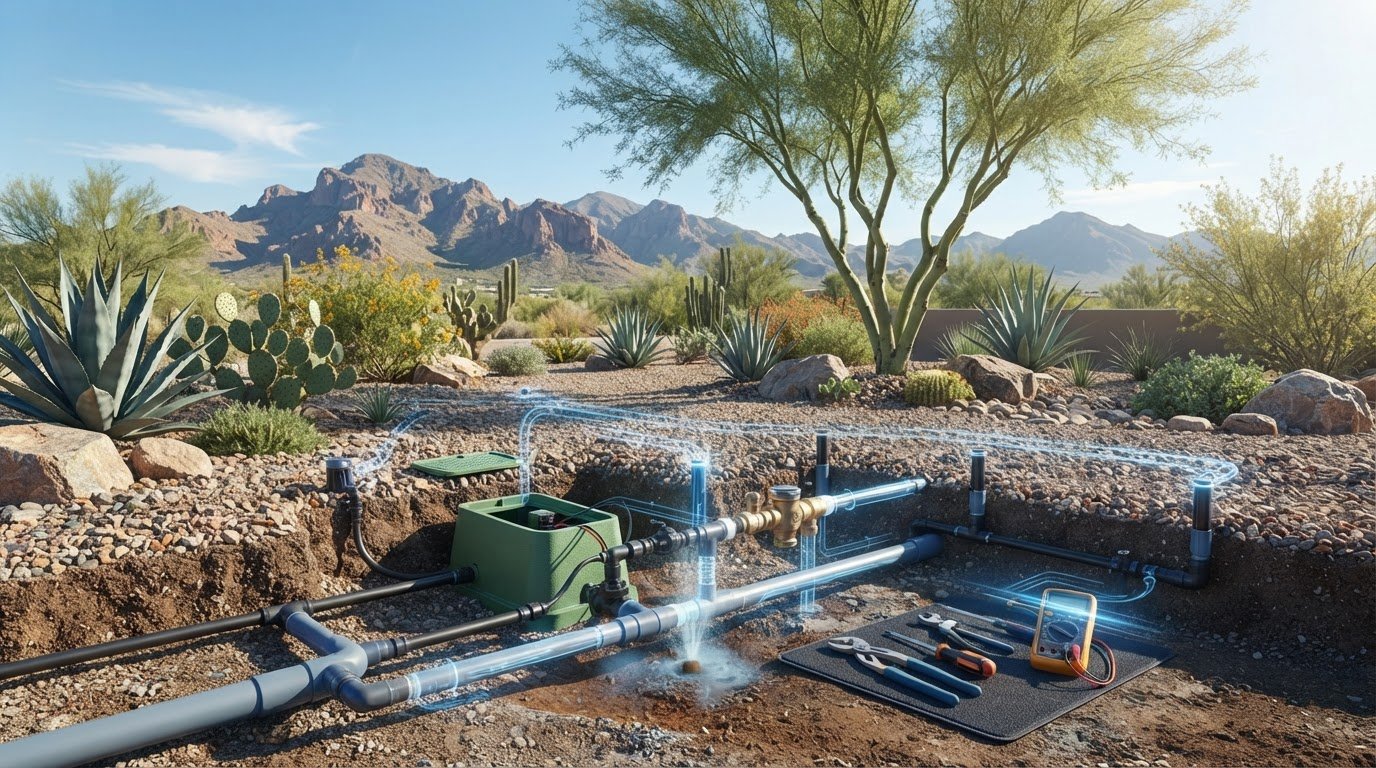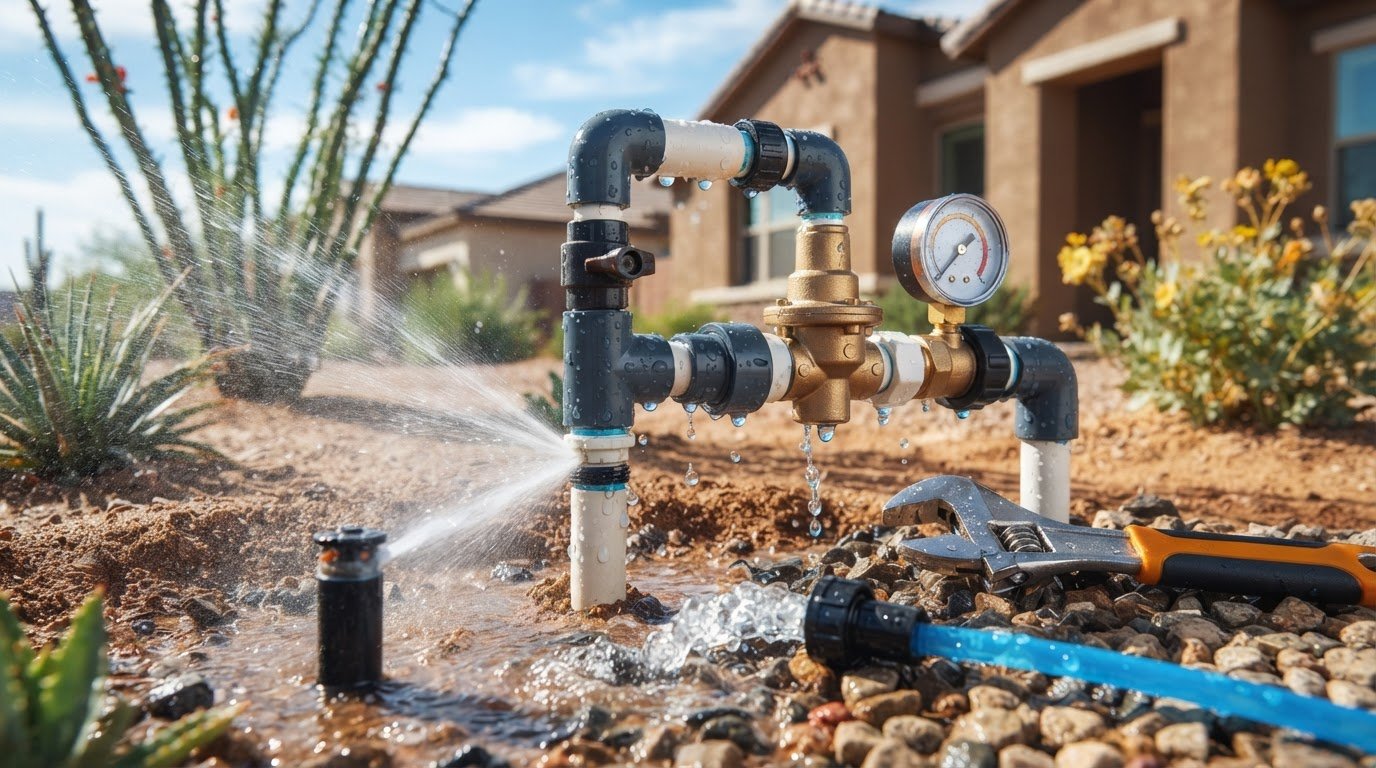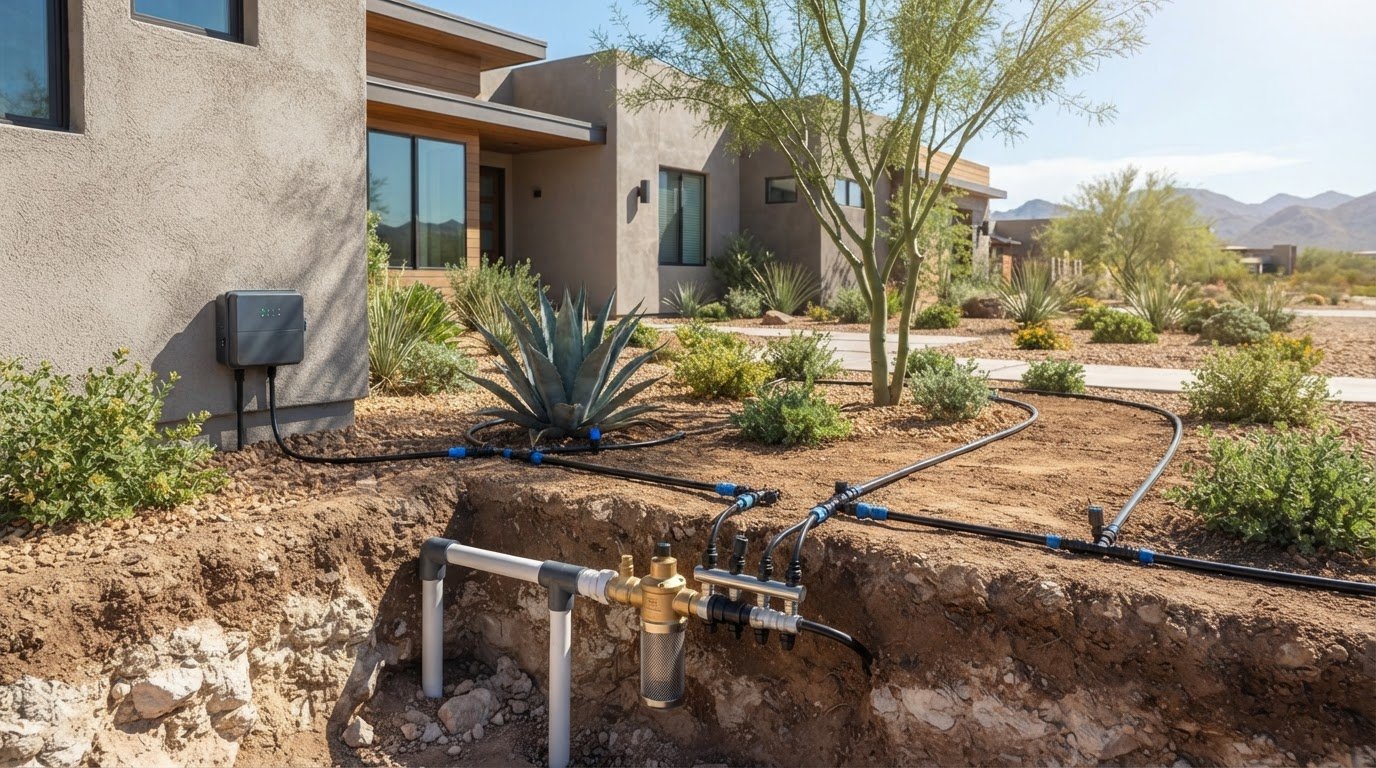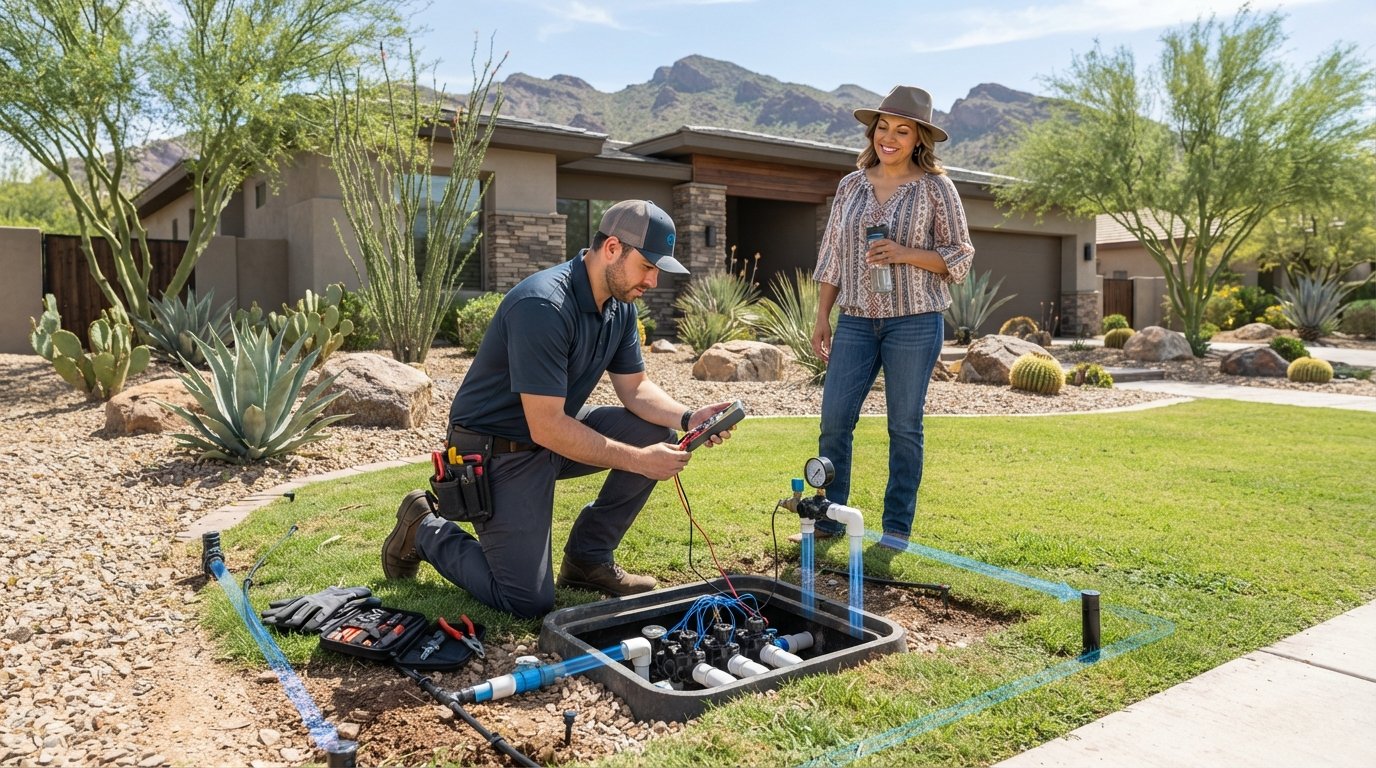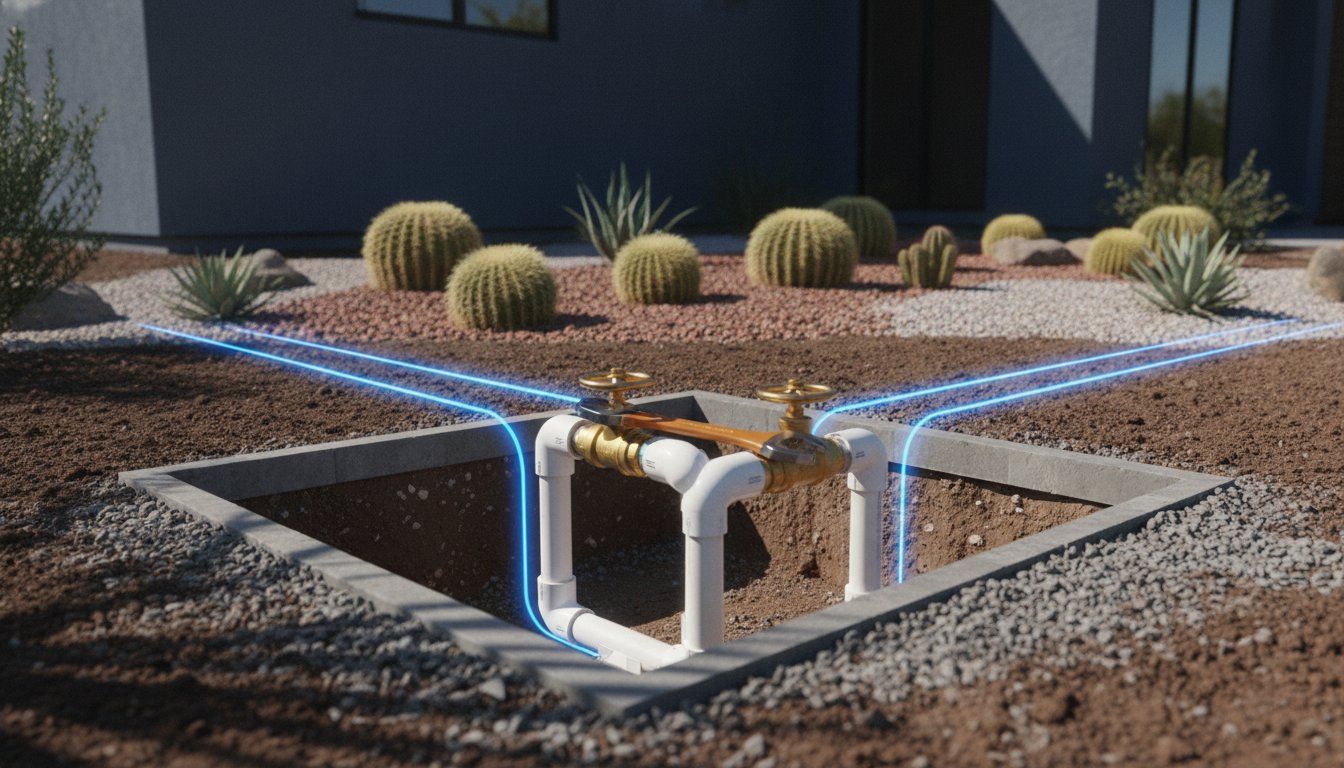
Standing water can make it look as though the valve box itself is the problem. But a sprinkler system leaking at valve box level may involve a valve, a fitting, nearby pipe, or water that has entered from the surrounding ground. The water is a clue, not a diagnosis, and when it appears can help narrow down the cause.
This guide explains how to distinguish lingering moisture from an ongoing leak and what to observe before choosing a next step. You’ll learn which visual checks are safe, when to pause the watering schedule or shut off the irrigation supply if you can identify the control safely, and what details to record. You won’t need to disturb pressurized parts or electrical components to gather useful information. These observations can help you decide whether to monitor the box or arrange irrigation repair in Surprise, Peoria, or a surrounding community.
Key Takeaways
- Note whether water appears during a watering cycle, afterward, or between cycles. Timing can help narrow down the source.
- Water around a valve box may come from a valve, a connection, nearby pipe, or the surrounding ground.
- Check the controller, affected zone, water movement, and whether the box refills. Don’t take apart pressurized parts or handle wiring.
- If water keeps flowing, stop irrigation using a control you can identify safely. If the source remains unclear, arrange a professional diagnosis.
- Before contacting an irrigation provider, note your area, affected zone, leak timing, and where water seems to enter the box.
Sprinkler System Leaking at the Valve Box: What the Water Can Tell You
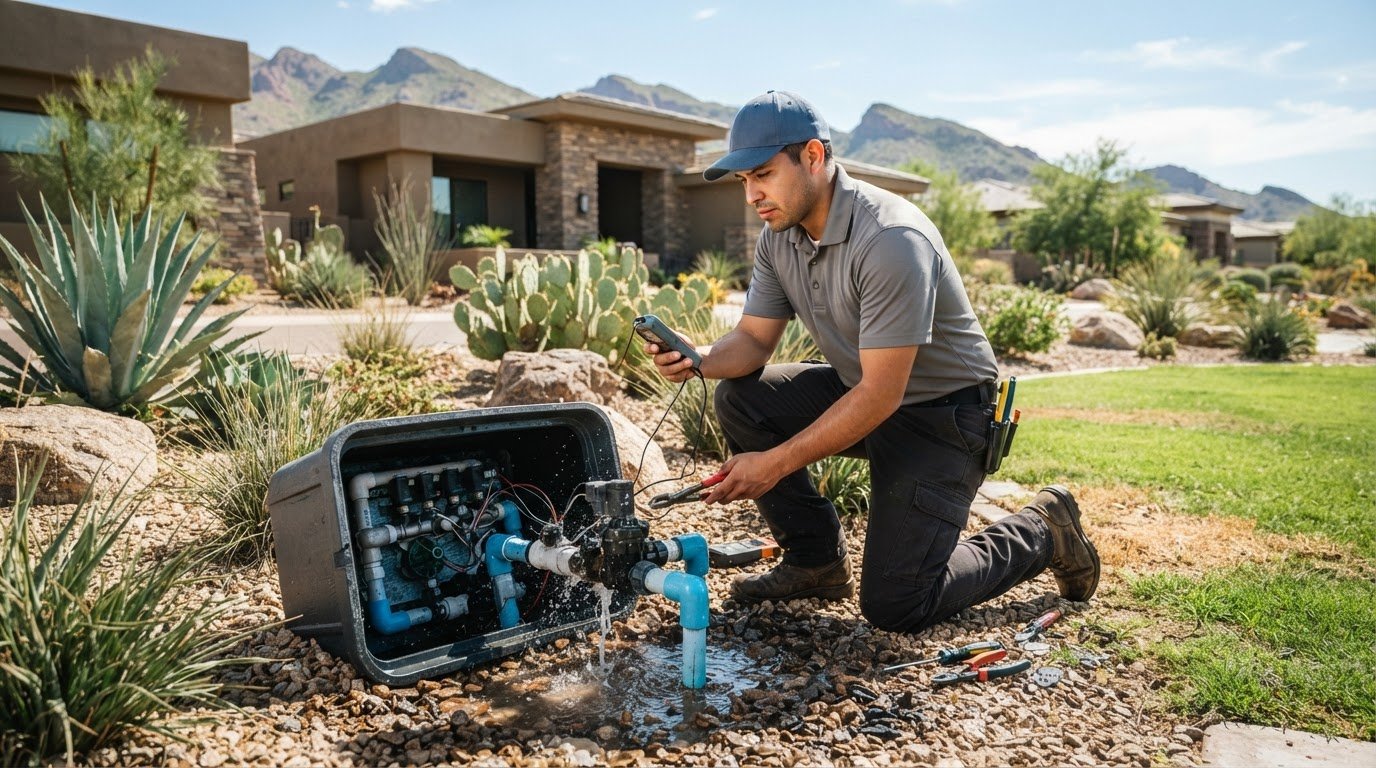
Standing water in a valve box can come from a leaking irrigation component or from water entering through the surrounding ground. The water alone doesn’t identify the source. If you have a sprinkler system leaking at valve box level, note when water appears: during a watering cycle, after it ends, or between cycles when the system should be off.
A damp box after irrigation or rainfall is different from water that continues to flow or collect while the system is off. Neither condition proves the cause by itself. A valve controls water to an irrigation zone, and its connections and nearby pipework may also be involved. For a basic overview of how sprinkler systems work, see this reference.
This video demonstrates a shutoff-valve installation tip. Use it as general background, not as a diagnosis or an instruction to handle unfamiliar components.
Is water in an irrigation valve box always a leak?
No single observation can confirm a leak. Consider whether the box was recently exposed to irrigation or rain, then check whether the water drains away or returns. Moisture that remains after watering can have more than one explanation. Water that keeps accumulating with irrigation off is a stronger reason to investigate, but it still doesn’t identify the faulty part.
Where can water around the valve box come from?
Possible sources include the valve body or its internal parts, a connection at the valve, nearby irrigation pipe, or water seeping into the box through the surrounding ground. From a safe distance, look for a wet fitting, a visible crack, or a localized stream or trickle. These clues can help you describe what you see, but they don’t confirm which part needs repair. Avoid disturbing pressurized components or wiring.
The timing of the water and the point where it enters the box can help narrow the cause, but a closer diagnosis may still be needed. If water continues to flow, stop irrigation if you can safely identify the appropriate control. This can limit water waste and possible yard damage. For a persistent issue, Sonora Sprinkler Inc. can assess residential valve-related irrigation problems. Its valve and backflow services are relevant to this type of work.
How to Check a Leaking Sprinkler Valve Box Safely
If you find a sprinkler system leaking at valve box level, keep your check visual. You can gather useful clues without removing valve parts or handling wiring. Don’t reach into standing water, even if the components seem easy to access.
What to observe before touching anything
From outside the box, look for where water seems to enter and whether it’s actively moving. Then follow this sequence:
- 1. Check the controller display. Note whether irrigation is scheduled, running, paused, or off. Don’t change wiring or open the controller.
- 2. Identify the active or most recently run zone. Record its name or number and the approximate time it ran. If another zone operates, note whether it shows similar symptoms. Don’t approach wet electrical components.
- 3. Watch the water from a safe position. Note whether you see a trickle, a steady flow, or only damp soil. Look for a visible wet fitting or localized entry point, but don’t touch or move parts to confirm it.
- 4. See whether water returns. If the box is damp, observe whether water continues to collect after irrigation is off. Record whether the level falls, stays steady, or rises again.
These observations can help distinguish a symptom tied to one zone from water that continues accumulating between cycles. Rain Bird’s guide to troubleshooting a leaking valve describes valve problems that can prevent water from shutting off. It doesn’t replace an on-site diagnosis.
When should you stop troubleshooting?
Stop if water keeps flowing, you can’t identify its source, or exposed wiring is visible. Don’t pull wiring connections, reach into standing water, open pressurized components, or attempt homeowner electrical diagnostics. If water continues flowing, use a familiar irrigation control to stop the system or affected schedule if you can do so safely. If you aren’t sure which control to use, step back and seek professional guidance.
Take clear photos from a safe distance and write down the controller status, affected zone, when water appeared, and whether the box refilled. These details can help an irrigation technician assess the symptoms without requiring you to disturb the equipment. If visual checks don’t clarify the source, you can contact Sonora Sprinkler about residential irrigation repair and confirm service availability for your address.
Valve, Fitting, or Pipe: Compare the Likely Leak Sources
Water inside a valve box doesn’t point to one part by itself. The location and timing of moisture can offer clues, but water may travel along a fitting or through soil before it collects. Use the patterns below to describe what you see, not to make a definite diagnosis. Avoid touching or moving components to test them.
| Possible source | Observable clue | Appropriate next step |
|---|---|---|
| Valve body or internal diaphragm | Water appears around the valve, or the zone seems to keep receiving water after its cycle ends. | Record when it happens and which zone is involved. Internal valve parts may require professional diagnosis beyond an exterior visual check. |
| Connection or fitting | A particular joint looks wet, or water seems to collect beside a valve connection. | Note the location and whether moisture appears during or between watering cycles. Don’t tighten or disturb pressurized parts. |
| Nearby PVC irrigation pipe | Water is visible near a pipe, or wet soil appears around one section of the box or its edge. | Report the apparent location. A crack or joint problem may be below the soil and require careful diagnosis. |
Could the irrigation valve itself be leaking?
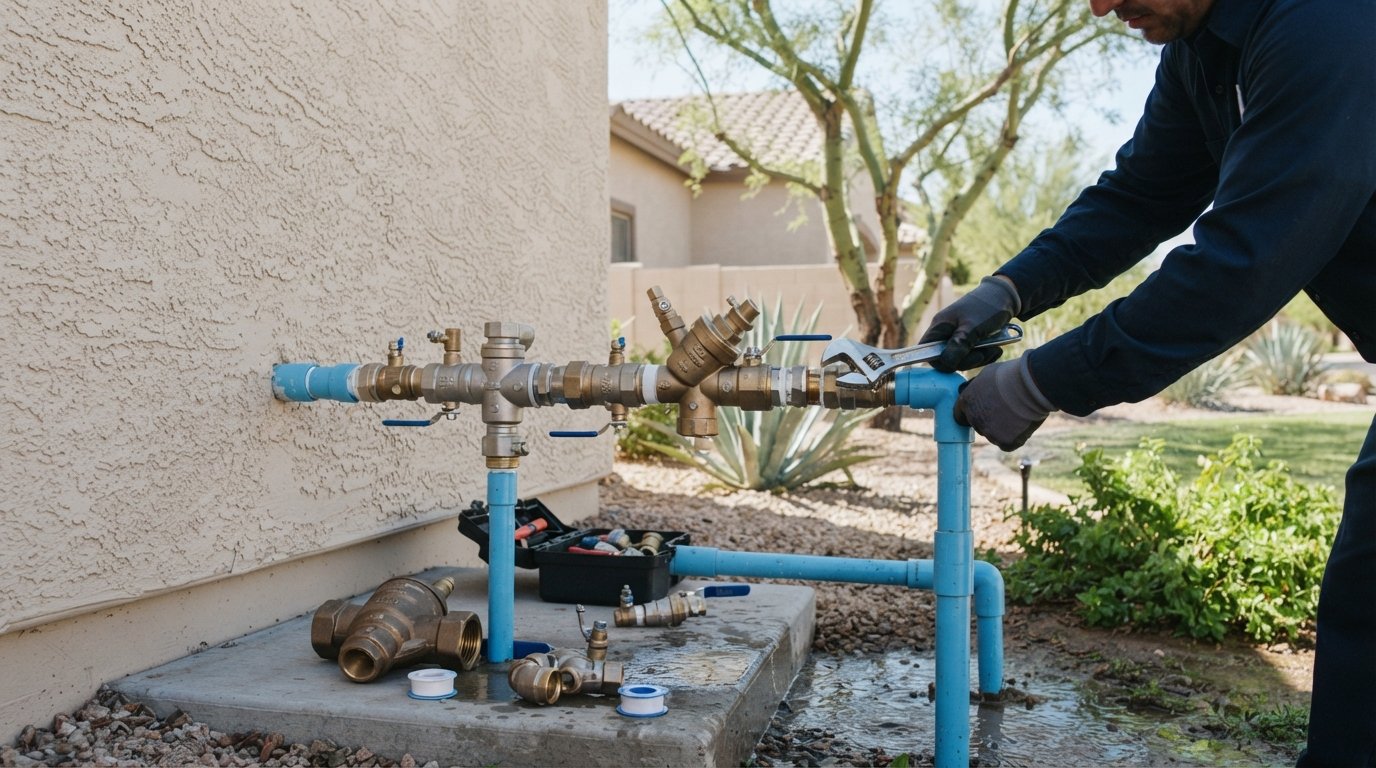
A wet area close to the valve body, or a zone that continues to receive water after its scheduled run, can be useful clues to report. They don’t confirm a valve failure. Water may have traveled from a nearby connection or pipe, and internal parts such as a diaphragm aren’t always assessable from the outside. Sonora Sprinkler provides valve and backflow services for residential irrigation systems. The University of Florida IFAS Extension also demonstrates valve troubleshooting, but a video can’t identify the source of a particular leak.
Could a fitting or irrigation pipe be the source?
Yes. A wet connection may let water escape near a valve, while a damaged PVC pipe or joint can release water below the visible surface. Either can leave the box wet even if the valve itself isn’t the source. A sprinkler system leaking at valve box level may therefore require checking the valve, its connections, and nearby pipework before choosing a repair. Symptoms overlap, so don’t assume a visible wet spot marks the exact fault.
Note the apparent entry point, whether water is moving, and whether the affected zone recently ran. If a visual check doesn’t isolate the source, residential irrigation repair and diagnosis can help assess the leak without presuming which part needs attention.
What to Do About a Valve-Box Leak in Surprise or Peoria
Use the pattern you observed to choose a measured next step. If the box is only damp and water isn’t continuing to enter, monitor it briefly and check whether the moisture returns. If water keeps flowing or the box refills between irrigation cycles, stop the affected zone using a controller or shutoff you recognize and can operate safely. Don’t try to isolate an unfamiliar supply valve or work around exposed wiring.
For a sprinkler system leaking at valve box level, the aim is to limit continued water loss without guessing at a repair. Avoid running a zone where active leakage or uncontrolled flow is visible. Continued operation may let more water escape and make it harder to tell where the problem starts. If you can’t safely stop the flow, step away from the equipment and arrange a professional assessment.
Can you keep running the system while the box is wet?
Not if you can see active leakage or water continuing to flow after the zone should be off. Pause the affected zone if its controller setting is familiar and safe to use. A damp box alone doesn’t establish that the system is faulty, so base your decision on whether water continues to flow or returns. Don’t reach into the box or attempt to shut off a supply you can’t confidently identify.
When is professional valve-box diagnosis the sensible choice?
Arrange diagnosis if water returns, the leak appears to be below the soil, or you can’t tell whether the valve, a connection, wiring, or nearby pipe is involved. A technician can assess the relevant irrigation components and determine what needs attention rather than relying on a visual clue alone.
Before contacting a provider, record your area in Surprise, Peoria, or a surrounding community, the affected zone, when water appears, and the visible leak location. Photos taken from a safe distance can help explain what you observed. Sonora Sprinkler focuses on residential irrigation repair and diagnostics in the area. Confirm service availability for your specific address. For an overview of its residential irrigation repair services, see the repair information. If the leak persists or the source remains uncertain, ask Sonora Sprinkler about residential irrigation repair.
Get a Persistent Sprinkler Valve-Box Leak Diagnosed
If water keeps returning to the valve box, the most useful next step is a clear diagnosis, not a guessed repair. The timing of the water and its visible entry point can help an irrigation professional assess the symptoms, but moisture near a valve doesn’t automatically mean the valve itself has failed. A fitting, nearby pipe, or another component may also be involved.
What information helps an irrigation technician assess the leak?
Before arranging service, gather the details you can observe safely. You don’t need to remove the valve cover, move connections, or expose buried pipe. A short record can help describe the pattern:
- Note whether water appears during irrigation, after a zone runs, or between cycles.
- Record whether it continues collecting when the controller is off, and identify the affected zone if known.
- Describe the visible wet area or damage, such as a damp connection, cracked component, or water near the box edge. Treat these as observations, not a confirmed diagnosis.
- Take photos of the valve box and surrounding wet ground only if you can do so without reaching into standing water or approaching exposed wiring.
These details give the technician a useful starting point while keeping the equipment undisturbed. If water is actively flowing, keep clear of the box and use only a familiar irrigation control that you can operate safely.
How Sonora Sprinkler can help with residential valve issues
Sonora Sprinkler Inc. focuses on residential irrigation repair and diagnostics, including valve and backflow services. Depending on the symptoms, assessment may involve the valve, its connections, irrigation wiring, or nearby pipe. Your observations can guide the inspection, but they can’t establish the cause or determine which repair is needed before the system is assessed.
Homeowners in Peoria, Surprise, and surrounding communities should confirm service availability for their specific address. If you’re dealing with a sprinkler system leaking at valve box and the source remains uncertain, share when the water appears, what you can see, and whether it returns. You can contact Sonora Sprinkler about a valve-box leak to describe the symptoms and ask about residential irrigation service for your location.
Take the Next Step Toward a Reliable Repair
Water in a valve box is a clue, not a diagnosis. If your sprinkler system is leaking at valve box level, note when water appears and where it seems to enter. Don’t dismantle pressurized parts or disturb wiring. If water continues flowing or returns between cycles, arrange a professional assessment rather than guessing at the repair.
Sonora Sprinkler provides residential irrigation repair and diagnostics, including valve and backflow maintenance. The company serves Surprise, Peoria, and surrounding communities. Confirm availability for your specific address, and share the affected zone, timing, and visible symptoms when you reach out.
Contact Sonora Sprinkler to discuss your residential irrigation issue and ask about service for your location. Clear observations can help start the assessment without disturbing the system.
Frequently Asked Questions
Why is my sprinkler valve box full of water?
A full valve box can result from a leaking valve, a damaged connection, nearby irrigation pipe, or water entering from the surrounding ground. A sprinkler system leaking at valve box level can’t be diagnosed by the water alone, since moisture may travel before collecting. Note whether the box fills during irrigation or while the system is off, and look for visible clues from a safe distance. Persistent water needs closer assessment.
Is water in a sprinkler valve box normal after watering?
Moisture after a watering cycle doesn’t automatically mean there’s a leak, but it shouldn’t be assumed harmless either. Recent irrigation or rainfall may contribute water around the box. Observe whether the moisture drains away or continues to accumulate after the system stops. If water returns between cycles or appears to keep flowing, treat that as a reason to investigate rather than relying on one observation to judge the system.
Can I run my sprinkler system if the valve box is leaking?
Avoid running a zone if you can see active leakage or uncontrolled water flow. Continued operation can allow water to keep escaping and may make the source harder to identify. If the box is only damp, observe whether water returns before deciding what to do next. Use a familiar controller setting to pause the affected zone if safe, but don’t operate an unfamiliar shutoff or reach into a wet box.
How do I tell whether the leak is from a valve or an irrigation pipe?
Visible water near the valve body or a zone that continues receiving water after its cycle may point toward a valve issue. A wet joint or damp soil near nearby PVC may suggest a connection or pipe problem. These are clues, not proof: water can travel through the box or soil before it becomes visible. Record the wet location and timing, and leave buried or pressurized components undisturbed for diagnosis.
What should I do if water keeps flowing when the sprinkler system is off?
If water continues moving with the controller off, stop the affected irrigation schedule using a control you recognize and can operate safely. Don’t reach into standing water, handle exposed wiring, or open pressurized parts. If you can’t safely stop the flow, step away and arrange professional help. Note which zone last ran, when you noticed the water, and whether it continues to refill the box.
Can I repair a leaking sprinkler valve box myself?
You can make safe visual observations, check the controller status, and take photos from a dry, safe position. Don’t dismantle a valve, pull wiring connections, or attempt electrical work near standing water. A wet fitting or apparent crack may not be the actual source, especially if water has traveled underground. If the leak persists or identifying the component would require disturbing the system, arrange irrigation repair and diagnosis.
When should I call an irrigation repair professional in Surprise or Peoria?
Arrange professional assessment if water keeps returning, continues flowing between cycles, appears to come from buried pipe, or the source remains unclear after safe observation. Sonora Sprinkler Inc. provides residential irrigation repair and diagnostics, including valve and backflow services, in Surprise, Peoria, and surrounding communities. Confirm service availability for your specific address. Sharing the affected zone, leak timing, and safe photos can help explain what you’ve observed.