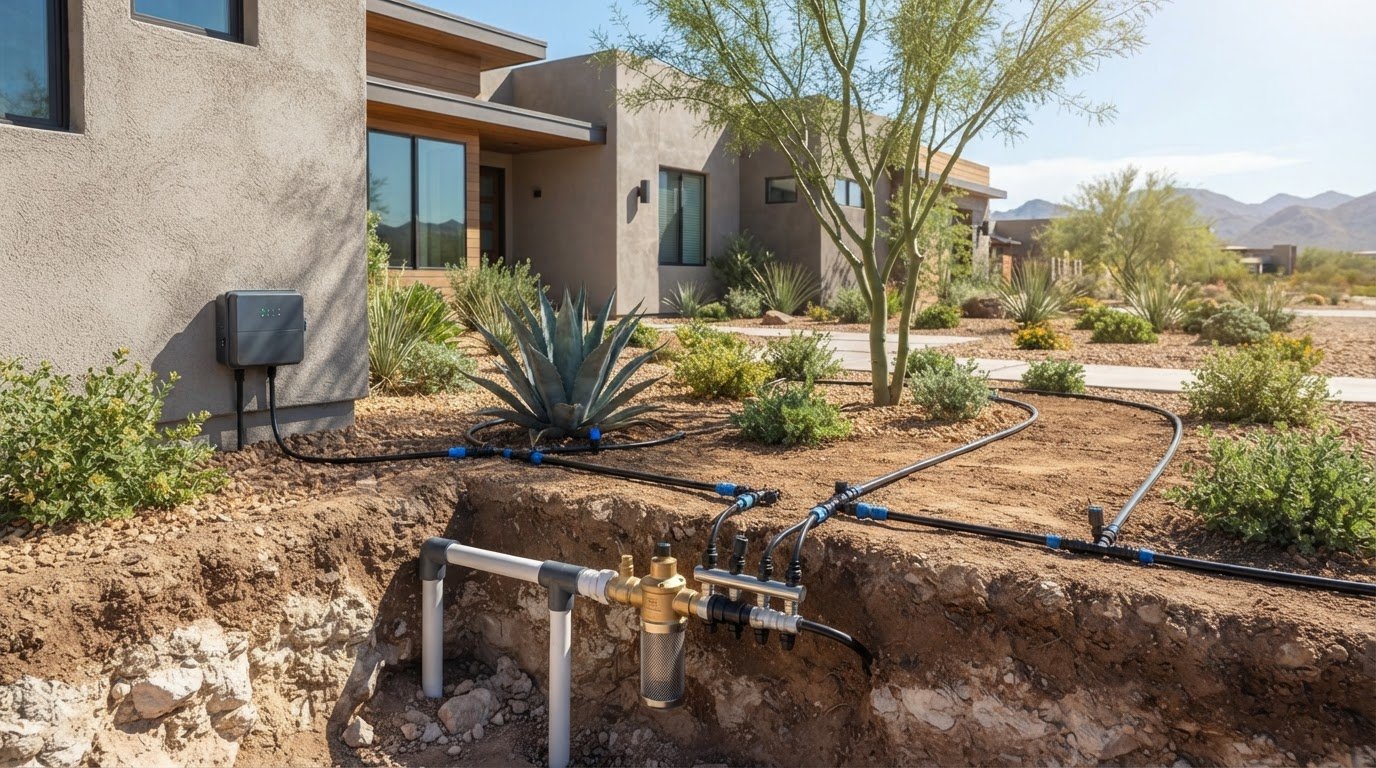
With federal officials announcing significant water cuts for Arizona in August 2026, homeowners in the Phoenix metro area are facing a future where traditional spray heads are no longer sustainable. It's frustrating to watch your monthly water bills rise while your desert plants struggle with uneven watering or pressure issues. You want a healthy landscape, but the old way of irrigation is becoming both expensive and inefficient. Converting sprinklers to drip irrigation Arizona homeowners can trust doesn't require a total landscape overhaul. Instead, it's about re-engineering your current system for precision and durability.
In this guide, you'll learn how to transform your thirsty lawn into a water-efficient desert oasis by leveraging your existing infrastructure. We will walk through the technical steps of transitioning to a high-efficiency drip system, including how to manage pressure regulation and why a focus on PVC-based infrastructure ensures your landscape thrives. You'll also find details on local rebate programs in Surprise and Peoria that can help offset the cost of your transition to a more resilient, low-maintenance yard.
Key Takeaways
- Reduce water waste by switching from high-evaporation spray heads to precision emitters that deliver moisture directly to the root zone.
- Master the mechanics of converting sprinklers to drip irrigation Arizona homes require to utilize existing PVC lateral lines for a more durable system.
- Compare the efficiency of gallons-per-hour delivery against traditional sprayers to understand how targeted watering lowers monthly utility costs.
- Follow a professional audit process to identify leaks, cap off unnecessary heads, and ensure your new drip zones operate at the correct pressure.
- Learn why prioritizing PVC-based infrastructure over standard poly tubing leads to a longer-lasting system with fewer frequent repairs.
Why Convert Sprinklers to Drip Irrigation in the Arizona Desert?
In the Phoenix West Valley, water is a finite resource under increasing pressure. With federal officials announcing significant cuts to Arizona's Colorado River supply for 2026 and 2027, the shift toward conservation is a necessity for every homeowner. For residents in Surprise and Peoria, converting sprinklers to drip irrigation Arizona systems is the most practical step toward protecting their property and the local environment. Traditional spray systems often fail when applied to the desert-adapted trees and shrubs that define our regional xeriscaping. These systems were designed for turf, not the targeted needs of a desert landscape. While this guide focuses on Arizona irrigation, homeowners across the Southwest are increasingly adopting multiple efficiency upgrades; for example, solar panel installation Southern California has become a popular way to complement water conservation with energy savings.
The Problem with Spray Irrigation in Arid Climates
When temperatures exceed 110 degrees, much of the water released by a spray head evaporates before it ever touches the soil. Wind drift further complicates this issue, carrying moisture away from intended plants and onto sidewalks or block walls. This surface-level watering creates a dangerous cycle for your landscape. It encourages shallow root systems that can't withstand the intense heat of a Phoenix summer. When roots stay near the surface to catch spray water, they remain vulnerable to soil temperature fluctuations. Additionally, overspray on foliage can lead to fungal growth by creating pockets of humidity that desert plants aren't designed to handle. This inefficiency leads to higher water bills and plants that struggle to survive our harshest months.
Drip Irrigation Benefits for Xeriscaping
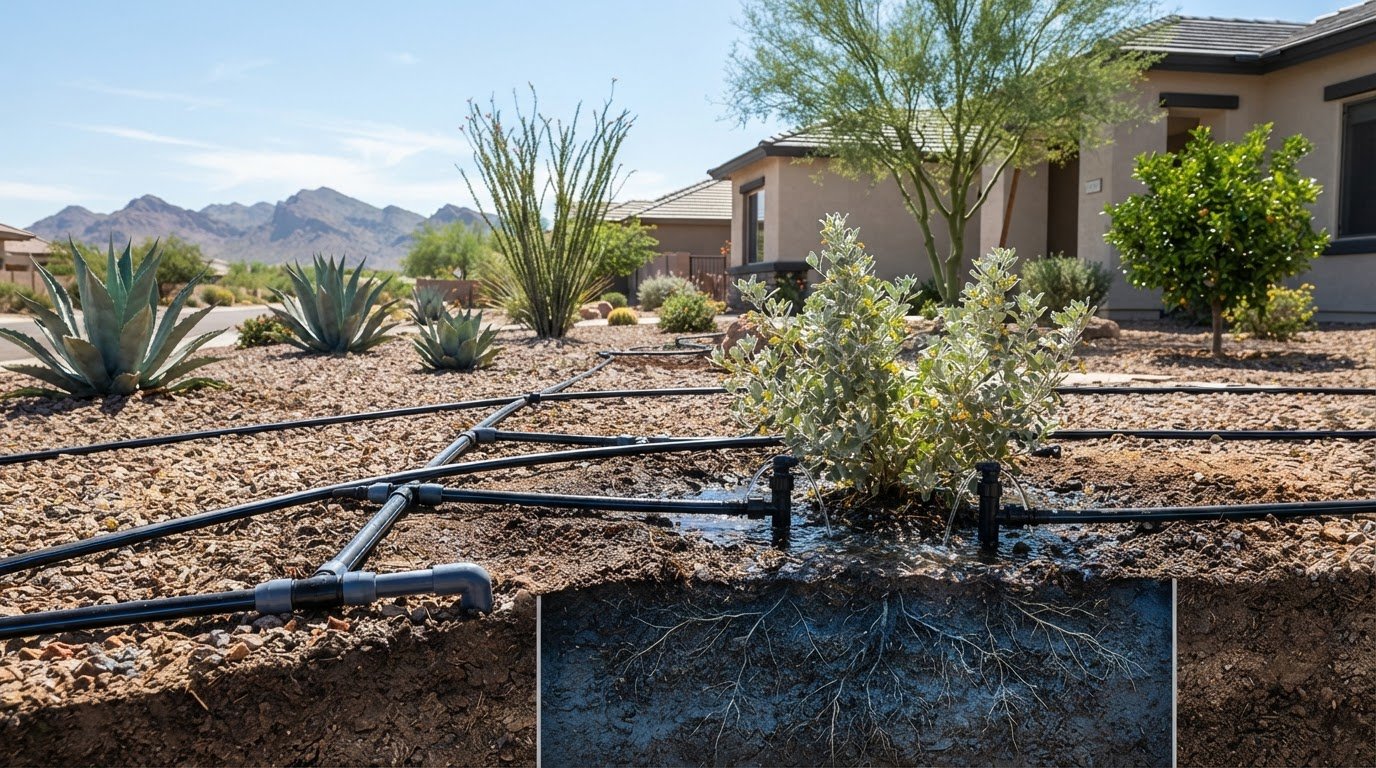
Drip irrigation provides a professional remedy by delivering water slowly and directly to the root zone. This precision ensures that every gallon contributes to the plant's health rather than the city's evaporation rate. By keeping the surrounding soil dry, you also significantly reduce the emergence of invasive weeds that thrive on the broad coverage of spray heads. As your landscape matures, a well-designed drip system offers the flexibility to move emitters or add capacity. This supports the deep root growth required for trees like Palo Verdes or Mesquites to remain stable during monsoon winds. This methodical approach leads to lower municipal water bills and a more resilient outdoor space that respects our unique environmental constraints. It's a long-term investment in the stability of your home's exterior environment.
The Technical Mechanics: How a Sprinkler-to-Drip Conversion Works
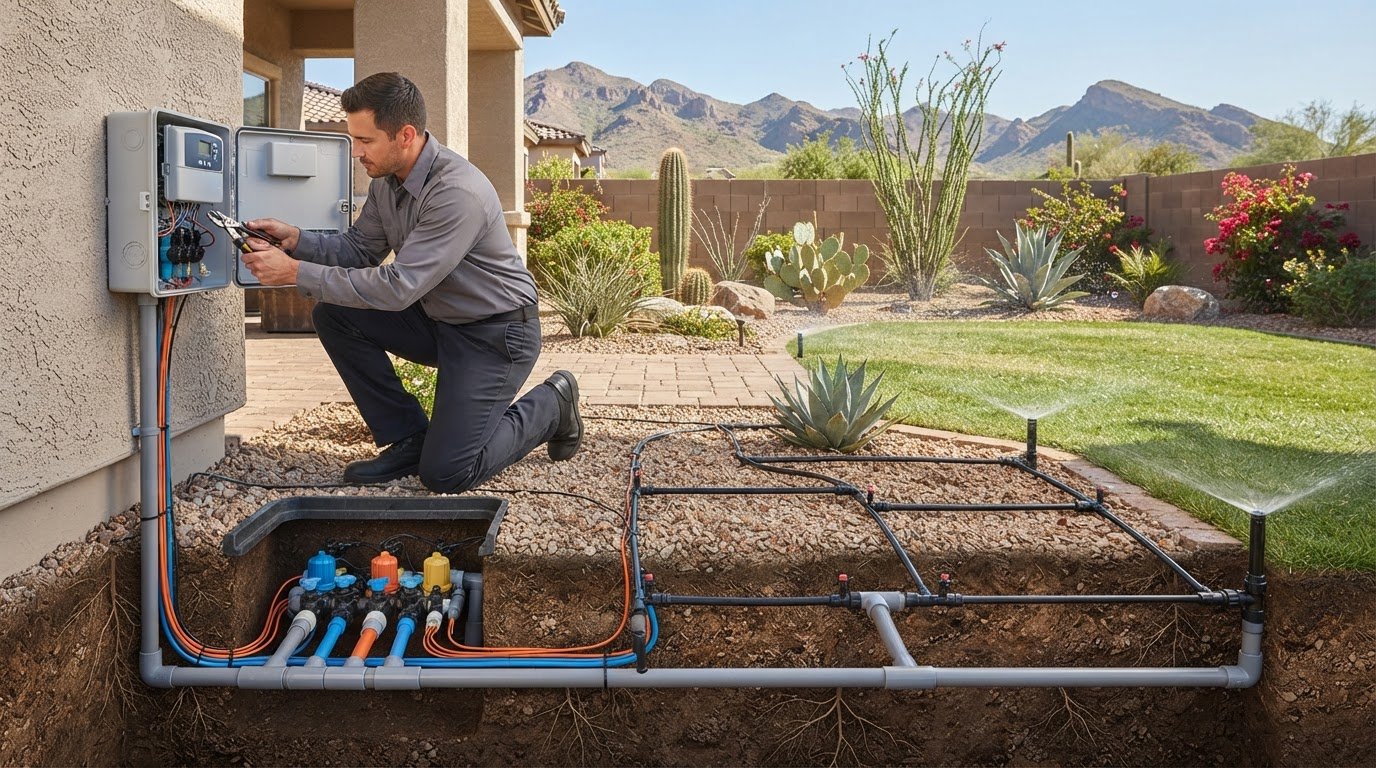
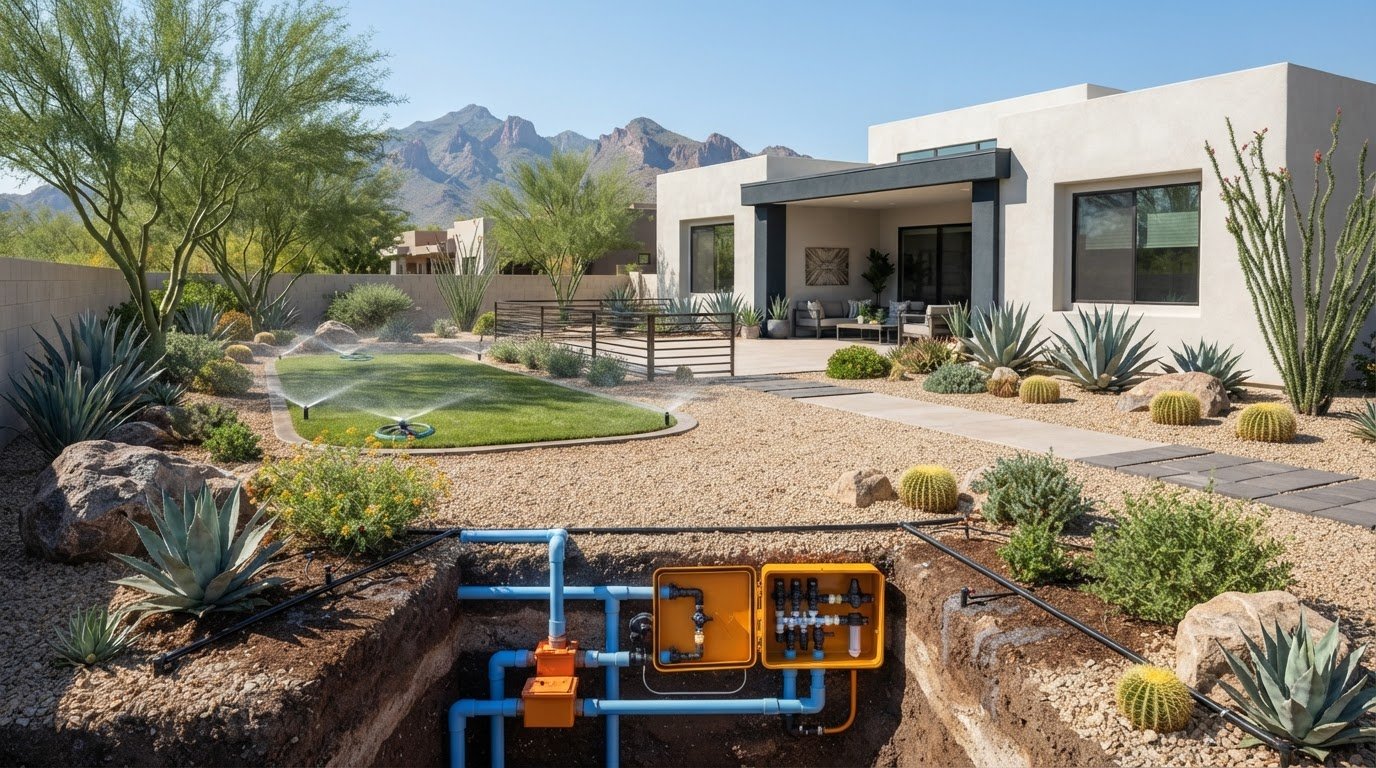
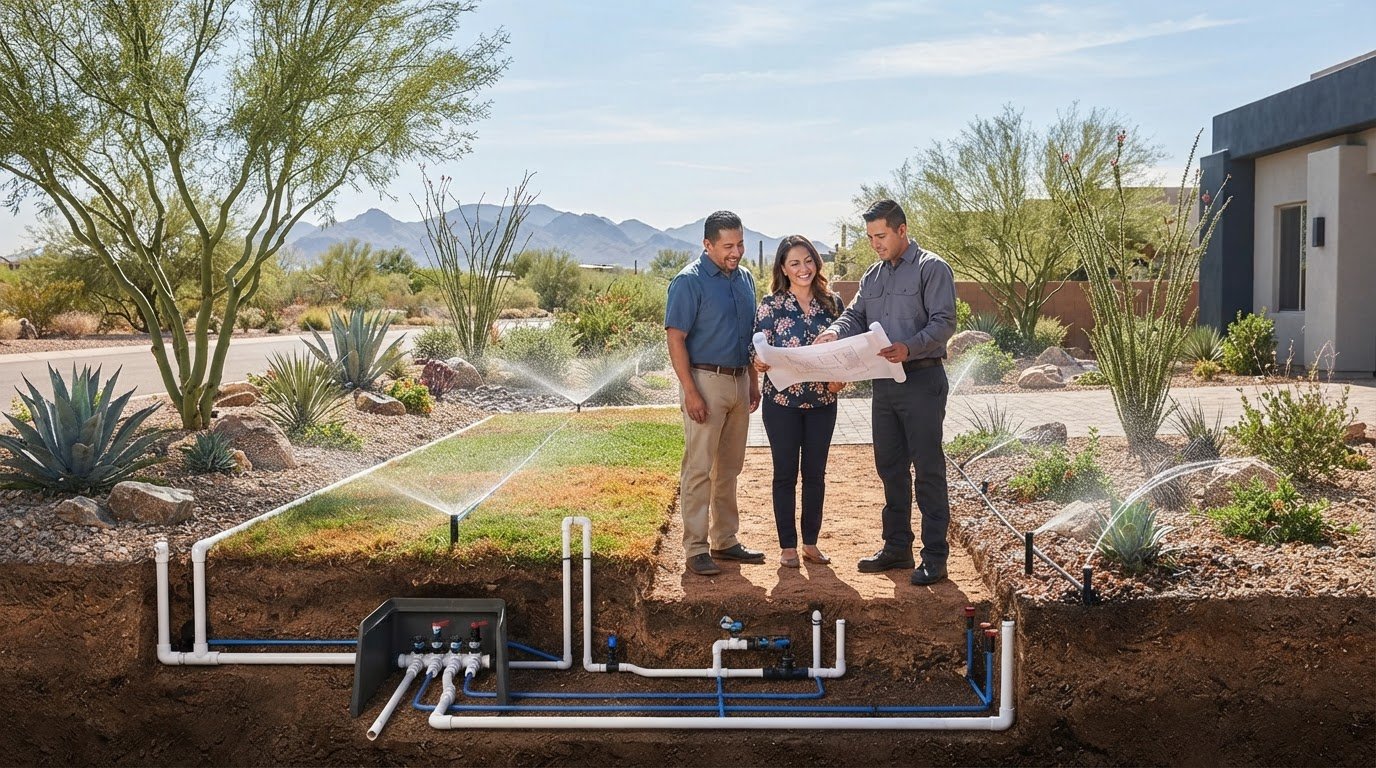
A professional conversion is far more than a simple swap of components. It's a strategic re-engineering of your property's water delivery. When converting sprinklers to drip irrigation Arizona homeowners often worry about the cost of trenching through tough caliche soil. We solve this by utilizing your existing PVC lateral lines as the structural foundation. This backbone is already in place and pressure-tested. By installing conversion risers and multi-outlet manifolds directly onto the old sprinkler head locations, we can repurpose the existing infrastructure to feed your desert plants with precision. This approach minimizes yard disturbance while maximizing the reach of your new system.
Pressure Regulation and Filtration
Standard spray zones operate at high pressures, typically between 30 and 50 PSI. Drip emitters are designed for low-pressure environments, usually around 20 to 30 PSI. Without professional pressure regulation at the valve or riser, your new emitters will likely blow out or fail prematurely. We also install high-quality Y-filters to address the mineral-heavy water in Surprise and Peoria. These filters catch sediment and calcium deposits before they can reach your emitters, preventing the clogs that often lead to plant loss in older systems. Maintaining clean filtration is the easiest way to ensure the longevity of your landscape investment.
PVC vs. Poly Tubing in Arizona Systems
Durability in the desert is defined by material choice. Many retail kits use thin-walled poly tubing that sits on the surface. In the Arizona heat, UV rays make this material brittle within just a few seasons. Additionally, local wildlife like rabbits and javelinas often chew through exposed poly lines in search of moisture. We prioritize drip irrigation installation using buried PVC for all main lines. This protects the system from thermal expansion and mechanical damage. Burying the lines also keeps the water cooler, which is better for plant health during peak summer months. If you're ready to upgrade your system's reliability, you can reach out to our team to discuss a custom design for your property.
Comparing Spray Sprinklers vs. Drip Systems for Desert Landscapes
The most significant difference between traditional spray systems and drip irrigation lies in the volume and velocity of water delivery. Spray sprinklers are engineered for the high-volume needs of turf, delivering water in Gallons Per Minute (GPM). In our arid climate, this rapid delivery often exceeds the soil's infiltration rate, especially in areas with heavy caliche. In contrast, drip systems operate in Gallons Per Hour (GPH). This slow, steady soak allows the moisture to penetrate deep into the root zone without the waste associated with high-pressure sprayers. When converting sprinklers to drip irrigation Arizona homeowners are essentially shifting from a "flood" mentality to a precision-based approach that respects the local environment.
Water Delivery Efficiency
Efficiency in the desert is measured by how much water actually reaches the plant's roots. Spray systems are notorious for water loss due to evaporation and wind drift. On a typical residential lot in Surprise or Peoria, a significant portion of spray water never benefits the landscape; it either evaporates in the 110-degree heat or runs off into the street. Drip irrigation eliminates these issues by applying water directly to the soil surface or slightly below it. Industry data suggests that a well-designed drip system can be 30% to 50% more efficient than a standard spray system. For a standard residential lot, this transition can lead to a substantial reduction in monthly water consumption while ensuring your cacti, succulents, and desert trees receive the consistent hydration they require to thrive.
Maintenance and Durability
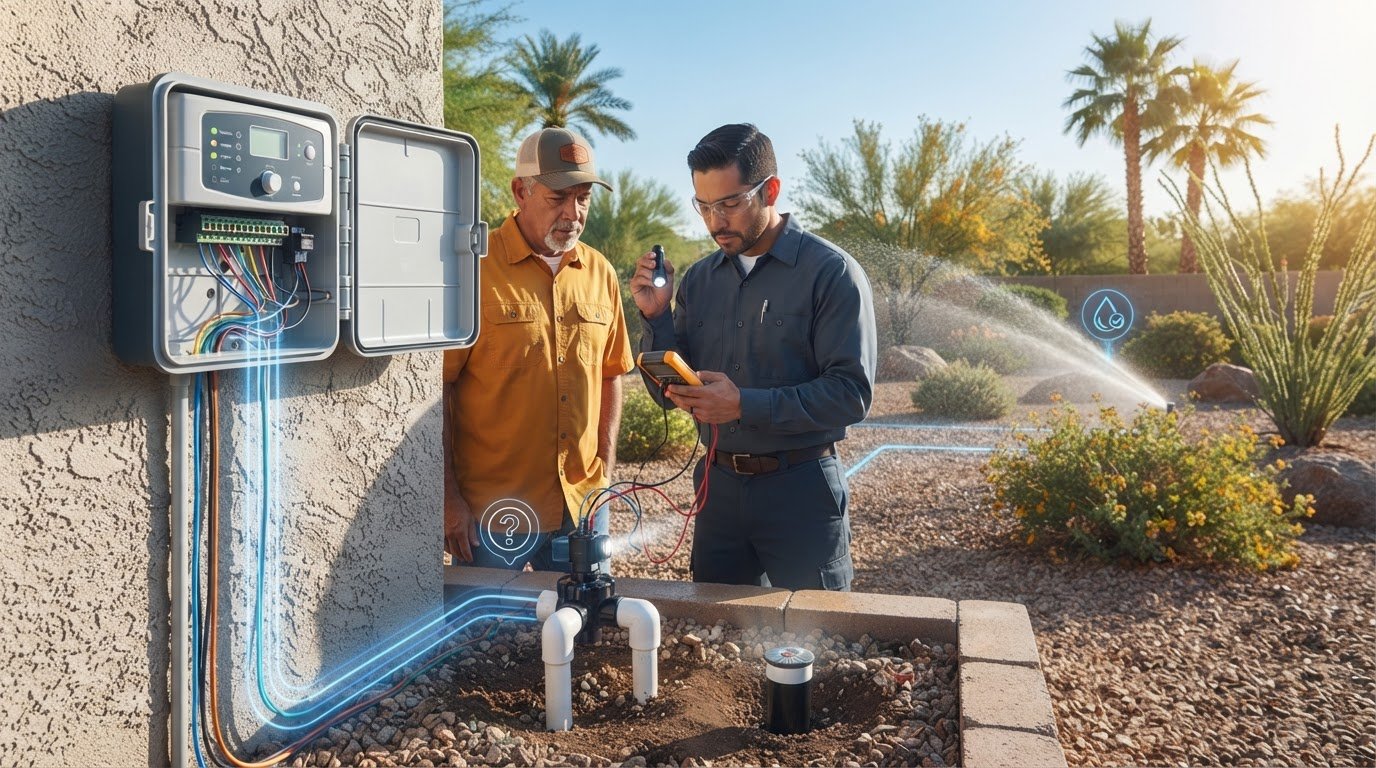
Maintenance requirements also differ significantly between the two systems. Spray heads are prone to mechanical failure from lawnmower damage, UV degradation of plastic housings, and clogged nozzles. In the West Valley, the hard water often leaves mineral deposits that seize the internal springs of pop-up heads. Drip systems require a different type of vigilance. The primary challenge is managing salt and mineral buildup at the emitter. Because we deal with high mineral content in our local water, regular inspections of the filter and periodic flushing of the lines are essential. If you encounter issues with your existing setup, professional irrigation repairs and maintenance can identify whether a component has failed or if the system simply needs a technical adjustment. While spray systems require frequent head replacements, a PVC-based drip system is built for longevity, often outlasting traditional setups by several years when properly maintained.
Key Steps for a Successful Drip Irrigation Conversion
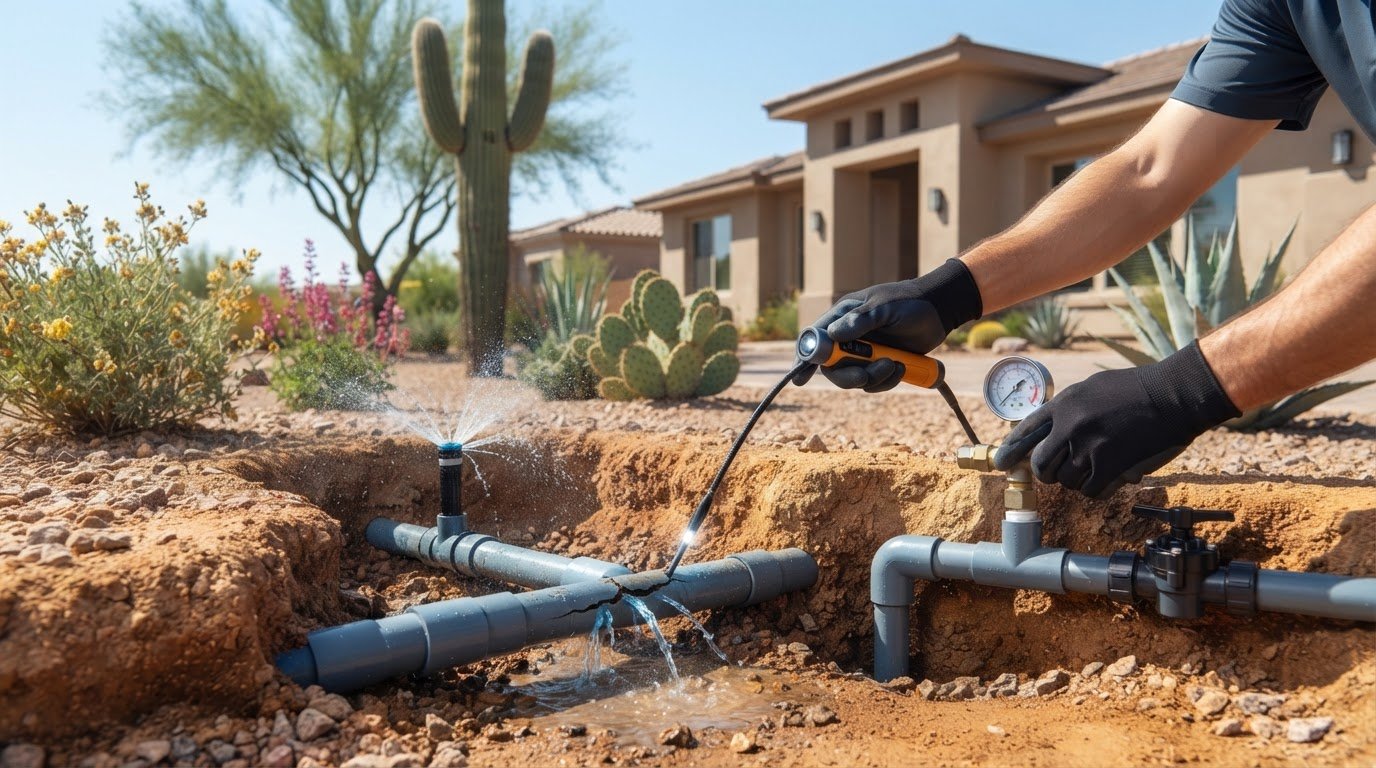
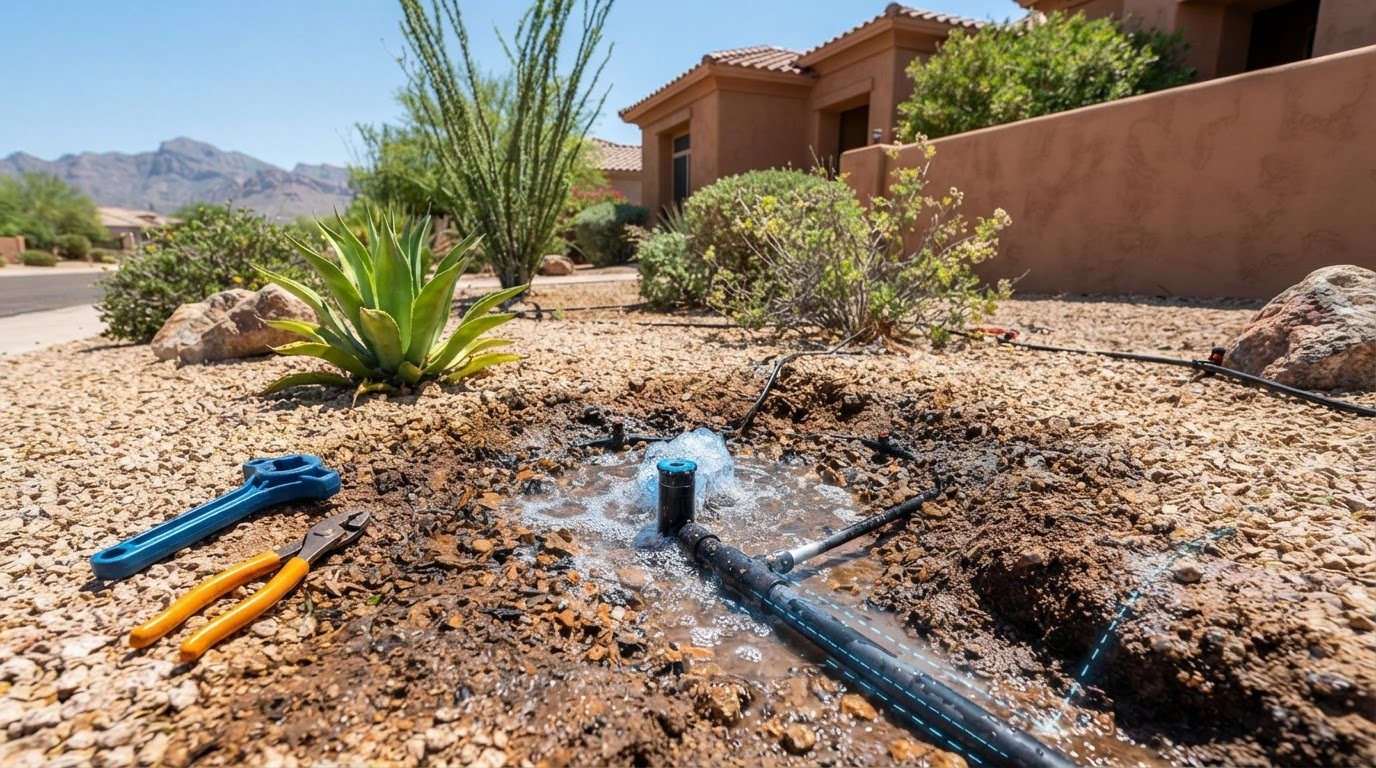
Executing a transition from spray to drip requires a methodical approach to ensure the final system is both watertight and efficient. When converting sprinklers to drip irrigation Arizona yards often hide forgotten spray heads under layers of decorative rock or overgrown vegetation. If these are not properly addressed, they become subterranean leaks that undermine your water savings. This process is not a simple weekend swap; it's a technical upgrade that demands attention to detail at every connection point. By following a structured sequence, you can avoid the common pitfalls that lead to system failure during the peak of a Phoenix summer.
Step 1: Zone Auditing and Capping
Before installing new components, you must identify every head within the specific irrigation zone. Turn the system on and flag every pop-up. Once identified, remove the internal assembly of each head you don't intend to use as a drip connection. You must use professional-grade PVC caps to seal these risers permanently. Simply burying a head or using a low-quality plug will eventually lead to a blowout under pressure. If you're struggling to identify which valves control specific areas of your yard, professional wiring and diagnostics can help map out your system's electrical and hydraulic layout before you begin digging.
Step 2: Riser Conversion and Emitter Placement
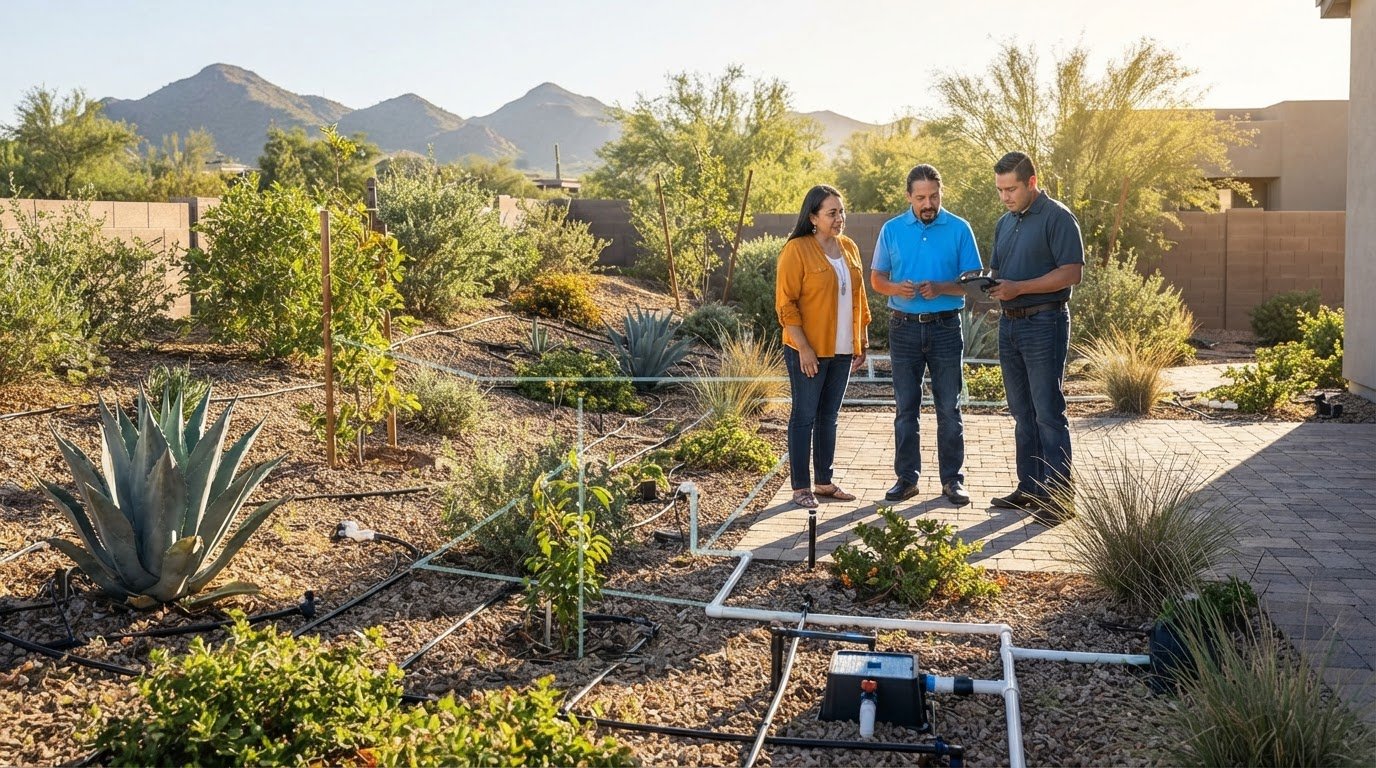
Select the most centrally located riser in the zone to serve as your primary drip manifold connection. This is where you install the conversion assembly, which includes the pressure regulator and the filter mentioned in previous sections. From this manifold, you'll run distribution tubing to each plant. Emitter selection is critical here. An Agave might only need a 1 GPH (Gallons Per Hour) emitter, while a mature Mesquite tree requires multiple emitters with higher GPH ratings. We always recommend the "two emitter" rule for larger desert shrubs and trees. If one emitter clogs due to mineral buildup, the second serves as a fail-safe to keep the plant alive until the next inspection.
Step 3: System Testing and Flushing
The final step is often the most overlooked. Before you snap the emitters into the distribution tubing, you must flush the entire system. This clears out PVC shavings, dirt, and debris that entered the lines during construction. Turn the water on and let it run through the open tubing for several minutes. After flushing, install the emitters and check every connection for "weeping" or small leaks. Finally, adjust your irrigation controller. Drip systems need to run longer but less frequently than spray zones to encourage that deep root growth we discussed earlier. If you'd prefer a professional to handle this technical transition, contact our team today to schedule a custom system design for your property.
Professional Drip Conversion Services in Surprise and Peoria
Since 1999, Sonora Sprinkler Inc. has served as a dependable fixture in the West Valley, providing grounded expertise to homeowners facing the challenges of desert irrigation. We understand that converting sprinklers to drip irrigation Arizona yards require isn't a one-size-fits-all task. Every residential property features a unique plant palette, from established desert trees to delicate succulents. Our approach centers on Custom Sprinkler System Design that prioritizes long-term efficiency. We focus exclusively on residential clients, which allows us to dedicate our full attention to the specific nuances of home landscapes in Surprise and Peoria.
Durability remains our primary hallmark. While some providers might opt for thinner materials to speed up the process, we utilize high-quality PVC for our main lateral lines. This protects your investment from the intense summer heat and the mechanical stress of expanding desert soil. Our family-owned background means we treat your property with a sense of protective care, ensuring every valve and emitter is placed with precision. By tailoring the drip layout to your specific soil conditions and plant needs, we create a system that thrives even when water resources are limited.
Why DIY Conversions Often Fail in Arizona
Many homeowners attempt a DIY conversion only to face system-wide failure within the first season. The primary culprit is often improper pressure regulation at the valve. Without professional diagnostics, high-pressure surges can blow out emitters and flood entire zones. Additionally, the physical labor of trenching through caliche is often underestimated. This cement-like calcium carbonate layer found throughout Surprise and Peoria soil requires specialized tools and experience to navigate without damaging existing infrastructure. Professional Drip Irrigation Installation avoids these pitfalls by using "boots-on-the-ground" expertise to solve mechanical challenges before they become expensive repairs.
Schedule Your Custom Drip Design
When you schedule a consultation, you can expect a methodical walkthrough of your current irrigation layout. We evaluate the health of your plants, identify potential leaks in existing PVC lines, and discuss your goals for water conservation. This process isn't a rushed sales pitch; it's an expert assessment designed to protect your landscape's future. For a deeper look at our technical process, you can read The Homeowner’s Guide to Residential Drip System Installation in Arizona. If you're ready to lower your monthly water bills and improve the longevity of your landscape, Contact Sonora Sprinkler for a professional conversion estimate.
Securing Your Landscape’s Future with Precision Irrigation
Transitioning your yard from high-volume spray to a targeted drip system is the most effective way to combat rising water costs and ensure long-term plant health. By utilizing your existing PVC infrastructure and implementing professional pressure regulation, you create a system built for the specific demands of our desert environment. Converting sprinklers to drip irrigation Arizona properties require is a strategic investment in both property value and environmental stewardship. It's about moving beyond simple surface watering to a methodology of technical precision and root-zone delivery.
Our team brings family-owned expertise and specialized desert irrigation design to every residential project. As licensed specialists serving Surprise and Peoria since 1999, we prioritize the durability and technical accuracy your landscape deserves. We focus on building systems that outlast traditional setups and withstand our unique soil challenges like caliche and high heat. You don't have to navigate these complex technical upgrades alone. Request a Professional Drip Conversion Quote to begin your transition to a more efficient home. We're here to help you build a resilient, water-efficient outdoor space that thrives for years to come.
Frequently Asked Questions
Can I convert my existing sprinkler system to drip myself?
You can certainly attempt a DIY conversion using retail kits, but these projects often fail due to improper pressure management. Standard spray zones operate at much higher pressures than drip emitters can handle. Without professional-grade components and a deep understanding of hydraulic balancing, you risk blowing out emitters or creating subterranean leaks. Homeowners often find that the physical labor required to trench through Arizona's caliche soil is more demanding than initially anticipated.
How much water will I really save by switching to drip irrigation in Surprise?
Switching to a precision system can reduce your outdoor water consumption by 30% to 50% compared to traditional spray heads. In the Surprise area, where summer evaporation rates are extreme, most spray water is lost to the air before reaching the roots. Drip irrigation eliminates this waste by delivering moisture directly to the soil. Over time, these savings result in lower monthly municipal bills and a more sustainable landscape that requires less frequent intervention.
Do I need a different backflow preventer for a drip system?
You typically don't need to replace your existing backflow preventer when converting sprinklers to drip irrigation Arizona homes already have. The existing device protects your potable water supply from contamination regardless of the downstream delivery method. However, it's essential to ensure your backflow assembly is in good working order and meets current municipal codes in Peoria or Surprise. We recommend a professional inspection of the valve and backflow components during any system upgrade to ensure total property protection.
What is the best type of drip emitter for Arizona desert plants?
Pressure-compensating (PC) emitters are the superior choice for desert-adapted plants because they maintain a consistent flow rate regardless of elevation changes or pressure fluctuations. These emitters are less prone to clogging and provide the precise GPH delivery needed for cacti and succulents. Using PC emitters ensures that plants at the end of a long run receive the same amount of water as those closest to the manifold, promoting uniform growth across your entire landscape.
How often should I run my drip system in the Peoria summer heat?
During the peak Peoria summer, your drip system should run long enough to saturate the root zone deeply but less frequently than a lawn sprinkler. For most desert shrubs, a schedule of two to three times per week is sufficient if the run time allows for deep soil penetration. This approach encourages roots to grow downward where the soil stays cooler. Always monitor your plants for signs of heat stress and adjust your controller based on seasonal temperature shifts.
Will my existing sprinkler timer work with a new drip system?
Most modern irrigation controllers are compatible with drip systems, provided they offer flexible programming for longer run times. You won't need to replace the timer, but you will need to adjust the settings. Drip zones require significantly longer durations, often 30 to 90 minutes, compared to the short bursts used for grass. If your current timer is an older mechanical model, upgrading to a smart controller can further enhance your water efficiency by adjusting for local weather conditions.
What happens if I don’t use a pressure regulator on my drip conversion?
Omitting a pressure regulator is the most common cause of system failure in a conversion project. High-pressure water from your main line will likely force emitters to pop off the tubing or cause the distribution lines to split. Even if the components don't immediately fail, the excessive pressure leads to uneven watering and weeping at connections. A regulator ensures the system stays within the 20 to 30 PSI range required for the longevity of your drip components.
How do I prevent my drip emitters from clogging with Arizona hard water?
Clogging is a significant challenge due to the high mineral content in our local water supply. To prevent calcium and sediment buildup, you must install a high-quality Y-filter at the conversion point and clean the mesh screen regularly. Additionally, we recommend installing flush valves at the end of each run. Periodically opening these valves allows you to purge any accumulated debris from the lines, ensuring your emitters continue to provide the precise delivery your landscape requires.