What if the lowest bid for your backyard watering needs is actually the most expensive mistake you'll make this year? When calculating the cost of drip irrigation system Arizona homeowners often look for the lowest entry price, only to find themselves paying double in repairs after just one record-breaking summer. It's frustrating to watch your water bill climb because of an undetected leak or to find your plants wilting because a thin poly-line finally gave out under the heat. We understand that you want a system that works as hard as you do, without the constant headache of weekend repairs.
You deserve a landscape that thrives in our unique desert environment without draining your bank account or your patience. This guide explores the real factors driving the cost of drip irrigation system Arizona residents face, from the durability of professional-grade materials to the labor required for digging through stubborn caliche soil. We'll show you how to prioritize longevity over temporary fixes. By the end of this article, you'll know exactly what to look for to ensure your investment survives the Phoenix sun and keeps your water consumption under control for years to come.
Key Takeaways
- Learn how precision root delivery systems serve as the foundation for effective water conservation in the Phoenix Valley's arid climate.
- Identify how specific environmental factors, such as hard-packed caliche soil and property size, dictate the total cost of drip irrigation system Arizona homeowners should budget for.
- Understand the long-term value of replacing standard poly tubing with durable PVC pipe to prevent frequent underground leaks and sun-related degradation.
- Discover why professional valve and backflow services are essential for maintaining the mechanical integrity of your system and protecting your home's water supply.
- Recognize the benefits of partnering with a local residential specialist who understands the unique soil conditions and irrigation needs of Surprise and Peoria.
Evaluating the Investment: Why Drip Irrigation is Essential for Arizona Landscapes
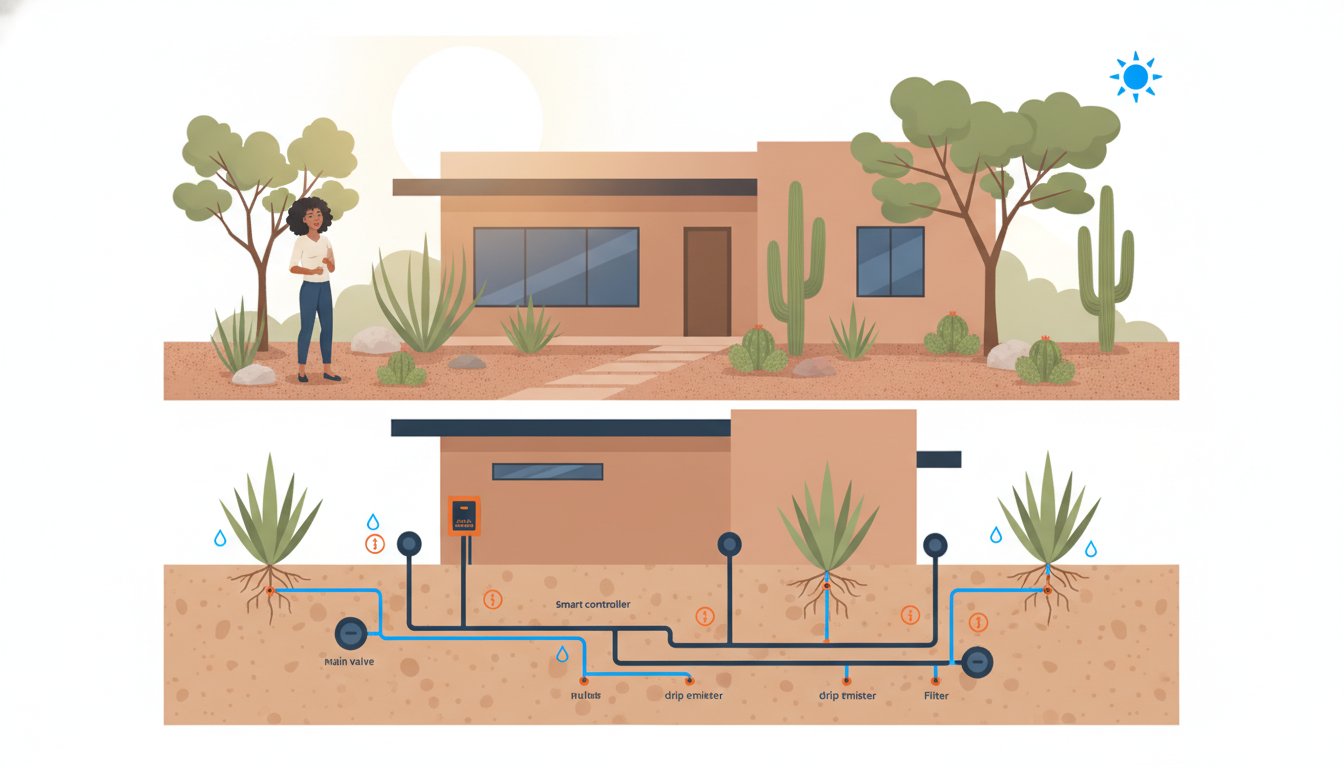
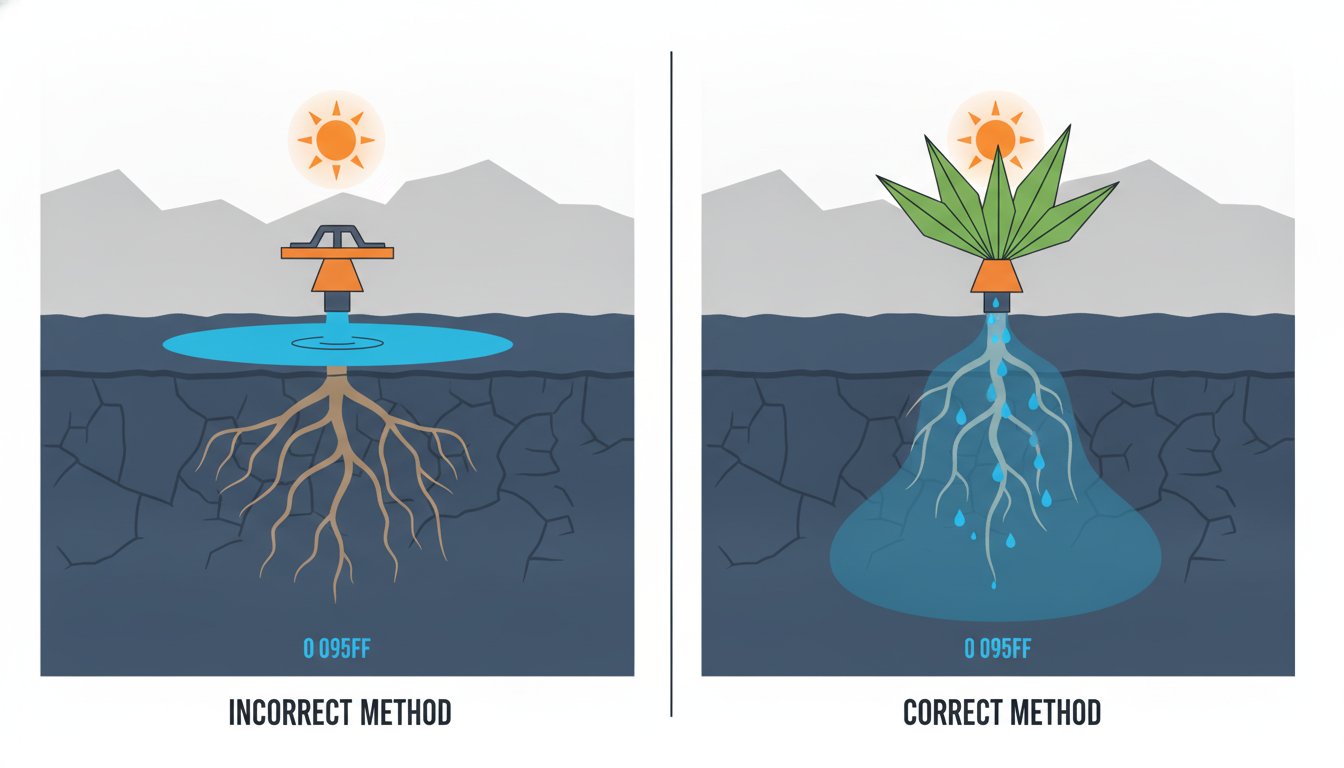
In the Sonoran Desert, water is your landscape's most precious resource. Traditional overhead sprinklers often struggle in our climate because they lose a significant percentage of water to evaporation before it ever reaches the ground. This is especially true during our 110-degree summer peaks. A professional drip irrigation system changes the math by delivering water directly to the root zone through a network of specialized emitters and tubing. When calculating the cost of drip irrigation system Arizona residents must consider how this precision delivery protects their long-term investment in their property.
Efficiency is the primary driver for these systems. As of July 2026, Phoenix remains under a Stage 1 Water Alert. While this doesn't mandate specific days for watering yet, it strictly prohibits water waste such as runoff into the street. Sonora Sprinkler Inc. designs systems that eliminate this risk by keeping water contained within the soil profile. This isn't just about following rules; it's about ensuring every drop you pay for actually benefits your plants. By moving away from broad-spray applications, you provide a targeted environment where desert-adapted plants can thrive without the stress of constant moisture fluctuations.
Water Efficiency and Your Monthly Utility Bill
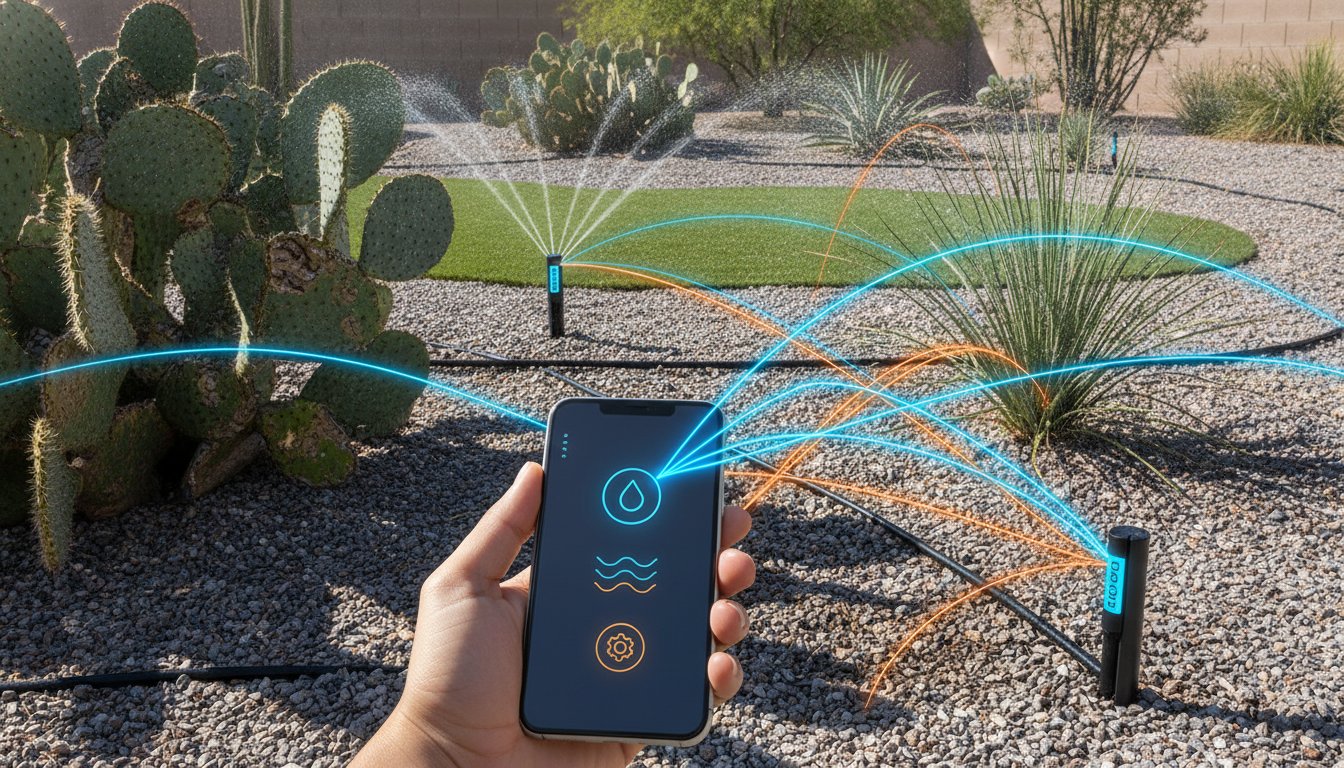
Desert plants thrive on a "slow and deep" watering philosophy. This method encourages roots to grow deeper into the cooler earth, which helps them survive extreme heat waves. By using low-flow emitters, you can provide the consistent hydration your trees and shrubs need without the spike in your monthly bill. Modern systems often include smart timers that adjust schedules based on local weather data. This further optimizes your savings and prevents overwatering during our unpredictable monsoon season. It turns your irrigation from a manual chore into a reliable, automated protector of your monthly budget.
Protecting Your Desert Curb Appeal
Maintaining mature desert trees is far more cost-effective than replacing them. A well-established Palo Verde or Ironwood tree adds significant value to a Surprise or Peoria home, but these specimens can take a decade or more to reach their full potential. If a system fails during a July heat spike, you could lose years of growth in just a few days. The custom sprinkler system design provided by Sonora Sprinkler Inc. focuses on the mechanical integrity needed to prevent these catastrophic losses. We prioritize durability so your curb appeal remains intact, even when the desert is at its harshest.
Primary Cost Drivers for Residential Drip Systems in the Phoenix Valley
When you begin researching the cost of drip irrigation system Arizona contractors provide, you'll quickly notice that national averages don't apply here. Our unique desert environment introduces variables that simply don't exist in other regions. While property size is a fundamental factor, the final investment is heavily influenced by the complexity of your landscape and the literal hardness of the ground beneath your feet. A yard with ten desert shrubs requires a much simpler setup than a property featuring a mix of mature citrus trees, seasonal flower beds, and native cacti.
The condition of your existing infrastructure also plays a significant role. If you're upgrading an older system, we often have to account for the removal of degraded materials before we can begin a new irrigation installation. This ensures that your new system isn't compromised by old, leaking components hidden underground. Every zone we add to your system requires its own valve and dedicated piping, which increases material costs but ensures every plant gets exactly the volume of water it needs to survive the summer.
The Impact of Caliche and Soil Conditions
It's not just dirt. In many parts of the Phoenix Valley, particularly in Surprise and Peoria, homeowners encounter caliche. This is a layer of soil where the particles have been cemented together by calcium carbonate, creating a substance as hard as concrete. Trenching through caliche requires specialized power equipment and significantly more labor hours than digging in sandy soil. Some installers try to save time by burying lines only a few inches deep to avoid the caliche. However, shallow lines are prone to damage from shovels, pets, and even the sun's heat. Doing the job right means taking the time to trench to a proper depth, regardless of soil density.
System Zoning and Controller Complexity
A one-size-fits-all approach to watering will eventually kill your plants. Different species have vastly different hydration requirements. A citrus tree might need 30 gallons of water per session, while a saguaro needs almost none. To manage this, we design systems with multiple zones. Each zone is managed by a controller that dictates timing and frequency. If you have an older home, we may need to perform irrigation wiring and diagnostics to ensure your electrical system can handle a modern, smart controller. These upgrades allow for precision management, but they do influence the initial setup cost. If you're curious about how these factors apply to your specific lot, you can reach out to our team for an expert assessment of your property's needs.
Poly vs. PVC: Comparing Material Longevity and Long-Term Value
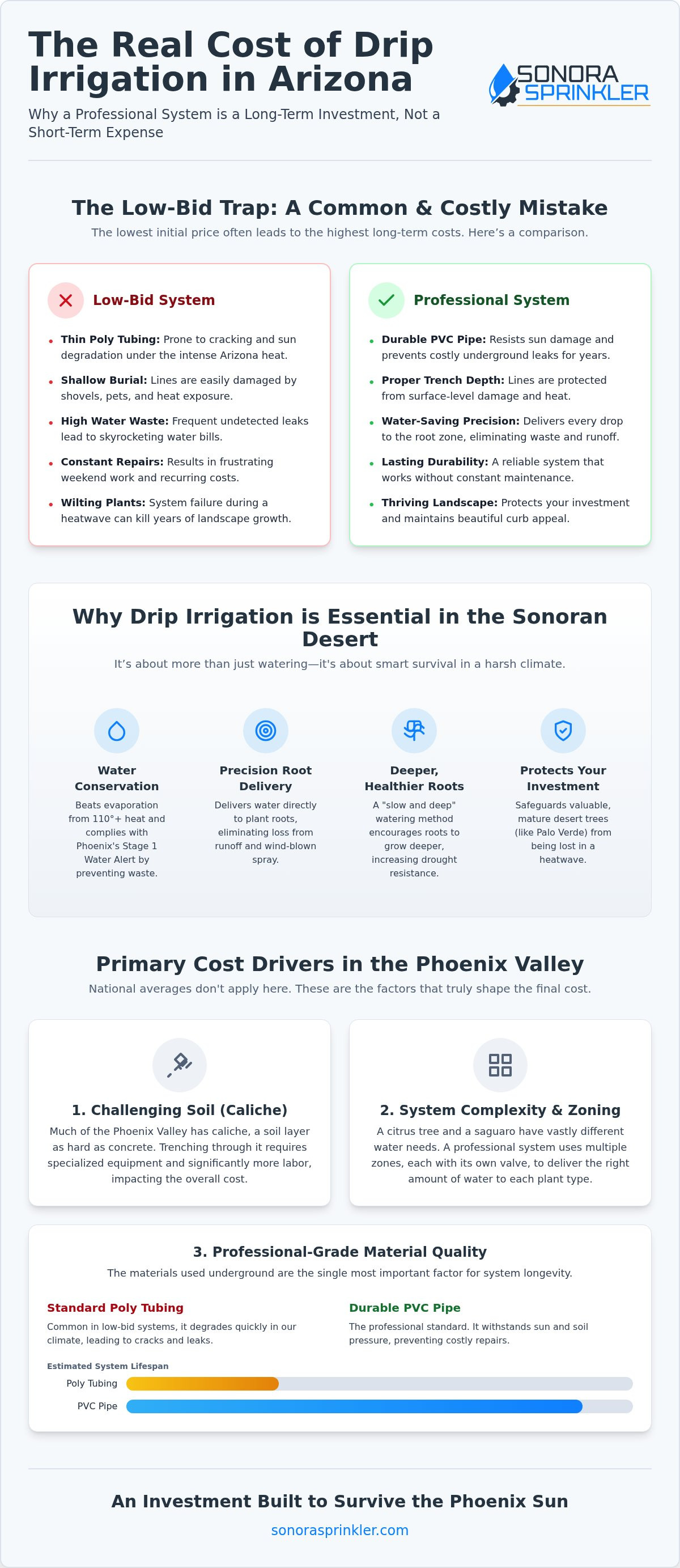
When evaluating the cost of drip irrigation system Arizona homeowners often face a choice between flexible black poly tubing and rigid PVC pipe. While poly is the standard in many "big-box" DIY kits, it's rarely the right choice for the high-heat environment of the Phoenix Valley. Choosing materials based solely on the lowest initial bid often leads to a cycle of constant repairs. At Sonora Sprinkler Inc., we've seen poly systems fail in as little as five years. In contrast, a system utilizing Schedule 40 PVC for main lines can easily last 20 years or more. This durability is why we prioritize irrigation PVC pipe replacement for clients who are tired of chasing leaks every spring.
The difference in longevity directly impacts the total cost of drip irrigation system Arizona residents pay over the life of their home. A cheaper poly system might save money today, but the price of water loss from undetected leaks and the labor for frequent repairs quickly erases those savings. We believe in providing a system that acts as a permanent fixture of your property's infrastructure, not a temporary solution that requires seasonal attention.
Why Poly Tubing Fails in Arizona
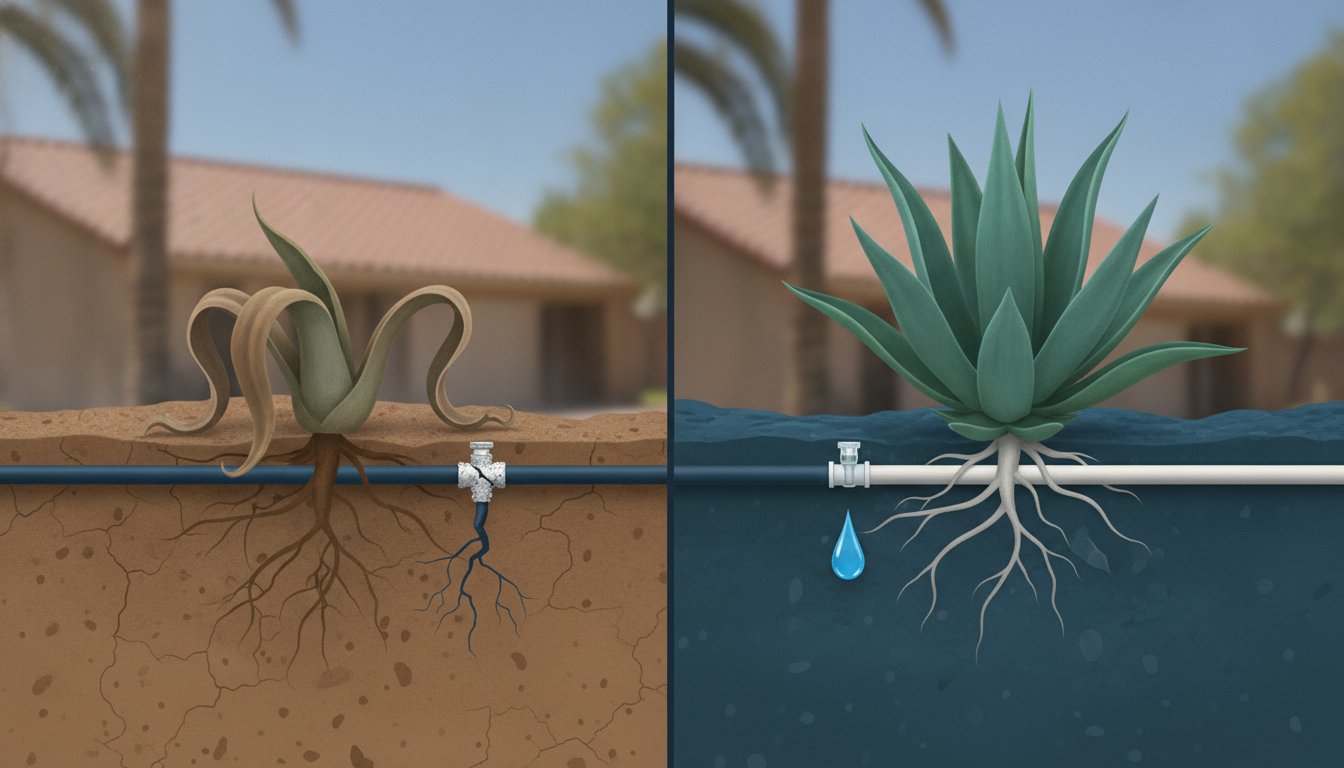
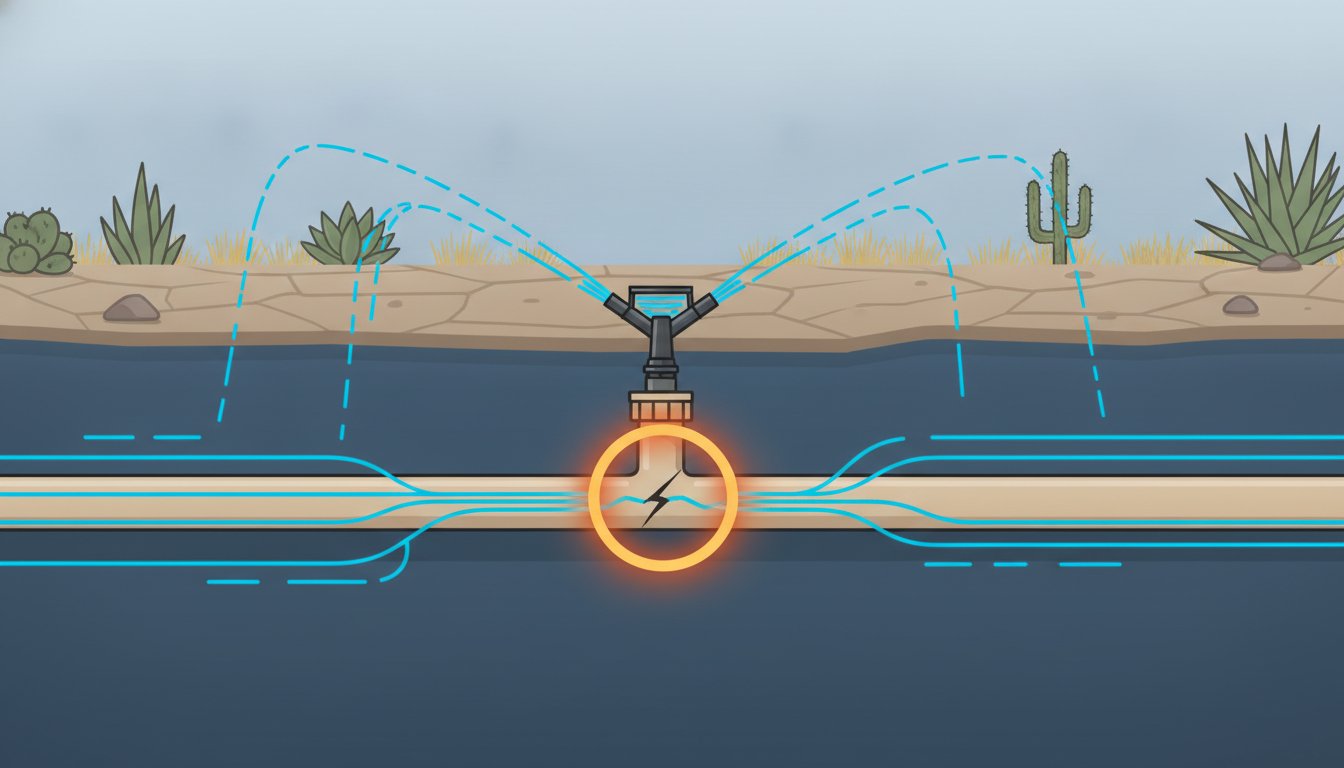
The primary enemy of poly tubing is the intense Sonoran sun. UV exposure causes thin-walled plastic to become brittle over time, eventually cracking under standard water pressure. Additionally, our extreme temperature swings cause the material to expand and contract significantly. This movement often causes fittings to pop off or leads to slow leaks at connection points that are difficult to detect until your water bill arrives. Local wildlife, including thirsty coyotes and ground squirrels, also find it easy to chew through poly lines to reach the water inside. This creates localized flooding and dry spots that can kill expensive desert plants in a matter of days.
The PVC Advantage for Desert Homeowners
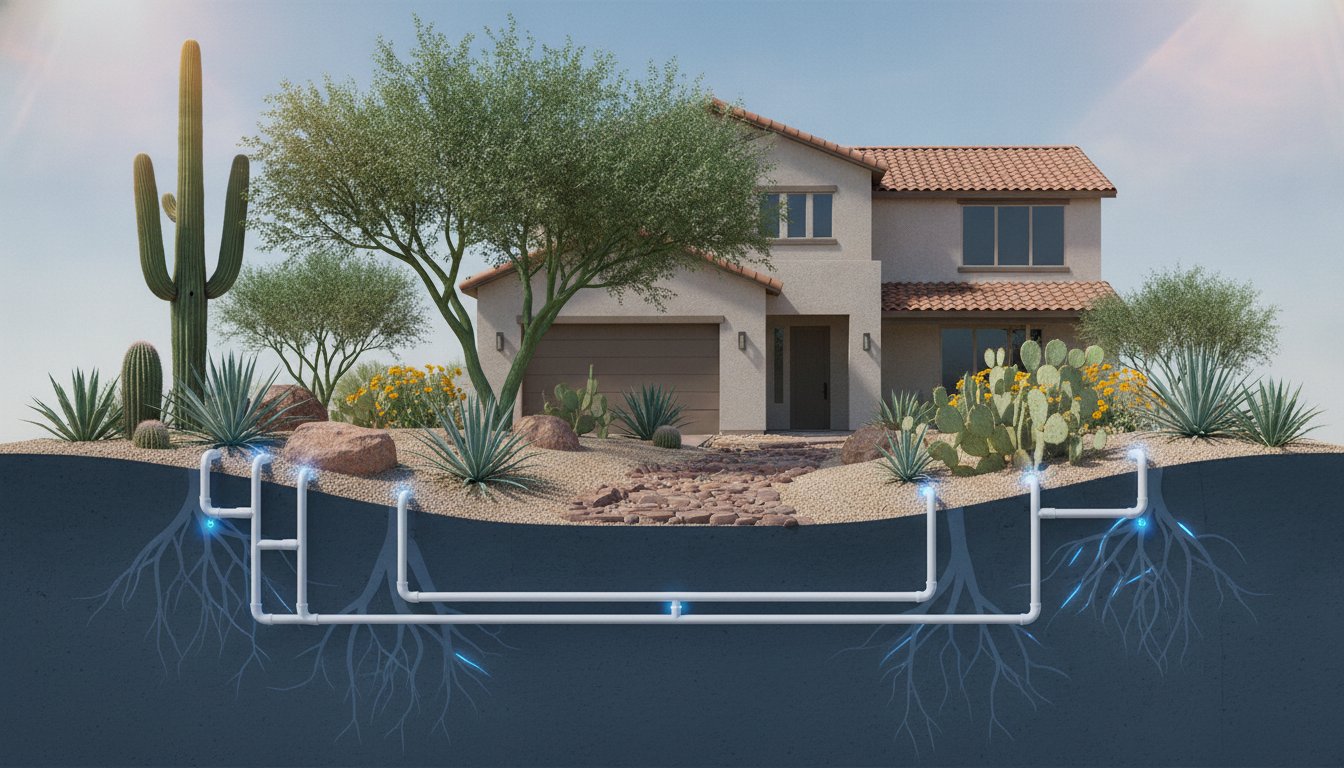
Rigid PVC provides a level of mechanical integrity that flexible tubing cannot match. It's far more resistant to accidental shovel nicks during routine gardening and stays stable even as the ground shifts slightly during our wet monsoon seasons. By investing in a professional drip irrigation installation that uses PVC for the primary distribution lines, you're effectively eliminating the most common points of failure in a desert system. The long-term savings from reduced water waste and fewer service calls make it the superior choice for any homeowner planning to stay in their residence for more than a few years. Our goal is to build a foundation that protects your landscape without the need for constant mechanical intervention.
Installation and Maintenance: Avoiding the Hidden Costs of Improper Setup
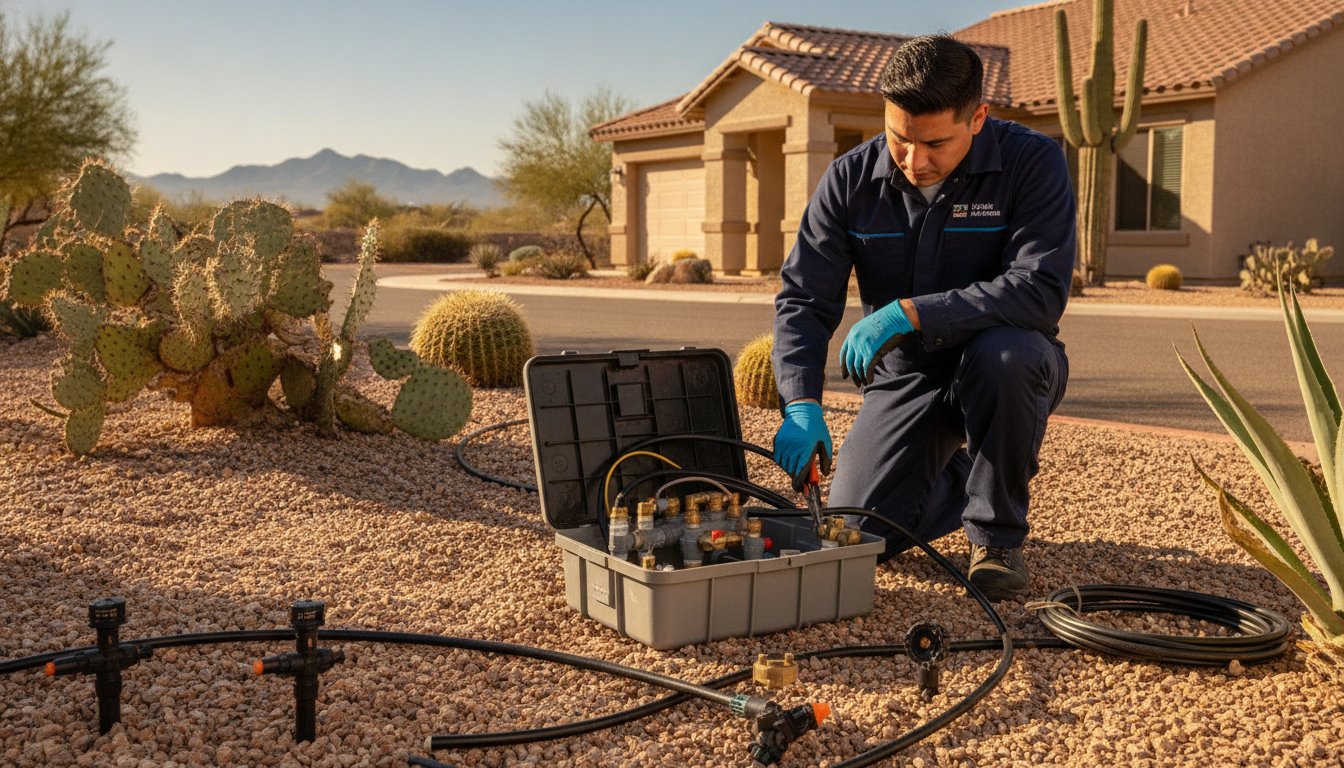
While a retail DIY kit might seem like a way to lower the initial cost of drip irrigation system Arizona landscapes require, these off-the-shelf components often lead to expensive failures within a single season. The plastic used in big-box store emitters and thin-walled tubing isn't engineered to withstand the relentless thermal expansion and contraction of our desert environment. When these components fail, they usually do so underground or during the night, leading to massive water waste and the loss of expensive plants. Professional installation prioritizes mechanical integrity from the start, ensuring that your investment is protected by high-grade components that are actually rated for our local climate.
A critical part of this protection involves professional valve and backflow services. Backflow preventers are required by code to keep irrigation water from siphoning back into your home’s clean drinking supply. If these valves are installed incorrectly or use inferior materials, you risk both water contamination and system-wide pressure failures. We focus on these mechanical details because the total cost of drip irrigation system Arizona homeowners pay includes the long-term maintenance required to keep the system running. A drip system is only as reliable as its weakest connection point, and we ensure those points are built to last.
The Role of Pressure Regulation and Filtration
Arizona municipal water pressure often exceeds 80 PSI, which is high enough to blow emitters right off their lines. A pressure regulator is a mechanical device that reduces high incoming municipal water pressure to a lower, constant level to prevent emitters from blowing off or bursting. Without this regulation, your system will suffer from constant blowouts and uneven watering. We also integrate high-capacity filters to manage the mineral-heavy "hard" water common in Surprise and Peoria. These filters catch sediment before it can clog the tiny orifices of your emitters, preventing the dry spots that often go unnoticed until a plant begins to wilt.
Professional Design vs. Generic Layouts
A generic layout often fails to account for the specific needs of your yard's topography and plant variety. If a system is designed without considering elevation changes, plants at the top of a slope will be bone dry while those at the bottom are drowning. Our custom drip irrigation design ensures even distribution across your entire property. We calculate the exact flow rate needed for every tree and shrub, placing emitters precisely where they will do the most good. This level of detail prevents the "dry spots" that kill mature, expensive desert trees. If you want to avoid the headaches of a failing DIY setup, contact our team to schedule a professional consultation for your residential system.
Durable Drip Irrigation in Surprise and Peoria
Choosing a partner for your home’s irrigation needs requires more than just finding a general laborer. At Sonora Sprinkler Inc., we’ve spent over two decades refining our approach to the specific environmental challenges of the West Valley. Since 1999, our family-owned business has focused exclusively on residential systems. This specialization allows us to master the mechanical nuances that general landscapers often overlook. When you evaluate the total cost of drip irrigation system Arizona homeowners must manage over time, the expertise of a dedicated specialist is what ensures that investment actually lasts through our record-breaking summers.
Our "boots-on-the-ground" experience in Surprise and Peoria has taught us that there is no substitute for mechanical integrity. We don't divide our attention between lawn mowing or hardscaping. Instead, 100% of our focus remains on the hydraulics, wiring, and durability of your watering system. This singular focus is why we are leading experts in irrigation PVC pipe replacement. We understand that a system is only as good as the materials buried beneath the soil, and we refuse to cut corners with inferior components that can't handle the heat.
The Sonora Sprinkler Inc. Quality Standard
Our commitment to quality starts with the selection of professional-grade materials. We prioritize Schedule 40 PVC and high-performance emitters because we know these components survive the local soil conditions better than standard retail alternatives. As a licensed, residential expert, Sonora Sprinkler Inc. provides a level of precision that protects the long-term health of your property. We take pride in our tenure within the community, positioning ourselves as a dependable fixture for homeowners who value functional results over flashy marketing. You get the peace of mind that comes from a system designed by a master craftsman who understands the local terrain.
Next Steps for Your Arizona Landscape
Identifying the need for professional intervention often starts with a few simple observations. If you notice localized flooding, wilting plants despite regular watering, or a sudden spike in your utility bill, your system is likely compromised. We specialize in residential sprinkler system upgrades that transform inefficient, leaking layouts into high-performance networks. The process begins with a thorough diagnostic visit where we evaluate every valve, line, and controller. This logical, step-by-step progression ensures we identify the root cause of any failure before recommending a solution. If you're concerned about the cost of drip irrigation system Arizona heat has already damaged, contact our team today to schedule a professional evaluation of your landscape.
Securing Your Arizona Landscape’s Future
Investing in a high-quality watering system is the most effective way to protect your property's value and curb appeal. The true cost of drip irrigation system Arizona homeowners should prepare for isn't just the initial installation price; it's the total cost of ownership over decades. By choosing durable Schedule 40 PVC over temporary poly tubing and ensuring your system is designed to handle the specific pressures of our desert environment, you avoid the cycle of frequent repairs and high water bills.
Since 1999, our family-owned business has provided grounded expertise to neighbors in Surprise and Peoria. We are licensed residential irrigation experts who understand that a system's reliability depends on its mechanical integrity. We specialize in high-durability PVC systems that stand up to caliche soil and extreme heat. Don't let a failing system compromise your desert trees or your monthly budget. Our team is here to ensure your irrigation works perfectly, day after day.
Request a Professional Drip System Evaluation from Sonora Sprinkler and take the first step toward a more efficient, worry-free landscape. We look forward to helping you build a system that lasts.
Frequently Asked Questions
How much does a drip irrigation system cost in Arizona?
The final cost of drip irrigation system Arizona homeowners pay depends on property size, the number of watering zones, and the presence of caliche soil. While upfront estimates vary, investing in high-grade materials like PVC rather than thin poly tubing prevents frequent repair expenses. Professional installation ensures the system handles the desert's extreme thermal expansion, providing better long-term value than generic retail kits found at big-box stores.
Is drip irrigation cheaper than a sprinkler system?
Drip irrigation is generally more cost-effective than traditional sprinklers because it minimizes water waste from evaporation and runoff. In our arid climate, overhead sprayers lose a high percentage of water before it reaches the roots. By delivering water directly to the root zone, a drip system lowers monthly utility bills and prevents the loss of expensive desert-adapted plants that don't thrive under broad-spray watering.
How long does a drip irrigation system last in the desert?
A system's longevity is tied directly to material quality. Standard black poly tubing often becomes brittle and fails within five years due to intense UV exposure and heat. Systems built with Schedule 40 PVC are much more durable, frequently lasting two decades or longer. Choosing professional-grade components at the start protects your property from the recurring costs of replacing degraded lines every few seasons.
Does caliche soil increase the cost of irrigation installation?
Yes, caliche soil is a common challenge in Surprise and Peoria that requires specialized power equipment to penetrate. This hardened layer of calcium carbonate is as dense as concrete, which increases the labor hours needed for proper trenching. While some installers might try to save time by burying lines shallowly to avoid caliche, doing so leaves the system vulnerable to damage and heat-related failures.
Can I convert my existing sprinkler system to drip irrigation?
Most traditional sprinkler systems can be converted to drip irrigation by installing pressure regulators and changing the distribution lines. The process involves adding pressure regulators to prevent emitter blowouts and replacing overhead heads with a network of drip lines. It's essential to evaluate the existing valves and backflow preventers during this transition to ensure they can handle the lower flow rates required by a precision drip setup.
How often should I replace my drip lines in Surprise, AZ?
If your system uses thin poly tubing, you may find yourself addressing leaks every few years as the material degrades in the Surprise sun. High-quality PVC systems rarely need full replacement, though individual emitters should be checked annually for mineral clogs. Persistent wet spots or wilting plants are clear indicators that your distribution lines have reached the end of their functional lifespan and require a professional evaluation.
What is the best material for drip irrigation lines in Arizona?
Schedule 40 PVC provides the best mechanical integrity for the cost of drip irrigation system Arizona residents expect to last. Unlike poly tubing, PVC isn't easily damaged by digging tools or thirsty wildlife. It remains stable under high temperatures and doesn't become brittle from UV exposure. Using rigid piping for your main lines creates a permanent infrastructure that significantly reduces the need for emergency repairs.
Do I need a permit for drip irrigation installation in Peoria?
While a dedicated permit isn't always required for simple residential installs, Peoria and surrounding cities have strict regulations regarding backflow prevention. These rules protect the municipal water supply from contamination. It's vital to ensure your system includes a certified backflow assembly and that it's installed by a professional who understands local plumbing codes to avoid potential fines or safety hazards.